12 Quiet Losses Every Senior Cat Owner Should Notice Early
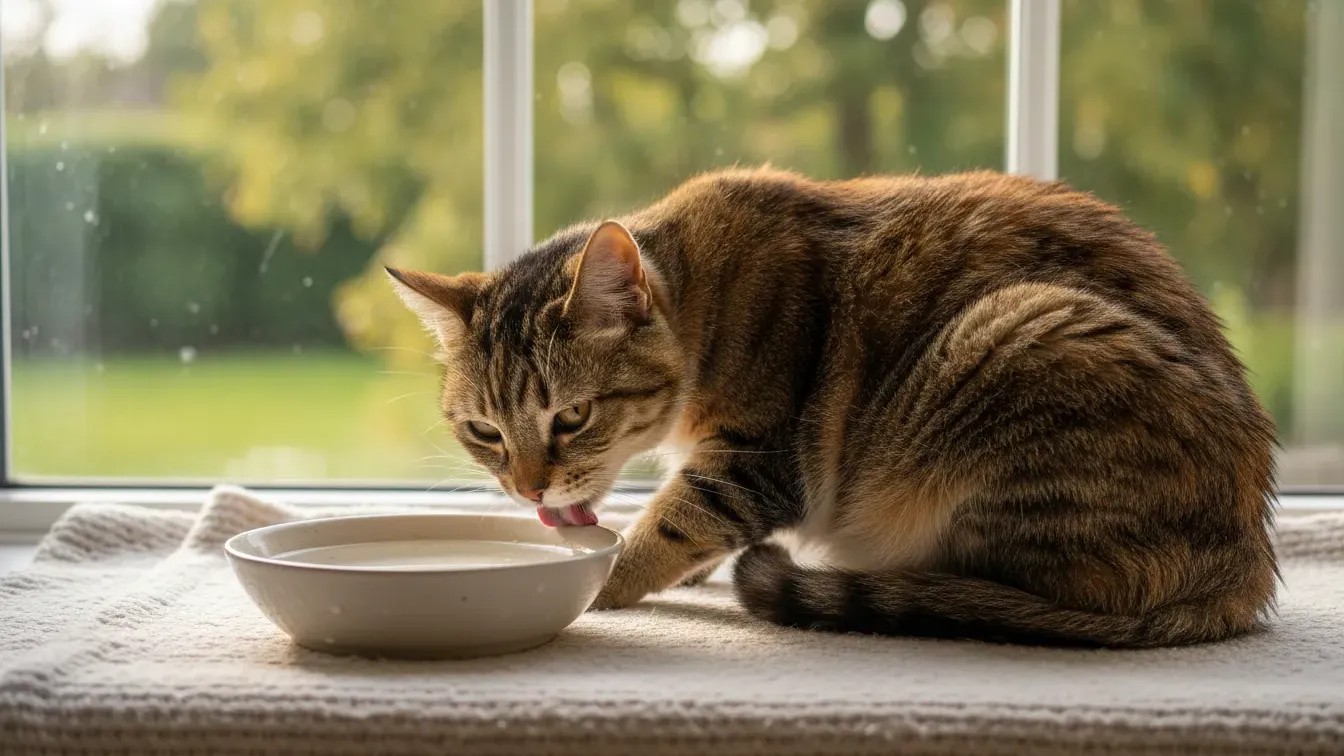
Most owners assume they'll know when something is wrong with their cat. They picture a dramatic moment - a collapse, a howl, a total refusal to eat.
The real warning signs almost never look like that. They show up weeks or months earlier, disguised as tiny habits so small you'd have to be watching closely to catch them at all - and this list starts with the one hiding in plain sight at the food bowl.
#12 - The Excitement That Quietly Disappears From Mealtime
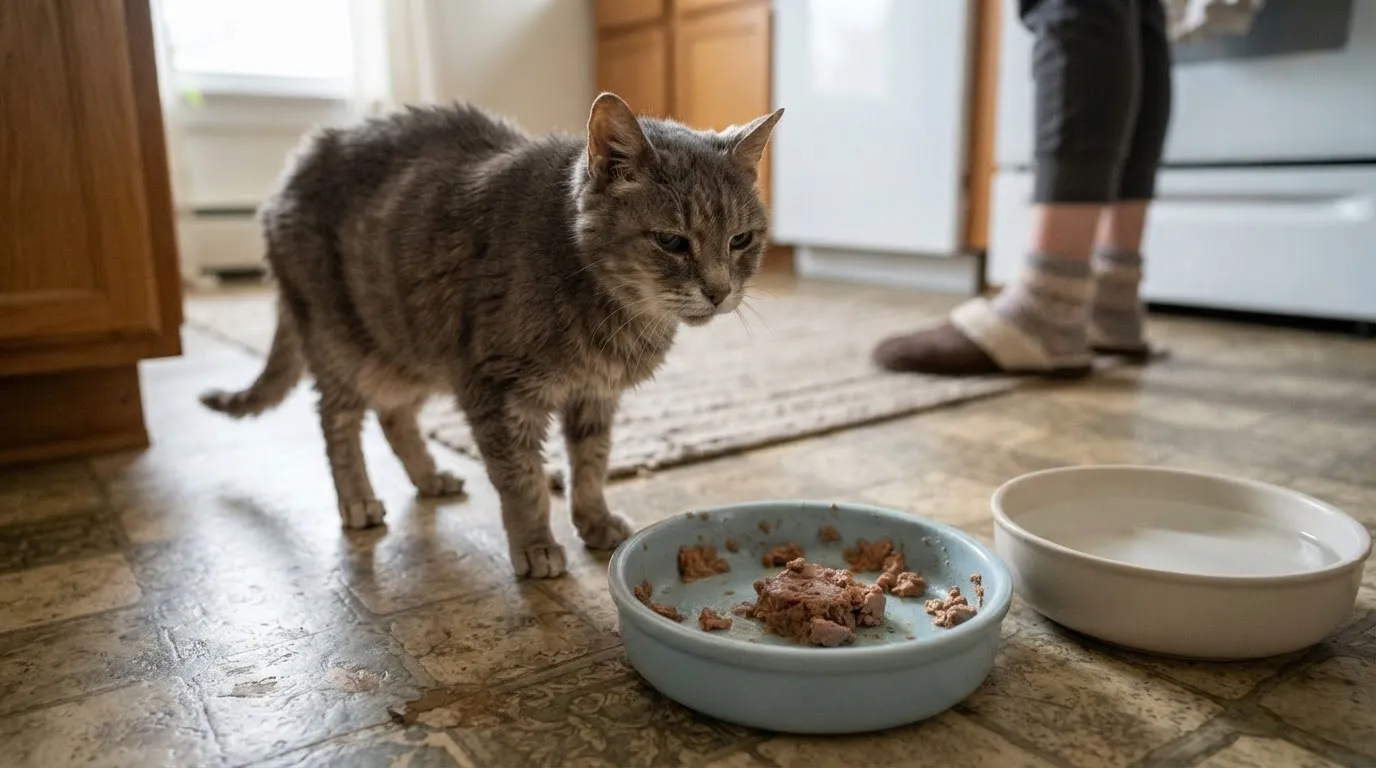
Full food refusal is easy to spot. The real early sign is subtler - a little food left in the bowl when your cat used to lick it clean.
That small shift often gets written off as pickiness. In reality, inconsistent appetite is one of the earliest signs of mild nausea, and mild nausea is one of the first things a struggling kidney produces.
Watch for a cat that circles back to the bowl an hour later, or hesitates before walking up to it. That pause is the body sending a signal your cat can't voice out loud.
But there's a loss even quieter than appetite - and it's hiding under something you touch every single day.
#11 - The Muscle You Can Feel Slipping Away Under Their Fur
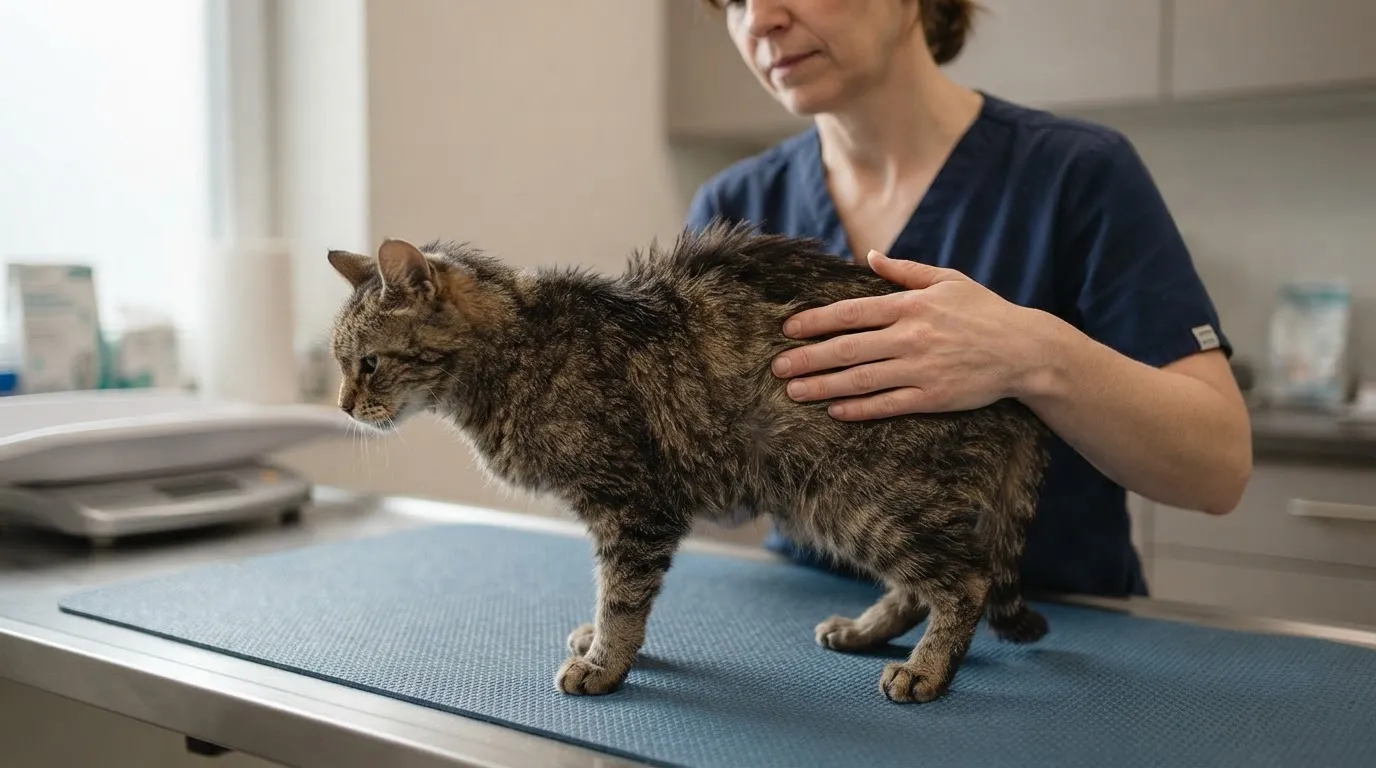
Run your hand down your cat's spine. Feel their hips, cup your palm around their shoulders - if you're noticing more bone than you used to, that's worth paying attention to, even if the scale looks normal.
This is muscle wasting, or sarcopenia, and it's one of the most overlooked signs of disease in older cats. A senior cat can lose real lean muscle while the scale barely moves, because fat quietly redistributes to cover the loss.
Some muscle loss comes with normal aging. But rapid or severe loss almost always points to something underneath - kidney disease, diabetes, cancer, or hyperthyroidism all chip away at muscle first.
Worth Knowing
- Kidney disease - one of the most common muscle-wasting drivers in senior cats
- Diabetes - the body burns muscle for energy once insulin use breaks down
- Cancer - can accelerate muscle loss before any weight drop shows up
- Hyperthyroidism - speeds up metabolism enough to burn through muscle fast
Once you know what to feel for under the fur, the next loss becomes impossible to unsee.
#10 - The Jump They Stop Attempting
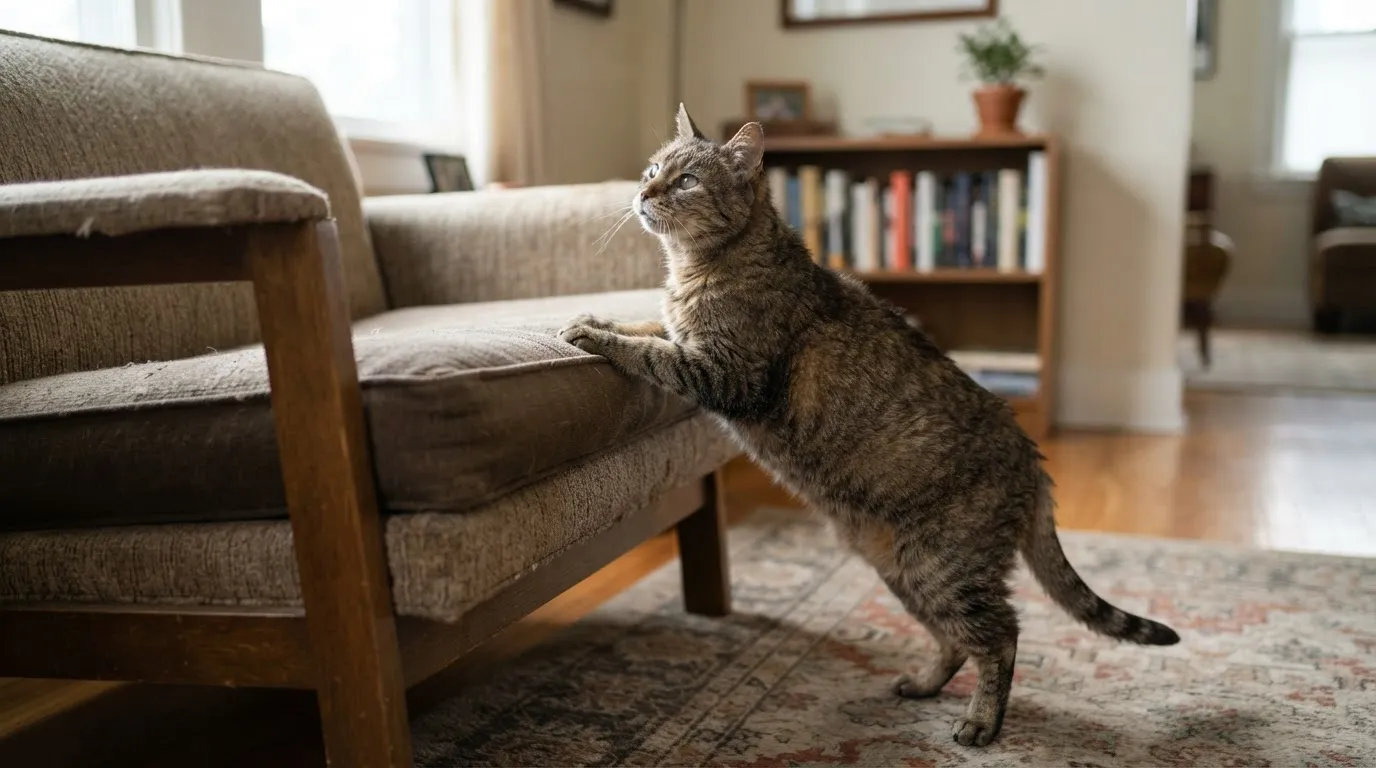
Cats have an unnervingly high pain tolerance, and they rarely let you know when something hurts. Instead, they leave small clues - like quietly refusing to jump anymore.
Watch for the cat that used to leap to the windowsill in one smooth motion and now circles the room first. Or the one that puts front paws on the couch, pauses, and gives up.
That pause is pain being calculated in real time. Arthritis affects over 90% of cats aged 10 years and older - a number most owners never expect, because their cat isn't limping or crying.
"It really comes down to understanding what pain looks like in cats."
Margaret Gruen, NC State College of Veterinary Medicine
They're just quietly staying on the ground. And the coat change that comes next is directly tied to this one - most owners blame it on something else entirely.
#9 - The Coat That Loses Its Gloss
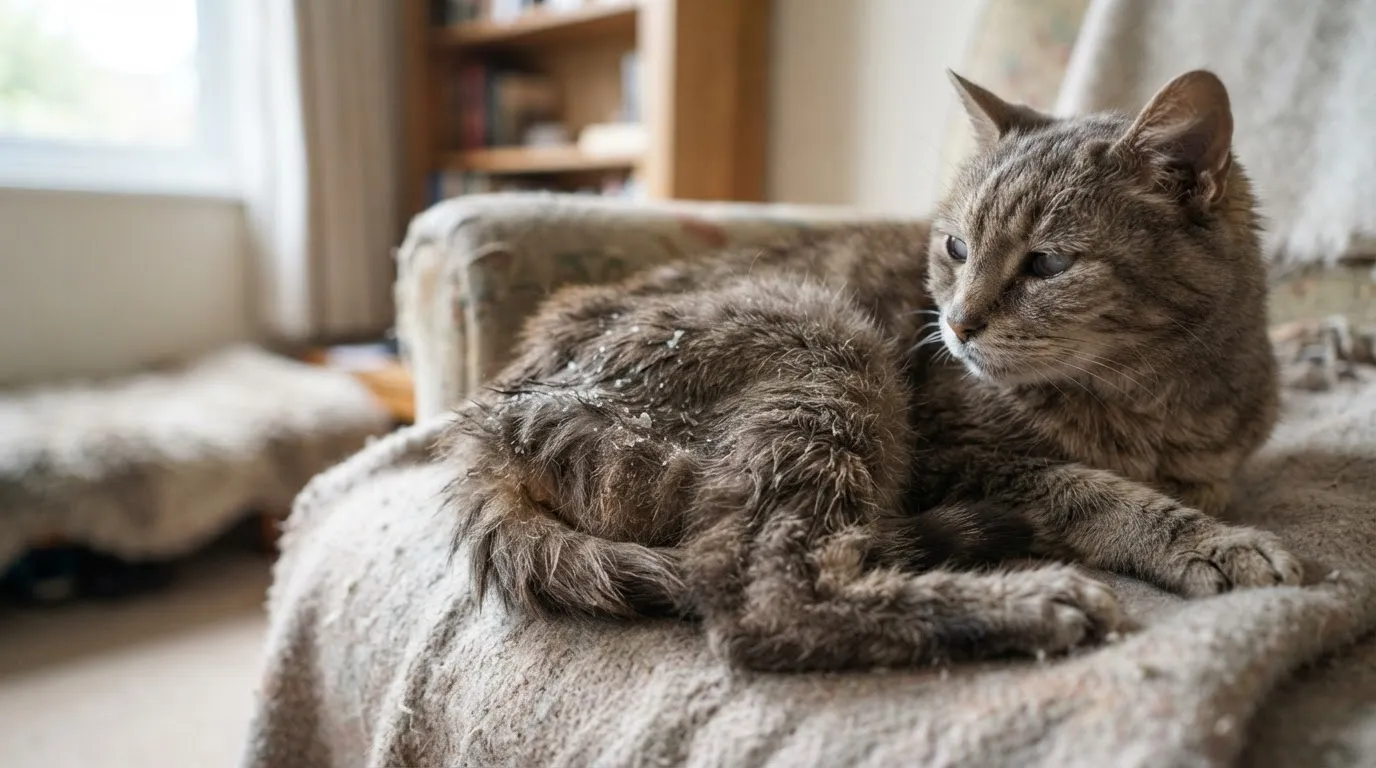
A dull, flaky, or matted coat usually means your cat has quietly stopped grooming. A healthy cat spends serious daily effort on coat maintenance, so when that stops, it never stops for no reason.
Owners often chalk it up to "just getting old." Usually, it means something specific is going wrong underneath.
The lower back and hindquarters go first - that's the exact spot that becomes too painful and too hard to reach for an arthritic cat. A single dull patch is worth mentioning at your next vet visit, long before the whole coat looks rough.
#8 - The Sleeping That Shifts From Restful to Retreating
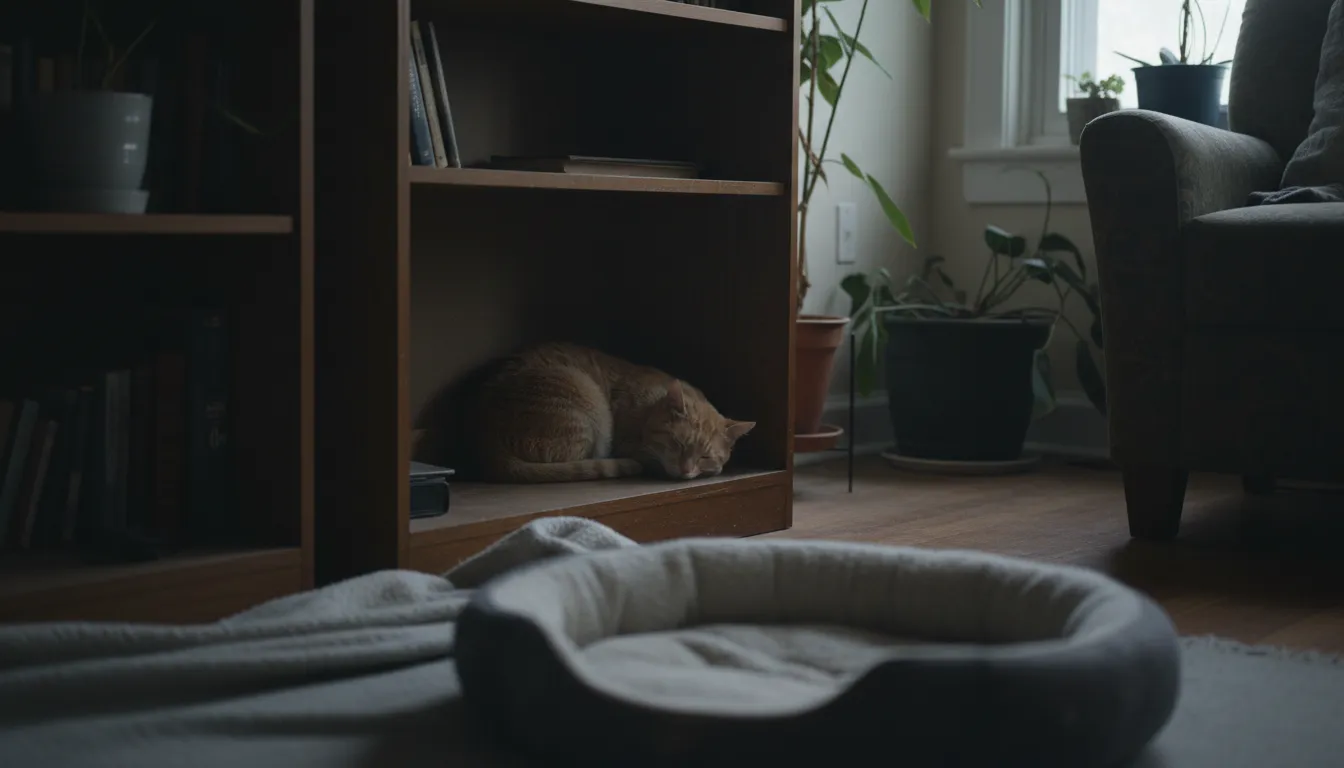
Cats sleep a lot - that part is normal. What matters more is where they choose to sleep, not how much.
Senior cats tire faster during play and sleep more deeply than they used to. But the telling detail is a cat that abandons its usual spot and keeps turning up somewhere new.
A cat that relocates to a lower, quieter, more isolated spot is often managing pain or illness, not exploring. This is a cat rearranging its whole world around what hurts.
The next sign on this list is the emotional mirror of that same withdrawal.
#7 - The Socialness That Quietly Fades
A dog in pain whimpers and seeks comfort. A cat in pain goes still, withdraws, and quietly does less - which can look deceptively like calm.
A cat that used to meet you at the door now stays on the bed. One that once demanded morning attention now just tolerates it.
That isn't a cat mellowing with age. The cat that becomes "easier to manage" in old age is often suffering in silence, not settling down.
And the next sign gets dismissed every single day as "just cat behavior."
#6 - The Night Vocalisation That Comes Out of Nowhere
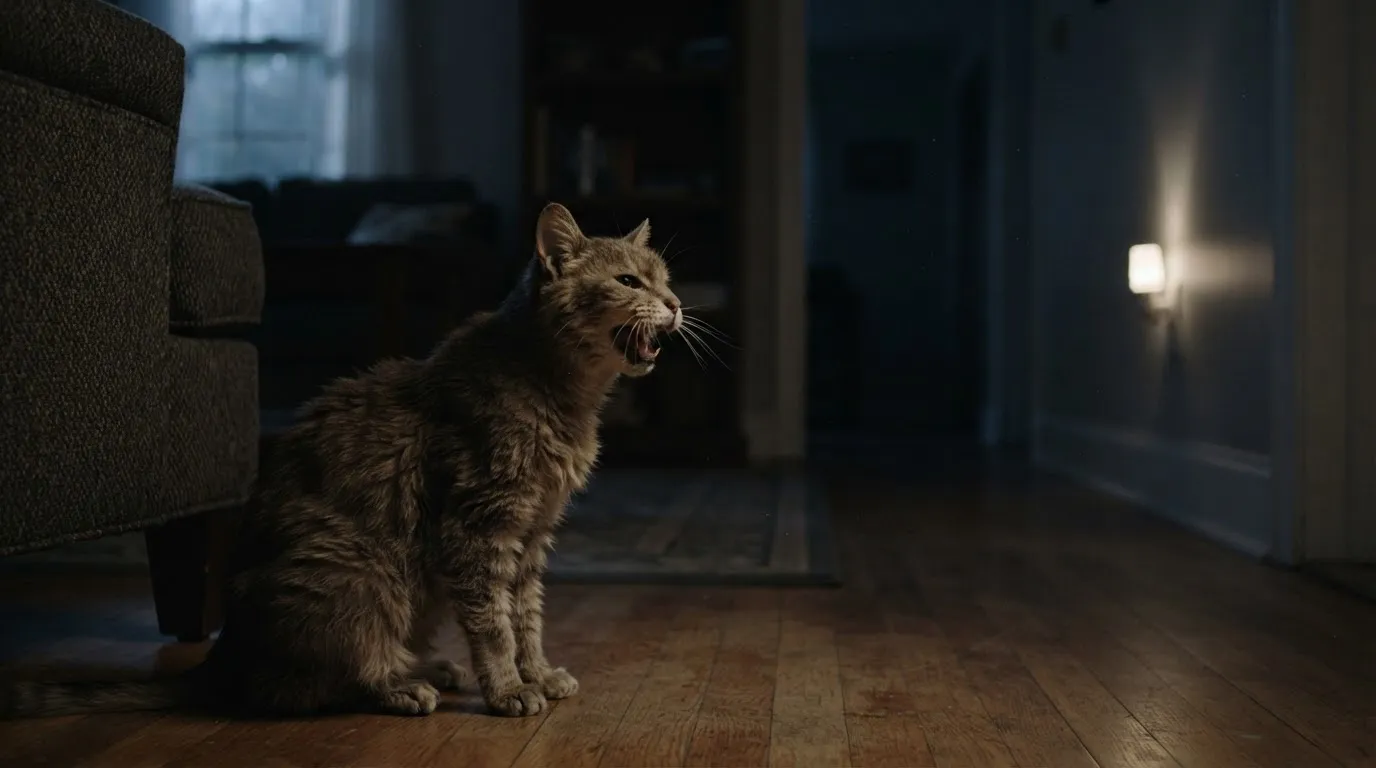
Some senior cats grow restless at night - pacing, staring, yowling for no obvious reason. Most owners assume it's a quirk or an attention grab.
Veterinary experts disagree. Nighttime yowling is one of the signature signs of feline cognitive dysfunction - the cat equivalent of dementia.
By age 15, 80% of cats show signs of cognitive dysfunction, including disorientation and nighttime vocalizing. Don't chalk the night calls up to personality - they're a message.
#5 - The Litter Box Habits That Shift By Just a Little
Missing the box occasionally, urinating more, or producing unusually large or small clumps are subtle signs of a shifting quality of life. This is the sign most owners feel too embarrassed to bring up at the vet - which is exactly why it gets reported last.
Kidney disease shows up in over 20% of all cats, and it can start as nothing more than bigger litter clumps or slightly less appetite. Track it for one week before you dismiss it.
At a Glance
- General cat population: kidney disease affects roughly 1% to 3% of cats overall
- Cats over age 10: prevalence climbs to about 30% to 40%
- Cats over age 15: as many as 81% show signs of kidney disease
- Early clues often show up in the litter box long before bloodwork catches it
Accidents outside the box can also mean arthritis - a cat that finds the step-in too painful will simply stop stepping in. Two completely different diseases, one quiet signal.
The next loss sneaks up in the water bowl.
#4 - The Thirst That Quietly Increases
Increased water intake is one of the most data-backed early warnings in senior cat medicine - and one of the easiest to miss, because owners don't measure water, they just refill the bowl. Kidney disease, arthritis, and hyperthyroidism can all drive thirst up before anything else changes.
Hyperthyroidism in particular can push a cat to eat more, drink more, and grow restless or unusually vocal. If your senior cat is suddenly draining the bowl faster than usual, that's a lab result waiting to happen.
Mention it at your next visit even if nothing else seems off. The next sign isn't about what goes in - it's about what's happening inside their mouth.
#3 - The Dental Pain They Never Show You
Dental disease is one of the most undertreated conditions in senior cats, because cats almost never show obvious tooth pain. They don't hold their jaw or cry at meals - they simply adapt.
A cat with painful teeth will chew on one side, drop food mid-bite, or walk up to the bowl and then walk away. It looks exactly like picky eating.
Bad breath in a senior cat is not normal - it's almost always active dental disease or systemic illness. Oral pain is one of the most silent, and most fixable, contributors to senior cat decline.
What comes next is something most owners never think to test for at home.
#2 - The Hearing and Vision That Fades Without Warning
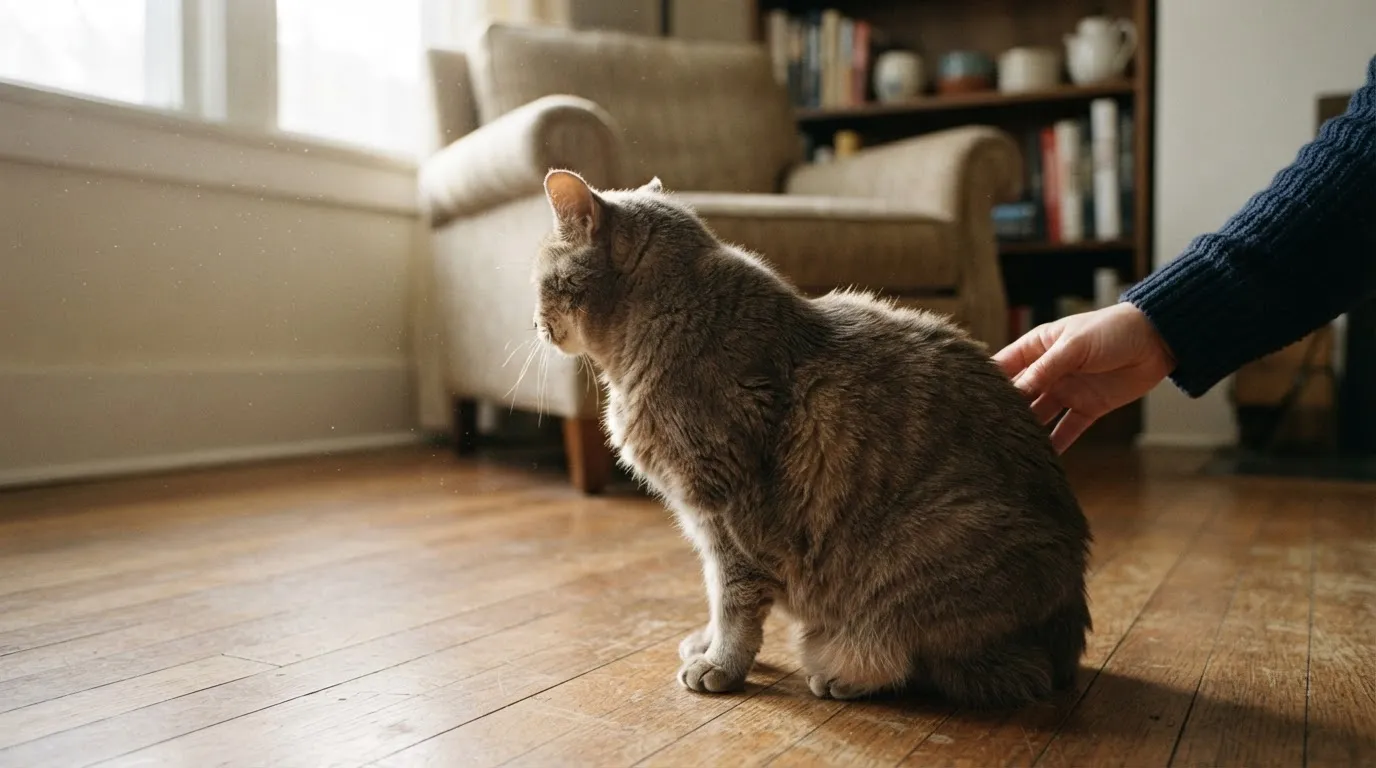
Cats compensate brilliantly for fading senses, using whiskers, memory, and scent to navigate a world they can barely see or hear anymore. That's exactly why the decline goes unnoticed for so long.
Watch for a cat that startles when touched from behind, misjudges a jump, or stops reacting to familiar sounds. A cat that suddenly seems to ignore you may not be ignoring you at all - they may simply not hear you anymore.
Quick Compare
- Normal aging: slower to react, sleeps through soft sounds
- Worth a vet visit: no reaction at all to loud noises or sudden movement nearby
- Normal aging: occasional missed jump
- Worth a vet visit: repeated misjudged jumps or bumping into furniture
Test it at home: shake a treat bag out of their line of sight and watch for a reaction. No reaction is worth a vet visit, not a shrug.
The final loss on this list is the one nobody wants to name.
#1 - The Personality Shift That Feels Like "Just Getting Old"
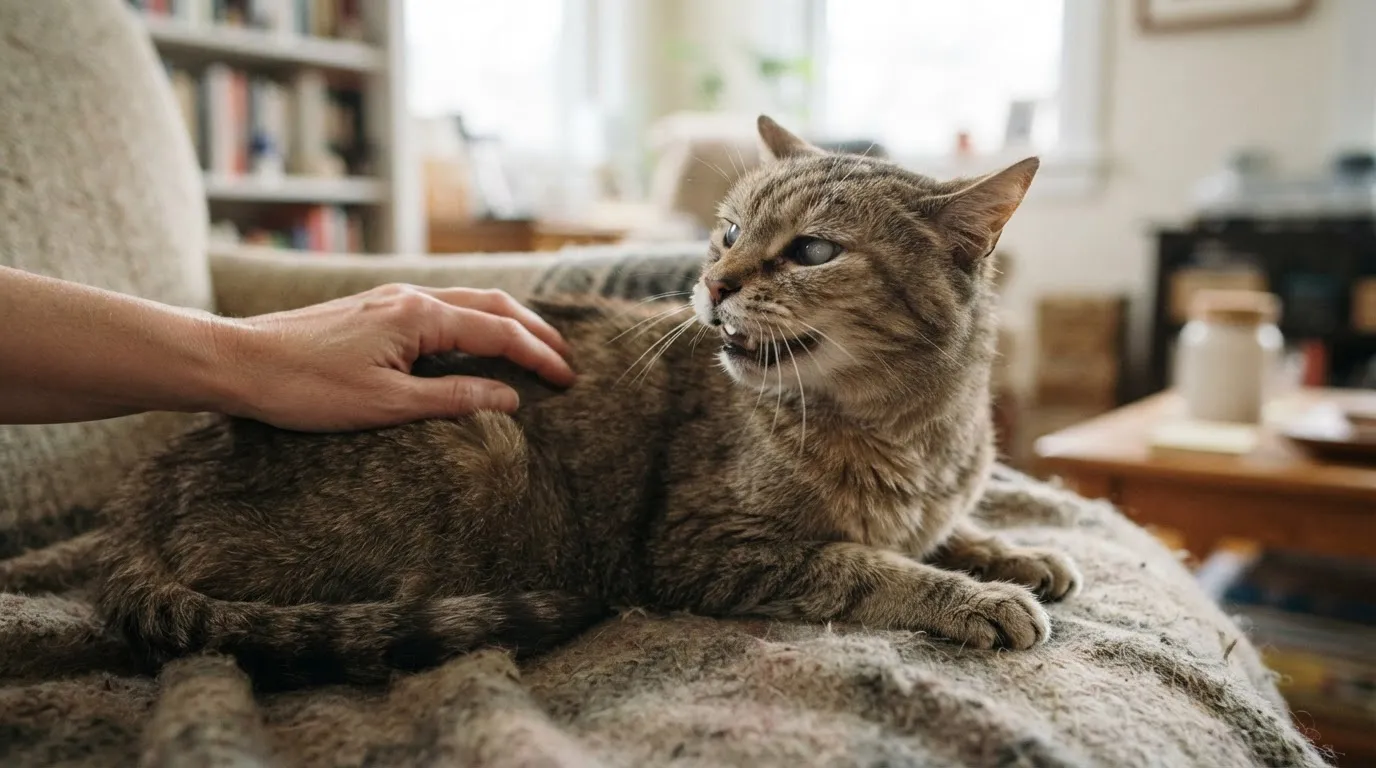
This is the loss that hits hardest, and the one most consistently dismissed. Most missed signs in senior cats don't look like symptoms - they look like personality, mood, or a phase.
A cat that turns irritable when touched in one specific spot is telling you that spot hurts. It's a pain signal, not a personality flaw.
"My cat just seems different lately" is the single most important sentence an owner can say to their vet. Research on aging cats has linked measurable markers of chronic inflammation to cognitive changes - meaning your gut feeling that something shifted is closer to a data point than a hunch.
Trust it. Report it. Act on it.
The Bottom Line
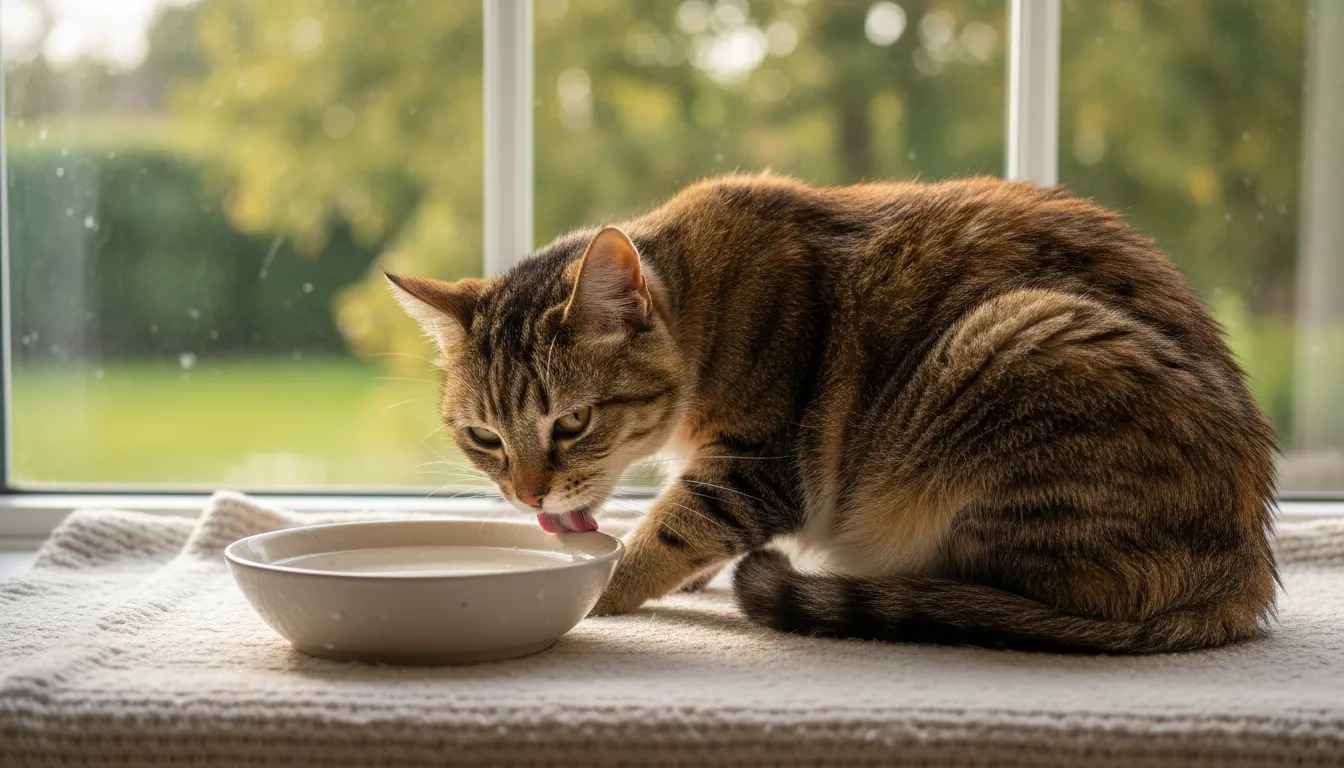
None of these twelve losses require a medical degree to notice. They require attention - the kind that catches a dull patch of fur or an extra sip of water before it becomes an emergency.
Senior cats are experts at hiding illness, which is exactly why twice-yearly vet visits matter so much once they pass ten. The quiet signs always arrive first, and they're the ones that matter most.
Which of these have you already noticed in your own cat? Drop it in the comments below.