12 Signs a Cat Has Settled Into the Safest Home It Has Known
Most people assume a cat that tolerates living in your home is a cat that feels safe there. They're wrong.
Cats hide fear better than almost any domesticated animal alive - it's survival instinct, not stubbornness. A deeply unsettled cat can share your home for months without ever fully relaxing, and the real signs of safety are so subtle most owners miss every single one.
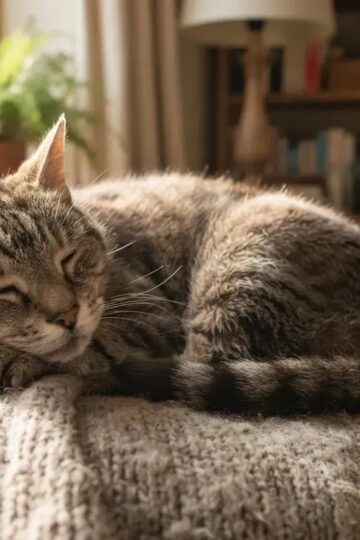
#12 - They Sleep Out in the Open
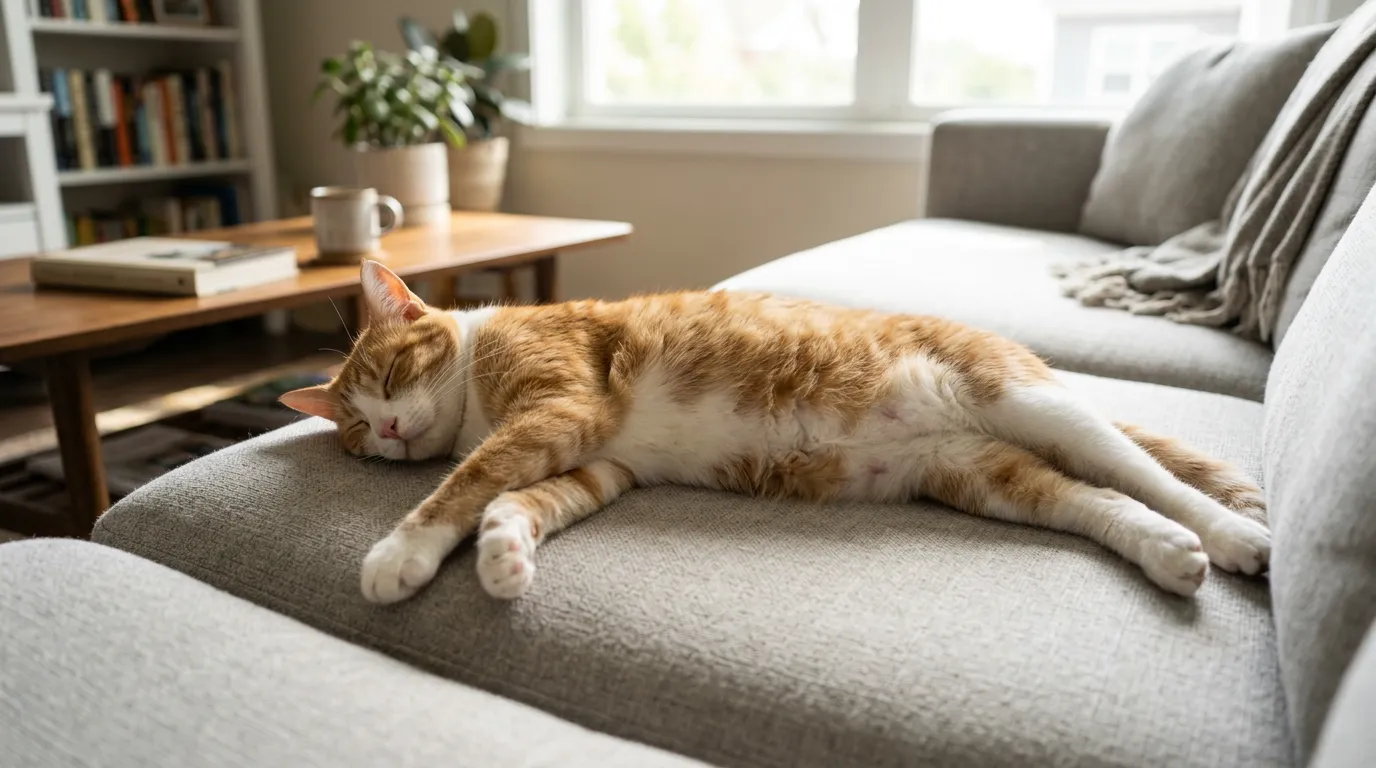
A cat on high alert never fully surrenders to sleep in an exposed spot. That's not a personality quirk - it's hard-wired survival instinct.
A cat who feels safe in your home is far less likely to hide or seek shelter to rest. Instead, it stretches out on its side in the open, instead of curling into a tight defensive ball.
That full-body stretch is the feline equivalent of dropping a weapon. A cat still sleeping pressed into corners or under furniture hasn't decided you're safe - it has simply decided you're tolerable.
Watch the progression closely. First they nap near you, then in front of you, then dead-center on the couch with zero concern for who walks by.
But sleeping in the open is only the beginning - wait until you see what their eyes are telling you.
#11 - They Give You Slow Blinks
If you've never noticed this before, start paying attention. It's one of the most overlooked signals in the entire feline communication playbook.
Slow blinking is widely recognized as a sign of trust and relaxation - often called a "cat kiss." When a cat feels comfortable with you, it blinks slowly instead of staring.
A cat that slow-blinks at you has consciously chosen to take its eyes off the room and place its trust in you. That's not a small thing for an animal whose survival once depended on constant vigilance.
Try it tonight. Blink slowly at your cat and see if it blinks back - if it does, that's a settled animal, not just a fed one.
Fast Facts
- A 2020 study from the Universities of Sussex and Portsmouth, published in Scientific Reports, tested whether cats respond to human slow blinks with slow blinks of their own.
- Cats were also more likely to approach a person's outstretched hand after that person had slow-blinked at them.
- A survey of 1,100 UK cat owners by the charity Cats Protection found that 69% linked slow blinking to a relaxed cat.
#10 - They Eat Without Scanning the Room
Mealtimes reveal more about a cat's internal state than almost anything else. A nervous cat treats the food bowl like a dangerous exposure point.
A calm, unhurried mealtime is one of the clearest signs a cat feels completely safe. A stressed cat bolts its food and retreats immediately; a secure one eats at its own pace and lingers.
A cat eating slowly, with its back partially turned to the room, is telling you it trusts what's behind it. That's a major shift from an unsettled animal still guarding every angle.
But there's another mealtime-adjacent behavior that goes one step further - and it has nothing to do with food.
#9 - They Knead Soft Surfaces
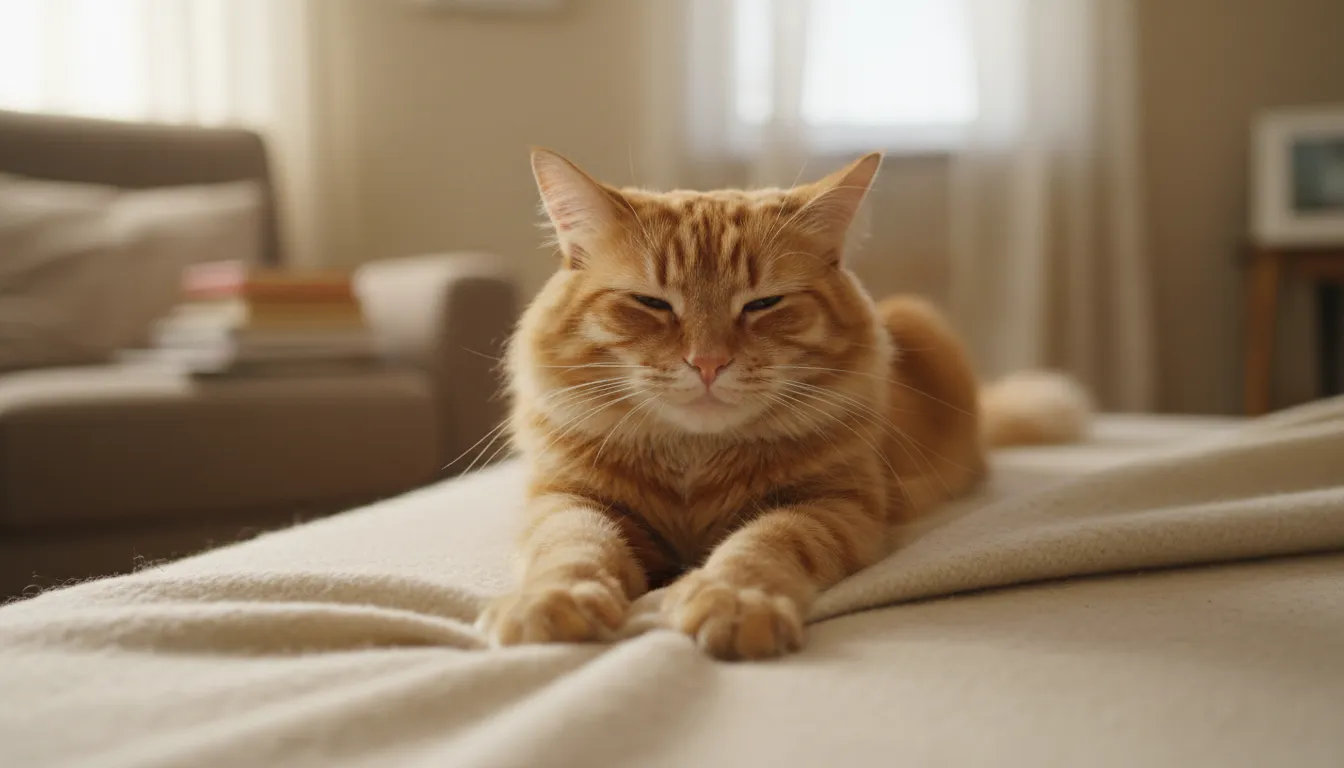
Most owners find kneading adorable and leave it at that. It's actually a deeply rooted emotional signal worth understanding.
Kittens knead their mother's belly to stimulate milk flow. When an adult cat kneads your lap or a blanket, it's revisiting the safest moment it has ever known.
A cat that kneads isn't just happy - it's experiencing a neurological callback to total security. It doesn't happen when a cat is tense, alert, or uncertain.
You won't see a newly rescued cat knead on day one. It takes time and the right environment to unlock, so when it finally appears, it means something real.
The next sign is so common that people completely misread what it means.
#8 - They "Loaf" Without a Care
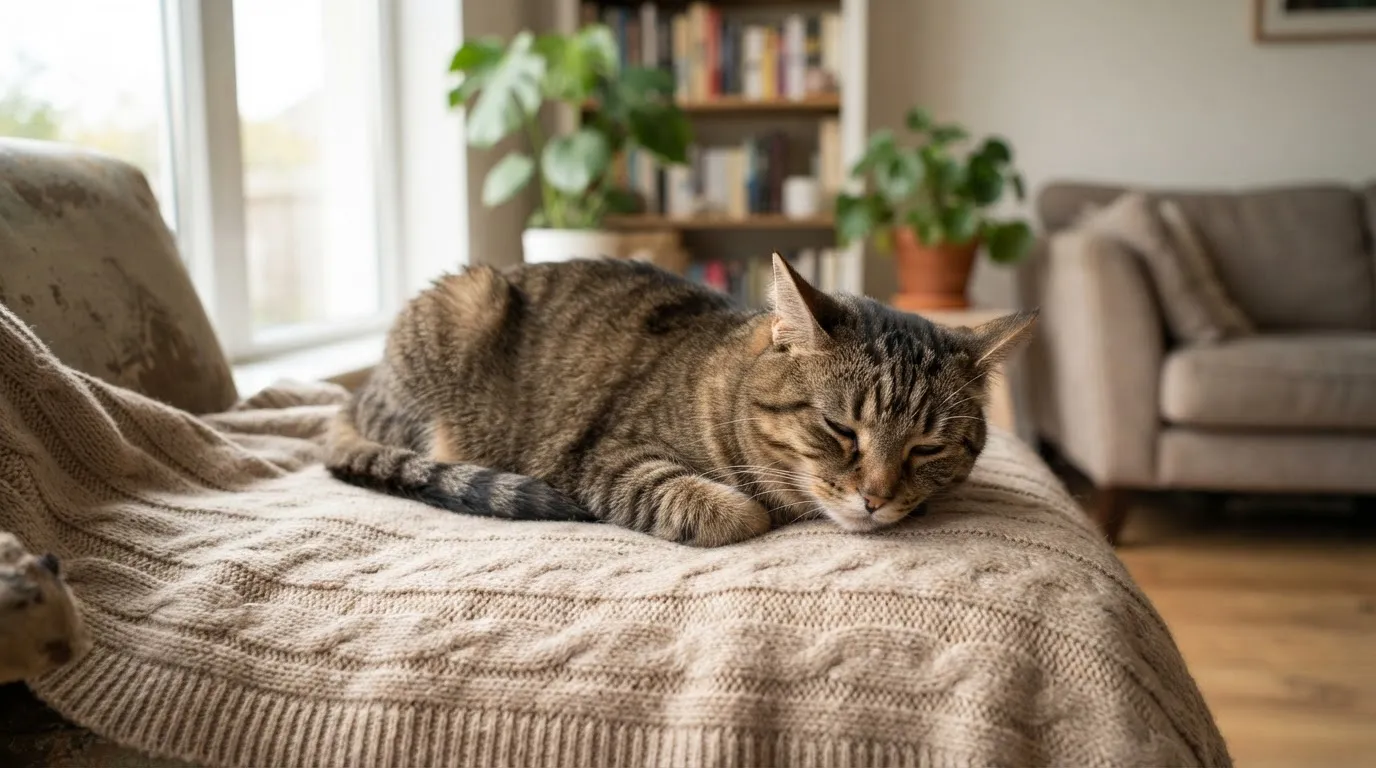
The loaf position - paws tucked neatly under the body, eyes half-closed - looks lazy. It's actually a precise indicator of emotional state.
Loafing is a relaxed resting posture. A cat can still move if it needs to, but choosing to sit this way means it feels comfortable enough to conserve energy instead of staying on high alert.
A cat that tucks its paws under its body is choosing comfort over readiness - and that choice only happens when the environment feels genuinely safe. A cat sitting with paws flat and weight forward is still braced for something; the loaf is the opposite of braced.
One more thing - watch the ears during the loaf. They'll tell you even more.
#7 - Their Ears Face Forward and Relax
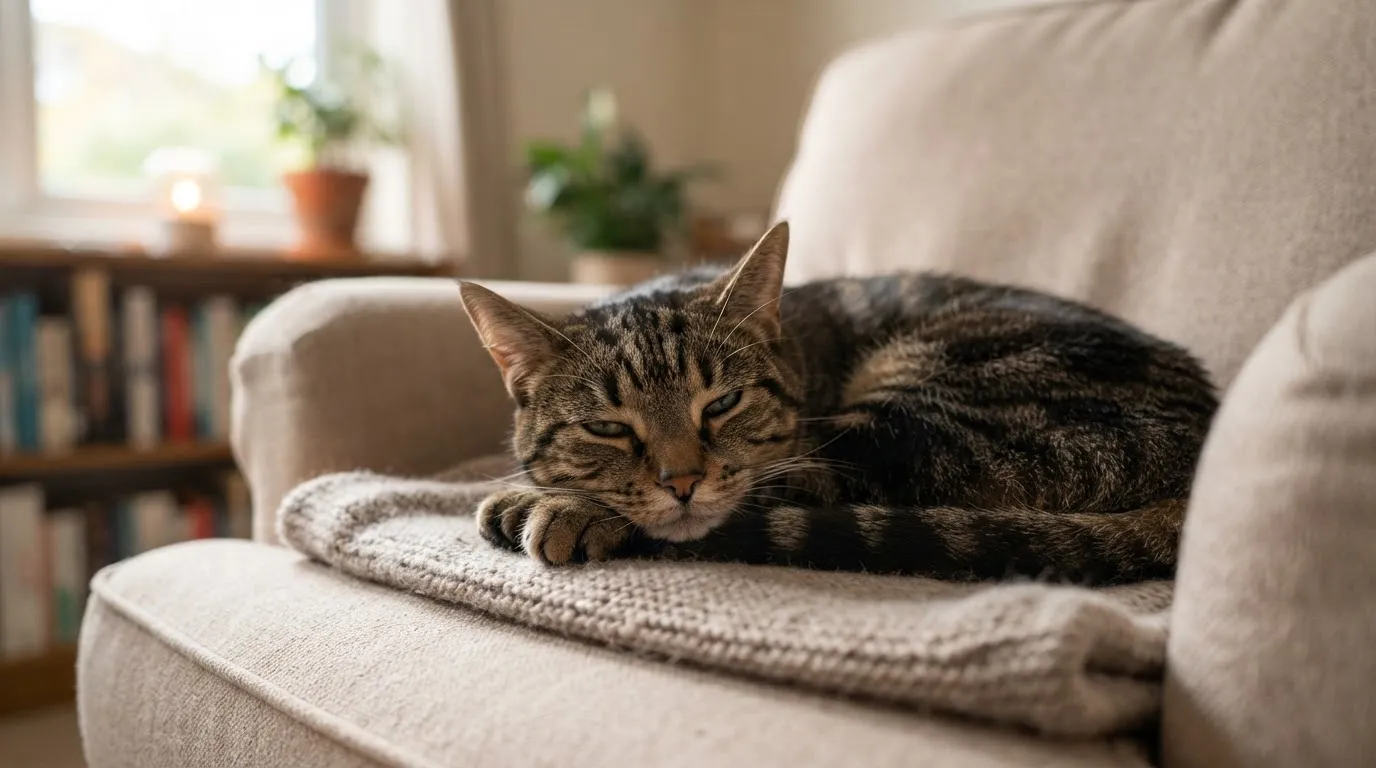
Ears are the part of cat body language most people ignore. That's a mistake - they're one of the fastest, most honest signals a cat produces.
Relaxed, forward-facing ears signal comfort and security. Ears that swivel constantly, tracking every sound, belong to a cat that still hasn't fully exhaled.
When both ears settle forward and stop rotating, the cat has mentally decided the environment is under control. Pair that with eyes that are shut or half-closed, and you've got a two-second read of a cat's entire inner state.
Once you know it, you can't unsee it.
But what happens when a settled cat starts claiming your home? That's where things get interesting.
#6 - They Rub Their Face on Everything
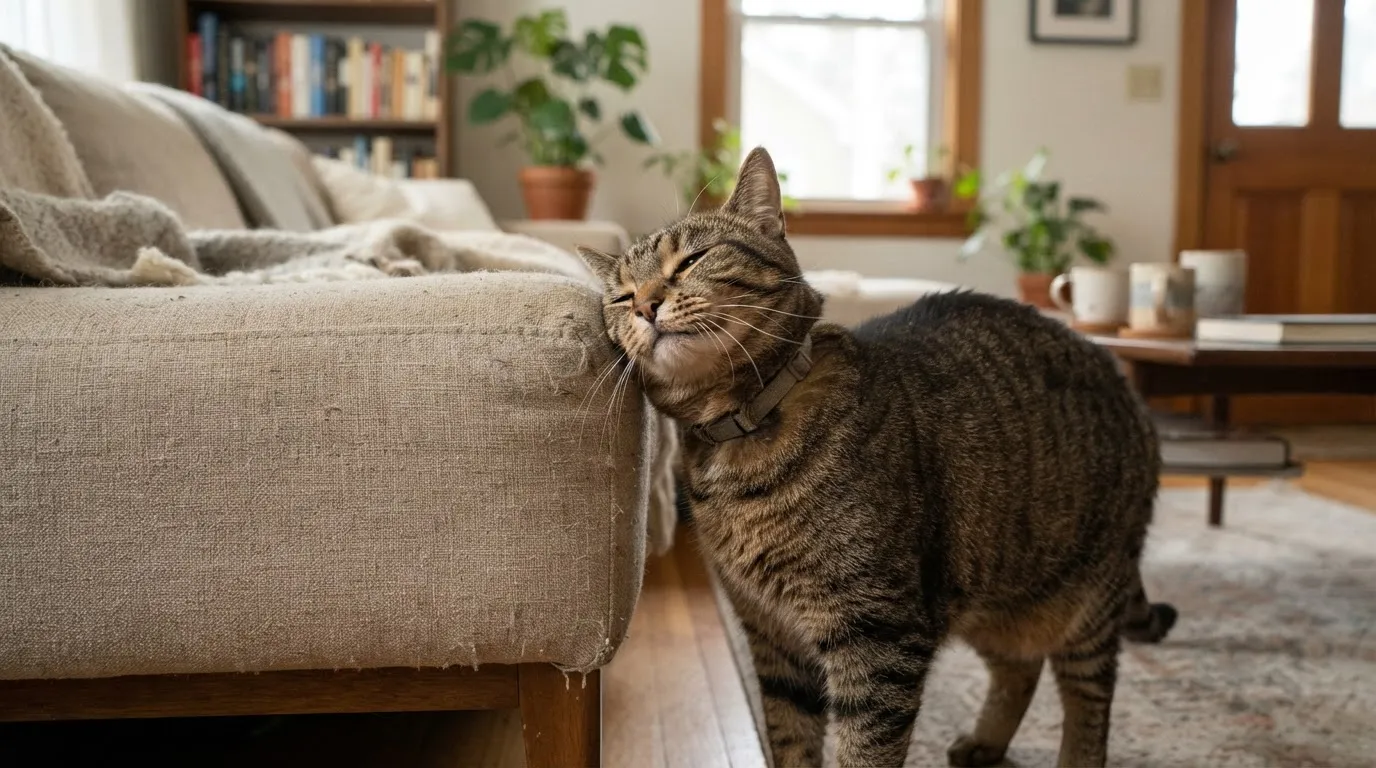
Your cat isn't just being affectionate when it rubs its cheek along the corner of the couch. It's making a deliberate territorial declaration.
Bunting deposits pheromones from glands in the cheeks, marking people and objects as safe. This is how a cat converts a foreign space into its own.
A cat that rubs its face on your furniture, your legs, and your doorframes is chemically rewriting the home as its own territory. That only happens once the animal has crossed the line from "visitor" to "resident."
Cats that still feel unsafe don't bother scent-marking - they're too busy watching the exits. When the cheek-rubbing starts, the cat has stopped watching the exits.
Worth Knowing
- Cats have glands on their cheeks, forehead, and chin that contain pheromones.
- Cat facial pheromones have a calming and reassuring effect, so headbutting can be a sign your cat is content.
- These pheromones seem to have a calming effect on cats, so encouraging facial marking can even help reduce stress-related spraying.
#5 - They Groom Themselves Openly
Grooming seems like basic hygiene. But where and when a cat grooms reveals exactly how safe it feels.
Stressed cats either neglect their coat entirely or over-groom one patch obsessively. A settled cat grooms out in the open - on the back of the couch, stretched across a sunny patch of floor, completely unguarded.
A cat mid-groom has its eyes closed and its attention fully inward - that only happens when it's certain nothing in the room poses a threat. It's one of the most vulnerable positions a cat can be in.
The fact that it happens in front of you, without hesitation, is not nothing. It's trust made visible.
The next sign is one most people notice but almost nobody correctly interprets.
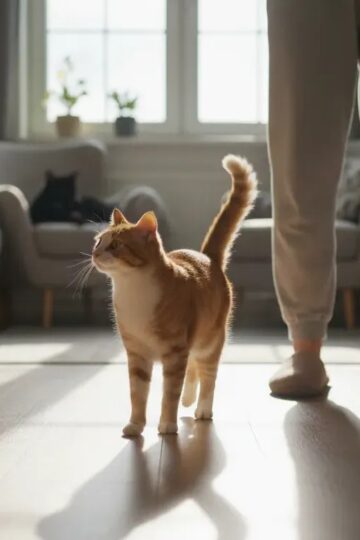
#4 - They Bring Their Tail Up High on Approach
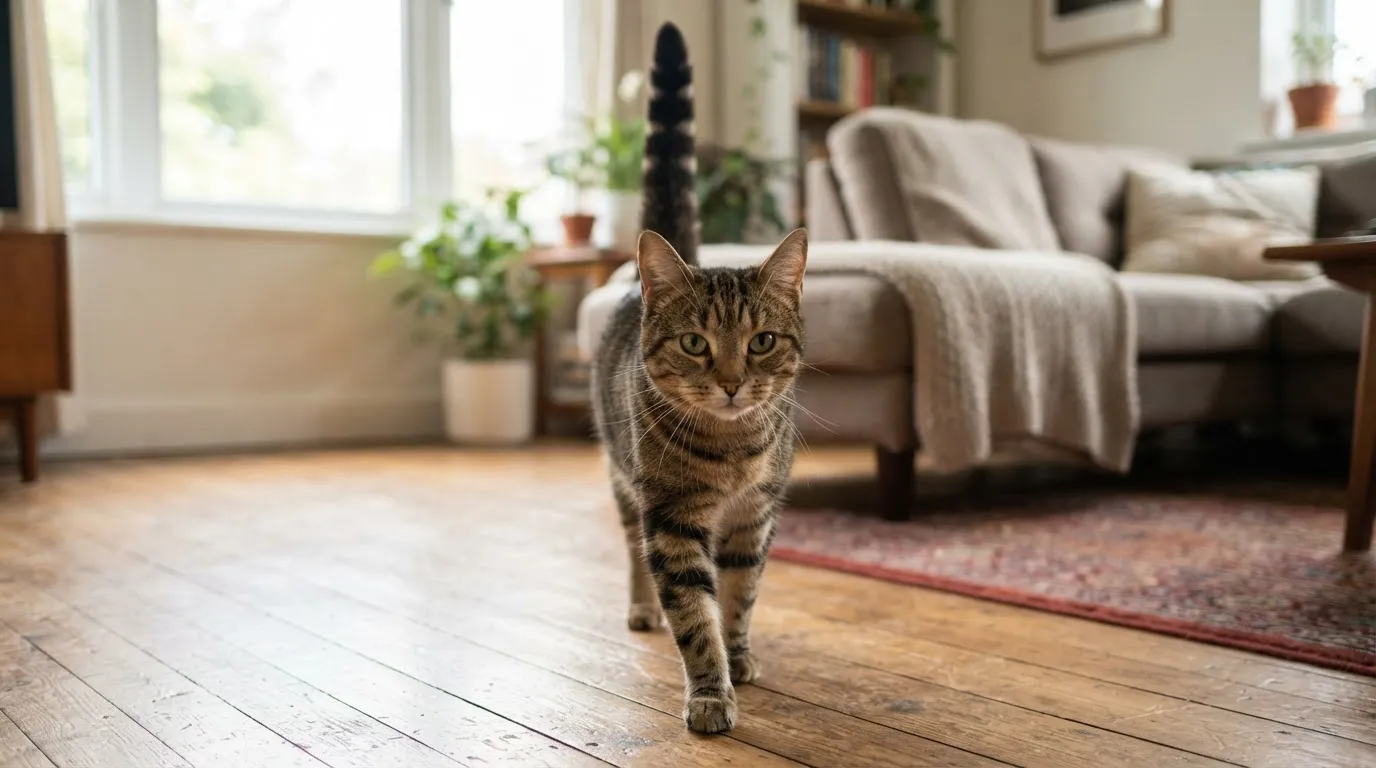
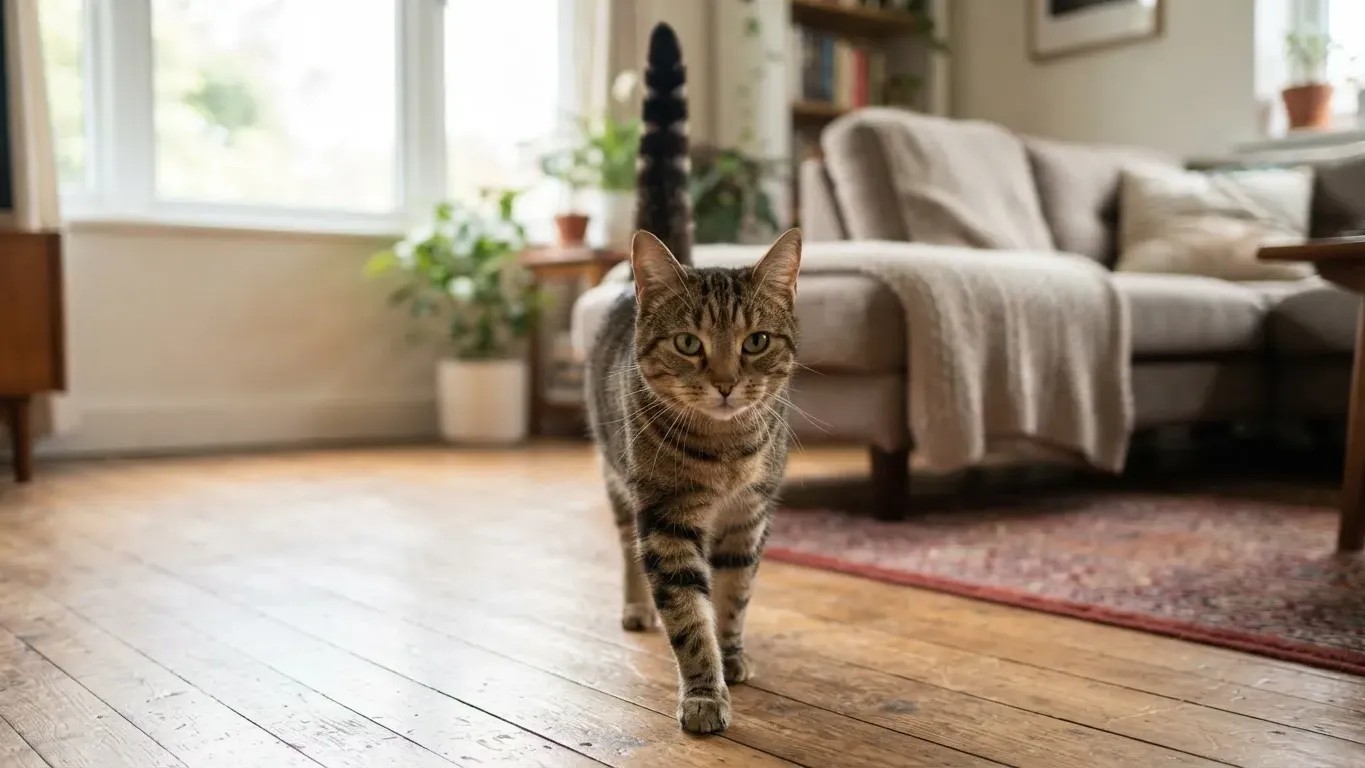
A cat walking toward you with its tail straight up isn't just saying hello. That tail position carries a very specific meaning.
An upright tail signals confidence and friendliness, especially when approaching people. A safe cat roams the house with curiosity instead of fear - upright tail, perked ears, calm pacing.
The upright tail on approach is the cat's version of an open hand - it only appears once the cat has fully classified you as safe. A cat that still approaches low, tail tucked or trailing, is still hedging.
The tail-up cat has stopped hedging entirely. Watch what happens right after the tail goes up - that's the next sign.
#3 - They Seek You Out Without Wanting Anything
This one catches a lot of owners off guard. It breaks the stereotype that cats are only affectionate when they want food or the door opened.
A settled cat follows you from room to room not to demand something, but simply because your presence equals safety. Social proximity like this reflects a strong bond and a real sense of security.
The cat that sits next to you doing nothing is the most secure cat in the room. It has no agenda - it has simply decided that your location is the best location, which is the highest compliment a prey-wired animal can pay.
Most people underestimate this entirely. The final two signs are the ones that take the longest to appear - and when they do, it means something most rescue cats never reach.
#2 - They Expose Their Belly
Few feline behaviors are as misread - and as meaningful - as the belly display. Most people treat it as an invitation; it's actually a confession.
Happy, relaxed cats have a loose posture, soft eyes, and may expose their bellies. It isn't necessarily an invitation for a belly rub, but it is a sign of deep trust.
The belly is the most vulnerable part of a cat's body - exposing it means the cat has decided, at the deepest instinctive level, that nothing in this home will harm it. Your cat's body is vulnerable in that position, but they know you're a safe presence.
This behavior can take weeks or months to appear in a rescued or rehomed cat. When it finally does, it isn't a quirk - it's a declaration.
Quick Compare
- Guarded cat: tucked paws, swiveling ears, tail held low and tight.
- Settled cat: loose limbs, soft ears, tail relaxed and easy.
- Guarded cat: bolts its food and watches the doorway.
- Settled cat: eats slowly with its back to the room.
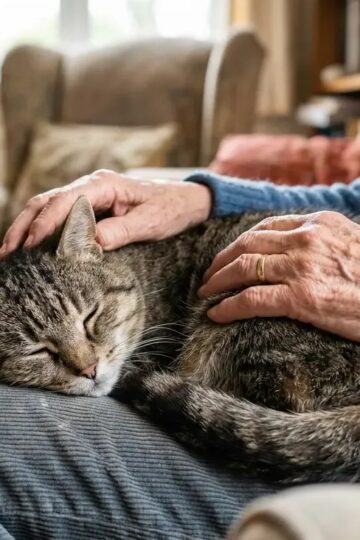
#1 - They Initiate Physical Contact on Their Own Terms
Every other sign on this list matters. But this one is the summit - a cat that hasn't just settled, but fully and unconditionally decided it is home.
A cat may show love by rubbing against you, slow-blinking, or making biscuits on the couch. But the key word is initiate.
A cat that comes to you unprompted, on its own schedule, choosing your lap over every other surface in the house, has completed the entire arc from uncertain newcomer to fully settled resident. That's a very different thing from simply tolerating affection when it's offered.
Self-initiated contact is one of the most reliable indicators that a cat feels permanently, deeply safe - not just comfortable, but home. A rescue cat that initiates contact is learning something life-changing: that it is finally safe.
Some cats reach this point in weeks. Others take years, and a cat with a genuinely hard history before you may never fully get there - which makes it all the more extraordinary when one does.
The Bottom Line
Most cats don't announce when they've finally relaxed. They show you - in slow blinks, loafed paws, upright tails, and the quiet decision to sit next to you for no reason at all.
At a Glance
- Early signs: open sleeping, slow blinks, relaxed ears.
- Mid-stage signs: kneading, loafing, open grooming, face-rubbing.
- Rare, deep-trust signs: belly exposure, self-initiated contact.
These signs are subtle, behavioral, and grounded in millions of years of survival instinct. When a cat stops watching the exits and starts claiming your furniture, rubbing its face on your walls, and sleeping with its belly to the ceiling, it has found something rare.
Not every cat gets there. The ones that do earned it slowly, one small signal at a time - and if you've seen even three or four of these in your own cat, you're already living with a rare kind of trust.