13 Things a Shy Cat Does When It Finally Decides to Love You
Most people assume a shy cat that hides under the bed simply doesn't like you. Cat behaviorists say the truth is almost the opposite - a reserved cat's love, when it finally shows up, is one of the most deliberate forms of trust in the animal world.
The signs are quiet, easy to miss, and nothing like the tail-wagging chaos of a dog falling for you. Once you know what to look for, you'll realize your shy cat may already be telling you something enormous - and the biggest sign is still several steps away.
#13 - It Stops Leaving the Room When You Walk In
For a shy cat, simply staying put is a massive declaration.
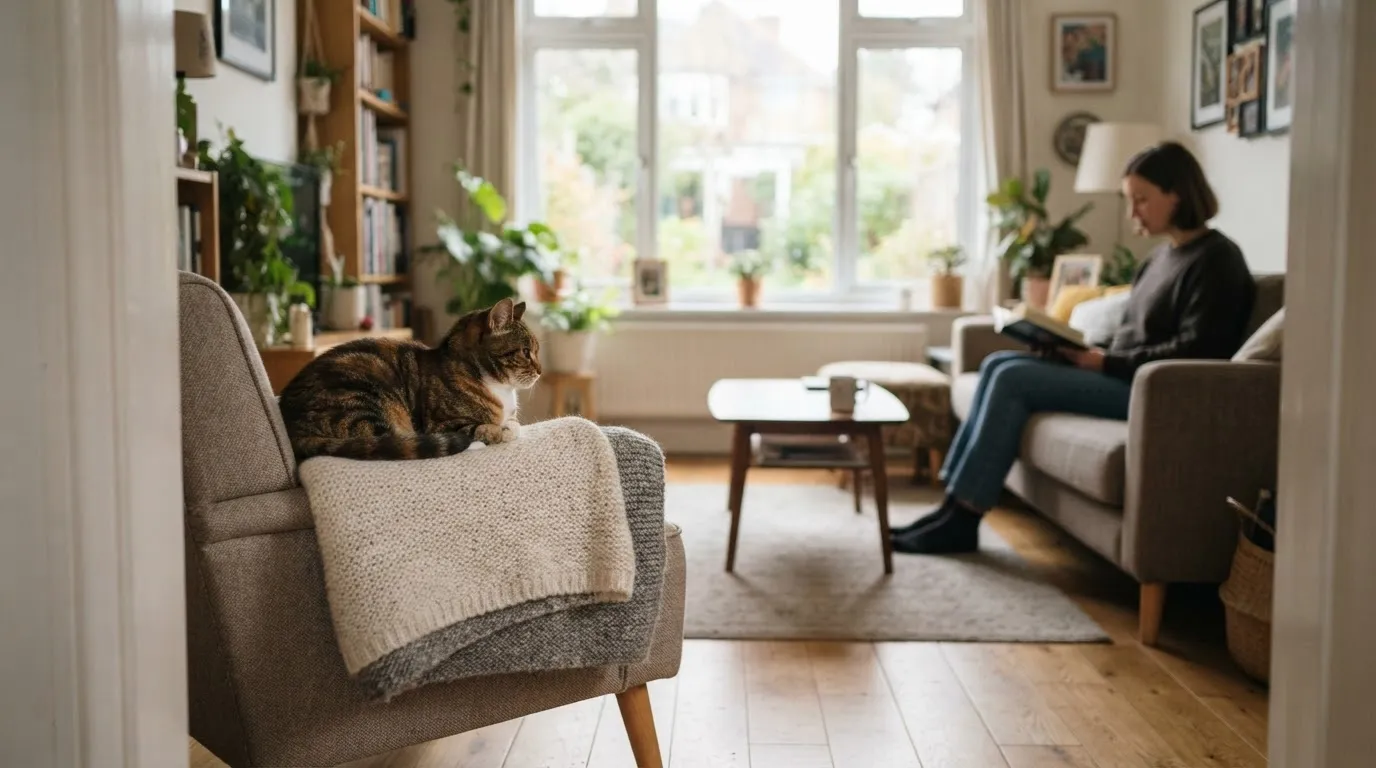
In the early days, a timid cat bolts the moment you enter. Once bonded, a cat feels safe enough to stay - even in the far corner - because their love is quiet and built on trust, not dramatic displays.
Staying in the room, even from a distance, is the first crack in the wall. That shared space is the foundation every other sign on this list is built on.
Don't rush it. Don't call it out - just let it happen.
Watch for this shift carefully. Once it starts, the next behavior arrives faster than you'd think - and it's written all over their face.
#12 - It Gives You the Slow Blink
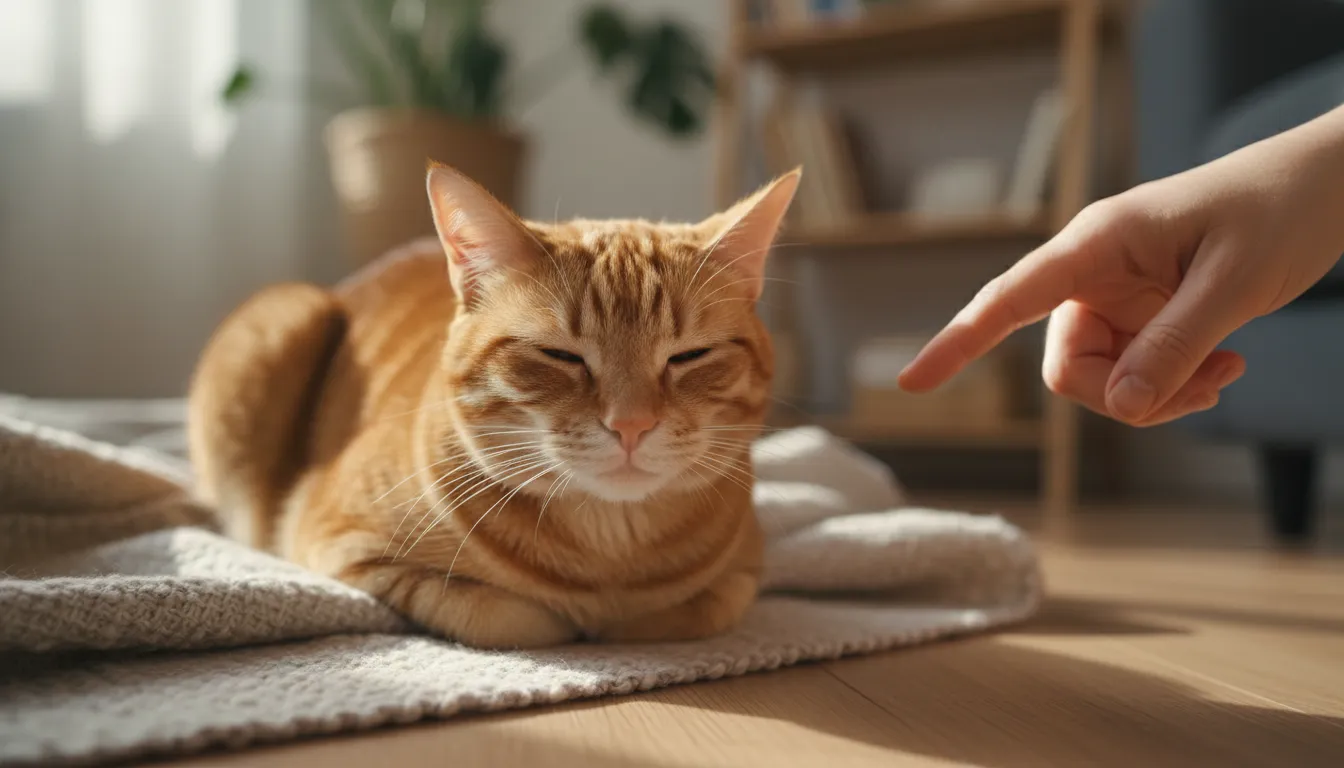
This one looks like nothing. It's actually everything.
Animal behavior experts describe the slow blink as a cat's way of saying she feels safe with you.
The slow blink really is an acceptance gesture. [Cats] do that when they're absolutely comfortable with you.
Dr. Gary Weitzman, veterinarian and author of How to Speak Cat
Shy, independent, or previously feral cats often rely more on body language than physical touch. Slow blinking lets them connect without feeling overstimulated or vulnerable.
For a shy cat, the slow blink is the equivalent of saying "I choose you." Blink back slowly and many cats will blink again, relax their body, or even move closer.
But there's something even more personal waiting at #11...
#11 - It Starts Sitting Closer - Then Closer Still
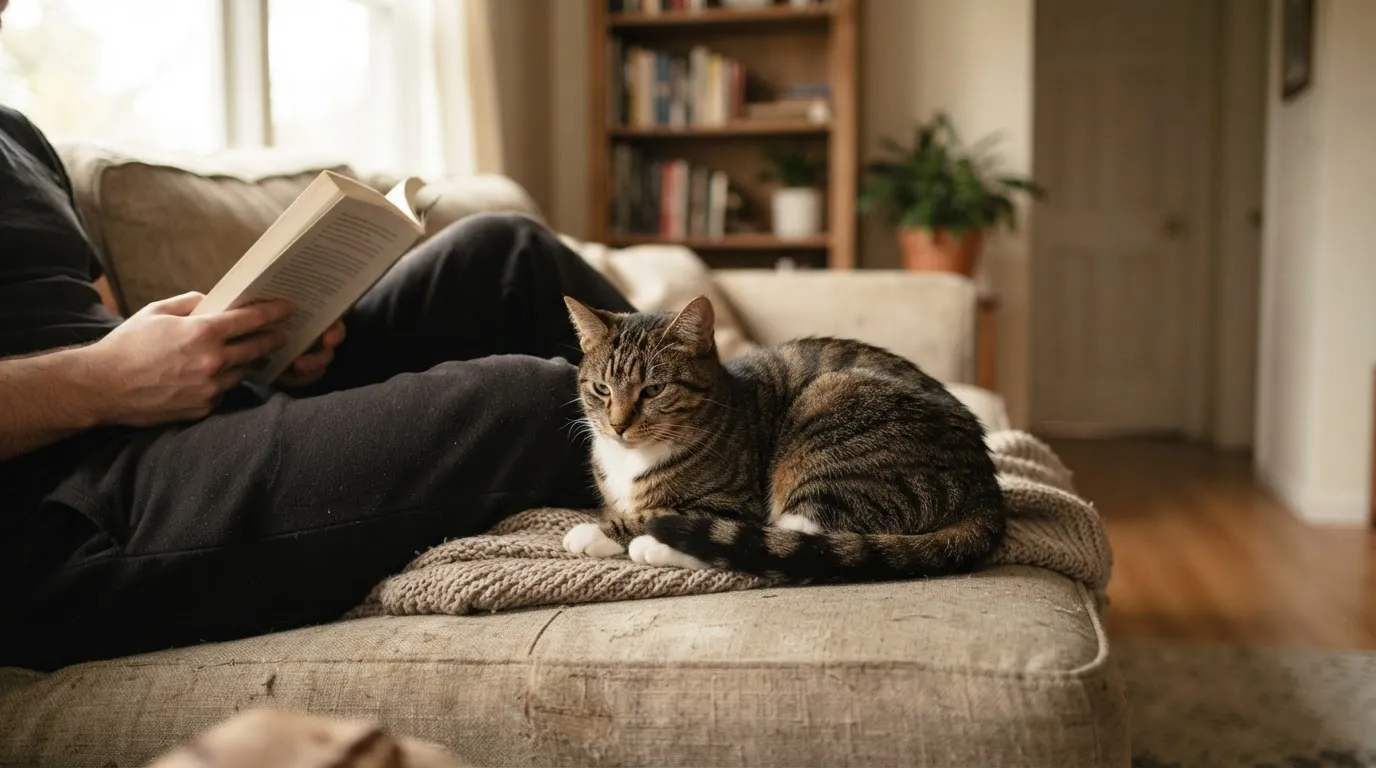
A shy cat doesn't leap into your lap on day one. It inches.
Sitting nearby while you read, watch TV, or work quietly is a strong sign of attachment. It shows your cat enjoys your presence without needing constant interaction.
Watch the pattern over days and weeks. First the doorway, then the edge of the couch, then the cushion right next to you.
Each inch closer is a deliberate, conscious decision - shy cats don't end up next to you by accident. Most people misread this as coincidence, but insiders know it's a courtship.
And once that proximity is established, a shy cat's next move is almost invisible - unless you know exactly where to look.
#10 - Its Body Language Goes "Neutral"
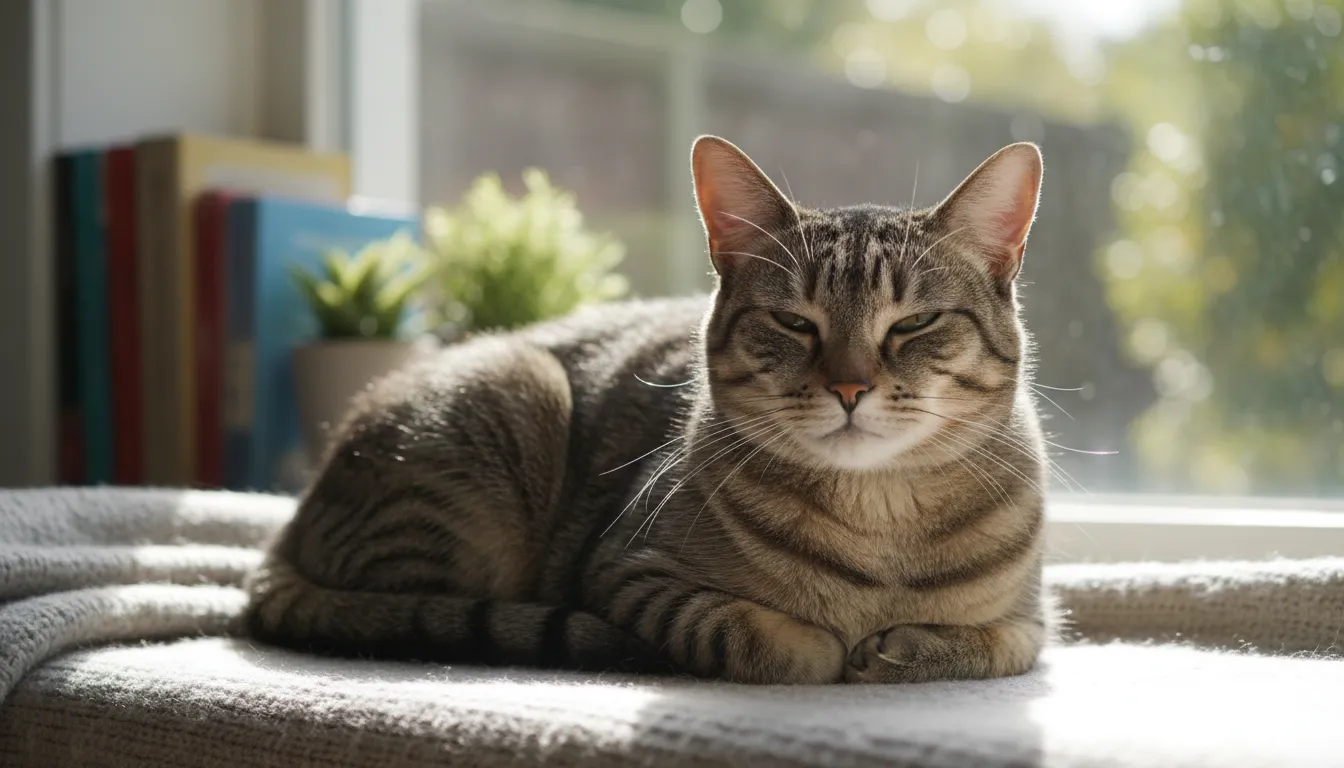
Tense cats look tense. A cat that trusts you looks like nothing at all - and that's the tell.
Watch the ears, whiskers, posture, and movements. Forward-tilted ears, smooth fur, relaxed whiskers, and slow movements all show a cat that feels safe with no need for defensive tension.
For a previously shy cat, this relaxed neutral state is the hardest-won signal of all. A tense cat ready to flee keeps its muscles loaded - a cat that's decided you're safe simply lets go.
Fast Facts
- Ears forward and loose usually mean a cat feels comfortable, not alert.
- Whiskers held soft and sideways signal calm; whiskers pulled tight forward often mean tension.
- A still or gently swaying tail is relaxed; a puffed or tucked tail signals fear.
- Loose, soft muscles show trust - a crouched, coiled body is ready to bolt.
This is the body saying what the cat's personality won't. And just when you think it can't get more subtle, #9 takes it somewhere completely unexpected.
#9 - It Follows You From Room to Room
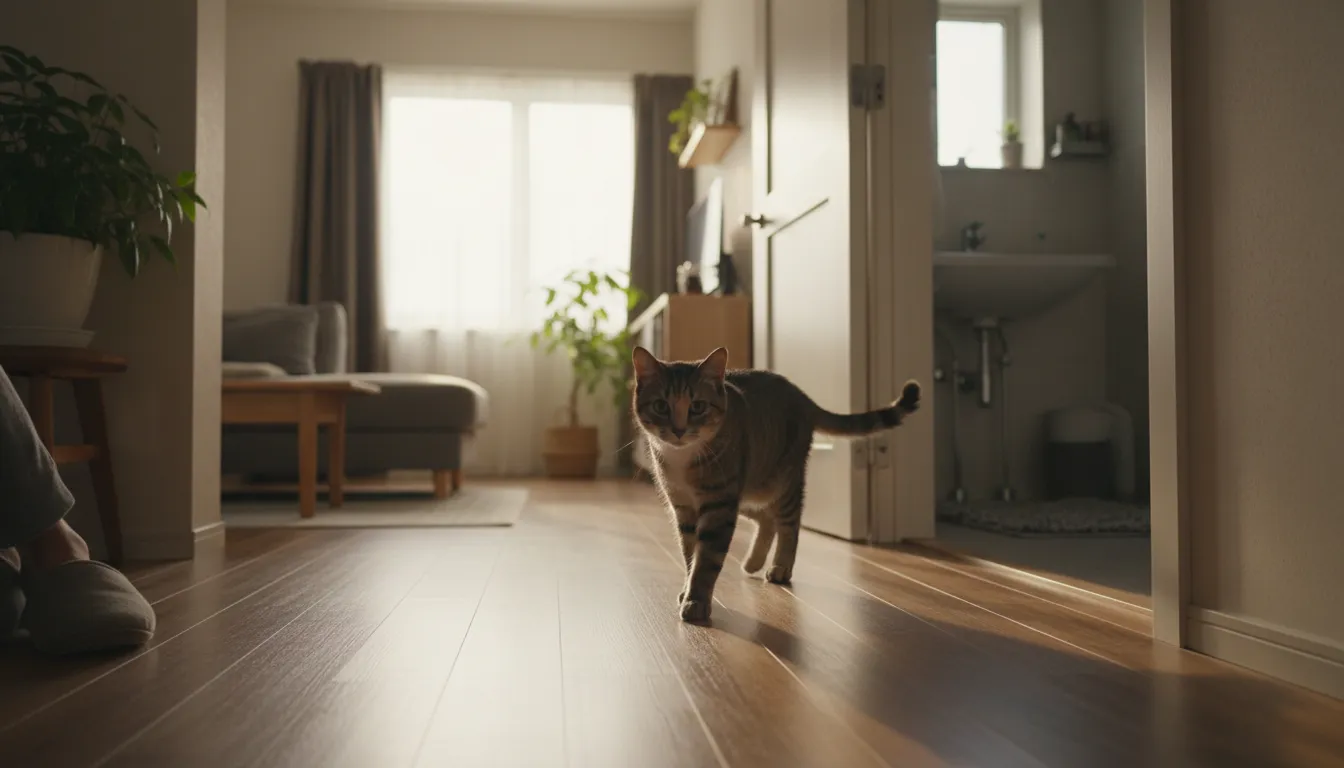
You get up. It gets up. Every single time.
If your cat follows you from room to room - even to the bathroom - it's a strong sign they feel connected to you. This "shadowing" shows they find comfort in your presence, even without actively engaging.
For a shy cat, this is genuinely remarkable. These are animals that once spent weeks mapping the safest exit routes in your home.
Now they're voluntarily tracking your every move. If your cat seeks you out when it isn't hungry, that's a bonding behavior with nothing to do with food.
The shadowing instinct only kicks in once a cat has decided you're worth the social risk. Give it time - because #8 signals the exact moment a shy cat stops watching and starts participating.
#8 - It Greets You at the Door With a High Tail
A shy cat that meets you at the door has crossed a psychological threshold.
Their tail is held high, often with a tiny curve at the tip - the feline equivalent of open arms. In cat social language, a raised tail at greeting is an unambiguous signal of friendliness and trust.
For a cat that used to disappear when you walked in, greeting you upright is a full 180-degree shift. Many owners miss it, but that door greeting is genuine excitement at your return.
Some experts consider this one of the clearest signs a formerly shy cat has fully accepted you. And right behind that greeting comes a behavior that will leave little marks on your skin - in the best possible way.
#7 - It Kneads You (Making "Biscuits")
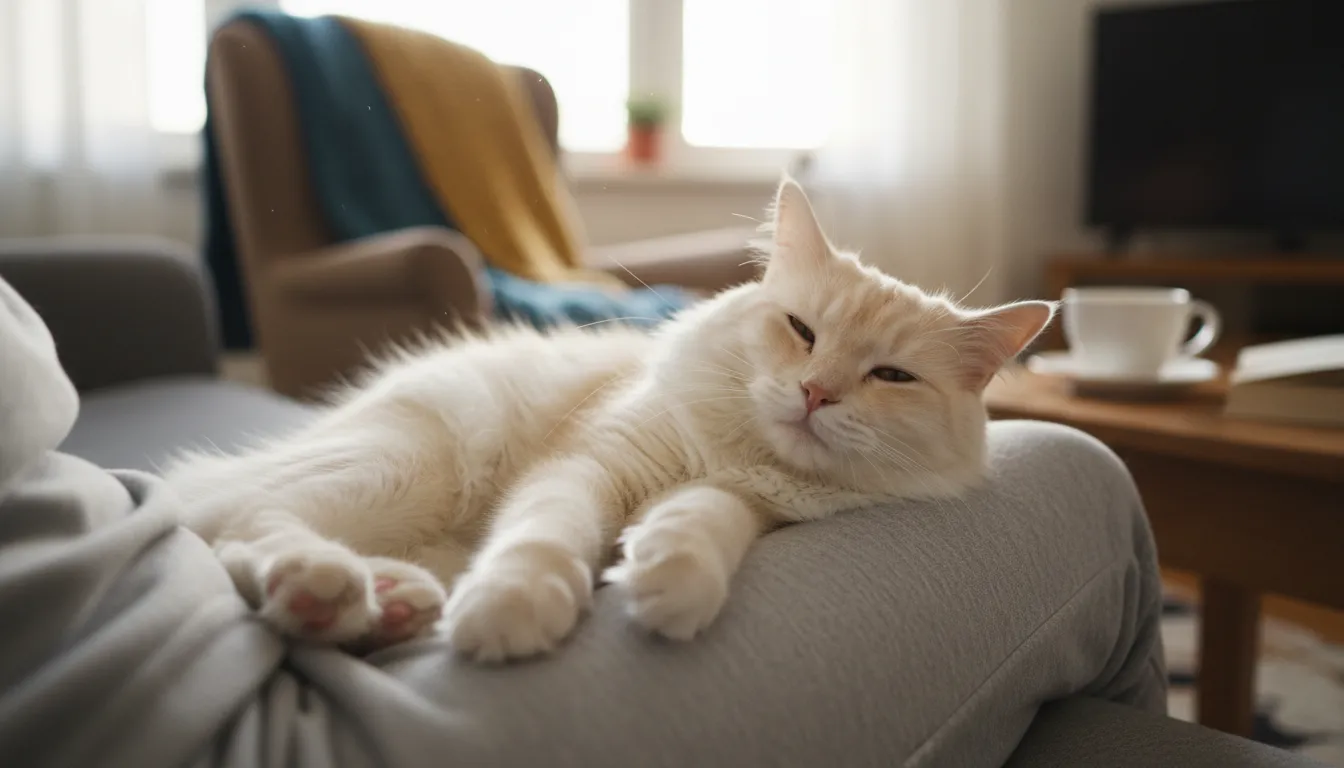
Those slow, rhythmic paw pushes mean something very specific.
The behavior starts in kittenhood, when kittens knead their mother to stimulate milk flow. When adult cats knead humans, it's a sign of comfort and emotional connection.
A shy cat that kneads you is reaching for one of its deepest comfort responses - and pointing it straight at you. That is not a small thing, even if the claws sting a little.
You'll probably hear purring too, the classic sign of contentment. If your shy cat is "making biscuits" on your lap, you've officially become their safe place.
But wait until you see what #6 means - most owners completely misread it.
#6 - It Shows You Its Belly (But Doesn't Want You to Touch It)
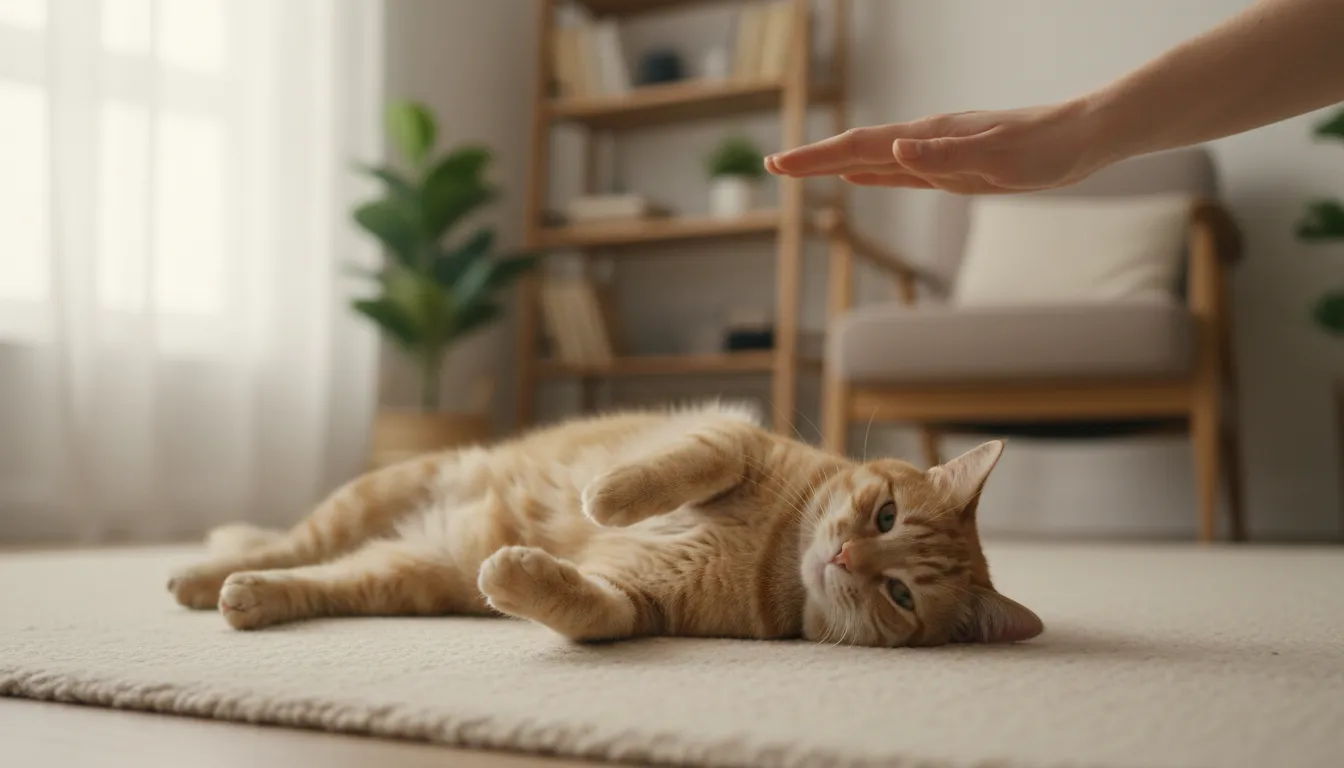
The exposed belly is almost always misread - and the misreading ruins the moment.
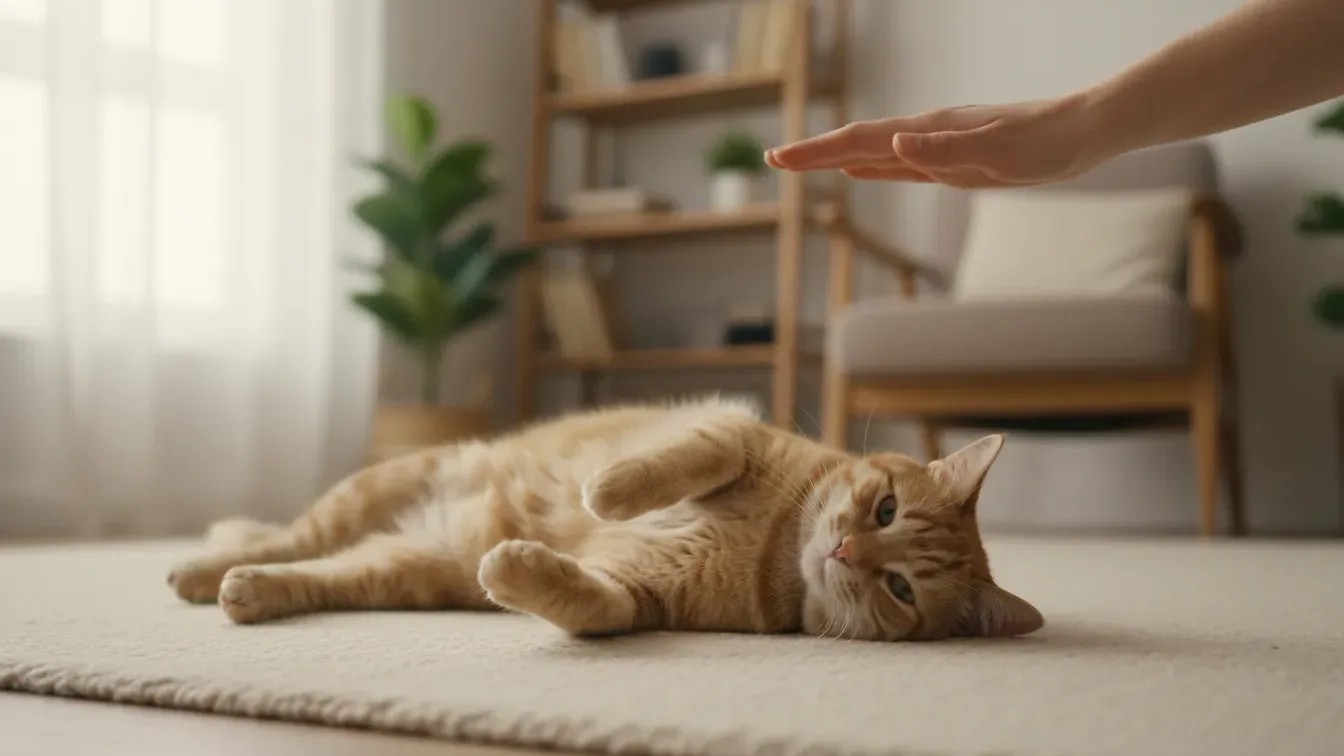
A relaxed cat may roll over and expose its belly instead of getting up to greet you. That doesn't mean they want a belly rub - it means they feel safe enough to leave their most vulnerable spot open.
When a cat lies on its side or back in front of you, it's expressing the ultimate sign of trust. Only a cat truly comfortable with you would willingly show that.
For a shy cat, flopping belly-up in your presence is an act of extraordinary emotional courage. Appreciate it - don't lunge for the belly, just acknowledge the trust and let the cat lead.
Quick Compare
- What it means: total trust, with the most vulnerable spot exposed on purpose.
- What it doesn't mean: an invitation to rub or touch the belly.
- Best response: admire from where you are and let the cat make the next move.
- Common mistake: reaching in for a rub, which can turn a trust moment into a swat.
What comes next at #5 is even more personal - it involves your scent.
#5 - It Rubs Its Face on You (Head Bunting)
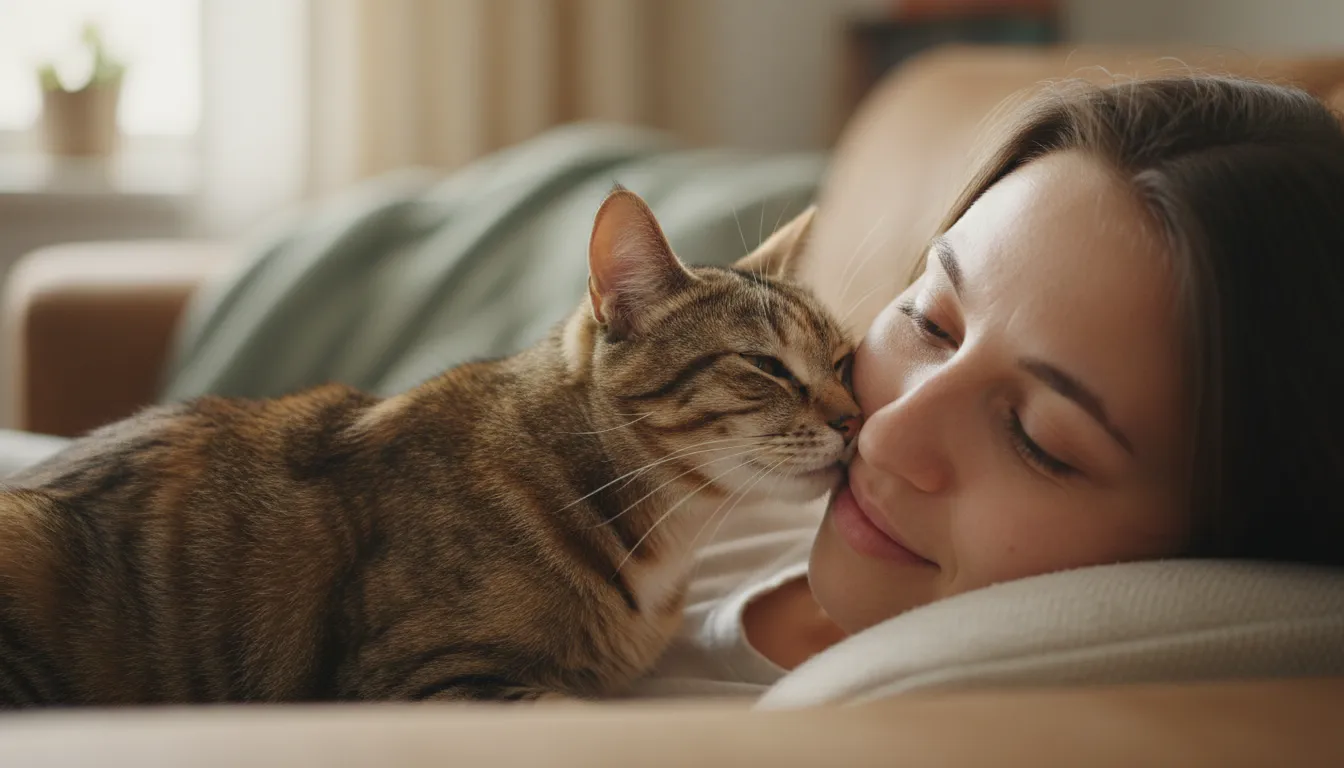
When a shy cat finally head-butts you, it's not random. It's a formal declaration.
Cats have scent glands on their cheeks, forehead, and chin that release pheromones during these interactions. By depositing their scent, they mark you as part of their safe, familiar world.
When a cat pushes her head against you, she's showing an extremely close bond - a gesture saved for a cat's closest friends and most trusted humans.
Crucially, even shy or anxious cats bunt familiar people as a coping mechanism. It's more about comfort than extroversion.
This isn't just affection - it's your cat telling the world you belong to them. And #4 takes that intimacy one step further.
#4 - It Grooms You (Licking Your Hand or Hair)
This one sounds odd. It means something profound.
If your cat licks your hand, arm, or hair, take it as a huge compliment. Allogrooming is a bonding behavior cats typically reserve for other cats in their colony.
When a shy cat extends this to you, it has mentally placed you inside its social group - not as an observer, but as a member. That shift is irreversible.
Worth Knowing
- Allogrooming is normally reserved for trusted members of a cat's own colony.
- Shared grooming helps cats build a communal scent among bonded companions.
- Being groomed by your cat means it has filed you under "family," not just "caretaker."
- Sudden, excessive licking can also signal stress, so watch the context too.
A shy cat that grooms you has stopped seeing you as "human" and started seeing you as family. Once it happens, look closely for #3 - a behavior so small most owners sleep right through it.
#3 - It Sleeps Near You (Then Eventually On You)
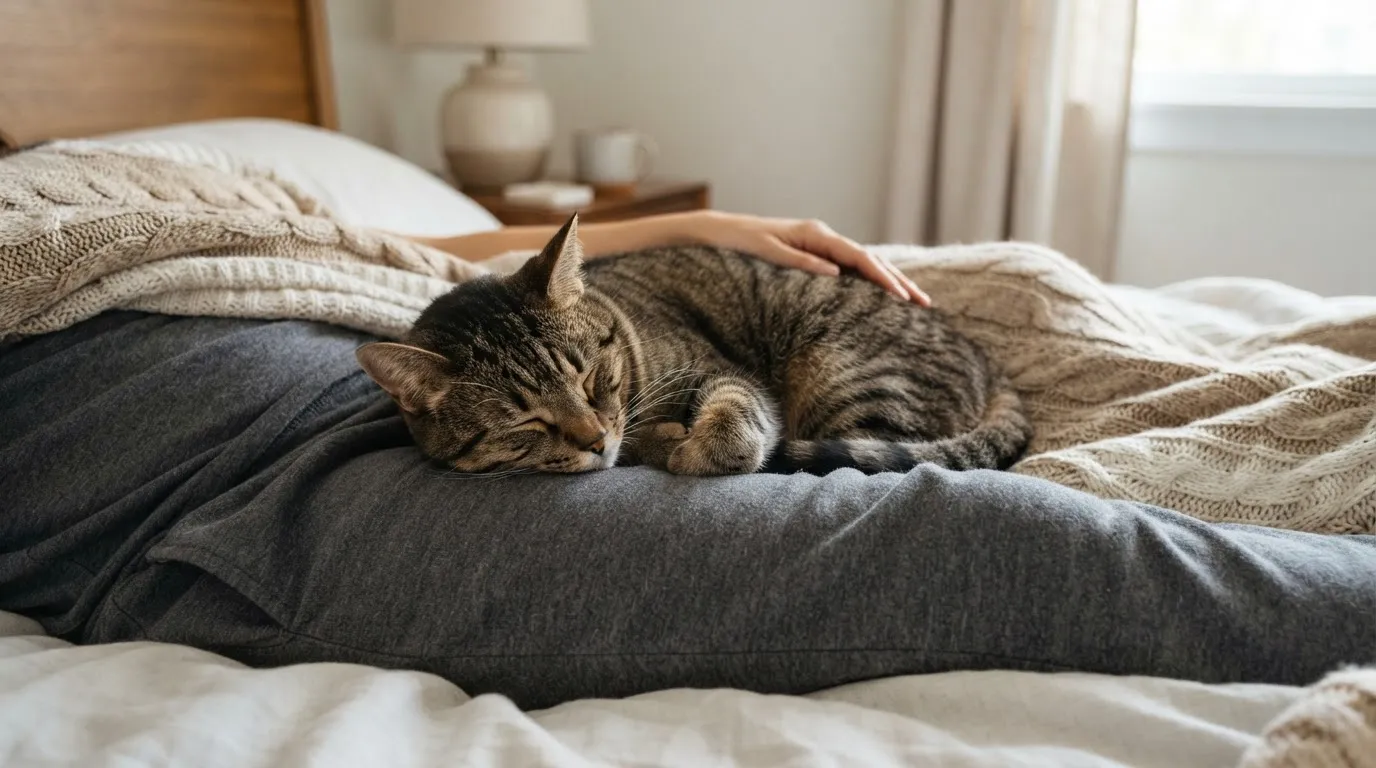
Sleep is the ultimate vulnerability. A shy cat doesn't give it away easily.
Sleeping, cuddling, and following you around are all signs a cat has bonded with you. For a shy cat, this escalates in stages - first the same room, then the foot of the bed, then finally contact.
The moment a formerly shy cat chooses to sleep touching your body, it has decided you're its safest place in the world. Relaxed body language, purring, and slow blinking all confirm that deep sense of security.
Don't move. Don't make a big deal of it - just understand what it cost them to get there.
Because #2 is the behavior shy cat owners wait months, sometimes years, for.
#2 - It Voluntarily Climbs Into Your Lap
No invitation. No coaxing. It just jumps up and stays.
Actively seeking out physical contact is one of the most unmistakable signs of trust. Cats are naturally cautious, especially with anyone they don't feel fully comfortable with.
For a shy cat, the lap visit is the culmination of weeks or months of quiet assessment. It means your cat ran every possible risk calculation - and decided you were worth it.
Affection is a deeply personal experience for cats, reserved for people they feel emotionally safe with. This is almost the top - but #1 is the signal that makes every cat expert stop and pay attention.
#1 - It Vocalizes Specifically for You
A shy cat that develops a voice just for you has made you its person.
Deeply bonded cats become highly responsive to your voice, gestures, and expressions - and the reverse is true too. A shy cat that's fully bonded starts talking back, not to guests, not to the world, just to you.
Specific meows, chirps, or trills that appear only in your presence show a private communication system built for you alone. Cats don't rely on loud displays - their love is quiet, built through trust and shared routines.
At a Glance
- Chirps and trills are often greeting sounds reserved for a trusted person.
- Adult cats rarely meow at other cats - meowing is largely a human-directed behavior.
- The "silent meow" - mouth opens, little sound comes out - often shows deep comfort.
- More vocalizing when you leave the room usually points to attachment, not annoyance.
A bonded cat chooses to be around you not because it has to, but because it wants to. When a shy cat that barely made a sound starts calling out the moment you leave the room, the bond is complete.
That sound isn't neediness. It's a cat that built a whole world around you - slowly, deliberately, entirely on its own terms.
The Bottom Line
Shy cats don't love loudly - they love precisely. Every behavior on this list is a calculated choice made by an animal that spent a long time deciding whether you were safe.
The slow blink, the belly flop, the lap visit, the private meow - none of it is accidental. Slow blinking may not mean love the way a hug means love for people, but it means trust, acceptance, and safety.
And for a shy cat, that's everything they have to give. Which one did your cat do first - drop it in the comments, we'd love to know.