13 Ways a Senior Cat Still Enjoys Each Day Even When It Moves Slowly
Most people watch their senior cat shuffle across the room and assume something has been lost. That the spark is gone, that old age has quietly stolen the joy. Veterinarians and feline behaviorists say that assumption is exactly backwards.
Slowness is not the same as suffering, and a quiet cat is not necessarily an empty one. A lower energy level doesn't mean a cat has lost interest in play, connection, or curiosity - it just means the joy shows up differently now. Here are the 13 real, expert-backed ways your older cat is still quietly having a great day, starting with the one hiding in plain sight on your living room floor.
#13 – Tracking the Sunbeam Across the Floor
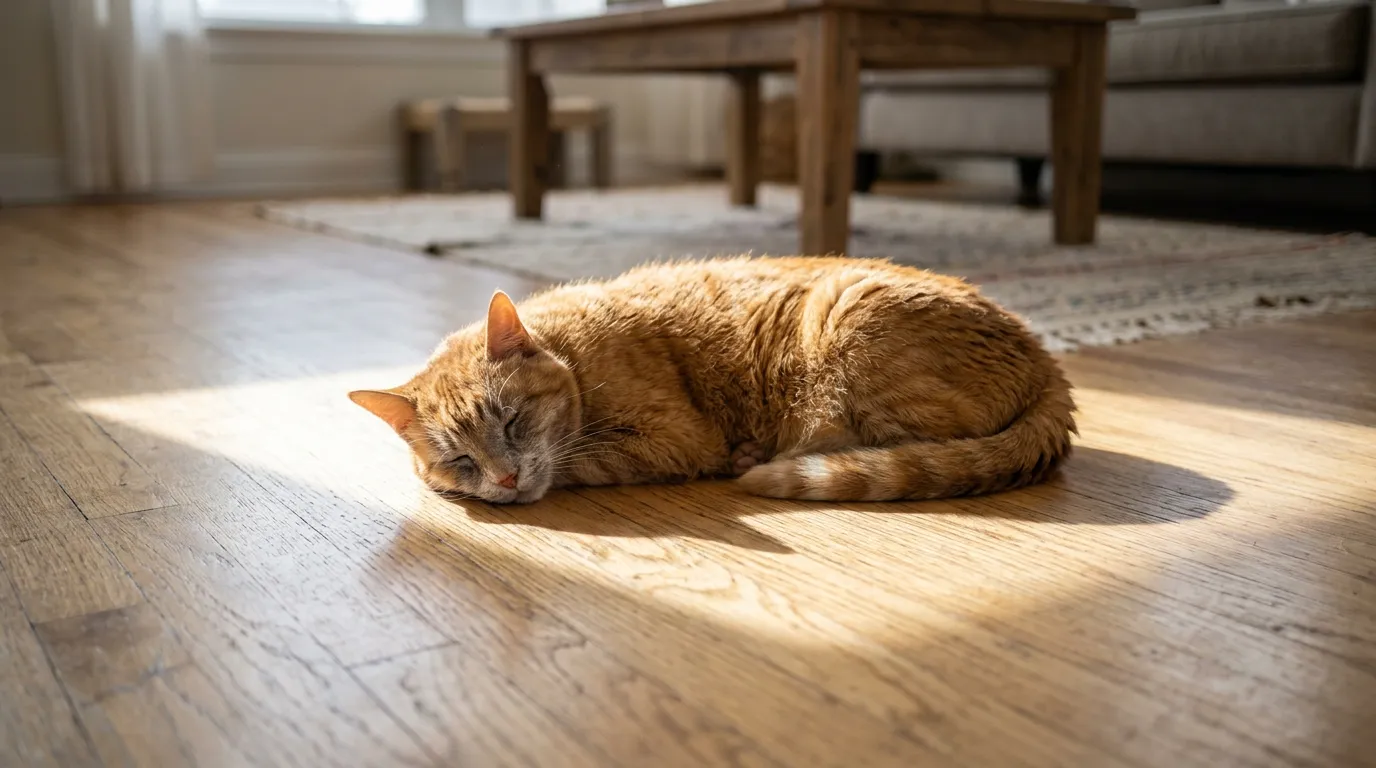
A senior cat's slow migration from one sunspot to another isn't laziness. It's a deliberate, daily pleasure ritual.
Sunlight eases stiff joints and relaxes tired muscles, which is exactly why arthritic cats seek it out instinctively. That warm patch of floor works like free physical therapy.
The sunbeam hunt is mentally engaging too. Tracking sun patches across the floor gives your cat a job - and gives you a feline-powered sundial in your own living room.
But that's nothing compared to what we found about #12…
#12 – Window-Watching as a Full-Time Job
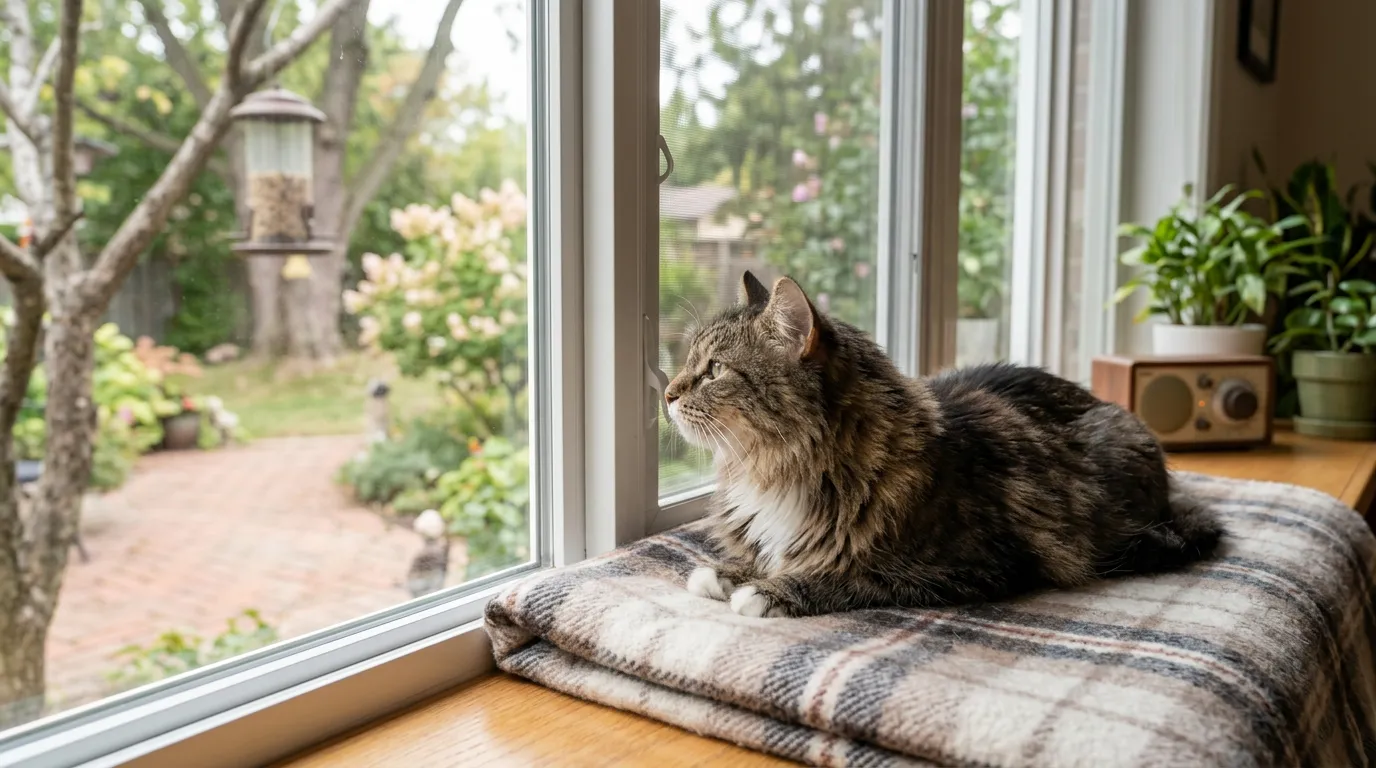
Your senior cat parked at the window isn't bored. It's running a full surveillance operation.
A cozy window perch with a view of birds or foot traffic outside counts as real environmental enrichment. Even a radio playing softly nearby can hold an older cat's attention.
Opening the window screen raises the stakes even further. It lets your cat smell every passing plant, animal, and insect - a sensory feast that costs you nothing.
But that's nothing compared to what we found about #11…
#11 – Puzzle Feeders: The Mental Workout They Still Crave
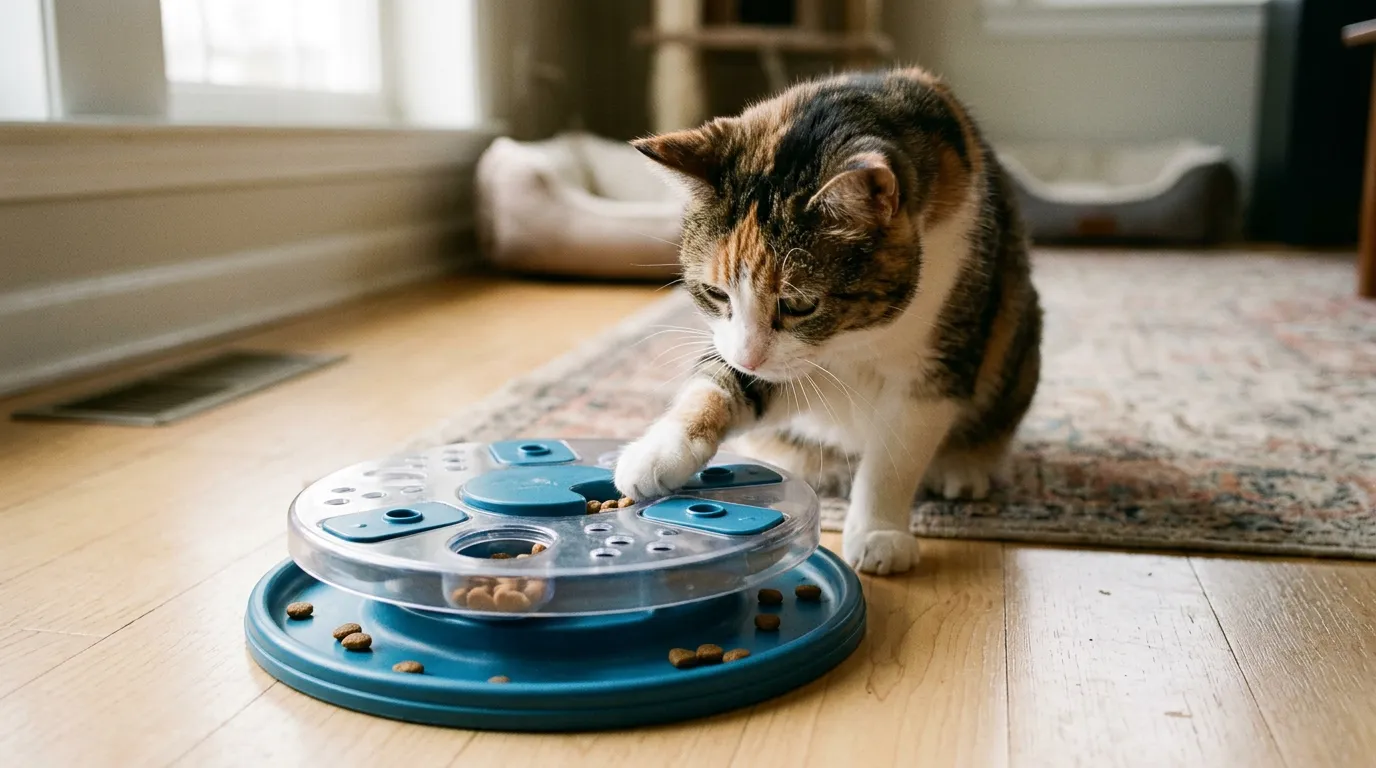
Most owners hand their senior cat a food bowl and call it done. Turns out that's actually the lazy option - for the cat.
Puzzle feeders make your cat work for their food, which keeps their mind sharp and adds gentle physical activity. Difficulty levels vary, so an older cat can still succeed without frustration.
The cognitive payoff here is real, not cosmetic. Mental stimulation can't cure feline cognitive decline, but it can slow it down and meaningfully improve quality of life.
But that's nothing compared to what we found about #10…
#10 – The Gentle Wand Toy Session
Think your older cat has given up on play? Most owners do - and most owners are wrong.
A lower energy level doesn't mean a cat has lost interest in play. It just means the game needs to change, not disappear.
If your cat always loved a wand toy, simply lower it closer to the ground. It stays mentally stimulating without asking for a leap they can no longer make.
Even five minutes counts. Keep sessions short, let your cat set the pace, and skip anything that resembles roughhousing - a slow paw-swipe at a feather is still a hunt in their mind.
But that's nothing compared to what we found about #9…
#9 – Scent Foraging: The Hidden Game Right Under Your Nose
Here's something almost no owner tries: hiding small treats around the house at ground level and letting a senior cat sniff them out.
This taps straight into deep instinct that never really fades with age.
Fast Facts
- The average well-fed pet cat only hunts for around 3 hours each day, compared to an unowned, feral cat that's not being fed, who may hunt for around 12 hours each day.
- With no supplementary food from a caregiver, cats can make as many as 10 to 20 kills every day.
- A slow, nose-to-the-floor treat hunt taps that same instinct, just scaled down for a senior body.
A slow, nose-to-the-floor treat hunt delivers real biological satisfaction. You don't need a big house or fancy gear - just a handful of treats and a curious old nose.
But that's nothing compared to what we found about #8…
#8 – Grooming Sessions With Their Human
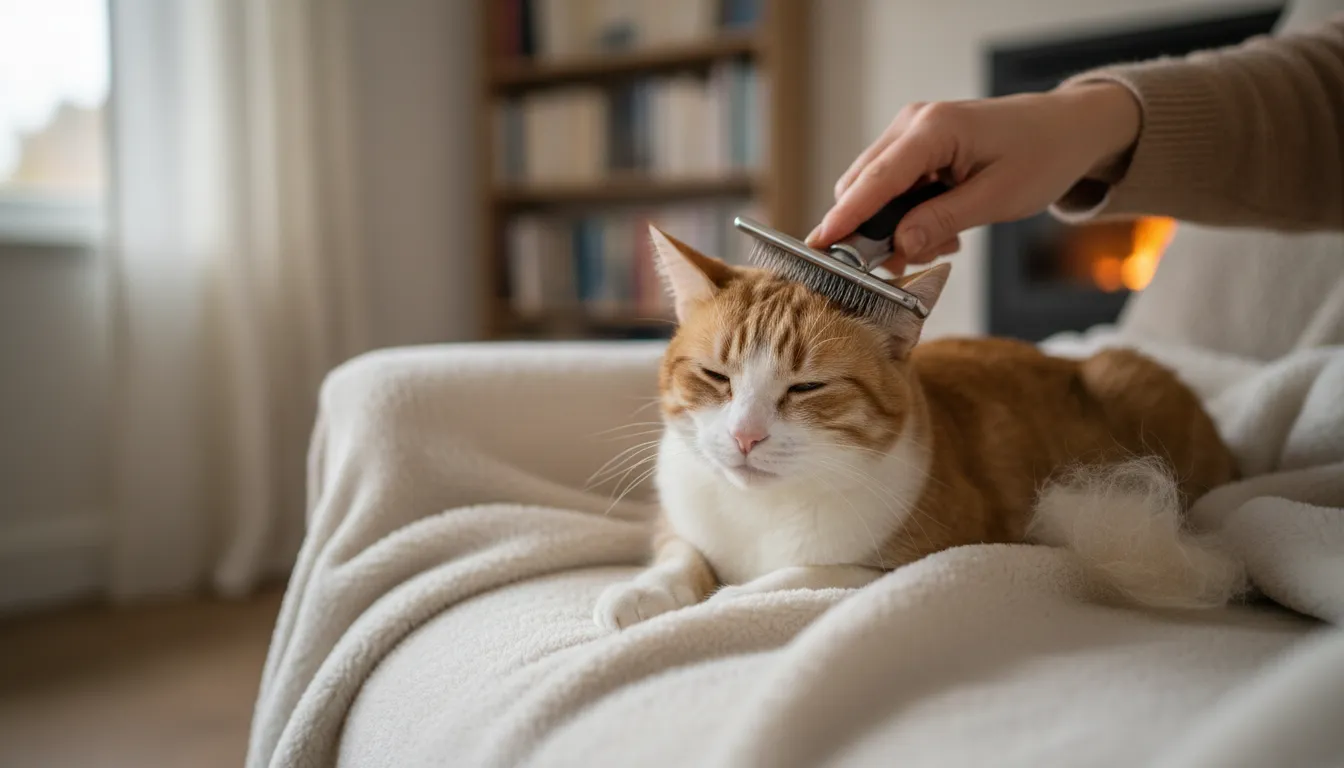
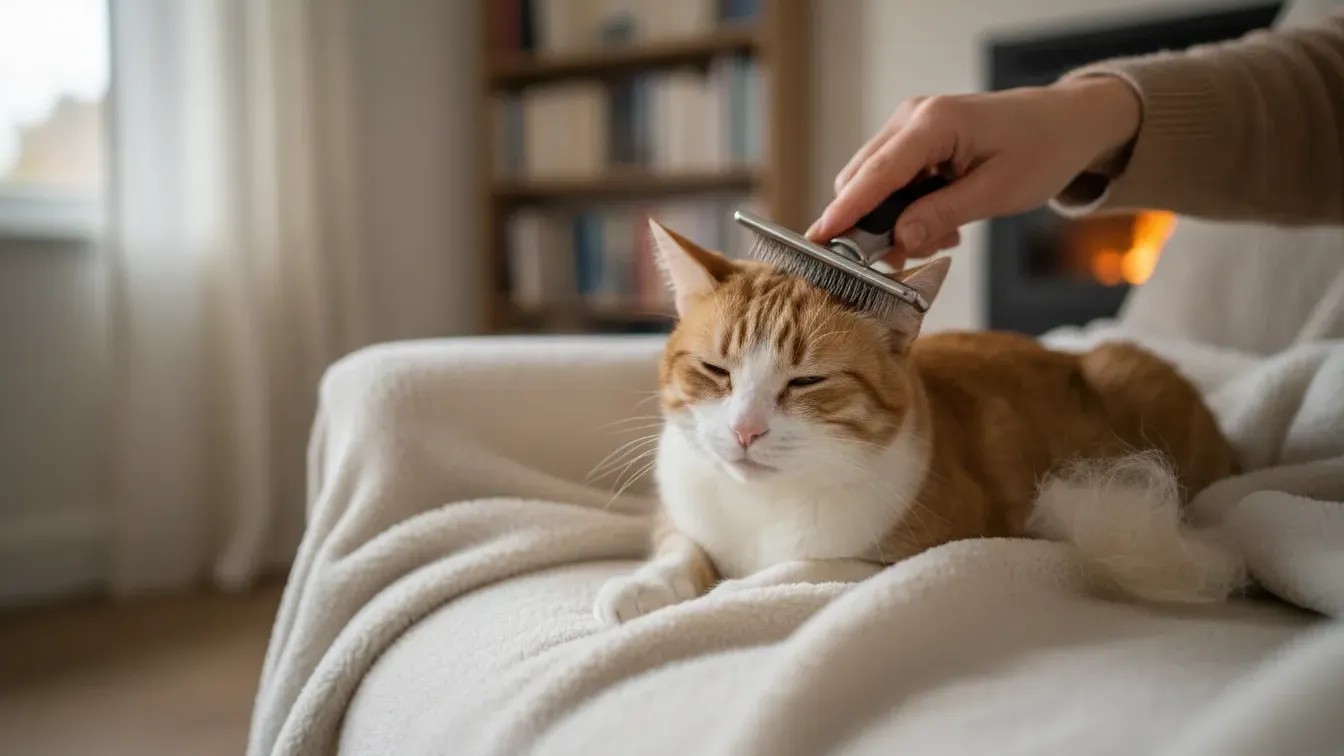
Grooming isn't maintenance. For a senior cat, it's an emotional event.
Older cats groom themselves less efficiently, so regular brushing prevents mats and hairballs. It also lets you check for lumps or skin changes while you're at it.
But the pleasure runs deeper than hygiene. Being brushed mimics allogrooming - the mutual grooming cats reserve only for companions they trust completely.
Interest in toys and chasing often fades once arthritis sets in. Bonding gestures like grooming tend to outlast that kind of play by years.
But that's nothing compared to what we found about #7…
#7 – Learning Something New (Yes, Really)
The idea that old cats can't learn new tricks is one of pet ownership's most stubborn myths. Experts flatly disagree.
An active mind matters just as much as an active body, and a cat is never too old to learn something new. Positive, reward-based training stays fun at any age.
Worth Knowing
- Short sessions of two to three minutes suit an aging attention span and aging joints.
- Target-stick or clicker training needs zero jumping, running, or straining.
- Rewarding curiosity over speed keeps a senior cat motivated instead of frustrated.
Short training sessions give a senior cat a genuine sense of achievement. Even learning to touch a target stick or sit on cue can light up an older cat's day in a way an empty food bowl never will.
But that's nothing compared to what we found about #6…
#6 – Routine: The Quiet Pleasure Most Owners Underestimate
A senior cat walking the same path at the same time every morning isn't just habit. Routine is genuinely pleasurable for them.
Cats thrive on predictability, so keeping feeding, play, and rest schedules consistent lowers their stress. Less anxiety leaves more energy for actual enjoyment.
Disrupting a senior cat's routine is more stressful than most owners realize. The most luxurious gift you can give an aging cat is a day that looks exactly like yesterday.
But that's nothing compared to what we found about #5…
#5 – Favourite Sleeping Spots: Sacred Territories of Joy
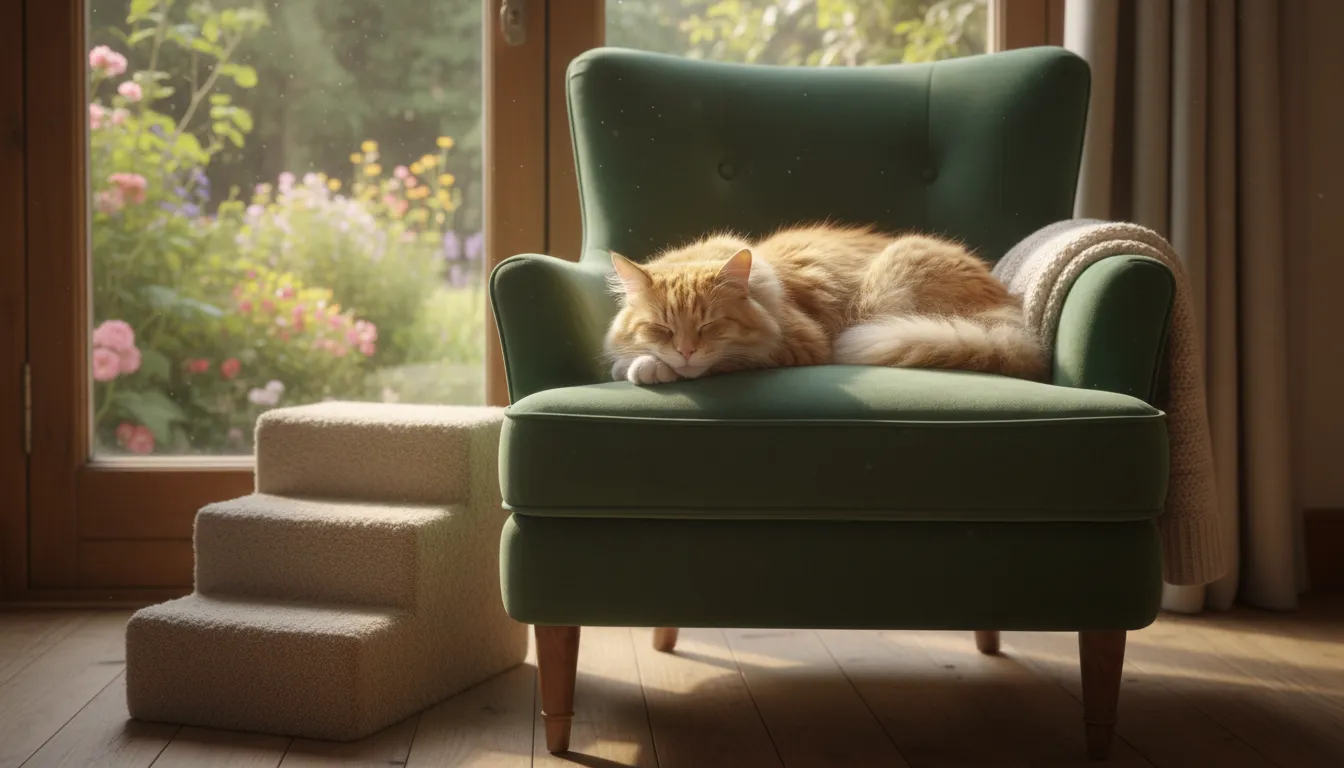
Never underestimate what a perfect nap in a perfect spot means to a senior cat. Experts call it one of the most reliable signs of quality of life.
When a cat chooses and keeps returning to one cherished spot, that's a deliberate act of comfort and ownership. It's not random - it's a preference.
At a Glance
- About 60% of cats over 6 years old show signs of arthritis.
- An estimated 70% to 90% of cats over 12 years of age are affected.
- Pain, not stubbornness, is often what keeps a cat from claiming its favorite window seat.
Access is everything here. A set of pet stairs or a step stool can be the difference between a cat that reaches its favorite couch spot and one that quietly gives up trying.
But that's nothing compared to what we found about #4…
#4 – Soft Music and Ambient Sound
This one surprises almost everyone: what a senior cat hears shapes how it feels. Sound itself can be a form of enrichment.
Cats rely heavily on their senses, and even a softly playing radio can hold an older cat's attention. It keeps the nervous system gently alert without overstimulating them.
Silence, it turns out, can be boring rather than peaceful. Without enough stimulation, cats can grow bored, low, and even develop behavior problems - a soft soundscape near their favorite spot is a low-effort fix almost nobody tries.
But that's nothing compared to what we found about #3…
#3 – Social Time With a Trusted Person
Forget expensive gadgets. The single most renewable source of joy for a senior cat is often just you, sitting nearby.
Senior cats get real social enrichment from bonded housemates, human or animal. Even 10 minutes of engaged attention a day makes a measurable difference.
Quality of time beats quantity of stimulation, every time. A hand resting on a warm flank, a slow blink exchanged across the room - to a senior cat, these small things are everything.
But that's nothing compared to what we found about #2…
#2 – The Gift of Getting the Space Right
Experts argue this point constantly, and owners overlook it just as often: the physical setup of your home is one of the most powerful daily pleasures you can give an aging cat.
Food, water, and litter boxes placed in quiet, easy-to-reach spots cut down on daily stress. Quality of life isn't fixed - it improves with the right pain management, diet, and environment.
Why It Stands Out
- Non-slip mats near food and water bowls prevent painful slips on tile or hardwood.
- Low-sided litter boxes let arthritic hips step in without straining.
- Keeping resources on one level spares a senior cat from unnecessary stairs.
A cat that reaches its water bowl, uses its litter box, and settles into bed without pain starts the day with a small win already banked. Most owners redecorate for themselves. The smartest ones redecorate for their cat.
But that's nothing compared to what we found at #1…
#1 – Being Known
Here's the truth vets and longtime cat owners keep circling back to: what a senior cat enjoys most is being genuinely, deeply understood by the person it shares a life with.
If a cat stops engaging in activities it once loved, or starts hiding more than usual, that's often the first real sign quality of life is slipping. Understanding those shifts - and adjusting for them - is how a cat keeps enjoying its golden years.
No toy, puzzle, or supplement replaces the moment a cat realizes you've noticed exactly what it needs. Nobody knows a cat's behavior and personality better than the person who lives with it every day.
A slow cat is not a sad cat. A seen cat is a happy cat.
The Bottom Line
It's a mistake to assume a senior cat is less playful simply because it's older. Older cats don't need less joy - they just need different ways to reach it.
From tracking a sunbeam to a five-minute wand session to a well-placed grooming brush, the pattern is clear: small, consistent pleasures stack up into a genuinely good day. The pace slows. The joy doesn't have to.
Every single item on this list costs almost nothing - only attention. Does your senior cat have a favorite daily ritual we missed? Drop it in the comments.