13 Ways Your Cat's Health Compares Better Than You Think
Most people look at their cat napping for 14 hours and think: that animal has no discipline. Turns out, your cat may be quietly winning the health game in ways that will genuinely surprise you.
From a built-in stress-relief system to a purr that works like physical therapy, feline biology outperforms human habits on more fronts than science predicted. Here's what the data actually say - starting with the strangest aging pattern in the animal kingdom.
Way #13 - Your Cat Ages Faster Early On, Then Hits the Brakes
Most people assume cats age in one steady, predictable line. They don't - and the real pattern is stranger than you'd guess.
According to the American Veterinary Medical Association, a cat hits the human equivalent of 15 years old in its first year of life, and 24 by its second birthday. That's a breakneck pace of development few owners realize is happening.
Then something unexpected happens: the aging process slams the brakes. After age two, cats age roughly four human years for every cat year - a much gentler curve.
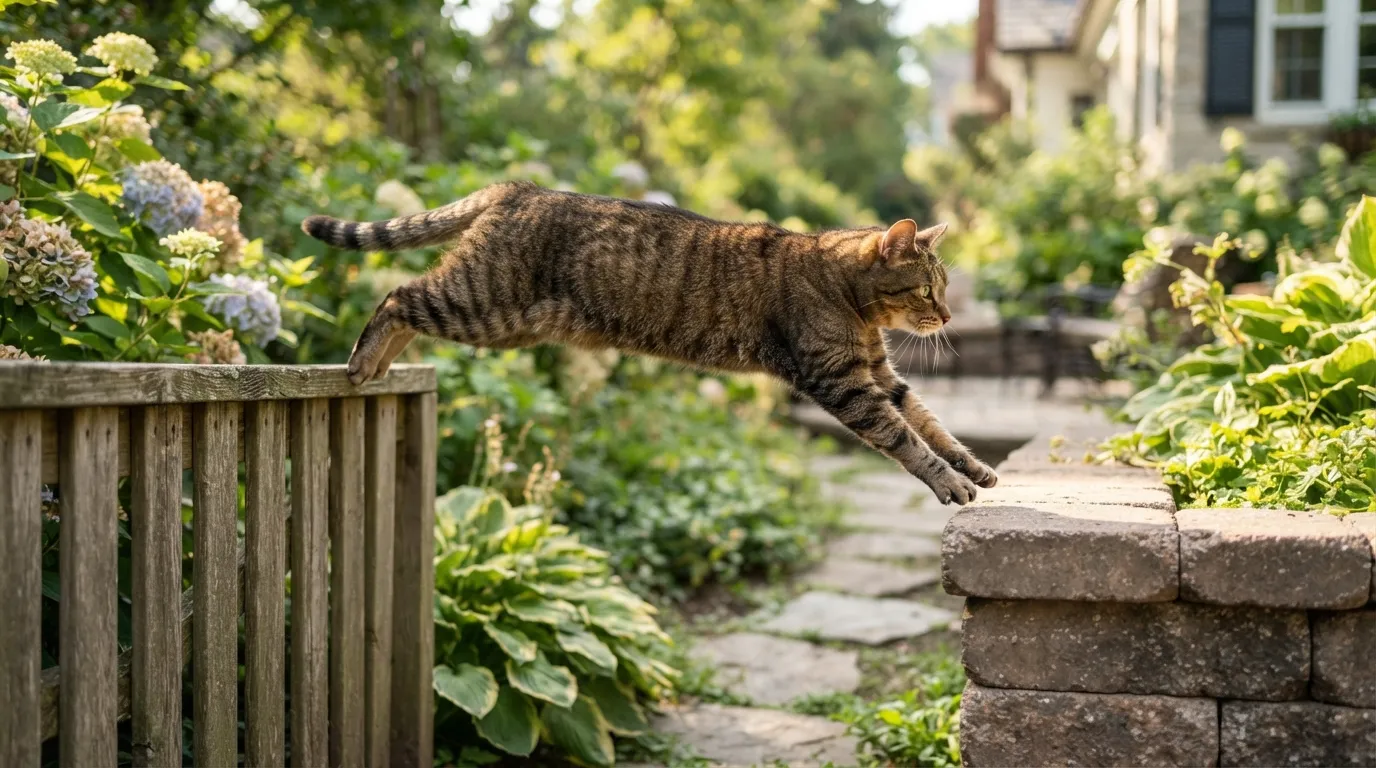
That means a 10-year-old cat is about 56 in human terms, yet many are still leaping onto countertops without a single joint complaint.
Quick Compare
- 1 cat year → 15 human years
- 2 cat years → 24 human years
- 5 cat years → 36 human years
- 10 cat years → 56 human years
- 15 cat years → 76 human years
- Cats rarely show outward signs of aging - no grey hair, minimal arthritis clues
- International Cat Care notes that cats "seldom go grey or show outward signs of pain or illnesses"
Your cat is essentially hiding its age better than any human ever could. That's charming for owners - but a real challenge for vets trying to catch problems early.
And that's mild compared to what's coming at Way #12.
Way #12 - Indoor Cats Regularly Live Into Their 20s
People who say "cats don't live that long" are working with outdated information. With regular veterinary care, many indoor cats now live to 20 and beyond.
That's the equivalent of a human pushing well past 100 in biological terms. The gap between an average lifespan and an exceptional one is enormous - and it's almost entirely within the owner's control.
Better nutrition, better medical care, and a closer human-cat bond are pushing that ceiling higher every year. The trend is moving up, not down.
The record-holder proves the point dramatically: a cat named Creme Puff lived to be 38 years and 3 days old.
- Diet, environment, and veterinary access are the three biggest levers
- The ceiling on cat lifespan, given proper care, is still not fully understood
Most owners never push toward that ceiling. The ones who do get something extraordinary back - and the next number on this list explains exactly how much control you actually have.
Way #11 - Neutering Can More Than Double a Cat's Lifespan
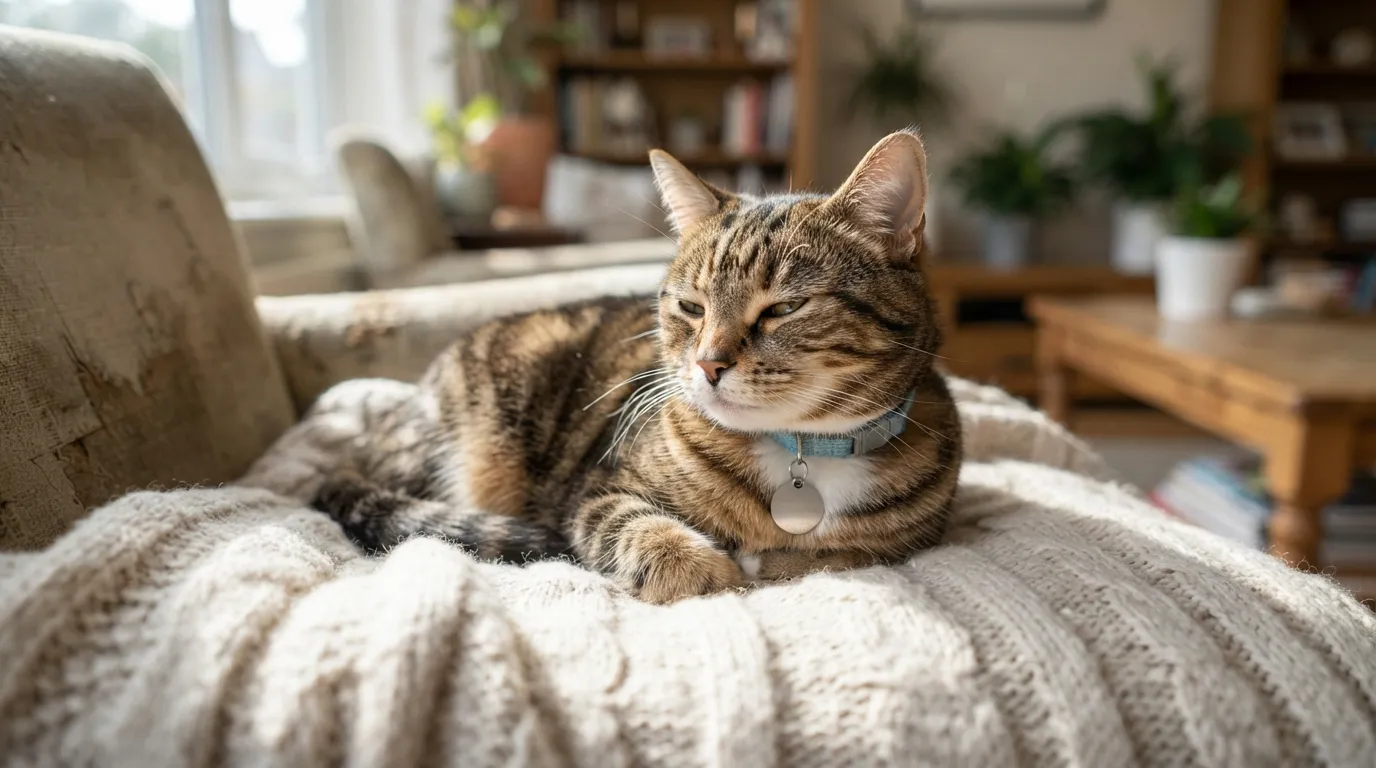
This is one of the most dramatic health interventions in all of animal medicine - and most owners underestimate just how powerful it is.
The median lifespan of intact female cats was 4.68 years, compared to 10.48 years for spayed females - more than double. The numbers for males are just as striking.
The median age of death for an intact male cat was 0.79 years. For a neutered male, it jumped to 9.55 years.
That's not a small improvement - it's a near-complete biological transformation, and it also protects against certain cancers and birth complications.
- A single surgical decision can add nearly a decade to your cat's life
- No human health intervention offers anything close to that ratio
If a pill doubled human life expectancy, it would be the biggest medical story of the century. For cats, it already exists - and it's a routine vet visit.
Way #10 - Cat Ownership Cuts Your Heart Attack Risk
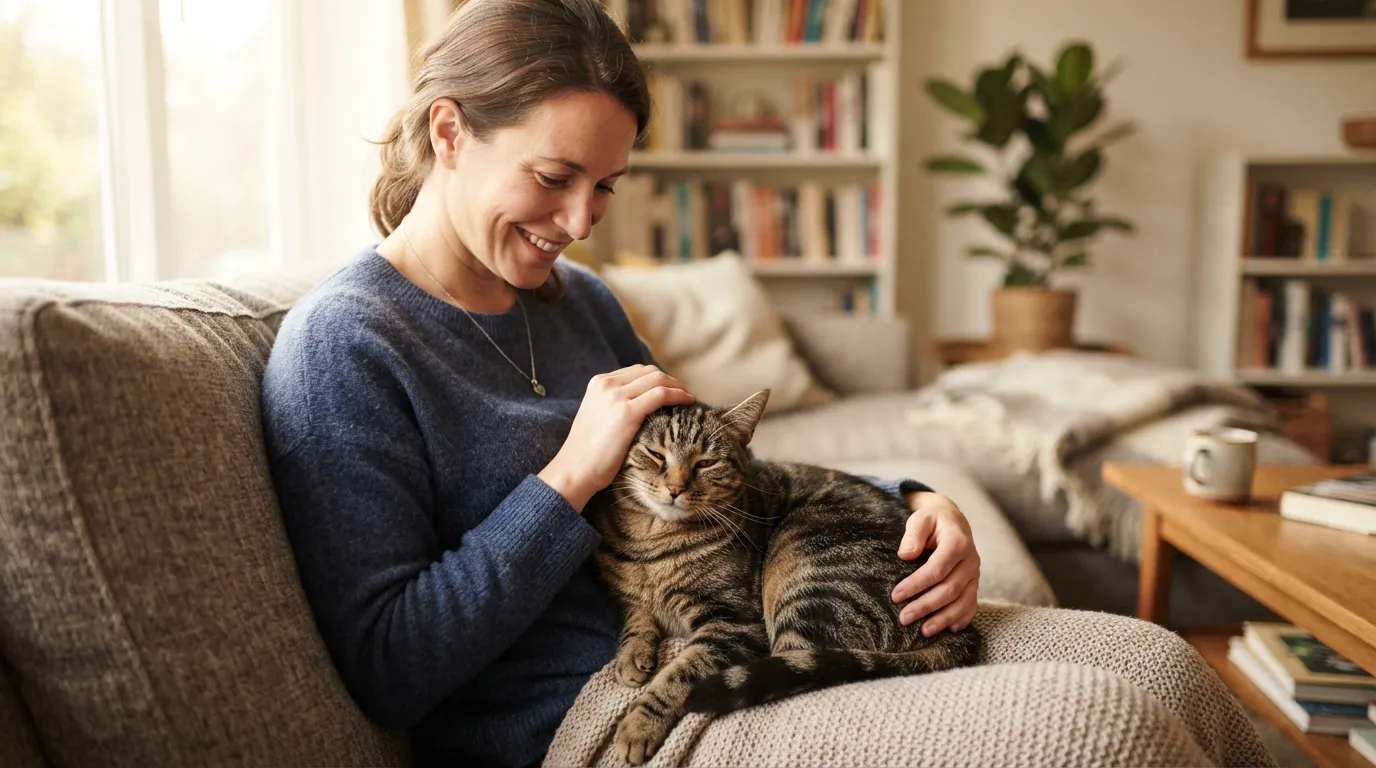
Here's where your cat's health starts benefiting your health too - and the numbers are hard to ignore.
A study from the University of Minnesota's Stroke Institute tracked owners over 10 years and found cat owners had a 30% lower risk of death from heart attacks compared to non-owners. Thirty percent is a measurable, population-level shift in cardiovascular mortality.
Several follow-up studies have repeated the finding. The association keeps showing up, which is why researchers keep coming back to it.
- Owning a cat - rather than a dog - was closely linked to a reduced risk of dying from heart disease and stroke, especially among women
- Cat owners, not dog owners, appear to get the stronger cardiovascular protection
That's a finding dog lovers hate and cat owners quietly celebrate. But it's nothing compared to what's hiding in a cat's purr.
Way #9 - A Cat's Purr Operates at a Therapeutic Healing Frequency
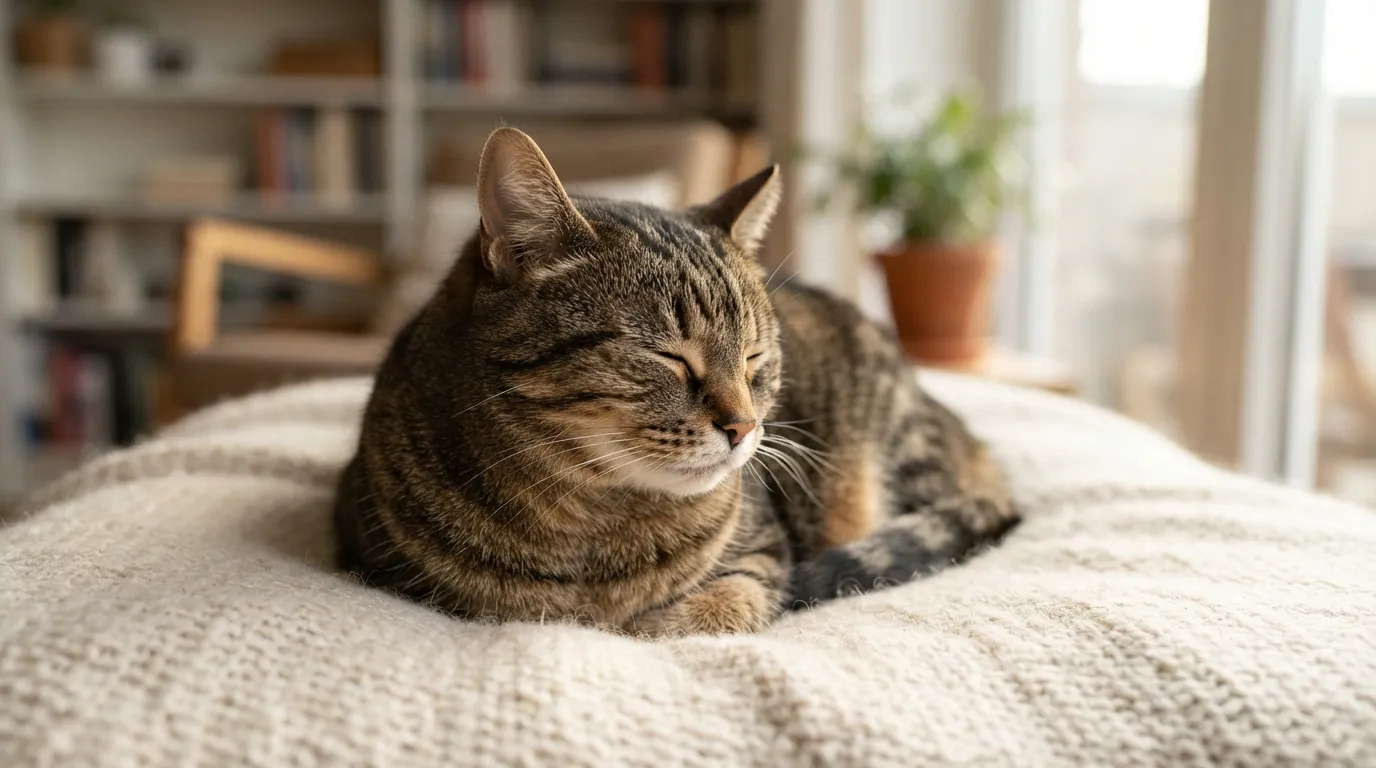
This isn't folk medicine. This is physics applied to biology - and it's genuinely remarkable.
A cat's purr typically sits between 25-150 hertz, and that range isn't random. It overlaps directly with the frequencies used in clinical vibration therapy to promote bone density and tissue repair.
Worth Knowing
- Purr frequency spans roughly 25-150 Hz
- Clinical vibration therapy for bone density often uses a similar 25-50 Hz range
- Cats have been observed purring while injured, in labor, or near death - not just when relaxed
- No comparable self-therapy mechanism has been documented in humans
Those low-frequency vibrations may help cats heal their own injuries, ease breathing, and reduce pain and swelling. In other words, cats may be self-medicating through sound - a trick humans never evolved.
- Research suggests these vibrations can lower stress, ease breathing difficulty, and even lower heart attack risk
- Some studies suggest the frequency may help strengthen bones, promoting healing and growth
No human can purr their way to better bones. Your cat can - and the next fact turns that purr into a five-minute prescription.
Way #8 - Just Five Minutes of Purring Can Lower Your Blood Pressure
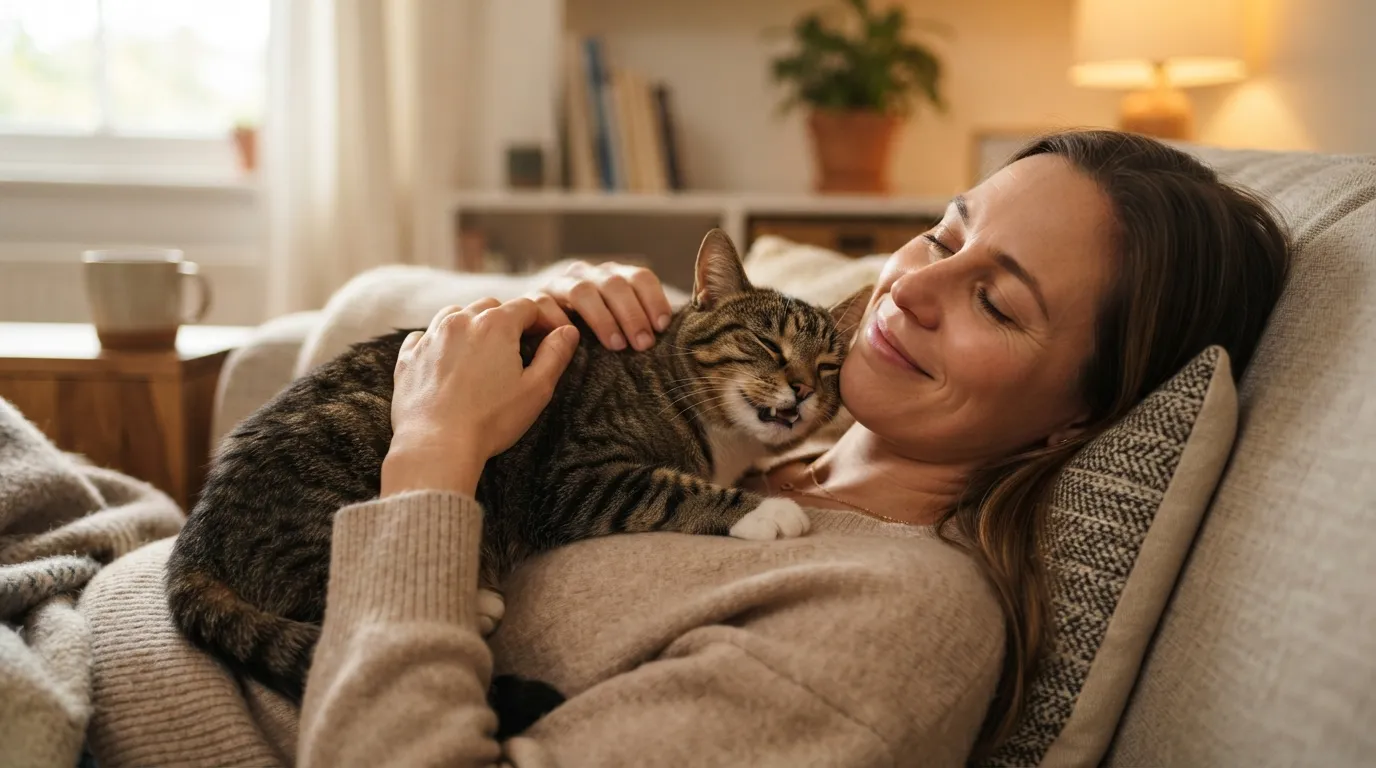
You don't need a yoga class. Apparently, you just need your cat.
Researchers found that listening to a cat purr for just five minutes can lower blood pressure. That's shorter than most people's morning commute.
Petting a cat or listening to their purring triggers the release of oxytocin, a hormone that promotes happiness and reduces stress.
Feline behavior research
That oxytocin release lowers cortisol and helps ease chronic discomfort. The biochemical cascade is real - not placebo.
- The effect happens whether you're paying attention or not
- Blood pressure, heart rate, and cortisol all measurably shift during cat contact
People spend real money on wellness apps chasing this exact result. The same result may already be sitting on your couch.
Way #7 - Cats Are Oddly Resistant to Tick and Flea-Borne Disease

Compared to dogs - and frankly, compared to humans - cats show a puzzling level of resistance to certain vector-transmitted illnesses.
One leading theory points to a genetically controlled immune resistance to arthropods and the microbes they carry. Differences in the feline gut microbiome, compared to the canine one, may play a role too.
This isn't fully understood yet, but the pattern is consistent. Cats simply get sick from tick and flea-borne diseases far less often than dogs or humans in the same exposure environments.
- Lyme disease, for instance, rarely causes symptomatic illness in cats despite exposure
- Researchers say the lesser susceptibility is likely complex and still warrants investigation
Feline immune biology is still being mapped, and what's turning up keeps surprising researchers. What comes next surprised them even more.
Way #6 - Cats Are Helping Scientists Develop Better HIV Treatments
This one stops most people cold - and it should.
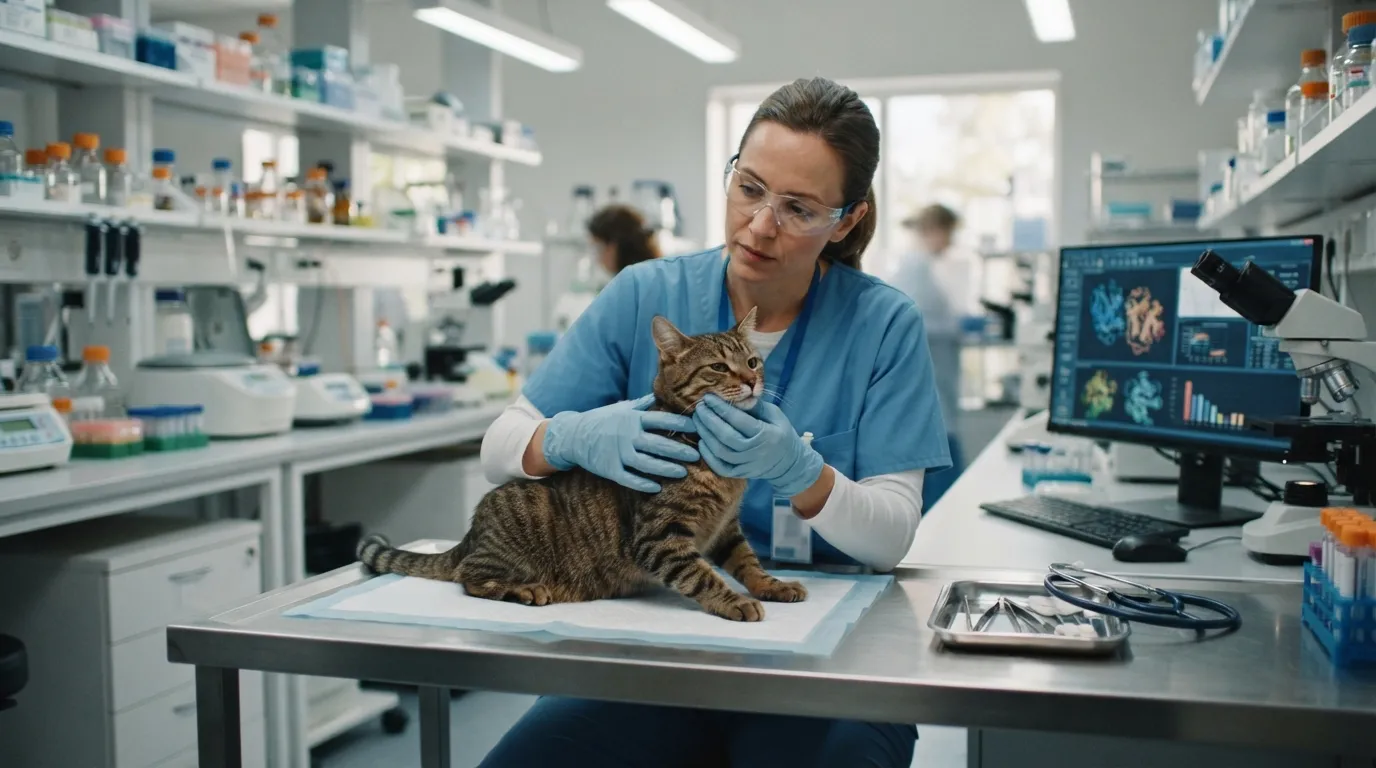
Researchers studying cats with Feline Immunodeficiency Virus discovered why some cats resist antiretroviral therapy. Because FIV is structurally similar to HIV, that discovery is now informing human treatment research.
Fast Facts
- FIV (Feline Immunodeficiency Virus) was first identified in 1986
- FIV and HIV both belong to the lentivirus family
- Cats with FIV can often live symptom-free for years with proper veterinary care
- Findings from FIV research have helped shape antiretroviral therapy studies in humans
Cats are unwittingly contributing to one of the most important ongoing medical research fields in the world. Their immune systems, under pressure from FIV, respond in ways that mirror and illuminate the human HIV response.
- The cross-species medical insight is real and actively being pursued
- Cats may contribute to human medicine in other unexpected ways too
Most people think of their cat as a pet. Researchers increasingly think of them as a model organism.
Way #5 - Cat Ownership Is Linked to Better Gut Microbiome Health
The microbiome revolution in human medicine has a feline footnote most doctors aren't talking about yet.
Cat ownership has been linked to positive shifts in gut bacteria, especially in women, including improved blood glucose control and reduced inflammation. Gut health drives immunity, mood, and metabolic function - so this connection matters more than it sounds.
Research going back to the 1980s suggests spending time with a pet boosts your own microbiome diversity through shared exposure. Living alongside an animal literally changes your internal bacterial ecosystem.
- Improved blood glucose control is a direct downstream effect observed in cat owners
- This is one of the least-publicized benefits of cat ownership - and one of the most medically relevant
Billions are spent on probiotic supplements chasing this exact benefit. Your cat may be delivering it for free.
Way #4 - Petting a Cat Drops Cortisol Measurably in Minutes
Most stress-reduction strategies take weeks to work. This one takes minutes - and it's been measured in a lab.
Just ten minutes of petting a cat can significantly reduce cortisol, your body's main stress hormone. Chronically elevated cortisol is linked to weight gain, immune suppression, and cognitive decline, so this matters.
A study on human-animal interaction found the effect was consistent across populations and repeatable under controlled conditions. It's not a fluke.
- Ten minutes of petting. Measurably lower stress hormones. No side effects.
- The effect compounds over time with regular interaction
Cortisol management is a multi-billion-dollar pharmaceutical industry. Cats are running a free version of it on your sofa every evening.
Way #3 - Childhood Exposure to Cats Reduces Allergy Risk Later in Life
Here's a fact that contradicts everything most allergy-cautious parents believe.
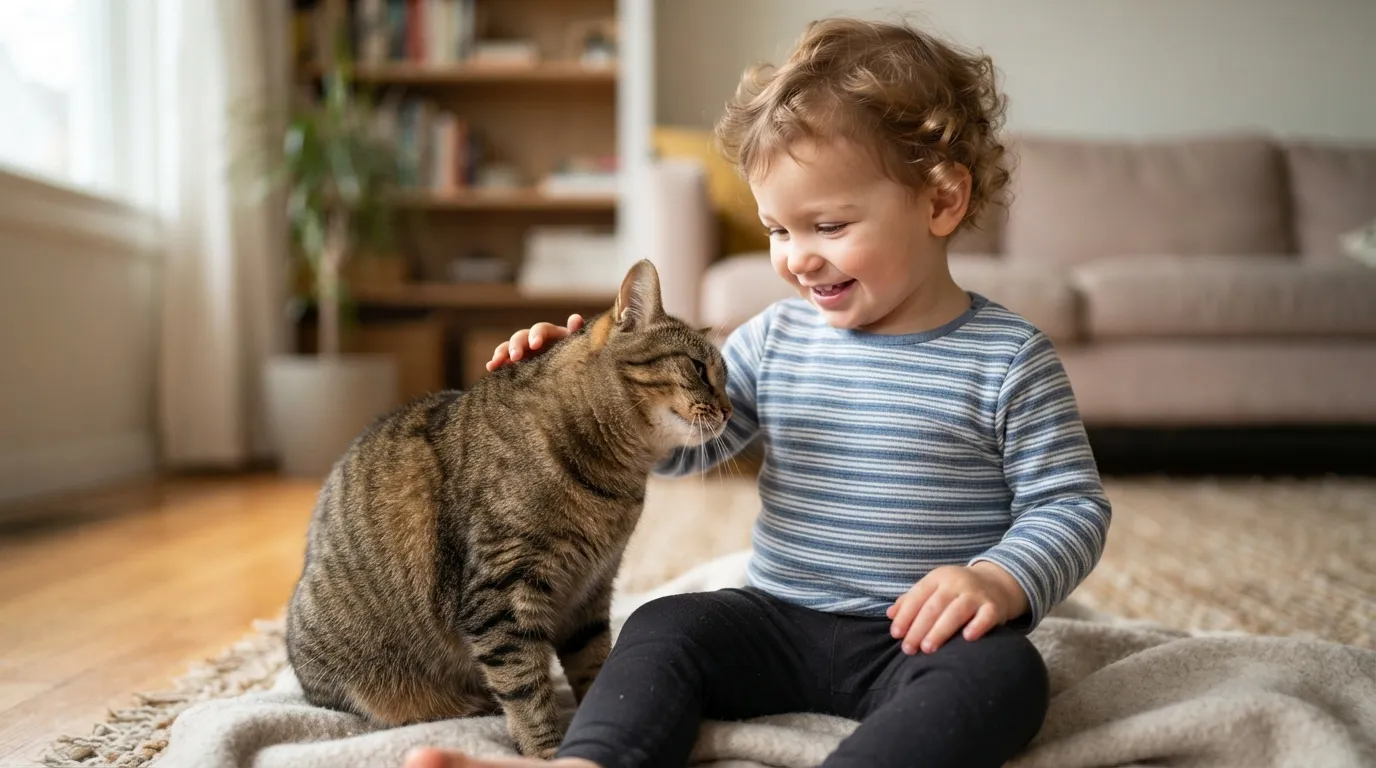
Owning a cat early in childhood may actually reduce - not increase - the risk of allergies and breathing trouble down the line. Early exposure appears to teach the immune system tolerance instead of sensitivity.
This tracks with the broader "hygiene hypothesis" in immunology, where early allergen exposure programs a more balanced immune response. Parents who keep cats away from kids "for health reasons" may be doing the opposite of what the data support.
- Early exposure appears to calibrate immune thresholds, not overload them
- Exposure to pet dander in childhood can increase resistance to allergens later on
This is one of the most counterintuitive findings in feline health research. And the next one might be even harder to believe.
Way #2 - 95% of Cat Owners Report Daily Mental Health Improvements
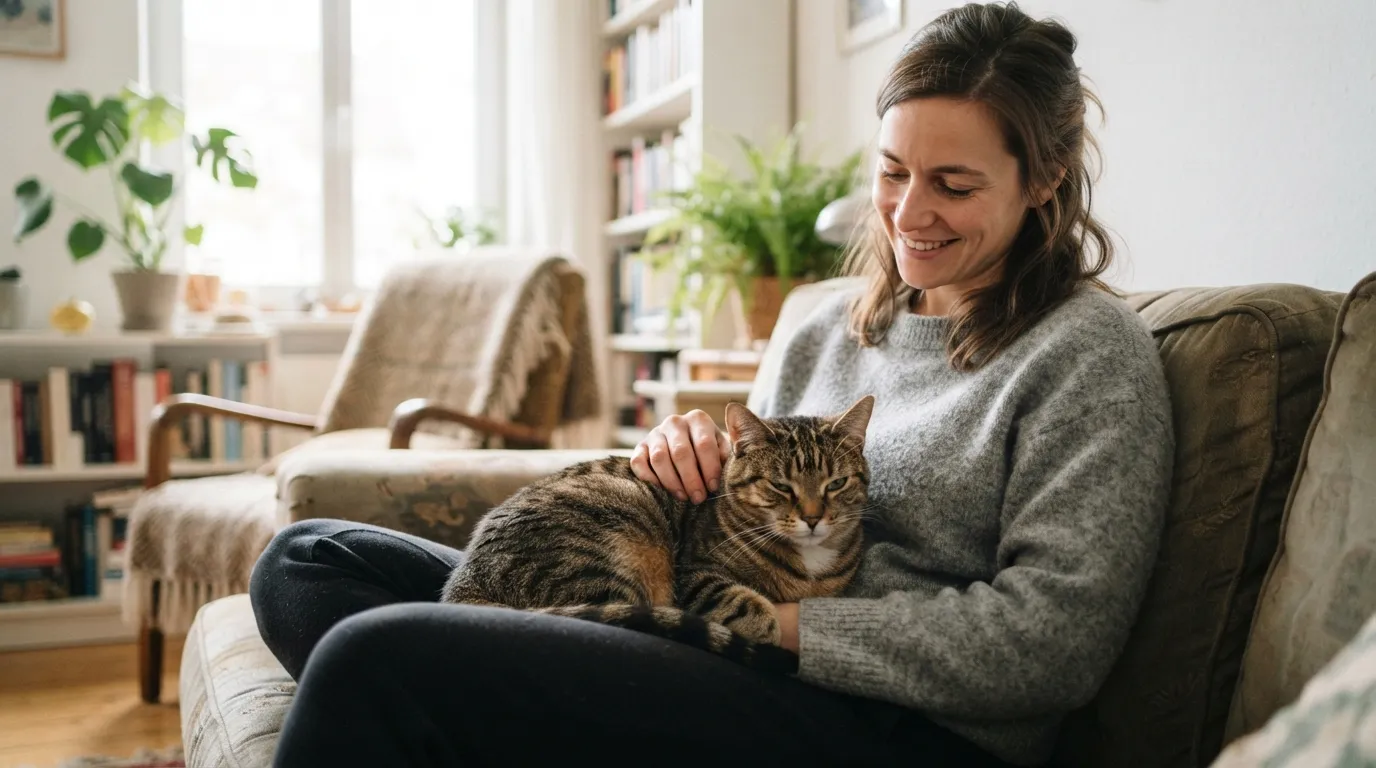
The mental health data around cat ownership isn't soft or anecdotal - it's overwhelming.
A survey of 2,000 pet owners uncovered numbers most therapists would love to claim credit for.
At a Glance
- 56% say their pet has literally saved their life
- 34% got a pet specifically to boost their mental health
- 95% report daily mental health improvements from their pet
- Self-rated "excellent" mental health jumped from 32% to 71% after pet ownership
Researchers are finding cats promote emotional resiliency at every level.
No antidepressant trial in history has reported a 39-point jump in "excellent" mental health ratings. Cats are doing something genuinely powerful for human psychology, hiding in plain sight.
Way #1 - Your Cat's Purr May Actually Repair Bone and Tissue
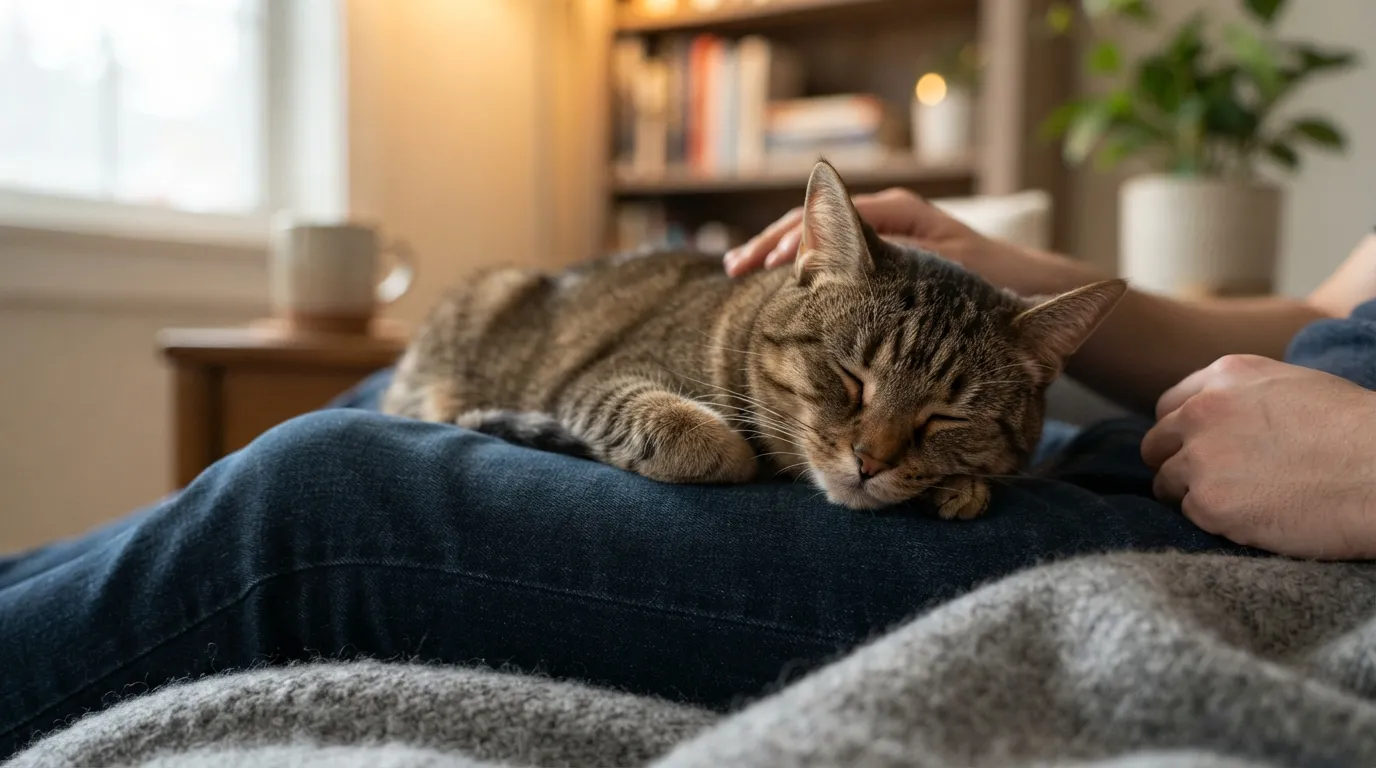
Saved for last, because this is the finding that stops every veterinarian mid-sentence.
With a purring frequency between 25 and 140 Hz, cats may have the potential to heal wounds, soft tissue, and even bone. Similar frequencies are already used to heal injuries in the human body.
This isn't metaphor. Vibrational frequencies in the 25-50 Hz range are used in clinical orthopedic therapy to stimulate bone repair - and your cat sits squarely inside that range every time it settles on your lap.
- A cat's purr may support bone repair, lower stress, and improve heart health through therapeutic frequencies
- Cats appear to use this self-purring mechanism on themselves when injured - a built-in recovery tool
The idea that a small animal curled on your chest is running a passive physiotherapy session on your skeleton is extraordinary. It's also, increasingly, what the evidence says.
Humans spent centuries building hospitals to achieve what cats may be doing instinctively, for free, while napping. Next time yours curls up and starts rumbling, remember: that's not just comfort - it might be repair work.