14 Health Clues a Sick Cat Shows in Its Final Weeks That Vets Say Owners Miss
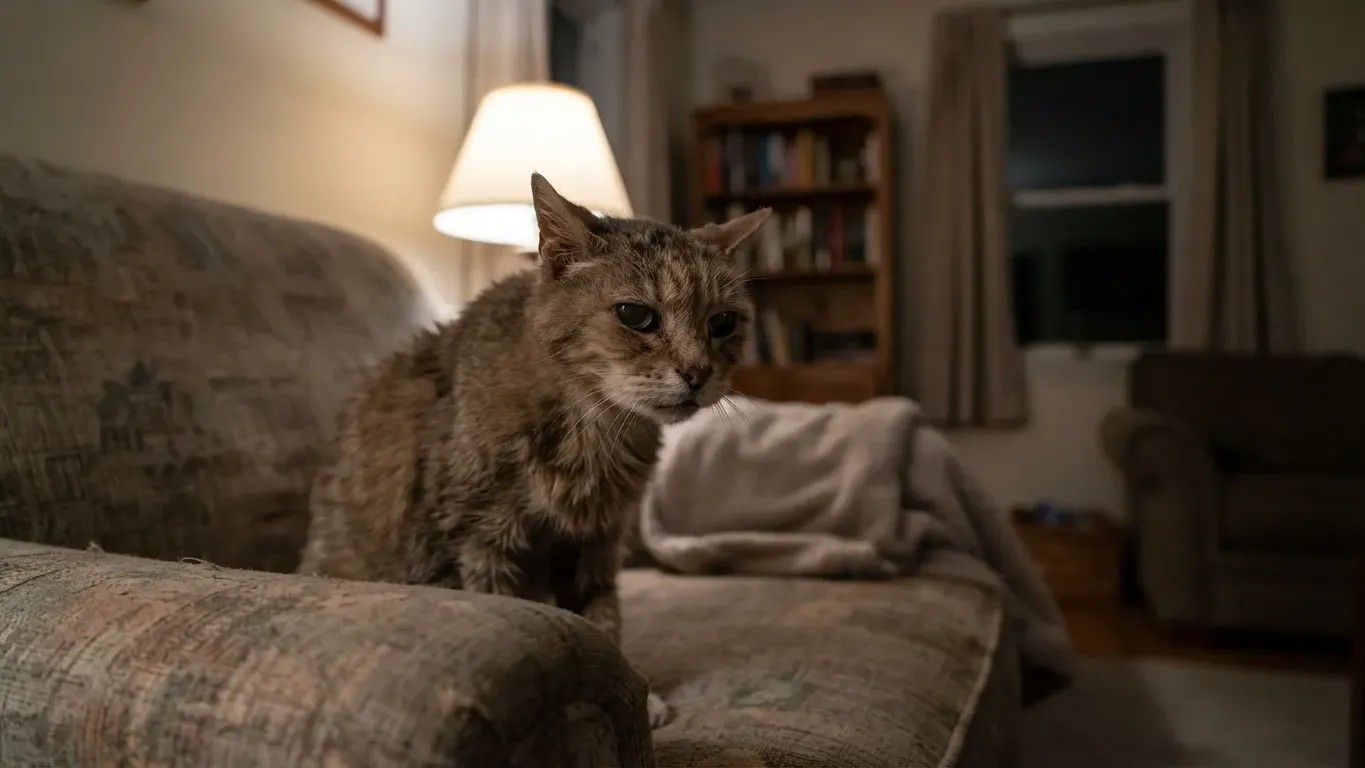
Most cat owners believe their pet will give an obvious, dramatic signal when the end is near. Vets see something very different in the clinic every single day.
Cats are experts at masking pain, so by the time you spot the obvious signs - weight loss, hiding, trouble jumping - they're often much further along than you think. The real clues start weeks earlier, hidden in plain sight, and most owners miss every single one of them until it's too late.
#14 - The Appetite Shift Nobody Takes Seriously
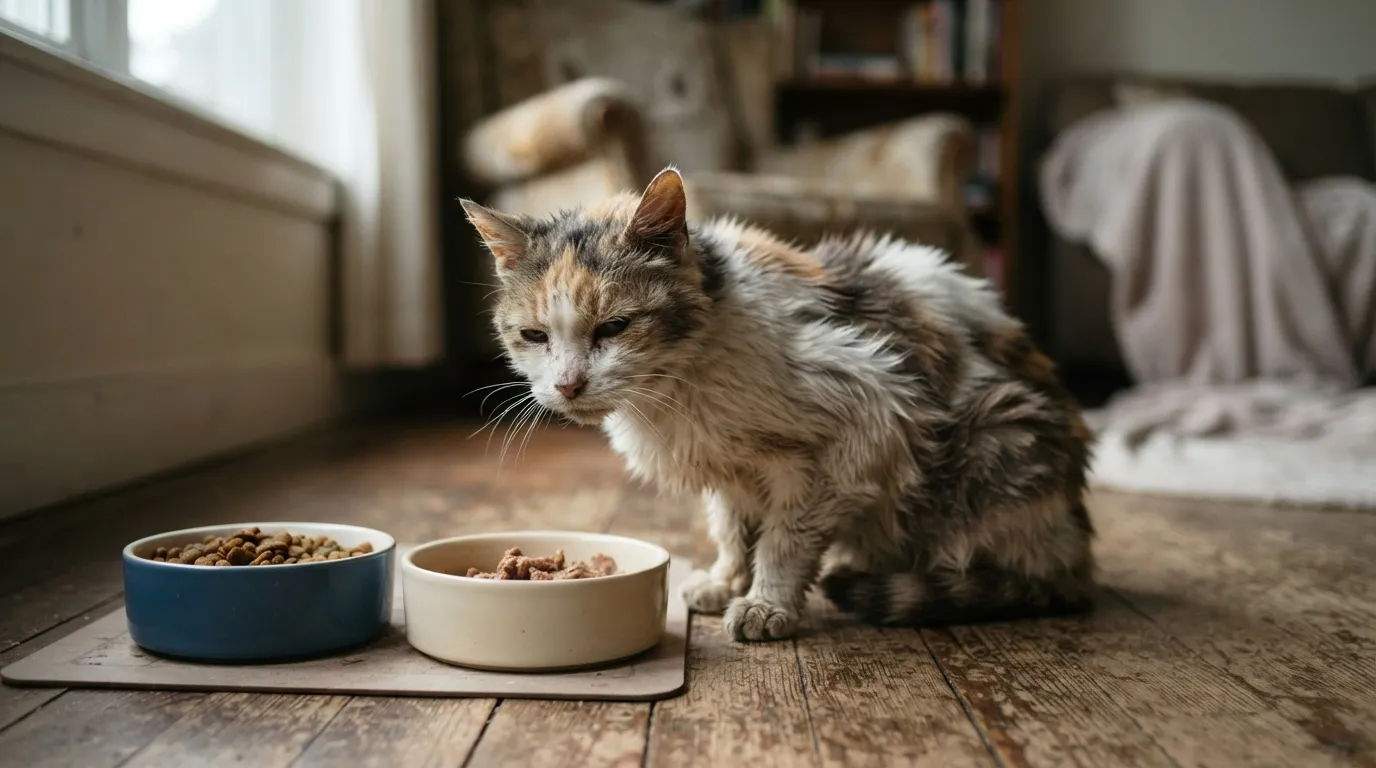
Most owners chalk up a skipped meal to a cat being "picky." That's the first mistake.
Loss of appetite is one of the first signs a cat may be dying. But many treatable conditions also cause appetite loss, so a vet call is always worth it.
The critical difference is pattern. Early illness sees appetite dip then bounce back with stimulants or hand-feeding, while true final-weeks appetite loss reflects organs shutting down.
- A missed meal: possibly nothing.
- Three or more days of disinterest in food: a red flag requiring a vet call.
Appetite loss can stem from pain, nausea, or difficulty swallowing, and as death approaches the body loses its ability to process food and fluids. Don't wait to "see if it passes."
But that single sign is just the beginning - #13 reveals a clue hidden in your cat's fur.
#13 - The Grooming Collapse

A healthy cat spends a surprising chunk of its day on self-care. When that stops, something is seriously wrong.
Cats are famously fastidious groomers, often spending 30-50% of their day at it. When they stop, it shows fast - in a greasy coat, matted fur, and flaky skin.
Long-haired cats tend to mat first behind the ears, under the belly, and near the hind end. Most owners mistake this for laziness, not a systemic distress signal.
Fast Facts
- Grooming can take up 30-50% of a healthy cat's waking hours.
- Mats typically form first behind the ears, under the belly, and near the hind end.
- A greasy coat or flaky skin can appear within days of grooming stopping.
- Long-haired breeds show grooming collapse fastest and most visibly.
The coat is a window into what's happening inside. And the smell coming from that coat? That's #12, and it's one most owners don't expect.
#12 - The Odor That Signals Organ Trouble
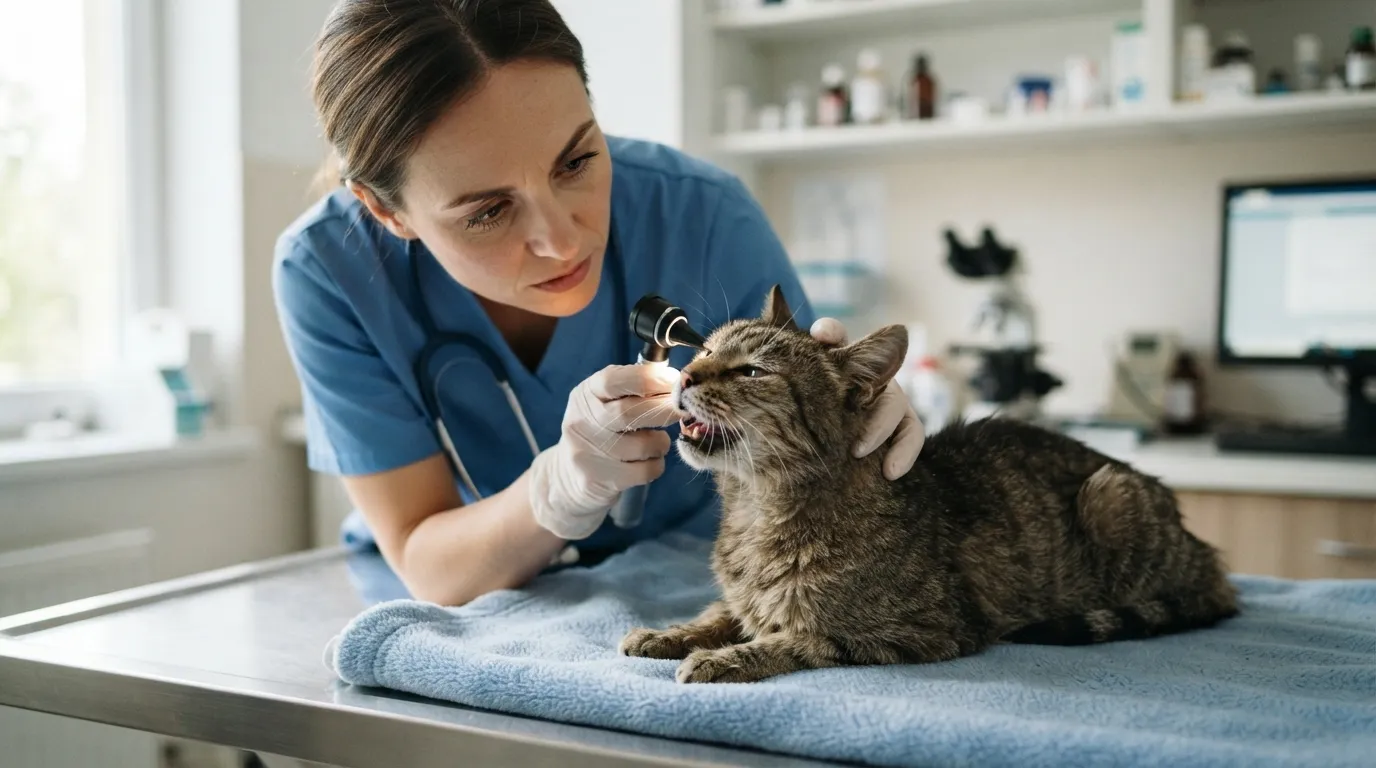
This one is almost never discussed - but vets notice it immediately.
As a cat nears the end of life, an abnormal body odor can develop from tissue breakdown and toxin buildup. The exact smell tells its own clinical story.
Diabetic ketoacidosis often brings a sickly-sweet smell, while kidney failure can leave breath smelling like ammonia. Liver failure tends toward a musty, foul odor.
An ammonia smell in a senior cat's breath is not "just bad teeth" - it's a kidney warning sign.
- Sweet or fruity breath points toward uncontrolled diabetes.
- Ammonia or urine-smell breath points toward kidney failure.
Both demand a same-day vet call. Now here's a sign that gets misread as something far less serious - #11.
#11 - Extreme Lethargy Beyond Normal Cat Sleep
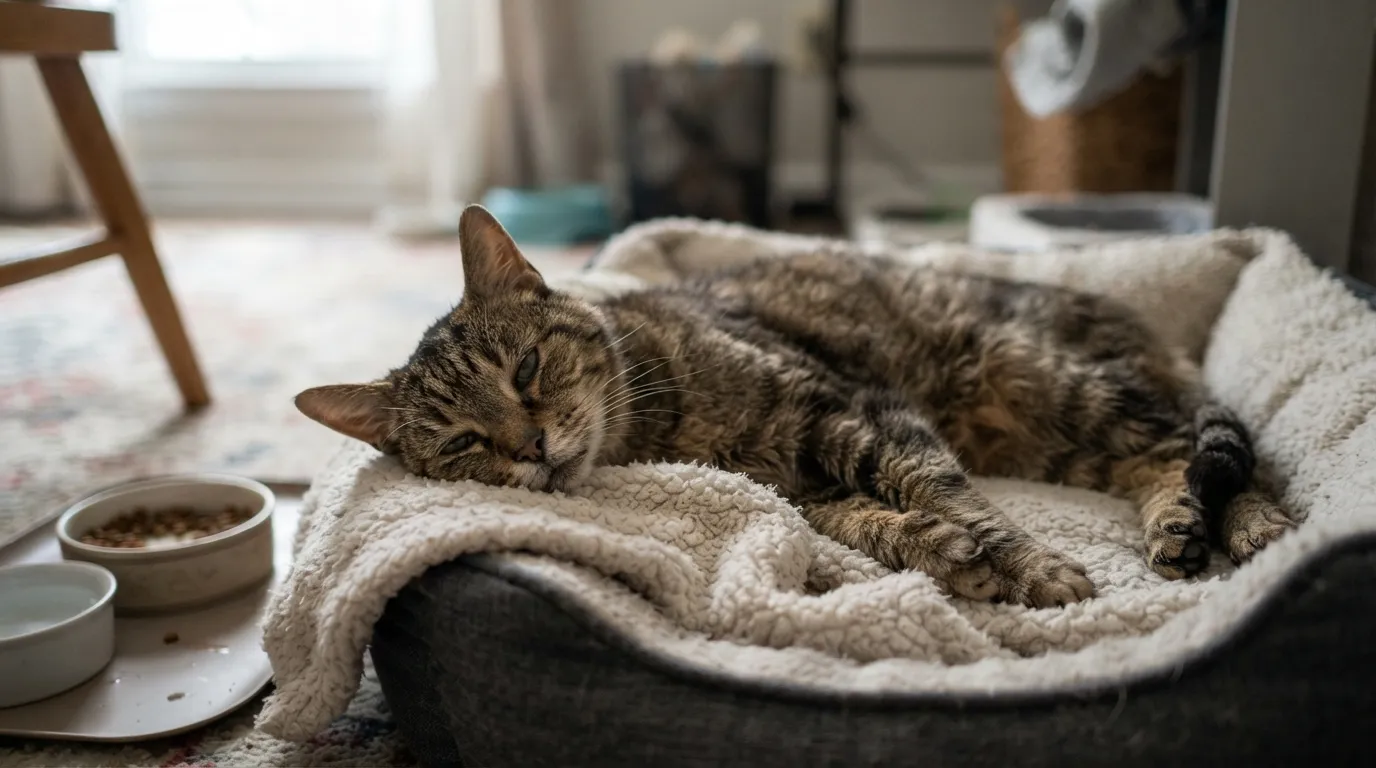
Yes, cats sleep a lot. But there's a line between a "cat nap" and barely lifting their head.
Cats already snooze 16 to 20 hours a day, so extreme lethargy is easy to miss at first. In the final days, that normal sleepiness tips into profound weakness.
The telling detail: a truly declining cat won't rouse for food, play, or their favorite person. Normal sleepy cats still perk up for treats - a dying cat often doesn't.
- Watch for a cat that stops lifting its head when you enter the room.
- Compare to their normal baseline - individual cats vary widely.
Lethargy is your body-clock warning. But what the body does with temperature is #10, and it catches owners completely off guard.
#10 - Cold Extremities and Temperature Drops
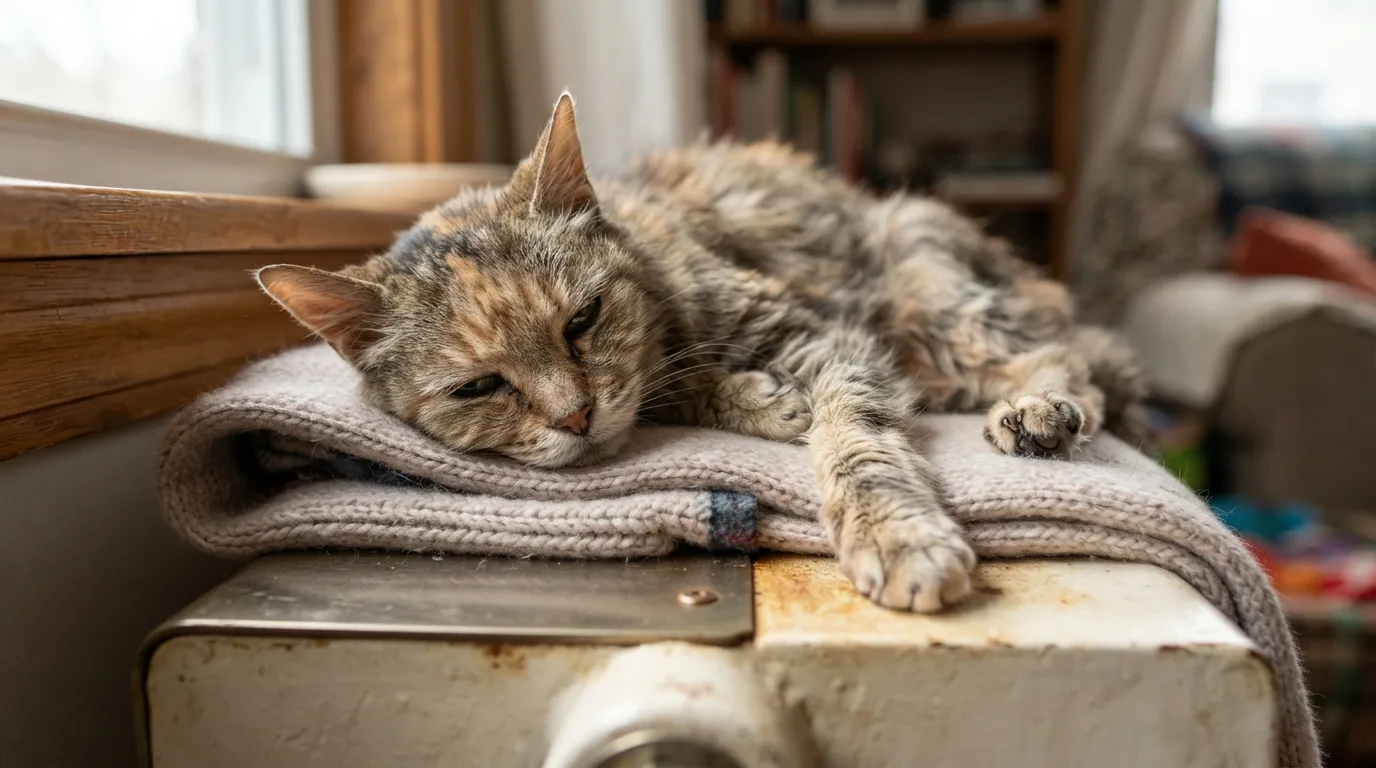
Owners often feel their cat's paws and think nothing of it. Vets know better.
"Cats develop thinner skin with age, and they may also lose muscle mass, which can make it harder for senior cats to regulate their body temperature. In these cases, you may observe your cat sitting on the radiator more or seeking out warmer areas in the home."
Dr. Danielle Rutherford, DVM
Poor circulation can also make the paws and nose go cold to the touch. Combined with lethargy or erratic breathing, it's a late-stage signal.
Cold limbs combined with any two other signs on this list means your cat needs a vet assessment urgently - not tomorrow, today.
- Feel the ear tips and paw pads regularly in your senior cat.
- Sudden heat-seeking behavior is an early version of this same decline.
The temperature shift signals failing circulation. What comes next - #9 - is behavioral, and it devastates owners who misread it entirely.
#9 - Hiding and Social Withdrawal
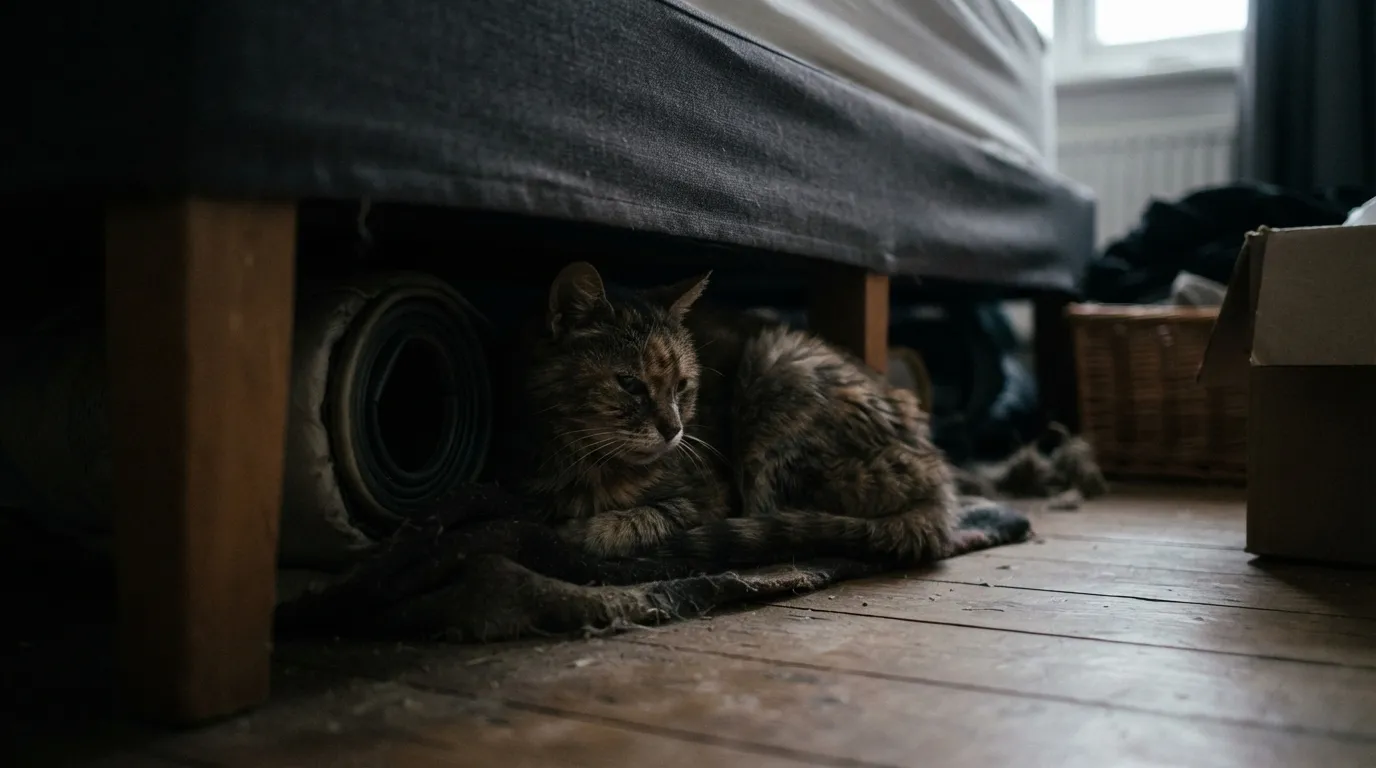
Your cat isn't sulking, and it isn't mad at you. It's following a deep biological instinct.
Dying pets often become more distant, or sometimes more clingy, as fatigue sets in. Hiding may reflect a desire for quiet - or an instinct to separate from others near the end.
Forcing a dying cat out of its hiding spot only adds stress at the worst possible time. Stay close by instead, so your cat can still feel your presence.
- Check dark corners, under beds, and inside closets daily.
- A cat that stops coming to its usual sleeping spots is signaling something.
Withdrawal is one of the hardest signs to accept emotionally. But #8 is one vets say owners almost universally get wrong.
#8 - Changes in Vocalization
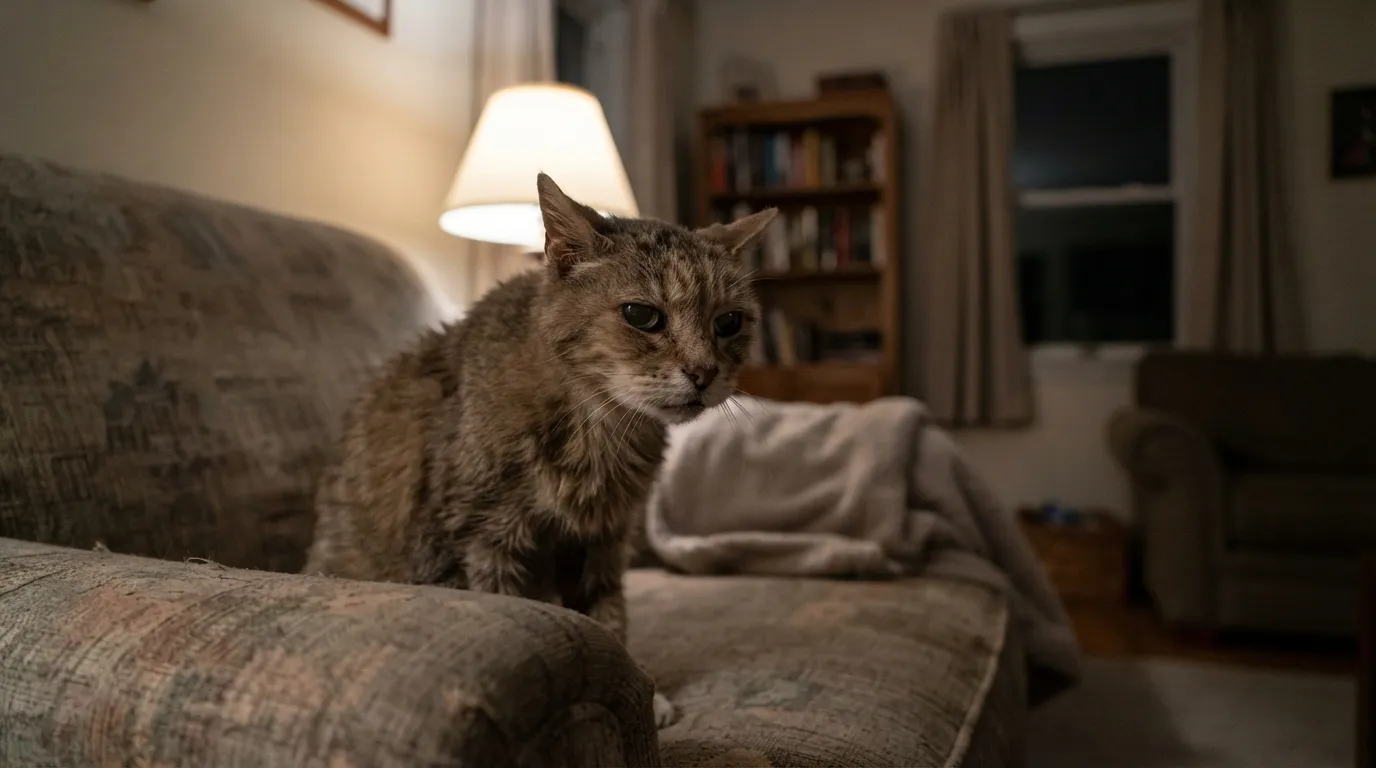
Some dying cats go eerily quiet. Others suddenly cry out at night for no apparent reason - and both matter.
Increased vocalization, unusual purring, pacing, and restlessness are common pain signals in a declining cat. So is a once-vocal cat going completely silent.
Nighttime yowling in a senior cat is regularly dismissed as "attention-seeking" when it's actually a pain or cognitive alarm.
- New or changed vocalizations in a senior cat always deserve a vet mention.
- Yowling paired with disorientation is a stronger warning sign than either alone.
Most people treat strange vocalizations with a "shush." Vets treat them as data - and #7 hides in the litter box.
#7 - Litter Box Accidents and Incontinence
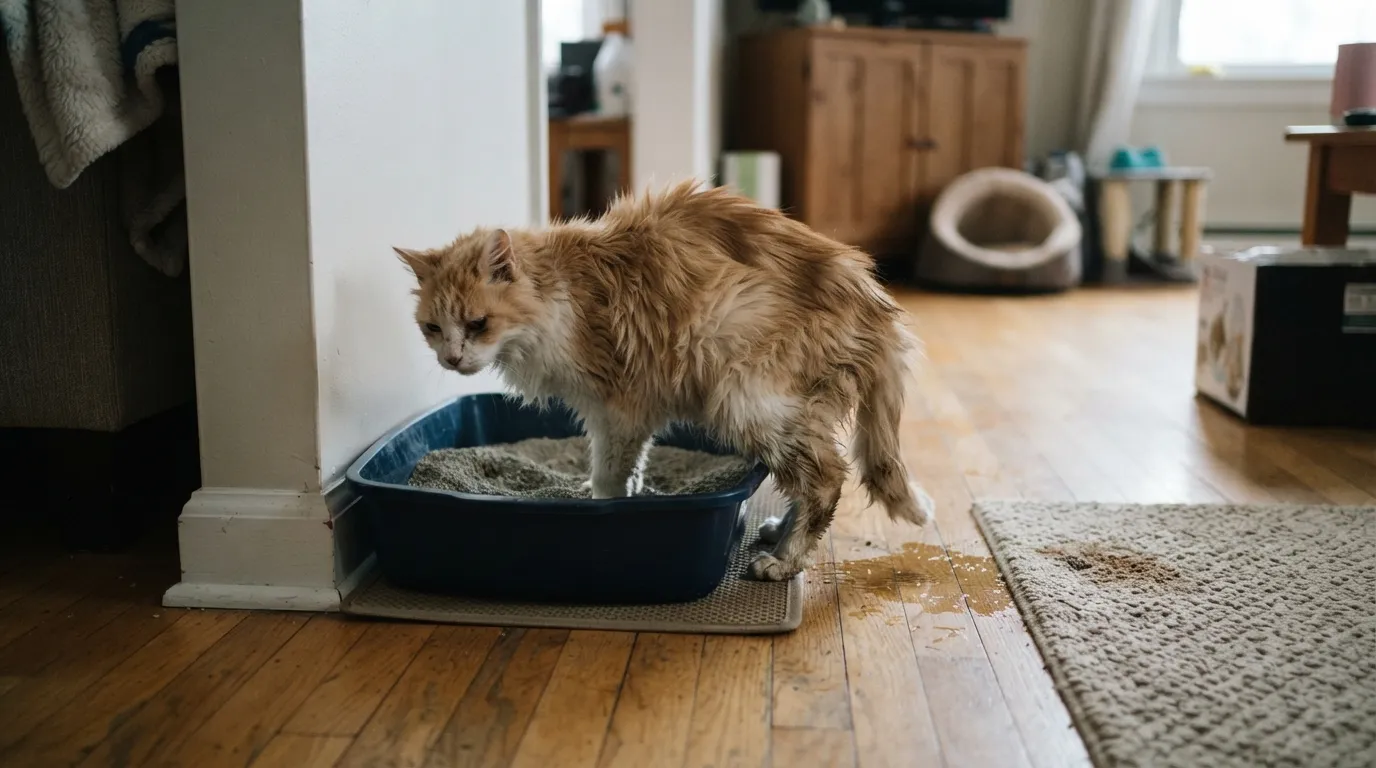
This one is both a physical symptom and a dignity issue - and it escalates fast.
Cognitive confusion can make a declining cat forget litter box training entirely. Mobility loss can make reaching the box physically impossible.
The critical clue is a cat that tries to reach the litter box but can't make it - that's mobility failure, not behavioral regression. A cat that doesn't even try has moved into deeper decline.
- Move the litter box closer to wherever your cat rests.
- Low-sided boxes matter enormously for arthritic or weak cats.
Litter box changes are embarrassing for the cat and alarming for the owner. But #6 involves something most owners don't even think to look at - the eyes.
#6 - Changes in the Eyes
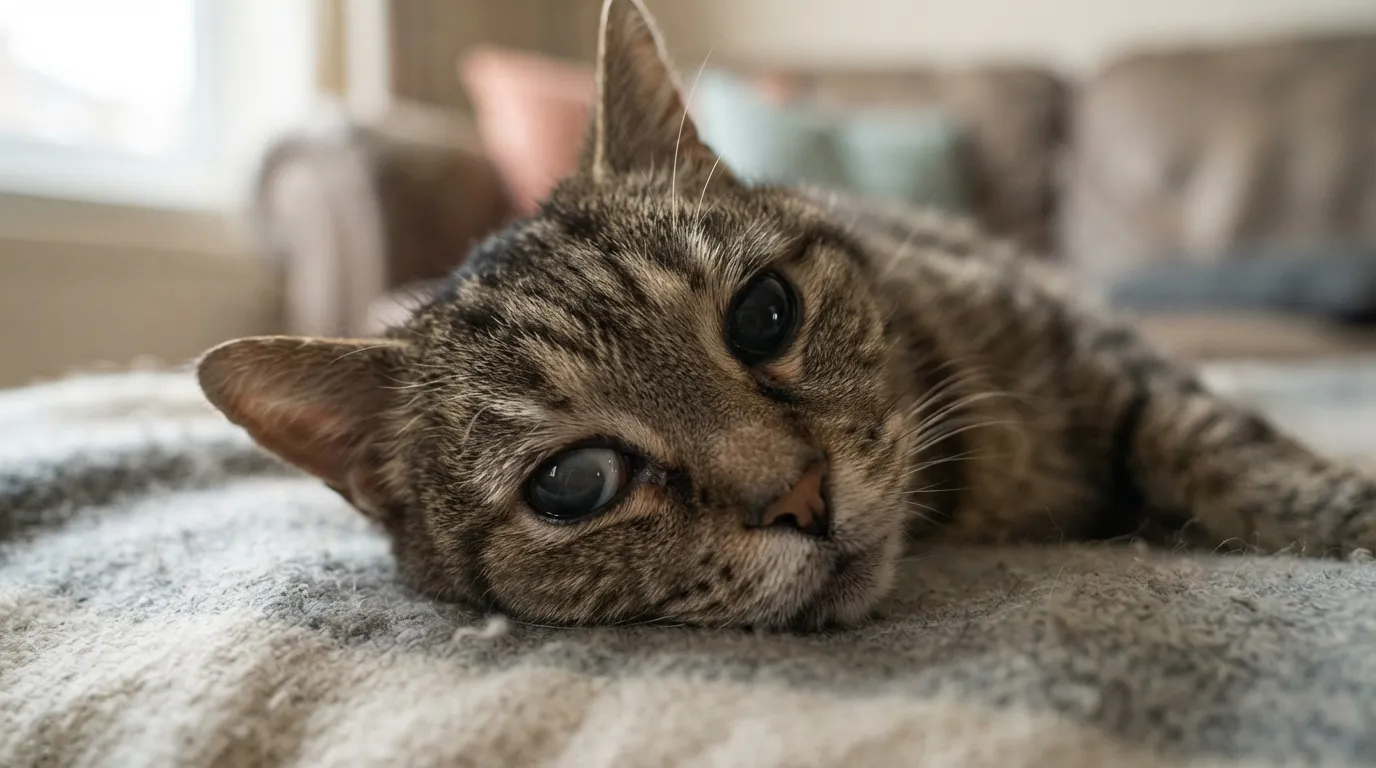
The eyes of a declining cat tell a story the rest of the body tries to hide.
Dilated pupils and a glassy, unfocused stare often appear as the body shuts down. Watch too for the third eyelid - a pale membrane - creeping across the eye.
This is called haw syndrome, and it's strongly linked to systemic illness. A cat that once tracked movement across the room but now stares blankly has lost something neurological.
- Check for asymmetric pupils - one larger than the other is urgent.
- Glassy, unfocused eyes paired with lethargy mean immediate vet contact.
The eyes are a diagnostic window vets rely on constantly. Now comes #5 - one of the most misunderstood signs of all.
#5 - Rapid, Unexplained Weight Loss
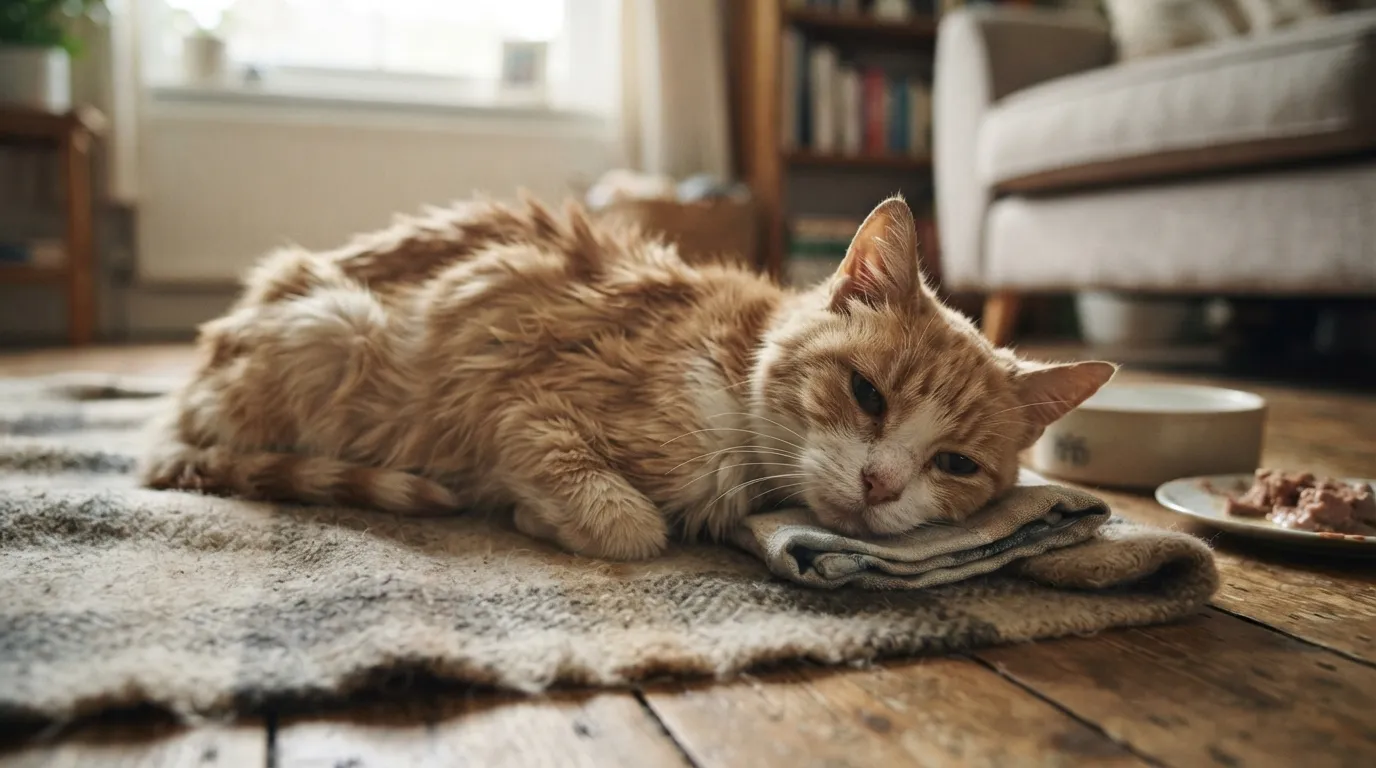
Your cat didn't just "slim down." This is the body consuming itself.
Early illness brings gradual weight loss that can stabilize with support. In the true final weeks, the weight loss continues no matter what you try.
Cancer often causes rapid weight loss even while a cat still shows interest in food, alongside visible lumps or non-healing sores. Weight loss that doesn't respond to increased feeding means the body is redirecting energy away from muscle mass.
Quick Compare
- Early illness: weight loss is gradual and often stabilizes with support.
- Final-weeks decline: weight loss continues no matter what you try.
- Cancer-related loss: can occur even while appetite stays normal.
- At-home tracking: a baby scale lets you weigh an older cat monthly and flag changes early.
Weekly weigh-ins are one of the most practical things any senior cat owner can do. But #4 happens inside the body in a way that's almost invisible until it turns critical.
#4 - Labored or Irregular Breathing
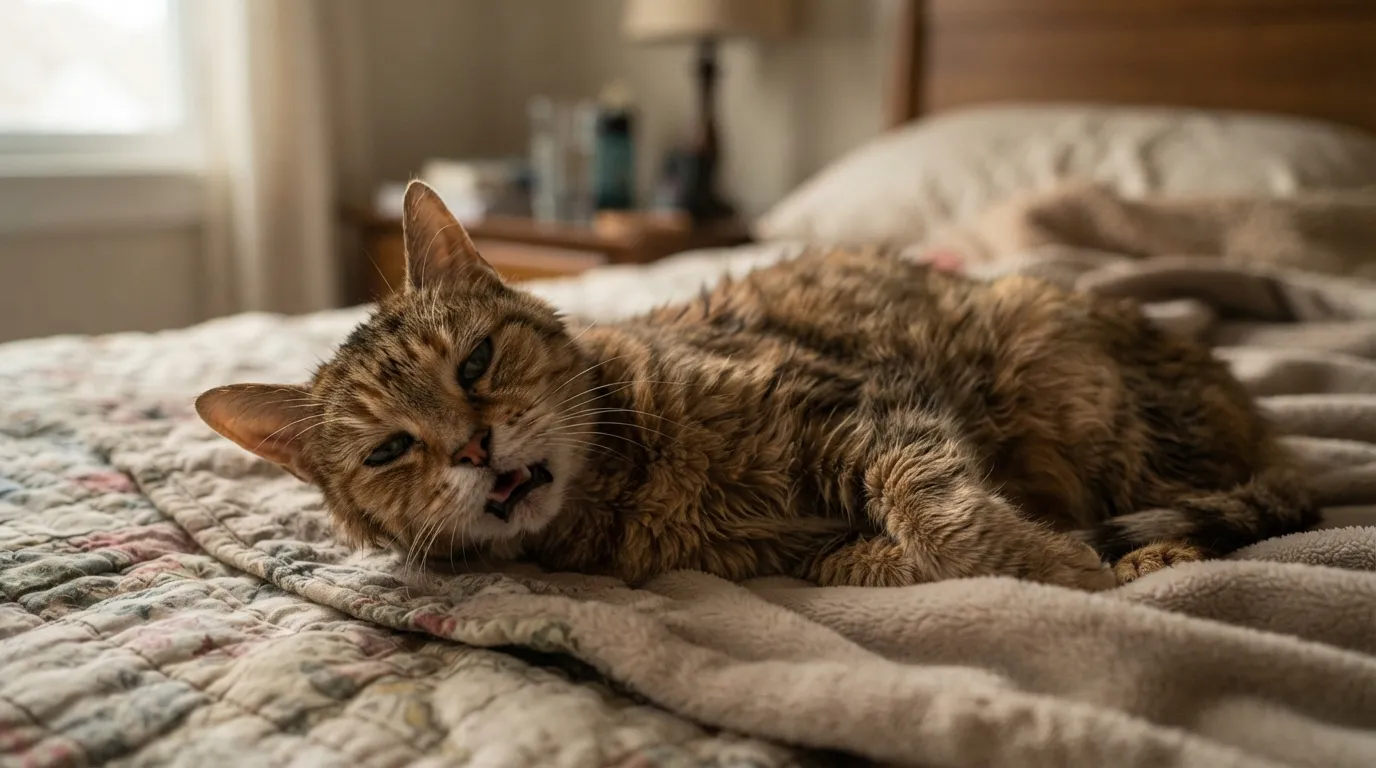
Most owners only notice breathing problems when they're already severe. Vets want you catching them weeks earlier.
Irregular, shallow, or labored breathing is a warning sign of dying, and in final hours a gasping pattern called agonal breathing can appear.
A cat panting at rest - like a dog after a run - is never normal. It is a same-day emergency in most cases.
- Any cat with labored breathing should be examined by a vet right away - it's stressful for the cat and can escalate into a life-threatening emergency fast.
Early breathing changes are subtle: a faster rate, a slight heave of the chest, reluctance to lie on one side. By the time a cat is visibly gasping, the window for intervention has often closed - and #3 will challenge everything you thought you knew.
#3 - Cognitive Disorientation
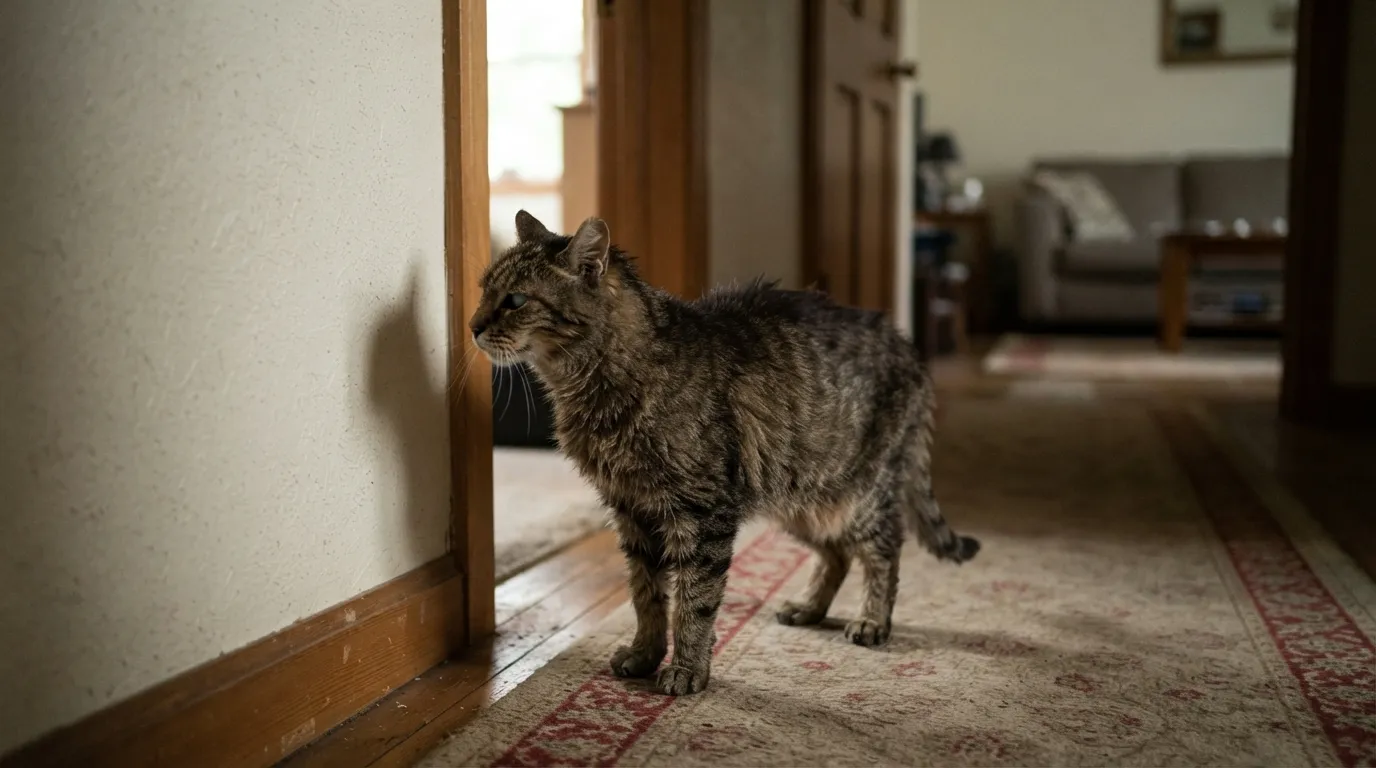
This one dismantles a cat's personality, and owners often explain it away as "just being old" for weeks.
Senior cats staring blankly at walls, forgetting the litter box location, or getting "lost" in a familiar hallway are showing more than typical forgetfulness. Cognitive decline is one of the most under-discussed signs of a cat nearing the end.
A cat that gets "lost" between the sofa and the food bowl has moved beyond quirky senior behavior into clinical decline. The brain is being affected by toxin buildup or falling oxygen - both late-stage signals.
- Track frequency: once a week is different from three times a day.
- Disorientation plus vocalization is an especially urgent combination.
Disorientation is brutal to witness. But #2 is the sign that tricks even experienced cat owners into false hope - and it's the most emotionally dangerous one on this list.
#2 - The Deceptive "Rally" Before the End
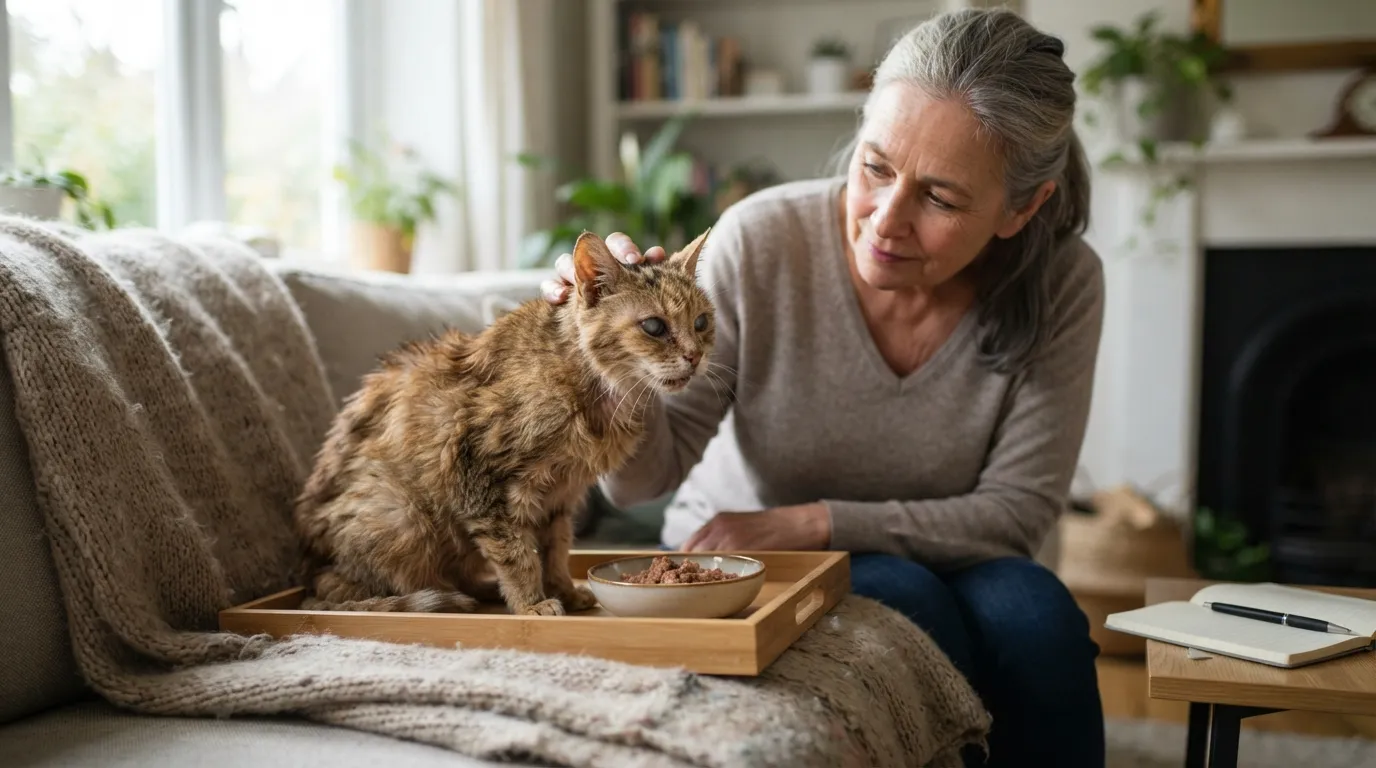
This is the moment owners remember most painfully - because they thought their cat was getting better.
In the final day or two, a declining cat sometimes seems suddenly better: more alert, more affectionate, even eating a little. Hospice vets recognize this pattern very differently, especially after weeks of decline.
Many families delay the vet call because of this rally, only to face a crisis hours later. It's not always recovery - sometimes it's the body's last surge before systems shut down.
- Document your cat's good days and bad days in a simple note on your phone.
- A single good day surrounded by bad weeks is different from genuine recovery.
If you've seen eight or more signs from this list in recent weeks, a sudden good day isn't a reprieve. The rally feels like a gift - sometimes it is, sometimes it's a farewell.
#1 - Subtle Behavioral Changes Weeks Before Any Physical Sign
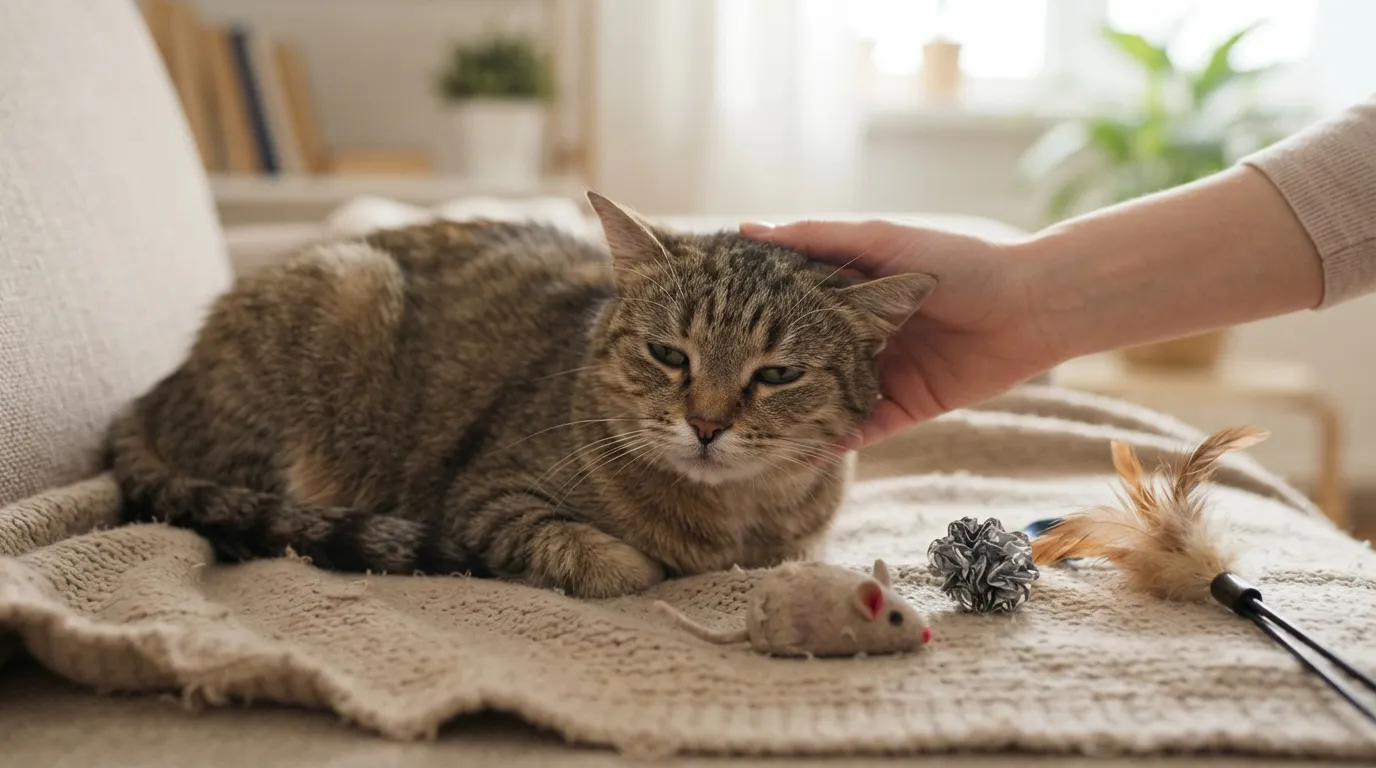
Here's the one vets say causes the most regret. It comes first, it's the easiest to catch, and it's the most consistently dismissed.
As health deteriorates, a cat loses interest in things it once enjoyed - ignoring favorite toys, turning up its nose at treats, even going quiet when petted.
A cat that stops purring when stroked is showing one of the earliest measurable signs of decline - and most owners don't notice it for days or weeks. These quiet withdrawals from toys, routines, and you begin long before any physical collapse.
Worth Knowing
- Loss of interest in toys or play often appears weeks before any physical symptom.
- A cat that stops purring when petted may be signaling early decline.
- Subtle withdrawal from routines is easier to catch than physical signs - if you're watching closely.
The owners who catch it earliest are the ones paying attention to who their cat is - not just how their cat looks.
The Bottom Line
The final days of a cat's life vary by cat and health history, but the signs are there - often weeks earlier than owners realize.
At a Glance: The Full Countdown
- #14 Appetite shift
- #13 Grooming collapse
- #12 Unusual body odor
- #11 Extreme lethargy
- #10 Cold extremities
- #9 Hiding and withdrawal
- #8 Vocalization changes
- #7 Litter box accidents
- #6 Eye changes
- #5 Rapid weight loss
- #4 Labored breathing
- #3 Cognitive disorientation
- #2 The deceptive rally
- #1 Subtle behavioral changes
Helping a cat through its final days is a joint effort between you and its veterinarian. Owners who catch these clues early give their cats something priceless - time for comfort, time for decisions, and time to say goodbye properly.
Did we miss a sign you noticed in your own cat? Drop it in the comments - your experience might help someone else.