14 Indoor Dangers That Quietly Steal a Cat's Final Days Without Warning
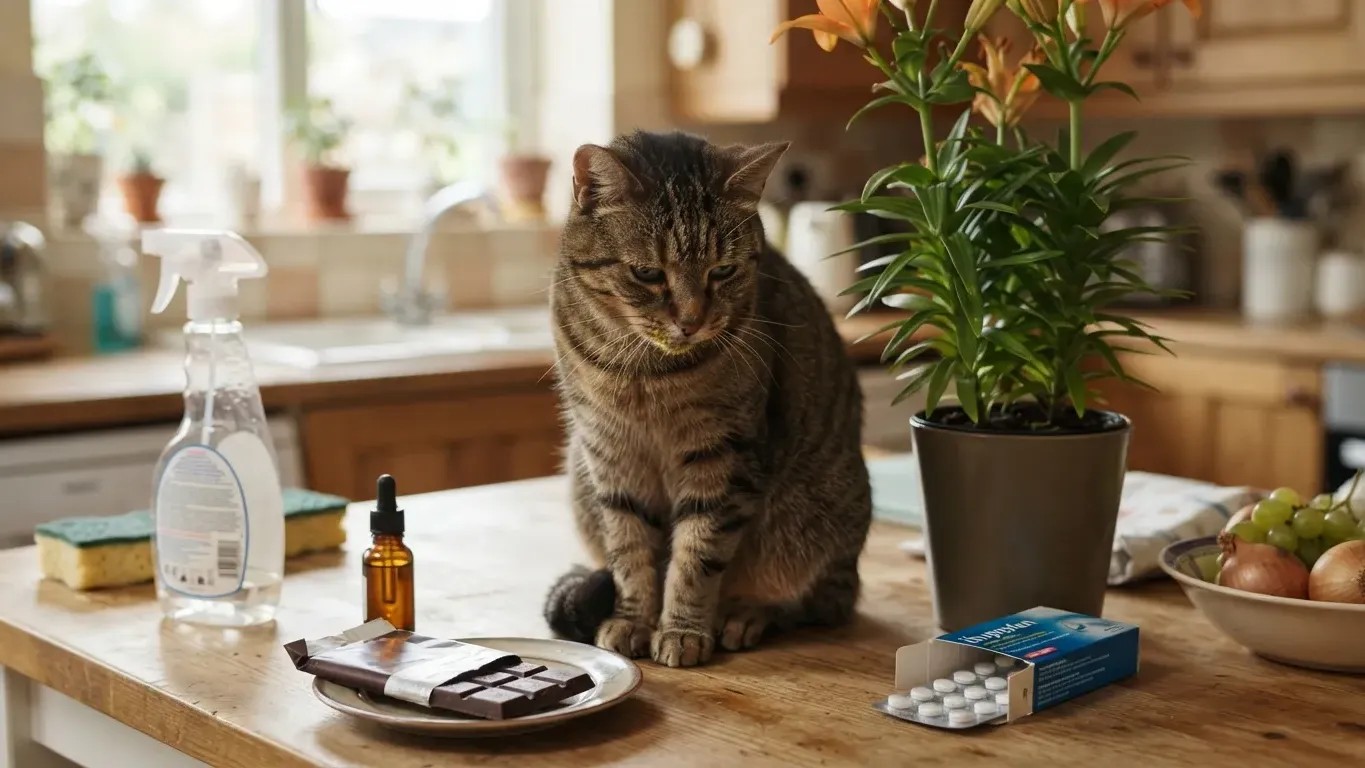
Most cat owners are convinced their home is a safe haven. After all, the front door is locked, the windows are closed, and the cat never goes outside.
But veterinary toxicologists and emergency vets tell a very different story - your living room, kitchen, and even your laundry room may be running a slow, silent clock on your cat's life.
The dangers aren't rare or exotic - they're everyday objects, plants on your windowsill, and products under your sink. By the time you reach #1, you'll want to walk through your house and check everything twice.
#14 - Household Cleaning Products That Kill Through the Paws
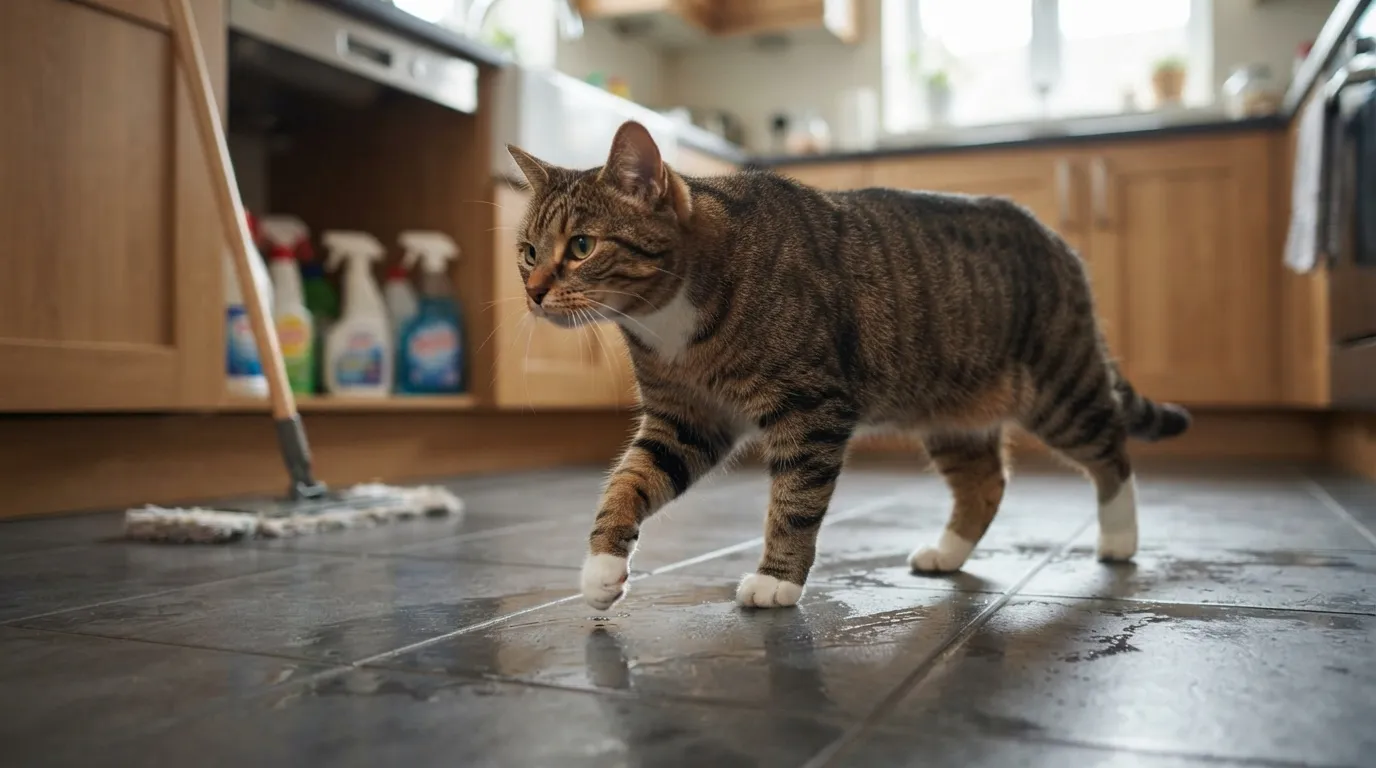
Most people worry about cats drinking cleaners. That's not even the main threat.
These substances can get onto a cat's paws or coat, and the cat may ingest them while grooming. Your cat doesn't need to find the bottle - just walk across a freshly mopped floor.
Common household cleaners, including kitchen and bath surface cleaners, carpet cleaners, and toilet bowl cleaners, can be toxic to cats. Bleach, ammonia, and phenol-based disinfectants are among the most dangerous.
Bleach is harmful if ingested and can cause serious damage to a cat's mouth, throat, stomach, and intestines.
The slow version of this poisoning is particularly cruel - repeated small exposures cause cumulative damage owners never connect to the cleaning products they've used for years.
Fast Facts
- Bleach, ammonia, and phenol-based disinfectants top the danger list
- Cats absorb residue through their paws, then swallow it while grooming
- Damage can build slowly from repeated small exposures over months
- A freshly mopped floor can be just as risky as an open bottle
But that's nothing compared to what we found about #13...
#13 - Essential Oils Diffused Right Into Their Lungs
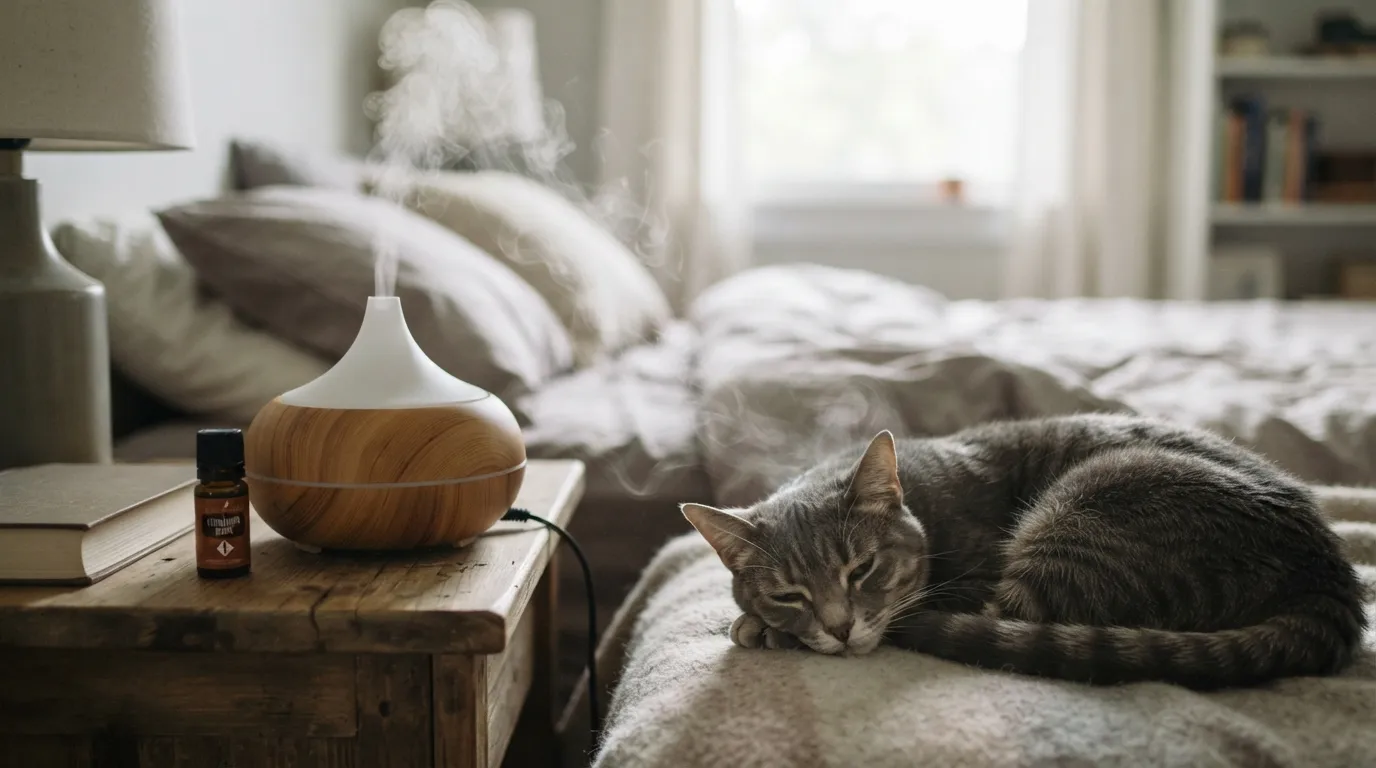
That peaceful diffuser in your bedroom? It may be quietly poisoning your cat.
Many liquid potpourri products and essential oils are poisonous to cats, including oil of cinnamon, citrus, pennyroyal, peppermint, pine, sweet birch, tea tree, wintergreen, and ylang ylang. Both ingestion and skin exposure can be toxic.
These chemicals are rapidly absorbed orally or through the skin, then metabolized through the liver. Cats have a severely limited ability to process these compounds, meaning even ambient diffusion in a closed room can cause liver damage over time.
Cats show no dramatic symptoms early on - just quiet lethargy, which most owners dismiss as normal cat behavior.
But that's nothing compared to what we found about #12...
#12 - Human Medications Dropped on the Floor
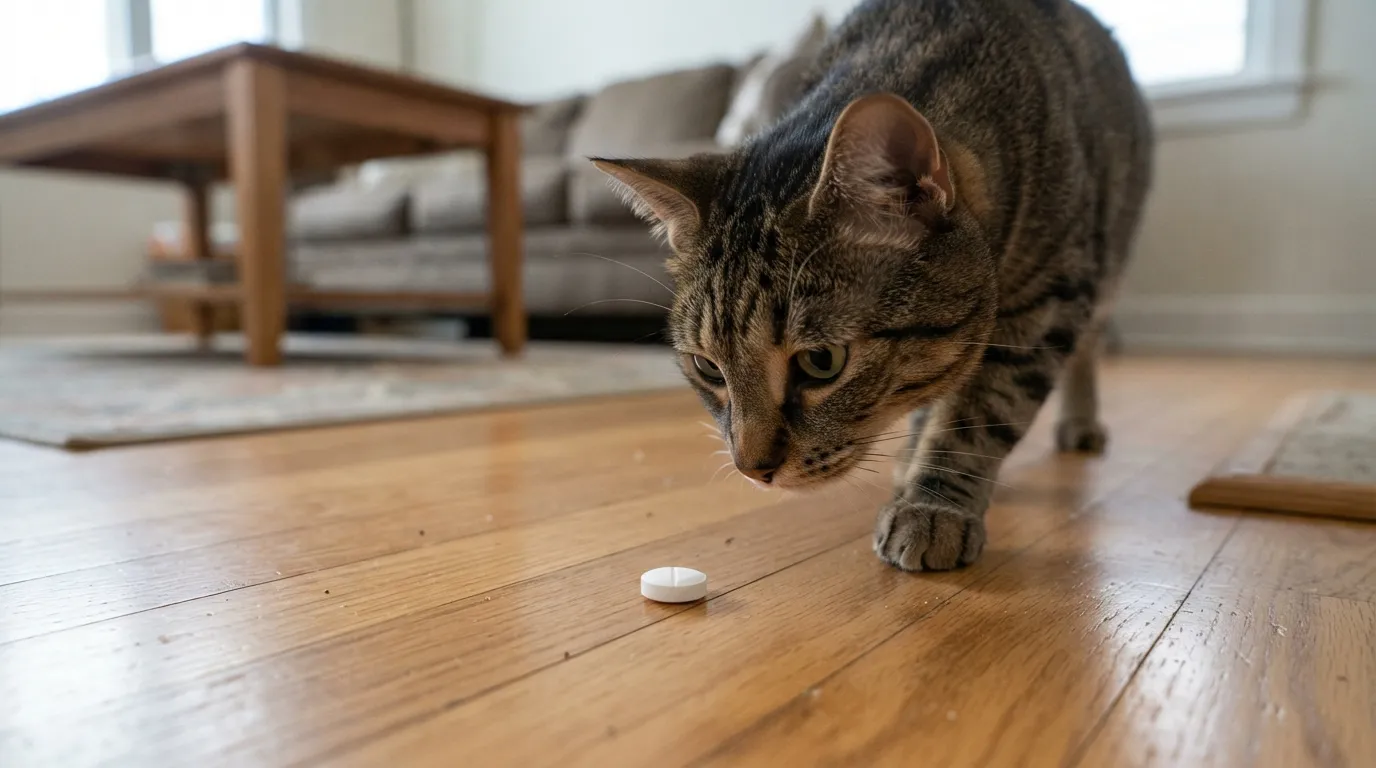
Your cat isn't hunting for your pill organizer. They don't need to.
A single dropped tablet can be enough to cause poisoning. Their inability to metabolize certain toxic substances means medications considered very safe for humans - including paracetamol, aspirin, and ibuprofen - can be deadly to cats, even in tiny doses.
A single regular-strength acetaminophen tablet can be fatal to a cat. Over-the-counter and prescription drugs are one of the leading causes of pet poisoning.
The window between exposure and severe organ failure can be shockingly short. Don't wait for symptoms - if you suspect ingestion, call your vet immediately.
But that's nothing compared to what we found about #11...
#11 - String, Thread, and Hair Ties Turned Surgical Emergency

That ball of yarn isn't a toy. It's a potential surgery bill.
Anything long and string-like can get caught in the mouth or throat, and if swallowed, it can cause part of the intestine to telescope into itself or cut through the bowel like a cheese-wire.
A large percentage of cat surgeries result from swallowed objects, including string, cord, dental floss, and small items like batteries or coins. Hair ties and ear buds show up frequently in operating rooms.
When string doesn't pass through a cat's body, removing it often requires surgery. The danger is that cats play with these objects unsupervised for years before the one time things go catastrophically wrong.
But that's nothing compared to what we found about #10...
#10 - The Dryer: A Sleeping Trap in Plain Sight
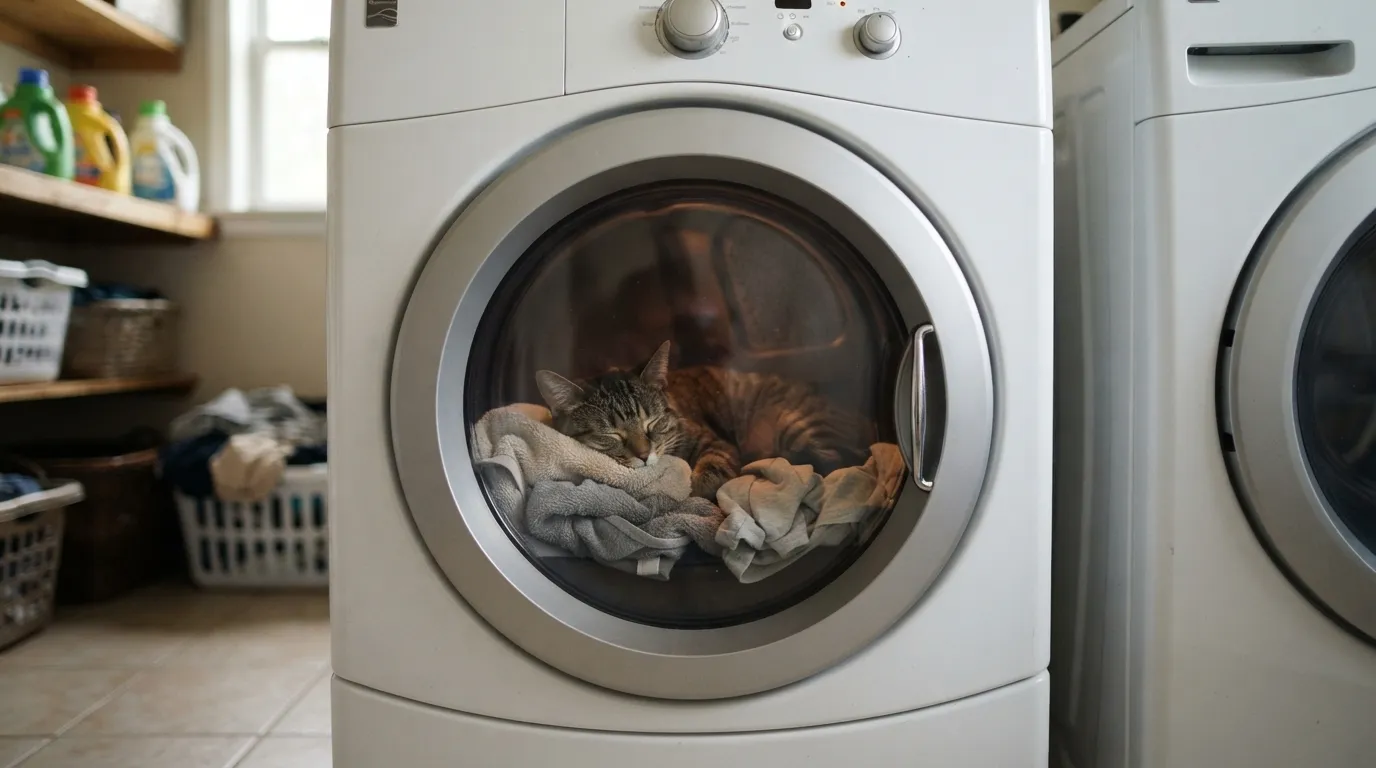
Cats love warm, enclosed spaces. Your dryer is basically their dream hiding spot - and one of the most fatal traps in any home.
Dryers are appealing because they're secluded, warm, and often full of soft clothes. Some cats have been killed after their owners accidentally closed and turned on a dryer with a sleeping cat inside.
This isn't a rare freak accident - it happens regularly and almost always without any warning signs. You'd be surprised how easily you can throw a few extra clothes in, close the door, and start the cycle without noticing your cat is inside.
The fix is simple: keep the dryer door closed at all times and always check before starting a cycle. Most owners who lose a cat this way say they'd done it a hundred times before without incident.
But that's nothing compared to what we found about #9...
#9 - Secondhand Smoke: The Slow Cancer Nobody Talks About
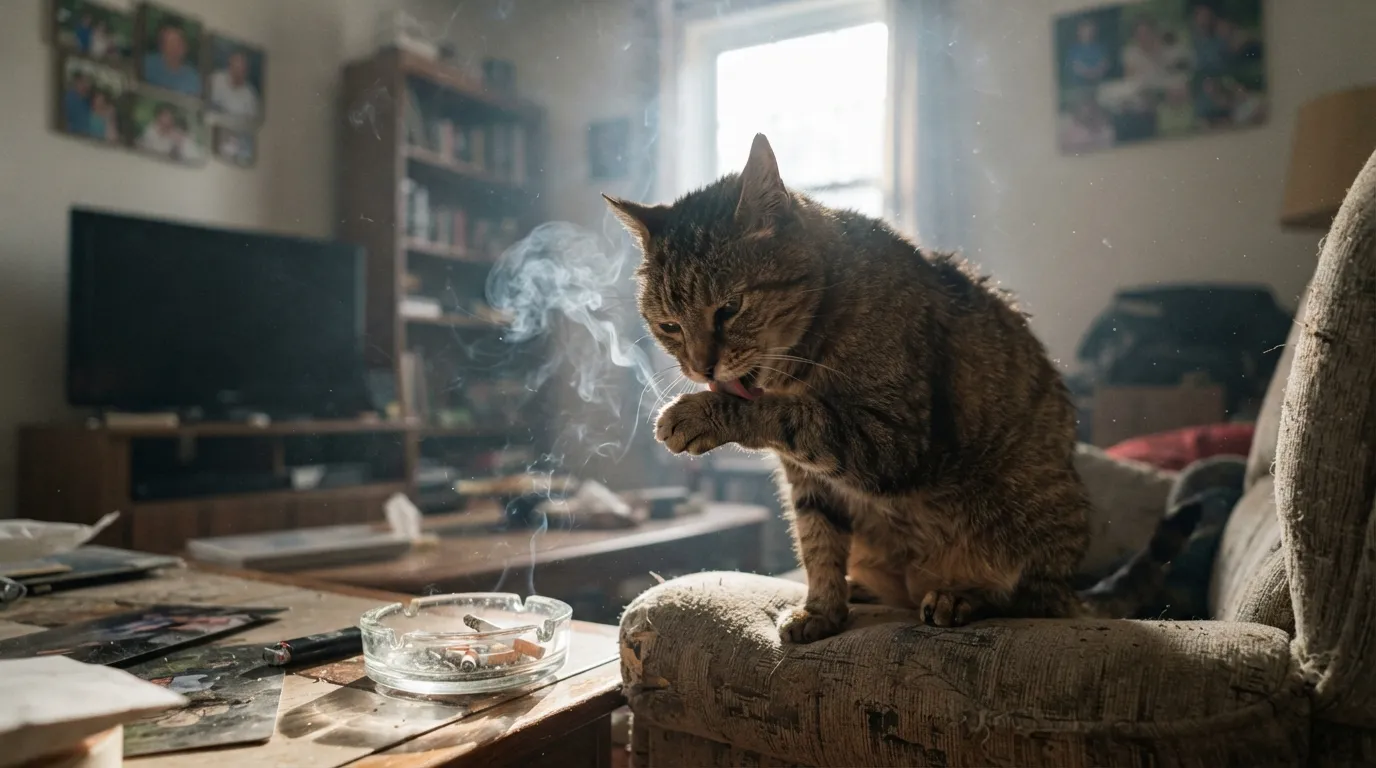
Most smokers who love their cats have no idea what they're doing to them.
Cats exposed to secondhand smoke are about twice as likely to develop lymphoma, a cancer of the lymph nodes with a poor survival prognosis - and the risk climbs the longer a cat lives in a smoky household.
Because cats groom constantly, they swallow tobacco residue that settles on their fur, which research suggests may raise the risk of oral squamous cell carcinoma. The grooming habit that keeps cats clean is actively concentrating carcinogens into their bodies.
"Second-hand tobacco smoke has devastating consequences for cats because it significantly increases their likelihood of contracting lymphoma."
Dr. Antony S. Moore, veterinary oncologist, Tufts University School of Veterinary Medicine
Cats also suffer from "third-hand smoke" - the residue that clings to furniture, rugs, and fur long after the air clears. There is no safe level of indoor smoking for a cat.
But that's nothing compared to what we found about #8...
#8 - Electrical Cords That Fry Without Warning
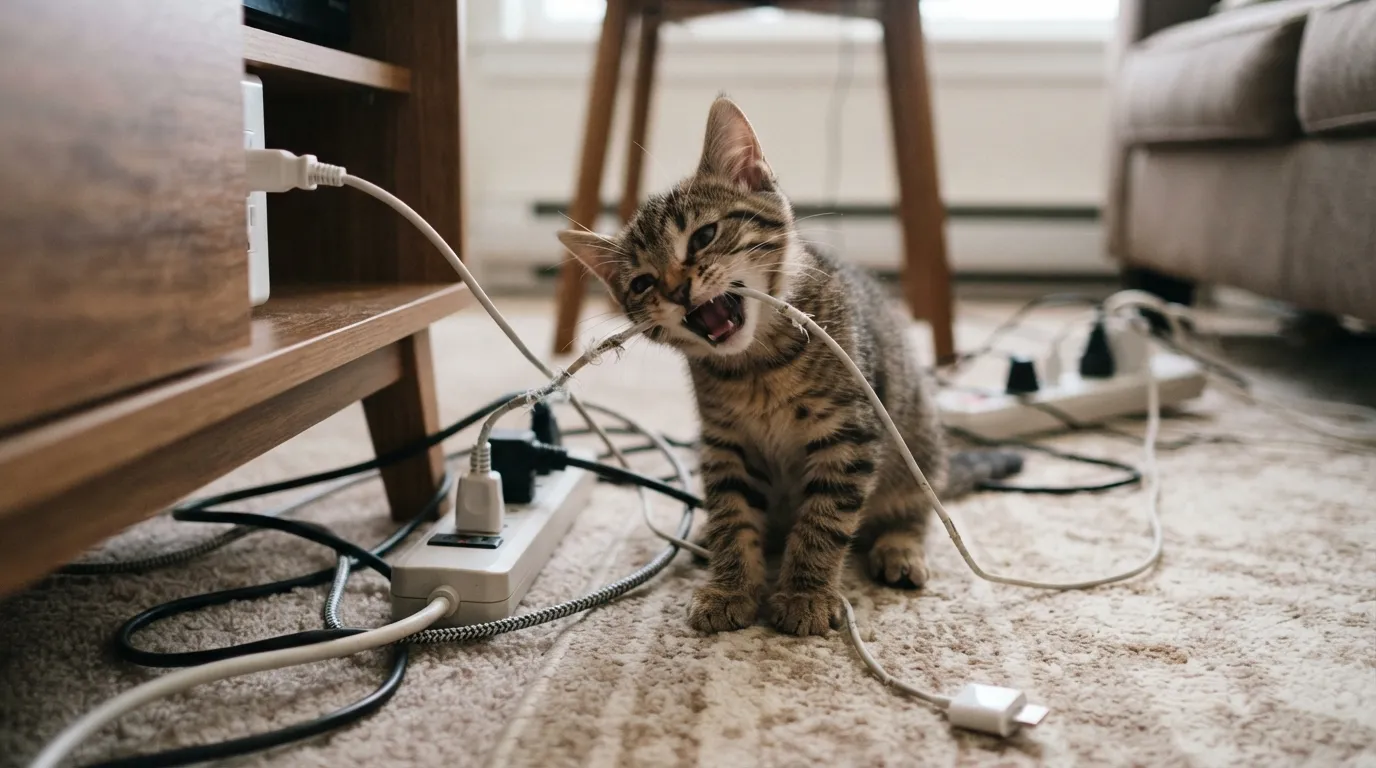
Kittens chew cords out of curiosity. Older cats do it out of boredom - either way, it can be fatal.
Thin cords used to charge phones and laptops are especially tempting, presenting the danger of both electrocution and swallowing bits of cord. Chewing cables can lead to burns, electric shock, or complications that may not show symptoms immediately.
Pulmonary edema - fluid in the lungs - can develop hours after an electrical shock, appearing long after the incident itself. Stay alert for delayed symptoms like breathing difficulties.
Many owners assume a cat "got a little zap" and is fine. They go to bed - then wake up to a crisis.
But that's nothing compared to what we found about #7...
#7 - Rodent Poison That Kills Twice
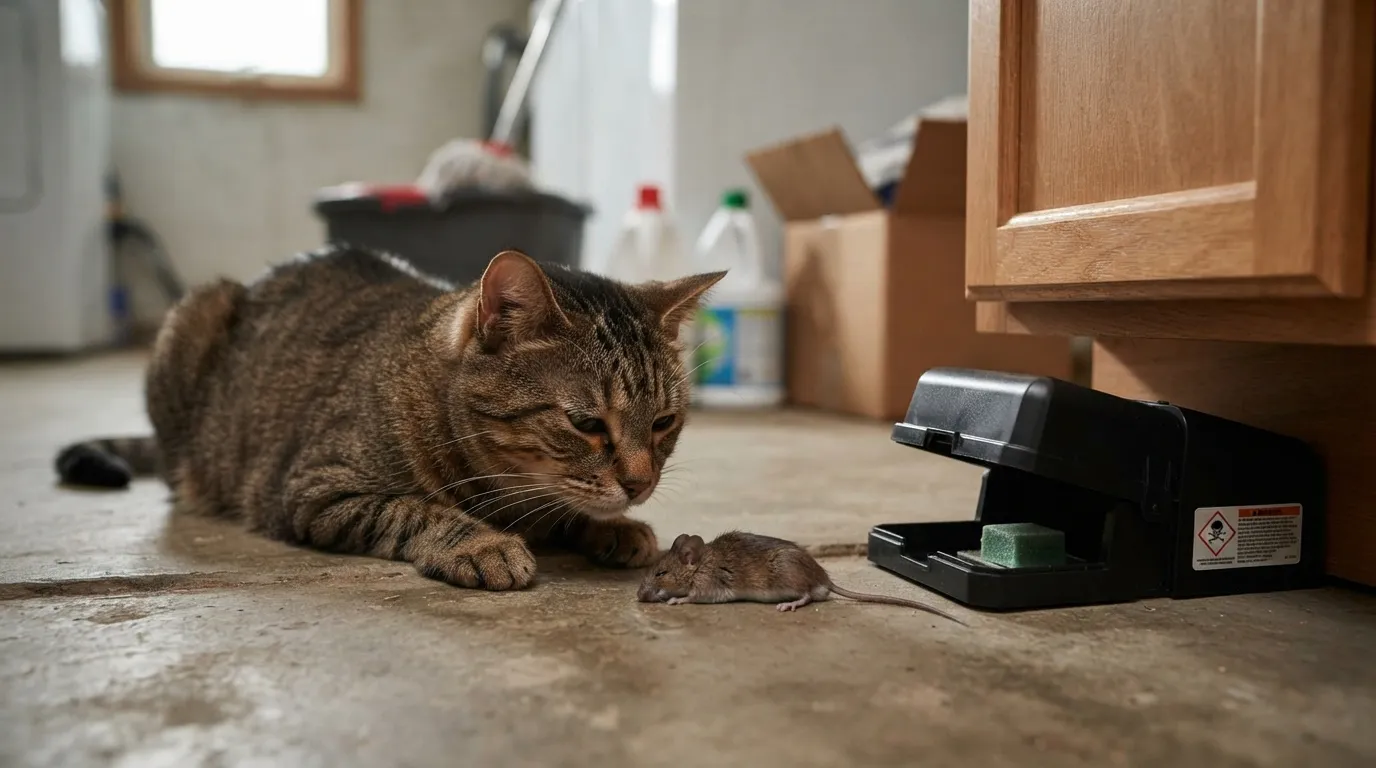
You put out a bait trap. The mouse dies - then your cat eats the mouse, and your cat dies too.
Bug sprays, ant baits, and rat poisons are extremely toxic to cats, either directly or when they eat a poisoned insect or rodent. Most cat owners never even consider this secondary poisoning pathway.
Rodenticides work by causing internal bleeding - and the same mechanism operates in cats who consume a poisoned prey animal. Insecticides can also cause symptoms ranging from mild irritation to serious neurological signs.
Rodent poison should be considered off-limits in any home with a cat, full stop. There are no safe placements.
But that's nothing compared to what we found about #6...
#6 - Permethrin Flea Treatments Meant for Dogs
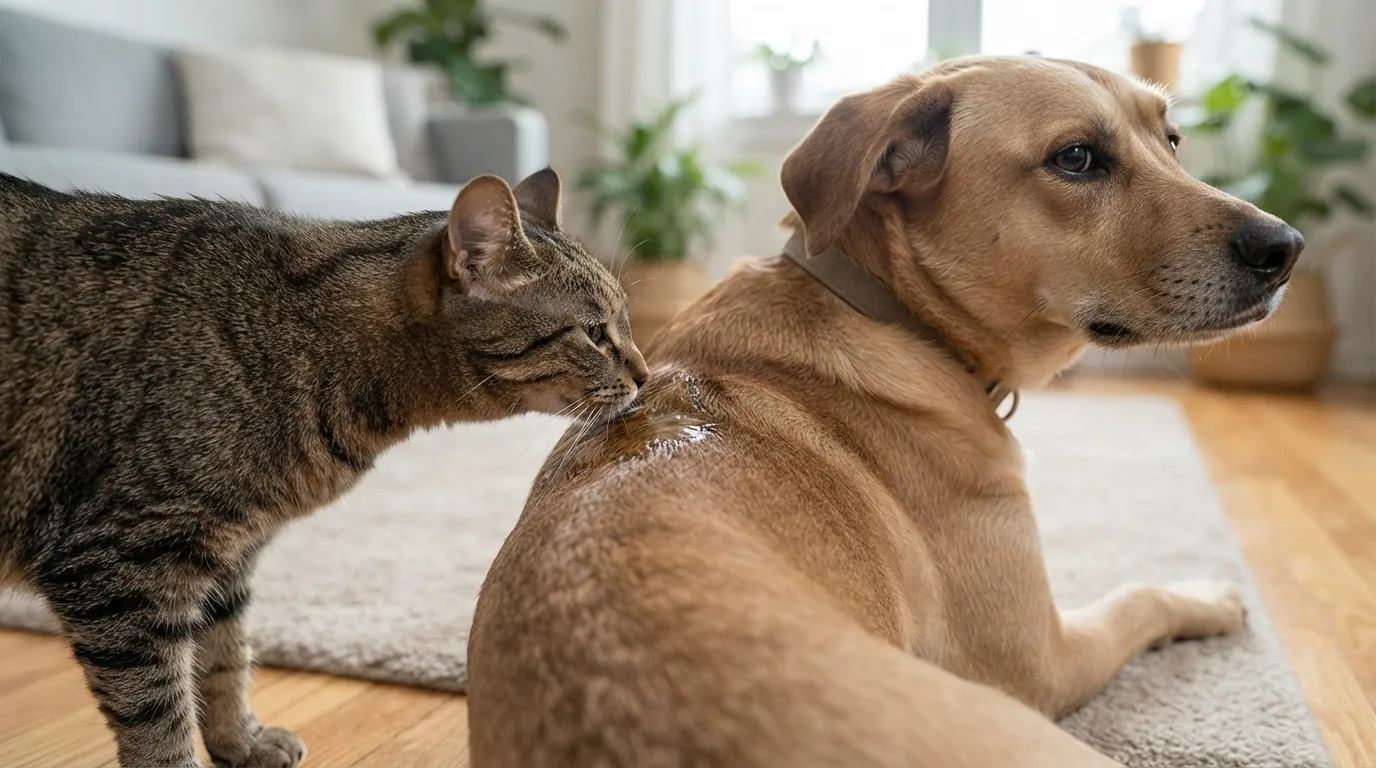
This one trips up even careful, well-meaning cat owners - and it can kill within hours.
Dog-specific insecticides containing pyrethroids, such as permethrin, are highly toxic to cats. Poisoning happens when dog flea products are applied directly to cats, or when cats lick these medications off a housemate dog.
A cat in the same household as a recently treated dog can absorb a lethal dose just through grooming contact. Symptoms - muscle tremors, seizures, hyperthermia - can appear within an hour of exposure.
Quick Compare
- Dog-only flea treatments: contain permethrin levels safe for dogs but toxic to cats
- Cat-safe flea treatments: formulated without those same pyrethroid concentrations
- Cross-contamination risk: grooming a treated housemate dog can transfer a toxic dose
- Reaction time: tremors and seizures can appear within an hour
This is an emergency situation. If you suspect permethrin exposure, get to a vet immediately - do not wait.
But that's nothing compared to what we found about #5...
#5 - Toxic Foods Hiding in Plain Sight
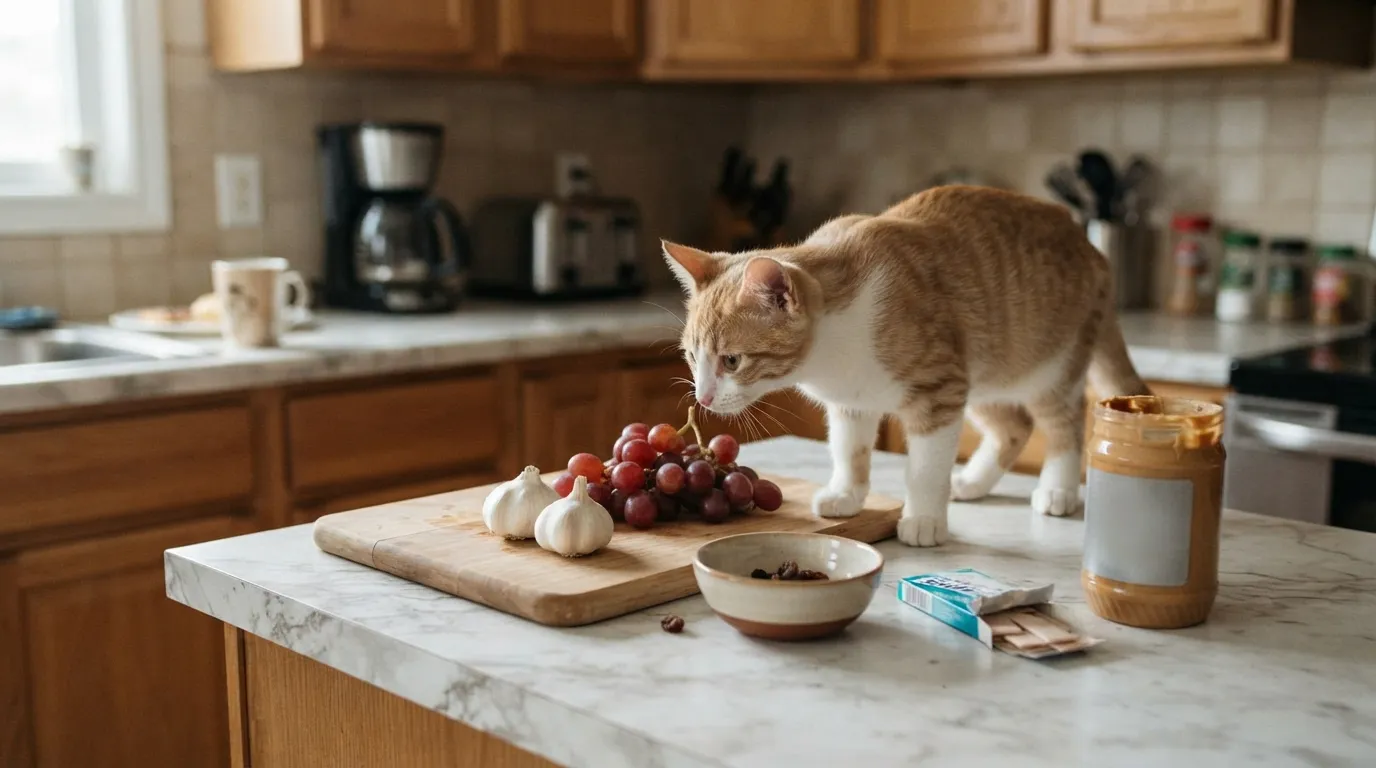
Most cat owners know about chocolate. Far fewer know the rest of the list.
A cat's sensitivity to common human foods extends to onions, grapes, raisins, caffeine, and even raw dough that ferments in a cat's stomach and creates ethanol. Garlic belongs on that list too.
Xylitol - the artificial sweetener found in sugar-free gum, peanut butter, and some baked goods - is also toxic to cats. Many owners don't realize how easily a dropped grape or a lick of something sweet can trigger a poisoning event.
The danger isn't a cat raiding the fridge. It's a grape rolling under the couch, or a peanut butter treat meant for the dog.
But that's nothing compared to what we found about #4...
#4 - Candles and Open Flames Within Jumping Distance
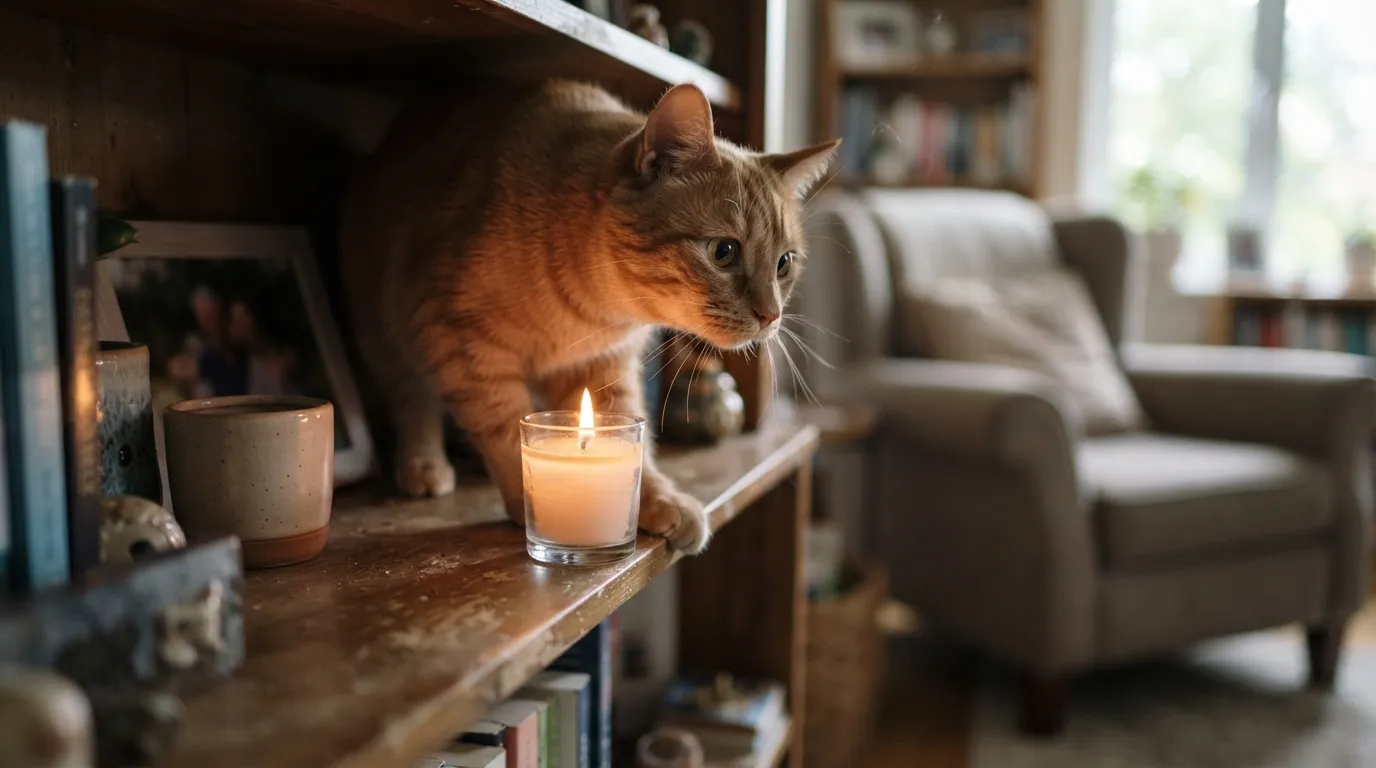
Candles feel cozy and harmless. To a cat, they're an active hazard at nose height.
Cats have trouble avoiding objects that interest them, like flickering flames, and can easily end up with scorched whiskers or burned noses. They can also start a fire by knocking over a candle that isn't secured.
Scented candles also release particulate matter and volatile compounds into the air that cats - with their sensitive respiratory systems - inhale at close range. Burn injuries to paws and faces happen more often than most owners realize, usually in seconds while they're in the next room.
Flameless candles are a simple swap that removes this risk entirely. Most cat owners never make it.
But that's nothing compared to what we found about #3...
#3 - Sago Palm: The Deadliest Houseplant You Might Own Right Now
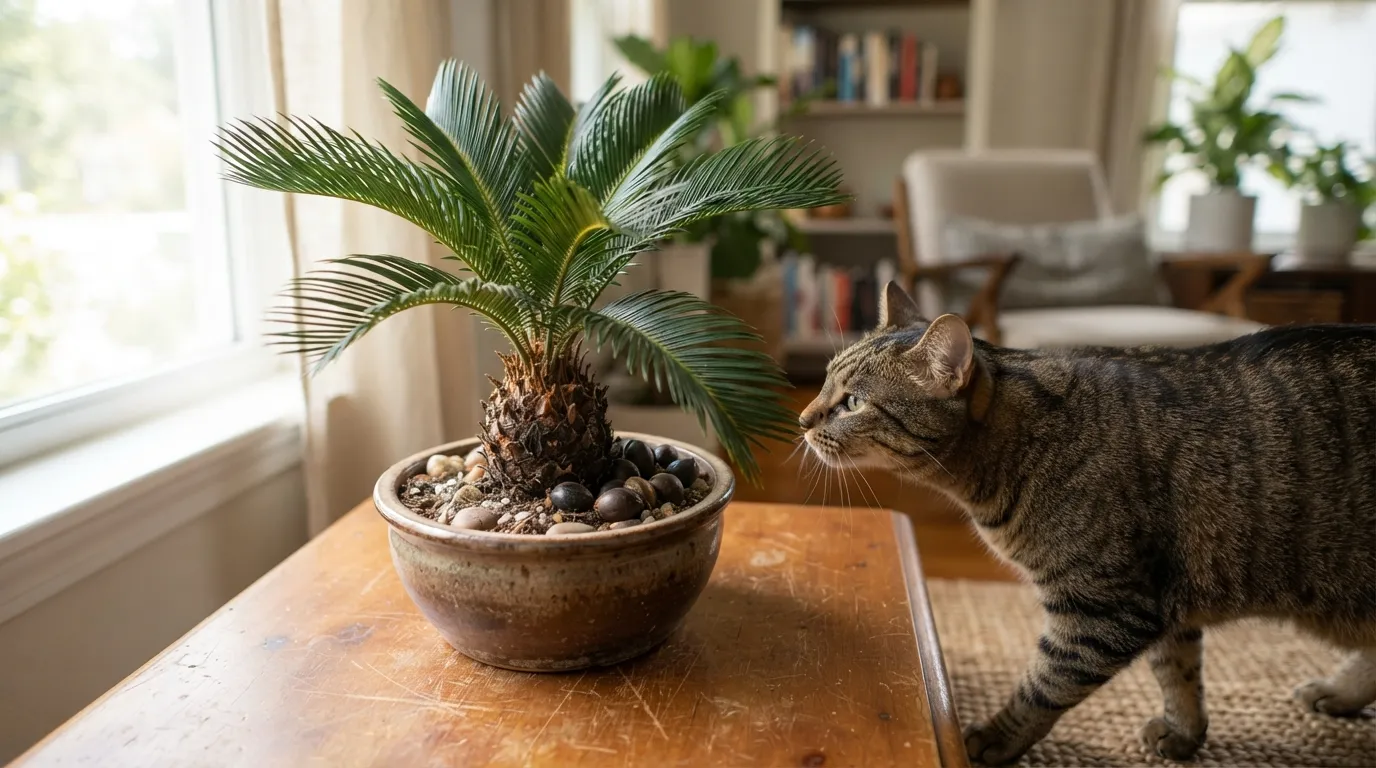
Of all the toxic plants, this one deserves its own warning label on every garden center shelf.
The sago palm can cause vomiting, diarrhea, seizures, and liver failure, and is potentially fatal. Every part of the plant - seeds, leaves, roots - contains cycasin, a toxin that causes rapid, devastating liver damage.
Ingestion of even a small amount can be fatal, and survival rates are poor even with aggressive veterinary treatment. This plant is routinely sold as an ornamental houseplant with no warning that it's one of the most dangerous a cat can encounter.
Worth Knowing
- Seeds carry the highest concentration of the toxin cycasin
- Even with aggressive treatment, survival rates hover near 50%
- Liver failure can develop within two to three days of ingestion
- The plant is still sold as a common ornamental in garden centers nationwide
If you have a sago palm in your home right now, remove it today. Not eventually - today.
But that's nothing compared to what we found about #2...
#2 - Lily Bouquets Left on the Counter
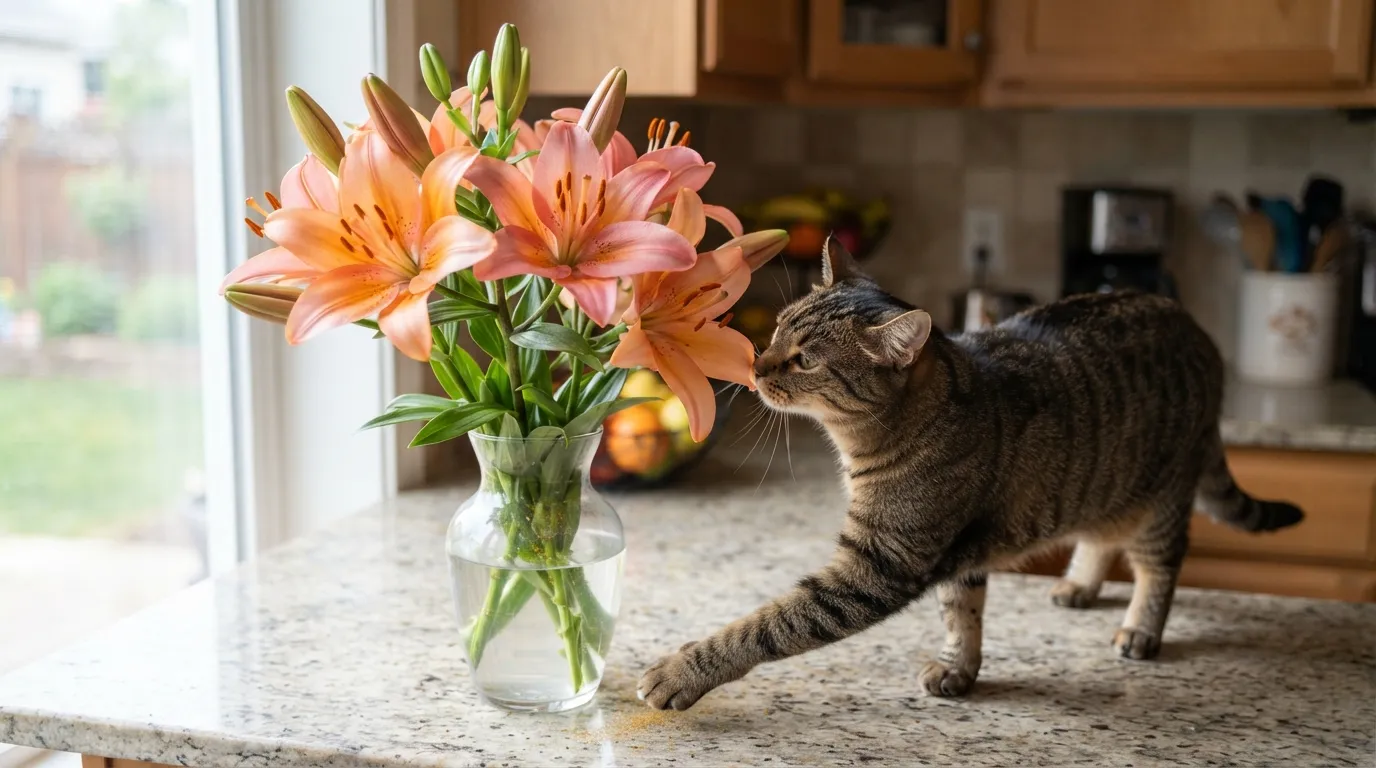
You brought home flowers. You may not realize you brought home a kidney failure risk.
The entire lily plant is toxic - including the flowers, leaves, stems, and even the pollen. Exposure kills thousands of cats every year.
Veterinarians aren't sure which toxin in lilies causes the poisoning, but even the plant's pollen or water from the vase can trigger acute kidney failure. Your cat doesn't need to eat the flower - brushing past a lily and then grooming the pollen off their coat is enough.
Treatment needs to begin within 24 hours to avoid serious kidney damage. Lilies are sold in virtually every grocery store and florist, and most buyers have no idea what they're bringing home.
But that's nothing compared to what we found at #1...
#1 - Antifreeze: The Sweet Poison Already in Your Home
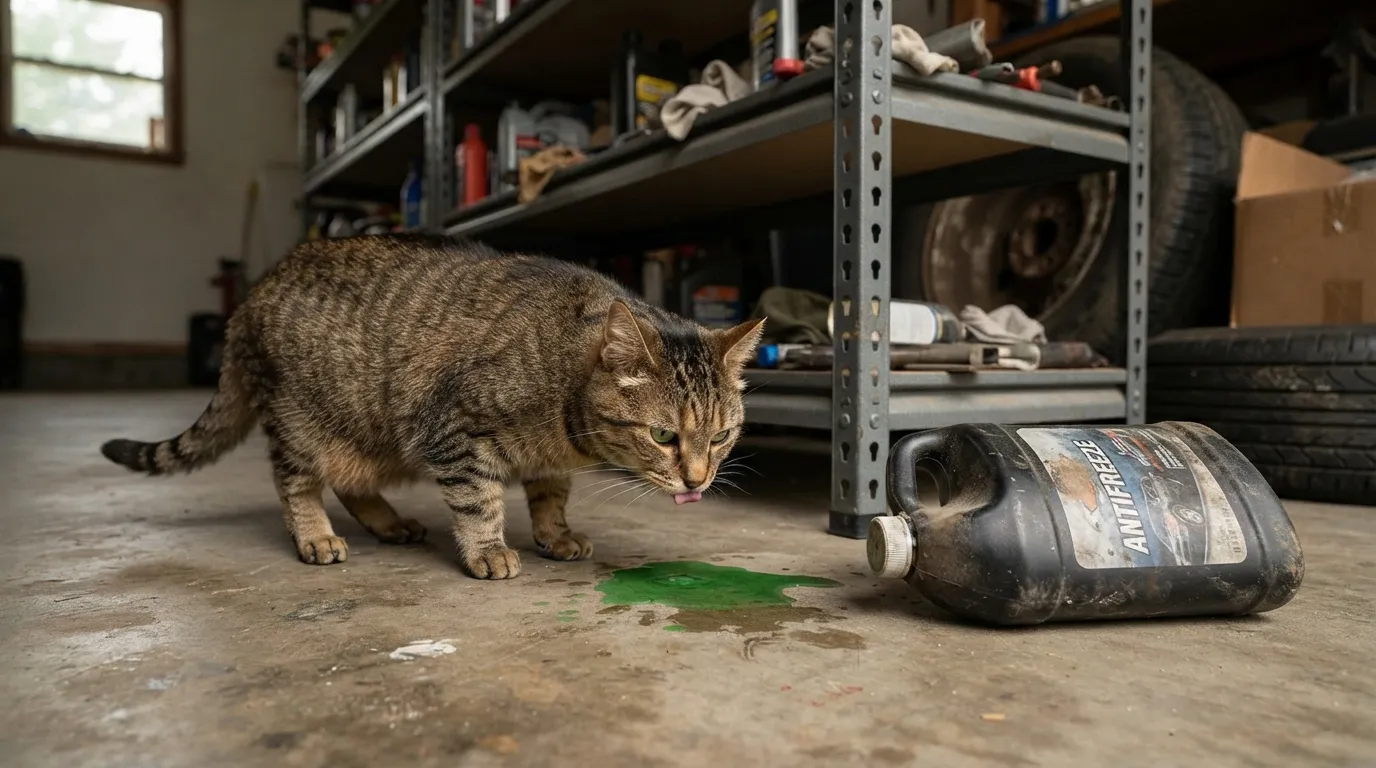
This is the one that keeps emergency vets up at night - because it's completely preventable, almost always fatal, and hiding in millions of homes right now.
Antifreeze contains ethylene glycol, which can cause kidney failure if ingested. Cats are drawn to its sweet taste, meaning just a few licks can be lethal.
Even indoor cats can be at risk if antifreeze is tracked into the house on shoes or clothing. The kidneys begin to fail within hours, but the early symptoms - mild sedation, a wobbly gait - are easy to miss or dismiss.
At a Glance
- Active ingredient: ethylene glycol, sweet-tasting but lethal
- Kidney failure can begin within hours of ingestion
- Early signs look mild: sedation, wobbly walking
- Even a few licks can be a fatal dose
By the time serious symptoms appear, the window for survival may already have closed. These ingestions are medical emergencies requiring immediate veterinary care.
Switching to propylene glycol-based antifreeze is a five-minute decision that could add years to your cat's life.
The Bottom Line
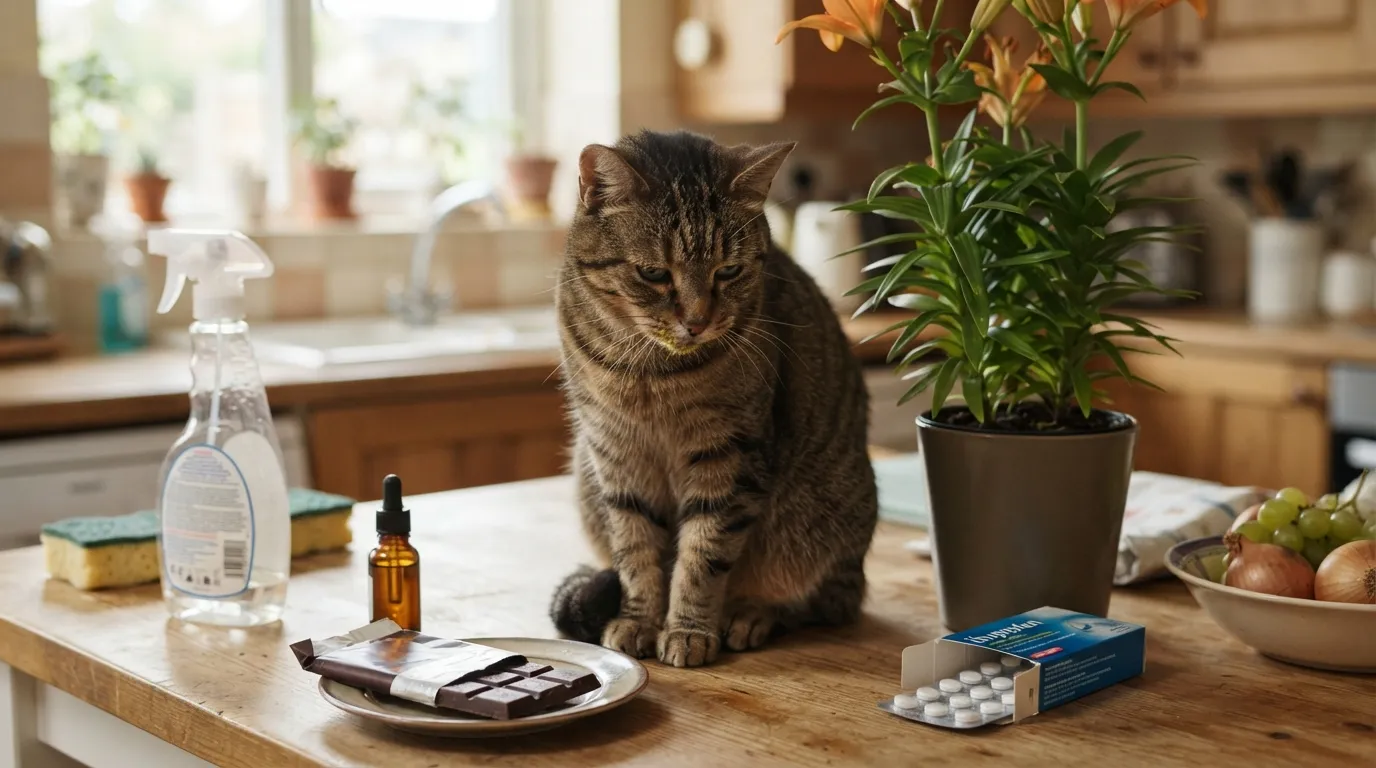
Your home isn't automatically safe just because the doors are locked. Cleaning products, plants, foods, and essential oils - the everyday stuff on your counter and in your laundry room - can all be harmful if ingested, inhaled, or absorbed through the skin.
The cats we lose to indoor hazards don't go dramatically - they go quietly, over hours or days, while their owners have no idea anything is wrong. Awareness is the only tool that changes that outcome.
Walk through your home today with fresh eyes. Which of these did you already know about - and which one shocked you most? Drop it in the comments.