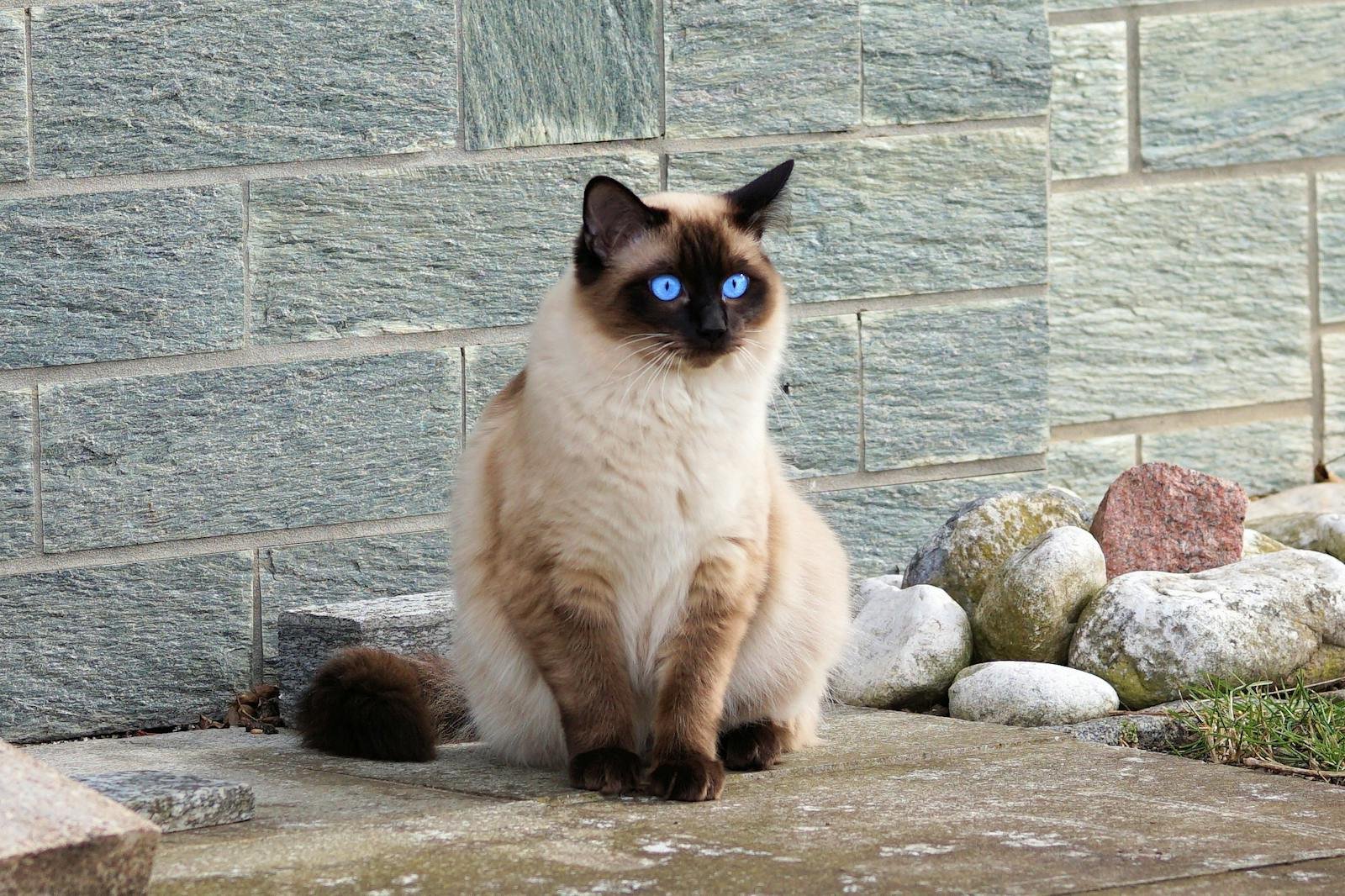
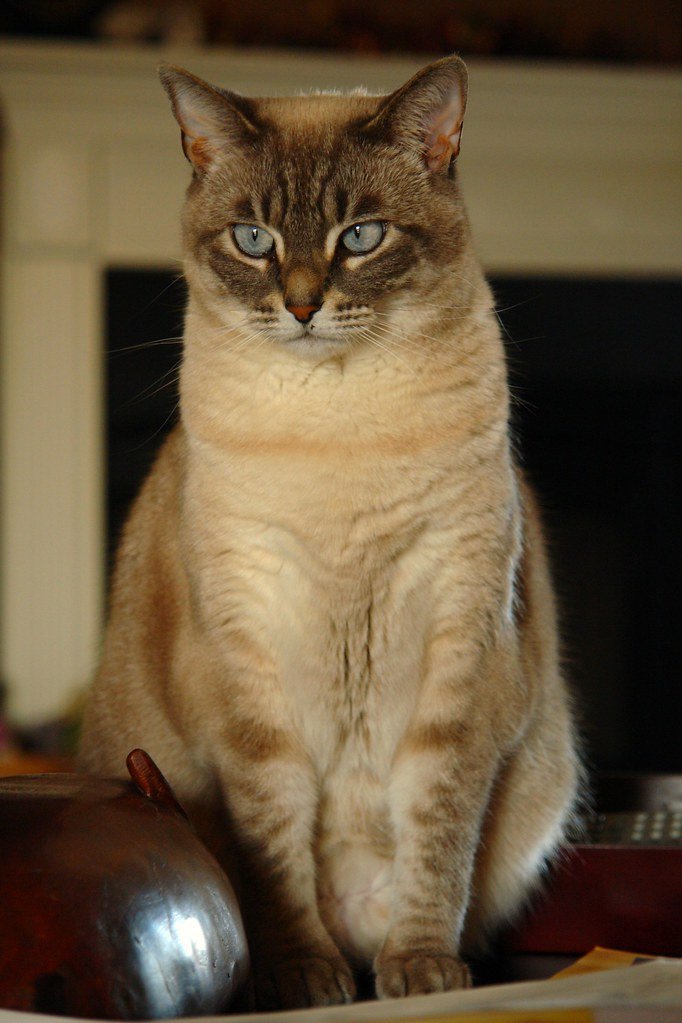
14 Signs Your Breed Cat Has Chosen You as Its One Person for Life
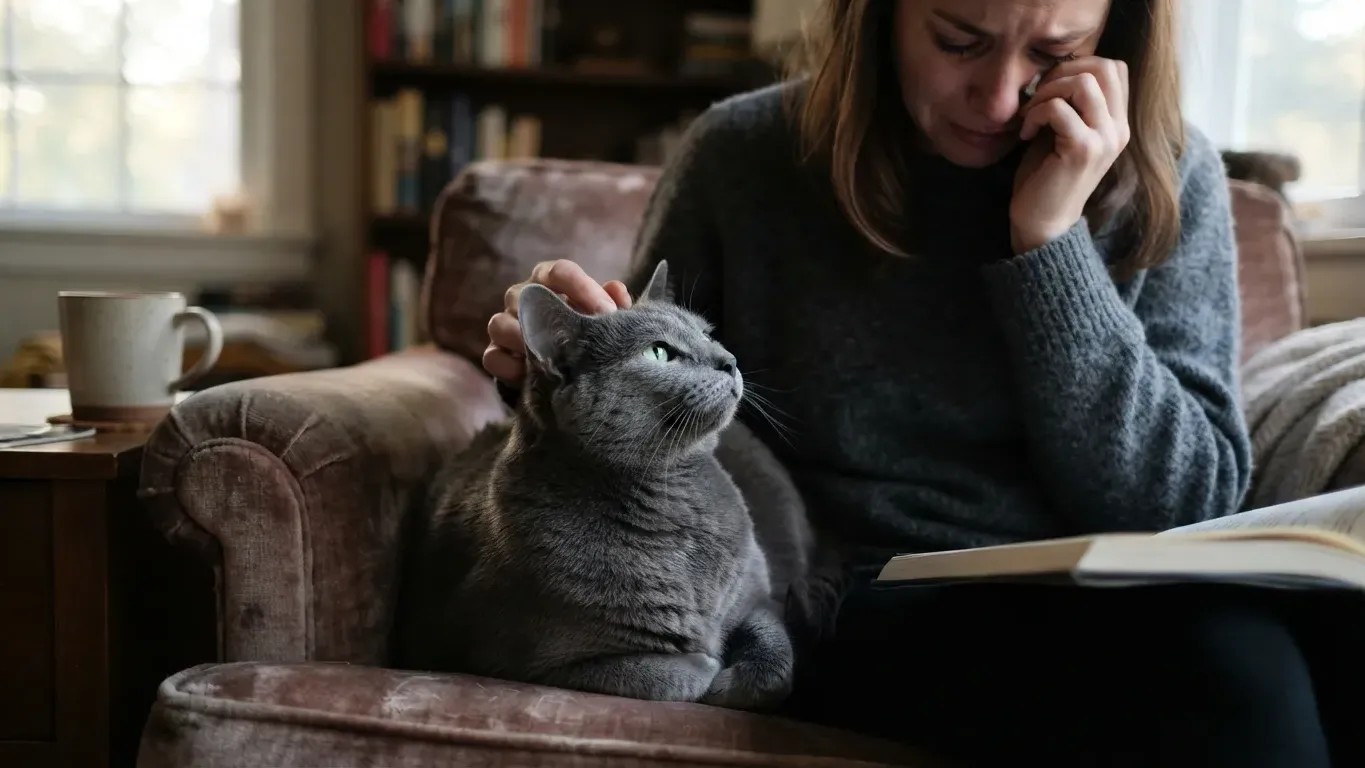
Most people assume cats are aloof little roommates who merely tolerate whoever feeds them. Certain pedigree cats do the exact opposite - they lock onto one specific human and build their entire emotional world around that person, complete with jealousy, separation anxiety, and rituals reserved only for the one they've chosen.
If you've ever felt like your cat tracks your every move, watches your face, or waits by the door only for you - you're not imagining it. Below are 14 signs, rooted in real feline behavior science, that prove your breed cat has already made its choice.
#14 - They Follow You to Every Room (Including the Bathroom)
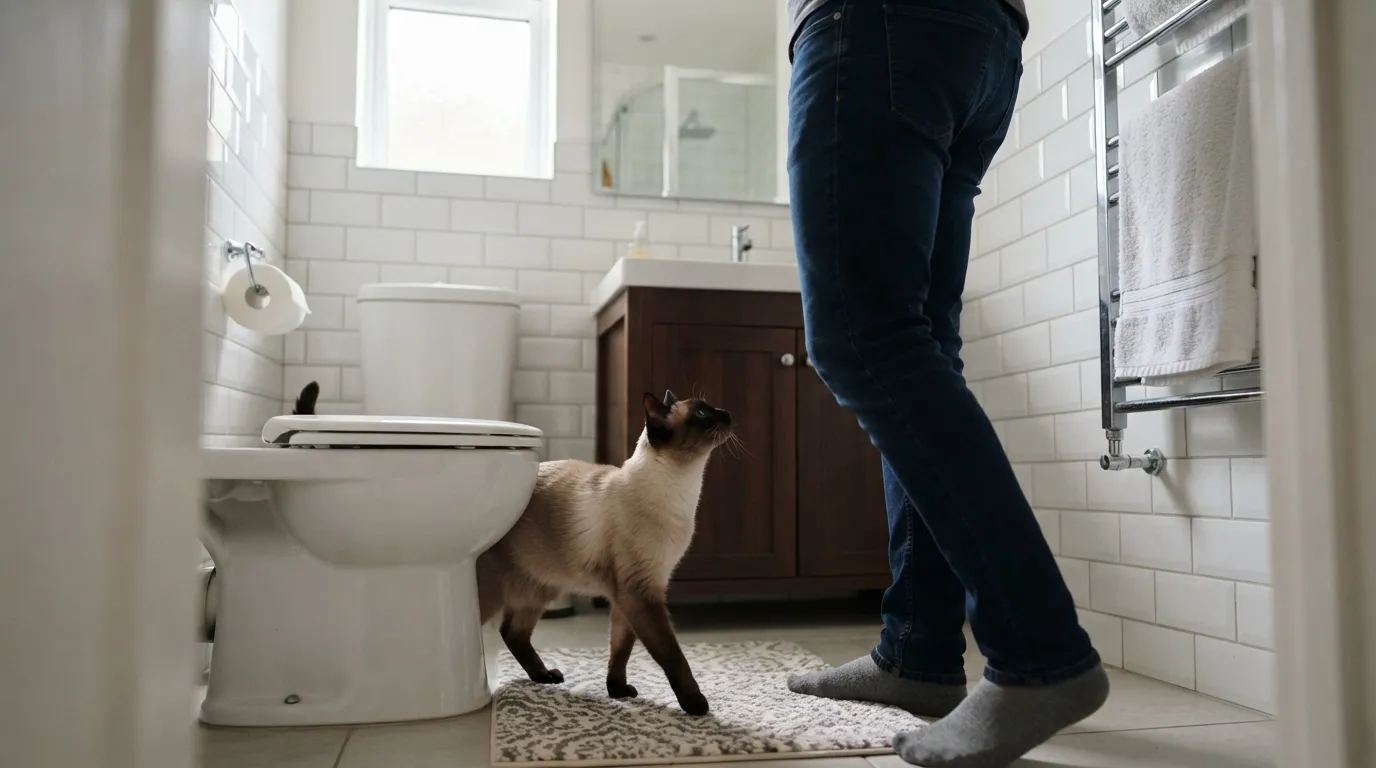
Cats build what behaviorists call a "shadow effect" with their favorite human - trailing you from room to room because you're their protector and their source of security. This isn't clinginess. It's a deliberate, considered choice.
Breeds like the Siamese and Burmese are especially notorious for it, treating your presence like a security blanket they never outgrow. Kitten-like attachment doesn't fade with age in these cats - it just gets quieter and more constant.
The part most owners miss: your cat isn't following you out of boredom. Constant shadowing is one of the clearest imprint signals there is, and unlike casual affection, imprinting doesn't switch off.
But following is just the surface. Wait until you see what your cat does the moment you walk through the door - it tells a much bigger story.
#13 - They Give You a Dedicated Greeting Ritual
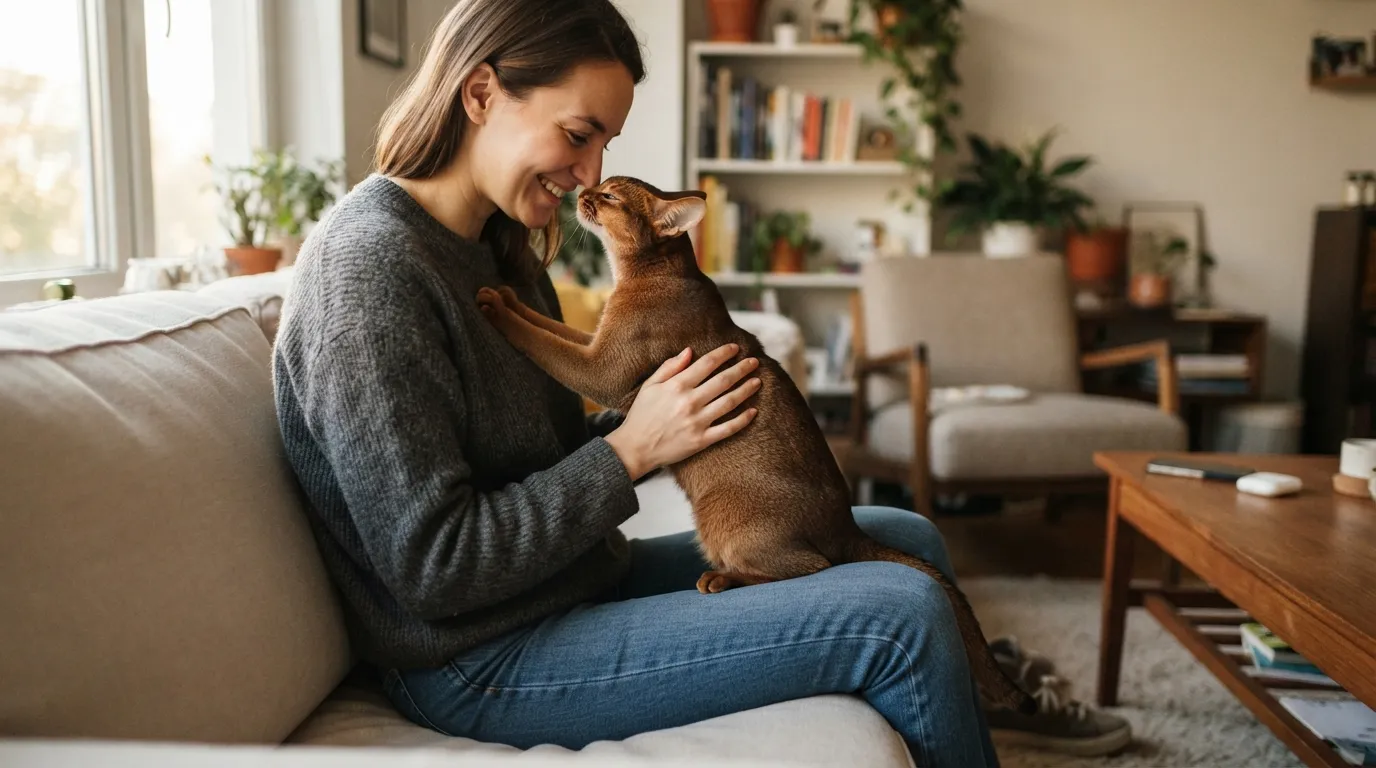
Greeting you when you come home means they missed you. For one-person breed cats, this greeting isn't casual - it's ritualistic and almost eerily consistent.
Some cats stay hidden all day, only to reappear the instant their person sits down, claiming the lap like it was reserved in advance. Sound familiar?
What separates a bonded breed cat's greeting from a regular one: they reserve it exclusively for you. Other household members get a passing glance at best, because cats choose their favorite person based on who provides consistent care and respects their pace.
Wait until you see what they do with their face next - it's more significant than most owners realize.
#12 - They Head-Bunt You Constantly
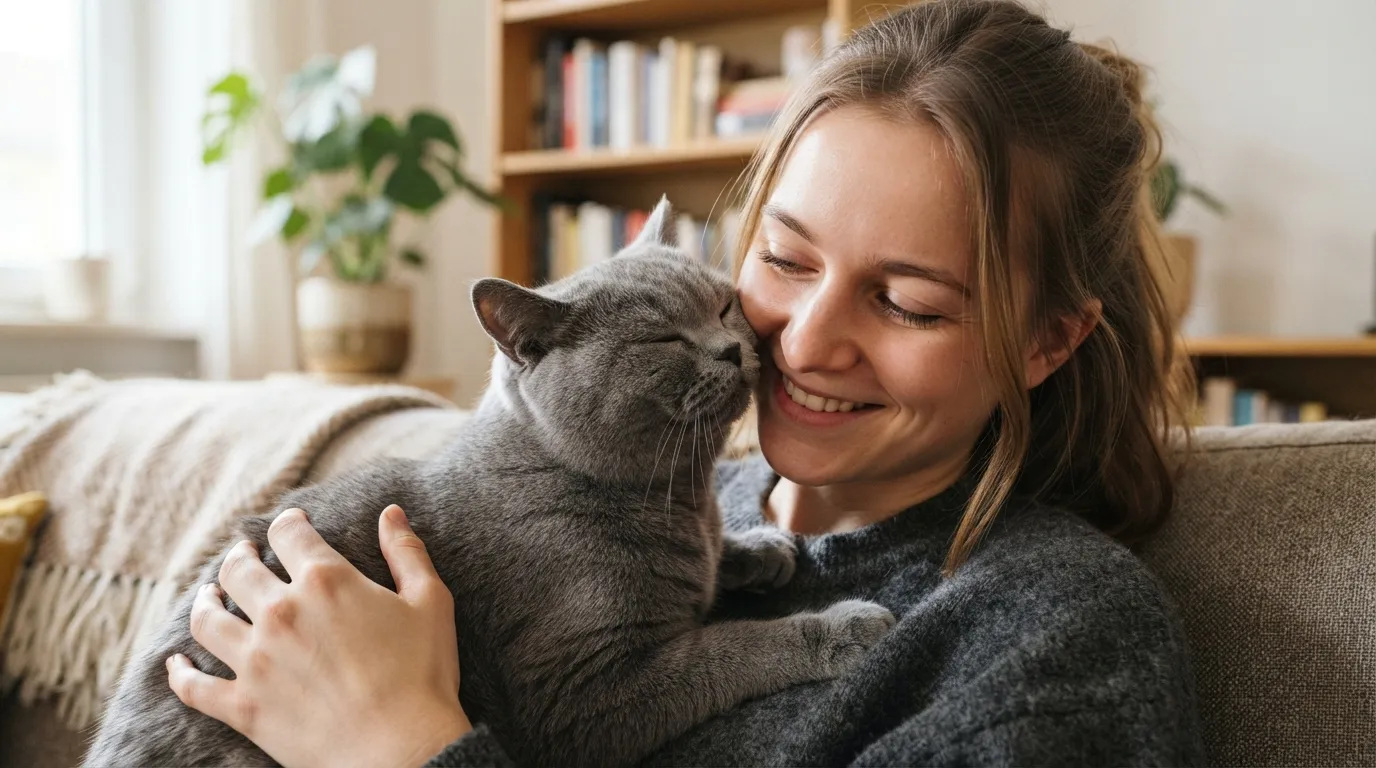
When a cat presses its head against your face or hand, it's depositing scent from glands in its cheeks, chin, and forehead. That secretion marks you as familiar, safe, and theirs.
This is called head bunting, and directed at a person, it's one of the clearest signals of feline social bonding that exists. It means you've been folded into their internal map of safe territory.
In plain terms: your cat is literally labeling you as theirs. Breed cats who bond with one person often bunt exclusively - everyone else in the house simply doesn't get it.
But scent marking goes even further than a head press. The next sign is the version most owners completely misread.
#11 - They Rub Their Cheeks on You Repeatedly
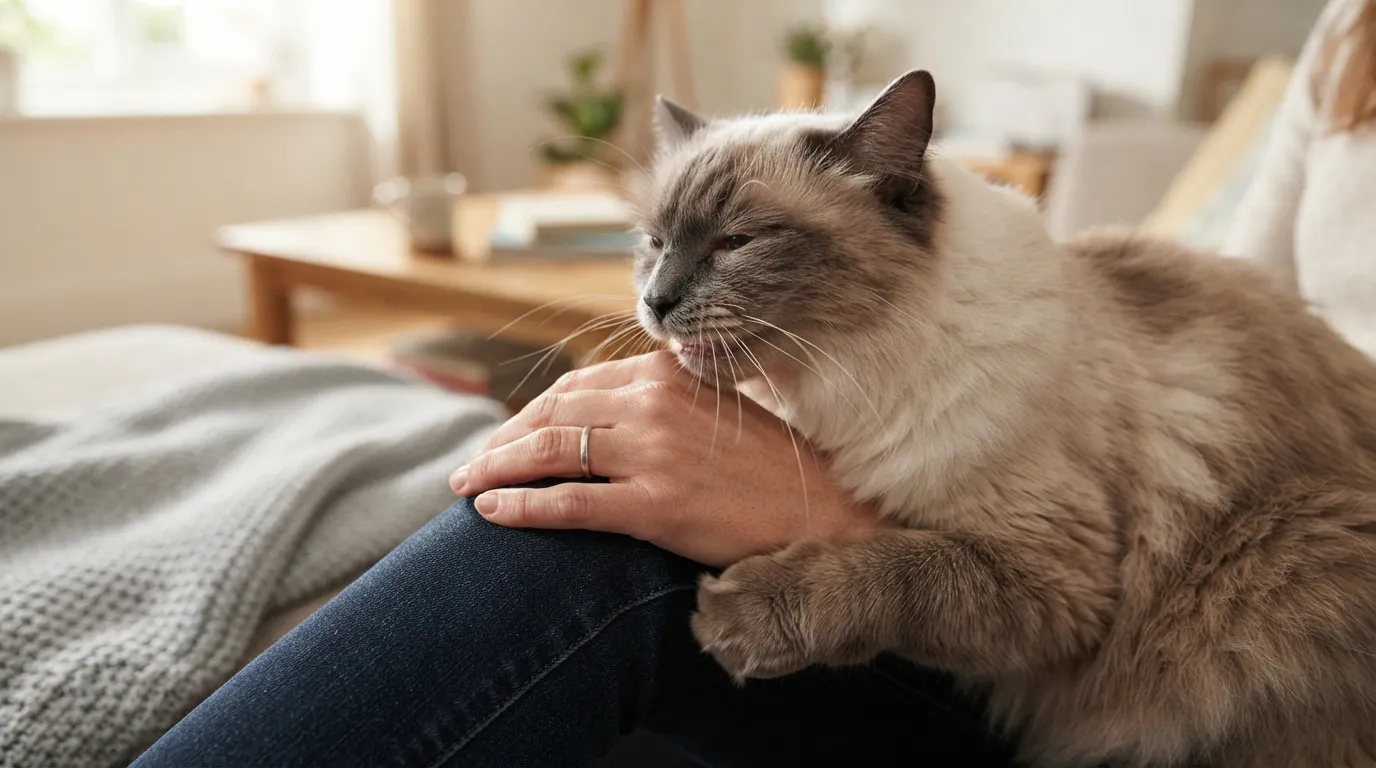
Cats have scent glands scattered across their bodies, and rubbing their cheeks, paws, or tail against you builds a shared scent profile. With one-person breed cats, this happens repeatedly and on purpose.
This isn't random restlessness. Curling around your ankles or grinding their chin against your hand is your cat marking territory - and you are the territory.
Most owners think this is generic affection. It's actually territorial ownership, aimed at one specific person. Cats gravitate toward whoever's scent feels most "home" - and that scent is now yours.
The next sign is arguably the most scientifically documented one on this list - and it happens right in your cat's eyes.
#10 - They Slow-Blink at You and Only You
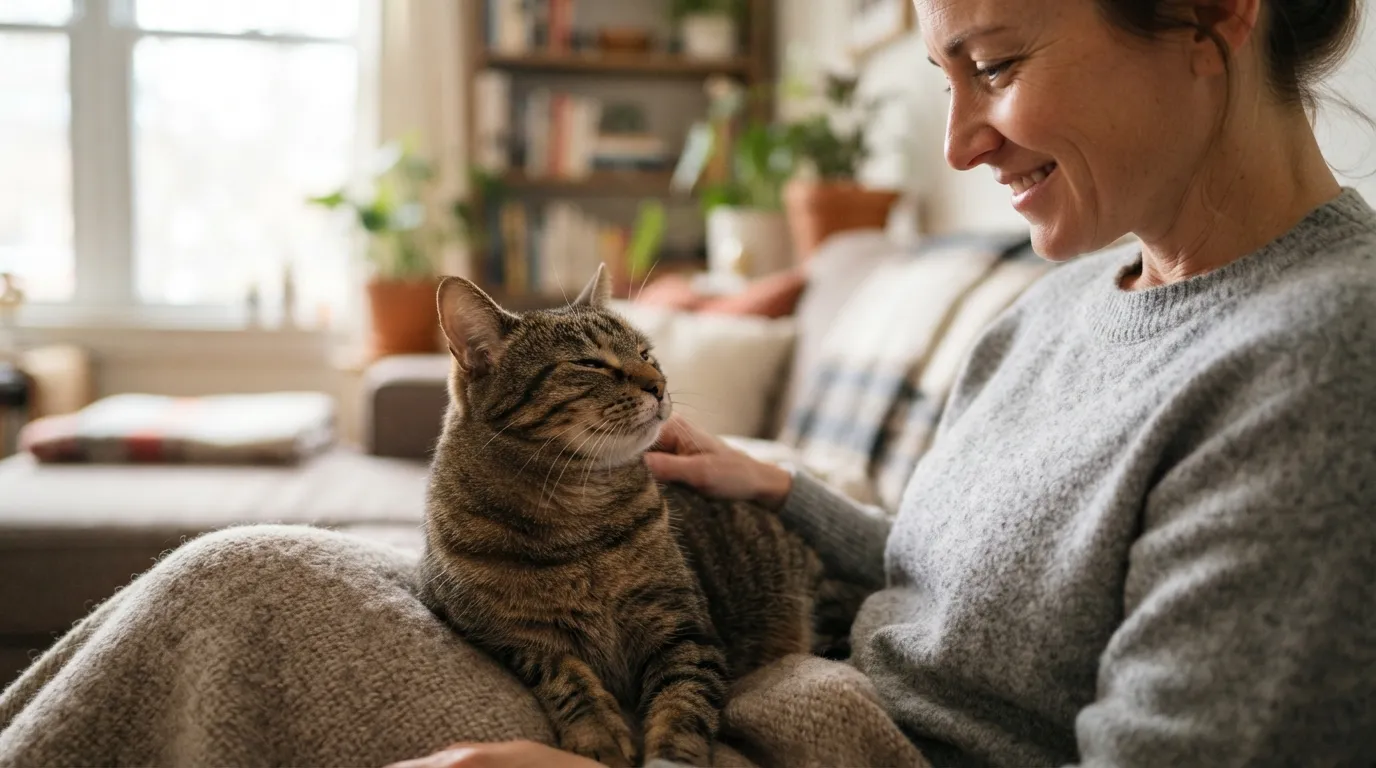
The slow blink lets a cat hold eye contact without staring, which in cat language reads as relaxation and trust rather than confrontation. Some researchers have even compared it to a small, silent kiss.
In shelter studies, cats that responded to human slow blinking with slow blinks of their own tended to get adopted faster - proof this is a real, measurable social signal, not just a cute internet myth.
"It's a great way of enhancing the bond you have with cats."
Karen McComb, University of Sussex
Here's the part that matters: your cat may slow-blink at you while you're just sitting together doing nothing. Pay attention to who else they blink at - usually, the answer is no one.
If slow blinking is a cat kiss, the next sign is closer to a full embrace - and it's one most people completely misread.
#9 - They Roll Over and Show You Their Belly
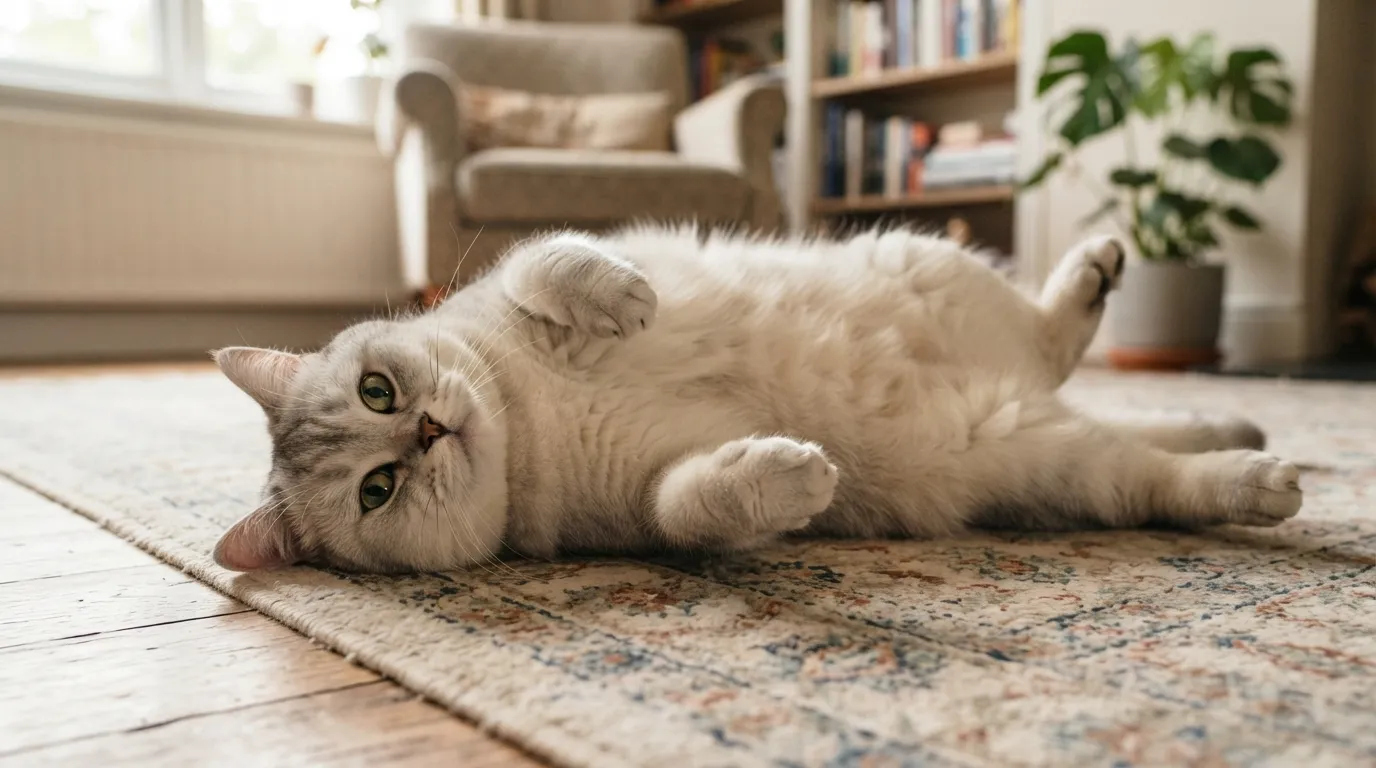
A cat who rolls onto their back and exposes their stomach is performing one of the clearest trust behaviors in their entire repertoire. The belly holds every vital organ, and voluntarily exposing it requires the near-total absence of perceived threat.
Here's what almost everyone gets wrong: most people read this as an invitation to rub the belly. It almost never is - the exposure itself is the message.
A breed cat showing you their belly is making a statement about you specifically, not making a request. Receiving this from a one-person breed cat is rare, and it means something.
Now let's talk about what happens when they're asleep - because sleep location is where the bond gets almost uncomfortably honest.
#8 - They Sleep on or Against You Specifically
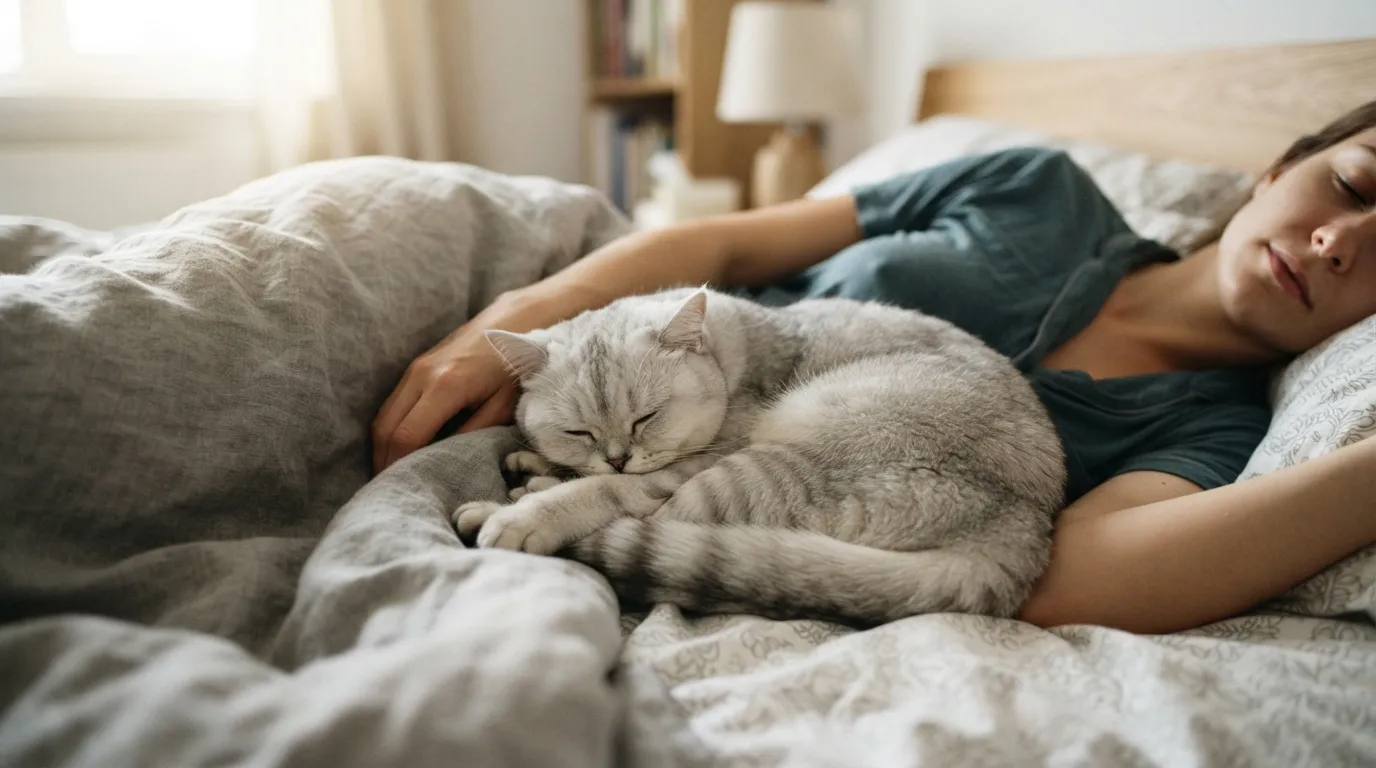
Cats sleep near the people they trust most, and sleep is one of the most vulnerable states a cat can be in. Curling up on or against you at night is their way of saying they feel completely unguarded around you.
If a cat chooses your chest or your lap as its nightly spot, it's not habit. It's a repeated vote of confidence in your ability to keep them safe.
The telling detail: a one-person breed cat won't rotate sleeping spots between household members. If your kitty is routinely scaling your chest or lap every single night, you are undeniably their favorite human.
But what happens while they're awake and decide to knead you carries a meaning most owners never fully appreciate.
#7 - They "Make Biscuits" on Your Lap
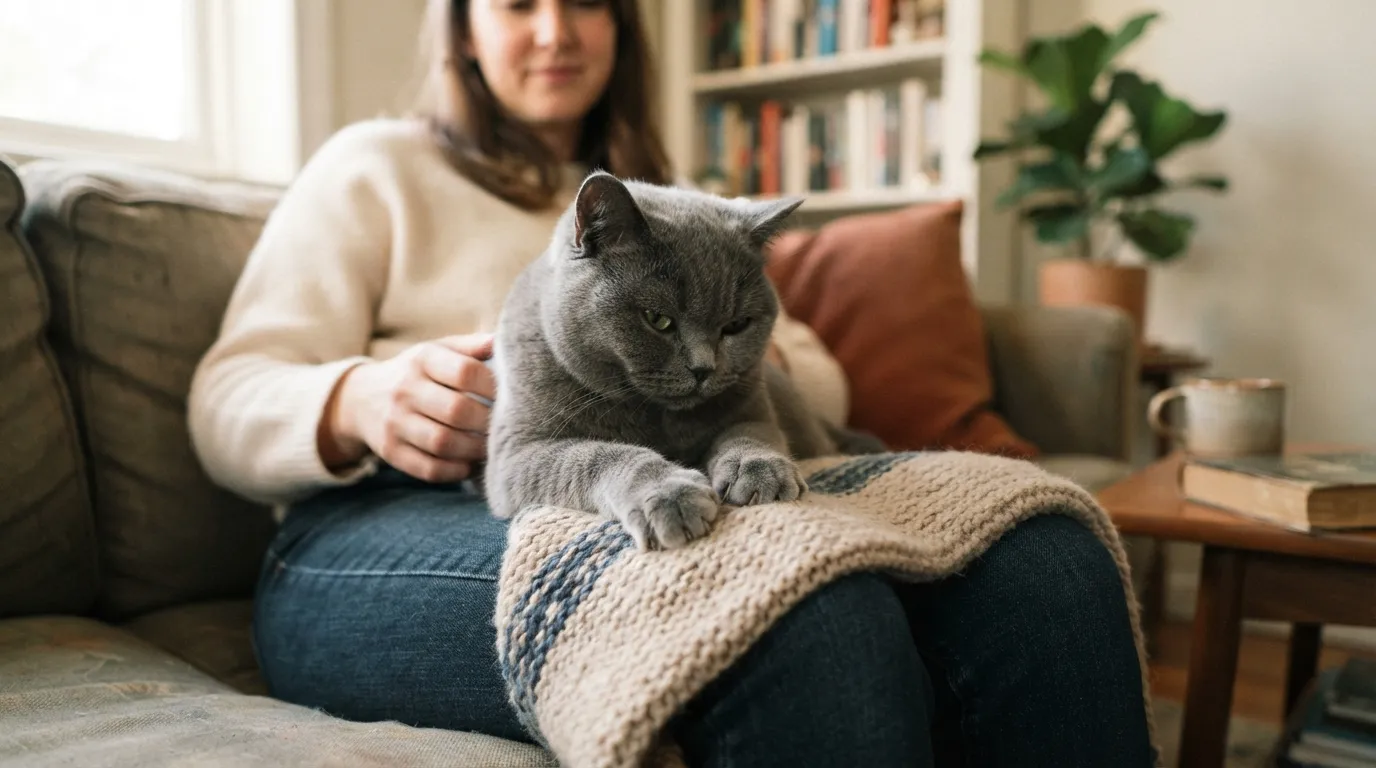
Kneading - that rhythmic pawing motion - is a leftover instinct from kittenhood, once used to stimulate milk from their mother. When your cat kneads you, they're placing you in that same category of comfort and total safety.
What makes this significant in one-person breed cats is the selectivity. They typically knead only their chosen human, no one else.
The uncomfortable truth most cat owners won't admit: if your breed cat kneads your partner and not you, you are not the chosen one. Kneading only surfaces when a cat feels fully relaxed - it's one of the most primal trust signals in their vocabulary.
The next sign is where the bond starts to feel less like companionship and more like something harder to explain.
#6 - They Groom You (Allogrooming)
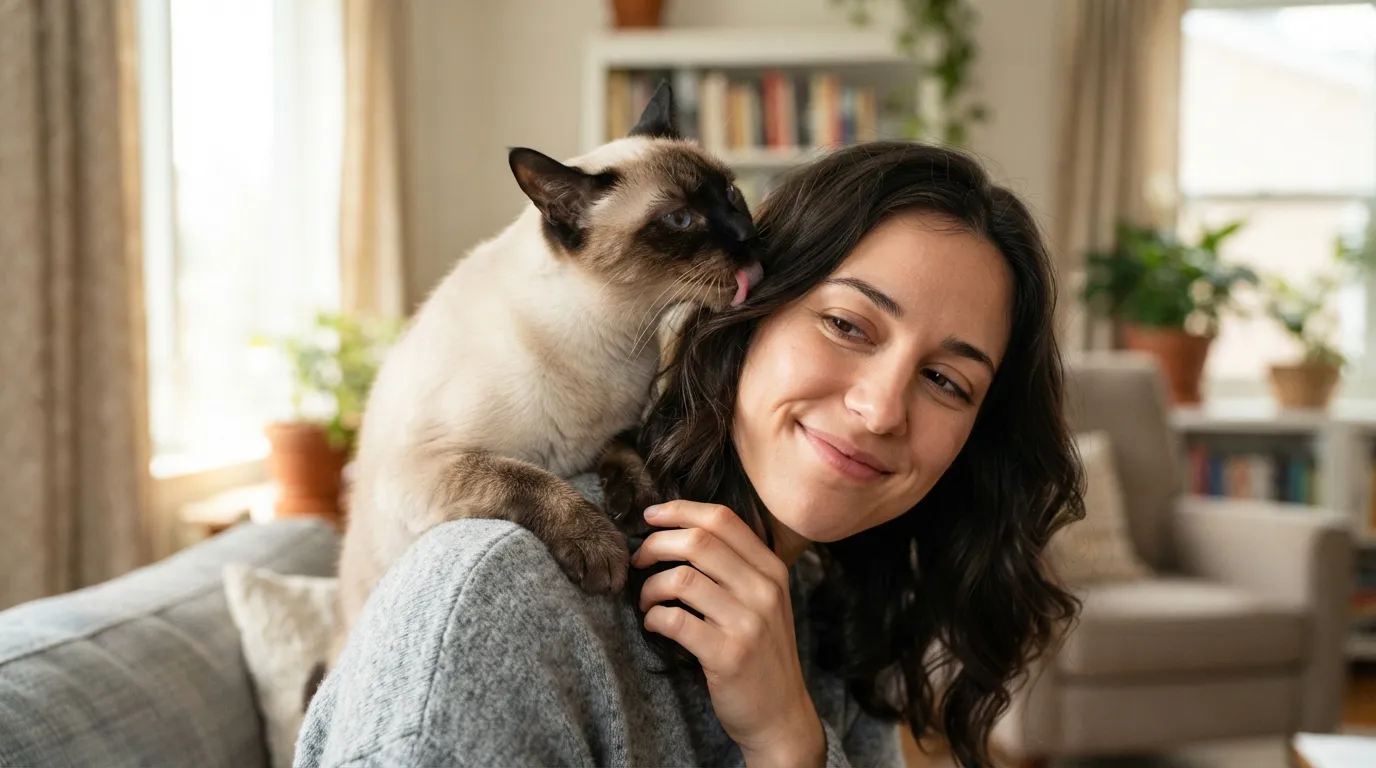
Cats groom each other as a bonding ritual, so when your cat licks your hair, hands, or face, they're telling you that you belong to their tribe. In multi-cat households, this kind of grooming is reserved strictly for allies.
This mirrors exactly how cats build social groups in the wild - grooming is currency, and it's not spent carelessly.
When a one-person breed cat grooms you, they're treating you like their closest feline companion - and that's not a small thing. It's their way of formally including you in the family.
The next sign is louder - literally - and it's especially pronounced in breeds like the Siamese and Burmese.
#5 - They Vocalize Specifically at You
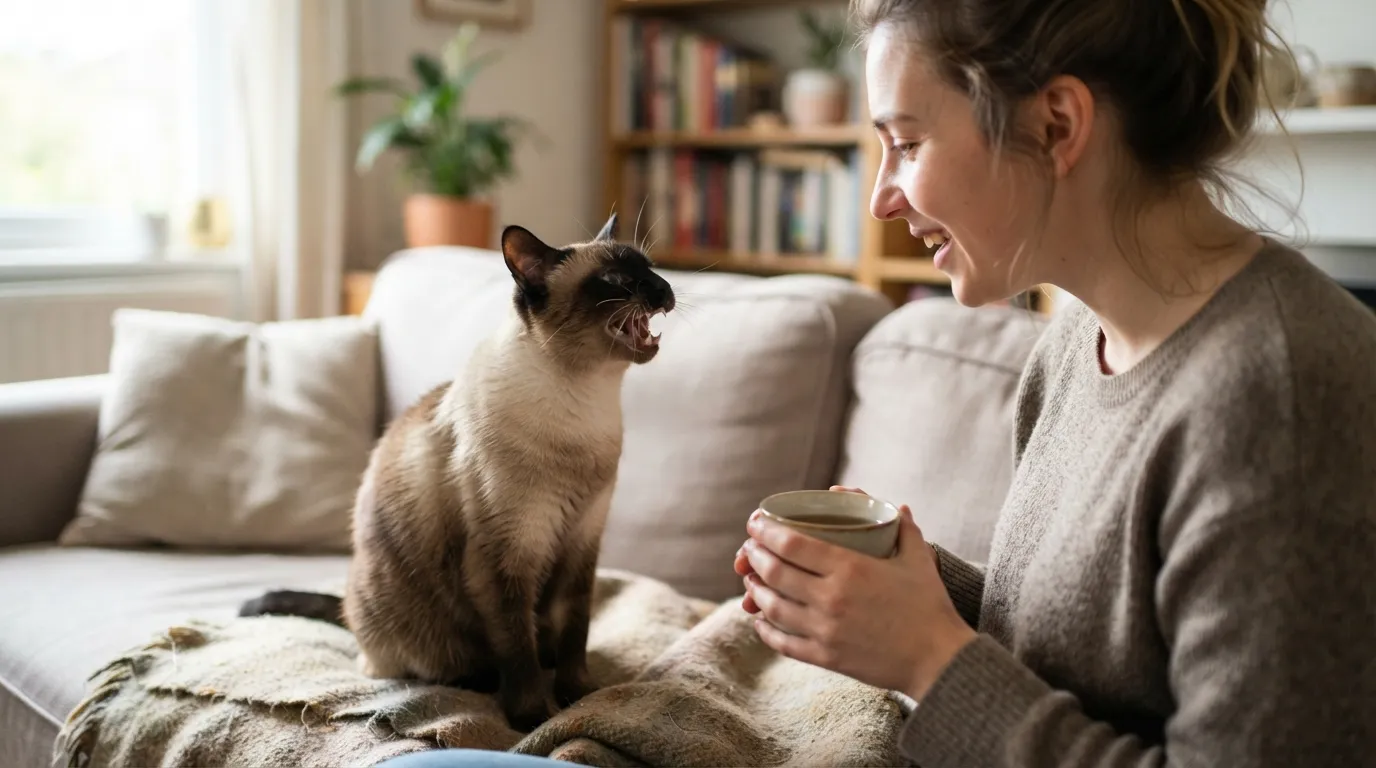
Imprinted cats often develop a unique vocalization reserved only for their chosen person - a sound that's different from the meow they use to demand food. This is a private language, and you're the only one who speaks it with them.
Siamese cats are famous for "talking" constantly to their favorite human, using chirps and loud meows to share their moods and hold a running conversation. Other breeds do the same thing, just more quietly.
Quick Compare
- Siamese: Inclined to bond strongly to one person, and often very vocal with a loud, low-pitched voice known as a 'meezer.'
- Burmese: Steady, softer chatter, but just as people-focused.
- Russian Blue: Quiet and reserved, favoring presence over sound.
- Ragdoll: Gentle chirps and trills paired with an easygoing temperament.
What experts notice: bonded breed cats build a vocal vocabulary used only with their person. They're not talking to the room - they're talking to you.
The next sign is the one that most shocks new breed cat owners, and it involves what your cat does when you're not even there.
#4 - They Show Distress When You're Gone
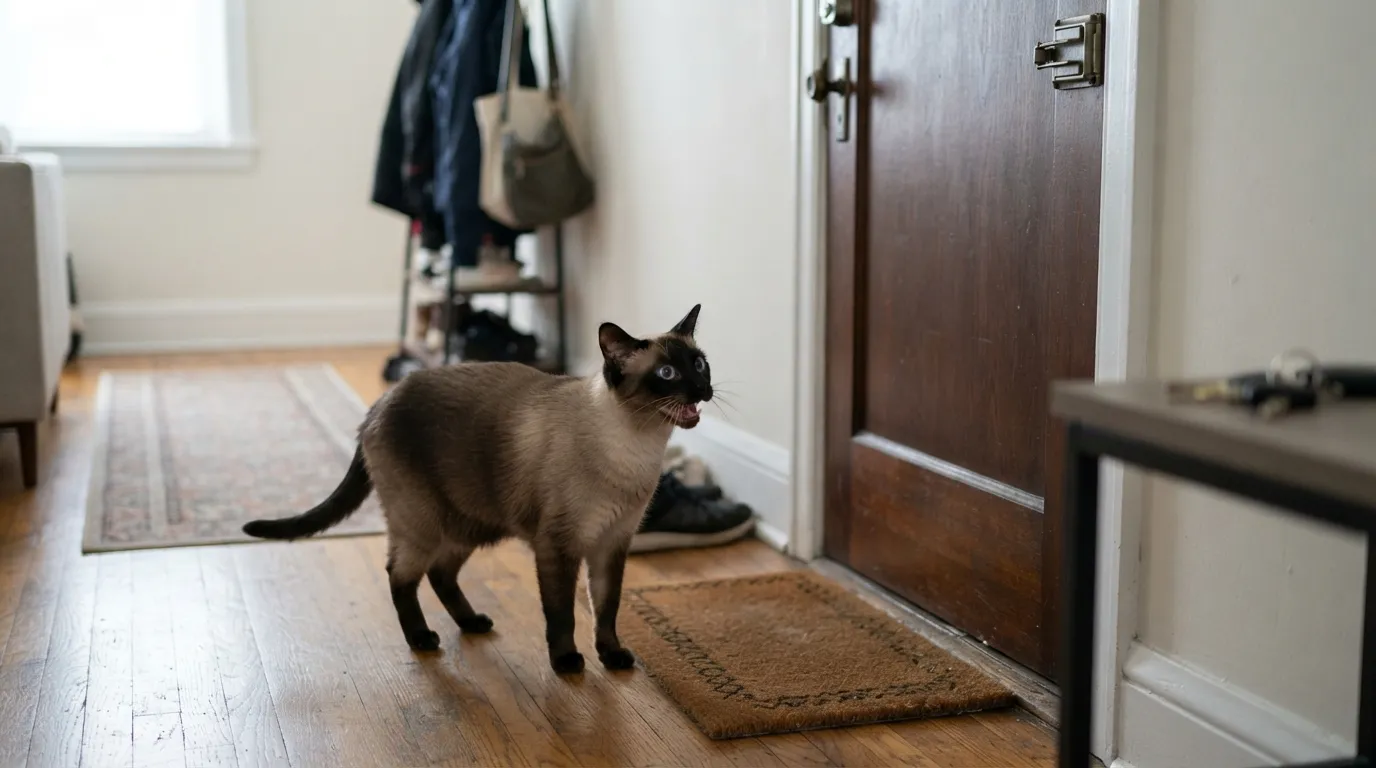
Your cat vocalizing and pacing when you leave the house isn't drama for its own sake. For deeply bonded breed cats, your absence is a genuine disruption to their entire sense of safety.
They can get jealous, mope, and act out if they feel starved of attention from their chosen person. In extreme cases, losing that person entirely can send them into something close to depression.
Fast Facts
- Due to their rather dependent nature and attachment to their person, Siamese often suffer from separation anxiety when left alone too long.
- Signs typically include vocalizing, pacing, and restlessness near the door.
- Behaviorists view this as proof of bond depth, not a behavioral flaw.
This is where breed matters most. Siamese cats in particular form such intense one-person bonds that documented separation anxiety is common when they're left alone too long - this isn't owner projection, it's a recognized pattern.
But distress at separation is a passive sign. The next one is active, and it's one of the most misunderstood gifts a cat can give.
#3 - They Bring You "Gifts"
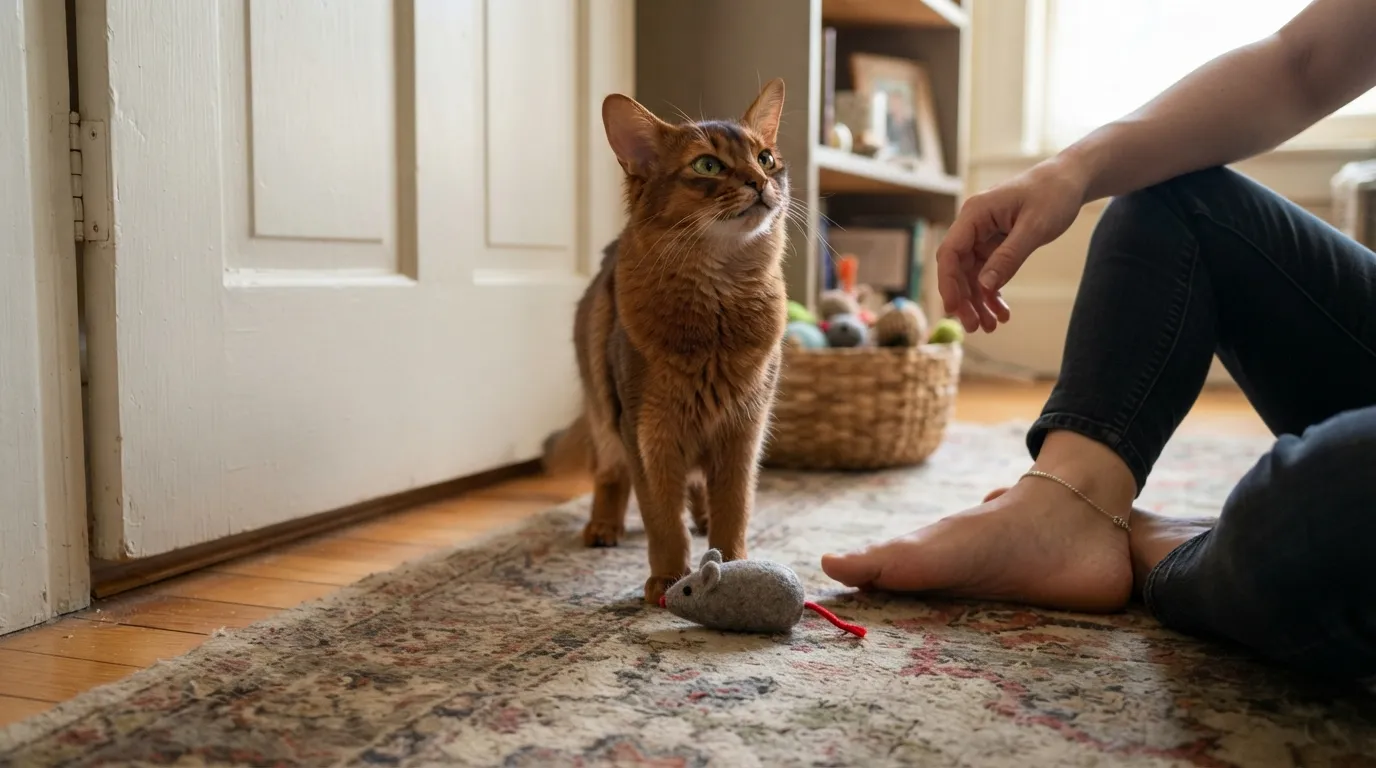
Whether it's a favorite toy dropped outside your bedroom door or an actual "catch of the day," your cat is proudly handing over their proudest achievement. Behaviorists consider this a classic sign of deep bonding.
Cats often carry toys specifically to the person they want to play with, using the gift as an invitation. For outdoor or hunting-driven breeds, real prey is the highest honor they can offer.
Here's the part that stings if you're not the chosen one: bonded breed cats bring gifts to one specific person. If your cat drops a toy at someone else's feet instead of yours, take note.
The next sign shocks most people because it's so quiet, you could miss it every single day.
#2 - They Respond to Your Emotions Before Anyone Else
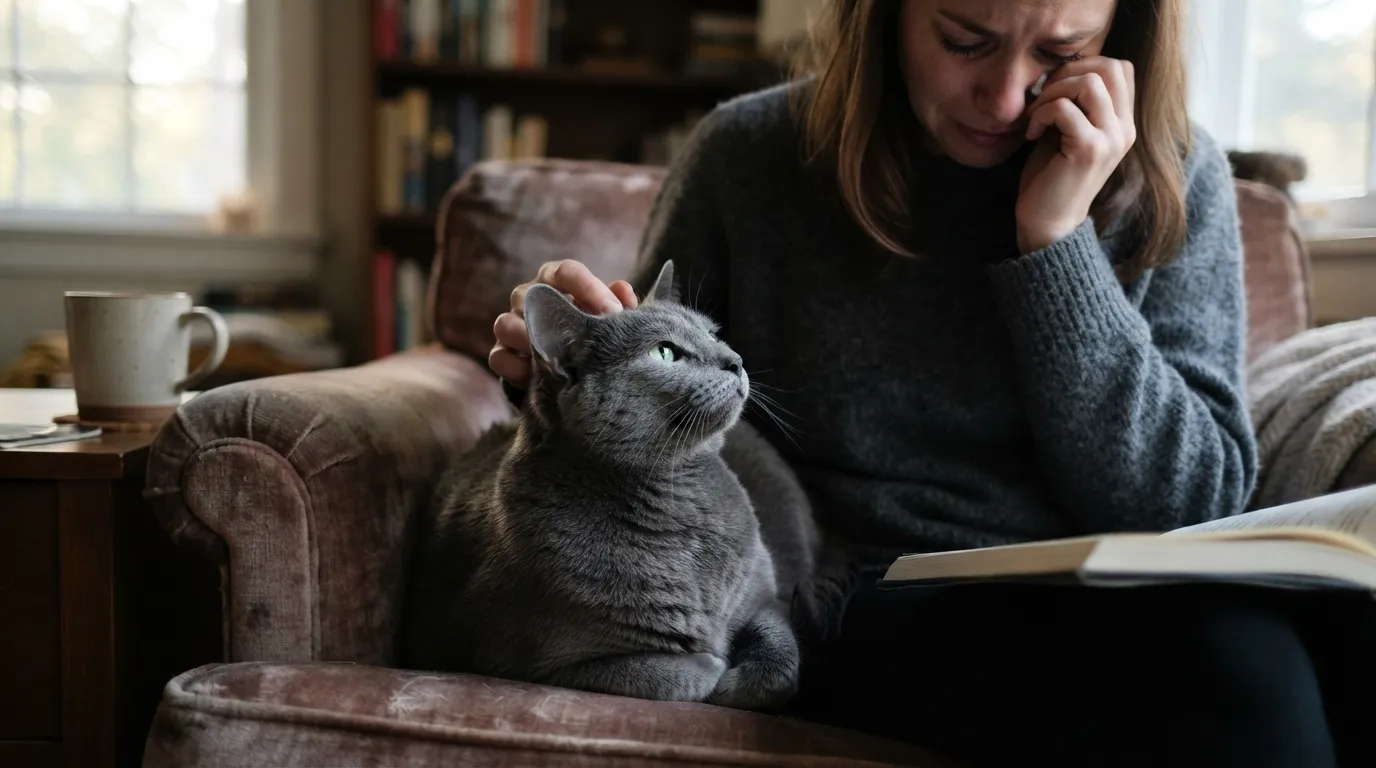
Imprinted cats become highly attuned to your voice, gestures, and facial expressions, sometimes even mirroring your mood in subtle ways. This isn't coincidence - it's genuine emotional attunement.
Russian Blues in particular are known for sensing their human's emotions, quietly appearing beside you during stress, illness, or sadness. Many bonded breed cats across other breeds do the same thing.
The fact that separates a chosen person from everyone else: cats communicate through slow blinks, tail position, ear angle, and whisker direction, and they bond deepest with whoever actually notices and responds. The connection runs both ways - and they started reading you first.
Now for the final sign - the one that's simultaneously the most subtle and the most absolute proof you've been chosen for life.
#1 - They Choose Your Lap and Only Your Lap
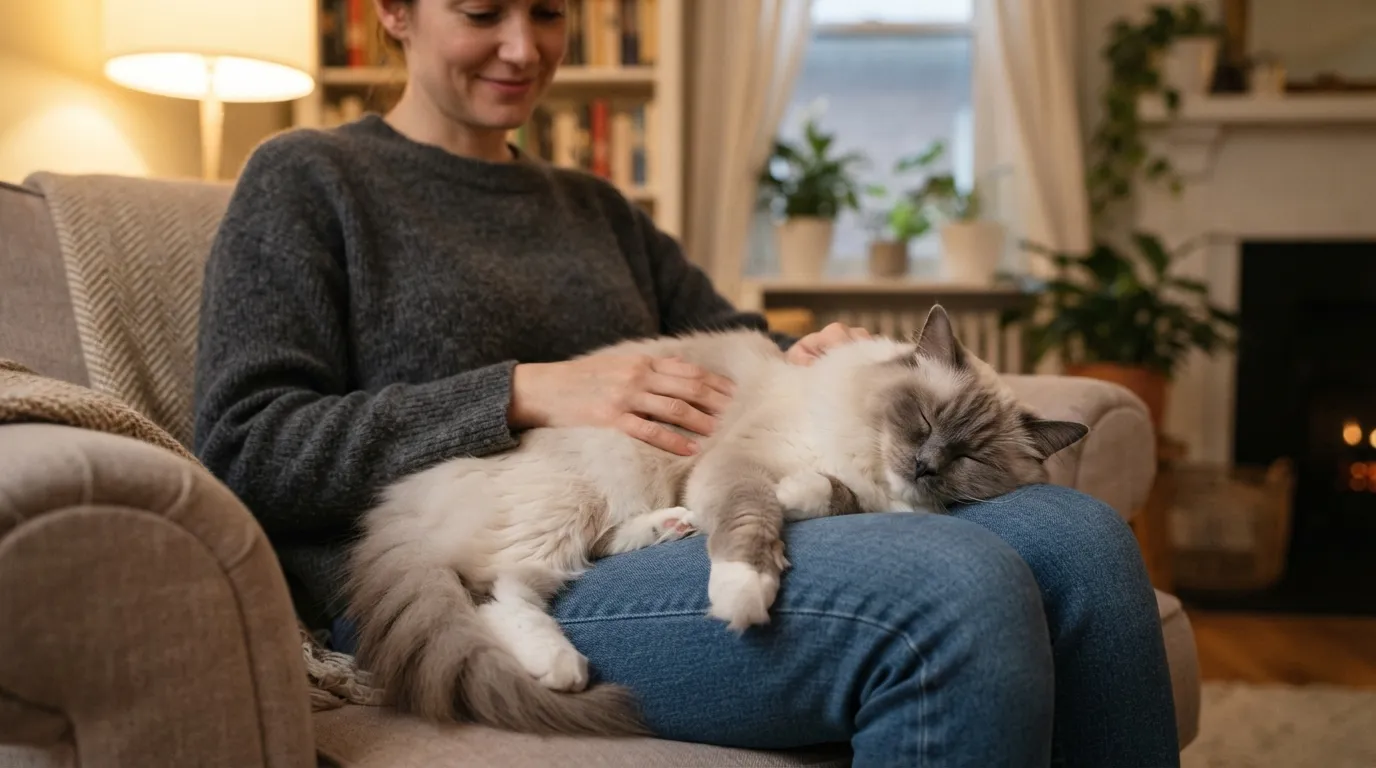
Signs of being the chosen one vary cat to cat, but one pattern shows up almost universally: your cat sits on your lap, and only your lap. Not sometimes. Not mostly. Only.
Full trust means a cat can completely relax and rest at ease, because they feel safe from harm the moment they're touching you. That kind of surrender doesn't happen by accident.
This is the gold standard of feline selection - and breed cats make it unmistakable. When a Ragdoll, Siamese, or Russian Blue goes limp on your lap every single evening, it's not habit. It's a permanent decision.
Cats don't perform affection the way dogs do - they offer it through small, repeated rituals. The lap is the final, irrevocable one.
The Bottom Line
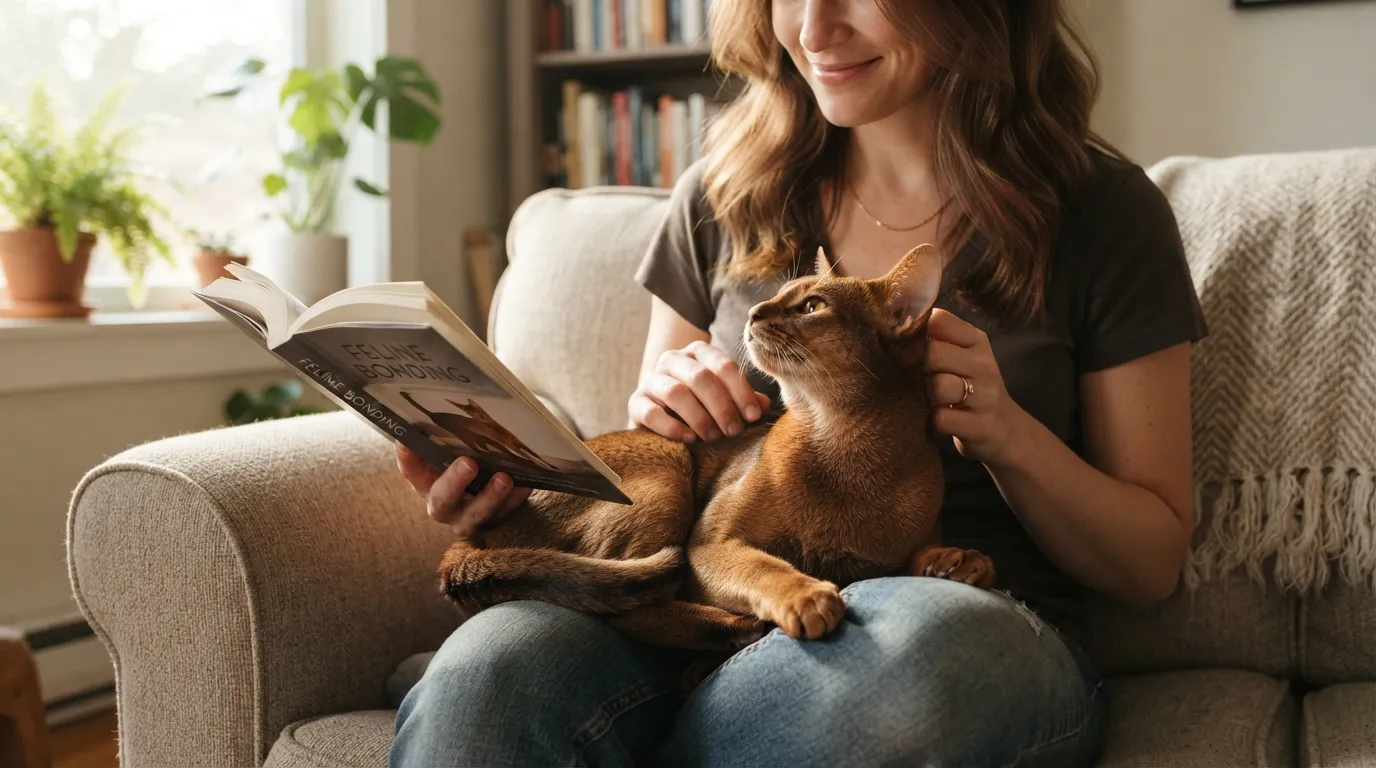
Breed cats that bond with one person don't do it casually. Shadowing, slow blinking, exclusive lap-sitting, grooming, distress at your absence - none of these are random quirks, they're a coherent, deliberate pattern.
This attachment isn't accidental. It grows out of sensitivity to your emotions, a preference for consistency, and a deep need for security that only one person satisfies at a time.
If your breed cat does most of these 14 things, you haven't just adopted a cat - you've been selected. Which sign made you realize you're the one? Drop it in the comments.