14 Signs Your Indoor Cat Owns the Whole House Now
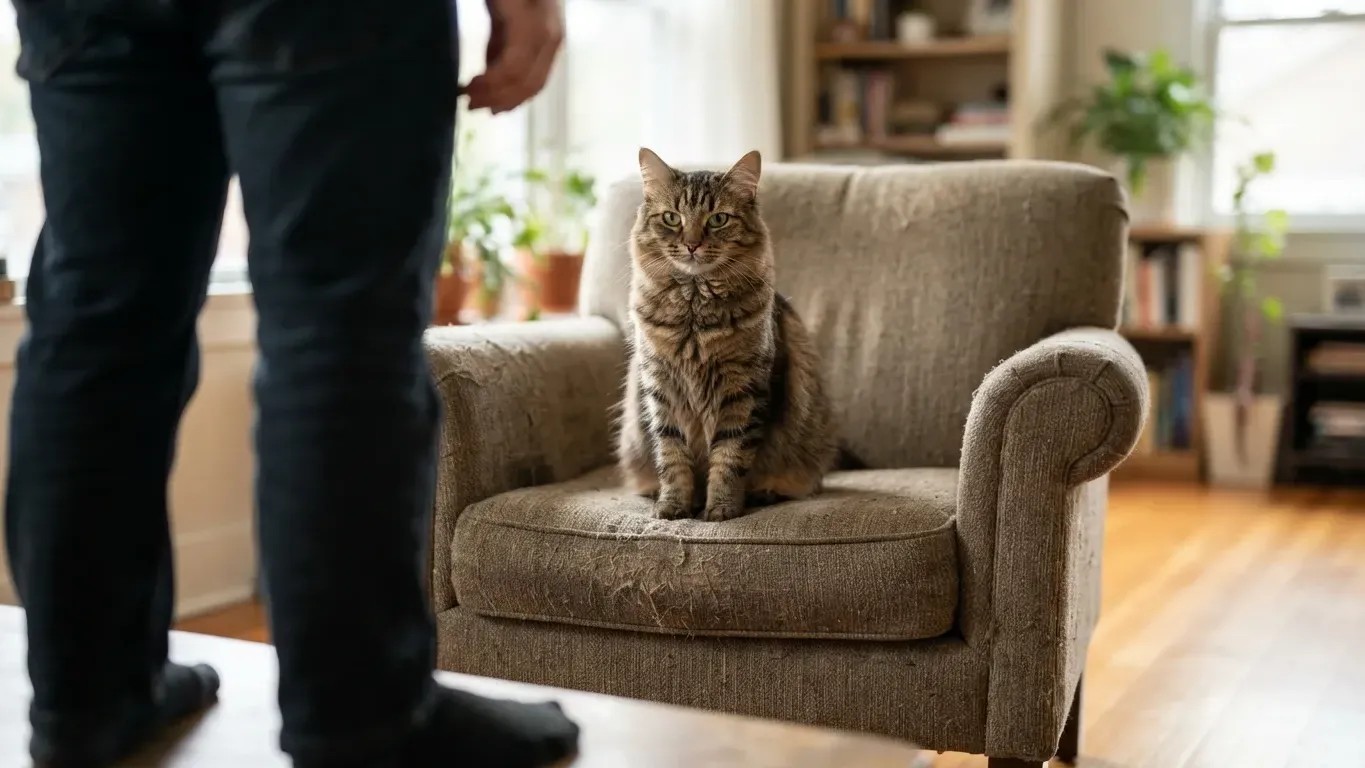
Most people think they own their cat. Feline researchers say the opposite is true, and it isn't even close.
Cats bond to territory the way dogs bond to people, which means your indoor cat isn't a roommate. It's a landlord who never signed anything.
Fourteen signs prove it, and most owners miss every single one. By the end, you'll never look at your own couch the same way again.
#14 - They Claimed the Highest Point in Every Room
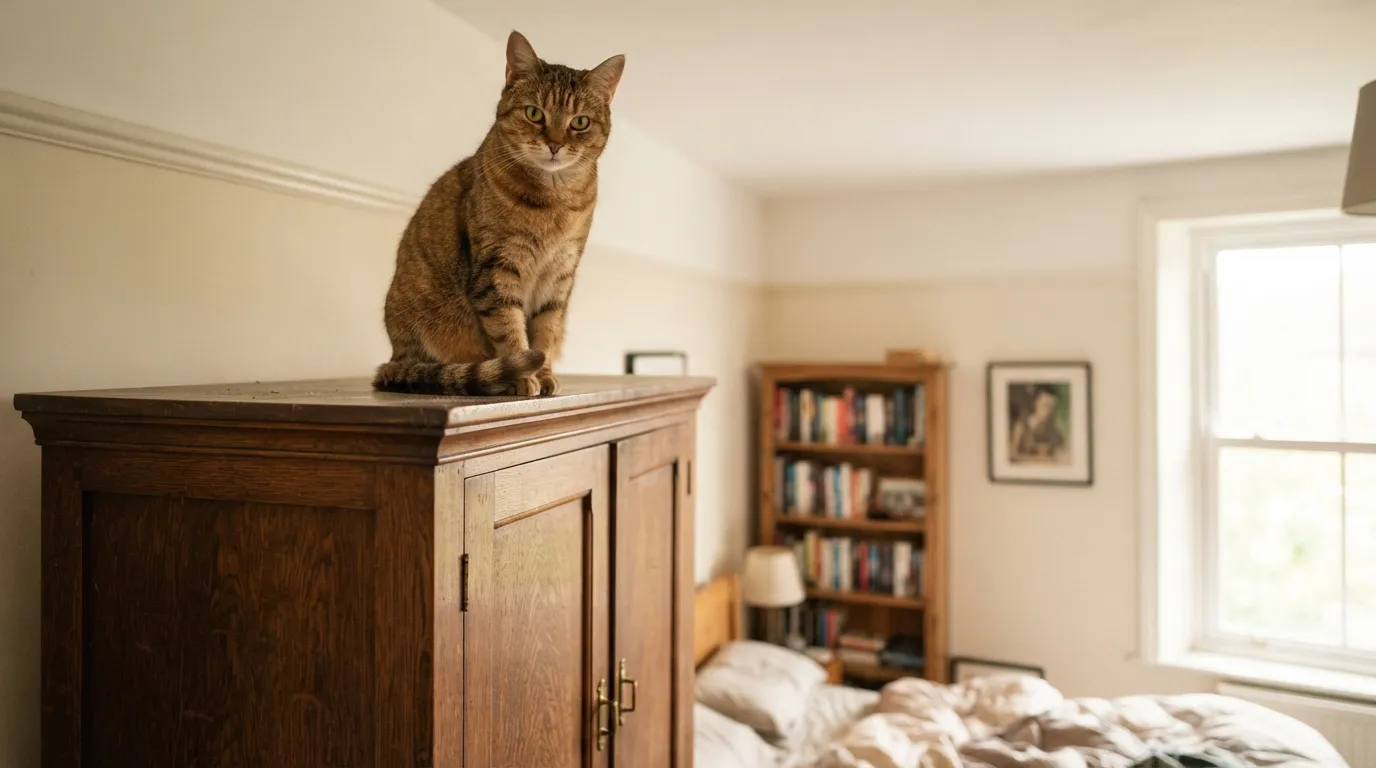
Cats seek out high perches because elevation lets them watch their territory while feeling safe from threats below. That instinct is ancient and hardwired, not a cute quirk.
When your cat stares down at you from the top of the wardrobe, that's not a nap spot. It's a surveillance post, and they're monitoring everything that moves in their domain.
Every bookshelf, fridge top, and cabinet they've colonized is a deliberate power move. You didn't decorate your home - you built your cat a command center.
But the high-ground game is just the start. What they do at the windows is even more calculated.
#13 - They Monitor Every Window Like a Border Guard
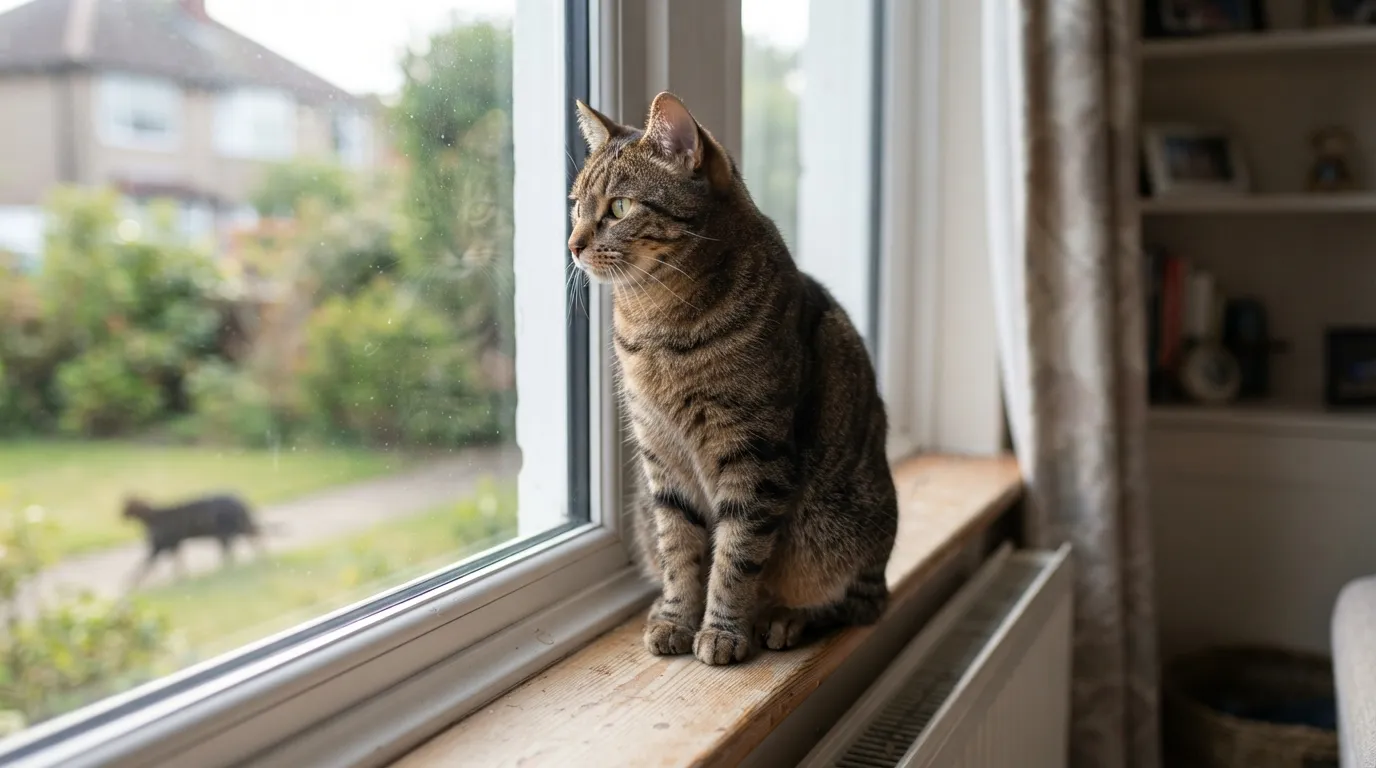
Cats watch landmarks like windows and doorways to display dominance and protect their territory from intruders. That peaceful-looking cat in the window isn't relaxing - it's patrolling a perimeter.
The threat isn't always another cat entering the home. It could be a stray glimpsed through the glass, a change outside, or even stress inside the household.
A stray cat strolling past the lawn can send your indoor cat into a full territorial spiral, even though it never sets foot inside. That reaction isn't anxiety - it's a landowner defending property lines.
The window patrol is obvious once you know what to look for. But the way they've redrawn your furniture map is far more subtle.
#12 - Your Furniture Layout Was Redesigned - By Them
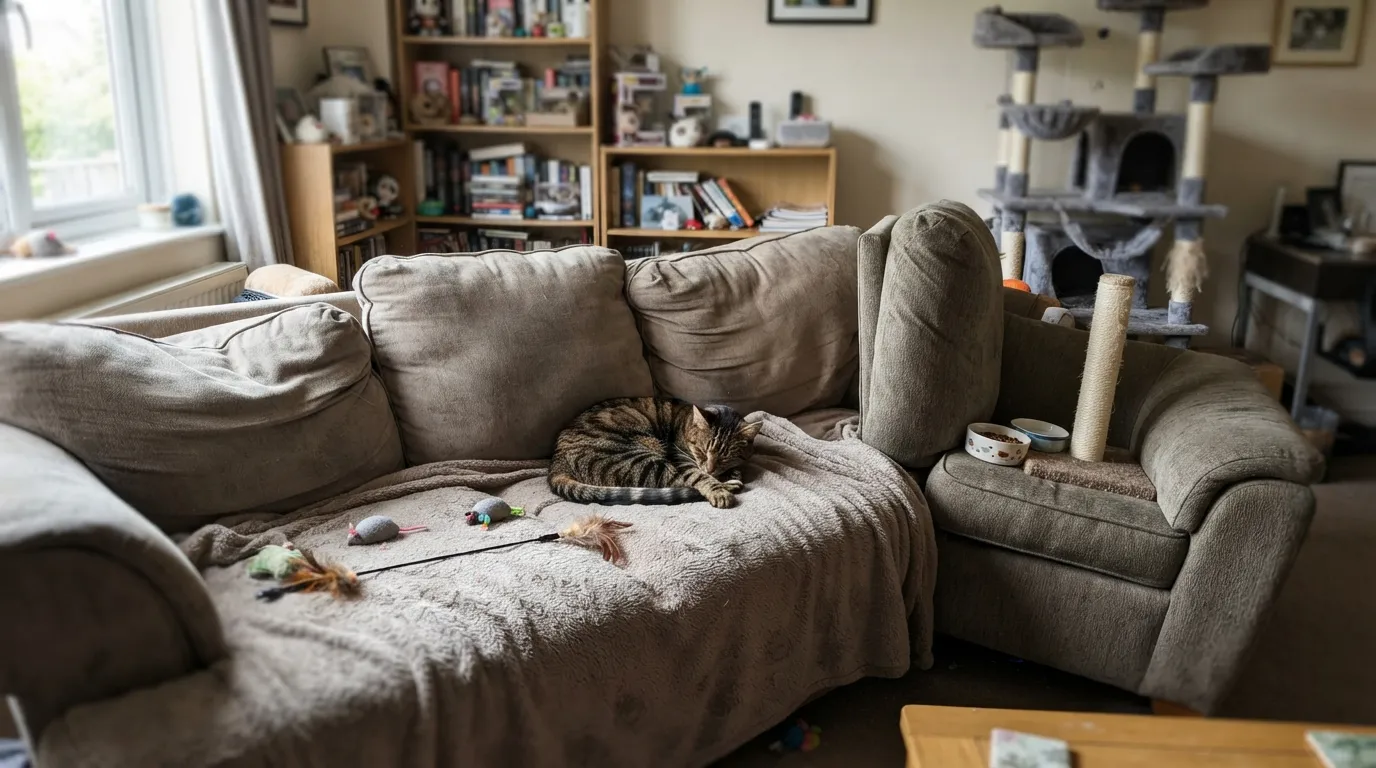
The area where your cat spends most of its time becomes its territory, and every zone of your home gets quietly reassigned a purpose. Sleeping and toileting areas feel safe, eating and drinking areas get treated like hunting grounds, and shared spaces become social zones.
Fast Facts
- Sleeping zones are chosen for safety, not just comfort
- Feeding spots are treated like hunting grounds, so cats often prefer distance from the litter box
- Shared rooms become social checkpoints where overlapping territory gets negotiated
- A cat's "favorite spot" is usually the most defensible location in the room, not a random one
Your cat runs a zoning system more complex than most city councils. That "random" spot on the couch they always return to isn't random at all - it's non-negotiable territory.
A cat might consistently occupy one spot, block another cat's path, or stare down a perceived intruder near it. Try to sit there first, and you already know how that ends.
You thought you bought that sofa. Your cat has different paperwork - and wait until you see what they've done to it structurally.
#11 - The Scratching Wasn't Random. It Was a Land Survey.
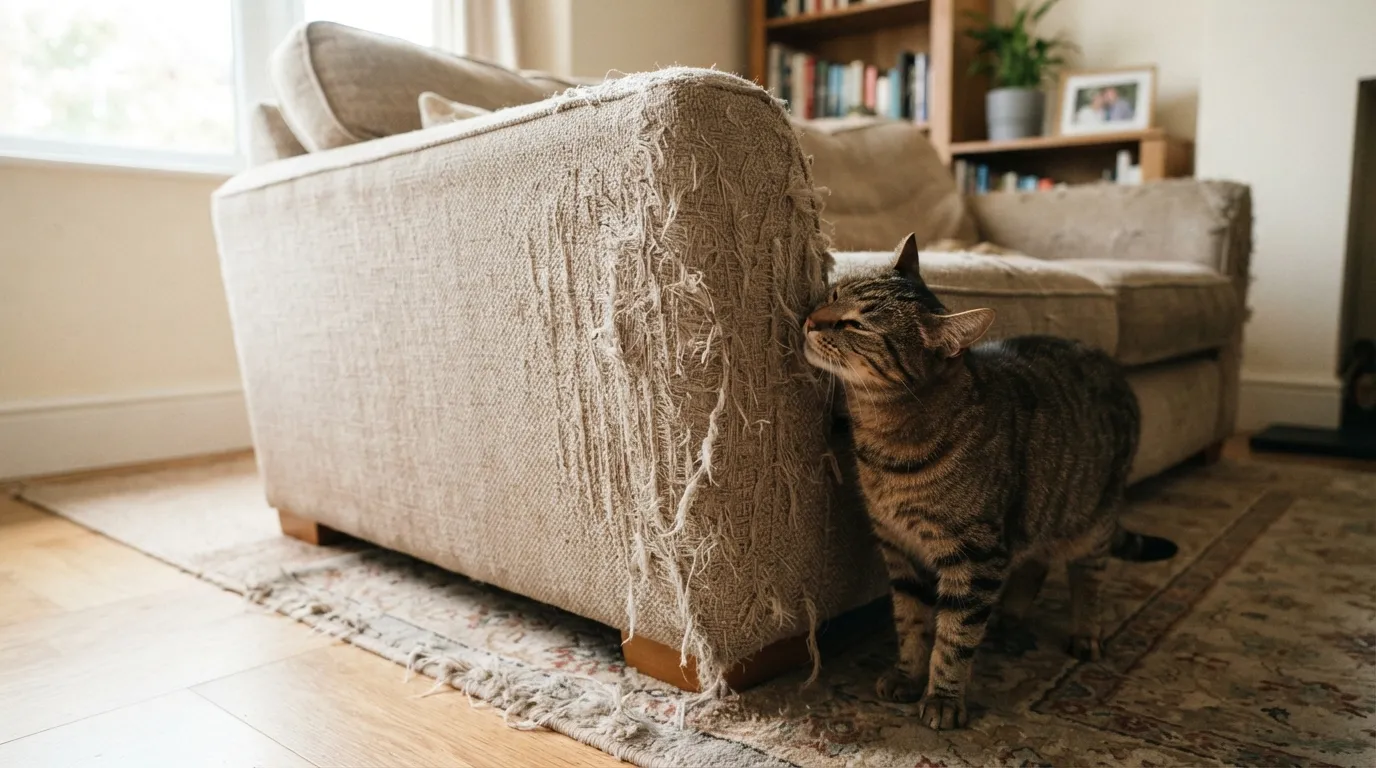
Cats mark territory through scent rubbing and scratching, and every scratch on your couch arm is a flag planted in the ground. A cat's paws contain scent glands, so scratching leaves a signature only other animals can read.
Your scratched couch corner, doorframe, and carpet edge are all signed deeds. They belong to your cat, in a language you'll never fully translate.
Behaviorists call scratching a normal, healthy outlet. Your sofa calls it something else entirely.
And if the scratching surprised you, the scent-rubbing campaign they've been running on your legs is even more brazen.
#10 - Every Time They Rub Against You, They're Tagging You
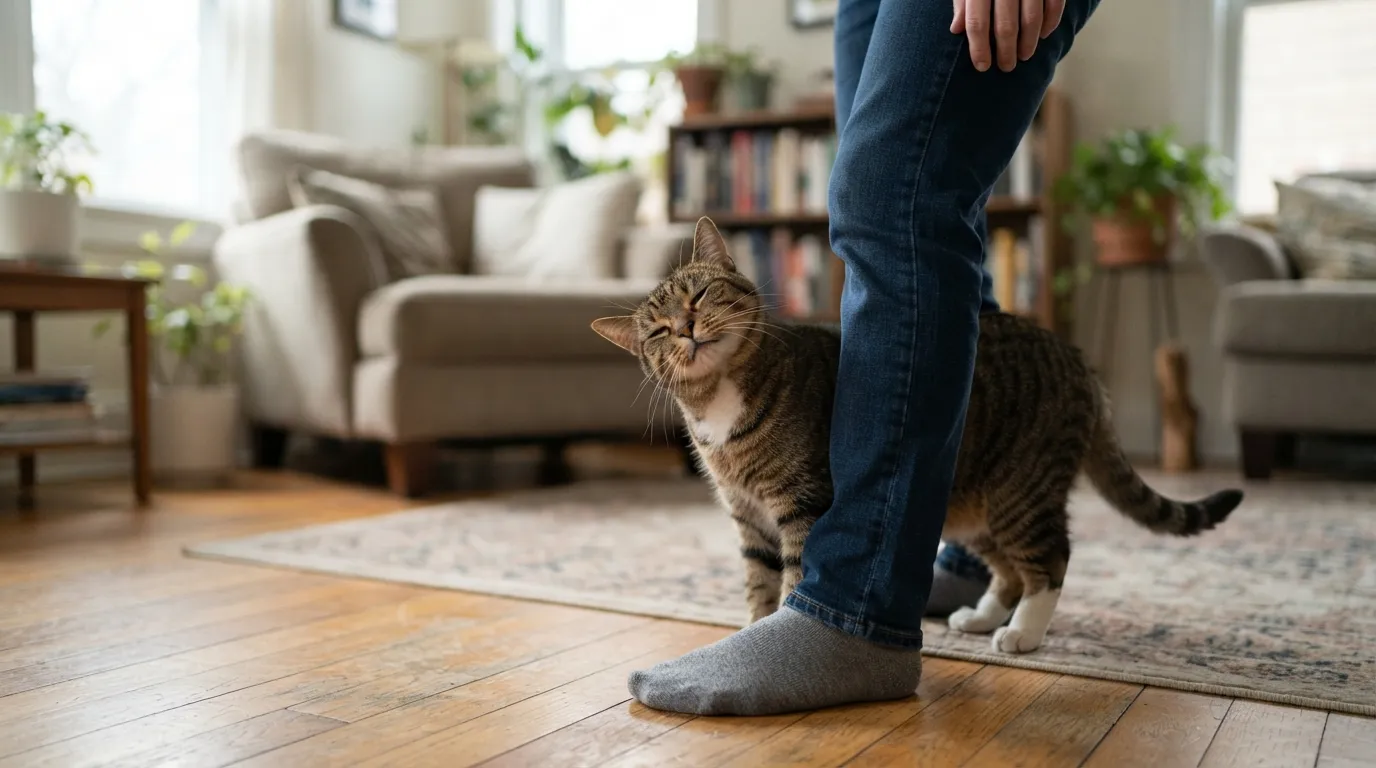
When your cat bumps its cheek against your ankle, it feels affectionate. It's actually administrative.
Facial scent-marking stabilizes a cat's entire territorial system through invisible odor beacons. That slow cheek rub is your cat chemically labeling you as part of their domain.
You are, in their system, a moving object that requires regular re-tagging - not a companion, an asset. Feel free to be flattered anyway; it still means they trust you enough to keep you.
The face-rub is subtle. What happens when they feel their territory is actually threatened is anything but.
#9 - New Furniture Triggers a Full Territorial Crisis
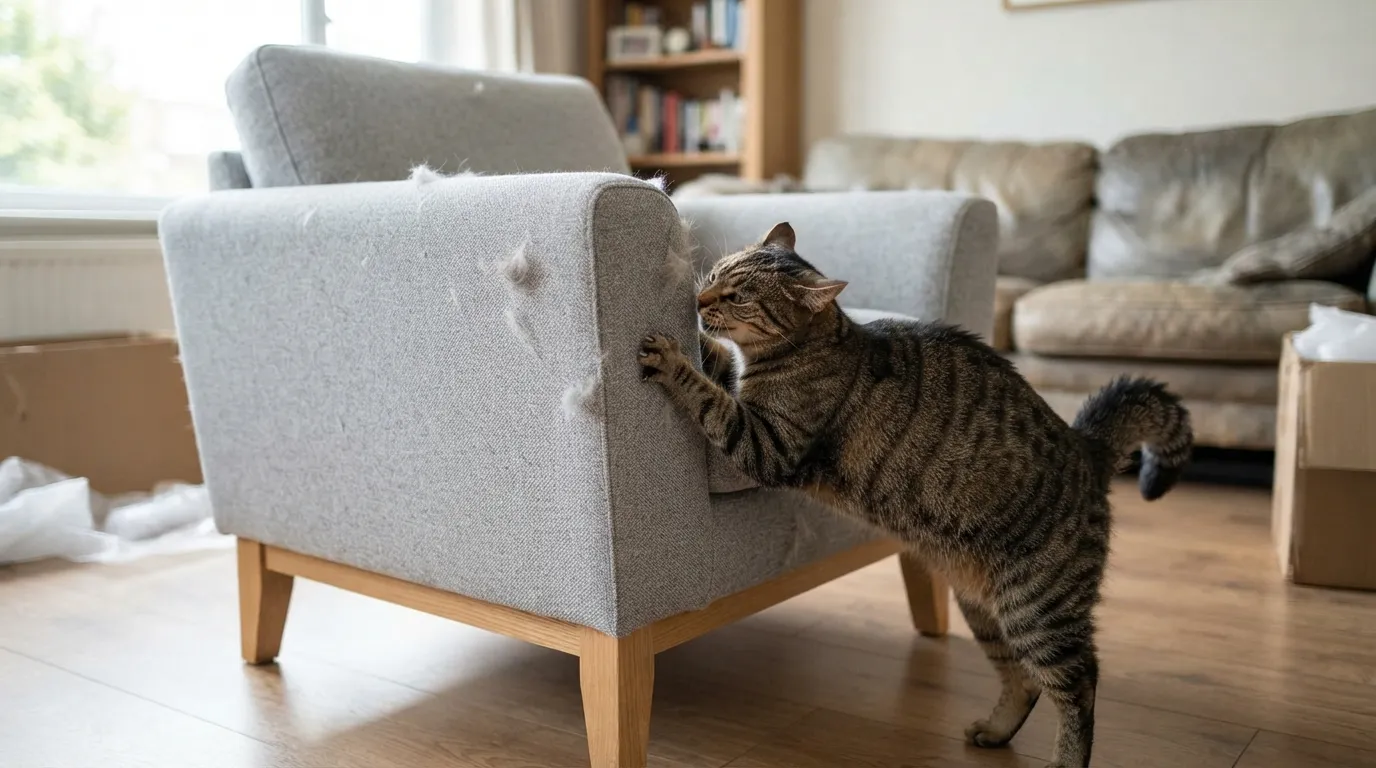
Cats are far more territorial than dogs, and new furniture or fresh wallpaper can trigger real behavioral disorders in cats that dogs simply shrug off. Your dog adapts to a new couch in minutes.
Your cat may take days or weeks to re-scent-mark every surface and confirm the power structure hasn't changed. Moving homes, a new pet, or even your altered work schedule can make them feel genuinely insecure.
This is why cats are described as attached to a place rather than a person. Territory is the base of their entire emotional foundation - everything else, including their bond with you, is built on top of it.
But what happens when they're in a good mood and everything is fine? They still find ways to make you serve them on a schedule.
#8 - They've Trained You to Feed Them on Command

Persistent staring often comes down to one thing: cats have learned that a fixed gaze gets them food, play, or attention. Read that again slowly - your cat trained you, not the other way around.
Every time you caved to the stare, the meow, or the paw tap, you reinforced the command. Owners rarely notice they're being trained in real time.
The stare is a demand, not a request. Cats are known to time their campaigns for the moment humans are least resistant, like the first bleary minute after waking up.
And those early-morning wake-up campaigns? They have the science to back them up too.
#7 - They Wake You Up on Purpose. Every Single Morning.
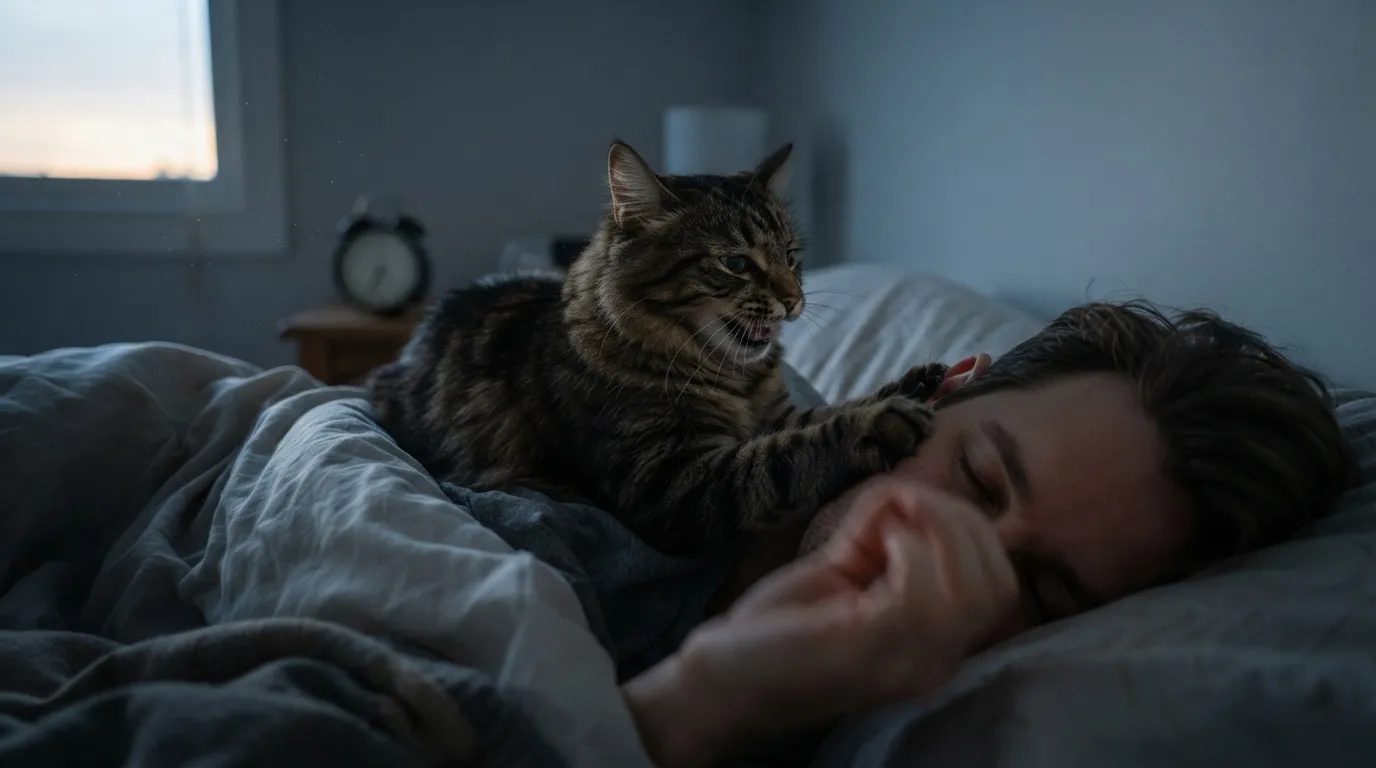
Cats are naturally most active at dawn and dusk, a pattern called crepuscular behavior. Your 5 a.m. wake-up call isn't random - it's biological scheduling, running on their clock, not yours.
Worth Knowing
- Crepuscular animals are most active at dawn and dusk, not all night long
- Wild cat ancestors hunted during these low-light hours when prey was most active
- Indoor cats keep the same internal clock even with a full food bowl
- Predictable owner wake-up times make it easier for cats to time the "hunt"
Nibbled ears, walked-on chests, and nighttime vocalizing are classic complaints from cat owners everywhere. If you wake at roughly the same time daily, your cat has almost certainly noticed.
They'll sneak into your room right before your alarm and stare until you're up. This isn't coincidence - it's a refined system, and you're the alarm clock's subject, not its operator.
And while they're running the morning shift, guess who's also controlling the night patrol.
#6 - They Do a Full Security Sweep of the House Every Night
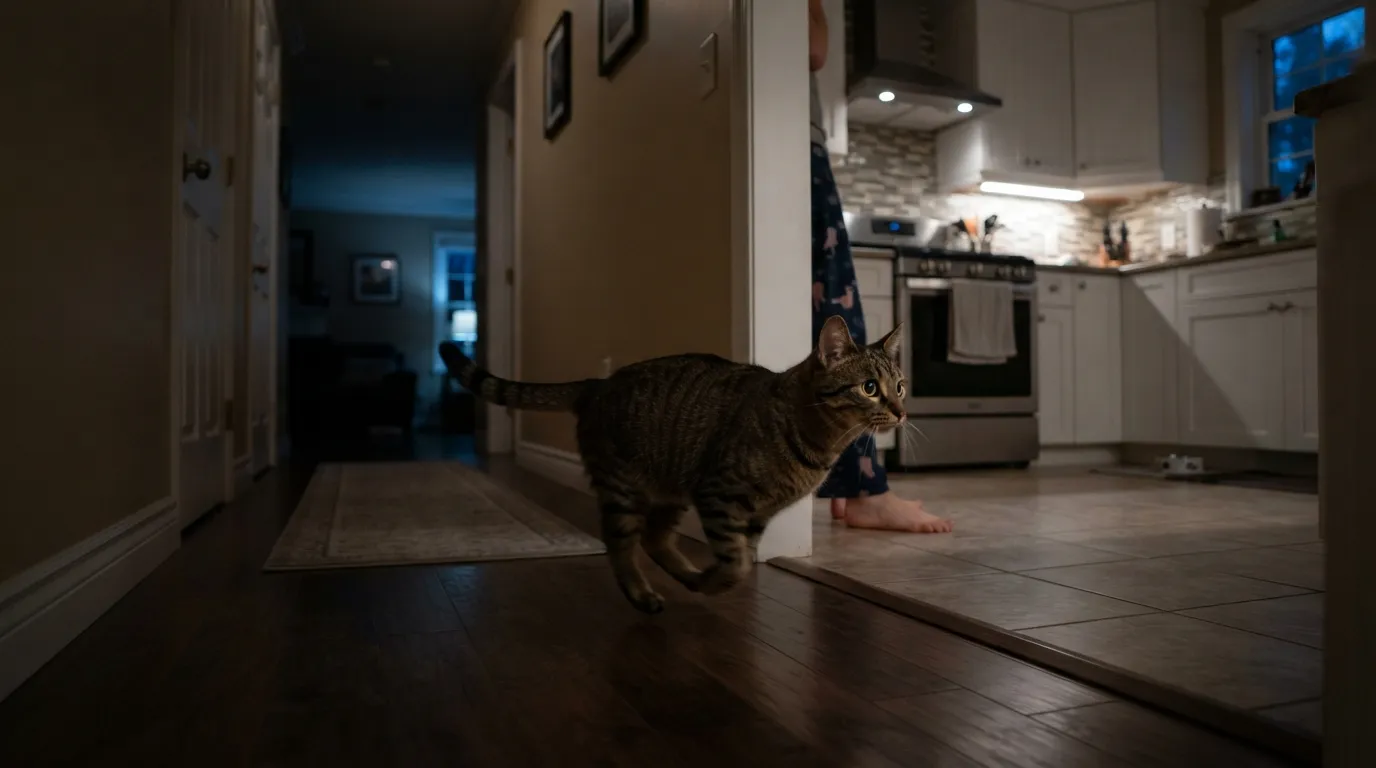
Despite the myth, cats aren't truly nocturnal - they're crepuscular, most active around dawn and dusk. Those thundering midnight sprints down your hallway, the ones owners call "zoomies," are really perimeter patrols.
Indoor cats amplify this behavior because there's nothing left to actually hunt. With no real prey to chase, all that energy gets redirected into lapping the house at full speed.
They're running the same route a wild cat would use to sweep its range. Your hallway and kitchen are the terrain, and you're just an obstacle they've chosen not to knock over - most of the time.
The nighttime sweep shows they're serious about the space. But what they do to outsiders who dare visit your home reveals a whole other level.
#5 - Every Guest Is an Intruder Until Proven Otherwise
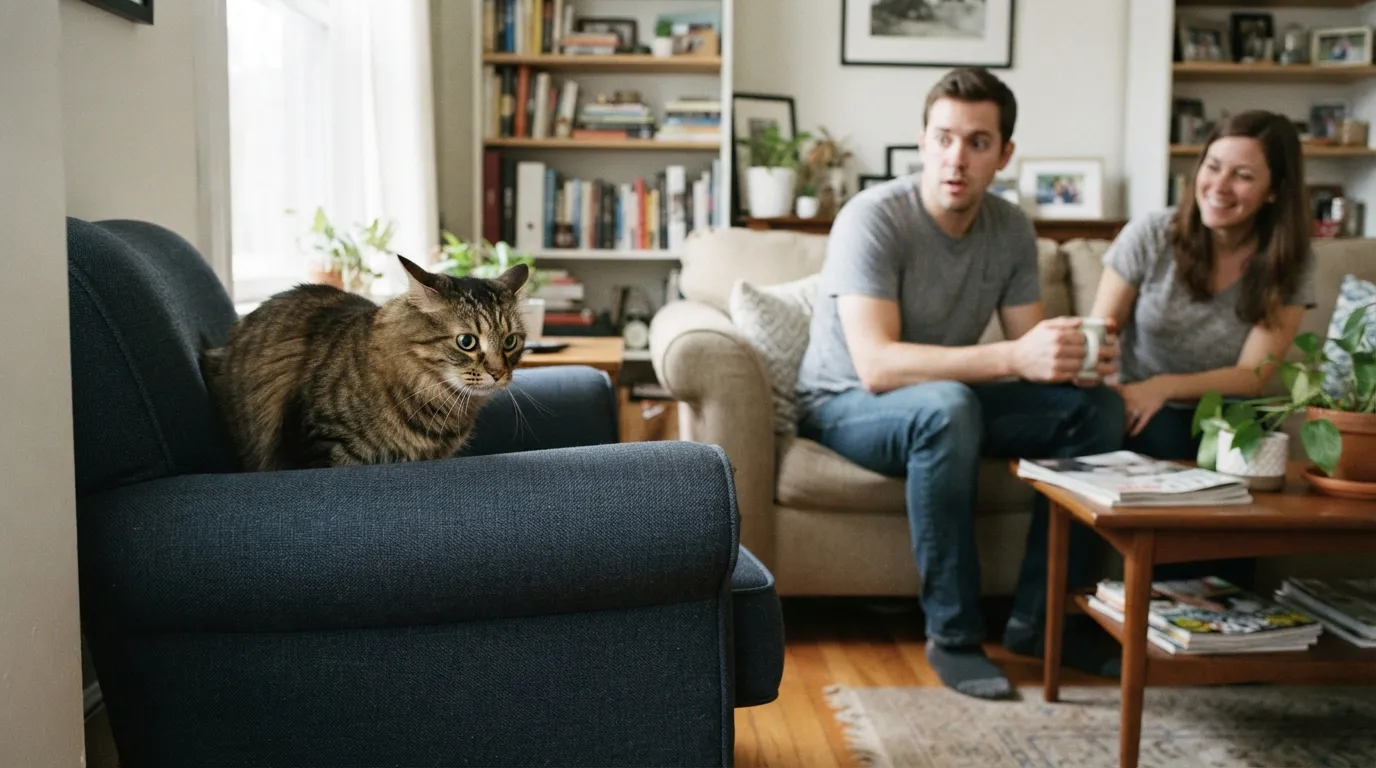
When a cat feels its territory has been invaded, it often turns frightened or stressed, which can trigger chasing, ambushing, or outright aggression toward the intruder. That friend your cat has never warmed up to isn't a coincidence.
Cats routinely single out one visitor to distrust while staying friendly with everyone else. That's not personal preference - it's a threat assessment, and your cat is running a background check on every human who walks through the door.
The slow blink from the corner of the room is a controlled observation. The sudden bolt behind the couch is a tactical retreat, not shyness.
Still think you're in charge of your guest list? Wait until you see what happens when another cat tries to move in.
#4 - They Absolutely Will Not Share the House Equally
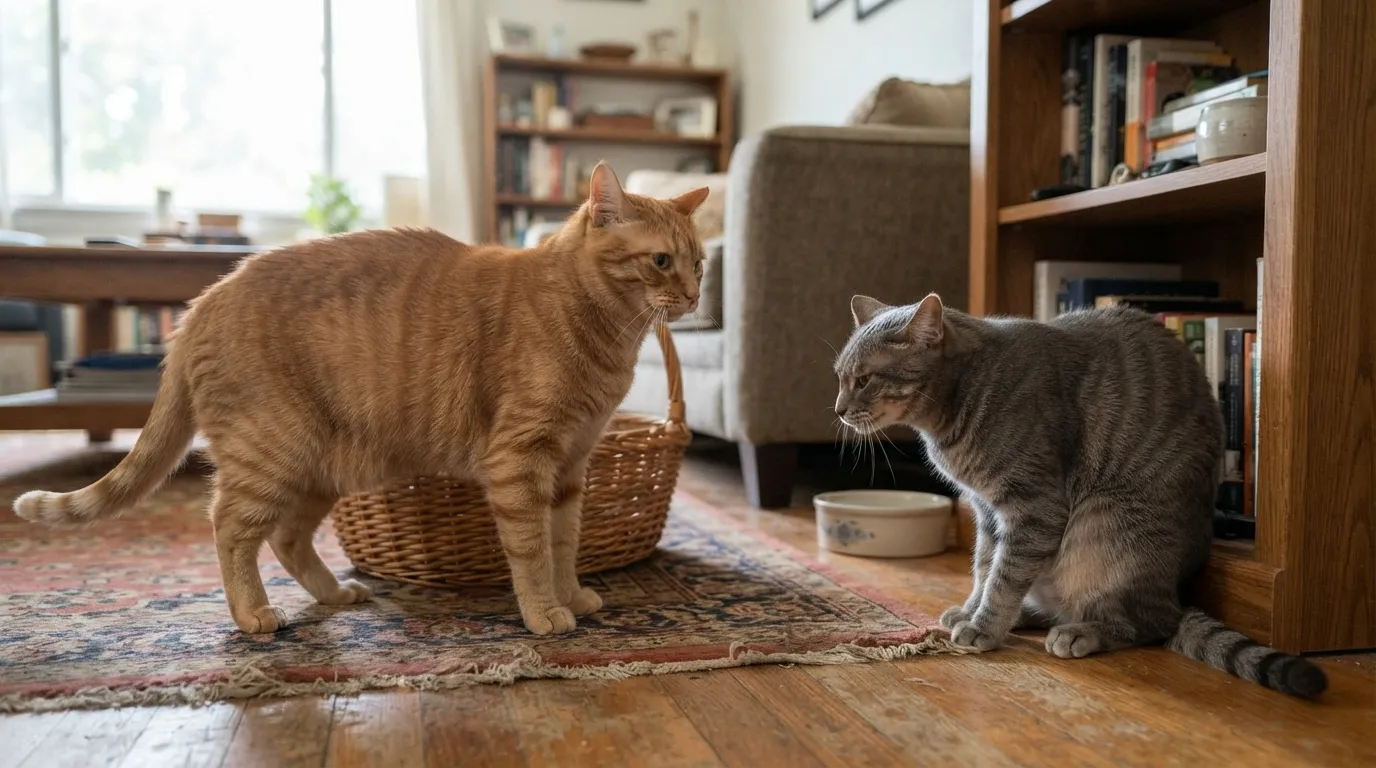
Two cats living under one roof doesn't guarantee friendship - most cats merely tolerate each other unless they're siblings or from the same social group. They often carve out separate, overlapping territories inside the same home instead.
You introduced a second cat expecting companionship. What you actually did was force a property dispute, and in multi-cat homes, the dominant one marks constantly to enforce the new boundaries.
Quick Compare
- Dominant cat: stiff posture, upright ears, direct stare, constant re-marking
- Subordinate cat: crouched body, flattened ears, avoids eye contact, yields space
- Shared trait: both still treat the home as one contested territory, not a shared one
Your home is the office. You're just facilities management, and the ownership dynamic gets most obvious at the one place humans think they rule completely: the bedroom.
#3 - They've Annexed the Bedroom. Permanently.
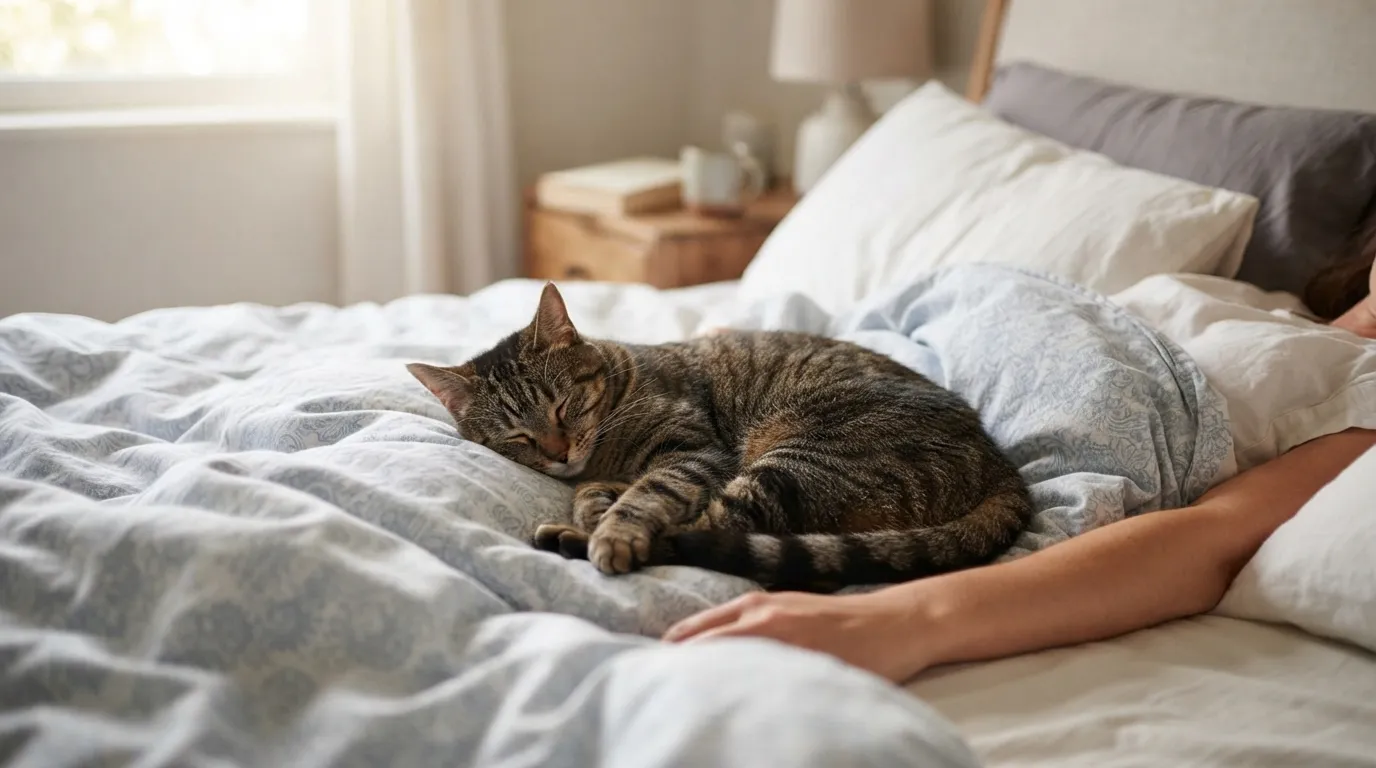
Wherever your cat sleeps on the bed, the fact that it chooses to sleep near you at all is a real sign of trust. Cats are instinctively cautious sleepers, staying alert to threats even while resting.
Sleep is a vulnerable time, so cats gravitate toward places that feel genuinely safe. Choosing to sleep near you gives them warmth, comfort, and a sense of security that deepens the bond.
Your bed is your cat's safest patch of territory in the entire house. Cats spend roughly 60% of their day sleeping, and they instinctively claim the warmest, most comfortable spot available - which is usually yours.
You sleep in their preferred zone every night, by invitation only. And they're most revealing about ownership when something new appears in that safe space.
#2 - New Objects Don't Belong to You - They Get Inspected and Cleared
Cats rely on the security of their territory far more than on any attachment to the people or animals living in it. That instinct plays out every time you bring something new into the house.
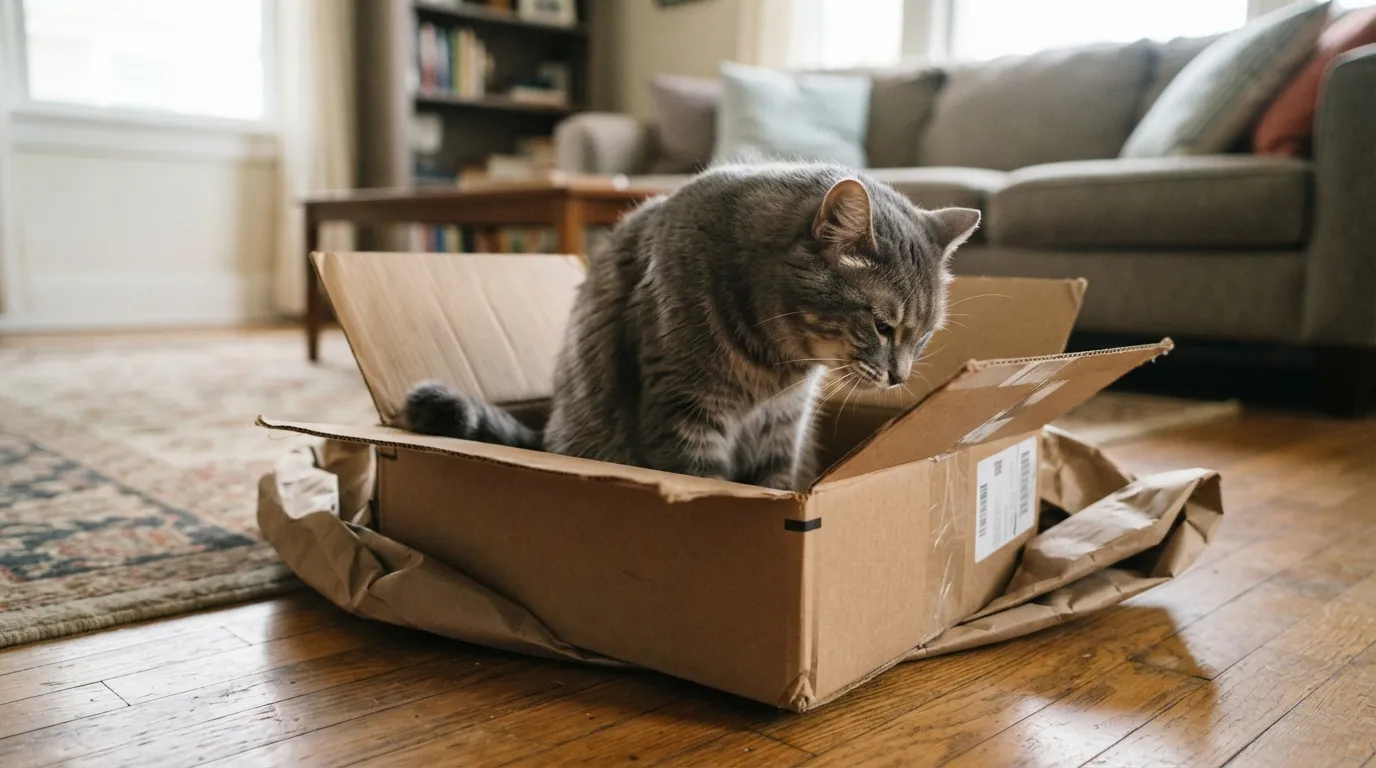
A new bag, a cardboard box, a piece of gym equipment - your cat will inspect, scent-mark, and either approve or reject it before you're allowed to use it comfortably. Investigating new objects makes cats feel mentally stimulated and firmly in control of their surroundings.
The moment you set a delivery box on the floor, your cat is inside it within minutes. That's not curiosity - it's a customs inspection, deciding whether the object is a threat, a resource, or just something to sit on to establish jurisdiction.
You won't be using it freely until they say so. And the most brazen sign of all is the one that proves, beyond doubt, who actually owns the house.
#1 - They Stare You Down When You Break Their Rules
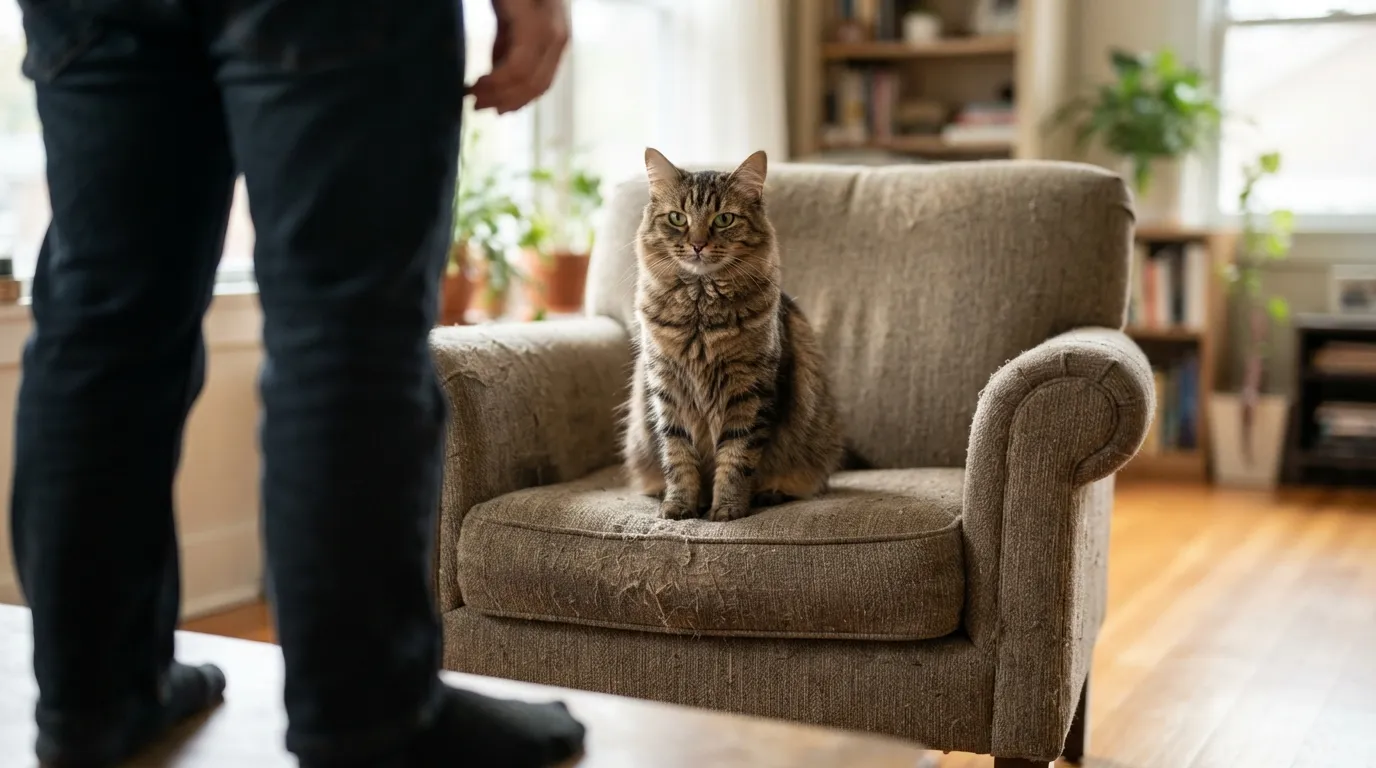
Territorial blocking can be subtle, delivered with just a stare, or overt, with a growl or a lunge. A cat may even stalk or chase anyone who approaches its claimed areas.
This is the clearest power signal in the feline playbook, and most owners just laugh it off. When your cat locks eyes with you and holds it - especially on their furniture, at their feeding time - that's a territorial assertion directed straight at you, the human, in your own home.
If a cat doesn't feel it has enough space in the home, it may direct aggression at the people living there. The stare is simply the polite version of that message: you know the rules, don't test them.
And if you're honest with yourself, you've already learned every rule they set. You adjusted your schedule, your seating, and your sleep - they adjusted nothing.
The Bottom Line
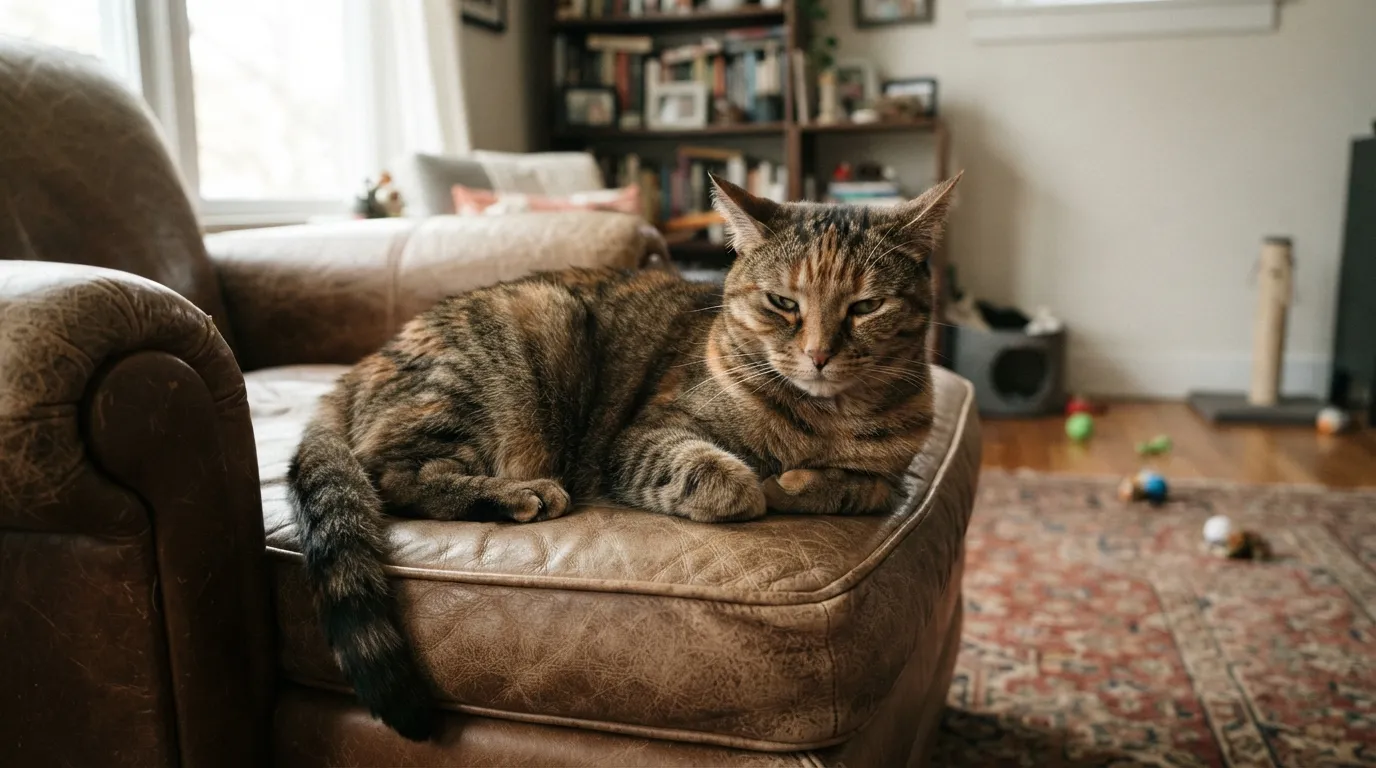
Your indoor cat didn't just settle into your home - it systematically claimed it. Cats descend from a solitary, territorial ancestor, and even after generations of domestication, they still trust territory more than they trust people.
Every sign on this list - the high perches, the window patrols, the pre-dawn wake-ups, the stare-downs - is the same ancient instinct playing out inside your four walls. Your cat isn't being difficult; it's being exactly what evolution built it to be.
So which sign did you spot first in your own cat? Your cat already knows the answer - it's just waiting to see if you do too.