#1 The slow blink, sometimes called the cat kiss
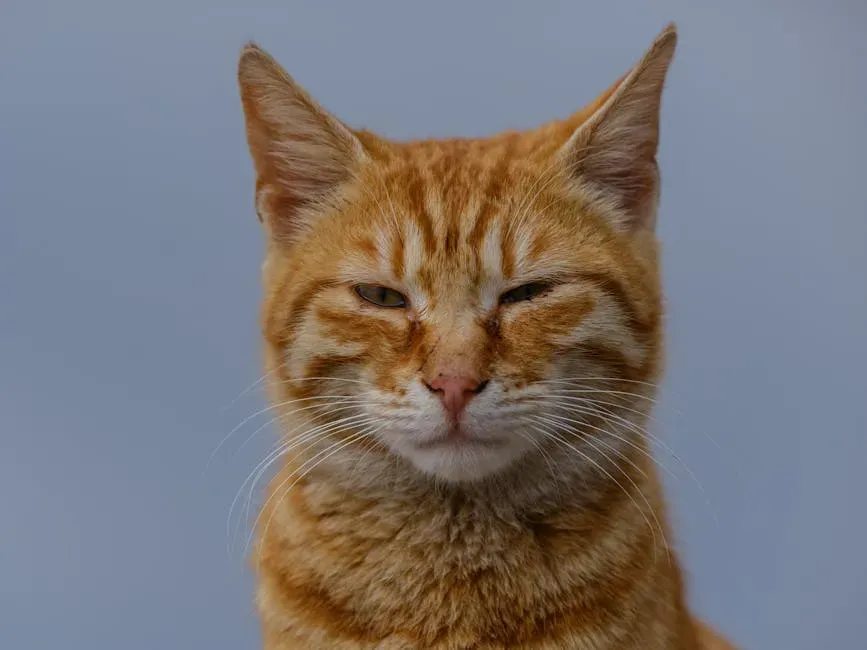
If your cat looks at you from across the room, narrows its eyes, and holds that soft squint for a second before opening them again, you are witnessing one of the most studied gestures in feline communication. Research from the University of Sussex, led by Dr. Tasmin Humphrey and Professor Karen McComb, found that cats are significantly more likely to approach a previously unfamiliar human after a slow blink interaction with them, compared to control conditions with a neutral expression. The effect held up even with cats meeting a person for the first time, which suggests this is not just a quirk of familiar relationships.
What makes the slow blink so telling is what it costs the cat to do it. When your cat narrows their eyes around you, they’re signaling vulnerability. Closed eyes mean “I don’t need to watch you for threats.” A follow up study on shelter cats found something practical too: cats that showed an increased number of and longer eye closures in response to human slow blinks were rehomed faster, hinting that people can sense this signal even without knowing the science behind it.
#2 Rolling over and showing you their belly
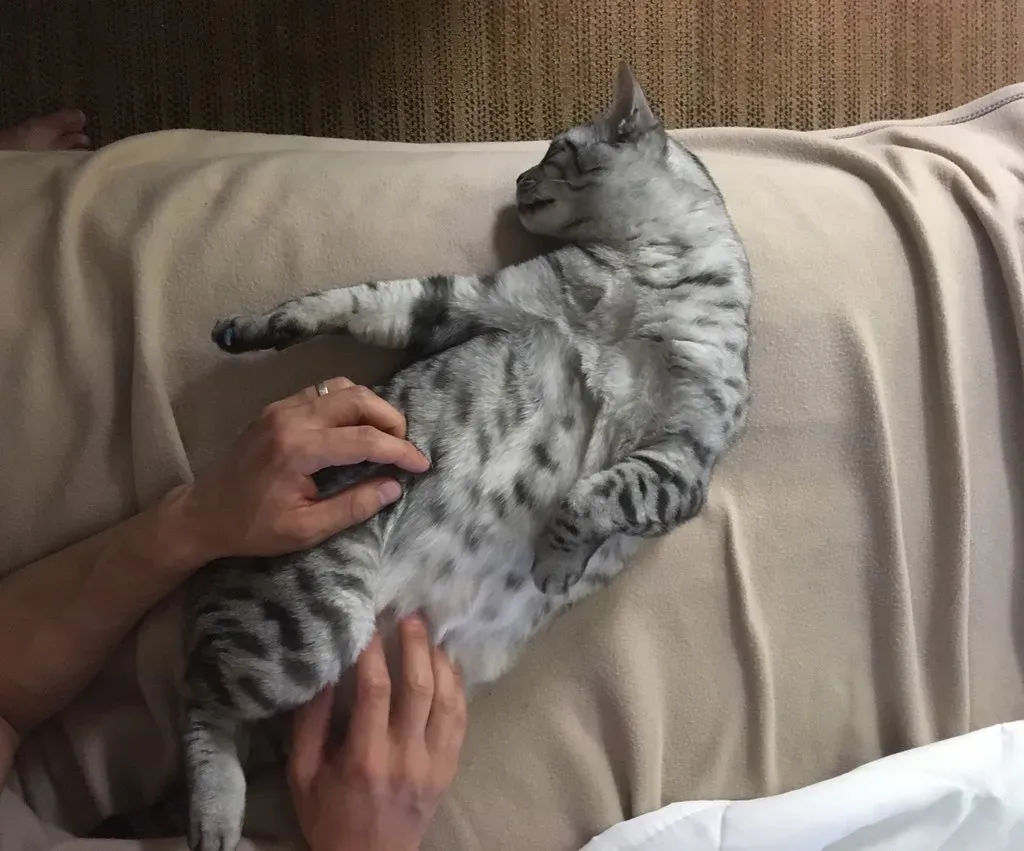
The belly is the one part of a cat’s body that gets almost no protection out in the open. The abdomen contains all the vital organs: it is the least protected part of a cat’s body and the most vulnerable to injury. So when a cat flops onto its back in front of you and leaves that whole area exposed, it is making a fairly bold statement about how safe it feels in that moment.
Here is the part that trips people up, though. When a cat shows their stomach in this context, it’s often a display of trust and a way to communicate that they feel safe, demonstrating their confidence in the relationship, but this doesn’t necessarily translate to wanting physical contact in that area. Plenty of cats will show belly as a compliment and then swat your hand the moment you reach for it, which is not a contradiction, just a cat drawing a line between showing trust and inviting touch.
#3 Kneading you specifically, not the blanket
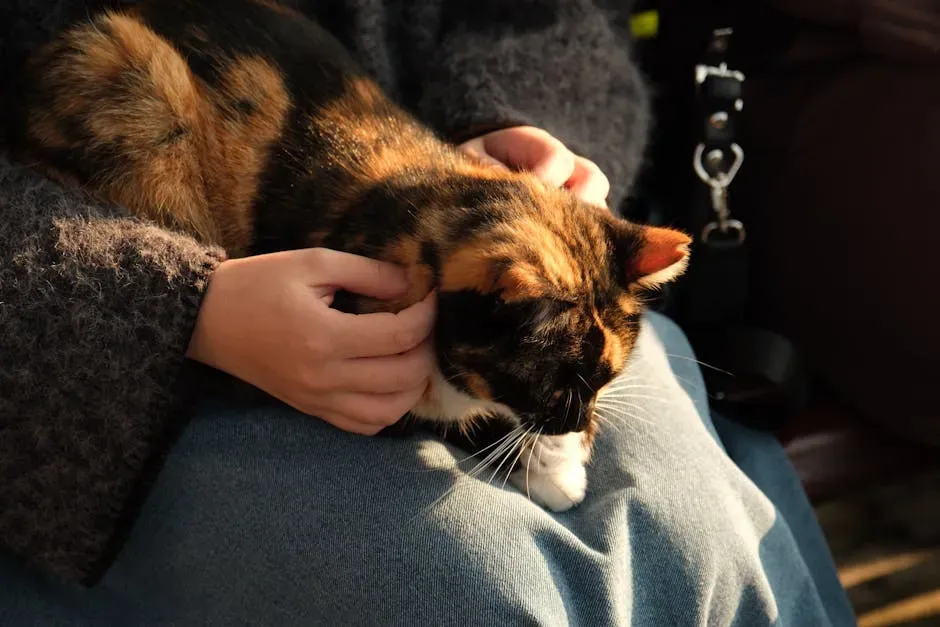
That rhythmic paw pressing motion, often called making biscuits, traces back to kittenhood, when kittens knead against their mother while nursing to encourage milk flow. Adult cats keep the behavior around as a comfort ritual, and where they choose to do it matters. A cat who seeks you out specifically to knead on you, rather than kneading a blanket or a piece of furniture, is choosing you as the object of this comfort behaviour, which feline ethologists classify as a genuine affiliative behaviour directed at you as an individual, not simply a self-soothing reflex.
There is a useful way to tell the difference between a cat responding to you and a cat responding to something else entirely. A cat who only kneads on you when you’re wearing a specific texture of clothing is probably responding to the texture, while a cat who approaches you, settles, and initiates kneading as part of choosing to be near you is doing something qualitatively different. If your cat picks your lap over the couch cushion nearby, that preference is the actual signal worth paying attention to.
#4 Sleeping pressed against you, or right on top of you
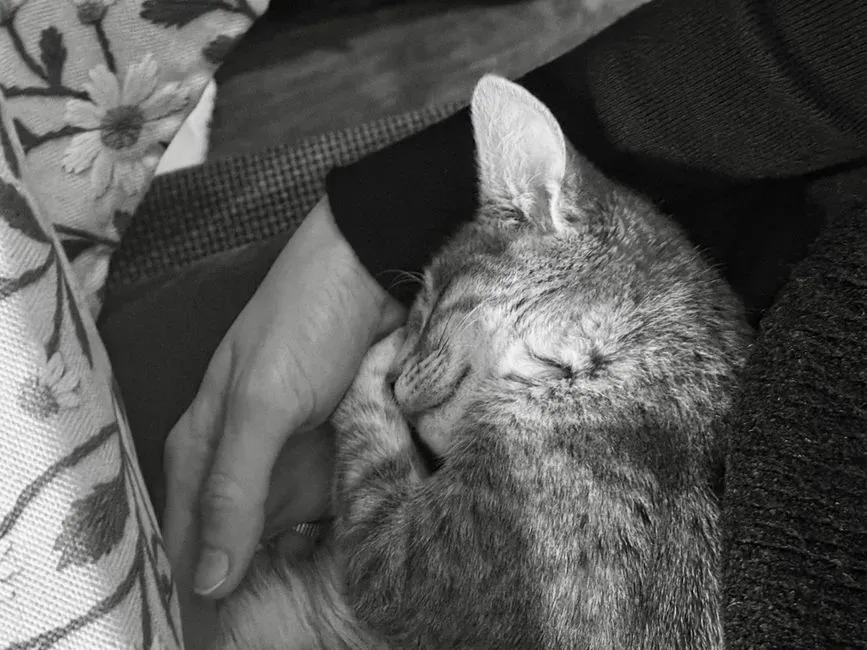
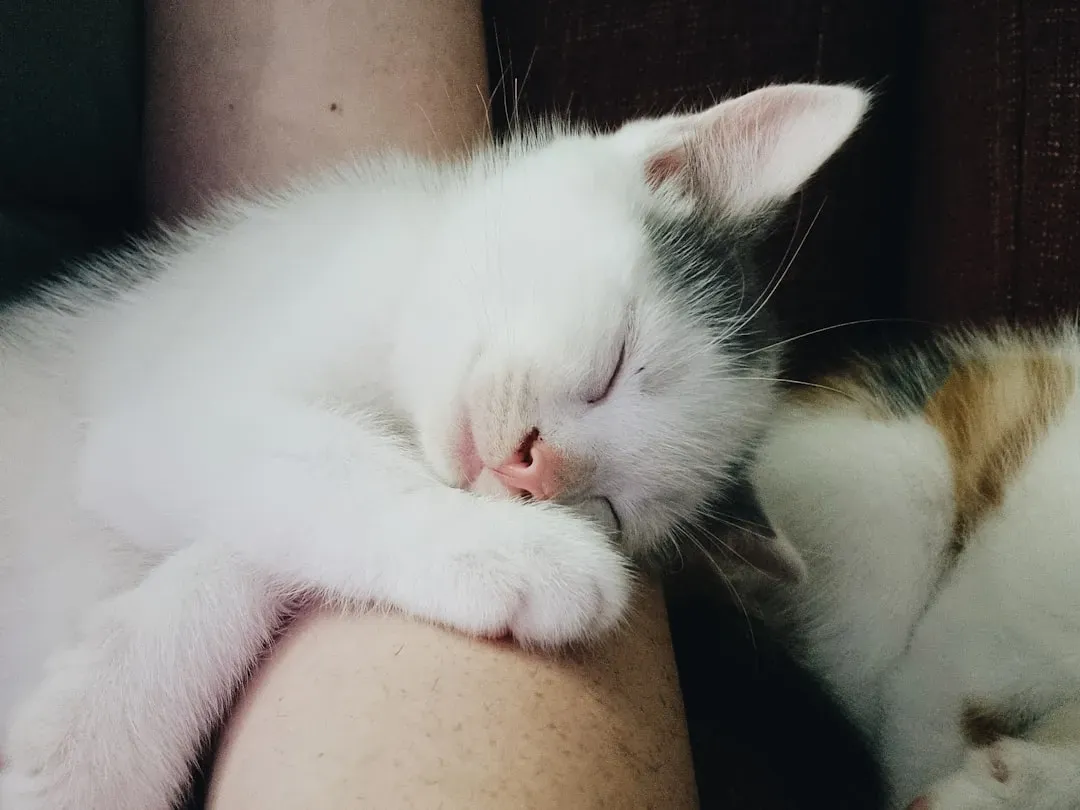
Sleep is a genuinely dangerous state for any animal in the wild, since it is the one time predators cannot defend themselves. A cat choosing to sleep in physical contact with a person, rather than tucked away somewhere hidden, is making a decision that would be unthinkable around anything it perceived as a threat. This is one of the more consistently cited signs in behavioral literature, described simply as a huge indicator that your cat feels safe.
It is worth noticing where on your body the cat chooses to settle, too. Cats that curl up against your chest or stomach, where they can feel your heartbeat and breathing, tend to be responding to more than warmth. This kind of proximity during the most defenseless hours of the day is not something cats offer to just anyone in the household, and many owners notice it is reserved for one particular person.
#5 Head bunting and rubbing their face against you
When a cat presses its forehead or cheek against your hand, leg, or face, it is doing two things at once. It is depositing scent from glands located around its face, and it is choosing to get close enough to do so, which on its own is a form of trust. This behavior is listed among the clearer trust signals in feline behavior guides, described as a sign of affection and marking you with their scent.
Scent marking through bunting is essentially a cat including you in its sense of what is familiar and safe. Cats do this to other cats they live peacefully with, to furniture they consider part of their territory, and to people they have decided belong in their inner circle. It tends to increase over time as the relationship deepens, rather than appearing all at once, which makes it a decent way to track how a bond with a newer cat is progressing.
#6 Following you from room to room without being called
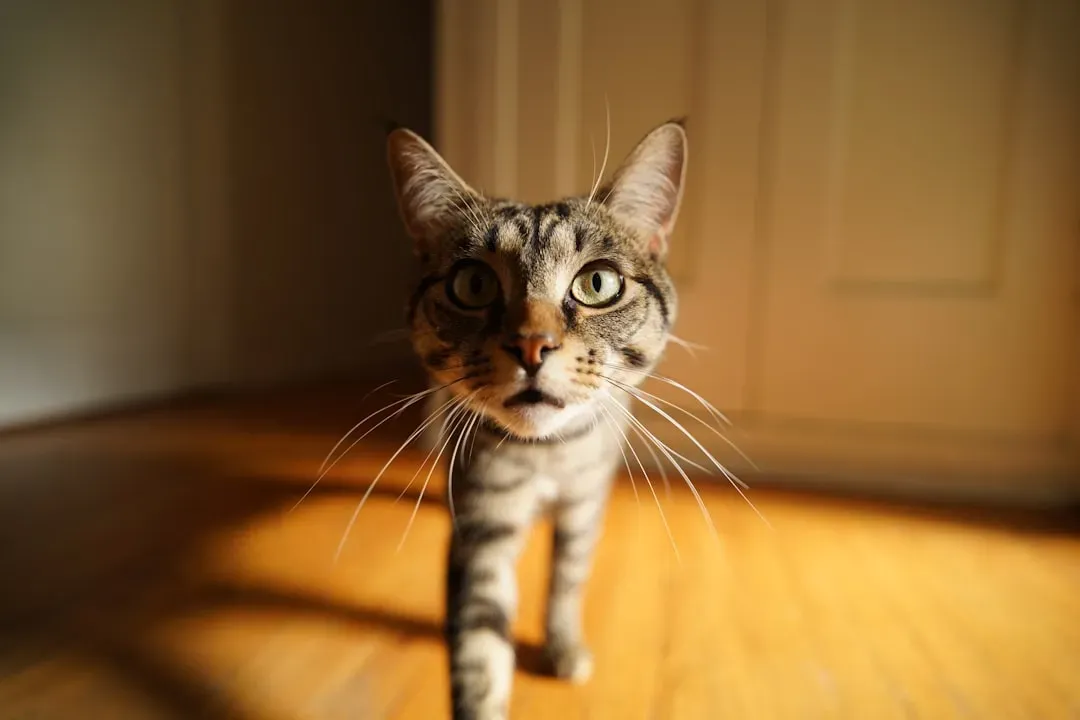
Cats are not pack animals in the way dogs are, so there is no built in instinct pushing them to trail after a person out of loyalty or herd behavior. When a cat gets up and follows you into the kitchen, the bathroom, or wherever else you happen to be going, it is a choice made purely because it wants to stay near you.
This kind of shadowing behavior tends to show up more in cats that have formed a strong attachment to one specific person in the household, rather than the household in general. It is a low key gesture, easy to overlook because it does not involve any dramatic display. Still, the consistency of it, a cat repeatedly choosing your company over solitude, says something that louder behaviors sometimes do not.
#7 Bringing you toys, prey, or random objects
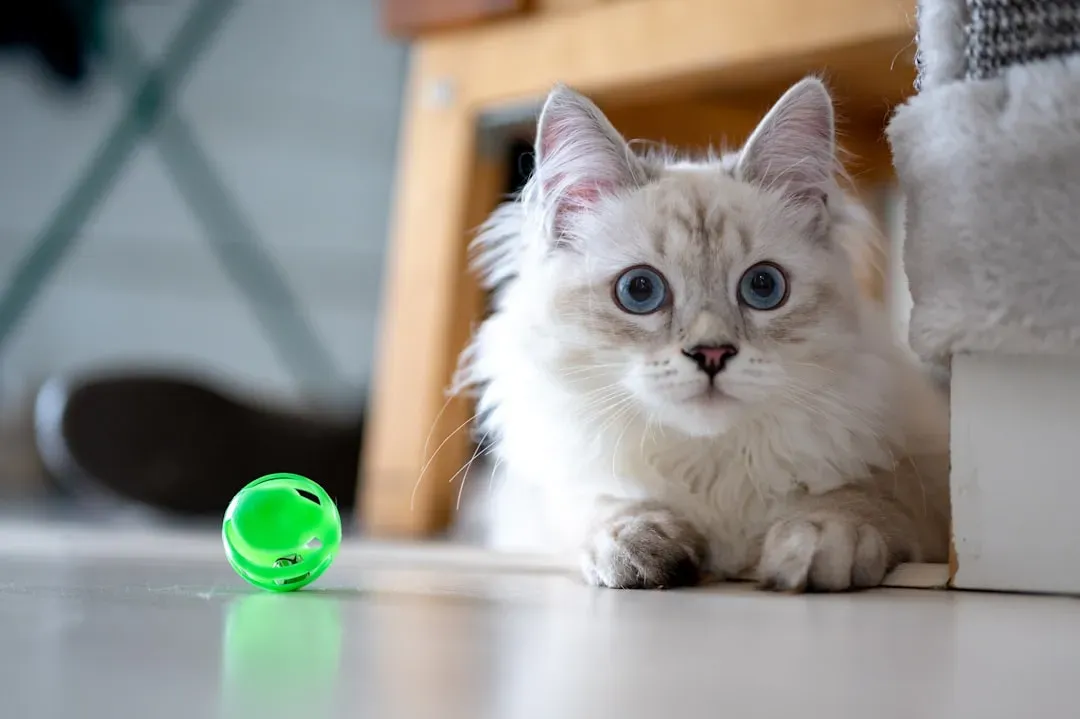
The gift giving instinct in cats traces back to hunting behavior, where mother cats bring prey back to teach kittens how to hunt. When an adult cat brings a toy, a dead insect, or occasionally something stranger to a person, it is drawing on that same instinct, just redirected toward someone it considers part of its social circle.
This behavior is less universal than some of the others on this list, since not every cat hunts or plays in a way that produces something to bring back. When it does happen, though, it tends to be aimed at the person the cat feels closest to in the home. It is less about a literal offering and more about including you in an activity the cat considers meaningful, which is its own kind of compliment.
#8 Holding their tail straight up with a slight curl at the top
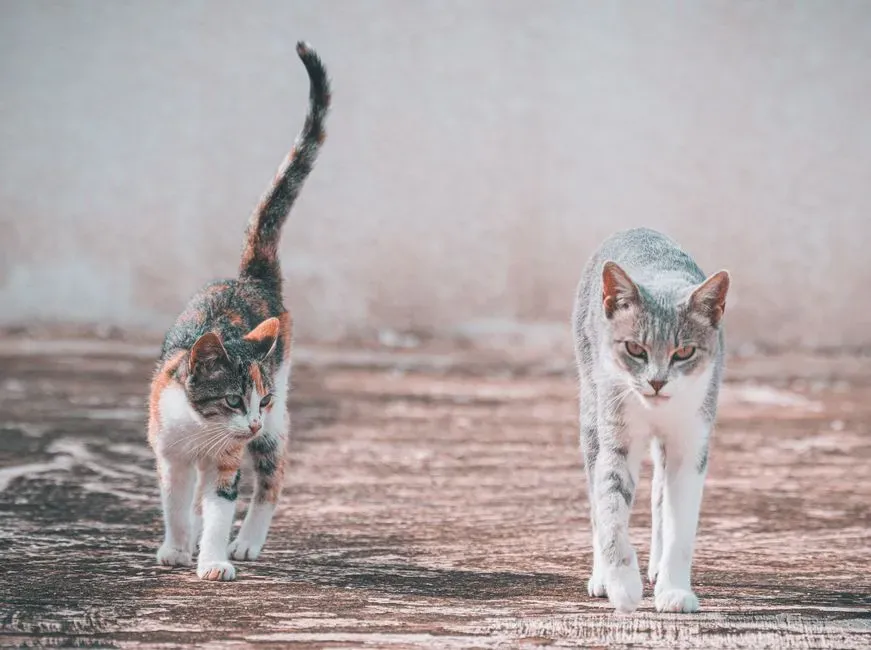
Tail position is one of the most reliable indicators of a cat’s emotional state, and a tail held vertically with a gentle hook at the tip is specifically associated with friendly, confident greetings. This posture is often paired with other relaxed signals, and behavior guides note that a cat communicating trust will typically show ears upright and facing forward, a relaxed body posture, and possibly a tail pointed straight up with a slight curl at the tip.
Cats use this tail position almost like a greeting card, something they display when approaching a person or another cat they are happy to see. It is a quick visual signal, easy to catch if you know to look for it, and it shows up consistently across cats regardless of individual personality. When you see it directed at you specifically, particularly if it happens every time you walk through the door, that is a fairly dependable read on how your cat feels about you.
What all of this really tells us
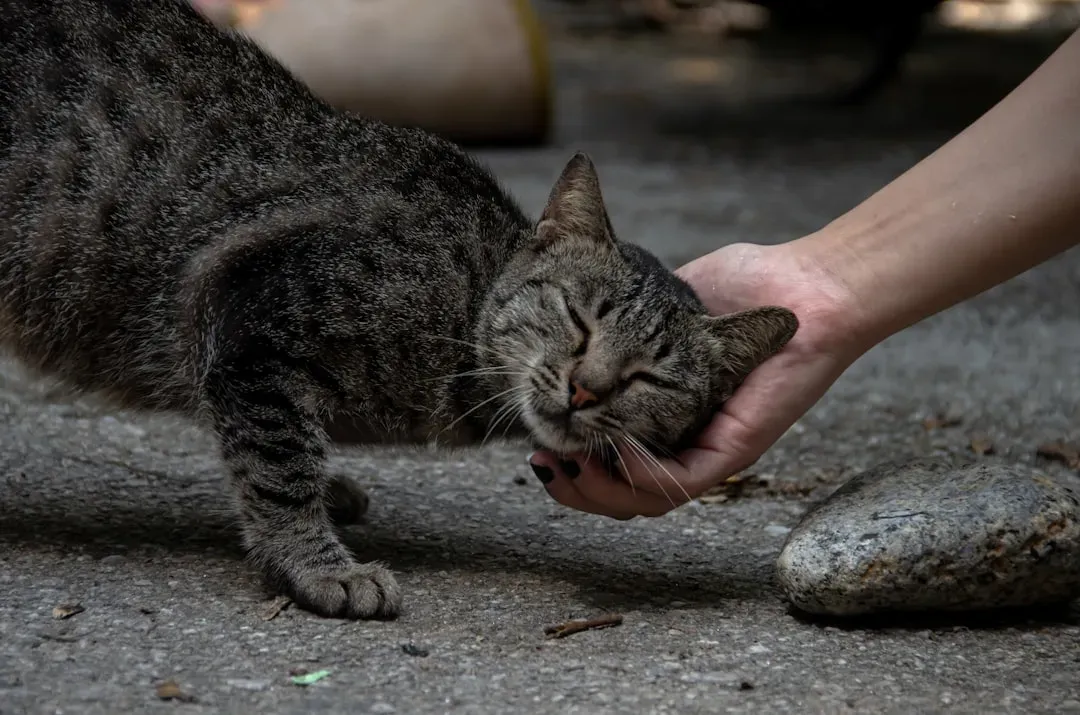
None of these eight behaviors are dramatic on their own, and that is sort of the point. Cats do not do grand gestures the way dogs do, but they communicate constantly through small, deliberate choices, choices that cost them something in terms of vulnerability or effort. A slow blink, an exposed belly, a tail held just so, these are quiet signals, but they are honest ones.
My own take, for what it is worth, is that this is exactly why a cat’s trust feels different from a dog’s. A dog trusts almost everyone by default. A cat has to be convinced, and it shows its conclusions in ways you actually have to learn to read. If your cat is doing several of these things around you and mostly you, it has already made up its mind. That is not a small thing coming from an animal that evolved to trust almost no one.
Kristina is a young writer from India. An arts graduate and an avid content creator, Kristina is passionate about animals and wildlife. She enjoys exploring topics related to pet care, animal behavior, conservation, and nature, combining thorough research with engaging storytelling.