Bringing a new cat into your home sounds adorable in theory: double the paws, double the purrs, double the cute photos. But if you get the introduction wrong, it can turn into a slow-motion disaster: hissing under doors, swatting, peeing outside the litter box, and two stressed animals who now associate each other with fear. Cat chemistry is real, and the first few days can shape their relationship for months or even years.
I still remember thinking my resident cat would “just get used to” the new kitten if I put them in the same room and watched closely. Spoiler: that ended with one cat on top of the fridge growling like a tiny lion and the other hiding under the couch for hours. Since then, I’ve learned that successful introductions are less about luck and more about avoiding specific mistakes. Let’s walk through the eight big things you should never do if you want peace instead of chaos.
#1 Rushing Them Into Face‑to‑Face Contact
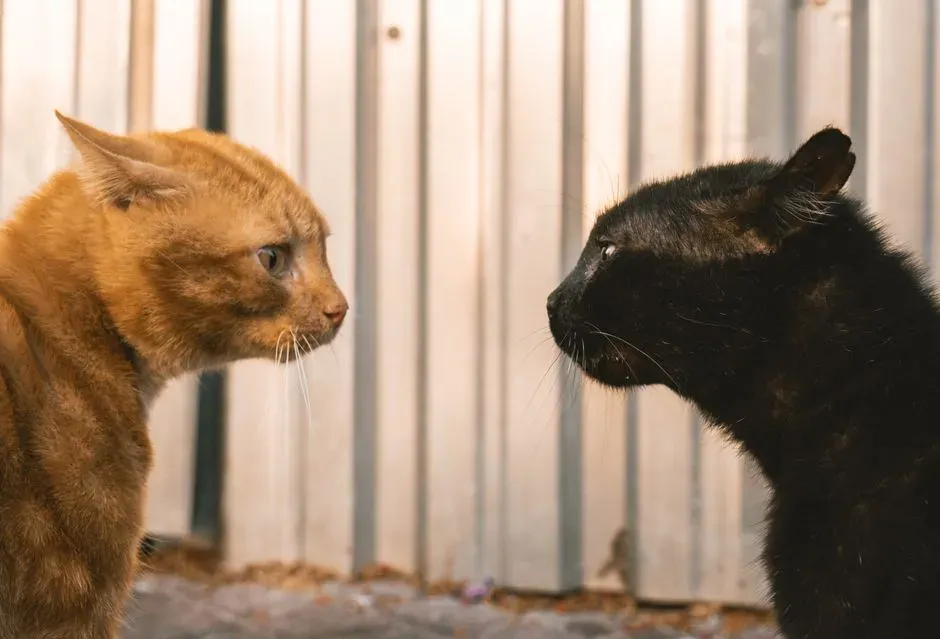
The biggest mistake people make is assuming cats should “work it out” quickly if you simply put them together and supervise. To a cat, a strange feline suddenly appearing in their territory is like a stranger barging into your bedroom and sitting on your bed uninvited. Their nervous system goes on high alert, and that first overwhelming encounter can lock in a negative association that’s hard to undo.
Instead of a cold open, cats need a slow burn. Think of it like a series: they should smell each other under a door first, then trade rooms, then see each other at a distance, and only then move to closer contact. Skipping straight to face-to-face is the emotional equivalent of jumping from a first text to meeting the entire extended family at a wedding. It’s too much, too fast, and someone is going to freak out.
#2 Letting Them Free Roam Without a Safe Room

Throwing both cats into the entire house with full access from day one is another classic misstep. Cats feel safest when they can control their environment, and new smells, new sounds, and a new rival all at once can overload them. When a new cat doesn’t have a smaller, predictable territory to claim, their anxiety skyrockets, which often shows up as hiding, hissing, or resource guarding.
A dedicated “safe room” for the newcomer – complete with food, water, litter, scratching post, and hiding spots – gives them a base camp where they can decompress. The resident cat also benefits, because their world changes more gradually instead of feeling like it’s been invaded overnight. Skipping this step might feel like you’re being generous with space, but in cat logic, you’re taking away the one thing they crave most: a secure, controllable zone.
#3 Ignoring Body Language and Early Red Flags

Another thing you should never do is shrug off early tension as “just cats being dramatic.” Flattened ears, wide pupils, slow tail swishes, and low growls are not tiny mood swings; they’re serious warning signs that stress is building. If you push ahead anyway, you risk turning a manageable disagreement into a full-on fight that cements long-term hostility.
Cats communicate long before they attack, but you have to actually listen. If one cat is repeatedly hiding, refusing food, or suddenly avoiding the litter box after short visual contact, that’s your cue to slow the process and give more distance. Think of it like reading a friend’s tone in a text: if every message sounds tense, you wouldn’t keep poking the same sore spot. With cats, pausing and backing up a step can be the difference between “uneasy but curious” and “mortal enemies.”
#4 Forcing Physical Contact or Holding Them Together

It’s incredibly tempting to scoop up both cats, hold them close, and hope that if they physically stay near each other, they’ll magically get along. In reality, restraining cats removes their sense of control, and control is everything to a prey-and-predator species. When they can’t choose to walk away, even a mildly uncomfortable situation can feel terrifying.
Never hold cats in your arms or in your lap and push them nose-to-nose during introductions. That’s like strapping two strangers into a shared airplane seat and telling them to relax. Cats need the option to retreat, circle around, or simply observe from a distance. If they decide to approach each other, great; if not, your job is to protect that freedom, not override it because you’re impatient for a cute cuddle moment.
#5 Allowing Direct Competition Over Resources
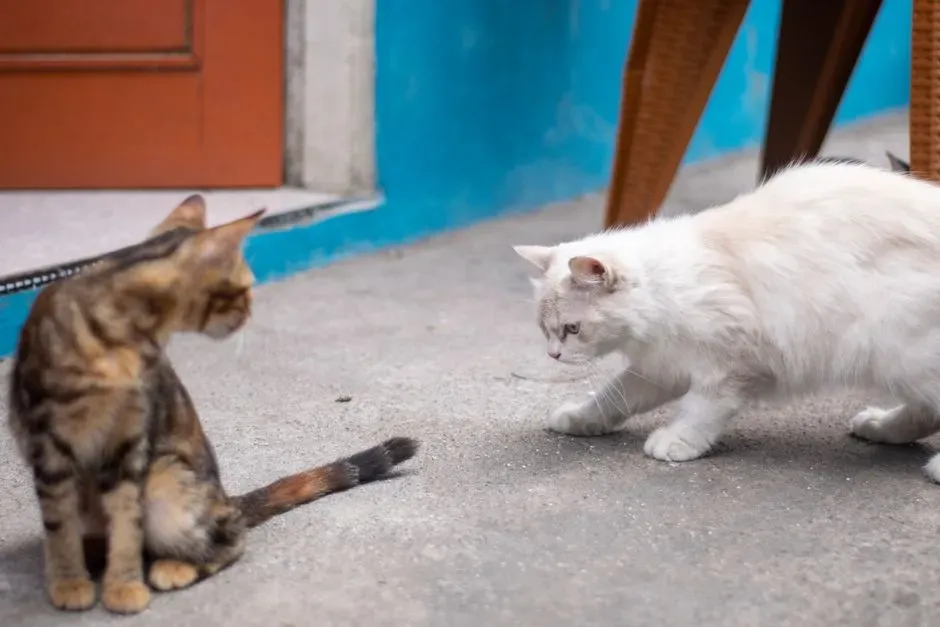
One of the fastest ways to spark conflict is to make cats share food bowls, litter boxes, or favorite resting spots too early. In the wild, limited resources mean survival, and that instinct doesn’t disappear just because they now eat from ceramic dishes in a warm apartment. When two cats feel they’re in direct competition for basics, you may see subtle blocking, chasing, or full-on guarding behaviors.
A good rule of thumb is at least one more litter box than the number of cats, and multiple feeding stations so no one is forced to eat shoulder-to-shoulder. Early on, feed them on opposite sides of a closed door or baby gate so they learn: “The other cat appears, and food happens, and I still feel safe.” Letting them compete for a single bowl or box is like asking two coworkers to share one chair and one coffee cup: even the chill ones will eventually snap.
#6 Punishing Growling, Hissing, or Hiding

It might feel natural to scold a cat who hisses or growls, especially if you’re worried about the other one getting hurt. But punishing warning signals is one of the worst things you can do during introductions. Those sounds and postures are a cat’s way of saying, “I’m scared, I need more space,” not “I’m evil.” If you punish that communication, you’re teaching them that expressing discomfort leads to more bad things, which can push them toward silent, sudden aggression.
Instead of yelling, squirting water, or clapping loudly, calmly increase distance and give both cats a break. Reward calm curiosity with treats and soft praise, and let hiding be an acceptable coping strategy in the short term. I’ve seen cats labeled “aggressive” who became surprisingly tolerant once their humans stopped punishing them for speaking up. In cat diplomacy, fear is the real enemy – not the hiss that warns you it’s there.
#7 Overloading Them With Scent Too Quickly

Scent is everything in cat society, but it has to be introduced gradually, not dumped like a bucket. Some people rub both cats down with the same towel or swap beds repeatedly on day one, thinking they’re blending the smells. If one or both cats are already anxious, a strong infusion of unfamiliar scent can feel like a territorial invasion instead of a friendly introduction.
A gentler approach is to start with small scent swaps: a blanket, a toy, or a scratching post moved from one room to another, then watch for reactions. If the resident cat investigates calmly or even rubs on the newcomer’s scent item, you’re on the right track. But if you see intense sniffing followed by hissing or avoidance, that’s your signal to slow way down. Scent sharing should feel like reading someone’s profile gradually, not having their entire life story dumped on your porch overnight.
#8 Assuming Time Alone Will Fix a Bad Start

Finally, one of the most damaging things you can do is believe that a rocky introduction will magically get better if you “just give them time together.” If the first days or weeks have been full of chasing, cornering, and loud confrontations, leaving them to sort it out often makes things worse. Cats have excellent memories for danger, and repeated bad encounters can solidify a narrative in their heads: “That cat equals threat.”
If things go south, you may need to effectively reset the introduction: separate them again, re-establish the safe room, and go back to scent and visual introductions at a slower pace. It can feel like going backwards, but you’re actually repairing trust and rewriting the story they tell themselves about each other. In my experience, it’s far more humane – and far more successful – than hoping that two stressed animals will suddenly decide to become friends out of sheer boredom.
Conclusion: Patience Is Not Optional, It’s the Whole Strategy

Introducing two cats is less like throwing a party and more like negotiating a ceasefire between tiny, furry nations. When people say their cats “just never got along,” it’s often because the early days were rushed, chaotic, or full of avoidable mistakes like the ones above. The truth is, many cats can at least tolerate each other – and sometimes genuinely bond – if we respect how their brains and instincts actually work.
My honest opinion after years of watching cat pairs succeed and fail is this: patient, structured introductions are not overkill, they’re basic respect. You are asking two territorial, habit-loving creatures to reshape their entire world; the least we can do is give them time, safety, and choice. If you avoid these eight pitfalls, you stack the deck heavily in favor of peace instead of permanent tension. And really, when you picture your home a year from now, would you rather see two cats glaring from opposite corners – or sharing a sunny windowsill because you set them up right from the start?
Kristina is a young writer from India. An arts graduate and an avid content creator, Kristina is passionate about animals and wildlife. She enjoys exploring topics related to pet care, animal behavior, conservation, and nature, combining thorough research with engaging storytelling.