If you live with a cat, you already know that nothing on a table is truly safe. Glasses, pens, keys, even your phone – sooner or later, everything seems to end up on the floor. It can feel random, annoying, or even a little spiteful, especially when you watch your cat look you straight in the eye and tap something off the edge anyway.
But from your cat’s point of view, there’s actually a lot of logic behind this chaos. When you look past human frustration and step into a feline mindset, you start to see patterns: instincts kicking in, boredom relief, curiosity, and even honest attempts to communicate with you. Once you understand the “why,” those flying objects stop feeling personal and start looking like a weirdly clever, if slightly destructive, language.
1. Pens, Pencils, and Small Objects: Your Cat’s Miniature Prey Practice
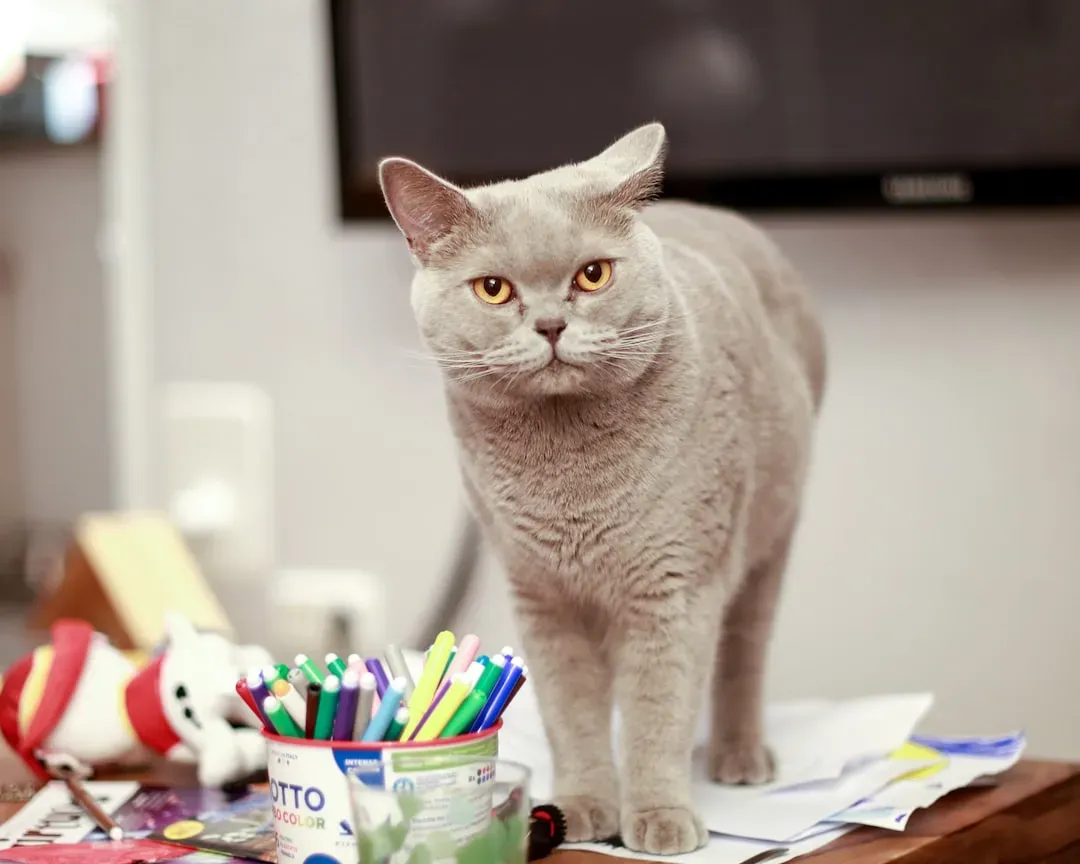
When your cat knocks pens, paperclips, hair ties, or earbuds off the table, you’re basically watching a built‑in hunting simulator run in real time. In the wild, small prey – like insects or tiny rodents – move unpredictably and fall or dart when hit, so batting something and watching it drop makes perfect sense to your cat’s brain. You may see office supplies; your cat sees practice targets that behave just enough like real prey to be irresistible.
You might notice your cat taps the object first, then gives it harder swats once it starts to roll or bounce. That little sequence mirrors how a cat tests whether something is alive and worth chasing. To make life easier (and safer for your gear), you can redirect that instinct with small, lightweight toys that move and fall, like ping‑pong balls or crinkle toys. From your cat’s perspective, you’re not “stopping bad behavior” – you’re offering a better hunting game with fewer lectures attached.
2. Glasses and Cups: An Experiment in Physics and Taste
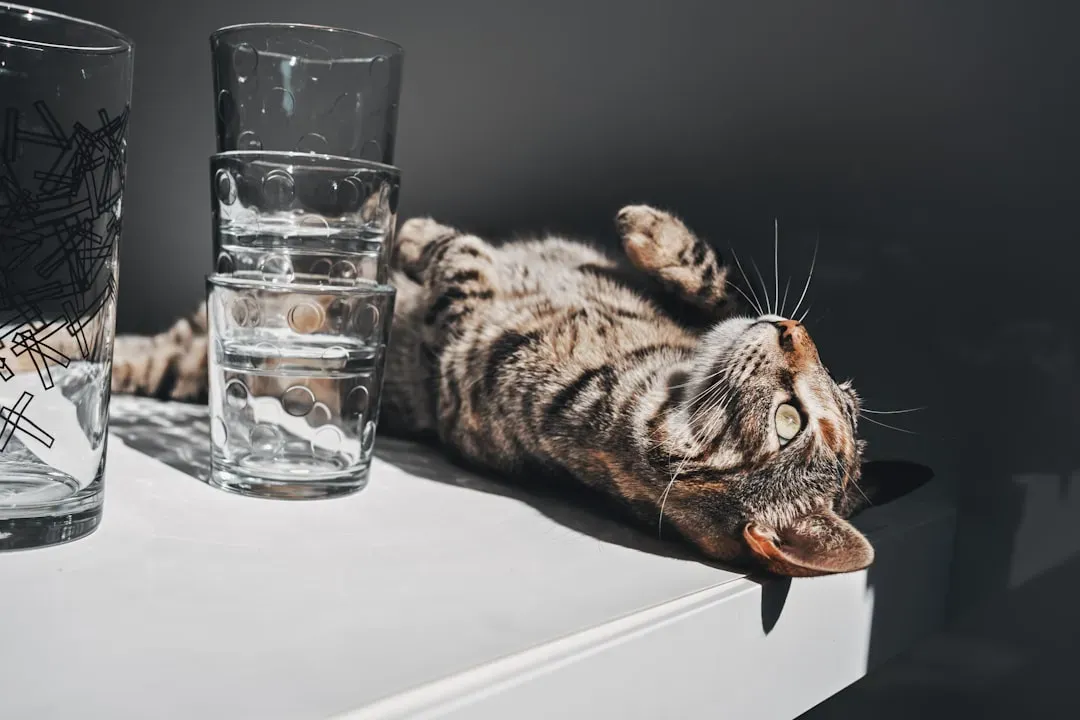
When you leave a glass of water on the table and your cat casually sends it over the edge, you’re watching curiosity and instinct collide. First, the shape and weight of the glass make it fascinating: it wobbles a bit when nudged, sounds different when it hits the floor, and sometimes even breaks, which adds noise and a dramatic payoff. To a cat, that’s a full sensory experience – sight, sound, and motion in one simple experiment.
On top of that, many cats are genuinely curious about what you’re drinking. They may sniff it, dip a paw into it, or tip it over to investigate the liquid. If your cat is especially drawn to your water glass, you can give them their own glass or fountain nearby. That way, you respect their urge to explore and sample, but reduce the odds of mopping the floor at midnight for the third time this week.
3. Keys, Coins, and Metal Bits: Sound-Based Entertainment
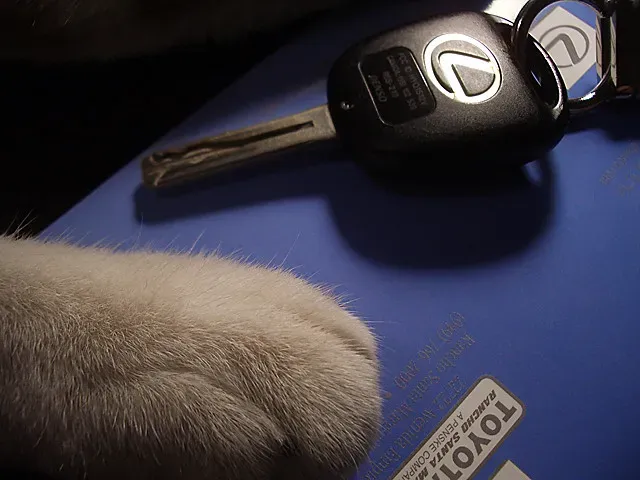
Keys, coins, and metal trinkets are like tiny sound machines for your cat. When they hit the floor, they clink, clatter, and sometimes bounce in a very satisfying way. Your cat learns quickly that a light tap of the paw produces a cascade of interesting noises, which feels like a cause‑and‑effect game. You might hear chaos; your cat hears feedback that says, “Nice move, do it again.”
There’s also a tactile piece to this: smooth, cool metal feels different under your cat’s paw than wood, cloth, or plastic. So knocking keys or coins off a table is not just about watching them fall, but also about exploring how they feel and respond. If those sounds are driving you up the wall, you can give your cat toys that jingle, crinkle, or chime, so they still get that sound‑based satisfaction without sending your car keys skidding under the couch.
4. Phones, Remotes, and Gadgets: Attention Buttons in Disguise
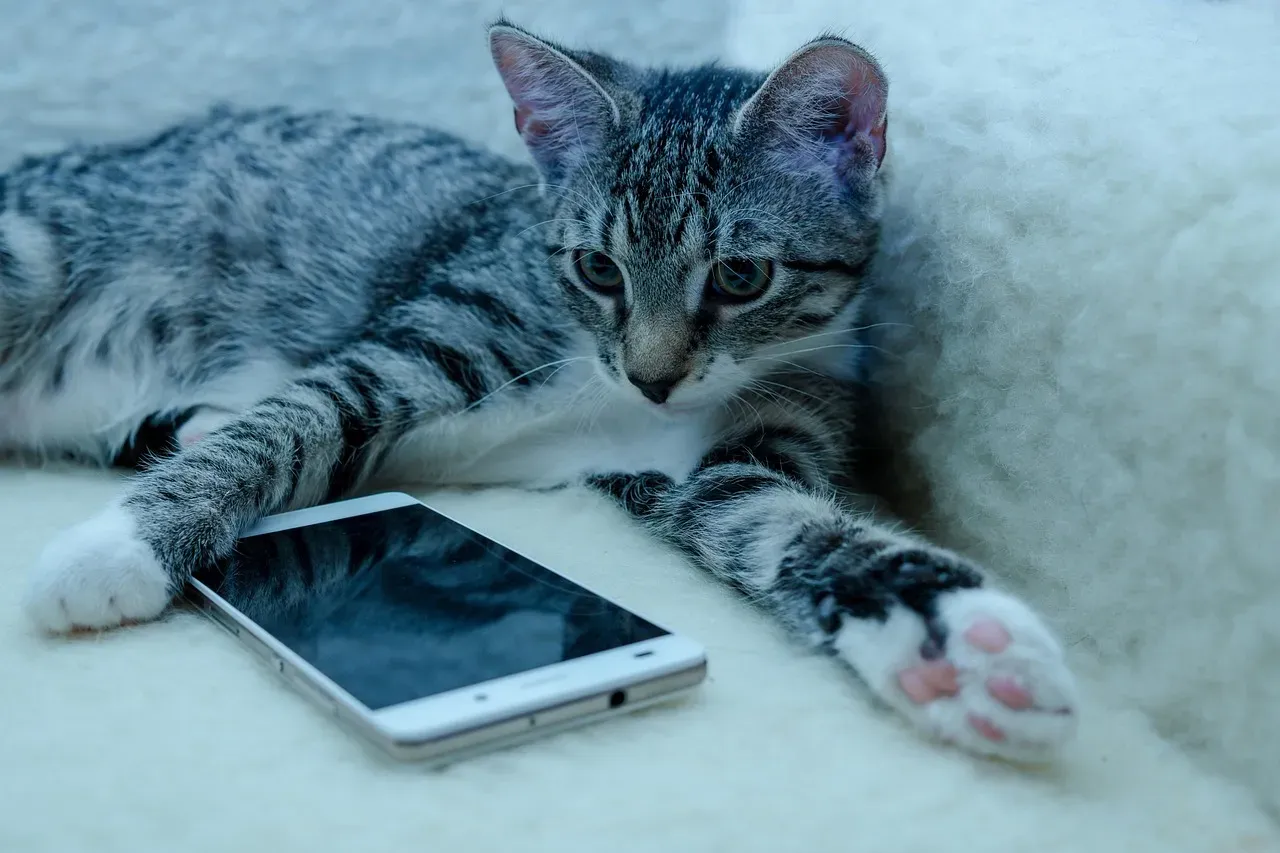
When your cat shoves your phone, TV remote, or game controller off the table, it often has less to do with the object and more to do with you. You stare at these glowing things for long stretches of time instead of looking at your cat, so they naturally become attention targets. Your cat learns that if they knock your phone away or walk across your keyboard, you suddenly stop what you’re doing and react strongly. From their side, that’s a pretty effective communication method.
This behavior can also be about timing and routine. If you consistently pick up your phone instead of responding to your cat’s meows or requests to play, they start pairing “phone out = you’re distracted.” Pushing it out of the way becomes a logical move when you think of it as your cat pressing an invisible “notice me” button. Setting aside short, predictable chunks of device‑free time each day to interact with your cat can reduce how often they feel the need to make their own dramatic interruptions.
5. Plants and Vases: Exploring Smells, Textures, and Territory
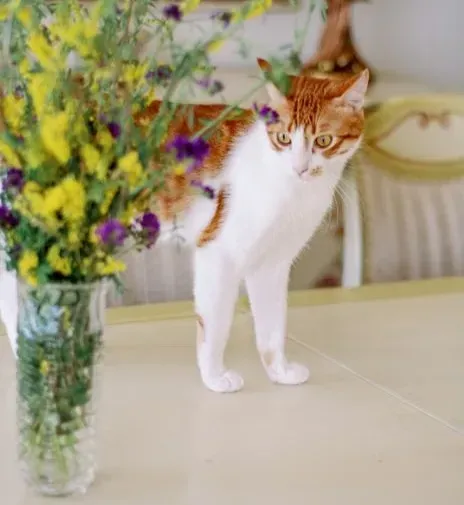
If your cat seems determined to knock over your plants or send a vase flying, you’re watching a mix of curiosity, sensory exploration, and territorial behavior. Plants rustle, move, and smell intriguing, so your cat tests them the same way they’d test something new outdoors: paw, bite, bat, and sometimes push. Vases add another layer of interest with water, reflections, and often flowers, which bring in more scents and textures to investigate.
There’s also a territorial angle you might overlook. Surfaces, especially elevated ones, are prime real estate for cats, and a tall vase or plant can feel like an intruder in their vertical territory. By knocking it down, your cat is clearing space and literally reshaping the environment to suit their comfort. If you want to keep plants safe, prioritize cat‑safe varieties, secure pots with non‑slip mats, and give your cat alternative “high spots” like shelves or trees where they’re free to claim the space without demolishing your décor.
6. Food Containers and Snack Wrappers: Resource Testing and Scavenger Instincts
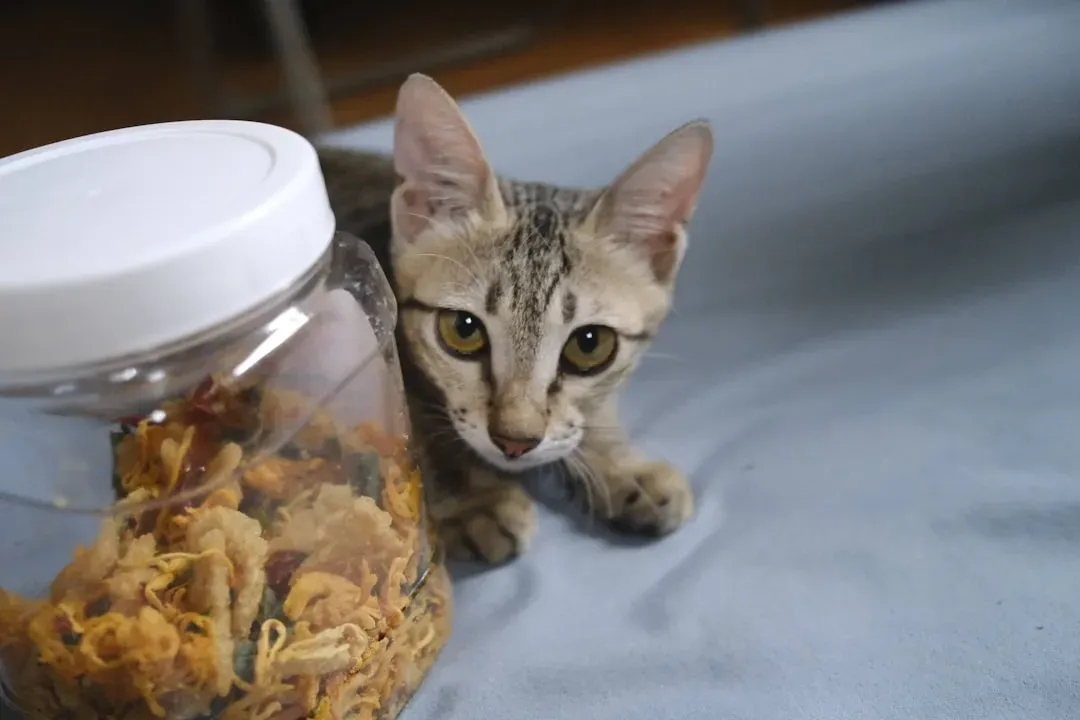
When your cat bats food containers, snack wrappers, or treat bags off the table, they’re not being random – they’re testing for potential resources. In nature, a rustling sound, a crinkly texture, or a particular smell can mean food hidden inside. So swatting a container, chewing on a wrapper, or knocking something to the floor is like opening a mystery box: sometimes nothing is inside, sometimes it’s a jackpot. From that perspective, the effort makes perfect survival sense.
Your cat also quickly learns that certain shapes and materials are linked to food because of your routines. Crinkly bags often mean treats, plastic tubs may mean leftovers, and boxes or containers can hold interesting smells even when empty. If your cat is especially fixated on these, you can channel that intensity into puzzle feeders, foraging toys, or treat balls that let them “work” for their food. You’re not just stopping them from raiding the table; you’re giving them a more satisfying, mentally engaging version of the same behavior.
7. Random Clutter: Boredom, Energy, and Environmental Control
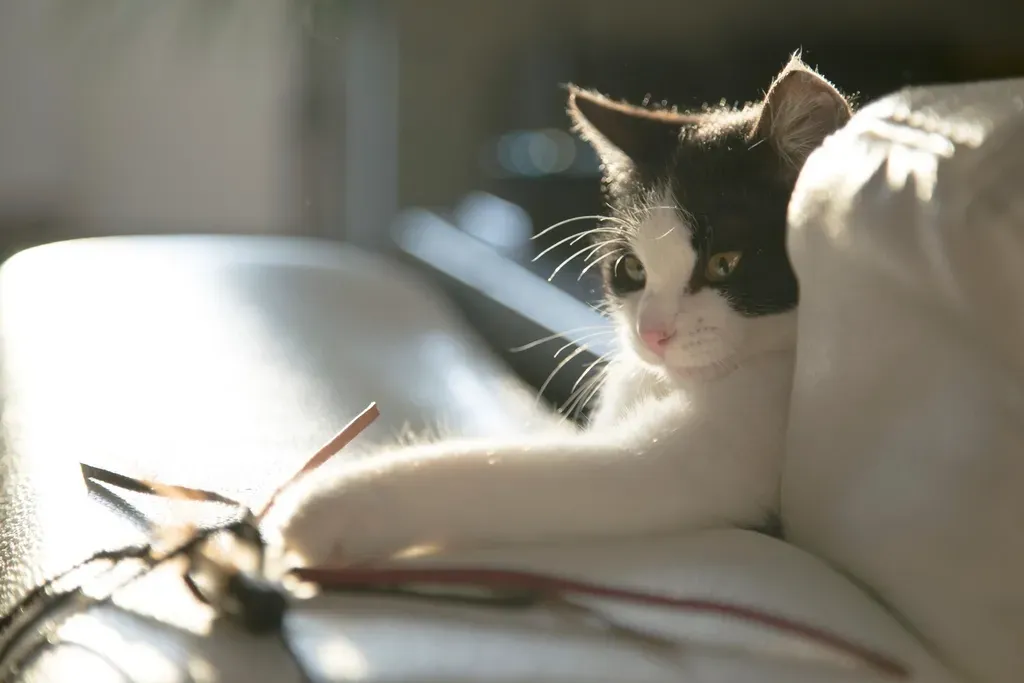
Sometimes your cat knocks things off tables simply because they’re bored and the environment is too still. A quiet room with static objects can feel flat and unstimulating to an animal wired for stalking, pouncing, and exploring. By batting at random items, your cat turns a dull setting into a moving, noisy, unpredictable scene, which is far closer to what their instincts expect. In a way, they’re self‑programming enrichment into their day.
There’s also a subtle sense of control going on. When your cat swats something and it falls, they get immediate proof that their actions shape the world. That feeling can be especially satisfying if the rest of their environment feels limited or overly controlled. Adding climbing spots, scratching posts, window perches, and short play sessions each day gives your cat more healthy ways to control and change their surroundings, so they don’t need to re‑design your shelves with their paws quite as often.
8. Literally Anything Near the Edge: Curiosity and Edge-Testing Instincts
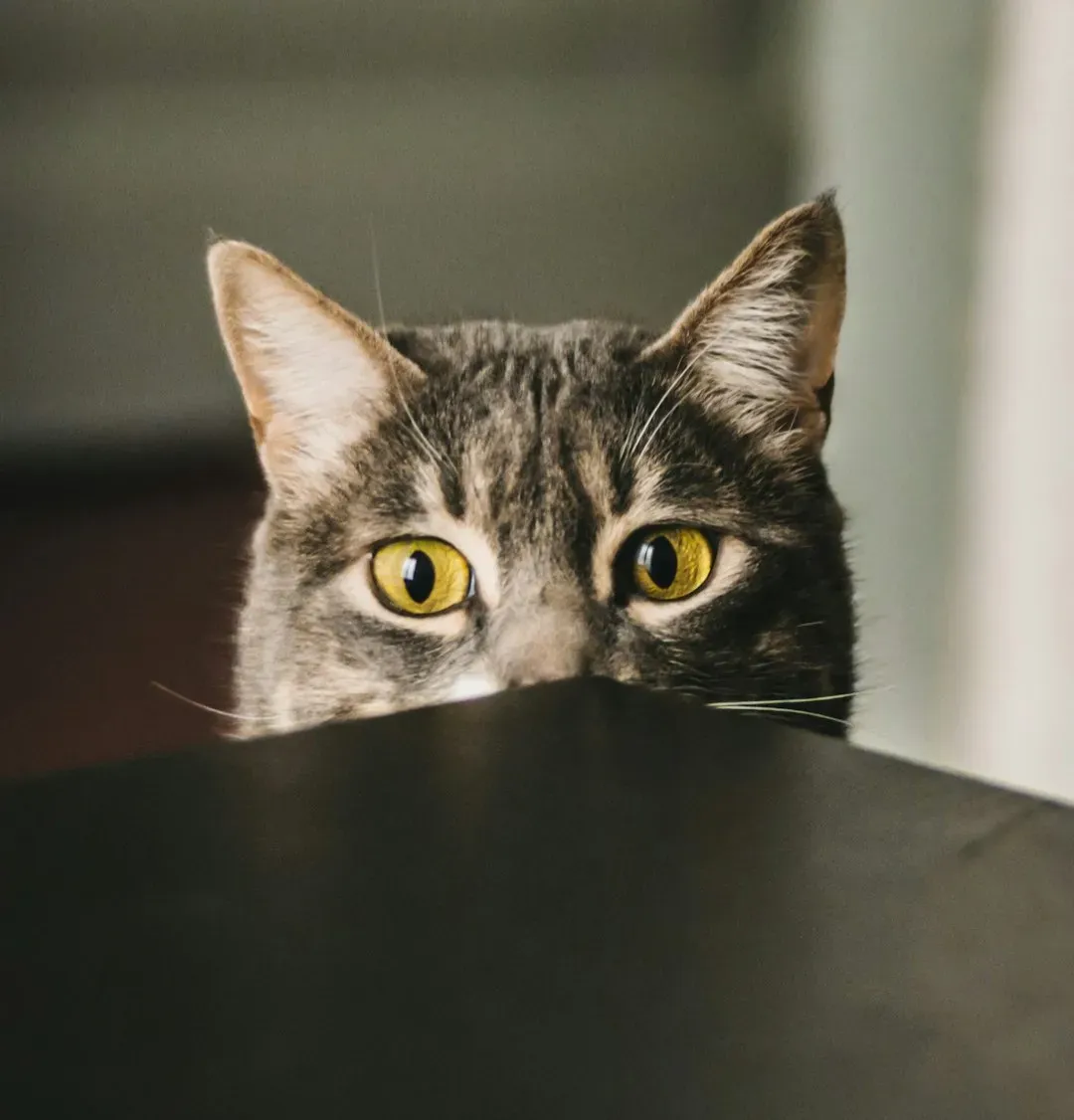
The closer something sits to the edge of a table, the more your cat seems drawn to it – and that’s not an accident. Edges are naturally interesting to cats because they mark the point where safety and risk meet. Tapping something at the edge is like asking a question: Will it move, fall, cling, or stay put? Every swipe brings back an answer, and your cat stores those tiny lessons about gravity and stability in the back of their mind, even if it looks like pure mischief to you.
You may also notice a pattern: your cat casually strolls by, gives a gentle tap, waits a moment, then adds another swat if you don’t react. That pause is important. It suggests your cat is not in a blind frenzy but running a little experiment and sometimes checking whether you’ll intervene. Keeping fragile items away from edges, using museum putty for anything breakable, and offering your cat safe “edge zones” like sturdy window sills or cat shelves lets them indulge that edge‑testing instinct without risking your favorite mug or heirloom bowl.
Once you look at all this behavior through your cat’s eyes, the chaos starts to feel a lot more logical. Your cat is not plotting against you or acting out of spite; they’re hunting imaginary prey, exploring textures and sounds, testing gravity, scavenging for resources, and trying to get your attention in the most effective way they know. Tables and shelves just happen to be the perfect stages for those tiny dramas to play out.
When you meet those instincts halfway – by securing fragile items, offering better toys, building vertical spaces, and giving your cat regular, focused interaction – you turn a source of daily annoyance into a kind of shared language. You still may not love finding your pen on the floor again, but you’ll understand the story behind it. And now that you know there’s logic in every little paw swipe, what will you do differently the next time you watch a whiskered face eyeing the edge of your favorite glass?
Kristina is a young writer from India. An arts graduate and an avid content creator, Kristina is passionate about animals and wildlife. She enjoys exploring topics related to pet care, animal behavior, conservation, and nature, combining thorough research with engaging storytelling.