13 Things a Dying Cat does to Comfort you Before it Goes
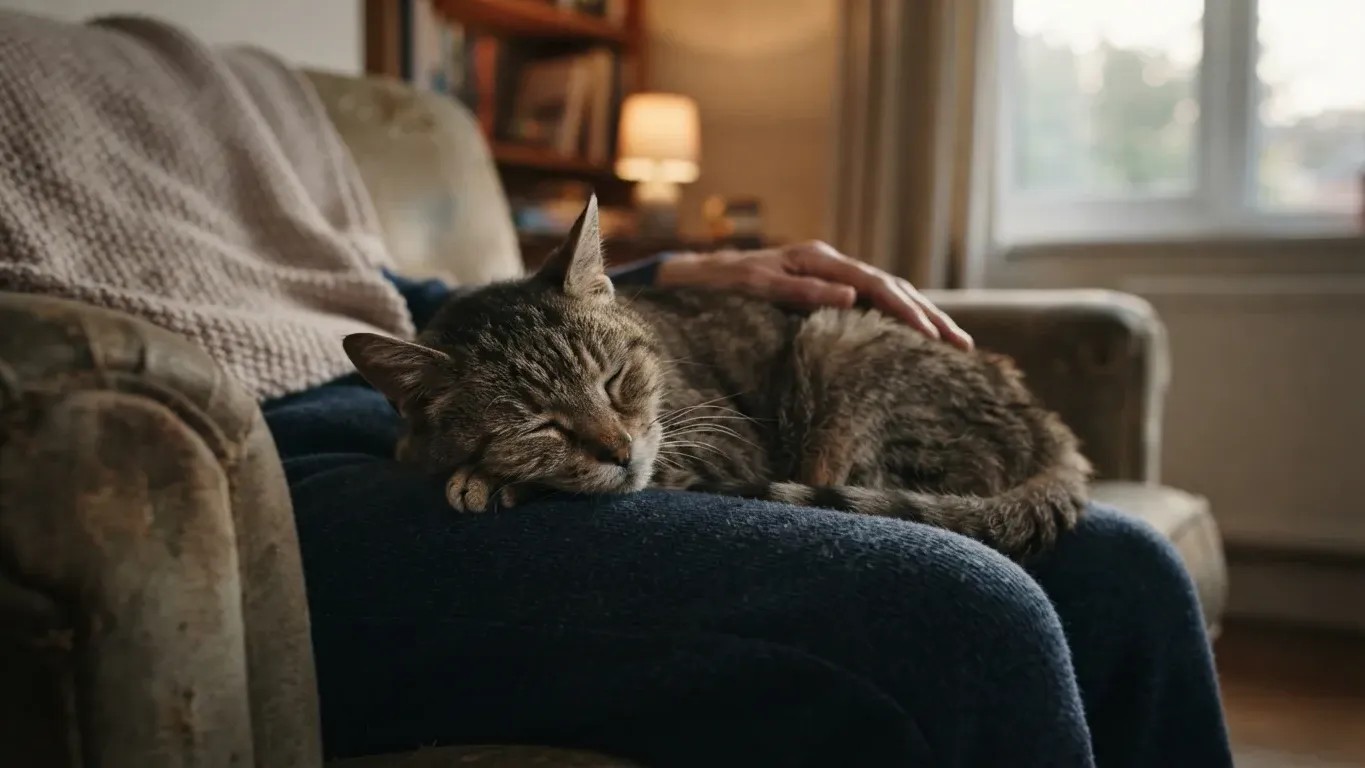
Most people assume a dying cat quietly disappears to suffer alone. Veterinary hospice specialists and longtime cat owners report something almost the opposite - many cats spend their final days moving closer to the people they love, not further away.
The signals are subtle, and almost every owner misses at least one of them. Once you know what to watch for, you'll never look at your cat's last days the same way again.
#13 - Becoming Unusually Clingy Out of Nowhere
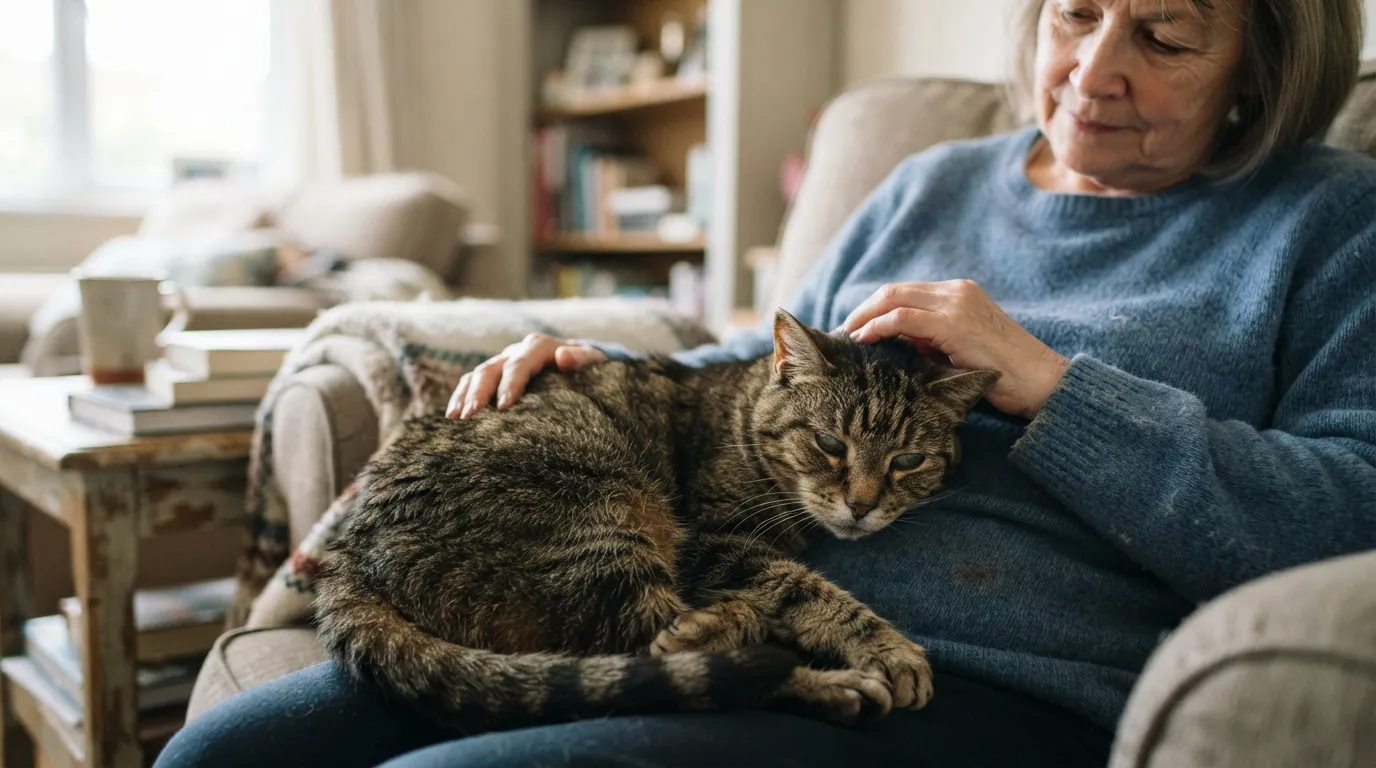
When a cat senses its life is nearing its end, it may suddenly refuse to leave your side. It follows you room to room, presses into your lap, and purrs even when it isn't sleepy.
Cats are naturally cautious animals, and they only cling and purr when they feel completely safe. This shift toward constant contact is often their way of asking for comfort - and quietly offering it back.
Don't mistake this for simple neediness. It's usually one of the very first signs that something has changed, and what happens next makes the pattern impossible to ignore.
#12 - Following You From Room to Room
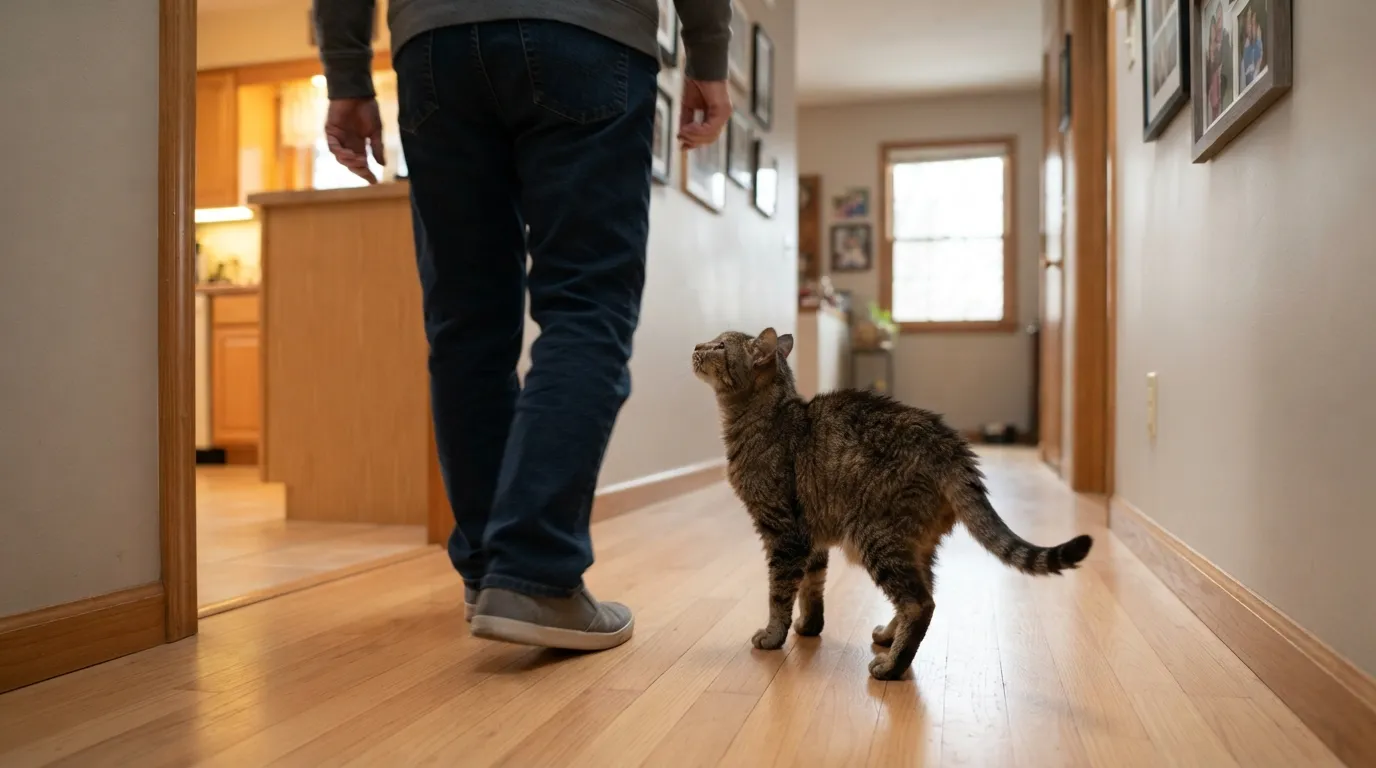
A dying cat may start shadowing its favorite person everywhere - into the kitchen, the bathroom, even just across the hallway. A cat that once ignored you completely may now appear the second you stand up.
This isn't random wandering. It reflects a survival instinct paired with a genuine emotional pull toward the person who makes them feel secure.
This is not coincidence. It's a deliberate choice about who they want near - and the next thing they do with their voice is even harder to prepare for.
#11 - Changing the Way They Vocalize
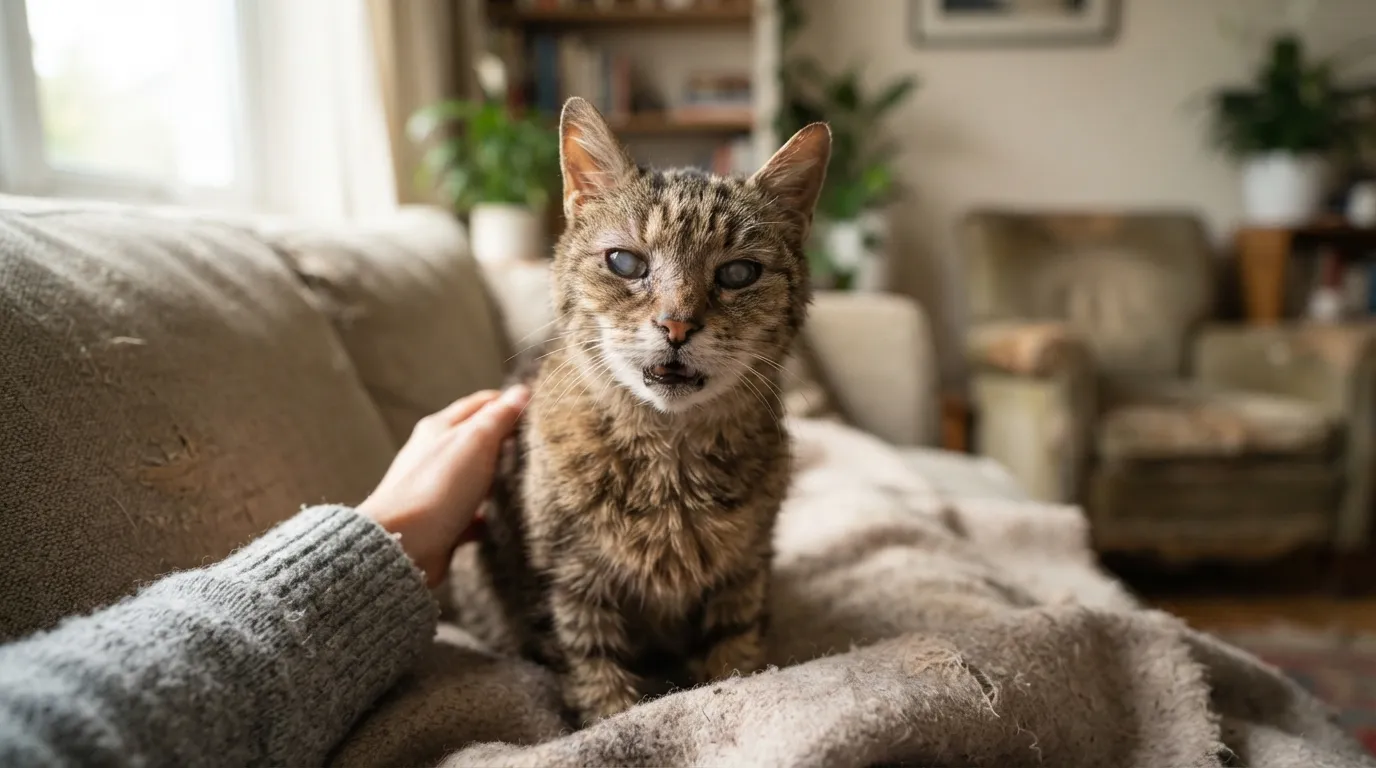
As cats near the end, their voices often change. Some go almost silent, while others cry more than they ever have before.
Increased meowing can sometimes signal discomfort. But many owners describe something different - softer, slower calls that sound less like distress and more like conversation.
The pitch and rhythm matter more than the volume. A mournful yowl usually means pain; a soft, repeated call aimed directly at you is something else entirely.
#10 - Purring When There's No Obvious Reason
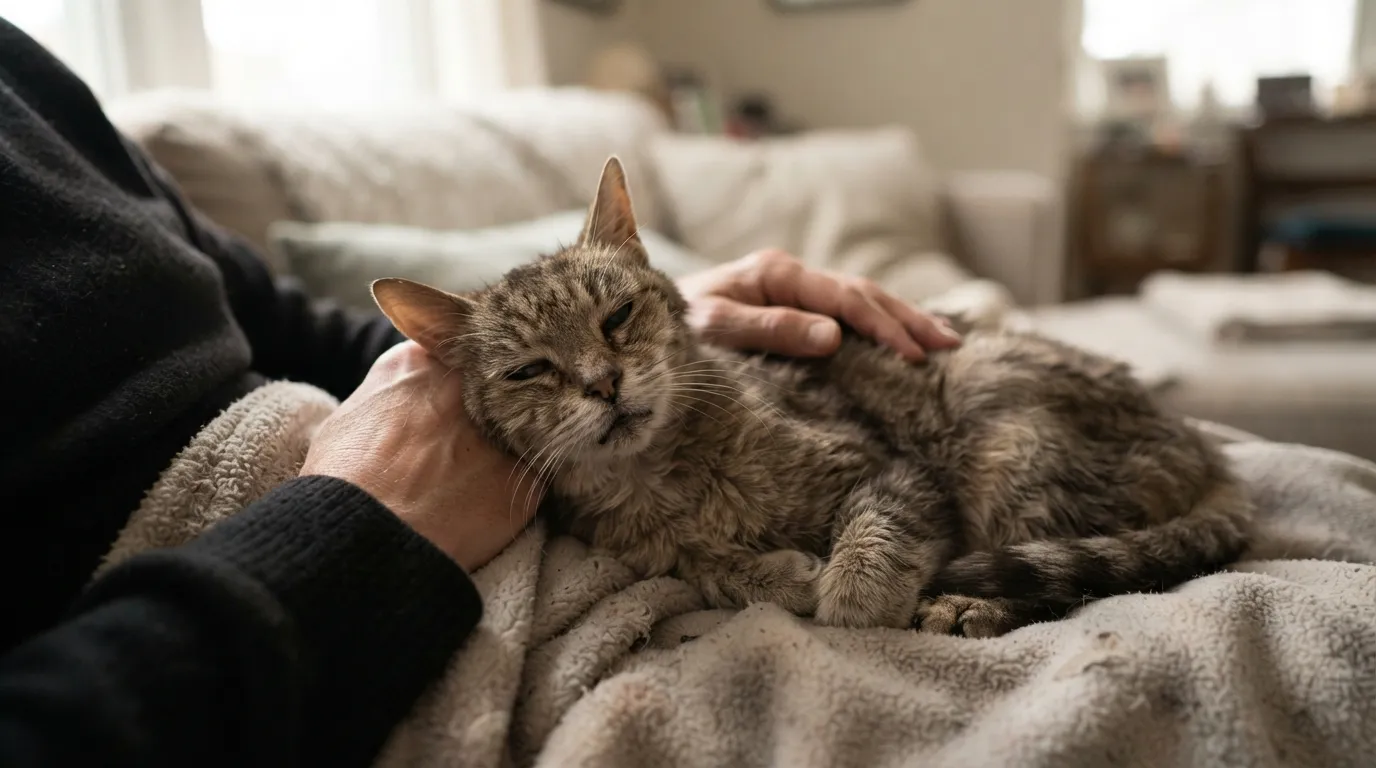
Most people think purring only means a cat is happy. That's only half true.
Cats also purr to self-soothe and manage pain, even while seriously ill. A purr's vibrations fall between 25 and 150 Hz, a range linked to pain relief and tissue healing in animal studies.
Fast Facts
- Purring vibrates at roughly 25–150 Hz, a range linked to pain relief and tissue repair.
- Sick or dying cats often purr more, not less, as a self-soothing response.
- Hospice-focused vets track shifts in purr pitch and rhythm as a subtle health signal.
A dying cat purring against your hand may actually be comforting itself, using you as the anchor. Hospice-focused vets watch closely for changes in a cat's purr pitch and rhythm in the final days.
#9 - Grooming You With Their Tongue
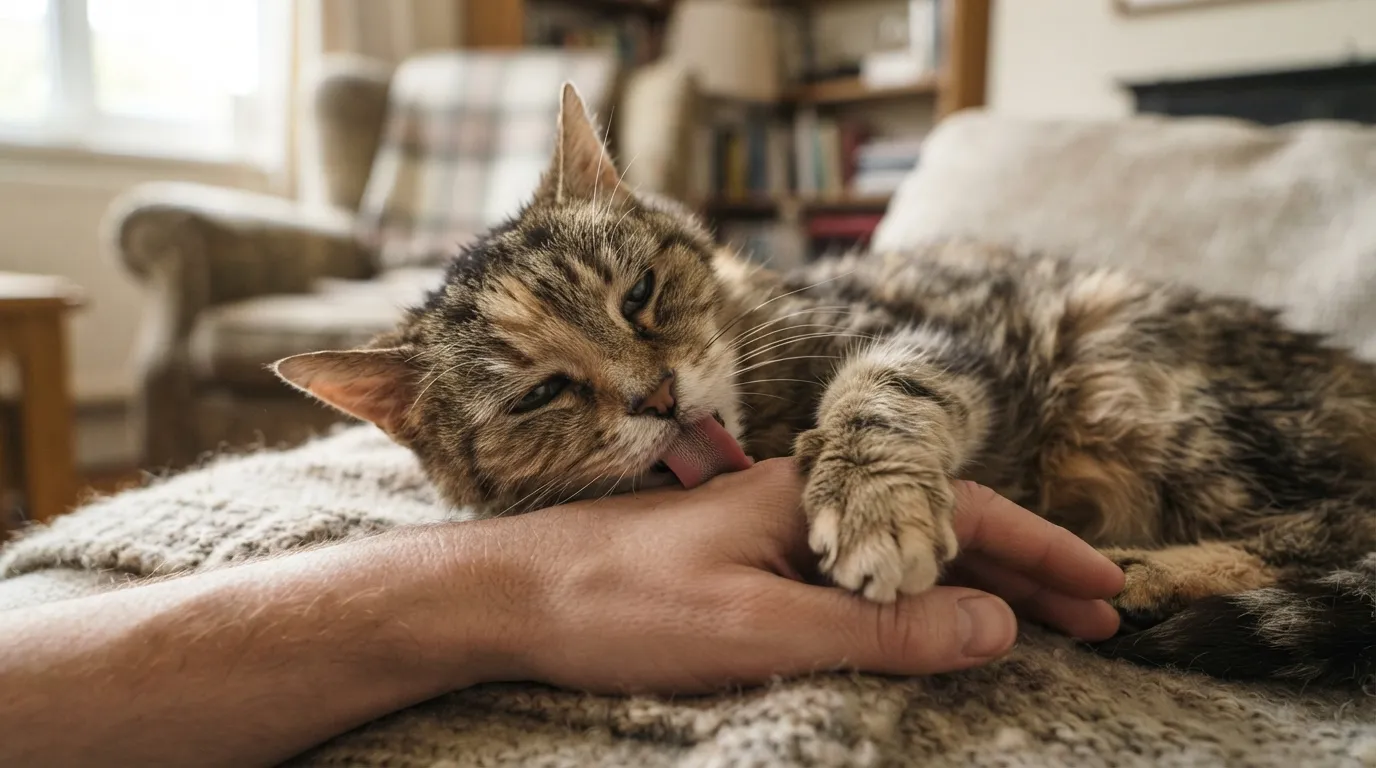
Grooming is one of the most trusted bonds in a cat's world, normally reserved only for other cats they fully accept. When a dying cat starts licking your hand or face more than usual, it's folding you into that inner circle.
It's the feline equivalent of saying, "you are mine, and I am yours." Few gestures a cat makes are more deliberate, or more tender.
#8 - Holding Eye Contact Longer Than Usual
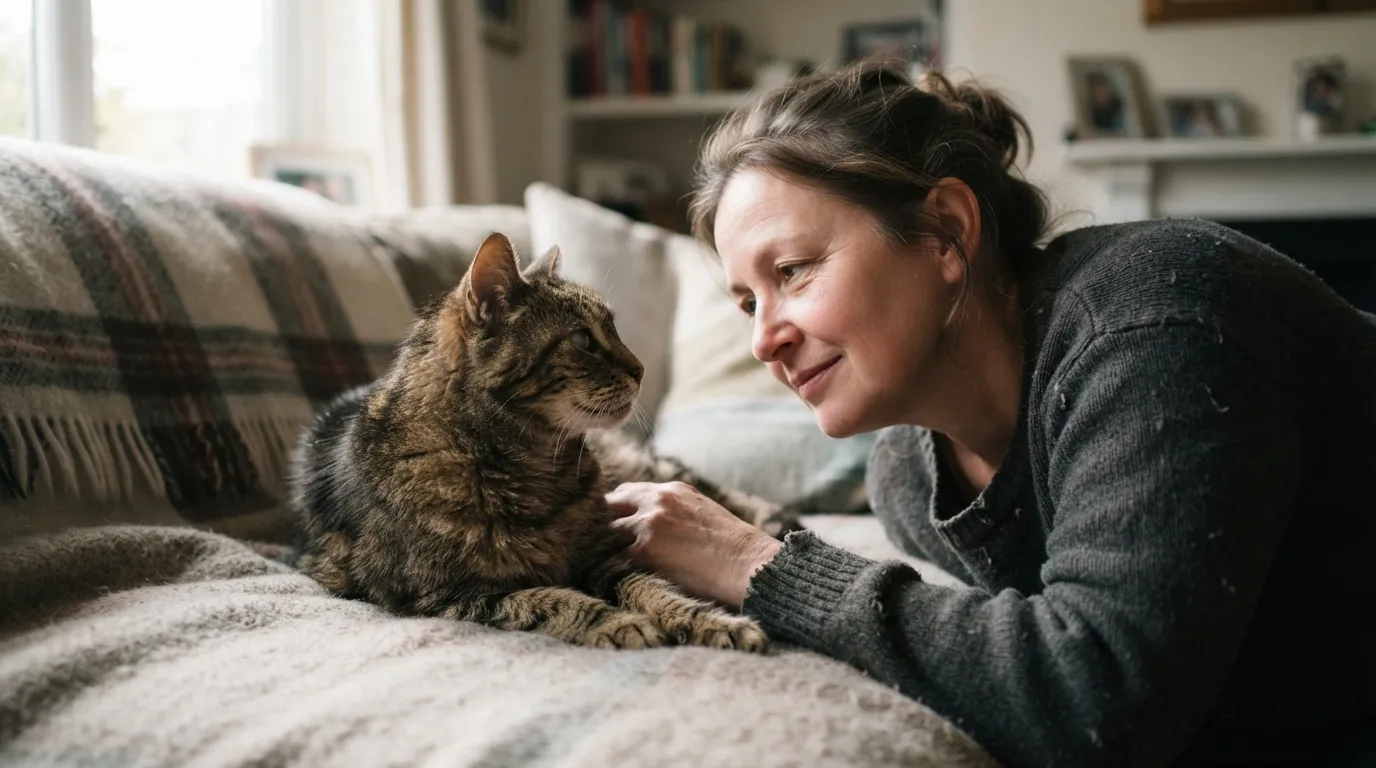
Cats normally avoid long eye contact; to them, a hard stare reads as a challenge. So it can feel startling when a dying cat locks eyes with you and simply refuses to look away.
In the final weeks, that lifelong pattern often flips completely. A cat who spent years glancing away will suddenly hold your gaze for long, unbroken stretches.
This isn't aggression - it's intimacy. Sit with it, and let them look.
#7 - Seeking Out Your Warmth Specifically
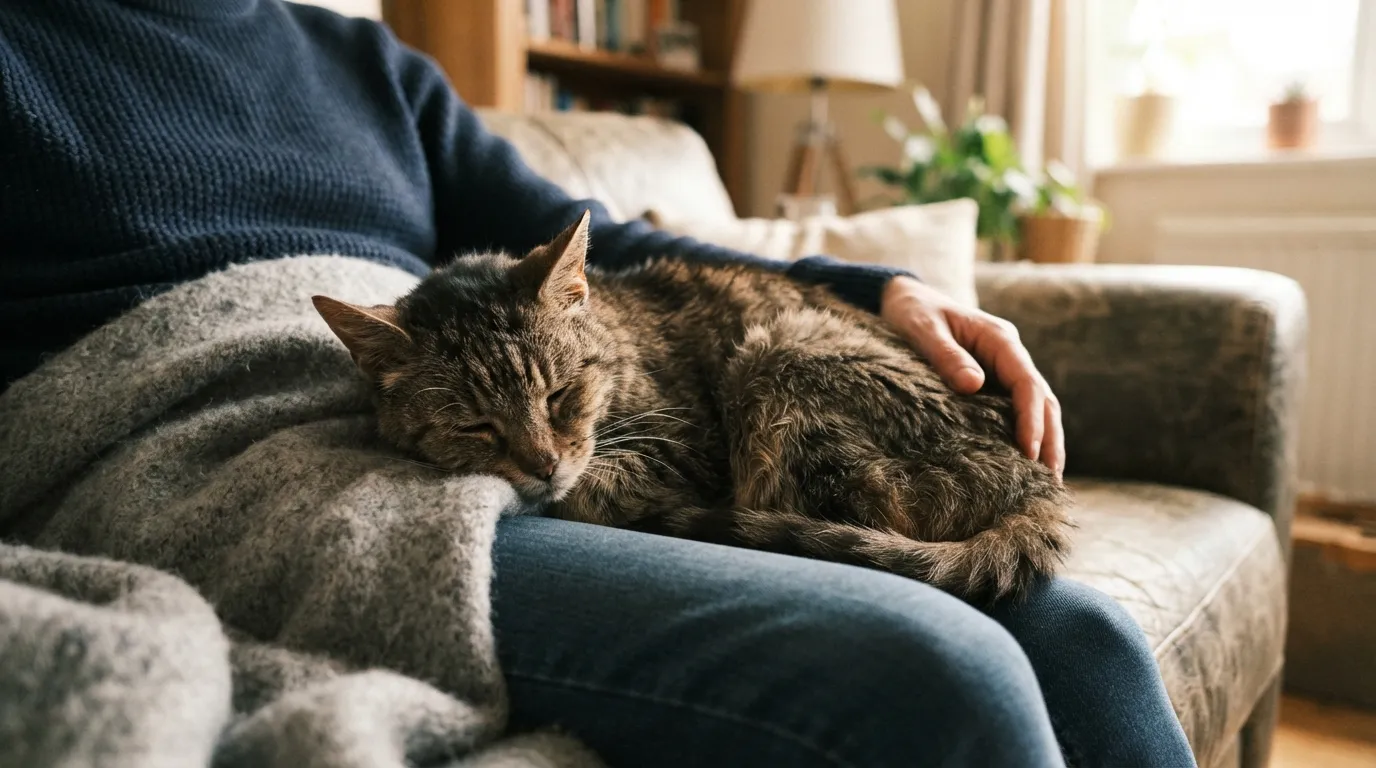
As a cat's body slows down, it often struggles to stay warm. A healthy cat's temperature sits between 100.5°F and 102.5°F, and illness can knock that lower, so seeking out warm spots is natural.
At a Glance
- Normal feline body temperature: 100.5°F–102.5°F.
- Illness can push that number lower, making warmth harder to hold onto.
- A dying cat seeking your body heat over a sunny windowsill is choosing connection, not just comfort.
But there's a difference between choosing a sunny windowsill and choosing you. When a dying cat picks your body heat over every other warm spot in the house, that's not convenience - it's trust.
#6 - Kneading You Like They Did as a Kitten
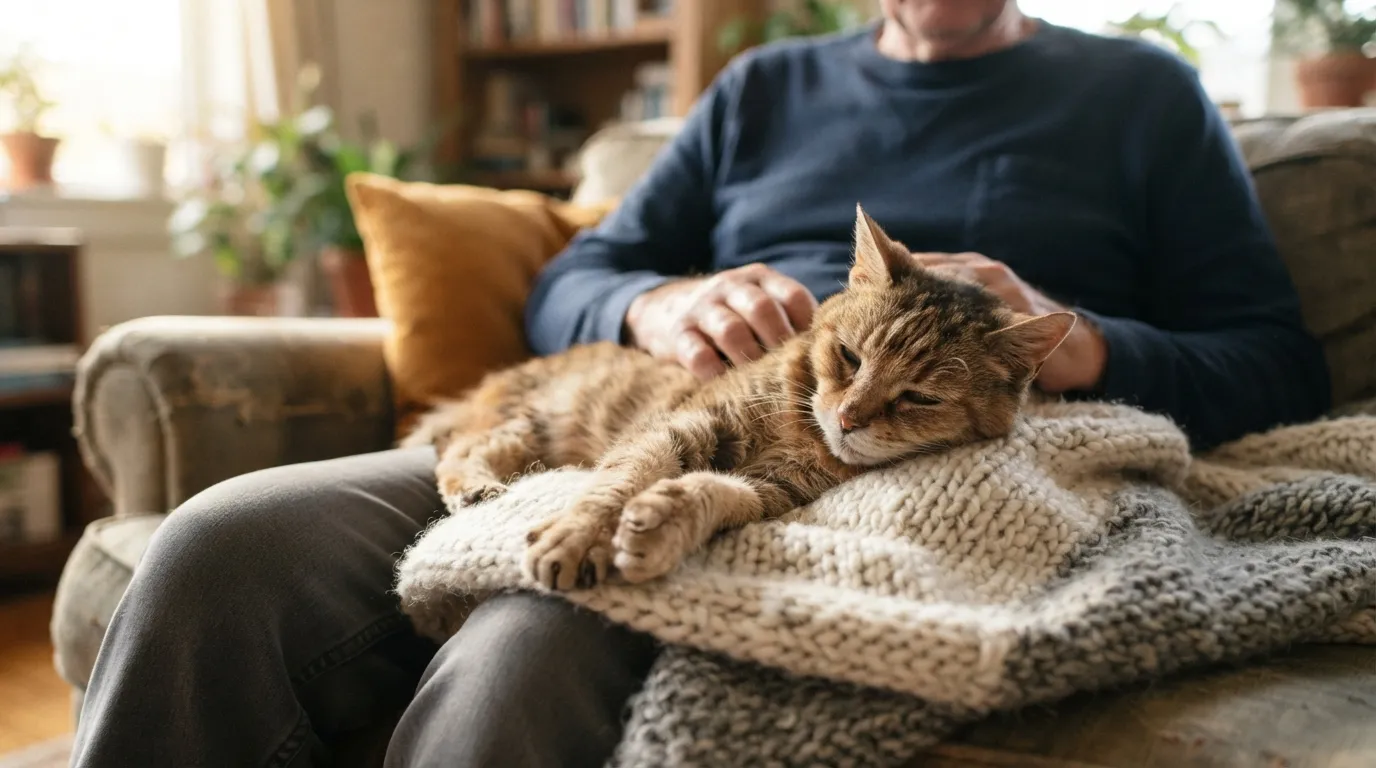
Kneading - that slow, rhythmic push of paws into soft fabric or skin - starts in nursing kittens seeking comfort from their mother. It's one of the earliest, purest expressions of safety a cat ever learns.
When an adult cat starts kneading again at the end of its life, it's returning to that exact feeling on purpose. They're telling you, in the only language they have, that you make them feel as safe as they've ever felt.
#5 - Choosing to Sleep Directly on You
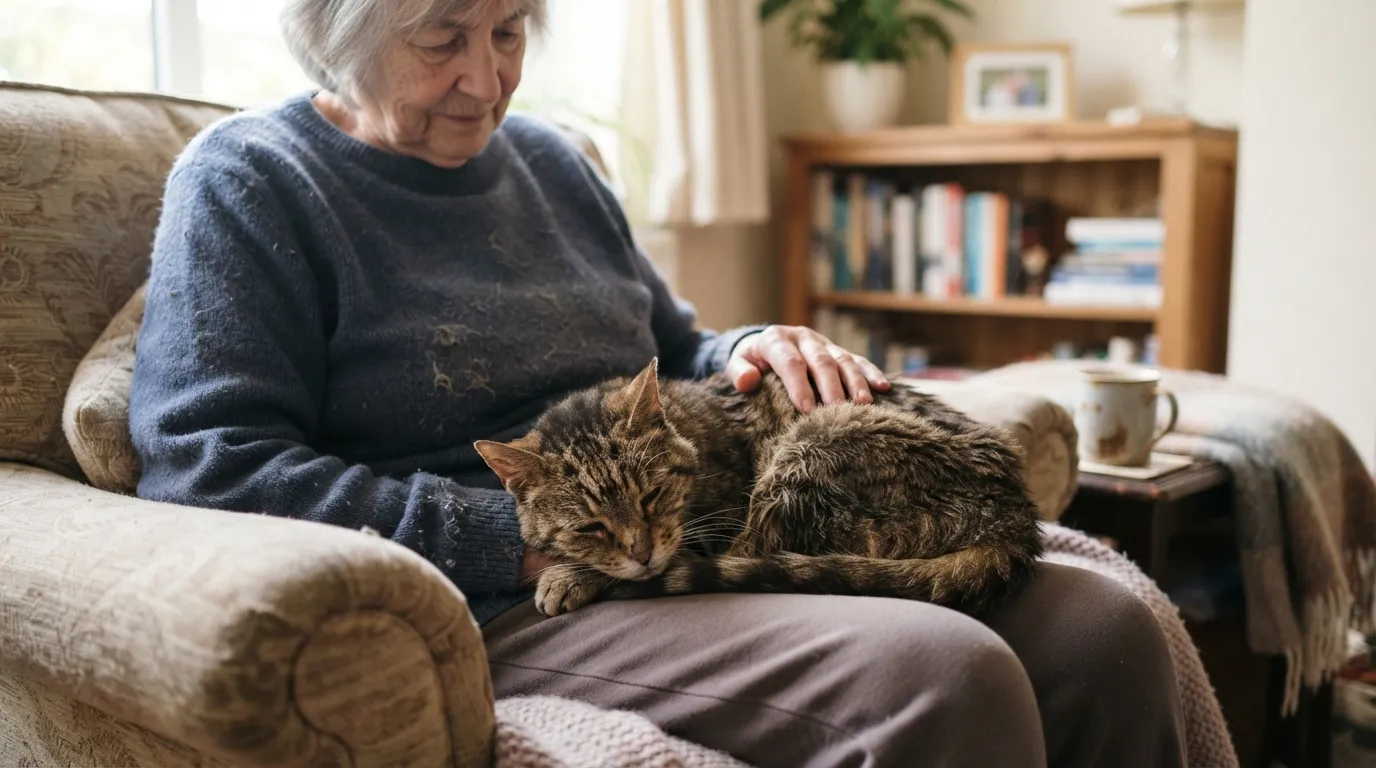
Cats who once preferred solitude may suddenly start climbing into laps or curling against your side. Owners consistently describe this shift as their cat "choosing" a person, not just chasing warmth.
If this is happening now, don't move, and don't rush them off. These may be some of the last times it happens.
#4 - Becoming Peaceful and Unusually Still
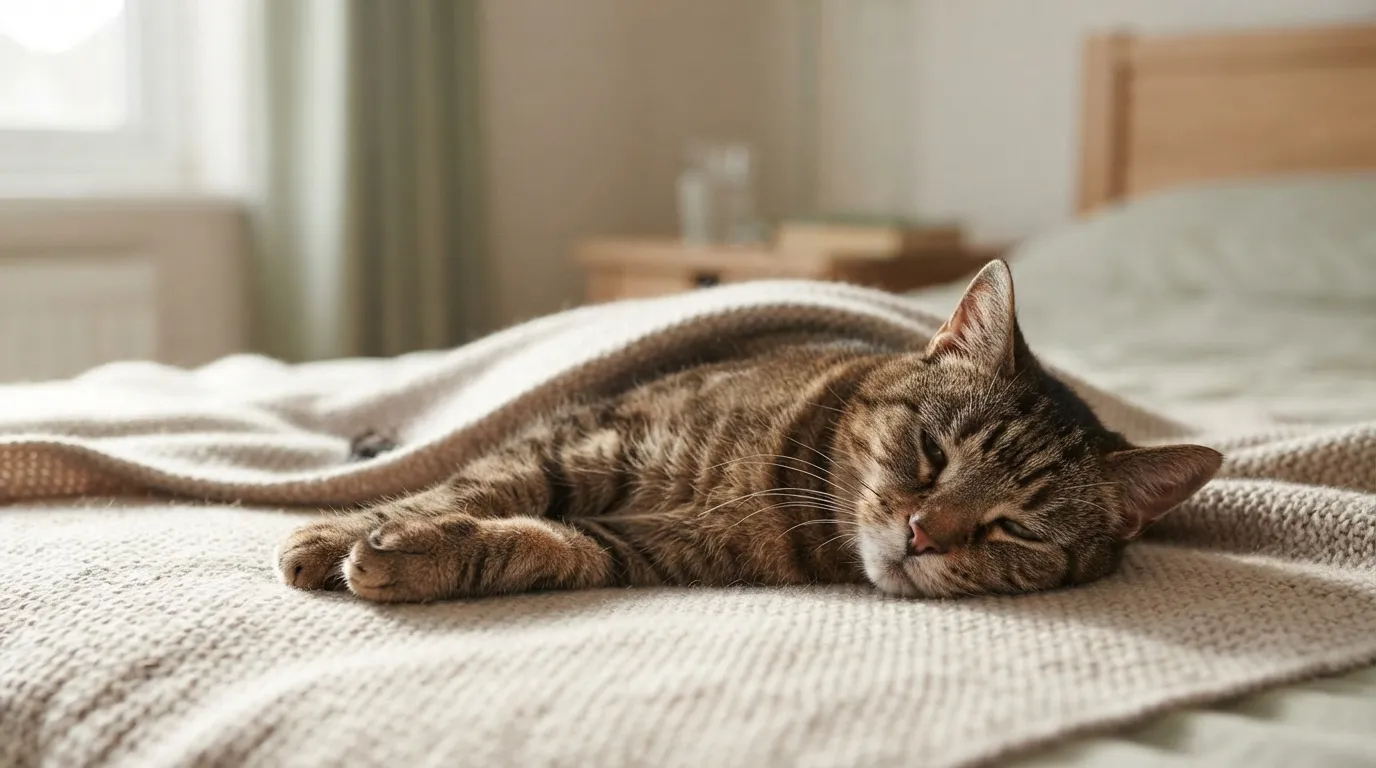
Some dying cats grow noticeably calm, almost as if they've accepted what's coming. This stillness is different from ordinary lethargy - it feels intentional, not weak.
In the final hours or days, cats often experience a drop in body temperature, irregular breathing, and lower blood pressure. They may become very still and less responsive to sounds or touch around them.
Worth Knowing
- Body temperature typically drops in the final hours or days.
- Breathing often becomes irregular - sometimes slow, sometimes shallow.
- Blood pressure lowers, and cats grow less responsive to sound or touch.
- The resulting stillness is physiological, not emotional withdrawal.
That deep, resting calm you sense from them is real. Many owners later describe this stage as a strange, bittersweet peace.
#3 - Slow Blinking at You, Repeatedly
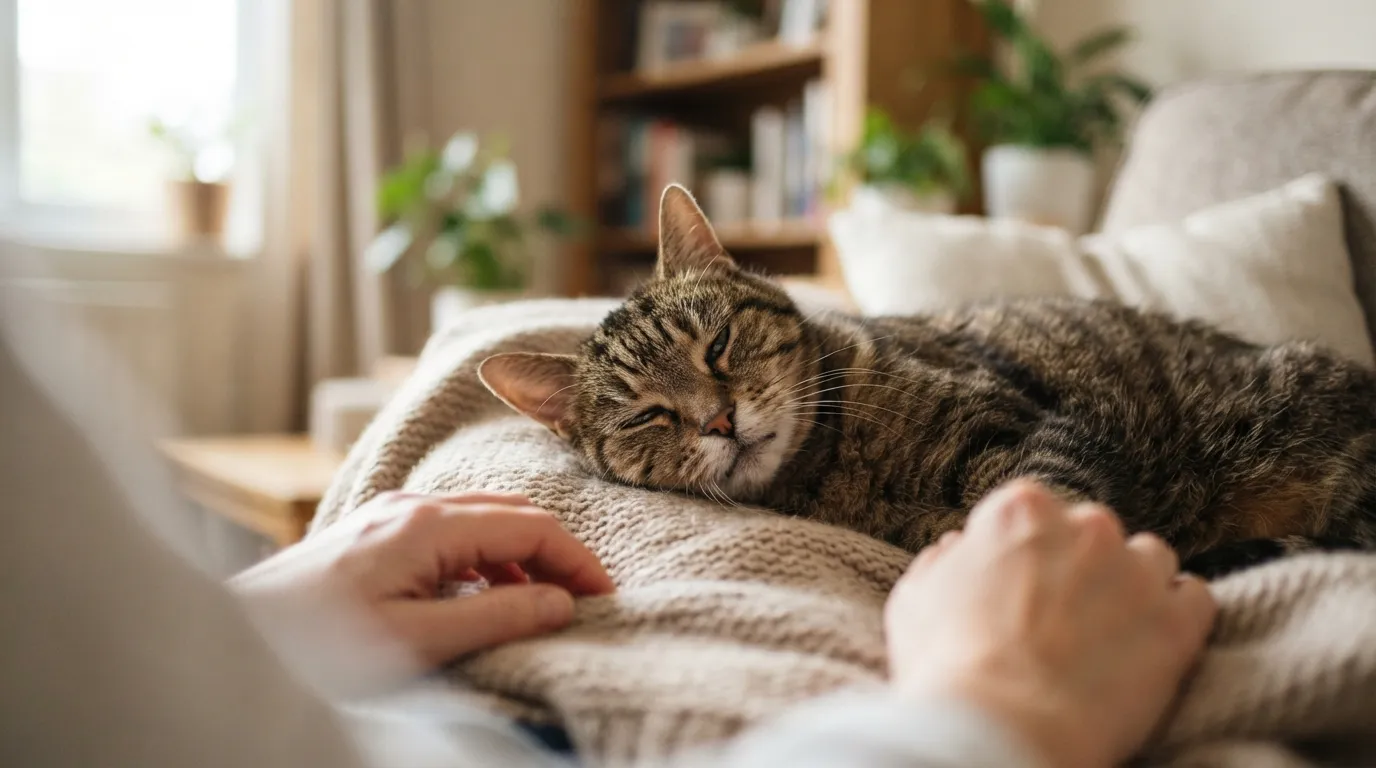
A cat's slow blink is a well-documented signal of trust and affection, practically a feline "I love you." In a cat's final days, that slow blink often becomes their main form of conversation.
Cats normally avoid long stares, offering a slow blink instead as a peace signal. When a dying cat reverses that habit and blinks slowly at you again and again, it's one of the clearest expressions of love a cat can give.
Slow-blink back. It costs nothing, and to them, it means everything.
#2 - Returning to Find You One Last Time
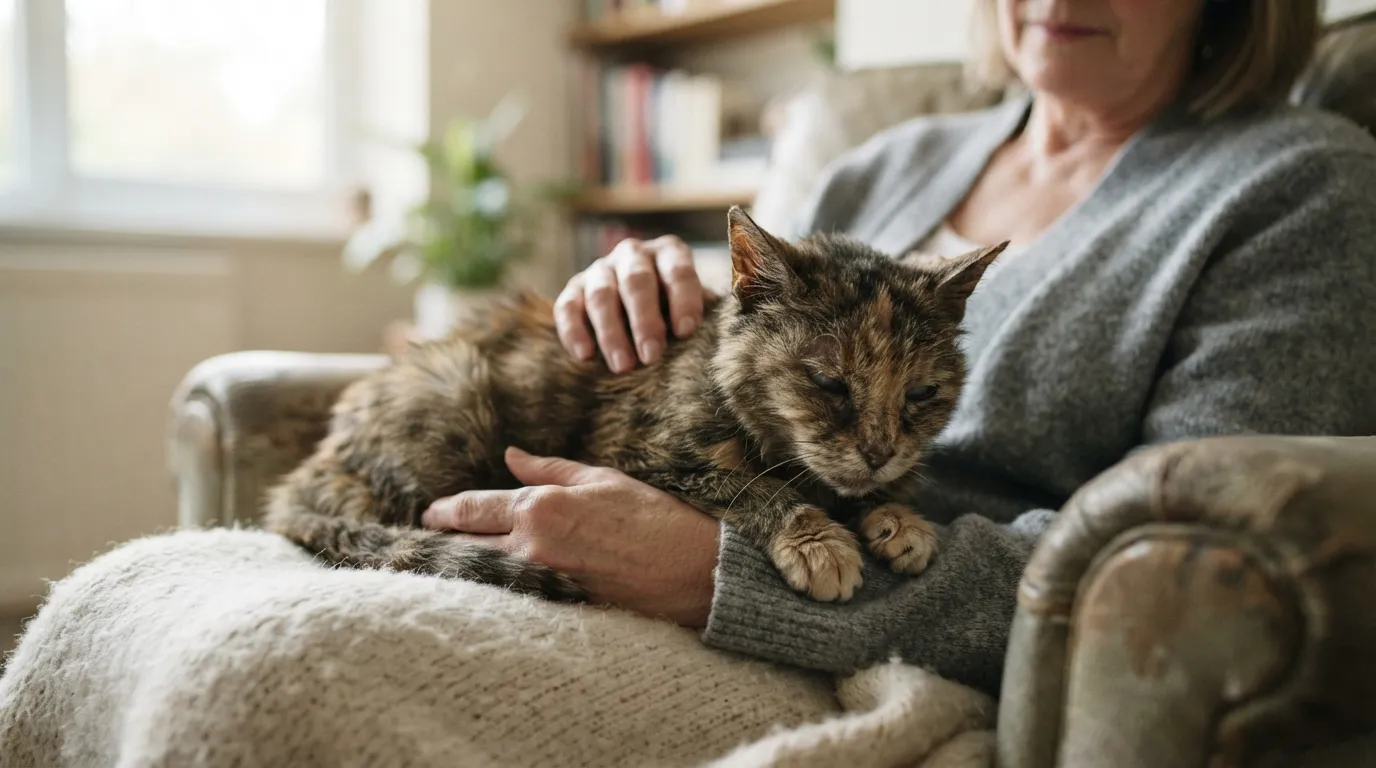
Instinct tells a sick or dying animal to hide - a leftover survival rule from a cat's wild ancestors, who hid from predators the moment they showed weakness. It's one of the oldest rules in nature.
And yet, remarkably often, cats break it entirely. Many owners describe the same moment: a cat that spent its whole life avoiding vulnerability finally choosing to be held, touched, or pressed against the person it trusts most.
Quick Compare
- Wild instinct: hide all signs of weakness from predators.
- Dying cat behavior: seeks out the one person it trusts most.
- What it means: the drive to bond outweighs a survival rule built over thousands of years.
This is not random. When your cat comes back to you after a period of hiding, it may be the most significant thing it ever does.
#1 - Choosing to Die in Your Presence
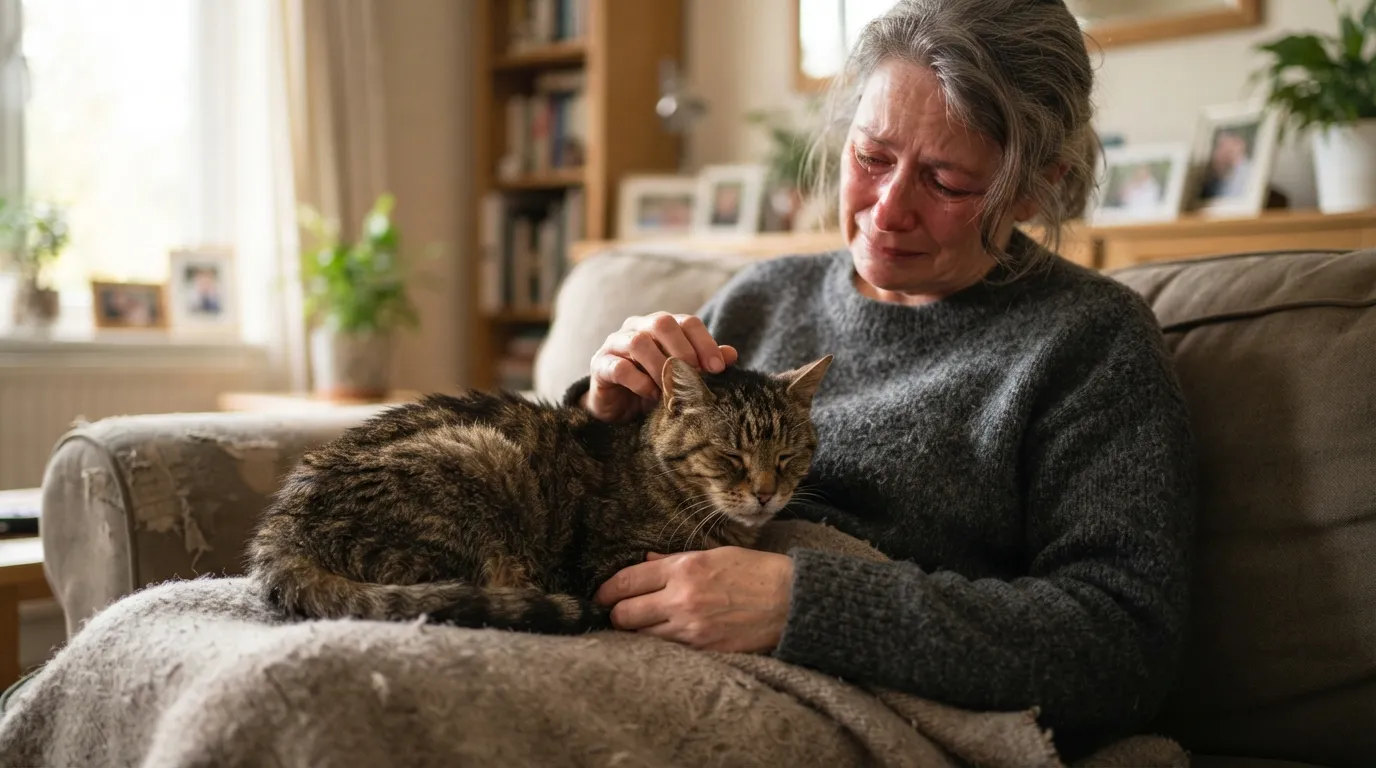
This is the one that stays with people forever. Some dying cats seek out isolated, hidden spots at the very end, driven by instinct alone.
But the cats that don't hide - the ones that find their person and simply stay - are going against every primal survival instinct they have. Many owners say this final closeness reflects years of trust, and they cherish it despite the heartbreak.
A cat that chooses to be with you at the end is telling you something no meow ever could. It's the rarest, most honest gift a cat has to give.
The Bottom Line
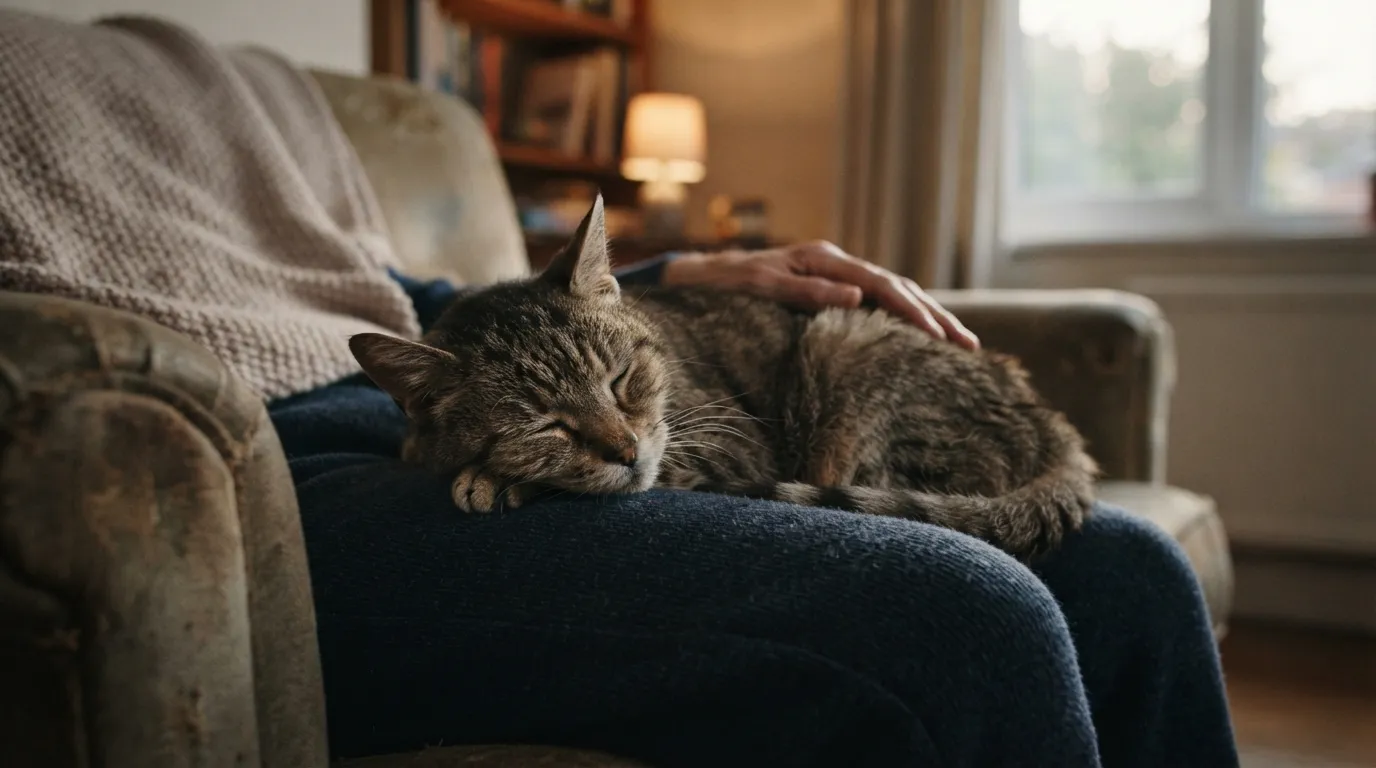
Most people miss these signs because they're waiting for something dramatic. The way a dying cat says goodbye is usually quiet, physical, and deeply intentional - from following you room to room, to slow blinking, to choosing your lap over every hiding spot in the house.
If your cat is showing several of these behaviors, don't pull away. Lean in, stay present, and let them stay close - they're choosing you, right up to the end.