15 Clinical Signs Vets Watch in a Cat that Hides its Pain
You would know if your cat was hurting. That's what most owners believe - right up until a vet points out five things wrong with a cat that never once yelped, limped, or stopped eating.
Cats are built to hide pain; it's a survival instinct passed down from wild ancestors who couldn't afford to look weak. By the time the signs look "obvious," a cat may have been suffering for weeks. Here's what trained vets actually look for - starting with the sign owners mistake for a mood.
#15 - Hiding More Than Usual
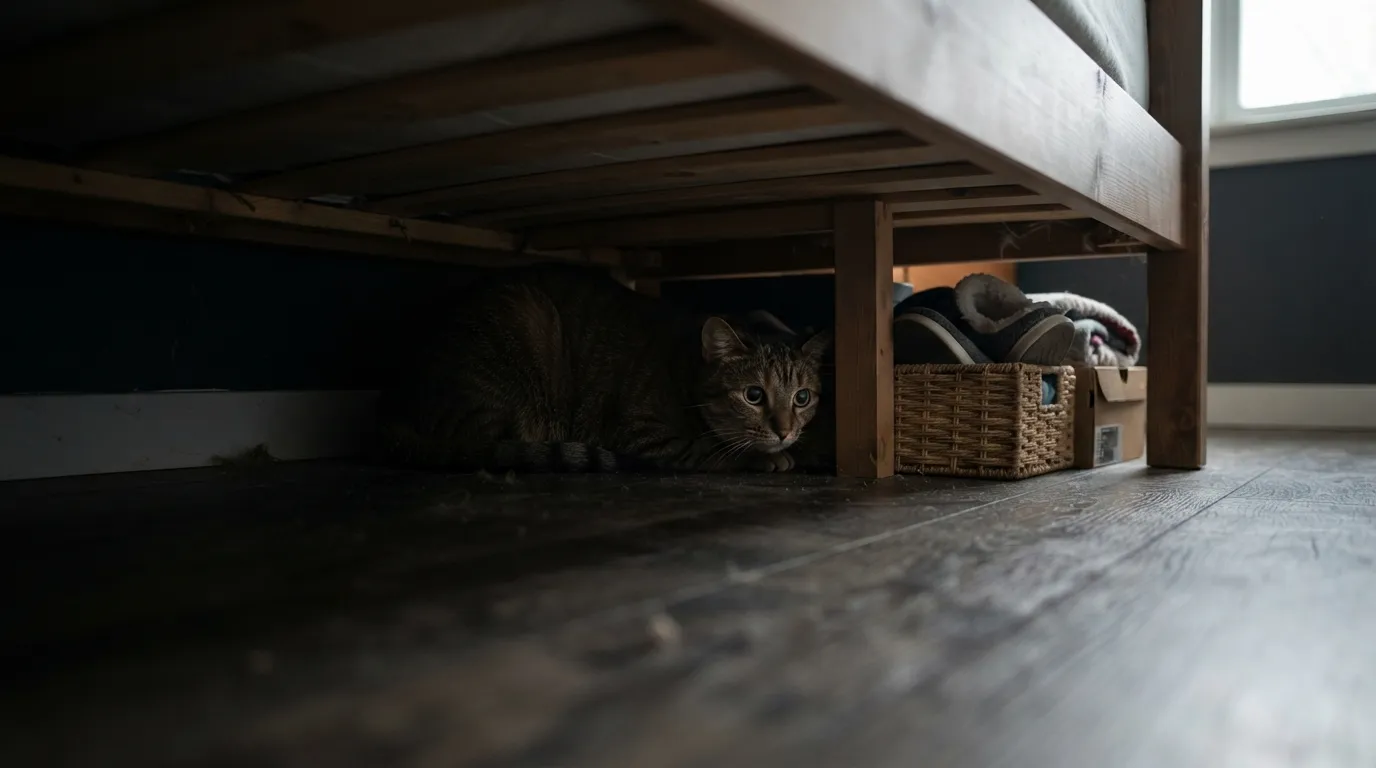
In the wild, a cat that shows weakness becomes a target. Domestic cats never lost that instinct.
When your social butterfly vanishes under the bed, it isn't attitude - it's self-preservation. The hiding itself is the warning sign, not just a symptom of something else.
But #14 is the one owners almost always mistake for a bad mood.
#14 - A Shift in Social Behaviour
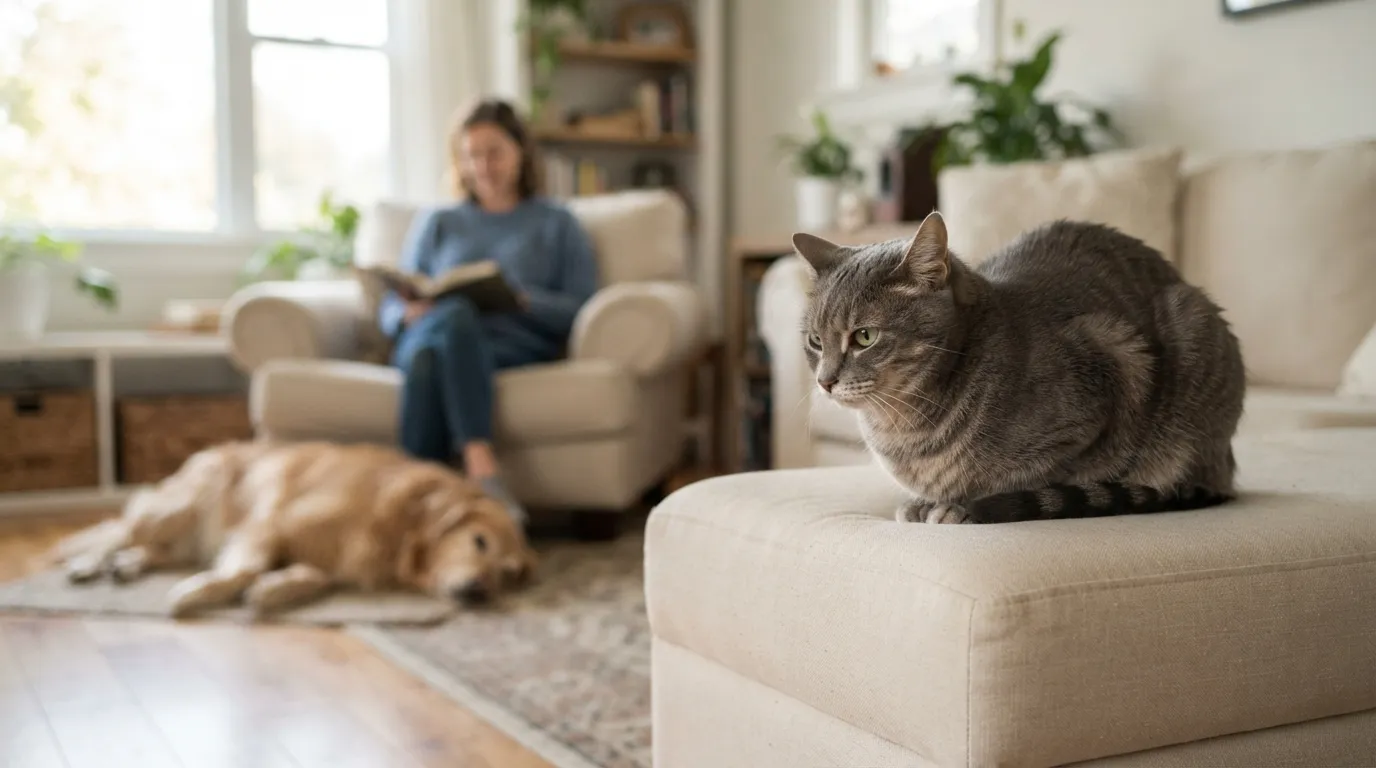
Pain quietly rewires a cat's personality before any physical symptom shows up. A cat that suddenly avoids your lap isn't being cold.
Vets watch closely for withdrawal from family members or other pets - it's one of the earliest flags in a clinical exam. Social withdrawal is often the very first thing a trained vet notices.
Sign #13 flips that script completely.
#13 - Out-of-Character Aggression
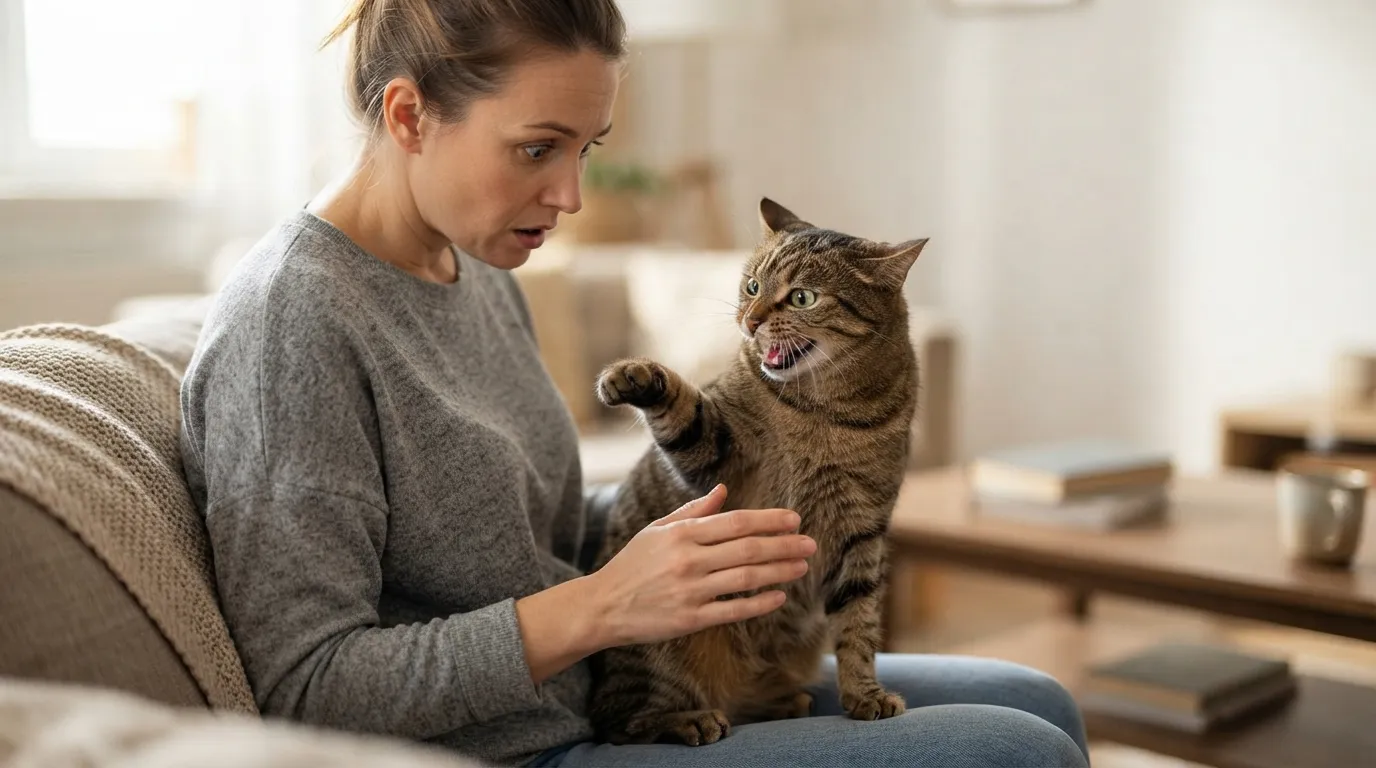
A normally sweet cat that suddenly hisses or swats isn't turning mean. It's begging you to back off.
If the aggression flares up only when you touch one specific spot, that's not random - that's information. Sudden aggression tied to a body region is a textbook clinical red flag.
Don't punish it. Investigate it, then keep reading - #12 is even trickier to catch.
#12 - Changes in Vocalization
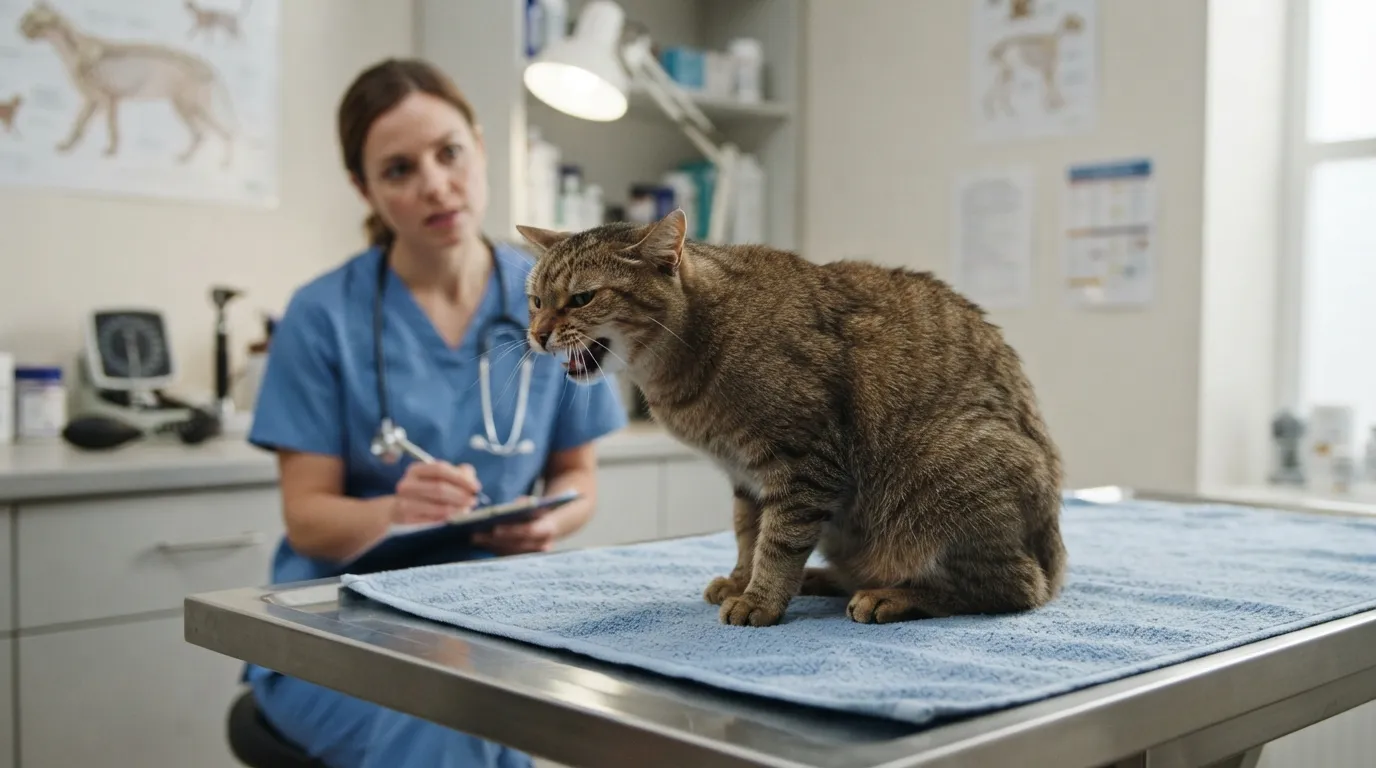
Cats are so good at masking pain that even their voice can lie to you. Some go eerily silent; others won't stop growling.
The Glasgow Feline Composite Measure Pain Scale, the standard clinical tool for cats, devotes an entire category just to vocal changes. Unusual moaning, hissing, or growling at rest all score points on formal pain scales.
Fast Facts
- The Glasgow Feline Composite Measure Pain Scale was developed at the University of Glasgow and is used in clinics worldwide.
- It scores several categories together, including vocalization, posture, and how a cat reacts to being handled.
- Vets rely on it because it turns subtle, easy-to-miss behavior into a measurable, repeatable score.
Sign #11 hides in plain sight - in how your cat sits.
#11 - Hunched or Abnormal Posture
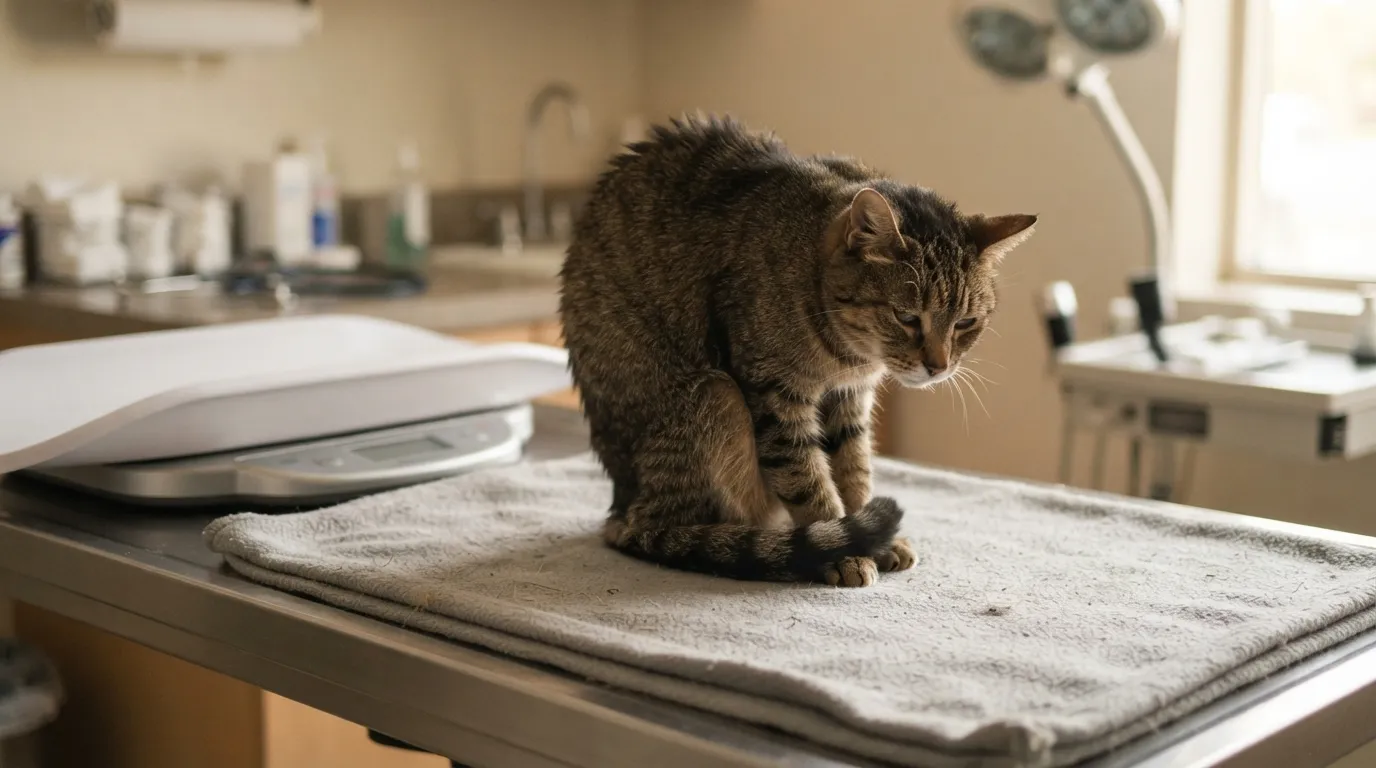
A hunched back, a lowered head, a body that never quite relaxes - it looks like a cat is "just sitting funny." It isn't.
Guarding one specific area from touch is one of the clearest posture clues vets rely on. Owners routinely mistake this stance for simple tiredness.
#10 is the one blamed on "old age" more than any other sign on this list.
#10 - Altered Mobility and Gait
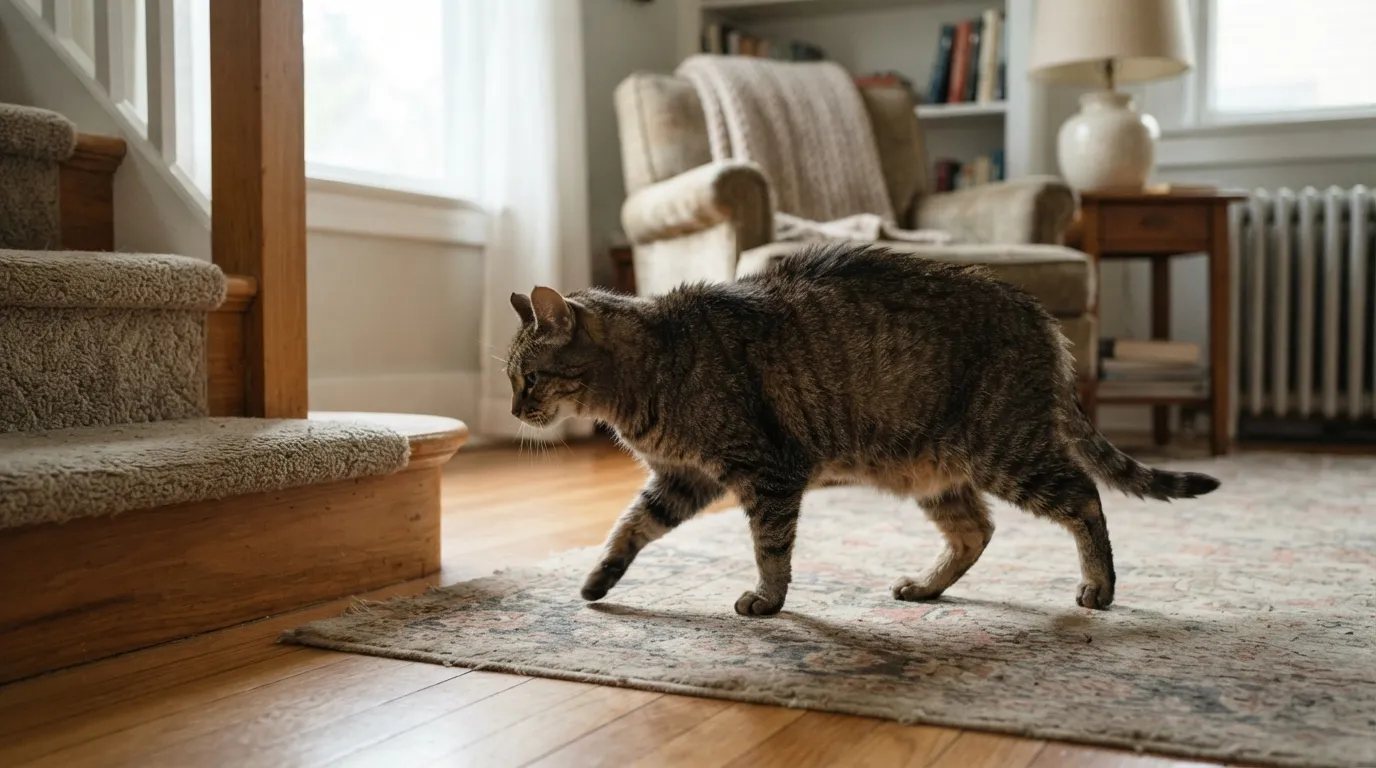
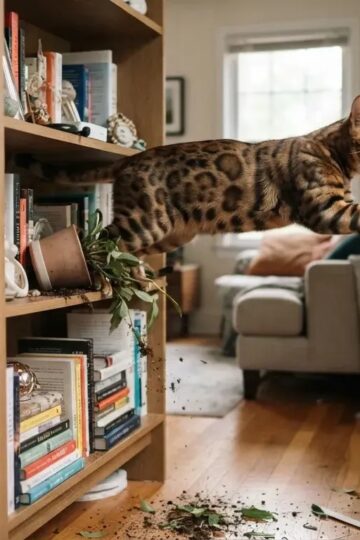
Arthritis and spinal issues quietly change how a cat walks, sits, and jumps. A cat that hesitates before the old counter-leap isn't simply getting older.
Less activity, more sleep, and reluctance to shift position are all measurable clinical signs. This is one of the earliest signals of pain - and the most dismissed.
Sign #9 hides somewhere most owners never think to look: the litter box.
#9 - Litter Box Behaviour Changes
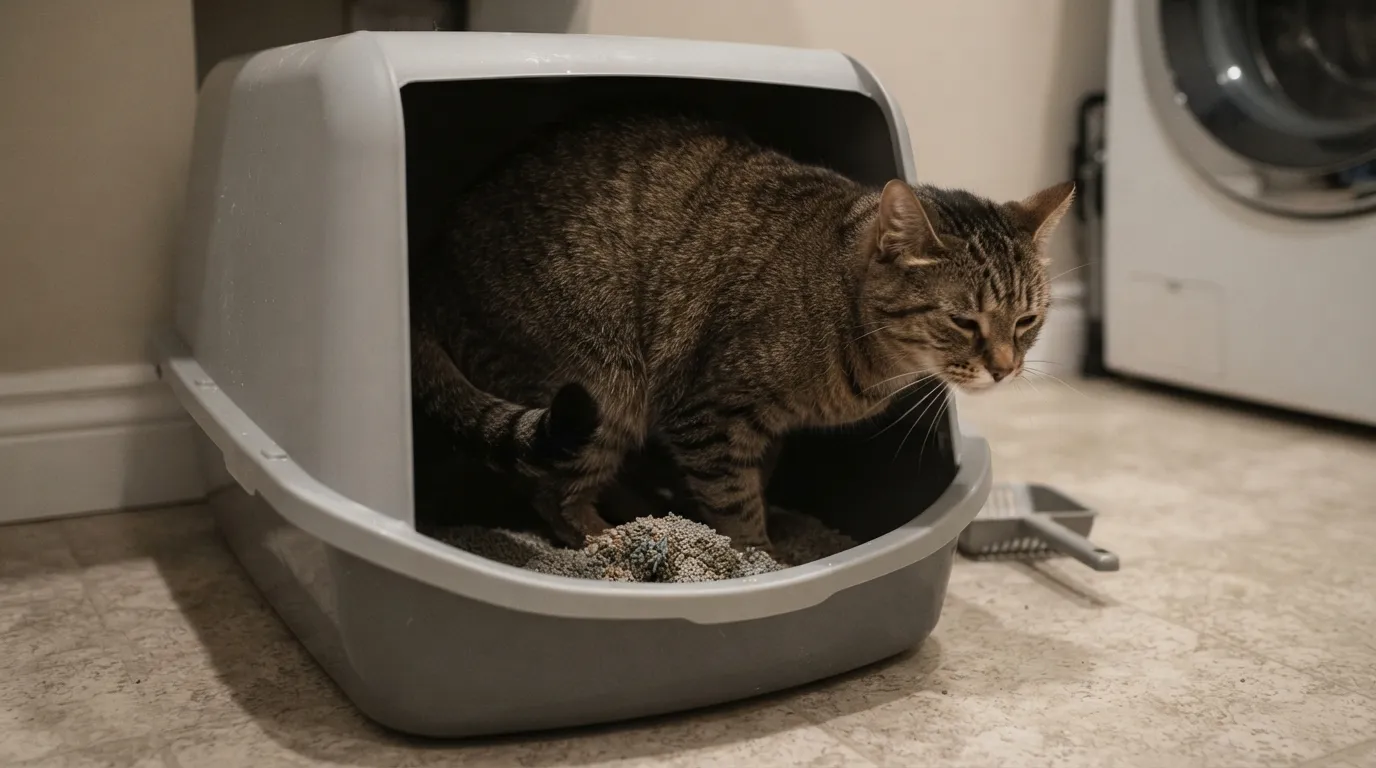
Cats can link pain to the box itself and start going elsewhere in the house. What looks like a behavior problem might actually be a pain problem.
Straining, frequent trips, or noticeably less urine all matter. Straining in the box can signal a life-threatening urinary blockage - never wait it out.
Worth Knowing
- Male cats are especially prone to urinary blockages, which can turn life-threatening within 24 to 48 hours if untreated.
- Crying out in the box, frequent visits with little output, or licking the genital area are all urgent signs.
- A cat that stops urinating entirely needs emergency care, not a wait-and-see approach.
#8 shows up in the last place most owners think to check: grooming.
#8 - Grooming Extremes: Too Much or Too Little
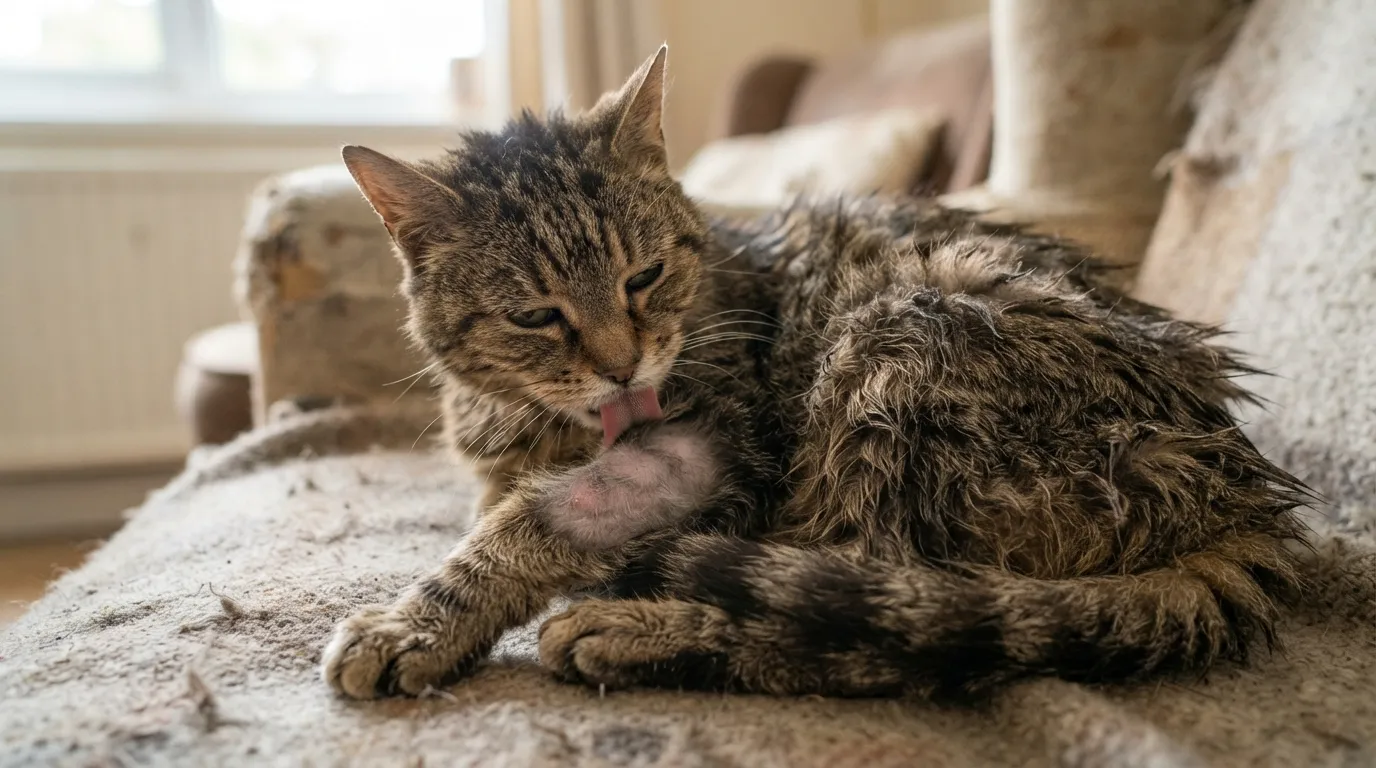
Cats are fastidious by nature, so any sudden shift in grooming means something changed. Some overgroom one sore joint until the fur thins; others stop grooming entirely because bending hurts too much.
Vets treat grooming as a two-way clue, not just neglect. A bald patch or a dull, matted coat can both point to pain.
Sign #7 is one most owners write off as pure pickiness.
#7 - Appetite and Eating Pattern Changes
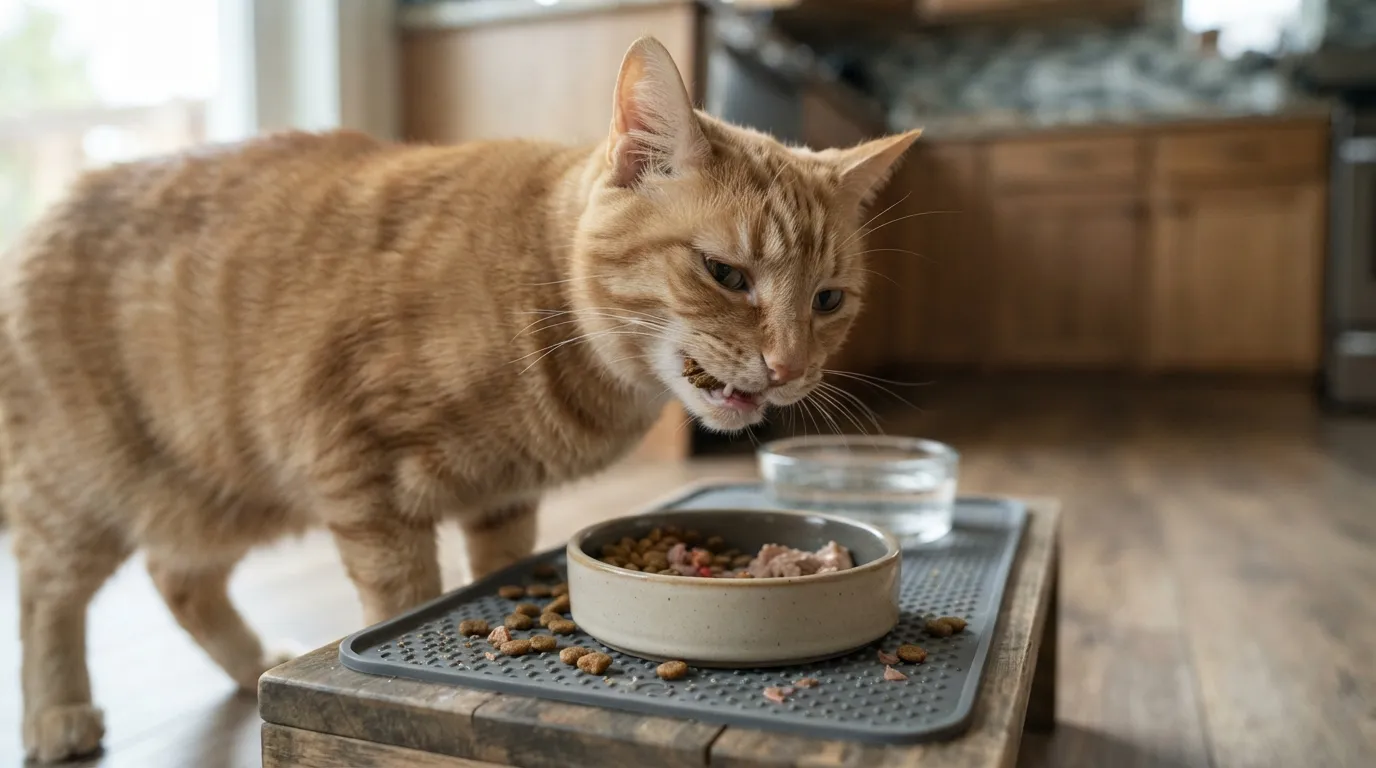
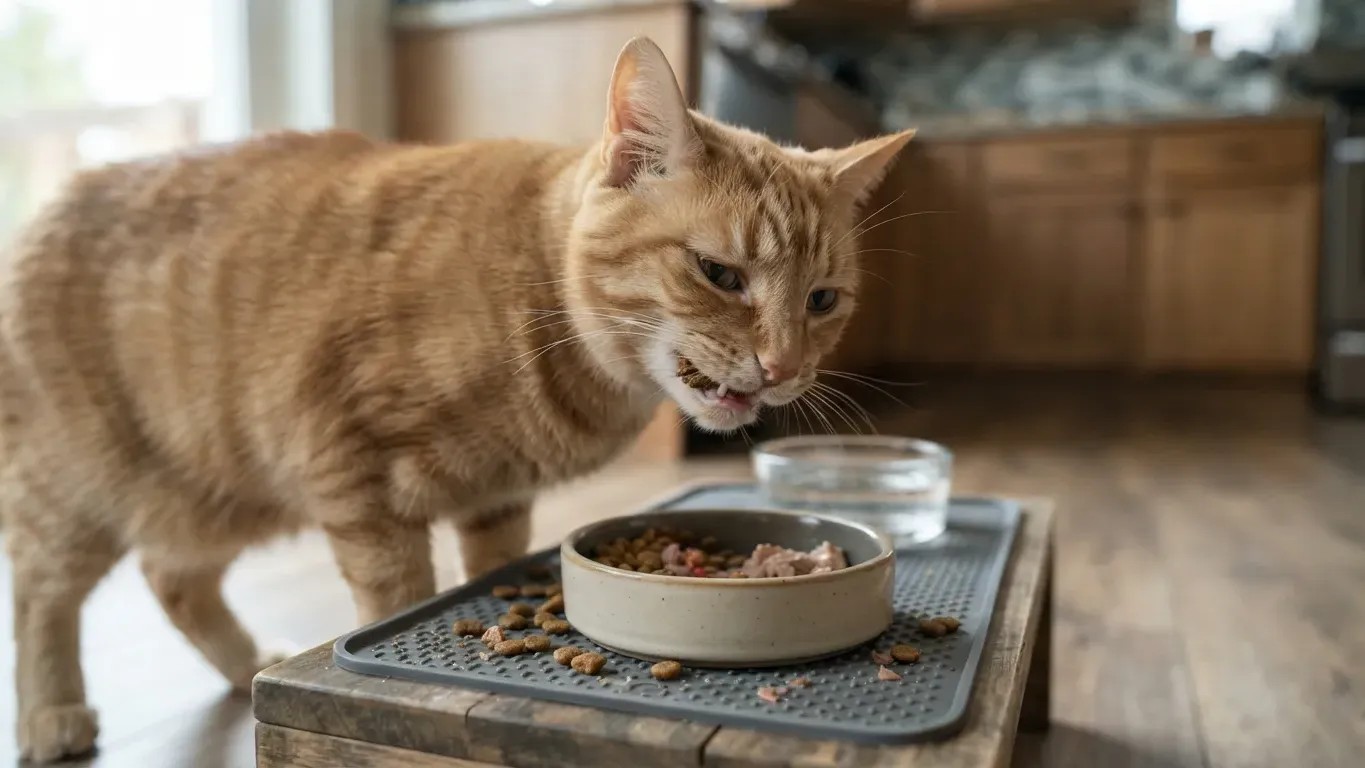
Dental pain, nausea, and stress can all quietly kill a cat's appetite. Chewing on one side, dropping food, or eating slower are subtle tells.
A cat eating only on one side of its mouth is a classic sign of oral pain most owners never catch. Skip food for more than a couple of days and the danger becomes real - untreated, it can trigger feline hepatic lipidosis, a life-threatening liver condition.
#6 is where veterinary science gets almost eerie.
#6 - Facial Expression Changes
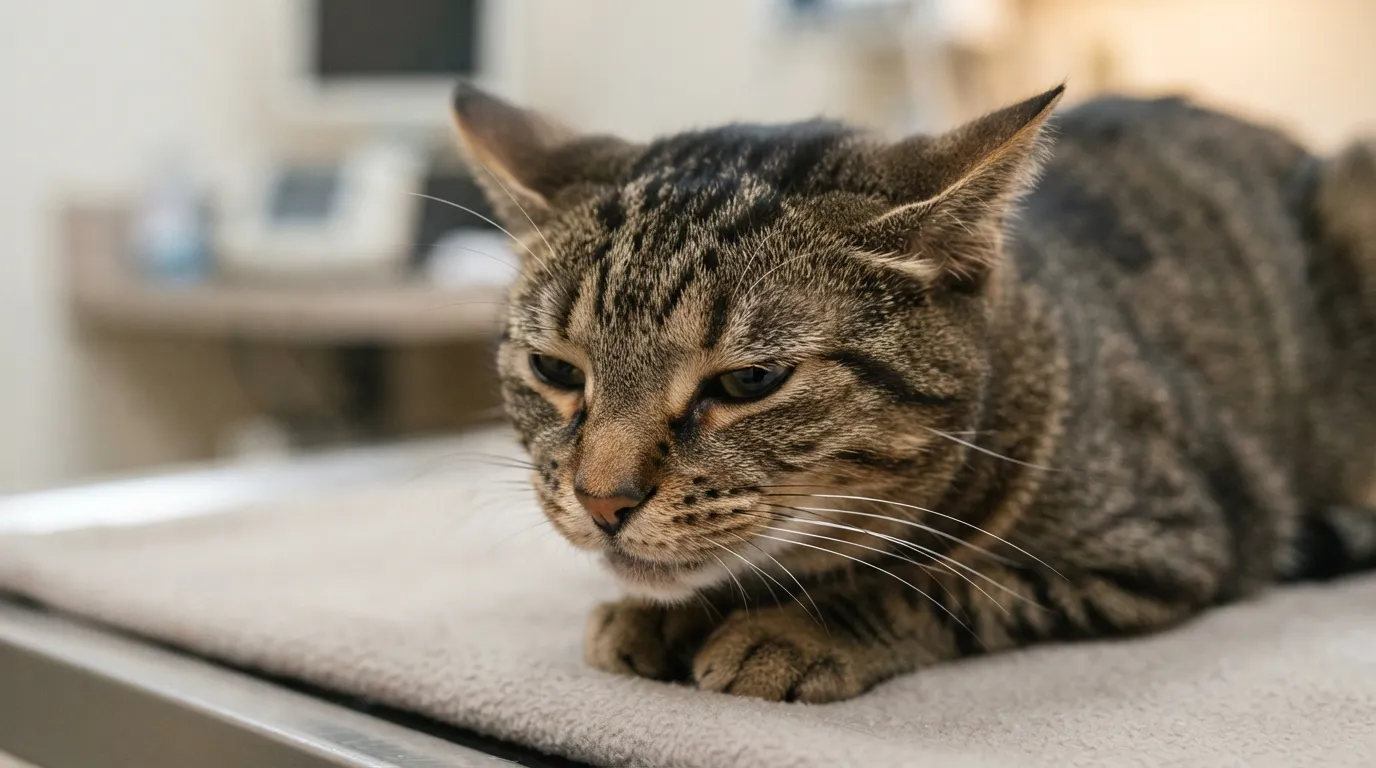
This is where modern vet medicine got clever. The Feline Grimace Scale scores pain using nothing but the face.
Ears pinned back, a tense jaw, whiskers pulled forward, a lowered head - vets read all five together. These subtle facial cues are now one of the most reliable indicators of acute pain in cats.
At a Glance
- Five action units were identified: ear position, orbital tightening, muzzle tension, whiskers change and head position.
- The FGS has 5 action units that can be scored from 0 to 2, and the maximum possible score is 10.
- A cut-off value of a score of 4 or higher suggests that a veterinarian should consider giving pain medication.
One of those five signals is so powerful it earned its own spot on this list - #5.
#5 - Orbital Tightening (Squinting)
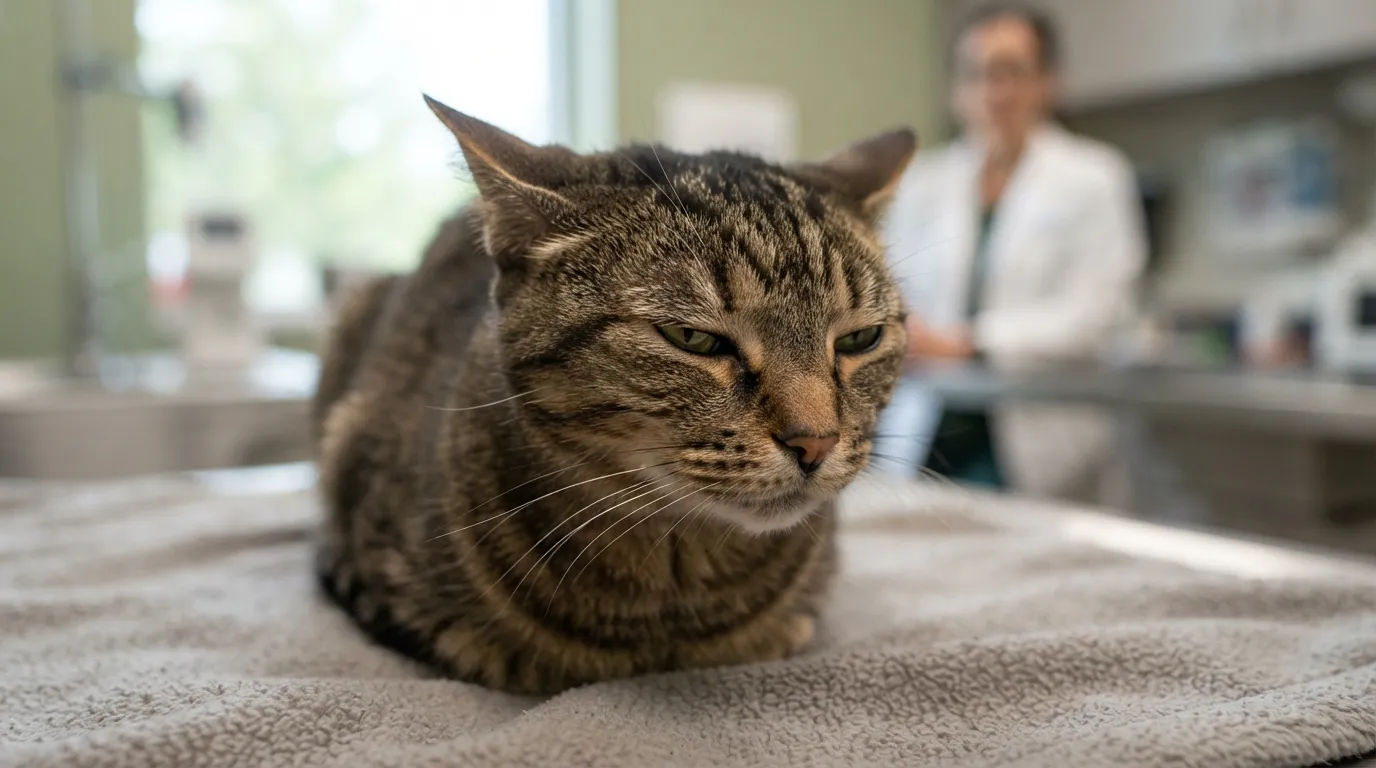
Squinting matters enough that vets score it on its own. Tight, narrowed eyes that aren't about sleepiness are a major clinical flag.
A cat with half-closed, tense eyes that isn't drowsy is almost certainly hurting. This single sign alone can be enough to trigger a full pain workup.
#4 lives in the eye too - but it's the opposite kind of clue.
#4 - Pupil Dilation or Constriction
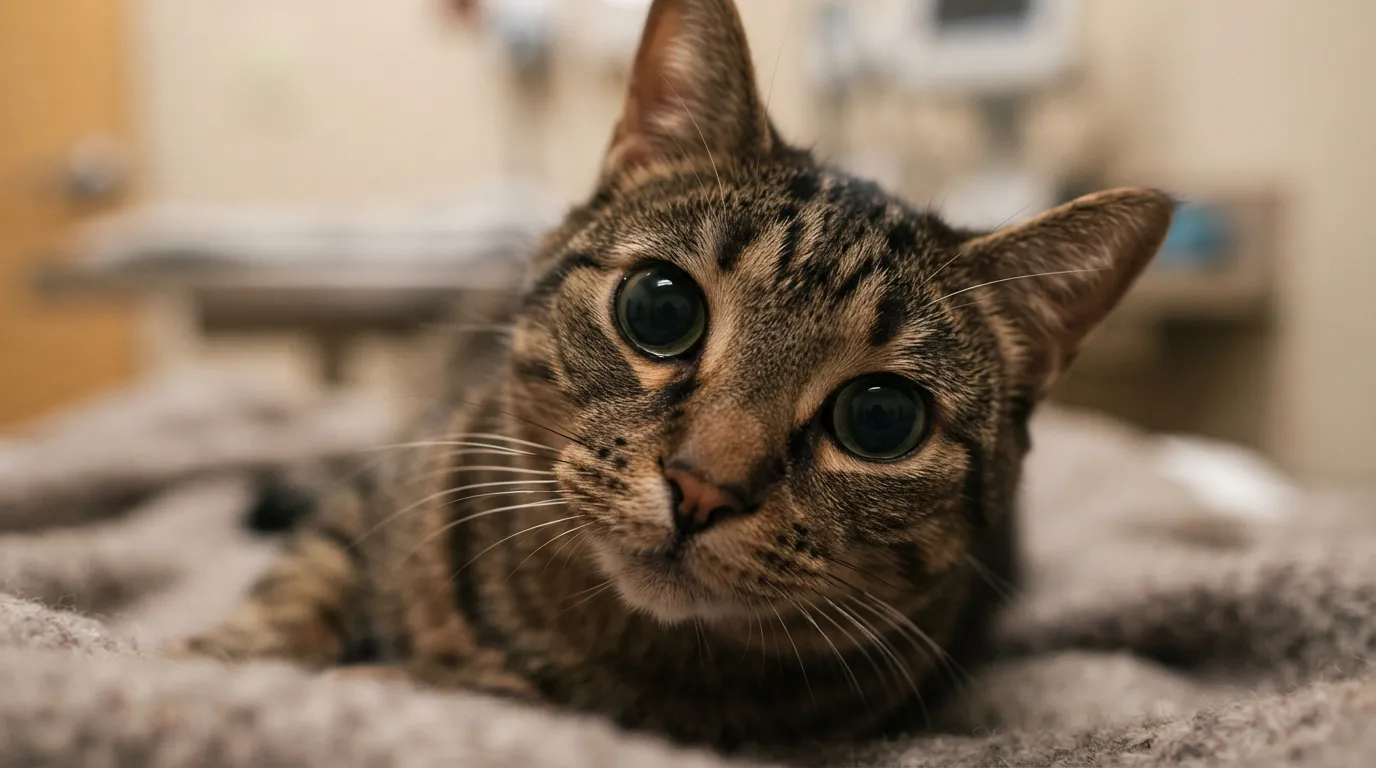
Stress dilates pupils temporarily, and that's normal. Pupils that stay dilated for no clear reason are not.
Persistent, unexplained dilation can point to infection, trauma, a tumor, or poisoning. This is treated as an emergency sign, not a wait-and-see situation.
#3 is the sign almost everyone blames on the weather.
#3 - Breathing Changes
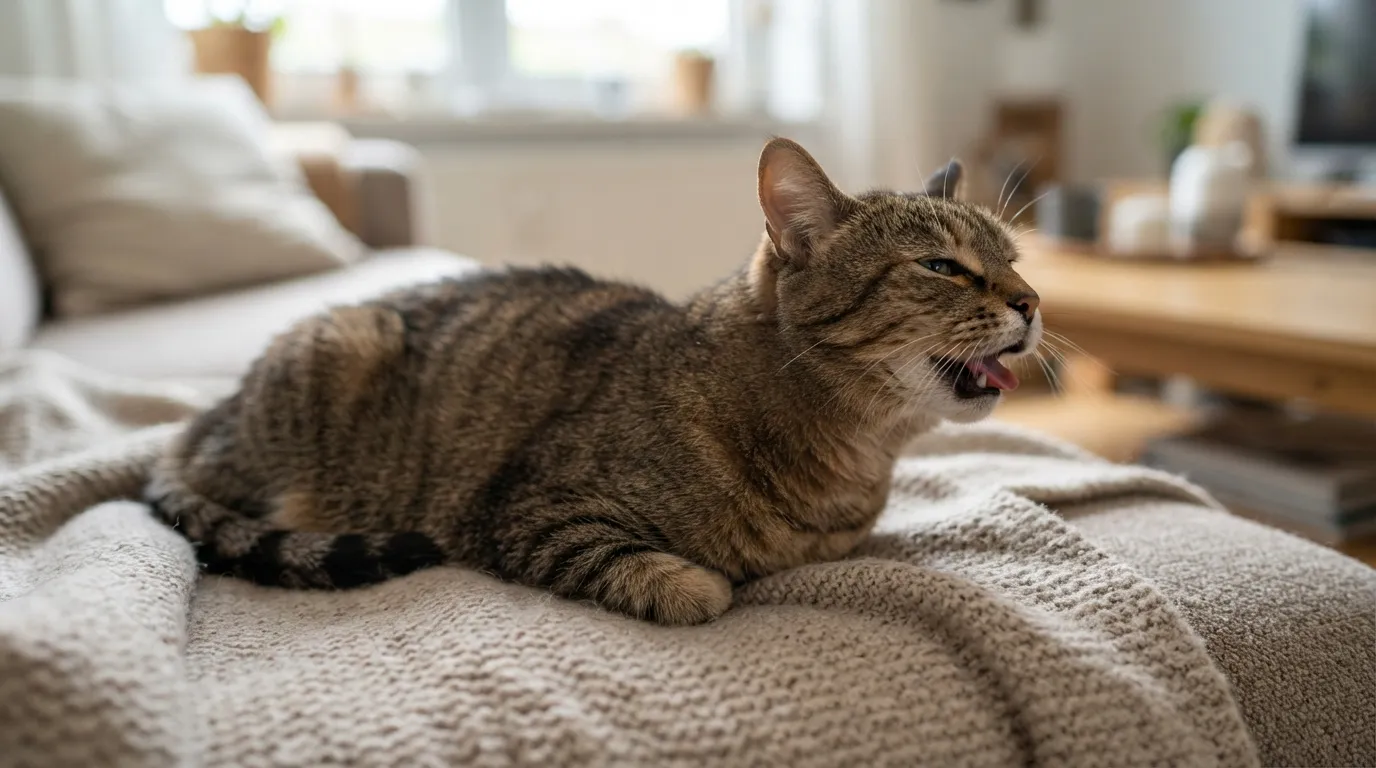
Cats aren't supposed to pant - dogs do that, not cats. A panting cat at rest is a cat in trouble.
Shallow breaths, mouth breathing, or a stretched-out neck while trying to sleep are all warning signs. A resting respiratory rate above 30 breaths a minute is considered abnormal and is used to screen for hidden pain or cardiac stress.
Quick Compare
- A normal cat breathing rate is roughly 15 to 30 breaths per minute at rest.
- A resting rate consistently over 30 is a yellow flag; over 40 is a red flag for heart disease or fluid around the lungs.
- Open-mouth breathing, belly breathing, or blue or gray gums in a cat is an emergency.
#2 happens somewhere you literally cannot see it.
#2 - Elevated Heart Rate and Blood Pressure
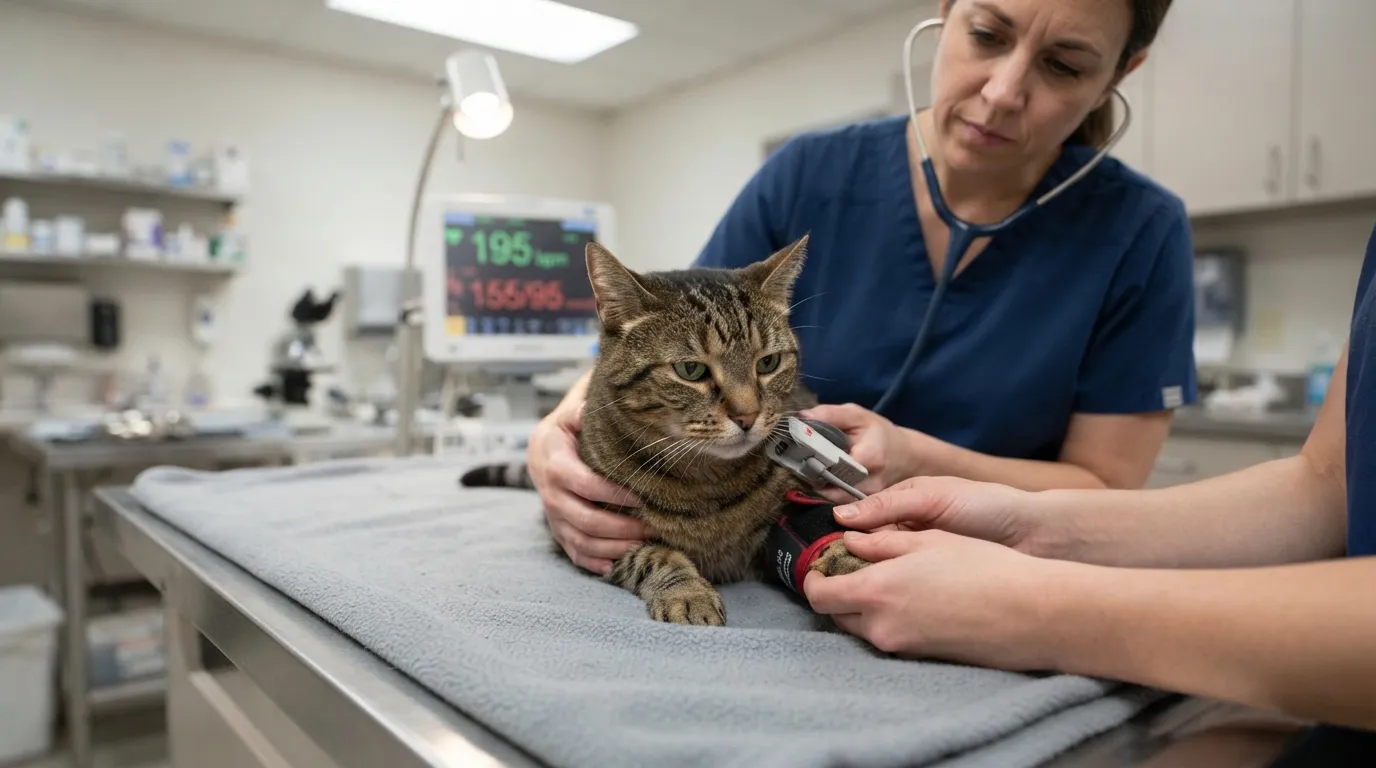
Pain triggers the same fight-or-flight response in cats that it does in people. Heart rate and blood pressure climb, even when the cat looks perfectly calm.
A single reading isn't proof on its own, since fear alone can cause it. But a "relaxed" cat with a racing pulse in a calm clinical setting is almost always hiding something.
And then there's #1 - the sign no gadget or guess can replace.
#1 - Pain Response to Palpation
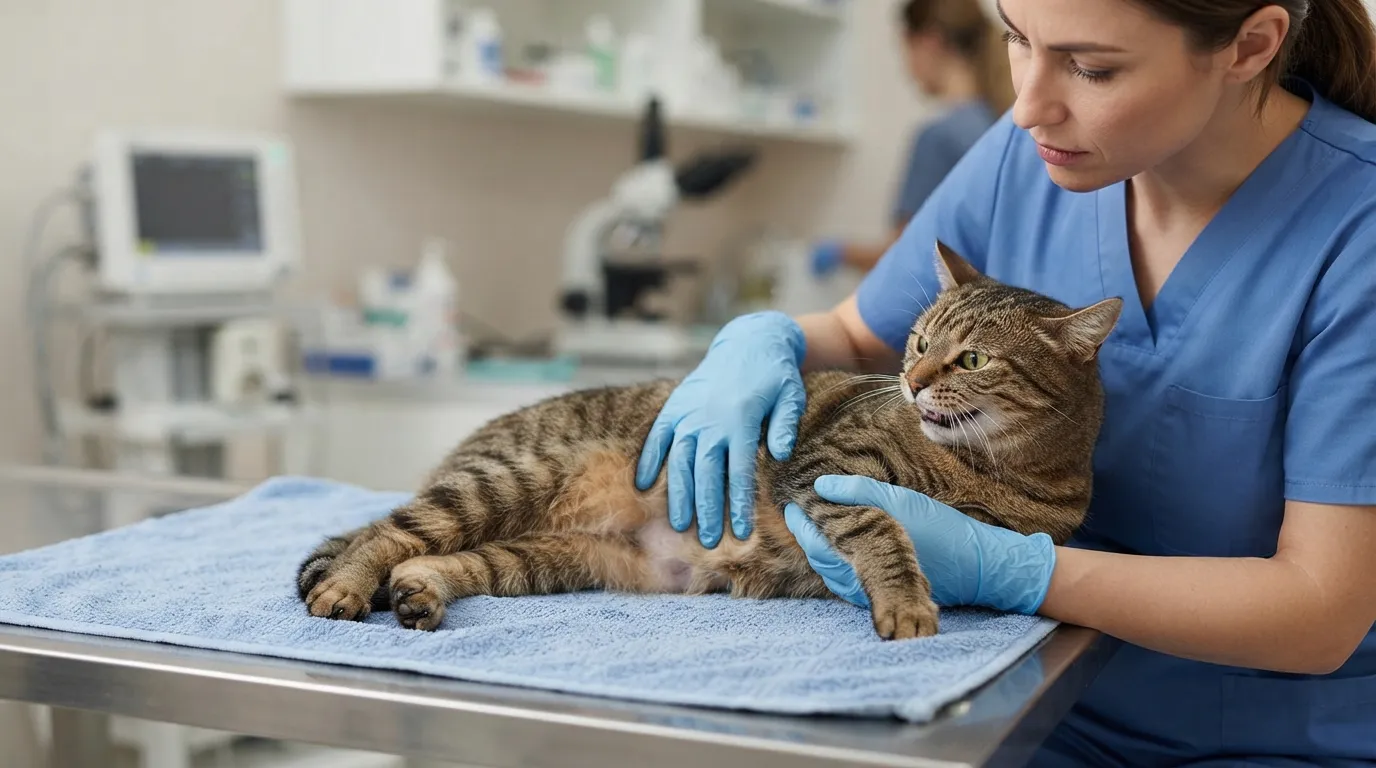
This is the test that separates a trained vet from a worried guess. Gentle pressure on the abdomen, and the cat's reaction tells the truth.
A flinch, a growl, an attempt to bolt - that response to touch is the single most diagnostic clinical sign a vet has. This matters most with chronic pain, the kind too often shrugged off as "just old age."
A cat that "just seems stiff" may be silently screaming.
The Bottom Line
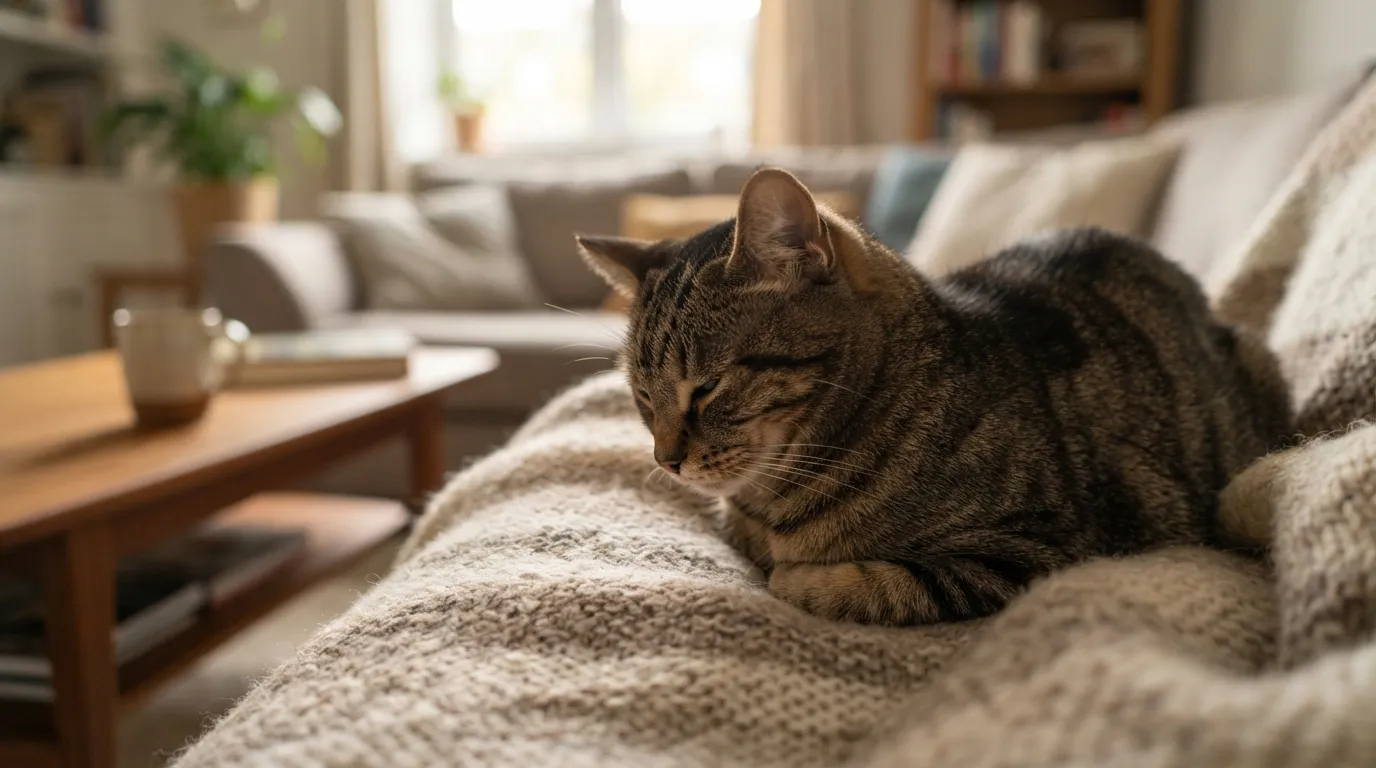
Cats mask pain so well they could be suffering right now, curled up three feet from you, and you'd have no idea. No single sign on this list proves anything by itself - a squint, a skipped meal, a quiet growl could each mean nothing.
But two or three together, especially if they're new or won't go away, are exactly what a vet is trained to add up. Don't wait for the obvious sign. By then, your cat has already been hurting far longer than you think.