10 Wild Cats With the Strangest Hunting Techniques in the Feline World
#1 Fishing cat: the angler with paws instead of a rod
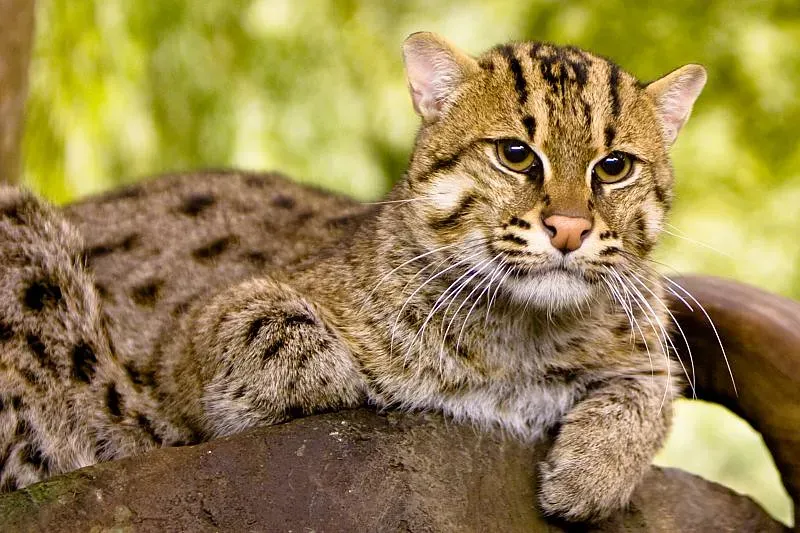
The fishing cat, native to South and Southeast Asia's wetlands, does exactly what its name suggests, though the method is more clever than brute force. When they hunt, they sit and wait patiently at the water's edge, gently tapping the surface with their paws to imitate the movements of a small insect. A curious fish swims up to investigate the ripples, and that's the fatal mistake.
When a fish swims up to investigate, they quickly plunge into the water, snatching the target with their front paws. The species is also built for the job in ways few other cats are. Their ears can close underwater, they have insulated fur, partial webbing on their feet, and stubby tails that help them steer while swimming. Some individuals take things further still, diving fully underwater to ambush waterfowl from below rather than waiting for prey to come to them.
#2 Margay: the cat that fakes baby monkey cries
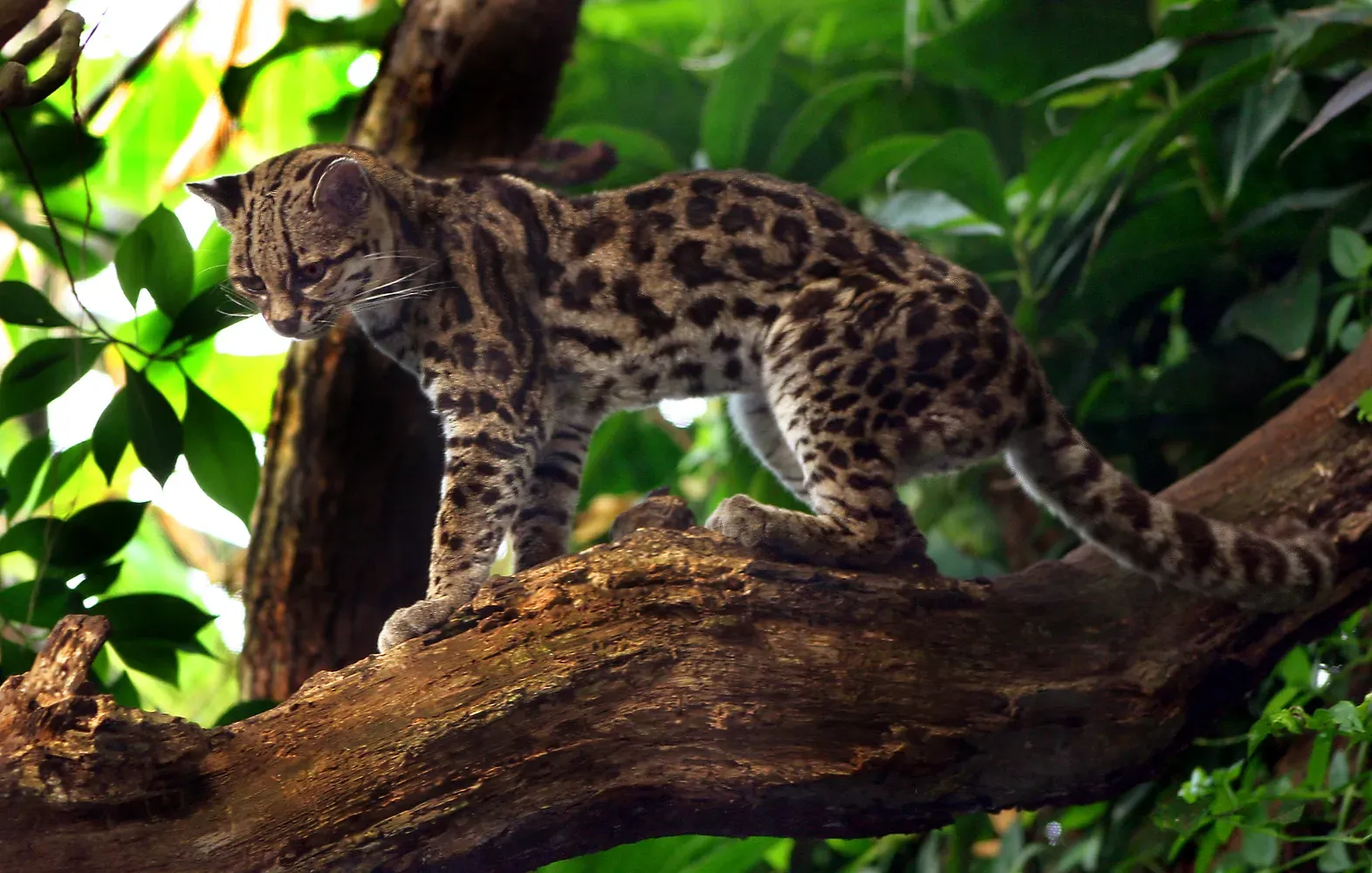
Deep in the Amazon rainforest lives a small, wide-eyed spotted cat called the margay, and in 2005 researchers documented something that had never been scientifically confirmed before in the Americas. A margay close to a group of feeding tamarin monkeys made calls mimicking those of pied tamarin babies instead of simply rushing the group. The strategy is essentially vocal deception, using sound to draw prey into a vulnerable position rather than relying on stealth and speed alone.
The plan almost worked. The monkey on lookout duty did not know what to make of this and climbed up and down the tree trying to figure out what was going on, making calls of its own to alert the rest of the group. Eventually a few tamarins came down to investigate, at which point the margay emerged from the foliage and moved toward them, though by then the element of surprise was gone and the hunt failed. Researchers noted this was the first scientifically documented case of a cat imitating a prey species in the Americas, and it suggests margays, and possibly other spotted cats, have a level of behavioral flexibility that goes well beyond instinct.
#3 Black-footed cat: small size, staggering kill rate
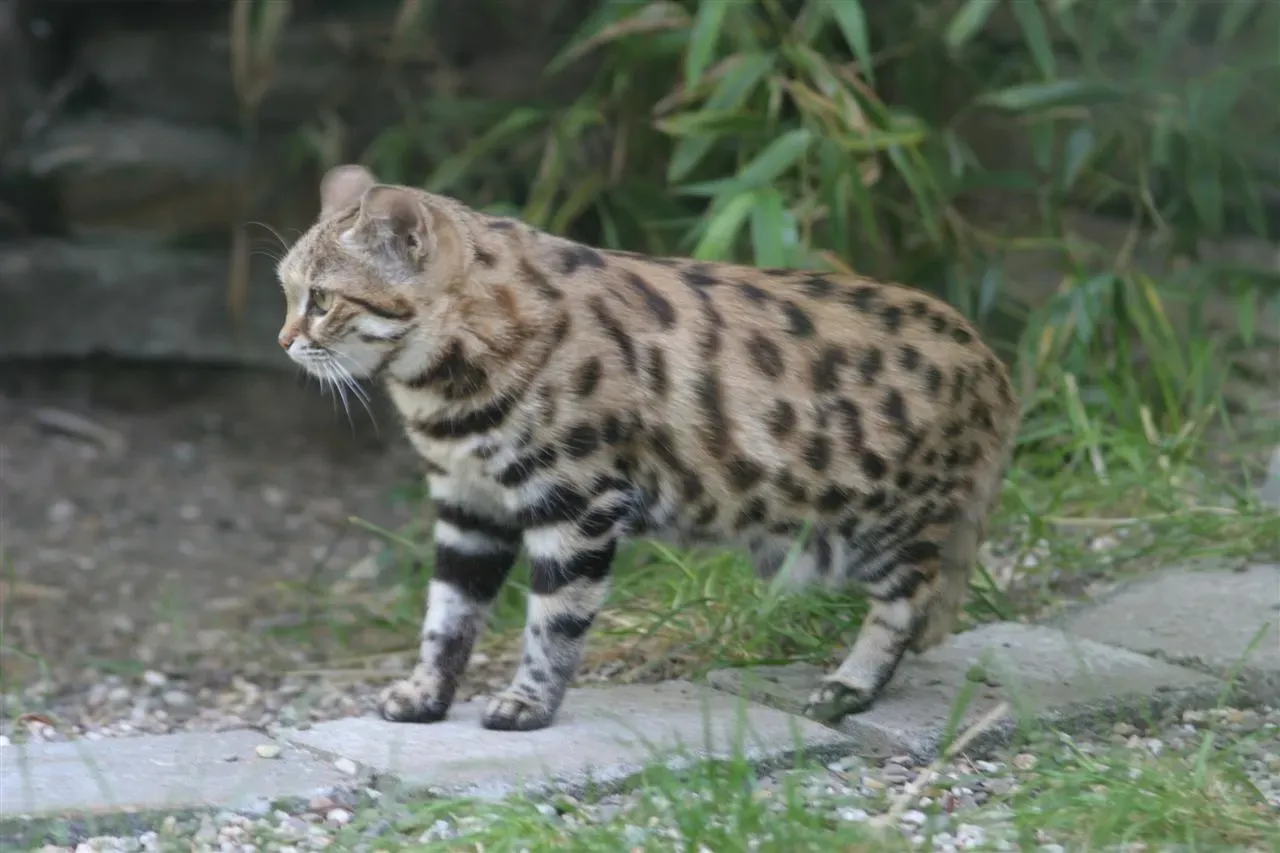
Weighing barely more than a bag of sugar, the black-footed cat of southern Africa doesn't look like a contender for the title of deadliest feline on Earth. Yet by the numbers, it is. In one night, a black-footed cat kills between 10 and 14 rodents or small birds, averaging a kill about every 50 minutes, giving it a success rate about three times higher than lions.
The secret isn't brute strength, it's relentlessness combined with sharp target selection. They employ three distinct hunting techniques: fast hunting, where they move swiftly to flush out prey, slow hunting, involving a cautious, meandering stalk through vegetation, and sit and wait, where they patiently remain motionless near burrows. Even more striking, one study noted the species hunts and brings down more prey in a single night than a leopard does in six months, a comparison that puts its efficiency into perspective for a cat most people have never heard of.
#4 Jaguar: the skull crusher of the Americas
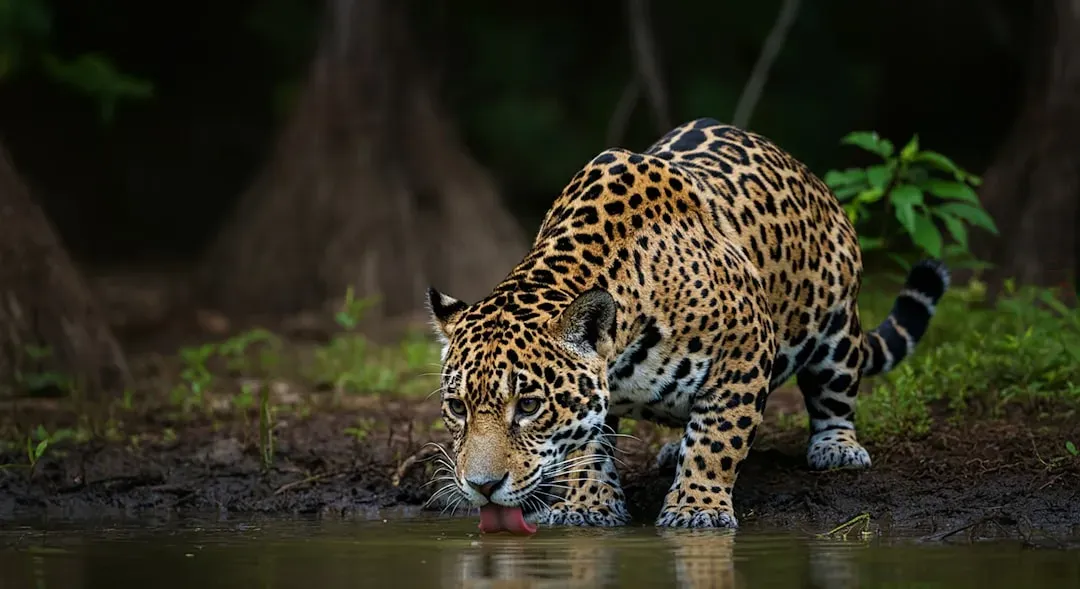
Jaguars have a killing method that sets them apart from every other big cat on the planet. Rather than suffocating prey with a throat bite like lions or leopards, a jaguar crushes the skull of its target, driving its canine teeth directly into the brain. This isn't a flashy adaptation for show, it's a practical solution to hunting in dense rainforest where wrestling a struggling animal for several minutes is dangerous and inefficient.
The technique lets jaguars take on prey that would stop other cats cold. The jaguar's powerful bite allows it to pierce the carapaces of turtles and tortoises, and to employ an unusual killing method, biting directly through the skull of mammalian prey between the ears to deliver a fatal blow to the brain. Combine that with strong swimming ability and comfort hunting caimans in shallow water, and you get a predator that treats armored, thick-skinned prey as just another meal option rather than an exception.
#5 Caracal: aerial ambush artist
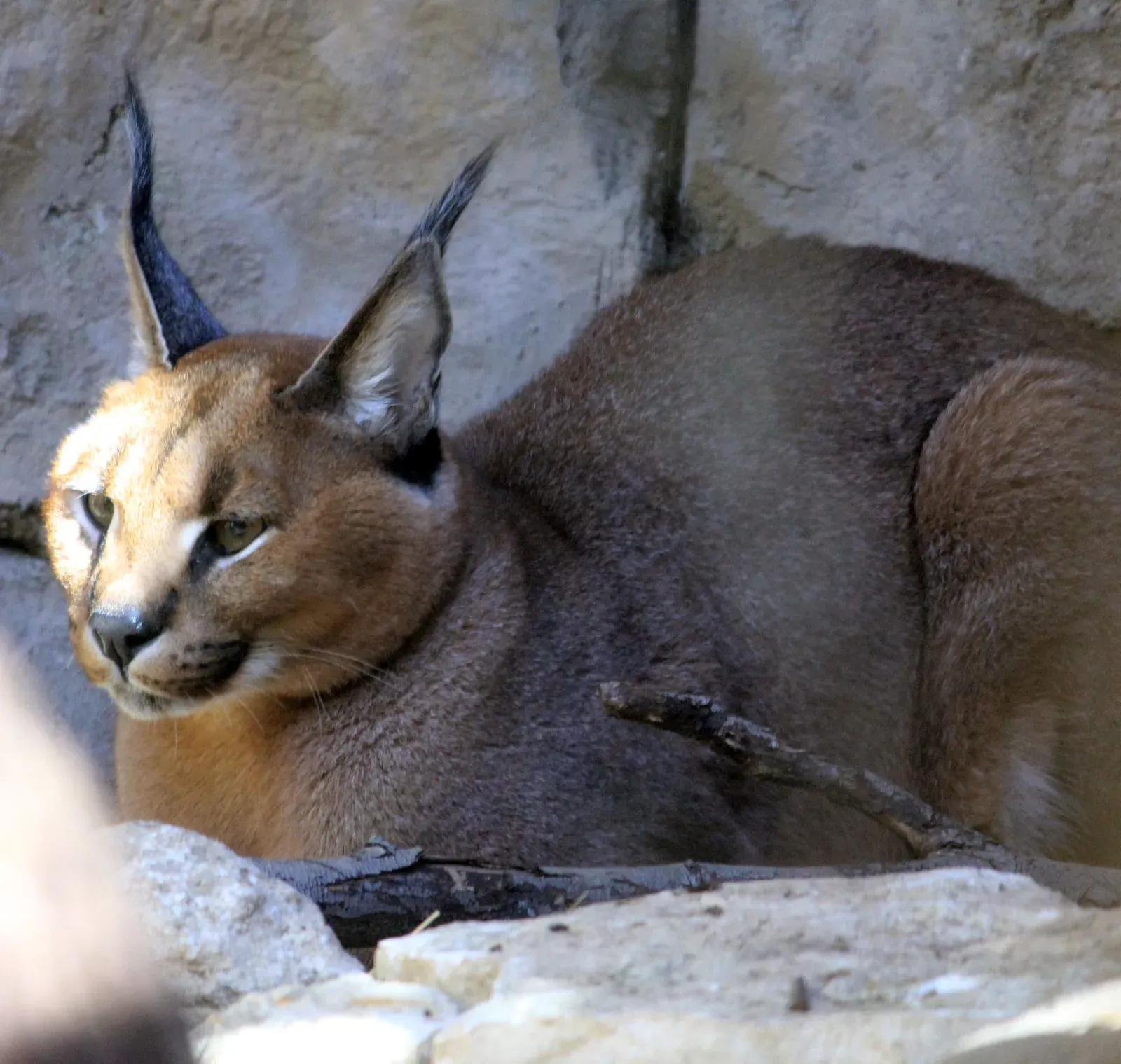
The caracal, a medium-sized cat found across Africa and parts of Asia, has turned vertical leaping into a specialized hunting skill rather than an occasional party trick. Its powerful hind legs let it launch straight up from a stationary crouch and snatch birds directly out of the air mid-flight, a technique that requires precise timing since the cat has to judge a moving target with no running start. Few land predators attempt this kind of aerial interception at all, and fewer still pull it off with any regularity.
What makes the caracal's approach particularly unusual is how it blends patience with sudden explosiveness. The cat will often sit motionless near a flock of feeding birds for long stretches, waiting for the right moment rather than stalking in typical cat fashion. Its ear tufts, often assumed to be purely decorative, may also help it detect the faint sounds of birds shifting position before takeoff, giving it a split second of extra warning.
#6 Snow leopard: the mountain ambush specialist
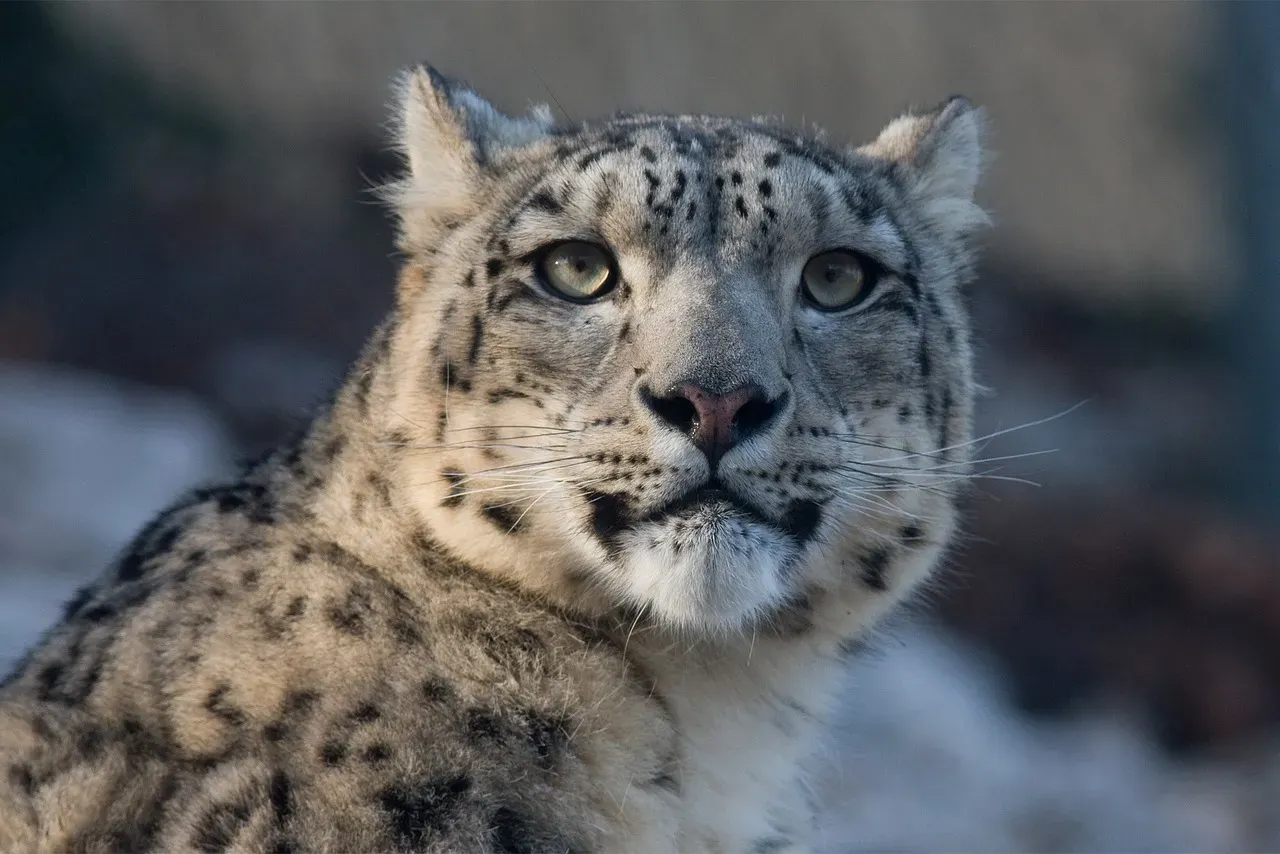
Snow leopards live in some of the most punishing terrain on the planet, and their hunting style reflects that reality. Rather than open chases, they rely on near vertical cliffs and rocky outcrops to stay hidden until a blue sheep or ibex passes close enough for a short, explosive charge. Their thick tails, often as long as their bodies, act as counterbalances that let them make sudden turns on narrow ledges without losing footing.
Because prey is scarce and spread thin at high altitude, snow leopards often travel enormous distances between hunting attempts, sometimes going many days between successful kills. This forces a different kind of patience than what's seen in lower elevation cats, one built around conserving energy across long stretches of barren terrain rather than repeated short bursts. The combination of extreme camouflage and reliance on cliffside geometry makes their hunting style feel more like mountaineering than typical predation.
#7 Serval: the pouncing specialist of tall grass
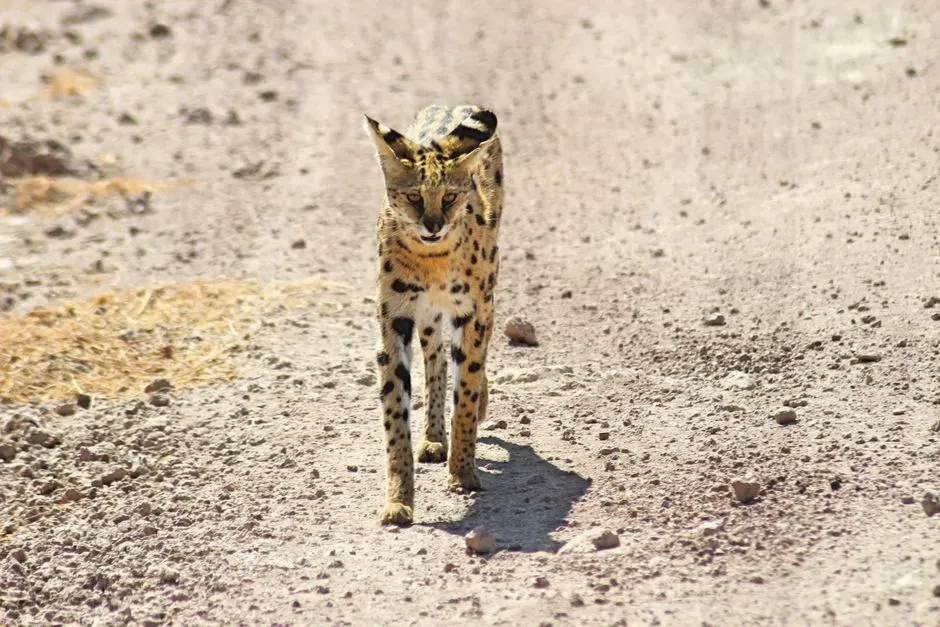
The serval, a long-legged African cat, has essentially built its entire body around one specific hunting problem: catching rodents hidden in tall grass where they can't be seen. Its oversized ears let it pinpoint the rustling and squeaking of prey moving beneath vegetation with remarkable precision, sometimes without any visual contact at all. Once located, the serval performs a distinctive high leap straight upward before coming down with its front paws pinning the prey to the ground.
This vertical pouncing technique is so effective that servals reportedly succeed on the majority of their hunting attempts, a notably higher rate than many larger cats achieve. Their long legs, unusual for a cat of their size, give them the height advantage needed to see over grass and execute those signature leaps. It's a hunting style shaped almost entirely by habitat, evolved specifically for grassland environments where sound matters more than sight.
#8 Sand cat: hunting where almost nothing survives
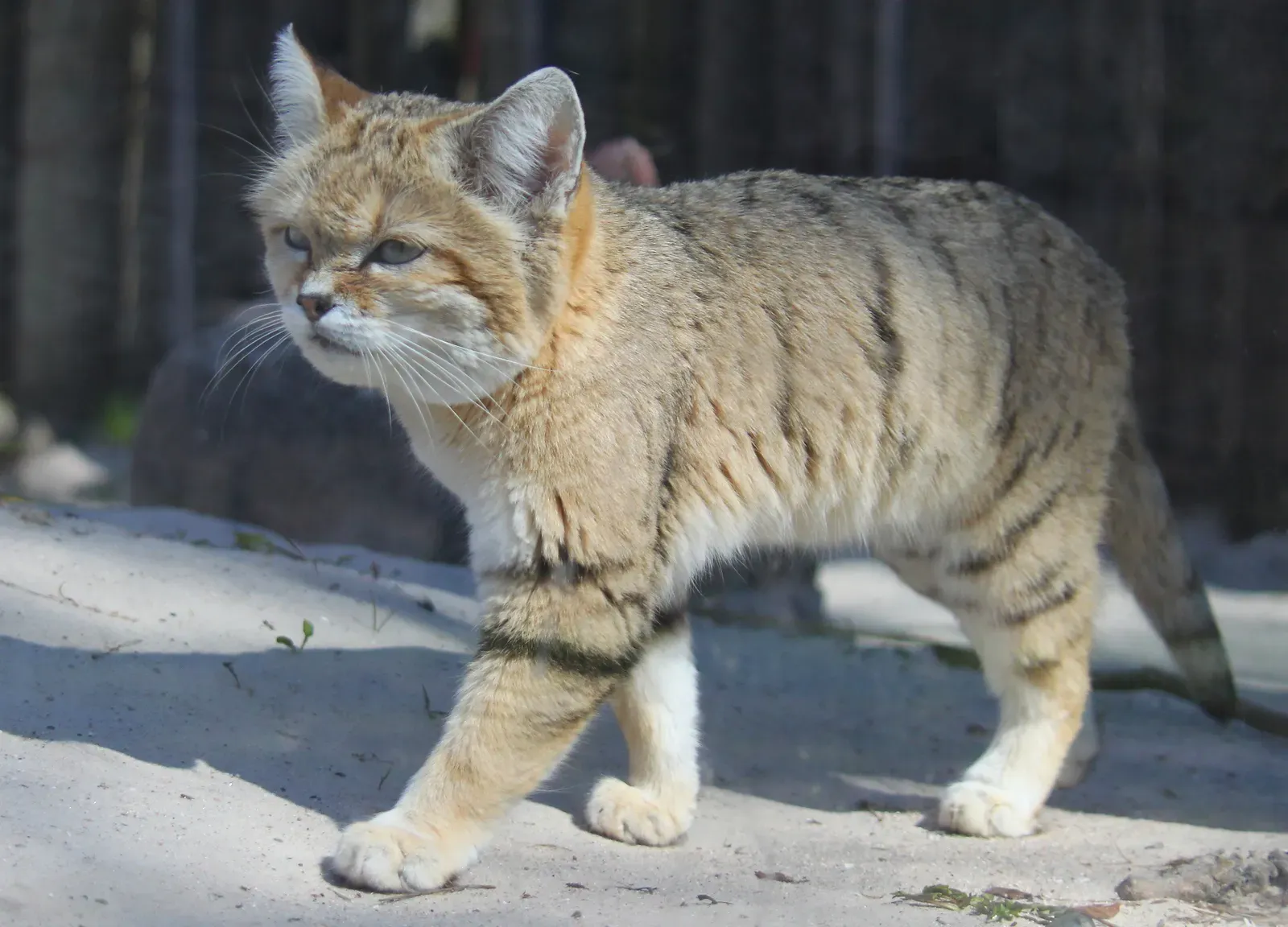
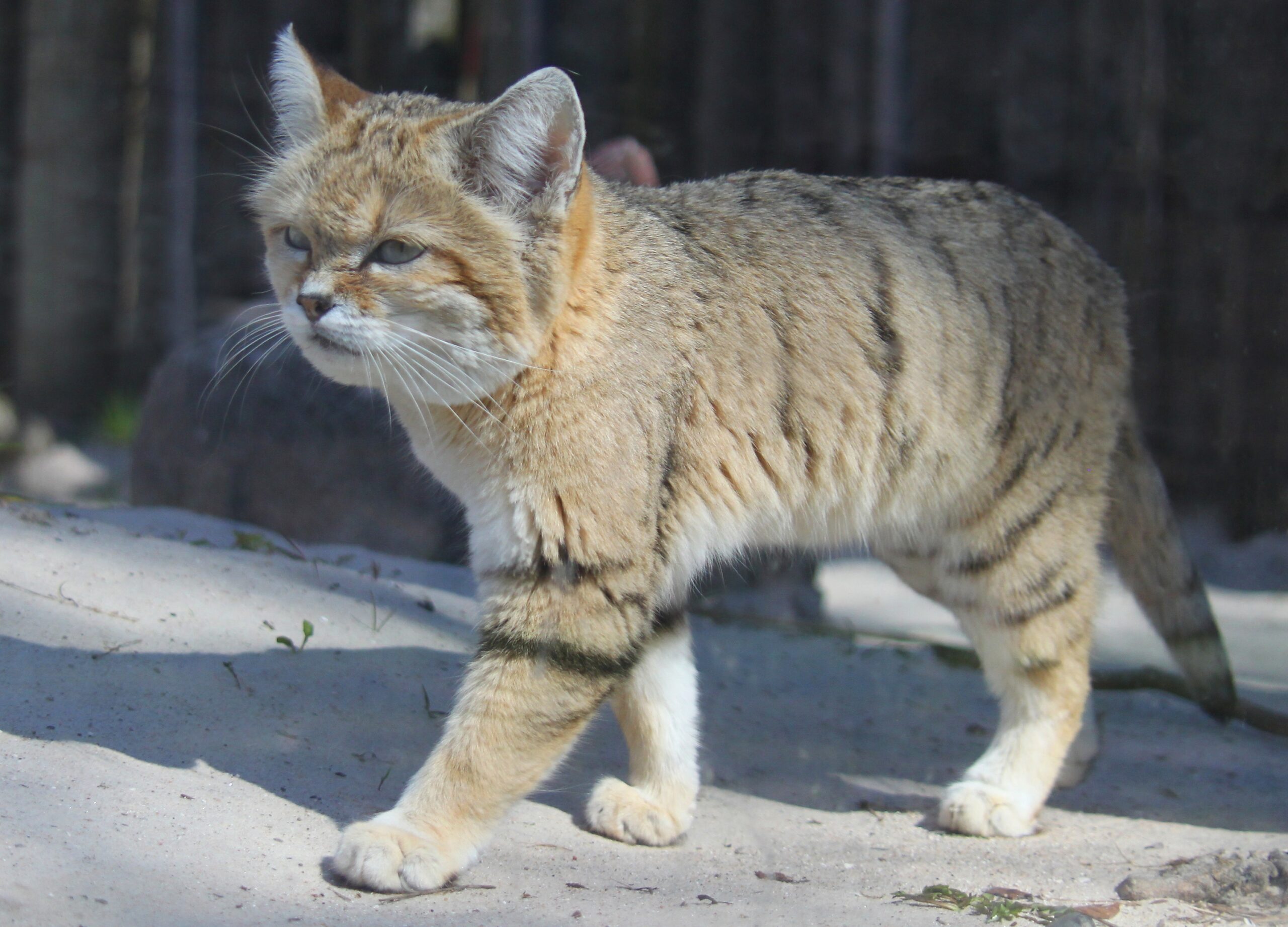
The sand cat lives in some of the driest, harshest deserts on Earth, and its hunting approach reflects an environment where prey is scarce and every ounce of energy matters. This small, pale-furred cat relies heavily on digging, using its paws to excavate rodents and reptiles directly out of their burrows rather than relying purely on chase or ambush. Thickly furred paw pads also let it move silently and comfortably across scorching, shifting sand that would be difficult footing for most predators.
Because the desert offers so little cover, sand cats have adapted to hunt primarily at night when temperatures drop and prey activity increases. Their hearing is exceptionally sensitive, allowing them to detect movement underground before an animal even surfaces. It's a hunting style built less around speed or cunning tricks and more around sheer environmental toughness, thriving in conditions that would exhaust nearly any other feline.
#9 Rusty spotted cat: speed hunting at miniature scale
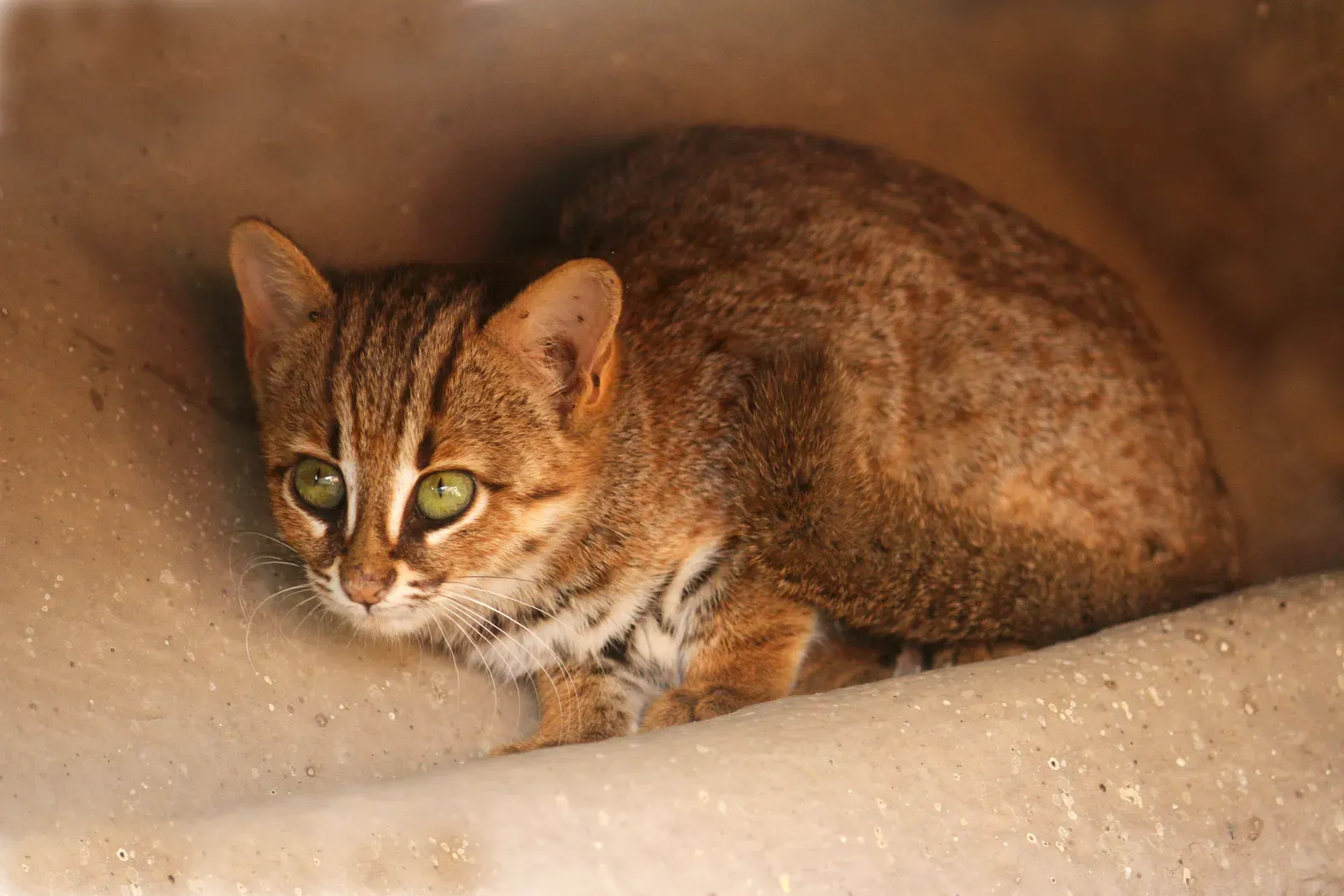
Barely larger than a kitten, the rusty spotted cat of India and Sri Lanka is one of the smallest wild cats in the world, and its hunting style compensates for size with sheer quickness. The rusty spotted cat is thought to have a similar hunting success rate to the black-footed cat, using its speed and incredible eyesight to overtake prey. That comparison to one of the most efficient hunters in the feline world says a great deal about how capable this tiny, rarely seen cat actually is.
Because rusty spotted cats are so elusive and live in dense, hard to access habitat, detailed field data on their behavior remains limited. What is known suggests they rely on rapid short bursts of speed over stealth or elaborate ambush setups, closing the gap on small prey before it has a chance to react. Their small size, often assumed to be a disadvantage, actually allows them to maneuver through thick undergrowth that would slow down larger predators considerably.
#10 Leopard: the cat that hunts twice, once on the ground and once in a tree
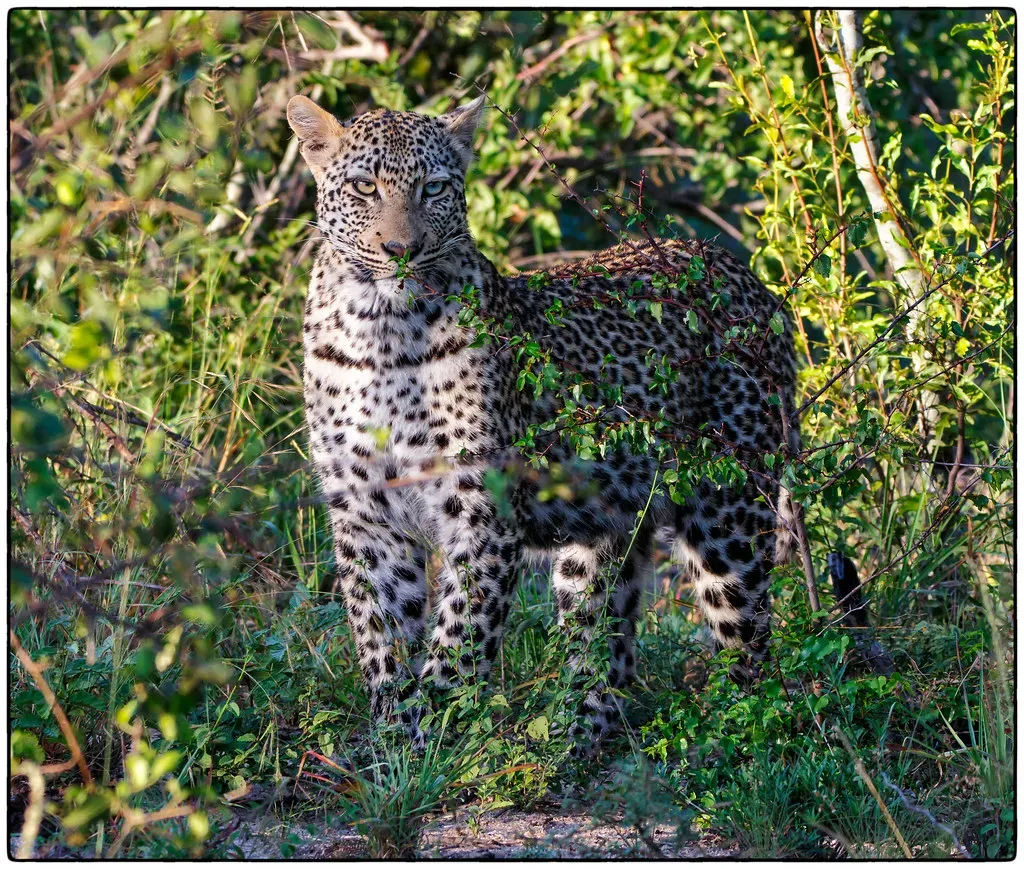
Leopards are known for raw versatility, but one particular habit sets their hunting apart from other big cats: they frequently haul kills far larger than themselves up into trees. This isn't part of the actual capture technique so much as an extension of it, protecting a hard-won meal from lions, hyenas, and scavengers that would otherwise steal it within minutes. The behavior effectively turns a single successful hunt into a multi-day food source, since the carcass stays safely out of reach while the leopard returns to feed repeatedly.
The hunt itself relies on extraordinary patience and near silent stalking, with leopards capable of closing to within just a few meters of prey before the final rush. Their spotted coats provide camouflage across an unusually wide range of habitats, from dense forest to open savanna to rocky hillsides, letting them adapt their approach to whatever terrain they're working in. Few predators combine that level of stalking precision with the physical strength to drag a kill weighing several times their own body weight straight up a tree trunk.
Final thoughts