15 Telltale Habits of Owners Who Watch Their Cat Far Too Closely
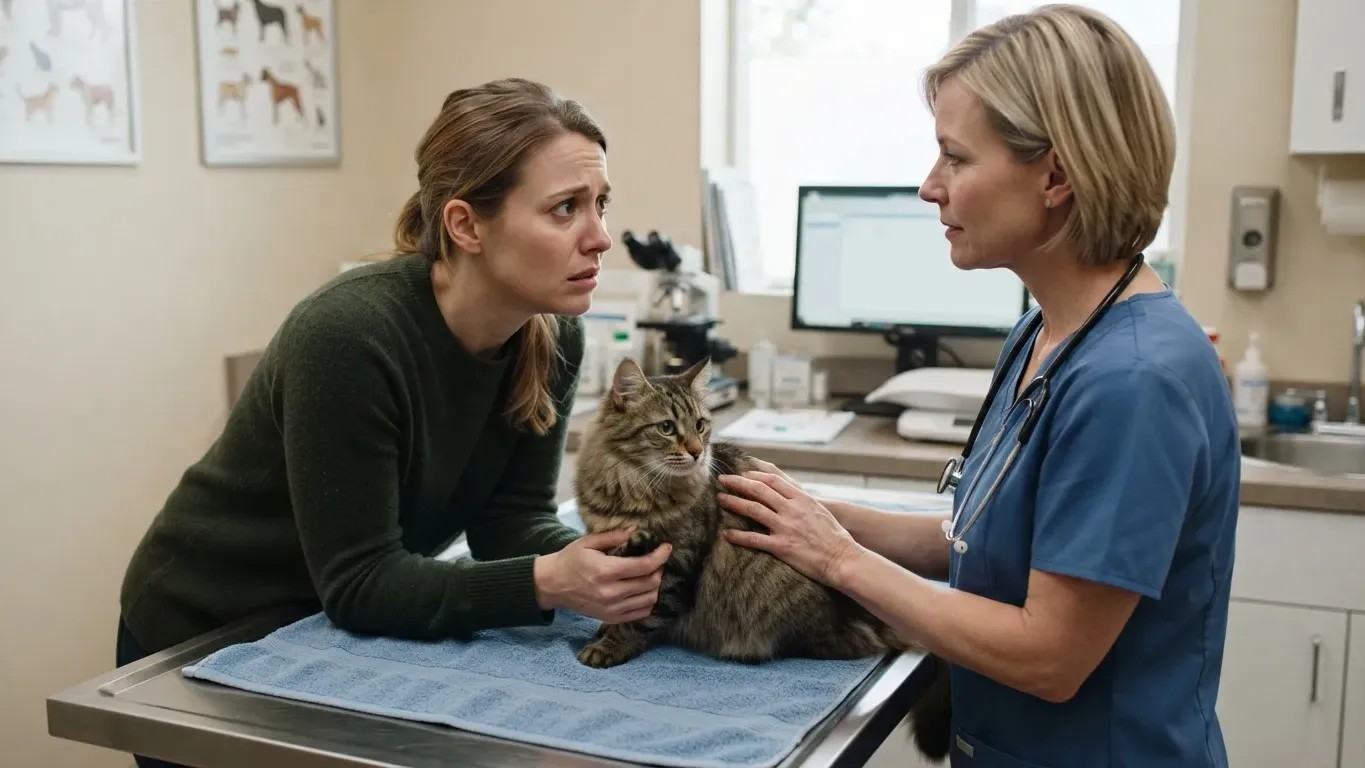
Most people think watching their cat closely just makes them a good pet parent. But there's a fine line between attentive and obsessed, and plenty of owners have crossed it without ever noticing.
Survey data shows the average cat owner has 13 cat-related items lying around the house, and 47% photograph their cat regularly.
That's not devotion. That's a lifestyle.
Clinical psychologist Debra Rothschild says that when caring for your cat starts interfering with everyday life, like skipping work deadlines just to be near it, that's a red flag worth paying attention to.
Sound familiar? Here's what the data and the experts actually say about the habits that separate a loving owner from one who's watching just a little too closely.
#15 - You've Memorized Your Cat's Blinking Patterns
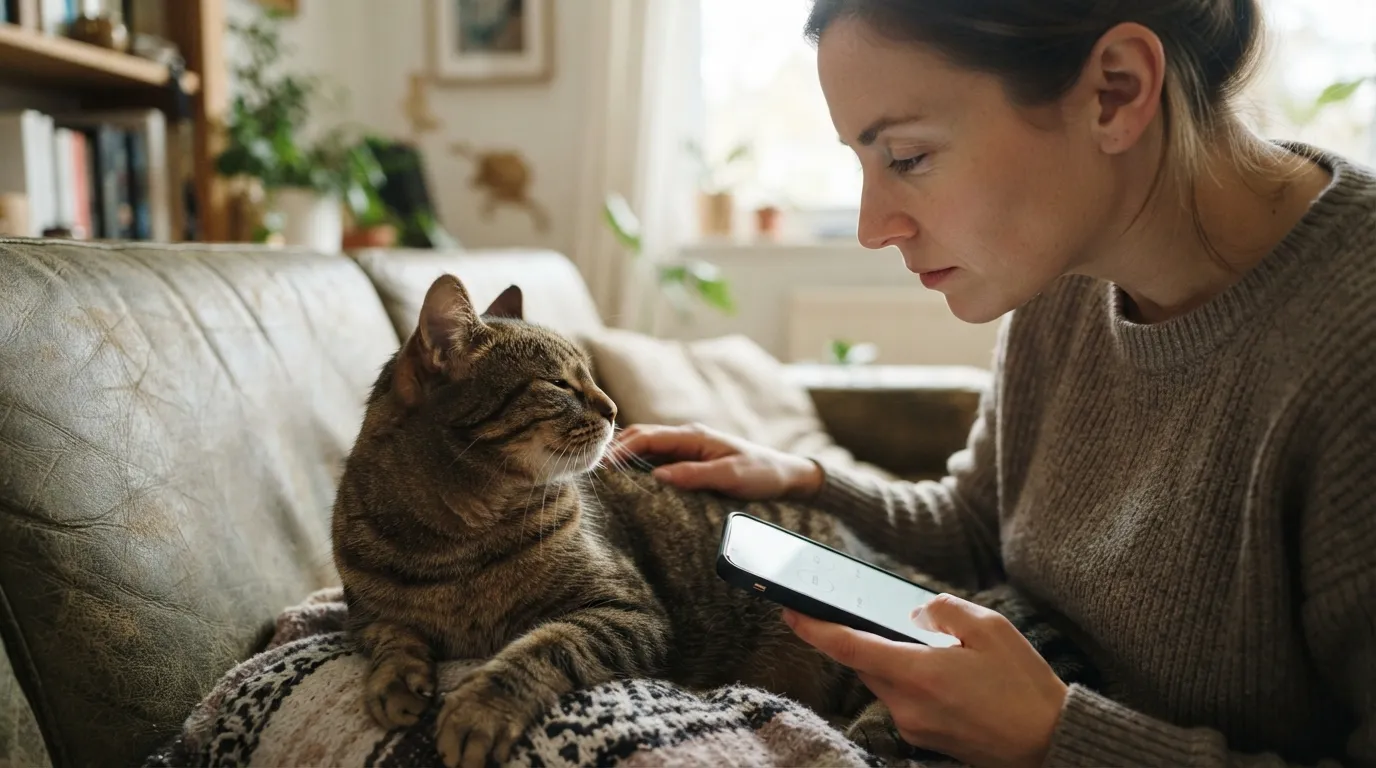
You don't just notice when your cat blinks. You've started cataloging it.
Slow blinking really is a feline sign of trust, and veterinarian Katie Grzyb describes it as "a series of half-blinks and eyelid narrowing." Understanding that is smart.
Tracking the frequency per hour is something else entirely.
You've started slow-blinking back on purpose, then waiting to see if your cat reciprocates. Some owners have even timed the intervals.
Wait until you hear what #14 looks like.
#14 - You've Googled Your Cat's Breathing Rate at 2 A.M.
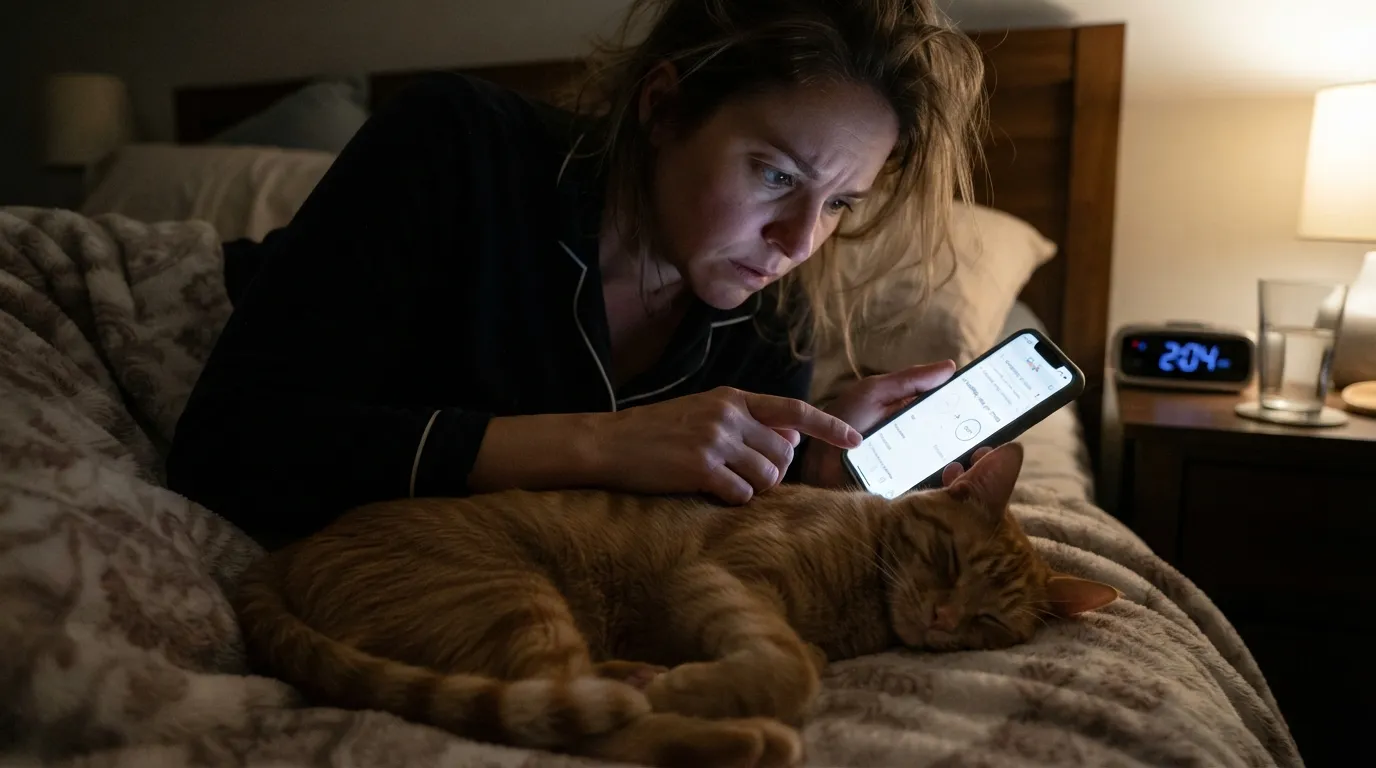
It seemed like it was breathing faster than usual, or maybe slower. You weren't sure, so you counted.
Fast Facts
- A healthy cat's resting breathing rate is normally 15 to 30 breaths per minute.
- Vets recommend counting for a full 60 seconds while your cat is asleep or fully relaxed.
- A rate that stays elevated for days, not just one nap, is what actually warrants a call to the vet.
Minor shifts in a cat's behavior can signal real stress, so some vigilance is genuinely warranted. But timing respiratory cycles on your phone while your cat naps peacefully is a different category of concern.
The real giveaway: owners who do this regularly report their cat is "fine" every single time. The monitoring has become the habit, not the response.
#13 is where the surveillance moves from the cat to the furniture.
#13 - You've Rearranged Your Furniture Around Where Your Cat Prefers to Sit
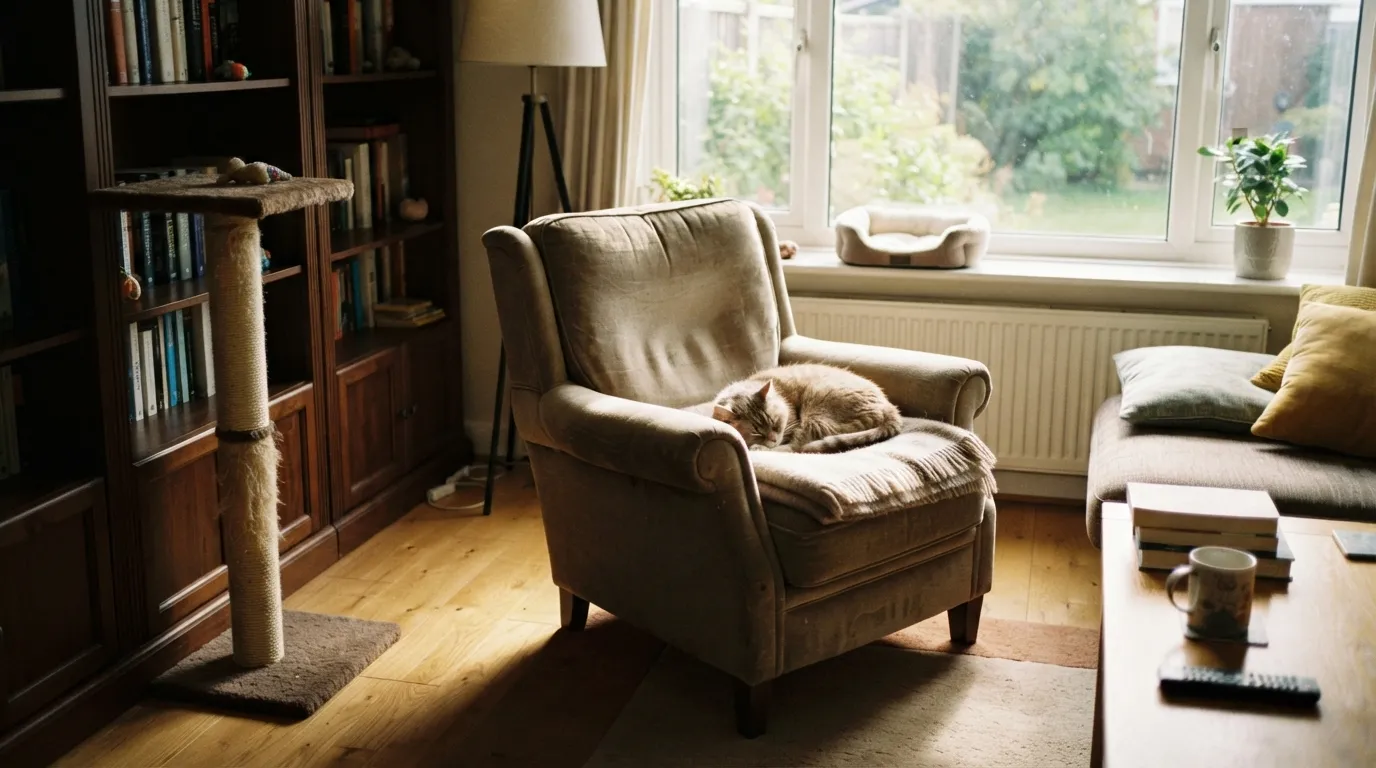
The armchair moved. The bookshelf shifted.
The throw blanket sits "just so." None of it was for you.
Veterinarian Jane Brunt notes that cats "are intelligent animals with a long memory" who "watch and learn from us, noting the patterns of our actions." Turns out the watching goes both ways.
Owners who reorganize their living space around a cat's favorite spots are quietly training themselves to serve feline preferences.
Most people call it "making the cat comfortable." Interior designers call it something else.
Then there's #12, and the folder system.
#12 - You Photograph Your Cat Daily - and Keep a Folder System

One photo folder isn't enough. You've got subfolders, sorted by mood, maybe by month.
Survey data shows 44% of cat owners keep a framed photo of their cat, which is harmless enough. Owners in the "watched too closely" category don't just photograph, they curate.
They can pull up a photo from eight months ago to compare whether their cat's ear-tilt has changed.
This isn't nostalgia. This is longitudinal documentation, and deep down, you know it.
#11 is where the internet becomes a security blanket.
#11 - You Google Mid-Hairball to Confirm It's "Normal"
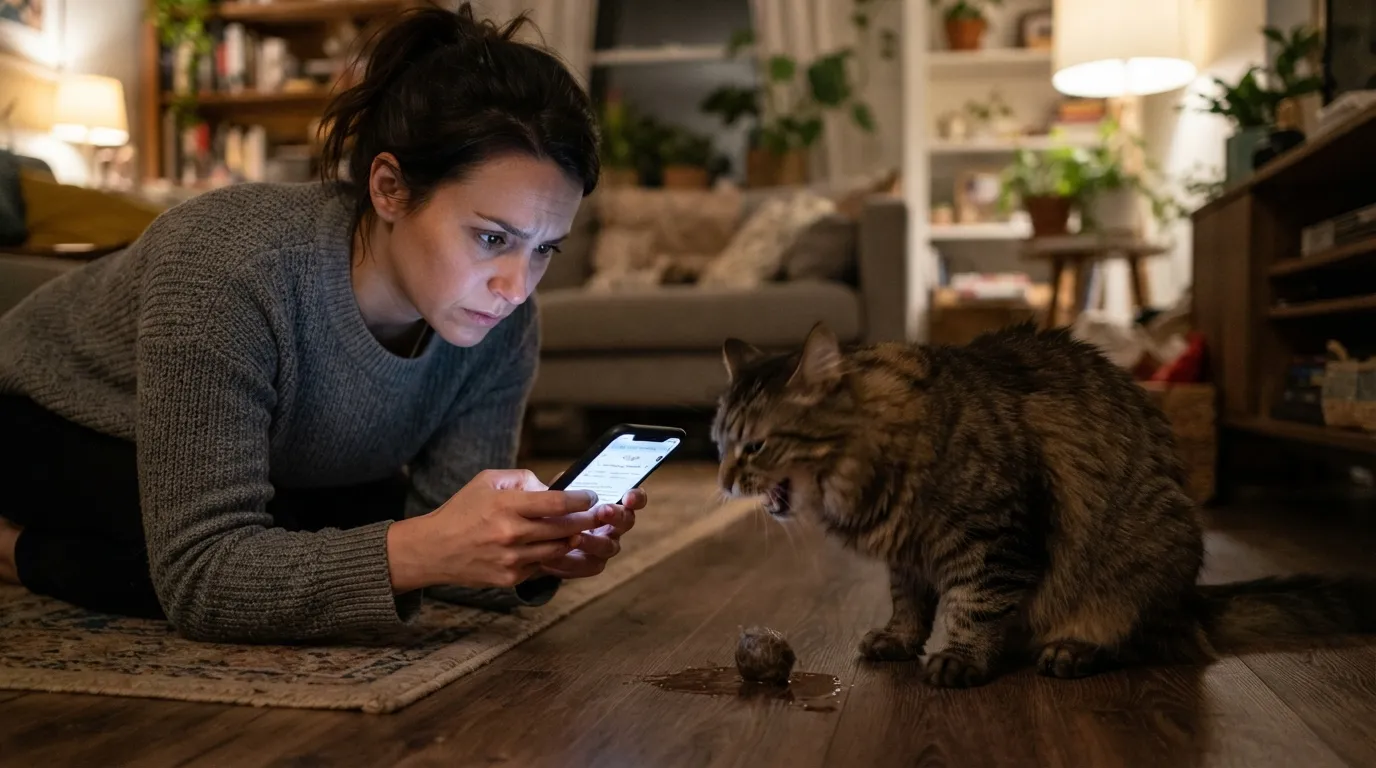
The first time, it's understandable. Many new owners panic during a cat's first hairball and turn to Google for reassurance.
That's forgivable. Doing it on the fifteenth hairball is not.
Owners who watch too closely tend to rebuild their anxiety from scratch every time, even after years of evidence their cat is fine. The compulsion to verify overrides everything they already know.
If your search history has more than three hairball queries this year, this one's for you.
#10 is where instinct starts overriding your own calendar.
#10 - You've Canceled Plans Because Your Cat "Seemed Off"
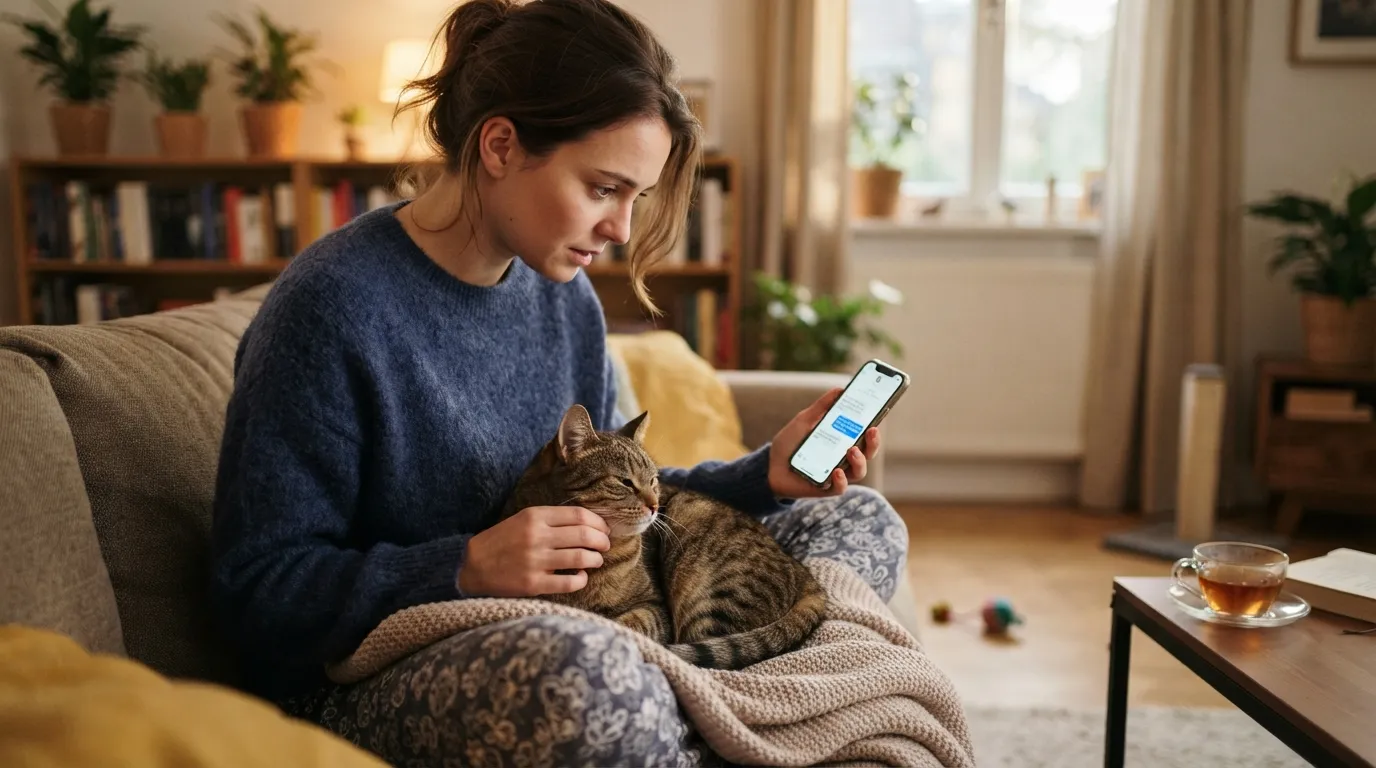
Not sick, not injured. Just vibes.
Clinical psychologists flag putting off social plans for your cat as a warning sign, especially when it means consistently prioritizing the cat over human relationships. But most people who do this genuinely believe their instinct was correct.
And occasionally they are right, which reinforces the behavior every time.
It's the intermittent reward that makes this habit so sticky. One illness caught early justifies fifty unnecessary cancellations.
#9 is where the cat starts getting a whole personality you invented.
#9 - You Narrate Your Cat's Emotional State to Other People
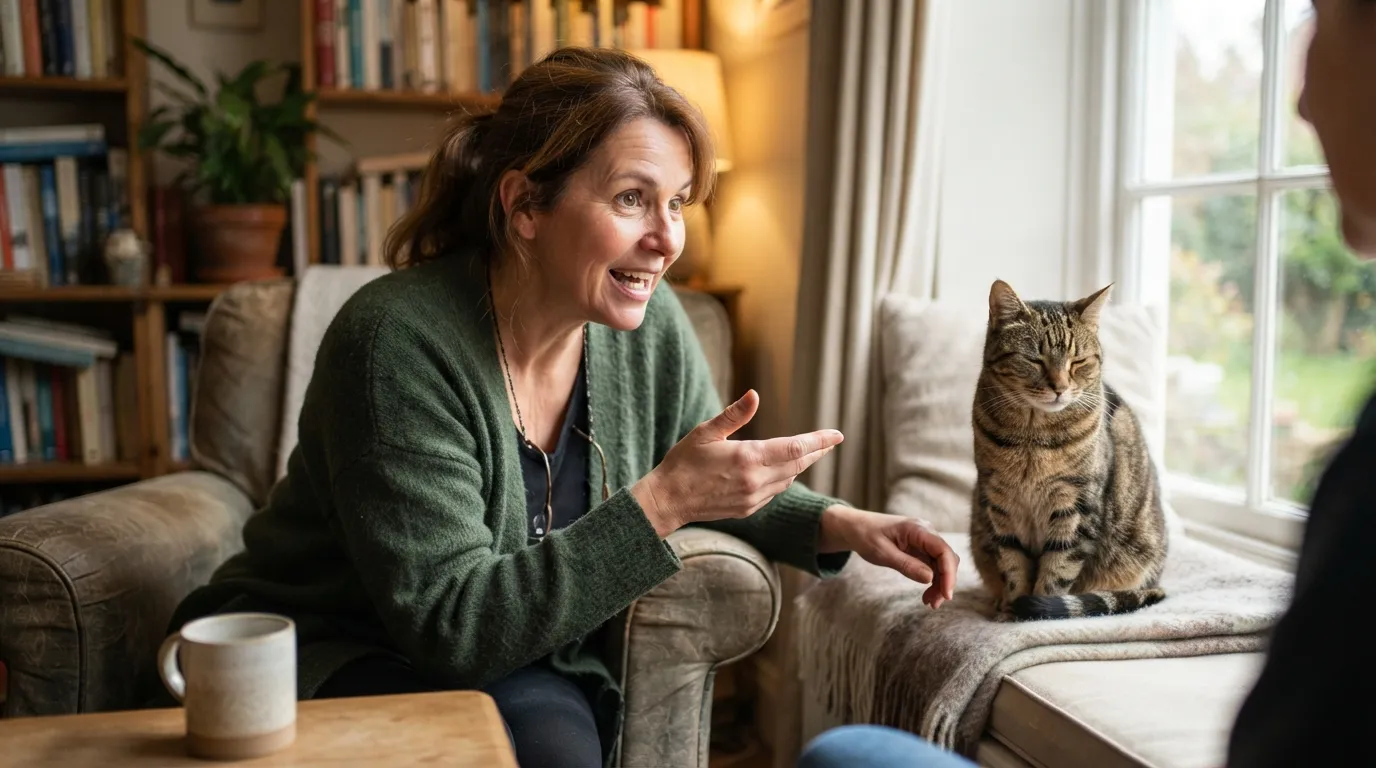
"She's a bit overstimulated right now." "He's in his reflective phase."
"She doesn't like your energy today."
Research shows an owner's behavioral knowledge really can shape how they read their cat. But over-watchers often mistake projection for perception.
They've spent so many hours observing that they've started narrating a screenplay, not reading an animal. The cat is usually just sitting there.
The owner is the one with the complex inner monologue. And #8 is where that same energy turns into a food log.
#8 - You Track What Your Cat Ate - and Judge the Quantity
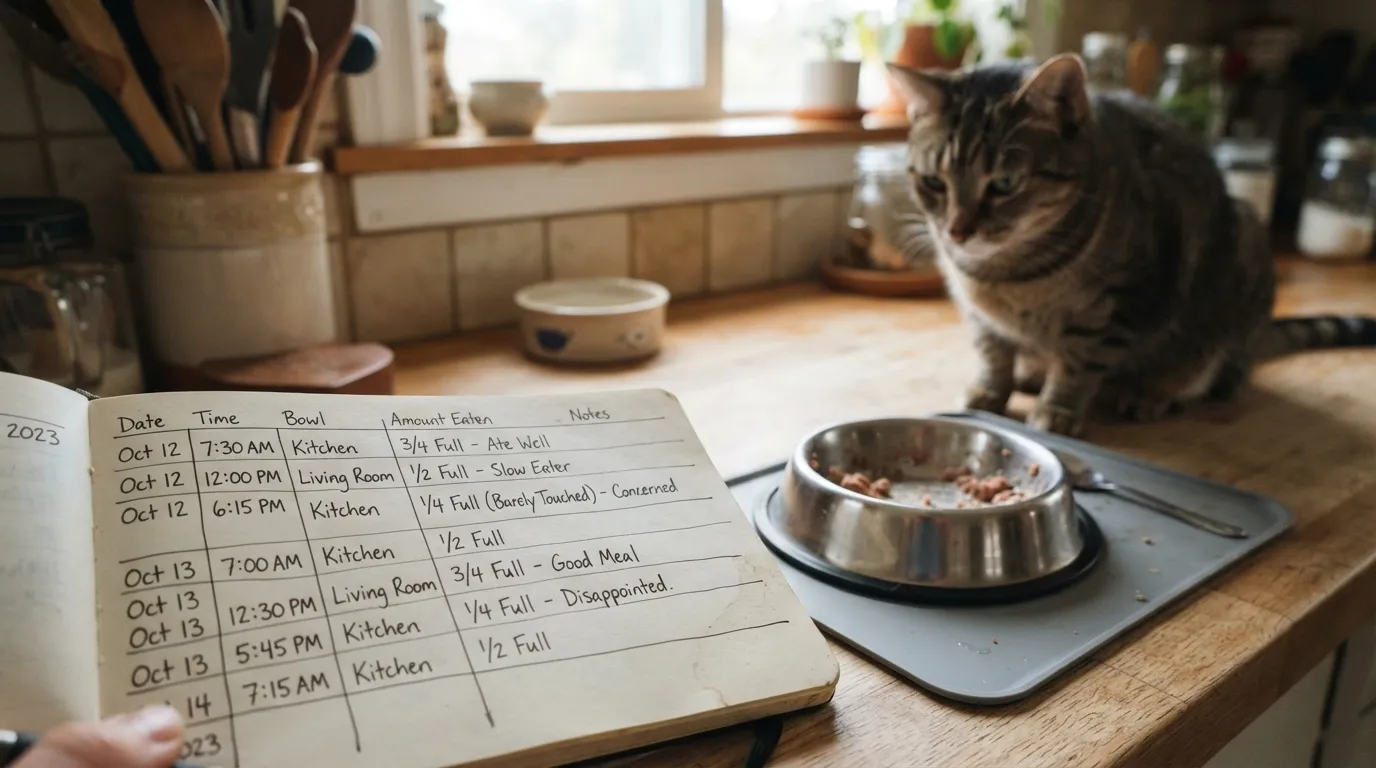
Half the bowl. Three-quarters.
Barely touched. You've noticed all of it.
Studies link feline food consumption to the eating habits of the humans in the house, which may explain why cat and owner obesity often show up together. Monitoring intake has a real veterinary basis.
But owners who log it daily, without a vet ever asking them to, have turned a health check into a ritual of control.
If you've ever felt personally offended that your cat didn't finish a meal, you're deep in this one. #7 is where you become fluent in a language no one taught you.
#7 - You've Become an Accidental Expert in Cat Body Language
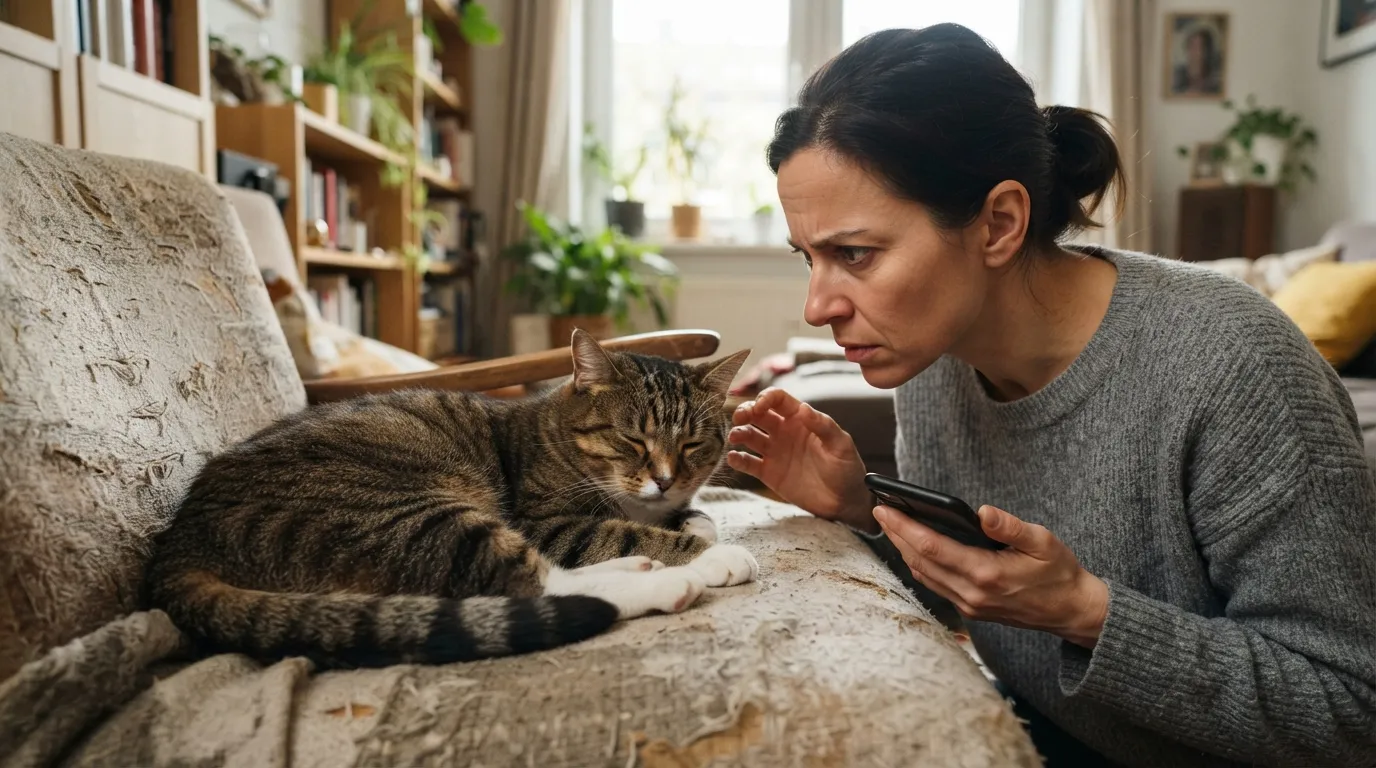
You know what a slow blink means. You know the tail-up greeting.
You know the difference between a trill and a chirp.
Owners with a more accurate read on cat behavior actually report fewer problems, so this sounds like a win. But there's a threshold.
Quick Compare
- Healthy attention: You notice a change and mention it once.
- Over-watching: You scan for problems even when nothing's wrong.
- Healthy attention: You trust what you see.
- Over-watching: You double-check it five more times before believing it.
Over-watchers don't stop at noticing. They scan constantly, hunting for proof something is wrong, even when the signs say otherwise.
One version is attentiveness. The other is anxiety wearing an educational costume - and #6 is where the cameras come out.
#6 - You've Considered a Cat Camera for When You're Already Home
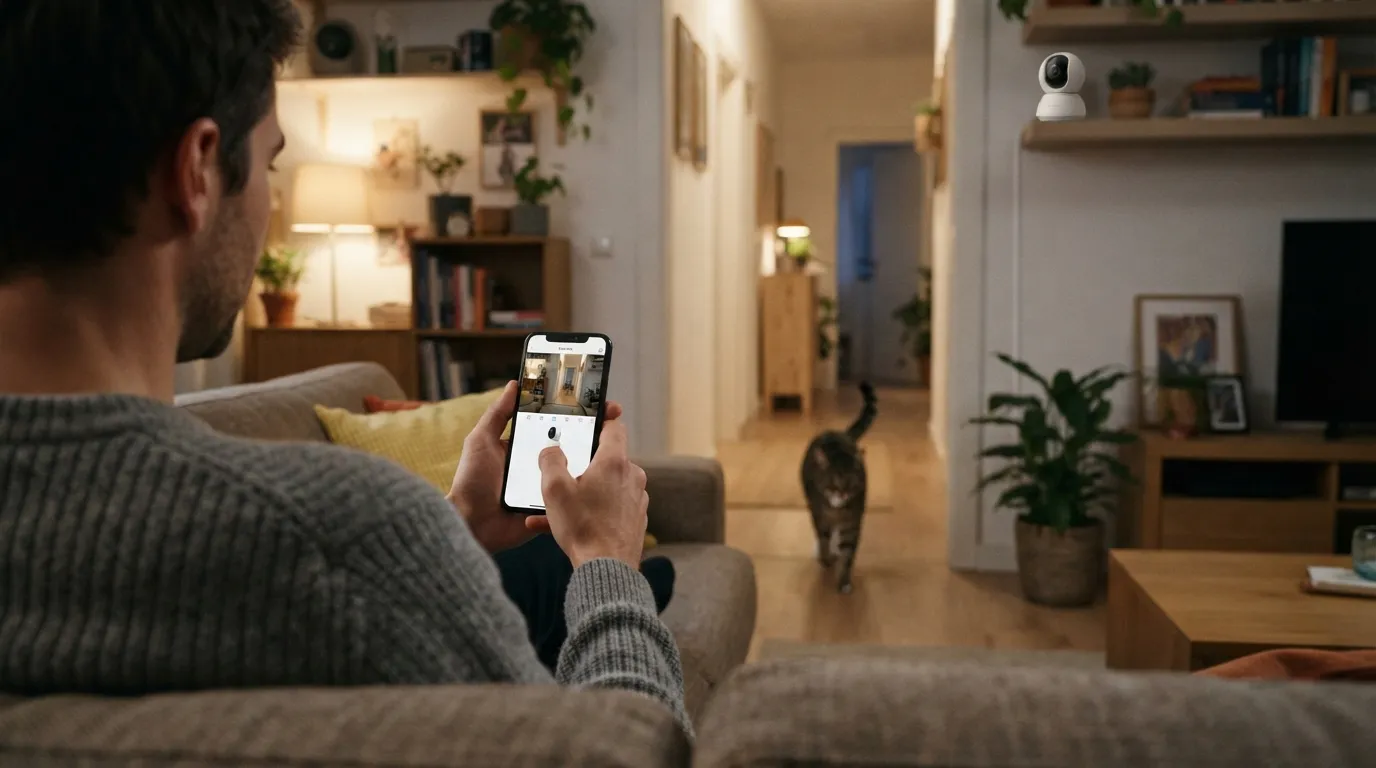
You already have one for when you're out. But lately you've wondered if you need better coverage of the hallway, from a different angle.
Cat owners already spend around nine hours a week in direct contact with their cats. The surveillance adds a whole extra layer on top of that.
The moment you consider a camera for a room you're already sitting in is the moment reasonable precaution tips into something harder to explain at dinner parties. Most owners who reach this point have also, quietly, gone back and watched the footage.
You know who you are. And #5 is where every vet visit starts feeling like a goodbye.
#5 - You Treat Every Vet Visit Like It Might Be the Last One
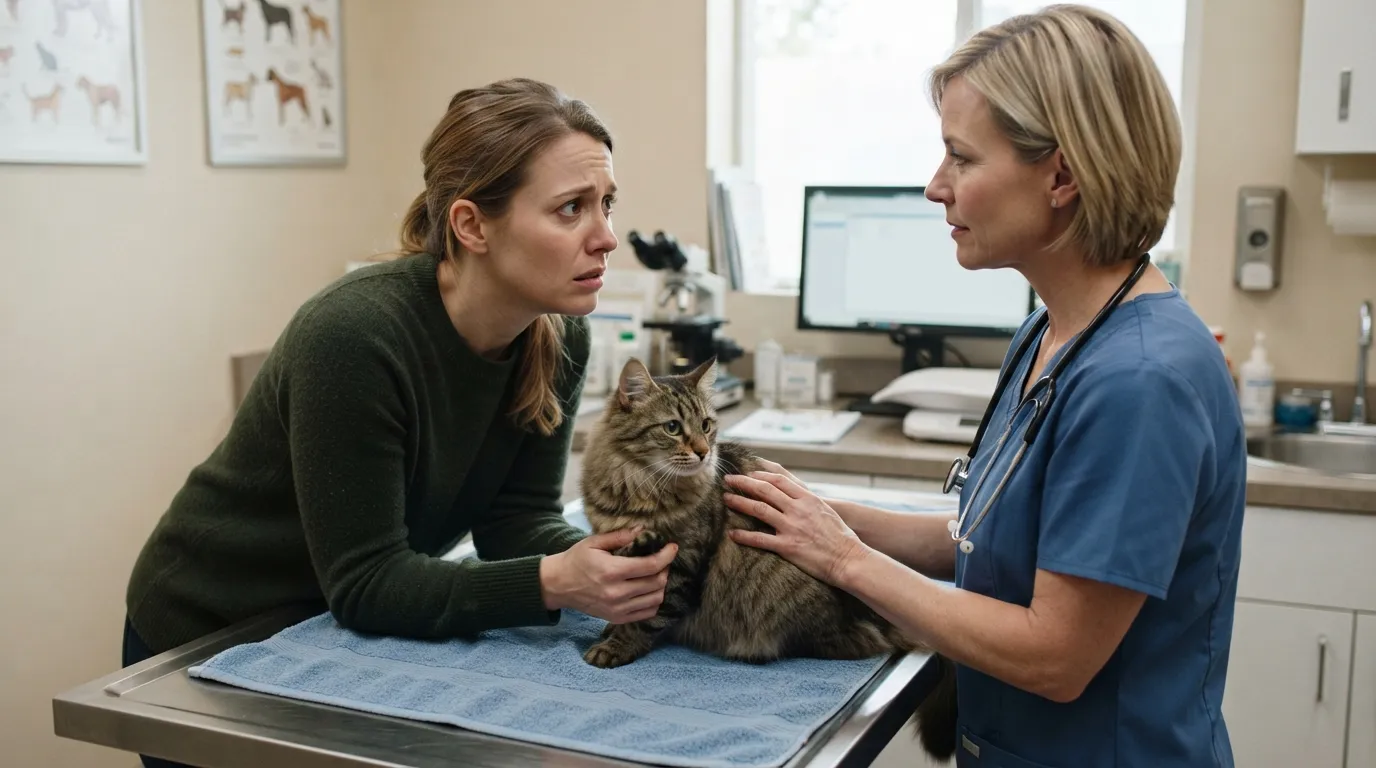
Not because your cat is old or sick. Just because your brain goes there anyway.
Research suggests more neurotic owners are likelier to perceive health problems in their cat, even when none exist. The anxiety isn't really about the cat's actual health.
It's about needing certainty in a relationship where the other party can't offer verbal reassurance. Vets notice this pattern constantly.
The cat is routinely fine. The owner is the one who needs the check-up.
#4 is where the cat quietly starts running your schedule.
#4 - You've Rebuilt Your Sleep Schedule Around Your Cat
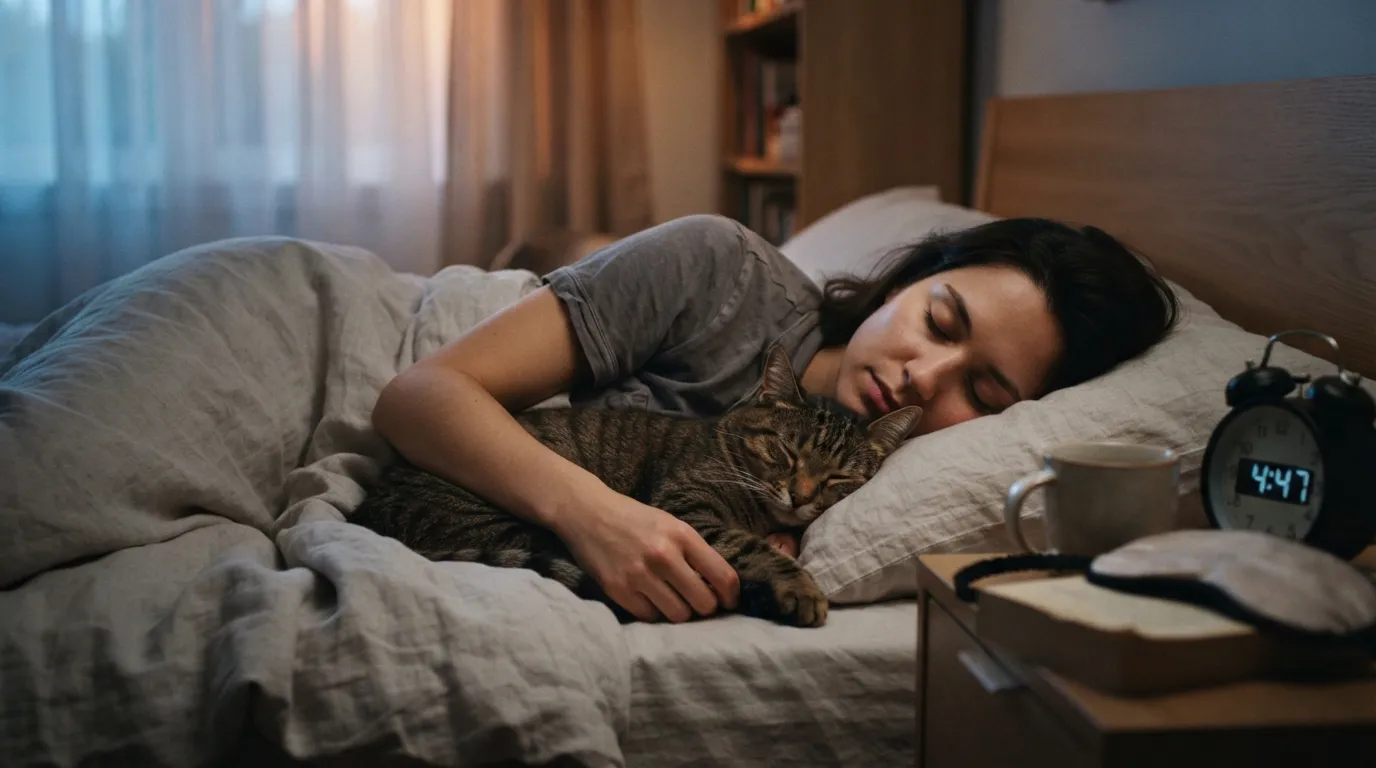
You go to bed when it settles. You wake up when it stirs.
Your alarm is basically decorative at this point.
Cats with high levels of human interaction actually sync their activity patterns to their owners' rhythms. What's less clear is which direction that influence runs.
Plenty of over-attentive owners have quietly restructured their entire sleep cycle around a creature that sleeps sixteen hours a day. And they'll insist they sleep better this way.
They're probably not wrong. That's beside the point - and #3 is where the guilt starts costing you real opportunities.
#3 - You've Turned Down Travel Because of Separation Guilt
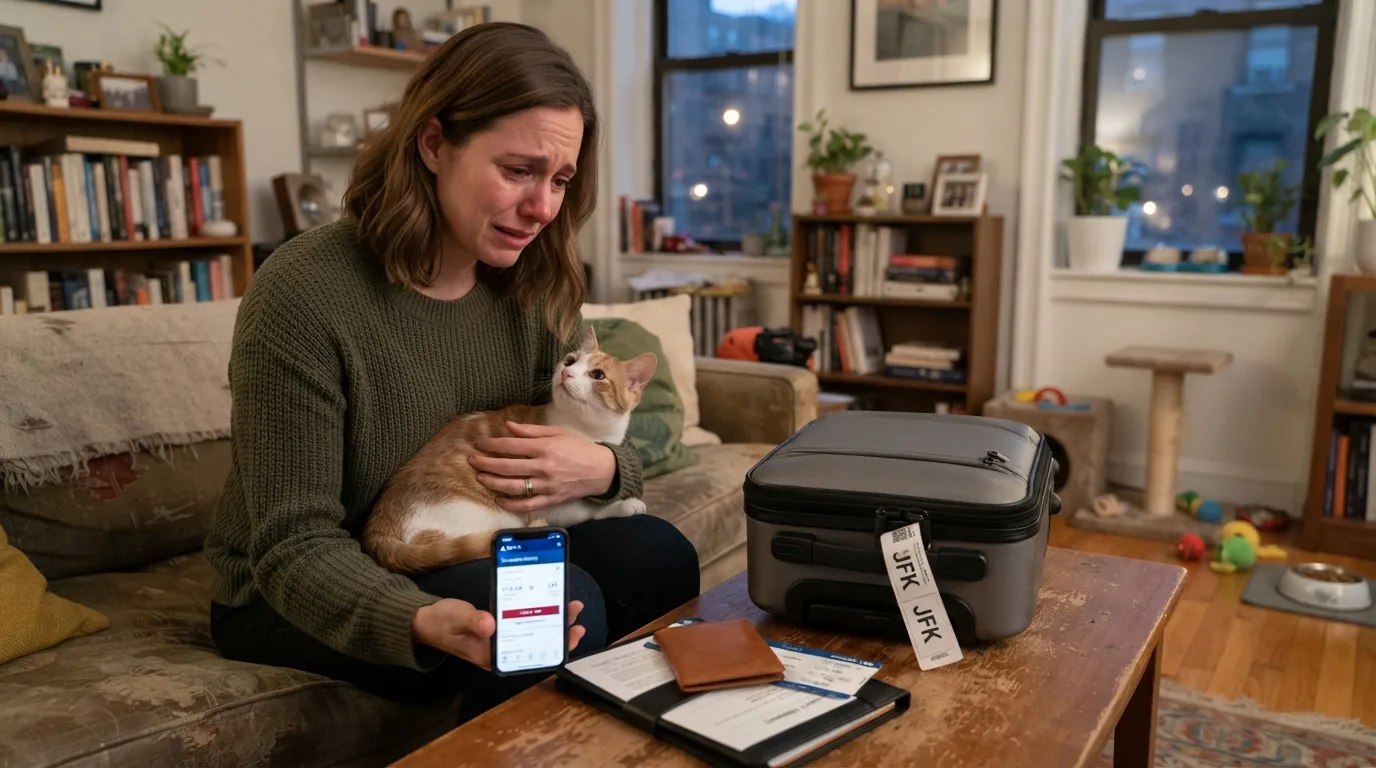
Not logistics. Not cost.
Guilt. Pure, uncut guilt about leaving.
The unconditional love of a cat is something to cherish, but it shouldn't replace a real relationship with other people.
Debra Rothschild, clinical psychologist
Rothschild also points to overspending on cat-related costs, beyond what you can actually afford, as a sign something has tipped too far. Turning down trips or career moves because a cat might feel lonely for a weekend is the same pattern wearing a different outfit.
The cat will be fine. It always is.
The owner is the one who can't leave. And #2 is where the search for happiness turns into something closer to obsession.
#2 - You Study Your Cat's Face for Proof It's Happy
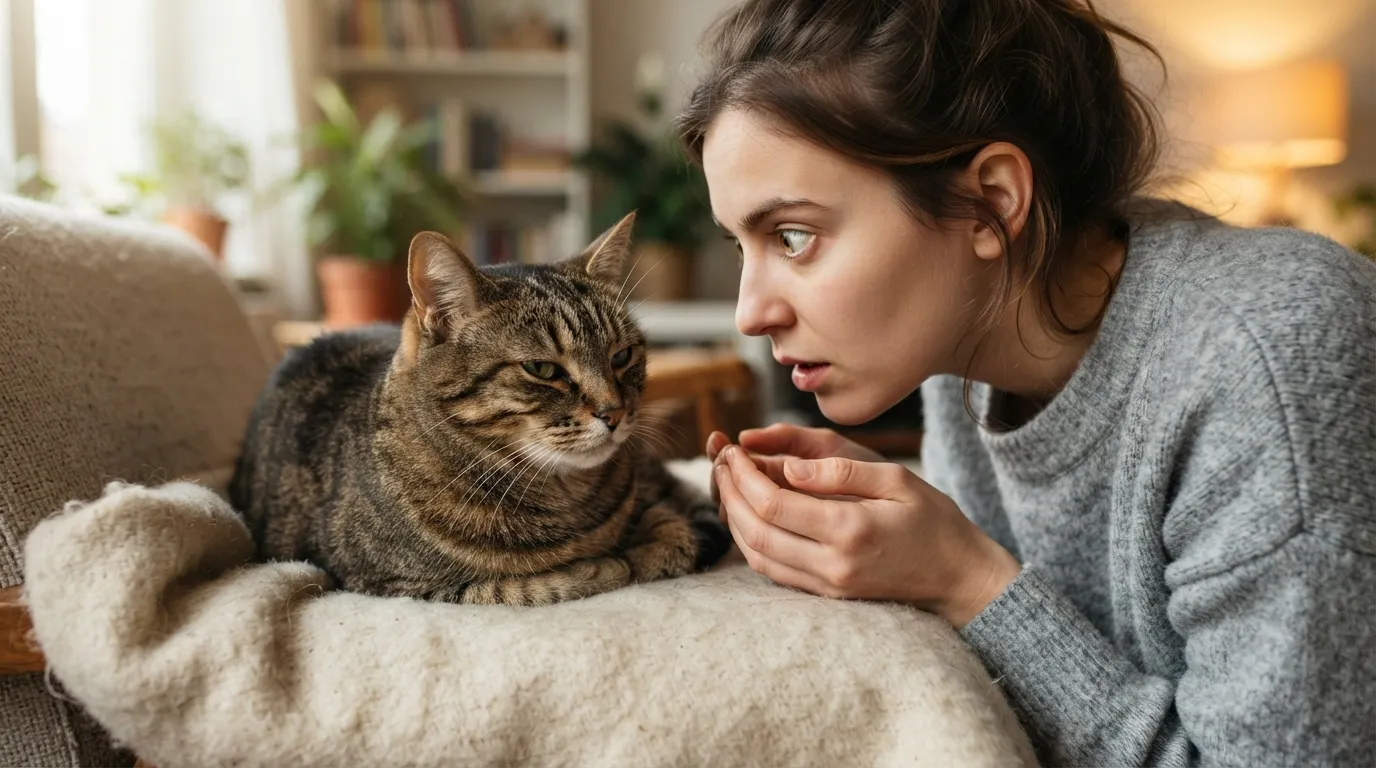
Not checking if something's wrong. Actively hunting for proof your cat is content.
Fulfilled. Thriving.
Studies suggest many owners actually have a limited ability to read cat behavior accurately, which makes this search even more fraught. Over-watchers stare at a resting cat and run a constant internal diagnostic.
The cruel irony: the more you watch, the less you trust what you see. Cats simply aren't reliably expressive by human standards.
Chasing that validation is a loop with no exit. And nothing - nothing - compares to what's waiting at #1.
#1 - You Know Your Cat Better Than You Know Yourself

Their quirks, their preferences, their triggers, their moods, their history. All of it filed, cross-referenced, instantly accessible.
At a Glance
- 60% of cat owners say their cat helps them cope with loneliness.
- 54% say interacting with their cat relieves work stress.
- 93% report feeling a strong connection to their cat.
For a lot of people, the cat has become the most consistent emotional anchor in their life. That's not a criticism. It's just true.
But owners who can describe their cat's personality in extraordinary detail, yet struggle to name their own needs and feelings, have quietly outsourced their inner life to a ten-pound animal.
Connection and fixation aren't the same thing, and the ones who've truly crossed that line are usually the last to see it.
The Bottom Line
Cat ownership is genuinely good for you. The data backs it up, and the bond is real.
But watching your cat too closely, rearranging your sleep, your plans, your furniture, your whole life around it, quietly shifts the dynamic. Research even shows neurotic owners tend to predict worse behavioral outcomes in their cats, possibly by becoming overprotective, unpredictable, or controlling in ways the animal actually feels.
Worth Knowing
- Canceling plans over a feeling, not an actual symptom, is worth noticing.
- Re-checking the same reassurance more than a few times a week points to anxiety, not curiosity.
- Building your whole schedule around a nap cycle is a sign the balance has shifted.
The cat isn't the anxious one. You are.
The most devoted owners are often the ones who need a little healthy distance the most.
Did any of these hit too close to home? Drop the one that got you in the comments - we won't judge. Much.