16 Quiet Ways a Sick Cat Keeps Reaching for the One Human It Fully Trusts
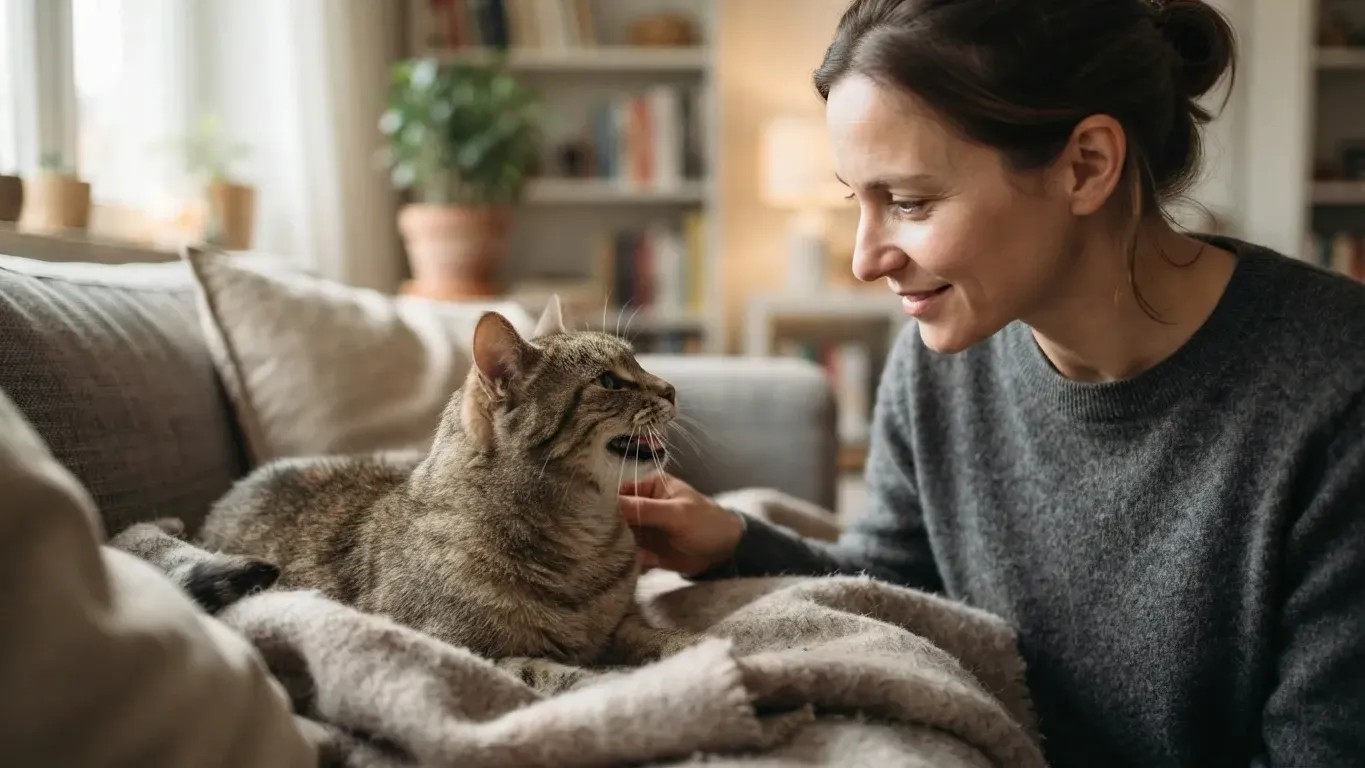
Most people assume a sick cat pulls away from everyone - hides under the bed, goes cold, disappears into pure survival mode. That's usually true with strangers, or even with people it merely tolerates.
But with the one human it has fully bonded with, the opposite often happens. The gestures get quieter, smaller, easier to miss - and almost every owner overlooks them completely.
The sicker the cat gets, the more one specific person becomes its entire world. Here's what that looks like, counted down to the single gesture that says everything.
#16 - The Slow Blink That Costs Everything
A sick cat conserves every ounce of energy, which is exactly why this sign matters so much.
A slow blink is widely recognized as a sign of trust and affection in cats. When a cat is unwell, holding eye contact and blinking slowly at one person isn't an accident - it's a deliberate effort.
A sick cat doing this is spending precious energy to say "you are safe." It's a choice, not a reflex.
Fast Facts
- A landmark University of Sussex study found cat half-blinks and eye narrowing occurred more frequently in response to owners' slow blink stimuli towards their cats.
- In a second experiment, cats had a higher propensity to approach the experimenter after a slow blink interaction than when they had adopted a neutral expression.
- Researchers concluded that slow blink sequences may function as a form of positive emotional communication between cats and humans.
Most owners mistake it for drowsiness and look away - the worst possible response. Blink back slowly, and you close the loop.
But that's nothing compared to the physical reach coming next.
#15 - The Single Head Butt Against Your Hand
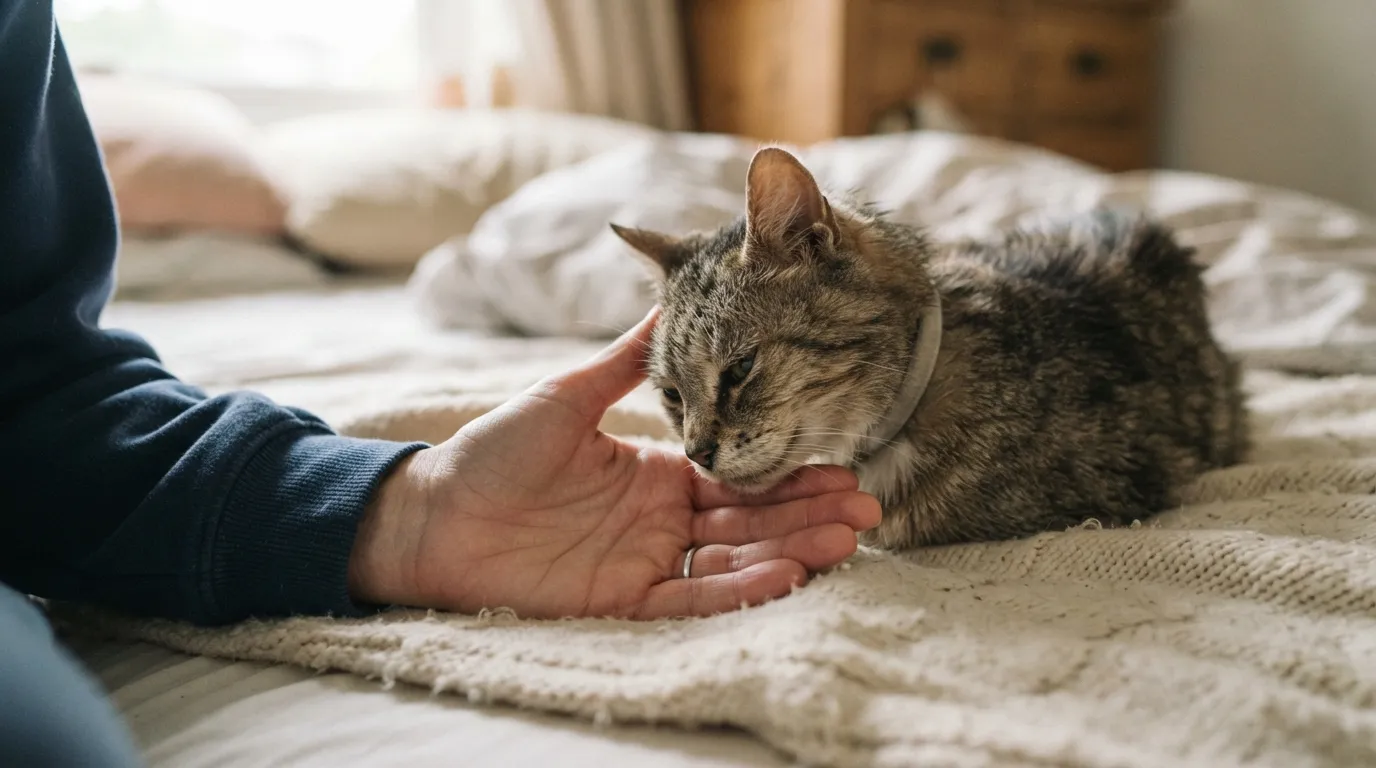
It's gentle - almost too gentle to notice. That's exactly the point.
Head butts and chin rubbing are classic signs of feline affection, powered by scent glands cats use to claim what they love. When a sick cat is too weak for its usual enthusiastic bunting, it often offers just one soft press of the forehead against a trusted hand.
That single nudge is the stripped-down, minimum-effort version of one of feline love's most powerful gestures. It means the bond is still being maintained, even through pain.
This one's easy to miss. The next sign is even quieter - and it will make you look twice.
#14 - Choosing to Rest Exactly One Body-Length Away
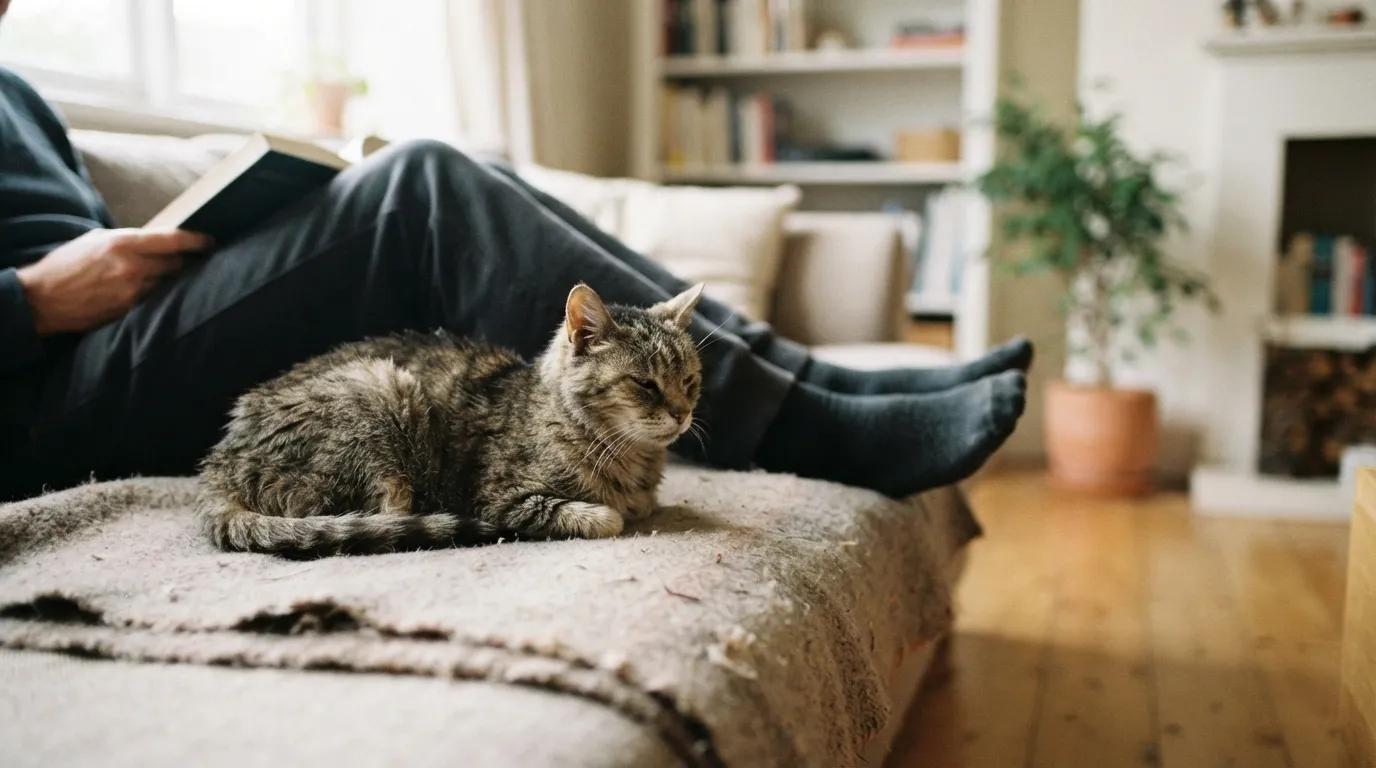
Not in your lap. Not across the room. Precisely close - but never touching.
Even without physical contact, a cat sharing your space is showing attachment. It can look casual, almost disinterested, but the positioning is never random.
For a sick cat, this calculated proximity works as a form of emotional anchoring. Close enough to feel your warmth and movement, far enough to rest undisturbed.
Only a fully trusted human gets positioned this precisely.
The next behavior looks even more ordinary - until you understand what's actually driving it.
#13 - Following You to the Doorway (But Not Inside)
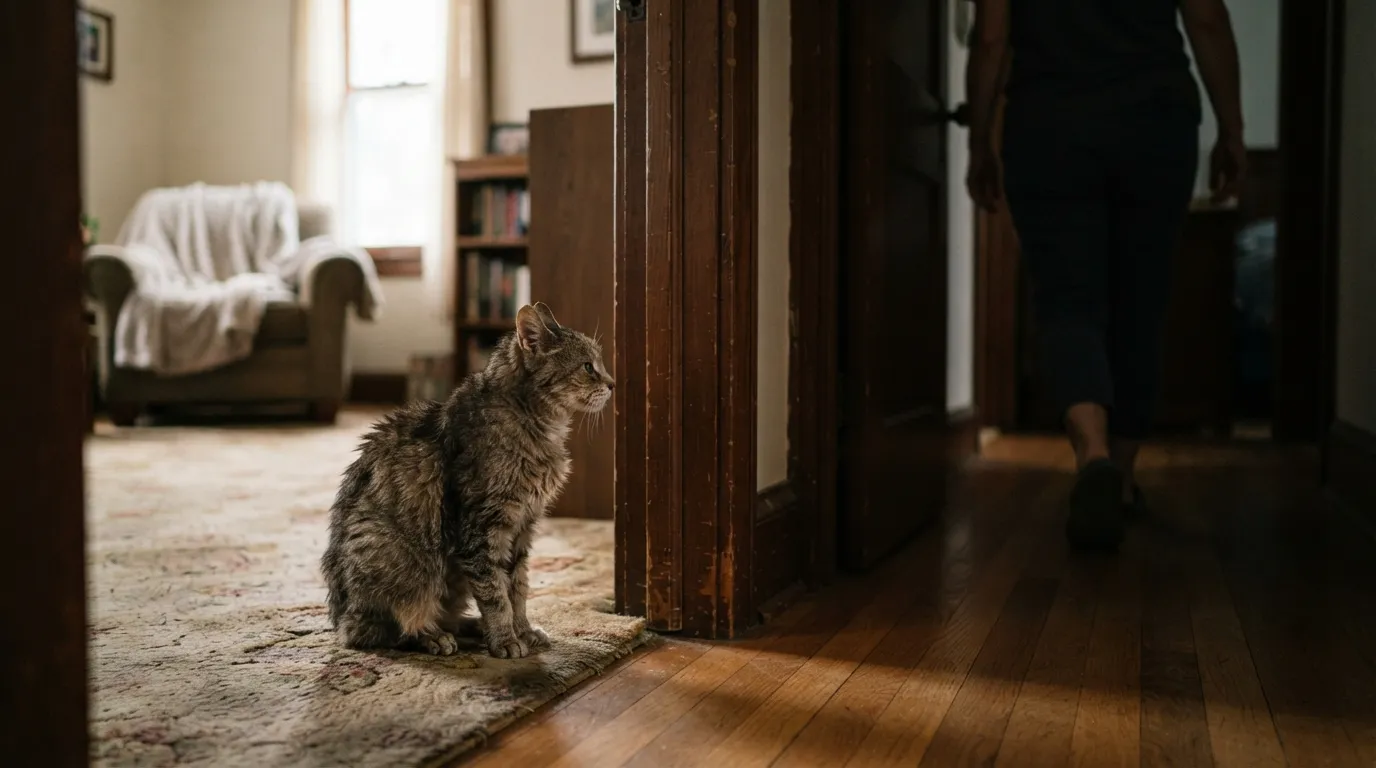
A sick cat won't follow you everywhere. But it will follow you to the exact edge of its comfort zone.
A healthy cat shadows you room to room, sometimes with vocal check-ins along the way. A sick one often lacks the strength for that, so it migrates to the doorway, watches you disappear, and waits in the same spot every time.
When illness limits that instinct to a single doorway vigil, the emotional drive behind it is identical - only the body is weaker. The fact that it still tries is everything.
What happens when it can't even make it to the door? That's next, and it's heartbreaking.
#12 - Orienting Its Body Toward You Across the Room
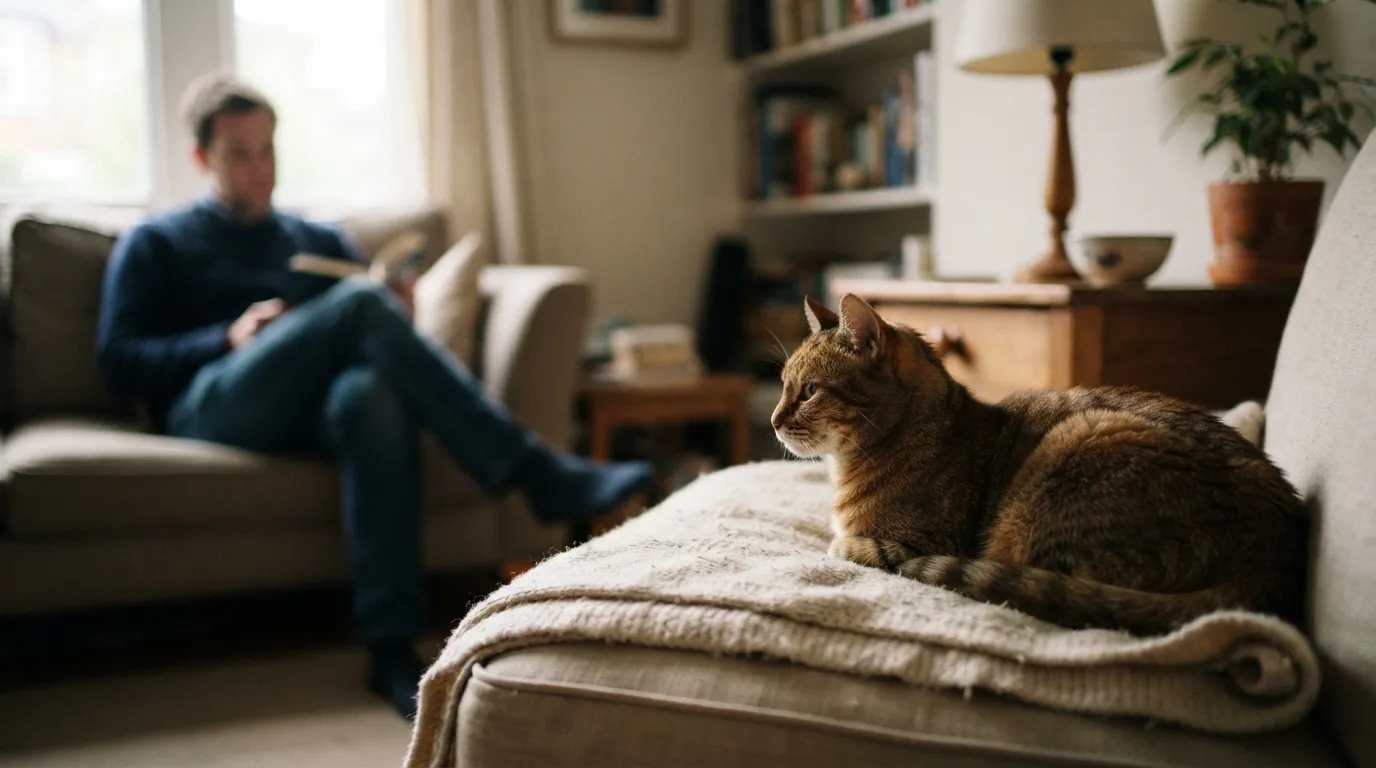
The cat can't move much. So instead, it points itself at you.
Most owners never clock this posture shift - the cat lies still, head turned, body angled in your direction like a compass needle finding north. Cats are extraordinarily sensitive to subtle shifts in a person's voice, breathing, and physical condition.
When a sick cat stays fixed on you from across the room, it's monitoring you the way it would monitor a threat - except in reverse. You're the thing that makes it feel safe, and it keeps you in range at all times.
Next up is a sign that involves sound.
#11 - The Single, Quiet Chirp for No Apparent Reason
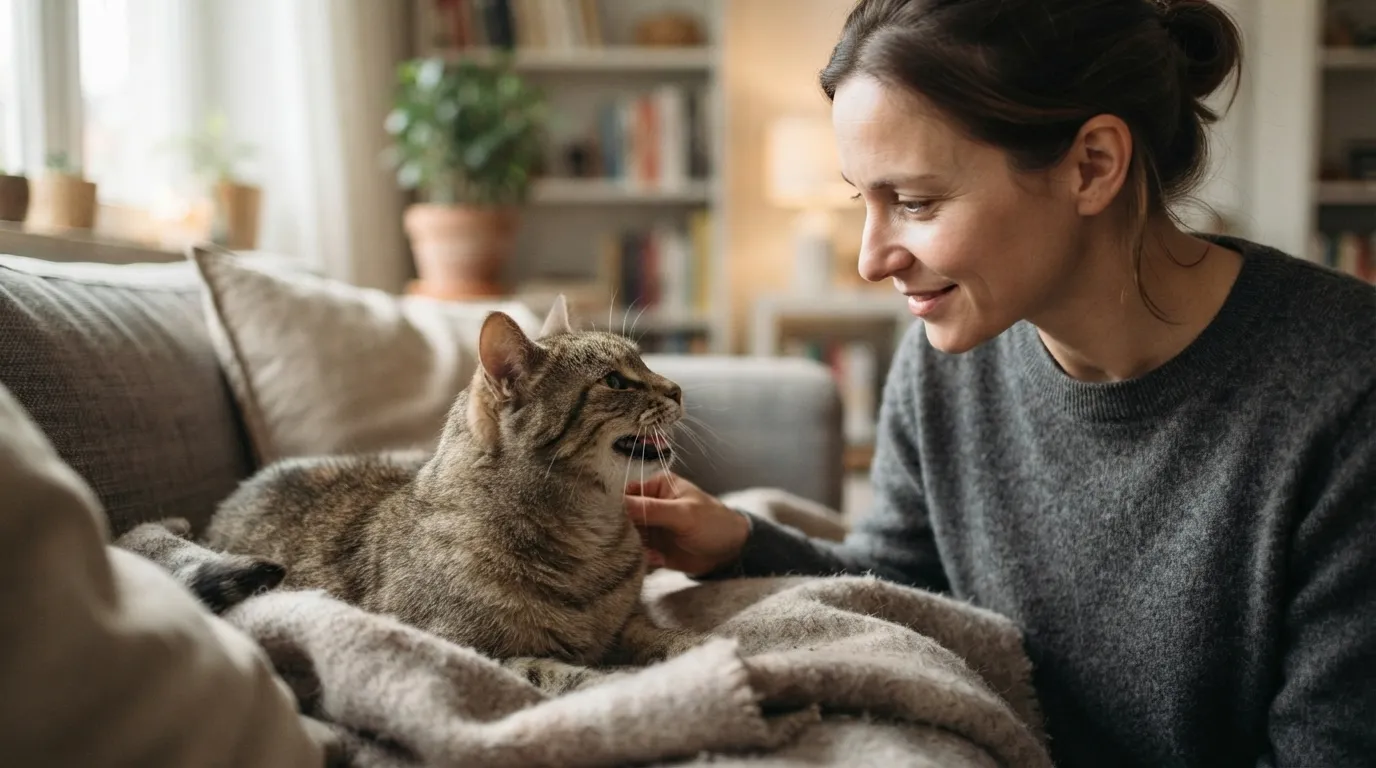
It's not a demand. It's not a complaint. It's one small sound, aimed directly at you.
Cats often chirp softly when spoken to gently, but a sick cat that initiates this unprompted is doing something different - it's confirming you're still there. Most cat-to-cat vocalization is negative, so a soft, deliberate meow aimed at a human is reserved for something specific.
A sick cat spending its limited energy to chirp quietly at one person is reserving that communication exclusively for its most trusted bond. It doesn't do this for anyone else in the house.
Respond softly - it matters more than you think.
The next sign involves something even more primal than sound.
#10 - Purring That Isn't About Happiness
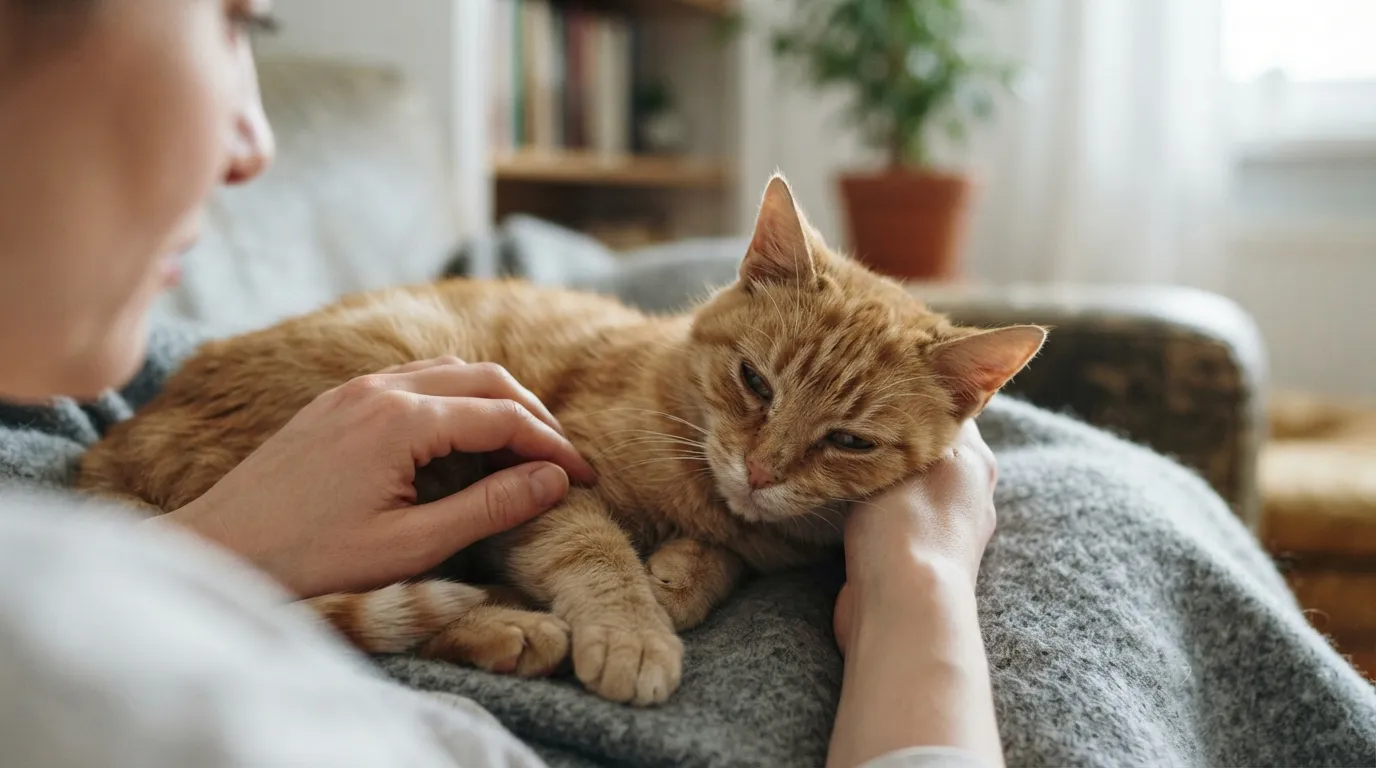
This is the one most owners completely misread.
Purring is usually linked to contentment, but cats also purr when in pain or distress as a form of self-soothing. Research over recent decades points to a second function beyond happiness - possible self-healing.
Worth Knowing
- Domestic cat purrs typically produce strong frequencies between 25 and 150 Hz.
- The lowest part of that range overlaps with the two frequencies known to best promote bone growth/fracture healing.
- Cats purr when they are severely injured or frightened, not just when content.
When a sick cat purrs specifically near its trusted human, it may be using that person as an anchor for self-regulation. It's not performing happiness - it's borrowing calm.
Read it alongside loose muscles and soft eyes. If the cat sought you out to do it, that's the whole story.
What happens when the cat is too weak to even purr? Check the next one.
#9 - Pressing Its Face Into Your Palm and Going Still
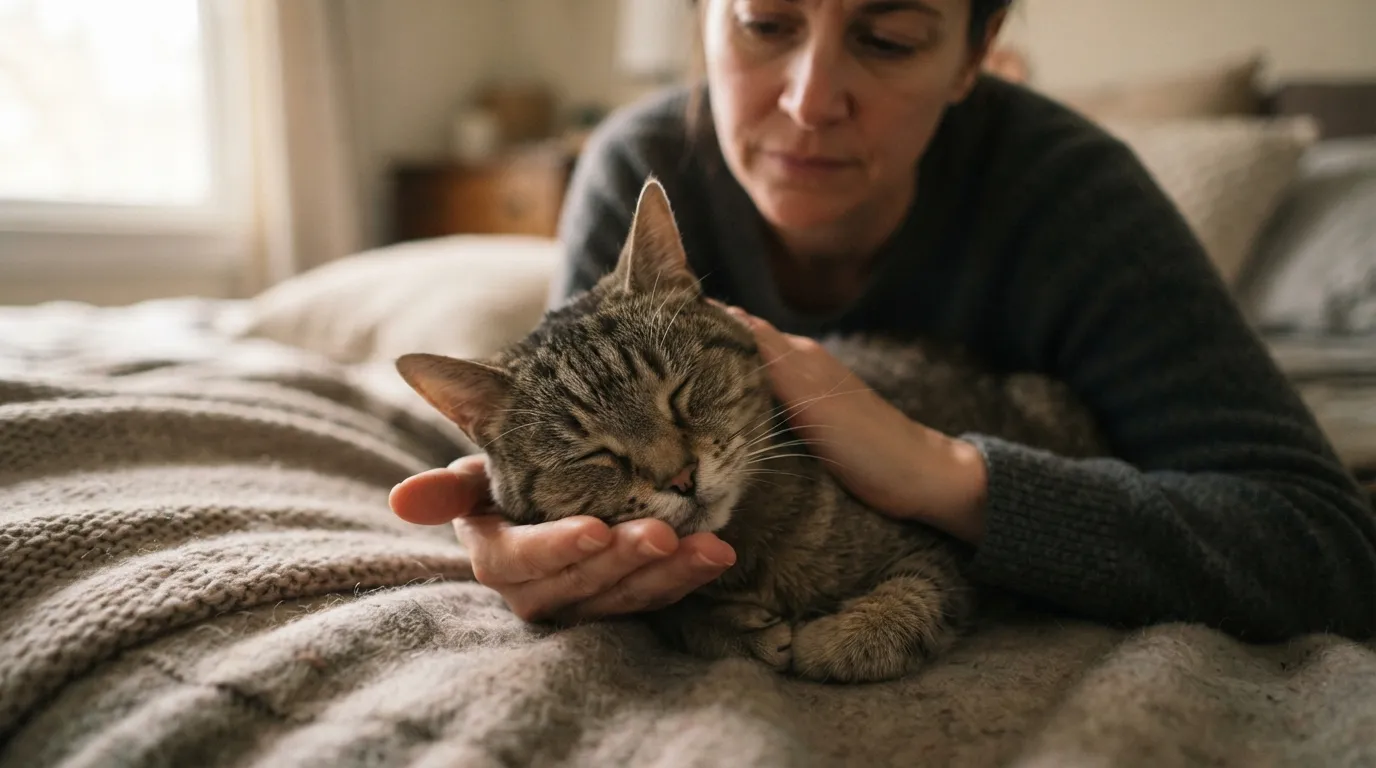
No rubbing. No kneading. Just contact - then complete stillness.
The cat finds your open hand, presses its face into it, and stops moving entirely. This is different from a head-butt - it's a search for a specific sensory input, driven by distress.
The stillness is the key detail - the sick cat has found exactly what it needed and stopped searching. It has arrived.
Only the person it fully trusts produces that response. Don't move your hand.
What its eyes do next connects directly to the following sign.
#8 - Half-Closing Its Eyes While You're Nearby
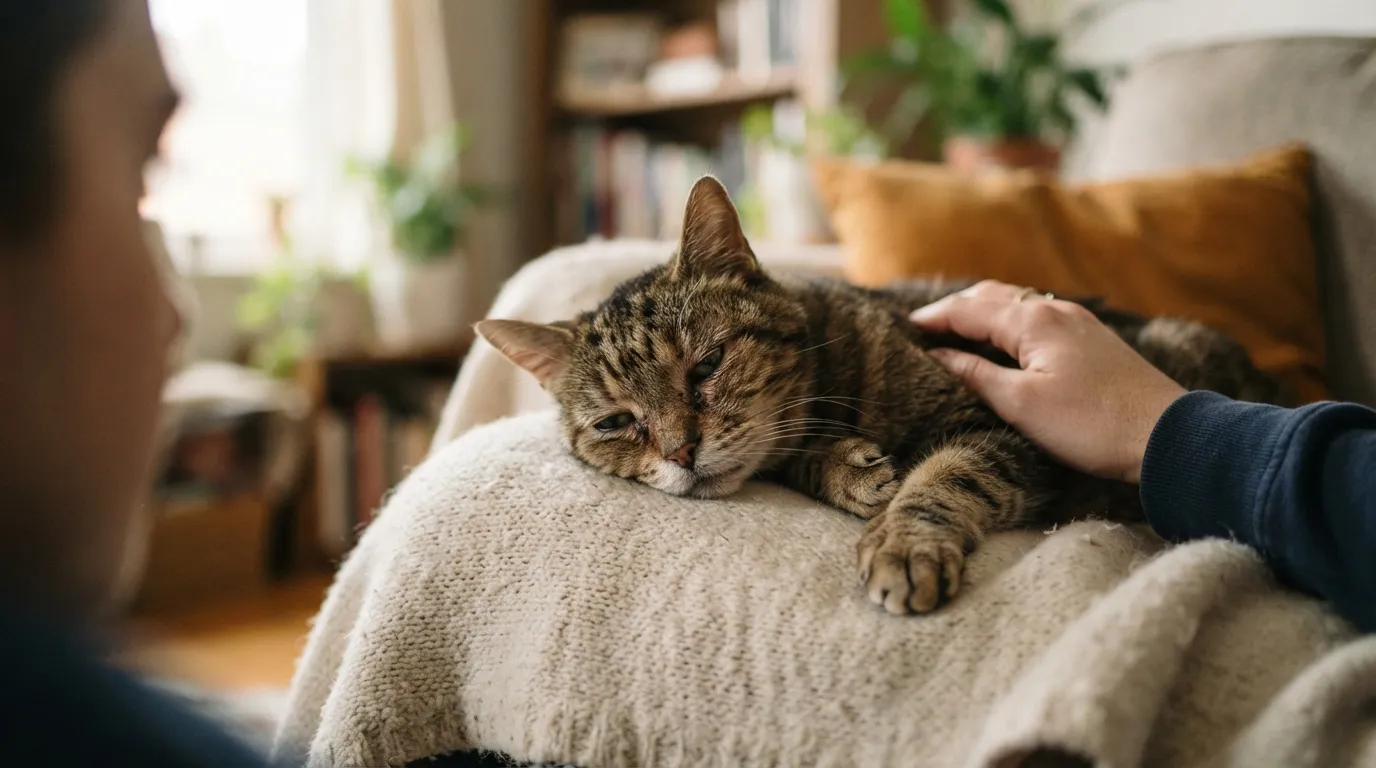
Not fully closed. Half-closed - and staying that way.
Half-closed eyes usually signal relaxation and contentment. But in a sick cat, this expression near one specific person carries extra weight.
A sick, physiologically unguarded animal cannot fake relaxation - its body tells the truth. Half-closed eyes from a sick cat mean it has dropped its threat-monitoring around you specifically, a concession it makes for no one else.
Achieving that loose, soft-eyed state while sick is proof of the bond itself.
What the body does next is even more vulnerable.
#7 - Rolling Slightly to One Side (But Not Going Belly-Up)
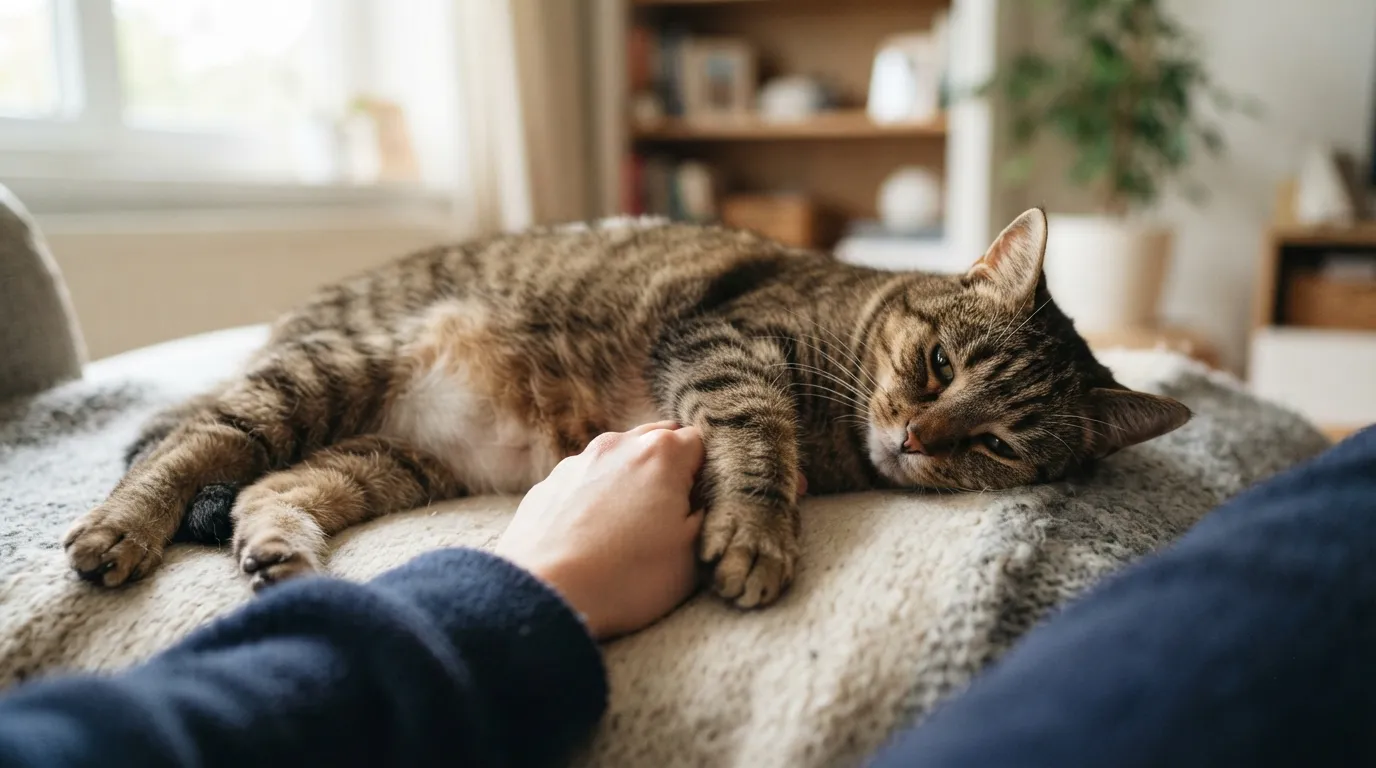
It's not a full belly exposure. It's a quarter-turn - and that's more meaningful than it looks.
A relaxed cat may stretch out and expose its belly, the ultimate trust signal since the abdomen is its most vulnerable area. A sick cat rarely has the energy or confidence for a full roll, so it offers a partial tilt instead - just enough to show one flank.
This controlled vulnerability is actually more deliberate than a full belly roll. The cat is choosing exactly how exposed to be, and choosing to do it next to you.
In a weakened cat, that signal costs more - which makes it worth more.
Keep watching. The next one is something most owners notice but never understand.
#6 - Kneading Very Slowly on Your Clothing or Blanket
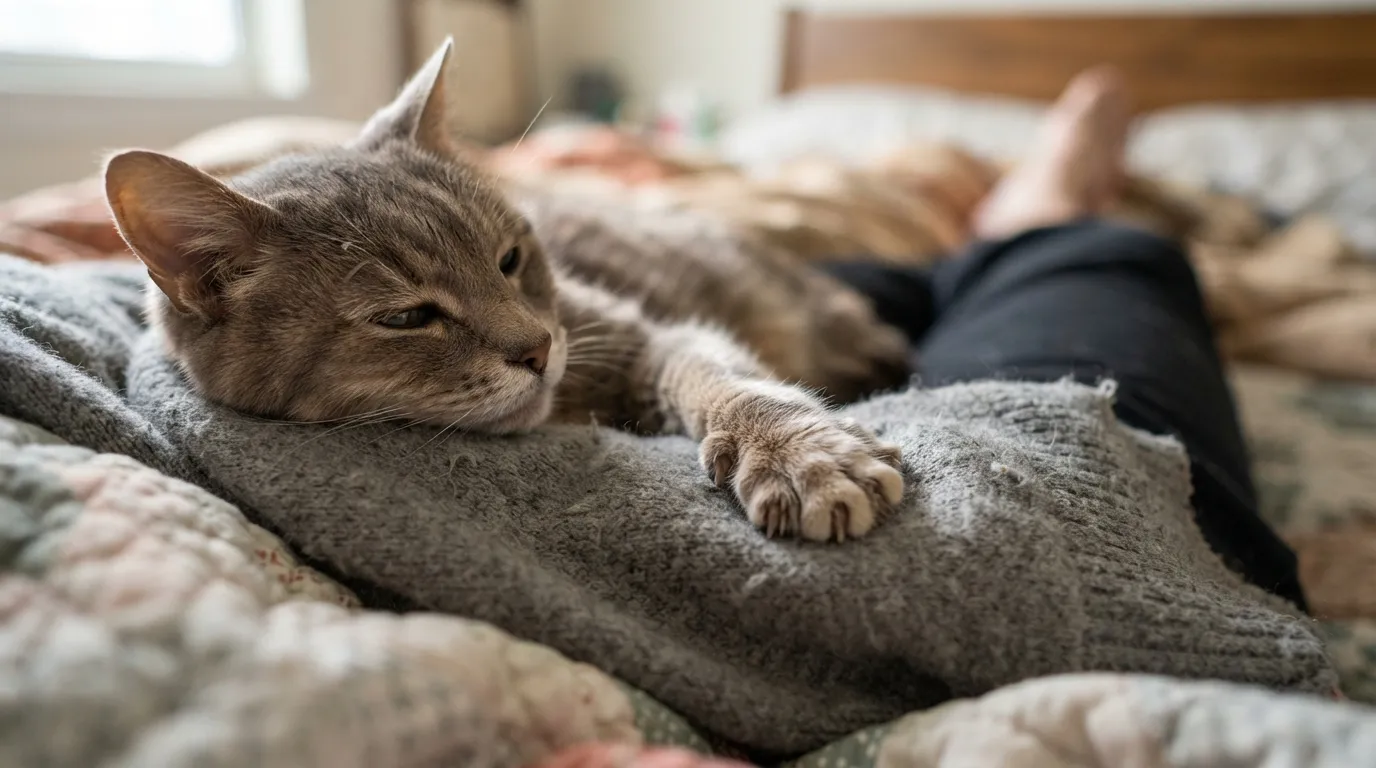
The motion is barely there - one paw, slow, almost exploratory.
Kneading traces back to kittenhood and shows up most when a cat feels safe near a trusted person. It's a soothing behavior, not a random habit.
When a sick cat kneads slowly on something that smells like you, it's self-soothing through your scent while you're present. It has encoded you as a comfort signal at a neurological level.
Even reduced to one slow paw, the meaning doesn't change.
The next sign involves something cats almost never do for anyone they don't fully trust.
#5 - Letting You Touch Its Paws Without Pulling Away
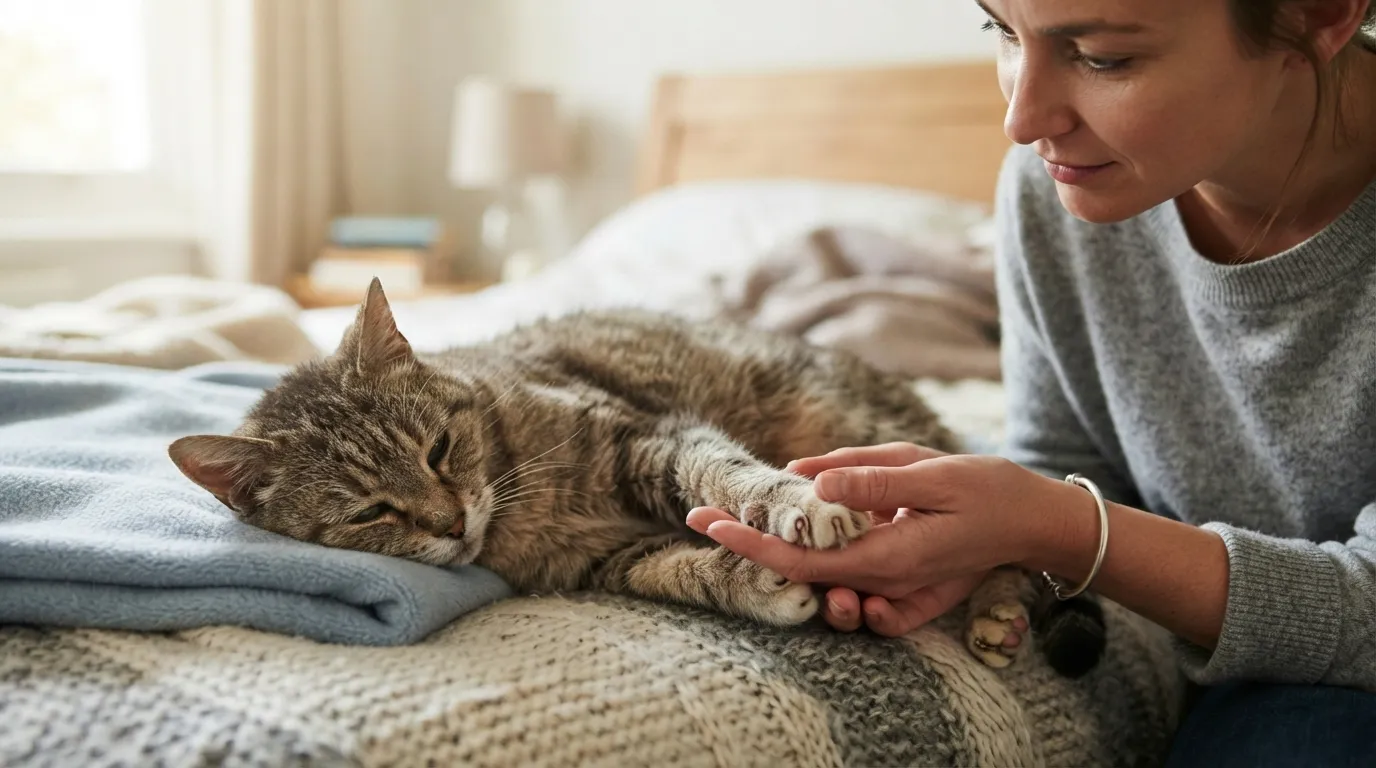
In a healthy cat, this is already rare. In a sick one, it's remarkable.
Cat paws are loaded with nerve endings and are fiercely protected by instinct. Letting a trusted person handle them without flinching is already a major trust marker - and illness raises the stakes further.
Quick Compare
- Healthy cat: full-body head bunts, tail-up greetings, and constant room-to-room shadowing.
- Sick cat: one soft head press, a single doorway wait, quiet stillness instead of motion.
- The constant: both versions are aimed at exactly one person - the trusted human never changes.
A sick cat that lets you hold its paw without pulling back has suspended its most instinctive self-protective reflex for you. That's not passivity from weakness - it's active permission.
If it happens, don't take it lightly.
We're in the top four now, and the next one is one almost nobody talks about.
#4 - Seeking Your Specific Scent When Resting
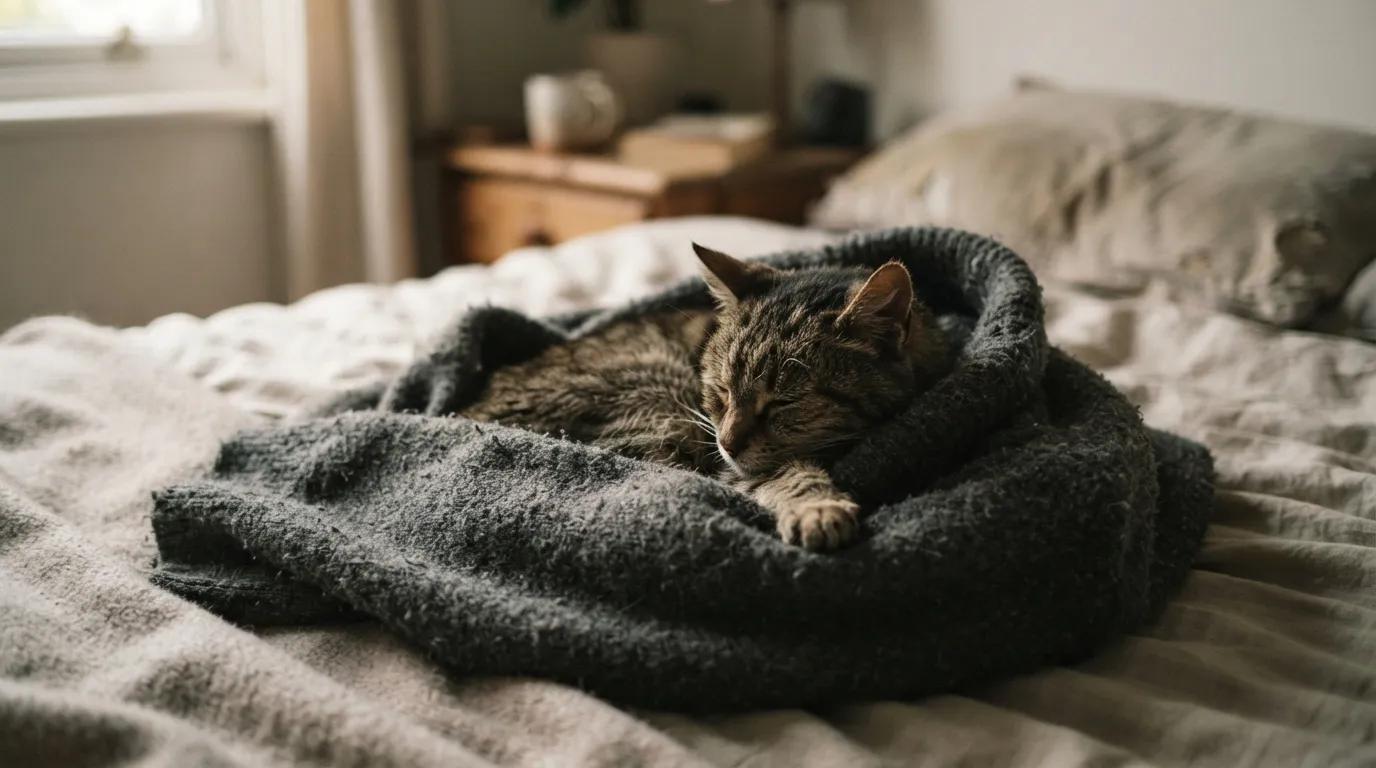
It doesn't settle on just any soft surface. It finds yours.
Cats mark their favorite people with scent from glands on the cheeks, chin, and tail base. The reverse is also true - a sick cat actively seeks out the scent of its bonded human when choosing where to rest, whether that's your worn sweater, your side of the bed, or the chair you sit in most.
Your scent acts as a physiological cue for the sick cat - it can actually change the animal's stress response. This isn't a coincidence of comfort. It's targeted behavior aimed at the one person whose smell means safety.
The next one is when the behavior shifts from passive to active - and it will stop you in your tracks.
#3 - Coming to Find You When It Feels Worst
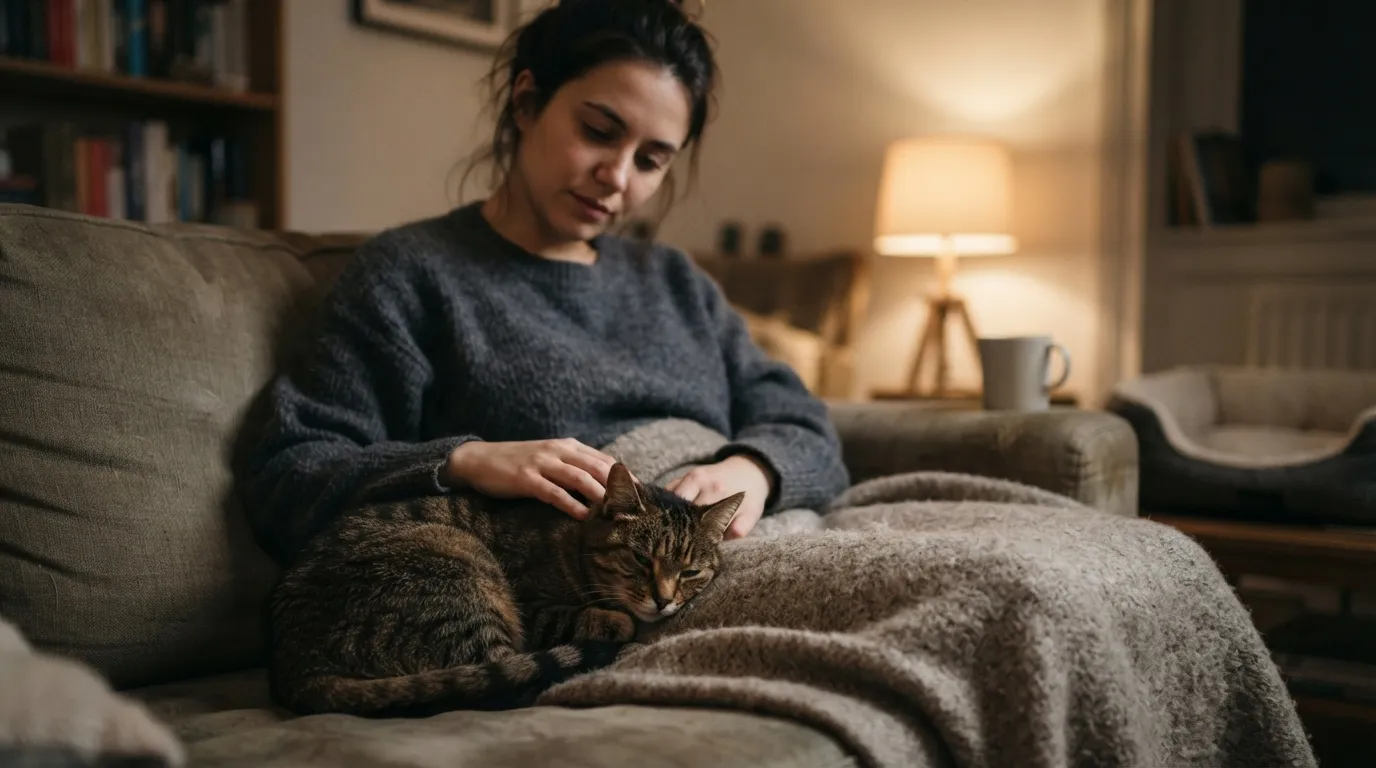
Not when it's okay. Specifically when the pain or nausea peaks.
Many owners report their cats sitting or lying beside them until they start to feel better. The inverse also happens - a sick cat making the effort to physically locate its person during a difficult episode.
The fact that a suffering cat spends energy navigating toward one specific human tells you everything about where its sense of security lives. Cats may not consciously "comfort" the way people do, but the effect is the same.
The destination is always the same person.
The next two are the ones that will genuinely stay with you.
#2 - Grooming a Small Spot on Your Skin, Then Stopping
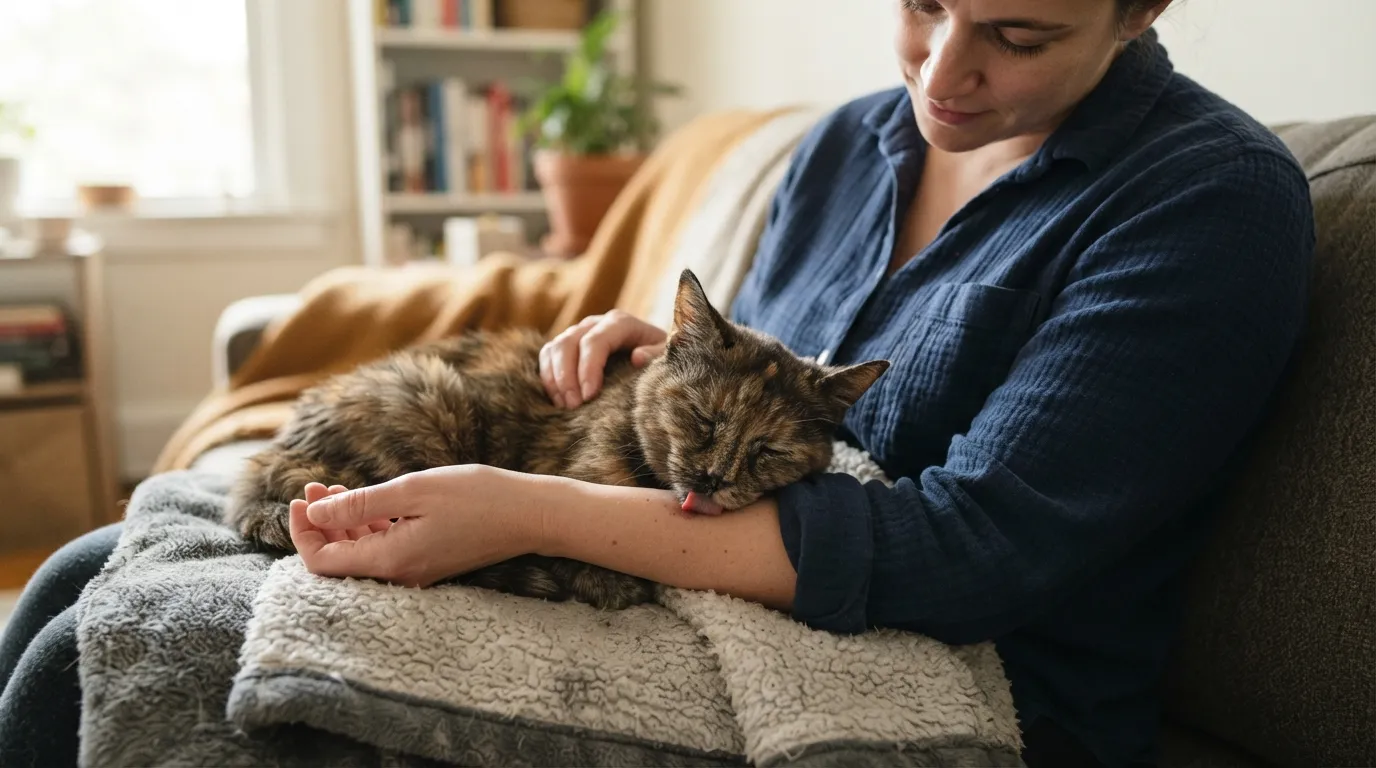
One or two licks. Then it rests its chin down and closes its eyes.
Mutual grooming among cats is reserved strictly for bonded companions. A sick cat that initiates this briefly is extending membership in its innermost circle.
The fact that it stops after a few licks isn't indifference - it's the limit of its strength. Some cats even direct this grooming toward areas of pain or discomfort, as if trying to help.
Don't flinch, don't move - let it finish on its own terms.
And then there's the last one. The quietest of all, and the one that means the most.
#1 - Simply Choosing Your Lap When It Has Nowhere Else to Go
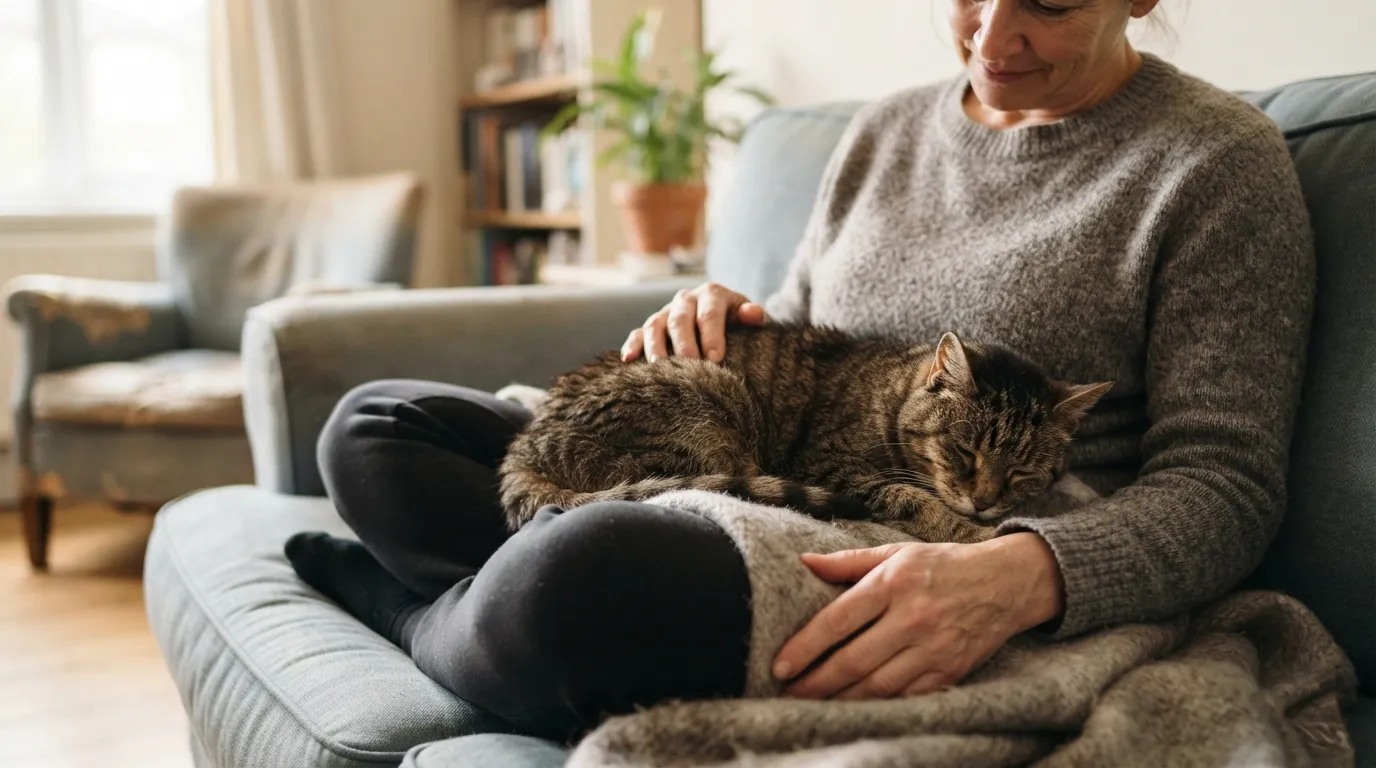
No performance. No demand. Just arrival.
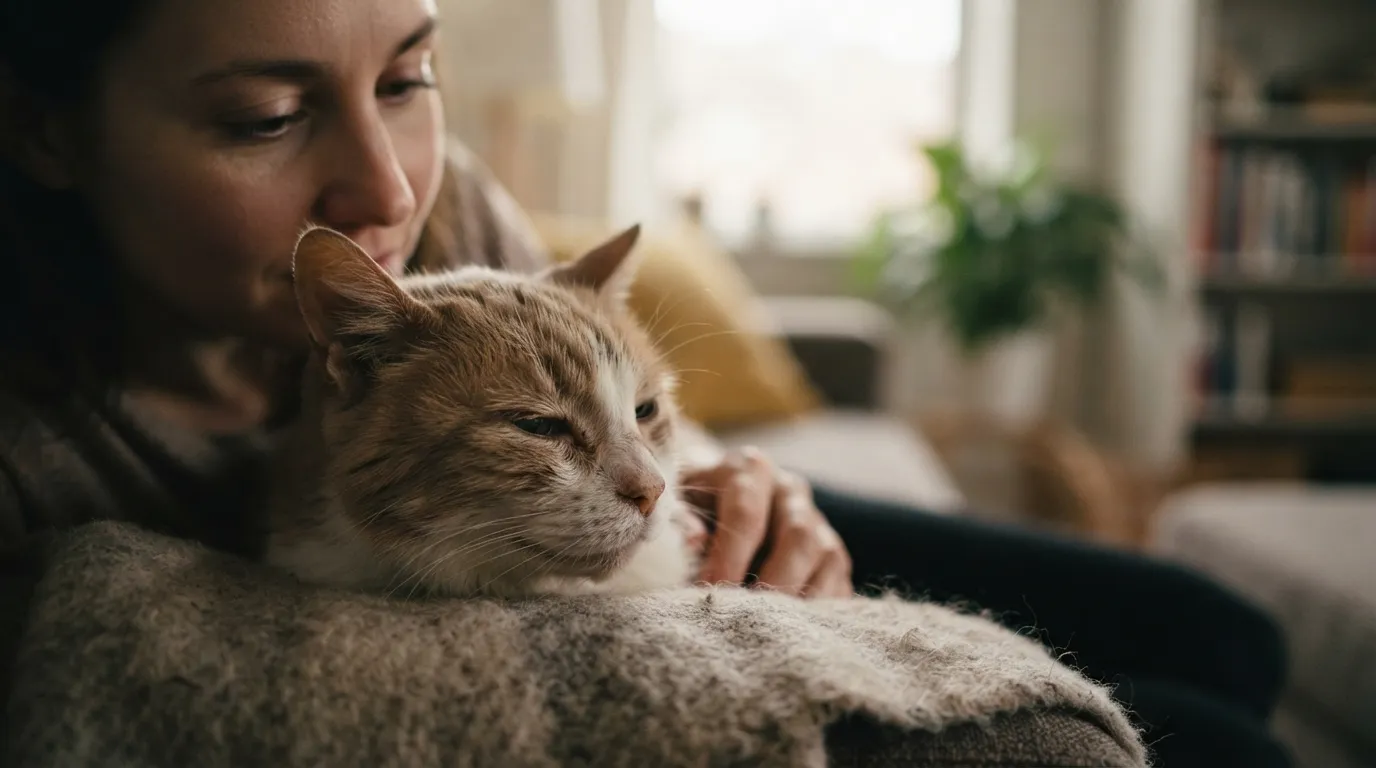
Sick cats often increase physical contact - sitting on a lap, sleeping close by - as illness sets in. But a cat that keeps choosing your lap specifically, especially at its most vulnerable, is saying something that has no words in its language.
The lap is not chosen casually. It is the safest coordinate the cat knows, mapped entirely onto one human being. When everything else falls away, instinct sends a sick cat directly to the one it trusts most.
That's not neediness. That's love in its most unfiltered form.
The Bottom Line
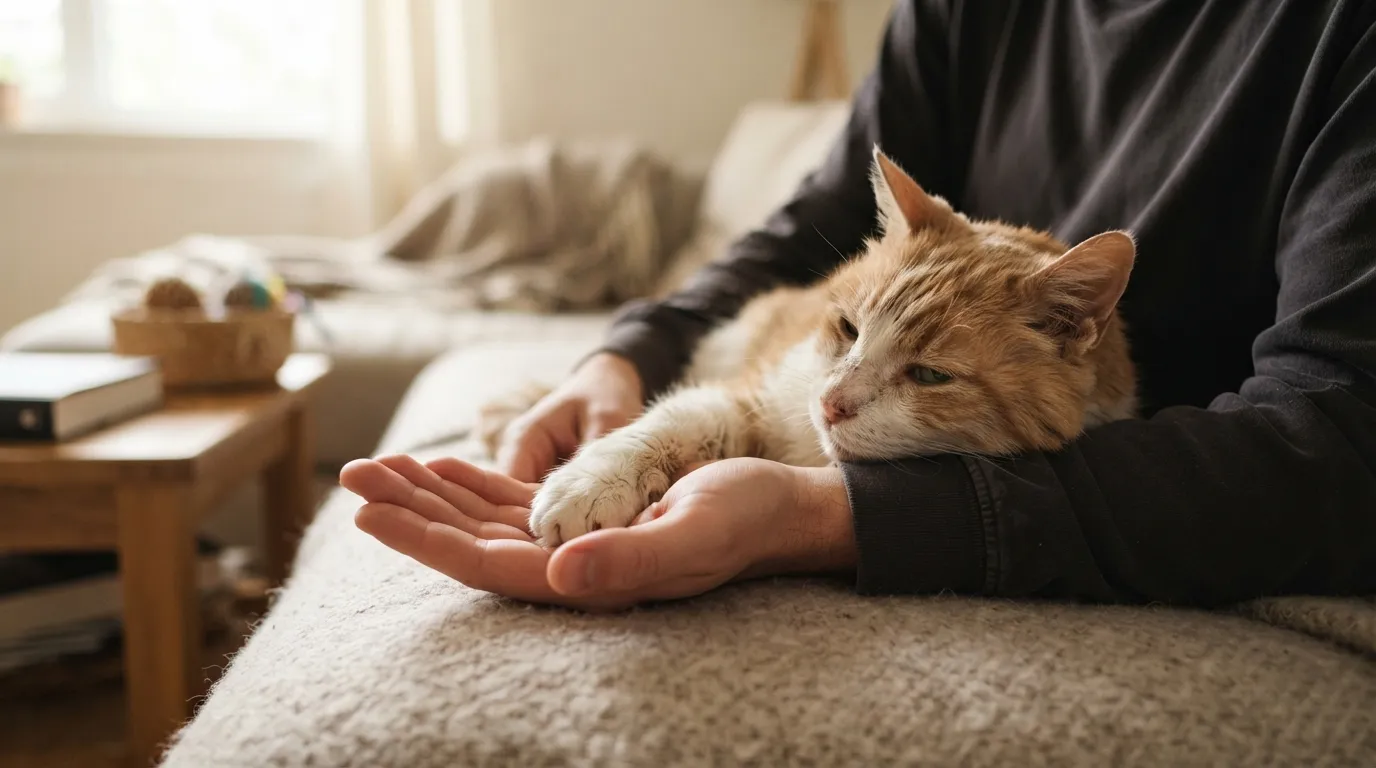
A sick cat doesn't broadcast its feelings - it whispers them, through a slow blink, a quiet chirp, a paw pressed into your hand.
Every one of these behaviors costs something from an animal that's conserving energy just to survive. The fact that it directs them at one human tells you exactly how trust works in the feline mind.
It isn't distributed evenly. It's concentrated - on you.
If your cat has shown you any of these, you earned that. Don't take a single quiet moment of it for granted.
Have you seen your sick cat do something on this list - or something we missed? Drop it in the comments below.