14 Quiet Signs Your Senior Cat Is Telling You It Is in Pain
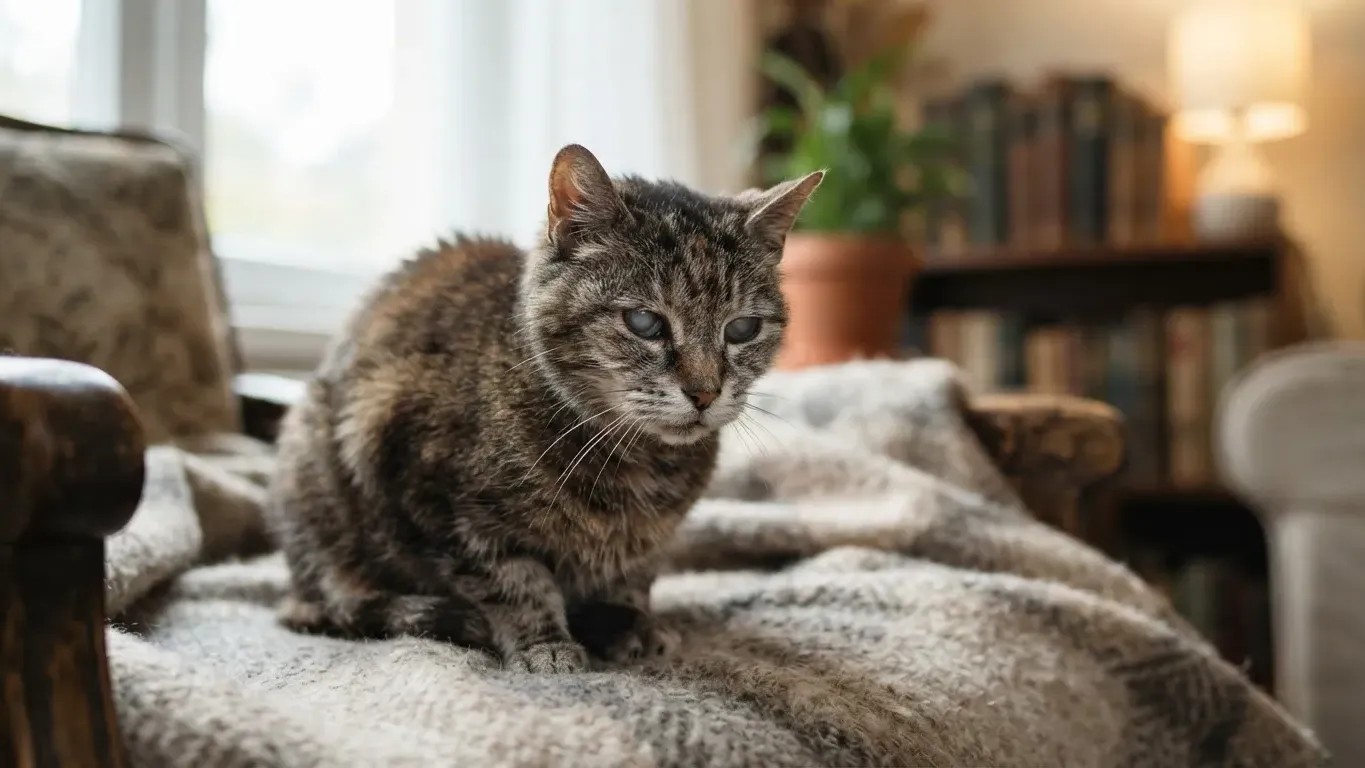
Most cat owners assume that if their senior cat were hurting, they'd know it. They picture crying, limping, obvious distress - and they're dead wrong.
Cats are mid-level predators, wired to hide weakness because an injured cat becomes prey in the wild. That instinct doesn't disappear on your couch - it just gets harder to spot, fooling even the most attentive owners every single day.
Veterinarians know the real tells, though, and most have nothing to do with crying or limping. Here are the 14 quiet signs they watch for, starting with the one almost every owner brushes off as "just old age."
#14 - They Stop Jumping Up Like They Used To
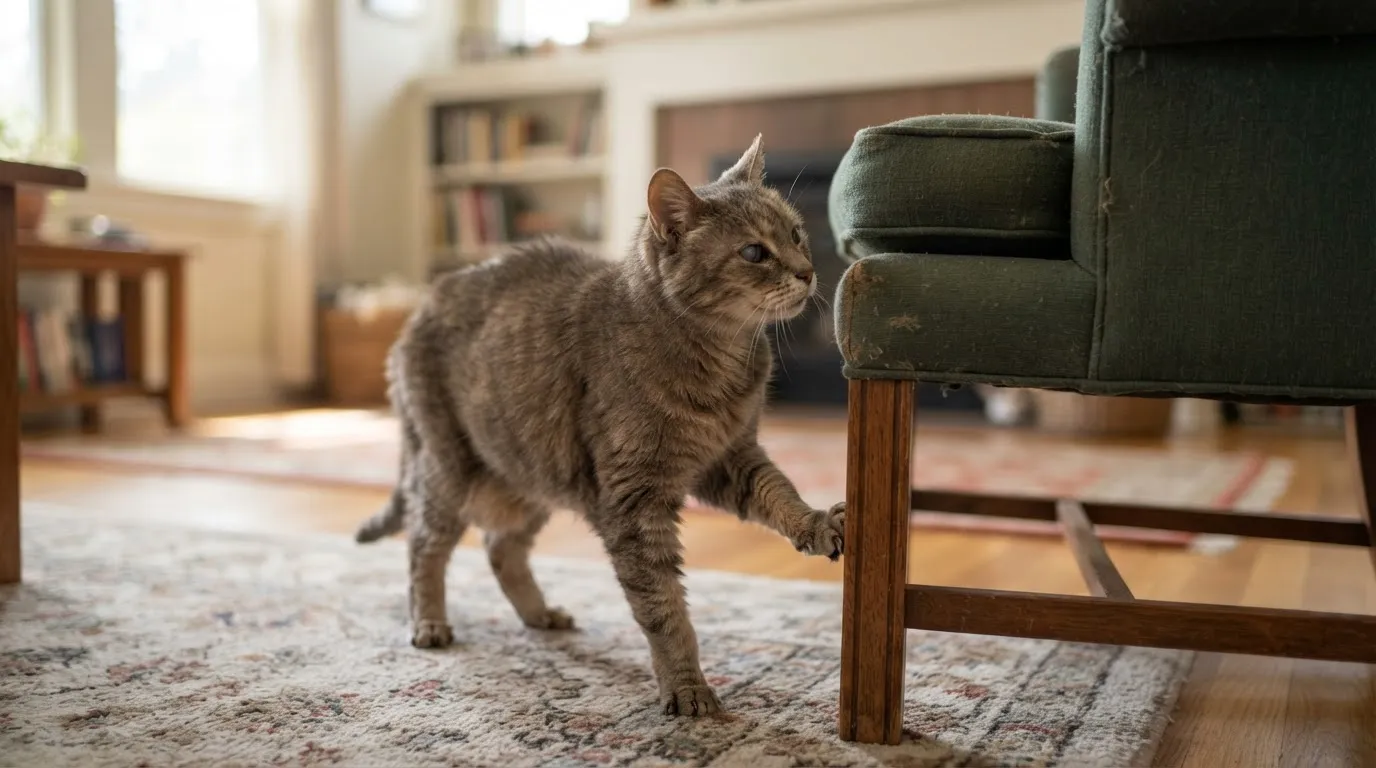
Many painful older cats don't limp. Instead, you'll see hesitation before jumping, or no jumping at all - just "creeping down" from heights instead of hopping off.
This is one of the earliest warning signs and one of the most dismissed. Owners chalk it up to the cat "just getting older," but a skipped jump can be your cat's quiet way of signaling discomfort.
Cats love climbing onto furniture and window ledges, so hesitation or refusal is worth noticing. Joint pain, arthritis, or injury may be present - don't dismiss it as laziness.
But that's nothing compared to what we found about #13...
#13 - Their Coat Starts Looking Different
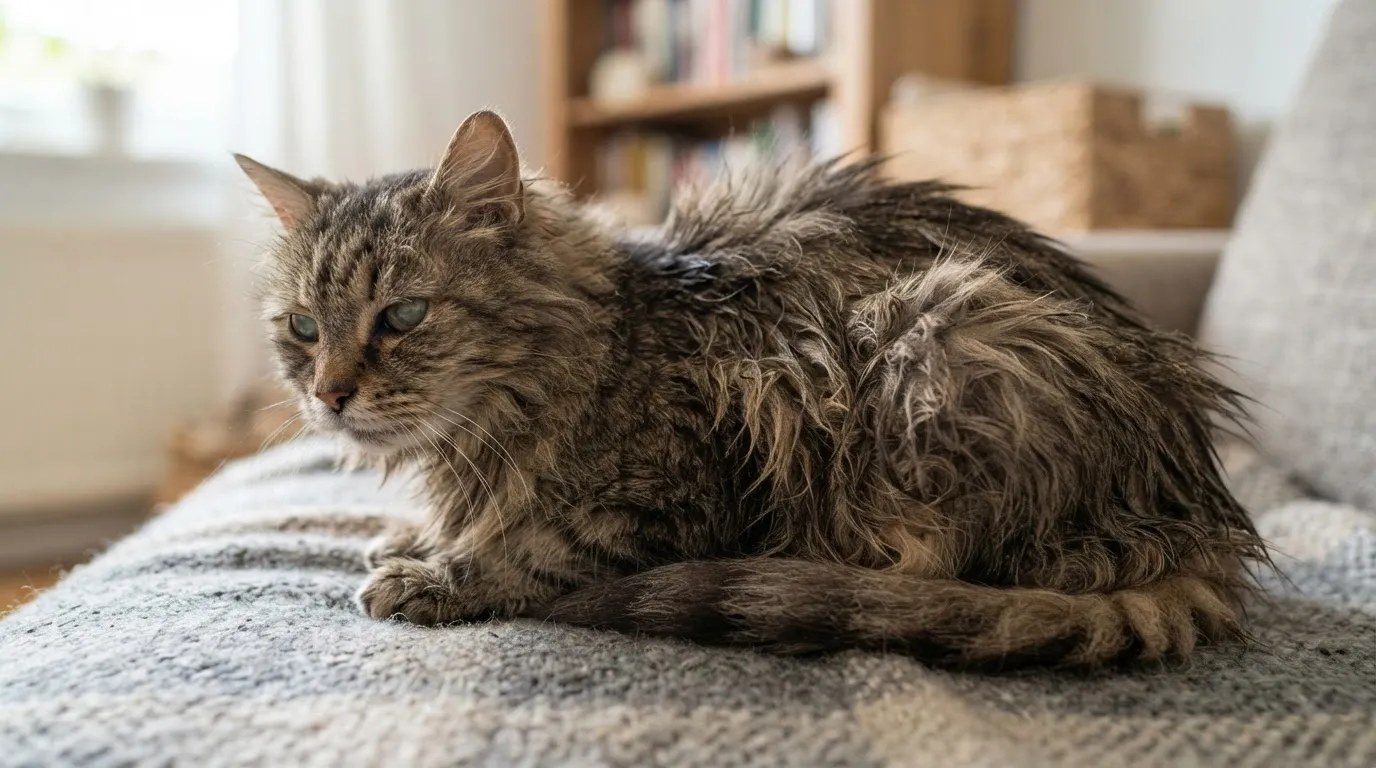
Pain can cause less grooming - the coat gets dull, greasy, matted, or the nails grow overgrown. Or it can cause overgrooming in one spot, leaving a patch of thinning hair or irritated skin.
The tricky part is that both extremes point to pain. Too much grooming and too little grooming are equally meaningful.
A dull, matted, or greasy coat in a cat that was previously meticulous is almost never just "normal aging." It's one of the most reliable early indicators vets look for.
Pay close attention to any coat change that appears over just a few weeks.
But that's nothing compared to what we found about #12...
#12 - They're Using the Litter Box Differently
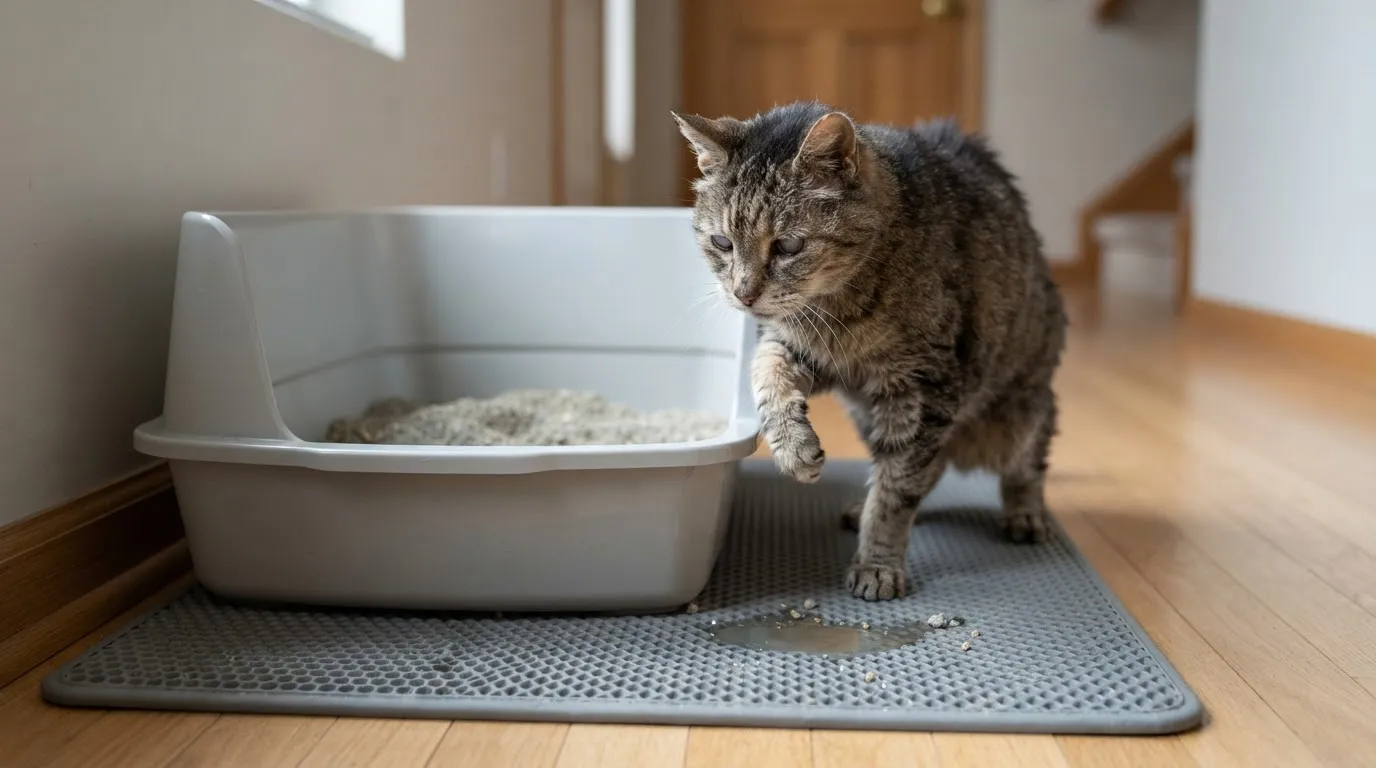
Urinating outside the litter box may indicate joint or abdominal pain. Most owners assume litter box accidents are behavioral - they almost never are.
A hesitance to use a box with high sides, or difficulty climbing stairs, are strong indicators of physical pain in the hips, spine, or knees. Stepping over a rim can become genuinely painful for an arthritic senior cat.
Worth Knowing
- Low-sided or cut-entry litter boxes reduce the stretch and strain on sore joints.
- Add a box on every floor of a multi-level home so stairs become optional, not required.
- A non-slip mat near the box gives arthritic hips extra traction on the approach.
- Log the date and location of accidents - patterns help your vet pinpoint the source of pain faster.
If your cat is missing the box after years of perfect habits, pain - not spite - is the most likely explanation. A vet visit is urgent, not optional.
But that's nothing compared to what we found about #11...
#11 - They're Sleeping More, But Somewhere New
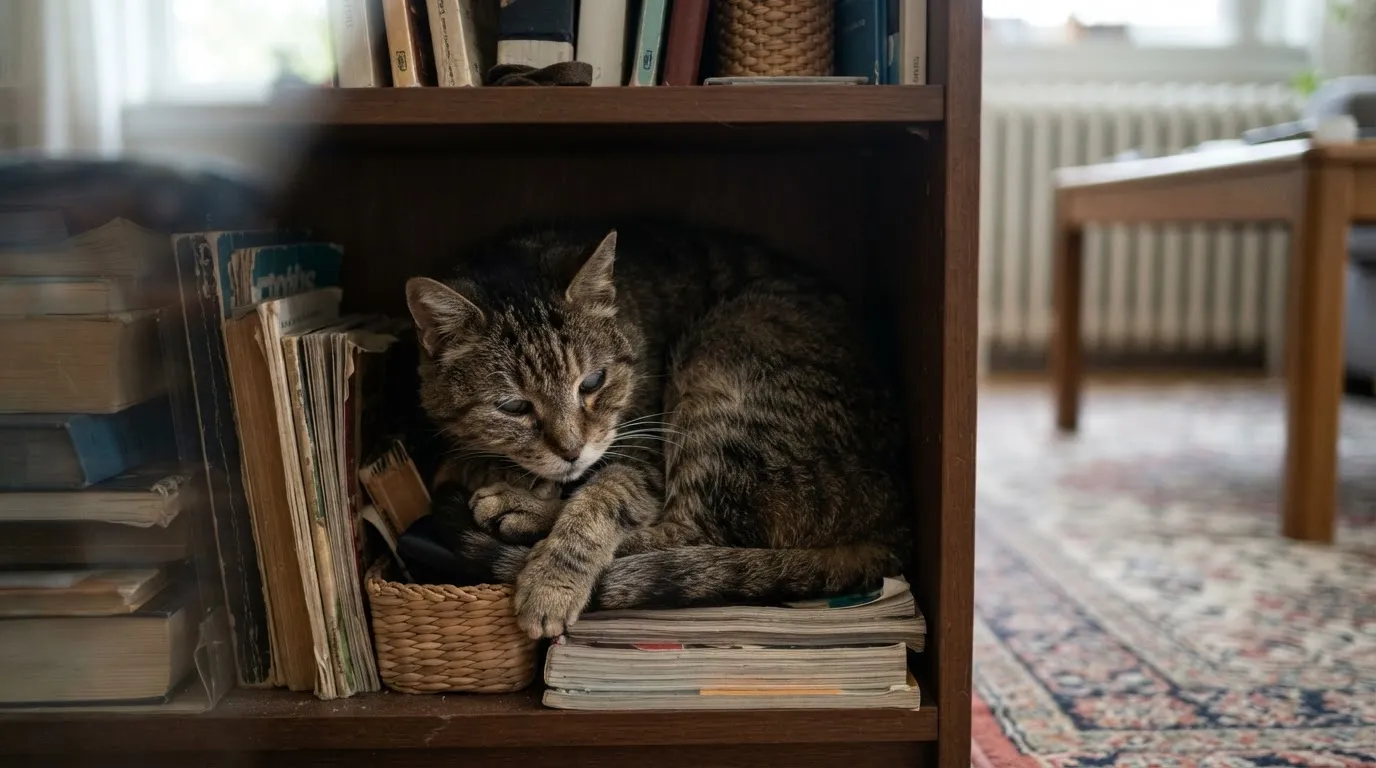
Some cats in pain sleep more, others sleep less, and some just sleep in odd new places. If your cat has relocated their favorite nap spot, that shift means something.
Note if your cat has abandoned favorite sleeping spots, particularly ones requiring a jump. Cats with joint pain often sleep hunched or curled tightly rather than sprawled out.
The change in location alone should raise a flag. It's not random - your cat is quietly problem-solving around pain.
But that's nothing compared to what we found about #10...
#10 - They've Gone Quiet - or Suddenly Louder
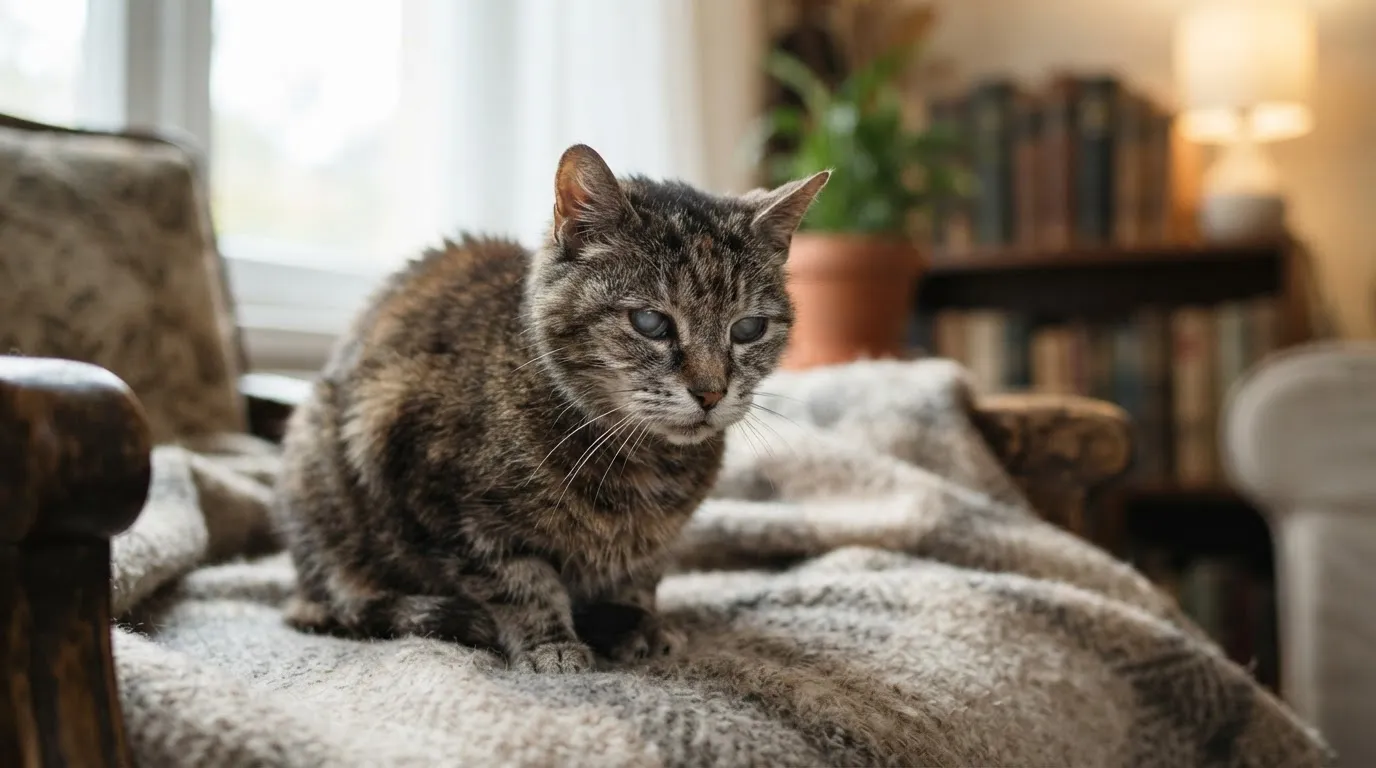
Increased meowing, increased purring, or unusual silence in a normally vocal cat can all hint at distress. Vocalization changes in either direction are significant.
Purring is usually thought of as contentment, but some cats purr when they're frightened or hurting. It can be a self-soothing mechanism rather than a happy one.
A senior cat that suddenly purrs constantly, for no clear reason, may not be happy - they may be coping. A cat that used to greet you with chirps and now sits silent is equally worth worrying about.
But that's nothing compared to what we found about #9...
#9 - Their Face Looks Different
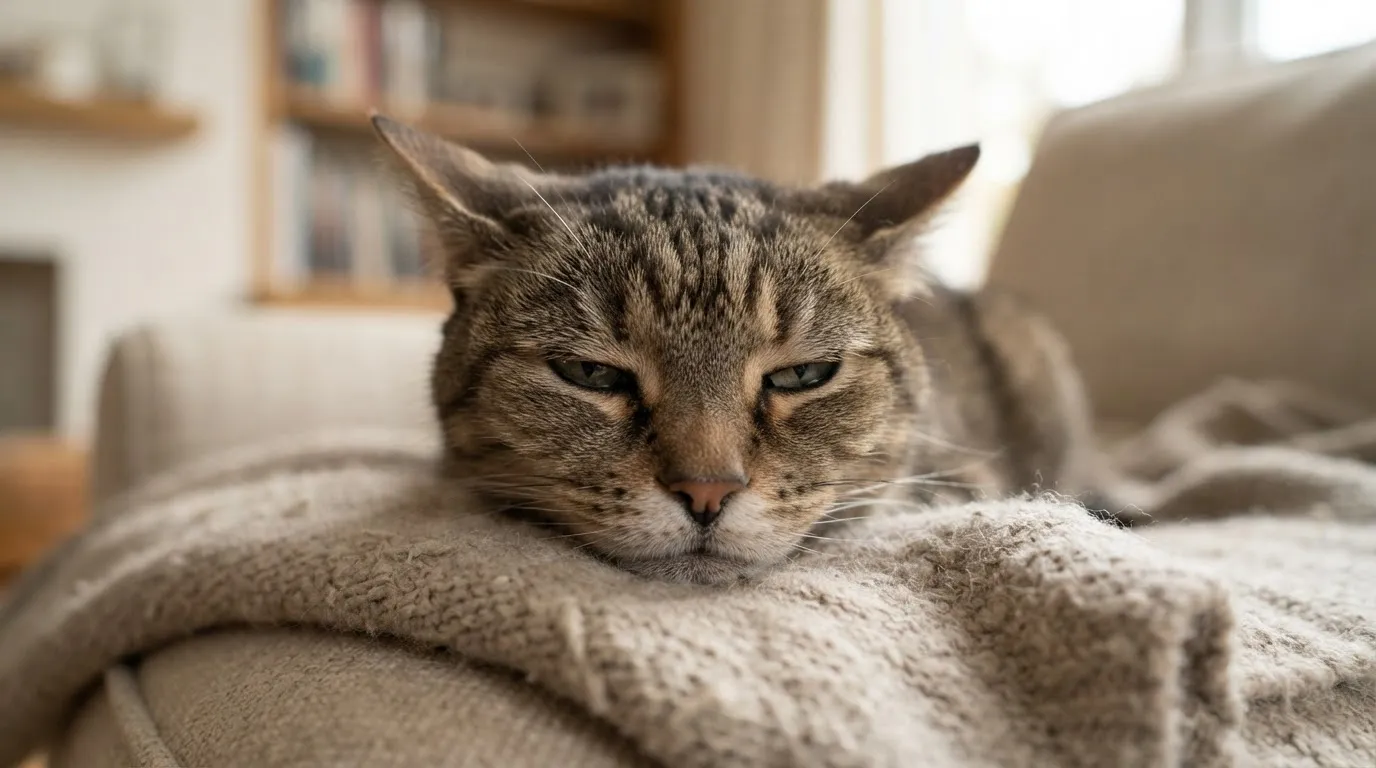
A senior cat's face often changes shape when in pain. Tighter eyes, flattened ears, and a tense muzzle replace its usual relaxed expression.
Vets have organized these changes into the feline grimace scale, which scores ear position, eye tightening, muzzle tension, whiskers, and head position. This isn't guesswork - it's a validated assessment tool.
At a Glance
- Vets score five facial traits: ear position, eye tightening, muzzle tension, whisker position, and head position.
- Each trait is rated 0 to 2, for a maximum possible score of 10.
- A total score of 4 or higher usually means the cat needs pain relief, not just monitoring.
- Research shows everyday owners can learn to score almost as accurately as veterinarians.
Squinty eyes, drooping whiskers, and lowered ears together suggest moderate or severe pain. Most owners never study their cat's face this closely - start now.
But that's nothing compared to what we found about #8...
#8 - They're Eating Less - or Differently
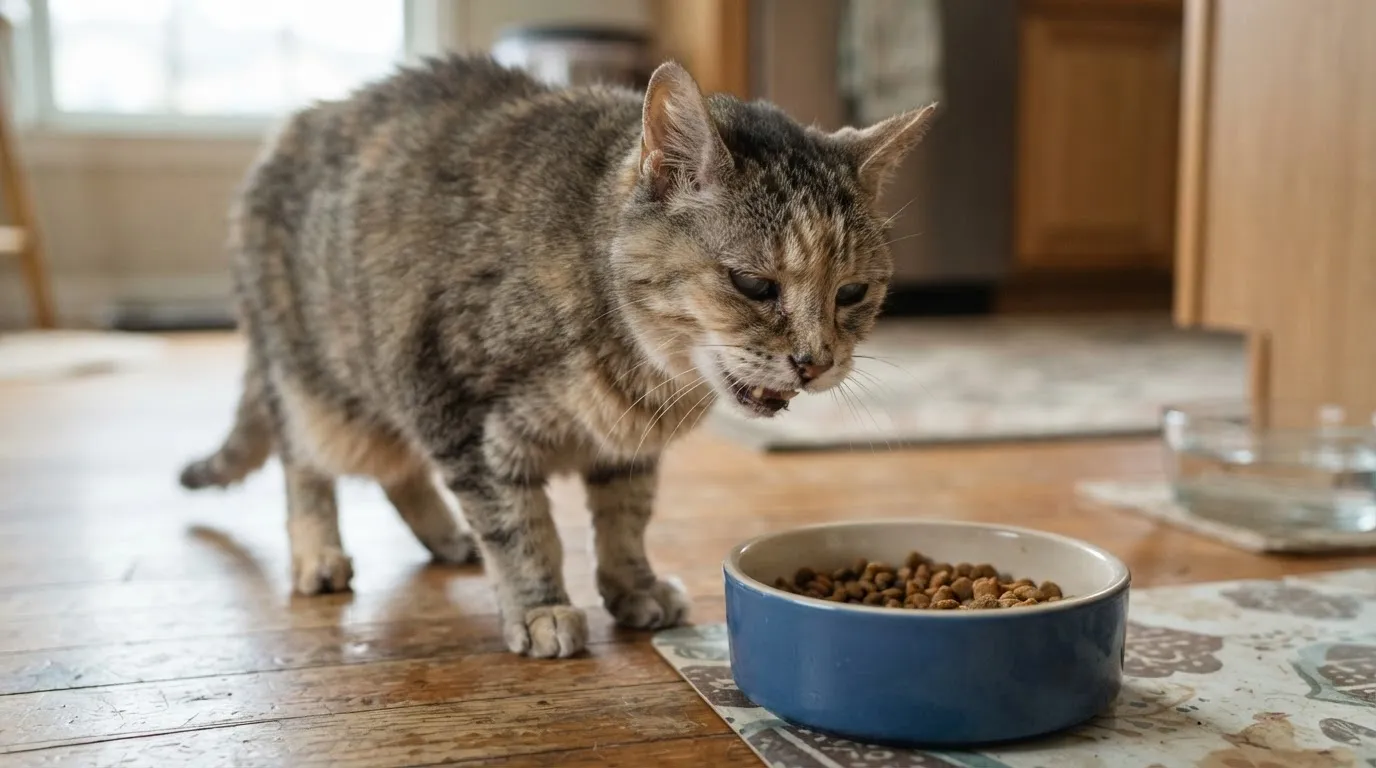
Dental pain, nausea, or stomach discomfort can all affect appetite. A cat in pain may eat less, more slowly, or not at all.
Dental disease is extremely common in senior cats and extremely underreported, because cats keep eating as long as they physically can. Even through serious oral pain, they push through.
Watch for a cat that approaches the bowl, sniffs, then walks away - that "interested but not eating" behavior is a classic pain signal. Dropping food or chewing only on one side matters just as much as whether they eat at all.
But that's nothing compared to what we found about #7...
#7 - They're Hiding from You
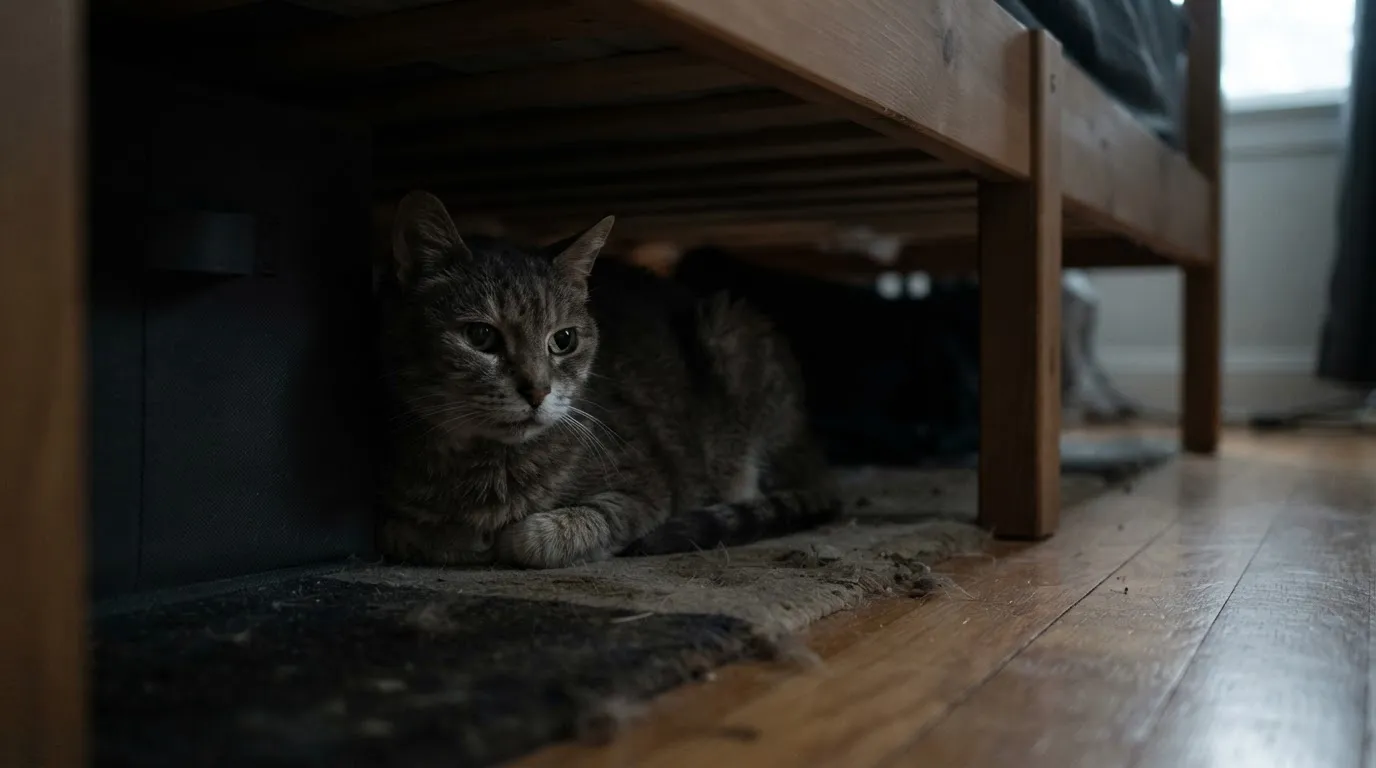
A cat may act calm while dealing with serious discomfort. Instead of crying, it may hide under a bed or avoid family members.
This is hard to interpret because some cats are naturally reclusive. The key word is change - a cat that used to follow you around and now disappears for hours is sending a signal.
Hiding is one of the most consistent behavioral pain indicators veterinarians cite in senior cats. It's not introversion - it's self-protection.
But that's nothing compared to what we found about #6...
#6 - They Flinch or Pull Away When You Touch Them
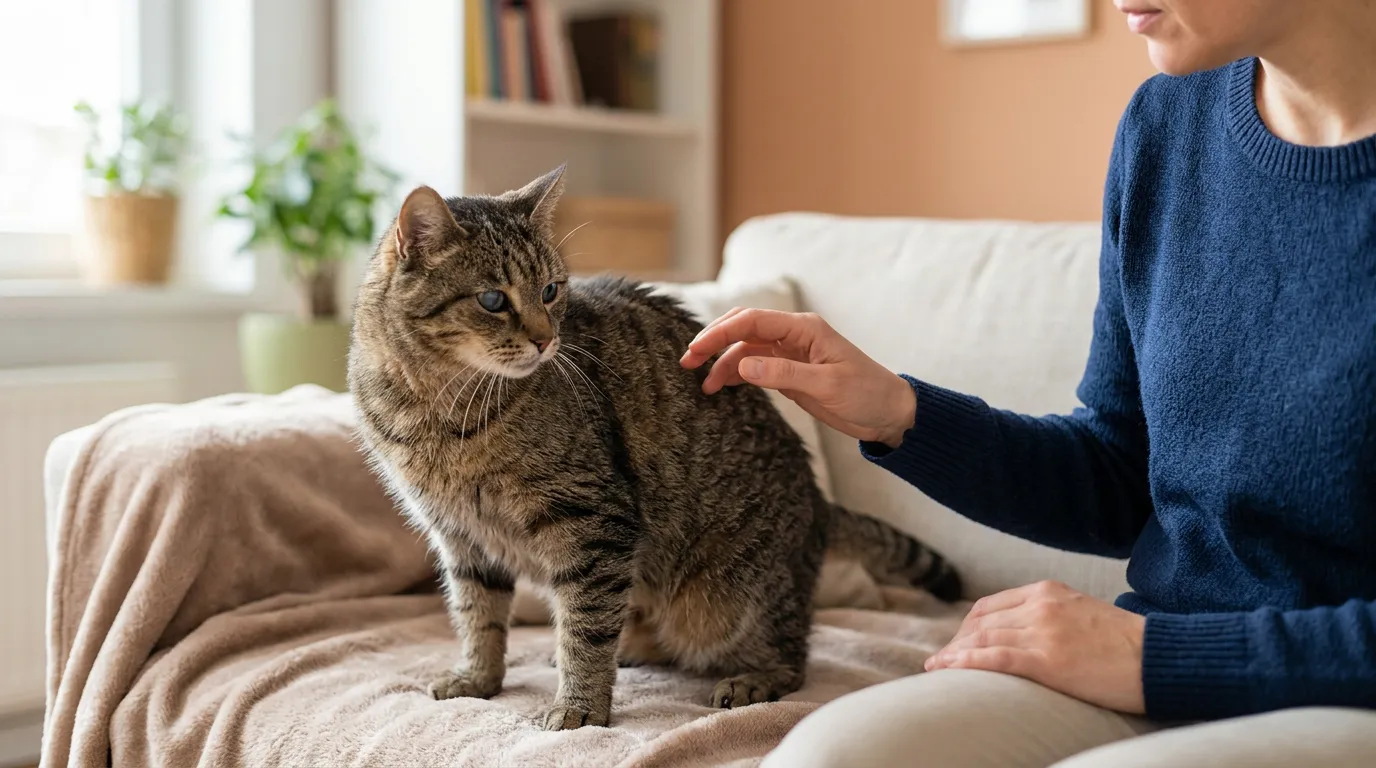
Hissing, growling, or pulling away during handling that was previously tolerated can signal that touch now causes pain. Owners often take this personally, assuming their cat is suddenly moody.
That's almost never the real explanation. A once-friendly cat avoiding touch is usually protecting a specific sore spot.
If your cat consistently pulls away when you touch their hips, lower back, or belly, that's the map to where the pain lives. Tell your vet exactly where the reaction occurs - it's diagnostic information.
But that's nothing compared to what we found about #5...
#5 - Their Personality Has Shifted
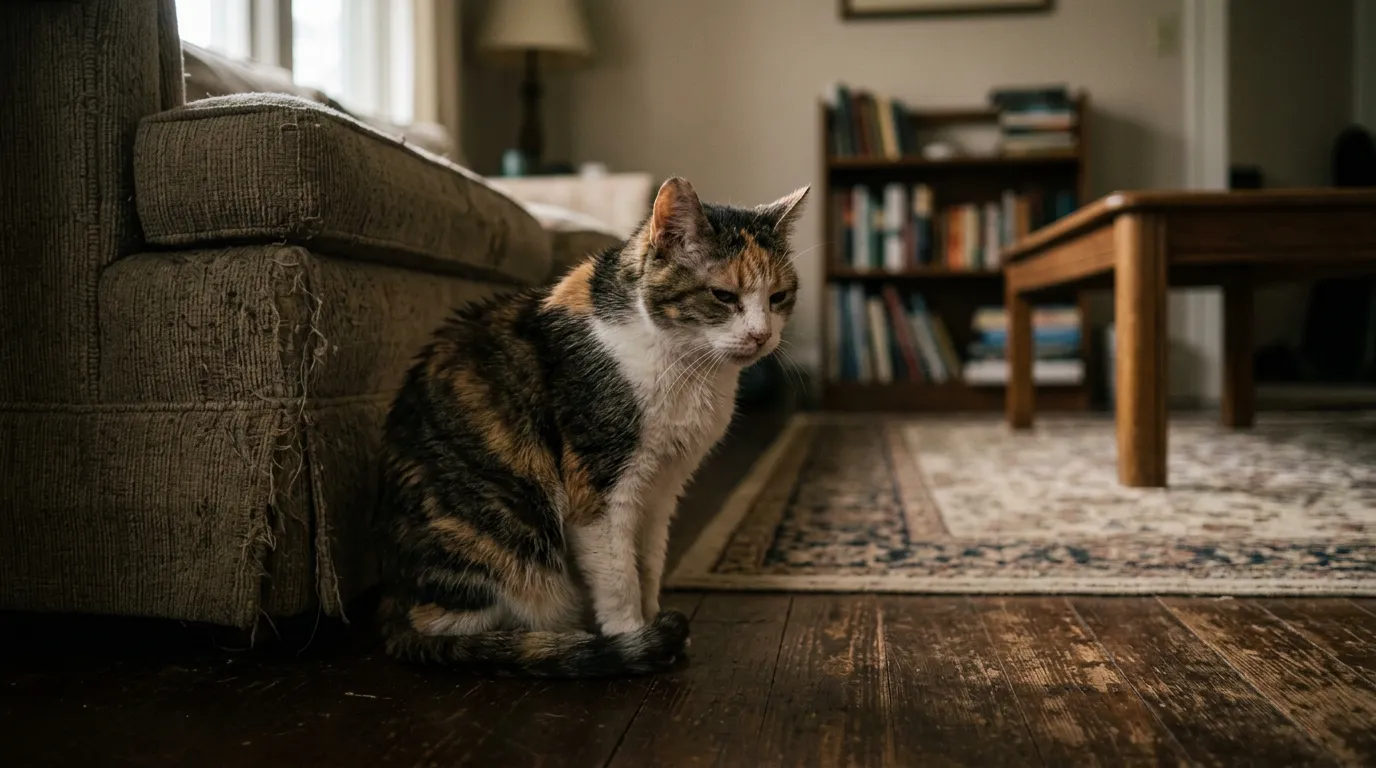
Behavioral shifts are easily written off as "just getting old," but they frequently represent a pain response. This is the sign that gets dismissed most often - and it causes the most delayed diagnoses.
Some cats in pain become unusually clingy, seeking constant contact. Others become irritable and react badly to handling they once tolerated.
Quick Compare
- Clingy pain response: constant contact-seeking, following you room to room, distress when left alone.
- Withdrawn pain response: avoiding laps, sitting apart, less interest in family activity.
- Shared root cause: both patterns can stem from discomfort, not mood or spite.
- Real red flag: any sudden, sustained shift away from your cat's normal baseline.
The direction of the personality change matters less than the fact that it changed at all. A suddenly clingy cat and a suddenly aloof cat can both be in pain - they're just coping differently.
But that's nothing compared to what we found about #4...
#4 - They Walk or Stand Differently
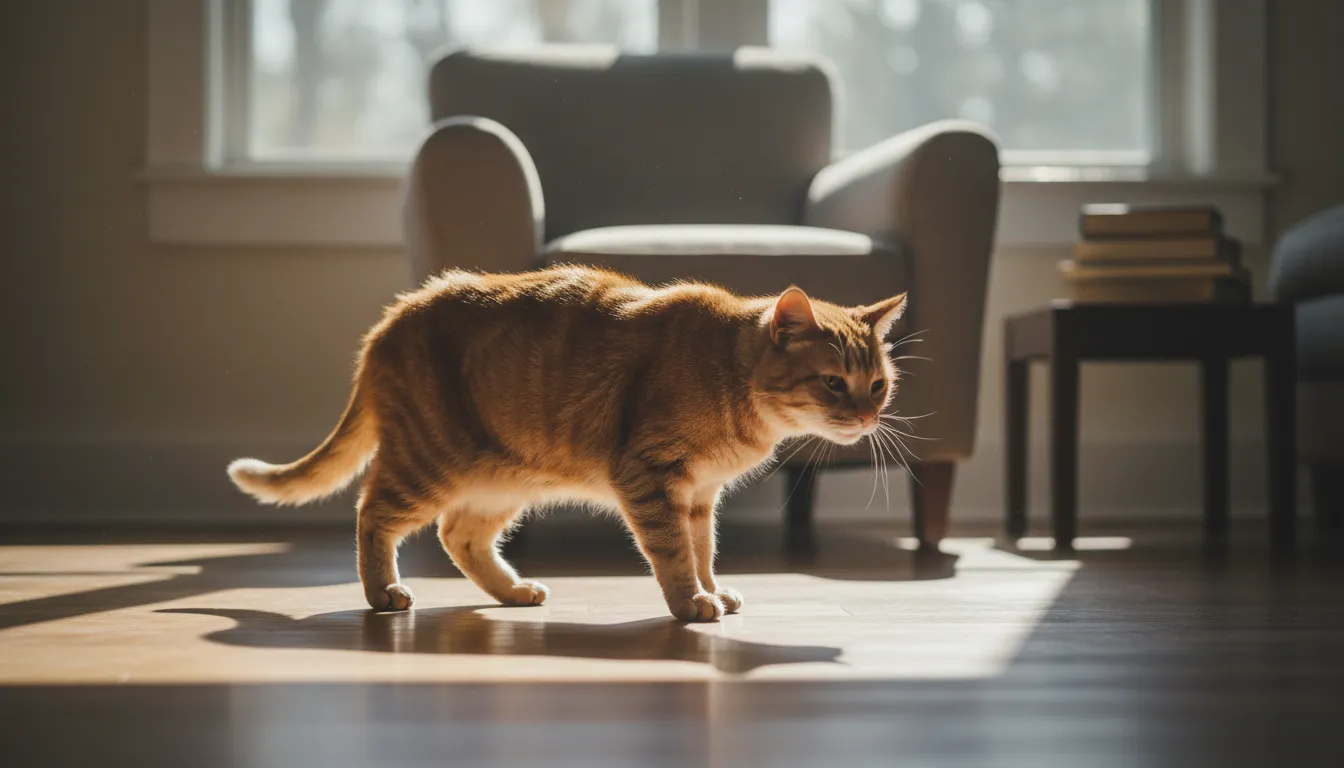
When cats feel stiff, they shuffle instead of leaping. A cat with abdominal pain may hunch its back, tucking the belly in protectively.
Healthy cats move with loose, fluid ease. Pain tightens everything - the walk, the posture, the way they settle onto the floor.
Watch your cat walk across the room first thing in the morning, right after they've been resting. Stiffness that loosens as the day goes on is a textbook arthritis pattern, in humans and cats alike.
But that's nothing compared to what we found about #3...
#3 - They've Lost Muscle, Especially Around the Hips
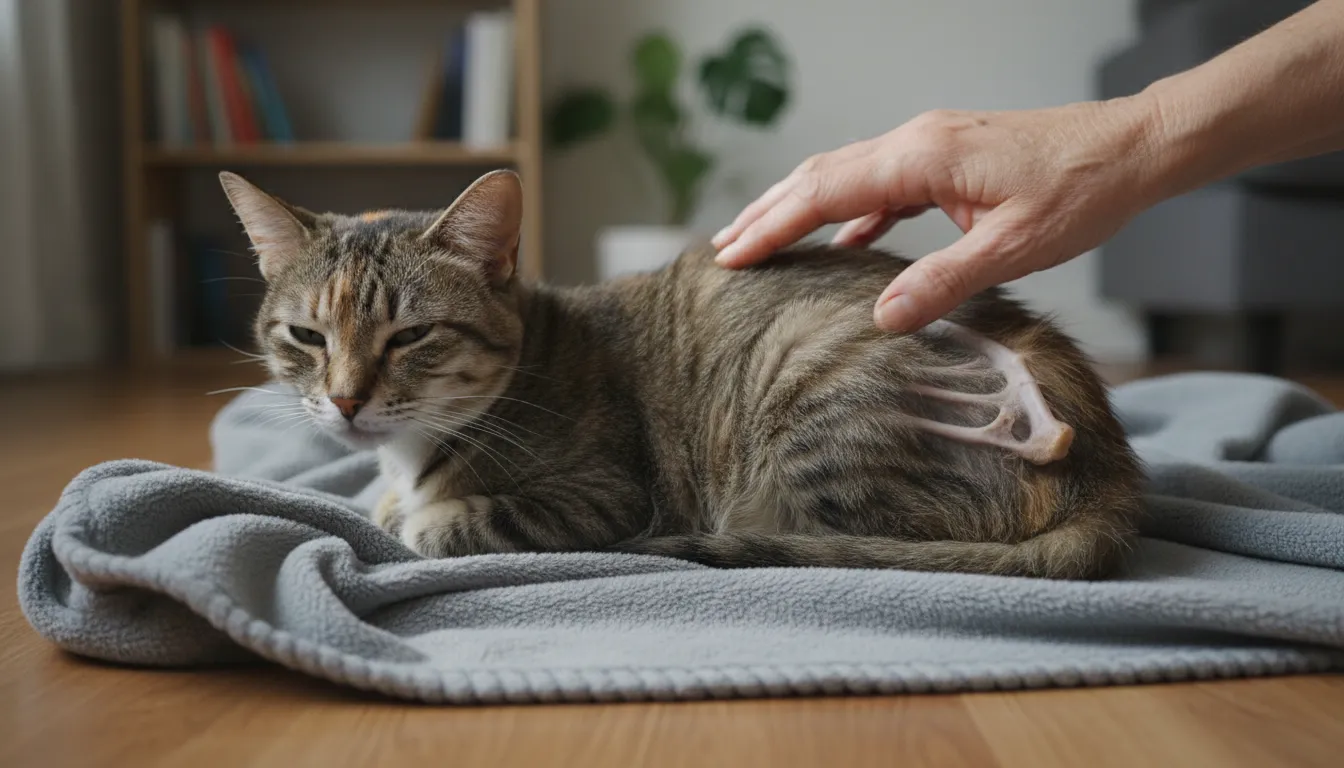
Untreated pain leads to reduced mobility, and reduced mobility leads to muscle loss. It's a downstream effect most owners don't notice until it's already significant.
When a cat hurts, they move less. When they move less, muscle mass deteriorates quickly in seniors.
Run your hands along your cat's spine and hips once a month. If the bones feel more prominent than before, that's not normal aging - it's a sign pain has been limiting their activity for a while.
But that's nothing compared to what we found about #2...
#2 - They've Stopped Playing - Completely
Play is usually the first casualty of pain, and owners almost universally accept it as normal aging when it happens gradually. A painful cat may avoid play, ignore favorite toys, and rest most of the day.
The critical question isn't whether your cat plays like a kitten. It's whether they've stopped engaging with things that used to interest them at all.
A senior cat that once lit up for a feather wand and now just stares at it blankly is telling you something important. Don't accept "slowing down" as a full answer without ruling pain out first.
But none of these compare to the #1 sign owners miss most often...
#1 - They're "Fine" - And That's Exactly the Problem
This is the sign that no list ever names, and it's the most dangerous one of all. Studies estimate that 60% of cats aged 6 years and older have degenerative joint disease, yet it's uncommon for cats to limp or cry out.
That self-protective behavior is exactly what prevents owners from recognizing discomfort and seeking care. Cats rarely make their pain obvious until it's already severe.
A cat's stoicism is not the absence of pain - it's the presence of a survival strategy that predates domestication by millions of years.
American Association of Feline Practitioners
Fast Facts
- An estimated 60% of cats age 6 and older live with degenerative joint disease.
- Long-term studies of senior cats found increased vocalization reported in roughly 6 out of 10 households.
- The same research found house-soiling reported in more than half of cats over age 11.
- Despite this, most senior cats never limp or cry out - silence is the pattern, not the exception.
The cat that seems "totally fine" but is 10 years old and hasn't been vet-checked in over a year is statistically very likely managing undiagnosed pain right now. No single sign confirms pain by itself, and none replaces a vet exam.
But together, these 14 signs form an early warning system - a way to catch discomfort while it's still manageable, rather than after it's become severe.
The Bottom Line
Most cat owners will never hear their senior cat cry out in pain, because cats are built to suffer in silence. The signs are quieter than that: a skipped jump, a dull coat, a litter box avoided, a toy ignored.
Early intervention lets your veterinarian catch the underlying cause before it progresses. Conditions like arthritis, diagnosed early, can often be managed well enough to keep a cat active and comfortable for years longer.
If your senior cat shows even two or three signs from this list, book a vet appointment this week - not next month. Did we miss a sign you noticed in your own cat? Drop it in the comments below.