11 Things Your Cat Does That Says I Love You
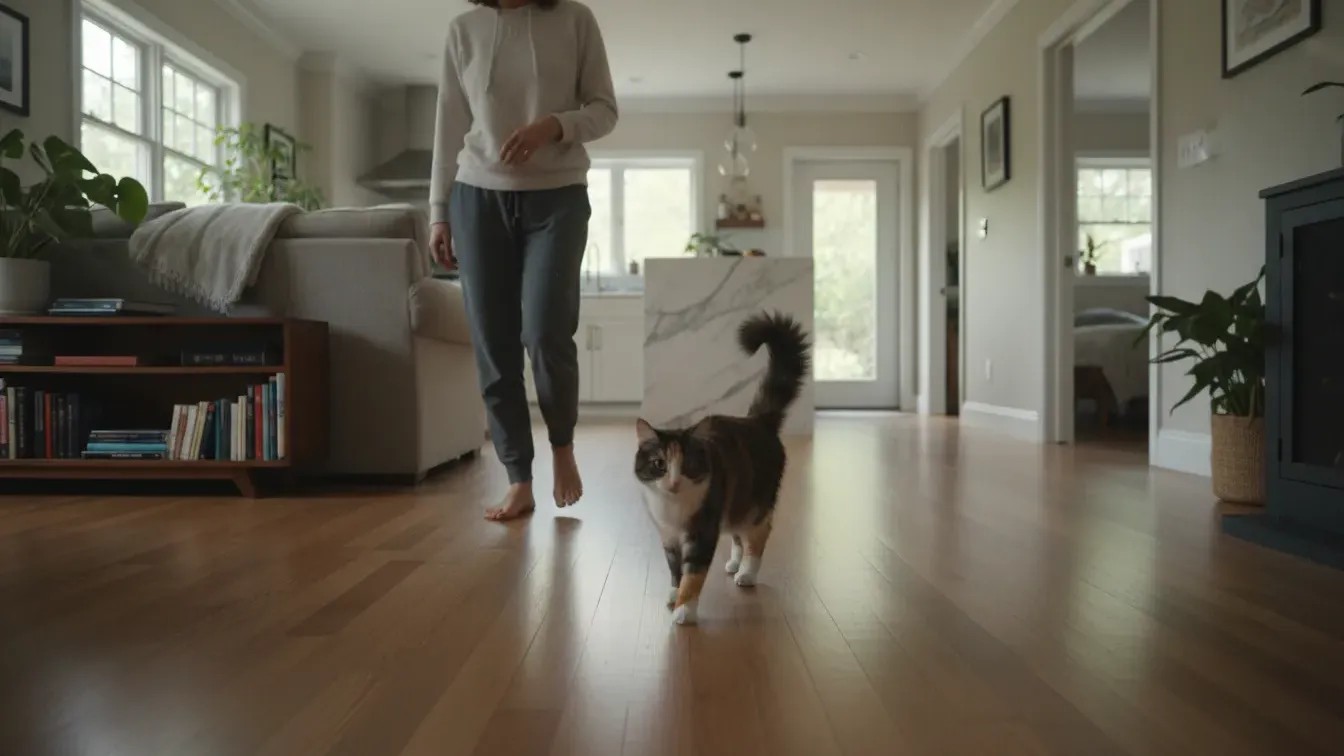
Most people assume cats are cold, distant creatures who couldn't care less about the humans who feed them. That reputation, it turns out, is almost entirely wrong.
Scientists have found that cats form secure attachments with their owners, bonds structurally similar to the ones between babies and caregivers. The catch is that cats don't speak love the way dogs do, so most owners have been missing the message for years.
Your cat has been saying "I love you" every single day. You just didn't know the language - here's what the data actually says.
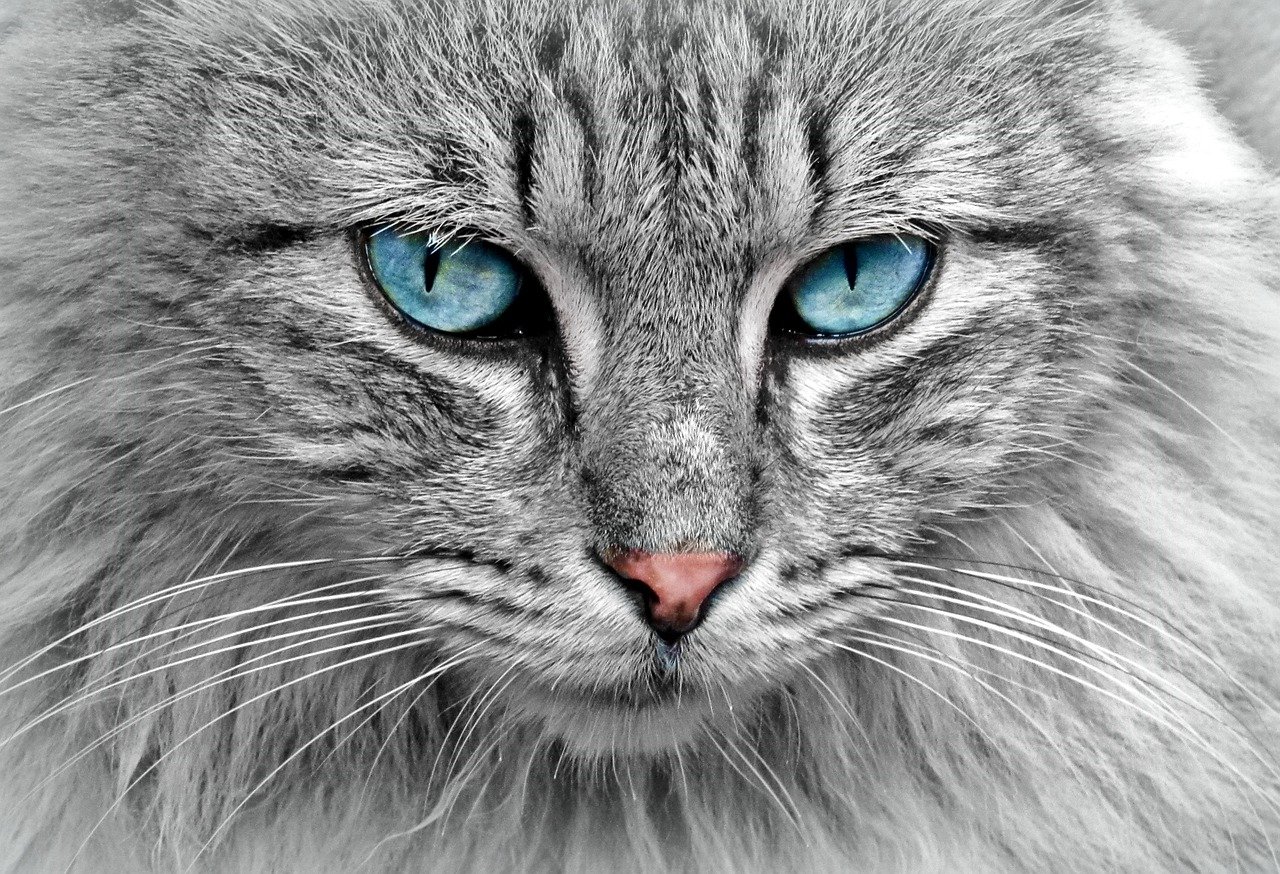
#11 - The Slow Blink
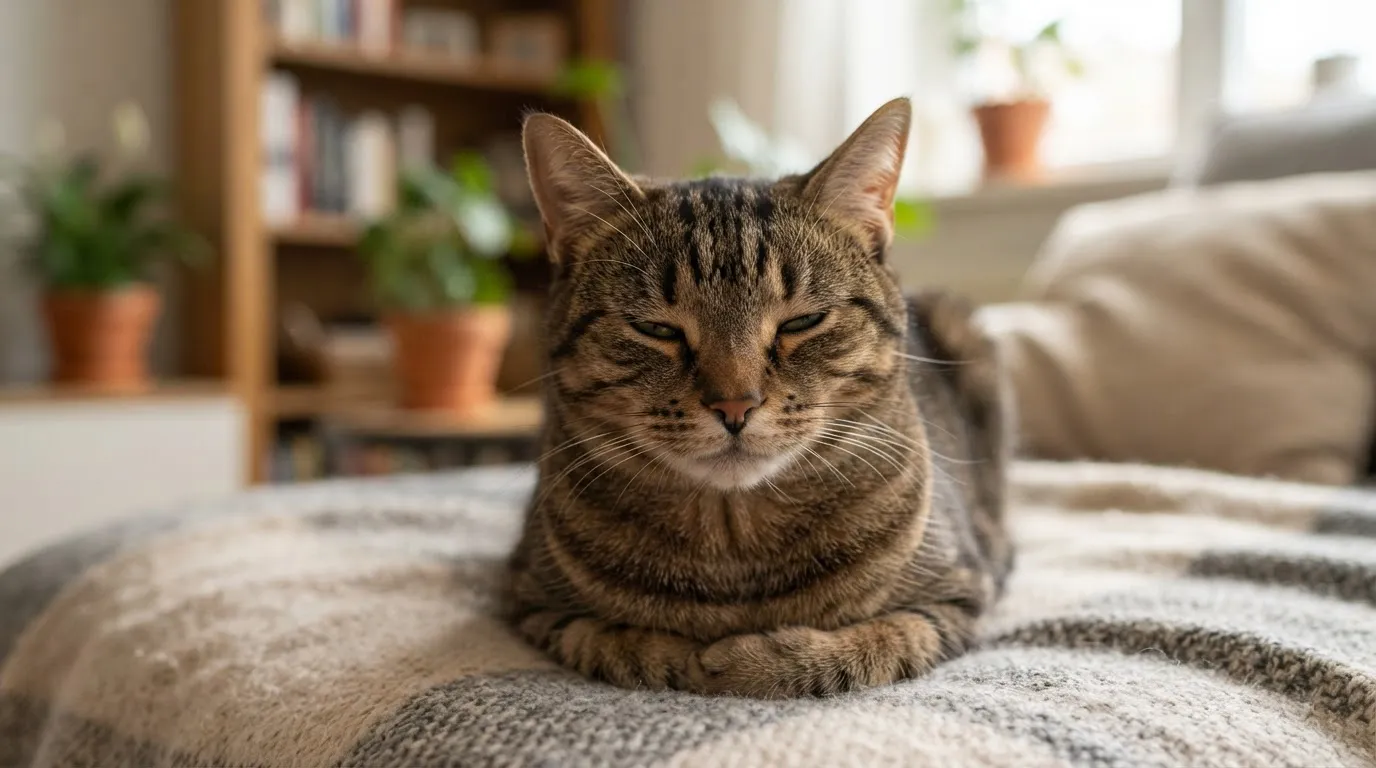
Your cat isn't dozing off when it locks eyes with you and slowly closes its lids. It's doing something far more deliberate.
A 2020 study in Scientific Reports found that slow blink sequences may function as a form of positive emotional communication between cats and humans. That's peer-reviewed science confirming what cat lovers have sensed for years.
Researchers at the University of Sussex compared it to a human smile. It's the feline equivalent of saying "I trust you completely."
"It's something that many cat owners had already suspected, so it's exciting to have found evidence for it."
Karen McComb, University of Sussex psychologist
In their experiments, cats were far more likely to approach a stranger after a slow blink exchange than after a neutral stare. Here's the best part: it works both ways.
Cats slow blink back more often when their owners slow blink first, which makes it a real two-way conversation. Try it tonight - lock eyes with your cat, close your own eyes slowly, and wait for the response.
But the slow blink is just the opening move. What's coming next is a behavior most owners read completely backwards...
#10 - Head Bunting and Cheek Rubbing
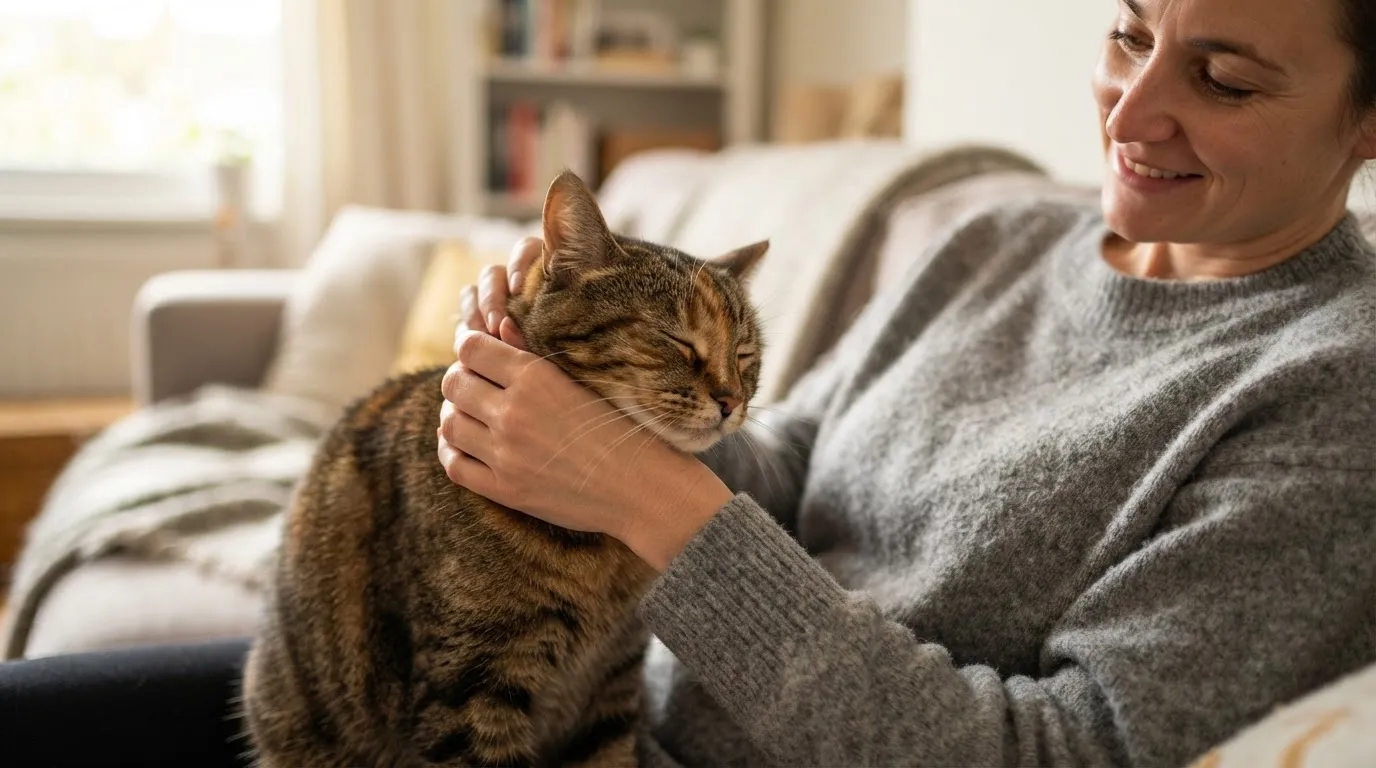
If your cat walks up and headbutts you, most people assume it's just being weird. It isn't.
"Head bunting" happens when a cat rubs its cheeks or forehead against you, releasing pheromones that mark you with its scent. Essentially, your cat is claiming you as safe family.
Cats learn this bonding behavior in kittenhood, using it first with their mother and littermates. As adults, they extend it only to the humans and animals they genuinely trust.
Cats have scent glands in their cheeks built specifically for this kind of trust-marking. It isn't random - it's deliberate.
Think about that for a second. Your cat is choosing to merge its scent with yours, which in cat language means "you're one of us."
And right behind that comes a behavior that looks almost aggressive but means the exact opposite...
#9 - The Upright, Quivering Tail
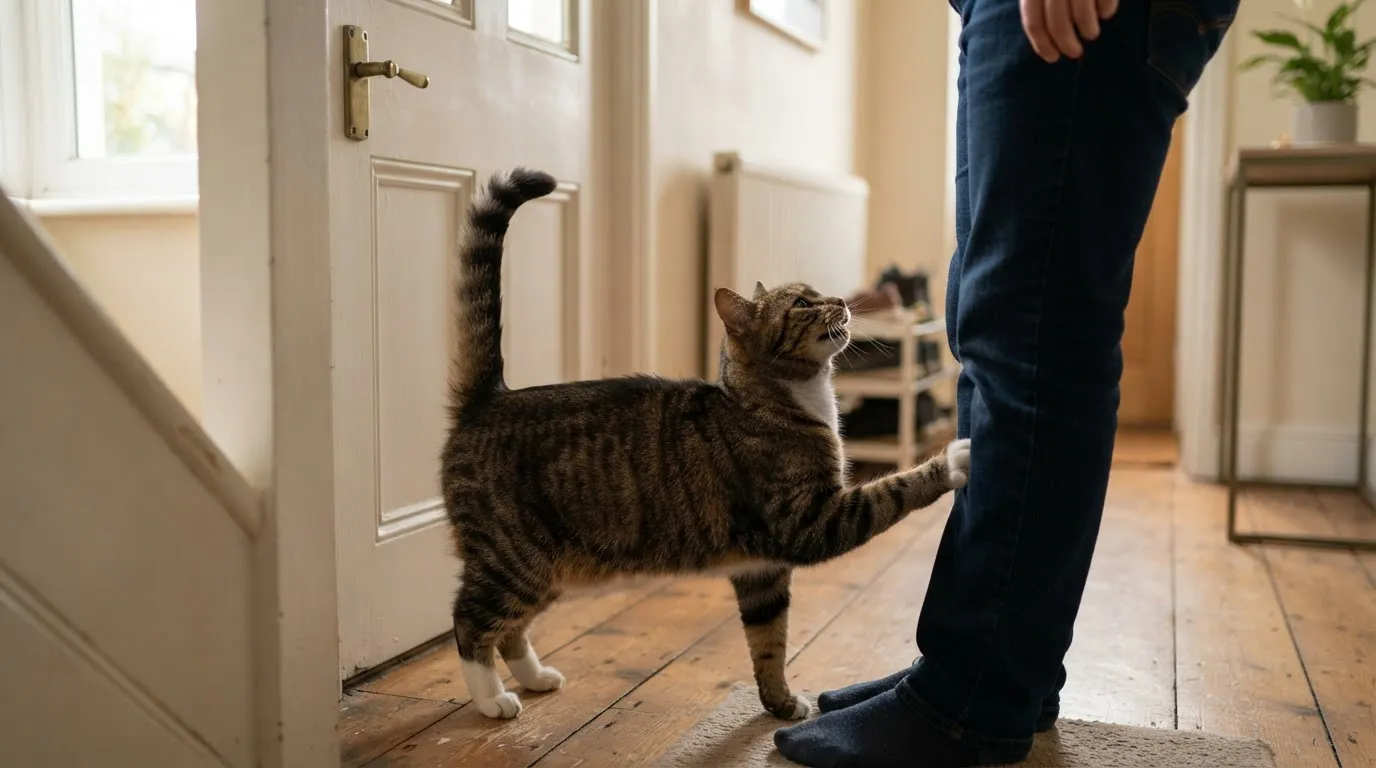
Most people watch for tail wagging. The real love signal is what the tail does the second your cat sees you walk through the door.
A tail held straight up, like a flagpole, is the feline equivalent of a wave. It signals familiarity, trust, and affection.
If that tail is also quivering slightly at the base, pay close attention. Paired with a kneading motion, a quivering upright tail signals real excitement toward you specifically.
Animal behaviorist Marilyn Krieger notes that cats show affection through their tails in layers. A curved tip is a friendly greeting, while a tail wrapped around your hand, ankle, or arm is a far more emphatic declaration.
A quivering upright tail is one of the most unambiguous "I love you" signals in the entire feline vocabulary. Most owners walk right past it every single day.
The next one, though, is the behavior that sounds the least affectionate of all - until you understand what it actually means...
#8 - Sleeping on You (or Right Next to You)
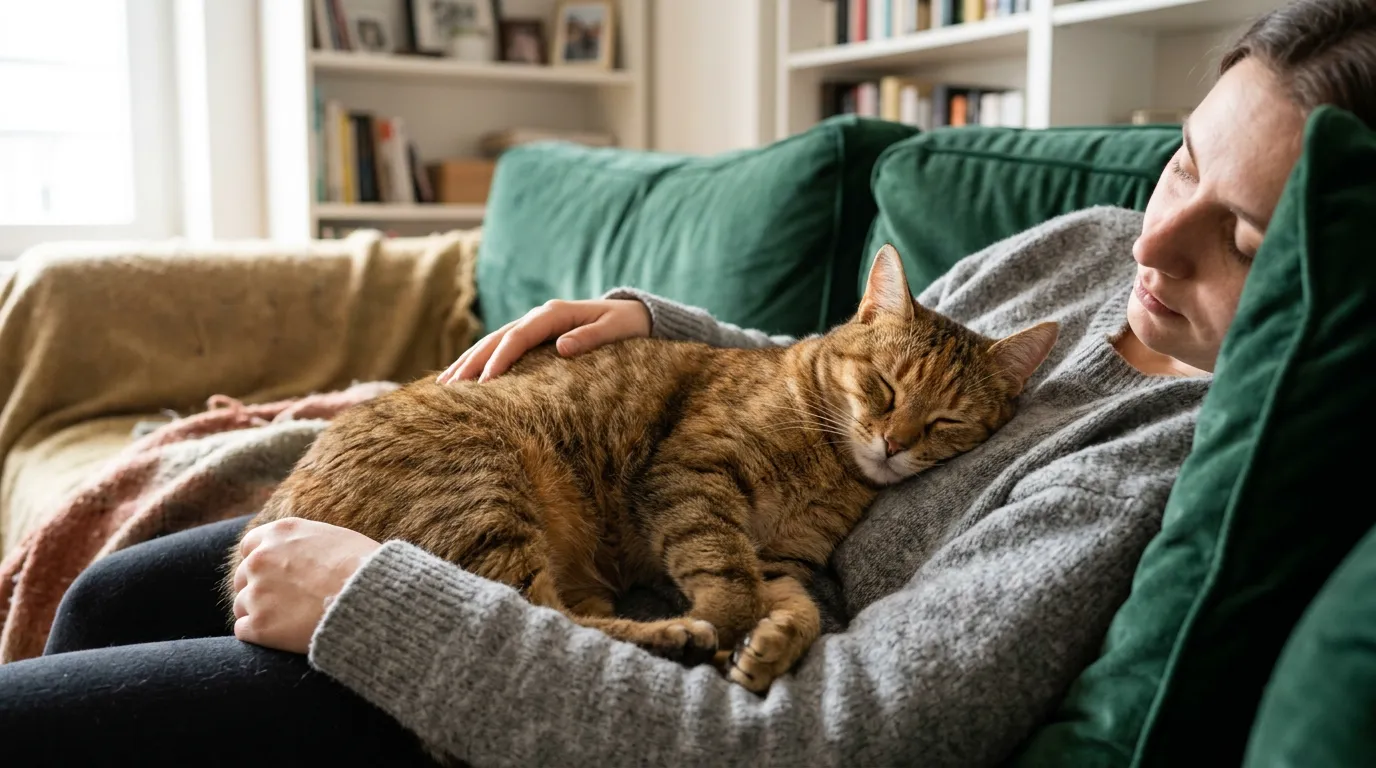
Cats sleep up to 16 hours a day, and where they choose to do it is never random.
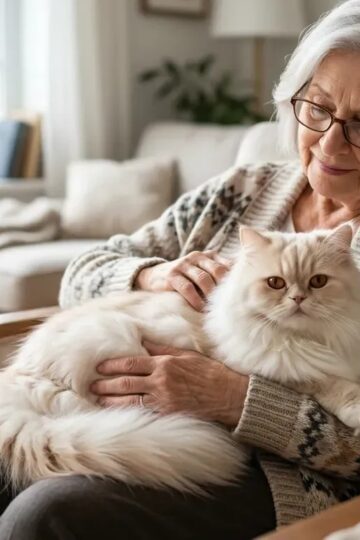
When a cat settles calmly on top of you, it's a strong sign of trust and affection, especially if it's purring while doing it. Sleep is one of the most vulnerable states a cat can enter.
Choosing to sleep directly on you is one of the most profound trust declarations a cat can make. It's handing you its guard duty.
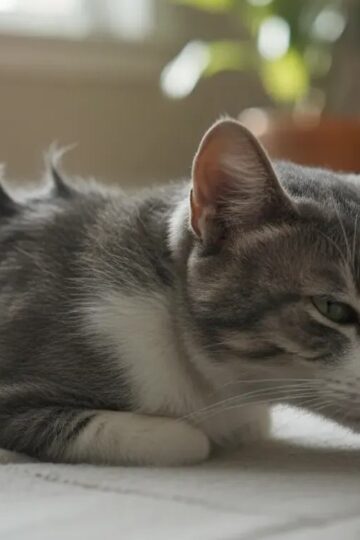
Even a cat that lies just out of petting range is telling you something. It means it feels safe enough to relax nearby without needing to watch its back.
Proximity during sleep, even six inches away on the same couch, counts as a love signal. Don't overlook the cat that "just happens" to settle near you every evening.
This is where a lot of owners get it wrong. They assume their cat doesn't like them because it won't cuddle on command, when simply choosing your space is the whole message.
Up next is a behavior that sounds adorable on the surface but has a surprisingly ancient origin...
#7 - Kneading (Making Biscuits)
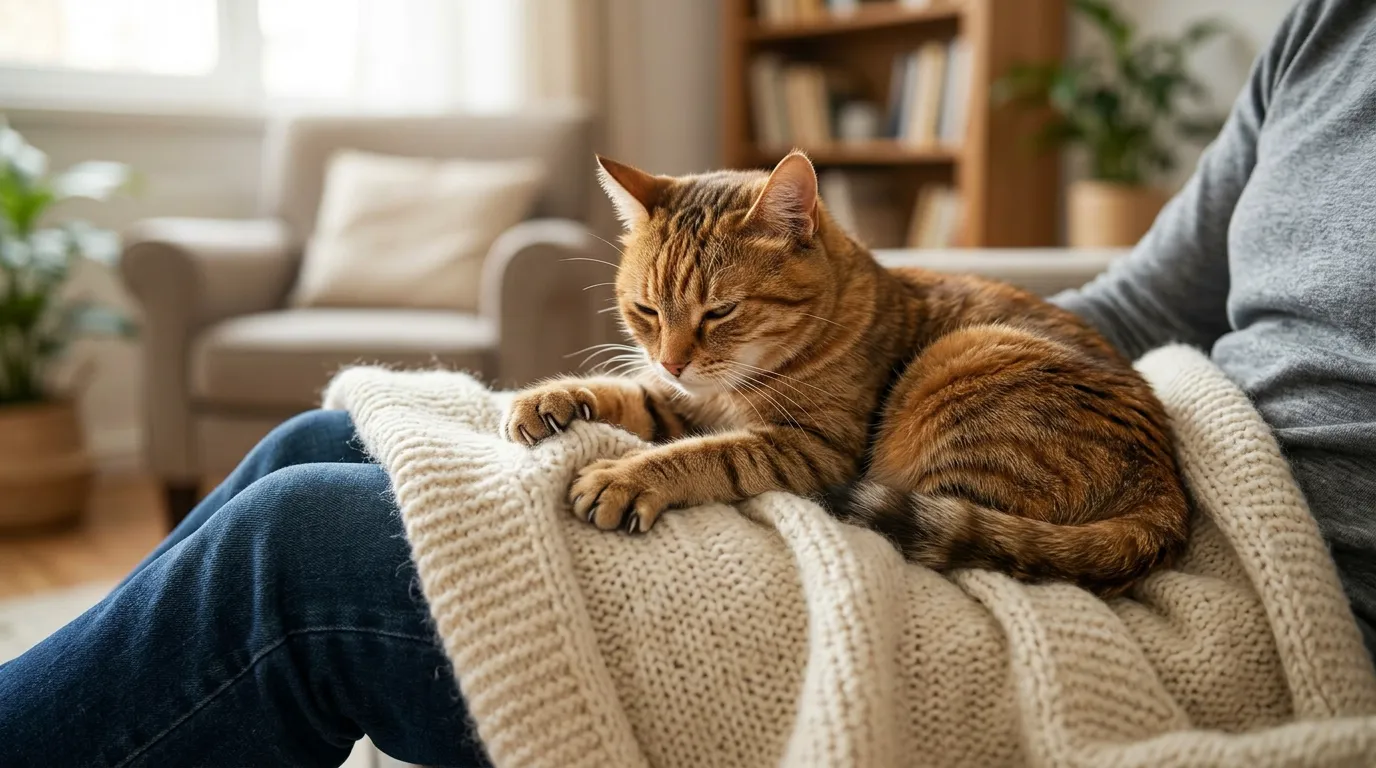
That rhythmic pushing of paws against your lap or your blanket isn't fidgeting. It goes back to the very first days of your cat's life.
Kittens knead on their mother's belly to stimulate milk production. Adult cats keep doing it because it recreates that exact feeling of comfort and safety.
Fast Facts
- Kittens knead while nursing to trigger milk flow from their mother.
- Adult cats keep the motion long after weaning, often paired with purring.
- Paw pads carry scent glands, so kneading you leaves a subtle trust marker.
- The habit earned the nickname "making biscuits" for its rhythmic, dough-like motion.
As cats grow, kneading becomes tied to relaxation and affection. It's part self-soothing, part love language, and it marks you with scent from the glands in their paws.
When your cat kneads you, it is subconsciously linking you to the safest, most loving experience it has ever known.
That's not just cute. That's a deeply rooted emotional response your cat can't fully explain, even to itself.
The next one covers a behavior that a lot of owners actually find annoying, without realizing it's high-level affection...
#6 - Following You From Room to Room
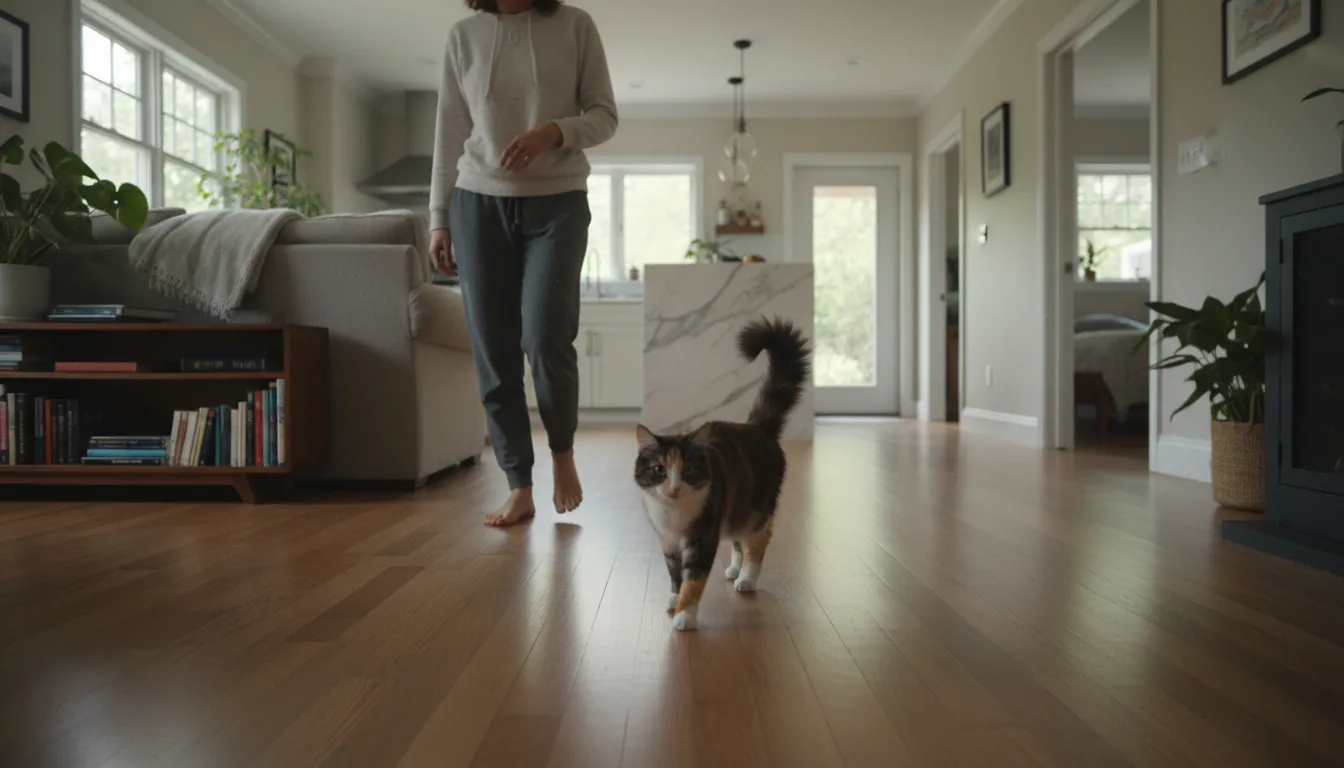
Your cat isn't being needy, and it isn't bored. It's attached to you, and the science backs that up.
Research shows many cats form attachment bonds with their humans that resemble the bond between babies and caregivers. Following you around the house is that bond playing out in real time.
Cats that aren't big on cuddling often use shadowing instead. It's their substitute love language.
This is especially telling in cats that are otherwise independent or aloof. For them, following you room to room is the loudest "I love you" in their entire repertoire.
It means you are their safe base. Wherever you are is where they want to be.
What comes next is a signal that takes real courage on your cat's part...
#5 - Showing You Their Belly
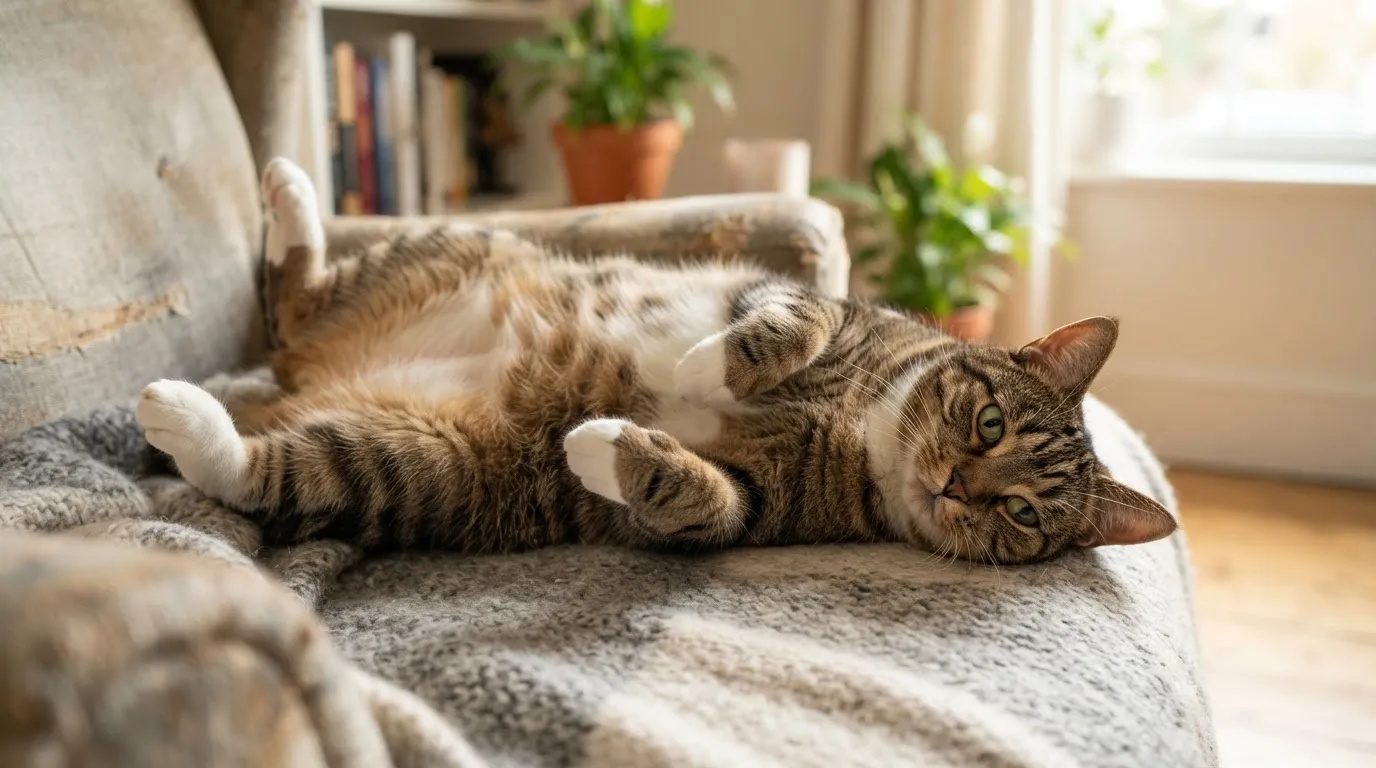
This one is almost universally misunderstood, and most owners make a critical mistake the moment it happens.
Cats rarely expose their bellies because that area houses all their vital organs. Instinct tells them to protect it from predators at all costs.
By rolling over and showing you its belly, your cat is trusting you with its most vulnerable spot. Literally, with its life.
The belly display is one of the most vulnerable, trust-heavy gestures in the entire feline emotional toolkit. But that doesn't mean it's an invitation.
Most cats aren't fans of belly rubs. The hair follicles there are hypersensitive, so touch can quickly turn overstimulating.
Here's the insider move: don't reach in for a rub. Acknowledge it, talk softly, maybe offer a slow blink back - the belly is the declaration, not the invitation.
Next up is a behavior so instinctive your cat can't even fully control it...
#4 - Allogrooming (Licking You)
Being licked by a cat isn't everyone's favorite sensation. That sandpaper tongue can be intense, but the reason behind it changes everything.
Cats groom each other as a bonding behavior within family groups. Occasionally, they extend that same behavior to their favorite humans, mingling scents in the process.
Grooming is a social ritual cats typically reserve for other cats they trust completely. If your cat licks your hand, your hair, or your arm, it has mentally filed you under "trusted companion."
The technical term is allogrooming, and researchers have documented it in feral colonies between cats with the strongest social bonds. The fact that your cat extends it to you says a lot about where you rank in its world.
And what comes next is something your cat leaves for you as a gift, even if you'd honestly rather it didn't...
#3 - Bringing You "Gifts"
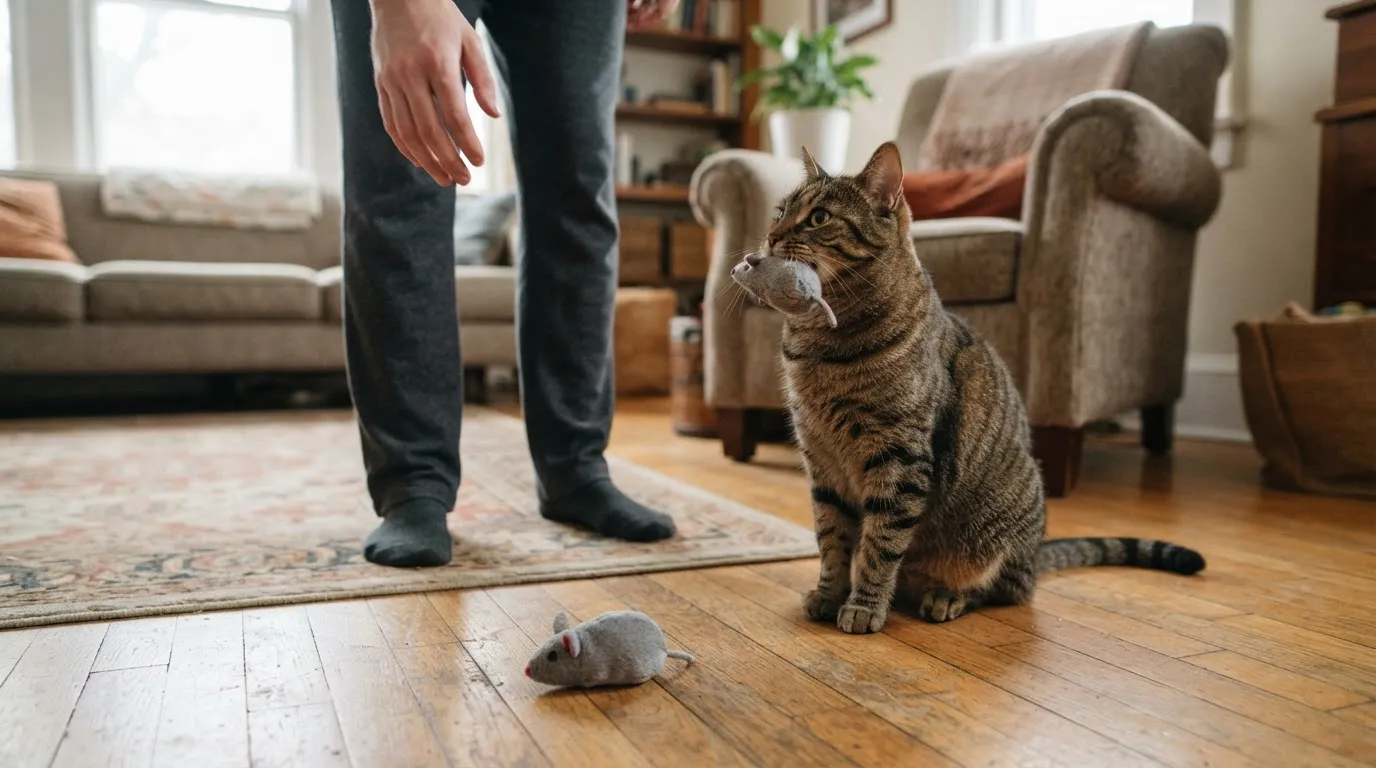
A dead bird on the doorstep. A half-alive mouse at 3 a.m. Most owners are horrified, but experts see something completely different.
Bringing you gifts is one way cats include you in their world. In feral colonies, cats share prey only with animals they consider part of their inner circle.
Quick Compare
- Feral cats: share real prey only with trusted colony members.
- Indoor cats: substitute toys, socks, or random objects for the same message.
- Either way: the gift means you've been accepted into the inner circle.
The gift-giving instinct is strongest in cats that feel a deep bond with their owner. It's actually a sign of how highly your cat regards you.
Don't punish the behavior. Just calmly remove the offering - your cat meant well, and that's the whole point.
The second most powerful signal on this list is one you've probably been taking for granted every single day...
#2 - Purring in Your Presence
Everyone knows cats purr, but most people don't realize purring is contextual. When it happens around you specifically, it means something very specific.
Purring is a sound cats make when they feel safe, secure, and relaxed. If your cat purrs the moment you walk in, that's your answer.
A purring cat that approaches you with its tail up is essentially saying "I'm happy you're here." Put those two signals together and there's no ambiguity left.
Fast Facts
- Cat purrs typically vibrate between 25 and 150 Hz.
- That range overlaps frequencies linked to bone and tissue healing.
- Cats often reserve purring for moments a trusted person is nearby.
- A purr paired with a raised tail doubles up as a contentment signal.
Purring is not automatic. It is a chosen form of communication, and cats don't purr alone the way they do in your presence.
Your cat's love language may literally be good for your health, not just its own.
Which brings us to #1 - the sign experts consider the single most definitive proof your cat loves you...
#1 - Seeking You Out During Stress
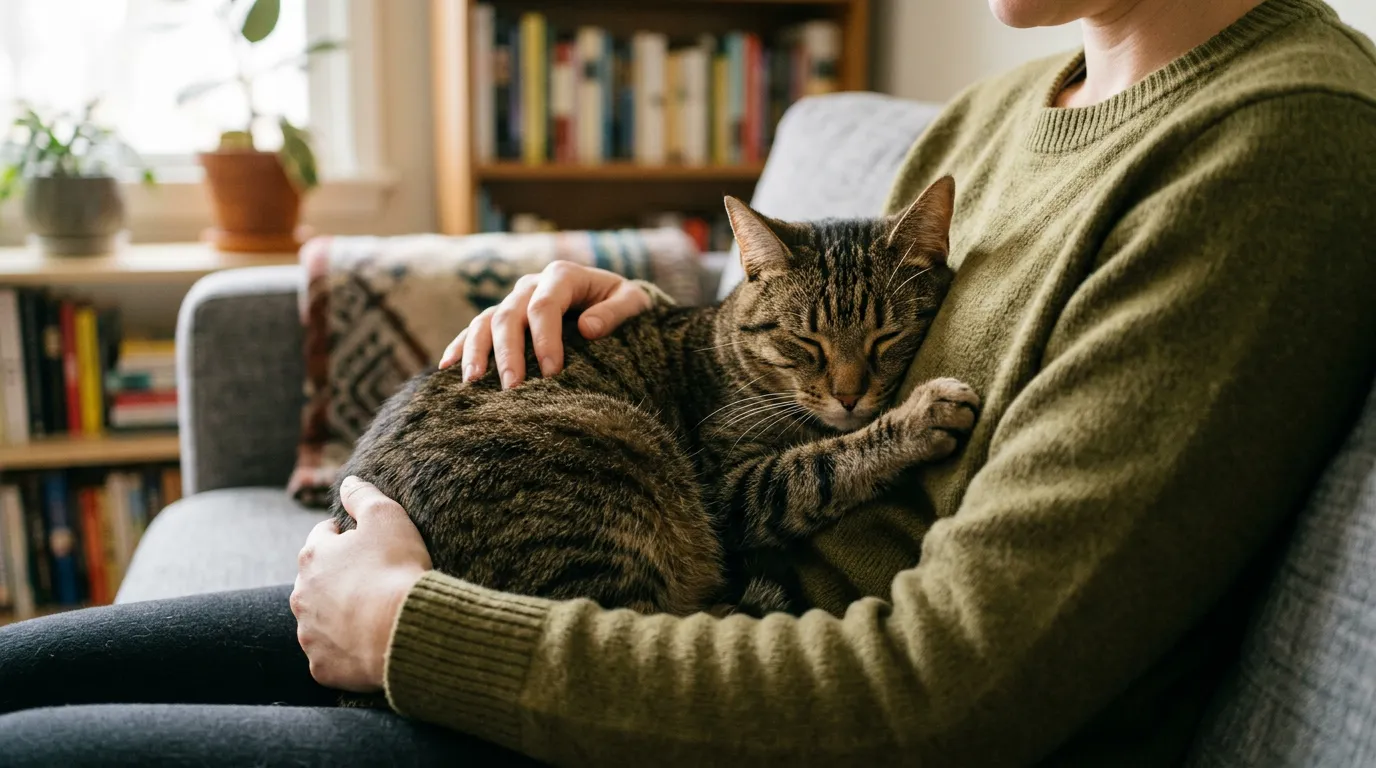
Here's the one that separates true bonding from mere coexistence. What does your cat do the moment something frightening happens?
Cats with secure attachments seek out their owners during stressful or unfamiliar moments. It's the clearest marker of a genuine bond that exists.
Studies suggest cats with secure attachments are more likely to initiate cuddles and close contact afterward, and those interactions raise oxytocin levels - the so-called "love hormone" - in both cat and owner.
When a frightened cat runs to you rather than under the bed, that is the gold standard of feline love. It means you are its secure base, the one living thing it trusts to make the world feel safe again.
A cat that ignores you when everything is calm but gravitates toward you the moment something is loud or strange isn't being inconsistent. That's attachment, and it's love in the most honest, unperformed form any creature can show it.
The Bottom Line
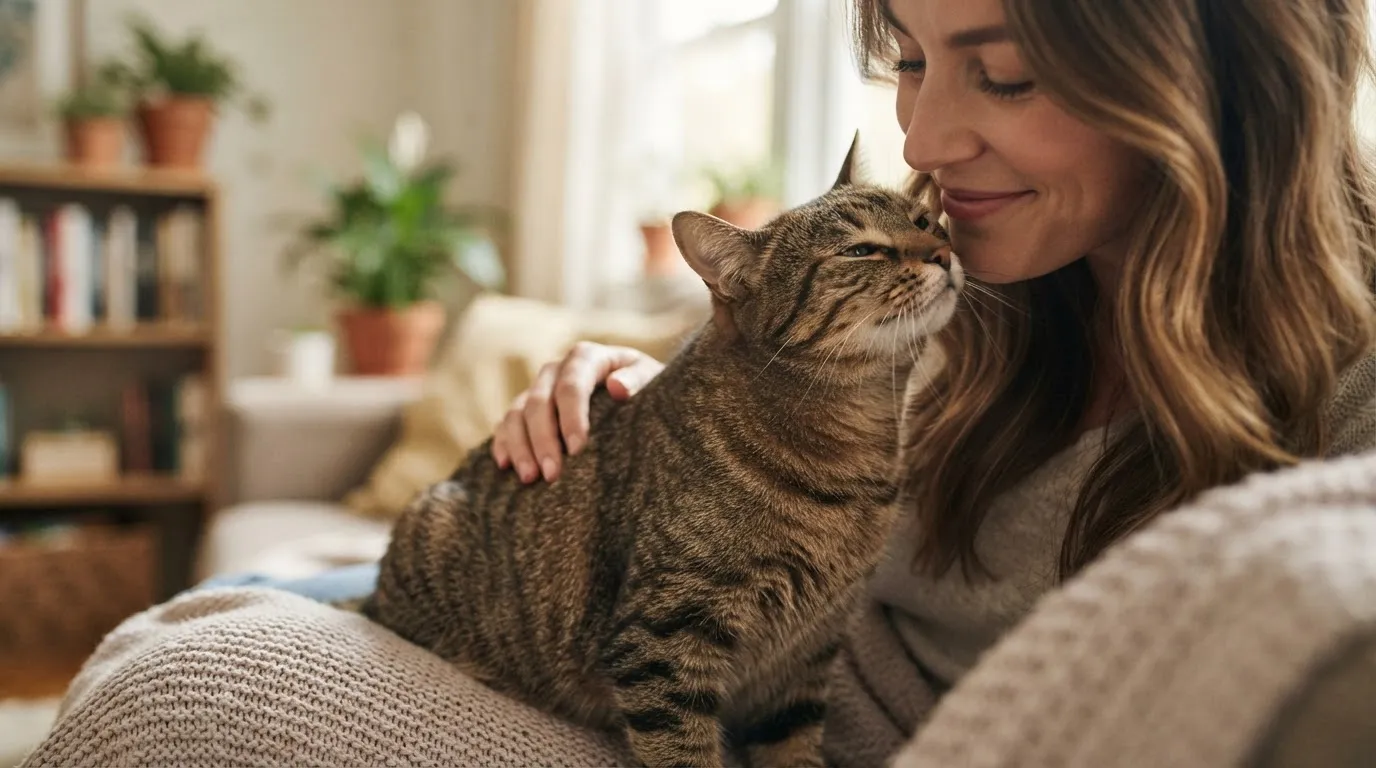
Cats are not the emotionally unavailable loners they're made out to be. They form real attachment bonds, release oxytocin around their favorite humans, and speak a sophisticated physical language most owners never learned to read.
The slow blink is a smile. The headbutt is a declaration. The gift on the doorstep, however grim, is genuine generosity.
And a cat that runs to you when it's scared? That's the deepest trust any animal can offer.
Start watching for these 11 signals, and you'll realize your cat has been saying "I love you" all along - you just weren't fluent yet.
Which of these surprised you the most? Drop it in the comments, and tell us what your cat does that isn't on this list.