14 Signs Your Cat Is Ready to Say Goodbye
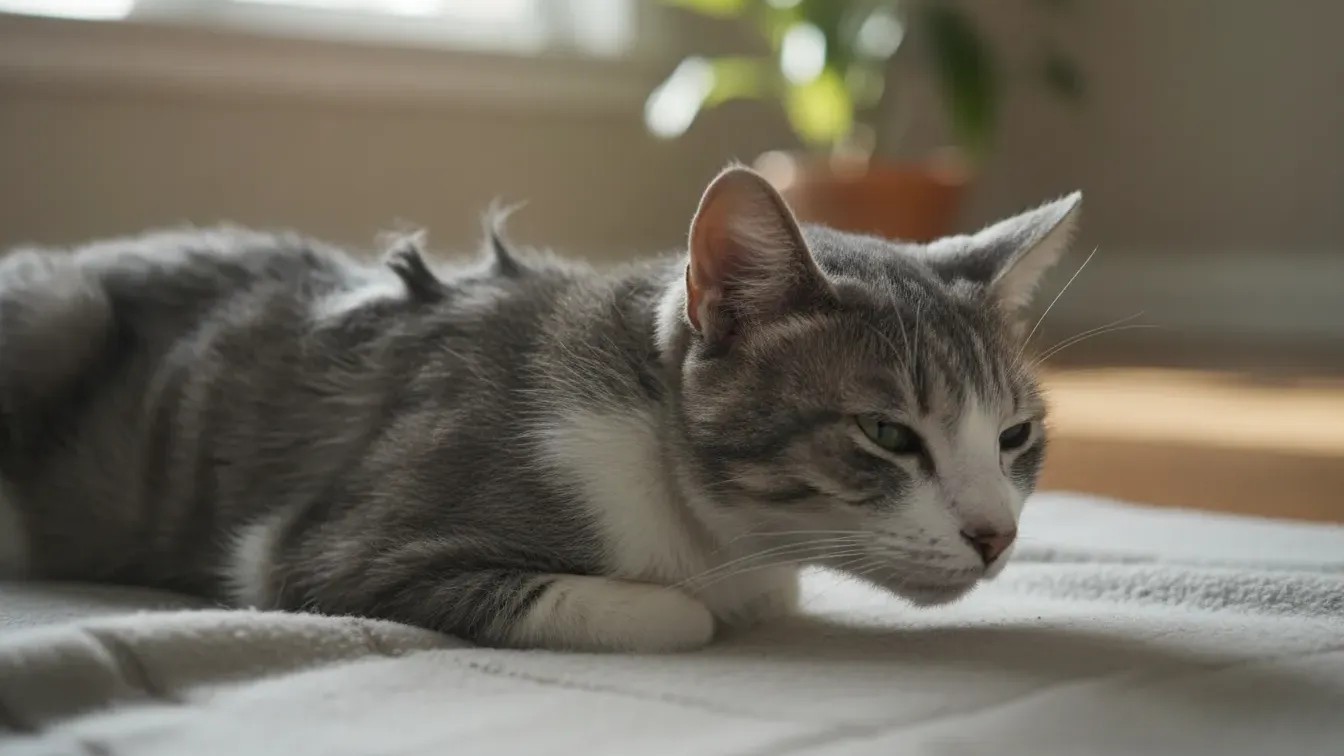
Most cat owners don't notice the real warning signs until it's too late - and that's not their fault. Cats are extremely adept at hiding pain, so by the time you finally notice something is wrong, your cat may have been struggling for weeks. The signals are there, quietly playing out in daily habits, posture, sounds, and silences.
Most people misread these changes as "just getting older," when they're actually part of a very specific, well-documented pattern. There is no single moment that announces a cat is dying - it's a chain of signals, and by the time you reach the last one on this list, you'll wish you'd known about the first thirteen. Here's what veterinarians and end-of-life specialists actually watch for.
#14 - Hiding in Unusual Places
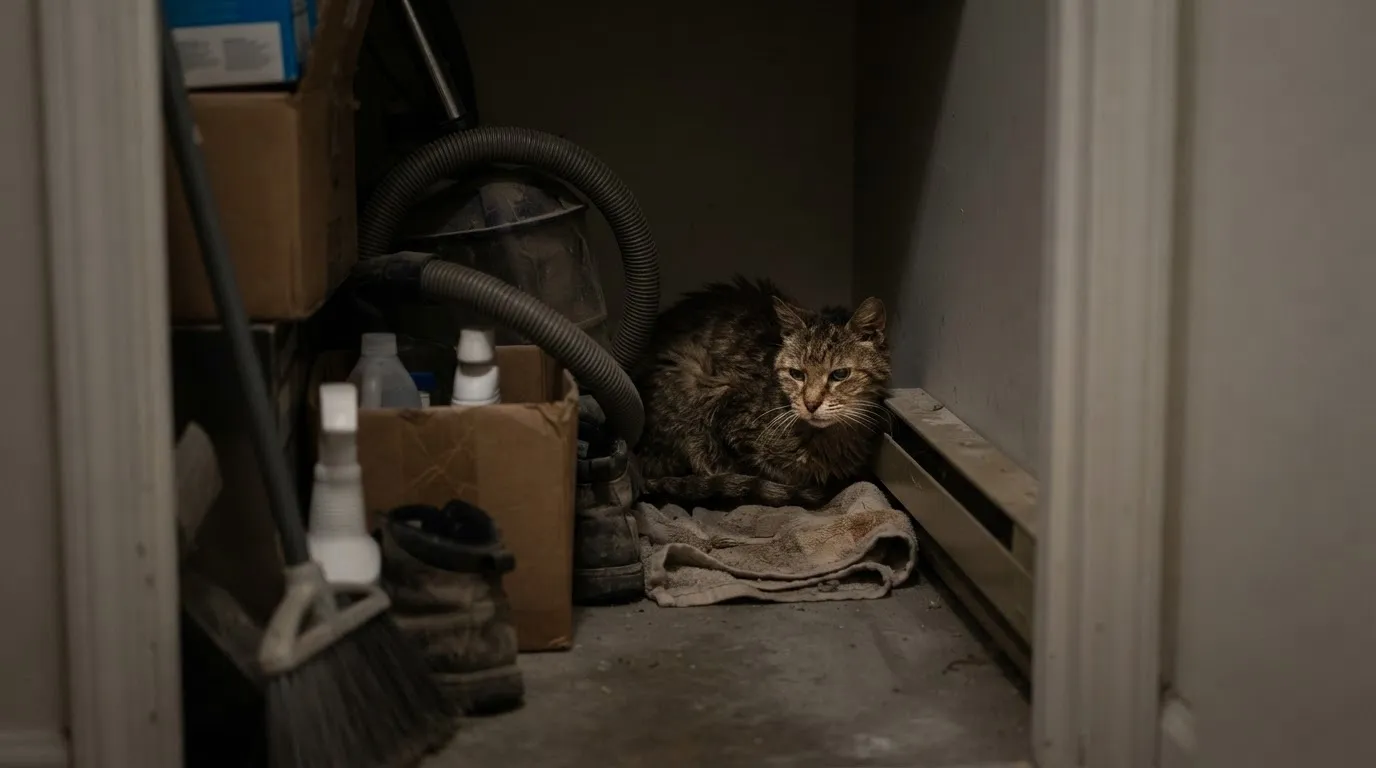
Dying cats are more prone to hiding for long periods, refusing to come out even for meals or things they normally love. This isn't attitude - it's pure instinct.
Cats are biologically wired to hide weakness to survive in the wild, and that ancient drive doesn't vanish just because they live on your couch. When a cat suddenly retreats to the back of a closet, under the bed, or behind the washing machine, it isn't being difficult.
The most telling detail: it's not just hiding - it's hiding somewhere they've never hidden before. A cat that always slept on your pillow suddenly choosing a cold, dark corner is sending a very clear signal.
If your cat has gone quiet and out of reach, don't brush it off. That shift in location is only one piece of the puzzle - the change in their voice is just as hard to ignore.
#13 - Changes in Vocalization
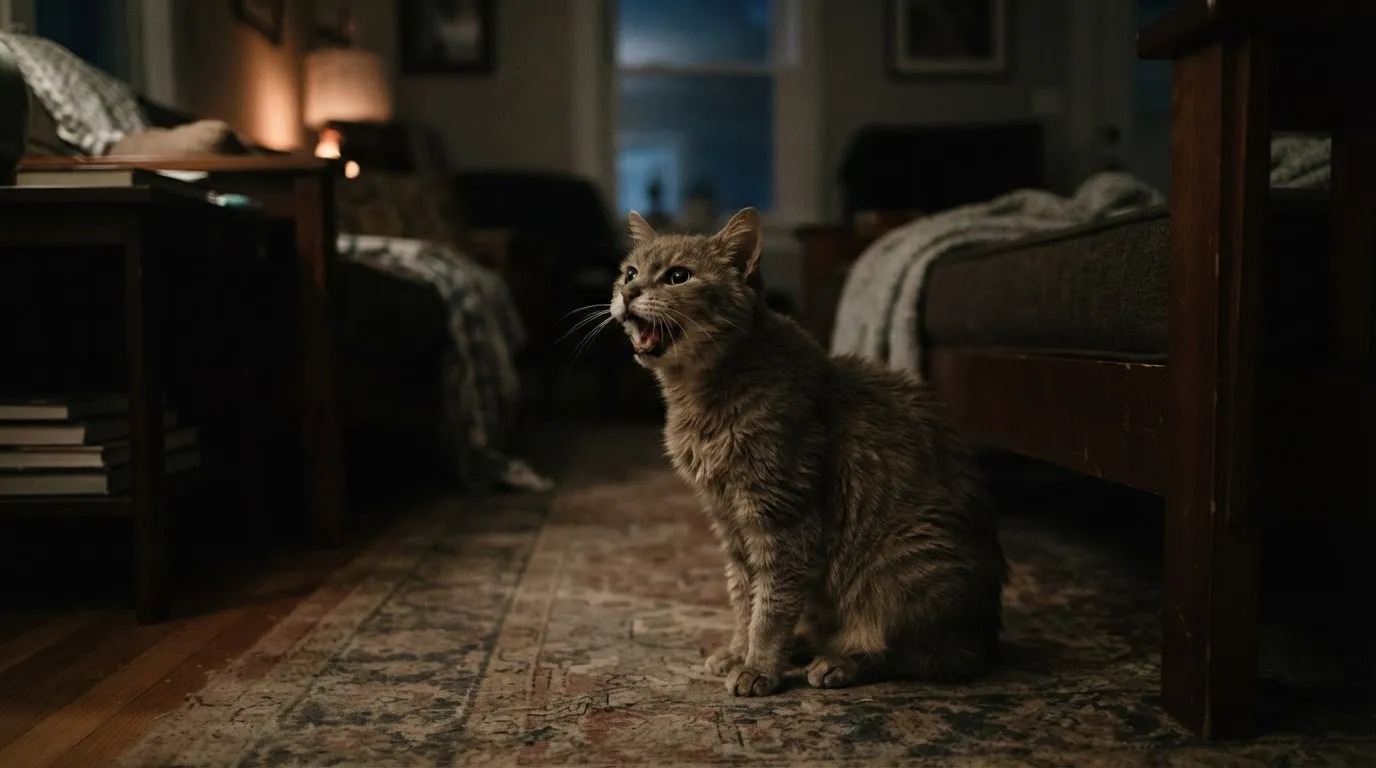
Yowling, meowing excessively, or falling completely silent are documented behavioral signs a cat is nearing the end. Both extremes matter equally.
Some cats who were always chatty go completely quiet. Others who were silent suddenly start yowling through the night, often linked to cognitive decline that leaves them disoriented and confused.
The fact most owners miss: that eerie, low yowl at 2 a.m. isn't a demand for food. It's often an expression of disorientation or pain, while a cat that has gone silent may have simply lost the energy to communicate at all.
The voice changes alone would alarm most owners - but the next sign is something most people write off as a personality quirk.
#12 - Becoming Unusually Clingy or Unusually Cold
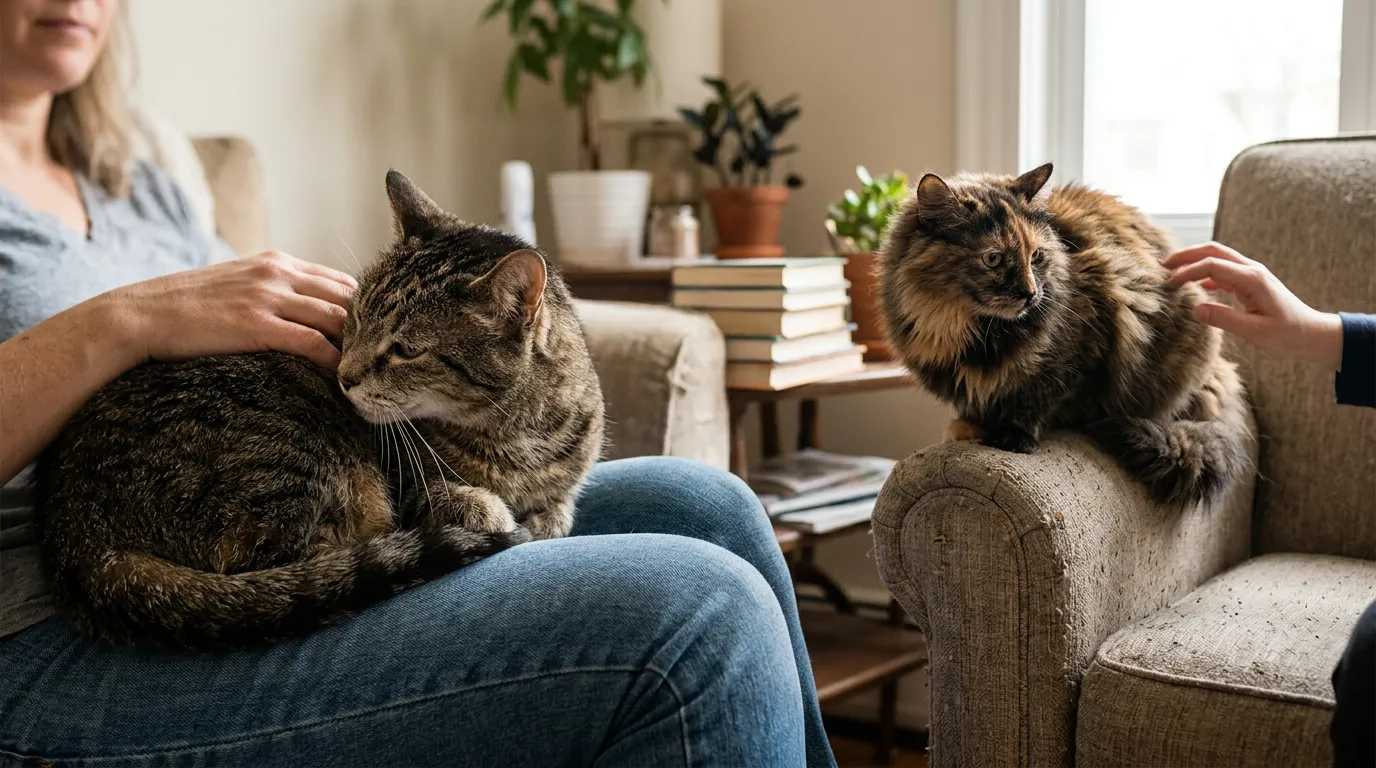
Some cats become reclusive and irritable near the end, while others grow suddenly clingy. Both are valid signals, just pointing in opposite directions.
If a cat that always kept its distance is suddenly glued to your lap, take note. It's not a personality upgrade - it's a cat seeking comfort it knows it needs.
The flip side is just as alarming: a once-cuddly cat that now flinches at touch or growls at being picked up is likely in real pain. Either direction - sudden closeness or sudden withdrawal - is the cat telling you something is deeply wrong.
Watch the social shift carefully. Then watch what happens at the food bowl.
#11 - Refusing Food and Water
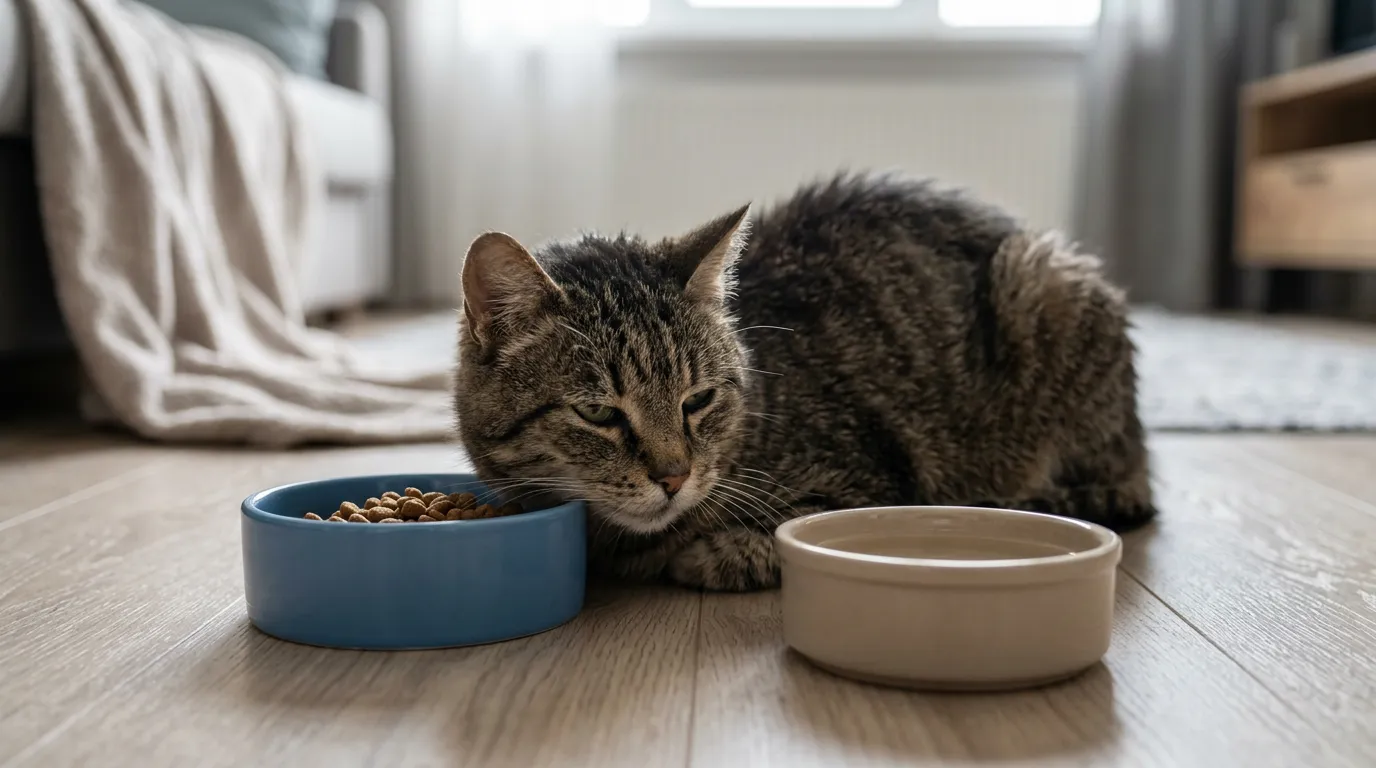
A loss of interest in food is common as cats near the end of life; they may eat significantly less, even when offered their favorite meals. This isn't picky eating.
When a cat stops engaging with food it's loved for years, the body is redirecting its remaining energy away from digestion. Drinking habits shift too, and a long-term decline is often tied to serious underlying illness.
The detail that changes everything: end-stage kidney failure, one of the most common terminal conditions in cats, follows a specific pattern - excessive thirst first, then a complete refusal to drink, and finally full refusal of food and water. If you know to watch for that sequence, it's one of the clearest timelines available.
Fast Facts
- Chronic kidney disease affects an estimated 30-50% of cats over age 15.
- Early kidney disease often shows up as increased thirst, not less appetite - that reversal comes later.
- Once toxins build up in late-stage failure, decline can happen within days.
- An ammonia-like breath odor is one of the clearest final-stage warning signs.
Appetite disappears. Then something else disappears too - the shine in their coat.
#10 - A Noticeably Deteriorating Coat
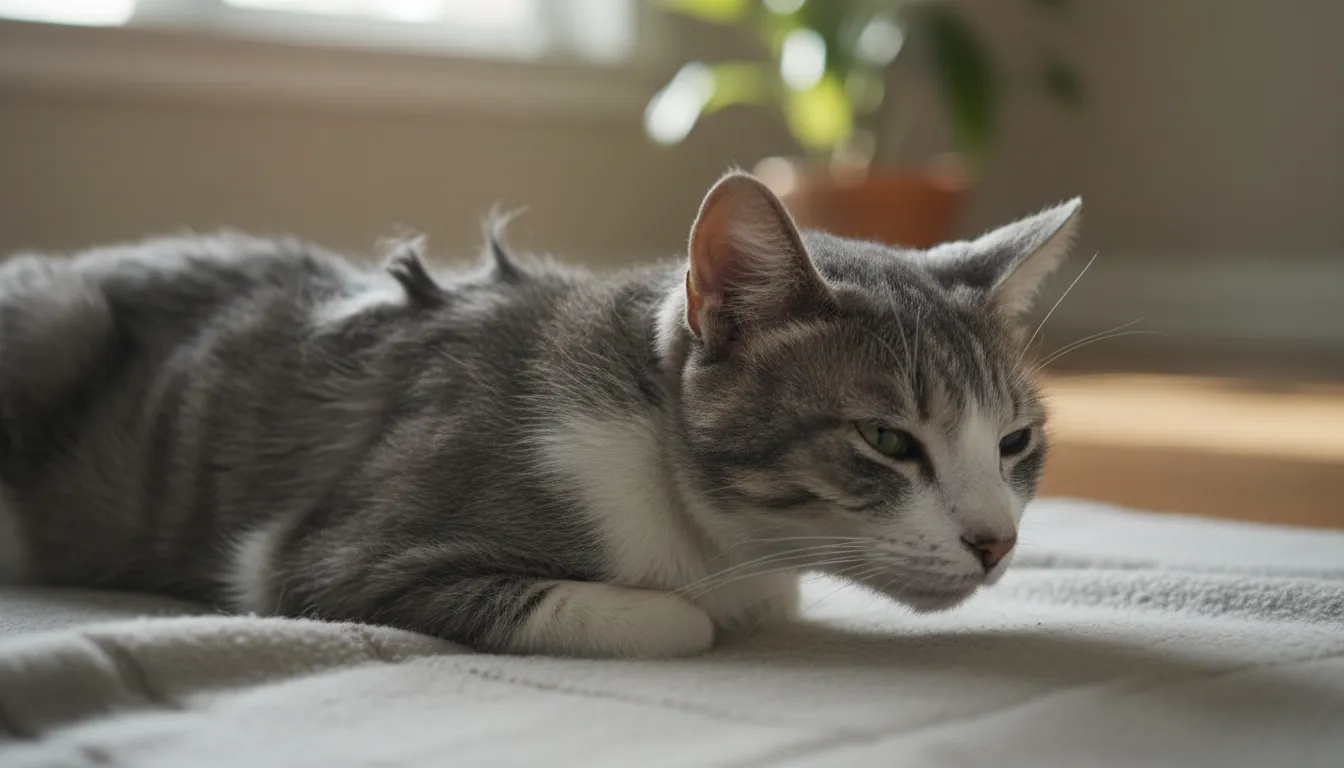
Healthy cats are meticulous groomers. A cat that stops grooming is telling you, without words, that it no longer has the energy or the will to care for itself.
Physical symptoms of a dying cat include labored breathing and poor coat condition - fur left matted, greasy, or dull. What was once sleek and clean quietly turns patchy.
This is one of the earliest visible signs, and it's often missed because it happens gradually. You might assume your cat just had a rough day - but when the unkempt look becomes the new normal, that's a red flag worth a vet call.
The coat shows the story on the outside. The next sign reveals what's happening deep inside.
#9 - Dramatic, Unexplained Weight Loss

Rapid weight loss is a concern in any cat at any age. Near the end of life, it becomes one of the most visible and consistent physical signs.
You may feel it before you see it - picking up your cat and realizing they feel almost hollow, spine and hips suddenly prominent. In cancer, this rapid loss can happen even while the cat is still eating, which makes it especially cruel.
Most owners underestimate how fast this happens. A cat can lose significant muscle mass within weeks during end-stage illness, alongside labored breathing and changes in alertness. If your cat looks noticeably thinner than a month ago, that's not subtle - it demands an immediate vet visit.
Weight disappears. Then, not long after, so does coordination.
#8 - Weakness in the Hind Legs
This one surprises most owners because it seems to appear suddenly, but it's usually been building for weeks. Cats nearing the end of life often develop noticeable weakness in their hind legs.
You'll see it as stumbling, slipping on smooth floors, or a reluctance to jump onto surfaces they once cleared without effort. What looked like "stiffness" three weeks ago has become something more serious.
The shocking truth: hind-leg weakness is sometimes linked to a saddle thrombus, a blood clot that can strike suddenly in cats with heart disease and is a genuine medical emergency. But even without a dramatic event, progressive muscle wasting from chronic illness produces the same slow fade.
Worth Knowing
- A saddle thrombus causes sudden pain and paralysis, not gradual weakness.
- Affected hind legs often turn cold, with pale or bluish paw pads.
- It's always a medical emergency - roughly half of treated cats survive to go home.
- Most cases trace back to underlying heart disease.
A cat that can barely walk has already entered a serious stage. But what happens when breathing becomes the struggle?
#7 - Labored or Irregular Breathing
As death approaches, breathing often becomes slow and labored, with abnormal chest and abdominal movement or a gasping motion. It's one of the most distressing signs to witness.
But irregular breathing doesn't only show up at the very end. A cat breathing with its mouth open, taking shallow rapid breaths, or pausing oddly between breaths needs a vet immediately - this is not a wait-and-see symptom.
What most people miss: abdominal breathing, where the belly moves dramatically with each breath instead of the chest, signals the lungs are struggling and can point to organ failure. It is always urgent, never normal.
Breathing is hard to ignore. The next sign, however, is one people explain away for weeks.
#6 - Confusion and Disorientation
Senior cats nearing the end of life can develop cognitive dysfunction much like human dementia, forgetting where they are and feeling lost in their own home. You'll see your cat staring blankly at a wall or standing in the middle of a room looking genuinely lost.
This same decline can also cause wandering and increased nighttime vocalizing, tying directly back to the confused yowling mentioned earlier. It's not stubbornness - it's the brain losing its footing.
The hard truth: once a cat shows genuine disorientation in a familiar home, the brain is being affected - either by illness directly, by toxin buildup from kidney failure, or by the systemic shutdown the body is going through. Dying cats often become less reactive and less responsive as this progresses.
Confusion is heartbreaking to watch. But the next sign - the one involving the litter box - is what often finally forces owners to call the vet.
#5 - Litter Box Accidents and Incontinence
Cats near the end of life often struggle to make it to the litter box, and may not even recognize the urge until it's too late. For a cat that's been perfectly house-trained for a decade, this is a deeply significant change.
Some cats find it too painful to climb into the box. Others simply lose the neurological connection between the urge and the action - either way, it's not a behavior problem, it's a medical signal.
The detail that matters most: the color and smell of the urine carries its own warning. End-stage kidney failure can bring vomiting, mouth ulcers, and a chemical, ammonia-like breath odor from toxins building in the blood.
The litter box tells one story. The eyes and face tell another.
#4 - Sunken Eyes and Pale or Yellowed Gums
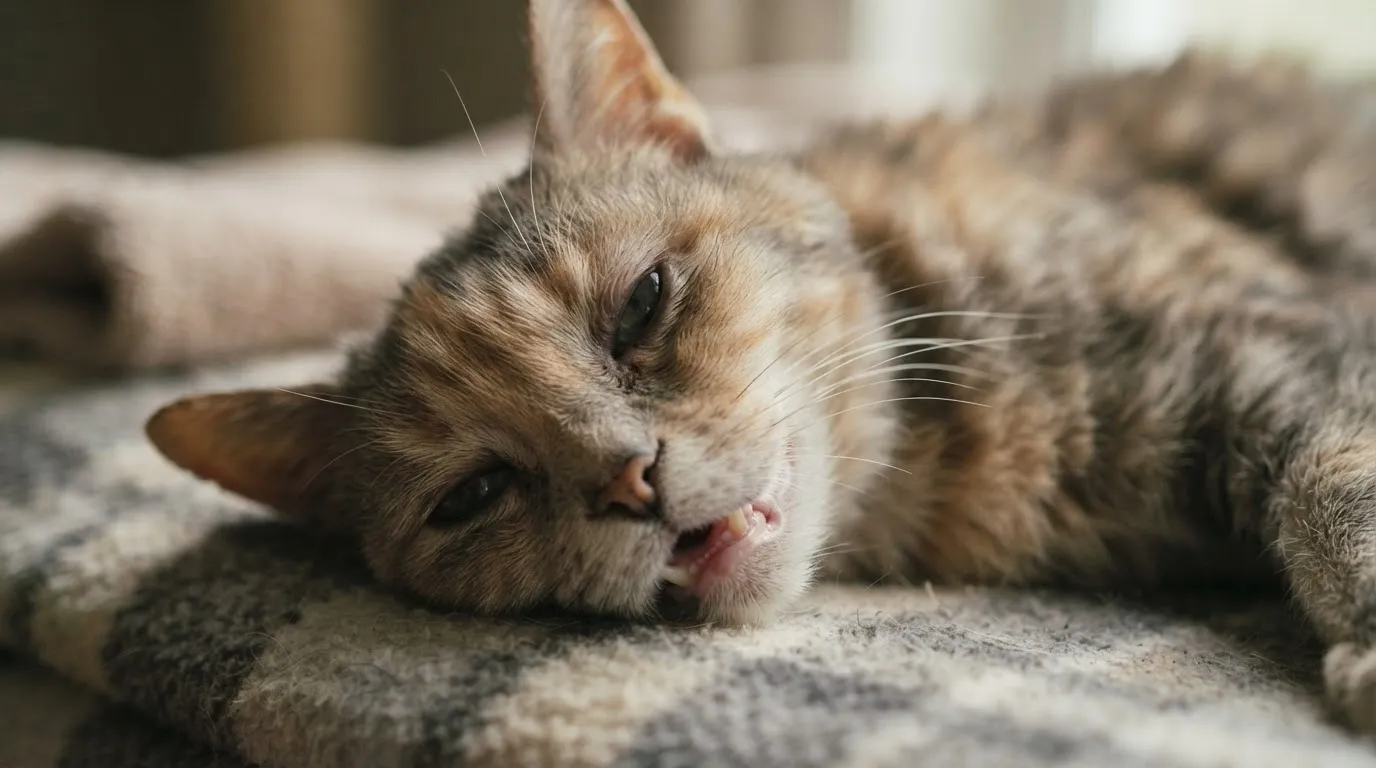
The face of a dying cat changes in ways that are unmistakable once you know what to look for - and most owners have never been told. Pale gums instead of healthy pink point to poor circulation, while yellowed gums signal a failing liver.
Sunken eyes are especially telling: they show up when a cat is severely dehydrated, which is common in the final stages as the kidneys lose their ability to retain fluid. Combined with cold extremities and extreme weakness, these are the body's last visible distress signals written plainly across the cat's face.
Quick Compare
- Pale pink gums → weak circulation or anemia
- Yellow-tinged gums → liver dysfunction
- Sunken eyes → dehydration, often tied to kidney failure
- Cold ears and paws → circulation starting to fail
They deserve an emergency vet visit, not a watchful wait. Two more signs remain - and they are the ones most people experience last, often without warning.
#3 - A Drop in Body Temperature
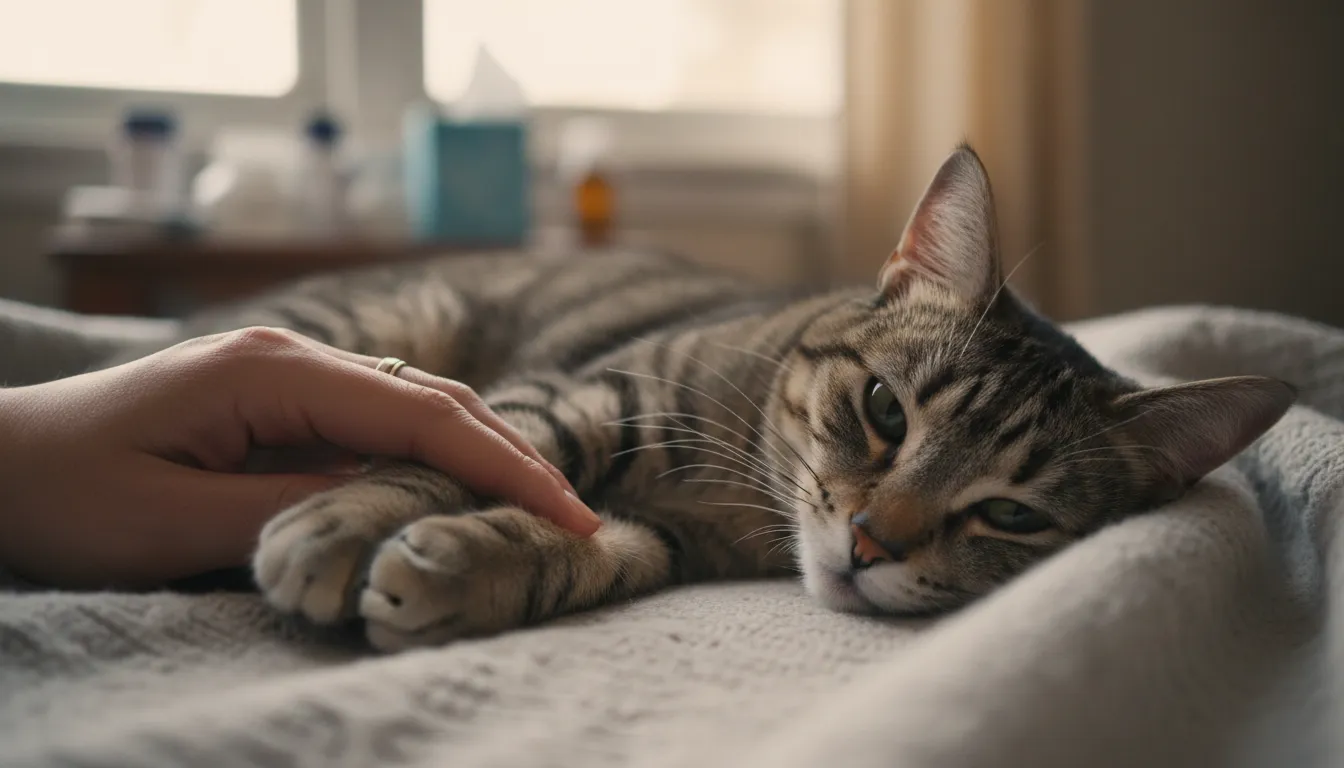
When a cat approaches the end of life, the body begins a natural shutdown process. One of the clearest physical markers is a measurable drop in temperature, particularly in the extremities.
Touch your cat's ears and paws. In a healthy cat they're warm; in a cat whose circulation is failing, they feel noticeably cool - not because the room is cold, but because the cardiovascular system can no longer push warm blood to the edges of the body.
What this sign means in timeline terms: cold extremities typically signal the final hours or days, not weeks. Combined with irregular breathing, incontinence, and a glassy-eyed stare, it means the time for decisions has arrived - and your vet needs to know now.
Only two signs remain. One is behavioral. The other is the single most profound shift of all.
#2 - Complete Withdrawal from Life
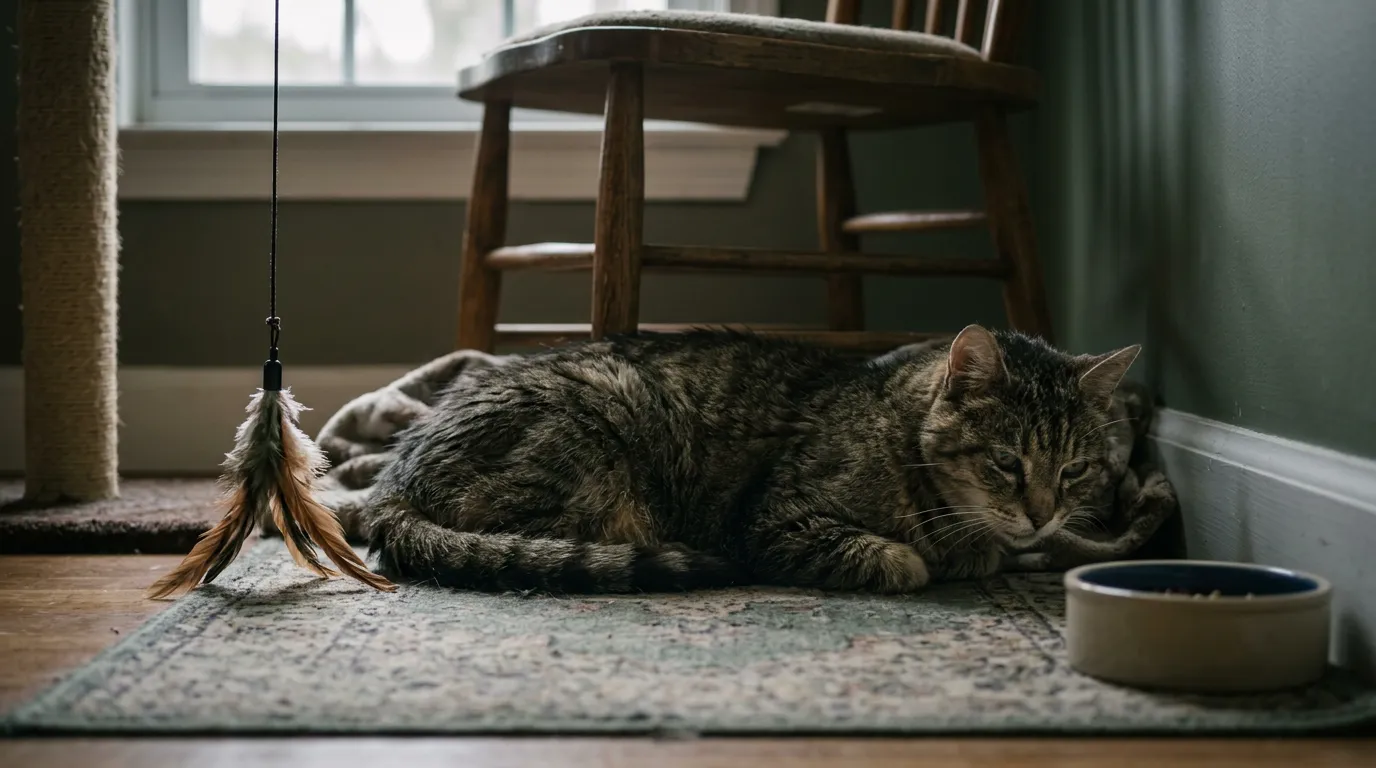
This isn't hiding. This is different - and every owner who has been through it recognizes it instantly when it's described to them.
As illness worsens near the end, a cat's interest in favorite activities fades - playing, treats, the scratching post, the jump to their favorite windowsill. The chair they always owned, the game they demanded every evening, stops mattering to them entirely.
This is not lethargy. It's resignation. There's an absence behind the eyes that owners often describe as their cat "already being somewhere else," and that instinct is almost never wrong.
And then there's #1 - the sign that, quietly, communicates everything.
#1 - A Sudden, Unexplained Calm
This is the sign veterinarians mention in private and owners only understand in retrospect. Many cats, in their very final days, become extraordinarily peaceful.
The restlessness fades, and the discomfort seems to ease. Cats often purr more than usual in this stage - not from contentment, but to soothe themselves through pain, and that sustained, gentle purr from an otherwise still cat is one of the most bittersweet sounds an owner will ever hear.
Most people interpret this calm as improvement. It rarely is. Because cats hide discomfort so well, by the time their expression softens, they're often already very unwell - the calm is the body conserving its last resources, not recovering them.
It's kinder to speak with your veterinarian and make a plan ahead of time, rather than waiting for that moment to arrive on its own. When the stillness comes, be there with them - that's all they need.
The Bottom Line
The signs a cat is dying include both behavioral and physical changes, and most of them build slowly, in layers, before they become undeniable. Hiding, silence, weight loss, cold paws, pale gums, litter box accidents, confusion - each one alone might be explainable.
Together, they form a picture. It's rarely one symptom that matters most - it's the change over time.
The kindest thing any owner can do is act early: call the vet, ask the hard questions, and give your cat the dignity of a goodbye on your terms, not crisis terms. Have you been through this with a cat you loved? Share your experience in the comments - it helps more people than you know.