10 Moments That Show a Cat Has Picked Its Person and Will Not Change
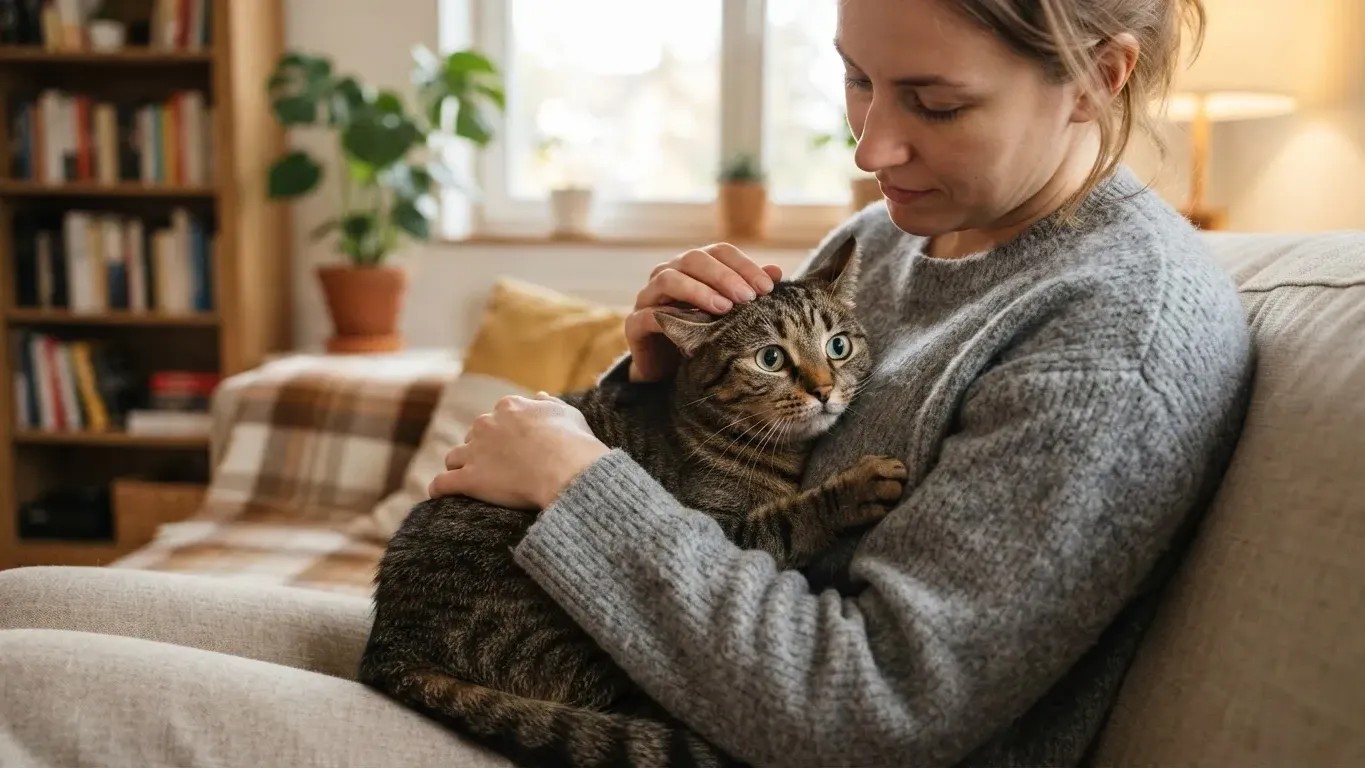
Most people think cats are indifferent loners who merely tolerate whoever fills the food bowl. Science says something very different. Oregon State University research confirmed that cats form genuine attachment bonds - the same kind of bond human infants form with their caregivers.
When a cat picks its person, the signs are specific, deliberate, and almost impossible to miss once you know what you're looking for. Here are the ten moments that prove it, and the further down this list you go, the deeper the bond actually runs.
#10 - They Follow You From Room to Room
This is the one behavior most owners brush off as coincidence. It isn't.
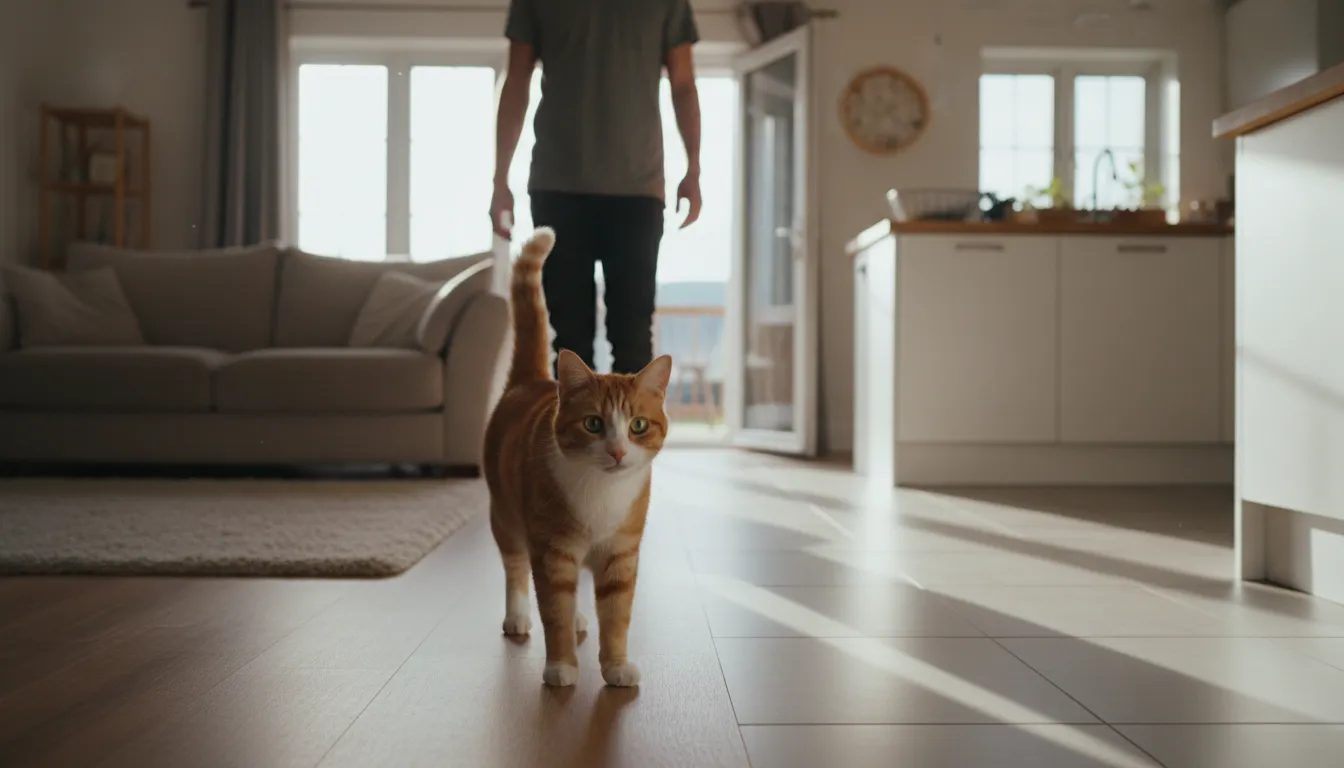
Cats who've bonded with a specific person follow them from room to room even when there's no food involved. It's proximity-seeking behavior that mirrors infant attachment, not random curiosity.
Research shows securely attached cats engage more positively with their owners. The more time a cat chose to stay close to its person, the more likely it was to show a rise in oxytocin, the bonding hormone.
That's not a clingy cat. That's a cat quietly running a bonding protocol.
Fast Facts
- In humans, 65 percent of infants are securely attached to their caregiver.
- Researchers classified about 65 percent of both cats and kittens as securely bonded to their people.
- Cats' human attachments are stable and present in adulthood.
- They wait outside the bathroom door.
- They relocate every time you move to another room.
The cat isn't following the house - it's following you. That distinction matters more than most owners realize.
But that's nothing compared to the possessive scent ritual waiting at #9.
#9 - They Mark You With Constant Face Rubs
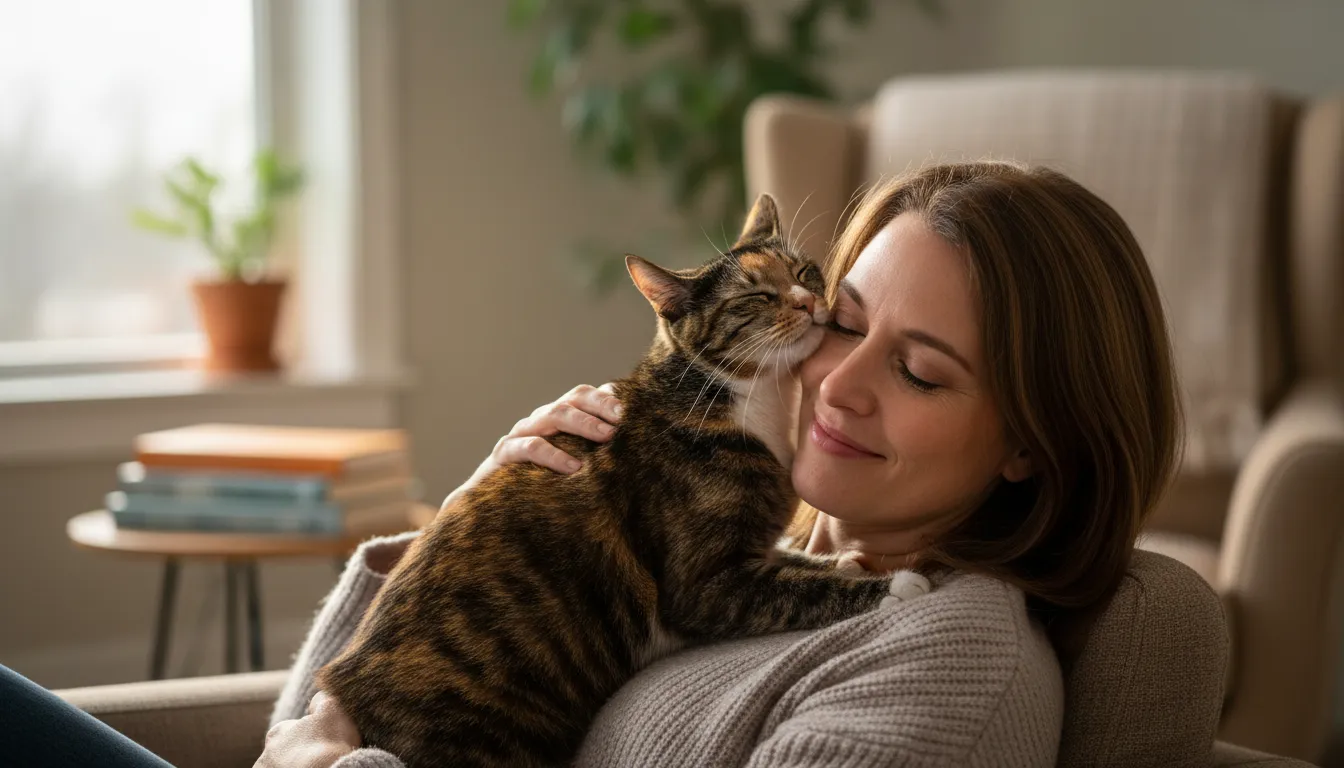
This isn't affection the way humans think about affection. It's something far more deliberate.
Cats headbutt and rub their face on people they want to mark with their scent, folding them into their safe zone. When your cat rubs against you, she's leaving pheromones behind that tell every other cat exactly who you belong to.
In multi-pet households, watch closely. Whichever human gets this treatment most often is the chosen one.
- Cheek glands, forehead glands, and tail glands each carry their own scent marker.
- A cat that rubs you is literally labeling you as theirs.
Most people think this is just a cute greeting. It's actually a territorial declaration, and it's in your favor.
But that's nothing compared to the eye contact ritual waiting at #8.
#8 - They Slow Blink Directly at You
If your cat holds eye contact and slowly closes their eyes at you, you've just received a feline declaration of trust.
Veterinarians and behaviorists agree slow blinking is deliberate. Cats do it when they feel relaxed and safe around someone they've already bonded with.
That's not 'I love you' so much as 'I trust you.'
Jackson Galaxy, cat behaviorist
Blink back slowly and you're speaking their language.
- Notice whether they do this with everyone, or only with you.
- Directed slow blinking at one specific person is a marker of selective attachment, not just general contentment.
Experts consider this one of the cleanest signals of bonded preference. Most owners never consciously register it happening.
But the next moment reveals something even more primal about how cats choose their person.
#7 - They Sleep Pressed Against You
Sleep is the most vulnerable state any animal enters. What a cat does during sleep tells you everything.
Sleeping on or beside you is one of the clearest bonding signals there is. Sleep is vulnerability, and cats only surrender to it next to humans they fully trust.
An occasional nap in your lap could just be warmth-seeking. A nightly, consistent sleeping spot pressed against you specifically is a bonding pattern.
- Wild cats sleep in groups only with individuals they trust completely.
- A cat that sleeps touching your body has placed you inside its inner circle of safety.
This isn't a cat that likes warmth. This is a cat that decided you're a safe anchor in its world.
But that's nothing compared to the greeting behavior at #6.
#6 - They Meet You at the Door
Dogs get all the credit for enthusiastic greetings. A bonded cat's door behavior is just as meaningful, and far more selective.
Cats who come running, or vocalizing, when you arrive home have wired you into their daily emotional rhythm. In multi-person households, the cat will meet one person consistently and greet everyone else occasionally, or not at all.
Vocalizing specifically to you - distinct meows, trills, or chirps used only when addressing you - is one of the key social markers of a bonded cat.
- The tail goes up like a flag when they see you, a greeting reserved for trusted people.
- If your cat runs to the door at your specific footstep sound, they've memorized you.
That level of perceptual tuning to one individual isn't accidental. It's attachment in action.
But #5 involves something cats bring you, and what it actually means will surprise you.
#5 - They Bring You Gifts
Finding a toy outside your bedroom door at 3 a.m. seems strange. It's actually one of the highest compliments a cat can pay you.
Cats often carry toys to their favorite person to invite play. But it goes deeper than that - presenting prey or toys is a classic sign of social bonding, an offering of what they've hunted to the person they trust most.
In the wild, cats share food and prey only within their social group. A cat that brings you a gift has placed you inside its colony.
- Some cats bring live prey. Some bring a favorite toy. The emotional logic is identical.
- The gift is delivered to their person - rarely to anyone else in the home.
This one habit alone reveals more about a cat's internal social ranking than almost anything else. Most people just laugh it off.
But that's nothing compared to the exposed-belly moment at #4, and what it's actually communicating.
#4 - They Expose Their Belly to You
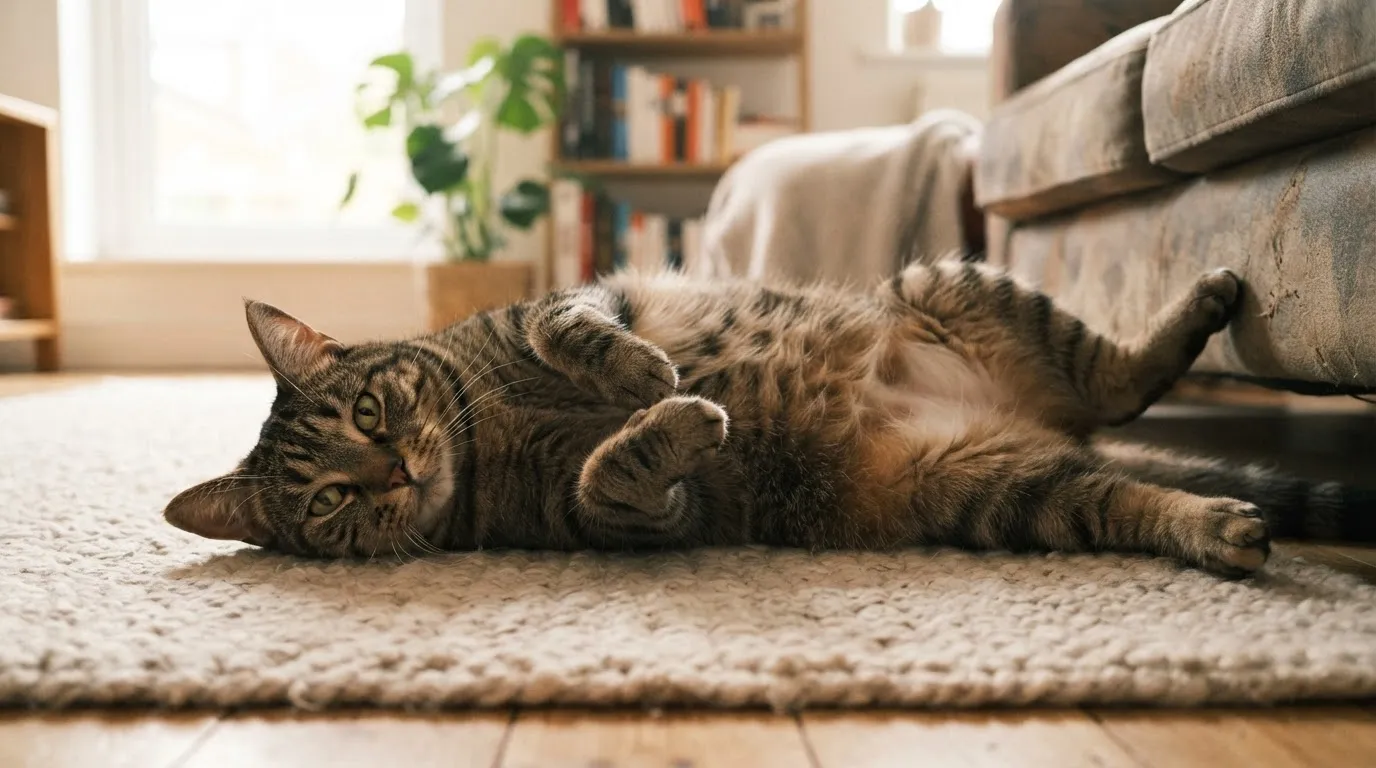
Let's be clear: a cat showing its belly isn't always an invitation to touch it. But it's always a signal of something important.
When cats expose their vulnerable stomachs and roll around flashing their bellies, they're communicating deep trust. The belly is the most undefended part of a cat's body, and exposing it in front of someone is a deliberate vulnerability signal.
A cat that rolls onto its back in your presence has decided you pose zero threat. Watch the context - they'll do this in your space, near you, usually while holding eye contact.
The difference between a belly trap and a genuine trust display is in the body language: relaxed paws, soft eyes, slow movements. When it's real, it's directed at one person only.
But #3 reveals the moment researchers say confirms the bond is truly locked in.
#3 - They Turn to You When Something Scares Them
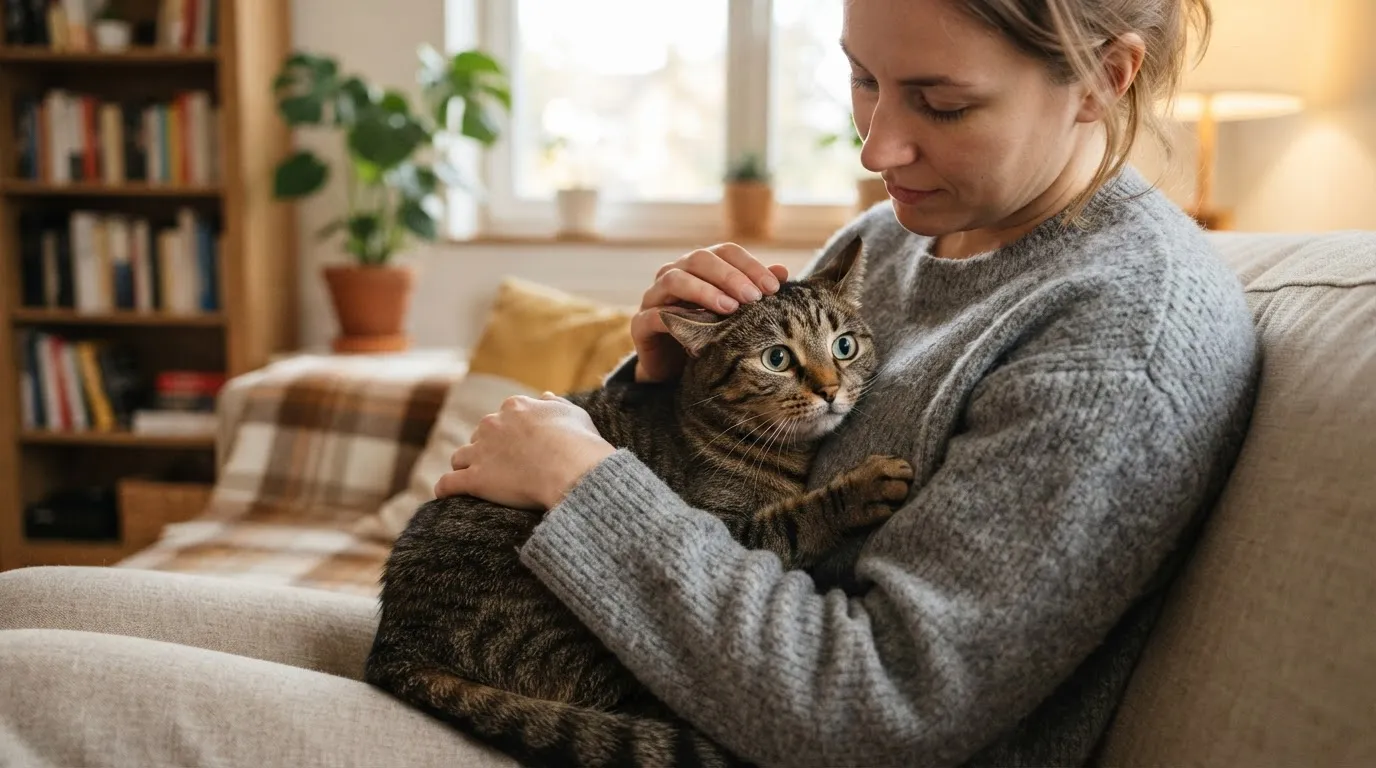
This is the behavioral signal that convinced researchers cats form attachment bonds similar to human infants. It's also the one most people never notice.
Confronted with something strange and upsetting, cats turned to their person for reassurance. Some retreated to a corner; others crawled straight into a lap and stayed there.
Researchers found that cats living in dependency with a human mostly use that human as a source of comfort. That's the definition of a secure attachment figure, the same role a parent plays for a child.
Worth Knowing
- During this test, the cat spends two minutes in a new room with their caregiver, followed by a two-minute alone phase, and then a two-minute reunion phase.
- Upon the caregiver's return, cats with secure attachment are less stressed and balance their attention between the person and their surroundings, continuing to explore the room.
- That calm-but-attentive reunion is the same marker used to classify secure attachment in human toddlers.
- At the vet, which human does the cat press against?
- During a thunderstorm, whose lap do they find?
The person a cat seeks during fear is the person they've genuinely bonded with. Not the person who feeds them most. Not the loudest person. The one who feels safest.
But that's nothing compared to the grooming behavior at #2, one almost no cat extends to more than one person.
#2 - They Groom You Like Family
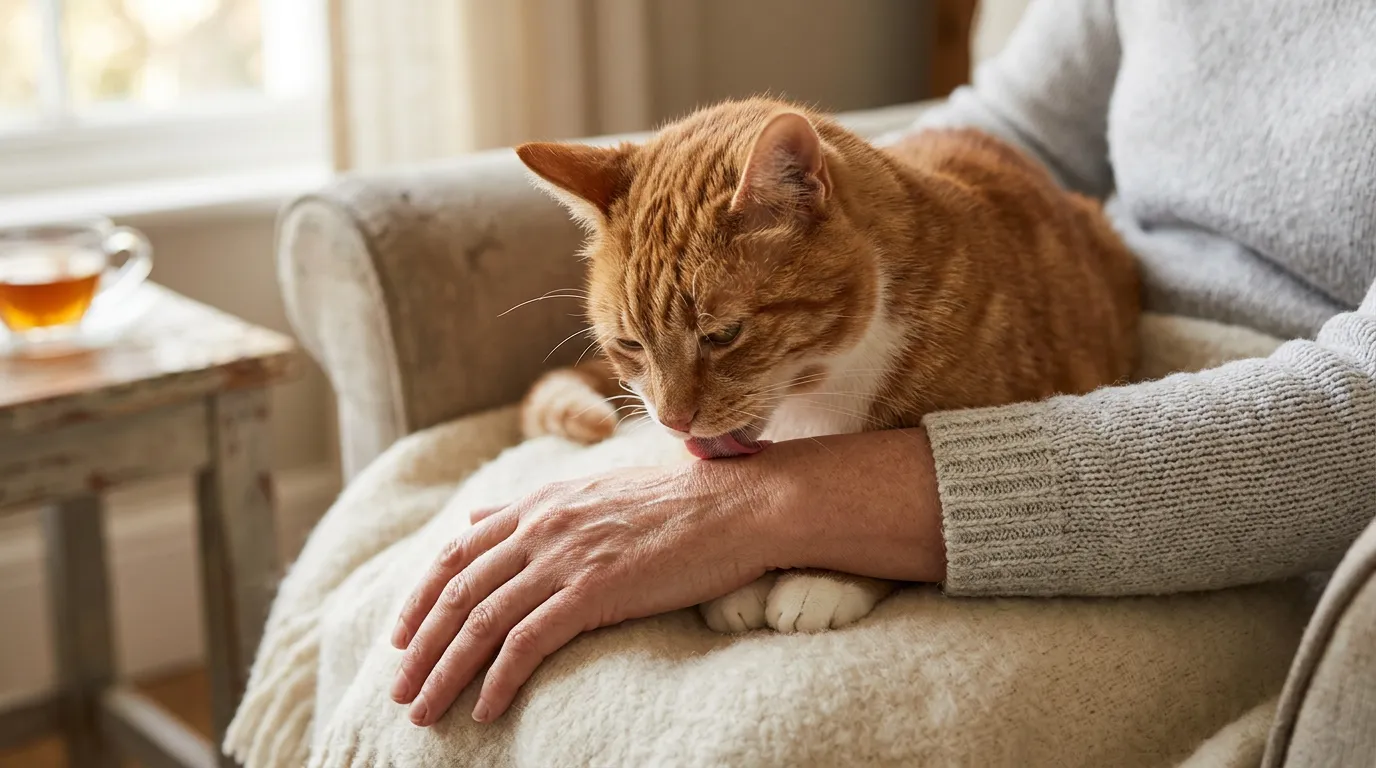
Allogrooming - grooming another individual - is something cats reserve for members of their closest social group. When they do it to you, the message is unambiguous.
Licking your skin or hair, or letting you groom them in return, is a bonding behavior that signals you've been folded into their social group. In cat colonies, mutual grooming strengthens bonds and reinforces who belongs.
A cat that licks your hand or hair is treating you exactly like a trusted colony member.
- Grooming is almost never random. It's socially targeted.
- If your cat grooms only you and no one else in the house, the bond has been confirmed in the clearest feline terms possible.
Most people think their cat just likes the taste of their shampoo. Experts say that's almost never the full story.
But #1 - the most reliable signal of all - is the one that takes the longest to appear and means the most when it finally does.
#1 - They Knead You, and Only You
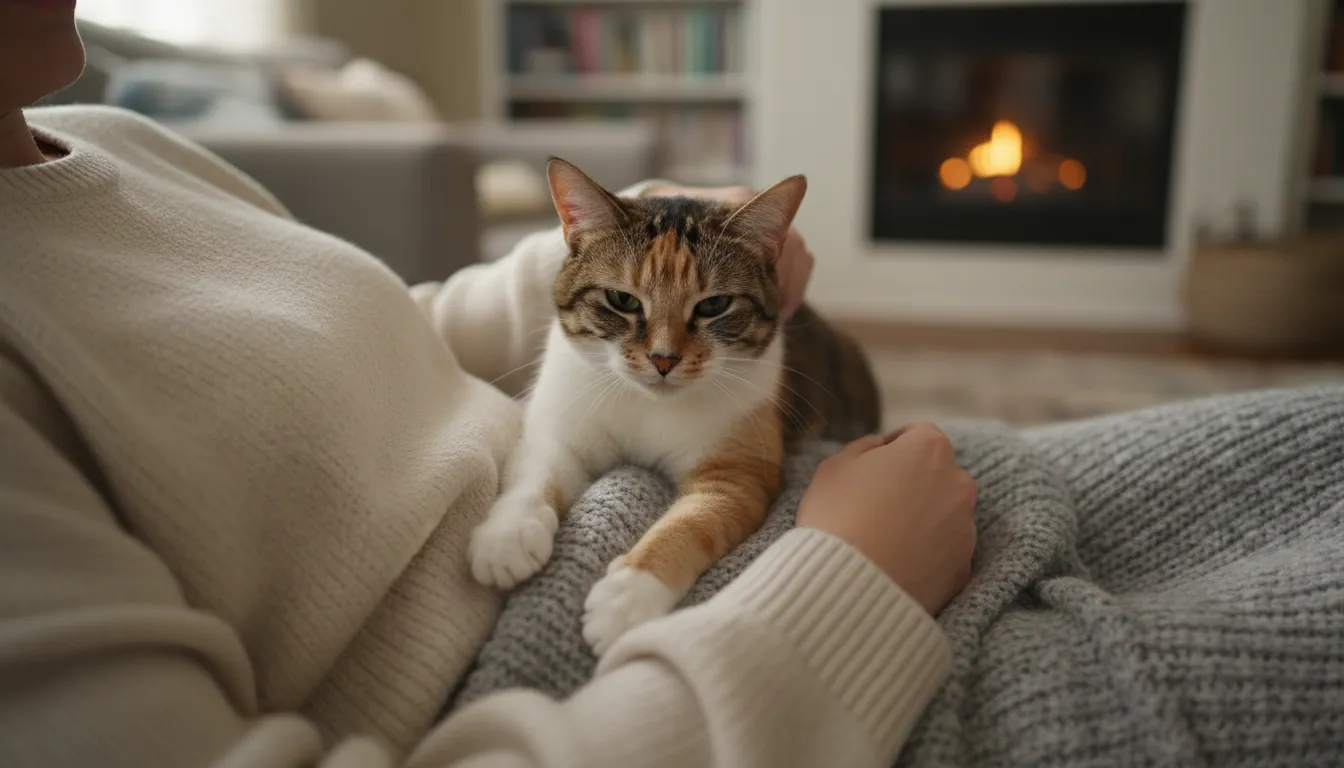
Kneading, that rhythmic pushing of paws against a soft surface, looks like a quirk. It's actually the deepest behavioral signal a cat can send a human.
Kneading starts in kittenhood, when kittens knead their mother's belly to stimulate milk flow. Cats attach to one person because that human provides consistent care, calm interaction, and predictable routine, and kneading is what gets activated when that bond reaches its deepest point.
A cat that kneads you isn't just comfortable - they're treating you as their primary safe figure. This behavior is almost never extended to strangers, occasional visitors, or housemates the cat merely tolerates.
- These attachment styles are stable over time and not easily altered, suggesting attachment is an intrinsic part of a cat's relationship with its chosen human.
- When kneading is paired with purring and half-closed eyes, the cat has entered a state of complete emotional safety.
Counterintuitively, the person who loves cats the least often ends up as the favorite, because they don't smother the cat with uninvited attention. They sit calmly, mind their own business, and let the cat come to them.
The person who gets kneaded earned it, not by trying, but by simply being.
The Bottom Line
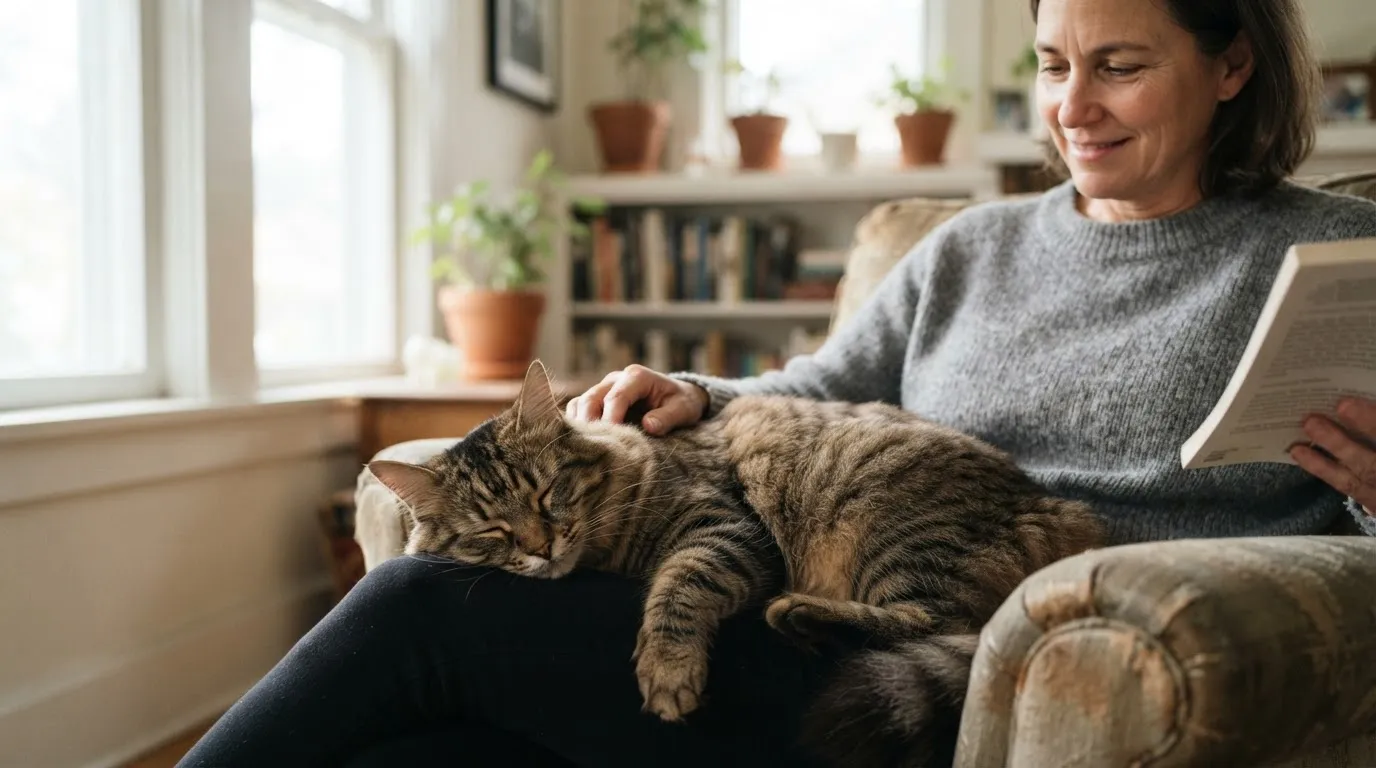
Cats do pick a person. They form a primary bond with one specific individual in a household, choosing their favorite human based on who provides consistent care and respects their pace.
The ten moments in this list, from following room to room all the way to kneading, form a hierarchy of trust. The further down the list you go, the deeper the bond it represents.
In research testing cat preferences, social interaction was the most-preferred stimulus category overall for the majority of cats, beating out food, toys, and scent. Your cat isn't indifferent. They're just very, very selective.
Which of these moments have you seen from your cat? Drop it in the comments - we want to know which one caught you off guard.