11 Quiet Signs an Older Cat Still Relies on You More Than It Shows
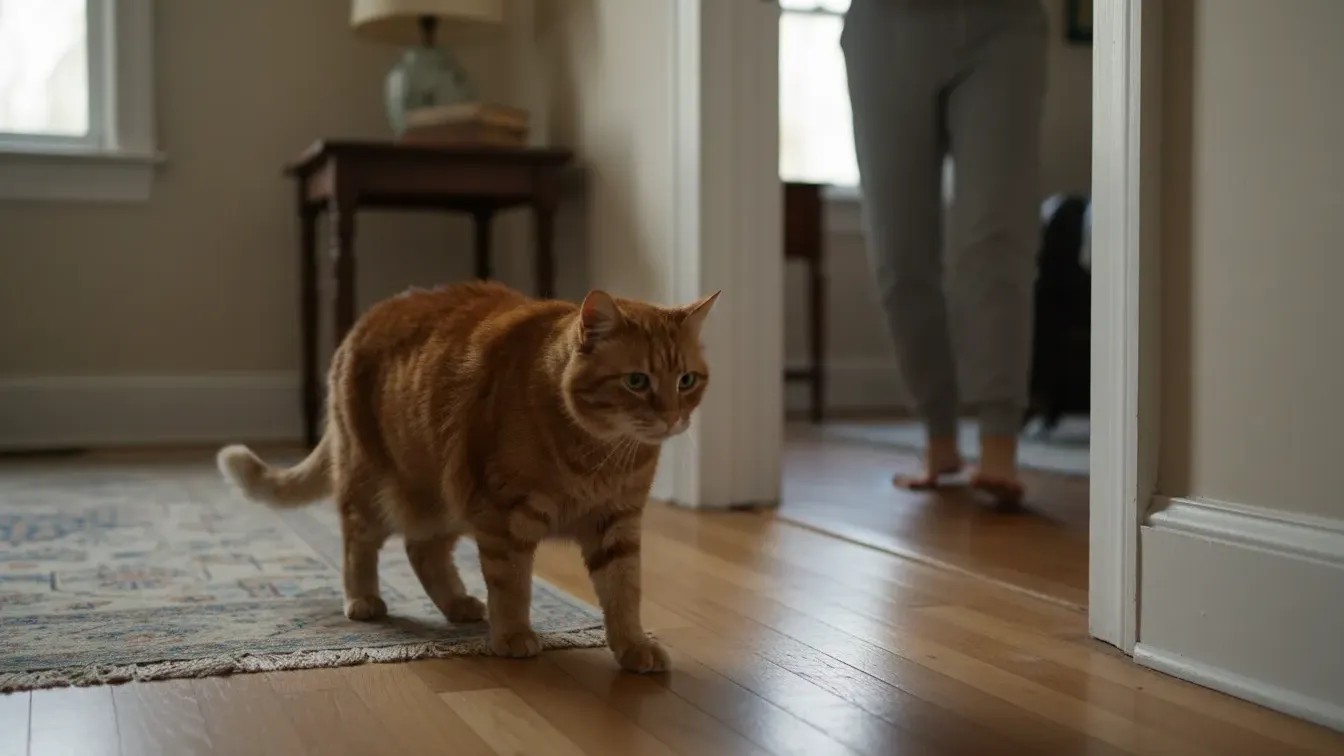
Most people assume a senior cat turns into a dignified loner - independent, aloof, content to nap through the day without needing anyone. The real behavioral research says the opposite: aging cats often become more attached to their person, not less, and the shift shows up in ways most owners never learn to read.
The catch is that older cats don't announce this need out loud. Their signals are quiet, easy to dismiss as "just getting old," and scattered across everyday moments you've probably already seen without noticing. Once you know what to look for, you won't be able to unsee it.
#11 - They Follow You Without Making a Sound
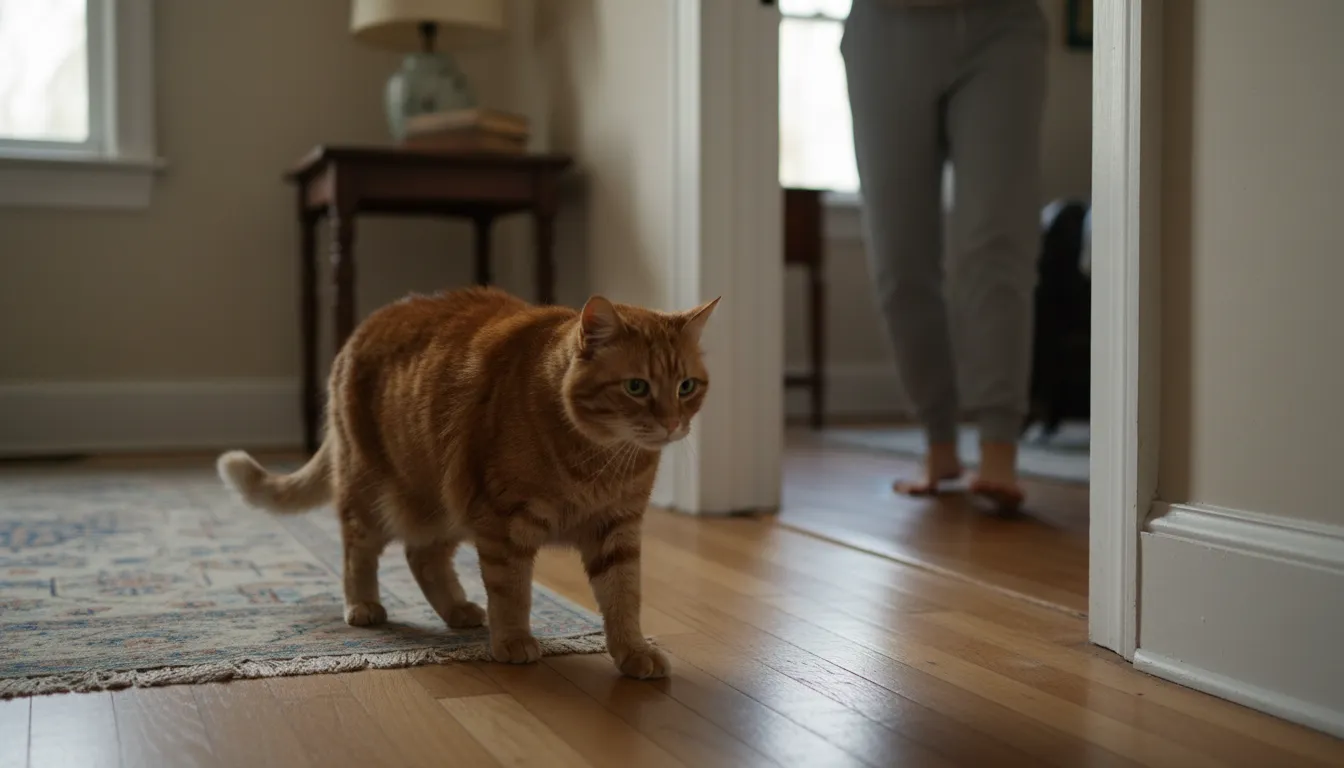
Most people only notice when a cat meows for attention. But following you silently is a deeper tell.
Many older cats trail their humans from room to room without asking for anything - just being there. They'll hop off the couch the second you stand, trail you to the bathroom, then wait patiently outside.
Behaviorists see this often in bonded, aging cats. The human becomes their anchor, and the cat repays it by quietly supervising your every move.
The older and quieter the follow, the more it means. A young cat trails you out of curiosity - a senior cat does it because you're where they feel safest.
But that's the obvious one. What's coming next is far easier to miss entirely.
#10 - They Position Themselves to Watch the Door
Your older cat isn't napping just anywhere. Pay attention to where they actually choose to rest.
A bonded senior cat will often park itself somewhere with a clear sightline to the front door or your usual chair. It looks like lazy sun-seeking - it's actually strategic.
Attachment researchers - using the same framework once built to study human infant bonding - have found cats form real, secure attachments to caregivers, with a clear preference for their person over strangers.
Fast Facts
- A landmark study found roughly 65% of pet cats form a secure attachment to their owner.
- That number nearly mirrors the secure-attachment rate seen in human infants.
- Researchers retested cats a year later and found the same bond pattern held steady over time.
Choosing a resting spot that keeps you in view is a quiet form of monitoring. It means you're their reference point for "safe," and they're keeping tabs without making a scene about it.
Wait until you see what happens at night - most owners read it completely wrong.
#9 - They Sleep Pressed Against You, Not Just Near You
There's a real difference between a cat that sleeps on the bed and one that sleeps touching you.
Sleep is a vulnerable state, and cats only do it against humans they fully trust. A senior cat pressing its back against your leg, or tucking under your arm, is overriding basic feline survival instinct.
Your body heat becomes part of their pain management and their emotional comfort zone. Achy joints pull older cats toward warmth - and you offer both heat and the scent of safety.
If the contact point has shifted from "near you" to "on you," that's not coincidence. It's a slow, quiet escalation of need they've never actually told you about.
The next sign gets laughed off by almost every owner - vets say that's a mistake.
#8 - They Bring Themselves to You When Something Feels "Off"
A younger cat hides when it's uncomfortable. An older, bonded cat often does the opposite.
As cats slow down and rest more, they naturally gravitate toward their humans for warmth and companionship. Increased attachment is a documented part of aging in cats.
When something unsettles an older cat - a sound, an ache, a feeling it can't name - it comes to find you first. Wild cats don't seek comfort from others; a bonded senior cat has quietly decided you're worth that vulnerability.
Seeking you out isn't weakness. It's trust, plain and simple.
The next sign is even more telling, because it only happens in total silence.
#7 - They Make Slow Eye Contact From Across the Room
They're not staring you down. They're checking in.
A slow blink is feline for "I trust you." A senior cat takes it further - locking eyes from across the room, holding the gaze a beat, then looking away and settling.
In younger cats, held eye contact can signal tension. In a bonded older cat, calm eye contact followed by a slow blink means "I see you, I'm okay, you're still here."
It's the feline version of a nod across a crowded room - and most owners scroll right past it without noticing.
What comes next looks completely unrelated to bonding. It isn't.
#6 - They Groom Themselves More When You're in the Room
Here's one that sounds backwards: your cat grooming itself near you is actually about you.
Cats only groom when they feel relaxed. A senior cat that saves its grooming sessions for when you're nearby is telling you your presence lowers its stress enough to let its guard down.
Self-grooming requires a cat to feel safe - it's a vulnerable act, especially for an older animal with stiff joints that make the motion harder.
Purring and head rubs mean your cat enjoys you. Grooming in your company is a tier above that - it means you're genuinely calming, not just tolerated.
Most owners notice sign #5 - but almost everyone misreads what it actually means.
#5 - Their Purr Changes Pitch When You Touch Them
Not all purrs are the same, and your older cat knows the difference.
Cats purr for many reasons, including self-soothing through pain or stress. But the purr a bonded senior cat gives when you specifically touch them tends to run deeper and steadier than their baseline.
Worth Knowing
- A cat's purr typically vibrates between 25 and 150 Hz.
- That range overlaps with frequencies used in therapeutic settings to ease pain and support bone healing.
- For an aging cat with stiff joints, purring against you may be doing double duty: comfort and quiet self-repair.
A cat that only produces that low, resonant "everything is right" purr for one person has made a decision about who matters most. Test it yourself - notice if the purr changes depending on who's doing the petting.
Older cats tend to attach most strongly to whichever human provides the most care. That deep purr is the receipt.
Sign #4 happens right before you leave the house - and it's easy to write off as routine.
#4 - They Watch You Gather Your Things to Leave
Your older cat has learned your departure cues, and they react to every one of them. When a once-independent senior cat starts acting anxious the moment you grab your keys, something has shifted.
That watchful attention to your pre-leaving ritual - the bag, the shoes, the keys - gets read as "quirky." It's actually separation sensitivity.
Cats form secure attachments and can show real separation anxiety when their person leaves. In an older cat, this often shows up not as loud yowling, but as a quiet, watchful stillness - following you to the door, then sitting exactly where you left them when you return.
That stillness isn't indifference. It's them holding the space for you.
Sign #3 will genuinely surprise you - most people think it means the opposite of what it does.
#3 - They Head-Butt You, Then Walk Away Like It Didn't Happen
The "I was never here" head-butt is peak older-cat attachment behavior.
Head-butting and cheek rubbing deposit their scent, claiming you as part of their colony. In a senior cat, it's deliberate: seek you out, make contact, mark you as theirs, then walk away.
Walking away afterward isn't rejection - it's confidence. They checked in, they marked you, and they trust you're not going anywhere.
Only cats who feel completely secure in the relationship bother with this quieter, settled version of affection.
Sign #2 reportedly stopped veterinary behaviorists mid-sentence when it came up in interviews.
#2 - They Adjust Their Sleeping Schedule to Match Yours
This is the sign that quietly tells you everything.
Older cats grow attached to routine - but a bonded senior cat goes further, aligning their schedule with yours. They wind down when you do, and stir around your usual waking time before you've even moved.
This is a level of social attunement most people never expect from a cat. Your schedule becomes part of their internal map of the world - a daily anchor point, not just for comfort but for how they organize time itself.
Older cats crave predictable days even more than younger ones do. When your rhythms start mirroring theirs, you've quietly become the center of it.
Now, the one sign almost nobody talks about - and the one that means the most.
#1 - They Come to You When They're in Pain - Not Away From You
This is the one that matters most, and most people never realize what it means.
Every survival instinct tells a cat to hide when it's hurting. Sudden appetite loss, personality shifts, and extended hiding are the default red flags vets watch for.
When a senior cat breaks that instinct and comes to you instead, it has made a profound decision about you. It has decided you're safer than solitude - and that's years of quiet evidence talking.
Sudden behavioral changes in senior cats are clinically significant and can signal pain, cognitive decline, or illness, so always rule out medical causes first. But if your cat is healthy and still seeks you out when something feels wrong, you've earned something most owners never realize they're being given.
Researchers have found cats form real attachment styles - some secure, some anxious - and show measurable stress when separated from a preferred person. You are that person.
Quick Compare
- Young or independent cat: hides when hurting, keeps its own schedule, explores without checking in.
- Bonded senior cat: seeks you out when something's wrong, mirrors your routine, checks in throughout the day.
- The pattern: every sign on this list points back to the same quiet message.
The Bottom Line
Older cats don't advertise how much they need you. They follow in silence, blink slowly across a room, adjust their sleep to match yours, and - in their most unguarded moments - come to you instead of hiding.
Increased attachment is a documented shift in aging cats, but it rarely looks the way people expect. These signs aren't dramatic, and that's exactly why they're easy to miss.
Your senior cat isn't being clingy or strange. It's trusting you in the only language it has.
Pay attention to the quiet ones - did any of these surprise you, or did you recognize your own cat? Drop it in the comments.