10 Sleeping Positions That Show Your Cat Feels Safe With You
Every cat owner has stood over their sleeping cat at 2 a.m., phone camera ready, wondering what that strange sprawled-out pose actually means. Most people write it off as "cats are just weird sleepers." They're wrong. Veterinary behaviorists say a cat's sleep position is one of the most honest signals it ever gives you - a body-language report on whether you've actually earned its trust, or just its tolerance.
That's the part most owners never realize: cats can fake affection while awake, but they can't fake vulnerability while asleep. Some of the ten positions below look adorable. A couple of them look almost dangerous for the cat to attempt. All ten mean something specific, and by the time you reach #5, you'll probably recognize your own cat doing something you never thought twice about.
#1 - The Belly-Up, Fully Exposed Flop
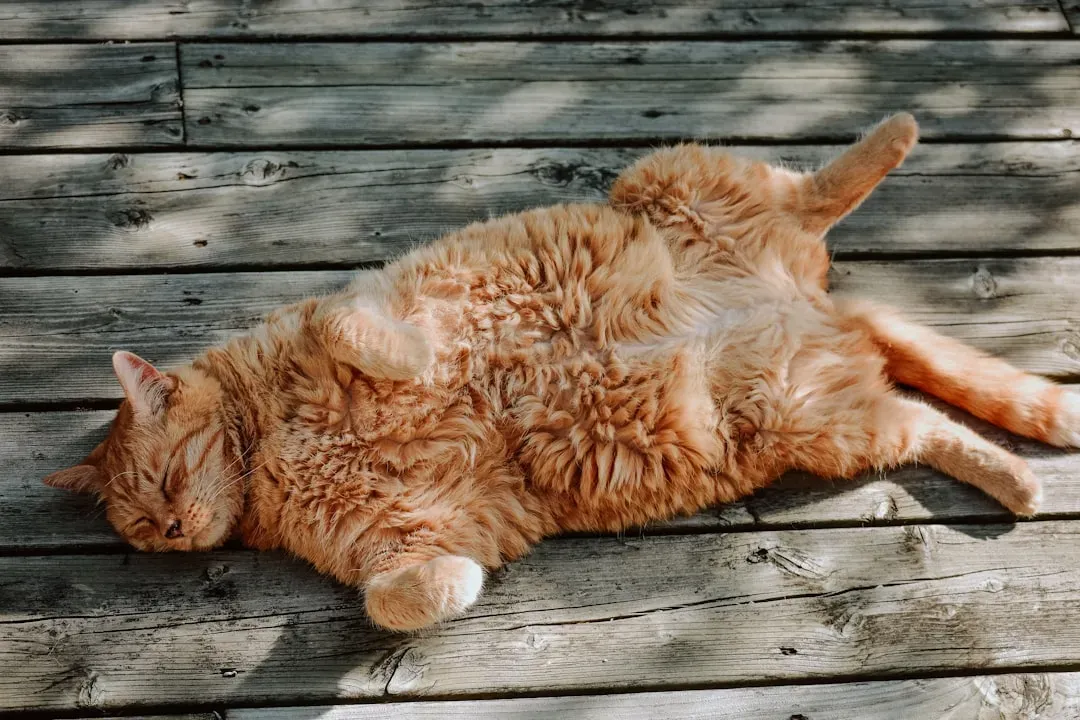
A cat lying flat on its back with its stomach completely uncovered is performing one of the most vulnerable acts in the entire animal kingdom.
In the wild, the belly houses every major organ and offers zero defense if a predator strikes. Wild and feral cats almost never sleep this way, because exposing the abdomen for even a few seconds could be fatal. When a domestic cat does this in your living room, it's not necessarily asking for a belly rub - it's confirming, on a biological level, that nothing in the room poses a threat. Behaviorists note this posture typically only appears once a cat has fully mapped the sounds, smells, and rhythms of a household as safe.
Fast Facts
- The abdomen protects the heart, lungs, and liver with almost no muscle covering for defense.
- Adult cats sleep an average of 12 to 16 hours a day, nearly double a typical human's total.
- True relaxation shows up as a combination of loose ears, a soft tail, and slow breathing - not just one signal.
- This exposed pose usually takes weeks or months of calm, consistent interaction to appear reliably.
This is different from a stretch or a quick roll. The belly-up sleep position involves total muscle relaxation, slow breathing, and often one back leg splayed outward. If your cat does this near you specifically - not just anywhere in the house - it's a strong signal you've been filed under "non-threat" in their brain. But that's nothing compared to what we found about #2.
#2 - Contact Sleeping, Pressed Right Against You
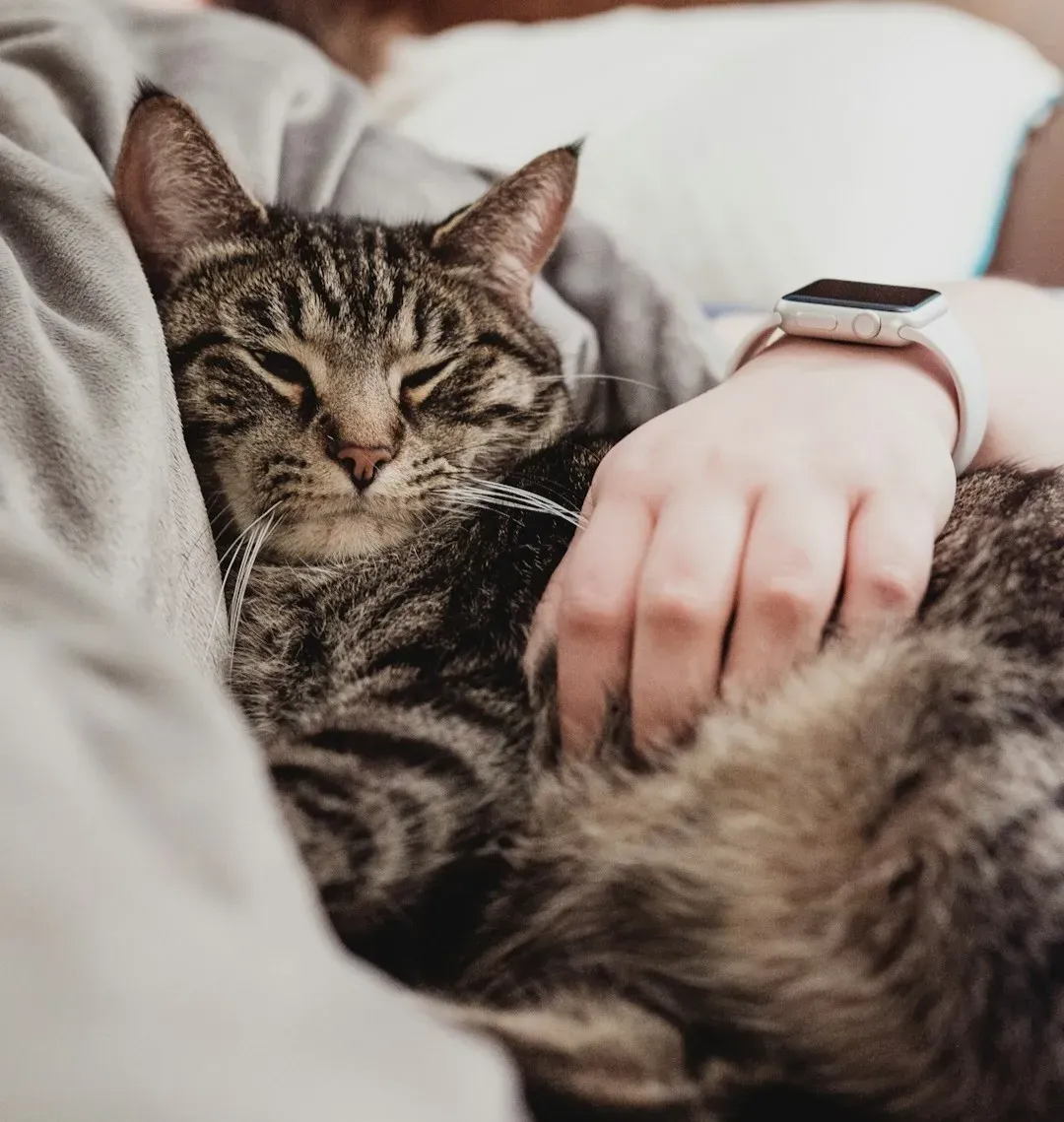
If your cat refuses to sleep anywhere except touching your leg, hip, or arm, that's not clinginess - it's a calculated trust decision.
Cats regulate safety partly through proximity to trusted bodies, a behavior rooted in how kittens sleep piled against their mother and littermates for warmth and protection. An adult cat choosing physical contact with a human replicates that exact survival instinct, according to feline behavior specialists. It means your body heat, scent, and heartbeat have been added to their internal "safe zone" list, the same category reserved for their own family unit in nature.
Contact sleeping also reduces a cat's need to stay vigilant, since they're relying on you to notice threats they might otherwise have to watch for themselves. This is a big deal for a species that evolved as both predator and prey. Owners often assume a cat sleeping elsewhere in the house doesn't care about them - but many experts argue that's actually a myth, since some cats show trust through routine rather than physical closeness. Still, nothing beats the intimacy of what we're about to cover in #3.
#3 - Head Resting Directly on Your Lap or Arm
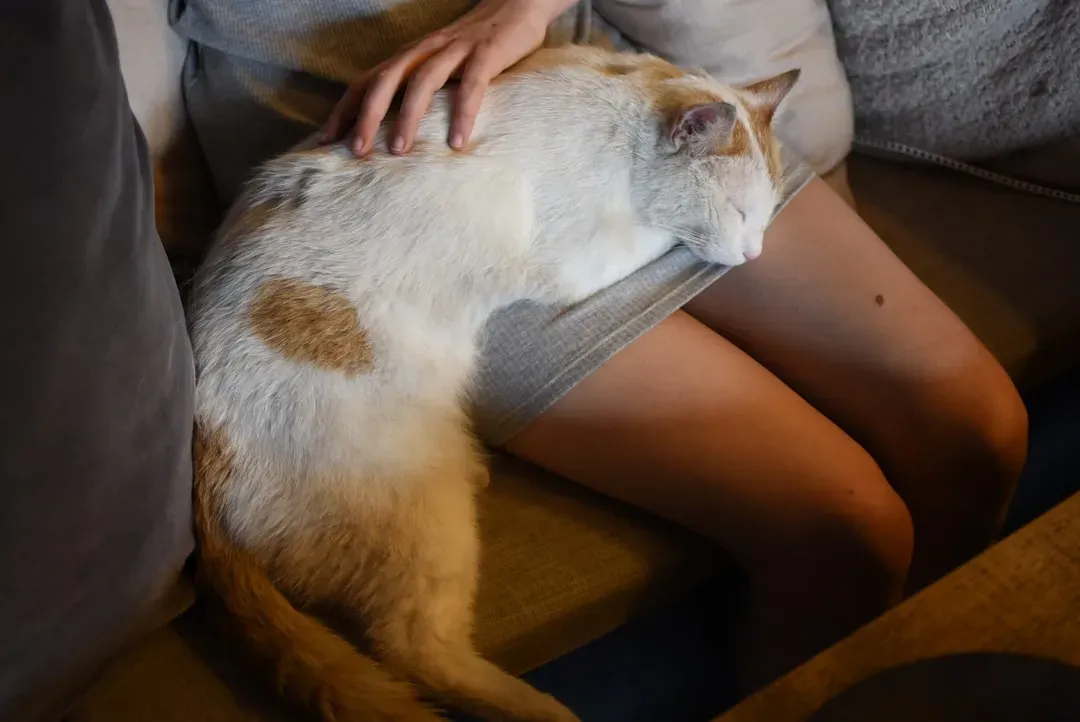
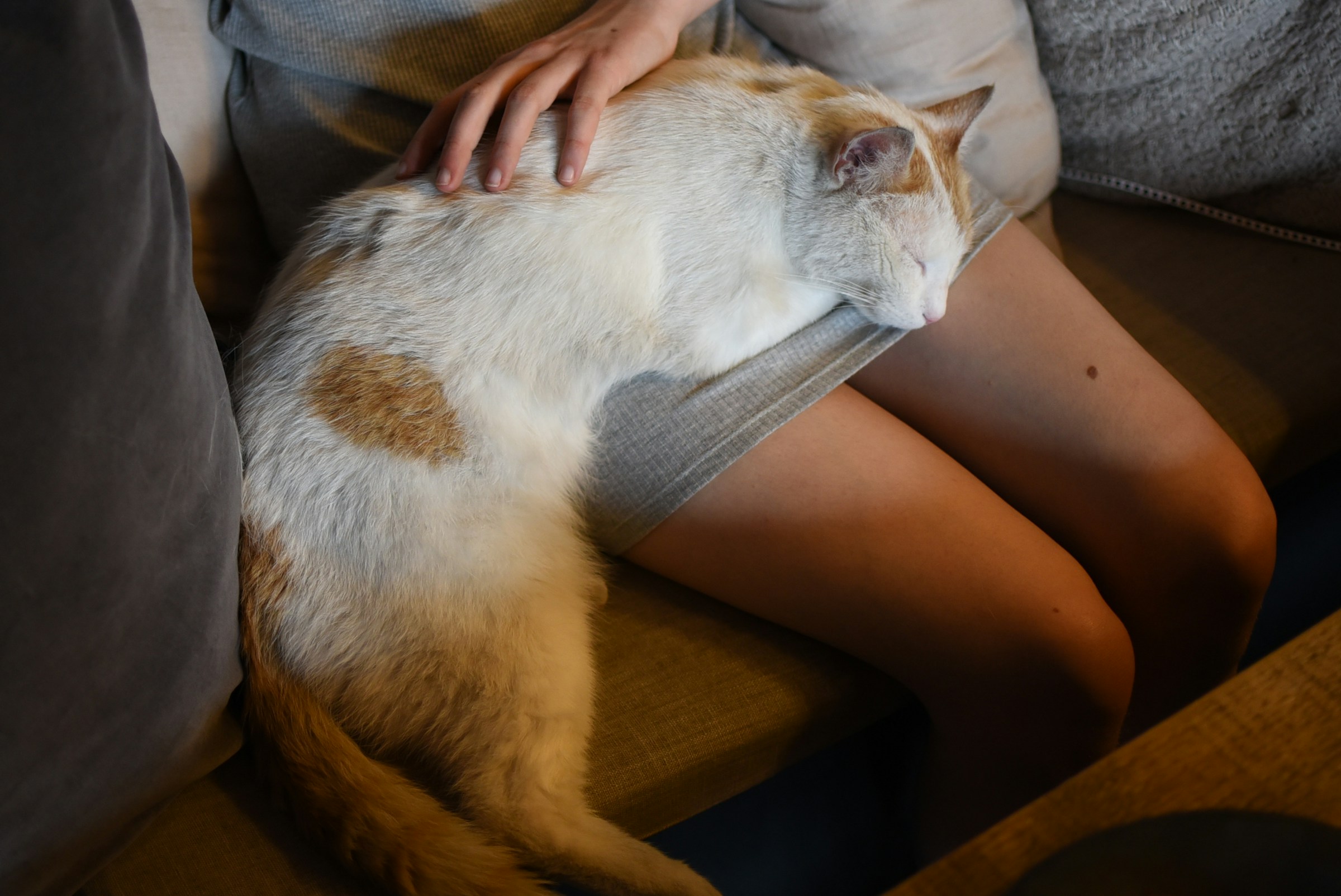
A cat that lets its full head weight drop onto your lap or forearm during sleep is disabling its own early-warning system on purpose.
The head and neck are packed with sensory equipment cats rely on to detect danger - ears rotating toward sound, whiskers reading air movement, eyes tracking motion. When a cat allows its head to go completely limp against you, it's essentially outsourcing its threat detection to you for the duration of the nap. This is one of the clearest sleep-based trust signals veterinary behaviorists point to, because it requires a level of surrender most cats won't offer to strangers or unfamiliar spaces.
This position often comes paired with slow, rhythmic breathing and closed or half-closed eyes, both markers of deep relaxation rather than light dozing. It's also frequently seen in cats who've bonded strongly with one specific person in a household rather than everyone equally. That selective trust is exactly why the next position tends to confuse so many owners.
#4 - Sprawled Flat on Their Side, Limbs Loose
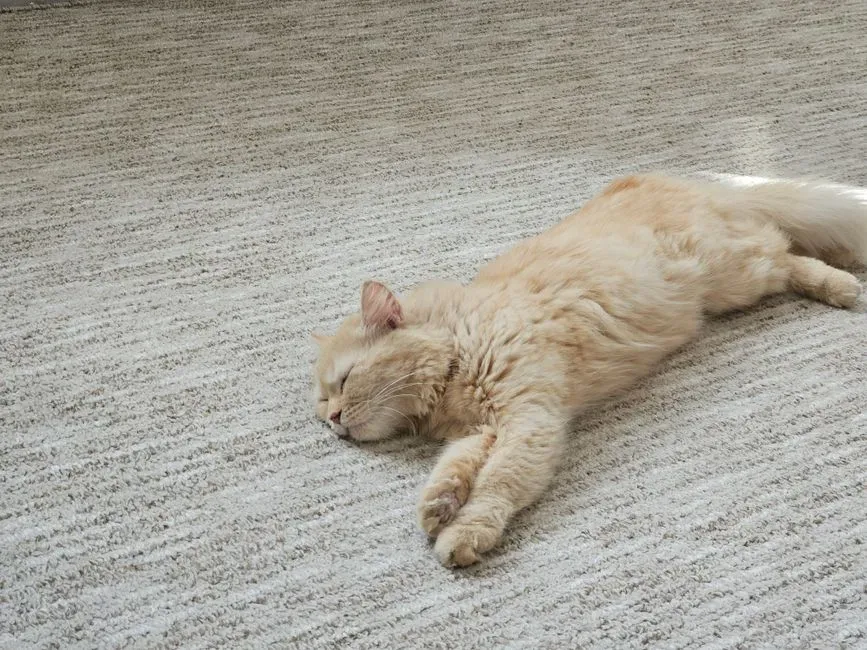
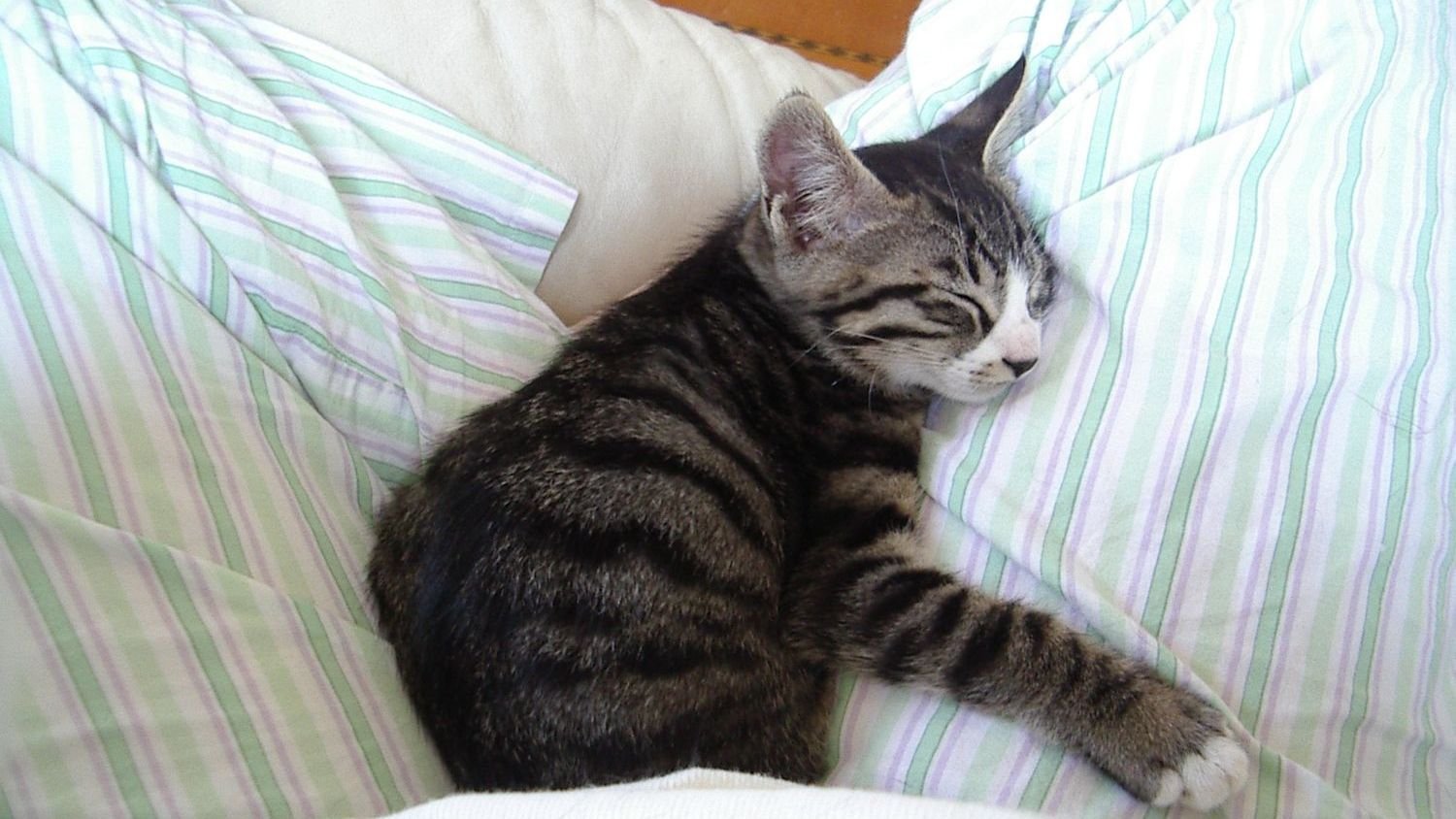
A cat sleeping fully stretched out on its side, legs loose and unposed, is showing you the opposite of a defensive stance.
Compare this to the tight, compact curl cats adopt in cold or unfamiliar environments to conserve heat and protect their bodies. A loose, sprawled side-sleep position burns more body heat and offers no quick-defense posture, which is precisely why cats reserve it for spaces they consider low-risk. Behavior researchers note that ambient temperature plays a role, but even in a warm room, an anxious cat will still curl defensively out of habit.
This sprawled stretch typically shows up during deep, extended sleep cycles rather than short cat naps, meaning the animal has moved into a state where it's not tracking the room at all. It's a strong contrast to what many owners assume is a "content" cat curled into a tight donut shape nearby. That tight curl isn't always the safety signal people think it is - and #5 explains why the deepest trust actually looks a lot messier.
#5 - Paws or Tail Draped Over the Face
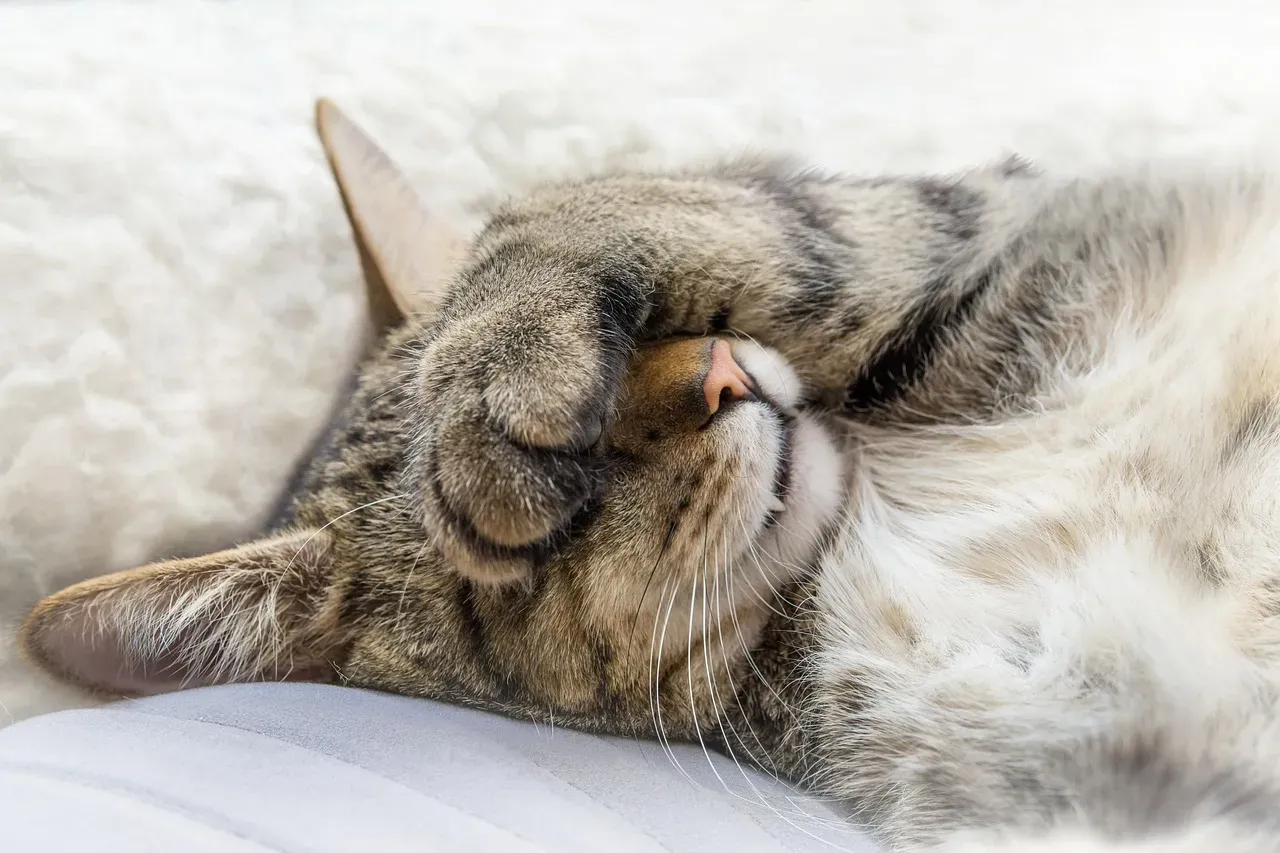
When a cat tucks a paw or wraps its tail over its own eyes and nose while sleeping, it has entered one of the deepest, most vulnerable sleep states a domestic cat can reach.
This position blocks light and reduces sensory input, which only makes sense biologically if the animal is confident nothing dangerous is nearby. Vets often associate this pose with REM sleep, the stage where cats can experience muscle twitches, whisker movement, and even soft vocalizations because their brain has essentially gone offline for environmental monitoring. A cat in a hyper-alert or unfamiliar setting almost never reaches this stage of sleep.
Worth Knowing
- Cats cycle through light sleep and true REM sleep in patterns similar to humans.
- REM episodes can include twitching paws, flicking whiskers, and quiet chirps or mews.
- Most cats need roughly 15 to 20 minutes of undisturbed rest before dropping into deep REM sleep.
- A cat that wakes instantly from this pose likely hadn't reached full REM sleep yet.
Owners frequently catch this position during long afternoon naps rather than quick catnaps, and it often follows a period of contact sleeping or lap-sleeping first. Some behaviorists argue this position is actually a better trust indicator than belly-exposure, since it requires sustained safety over time rather than a single relaxed moment. That layered trust-building becomes even clearer in position #6.
#6 - Back-to-Back Sleeping
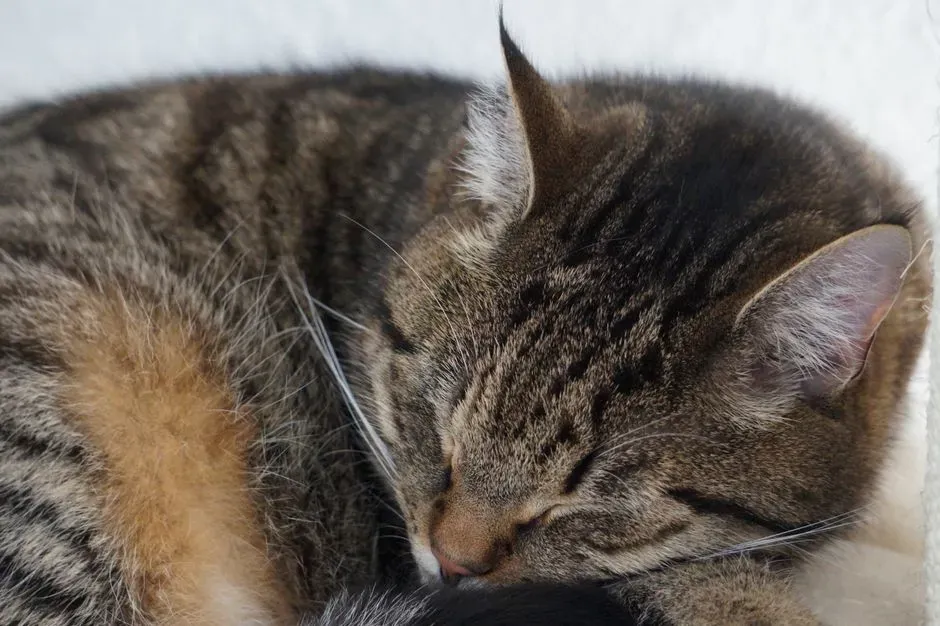
A cat that chooses to sleep with its back pressed against yours is making a decision most people completely misread as simple space-sharing.
In multi-cat households, back-to-back sleeping is a documented bonding behavior between cats who trust each other enough to leave their most vulnerable angle - the one they can't see - unguarded. When a cat does this with a human, it's applying the same social logic used with a trusted littermate or bonded companion, according to feline social behavior research. It's a quieter trust signal than face-to-face contact, but arguably a more literal one, since the cat is physically trusting you to cover blind spots.
This position tends to appear more in cats who've lived with their owner for months or years rather than new arrivals, suggesting it's a trust level that builds gradually. It's also more common overnight in bed than during daytime naps on furniture. That slow-building trust theme takes an unexpected turn with the next position, which many owners find almost comical.
#7 - Sleeping Completely Upside Down
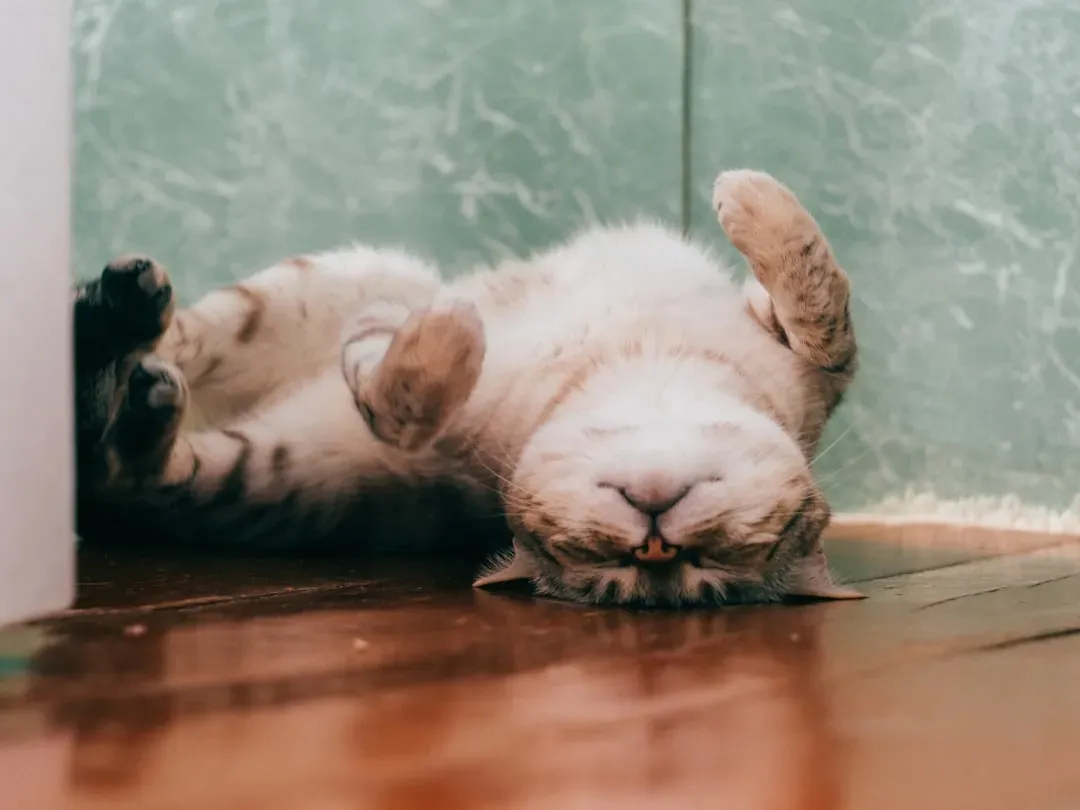
Some cats take belly exposure a step further, sleeping upside down with legs in the air and head tilted back, a position that looks uncomfortable but signals extreme comfort.
This posture combines total abdominal exposure with restricted mobility, since flipping back over from this angle takes a cat longer than from almost any other sleep position. Behaviorists consider this one of the rarest and most telling trust postures, because it strips away every defensive advantage a cat instinctively relies on. It's frequently seen in cats sleeping on beds, couches, or laps rather than open floor space, likely because soft, enclosed surfaces feel inherently safer.
Quick Compare
- Tight curl: minimal exposure, fastest possible defensive reaction.
- Belly-up flop: moderate exposure, relatively quick recovery if startled.
- Sprawled side sleep: full-body looseness, noticeably slower to react.
- Upside down: maximum exposure, slowest recovery of any sleep pose.
This position often gets photographed and shared online precisely because it looks so exaggerated, but the biological explanation is straightforward: the cat has calculated there's no reason to stay defensible. Many owners report this position appearing more often as their cat ages and settles fully into household routines. It's a strong contender against the more commonly cited belly-up pose, and honestly deserves more recognition than it gets - which brings us to a position just as underrated.
#8 - Draped Over a Shoulder or Neck
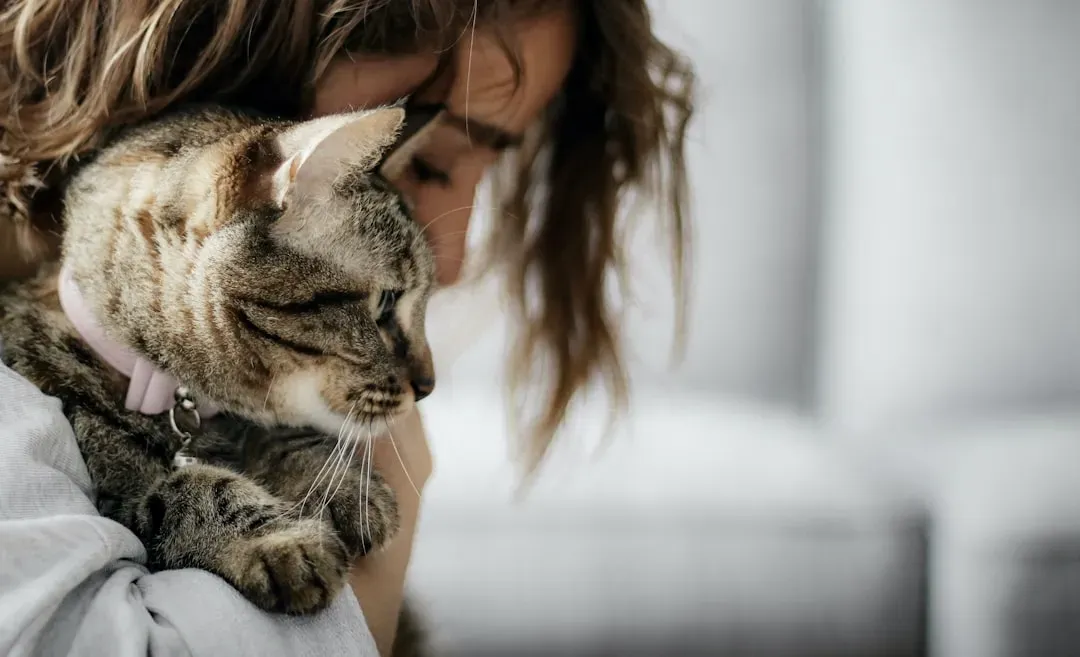
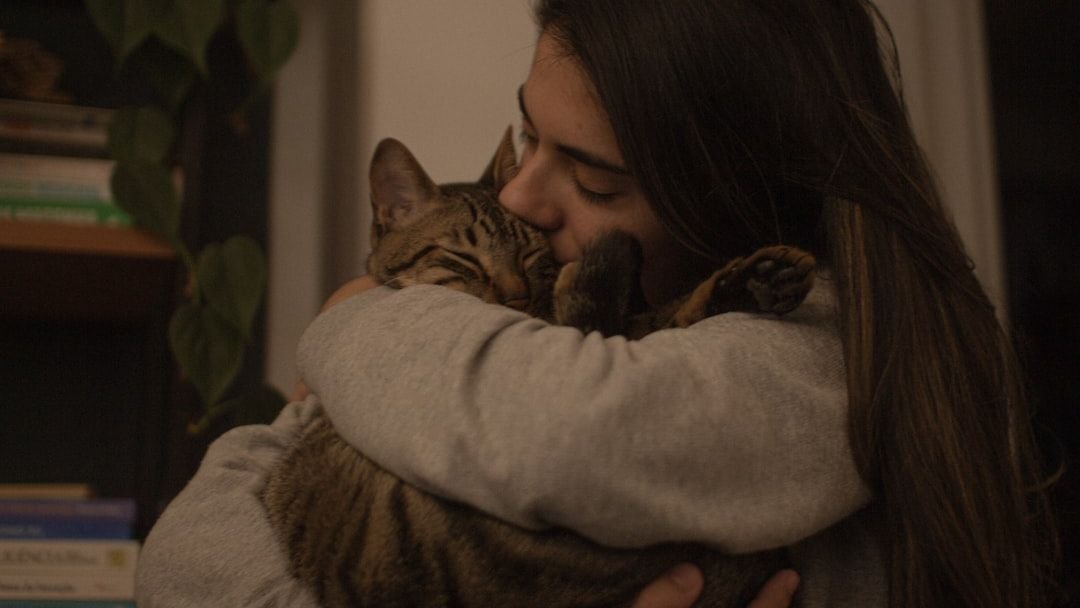
Cats that drape themselves over a shoulder, neck, or upper back while dozing are combining two trust behaviors at once: physical contact and total balance dependence.
This position requires the cat to trust that the human won't move suddenly, drop them, or shift in a way that could cause a fall. It's a posture almost exclusively reserved for owners the cat has bonded with over time, rarely shown to unfamiliar handlers or even other household members the cat is less close to. The shoulder-drape also puts the cat's face near the owner's neck and jaw, an area rich in scent, reinforcing the mutual identification bond between cat and person.
This position is more common in younger cats and kittens, though plenty of adult cats retain the habit if it was established early in the relationship. Some behaviorists suggest it's less about safety from predators and more about emotional comfort, blurring the line between physical trust and attachment. That distinction matters for the next position too, which looks far more ordinary but carries similar weight.
#9 - The Loaf Position, Positioned Right Beside You
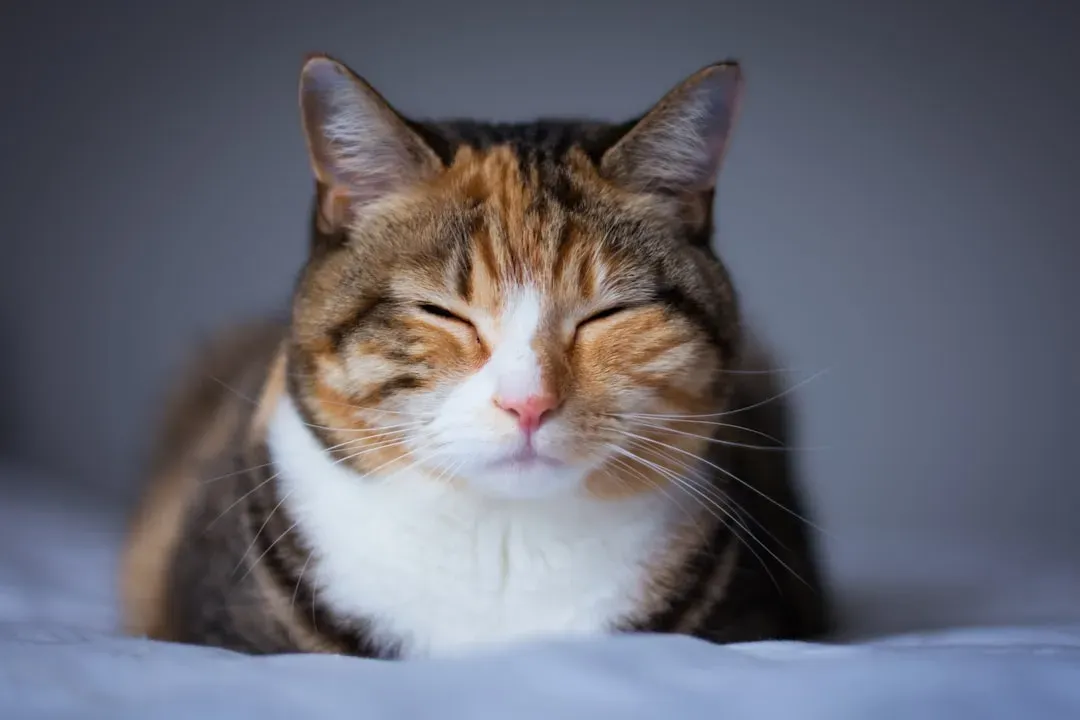
The classic "loaf" - paws tucked under the body, tail wrapped in, ears relaxed - doesn't scream vulnerability the way belly-up sleeping does, but location changes everything.
A loafed cat curled up on the far side of the room is simply resting. A loafed cat that chooses to sleep in this position directly beside you, rather than anywhere else available, is making a proximity decision rooted in comfort and trust, according to feline behavior specialists. The loaf position keeps organs semi-protected and allows for a faster wake-up than a full stretch, which is why it's often seen as a "light trust" position compared to fully exposed poses.
This makes the loaf one of the most common - and most underrated - trust signals, since it doesn't look dramatic enough to notice at first glance. Many owners overlook it entirely while waiting for more obvious poses like the belly-flop. But subtlety doesn't mean it matters less, especially compared to the final ritual on this list.
#10 - Kneading, Then Collapsing Beside You
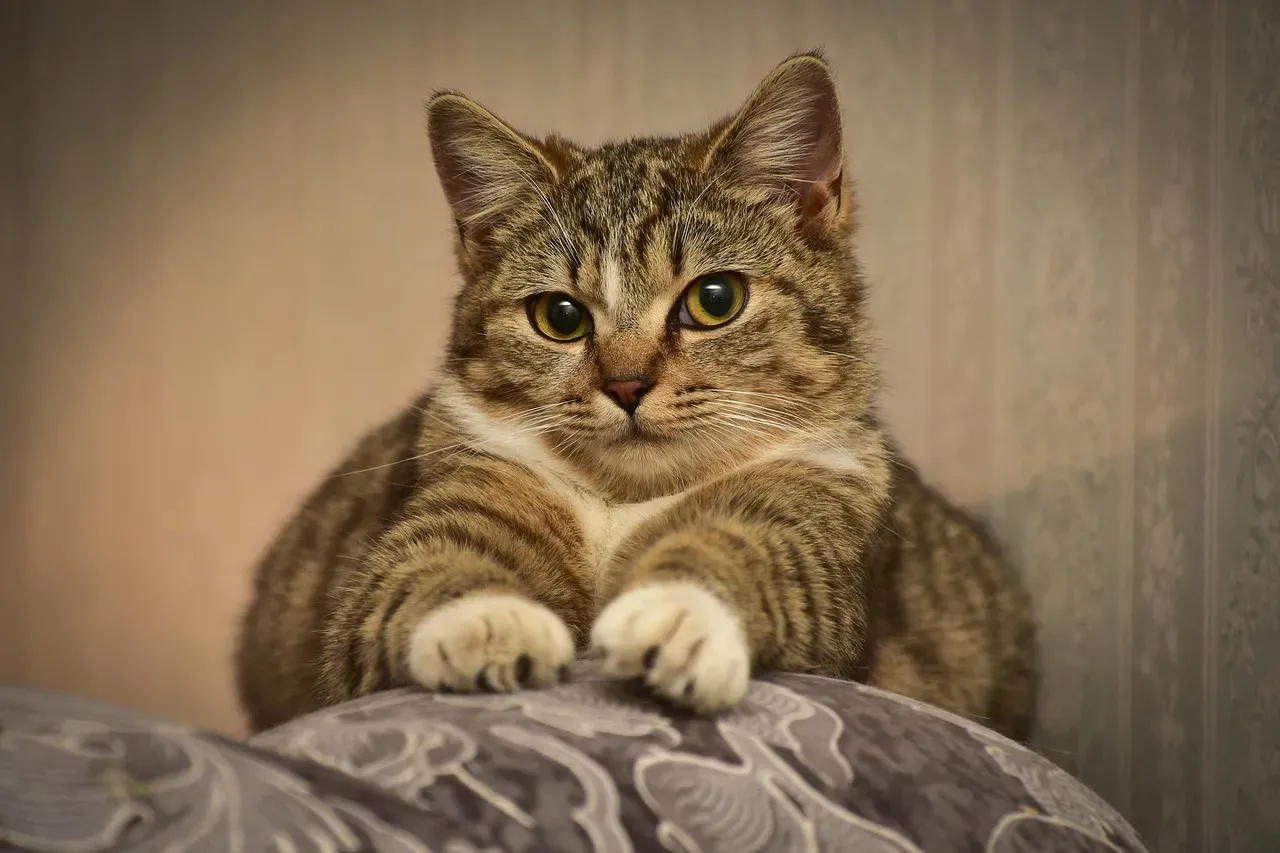
The pre-sleep kneading ritual - paws pressing rhythmically into a blanket, your leg, or a pillow - followed by a full collapse into sleep is one of the strongest combined trust signals a cat can offer.
Kneading traces back to kittenhood, when nursing kittens press against their mother to stimulate milk flow, a behavior tied directly to safety, nourishment, and parental bonding. When an adult cat performs this ritual against a person before falling asleep, it's replaying an instinctual comfort behavior reserved for a trusted caregiver figure, according to feline behaviorists. The collapse into sleep immediately afterward reinforces that the cat associates you with the same security once provided by its mother.
This combination - kneading followed by deep, relaxed sleep - is frequently cited as one of the clearest full-circle trust indicators, since it links infant-level bonding instincts directly to adult sleep behavior. It's also one of the few positions on this list involving an active ritual rather than a passive pose, making it feel more intentional to most owners. Taken together with the other nine positions, it rounds out a surprisingly consistent picture of feline trust.
At a Glance
| Position | What It Signals |
|---|---|
| #1 Belly-up flop | Full vulnerability, total confidence |
| #2 Contact sleeping | Trust through shared body warmth |
| #3 Head on your lap | Senses voluntarily switched off |
| #4 Sprawled on side | No defensive posture needed |
| #5 Paw over face | Deepest sensory shutdown, true REM |
| #6 Back-to-back | Blind-spot trust, littermate logic |
| #7 Upside down | Rarest, most exaggerated trust |
| #8 Shoulder drape | Balance trust plus scent bonding |
| #9 Loaf beside you | Subtle but consistent proximity trust |
| #10 Kneading then collapse | Instinctual, full-circle comfort ritual |
The Bottom Line
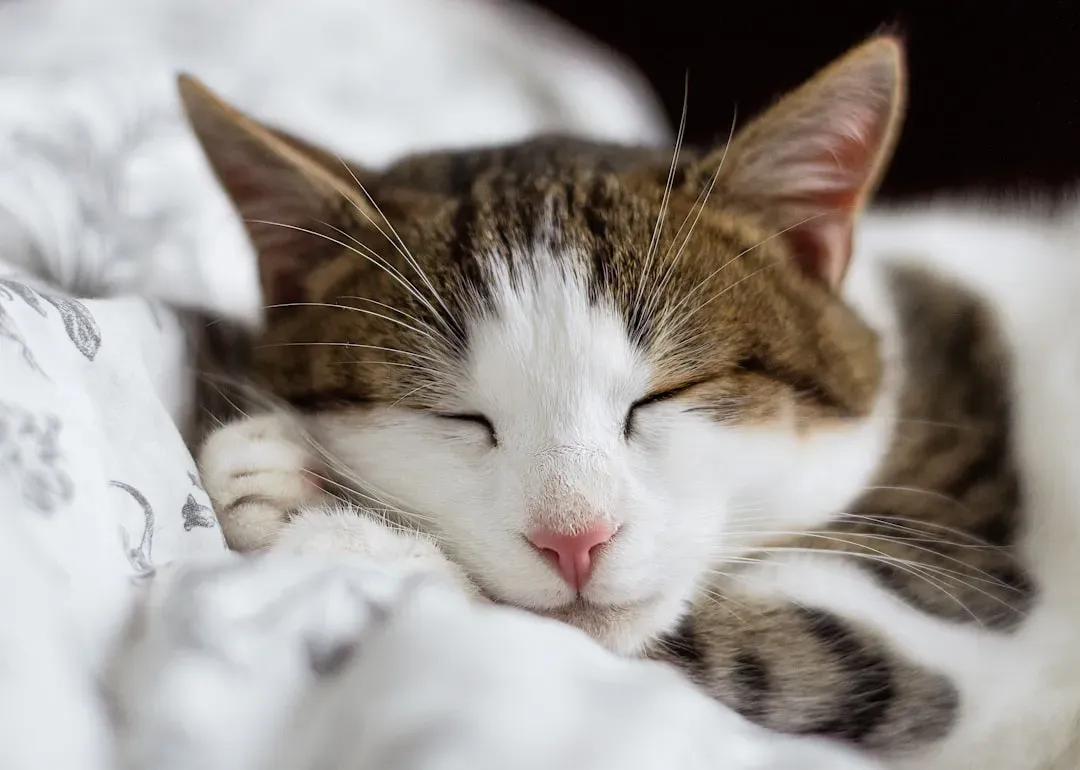
The science here is hard to argue with: a cat's sleeping position is one of the few things about them that can't be faked. Unlike purring, headbutts, or that performative meow at dinnertime, sleep vulnerability is instinctive and involuntary - which is exactly why it's the most honest trust test you'll ever get from a species that spent millions of years learning not to trust anyone.
If you're waiting for your cat to say "I love you," stop. It already has - you've just been misreading the message as sleepiness instead of surrender. Positions like the belly-flop, the upside-down sprawl, or the paw-over-face aren't cute quirks; they're a predator voluntarily disarming itself in front of you, over and over, because it has run the calculation and decided you're not a threat. That's not affection performed for a treat. That's trust, earned the slow way, and it's arguably more meaningful than anything a dog will ever show you on command.