The Signs Your Cat Has Quietly Made You Its Whole World
Most cat owners assume their pets are aloof, independent creatures who tolerate us at best. But animal behaviorists who study feline attachment patterns paint a completely different picture.
Your cat may have bonded with you far more deeply than you realize, displaying dozens of subtle behaviors that reveal you've become their entire universe. Here's what the data actually says.
#15 — They Follow You From Room to Room Without Making It Obvious
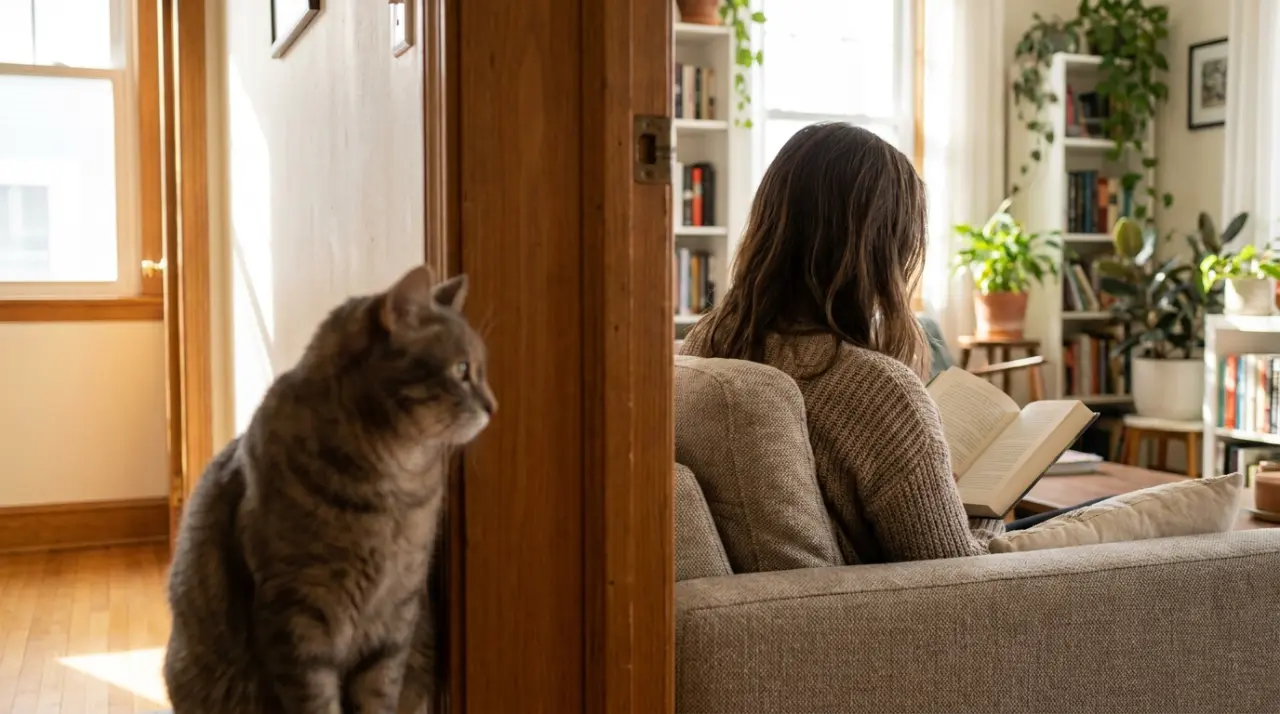
Cats who view you as their primary attachment figure will shadow your movements throughout the day, maintaining what researchers call "proximity without contact."
Unlike dogs, cats don't advertise this behavior. They'll pause at doorways, pretend to investigate something nearby, or sit just outside whatever room you've entered.
A 2019 study at Oregon State University found that 65% of cats show secure attachment behaviors toward their owners, comparable to the rates seen in dogs and human infants. They're not following you because they're hungry.
They're monitoring your location because your presence regulates their stress levels. If your cat consistently appears in whatever room you occupy within two to three minutes, you've become their secure base.
This behavior intensifies when you return home after an absence. Notice where your cat is ten minutes after you've settled in.
#14 — They Bring You Their Prey or Toys and Wait for Acknowledgment
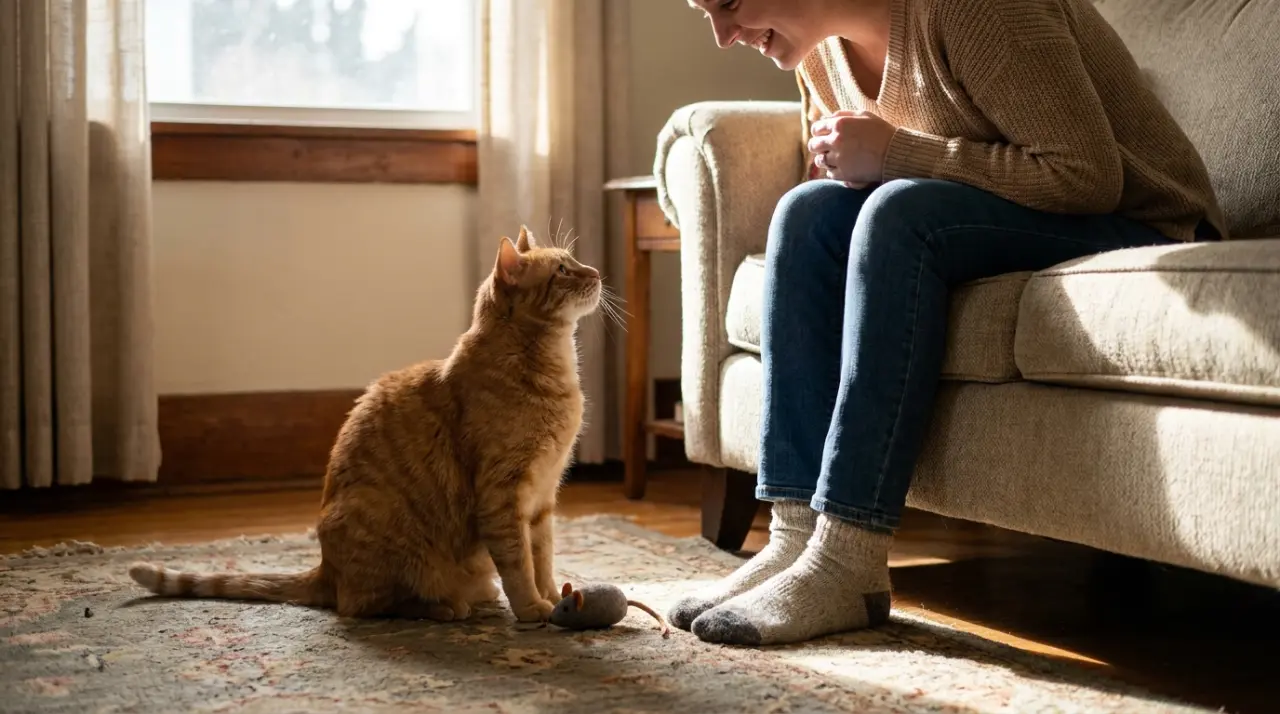
When your cat deposits a dead mouse, a captured bug, or a favorite toy at your feet, they're not teaching you to hunt.
They're presenting a resource to the most important member of their social group. Feline behaviorists note that cats only share prey with individuals they consider family.
Indoor cats who never hunt will substitute toys, hair ties, or small household objects. The key behavior isn't the item itself but the presentation ritual.
The cat will often vocalize, make eye contact, and wait for your response. They're seeking social feedback from you specifically, not just discarding an object.
If your cat regularly brings items to you rather than leaving them in random locations, you've been promoted to family status. The behavior appears most often in cats who were weaned naturally and learned sharing behaviors from their mothers.
#13 — They've Adjusted Their Sleep Schedule to Match Yours
Cats are crepuscular by nature, meaning they're most active at dawn and dusk.
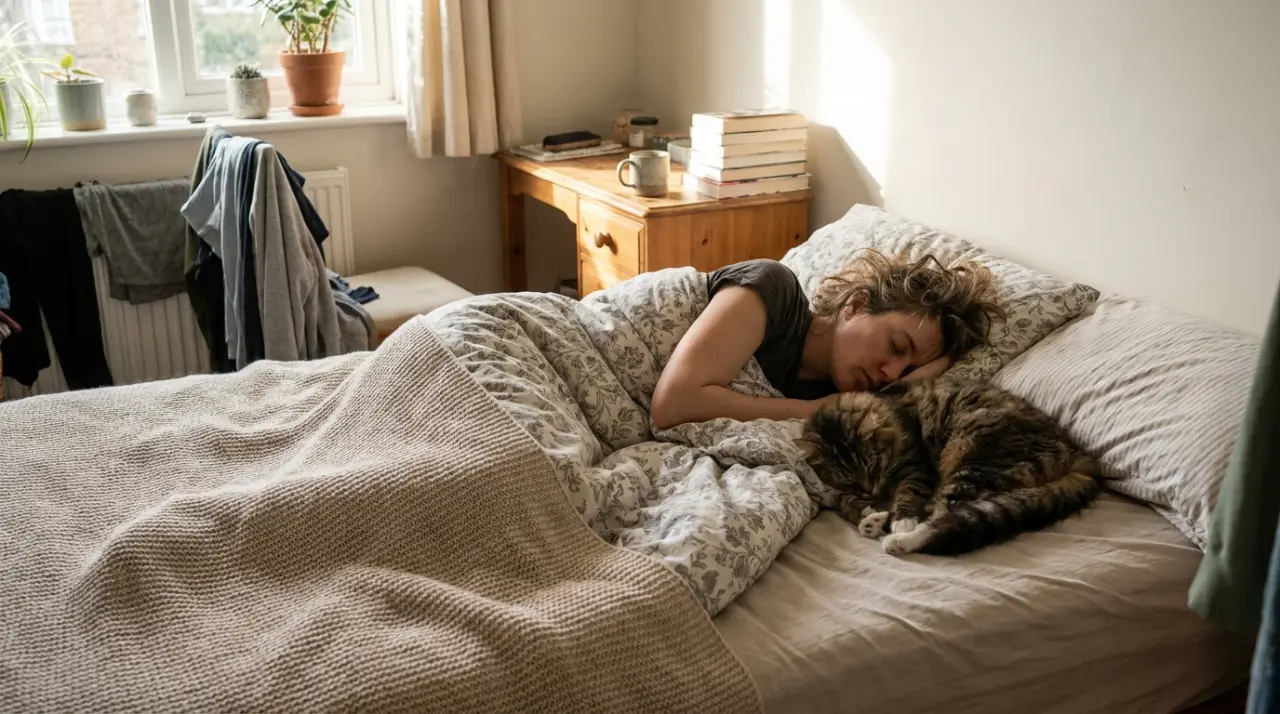
But cats who've bonded deeply with their owners will override millions of years of evolution to synchronize their sleep cycles with yours. They'll sleep through the night and remain relatively calm during their natural hunting hours.
This represents a profound behavioral adaptation. Your cat is sacrificing peak activity windows to maintain proximity while you're stationary and vulnerable.
Researchers at the University of Lincoln found that cats modify their activity patterns within three months of forming a strong attachment, concentrating their active periods to match their owner's waking hours. If your cat sleeps when you sleep and becomes active around the time you wake up, they've restructured their entire circadian rhythm around you.
This is especially notable if they ignore other household members' schedules and track only yours. The adaptation requires consistent reinforcement over weeks or months.
#12 — They Show You Their Belly But Don't Always Want It Touched
The exposed belly is the most misunderstood signal in cat communication.
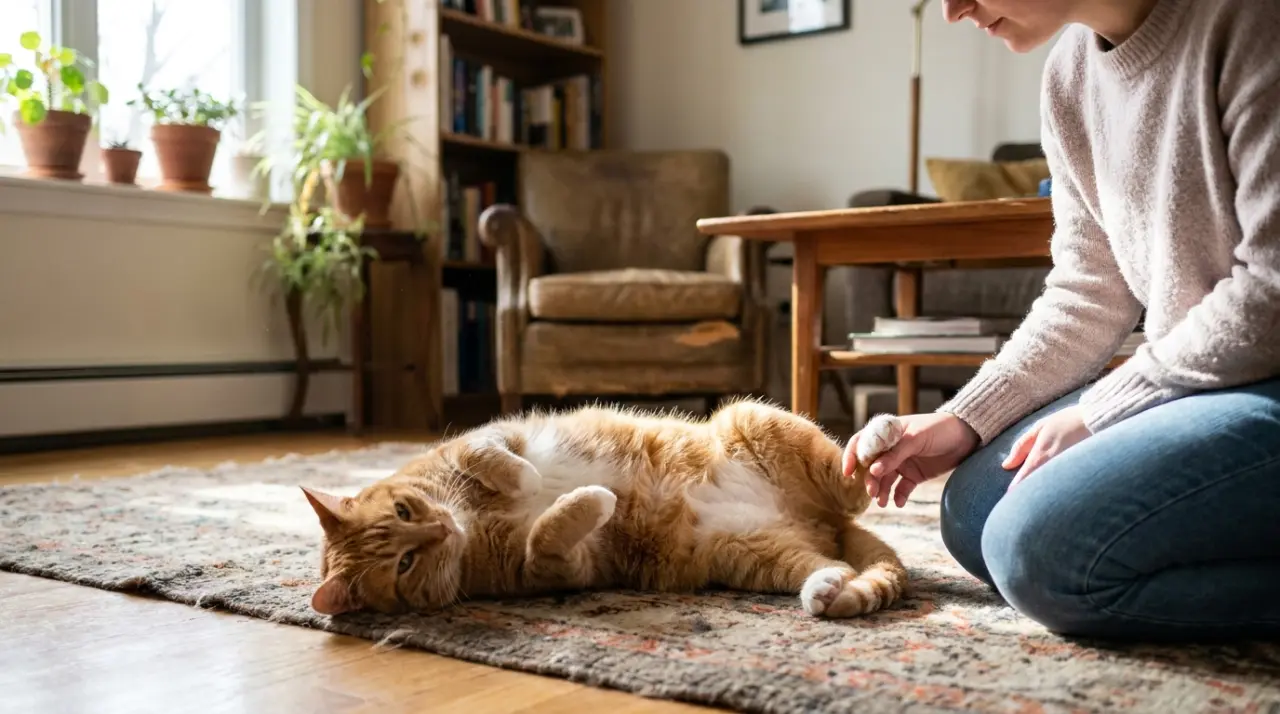
When your cat rolls over and displays their stomach in your presence, they're showing ultimate trust, not requesting a belly rub. The abdomen contains vital organs, and exposing it signals that they feel completely safe.
Many cats will roll over, make eye contact, and wait for acknowledgment. If you reach to touch, they may grab your hand, but this isn't aggression.
They're saying "I trust you enough to be vulnerable" not "please touch my most sensitive area." Cats who display this behavior exclusively around one person have identified that individual as their safe zone.
Some cats will tolerate brief belly contact from their bonded person, but watch their ears and tail. If both remain relaxed, you've achieved maximum trust status.
#11 — They Interrupt Your Focus to Make Direct Eye Contact
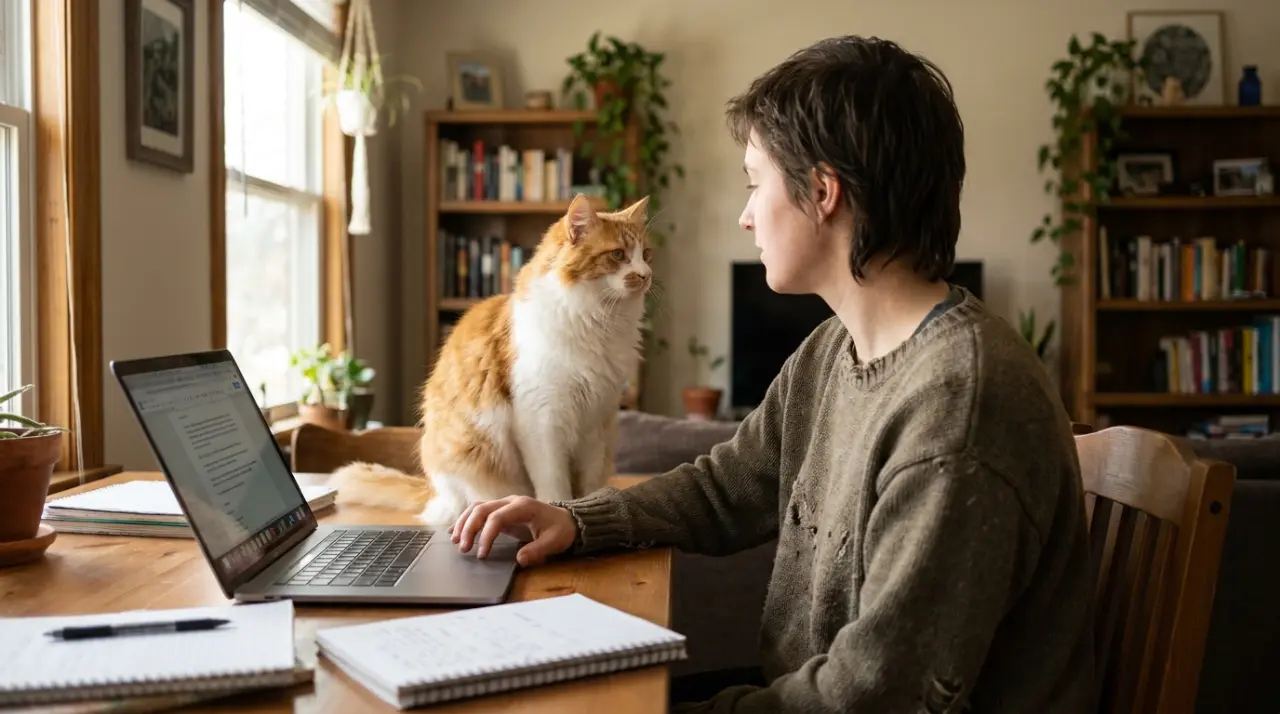
Sustained eye contact between cats typically signals aggression or challenge.
But cats who've bonded with humans develop a modified eye contact pattern that includes slow blinks, soft eye closures, and deliberate gaze-holding. If your cat regularly positions themselves in your sight line and waits until you look back, they're initiating a bonding ritual.
The slow blink is often called a "cat kiss" by behaviorists. When your cat looks at you and slowly closes their eyes, they're expressing contentment and affection.
Dr. Karen McComb at the University of Sussex found that cats who receive slow blinks from their owners are significantly more likely to approach and show affiliation behaviors. If you return the slow blink, you're speaking their language.
Cats will also interrupt activities, phone calls, reading, or work to step directly into your field of vision. They're not being demanding—they're checking the status of your bond.
But that's nothing compared to #10...
#10 — They Vocalize Differently With You Than With Others
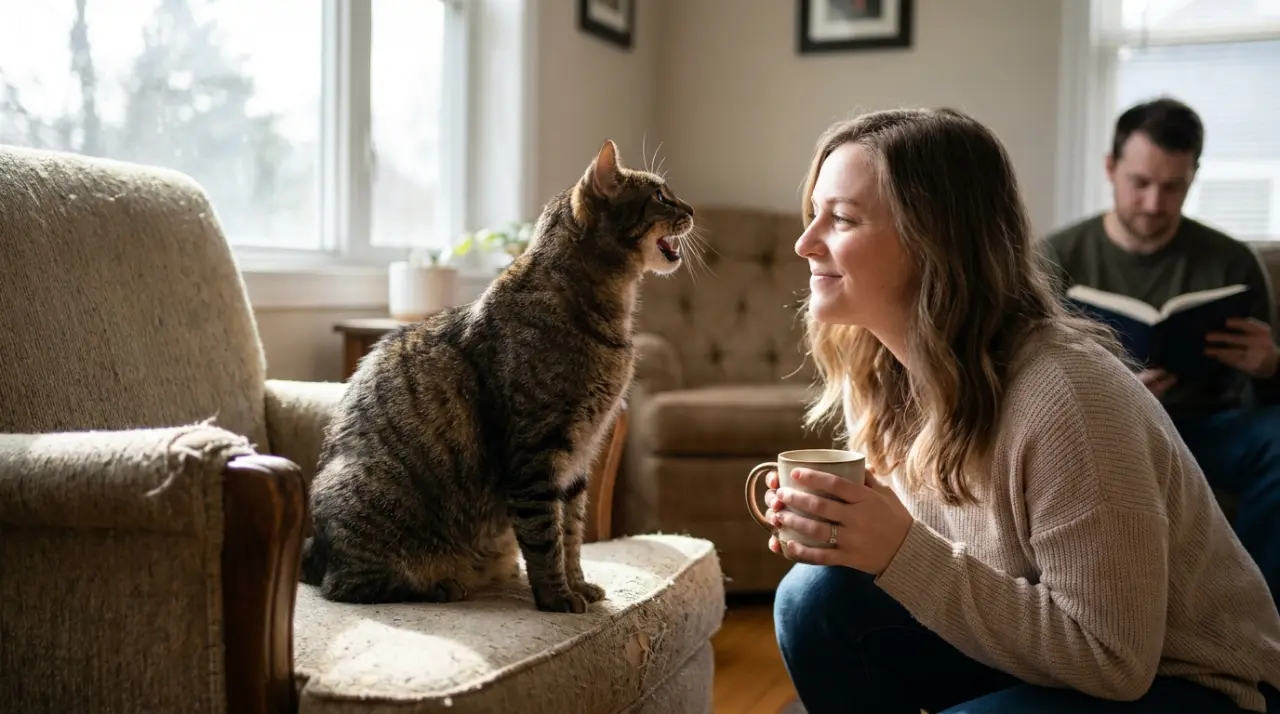
Adult cats rarely meow at each other in the wild—vocalization beyond kittenhood is almost exclusively reserved for human communication.
But cats who've bonded deeply develop a personalized vocal repertoire used only with their primary attachment figure. They'll have specific sounds for greetings, requests, complaints, and contentment that they don't use with other household members or cats.
Pay attention to pitch, duration, and context. Your cat may have a particular trill they use only when you enter a room, or a questioning chirp they use only when initiating interaction with you.
Some cats develop calls that mimic human speech patterns in rhythm and inflection. They're learning your communication style and adapting their signals accordingly.
A study published in Animal Cognition found that owners can identify their own cat's meow with 85% accuracy, suggesting highly individualized vocal signatures. If strangers or family members comment that your cat "talks" more around you, it's because they've developed a shared language.
The most bonded cats will hold entire "conversations" where they pause for your response between vocalizations.
#9 — They Time Their Meals Around Your Presence
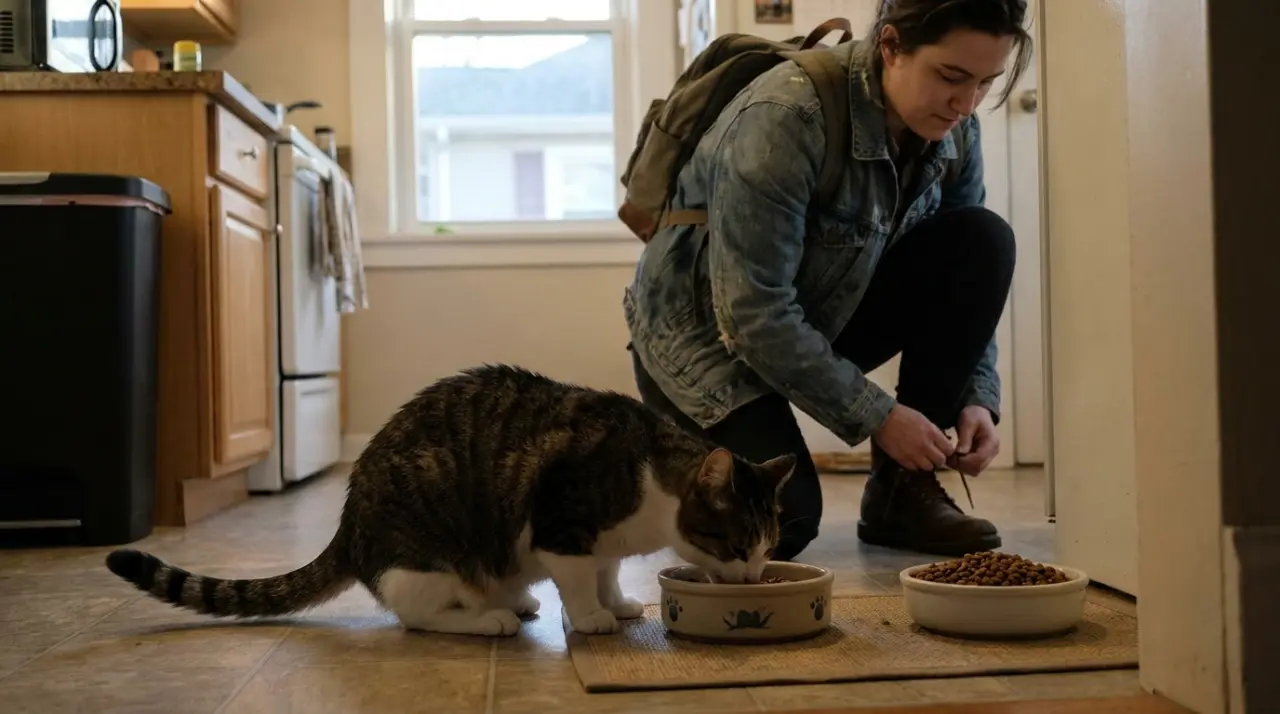
Cats who view you as essential will often wait to eat until you're home, even when food is freely available.
This behavior seems counterintuitive for an independent species, but it reflects the social eating patterns of pride animals. Your cat wants you present during vulnerable activities like eating and grooming.
You might notice your cat approaches their bowl only after you've been home for a while, or waits until you're in the kitchen. Some cats will take a few bites, check your location, and return to finish.
They're not being polite or grateful. They're demonstrating that eating is a social activity best done when their secure base is nearby.
Cats who've bonded will also refuse to eat if their person is away for extended periods. Boarding facilities and pet sitters frequently report that some cats barely touch food until their owner returns.
If your cat's appetite noticeably decreases when you travel, you've become integral to their sense of safety.
#8 — They Groom You or Themselves in Your Presence
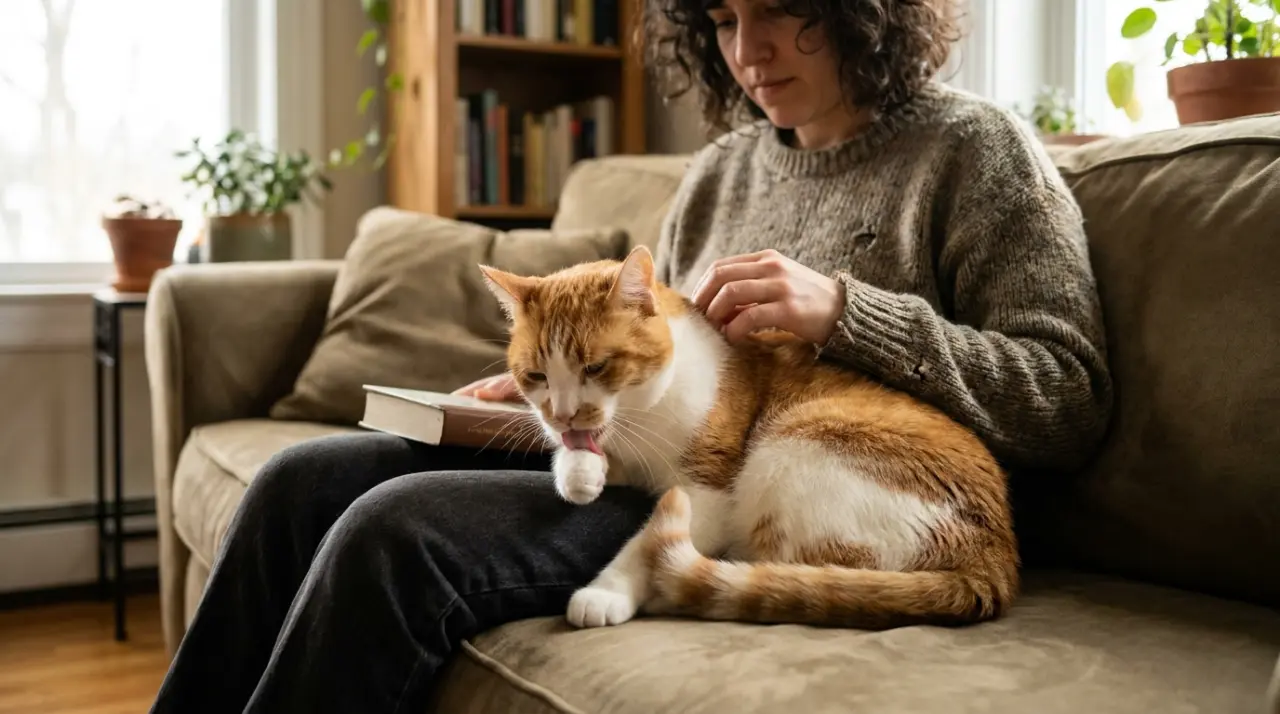
Allogrooming—grooming another individual—is a key bonding behavior in social cat colonies.
When your cat licks your hand, hair, or face, they're performing the same affiliative grooming they'd offer a littermate or colony member. The behavior distributes scent, reinforces social bonds, and signals group membership.
Equally significant is when cats groom themselves while near you. Self-grooming in the presence of another indicates complete relaxation.
Cats only enter the vulnerable state required for thorough grooming when they feel entirely safe. If your cat regularly bathes within a few feet of you, especially after you've been apart, they're demonstrating that your presence triggers their rest-and-digest nervous system response.
Some cats will alternate between grooming you and grooming themselves, treating you as part of a unified grooming session. Watch for your cat settling in close proximity and beginning their bathing routine shortly after you sit down.
#7 — They've Claimed Your Scent Items as Their Own
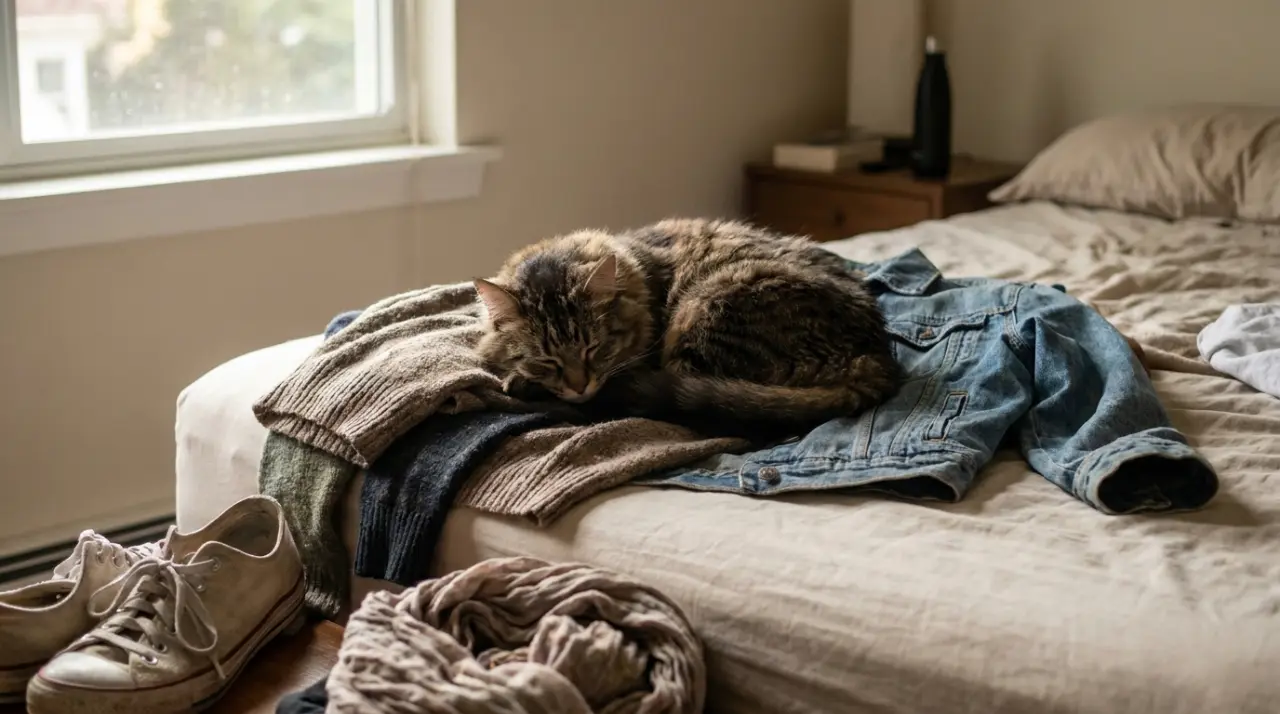
Scent is the primary sensory modality for feline social organization.
Cats who've bonded deeply will seek out items saturated with your scent—worn clothing, used towels, your side of the bed—and either sleep on them or rub against them to mingle scents. They're creating a shared scent profile that marks you as family.
Your cat may raid the laundry hamper, claim your bathrobe, or consistently sleep on your pillow when you're gone. This isn't random comfort-seeking.
They're surrounding themselves with olfactory evidence of your presence when visual contact isn't possible. The behavior reduces stress and maintains the psychological bond during separation.
Some cats will also deliberately rub their cheeks on your bags, shoes, or jacket immediately when you return home. The facial pheromone glands are depositing markers that identify you as theirs.
If your cat investigates and "re-marks" items you've brought home from outside, they're integrating foreign scents into their accepted environment.
#6 — They Position Themselves Between You and Strangers
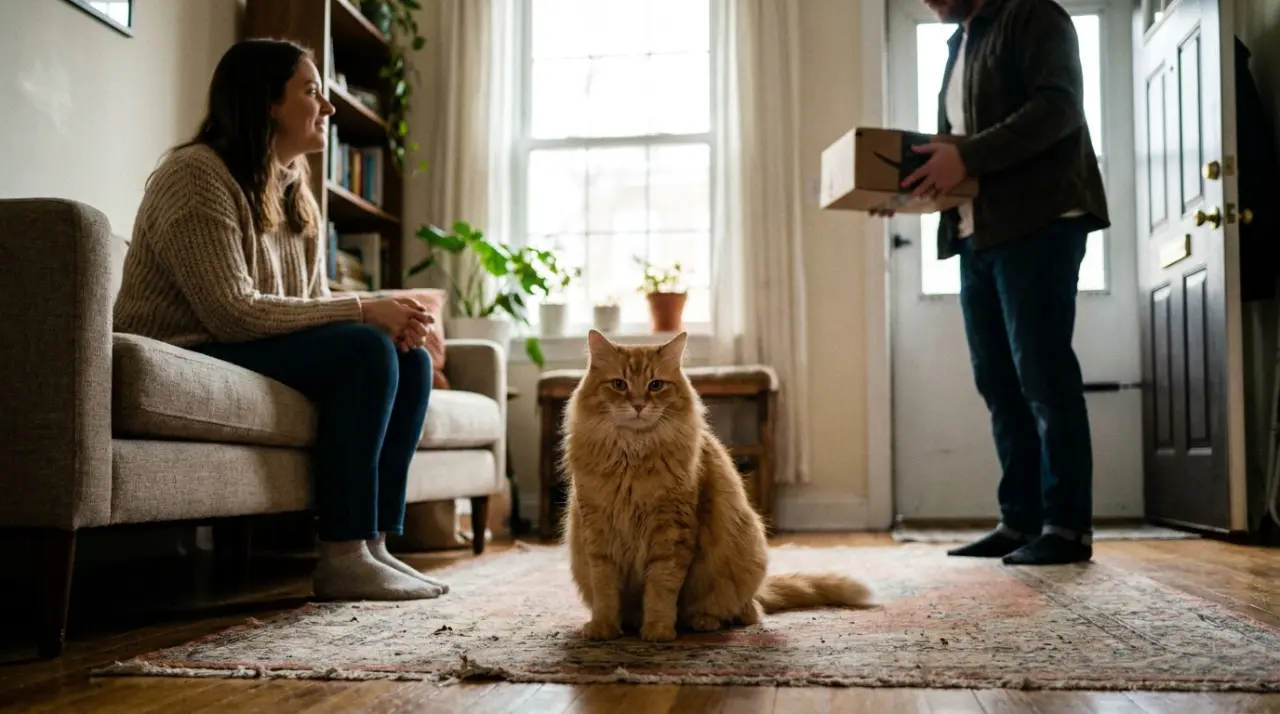
Territorially-bonded cats will place themselves physically between their person and unfamiliar visitors, delivery people, or even household members they perceive as lower-ranked.
This protective positioning isn't aggression—it's guardianship. Your cat is managing access to their primary resource: you.
Watch what happens when someone knocks on the door or a guest enters. Bonded cats will move to intercept, position themselves in the sight line between you and the newcomer, or settle in a location that allows them to monitor both you and the visitor.
They're not protecting you from danger in the heroic sense. They're controlling their environment to ensure their attachment figure remains secure and accessible.
Animal behaviorists note that this positioning behavior appears almost exclusively in cats who show other signs of secure attachment. Some cats will escalate to blocking doorways or physically inserting themselves into conversations.
If your cat consistently interposes themselves when you interact with others, you've been identified as their primary social bond.
But that's nothing compared to #5...
#5 — They've Synchronized Their Breathing With Yours During Rest
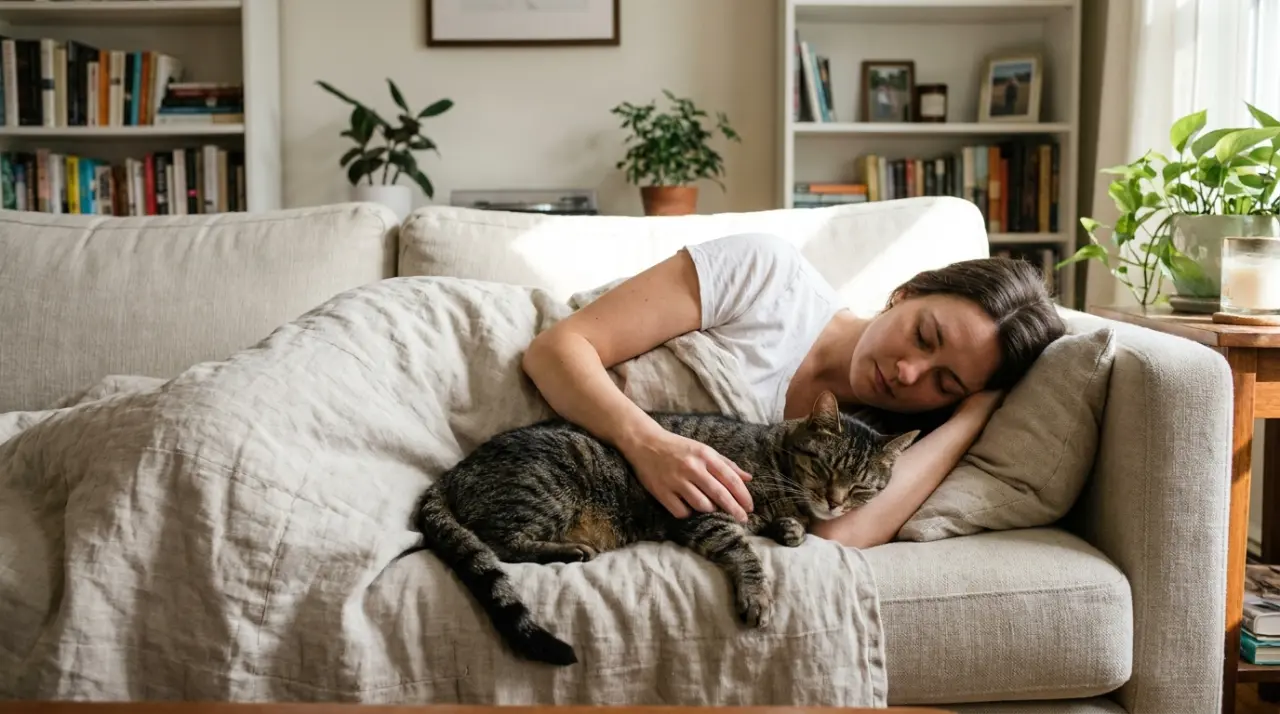
This is one of the most subtle and profound bonding indicators.
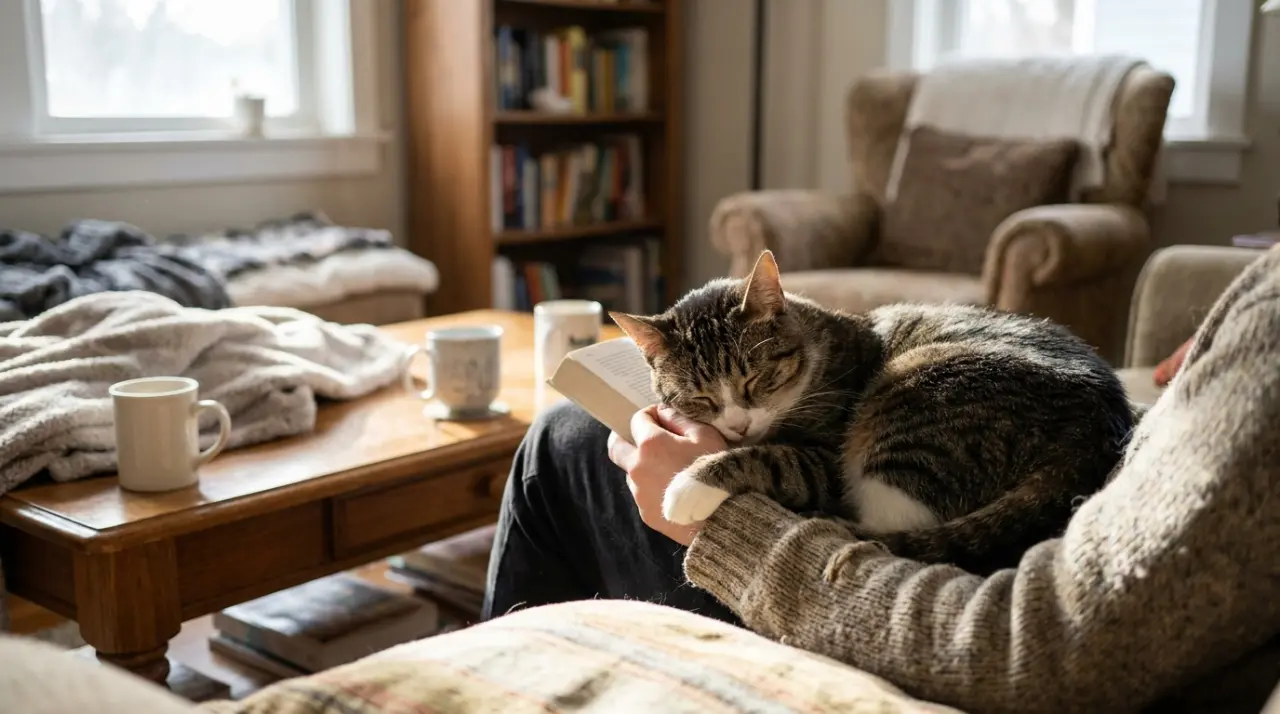
Cats who are deeply attached will, when sleeping or resting in physical contact, gradually synchronize their respiratory rate with their person's breathing. This physiological mirroring happens unconsciously and indicates nervous system co-regulation.
You'll notice this most when you're both stationary—reading, watching television, or sleeping. Your cat's breathing will slow or accelerate to match yours within ten to fifteen minutes of settling.
Studies of mother-infant dyads across mammal species show that breathing synchronization is a hallmark of secure attachment and shared autonomic regulation. Your cat's nervous system is literally regulating itself based on cues from your body.
This explains why some people report that their anxiety decreases when their cat is near, and why cats often seek out their person when the person is ill or distressed. The regulatory relationship runs both directions.
If you've ever noticed your cat seems to "breathe with you" during quiet moments, you're observing one of the deepest forms of mammalian bonding.
#4 — They Respond to Your Emotional State Before You've Signaled It
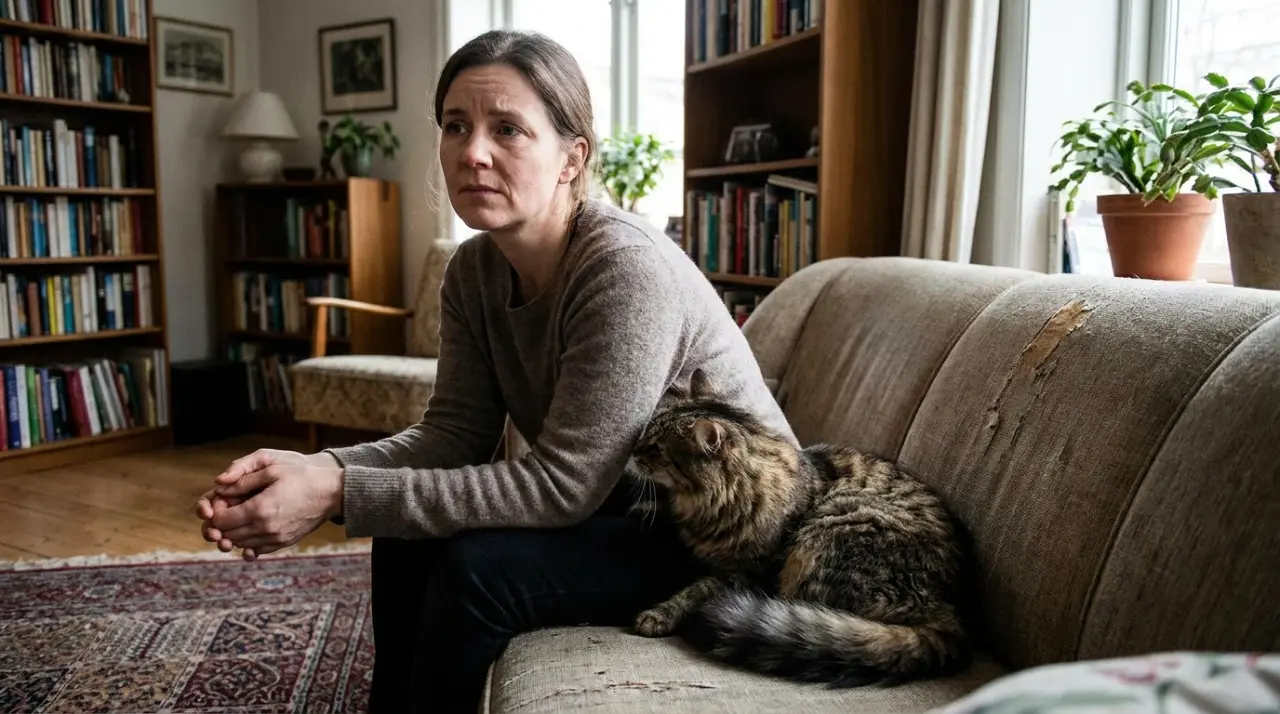
Cats read human facial expressions, vocal tones, and body language with remarkable accuracy.
But cats who've studied their person extensively can detect emotional shifts before conscious expression begins. They're reading micro-expressions, changes in breathing, movement patterns, and possibly even scent cues from stress hormones.
Your cat may approach when you're upset before you've cried, or become alert and attentive when you're anxious before you've consciously registered the feeling. They've learned your pre-behavioral cues through thousands of hours of observation.
This predictive ability only develops with intense focus on a specific individual. Your cat has made you their subject of study.
Some cats will offer specific comfort behaviors—sitting on your chest, purring at high intensity, or bringing toys—in response to distress. Others simply maintain closer proximity than usual.
Research from Oakland University found that cats can distinguish between happy and angry human faces and modify their behavior accordingly, but response speed increases dramatically with familiar versus unfamiliar people. If your cat reacts to your moods before you've acted on them, they've been paying closer attention than you realized.
#3 — They've Developed Rituals That Exist Only With You

Bonded cats create highly specific behavioral sequences that unfold only in their person's presence.
These might include a particular morning greeting routine, a specific play pattern, a bedtime ritual, or a reunion sequence when you return home. The ritual involves precise actions in a consistent order and often includes call-and-response elements.
Your cat might wait at a certain location at a certain time, perform a specific vocalization, and expect a particular response from you. If any element is missing, they may repeat their part or wait for you to complete yours.
These rituals serve no practical purpose—they're pure social bonding. They exist because you and your cat have created a shared culture of two.
Some rituals become so ingrained that cats will continue performing their half even if their person temporarily can't participate. They're maintaining the structure of the bond during disruption.
If you can identify three or more behavioral sequences that happen only between you and your cat, always follow the same pattern, and feel almost ceremonial in their precision, you've built something beyond simple pet ownership.
#2 — They've Chosen Your Lap Over Comfort, Food, or Prime Territory

Cats are notorious for prioritizing comfort, thermal regulation, and strategic positioning.
But a cat who's made you their whole world will consistently choose your lap over warmer spots, softer surfaces, elevated perches with better views, or even delayed meals. They're sacrificing practical benefits for proximity.
This is especially telling if your lap isn't objectively comfortable—if you move frequently, work on a laptop, or don't provide optimal support. Your cat is choosing you despite the drawbacks.
The Oregon State study found that cats spent more time interacting with their owner than with food or toys when given a choice, contradicting the stereotype that cats are primarily food-motivated. Some cats will leave sunny windowsills, heated beds, or favorite furniture the moment their person sits down.
They're not seeking warmth or comfort in the physical sense. They're seeking you specifically.
Watch what happens if you move to a less comfortable chair or sit on the floor. Truly bonded cats will follow and settle on or near you regardless of how the location compares to alternatives.
The choice isn't about the lap—it's about the person.
#1 — They've Stopped Hiding When They're Sick or In Pain
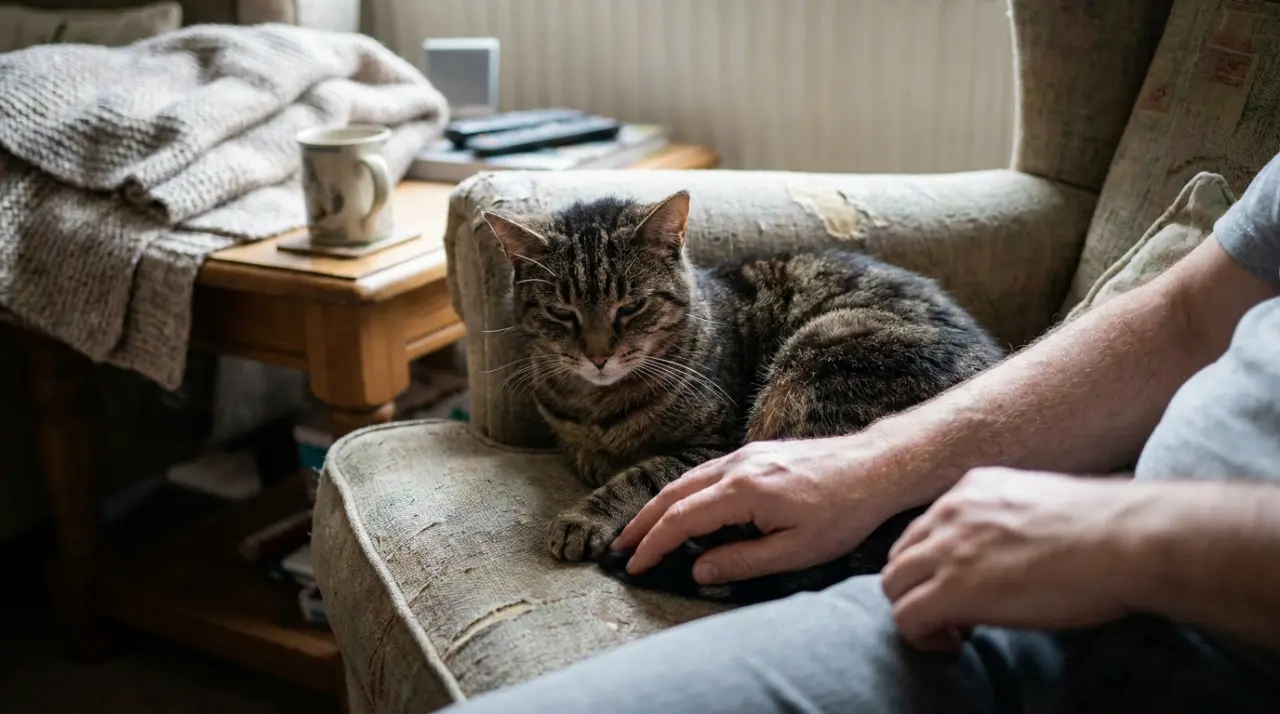
This is the ultimate sign your cat has made you their entire world.
In the wild, sick or injured cats hide to avoid predators and die alone—it's a survival instinct encoded over millions of years. Domestic cats retain this drive and will typically seek isolation when they're unwell or dying.
But cats who've formed a profound attachment will override this fundamental instinct and seek their person instead.
They'll come to you when they're in pain, stay near you when they're ill, and choose your presence over the protective isolation their biology demands. This represents a complete rewrite of survival programming.
Veterinarians and animal behaviorists consider this one of the most significant indicators of deep trust. Your cat has decided you're safer than their instincts.
You've become their security during the most vulnerable moments of their life. If your cat has ever sought you out when injured, ill, or dying instead of hiding, they've told you something profound.
The cat who comes to you when every fiber of their being says to hide has placed their entire world in your hands. That's not dependence or training—that's love in the most primal, trusting form the species can express.
The Bottom Line
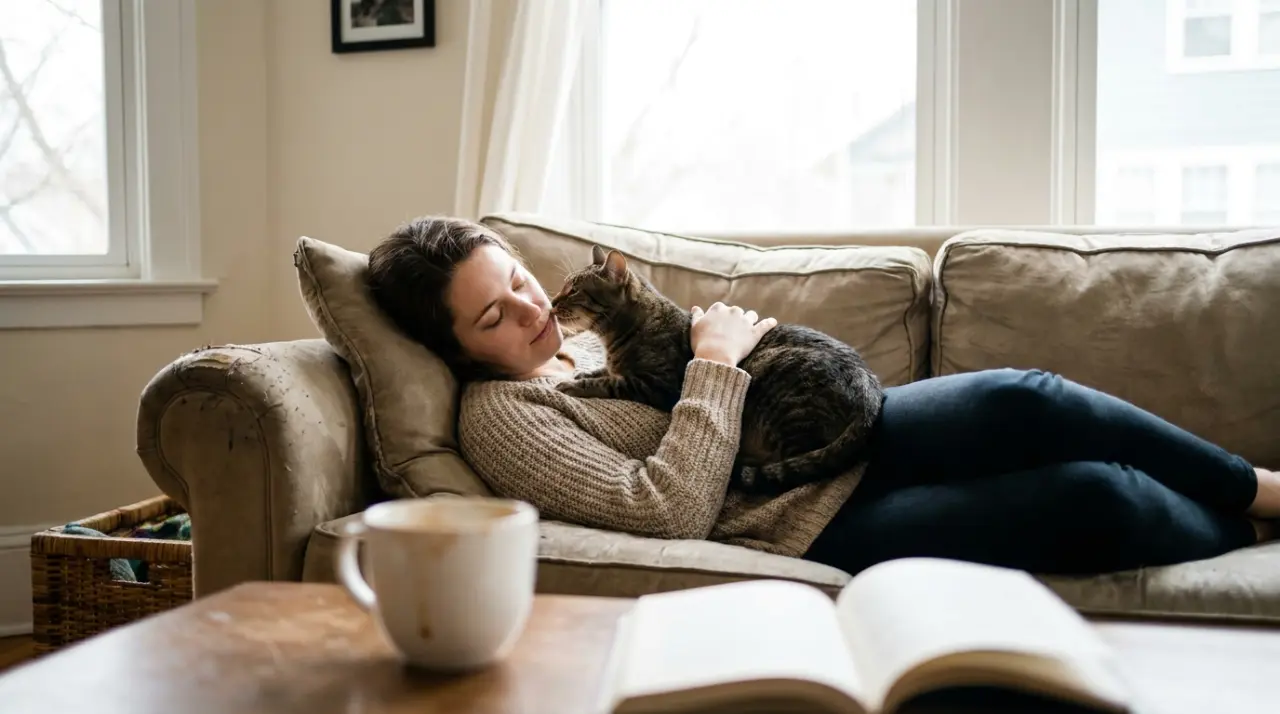
Your cat's bond with you is probably far deeper than their aloof reputation suggests. These signs reveal attachment that rivals the most devoted dogs, just expressed in the subtle, dignified language of felines.
The cat who's made you their whole world has restructured their biology, overridden their instincts, and built their entire emotional security around your presence. Most owners miss these signals because they're watching for canine-style enthusiasm instead of feline-style devotion.
Did we miss a sign your cat shows you? Drop it in the comments.