You’ve probably caught your cat staring at the wall, knocking your phone off the table, or dropping a very dead mouse at your feet – and wondered what on earth is going on inside that fluffy little head. Here’s a truth that might surprise you: almost nothing your cat does is random. Every twitch, every slow blink, every dramatic leap to the highest shelf in the room carries a deeper layer of meaning rooted in instinct, social intelligence, and cognitive ability that most people wildly underestimate.
Cats have been living alongside humans for thousands of years, and yet we still misread their behavior almost constantly. Cats have evolved to demonstrate their intelligence in ways that may not seem immediately apparent to us humans, which is why it can be challenging to accurately assess their intelligence – yet the available evidence suggests cats are much smarter than many people give them credit for. So the next time your cat does something that looks bizarre or inconvenient, you might want to reconsider before dismissing it. Let’s dive in.
1. Knocking Things Off Surfaces
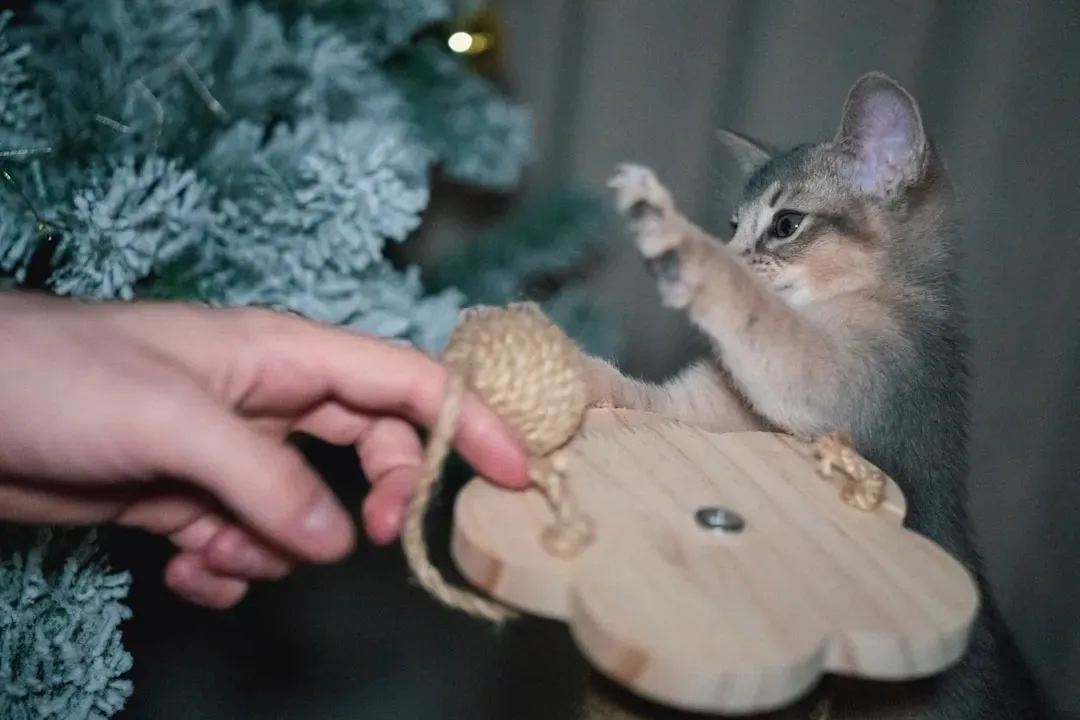
You’ve lived this scene. You’re sitting quietly, and your cat walks over to your desk, makes deliberate eye contact with you, and pushes your pen off the edge. Then a mug. Then your glasses. It looks like pure chaos – but it’s actually a masterclass in behavioral strategy. Cats are remarkably intelligent when it comes to understanding cause and effect, particularly regarding human behavior. If knocking something off a table consistently gets you to jump up, make noise, or rush over to them, your cat has learned a valuable lesson: this behavior works.
At its core, the table-sweeping behavior stems from your cat’s powerful hunting instincts. Cats are natural predators, and their paws are precision instruments designed for capturing prey. When they encounter objects on surfaces, especially small items that move or make noise when touched, their predatory drive kicks in automatically. So when your cat sweeps your keys onto the floor, you are essentially watching a miniature predator run a field test. Intelligent? Honestly, yes.
2. Sleeping Up to 16 Hours a Day

You might look at your cat sprawled across the couch in the afternoon sun and think: “What a lazy creature.” But that marathon sleeping habit is actually one of the most strategically intelligent energy-management systems in the animal kingdom. Cats have a sleep and wake cycle that constantly fluctuates. In the wild, cats hunt several times daily, and to maintain this level of activity, they must nap often. Think of it like a top-tier athlete saving their energy for the moments that actually matter.
Your cat isn’t wasting time on that couch – they’re recharging. Cats display neuroplasticity, allowing their brains to reorganize based on experiences. They also have well-developed memory retaining information for a decade or longer, and these memories are often intertwined with emotions, allowing cats to recall both positive and negative experiences associated with specific places. A well-rested cat is a sharper cat. Their brain is literally processing memories and reinforcing learned behaviors while they snooze. Not so lazy after all.
3. Bringing You Dead Animals as “Gifts”
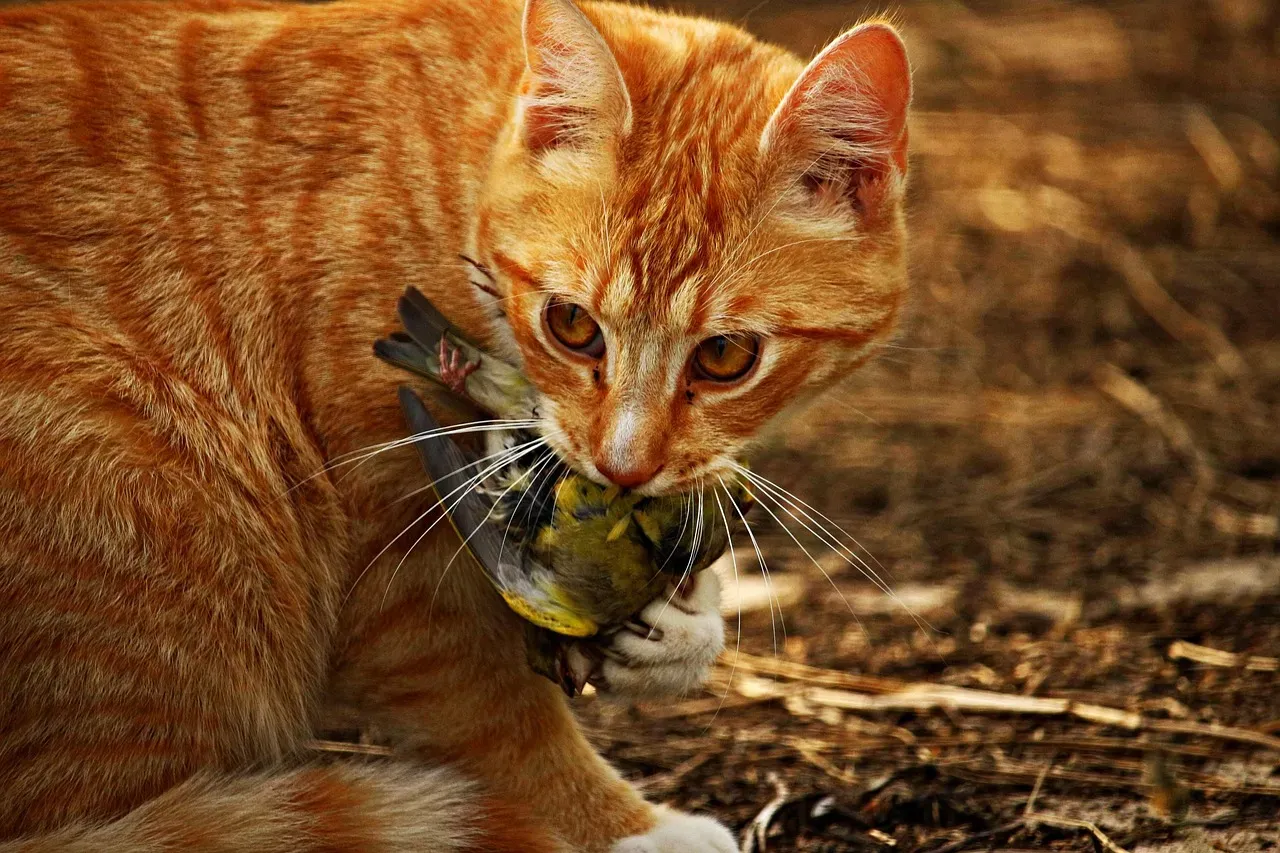
Few cat behaviors send people scrambling for their phones to search “why does my cat do this?!” quite like finding a dead bird on the doorstep. It’s uncomfortable. It’s sometimes disgusting. Yet it is one of the most profoundly social behaviors your cat is capable of expressing. When cats bring back their hunt, they may consider it a prize not just for them but for sharing with members of their social circle – which, in a domestic setting, includes you, the owner. You’re not just their human. You are part of their family unit.
In the wild, mother cats would teach their kittens how to survive, which included finding food and eating it. Even in a litter of tiny kittens, you can see them practicing their stalking, pouncing, and killing behaviors. With spaying becoming the norm in owned cats, pets often do not have any offspring to pass their hunting know-how down to – but the natural instinct to hunt remains strong. So when your cat drops something at your feet, they are essentially trying to mentor you. It’s sweet, even if it’s also mildly traumatizing.
4. Kneading You Like Bread Dough
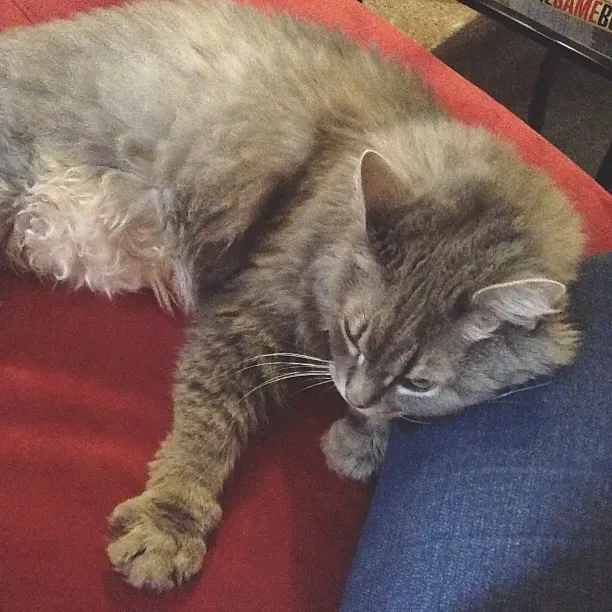
That rhythmic pressing of paws into your lap – claws and all – is one of the most misunderstood cat behaviors around. People often laugh it off as cute or wince when the claws come out, but there’s genuine intelligence and emotional depth behind what cats sometimes lovingly call “making biscuits.” Cats use kneading to mark their territory and communicate through scent signals. They have scent glands located in the smooth pads of their paws, and by kneading, they release pheromones onto the surface they’re pressing against – letting other cats know that the area is claimed and helping create a sense of familiarity and security.
Kneading on you is often a sign of trust and bonding. It’s your kitty’s way of saying you’re part of their safe space. When your cat picks your lap over the perfectly good cat bed you spent money on, that’s not an insult to your interior design choices. Feline experts theorize that adult cats knead to re-create the feel-good hormone release that occurs during nursing. Kneading brings them comfort and helps them release tension and relax. You are essentially being chosen as the ultimate comfort object. That’s a compliment.
5. Slow Blinking at You
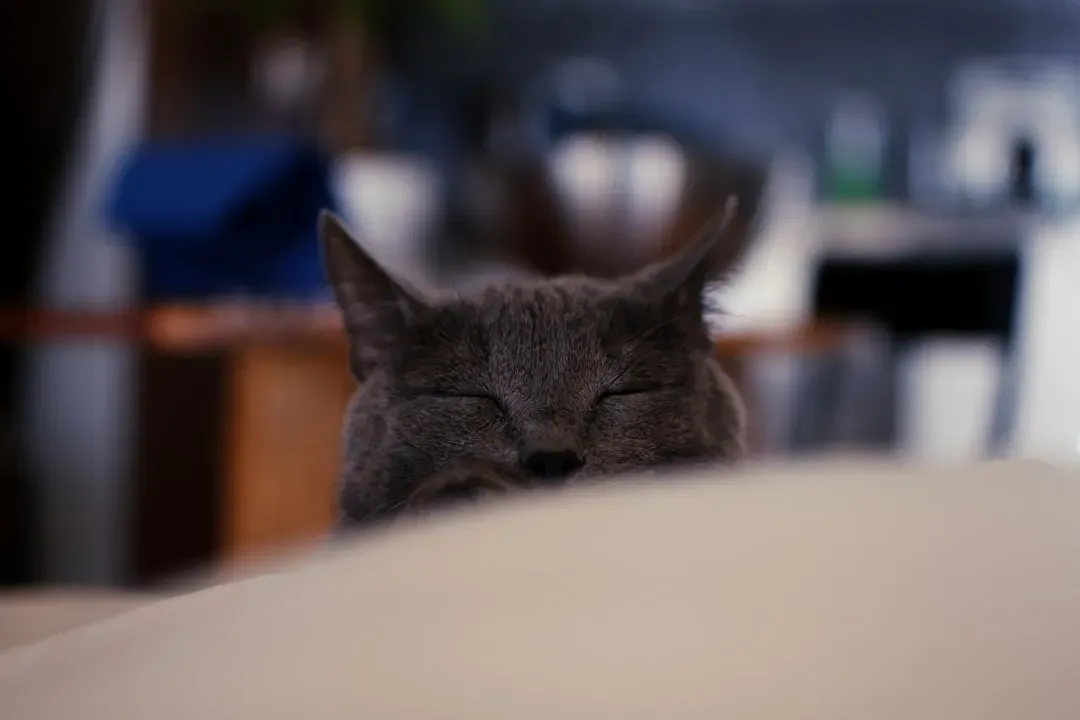
Here’s one that genuinely warms the heart once you understand it. Your cat sitting across the room, locking eyes with you, and then slowly closing and reopening their eyes might seem like a sign of drowsiness. It’s actually one of the most deliberately affectionate signals in a cat’s entire communication toolkit. This slow blink from a cat is often a sign of trust and affection. It’s the feline equivalent of a hug or a kiss. You can slow-blink back at them to return the favor and deepen your bond.
Think about what a slow blink actually means in the animal world. In nature, closing your eyes in front of another creature is an act of supreme vulnerability. Scientists increasingly agree that cats process information in surprisingly sophisticated ways, from remembering specific past events to reading human cues such as pointing. At the same time, research also shows their social style is different from dogs: cats can bond and communicate, but strictly on their own terms, which can make their smarts easy to miss. So when your cat slow-blinks, they are making a conscious, emotionally loaded decision to trust you. That’s not simple. That’s sophisticated social intelligence.
6. Hiding in Boxes and Tight Spaces
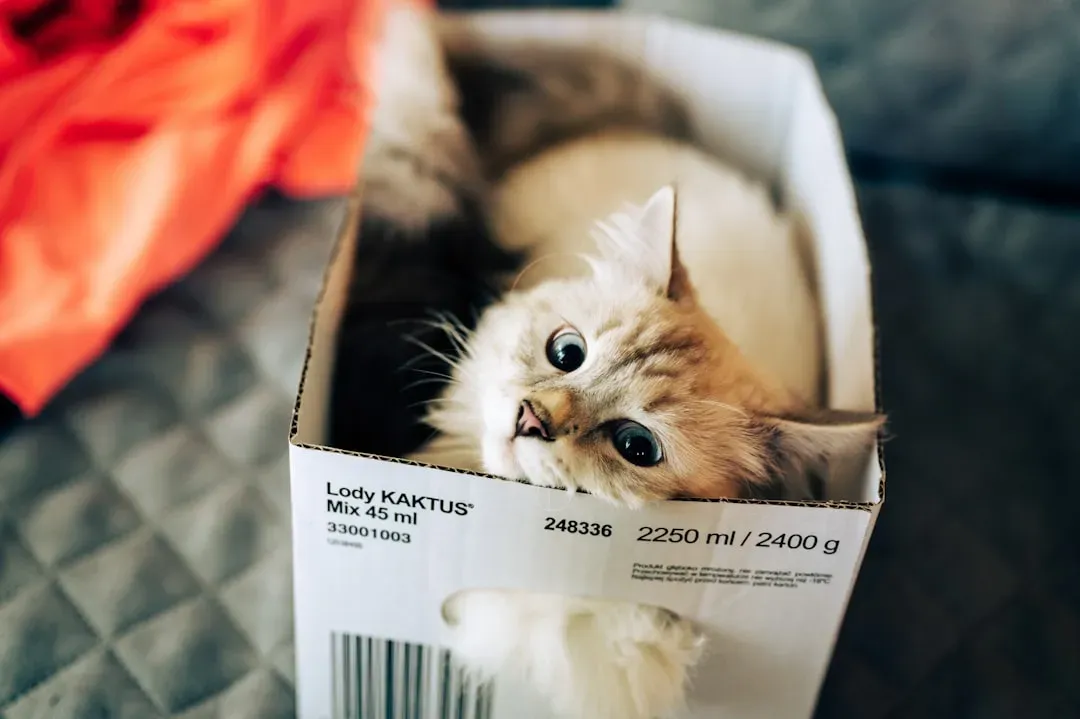
You invest in a lovely cat bed. Your cat ignores it completely and squeezes into a shoebox that is objectively too small for their body. If you’ve ever wondered whether your cat is being deliberately difficult, I think the answer is actually far more interesting. You might notice your cat sleeping in ridiculously tight places – or boxes – avoiding the comfy, plush cat bed you bought them. This behavior stems from their instincts to sleep well hidden in the wild to stay safe from predators. Enclosure equals security. It’s that simple, and that primal.
Many cats like to be alone when they sleep, either curled up in or under something, or often up high where they are safe and can watch their surroundings. Providing a choice of sleeping areas is ideal. Your cat isn’t rejecting your expensive gift. They’re choosing a spot that speaks to millions of years of survival instinct. A box with four walls says “protected” in a language older than any breed of domestic cat. Honestly, it’s kind of genius.
7. Claiming the Highest Spot in Every Room
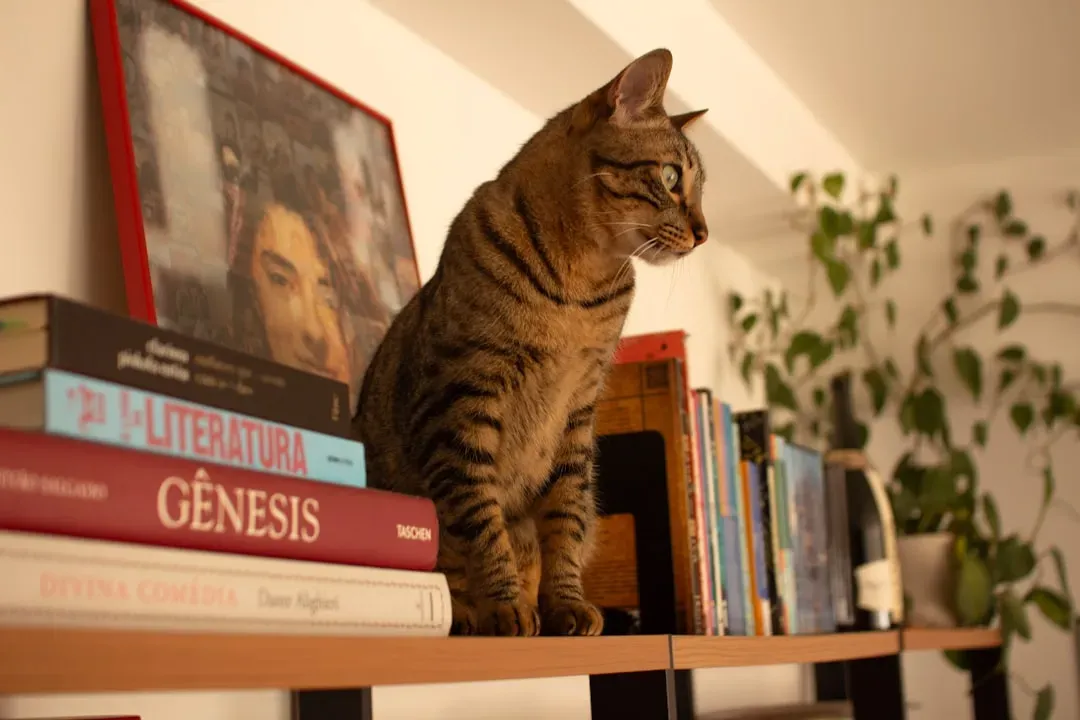
You’ve watched it happen in slow motion: your cat surveys the room, calculates, and somehow ends up on top of the refrigerator, the wardrobe, or that one precarious shelf you thought no animal could possibly reach. This isn’t just showing off. It is a deliberate, strategic intelligence move rooted deep in feline survival behavior. Cats have a natural tendency to want to watch their surroundings while feeling safe and hidden at the same time. The high ground gives them complete environmental awareness – they can see every threat, every opportunity, and every movement from one position.
Intelligent cats tend to adjust quickly to environmental changes, like new furniture, visitors, or altered feeding routines. Behavioral scientists describe this as “cognitive flexibility” – the ability to update old information and learn new rules. Claiming elevated territory is how your cat maps and controls their world. Unlike dogs, whose cleverness is often assessed by their compliance and trainability, cats showcase their intelligence through independent actions and unique problem-solving skills. The high shelf isn’t just a perch. It’s a command center.
8. Opening Cabinets and Doors
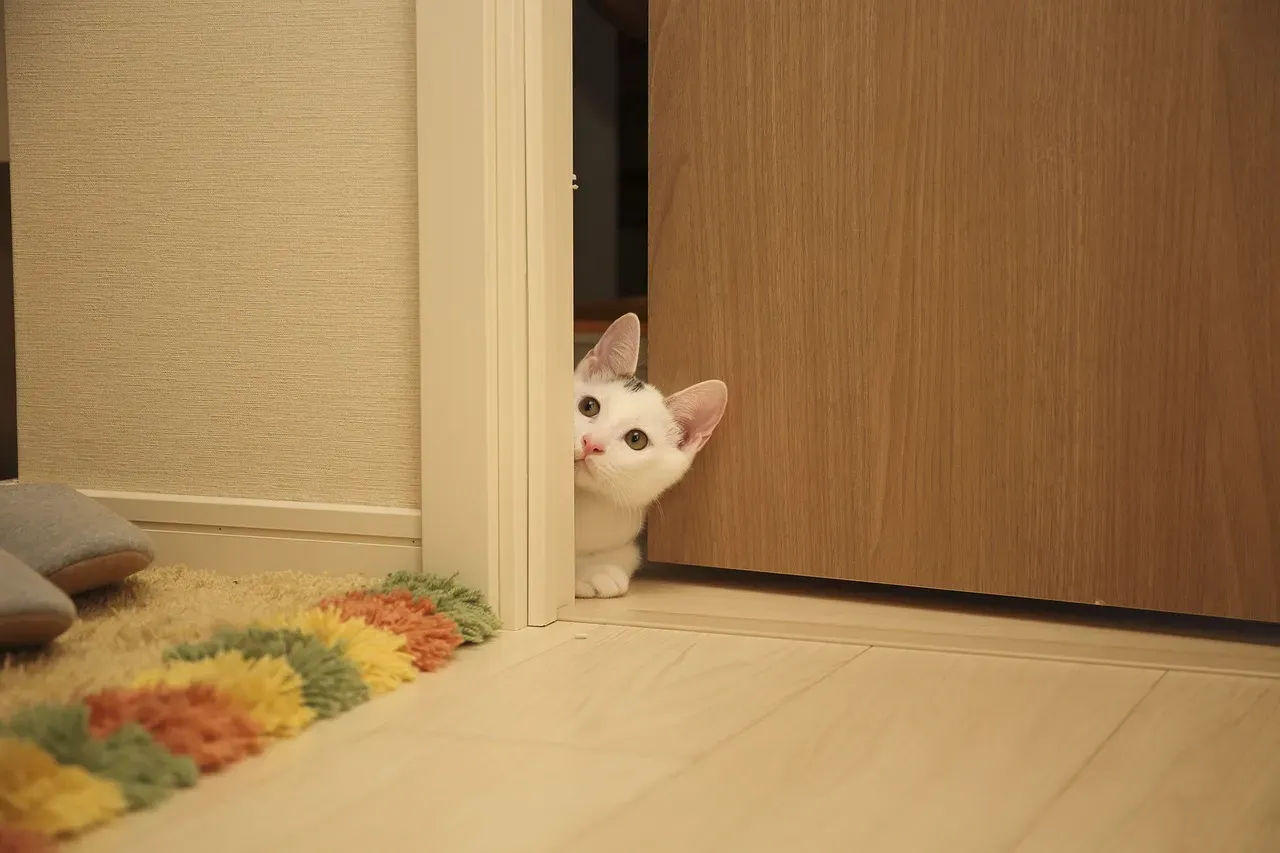
Let’s be real: the first time a cat figures out how to open a cabinet, it’s equal parts impressive and alarming. You watch them paw at the corner of a door, pull it toward themselves, and then casually walk in like they’ve done this a hundred times. That moment is not accidental. Smart cats are usually good at problem-solving. They can find solutions by observing and thinking – for example, opening a door or a drawer to get their favorite toys. They watch you do it first, then they replicate the mechanics. That is observational learning at its finest.
Like humans, cats learn by observation and doing. Examples include opening doors, ringing bells, and turning on light switches. This is procedural memory, and cats excel at it. Research shows these memories last ten years or more. So when your cat opens the treat cabinet at 6 AM, they haven’t forgotten you showed them where the good stuff lives three years ago. Cats clearly have a superior ability to learn new information, mesh it with existing information, recall it, and use that information in other situations – which makes them card-carrying members of the highly intelligent class.
9. Vocalizing Specifically to Communicate With You
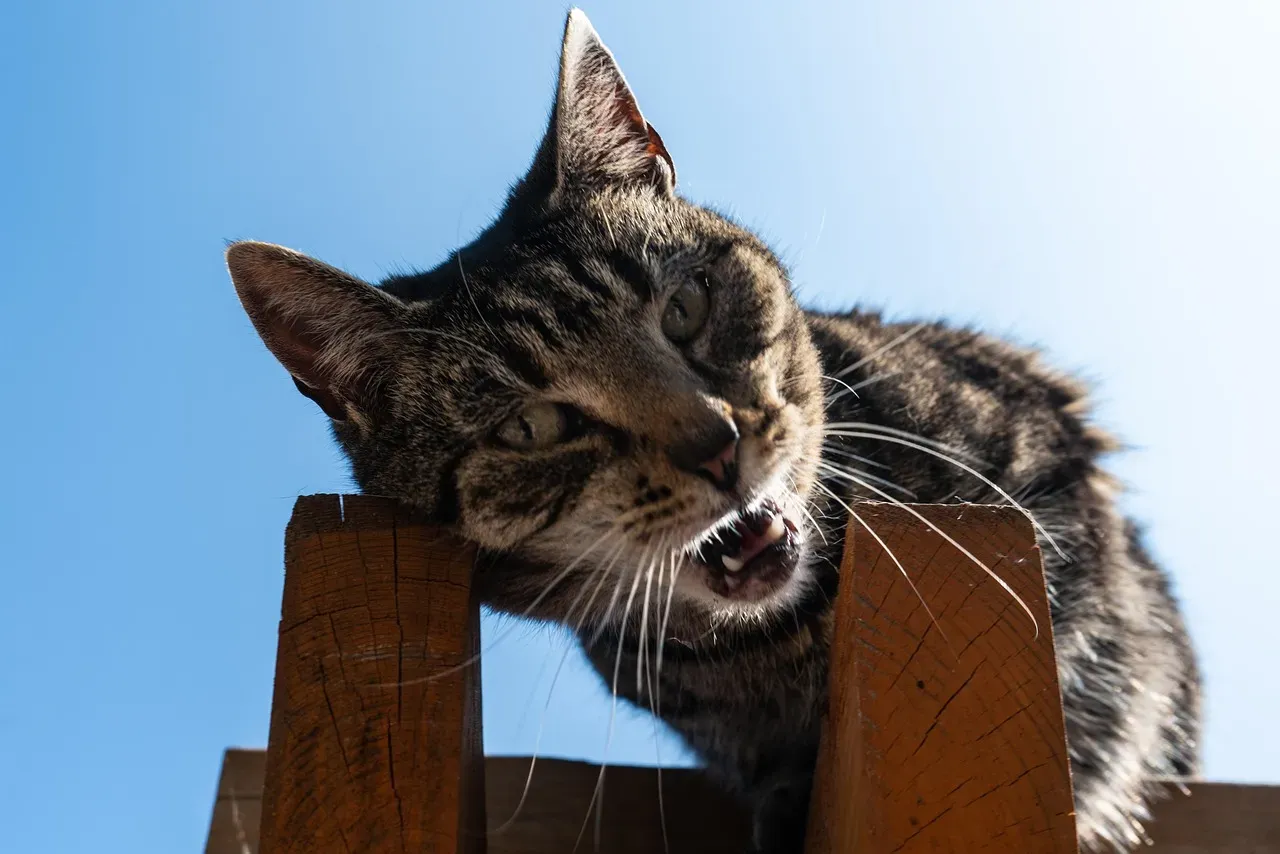
Here’s something that might genuinely surprise you: adult wild cats rarely meow at each other. It’s a behavior that domestic cats have essentially developed and refined specifically for communicating with humans. Cats communicate in a social environment in various ways. Some aspects include purring to express the desire for attention, meowing near the food bowl to get fed, and some cats even remember what time they get fed and attempt to gain their owner’s attention at that time every day. Your cat has essentially invented a language just for you.
Has your cat trained you to feed them at a particular time, using meows or some other attention-getting behavior? If so, this indicates an understanding of cause and effect – meowing or another behavior causes you to put food in the bowl – and a grasp of the concept of time. Think about what that means. Your cat has figured out that you respond to sound, identified which sounds get results, and built a reliable communication system around your behaviors. You didn’t train them. They trained you. And the funniest part? It worked.
10. Staring Into Space for Long Stretches
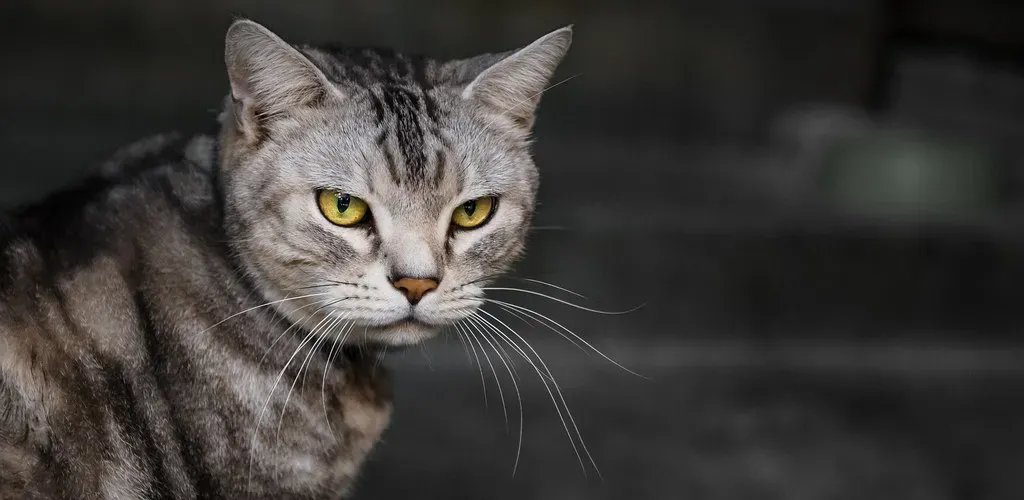
You’ve seen it – your cat sitting motionless, pupils wide, locked onto an apparently empty wall or a corner of the ceiling. You’ve probably wondered if they can see ghosts. The truth is arguably more fascinating. All of a cat’s senses play an important role from birth, especially smell, since kittens are born blind but with functioning olfactory systems. A cat’s strong sense of smell is definitely a source of their intelligence and a major means by which they perceive the world. What looks like empty space to you is potentially a rich sensory landscape of sounds and scents that your far less sensitive human senses simply cannot access.
Thorndike’s experiments demonstrated that cats could learn to manipulate levers and latches through trial and error, thereby revealing their capacity for associative learning. Over time, more refined experiments began to examine additional facets of cognition, including spatial awareness, memory, and problem-solving strategies. That “zoned out” stare is often your cat processing environmental information at a sophisticated level, tuning in to ultrasonic sounds, microscopic movements, or scent trails that are completely invisible to you. Cats not only excel at learning new information, but they can also mesh that information with things they’ve learned previously, recall it when needed, and apply it to the current situation. They’re not daydreaming. They’re analyzing.
Conclusion
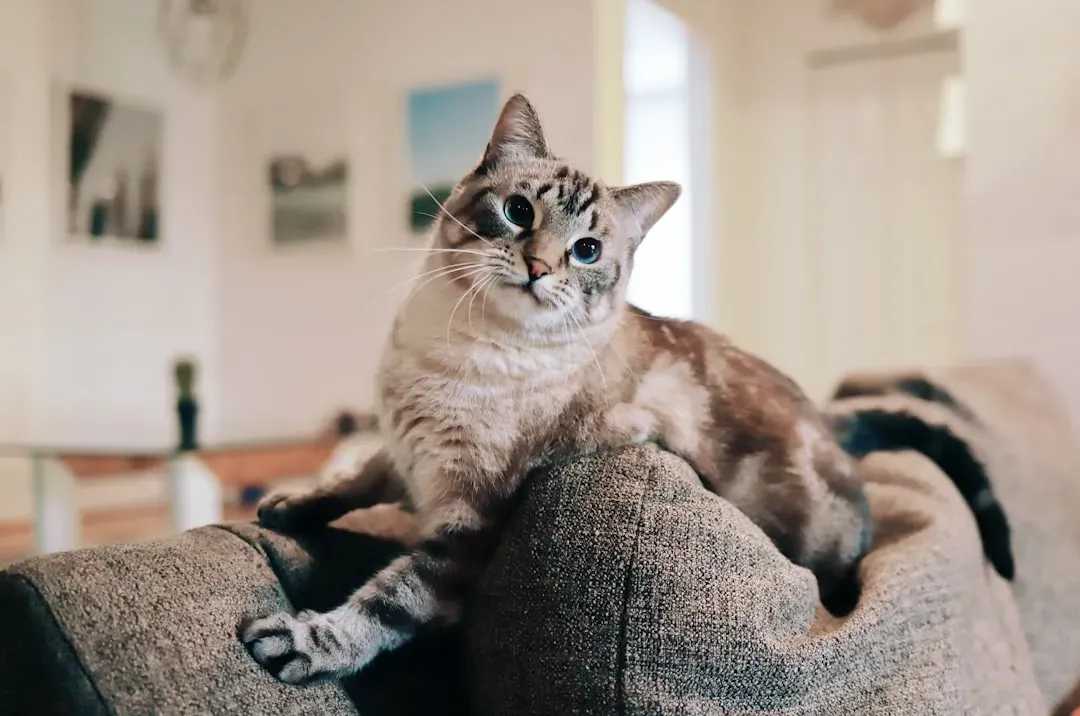
It turns out that living with a cat means sharing your home with a creature of considerable intelligence – one that has been quietly studying you, learning your patterns, adapting its communication, and making calculated decisions every single day. Cats exhibit a unique form of intelligence that deserves our attention and admiration. Their problem-solving abilities, social awareness, and adaptability set them apart from the traditional measures of intelligence we often associate with dogs.
Every behavior covered here – from the dramatic table-clearing to the slow, deliberate blink – is your cat operating with a level of cognitive sophistication that science is still working to fully understand. There is no good method for comparing feline intelligence to human intelligence, but performance on mental function tests suggests that cats are at least as smart as human toddlers. They may be even smarter, but they are often unwilling to participate in cognitive testing. Classic cats – they’ll prove their intelligence entirely on their own terms.
So the next time your cat does something that makes you question their sanity, maybe pause before judging. Chances are, they know exactly what they’re doing. The real question is: how much of it has already been a move designed around your behavior? What do you think? Share your thoughts in the comments – we’d love to hear which of your cat’s “quirks” now makes a lot more sense.