If you share your life with a cat, you already know the feeling. You’re sitting quietly on your sofa, and suddenly your furry companion is staring at you with the intensity of a detective who knows something you don’t. Or they’ve just knocked your full glass of water off the counter with supreme, deliberate nonchalance. Cats are, without question, one of the most fascinating and perplexing creatures on the planet. They love you fiercely, ignore you shamelessly, and manage to be endlessly mysterious all at once.
The truth is, behind every seemingly bizarre feline habit lives a rich world of instinct, emotion, and ancient survival logic. Some of these behaviors will surprise you. Some will make you laugh. A few might even make you see your cat in a whole new light. So settle in, because this is the deep-dive you didn’t know you needed. Let’s go.
1. The Slow Blink – Your Cat’s Version of “I Love You”
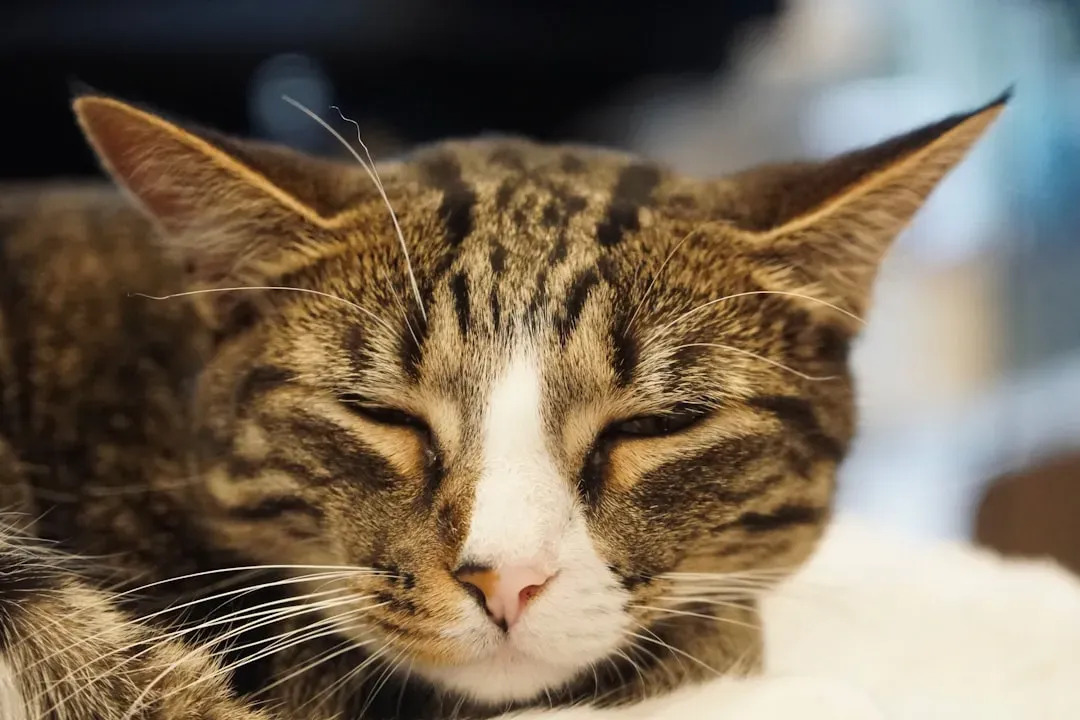
You’re lounging across the room from your cat and they catch your eye, then slowly lower their eyelids in a long, lazy blink. It feels random. It is absolutely not random. For the most part, slow blinking is your cat’s way of telling you that they trust and are comfortable around you. Think of it as the feline equivalent of a warm smile – only far more elegant.
When your cat looks at you and slow blinks, they are relaxing their guard. After all, a cat in the middle of a slow blink is vulnerable at that moment, and your cat knows this – just like when they roll onto their backs and show their bellies in your presence, they are making themselves vulnerable, knowing that they are safe with you. Here’s the beautiful part: you can actually slow blink right back. In a 2020 study, researchers found that cats were more likely to slow blink after their owners slow blinked at them. They took it a step further with a researcher the cat didn’t know – the researcher slow blinked at the cat, which led to the cat approaching the researcher’s outstretched hand. When humans initiate the slow blink, we are telling the cat that we trust them. Honestly, that might be the sweetest thing science has ever confirmed.
2. Kneading – The “Making Biscuits” Mystery
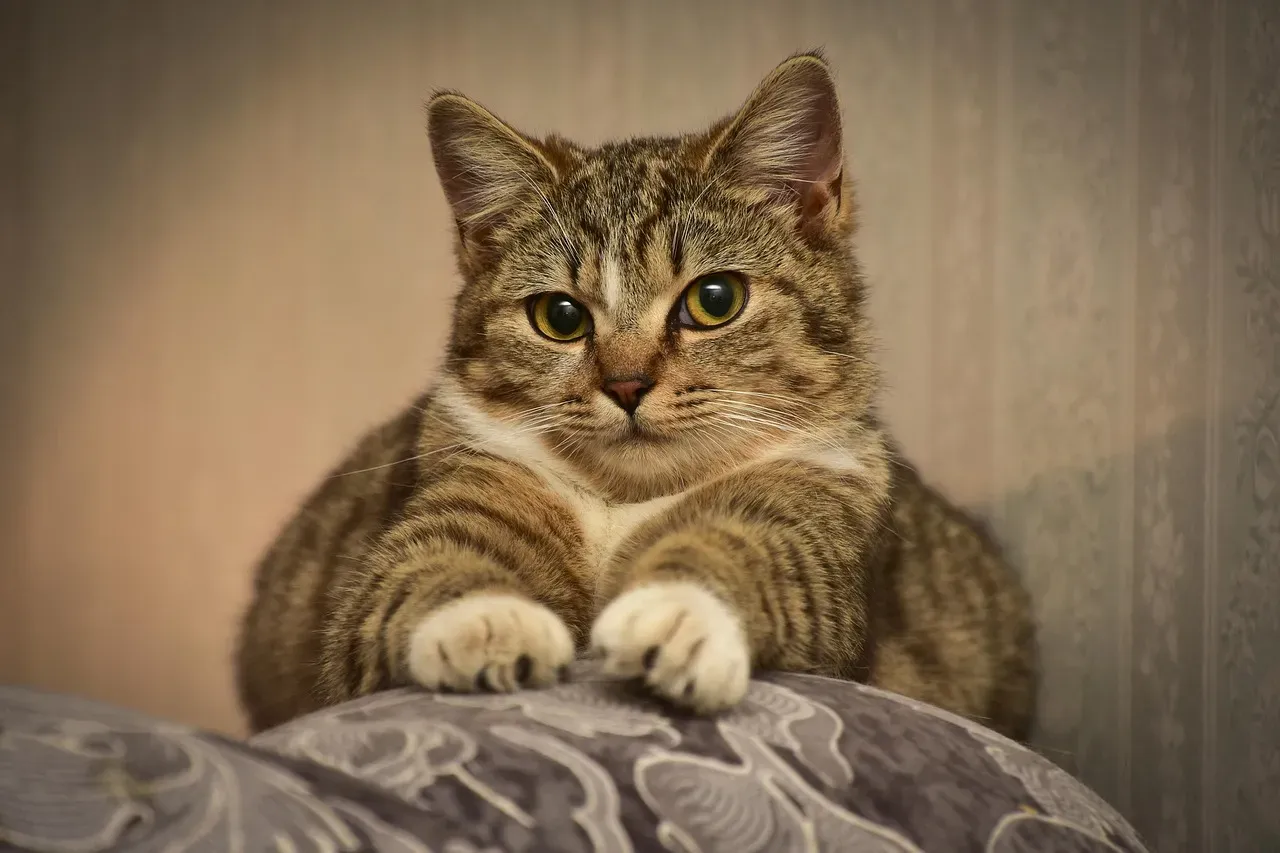
Your cat climbs into your lap, starts rhythmically pressing their paws into your thighs, and you wince just a little because those claws are sharper than you remembered. Welcome to kneading, also affectionately known as “making biscuits.” Nursing kittens instinctively press their paws against their mother’s belly to stimulate milk flow, creating a powerful association between kneading and comfort. That early memory doesn’t disappear as cats grow up – instead, it becomes a deeply ingrained behavior tied to safety, warmth, and emotional security.
Making biscuits also “marks” you by releasing pheromones from their paw’s sweat glands, and likely means that your cat feels very comfortable in your presence. So the next time your cat uses your lap as a bread board, take it as the highest compliment. Occasionally, kneading may appear during moments of mild stress or transition, such as a new environment or schedule change – in these cases, kneading can act as a self-soothing behavior, helping your cat regulate their emotions and feel grounded. Multi-purpose, meaningful, and slightly painful. Very cat.
3. The Headbutt – You’ve Been Claimed
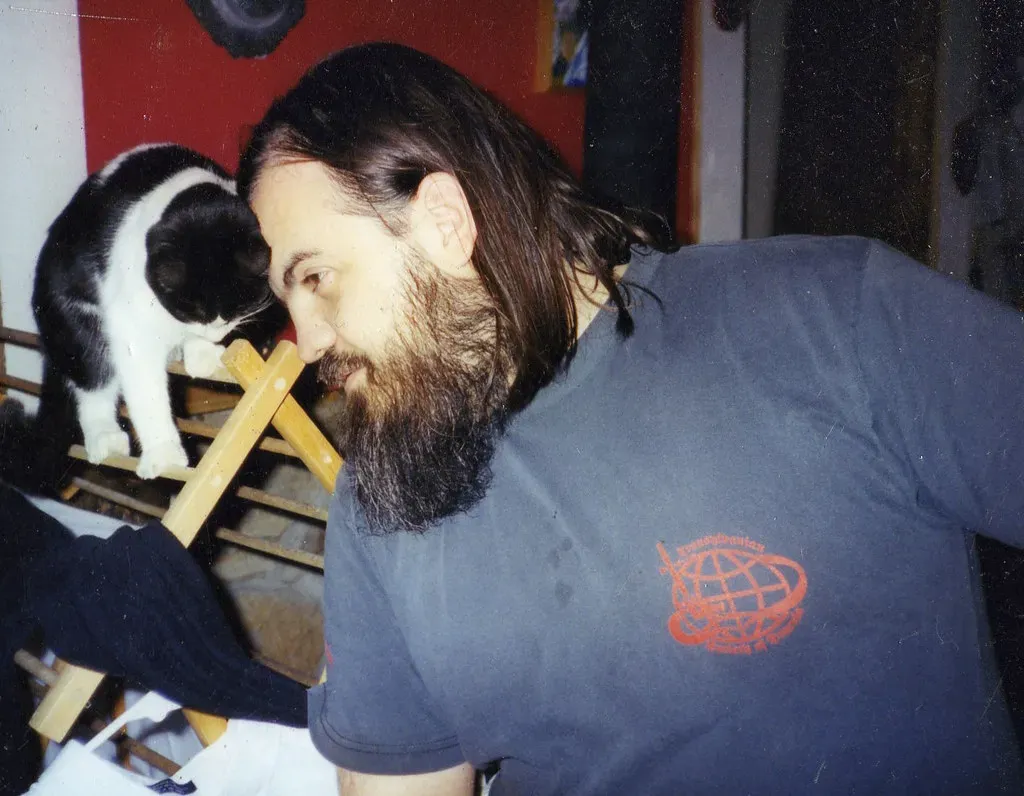
Your cat walks up, lowers their head, and bumps it firmly into your forehead. Or your chin. Or your knee. It can range from a gentle nudge to what feels like a small, furry battering ram. Cat headbutting, also called bunting, is usually a friendly behavior where cats mark you with their scent to show bonding, comfort, and familiarity. In short, you have officially been claimed as their person.
Cats have glands on their cheeks, forehead, and chin that contain pheromones – a substance produced by animals as a type of scent communication, similar to synthetic pheromones used in many cat calming products. When a cat headbutts you, they are rubbing those pheromones on you. In the wild, cats headbutt their fellow feline family members as a form of social bonding. Lions, for example, use bunting within their prides to reinforce connections and group cohesion. Domestic cats retain this behavior, extending it to their human families. So if your cat headbutts you, congratulations – you’re officially part of the pride.
4. Knocking Things Off Tables – Pure Chaos or Calculated Mischief?
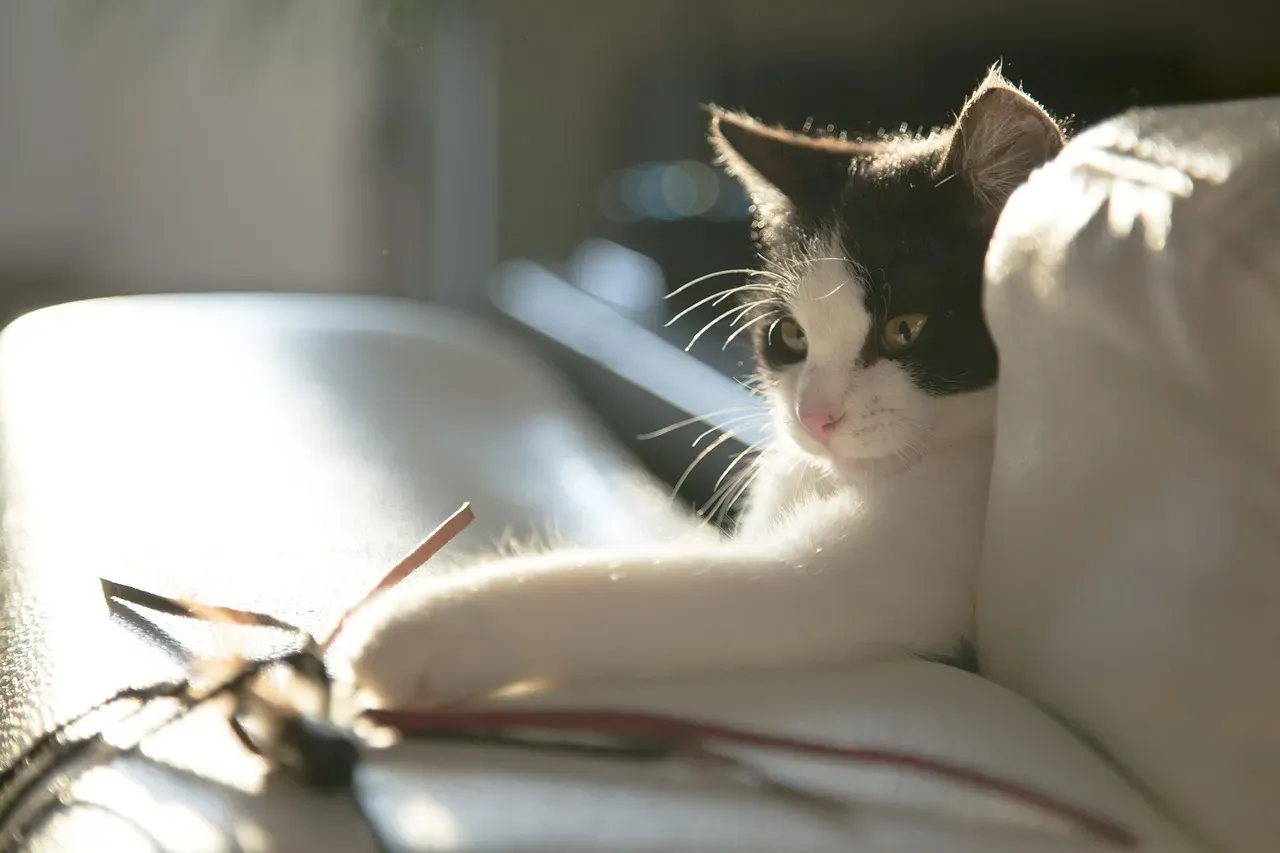
You watch in slow motion as your cat makes deliberate eye contact, extends one paw, and pushes your coffee mug off the edge of the counter. It tumbles. They watch it fall. They look back at you. They feel nothing. If you’ve spent any amount of time with a cat, you’ve likely seen them bat at something on a table until it falls off – maybe it’s a drinking glass or perhaps it’s your phone. Though somewhat hilarious and perhaps maddening, this is perfectly normal cat behavior.
Cats have an inherent curiosity about their surroundings and often engage in exploratory behavior by using their paws to touch and interact with objects. It’s a bit like a scientist poking at a specimen to see what happens – except the specimen is your brand-new phone. There’s also a strong attention-seeking element at play here. If your cat scratches the couch and you stop what you’re doing to address it, they’ve learned how to get your attention – and the same logic applies to gravity experiments on your kitchen counter. They learned that action creates reaction, and you, unknowingly, taught them that.
5. The Zoomies – Frenetic Energy from Nowhere
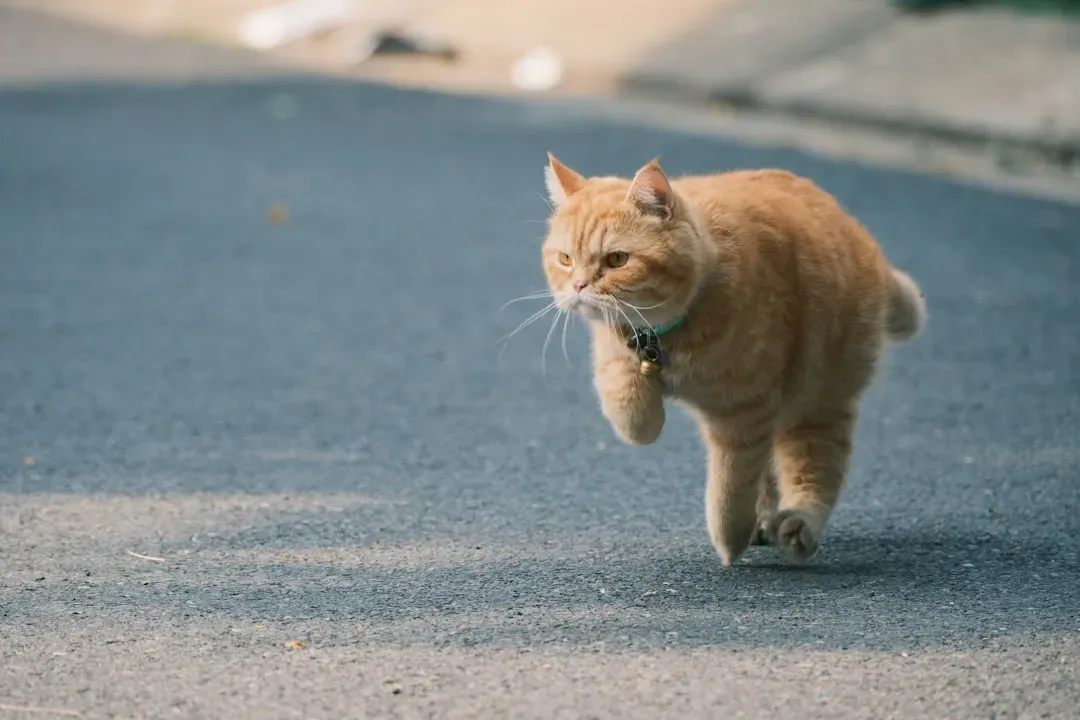
It’s 2 a.m. Everything is calm. Then suddenly, your cat is tearing through the house like their tail is on fire, ricocheting off the walls, leaping over furniture, and disappearing into the darkness as quickly as they arrived. Welcome to the zoomies. Some may call it the witching hour, others know it as the nighttime “crazies,” and scientists refer to it as frenetic random activity periods (FRAPs). However, it’s most commonly known as the “zoomies” – this sudden burst of hyperactivity that often includes frenzied running, pouncing, bopping, and even excessive meowing seemingly out of nowhere.
The most common cause of your cat’s zoomies is a build-up of excess energy. As natural predators, cats conserve energy throughout most of the day to use in short bursts during hunting sessions. It’s almost poetic when you think about it – your indoor cat has the heart of a wild hunter but spends most of their time on the sofa. Something has to give. Zoomies are caused when your cat experiences a build-up of excess energy and can be a sign that your cat isn’t getting enough physical or mental stimulation – this is most common in indoor cats as they’re not able to be outside practicing their natural hunting skills. Extra play sessions during the day can make those midnight sprints a lot less frequent, for what it’s worth.
6. The Tooth Chattering – A Wild Predator Hiding in Your Living Room
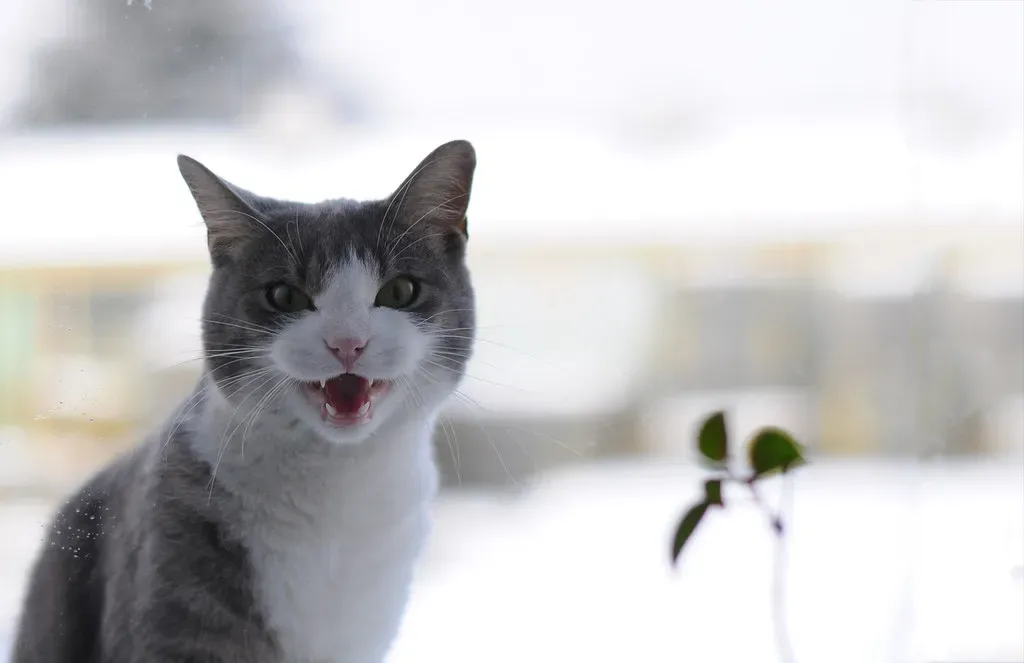
Your cat is perched on the windowsill, watching a bird on the other side of the glass. Then it starts – that rapid, strange chattering sound, jaw flickering, teeth clicking together like they’re trying to tune into a radio frequency only birds can hear. It’s one of the most peculiar sounds cats make, and it reveals a lot about what’s going on inside that feline brain. You have probably heard your cat emit a fast and intense teeth chattering especially when they spot a bird while gazing out of a window. Behaviorists speculate that this is because your cat is frustrated that they cannot get outside to hunt prey – they may also be excited and slightly aggravated.
Chattering includes the rapid opening and closing of the mouth, similar to how a person’s teeth chatter when they are cold, accompanied by a fast chirping or twittering sound. The reason for these specific sounds and movements isn’t entirely known, though some believe the rapid jaw movement may be an involuntary predatory mechanism and the sound a form of mimicry meant to attract birds. I think that second theory is genuinely fascinating – imagine your cat is so hardwired to hunt that their body involuntarily mimics bird sounds to lure prey closer, even through a closed window. That’s not just instinct. That’s ancient programming running on modern hardware.
7. Obsession With Boxes – The Cheaper the Toy, the More They Love It
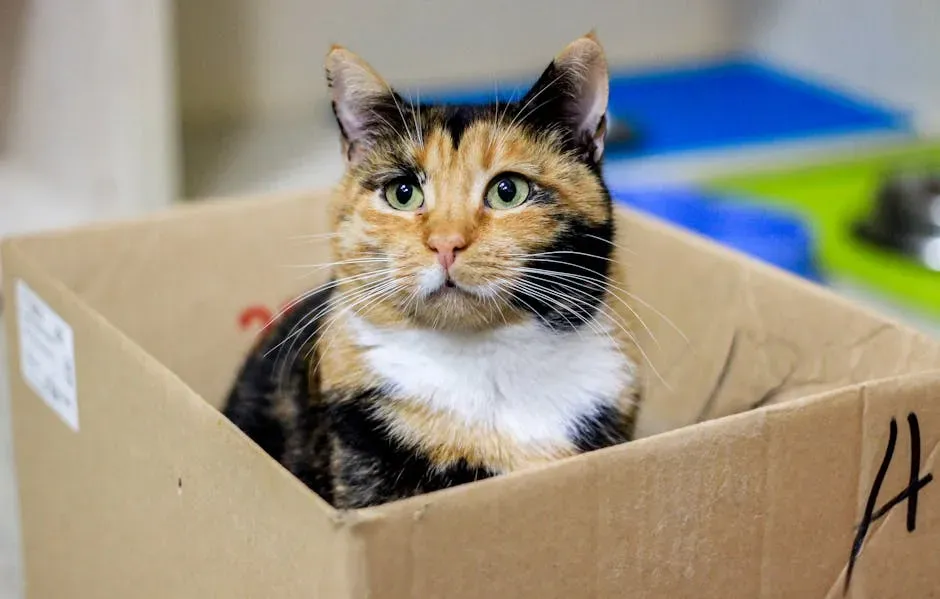
You spend thirty dollars on a fancy cat toy. Your cat ignores it completely. You drop an empty Amazon box on the floor and they’re inside it within four seconds, ears back, tail twitching, living their best life. Every cat owner knows this scene by heart. Cats are, by nature, cryptic animals, meaning they prefer to have a safe hiding spot from which they can observe the world around them. As both hunter and prey, having a secure space from which they can monitor threats from predators as well as monitor prey is ideal.
A study on Dutch shelter cats found that when cats are given boxes, their stress levels decrease significantly faster than cats not given boxes. In a shelter, a box helps mimic the enclosed comfort that kittens experience when cuddling with their mother and littermates – just as human babies are comforted by swaddling, an enclosed space helps cats become calmer. Science says your cat’s obsession with cardboard is genuinely therapeutic. When a cat is overstimulated, tired, or just in need of a break, a box gives them the ability to recharge until they’re ready to come out and play again. Think of it as their private meditation room. One that came free with your online shopping order.
8. Bringing You “Gifts” – The Love Language You Didn’t Ask For
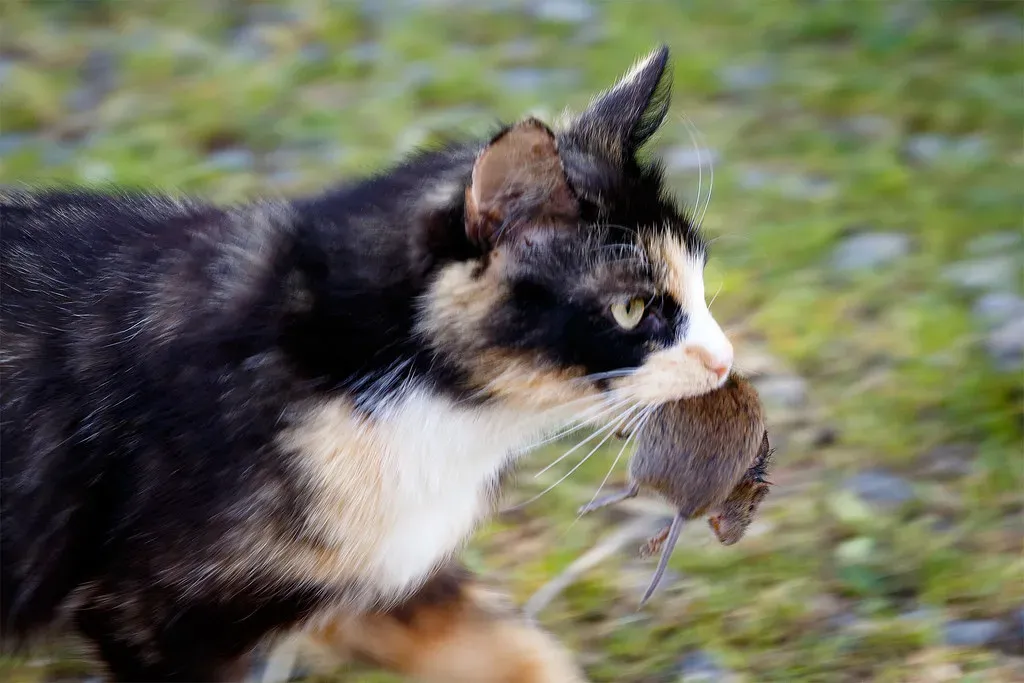
You wake up and find a dead mouse on the kitchen floor. Or a mangled toy. Or, if you’re lucky, just a sock they’ve dragged from the laundry basket. Your cat sits nearby looking immensely proud of themselves. This is a gift. You’re supposed to be grateful. Cats have an innate hunting instinct, which can sometimes manifest in them bringing their humans dead birds, rodents, or bugs. This behavior is a way for cats to show their affection and regard their human family as part of their pack – by presenting these items as gifts, cats are demonstrating their desire to contribute to the group’s wellbeing.
Here’s the thing that truly surprises people: you don’t need an outdoor cat for this behavior. This behavior is not reserved for outdoor cats. Indoor cats that have “hunted” such treasures as holiday ornaments or socks are just as likely to leave them as gifts – it’s a way for them to act as providers and to show their affection and gratitude. So the next time your cat deposits a crumpled receipt at your feet with immense ceremony, the correct response is a warm thank you. They worked hard for that.
9. Scratching Everything – It’s Not Personal, It’s Biology
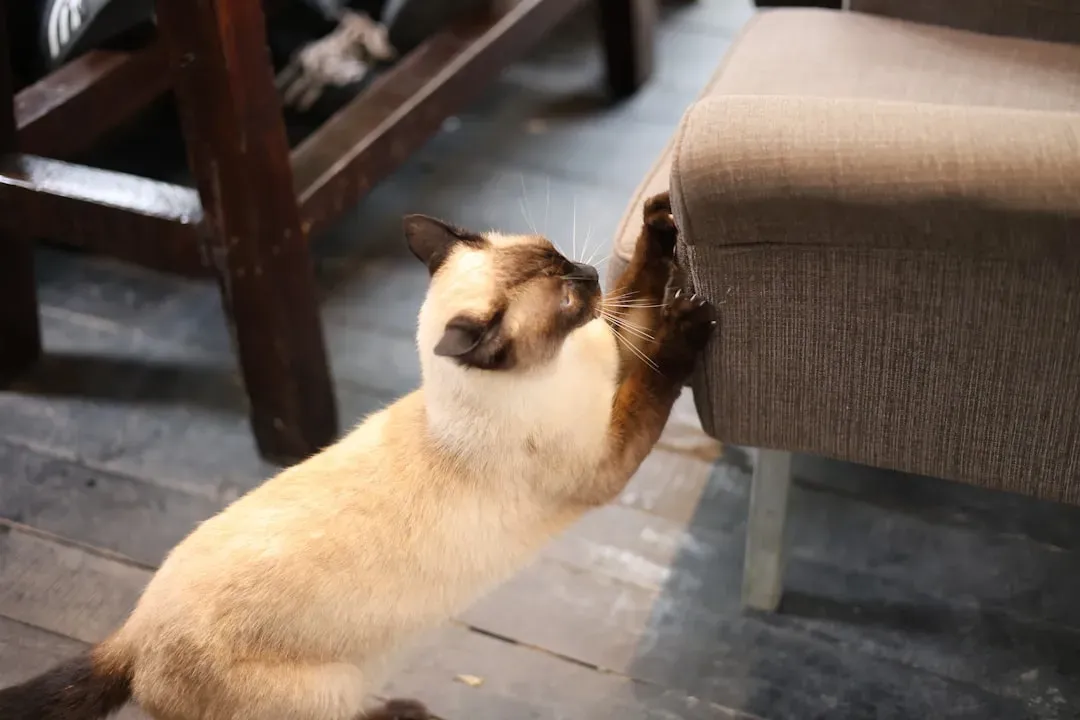
Your brand-new sofa lasted exactly three days before the armrest became a scratching post. Your cat looks at you without an ounce of regret. And honestly? They’re not wrong to do it. Cats don’t scratch out of malice or a need to destroy the furniture – they scratch because it’s a primal instinct that has several possible causes. Scratching can remove part of the nails’ outer shell, which reveals the fresher nail underneath, meaning that scratching is actually a part of a cat’s regular grooming ritual.
Scratching also helps cats stay healthy – the act of scratching stretches out muscles, tendons, and joints throughout the cat’s body, and scratching regularly can help a cat to avoid injury. On top of that, cats scratch furniture because they are marking territory in places where you sit – in the pads of the paws are scent glands that release a kitty’s scent onto everything they scratch. It’s a gym session, a nail salon, and a territorial announcement all rolled into one. Providing a good scratching post in the right spot really does work, and your couch will thank you for it.
10. Seeking High Ground – Life Is Better From Up There
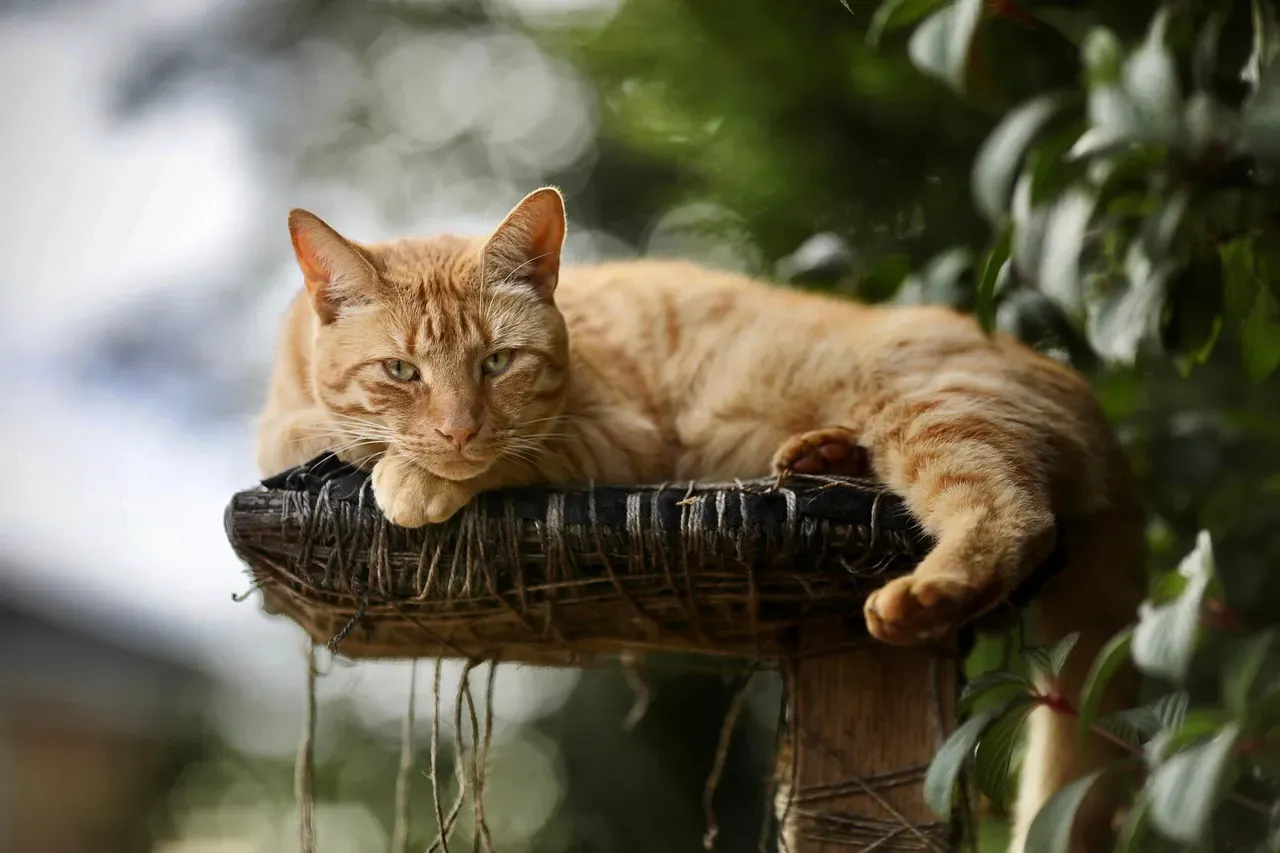
Your cat has a perfectly comfortable cat bed on the floor. They’ve never used it. Instead, you regularly find them balanced on top of the refrigerator, the highest bookshelf, or perched on a door frame like a tiny, judgmental gargoyle. One possible reason why your cat jumps onto high surfaces is because they are acutely aware of three-dimensional spaces, both vertically and horizontally – cats often consider how they can get into elevated positions where they can see what’s going on around them without being subjected to potential danger on the ground.
A high position for sleeping or resting gives cats an aerial advantage for spotting any potential dangers around them. Much of this instinct comes from their ancestry – early cats were hunters that lived in the wild, and their climbing ability meant that they had somewhere to retreat away from larger predators, plus the capability of attacking smaller prey high up in the branches. This has been passed down to the cats we keep as pets today. So when your cat surveys your living room from the top of the wardrobe, they’re not being dramatic. They’re operating exactly as nature intended – a small, ancient predator with perfect situational awareness, living rent-free in your home.
Conclusion: The More You Know, the More You’ll Love Them
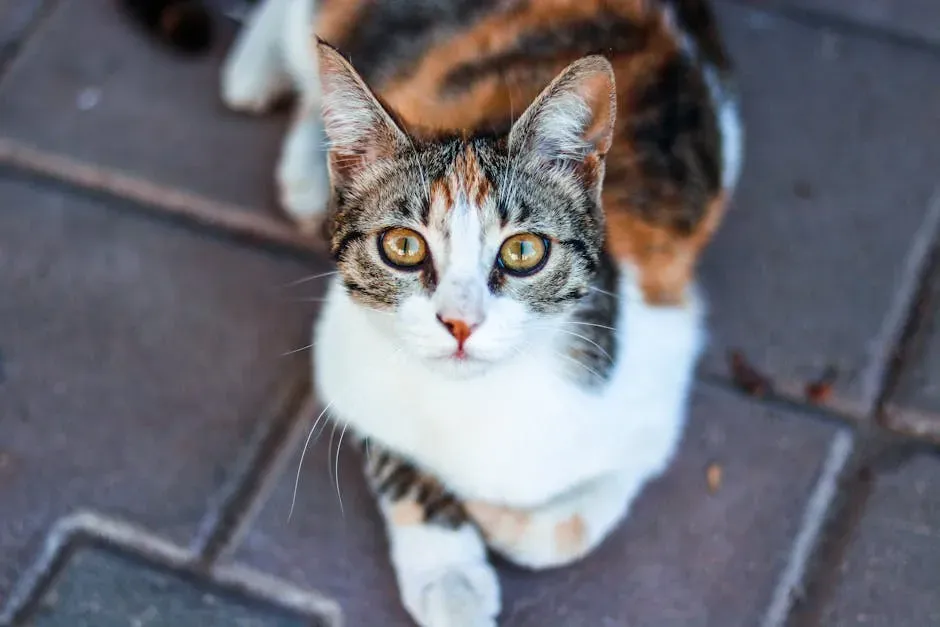
Cats are not aloof. They are not indifferent. They are not “low-maintenance dogs,” as some feline behavior researchers have put it. They are deeply instinctual, emotionally complex creatures who communicate in a language most of us are still learning to speak. Every slow blink, every headbutt, every 2 a.m. sprint through your hallway is a small window into millions of years of feline evolution – compressed into a creature that also enjoys sitting in your laundry basket.
The behaviors that confuse or frustrate us the most are usually the ones with the richest explanations. Understanding your cat’s behaviors is key to building a strong and harmonious relationship – by decoding their actions, you can better respond to their needs, provide appropriate care, and create a nurturing environment. Once you start seeing the instinct behind the action, the whole relationship shifts. You stop asking “why would they do that?” and start saying “of course they did that.” That shift? That’s what separates a cat owner from a true feline fanatic.
Which behavior surprised you most? Drop it in the comments – we’d love to hear what your cat has been trying to tell you all along.