You’ve probably caught your cat staring at you with those wide, unreadable eyes and thought, “What is going on in that little head?” Maybe you dismissed it as nothing. Maybe you figured they were just watching dust float by. But here’s the thing – your cat might be playing you. Playing all of us, actually.
According to scientists, it’s not your imagination: cats are far more intelligent than you may realize, and far more stubborn. That deliberate aloofness, that theatrical indifference, the way they seem to analyze your every move? It’s not random. It’s calculated. And the more you look, the more genius you’ll find hiding underneath all that fur.
So let’s dive in – and prepare to look at your cat very, very differently.
1. Your Cat Solves Problems Without Your Help

Let’s be real: if your cat has ever figured out how to open a cabinet or pop a lid off a container, you are not living with a simple pet. If your cat has ever opened a cabinet to access cat food or some other desirable object, that behavior demonstrates genuine problem-solving skills. Think about that for a second. No one taught them. They just… figured it out.
High-IQ cats are usually creative, always finding clever solutions to problems. For example, when they want to get into a forbidden room, they might scratch the door, squeeze through a gap, or use furniture as a stepping stone. That’s not mischief. That’s engineering. Your cat is essentially building a mental model of your home and testing hypotheses. Basically, a tiny scientist in a fur coat.
2. You Catch Them Watching and Learning From You
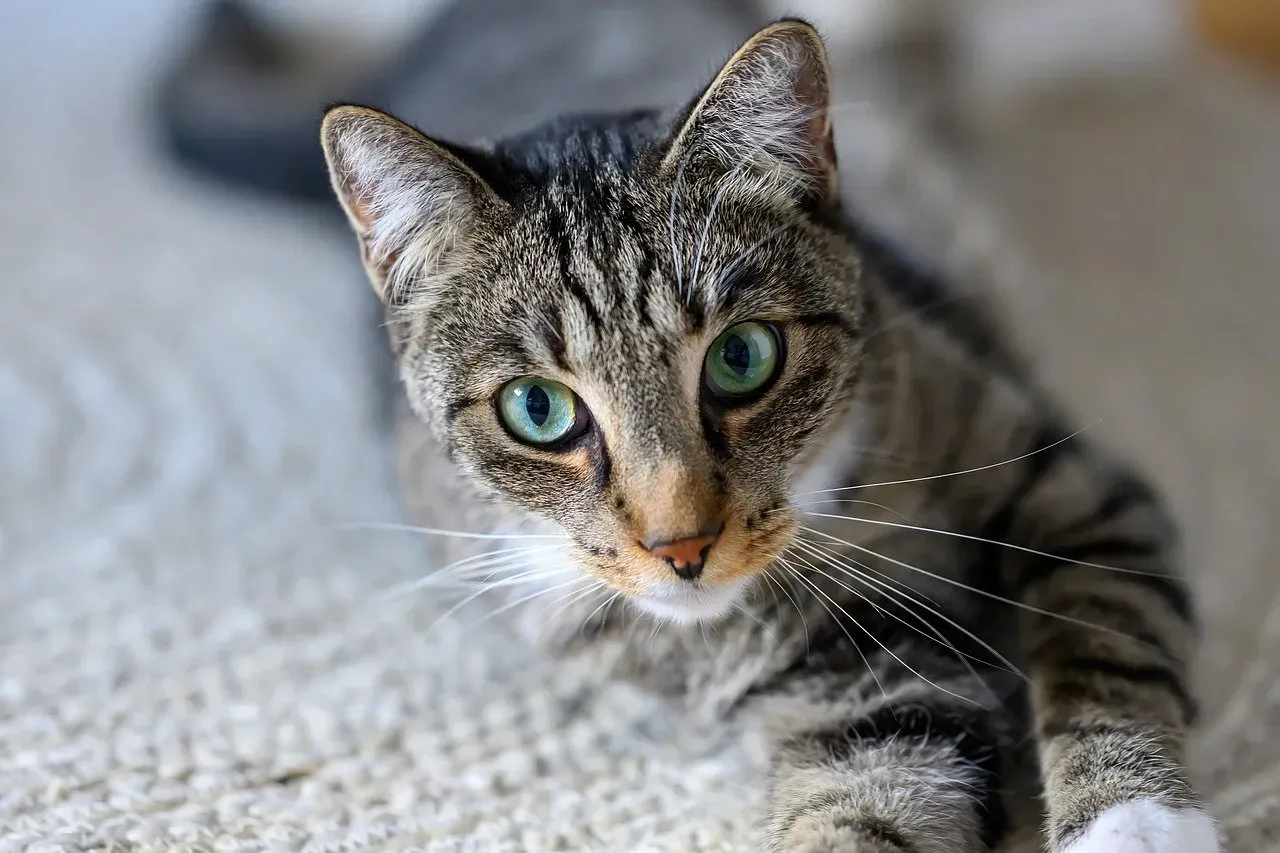
Here’s something that might genuinely surprise you. According to several feline behaviorists and child psychologists, an adult cat’s intelligence is comparable to that of a two- to three-year-old child, since both species learn through imitating, observing, and experimenting. Simply by watching their owners and mirroring their actions, cats are capable of learning human-like behaviors like opening doors and turning off lights. That’s not coincidence. That’s imitation.
Kittens learn essential survival skills by observing their mothers, while adult cats refine their abilities through trial and error. So when your cat sits and studies your hand on the door handle for days on end, they’re not bored. They’re taking notes. Honestly, it’s a little unsettling when you think about it.
3. They Have an Eerily Accurate Internal Clock
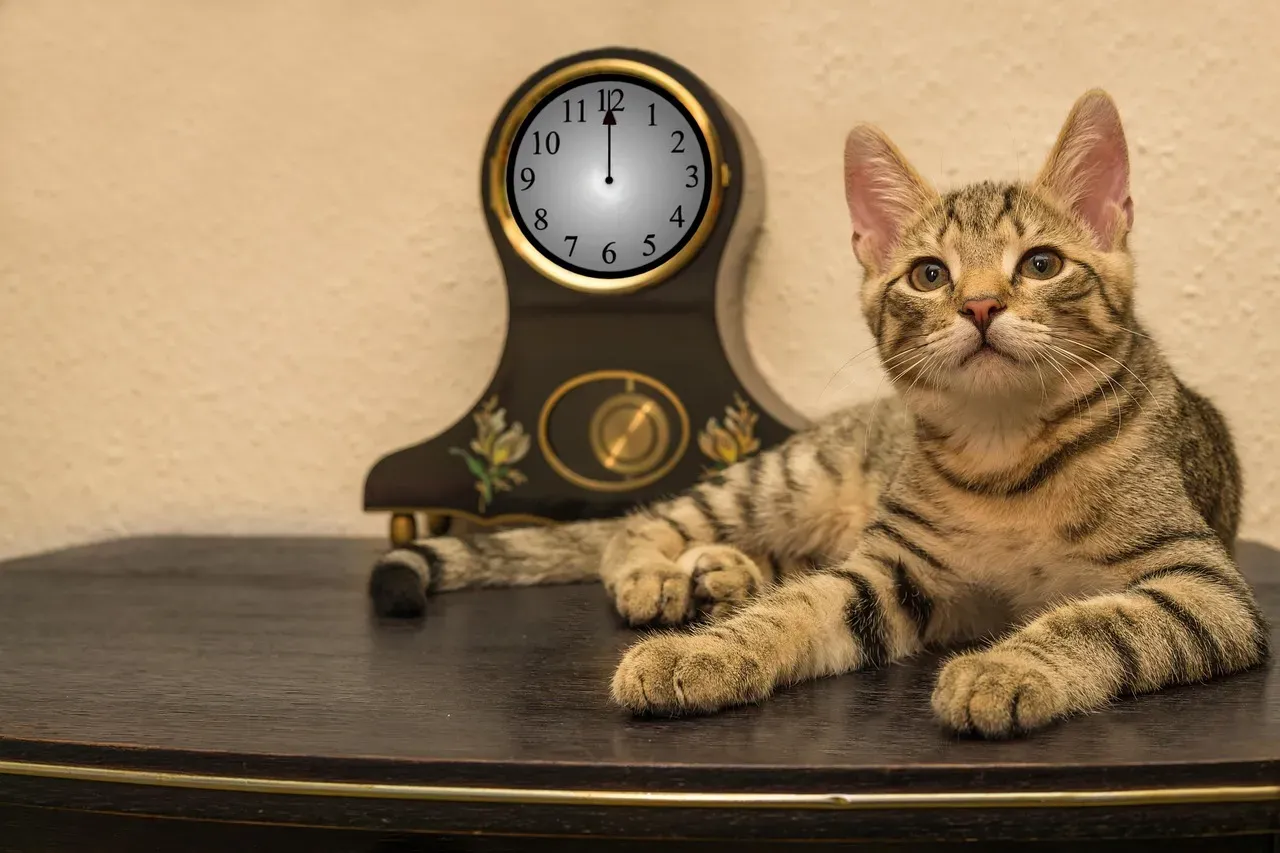
Does your cat show up in the kitchen exactly when you’re about to serve dinner, or start pawing at you right before your alarm goes off? Cats have a natural internal clock that tells them when to hunt and when to rest, but they’re smart enough to readjust their natural behaviors according to your daily routines. This is known as associative learning. They are literally syncing themselves to your schedule. Voluntarily.
If your cat waits by the door just before their favorite human comes home or materializes in the kitchen the second the fridge opens, that’s not magic. Studies suggest cats use temporal learning, recognizing patterns in time and associating them with predictable outcomes. They are running a mental calendar on you, and they’re better at it than most people are at remembering their own dentist appointments.
4. Your Cat Understands Object Permanence

Object permanence is the understanding that something still exists even when you can’t see it. Babies don’t fully develop this skill until they’re around a year old. In controlled experiments, cats demonstrated fully developed concepts of object permanence, indicating that their sensorimotor intelligence is complete. Your cat isn’t confused when their toy rolls under the sofa. They know it’s there, and they’re plotting to retrieve it.
If your cat goes searching for a toy hidden behind a box, it’s demonstrating a solid grasp of object permanence. Humans usually grasp this concept at about one to two years of age. If your kitty passes this test, it is at least as smart as a toddler. I know it sounds crazy, but the next time your cat reaches behind the couch for a hidden mouse toy, give them a little more credit than usual.
5. They Remember Things With Impressive Precision
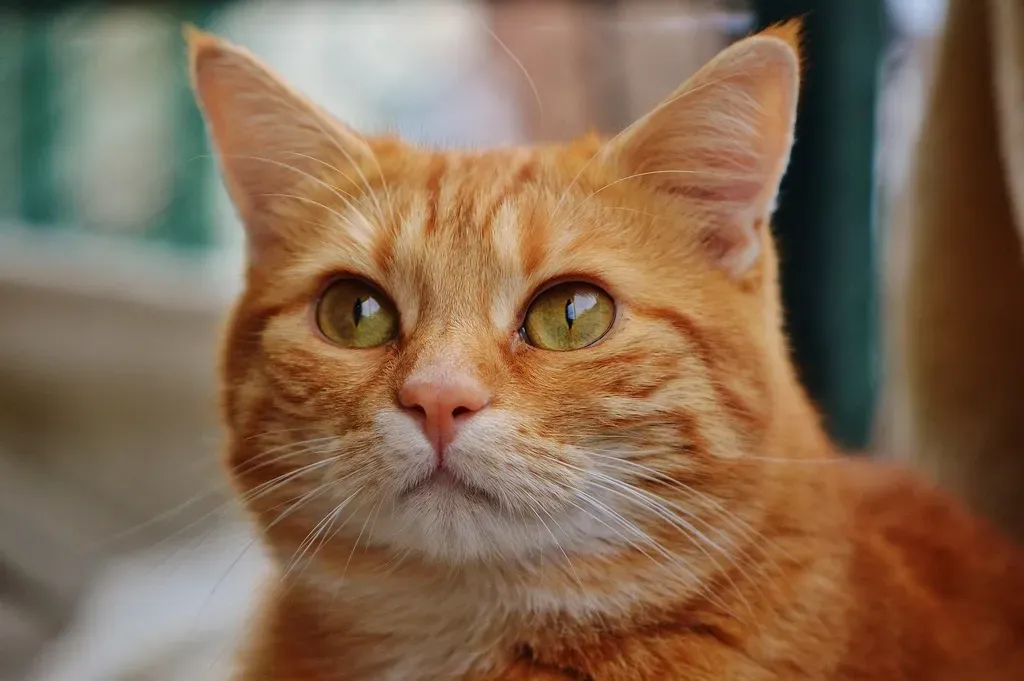
You moved your cat’s food bowl two months ago, and they still occasionally walk to the old spot first. That’s not forgetfulness on their part – it’s deep-seated memory at work. Smart cats have a very strong memory. They can remember the layout of the house, where the food is stored, and even your daily routine. It’s essentially a mental map of their territory, constantly updated.
Cats not only excel at learning new information, but they can also mesh that information with things they’ve learned previously, recall it when needed, and apply it to the current situation. That’s layered cognition, not instinct. Think of it like RAM combined with long-term storage – your cat is filing information away for exactly the right moment to use it.
6. They Distinguish Your Voice From a Stranger’s
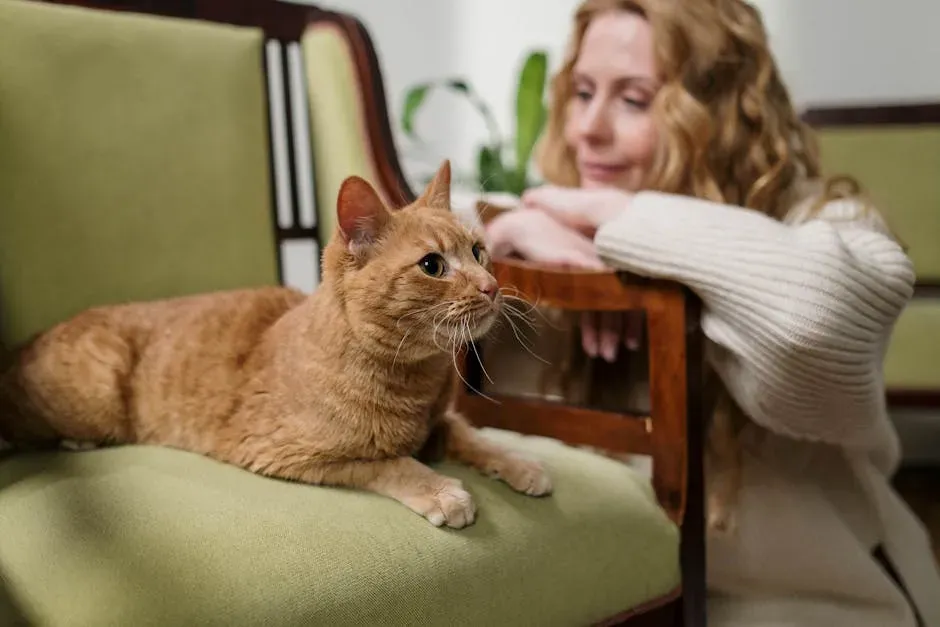
Most cat owners have noticed that their cat reacts differently to them than to strangers. Turns out, that’s not your ego talking. Studies suggest that cats can even distinguish between people’s voices and that your vocalizations elicit measurable changes in their behavior. Your cat recognizes you specifically, not just any human in the room.
Can your cat respond to their name? Tell the difference between your voice and that of a stranger? Easily locate a toy hidden behind a solid object? If the answer to all these questions is yes, it’s a sign that your kitty is pretty smart, according to feline behaviorist Kristyn Vitale, PhD, a cat researcher at Oregon State University’s Human-Animal Interaction Lab. It’s hard to say for sure how deep that recognition goes, but the research strongly suggests it’s far more sophisticated than simple association.
7. They Manipulate You – And You Don’t Even Notice
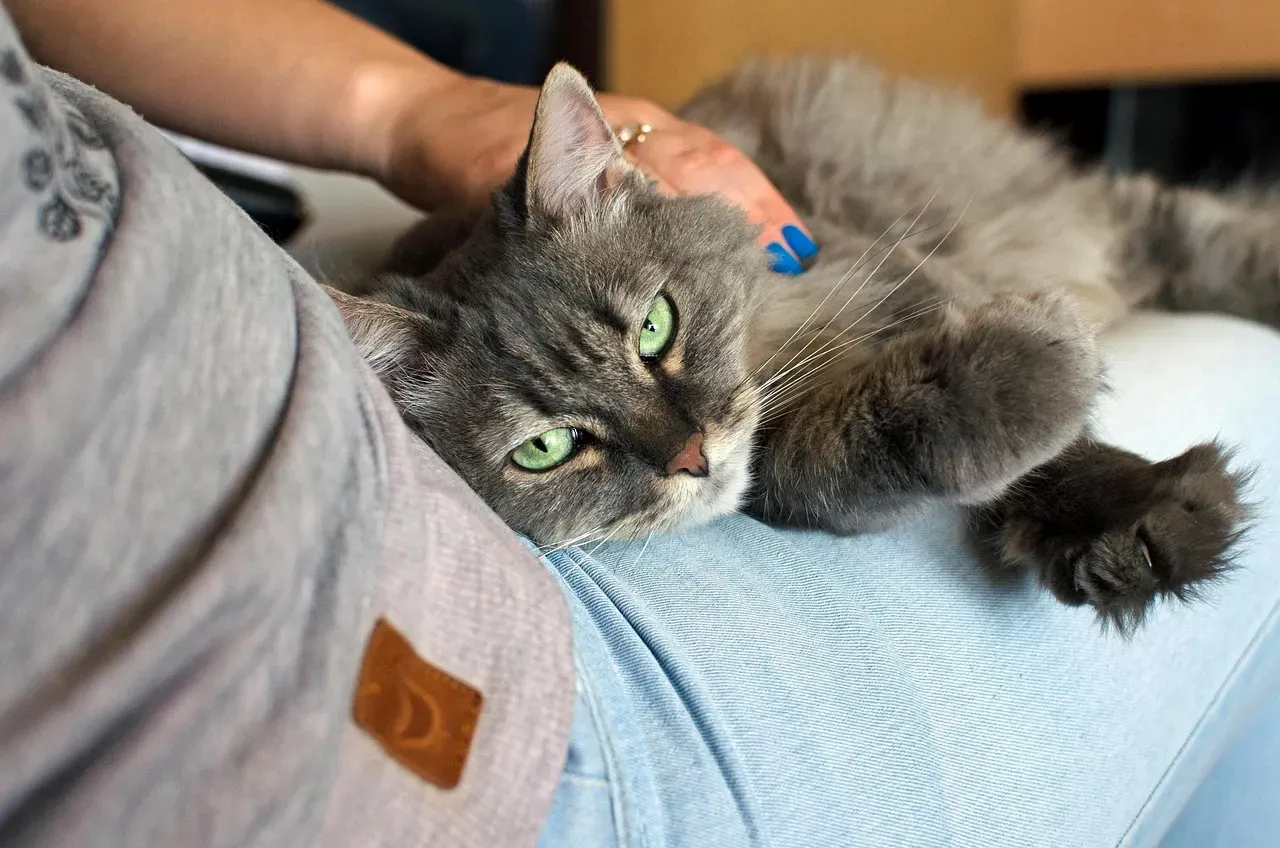
Here’s a thought that might change how you see your entire relationship with your cat. Has your cat trained you to feed them at a particular time, using meows or some other attention-getting behavior? If so, this indicates an understanding of cause and effect and a grasp of the concept of time. You thought you were the one in charge of feeding time. You were not.
Cats that learn routines, manipulate environments, and communicate clearly are using the same mental skills researchers study in labs: memory, problem-solving, and social cognition. Think about a toddler who has learned that crying gets them picked up. Your cat has essentially mastered that same loop, refined it, and applied it across multiple areas of your daily life. Sneaky? Absolutely. Genius? Also yes.
8. They Pick Up New Skills Faster Than You’d Expect
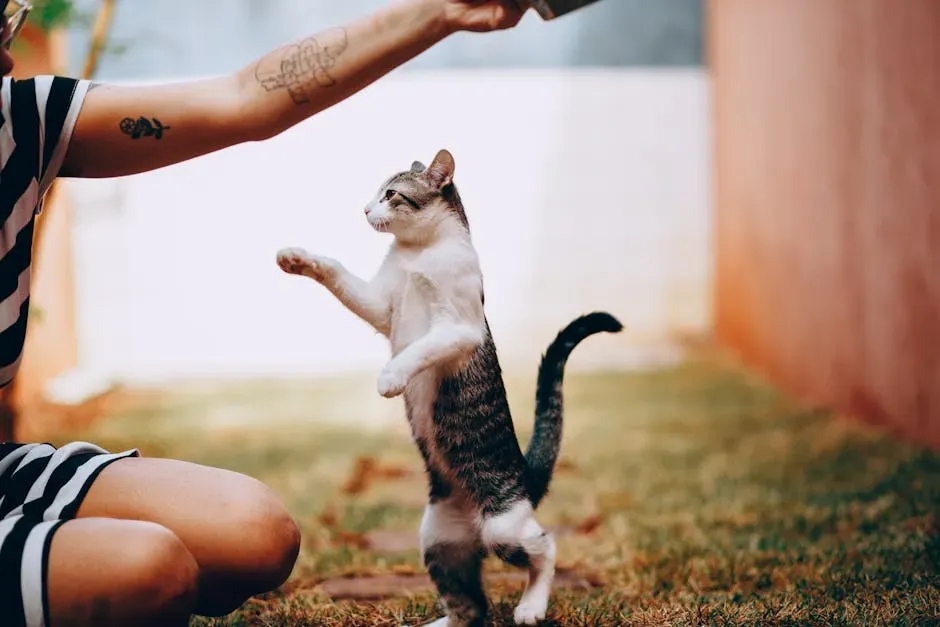
Cats with high IQs can quickly learn new skills, like using a scratching post, ringing a bell for treats, or playing fetch. They can pick up new skills and use them to interact with their owners. If you’ve tried training your cat and given up after a week, you may have simply underestimated what they’re actually capable of – or overestimated their desire to perform on your schedule, which is a different problem entirely.
Early research on cat intelligence can be traced back to the late 19th and early 20th centuries, when psychologists such as Edward Thorndike used puzzle boxes to study animal learning. Thorndike’s experiments demonstrated that cats could learn to manipulate levers and latches through trial and error, thereby revealing their capacity for associative learning. So the science on this goes back well over a hundred years. Your cat has always had this potential – the research just keeps catching up.
9. They Read the Room – And Your Emotions

Have you ever had a terrible day, sat down on the couch, and suddenly found your cat glued to your side out of nowhere? That’s not coincidence. Cats observe your emotional reactions to evaluate how they should react to an unfamiliar object or situation. They can even respond to physical cues like pointing, and these skills often improve with age. Your cat is watching you the way a detective watches a suspect – cataloging and interpreting every little signal.
High IQ cats are usually very sensitive. They can react to subtle changes in their environment, and can quickly adapt to new environments and things. This emotional attunement is one of the most underappreciated forms of feline intelligence. When your cat senses something is wrong and chooses to stay close, that’s a sophisticated social behavior rooted in genuine awareness, not coincidence.
10. They Refuse to Cooperate With Research – Because They Can

This is my personal favorite sign of cat genius, and honestly, the most hilarious. Another sign of cat smarts: refusing to participate in research studies in the first place. Two leading animal researchers had great difficulty working with their subjects because cats simply wouldn’t participate in the experiments or didn’t follow instructions. They weren’t incapable. They just chose not to participate. On principle.
While we do know that cats are highly intelligent, we may never know the full extent of their cognitive abilities. That’s because cats are notoriously unpredictable and uncooperative when participating in studies. Think about what that means. Scientists studying animal minds across dozens of species and the cat simply opts out. That’s not a failure of intelligence. That’s intelligence asserting its own autonomy. If that doesn’t convince you your cat is a secret genius, I’m not sure what will.
Conclusion: Your Cat Has Been Smarter Than You This Whole Time

Here’s the honest truth: we’ve been underestimating cats for centuries. We laughed at their antics, called them aloof, and assumed their indifference meant there wasn’t much going on upstairs. But the science keeps painting a different picture – one of a creature with a remarkable memory, sharp emotional intelligence, deliberate social strategy, and genuine problem-solving ability.
Your cat knows your routine, recognizes your voice, reads your emotions, manipulates your behavior, and refuses to perform on command. If a human did all of those things, you’d call them brilliant. Cats have evolved to demonstrate their intelligence in ways that may not seem immediately apparent to us humans. For this reason, it can be challenging to accurately and objectively assess your cat’s intelligence. The available evidence suggests, however, that cats are much smarter than many people give them credit for.
So the next time your cat locks eyes with you and slowly blinks before walking away, maybe don’t assume you’re being ignored. Maybe you just got outplayed. What do you think – has your cat been secretly running the show all along? Tell us in the comments.