Cats have a reputation. Aloof, mysterious, unbothered – popular culture has spent decades painting them as creatures who merely tolerate us. But here’s what most people get completely wrong: your cat is telling you exactly how they feel every single day. You just need to know how to listen.
The truth is, feline communication is a rich, layered language of subtle gestures, body postures, and deeply instinctual behaviors. Once you crack the code, you’ll realize your cat might actually be one of the most emotionally expressive animals you’ve ever lived with. Be prepared to see your furry companion in a completely new light. Let’s dive in.
The Slow Blink: Your Cat’s Version of a Kiss
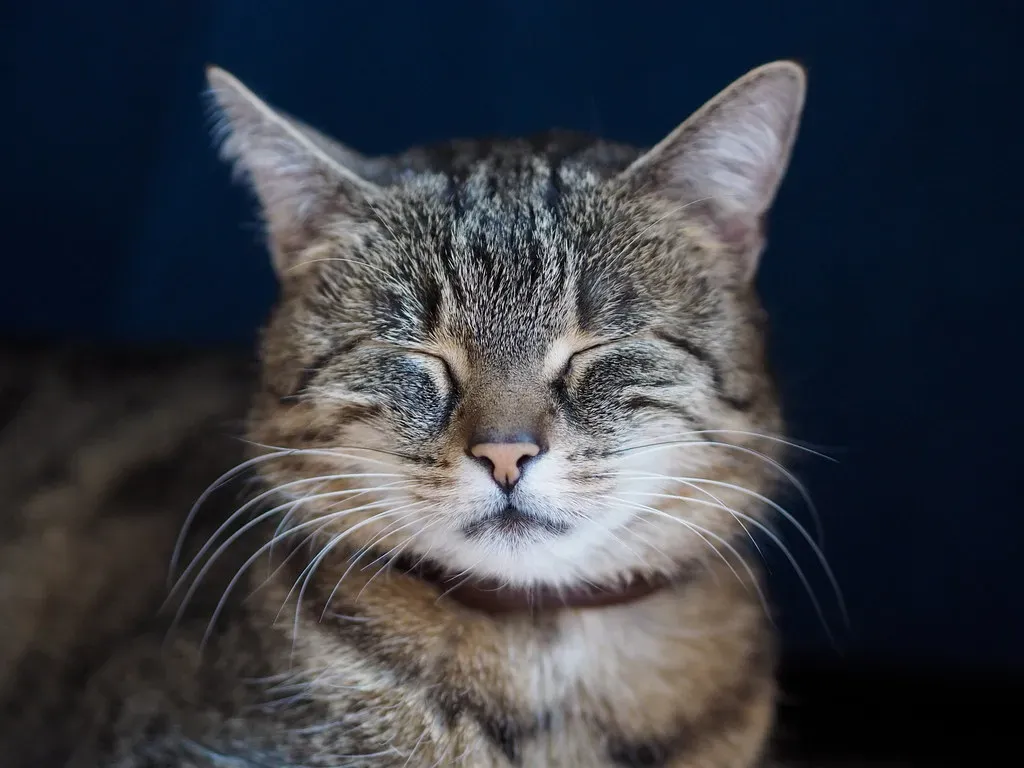
If your cat has ever gazed at you from across the room with half-closed, drowsy eyes and gently blinked, you’ve received something truly special. According to peer-reviewed research, that languid gaze is the feline equivalent of saying “I trust you,” and in 2020, psychologists at the University of Sussex conducted the first scientific study to prove it. In the feline world, closing their eyes in the presence of another creature makes them vulnerable, as they are unable to detect potential threats. When your cat does it anyway, that’s not laziness. That is love.
The first experiment in the University of Sussex study revealed that cat half-blinks and eye narrowing occurred more frequently in response to owners’ slow blinks, and in a second experiment, cats had a higher propensity to approach an experimenter after a slow blink interaction than when the experimenter maintained a neutral expression. Here’s something you can actually try today: if a cat slowly blinks at you, it’s telling you it feels comfortable and protected, and returning the slow blink can strengthen your cat bond and show love back. It really is that simple, and that profound.
Kneading You Like Bread Dough
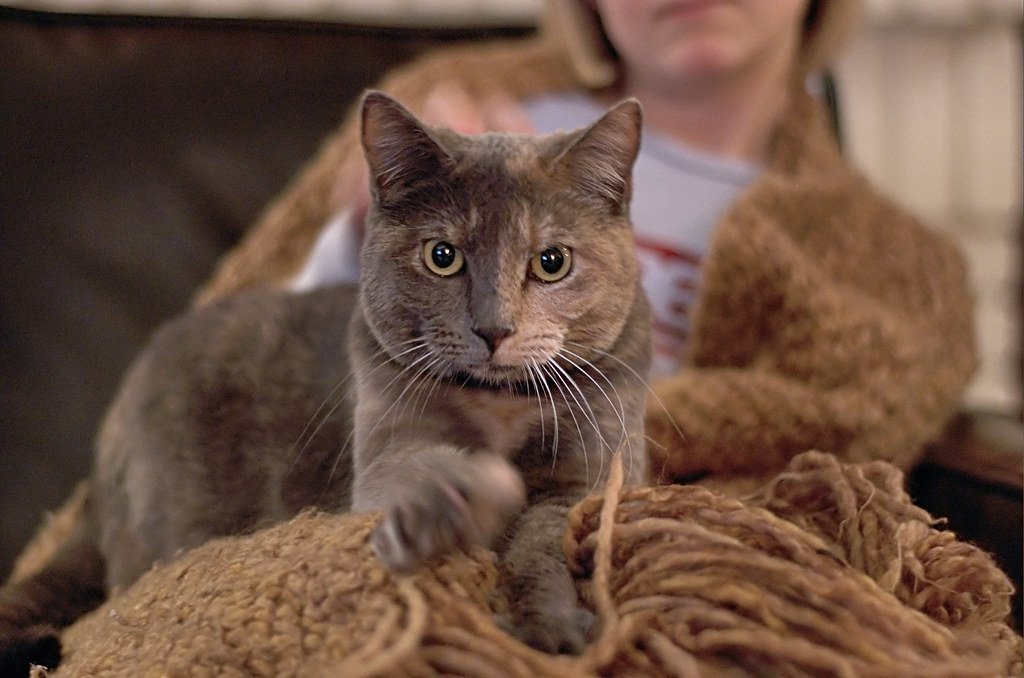
Those rhythmic, slightly painful little paw pushes your cat delivers into your lap? That’s not aggression or restlessness. When a cat kneads their owner, it is a sign of trust and affection, demonstrating that the cat feels safe and comfortable in the presence of their human companion. Kneading originates from kittenhood, when kittens press their paws against their mother’s belly to stimulate milk flow, and this comforting behavior often persists into adulthood, associated with feelings of security and contentment. Think of it like a security blanket – except the security blanket is you.
Research has demonstrated that roughly two thirds of cats form secure attachment bonds with their human caregivers, providing the relational framework in which kneading functions, and cats also have scent glands between the toes of their paw pads, called interdigital glands, that deposit pheromones during kneading. Kneading on you is often a sign of trust and bonding, and it’s your kitty’s way of saying you’re part of their safe space. So next time those tiny claws dig in a little too enthusiastically, try to embrace it. Your cat is essentially calling you family.
Sleeping on You or Right Next to You
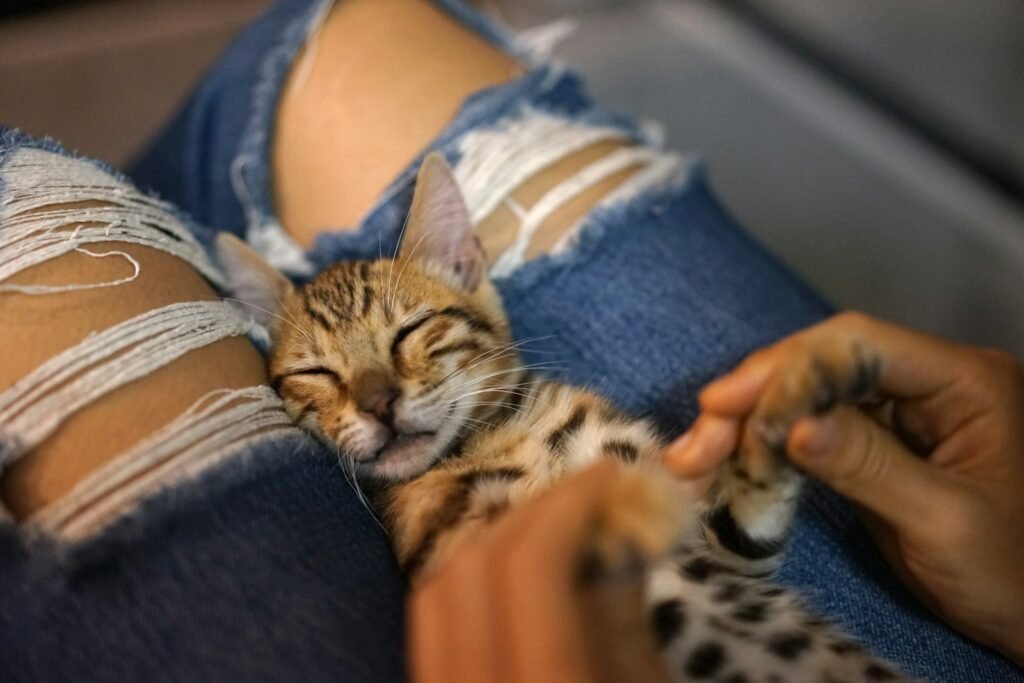
Sleep is a deeply vulnerable state for any animal. For a creature that is simultaneously predator and prey, choosing where to close their eyes is a life-or-death decision written into their DNA. If your kitty likes to sleep near you, or even on you, this is an indication that they have total trust in you, because when a cat is asleep they are of course vulnerable, and choosing to sleep in your presence means they feel relaxed and don’t see you as a threat. That’s not a small thing. That’s enormous.
When a cat chooses to sleep directly on you, especially in vulnerable positions like your chest or stomach, it means they feel completely safe, and the rhythmic sound of your heartbeat and breath provides comfort similar to that of a mother cat’s purring, deepening the emotional connection between cat and owner. Safety and security are the main reasons cats choose to sleep on certain people, which stems from their susceptibility as a prey species, while catnapping on top of your body produces natural heat and comfort, and your heartbeat gives cats the feeling of trust and intimacy. Honestly, it doesn’t get more meaningful than that.
Head Butting and Bunting Against You
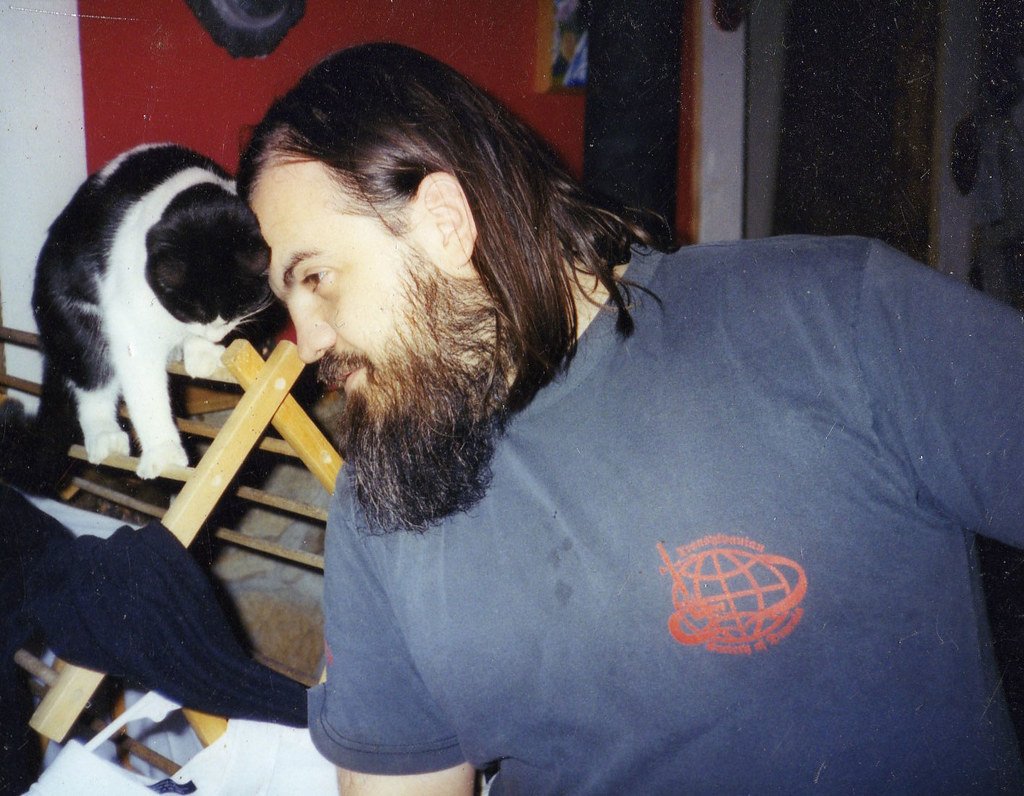
You’re sitting quietly and suddenly your cat walks over and firmly presses their forehead into your face or leg. It might seem random, but it’s one of the most deliberate acts of connection a cat can offer. If you notice that your feline friend likes to headbutt you or rub their head against you, this is a sign that you’re familiar to them and they’re showing you their respect. Cats have scent glands on their head which they use to mark their territory, and when your cat rubs its head against you, they are marking you as their own, thereby showing their trust in you.
When your cat rubs their head against your cheeks or headbutts you, they’re depositing pheromones and marking you as “safe.” The act of bunting may also provide emotional comfort to cats, especially in unfamiliar or stressful environments, because by depositing their scent, they create a familiar, reassuring atmosphere. In other words, when your cat marks you with their scent, they’re not just saying “you’re mine.” They’re saying “I feel safe with you, and I want my whole world to smell like you.”
Grooming You with Their Tongue
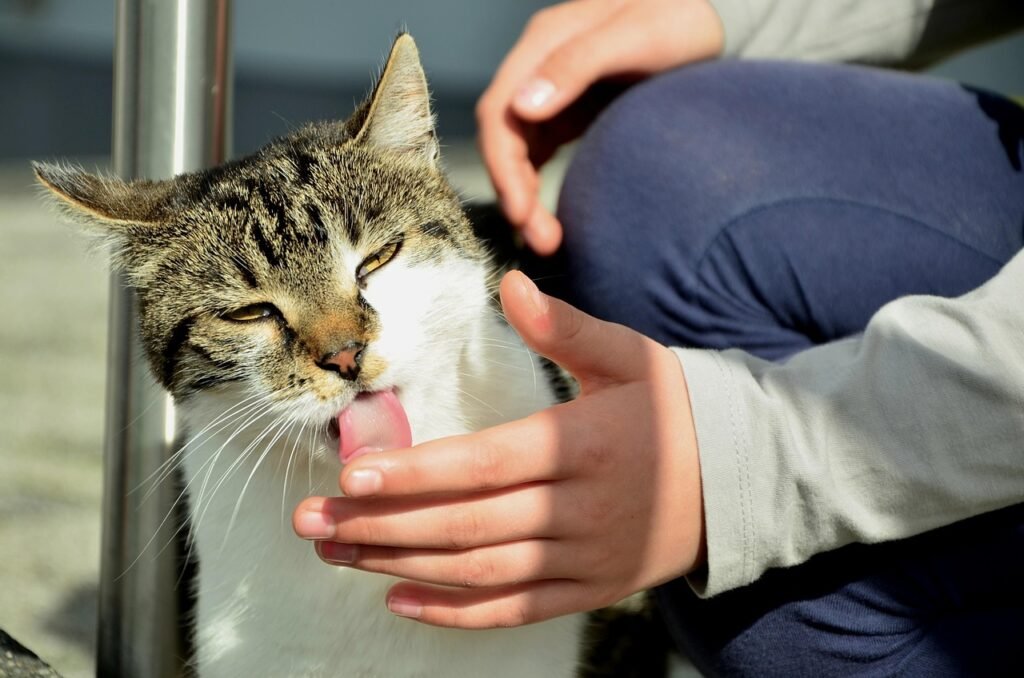
Getting licked by your cat on the hand, arm, or even your hair might feel a little rough, thanks to that sandpaper tongue. Still, it’s one of the most tender things a cat can do for you. If your cat licks or grooms you, it’s a pretty good sign that they view you as a trusted member of their group, because when they’re in the litter as kittens, they groom each other as a way of bonding, and grooming you is an extension of this behavior.
According to veterinary experts, cats only groom people they feel safe with, and this gentle licking is a subtle cat body language signal that says, “I trust you, I feel secure with you, and you’re part of my family.” When your cat licks you, it is a sign of trust and bonding, because grooming is a social activity among cats, and when your cat licks you, it is their way of including you in their social circle. It’s essentially a feline friendship ceremony, and you’re the guest of honor.
Exposing Their Belly to You
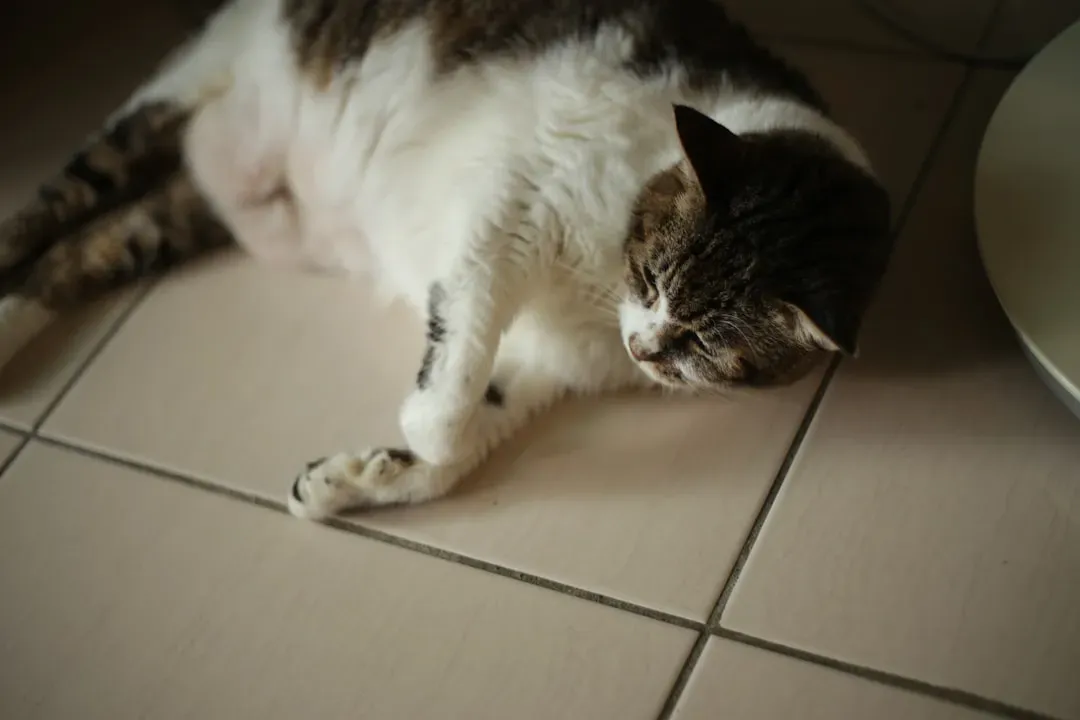
Few cat behaviors create more confusion than the belly reveal. Your cat rolls over, fluffy tummy fully exposed, and you think “invitation accepted!” – then you reach out and suddenly there are teeth involved. Here’s the thing: a cat’s stomach is a vulnerable area, and lying on their back with it exposed is a way for your cat to signal that they are perfectly relaxed and at ease around you. In nature, cats are both prey and predator to small critters, and evolutionarily, as prey, they learned to protect their vital organs, such as the belly area, from those they mistrust.
Cats that roll onto their backs, exposing their belly, are showing trust, and this is a behavior that invites play, but ultimately expresses extreme vulnerability. Contrary to popular belief, when cats show you their belly, it is not always an invitation to pet it, but it can be an indication that they trust you enough to expose one of their most vulnerable parts to you. So admire it, appreciate it, and proceed with gentle caution. The gesture alone is the gift.
Following You from Room to Room
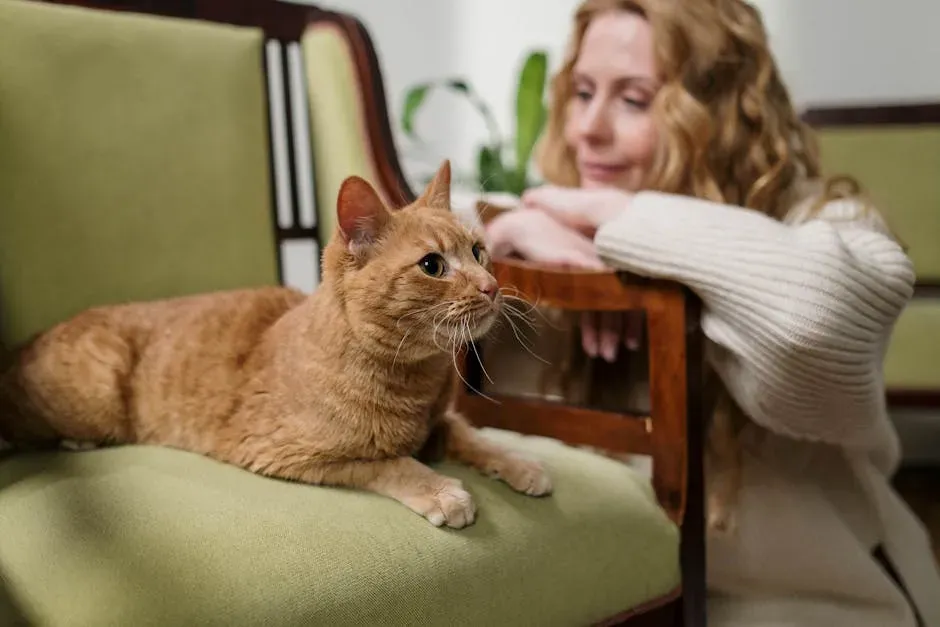
You get up to make coffee, and there’s a cat at your heels. You head to the bathroom, and somehow a tiny furball is already waiting outside the door. Sound familiar? If your cat follows you from room to room, it’s a clear sign that they feel secure in your presence and want to be near you, and when cats choose to shadow you throughout the house, it’s more than just curiosity – it’s a display of affection and trust.
Your cat may follow you from room to room because they like being near you and feel safe and secure in your presence, and it’s a sign that they trust you and see you as a source of comfort and companionship. A cat that follows you around is actively seeking your companionship and enjoys being in your presence, indicating that they not only trust you but also want to be involved in your daily activities, further reinforcing the bond between you and your feline friend. I think there is something quietly wonderful about being someone’s favorite room to be in.
Meowing and Vocalizing Specifically at You
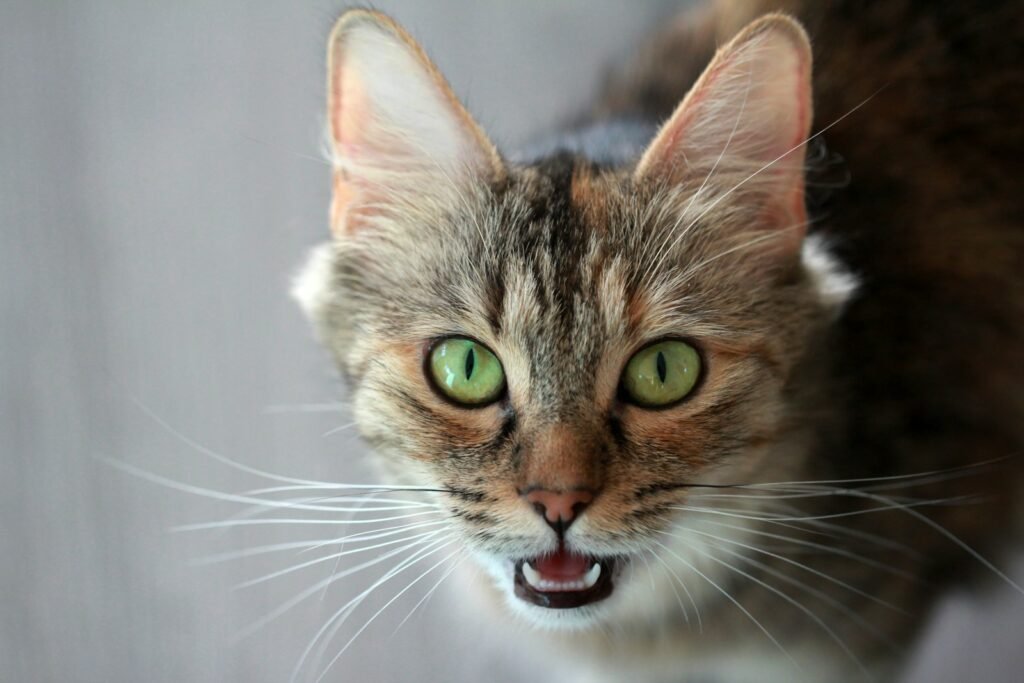
Here’s a fact that genuinely surprises most people: adult cats almost never meow at other cats. Cats often communicate by meowing, which is interesting because cats don’t really meow at each other – they meow at their mothers, who provide them with food, warmth, and safety when they are kittens, and they meow at their people, who provide them with the same things as adults. When your cat meows at you, you’re being treated with the same regard as their mother. That’s a meaningful placement in their emotional world.
Cats tend to generally reserve meows for communicating with humans, and they are more likely to meow at you if they feel connected to you. Some cats ask for things by tapping you with their paw or rubbing up against you, but whatever their method of asking, they do it because they trust that you will provide for them. Every little chirp, trill, or demanding yowl is a vote of confidence in you. They chose you as the one worth talking to.
Presenting Their Tail High in the Air

When your cat trots toward you with their tail shooting straight up like a little flag, they’re giving you one of the warmest greetings in the feline world. Another subtle sign of trust and affection is when your cat approaches you with its tail held high, and if the tail is slightly quivering, it’s an even stronger indication that your cat trusts you. Think of it the way you’d feel when a close friend waves you over enthusiastically from across a crowded room.
When your cat greets you with a vertical tail, this is a sign that they’re pleased to see you and are feeling relaxed. A cat’s tail language is a significant part of feline communication, and when your cat holds their tail high in your presence, it’s a display of confidence and fondness, marking you as someone significant in their social structure, while a tail wrapped around you signifies you’re included in their inner circle. It’s hard to say for sure what the exact emotional equivalent is in human terms, but it feels a lot like being truly, genuinely welcomed home.
Bringing You “Gifts” From Their Hunting Adventures
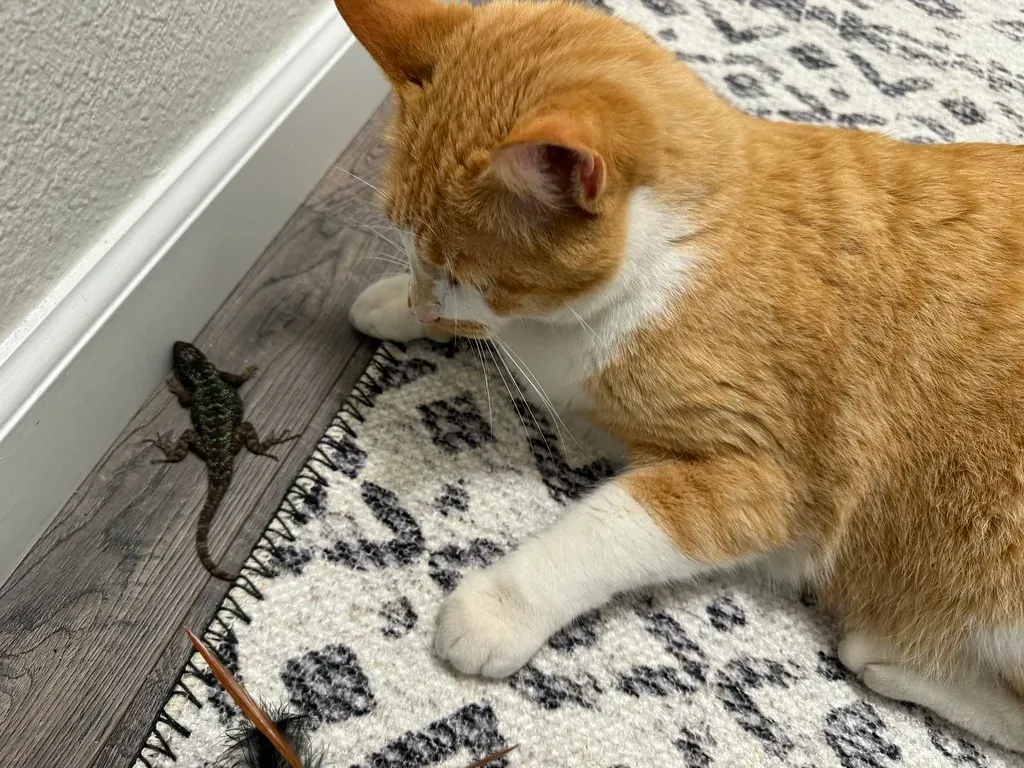
Okay. Let’s be real – discovering a dead mouse on your doorstep, or a limp bird placed lovingly beside your coffee cup, is not exactly everyone’s idea of a good morning. However, the impulse behind this behavior is one of the most trust-filled things a cat can do. In the wild, cats tend to bring back their kills to share with the rest of their group, and when they do this with you, it signifies that they consider you part of their family and that your cat trusts you.
Even if you don’t have a cat, you’ve probably heard about cats bringing their owners little “presents” in the form of dead backyard critters, and while you might view these cat hunting gifts as weird behavior, your cat thinks it’s perfectly normal, because for them, their prey represents triumph, survival, and their instinctual nature as wild hunters. Your cat is trying to provide for you, just like they would for their own furry family members, and while it might be a bit gross, you should take it as a compliment – they trust you enough to share their bounty with you. It’s the most primitive and sincere form of “I care about you” that exists in the animal kingdom.
A Final Word: Trust Is a Gift, Not a Given
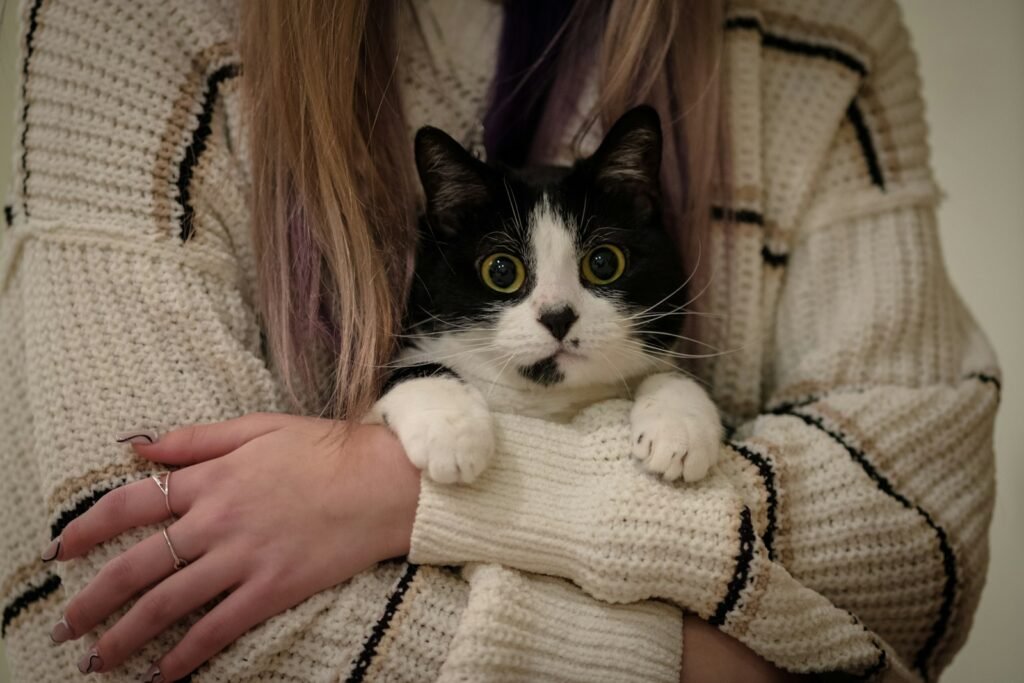
There’s something deeply moving about earning a cat’s trust. These animals are biologically wired to be cautious, to protect themselves, to guard their vulnerabilities with practiced indifference. When they choose to let you in, it’s never accidental.
Cats care about physical comfort and safety, and their trust in you is about whether or not you provide those things in the ways and quantities that they need, and while they can’t tell you whether or not you are doing a good job of this, they can and do show you through their behaviors. Some cats take a bit longer to warm up and build trust, especially if they came from a tough background, but you can take deliberate steps to build trust with your cat. Every slow blink, every kneading session, every midnight cuddle is a declaration. Your cat is telling you, in the only language they know, that you are their safe place.
So next time your cat follows you to the kitchen for the fifteenth time today, or plants their fuzzy face against yours at 3 AM, take a moment to recognize what’s really happening. You didn’t just get a cat. You earned the trust of a tiny, wild, ancient creature who decided you were worth it. What could be better than that? Share your cat’s most heartwarming trust moment in the comments – we’d love to hear it.