Have you ever switched off the lights at night, stumbled into the coffee table for the hundredth time, and then watched your cat glide past you in complete silence, totally unbothered? It’s almost insulting, honestly. Your cat doesn’t bump into anything. Your cat doesn’t hesitate. Your cat just moves – smooth, confident, and fully aware – while you’re essentially blind.
There’s a reason for that. Several reasons, actually. The science behind how cats navigate the dark is far more surprising and layered than most people realize. It goes well beyond the idea that cats just have “good eyes.” Let’s dive in and explore what’s really going on behind those glowing, mysterious pupils.
1. Your Cat Cannot See in Total Darkness – and That Surprises Most People
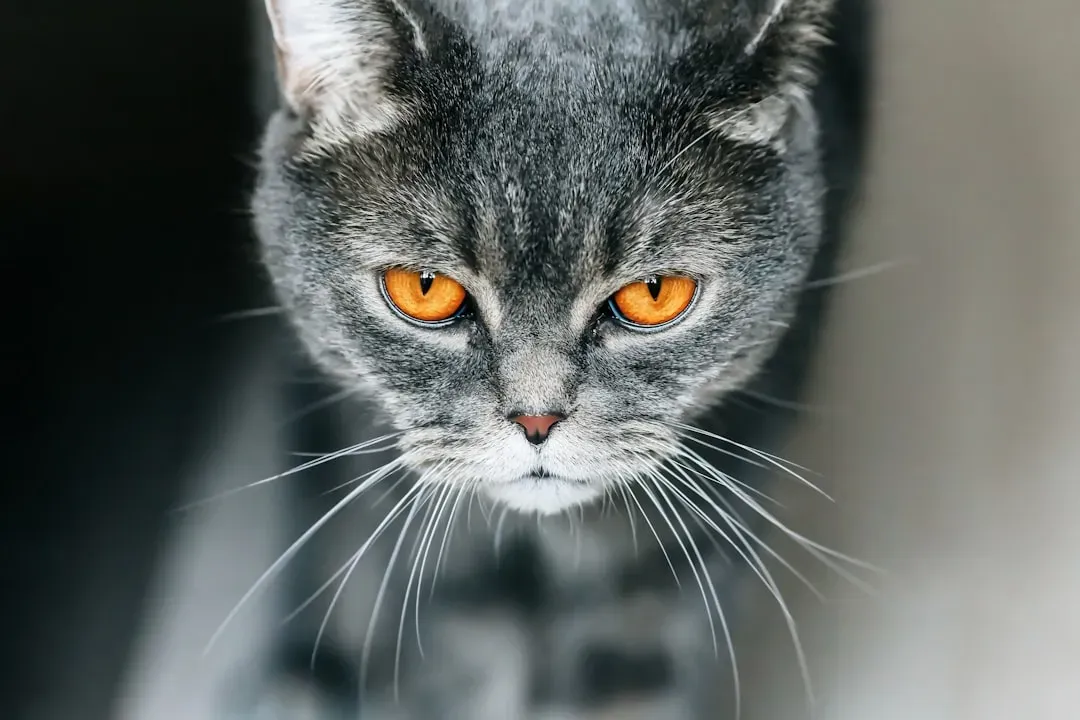
Let’s start by dismantling the biggest myth. Cats cannot see in total darkness. No animal can. Vision requires at least some level of light to function, and if there is absolutely no light source at all, a cat’s eyes simply cannot process images. So the idea of your cat as some kind of supernatural creature peering through walls of pure blackness? Not quite accurate.
Here’s the thing though – what cats can do is pretty extraordinary anyway. What cats can do is see in light conditions so dim that humans perceive them as “total darkness.” A room illuminated only by starlight filtering through curtains, the glow of a digital clock, or moonlight through a window provides sufficient photons for a cat’s visual system to construct a usable image. That’s still remarkable, when you think about it.
2. Your Cat Only Needs About One-Sixth of the Light You Do
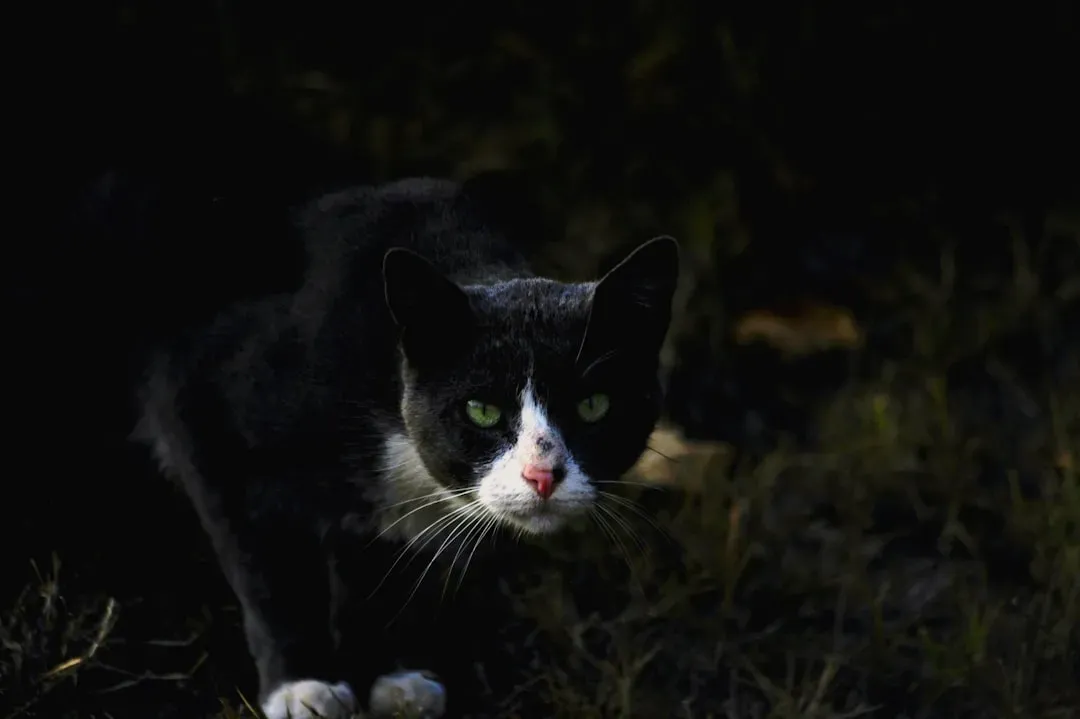
Cats require only about one-sixth of the amount of light that humans need to see. This means that in low-light environments, such as during twilight or under moonlight, cats can navigate with ease. Their heightened ability to detect even minimal light sources allows them to move around much more confidently than humans in the dark. Think about that for a second. The ambient glow from a streetlight outside your window is genuinely enough for your cat to move around the room with ease.
Cats don’t have night vision per se, but they can see significantly better in lower light conditions than humans. Estimates suggest that cats can see about 5.5 to 7 times better than humans in dim light – not complete darkness. I think most cat owners would be stunned to know just how extreme that gap really is.
3. Your Cat’s Eyes Are Loaded With Far More Rod Cells Than Yours
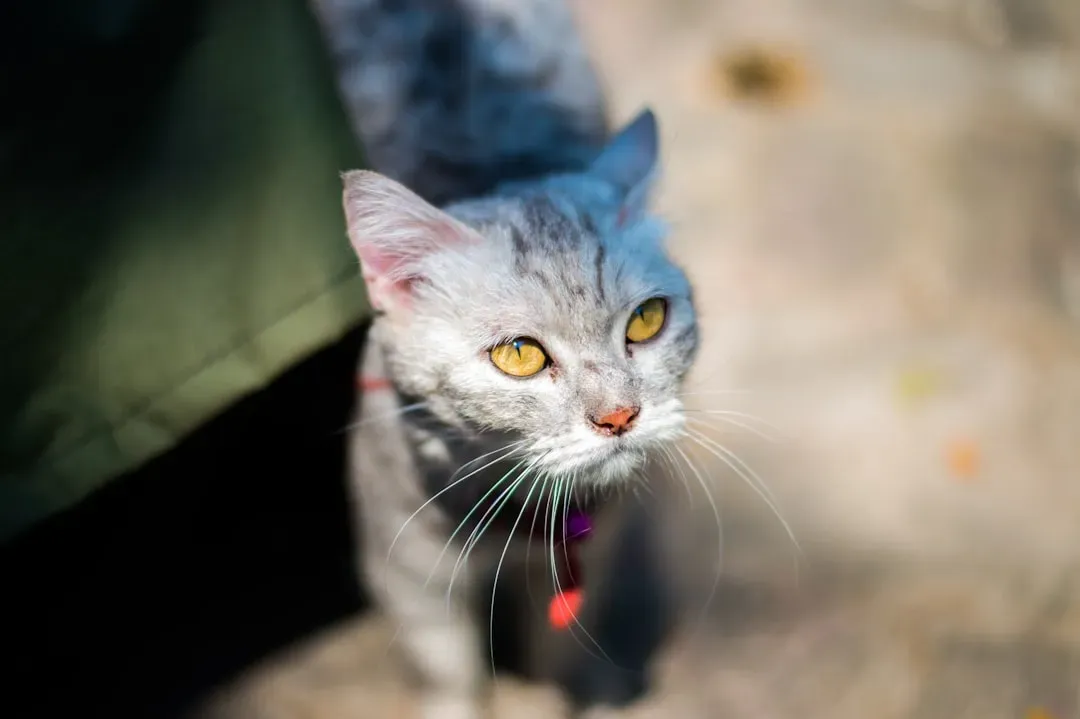
Cats’ eyes have a higher concentration of rod cells – the type of photoreceptor that works well in dim light. They have six to eight times more rod cells than humans. This allows them to detect movement and shapes even when lighting is poor. Rods are essentially your cat’s secret weapon. Where you rely on cone cells for clear, colorful daytime detail, your cat has built a retina optimized for the darkest hours.
The photoreceptors in cats’ eyes are completely different from humans’. Cats have more rods, which are responsible for night vision, peripheral vision, and motion sensing, whereas humans possess more cones, which make them better at seeing colors and daylight. It’s a trade-off, and your cat made a very deliberate evolutionary choice on which side of that trade to land on.
4. The Tapetum Lucidum Is Your Cat’s Built-In Biological Mirror
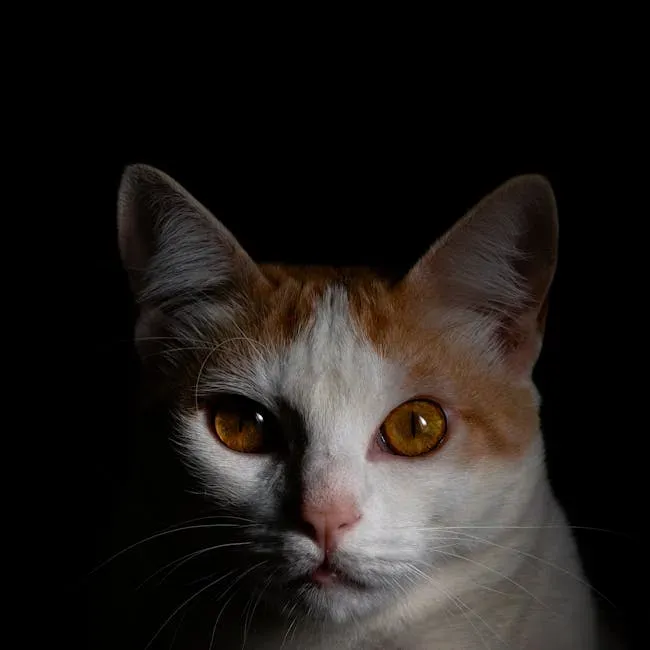
The tapetum lucidum is the secret weapon behind your cat’s glowing eyes at night. It is a reflective layer behind the retina that acts like a mirror. It bounces any incoming light back through the retina a second time, giving rod cells another chance to absorb it. This is also why cats’ eyes seem to glow in the dark when light hits them – such as from headlights or a flashlight. Every photon essentially gets two attempts at being detected, which is an elegantly simple solution to the problem of limited light.
The tapetum lucidum in cats is renowned for its brilliance, even inspiring ancient Egyptians to believe it reflected the sun at night. This reflective layer is composed of 15 to 20 layers of cells arranged in a central pattern. This structure, denser than that of dogs, results in high reflectance, nearly 130 times that of humans. Ancient Egyptians practically worshipped cats partly because of this eerie glow. Can you blame them?
5. Your Cat’s Slit Pupils Are a Masterpiece of Optical Engineering
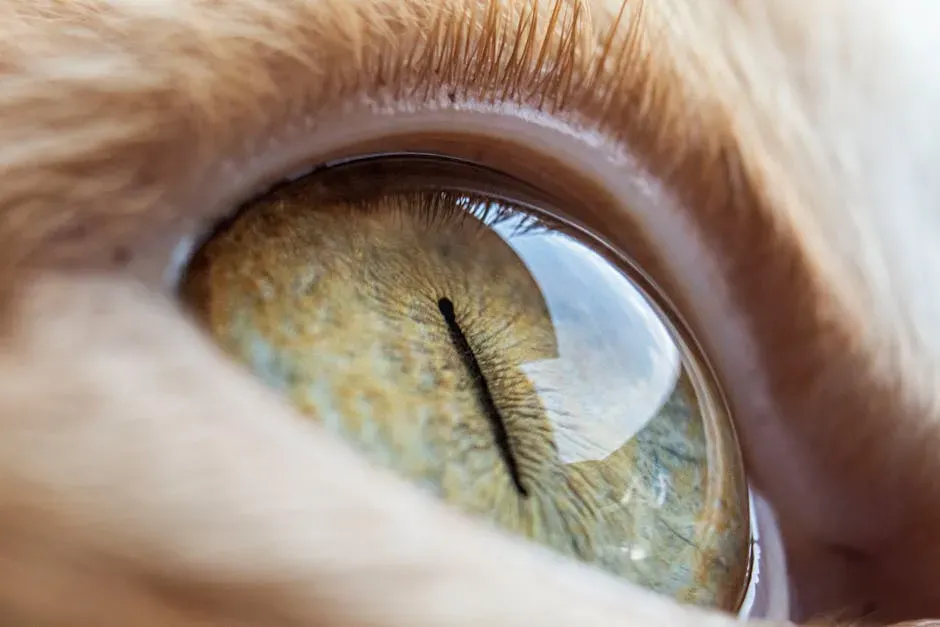
The vertical slit pupils of domestic cats undergo a 135-fold change in area between constricted and dilated states, as demonstrated by researchers at UC Berkeley’s School of Optometry. Human circular pupils manage only a 15-fold change. This nine-times-greater range allows cats to hunt in near-darkness and bright daylight without retinal damage – a critical adaptation for an animal that operates across extreme lighting conditions. That is genuinely stunning. Your cat’s pupil is doing something your eye physically cannot come close to matching.
You may have wondered why your cat’s eyes are mostly a straight vertical line during the day, then expand at night or when they’re feeling playful. When their pupils are vertical slits, it allows them to focus, as varying amounts of light can enter the eye through different areas. When a cat’s pupils dilate to their saucer-like state, more light is allowed to enter the eye. This means they can see in low light situations, but it makes their vision slightly blurrier. Yes, even precision comes with a small trade-off.
6. Your Cat’s Corneas and Pupils Are Physically Larger Than Yours
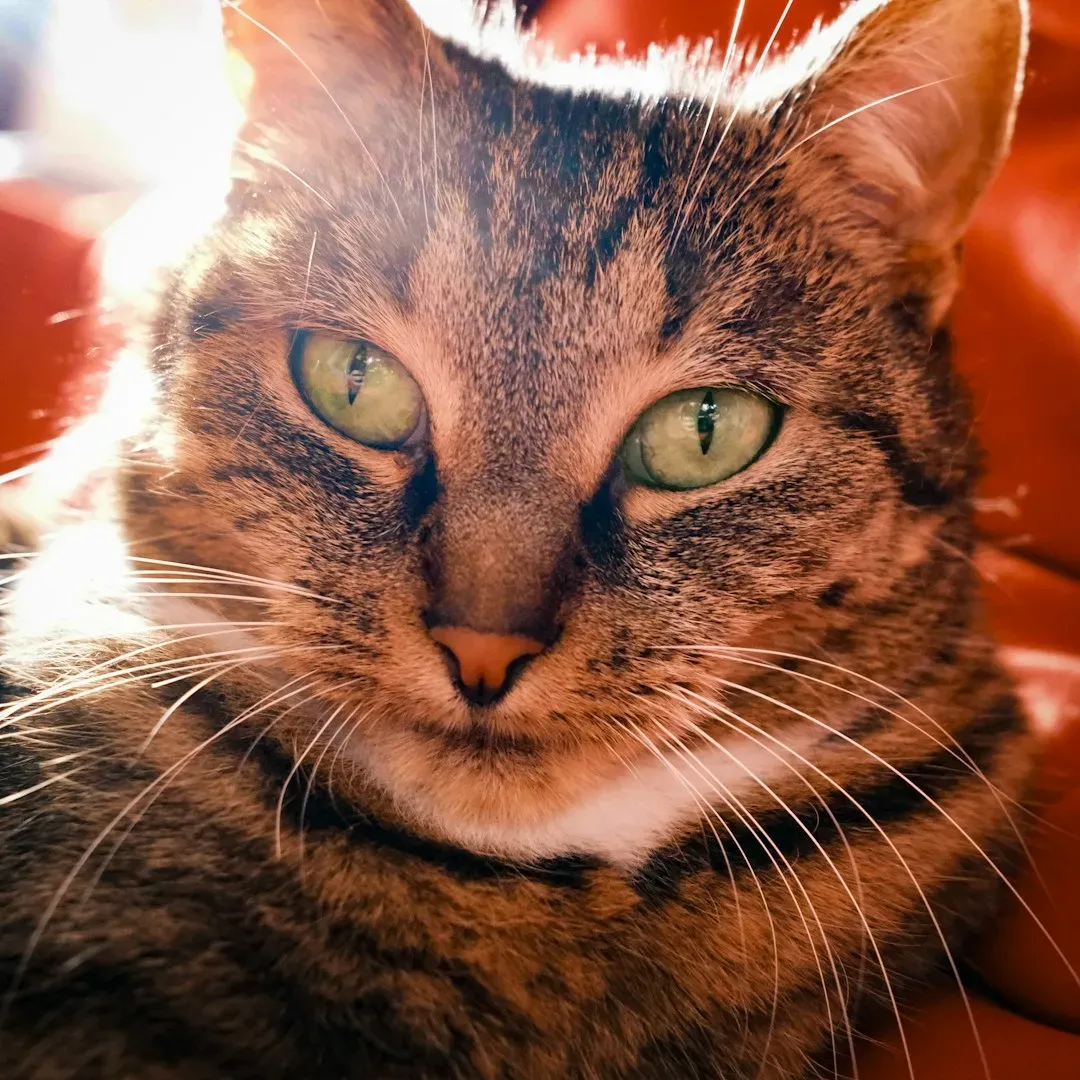
Cats’ large corneas and pupils, which are about 50% larger than humans’, allow more light into their eyes. This extra light helps them to see in the dark. It’s not just about clever biology happening inside the eye. The very physical size and structure of the eyeball itself plays a huge role in giving your cat that edge. A bigger entrance means more light gets the chance to be captured and processed.
The combination of large corneas, wide pupils, and the tapetum lucidum allows cat eyes to gather and use nearly every photon of available light. Think of it like the difference between a wide-angle camera lens and a narrow one. Your cat’s eye is capturing as much of the available light scene as biologically possible, which is a level of efficiency that engineers designing actual night-vision technology genuinely try to replicate.
7. Your Cat Is Not Nocturnal – It’s Something Else Entirely
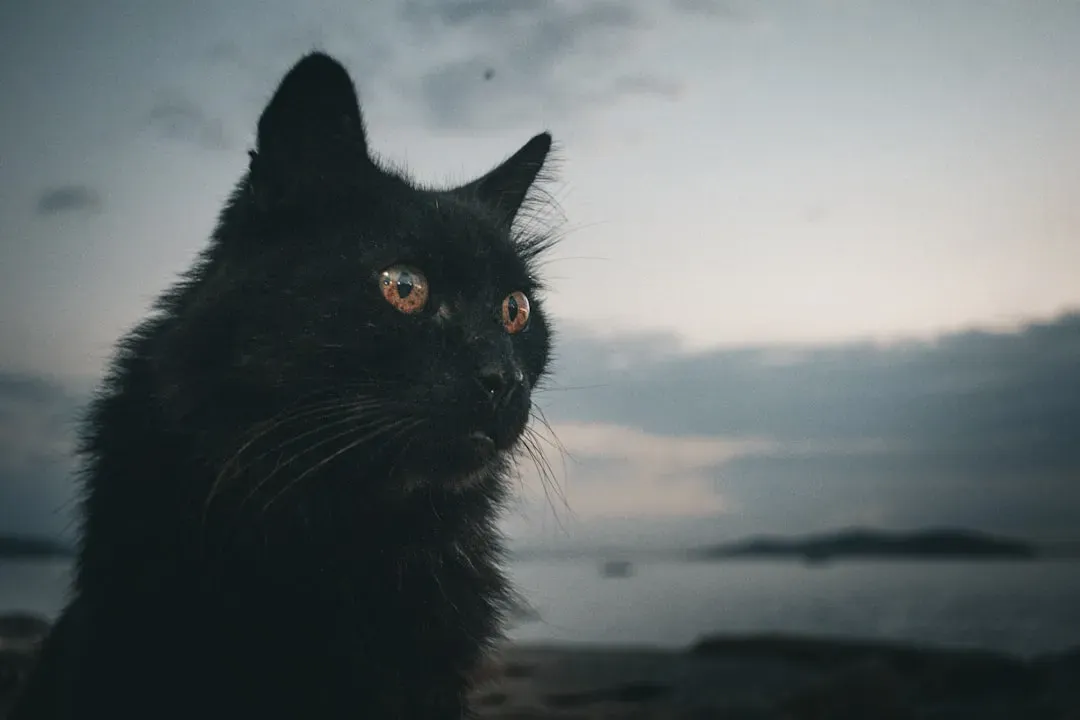
Most people assume cats are nocturnal, meaning they’re active all night long. Surprisingly, that label is not accurate. Contrary to popular belief, cats are not nocturnal, so they can’t see in complete darkness. Felines are actually crepuscular, which means that they’re most active during twilight hours like dusk and dawn – and this makes seeing in dim light essential. Dawn and dusk are precisely when light is at its trickiest and most unpredictable. A crepuscular lifestyle demands exactly the kind of flexible, low-light vision cats have developed.
Cats evolved as crepuscular predators, meaning they’re most active during twilight hours. Their eyes are built for it. This is why your cat does those intense, zoomy sprints at around 5 in the morning or goes absolutely wild right as the sun is setting. It’s not random. It’s millions of years of evolutionary programming kicking in at the biologically ideal hour for hunting.
8. Your Cat’s Night Vision Actually Sacrifices Color for Sensitivity
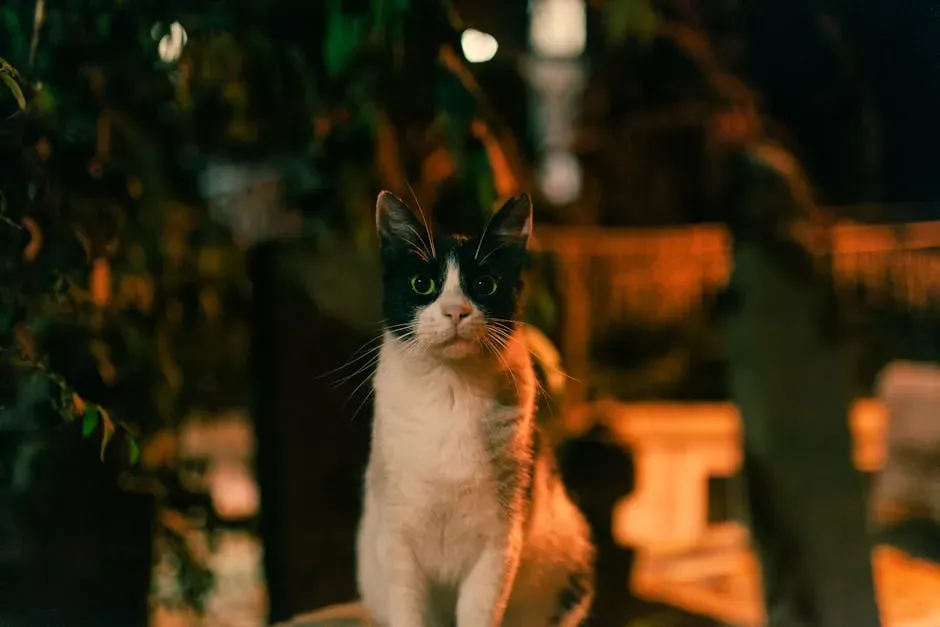
Humans have three types of cone cells in their retinas, allowing us to see a wide spectrum of colors. Cats have only two types of cone cells, meaning their ability to distinguish certain colors is reduced. Research suggests that cats primarily see shades of blue and yellow, but they struggle to differentiate between reds and greens. To a cat, these colors likely appear as muted or shades of gray. So your vibrant red toy? Your cat sees a dull, grayish blob. But in the dark, your cat is tracking every twitch and flicker you’d completely miss.
The trade-off is reduced color vision and less detail compared to daytime animals. Night vision prioritizes sensitivity over sharpness, allowing survival in dim environments at the cost of vibrant visual information. Honestly, it’s a brilliant trade. Your cat does not need to admire the colors of the living room carpet. Your cat needs to know if something is moving in the shadows at 4 AM, and for that job, its visual system is perfectly tuned.
9. Your Cat Has a Wider Field of View Than You Do
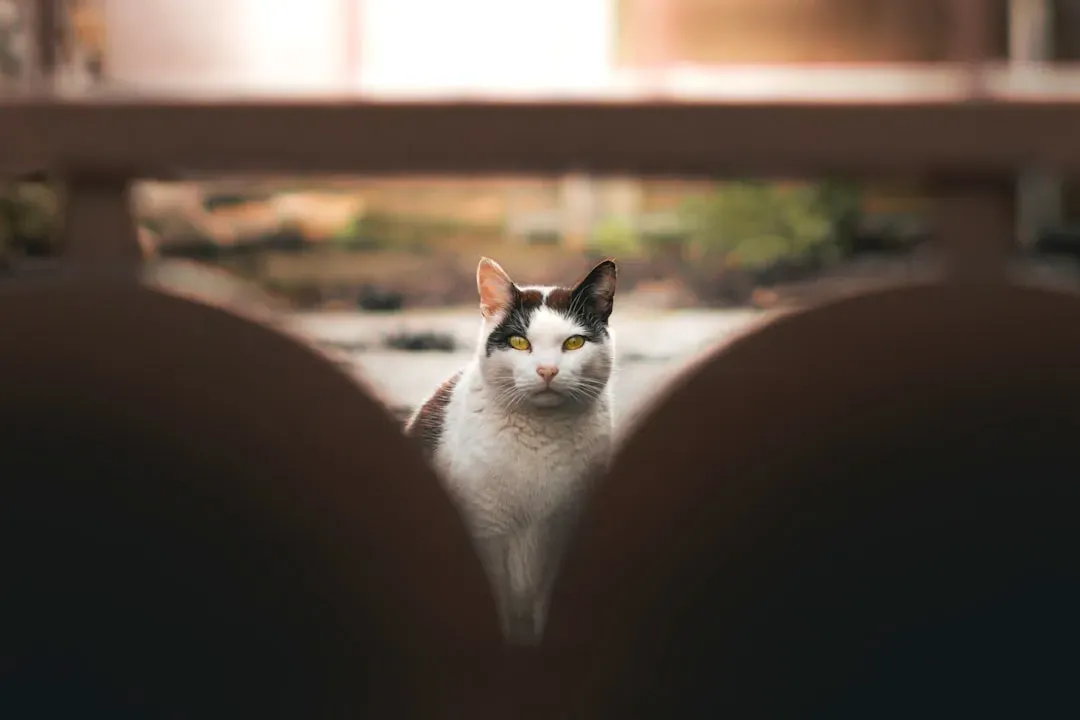
Cats can see a range of about 200 degrees compared to our 180-degree views, which gives them a wider field of view. Their greater peripheral vision allows them to spot prey better while hunting. That extra 20 degrees might sound small on paper, but at night, when every edge of the visual field matters, it represents a meaningful advantage. Your cat can see things approaching from the side without ever moving its head.
Cats possess exceptional peripheral vision, a result of their eyes being positioned more towards the sides of their heads. This positioning provides cats with a broad range of vision, enabling them to detect motion and potential prey without the need to constantly move their heads. That quiet, eerily still posture your cat assumes when it’s watching something across the room? It’s not being dramatic. It genuinely doesn’t need to move to keep the whole picture in view.
10. Your Cat’s Motion Detection in the Dark Is Far Superior to Yours

One of the reasons cats are such good hunters is because their eyes are much more sensitive to movement than our own. They can detect objects moving at very fast speeds, helping them to locate and pounce on quick-moving toys with ease. This is worth appreciating in a practical sense. That feather wand you drag across the floor? Your cat isn’t just seeing the general shape of it. It’s tracking the precise speed, trajectory, and momentum of the feathers in conditions where your own eyes can barely register movement at all.
Although cats’ night vision isn’t as extraordinary as some might believe, their eyes are still remarkably sophisticated. They are particularly good at detecting small movements and noticing fast details, even on the darkest nights. This keen eyesight, combined with their other senses, makes them highly effective hunters. Motion sensitivity is, in many ways, more useful than raw detail or color resolution for a predator. And your cat has it in spades.
11. Your Cat’s Whiskers Are a Secret Night-Navigation System

These sensitive hairs can detect changes in air currents, allowing cats to sense obstacles even when they cannot see them clearly. This helps prevent them from bumping into objects in the dark. This is how your cat navigates a pitch-black hallway without touching a single wall. The whiskers are reading the air around them like a three-dimensional map, sensing tiny disturbances in the space ahead before the body even gets there. It’s as close to a superpower as biology gets.
Cats don’t rely solely on their eyes for navigation. Their sensitive whiskers act as additional sensory tools, helping them detect objects and movement even in extremely low-light conditions. These remarkable sensors can detect subtle air currents and help cats understand their spatial environment when visual cues are limited. The whiskers and the eyes work as a system. When one fades out, the other compensates. It’s a genuinely elegant design.
12. Your Cat’s Night Vision Changes With Age – and Can Be Impaired
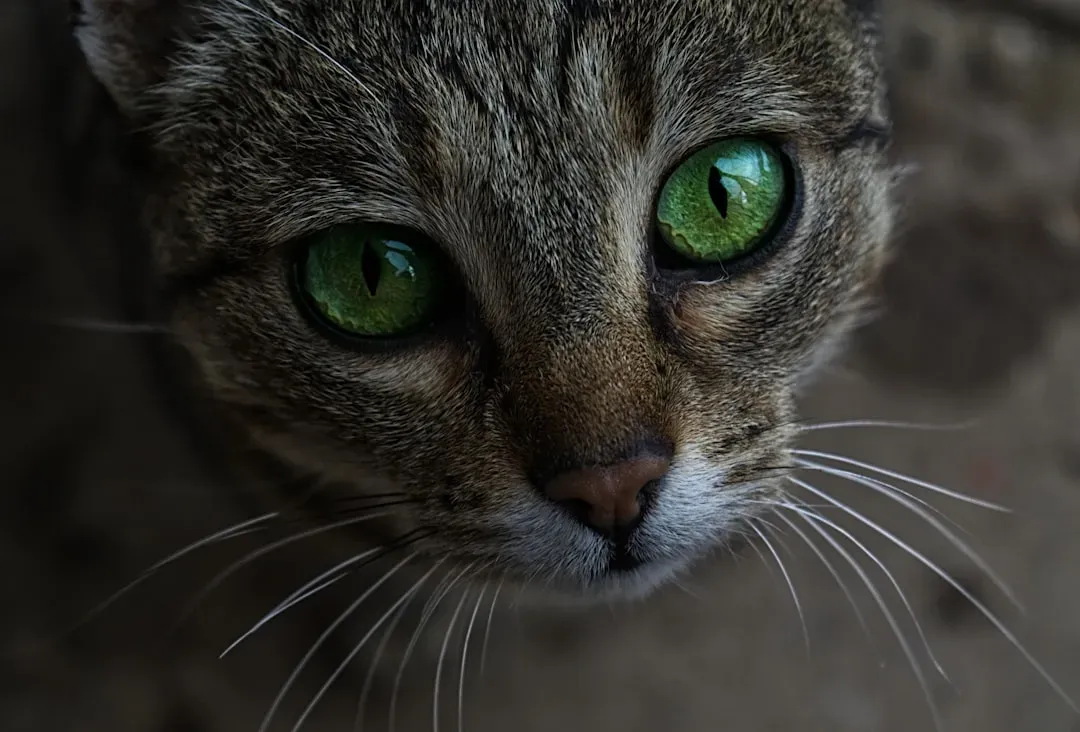
From around age seven and older, cats may experience nuclear sclerosis, a harmless clouding of the lens that makes things appear slightly blurry. Just like humans develop reading glasses and start squinting at menus, senior cats begin to lose some of the sharpness their younger eyes once had. The difference is they’ve never bragged about their vision the way we do, so the decline tends to go unnoticed until it becomes significant.
There are common health issues among senior cats that can impact their vision, such as eye infections, retinal degeneration, or even blindness. Your cat’s night vision may become weaker as they age. Talk to your veterinarian if you think your senior cat is having trouble seeing in the dark – or seeing in general. Paying close attention to how your older cat navigates dim spaces at home can give you an early warning that something needs attention. Their confidence in the dark is a signal worth watching.
Conclusion: There’s a Lot More Going on Behind Those Eyes Than You Think
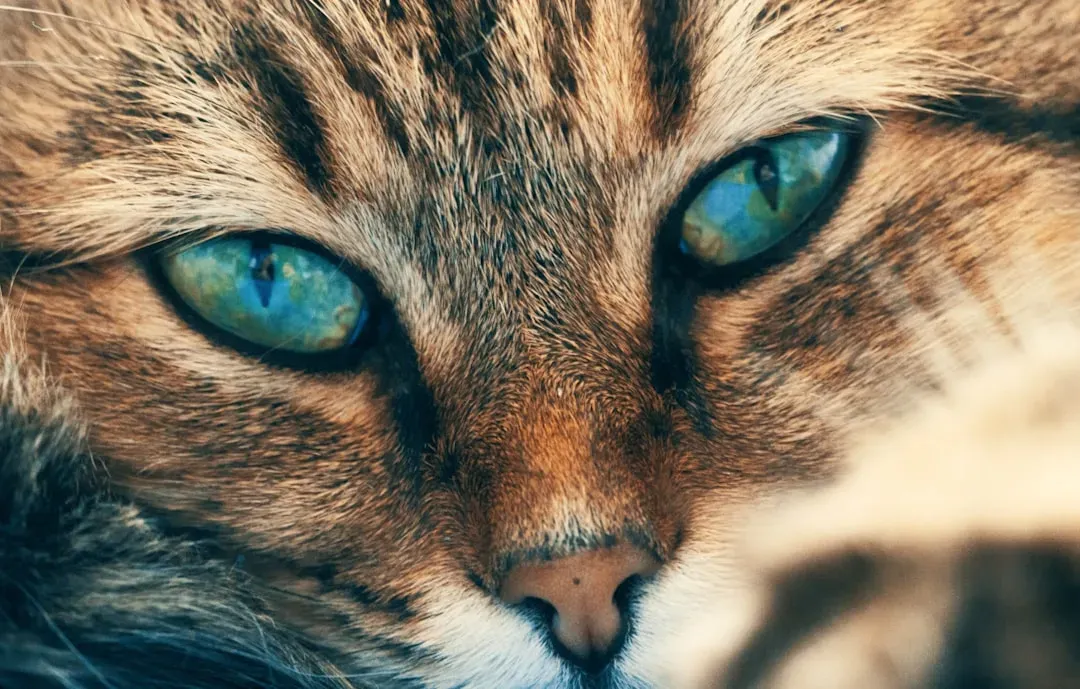
Your cat is not magic. There’s no supernatural force guiding those silent, confident strides through your darkened house at 3 in the morning. What there is, however, is millions of years of extraordinarily refined biology: a tapetum that functions like a photonic mirror, pupils that shift in range beyond what any human eye can match, rod cells packed into a retina that was built for twilight, and whiskers that read air currents like a living radar system. It all adds up to something that feels like magic even when you understand the science behind it.
The next time your cat glides past you in the dark while you fumble for a light switch, maybe take a moment to genuinely appreciate the engineering involved. Your cat is not showing off. Your cat is simply doing what its biology was designed to do, beautifully, and without a single complaint. The real question is – knowing all of this, does your cat’s nighttime confidence make a little more sense now, or does it somehow make the whole thing feel even more impressive? Tell us what you think in the comments.