13 Ways a Nervous Cat Shows It Has Finally Relaxed
Cats are among the most misunderstood pets in American homes, and nowhere is that confusion more visible than in how owners interpret stress signals. A nervous cat doesn't announce its anxiety with a bark or a whine—it withdraws, hides, and watches.
But when that same cat finally lets its guard down, the transformation is just as subtle. Most owners miss the early signs of relaxation entirely, mistaking them for random behavior or coincidence. Here's what actually signals that your anxious cat has made peace with its environment.
#13 — The Belly Flash That Isn't an Invitation
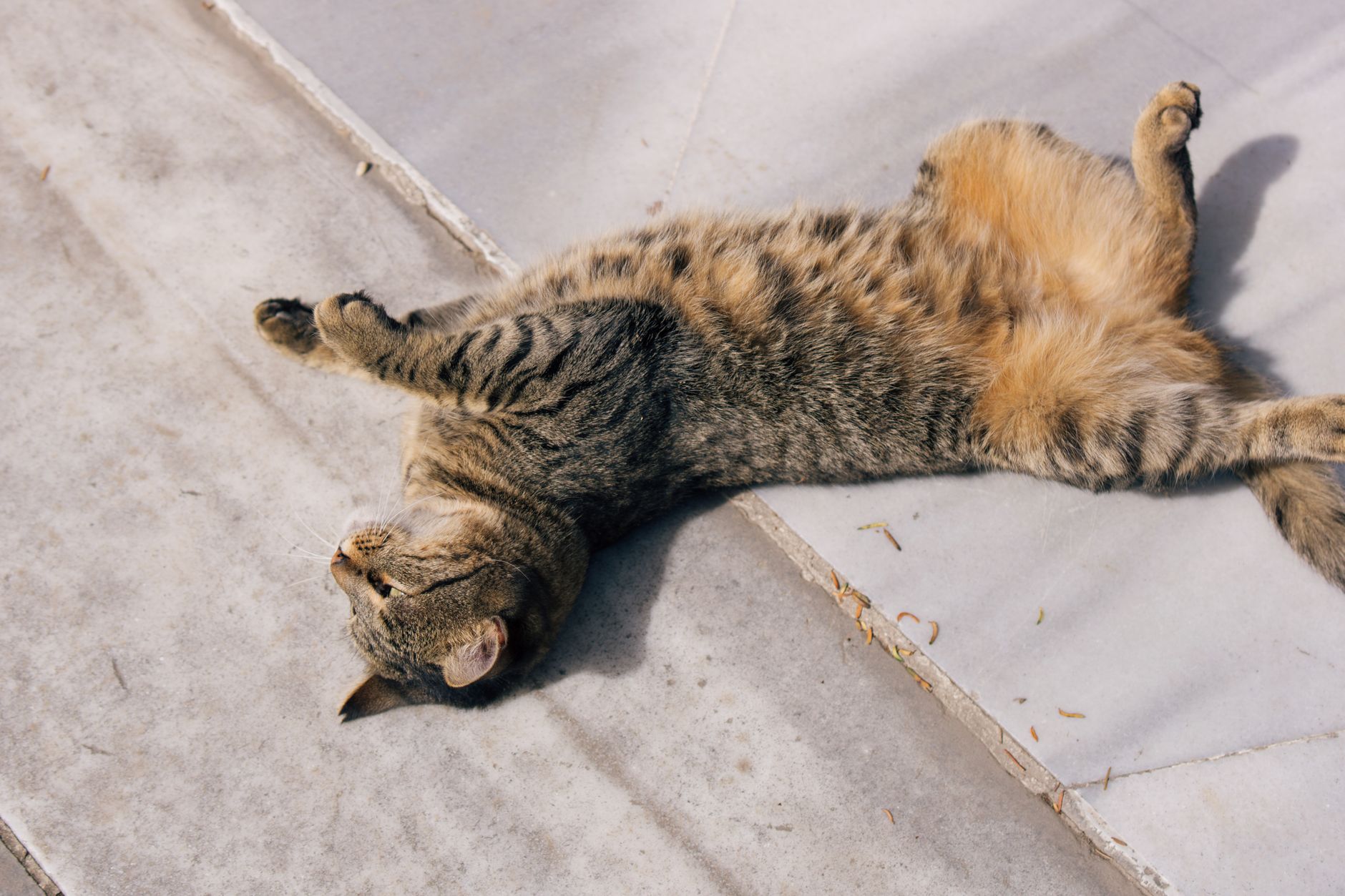
A relaxed cat will roll onto its back and expose its belly in your presence—but that doesn't mean it wants you to touch it.
This is one of the most misread signals in feline body language. The belly-up posture is a vulnerability display, and a cat will only assume it when it feels completely safe. In the wild, exposing the stomach leaves a cat defenseless against predators.
When your formerly nervous cat starts doing this near you, it's a major trust milestone. The behavior often appears suddenly after weeks or months of cautious distance.
But the display itself is the compliment. Your cat is telling you the space feels secure enough to abandon its defensive posture entirely.
The timing matters too. A cat that rolls over immediately when you enter the room has crossed a psychological threshold that anxious cats rarely reach.
But this is just the beginning of the physical changes you'll notice...
#12 — Grooming in Plain Sight Instead of Hiding
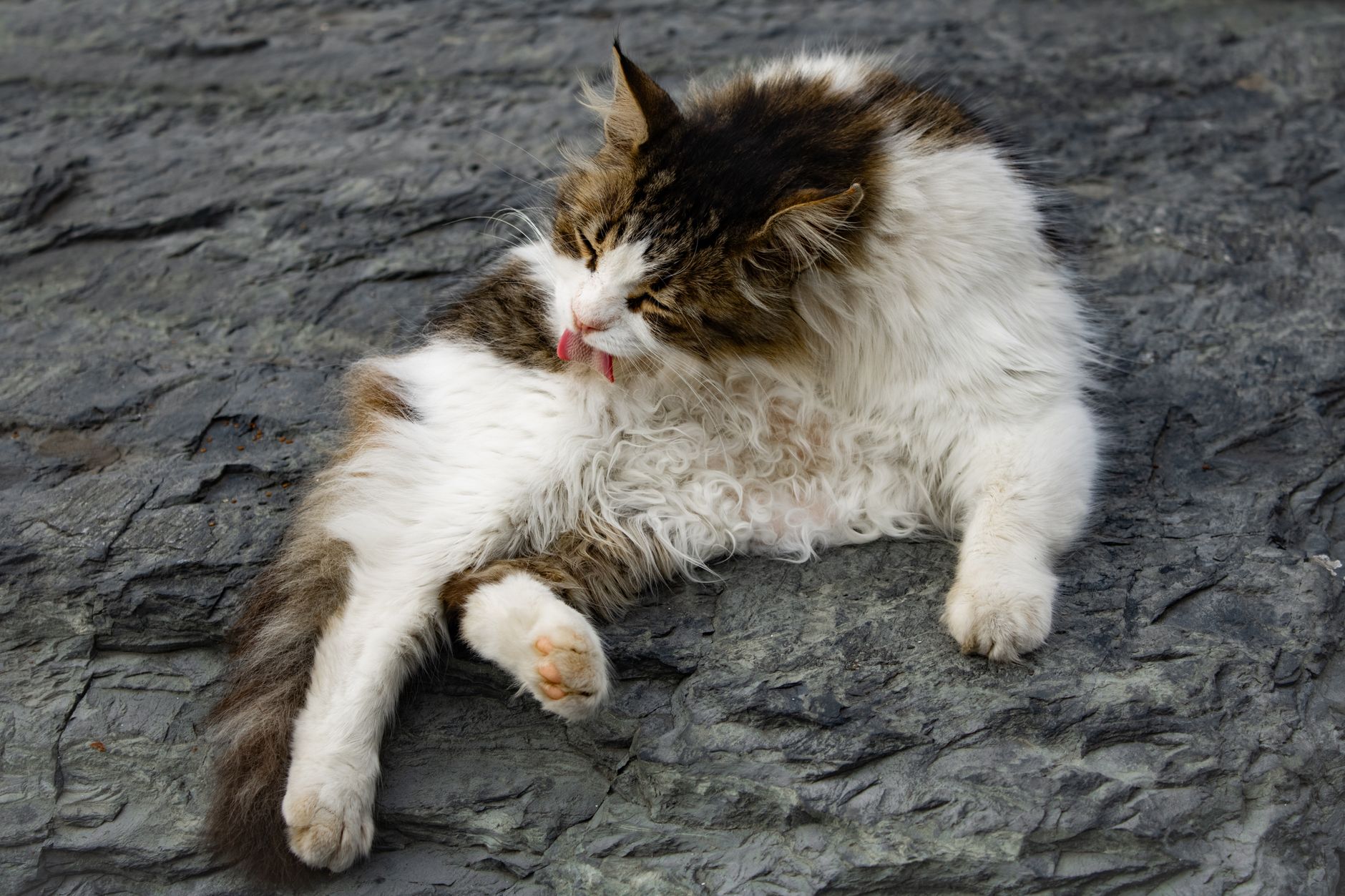
Nervous cats groom themselves in private, tucked under furniture or behind closed doors—relaxed cats groom wherever they happen to be sitting.
Grooming is a maintenance behavior, but it's also a vulnerability. A cat that's licking its fur isn't watching for threats. It can't run quickly. Its attention is divided.
When your cat starts grooming in the middle of the living room floor, in front of the TV, or on the kitchen counter while you're cooking, that's a relaxation marker. The cat has decided the environment is predictable and safe enough that it doesn't need an escape route during self-care.
Cats spend up to 50 percent of their waking hours grooming, but location tells you everything about their stress level.
You'll also notice the grooming itself becomes slower and more thorough. An anxious cat grooms quickly, in bursts, with frequent pauses to scan the room. A relaxed cat settles into long, methodical sessions.
Watch for grooming that happens right after a stressful event, like a vacuum cleaner shutting off. That recovery speed is a confidence indicator.
The shift from hidden grooming to public grooming can take months in a truly anxious cat, but it's one of the most reliable signs that your home has become a safe territory. But grooming isn't the only everyday activity that changes location...
#11 — Eating Without Checking the Perimeter First
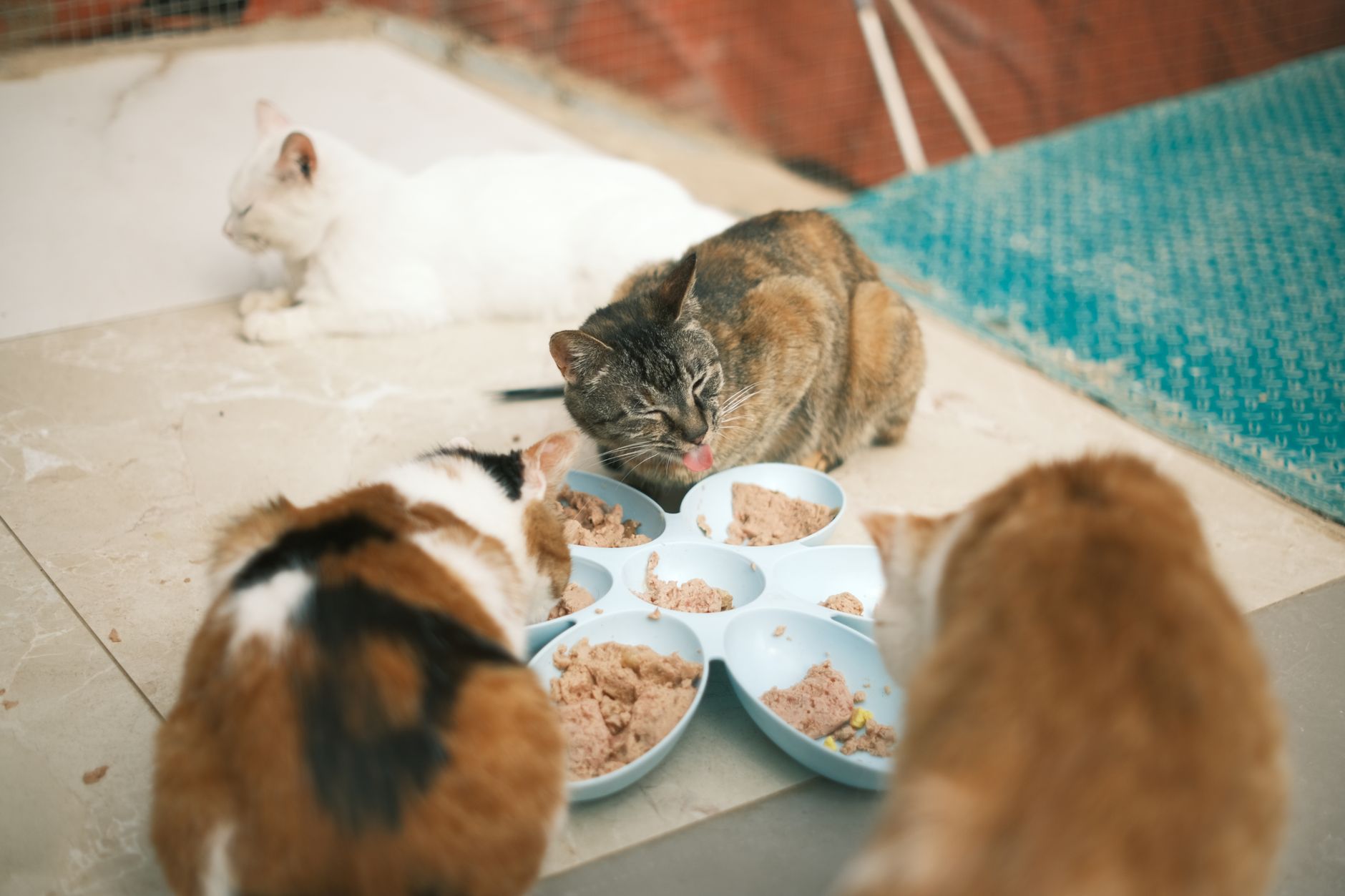
A nervous cat approaches its food bowl like a tactical operation, checking sightlines and escape routes before every meal.
This behavior is hardwired. In a natural setting, eating is one of the most dangerous activities a cat can perform. It requires focus, makes noise, and leaves the cat vulnerable to ambush from predators or rival cats.
When your cat walks directly to its bowl and starts eating without the surveillance routine, that's a relaxation flag. The behavior shift is especially noticeable if your cat previously refused to eat unless you left the room.
Some newly relaxed cats will even eat more slowly. Anxious cats often gulp food quickly to minimize exposure time at the bowl.
You might also notice your cat eating at different times of day. Nervous cats often wait until the household is asleep to feel safe enough to eat. A cat that eats during active family hours has recalibrated its threat assessment.
The location matters too—some cats will start eating even when you're standing nearby, a proximity they would have rejected weeks earlier. But the biggest shift happens in how they occupy space throughout your home...
#10 — Claiming Elevated Perches in Busy Rooms
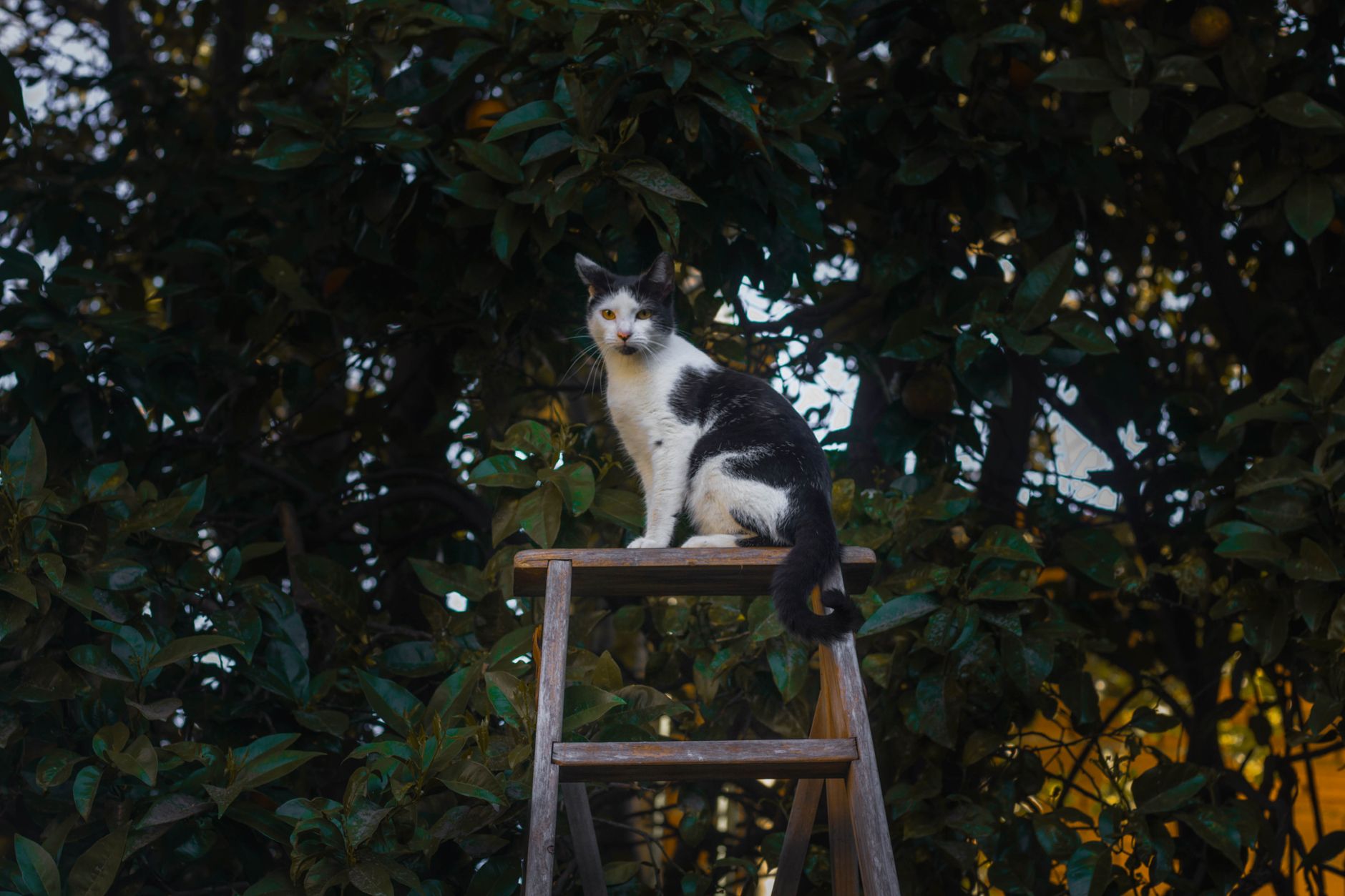
Relaxed cats seek height, but they choose their observation posts based on trust, not just survival instinct.
A nervous cat will take high ground in low-traffic areas—top of a closet, back bedroom windowsill, anywhere with visibility and isolation. A relaxed cat claims the bookshelf in the living room, the top of the kitchen cabinets, or the stair landing where everyone passes.
The difference is exposure. A cat that perches in a busy area is confident enough to be visible and surrounded by activity. It's not hiding anymore—it's presiding.
Cats naturally prefer resting spots that are at least five feet off the ground, but room choice reveals their comfort level with the household.
Watch where your cat positions itself during loud or chaotic moments. A truly relaxed cat will stay put on its perch during a dinner party or a kids' playdate, observing but not fleeing.
The transition from hidden high perches to social high perches can happen quickly once a cat decides the household rhythm is predictable. But height isn't the only spatial change that signals comfort...
#9 — Sleeping in the Center of the Bed, Not the Edge
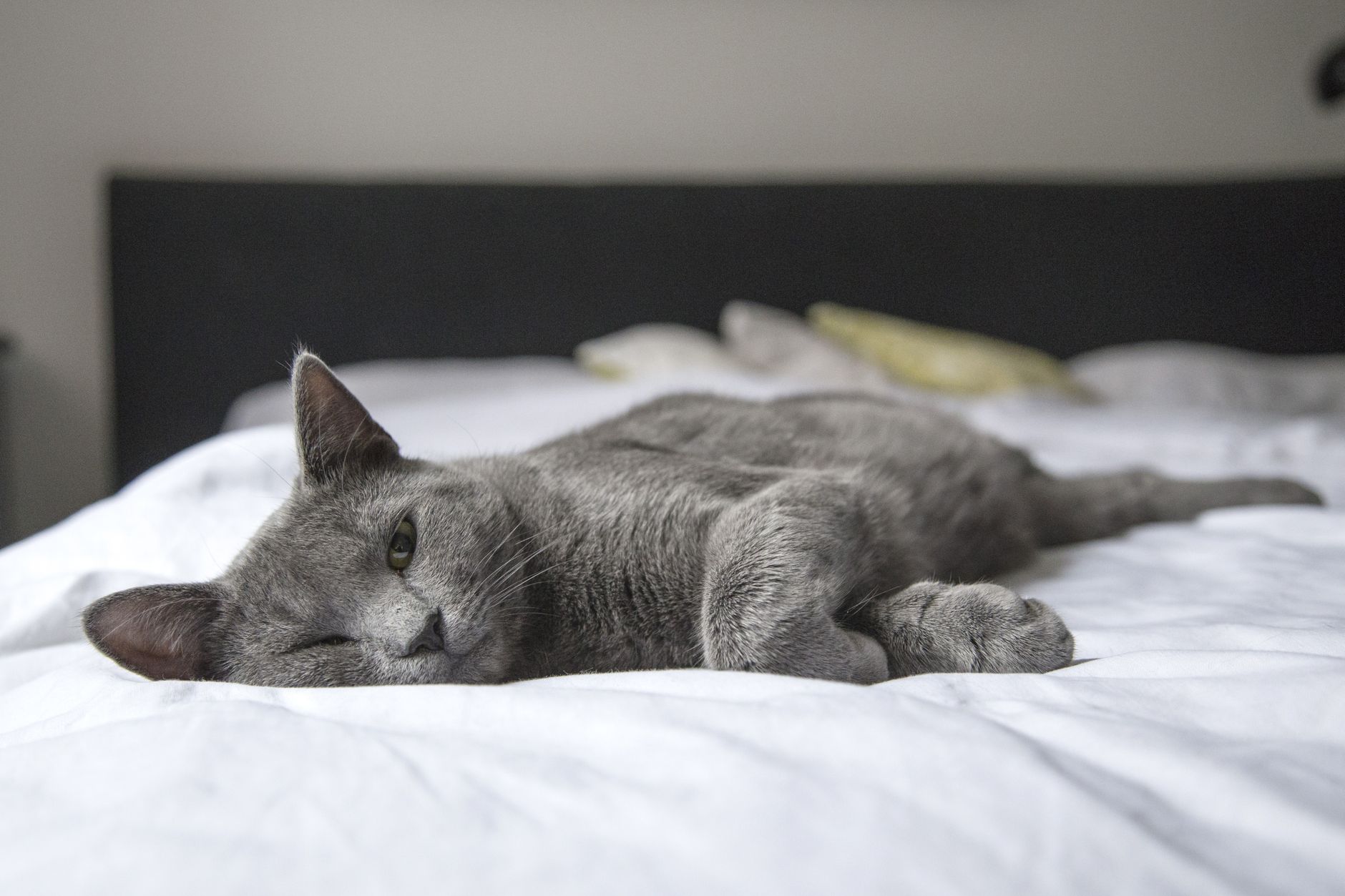
A nervous cat sleeps where it can see threats coming and escape quickly—a relaxed cat sleeps wherever it's most comfortable.
This shows up most clearly on furniture. An anxious cat will curl up at the foot of the bed, on the corner of the couch, or against the back cushions—always with a sightline to the door and an exit strategy.
A relaxed cat sprawls in the middle of the bed, belly-up on the couch, or stretched across the hallway where people have to step over it. The cat has stopped treating every nap as a potential emergency evacuation.
You'll also notice the sleep itself becomes deeper. Nervous cats remain in light sleep, ears swiveling to track sounds. Relaxed cats enter deep REM sleep, complete with twitching paws and muffled dream chirps.
The middle-of-the-bed behavior is especially telling because it requires the cat to trust that you won't accidentally crush it when you climb in at night. That's a calculated vulnerability.
Some cats will even start sleeping on their backs in these central locations, combining two major trust signals into one posture. But sleeping positions aren't the only overnight behavior that changes...
#8 — Midnight Zoomies Instead of Midnight Hiding
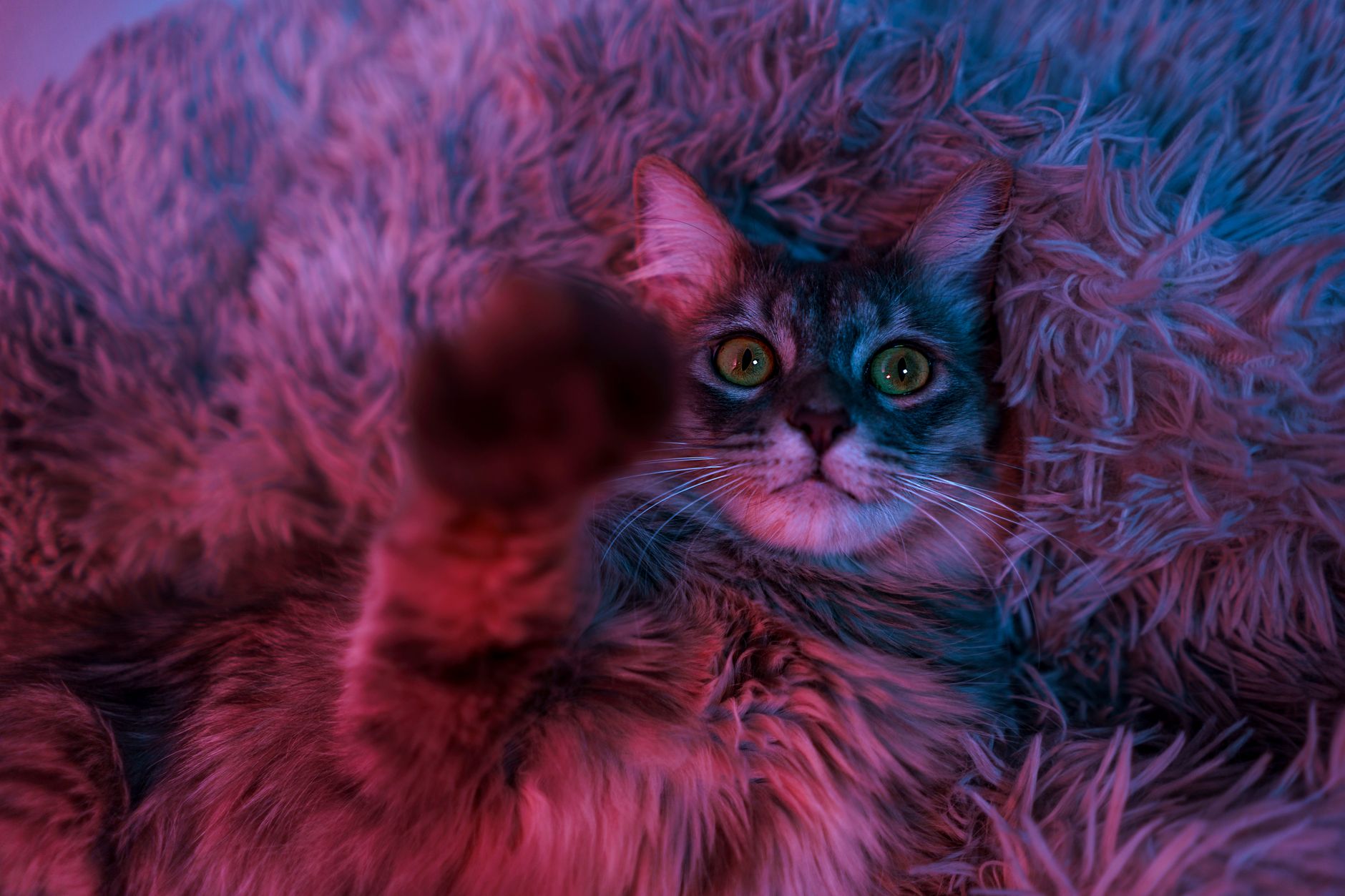
The late-night sprint session—often called "the zoomies"—is a burst of high-energy play that nervous cats suppress entirely.
Cats are crepuscular, meaning they're naturally most active at dawn and dusk. But in a household, that energy often peaks late at night when the environment finally quiets down. An anxious cat will spend that window hiding, not playing.
When your cat suddenly starts tearing through the house at 2 a.m., racing up and down hallways, leaping onto furniture, and skidding around corners, that's not chaos—that's confidence. The cat feels safe enough to be loud, fast, and out of control.
A single zoomies session can cover more ground than a cat travels in an entire cautious day.
You'll notice the zoomies often include vocalizations—chirps, trills, or even yowls—that a nervous cat would never risk. The noise is part of the release. A cat that was silent for months will suddenly become the loudest creature in the house after midnight.
The behavior can be disruptive to sleep, but it's one of the clearest signs that your cat's stress has broken. But nighttime isn't the only time you'll notice increased vocalization...
#7 — Trilling and Chirping, Not Just Silent Staring
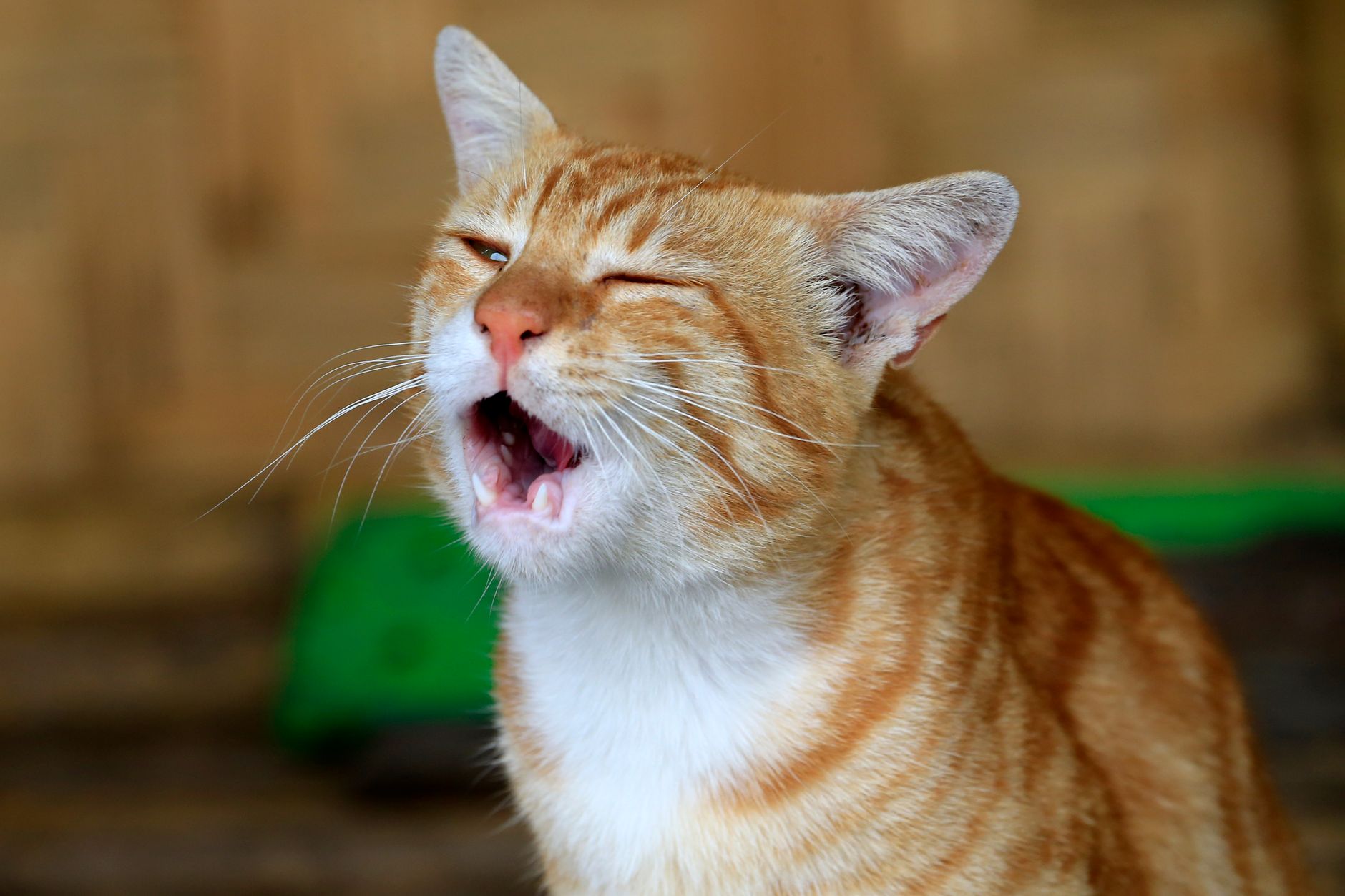
Nervous cats communicate through body language and silence—relaxed cats become conversational.
The shift is especially noticeable in previously mute cats. A cat that never made a sound beyond hissing or growling will suddenly start trilling when you walk into the room, chirping at birds through the window, or meowing for attention.
The trill—a short, rolled "brrrp" sound—is a greeting behavior that cats reserve for friendly interactions. Mother cats trill at their kittens. Adult cats trill at humans and other cats they trust. A formerly anxious cat that starts trilling has reclassified you as safe and even desirable company.
Chirping at birds or squirrels through the window is a hunting vocalization, and it only happens when a cat is relaxed enough to engage its prey drive. Anxious cats don't have the mental bandwidth to hunt—they're too busy monitoring threats.
You might also hear increased purring, often in situations where the cat is simply sitting near you, not being petted. That idle purring is contentment, not a request for interaction. But vocalization is just one part of a broader communication shift...
#6 — Slow Blinks Directed at You, Held for Seconds
The slow blink is one of the most deliberate trust signals in feline communication, and nervous cats withhold it completely.
When a cat looks at you and slowly closes its eyes, holds them shut for a beat, and then reopens them, it's performing what behaviorists call an "eye kiss." The gesture is an intentional vulnerability—closing the eyes in the presence of a potential threat is dangerous, so doing it on purpose signals trust.
A relaxed cat will slow blink at you from across the room, during petting sessions, or even while you're doing something unrelated like cooking or reading. The behavior is a cat's way of saying "I trust you enough to stop watching you."
You can slow blink back, and many cats will respond with a second blink—it's a two-way trust conversation.
The behavior is easy to miss if you're not watching for it. It's subtle and happens in seconds. But once you know to look for it, you'll see it multiple times a day from a truly relaxed cat.
Some cats will add a head tilt or ear swivel to the slow blink, layering additional friendly signals into the gesture. But eye contact isn't the only place you'll see trust signals...
#5 — Exposing the Base of the Tail During Petting
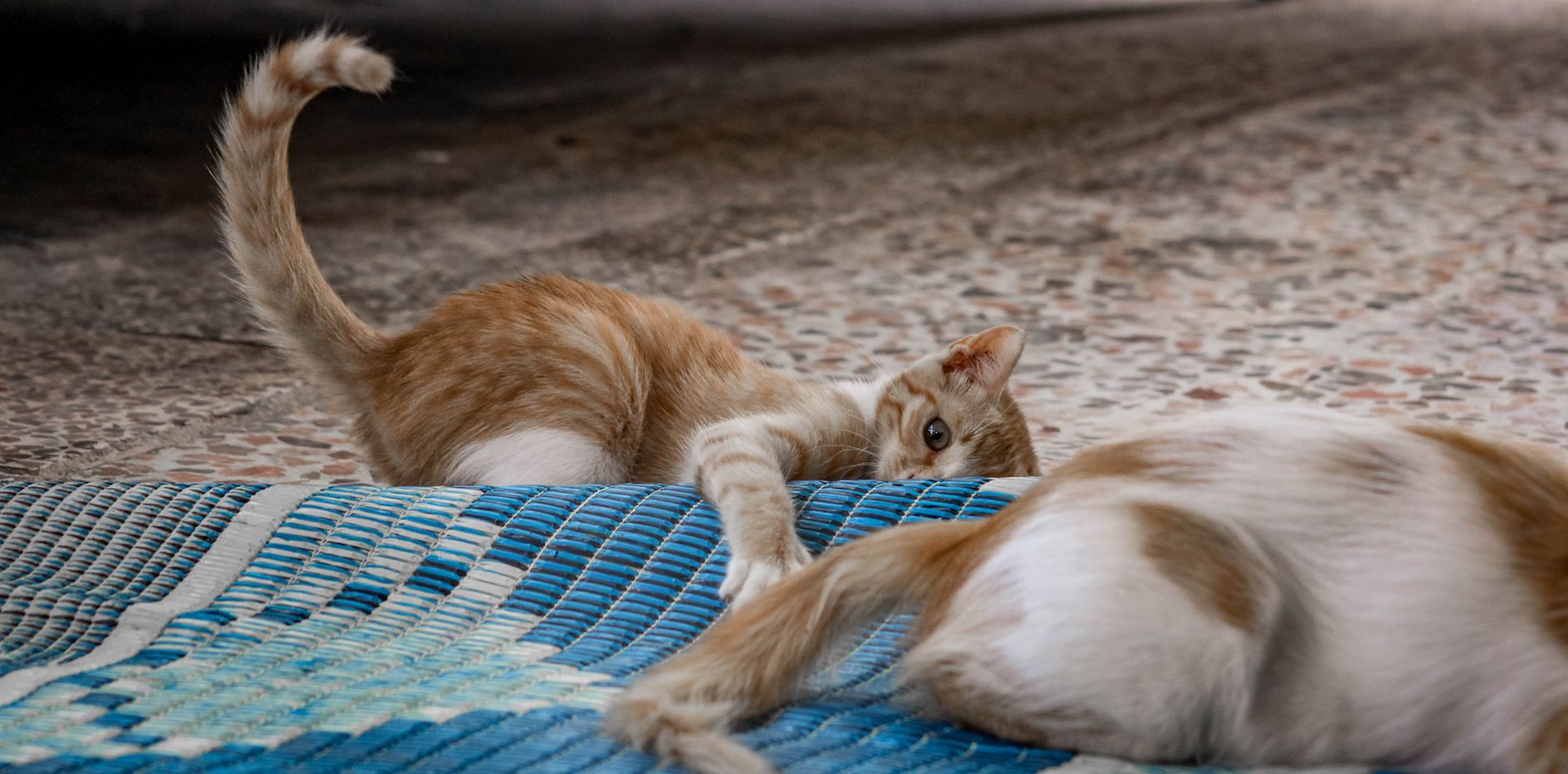
When a relaxed cat is being petted, it will lift its hindquarters and raise its tail, exposing the base of the tail and the scent glands located there.
This is a scent-sharing behavior. Cats have scent glands concentrated at the base of the tail, and when they raise that area toward you during petting, they're marking you as part of their colony. It's both a trust signal and a claim of ownership.
A nervous cat will flinch, crouch, or walk away if you touch anywhere near the tail base. The entire rear half of the cat is considered vulnerable, and anxious cats guard it carefully.
When your cat starts actively pushing that area into your hand, or raising it reflexively when you pet the back, the cat has fully accepted you as safe. The behavior often appears alongside purring and kneading.
Some cats will also swing their tail in a loose, upright curve while being petted—another sign of relaxation. A stiff or low tail during touch is still a caution flag. But physical touch reveals relaxation in other ways too...
#4 — Kneading on You with Full Claw Extension
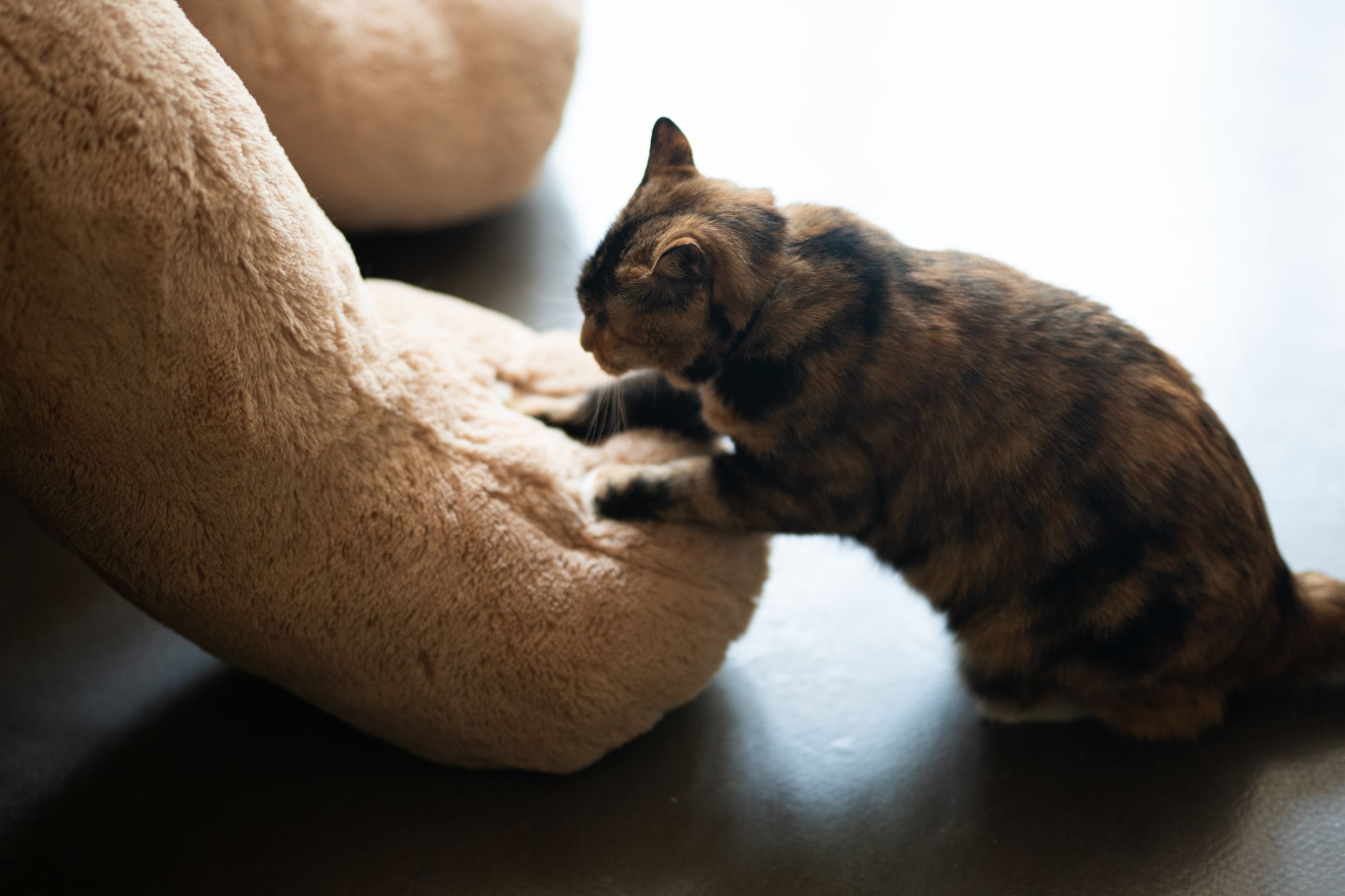
Kneading—the rhythmic push-pull motion cats make with their front paws—is a comfort behavior that stressed cats suppress.
Kittens knead their mother's belly while nursing to stimulate milk flow. Adult cats retain the behavior as a self-soothing motion, but they'll only do it when they feel safe. A nervous cat won't knead at all, or will do it only in private, on a blanket or cushion, never on a person.
When your cat kneads on your lap, chest, or legs, it's regressing to kitten behavior in your presence. That's a profound trust signal. The cat has associated you with the safety it felt with its mother.
The claw extension matters too. Cats retract their claws when they're unsure or defensive. A cat that kneads with claws fully extended—even if it's painful for you—is completely unguarded.
Some cats will drool while kneading, a behavior left over from nursing—it's considered the ultimate sign of contentment.
You'll notice kneading often comes in waves, lasting several minutes, with the cat's eyes half-closed and purring steadily. It's a trance-like state that only happens when the cat feels unthreatened. But trust shows up in less obvious ways too...
#3 — Turning Its Back to You and Facing Away
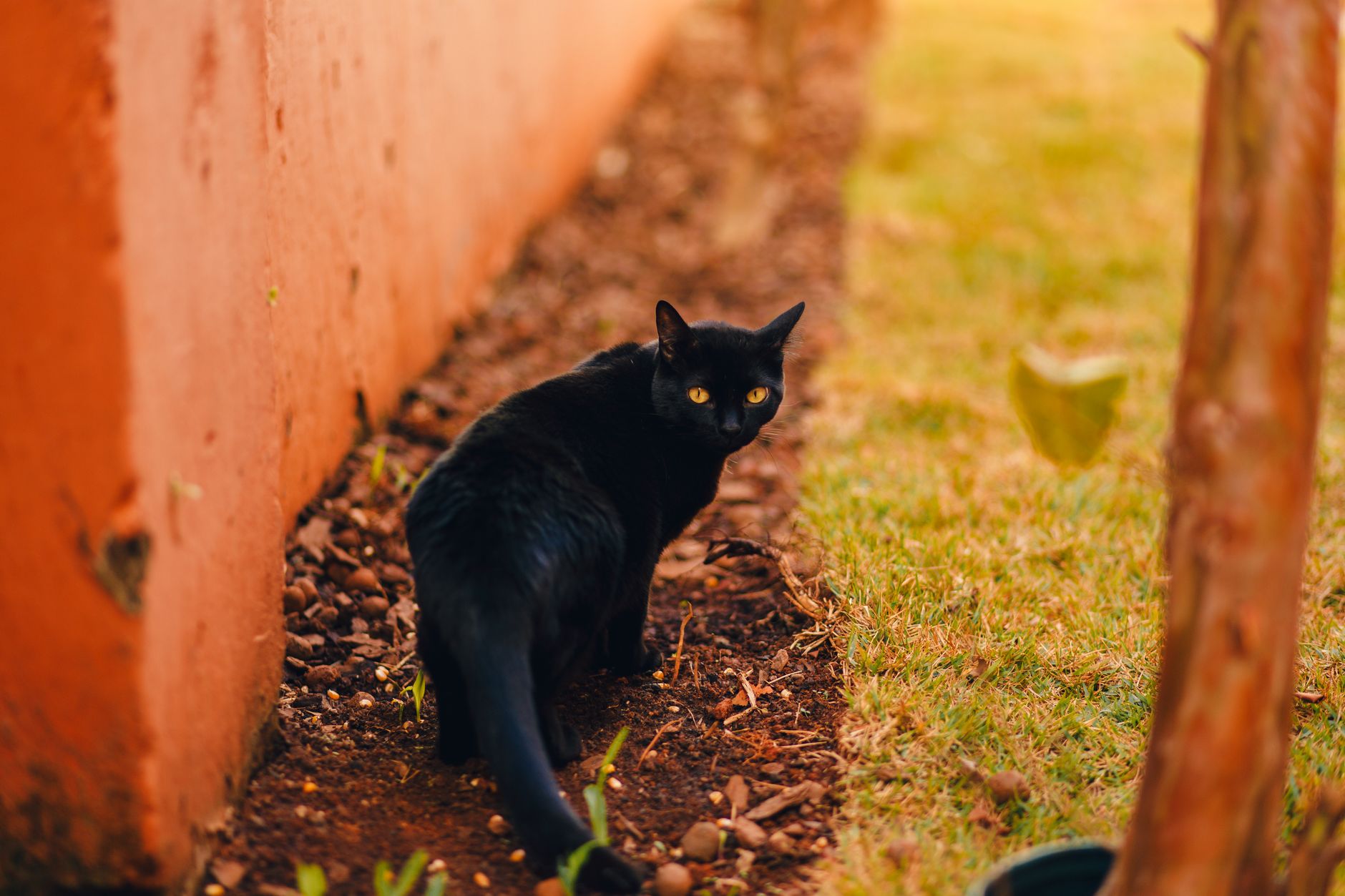
A cat that sits with its back to you is displaying one of the highest forms of trust in feline behavior—and most owners misinterpret it as rejection.
In the wild, a cat never turns its back on a threat. Doing so exposes the neck, spine, and entire rear flank to attack. A cat that sits facing away from you is saying "I don't need to monitor you—I know you're safe."
This behavior often appears when a cat is sitting on your lap or next to you on the couch. Instead of facing you or watching you, it sits perpendicular or with its back fully turned, looking out at the room. New cat owners often feel insulted. Experienced owners recognize it as intimacy.
You might also notice your cat will sit between you and the door, back to you, as if guarding. That's not aloofness—it's your cat acting as your lookout, a role it would only assume if it trusted you to watch its back in return.
The first time a nervous cat turns its back on you and stays that way, it's a landmark moment. It means the cat has fully reclassified you from "potential threat" to "trusted companion." But there's one behavior that goes even further...
#2 — Seeking You Out When Startled Instead of Hiding
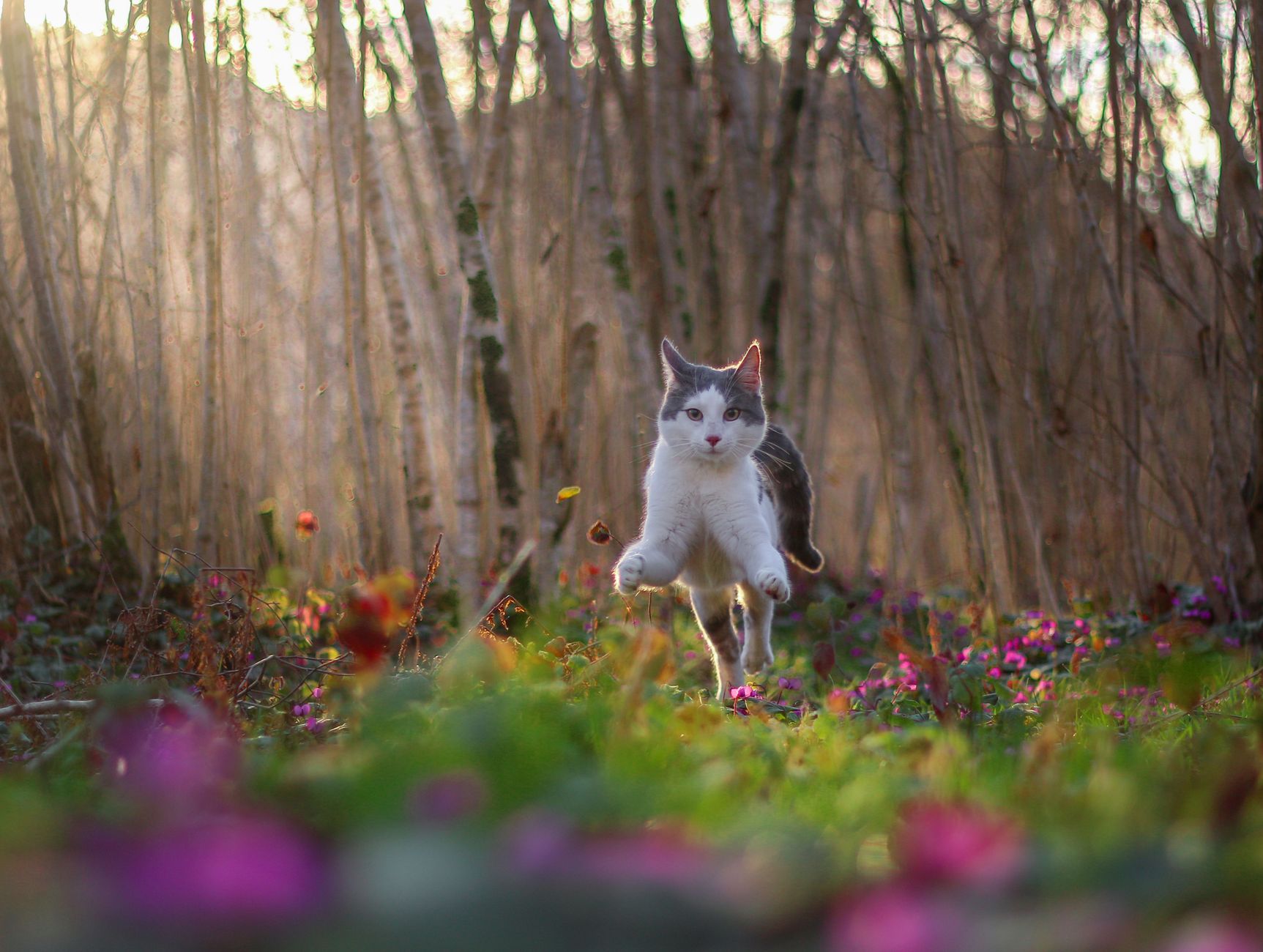
The ultimate test of a cat's trust is where it runs when something scares it—and a fully relaxed cat will run toward you, not away.
This is the behavior that surprises owners most. A loud noise, a dropped pan, a sudden movement—an anxious cat will bolt under the bed or into a closet. A relaxed cat will run to you, positioning itself between your legs or behind you, using you as a shield.
It's a complete inversion of the instinct that drove the cat to hide for months. You've gone from being part of the threat landscape to being the solution to threats. That transformation can take a year or more in a deeply nervous cat.
Behaviorists call this "secure base behavior"—the cat has designated you as its safe zone, the same way a kitten treats its mother.
You'll also notice the cat recovers faster from startle events. Instead of staying hidden for an hour, it'll reappear in minutes, often returning to whatever it was doing before the scare. That resilience is confidence.
Some cats will even start following you from room to room after a startle, as if checking that you're still there. That's reassurance-seeking behavior, and it only happens when the cat views you as a source of security. But there's one final signal that reveals complete comfort...
#1 — Falling Asleep During Active Petting
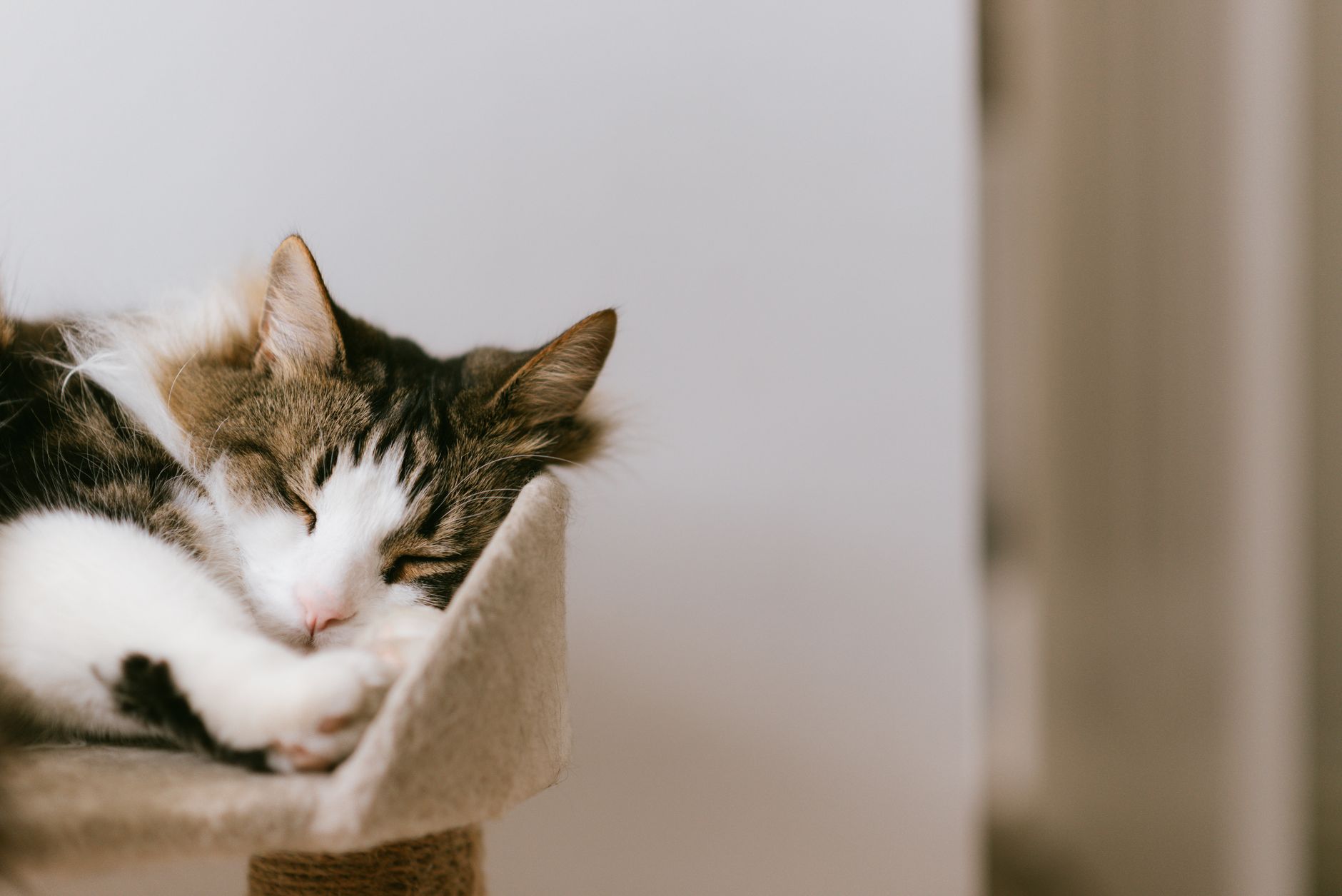
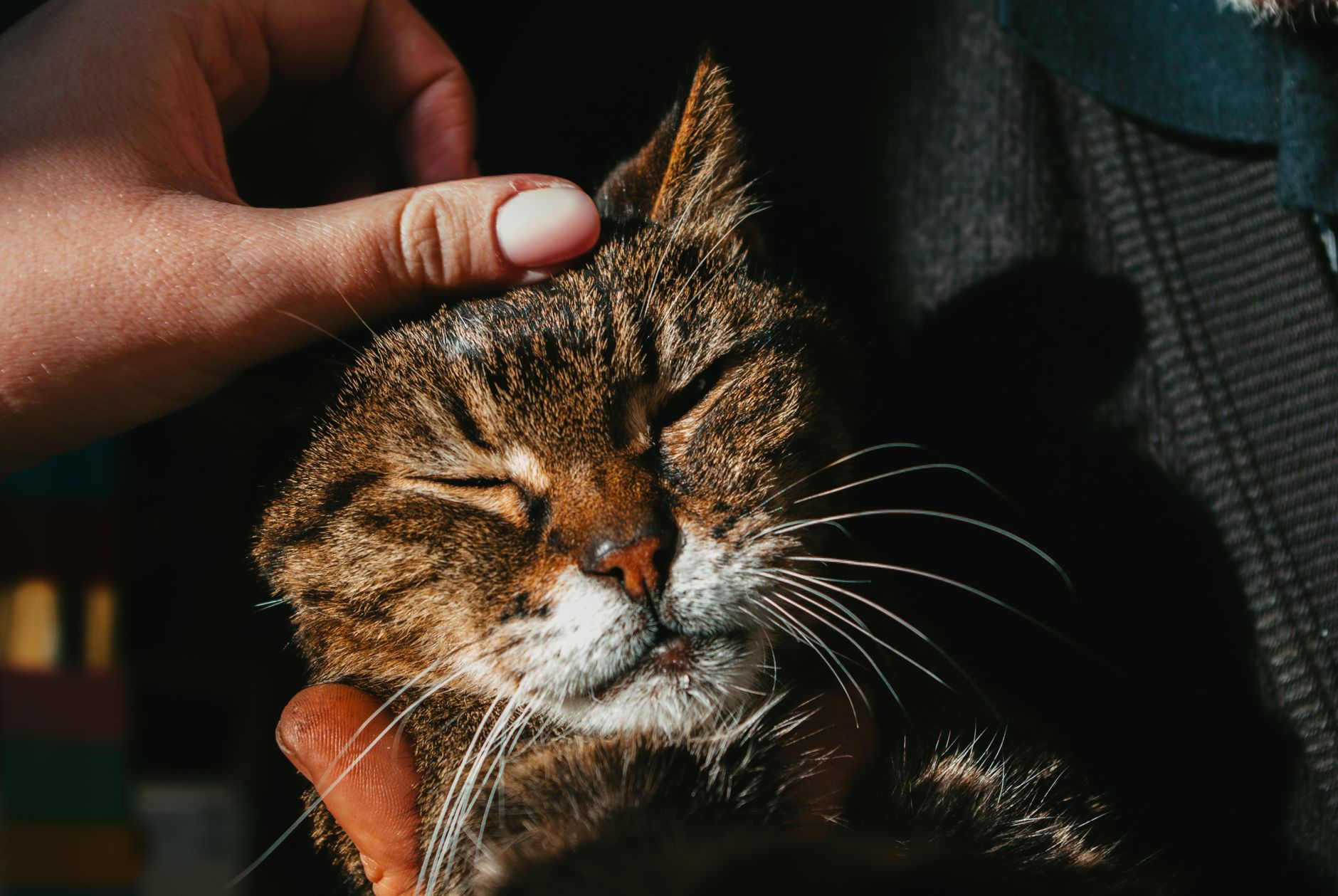
The single strongest indicator that a cat has fully relaxed is when it falls asleep while you're actively petting it—not after you stop, but during.
This requires a cat to override its most basic survival instinct. Touch is stimulating. Being petted means something is happening to the cat, something it can't fully control. A nervous cat will tolerate petting but remain alert, ready to react if the touch turns threatening.
A cat that drifts off mid-petting session has decided you're so safe that it doesn't need to monitor your hands. It's the feline equivalent of falling asleep during a conversation—a trust so complete that vigilance becomes optional.
You'll notice the purring slows, the kneading stops, and the cat's body goes completely limp. The head might droop, the eyes close fully, and the breathing deepens. Some cats will even start snoring softly.
This behavior often emerges suddenly after months of progress, as if a switch flips—one day your cat simply decides you've passed every test.
It's worth noting that not every cat will exhibit all of these behaviors, and some may never fall asleep during petting due to personality rather than anxiety. But if your formerly nervous cat reaches this point, you've successfully built a bond that many cat owners never achieve.
The Bottom Line
The transition from anxious to relaxed is rarely sudden, and it doesn't follow a checklist. Some cats will skip behaviors entirely. Others will cycle backward during stressful periods like a move or a new pet.
But when you start seeing multiple signals from this list—belly flashes, public grooming, slow blinks, and especially that moment when your cat runs to you instead of away—you'll know the work has paid off. The timeline varies wildly. Some cats relax in weeks. Others take years.
The biggest mistake owners make is rushing the process or assuming a cat that's relaxed in one context is relaxed in all contexts. Trust is situational, and a cat that's confident in the bedroom might still be anxious in the kitchen.
Did we miss a relaxation signal your cat shows? Drop it in the comments.