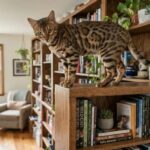
Most people assume a cat skipping meals is just being finicky. Veterinary insiders know that’s almost never the full story.
A cat that refuses food for more than 24 hours is already flirting with hepatic lipidosis – a fast-moving, potentially fatal liver disease, especially in overweight cats. Here’s the exact chain of tests vets run to catch it before it’s too late – and why each one matters more than the one before it.
#14 – Complete Blood Count (CBC)
The CBC is the first domino to fall – and what it reveals can change everything.
Vets use it to check organ function and hunt for infection or inflammation. It measures red cells, white cells, and platelets, giving a broad snapshot of whether the body is fighting something quietly in the background.
A dangerously low red cell count can mean internal bleeding or bone marrow disease, both of which crush appetite fast. A high white cell count points toward infection or immune-driven illness instead.
It’s rarely a standalone answer. But it tells the vet which direction to run – which is exactly why it’s ordered first.
But that’s nothing compared to what #13 uncovers about the organs doing the heaviest lifting.
#13 – Serum Chemistry Profile (Biochemistry Panel)
This is where organ function gets put under a microscope – and the results can be genuinely shocking.
The chemistry panel checks liver, kidney, and pancreatic markers alongside blood glucose and protein. A single abnormal number here can redirect the entire diagnostic path.
Fast Facts
- Liver enzymes (ALT, ALP) flag active liver stress or damage
- Kidney markers (BUN, creatinine) show how well the kidneys are filtering
- Blood glucose rules out diabetes as a hidden trigger
- Total protein tracks hydration and chronic illness
Elevated liver enzymes in a cat that hasn’t eaten for just 48 hours can already signal hepatic lipidosis in progress. Elevated creatinine or BUN points straight toward kidney disease – one of the top reasons cats stop eating.
Even so, some diseases can slip through this net completely untouched.
But that’s nothing compared to what #12 adds to the picture with a single, often-overlooked sample.
#12 – Urinalysis
Most owners don’t realize a urine sample can reveal what blood tests miss entirely.
Urinalysis checks kidney function, screens for urinary infections, and measures urine concentration – a critical clue about whether the kidneys are still pulling their weight. Dilute urine in a cat that won’t eat is a red flag for chronic kidney disease, diabetes, or hyperthyroidism.
Protein in the urine can signal early kidney damage the chemistry panel hasn’t caught yet. Vets often spot disease in the kidneys weeks earlier through urine than through blood alone.
It’s technically not a “blood test,” but it’s a non-negotiable part of the minimum database every workup should include.
But that’s nothing compared to what #11 hunts for in the thyroid – especially in older cats.
#11 – Total T4 (Thyroid Hormone Level)
Here’s the test most owners have never heard of – yet it’s a game-changer for cats over seven.
Feline hyperthyroidism is the most common hormonal disorder in older cats, and total T4 is the standard first screen. Oddly, hyperthyroid cats often lose their appetite rather than overeat, especially when the disease turns severe or is complicated by another illness.
Here’s the sneaky part: a hyperthyroid cat with a second illness can show a falsely normal T4, masking both conditions at once. That’s why vets always pair it with the chemistry panel.
In cats over six, a total T4 is specifically recommended for any cat with a dropped appetite or GI symptoms.
But that’s nothing compared to what #10 detects – two viruses that silently devastate the immune system.
#10 – FeLV/FIV Combo Test
Two viruses. One fast test. Results that can rewrite a cat’s entire prognosis.
Feline leukemia (FeLV) and feline immunodeficiency virus (FIV) both suppress the immune system in ways that make almost any illness worse – and appetite loss is often the first visible sign.
FeLV is the leading viral cause of cancer in cats, and a positive result changes which treatments are even safe to try. An undiagnosed positive cat treated for a “routine” illness can decline fast.
This test gets pulled specifically when a cat shows anorexia, vomiting, or signs of systemic illness.
But that’s nothing compared to what #9 reveals about an organ most owners never think about.
#9 – Feline Pancreatic Lipase (fPLI)
This is the test vets increasingly reach for – and it catches a condition most owners never suspect.
fPLI is considered the go-to blood test for feline pancreatitis. Unlike dogs, cats rarely show dramatic vomiting when their pancreas is inflamed.
The most common signs of pancreatitis in cats are simply: not eating, and being quiet. No vomiting, no obvious pain – just a cat sitting by its bowl and walking away.
Worth Knowing
- Feline pancreatitis often overlaps with liver disease and IBD, a trio vets call triaditis
- fPLI is built for cats, unlike the amylase and lipase tests designed around dogs
- Chronic, low-grade cases can simmer for months before a cat stops eating entirely
Because the symptoms are so vague, fPLI is recommended in nearly every cat with chronic GI signs.
But that’s nothing compared to what #8 looks for in the gut itself – a nutrient deficiency hiding in plain sight.
#8 – Cobalamin (Vitamin B12) Level
A cat refusing food for days may actually have been quietly malnourished for months before anyone noticed.
Vets strongly recommend checking cobalamin and folate in any cat with GI concerns. Low B12 is common in cats with intestinal disease, and it’s the single biggest predictor of a poor treatment outcome.
Low B12 causes nausea, weakness, and appetite loss on its own – meaning the deficiency can quietly feed the very problem the vet is trying to solve. It’s a loop that only breaks once the deficiency is caught and corrected.
Hyperthyroid cats appear especially prone to low B12 and folate, which is why both get checked together in that group.
But that’s nothing compared to what #7 maps out in the intestinal tract.
#7 – Serum Folate Level
Folate might be the most precise test on this entire list – and almost nobody talks about it.
Folate is only absorbed in the upper small intestine, while B12 is absorbed further down. Run together, they turn into a spatial map of the gut.
In other words, this pairing lets a vet essentially pinpoint where in the intestine the problem is sitting – upper, lower, or throughout – without a single scan.
For cats with chronic GI signs and no obvious systemic cause, this combination is a core part of the workup.
But that’s nothing compared to what #6 uncovers about the pancreas’s other, lesser-known job.
#6 – Feline Trypsin-Like Immunoreactivity (fTLI)
Most people have never heard of this test. Vets treating anorexic cats order it constantly.
fTLI is the definitive test for exocrine pancreatic insufficiency (EPI) – a condition where the pancreas stops making enough digestive enzymes. The cat can eat and still starve, because nothing gets absorbed.
Quick Compare
- Dogs with EPI: usually keep a hearty appetite, yet still lose weight with poor-quality stools
- Cats with EPI: signs are vaguer, and weight loss can show up with almost no other clue
Weight loss is sometimes the only visible clue, with appetite loss following close behind. Many EPI cats get labeled “picky eaters” for months before this single test finally reveals the truth.
Vets usually require an eight-hour fast before the draw, since fTLI can spike slightly right after a meal.
But that’s nothing compared to what #5 exposes through a completely different kind of sample.
#5 – Fecal Examination (Parasite Screen)
This one surprises people every time – internal parasites can shut down a cat’s appetite with zero other symptoms.
Roundworms, hookworms, Giardia, and Tritrichomonas can all suppress appetite, especially in younger or outdoor cats. The cat doesn’t need diarrhea for parasites to be the culprit.
Giardia is notorious for causing subtle, on-and-off appetite loss with nothing else wrong – and it’s often missed unless the vet specifically requests a PCR test instead of a standard fecal float.
A thorough workup usually means multiple fecal checks or a deworming trial, run alongside thyroid and viral testing.
But that’s nothing compared to what #4 looks for inside the abdomen in real time.
#4 – Abdominal Ultrasound
Blood panels can come back perfectly normal while something serious is growing silently inside. This test finds it.
Ultrasound shows what X-rays can’t – the texture of organs, the thickness of intestinal walls, fluid where there shouldn’t be any.
Intestinal wall thickening on ultrasound is a key sign of either inflammatory bowel disease or small cell lymphoma – two of the most common reasons older cats stop eating. The problem? They can look almost identical on imaging alone.
When blood work comes back clean but a cat is still lethargic and refusing food, this is the next essential step.
But that’s nothing compared to what #3 can confirm when imaging raises more questions than answers.
#3 – Electrolyte Panel (Sodium, Potassium, Chloride)
This one is quietly critical – skip it, and a treatment plan can end up making things worse.
Potassium drops fast in cats that stop eating, and low potassium causes muscle weakness – including the muscles that move food through the gut.
A cat with severe low potassium can become so weak it can’t hold its head up properly – a condition called cervical ventroflexion. It looks neurological. It isn’t. It’s electrolytes, and it’s fixable.
Correcting these imbalances is a required part of any supportive care plan for a cat that isn’t eating.
But that’s nothing compared to what #2 reveals when the vet suspects the body has turned against itself.
#2 – Coagulation Profile
This test doesn’t come up in casual conversation – but when it does, the stakes are already very high.
Coagulation tests measure how well the blood clots. Abnormal results point toward liver failure, rodenticide poisoning, or severe systemic disease.
At a Glance
- Ordered before any biopsy, surgery, or invasive procedure
- Flags rodenticide poisoning before it turns fatal
- Reveals when the liver can no longer produce its own clotting factors
A cat with a clotting defect cannot safely undergo surgery, biopsies, or even a routine blood draw without real bleeding risk. Knowing this before any invasive procedure isn’t optional – it’s life-saving.
It also tells the vet whether the liver has failed so badly it can no longer make its own clotting factors – one of the most serious findings possible in a cat that “just won’t eat.”
But that’s nothing compared to the test at #1 – the one that can pinpoint exactly where in the gut the problem lives, without a single incision.
#1 – Intestinal Biopsy (Endoscopic or Surgical)
When every other test has run out of answers, this is the one that finally gives them.
A biopsy takes a tiny sample of intestinal tissue and examines it under a microscope, separating inflammatory bowel disease from lymphoma at the cellular level.
This distinction is everything – IBD is treated with steroids, while some lymphomas require chemotherapy. Getting it wrong doesn’t just fail to help the cat, it can speed up the disease.
Many cats with IBD also have quiet inflammation in the liver and pancreas at the same time, a combination called triaditis – which is exactly why vets often biopsy more than one site.
This is the end of the diagnostic tunnel – and for many cats, it’s the test that finally turns the lights on.
The Bottom Line
Anorexia in cats isn’t a disease itself – it’s a warning sign, and the list of possible causes behind it is long. Cats tolerate calorie deprivation far worse than dogs, and even a few days without food can trigger life-threatening fatty liver disease.
The 14 tests above form a logical cascade. Each one narrows the field, and the best vets rarely stop at just the first two or three.
If your cat has refused food for more than a day, don’t wait it out. The answer is almost always sitting in the lab – it just depends on how far your vet is willing to dig.
Has your cat ever had a surprising diagnosis after a full workup? Drop it in the comments – your story might help another cat owner act faster.
Growing up traveling and experiencing new cultures and wonders, I have had a passion for nature, adventuring, photography, and videography. I am currently working towards a BSc in Biodiversity and Ecology at Stellenbosch University, and I hope to specialise in Marine Sciences one day.
Please send any feedback to Feedback@animalsaroundtheglobe.com