15 Things a Cat Does That Mean It Feels No Need to Hide Anymore
Most people think a cat that ignores you is being rude. Turns out, they've got it completely backwards.
Cats are hardwired prey animals - every move they make around you is a calculated risk assessment. When one finally drops its guard, the signals are quiet, specific, and almost impossible to notice unless you know what to look for.
Most owners walk right past these signals every single day. Here's what behaviorists actually say your cat is trying to tell you.
#15 - They Walk Past You Without Watching You
A wary cat never takes its eyes off a threat. A cat that truly feels safe skips the crouching, the flattened posture, the sideways glances entirely.
When your cat strolls past you without a single glance, that IS the compliment. It means it isn't tracking you as a potential danger anymore.
Most owners read a cat's indifference as dislike. Behaviorists say it's the opposite - a cat that watches you constantly is stressed, while one that ignores you has already decided you're harmless.
But the physical signals get far more specific than a casual stroll. #14 involves something cats do with their eyes that researchers consider one of the clearest trust signals in the animal kingdom.
#14 - They Slow Blink at You
This one surprises most people. A slow, deliberate blink is one of the clearest signs a cat feels safe with you.
Closing your eyes near a threat is a potentially fatal move in the wild. Doing it voluntarily, aimed straight at you, is the feline equivalent of lowering a weapon.
The slow blink is a sign of trust. Your cat is showing that they are relaxed and comfortable in your presence.
Cristin Tamburo, Certified Feline Behavior Consultant
You can even blink back. #13 involves something far more physical that proves they've decided you belong to them.
#13 - They Headbutt You (Bunting)
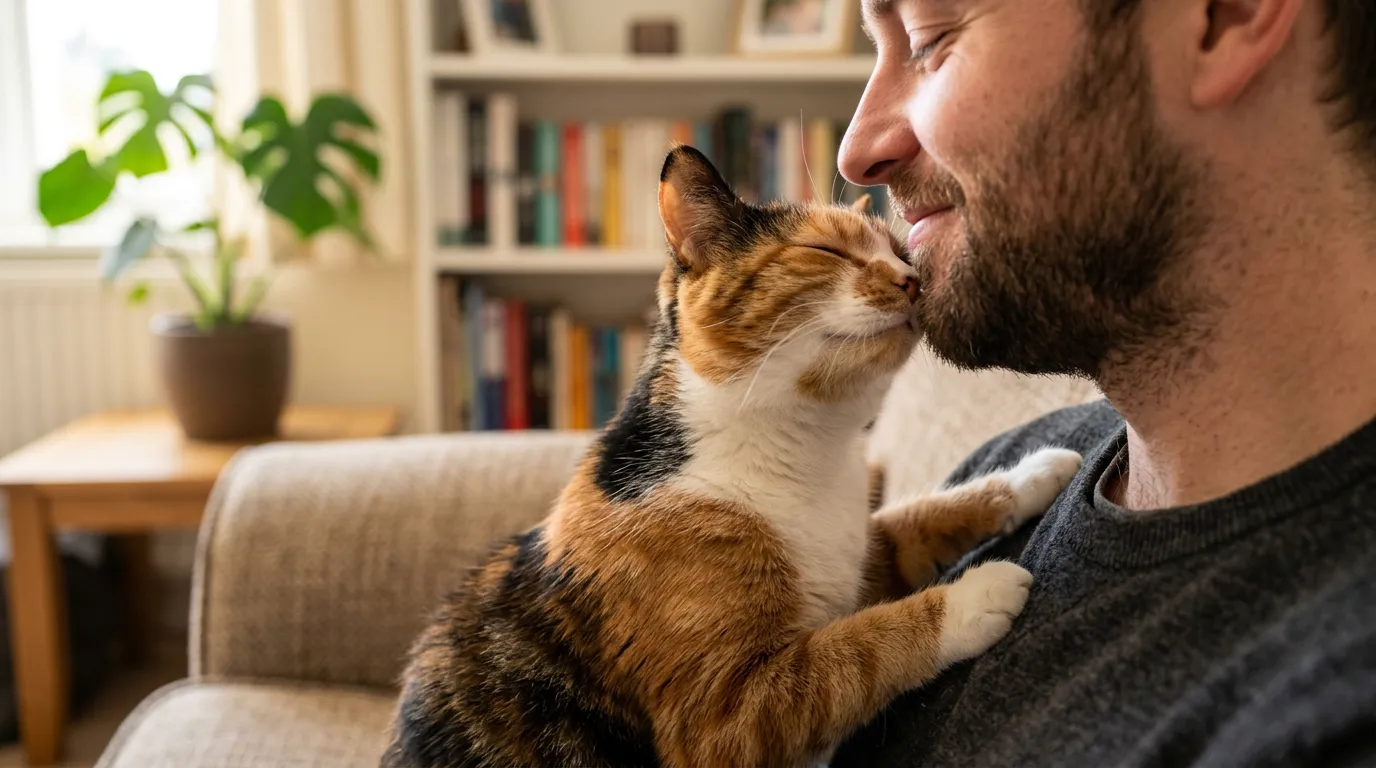
Cats don't press their heads against just anyone. Turning their back on a potential predator is risky, so bunting only happens when a cat feels completely safe.
Cats have scent glands on their cheeks and forehead. By bumping you, they're marking you with their own scent and claiming you as part of their colony.
Fast Facts
- Cats carry scent glands across their cheeks, forehead, chin, and even their paws.
- Bunting is reserved for cats, dogs, or humans a cat already considers part of its trusted circle.
- The scent deposited is undetectable to humans, but other cats can pick it up from a distance.
This isn't affection for affection's sake - it's your cat officially registering you as a member of their social group. Cats rarely headbutt strangers, only those they feel deeply connected to.
The next behavior looks almost identical to something cats do when they're anxious - but the context changes everything.
#12 - They Knead on You or Near You
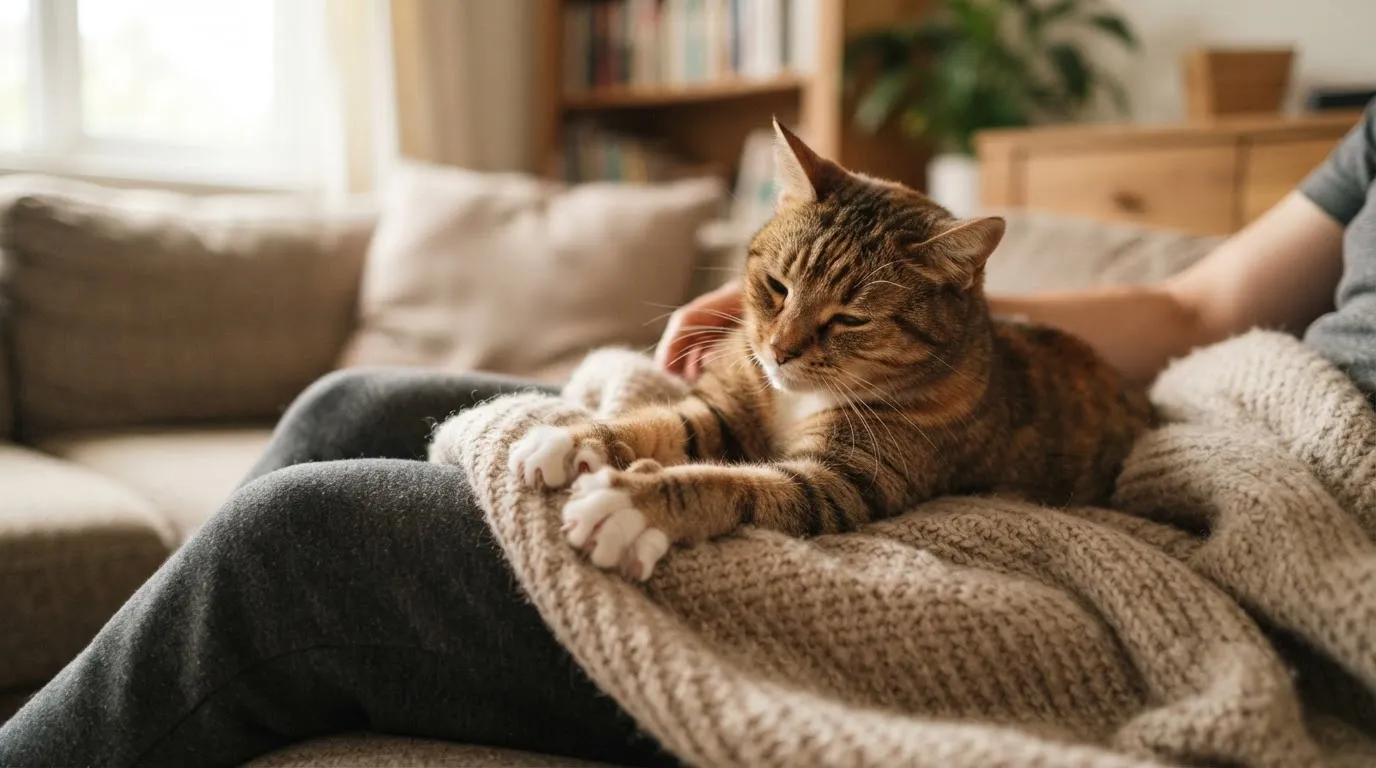
That rhythmic paw-pushing goes all the way back to kittenhood, when cats kneaded their mother's belly to stimulate milk flow. Adults keep doing it whenever they feel that same safety.
Kneading you specifically means your cat associates you with the most secure relationship it has ever known - its mother. That's not a small comparison for an animal built to stay guarded.
It's not just a physical habit - it's a psychological one, wired straight into their earliest memory of safety.
And speaking of vulnerability, #11 involves the most exposed position a cat's body can be in.
#11 - They Expose Their Belly
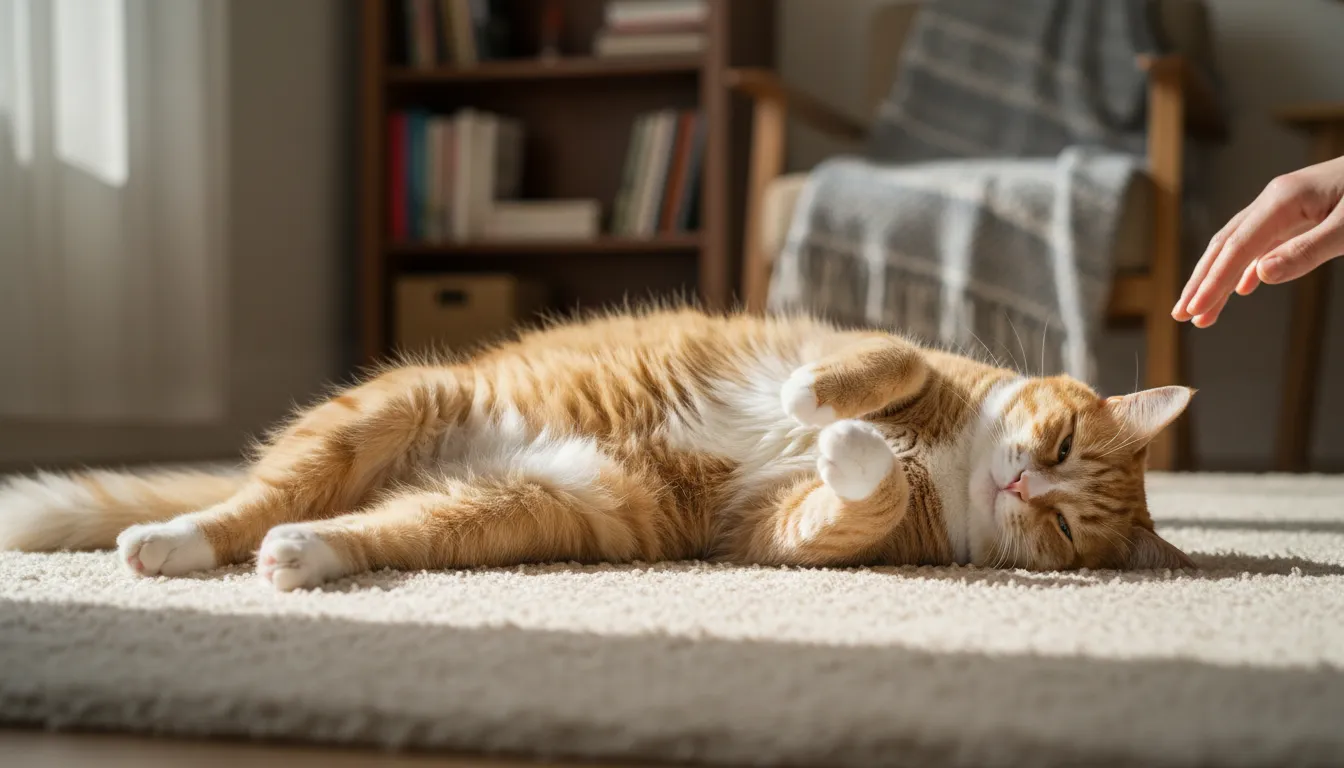
Here's where most people make a costly mistake. Belly exposure signals trust - it is not, in most cases, an invitation to touch.
The belly has zero skeletal protection and is a predator's primary target. Showing it to you is a statement of safety, not a request for a rub.
Respect the display without grabbing it, and the trust only deepens. Reach for it, and you might undo the very trust that earned you the display in the first place.
The next signal happens every single day, and almost nobody reads it correctly.
#10 - They Greet You at the Door with a High Tail
Cats who trust you often develop a greeting they reserve just for you. Walking toward you confidently with the tail raised is a clear sign of safety.
A tail held high with a slight curve at the tip is the feline equivalent of a cheerful wave. Kittens use it with their mothers; trusted adult cats use it with you.
A tail tucked low means fear. A tail straight up means: I see you, I'm glad you're here, and I don't need to hide.
#9 takes trust into one of the most biologically vulnerable moments a cat ever experiences.
#9 - They Sleep Near You or On You
Sleep is when a cat is at its most defenseless. Choosing to snooze next to you means it feels completely secure in your presence.
This isn't just warmth-seeking. A cat that could nap anywhere in the house - on a wardrobe, under the bed, in a closet - and still picks you has made a deliberate decision.
Quick Compare
- Curled Ball: tail wrapped tight, vital organs shielded, the default "just in case" position.
- Stretched Out: legs extended, belly exposed, and a clear sign the cat feels totally relaxed and unthreatened.
In the wild, a sleeping cat that picks the wrong spot doesn't wake up. Choosing you as that spot is about as direct a trust declaration as cats can make.
The next behavior is something most people find annoying - but it's actually a high-level compliment.
#8 - They Follow You From Room to Room
A nervous cat retreats and hides. A happy cat follows you around the house instead.
Trailing you from the kitchen to the bathroom isn't clinginess. It's a cat choosing your company over solitude - the exact opposite of its survival instinct.
Cats aren't pack animals. Staying near you requires them to actively override their built-in "keep distance" wiring.
#7 crosses into something almost shockingly trusting for an animal like this.
#7 - They Use the Litter Box When You're in the Room
This one catches people off guard. Going to the bathroom is one of the most vulnerable things a cat can do, so doing it near you means it feels genuinely safe.
Elimination is the moment a prey animal is most distracted and most exposed. A comfortable cat may even skip burying its waste at home, something instinct normally demands.
A cat that won't use the litter box around you is a stressed cat. One that does it without hesitation has decided you're zero threat.
#6 involves something cats do with their mouths that goes much further than simple grooming.
#6 - They Groom You (Allogrooming)
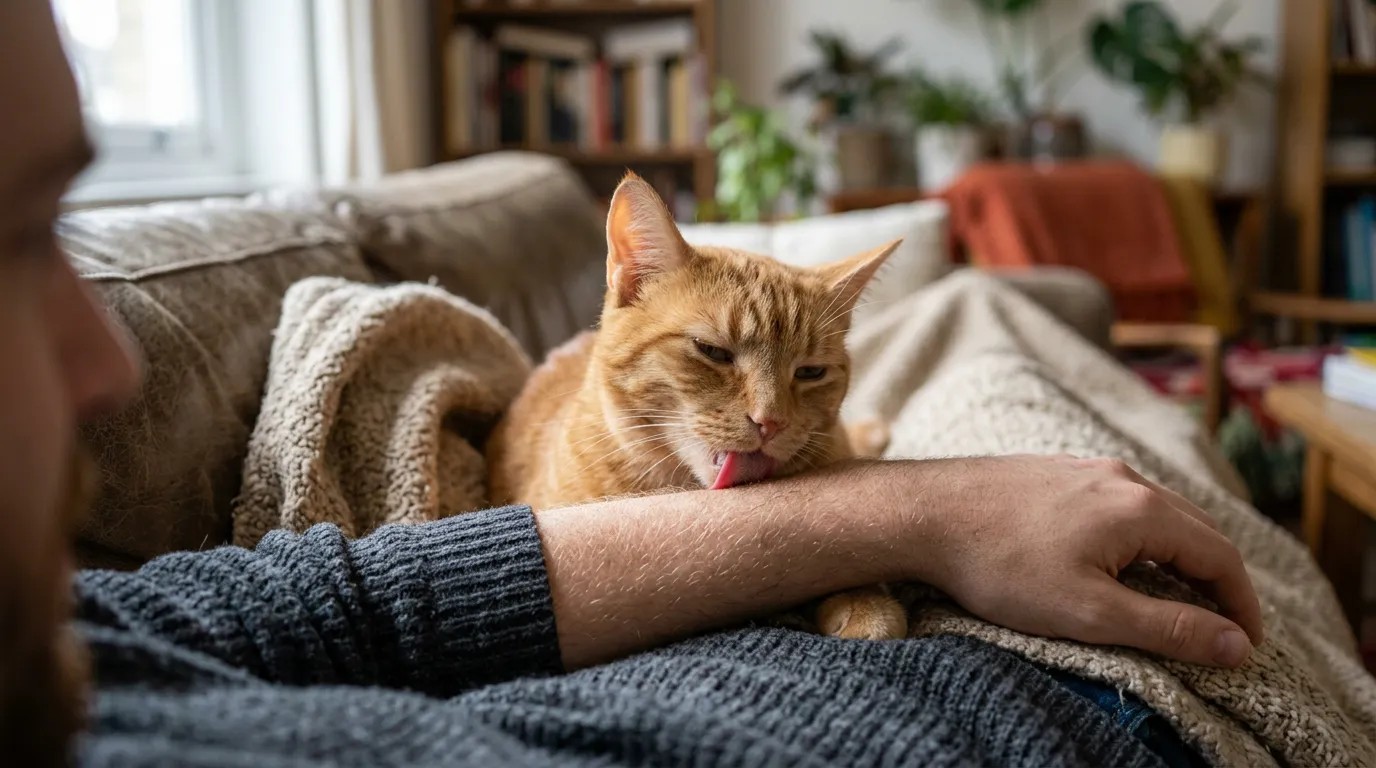
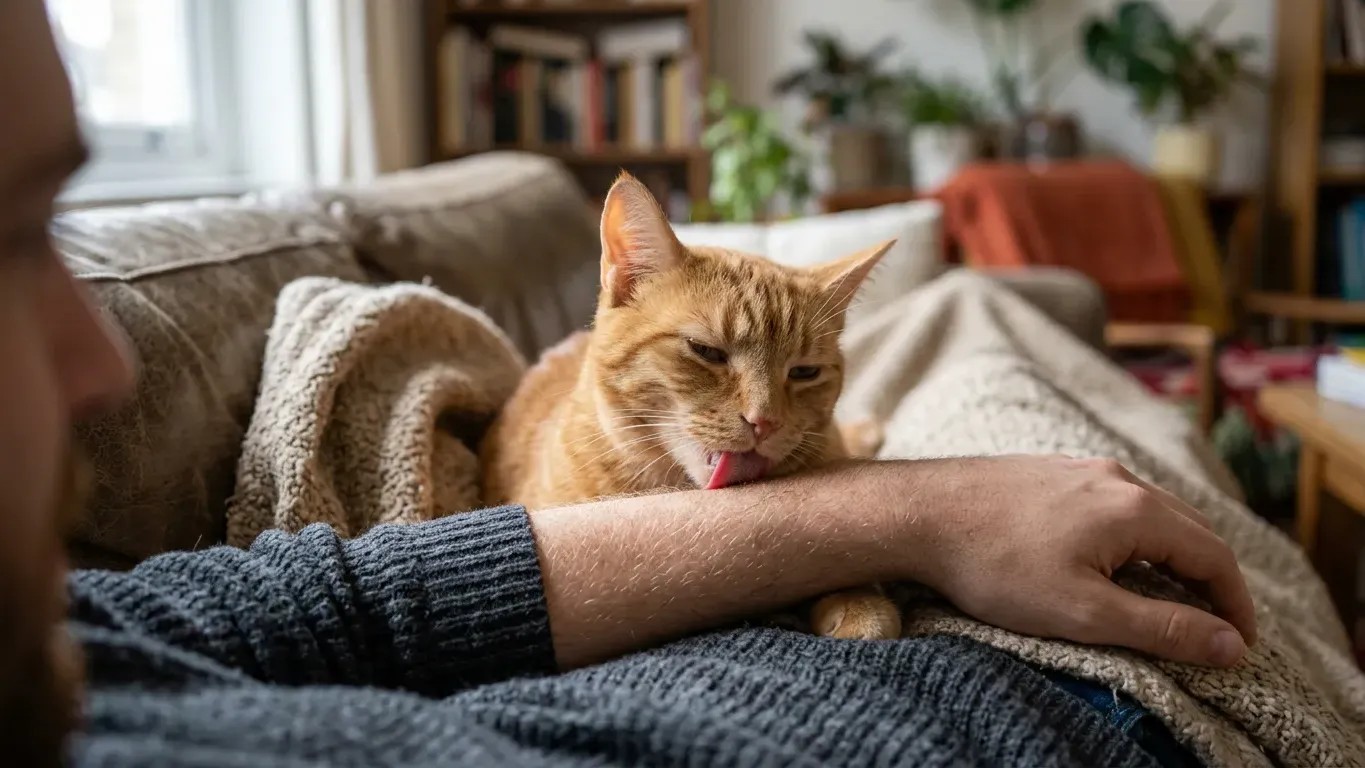
Mutual grooming, called allogrooming, is a behavior cats reserve strictly for their social colony. When your cat licks you, it's marking you and reinforcing the bond.
Worth Knowing
- Allogrooming is one of three main ways cats express cohesion in a colony, alongside allorubbing and scent signals.
- Researchers have found this grooming occurs among cats that already share an established social bond.
- When cats seek out physical closeness, like snuggling together, grooming follows in roughly 41% of those moments.
Getting groomed by your cat isn't just cute - in the wild, that inner circle would number only a handful of individuals. You've made the cut.
Next up is something that happens during playtime, and the way your cat does it tells you everything.
#5 - They Bring You "Gifts" (Toys or Prey)
Most people are horrified when a cat drops a dead mouse at their feet. Flip that reaction around, though - in colony life, sharing prey only happens between cats that have fully accepted each other.
Your cat isn't showing off. It's inviting you into one of the most fundamental bonding rituals of feline social life.
The gesture means even more when your cat drops the gift and walks away without expecting a reaction. That's confidence, not indifference.
#4 connects directly to how cats communicate safety using scent.
#4 - They Rub Their Body Against Your Legs
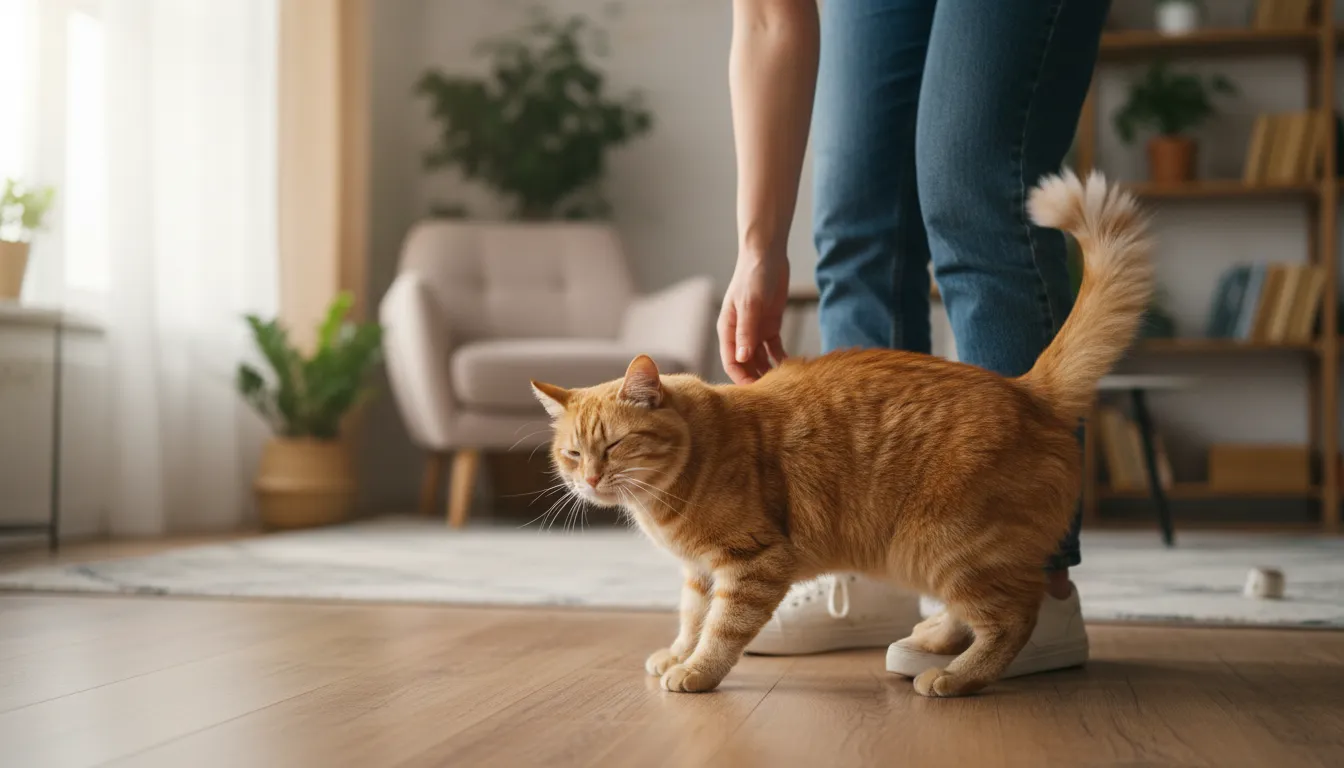
This isn't random friction. Your cat has scent glands along its cheeks, chin, and the base of its tail, and dragging them across you sends a clear message to every other cat: this human is mine, and safe.
A cat that rubs against strangers is extremely rare. One that does it to you regularly has placed you in a category almost nothing else occupies.
#3 is one that most cat owners notice but seriously underestimate.
#3 - They "Talk" to You with Chirps, Trills, and Meows
Adult cats barely meow at each other. That vocalization developed almost exclusively to communicate with humans.
A cat that chatters, trills at the door, or meows for attention has chosen communication over avoidance. That's a deliberate act, not background noise.
Why It Stands Out
- Adult cats almost never meow at each other; it's largely a leftover kitten behavior redirected at people.
- Feral cats meow far less than housecats, since they don't have humans to "talk" to.
- Kittens meow to solicit attention from their mother, then drop the habit with other cats once grown - except with you.
Cats essentially dropped meowing for interspecies use except with trusted humans, which makes every meow directed at you a unique evolutionary gesture. A silent cat around you isn't calm - it may just not have decided you're worth addressing yet.
#2 will look extremely familiar to anyone who has ever felt a small head appear on their lap.
#2 - They Initiate Physical Contact on Their Own Terms
There's a critical word here: initiate. Climbing onto your lap on their own is a far stronger signal than simply tolerating being picked up.
A cat that endures being held is not the same as a cat that walks over and chooses you. One is patience. The other is a decision.
A cat that selects your lap, chest, or shoulder without being placed there is telling you exactly where it feels safest in the entire world. You're it.
And the #1 signal is the one most owners never register as meaningful - but behaviorists say it may be the most telling of all.
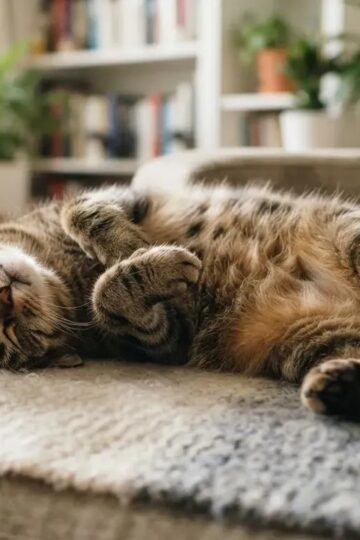
#1 - They Sleep in a Fully Stretched, Exposed Position Near You
Not just sleeping near you - sleeping open. Legs extended, body sprawled, zero defensive curl.
The tight ball with tucked paws is a cat protecting its organs. The full stretch is a cat that has decided there is nothing worth protecting against.
When a cat does this specifically near you, out in the open, it means you are the safety. You've been fully cleared - the highest status a cat can give anyone.
The Bottom Line
Cats aren't cold or unreadable - they're just precise. Every signal on this list is a calculated act of trust from an animal whose instincts scream stay guarded, stay hidden, stay ready.
When a cat slow blinks, sleeps open, headbutts you, or trills at the door, it has decided - on its own terms - that you're safe. Cats don't perform trust. They either feel it or they don't.
So if your cat does even a handful of these things, you've earned something genuinely rare. Which one surprised you most? Tell us in the comments.