21 Small Routines Your Cat Waits for Every Single Day
Cats are creatures of habit in ways most dog owners would find genuinely surprising. **A 2019 study published in Current Biology found that cats form strong attachments to daily routines and show measurable stress when those routines are disrupted—often more than dogs do.**
Your cat isn't just going through the motions. She's counting on specific moments that anchor her entire day, and when you skip one, she notices immediately.
Here's what the data actually says.
#21 — The First Bathroom Visit You Make Each Morning
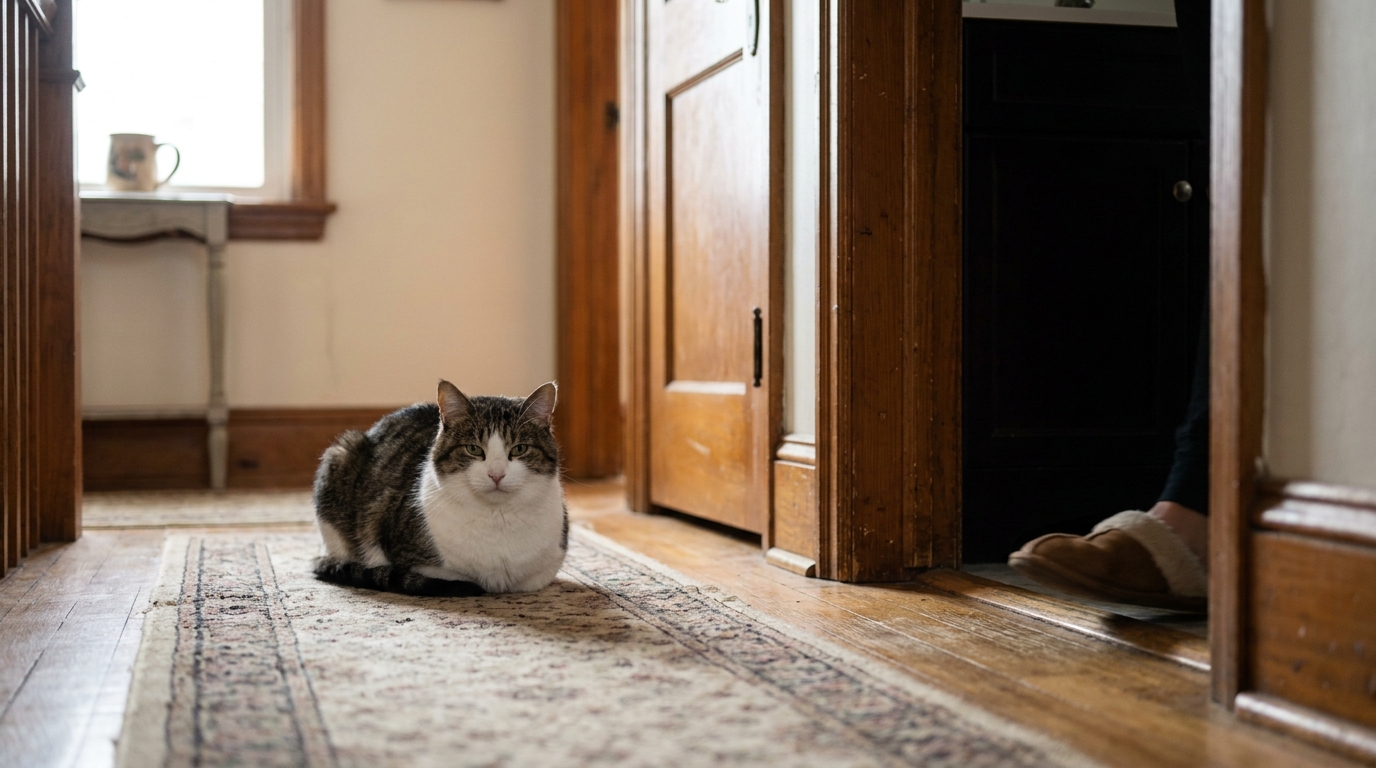
Your cat positions herself outside the bathroom door before you even wake up fully.
This isn't random affection. Cats are crepuscular hunters, meaning they're wired to be most active at dawn and dusk. Your first movement of the day triggers her instinct that it's time to interact.
She's also checking that you're functional. In multi-cat or cat-dog households, the morning bathroom trip is when she gets you alone.
Behaviorists note that cats often vocalize more during this moment than any other time of day. It's a status check and a resource negotiation rolled into one.
But that's nothing compared to #20...
#20 — The Exact Moment You Turn Off Your Alarm
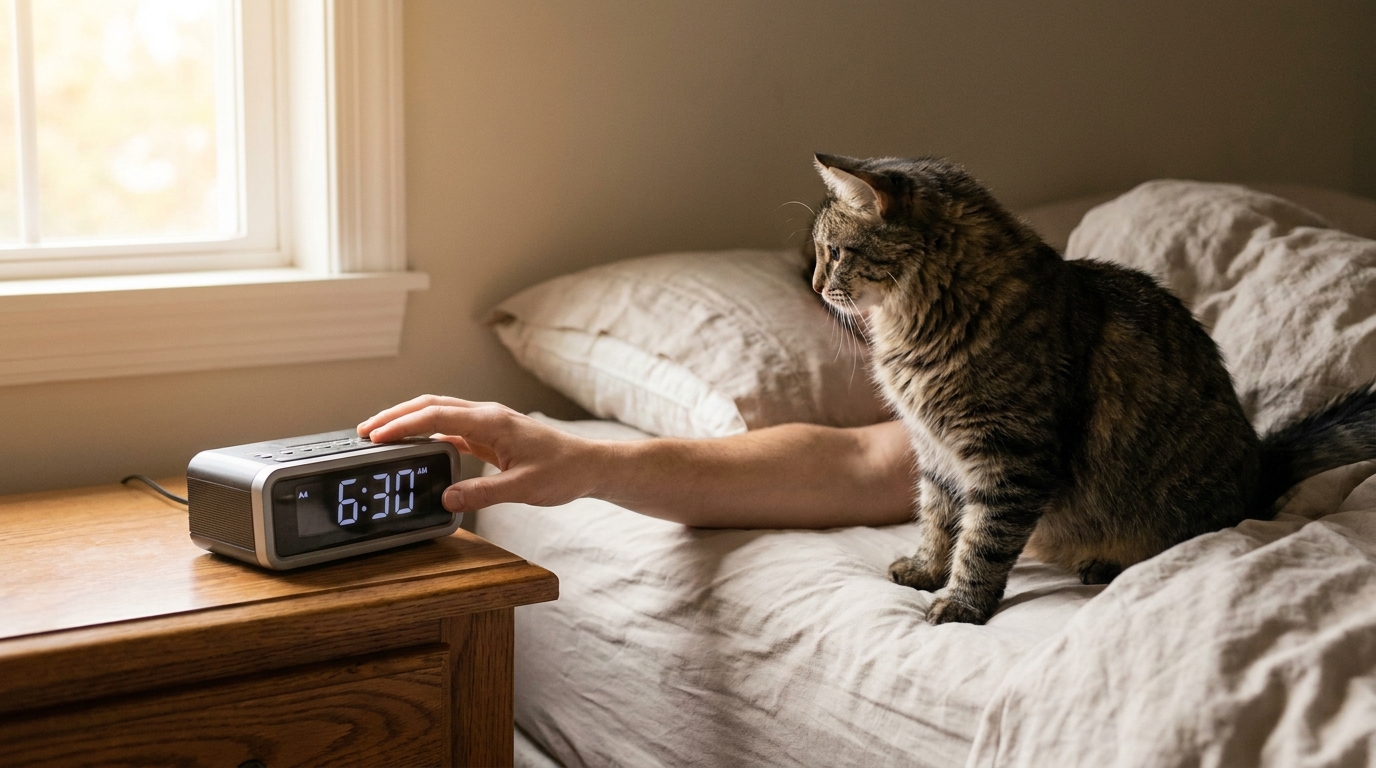
She's not reacting to the sound—she's been waiting for it.
Cats learn the sequence of sounds that precede feeding and attention. The alarm isn't just noise; it's the starting gun for her entire morning routine. Many cats will stare at their owners from the foot of the bed in the minutes before the alarm, already anticipating.
A study from Lincoln University found that cats can distinguish between weekday and weekend alarm patterns within two weeks. If you sleep in on Saturday, she knows, and her behavior adjusts.
This is learned behavior, but it's so precise that many owners report their cat waking them before the alarm on days when the phone dies overnight.
But the real routine begins with #19...
#19 — Watching You Make Coffee or Tea
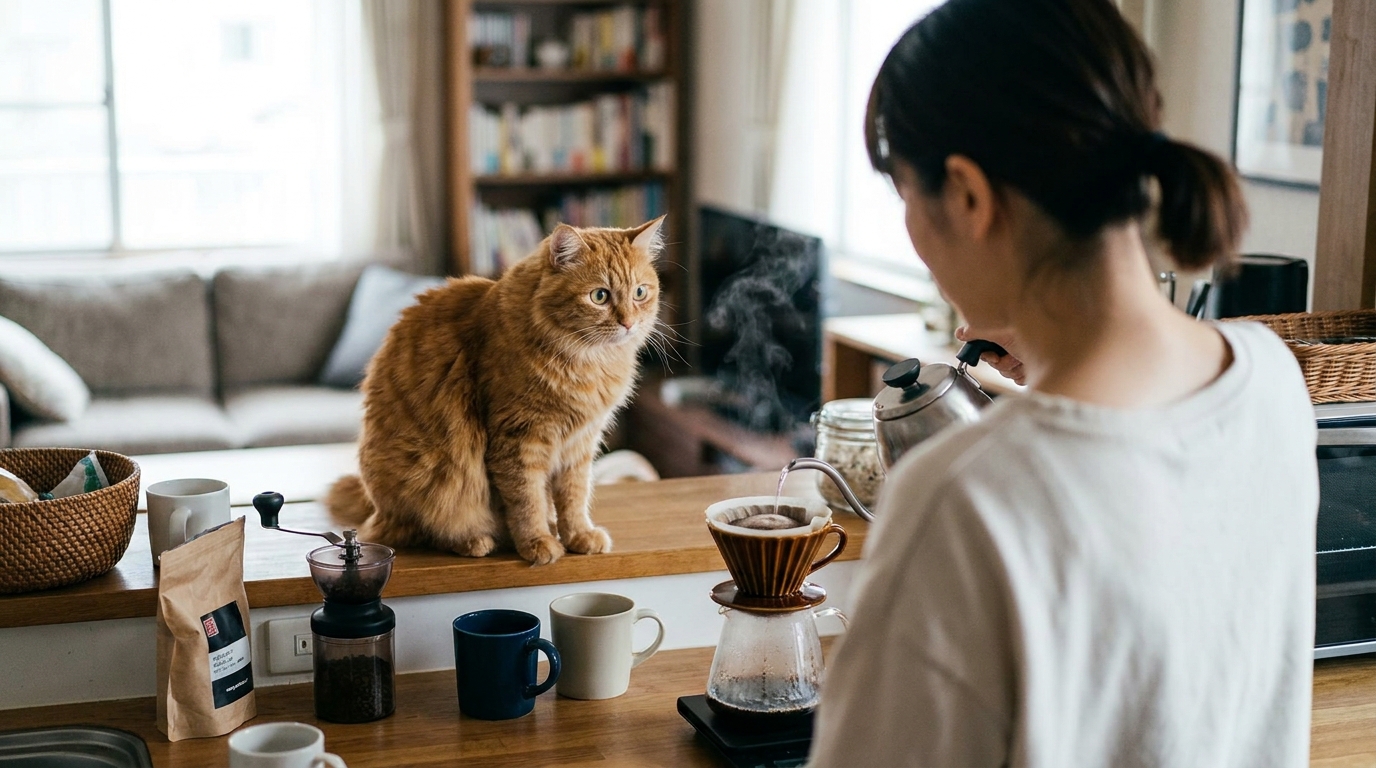
Your cat has zero interest in caffeine, but she's completely fixated on this ritual.
The coffee routine involves consistent sounds, smells, and movements. Cats are pattern-recognition specialists, and the kitchen routine is one of the most predictable sequences in your home. She's not waiting for coffee—she's waiting for what comes after.
Many cats will sit on the counter or a nearby chair during this process, not begging, just observing. It's a monitoring behavior. She's confirming that the day is unfolding correctly.
Veterinary behaviorist Dr. Mikel Delgado notes that cats often display what looks like patience during these moments, which is actually them running through a mental checklist of what should happen next.
But there's something she's watching even more closely at #18...
#18 — You Opening the Refrigerator for the First Time
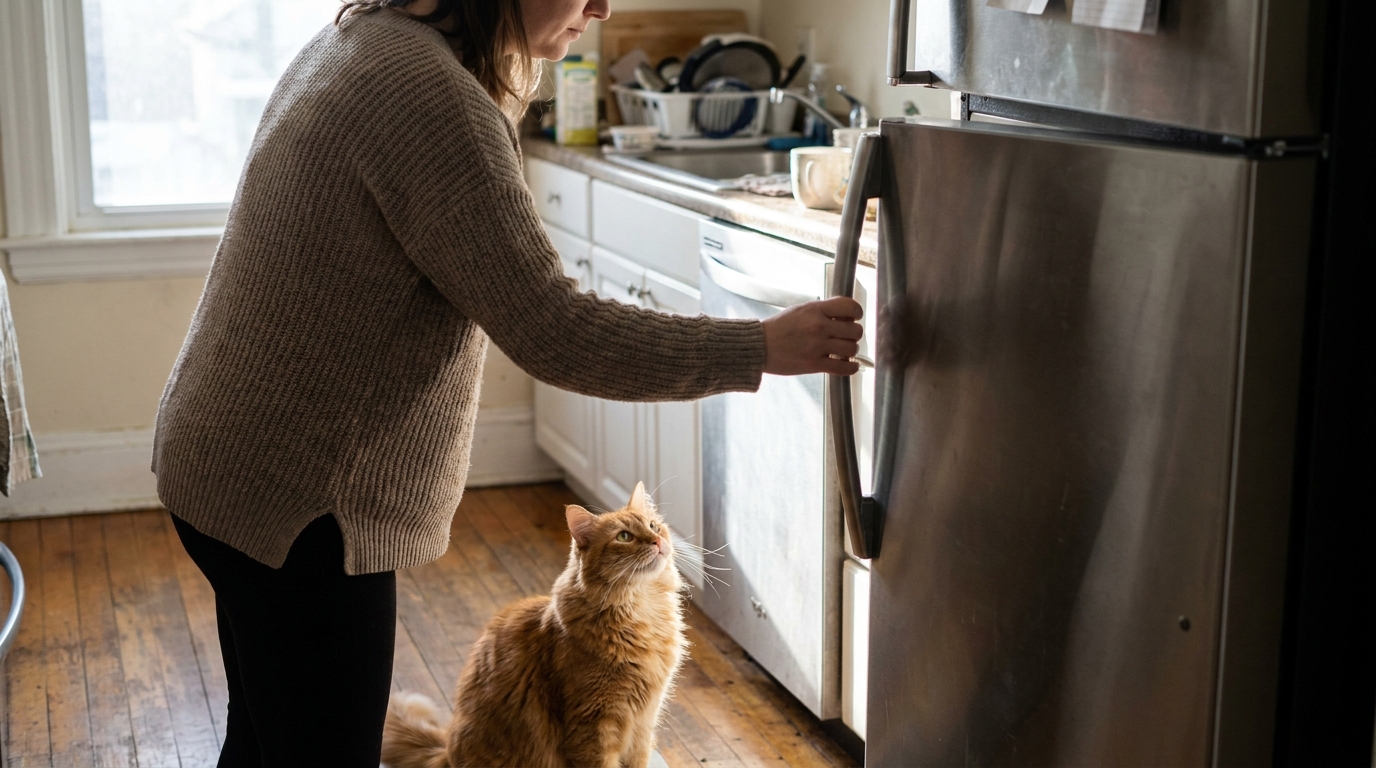
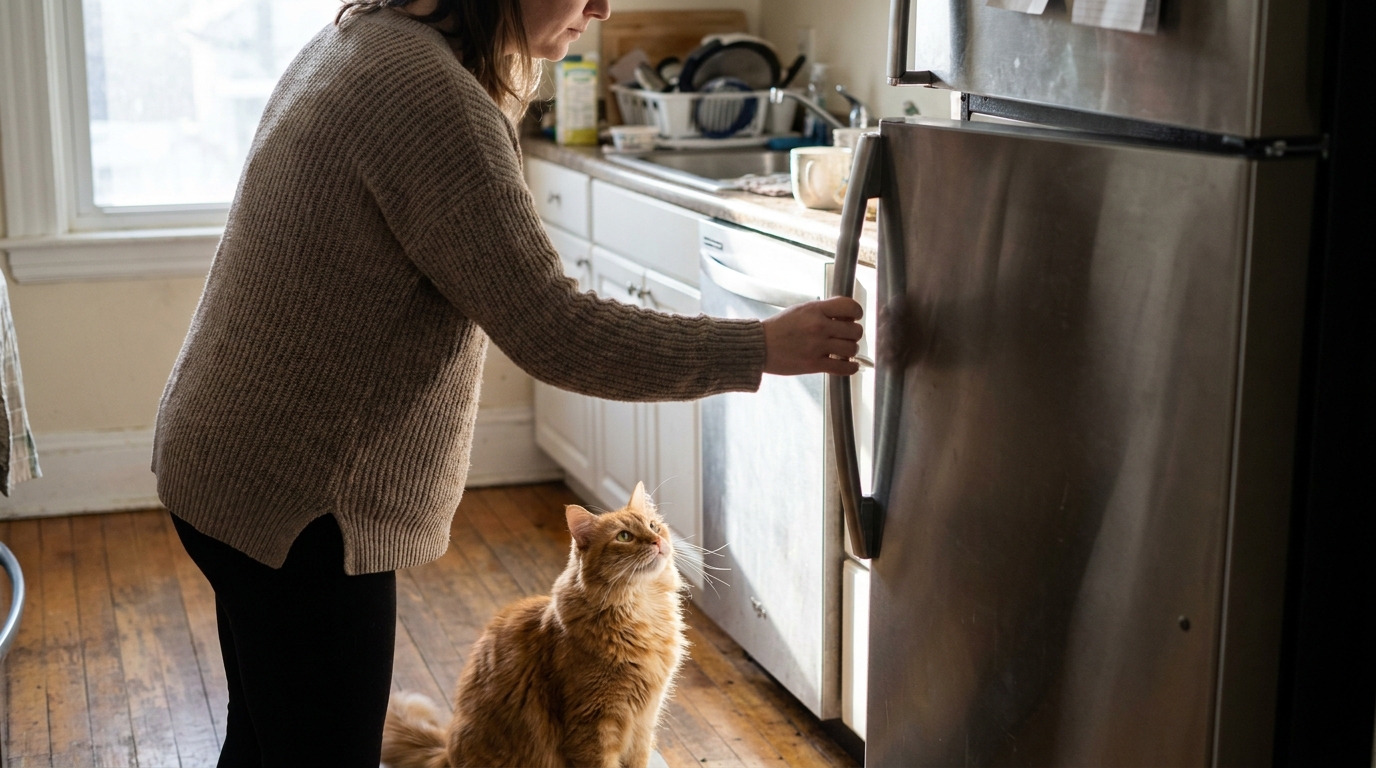
The refrigerator door is a slot machine that occasionally pays out, and your cat hasn't forgotten a single win.
Even if you're grabbing juice for yourself, she's there. The sound of the seal breaking is one of the most important auditory cues in her day. Cats have associative memory that's particularly strong around food-related sounds.
Cats can hear the refrigerator door from two rooms away and will often arrive before you've fully opened it. This isn't about hunger—most cats do this even right after eating.
It's about opportunity. In her mind, the refrigerator is a resource box, and she's making sure she's present for every opening in case the contents have changed since the last inspection.
But the routine she watches most carefully is #17...
#17 — The Way You Prepare Her Breakfast
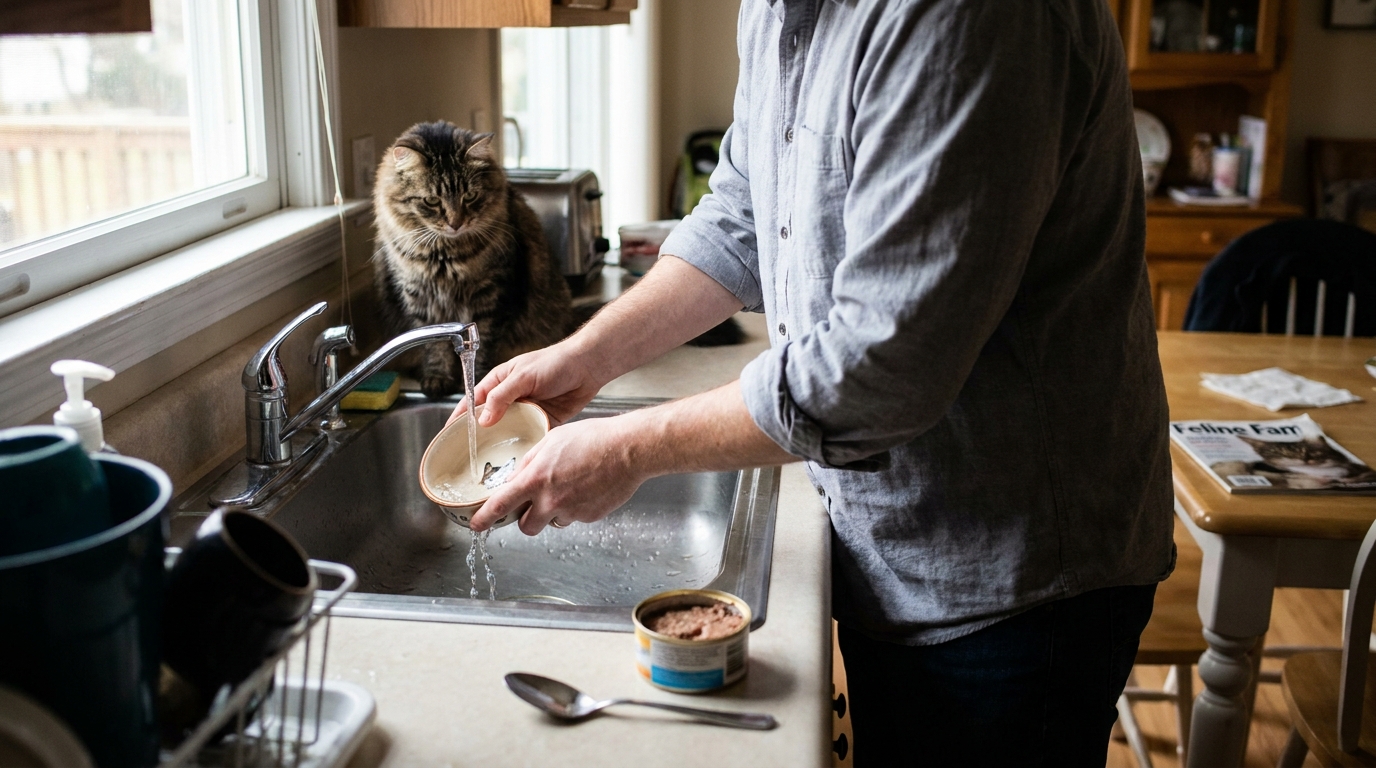
She doesn't just want food—she wants it prepared exactly the same way every time.
Cats are sensitive to sequence changes in their feeding routine. If you normally rinse the bowl, add dry food, then top with a spoonful of wet, she's tracking every step. Skip the rinse, and many cats will hesitate before eating or sniff the bowl suspiciously.
Research from the University of California, Davis found that cats show stress markers when feeding routines change, even when the food itself is identical. It's not pickiness—it's pattern disruption.
Some cats will refuse to eat if the bowl is in a different spot. Others will wait if you place the food down before adding water to the nearby water bowl, because the order is wrong.
But there's something even more specific about #16...
#16 — You Sitting Down With Your Own Breakfast
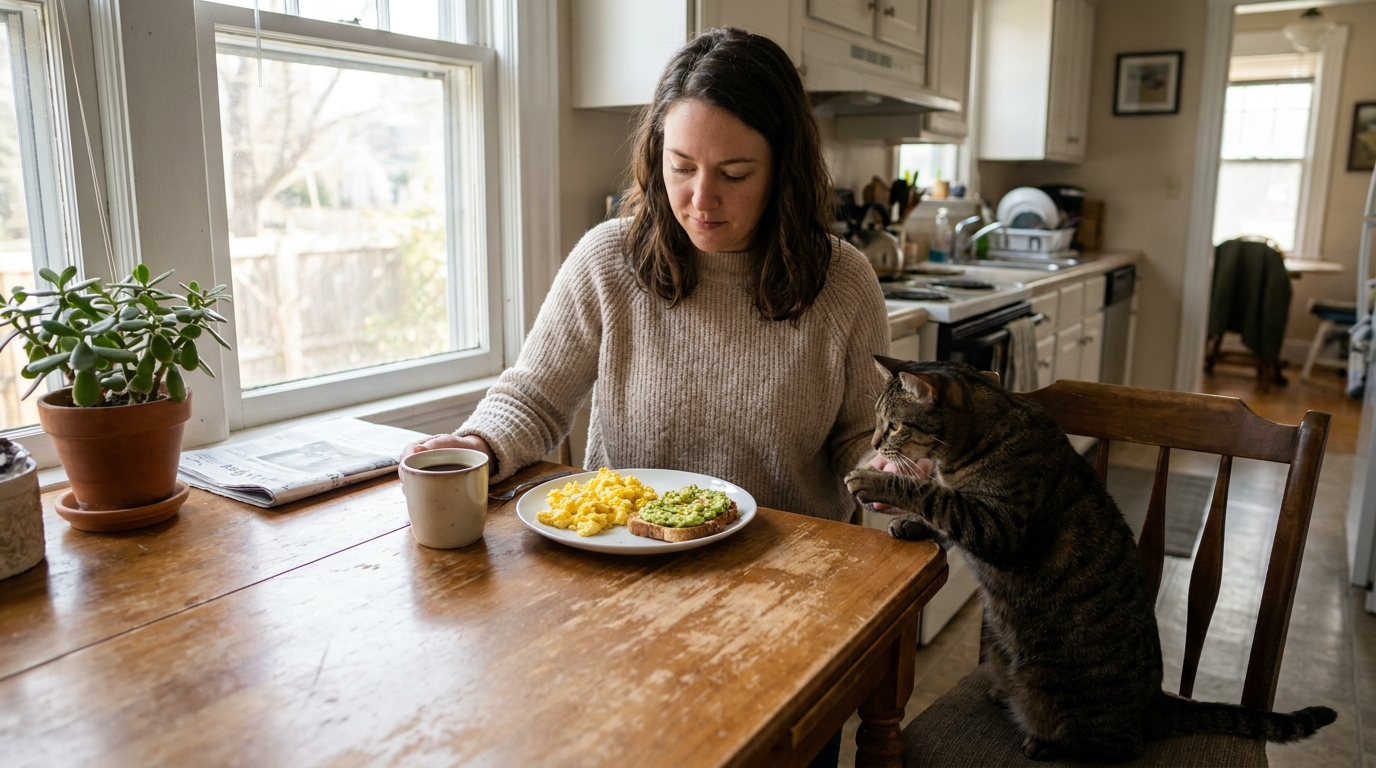
The moment you sit with your plate, she appears.
She's probably not interested in your food (though some cats are). What she's interested in is the fact that you've stopped moving. Cats see your seated breakfast time as a predictable window when you're stationary and accessible.
Many cats will sit just outside of arm's reach, not begging, just being present. It's a companionship routine disguised as food interest.
In multi-cat homes, there's often a hierarchy around who gets to sit near the human during breakfast. The behavior is so consistent that animal behaviorists use it as a sign of secure attachment.
But the morning ritual isn't complete without #15...
#15 — Watching You Get Dressed in the Same Order
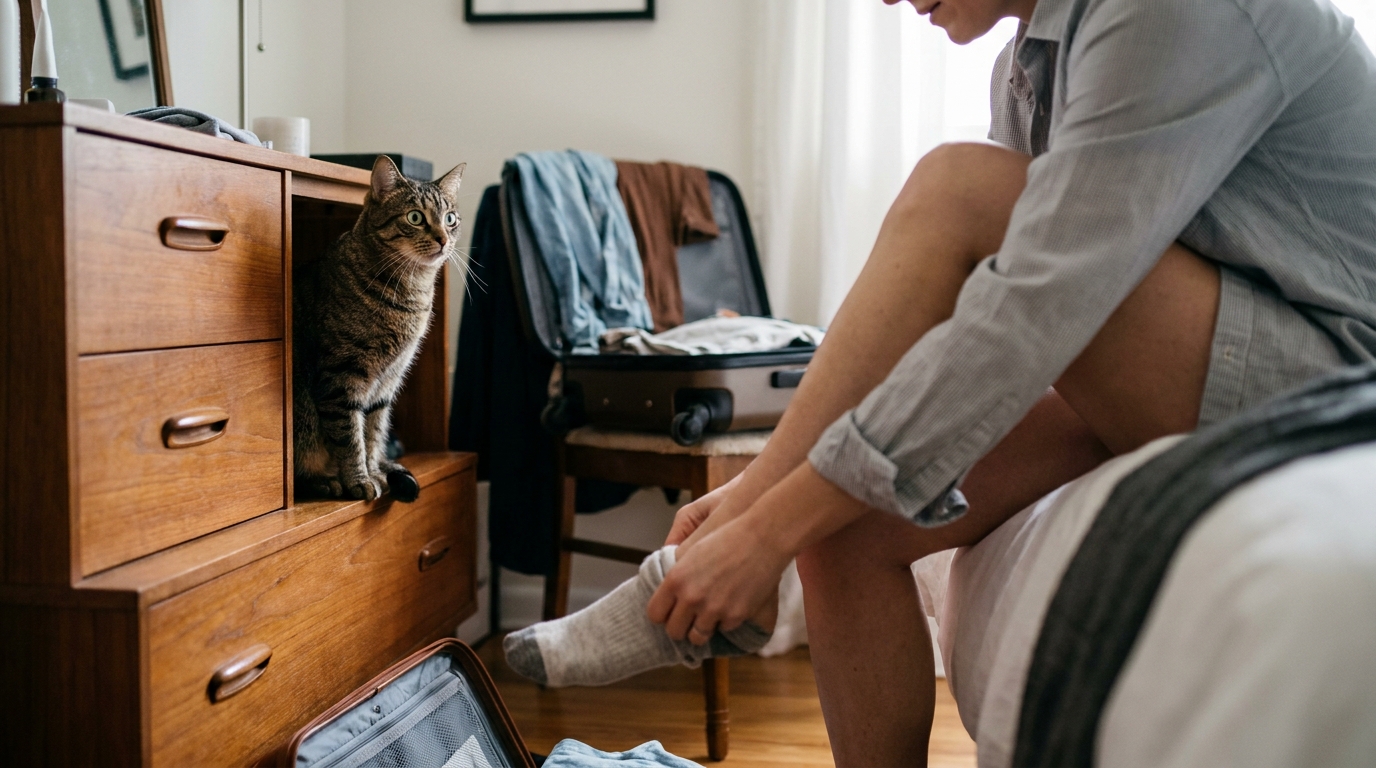
She's memorized your getting-ready sequence, and she's watching for the danger signs.
Cats distinguish between "staying home" clothes and "leaving" clothes faster than most people realize. Jeans and sneakers mean something different than a suit or workout gear. She's not just watching—she's predicting your departure time.
Behaviorists report that cats often leave the room or become less affectionate once they recognize "leaving" clothes. It's pre-emptive detachment.
Some cats will actively interfere with the routine by sitting on the clothes you're reaching for or blocking the closet. It's not random—it's a negotiation tactic.
But there's one morning moment she waits for more than any other at #14...
#14 — The Goodbye Ritual Before You Leave
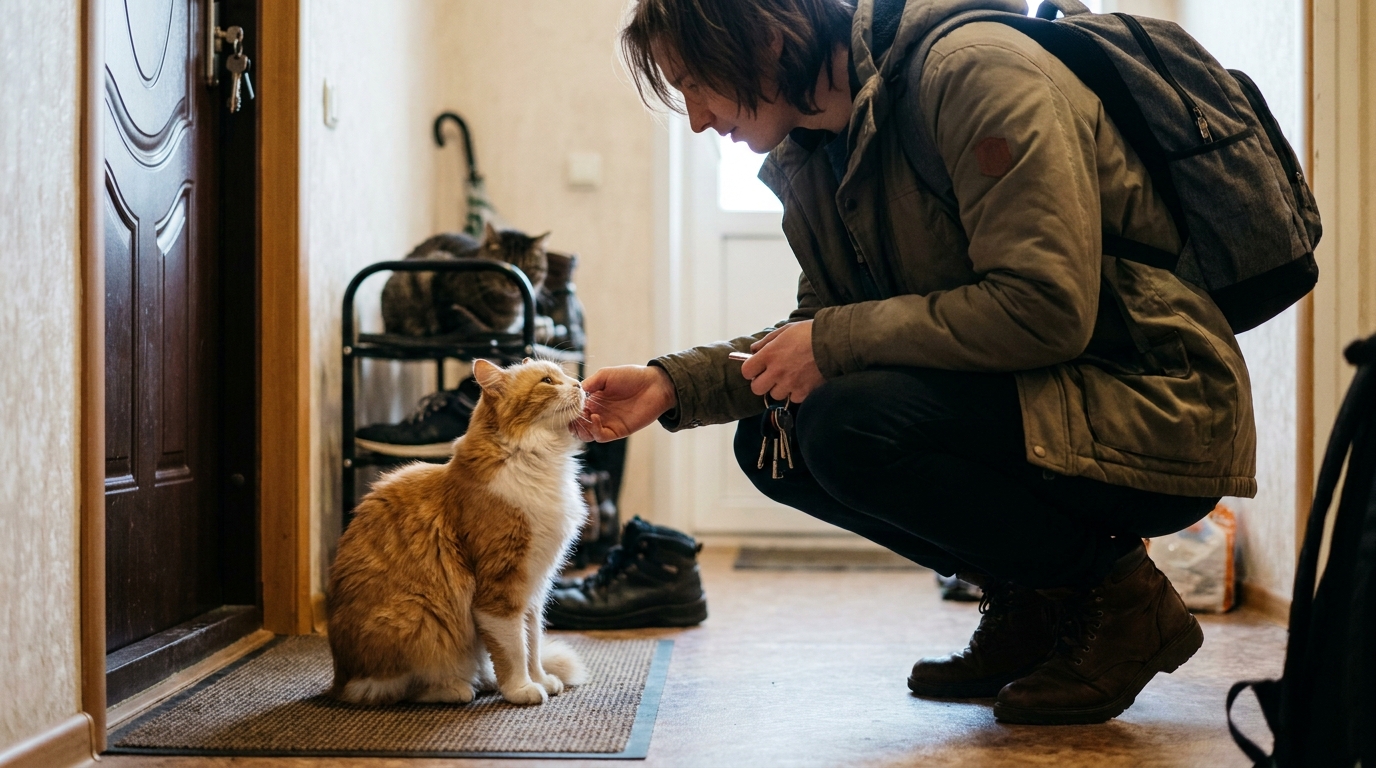
If you skip this, she'll remember it all day.
Cats bond through ritualized interactions, and the goodbye moment—whether it's a head scratch, a specific phrase, or placing her on a certain windowsill—is the formal close of the morning routine. Skip it once, and many cats will vocalize or follow you to the door.
A study from Oregon State University found that cats showed reduced stress markers throughout the day when departure routines were consistent. The goodbye isn't sentimental—it's structural.
Many owners report that their cat won't settle into her daytime nap spot until the goodbye has happened. Without it, she remains in a low-level vigilant state.
But while you're gone, she's waiting for #13...
#13 — The Sound of Your Car Pulling Into the Driveway
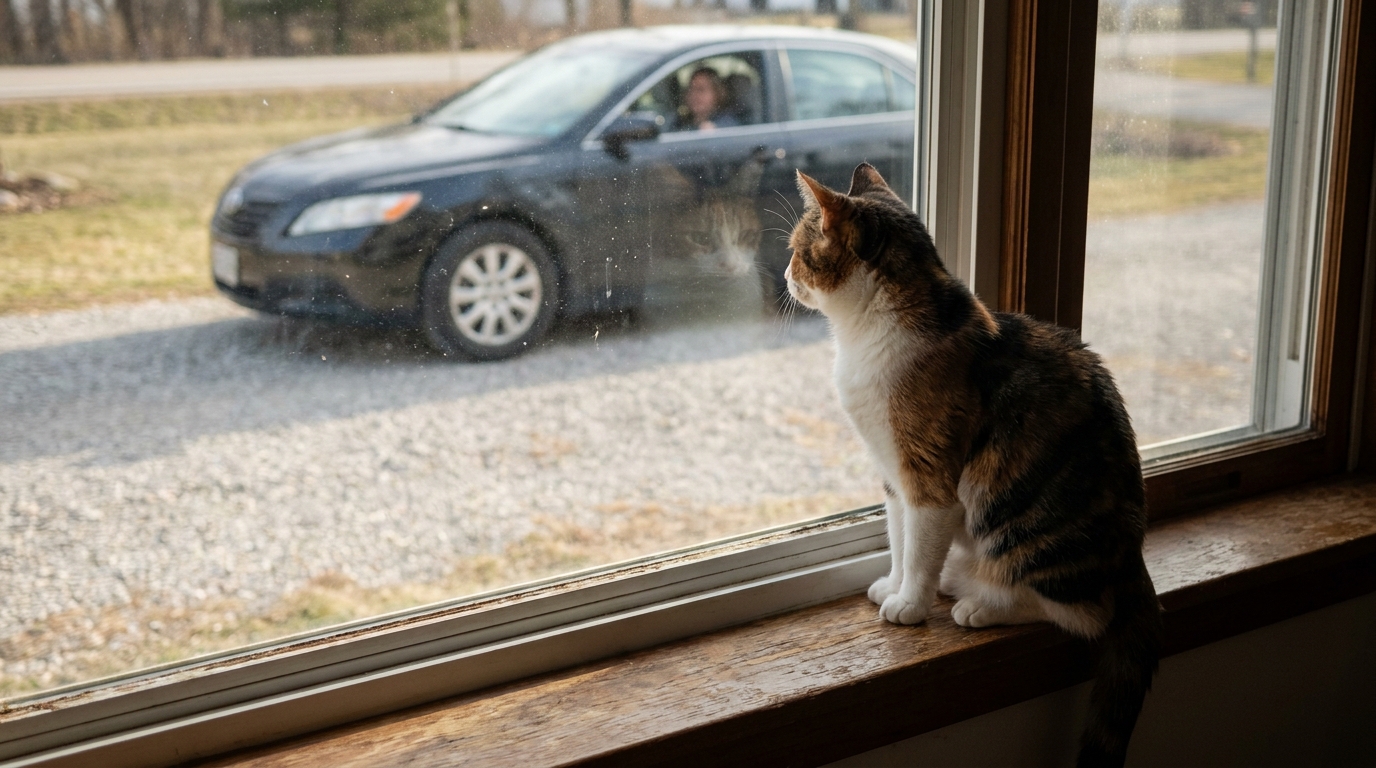
She knows the sound of your vehicle from half a block away.
Cats can distinguish their owner's car engine from others, and many will move to a window or door before the car is even visible. This isn't magical—it's auditory discrimination. She's learned the specific pitch and rhythm of your engine.
Owners who switch vehicles often report that their cat seems "confused" for the first few days, waiting at the window but not moving to the door until they hear the key. She's recalibrating her acoustic cues.
This is one of the most striking demonstrations of how precisely cats track routines. She's not reacting to your arrival—she's anticipating it based on time and sound.
But the real reunion routine begins at #12...
#12 — The First 90 Seconds After You Walk In
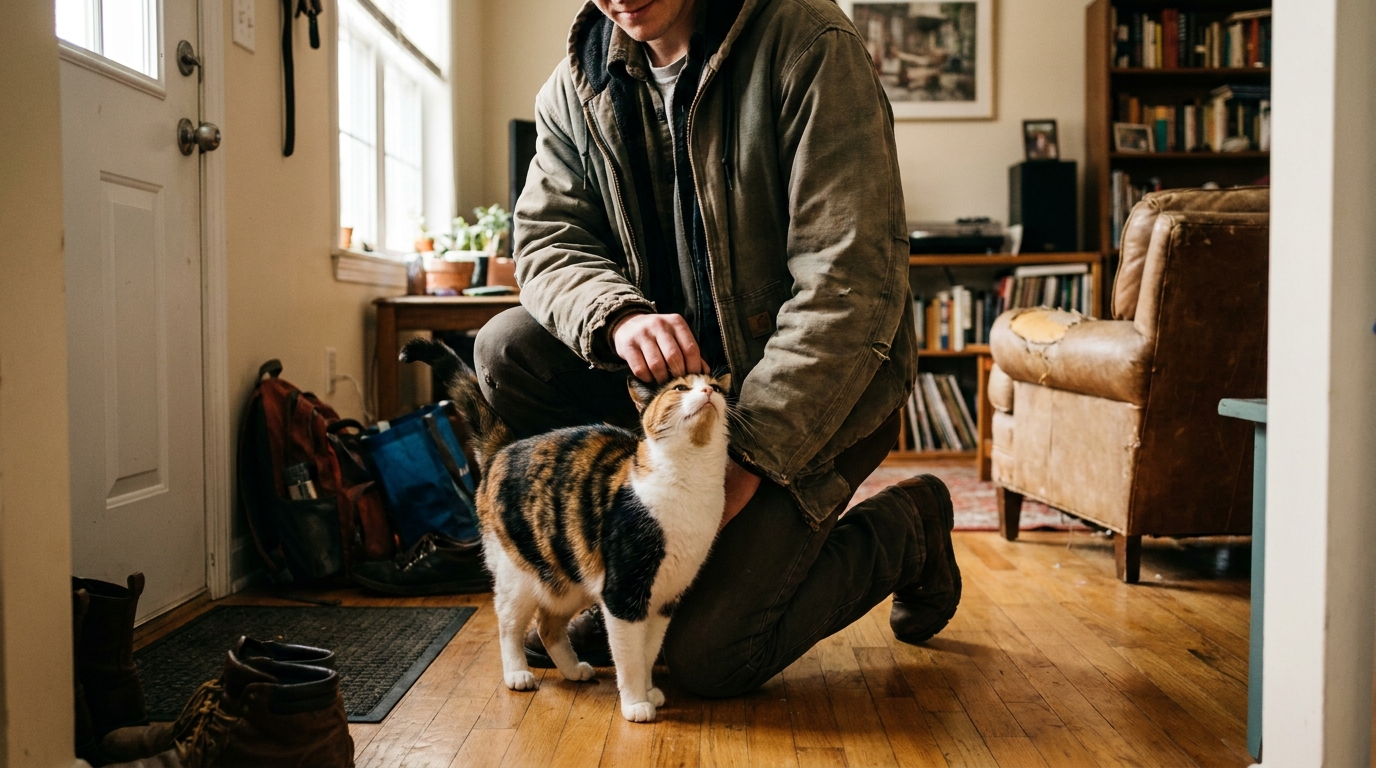
She has a script for this moment, and you have a role to play.
The greeting routine—whether it's figure-eights around your legs, a specific meow, or leading you to a particular room—is one of the most choreographed moments of her day. Deviate from it, and she'll often repeat her part more insistently.
Cats that don't receive their expected greeting response show increased vocalization and following behavior for up to an hour afterward. You're not just being welcomed home—you're being reintegrated into the household routine.
Many cats will refuse to eat their evening meal until the greeting ritual is complete, even if they're hungry. The social routine comes before the biological need.
But there's something she monitors even more carefully at #11...
#11 — When You Change From Work Clothes to Home Clothes
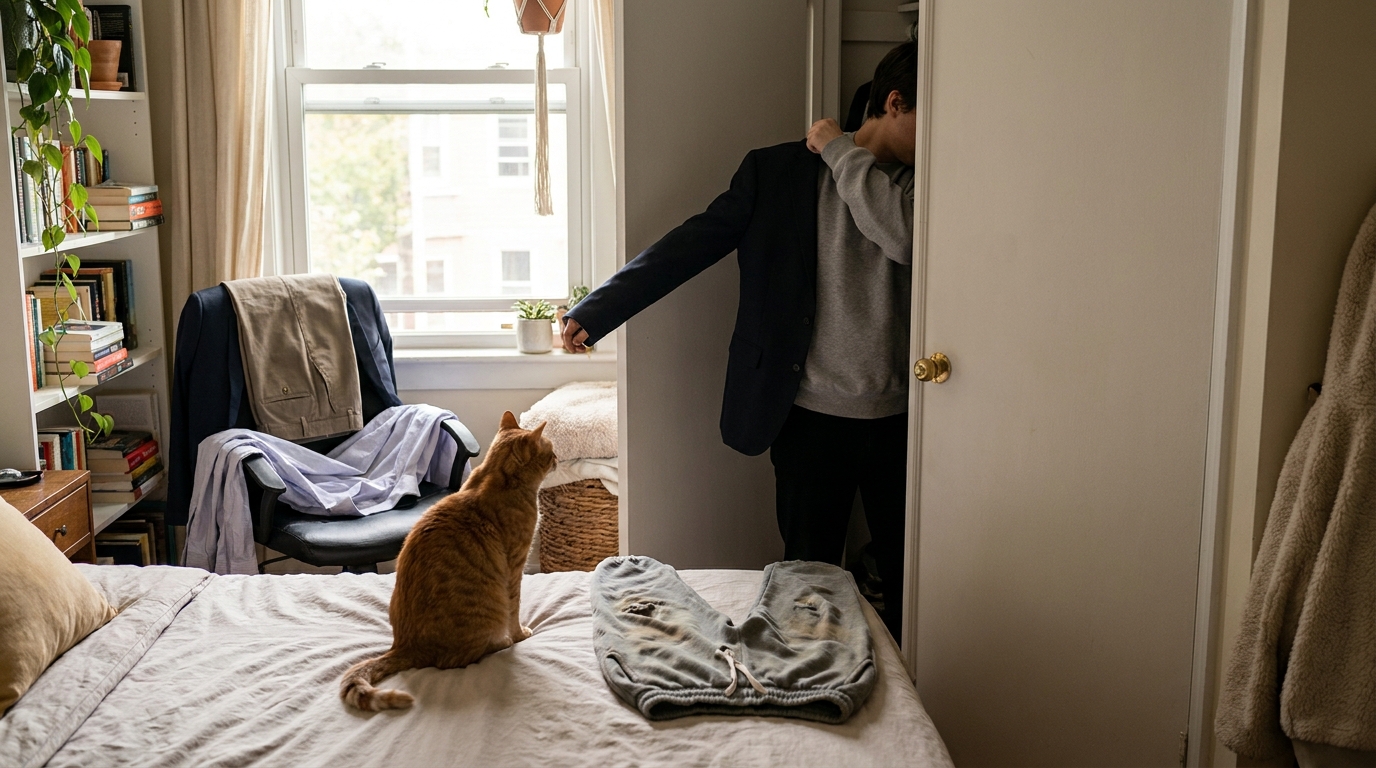
This costume change signals the real beginning of evening interaction time.
Cats don't understand "work" and "home" as concepts, but they understand that certain clothes predict certain behaviors. Work clothes mean you're distracted and task-focused. Home clothes mean you're available.
Many cats will wait outside the bedroom while you change, then immediately become more interactive once you emerge in different clothes. It's a trigger for increased proximity-seeking.
Some behaviorists believe cats view the clothing change as a shift in your social role within the household—from absent pack member to present companion. The routine confirms that the transition has occurred.
But she's also tracking something else at #10...
#10 — The Pre-Dinner Kitchen Activity Window
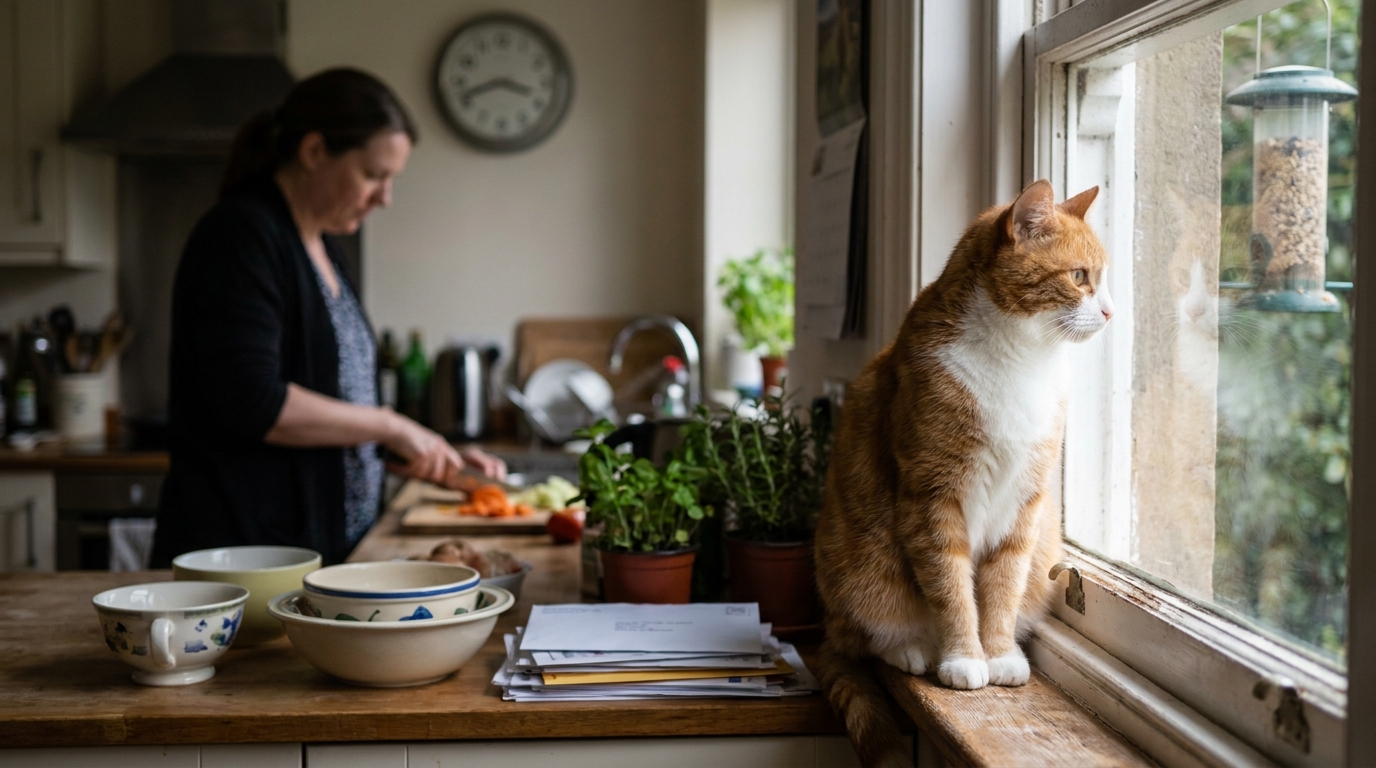
Between 5 and 7 PM, she's monitoring every kitchen sound.
This isn't just about her dinner. She's learned that human dinner prep often coincides with or precedes her own feeding time. The sound of cutting boards, running water, and cabinet doors are all cues in a sequence she's memorized.
Cats will often position themselves in the kitchen during this window even if they were fed hours earlier. It's not hunger—it's routine maintenance.
Many cats become noticeably more vocal during this period if the routine is delayed. A delayed dinner by 30 minutes can produce more meowing than skipping a meal entirely once it's outside the expected window.
But there's a specific moment she's really waiting for at #9...
#9 — Her Dinner Being Served at the Exact Same Time
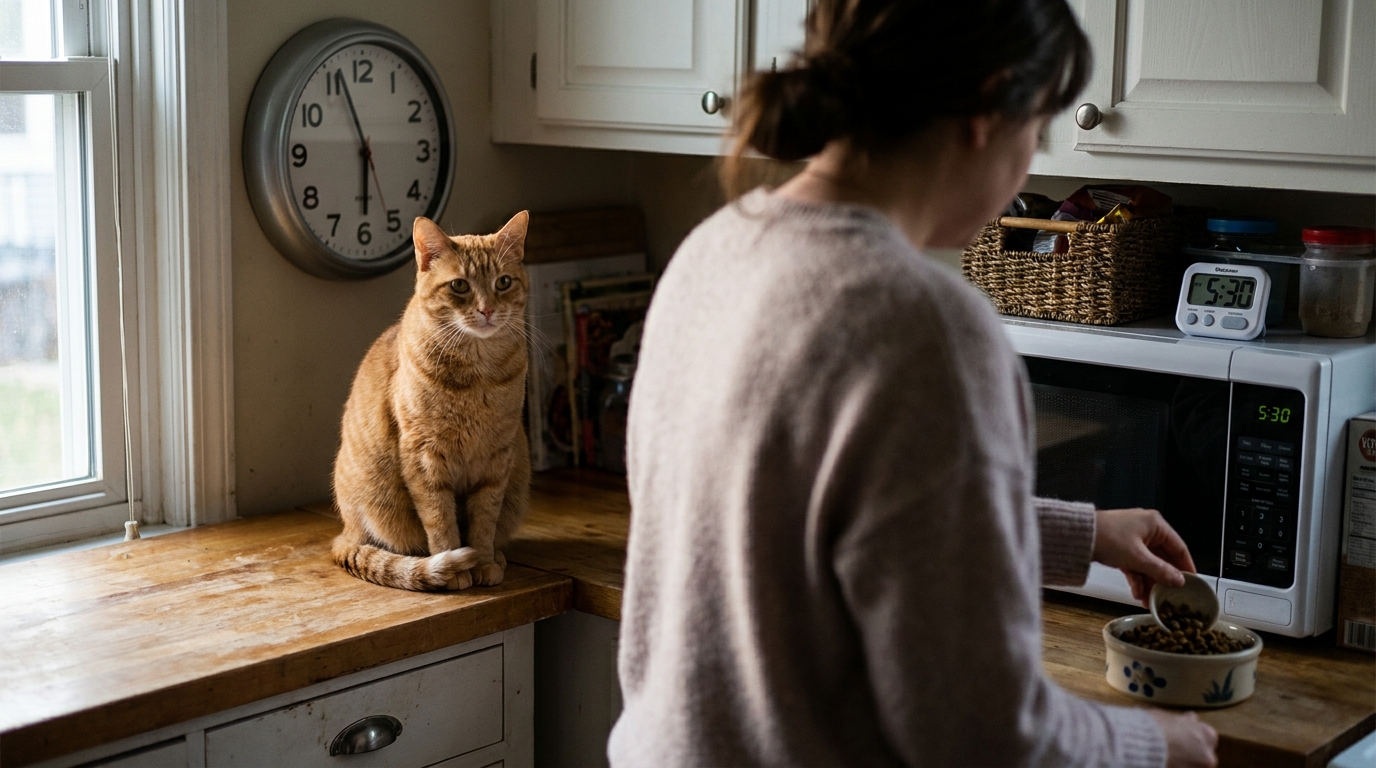
Cats have internal clocks that shame most humans.
Feed her at 6:00 PM for a week, and on day eight she'll start reminding you at 5:50. Studies using activity monitors have shown that cats begin pre-feeding behaviors an average of 12 minutes before their regular feeding time, with consistency across days.
This isn't just anticipation—it's a circadian rhythm adjustment. Her body is preparing for digestion at that specific time, and disruptions can actually cause mild gastrointestinal stress.
Many veterinarians recommend that owners maintain feeding times within a 15-minute window specifically because cats are so temporally precise about this routine. It's not spoiling—it's respecting their biology.
But after dinner comes #8...
#8 — The Post-Dinner Grooming Session Location
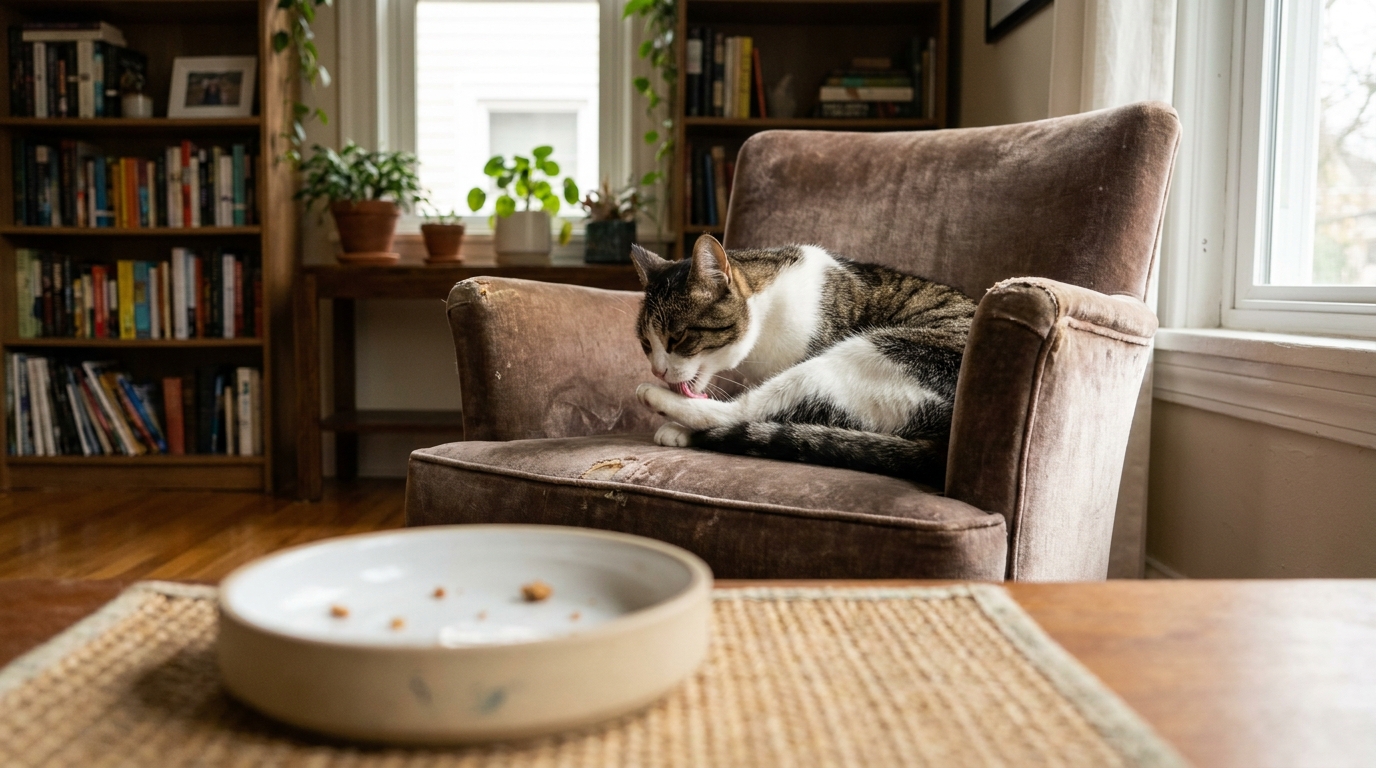
She has a designated spot for post-meal grooming, and she returns to it religiously.
After eating, cats typically retreat to a safe, elevated, or enclosed location to groom. This spot is chosen deliberately and remains consistent for months or years. It's usually somewhere she can observe the household while processing the vulnerable post-meal period.
Cats spend 30-50% of their waking hours grooming, but post-meal grooming sessions are longer and more thorough than random grooming throughout the day. It's a ritual, not just hygiene.
If her usual spot is occupied or disrupted, many cats will delay grooming entirely rather than choose a substitute location. The place is part of the routine, not interchangeable.
But while she's grooming, she's already anticipating #7...
#7 — Prime Time Lap or Couch Position
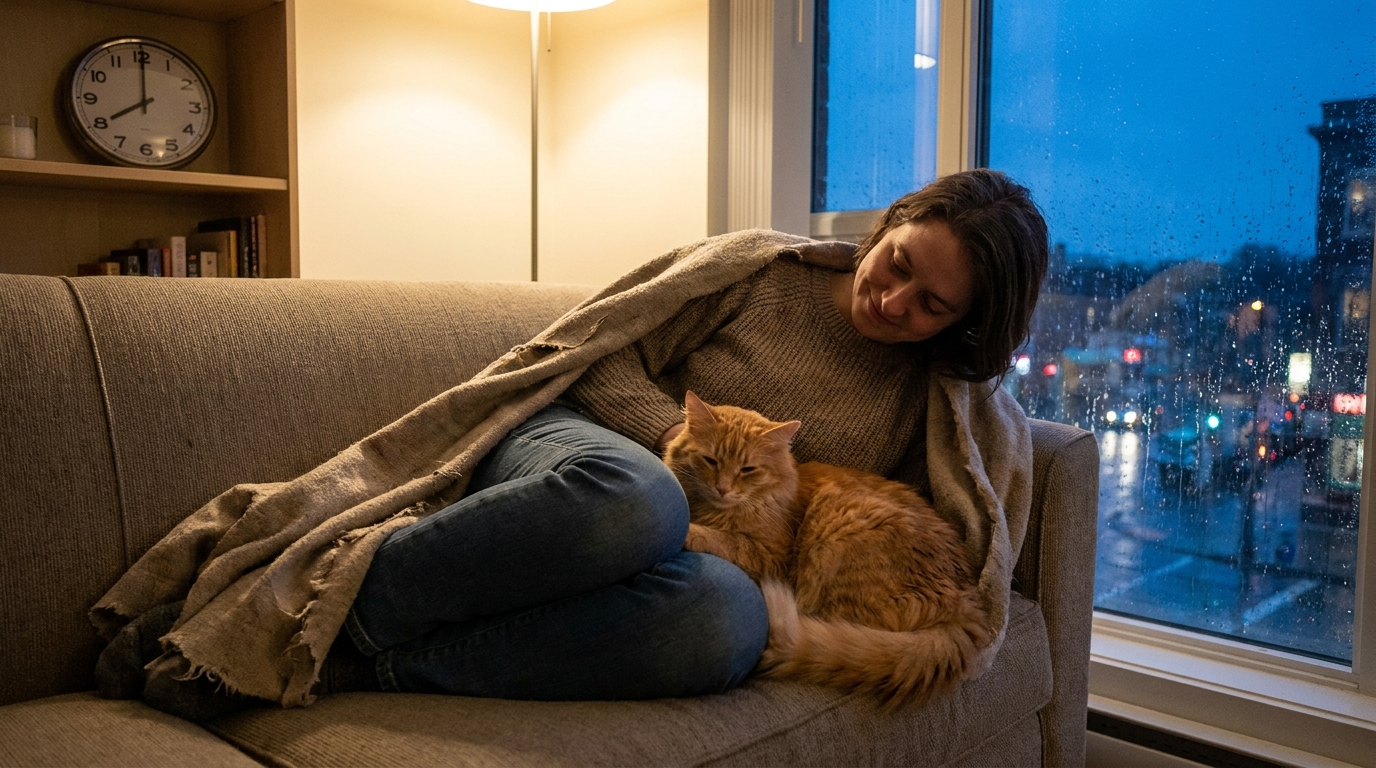
Between 7 and 10 PM, she has a designated contact position with you.
This might be your lap, a specific couch cushion next to you, or the arm of the chair you're sitting in. The location is consistent, and she has a preferred time window for claiming it. Cats are more likely to seek contact during their owners' relaxation hours than at any other time of day.
If you're not in your usual spot during her contact window, many cats will vocalize, search, or settle reluctantly in a second-choice location. You're not providing warmth—you're fulfilling a social routine.
Some cats will bypass a warm, empty lap to wait for their "scheduled" person to sit down. It's not about comfort—it's about predictability.
But there's an interaction she's monitoring throughout the evening at #6...
#6 — Every Single Time You Get Up to Move Between Rooms
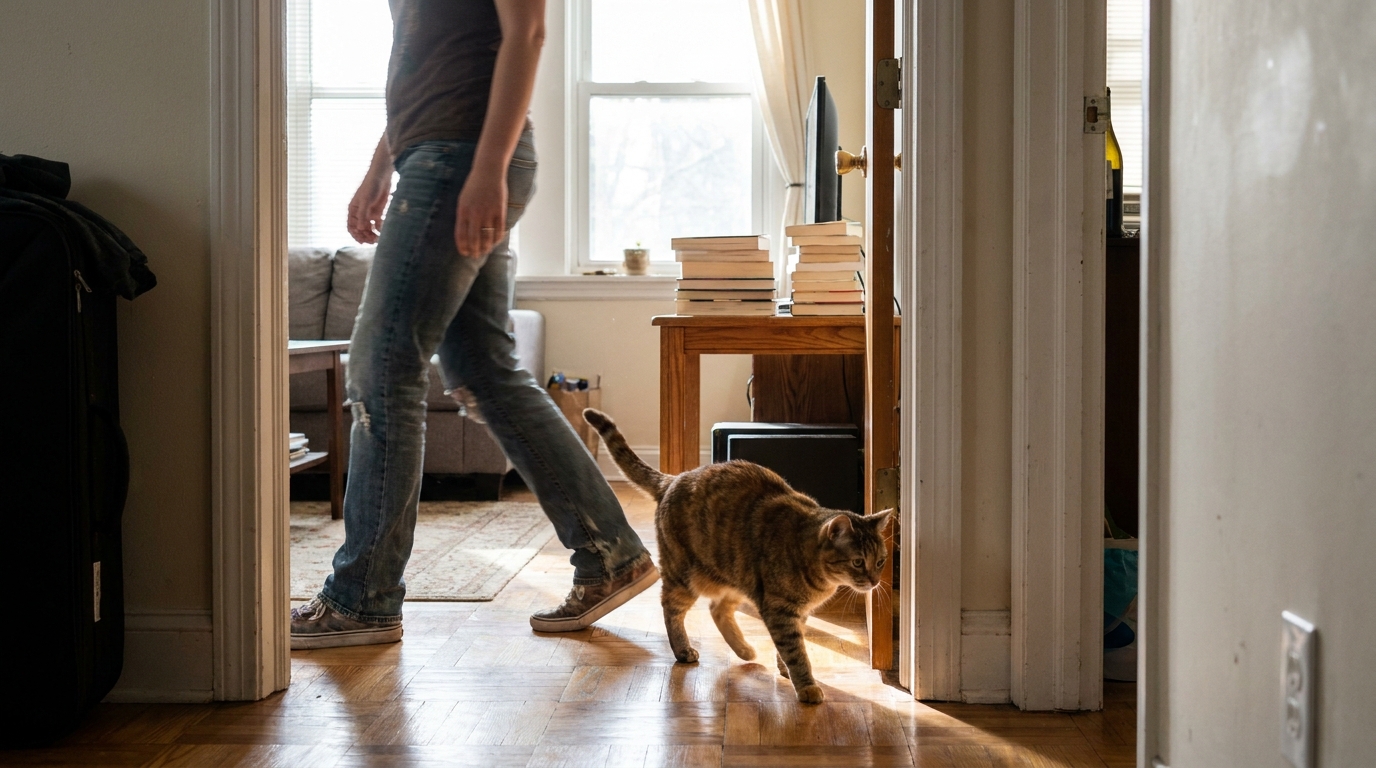
She doesn't follow you because she's needy—she's tracking your movement patterns.
Cats are territorial managers, and your movement through the home is part of the environmental monitoring they perform. Studies show that cats follow owners between rooms more frequently during the first and last two hours of the day than during midday periods.
She's not being clingy—she's updating her mental map of household activity. Many cats will follow you to a room, visually confirm what you're doing, then return to their previous spot.
This behavior intensifies when routines are new or disrupted. A cat that usually doesn't follow you will often start doing so after a schedule change, vacation, or household disruption.
But there's one evening event she's especially focused on at #5...
#5 — The Bathroom Routine Right Before Bed
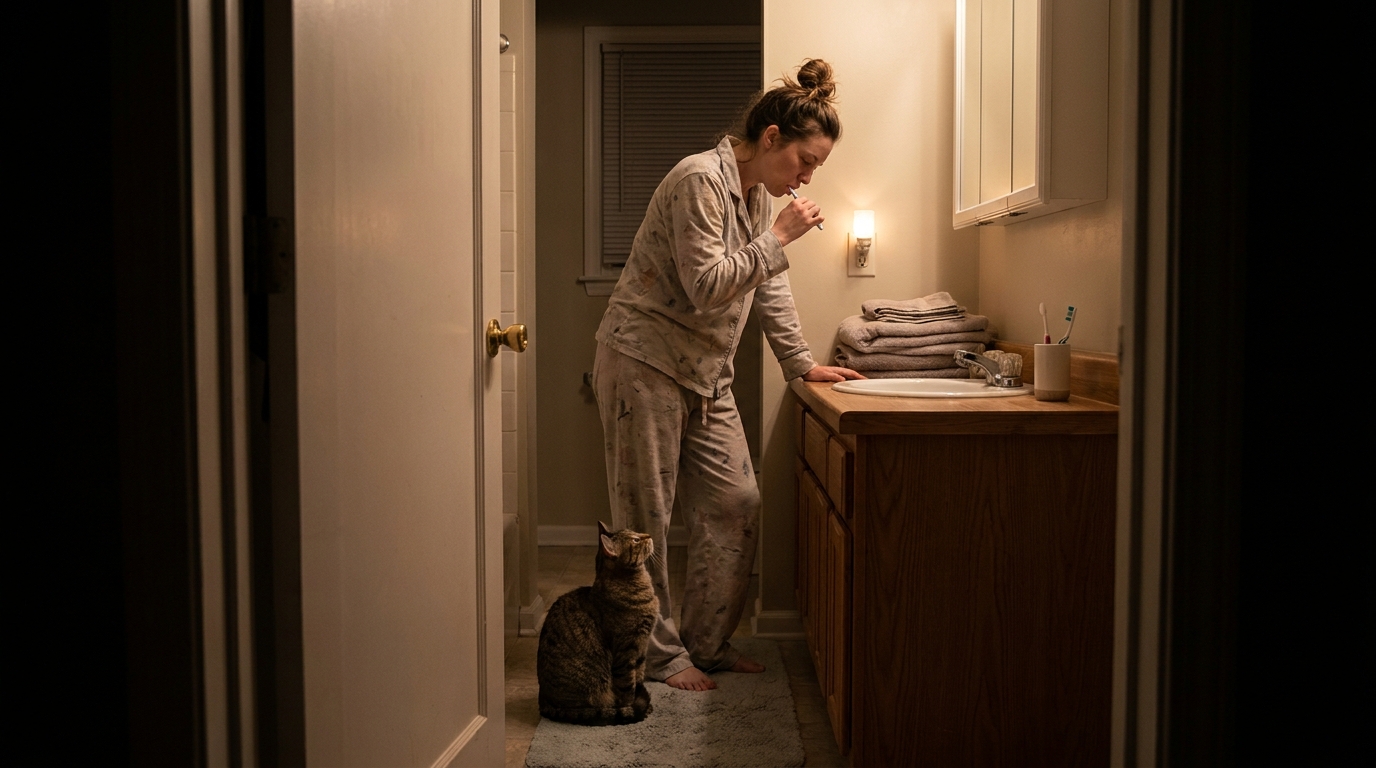
She's present for your nighttime bathroom routine with the same dedication as the morning one.
Cats recognize bedtime preparation sequences: face washing, teeth brushing, changing into pajamas. These are cues that the active period of the day is ending and the sleep period is beginning. She's transitioning her own behavior state in parallel with yours.
Many cats will wait in the bathroom doorway or sit on the counter during this routine. It's a transition supervision behavior. She's confirming that the household is entering sleep mode correctly.
Cats that sleep with their owners are especially attentive to this routine, often becoming visibly impatient if it takes longer than usual. They're ready to move to the next phase.
But before sleep comes #4...
#4 — The Final Kitchen Check and Water Fountain Visit
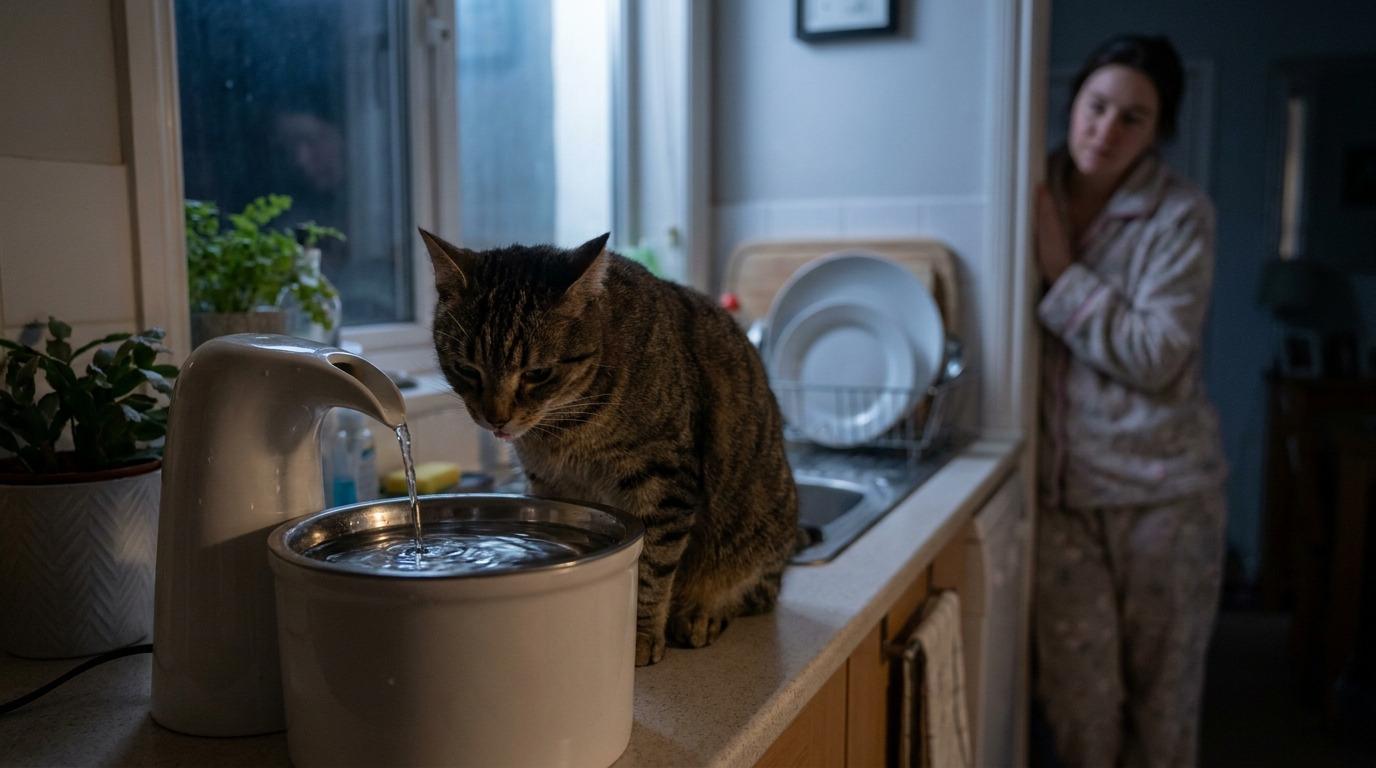
Right before bed, she makes a resource inspection round.
Even if she's not hungry or thirsty, many cats will visit the food area, water station, and litter box in a specific order during the last 30 minutes before household bedtime. It's a security check, confirming that all resources are accessible and unchanged before the long inactive period.
This behavior is more pronounced in cats that were adopted as adults or experienced resource scarcity early in life. The pre-sleep check becomes a ritual that provides security.
Some cats will refuse to settle for the night until they've completed this circuit, even if it means jumping off a warm lap to do it. The routine takes priority over comfort.
But the most important routine of all is #3...
#3 — Being Carried or Walking to the Bedroom Together
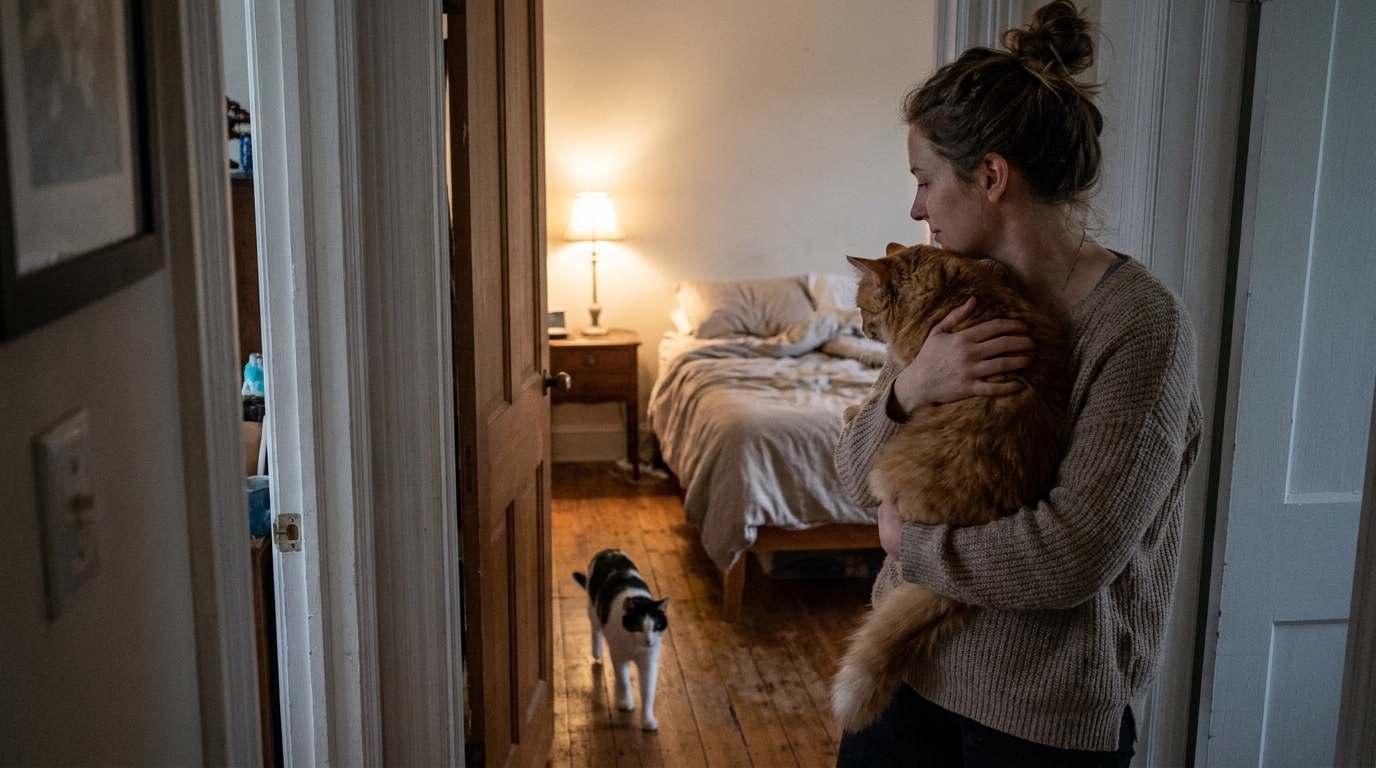
The journey to the bedroom is a ritual, not just a transition.
Cats that sleep with their owners often have a specific way this happens. Some wait to be carried. Others walk alongside or just ahead of their owner. Some have a specific phrase or signal that initiates the movement.
Change this routine—walk to the bedroom without the signal, or go to bed at an unusual time—and many cats will vocalize or refuse to follow. You've broken protocol.
This isn't about the destination. Cats know where the bedroom is. It's about the formal transition from active household to sleep mode, and she needs it to happen the right way.
But there's something even more specific about #2...
#2 — The Exact Side of the Bed She's Claimed
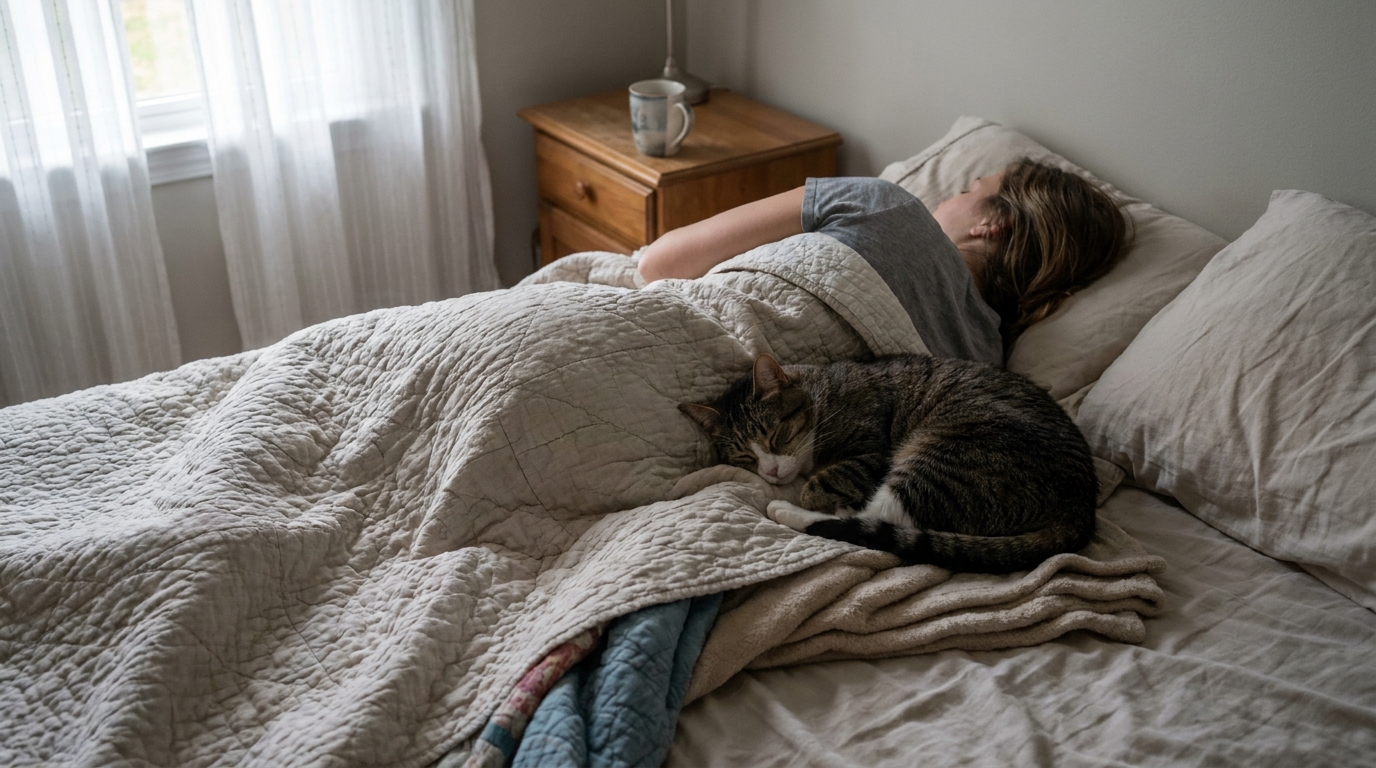
She doesn't just sleep near you—she has territorial rights to a specific zone.
Cats that sleep on beds typically claim a position and defend it with surprising consistency: left side vs. right side, foot of the bed vs. head, on the blanket vs. under it. This isn't random or comfort-based—it's territorial claiming within a social structure.
Try sleeping on "her" side, and many cats will walk across you repeatedly, vocalize, or refuse to settle. Some will leave the bed entirely rather than accept a substitute position.
Behaviorists note that bed position in multi-cat households is often the most contested territory in the home, more than food or litter resources. The bedtime position is prime social real estate.
But the single most important routine is #1...
#1 — The Last Face Touch or Pet Before Sleep
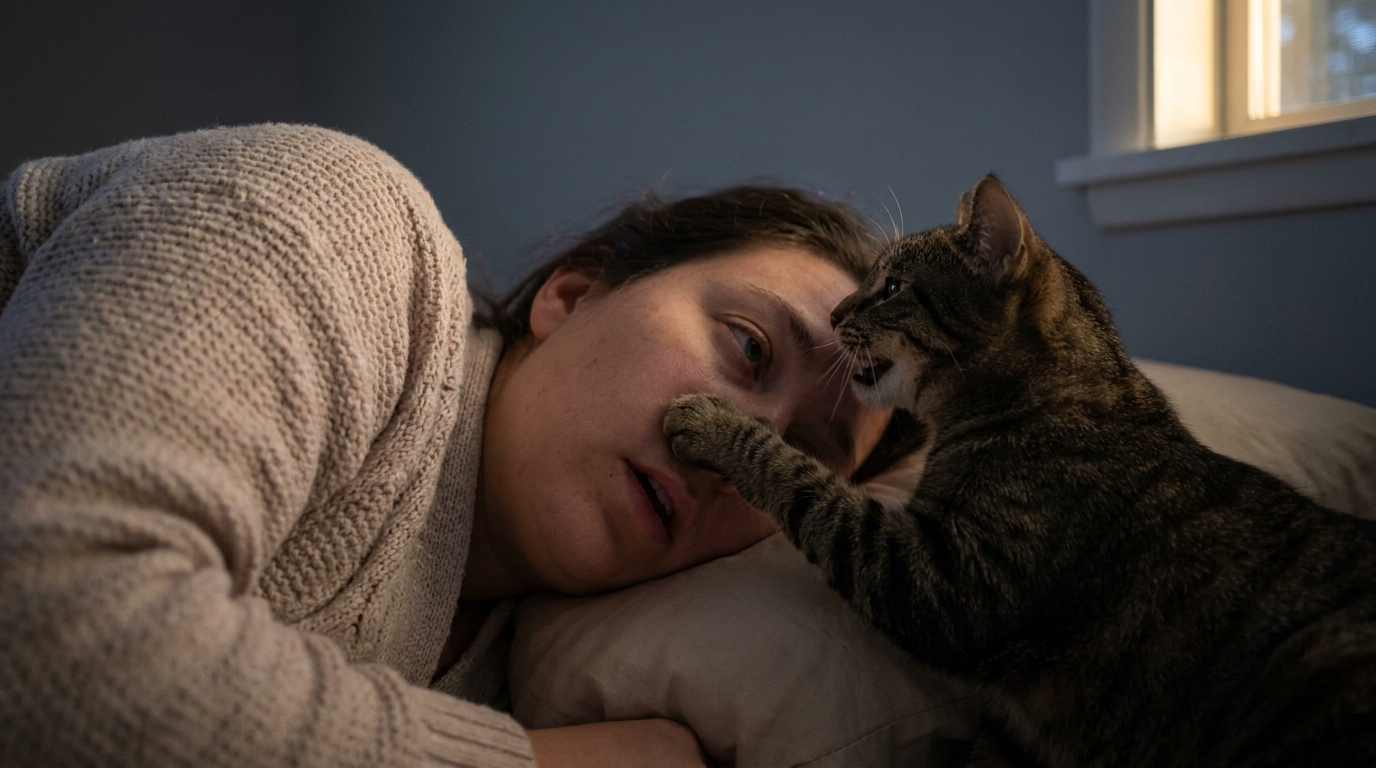
If you fall asleep without this, she'll wake you to get it.
The final tactile contact before sleep—whether it's a head bump, a chin scratch, or her putting her paw on your face—is the formal close of the daily routine cycle. It's a bonding confirmation that resolves the day's separation and confirms the social bond before the vulnerable sleep period.
Cats that don't receive this contact often show persistent wakefulness, increased vocalization, or physical pawing at the owner's face until the interaction occurs. It's not optional in her mind—it's required.
Some cats have a backup behavior if the first attempt doesn't work: escalating from gentle paw touch to more insistent pawing to vocalization. She has a protocol for ensuring this happens.
Veterinary behaviorists consider the consistency of bedtime contact rituals one of the strongest indicators of secure cat-owner attachment. It's the routine that summarizes all the others.
The Bottom Line
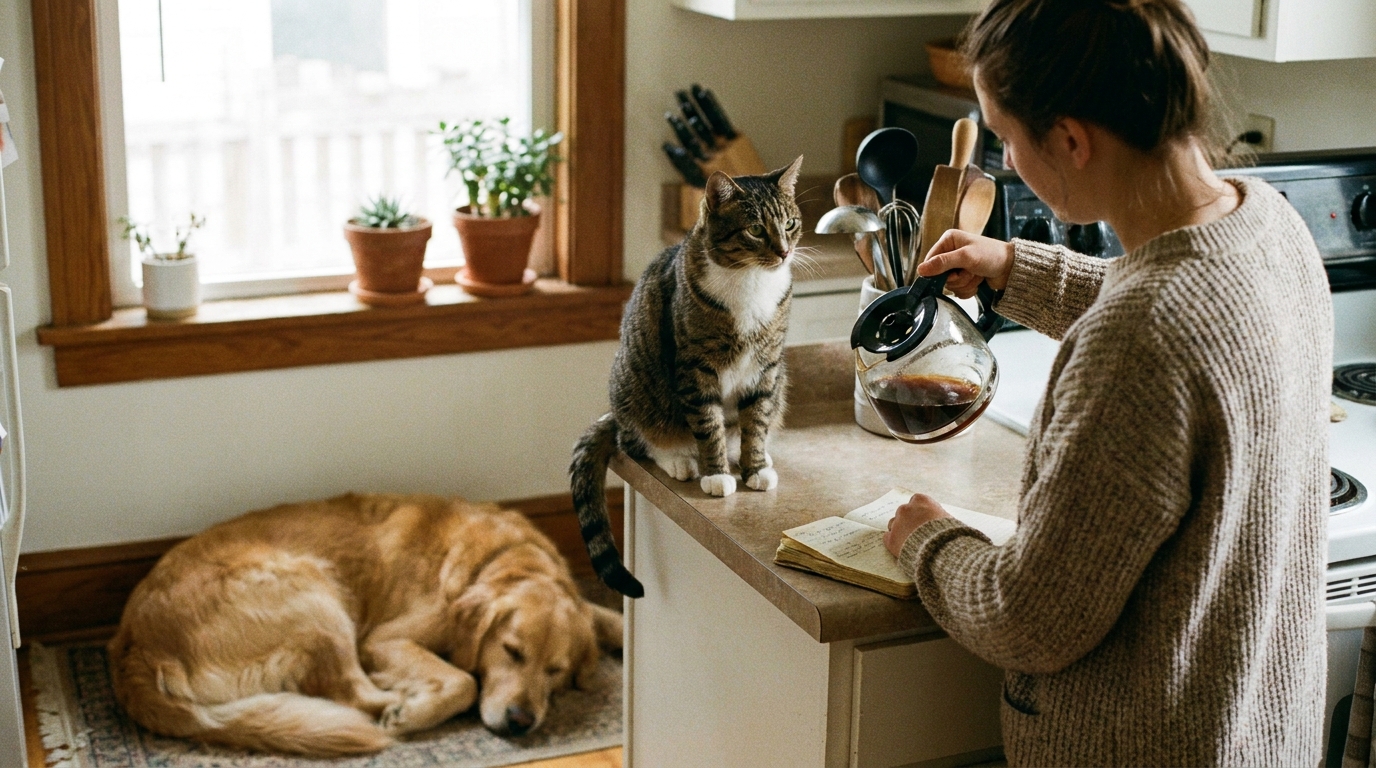
Your cat isn't just living with you—she's running a parallel schedule that depends on your routines remaining predictable. The morning bathroom wait, the exact feeding time, the goodbye ritual, the evening lap session, and especially that final touch before sleep aren't random preferences. They're the structural framework of her entire day.
Most people think cats are independent to the point of indifference, but the data shows something completely different. Cats are deeply routine-dependent, often more so than dogs. The difference is that dogs show distress through obvious behaviors, while cats show it through subtle routine monitoring and disruption responses.
Did we miss one? Drop your cat's most non-negotiable daily routine in the comments.