Most cat owners have been there: you grab the laser pointer, your cat goes wild for about three minutes, and then you’re both kind of staring at each other wondering what comes next. The laser has its place, sure. Yet cats are complex little predators with a full sensory toolkit that a single red dot barely scratches.
Play time is critical for a cat’s wellbeing. It provides physical and mental stimulation, teaches important skills, prevents behavioral problems, helps adopted cats bond to a new family, and helps shy cats come out of their shells. If you want to give your cat a genuinely satisfying experience, there’s a whole world of playtime options worth exploring.
1. Master the Wand Toy Like a Pro
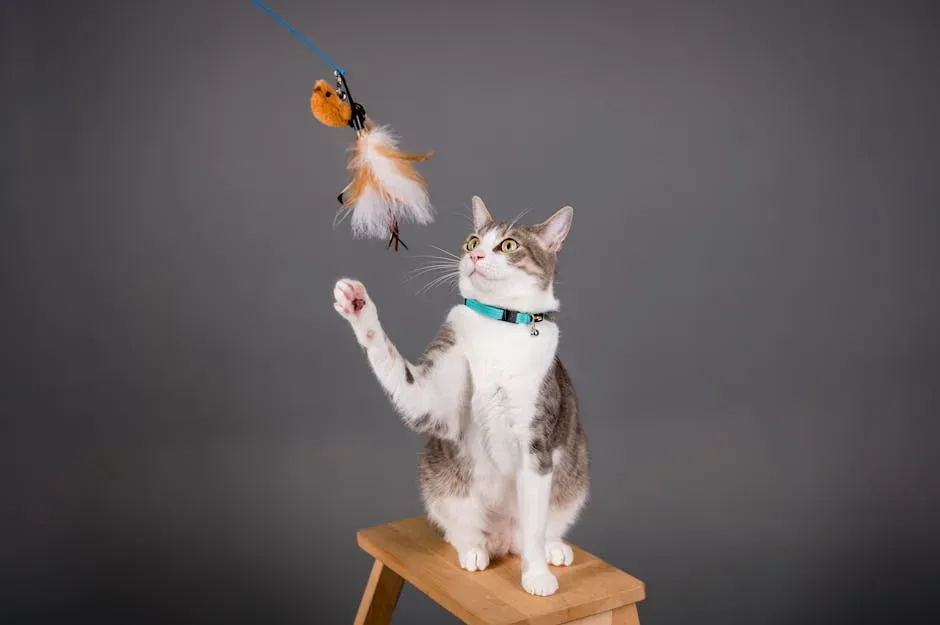
You might already own a feather wand, but there’s a real difference between waving it around lazily and actually using it well. Move the toy as if it were real prey to keep your cat more interested. To mimic birds, circle and flutter the wand back and forth quickly, occasionally dipping it down and rising, sometimes letting it pause on a “branch” like the top of a bookshelf or table. To mimic ground-dwelling prey like a mouse or insect, scurry it across the floor quickly then slowly, and hide it behind or under furniture.
Remember that prey rarely moves toward its predator, so move the toy back and forth in front of or away from your cat, but never directly at them. This simple toy encourages physical activity, sharpens reflexes, and strengthens the bond between you and your feline friend. Even ten focused minutes with a wand done properly can leave your cat far more satisfied than a longer session with something passive.
2. Puzzle Feeders That Make Mealtime a Hunt
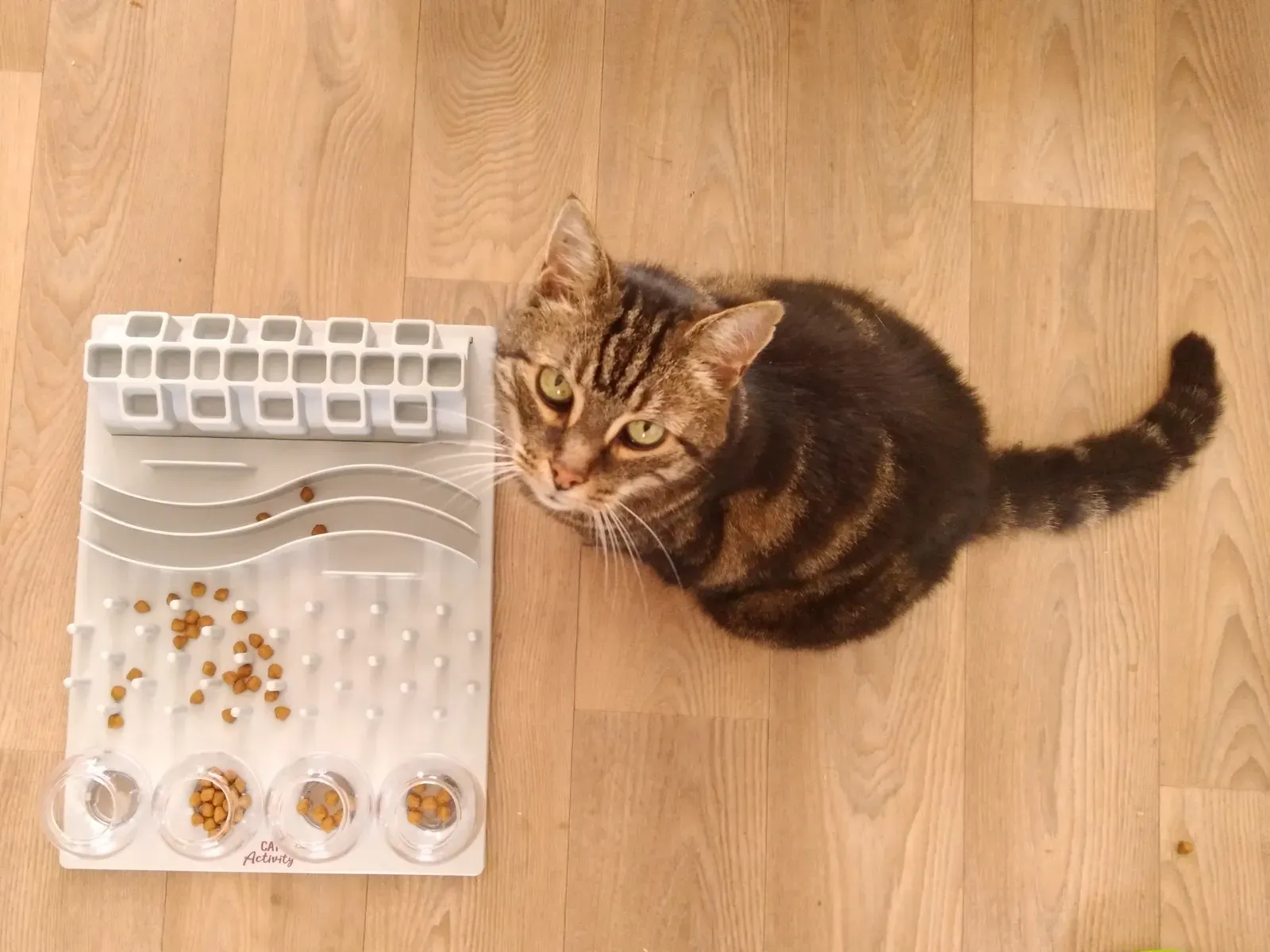
Just like dogs, cats can benefit from turning their typical mealtime routine into an enrichment activity. Puzzle feeders and interactive toys encourage mental stimulation by making your cat work for their food. This taps directly into what cats are wired for: stalking, problem-solving, and earning a reward at the end of the effort. It’s not just clever, it’s genuinely aligned with how feline brains are built.
Puzzle feeders have become a household essential. These toys make cats “work” for their food by batting, pawing, or moving pieces. They mimic the challenge of hunting, slow down fast eaters, and reduce boredom. Rotating different feeders keeps your cat from losing interest. You can also easily DIY a version using a muffin tin and some kibble, which costs almost nothing and works surprisingly well.
3. Hide-and-Seek With Treats Around the House
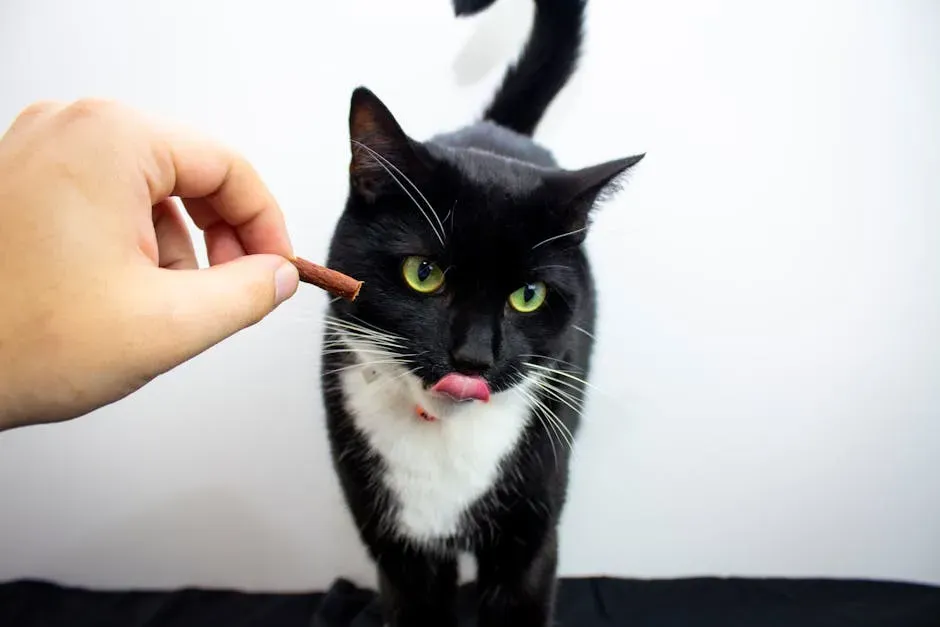
You can engage your cat’s natural hunting abilities by playing hide-and-seek games. Hide small treats or toys around the house, encouraging your cat to search and discover them. You can even scatter their meals into smaller amounts around the house. This activity taps into their instinctual curiosity and provides a rewarding and interactive experience.
It makes for great enrichment while you’re at work or when you need to be gone for extended periods of time. You can start simple by hiding treats in three or four spots and gradually make it harder as your cat catches on. The nose does a lot of the work here, and that mental effort is genuinely tiring in the best way possible.
4. Teach Your Cat Real Tricks Through Clicker Training
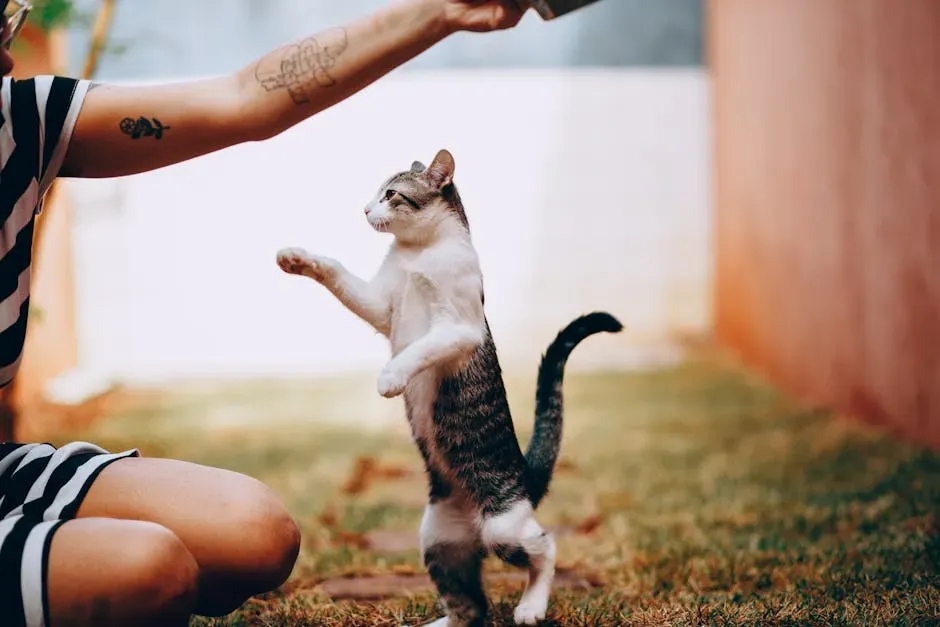
Teaching cues and tricks can provide great mental stimulation for pets. Using positive reinforcement and a clicker to teach tricks like “sit,” “high five,” or “spin” will stimulate your cat’s mind, boost confidence, and deepen your bond. Most people assume cats won’t respond to training, but that assumption undersells them considerably. Many cats pick up basic cues faster than expected once they realize a treat is involved.
Clicker training is a common training method for dogs, but you can clicker train a cat too. In fact, it’s easier than you probably think. Many cats catch on to simple commands like “come” and “sit” quite quickly. Keep sessions short, two to five minutes at most, and always end on a success. That way your cat stays motivated and actually looks forward to the next round.
5. Build a DIY Sensory Box or Cardboard Playground
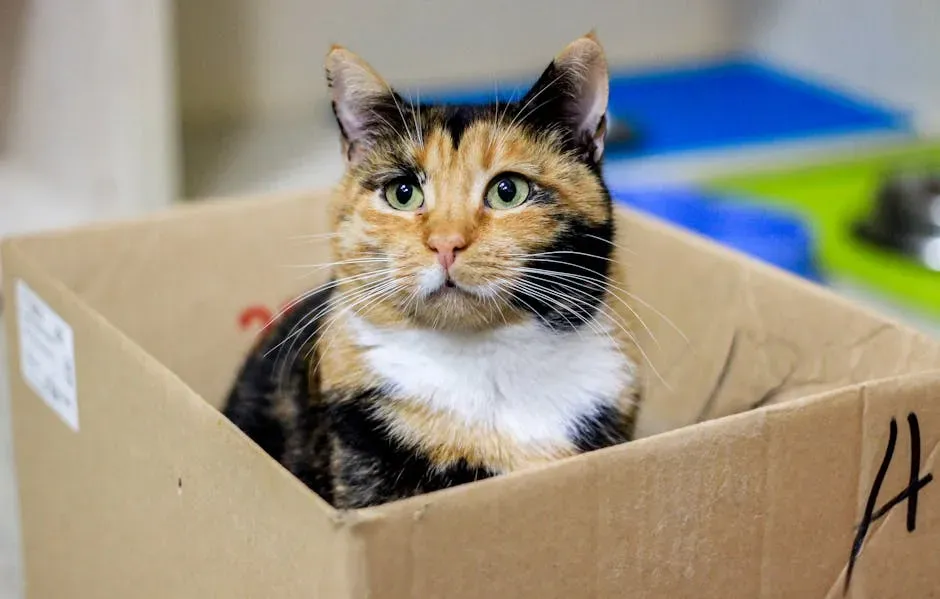
Creating a “sensory box” filled with natural materials like dried leaves, pinecones, or grass lets your cat explore at their own pace, sniffing and pawing at the different textures. This type of play is especially beneficial for indoor cats who don’t have regular access to the outdoors. You don’t need anything fancy. A shoebox and a few safe materials from outside is genuinely enough to spark a good twenty minutes of investigation.
Cats love to explore boxes, and you can turn an ordinary cardboard box into an entire playground. Cats see cardboard boxes as dens, hiding spots, launchpads, and nap zones. Cut entry holes or stack them to create a kitty fort. Tossing in a cat toy or two adds extra fun. The beauty of this approach is that it costs almost nothing and can be swapped out whenever your cat loses interest in the current setup.
6. Try a Motorized or Interactive Robot Toy
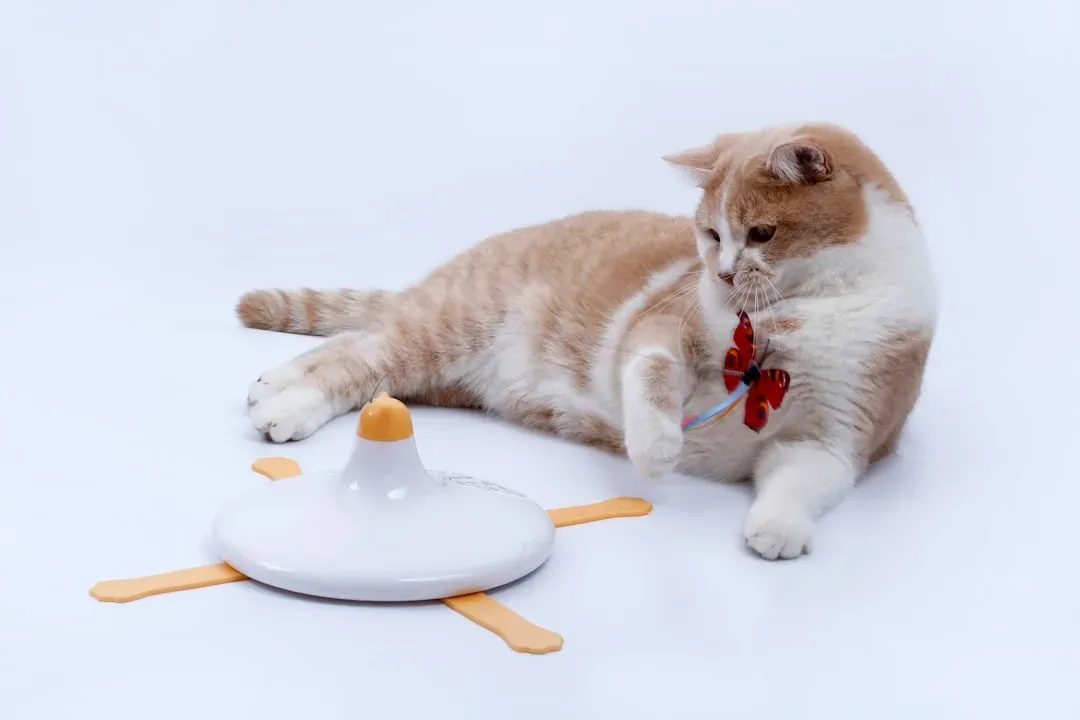
While lasers trigger a cat’s prey drive, the inability to ever “catch” the red dot leads to chronic frustration and elevated stress levels. An intelligent playmate, such as an AI-driven robot toy, solves this by providing physical tactile feedback and a “completable” hunting cycle. These smart devices use sensors to react to a cat’s touch, allowing for a successful “capture” that satisfies the feline predatory instinct in a way that light beams never can.
Interactive robot toys use unpredictable movements to keep your cat curious and alert. They’re fantastic for solo play, especially for busy pet parents. These gadgets offer both mental and physical stimulation, challenging your cat’s brain and body. Play preferences vary, so some cats may prefer quiet, slow-moving toys, while others respond to erratic movements or sounds. Trying a few options is the only reliable way to figure out what makes your specific cat tick.
7. Harness Walks and Outdoor Sensory Time

You can allow your cat to safely experience more of the great outdoors by taking them on walks, which are enriching both mentally and physically. You’ll need to teach your cat to walk on a leash and harness. Be careful to fit the harness properly so the cat can’t slip out of it, and train your cat inside your house to be relaxed in the harness and on the leash before adding outside adventures.
Indoor cats often lack exposure to varied scents and textures. Introducing cat-safe plants like cat grass or catnip can enrich their sensory environment. You can also rotate toys infused with different natural scents such as silvervine or valerian root, or use scent-based puzzle games. Always ensure the plants or scents you use are non-toxic and safe for cats. Whether your cat becomes a confident outdoor explorer or simply enjoys sitting in a sunny spot on a harness, the new sensory input alone makes a noticeable difference in their overall mood.
A Final Thought on Playing Smarter
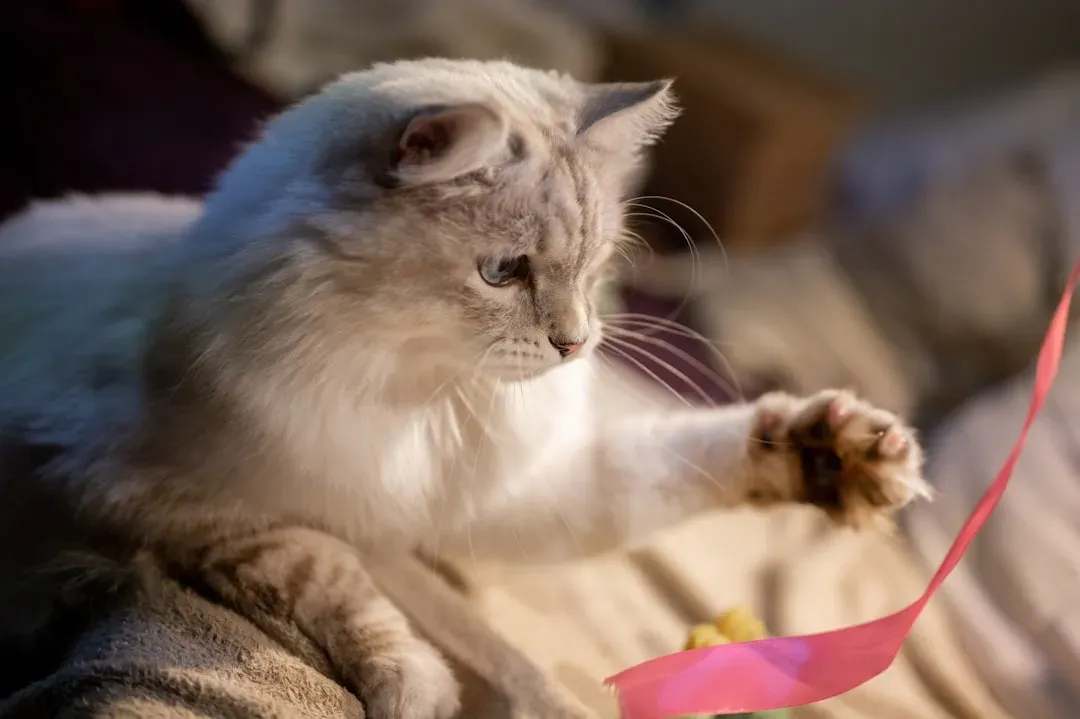
The average adult cat needs about 30 minutes of play time daily. This can be broken into several short sessions instead of one long bout of play, and at least half of this time should be interactive play with a person. That’s not a huge time commitment when you spread it across the day.
Providing enriching experiences for your cat doesn’t have to require a lot of time, effort, or money. There are many simple and easy ways to stimulate your cat’s mind and body, from toys to food games and DIY projects with items you probably already have at home. The common thread across all seven approaches is the same: your cat needs to feel like a real hunter, not just a spectator. Give them the chance to stalk, problem-solve, and actually “catch” something, and you’ll likely find a calmer, more confident, and genuinely happier cat sharing your home.