You look over at your cat sitting perfectly still on the windowsill, eyes locked on something outside you can’t even see. It doesn’t look all that impressive at first glance. Just a cat being a cat, right? Wrong. What’s actually happening inside that small, furry body at that moment is nothing short of extraordinary – a firing of ancient, finely tuned survival systems so precise they would put many modern technologies to shame.
Most people think of cats as cute, slightly aloof companions who mostly nap and knock things off tables. Honestly, that’s a massive underestimation. Your cat is, at its core, a magnificently engineered predator. The science behind feline instincts is fascinating, sometimes shocking, and always worth understanding better. Let’s dive in.
Their Hearing Is Something From Another World
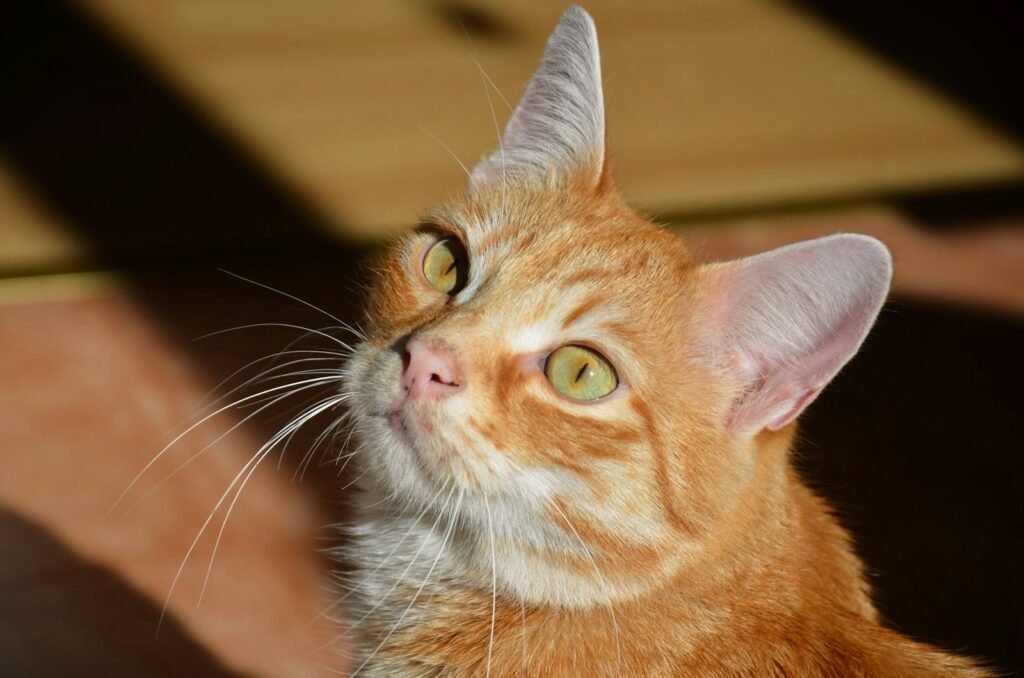
Stop and think for a second about how much you miss with your own ears. Conversations through walls, sounds inside the walls, the faintest hum from electronics across a room. Your cat doesn’t miss any of that. While humans and cats have a similar range of hearing on the lower end of the scale, cats can hear much higher-pitched sounds, up to 64 kHz, which is 1.6 octaves above the range of a human, and even a full octave above the range of a dog. That means your cat hears an entirely different layer of the world around you.
Here’s how you can spot it in real life: when listening for something, a cat’s ears will swivel in that direction, with ear flaps that can independently point backwards, forwards, and sideways to pinpoint a source of sound. Cats can judge within 8 centimetres the location of a sound being made from a metre away – an ability that is incredibly useful for locating prey. So the next time your cat’s ears rotate like tiny satellite dishes toward a spot on the wall, they are not being weird. They are likely picking up something that you will never hear at all.
Their Sense of Smell Is a Whole Second Language

A domestic cat’s sense of smell is between 9 and 16 times as strong as a human’s. Think about what that actually means in practice. Imagine walking into a kitchen and smelling not just dinner, but every single ingredient separately, at full intensity, while also smelling who touched the pot and how long ago. That is closer to what your cat experiences every single time they walk through a room.
It gets even more interesting. cats also have a second “nose” located in the roof of the mouth, called the vomeronasal organ, which has a slightly different use – it picks up pheromone signatures that regular scent receptors cannot detect. These pheromones carry important social, mating, and territorial information. If you see your cat grimacing or sneering by pulling back their upper lip and opening their mouth, it means they are using this secondary sense of smell. You can spot this behavior, called the Flehmen response, when your cat sniffs something particularly interesting. It looks a little silly. It is, in reality, a biological masterpiece.
Their Night Vision Would Make a Navy SEAL Jealous
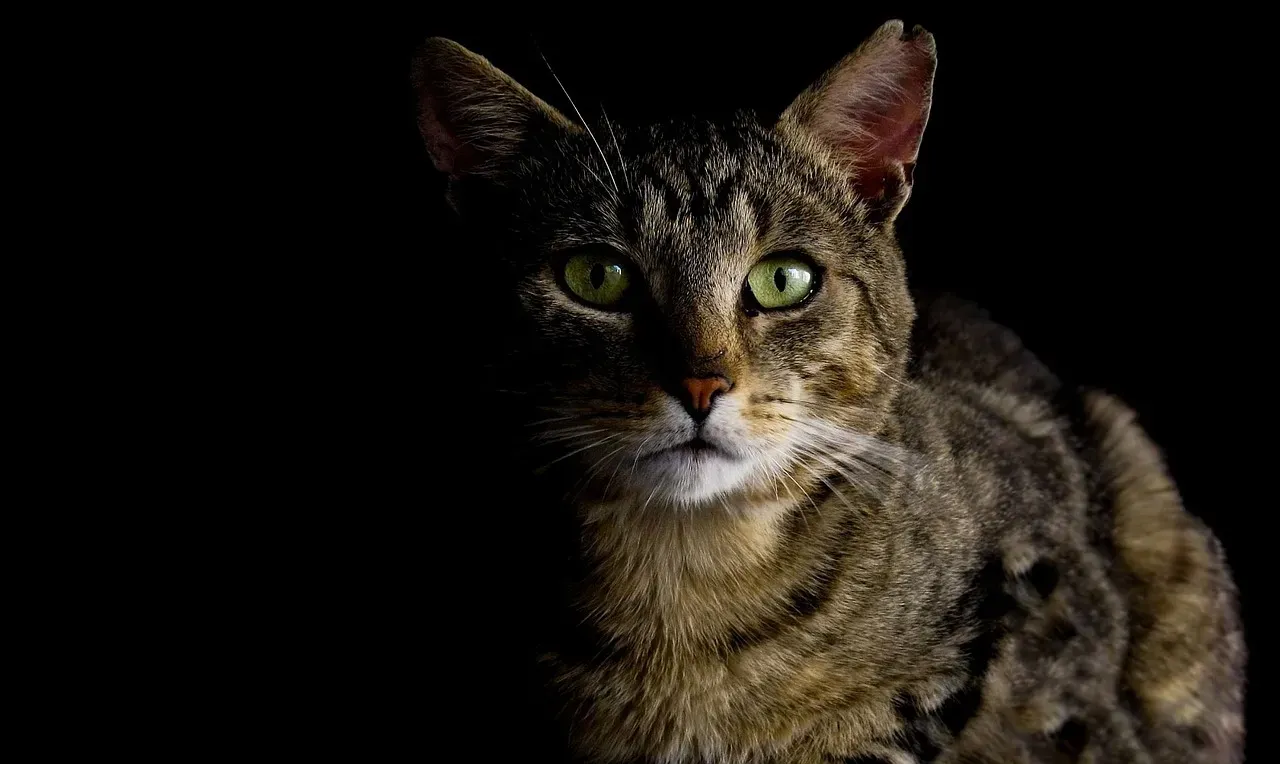
You have probably noticed your cat moving around the house in what seems like total darkness without bumping into a single thing. That is not luck. while cats cannot see in total darkness, their eyes are built to see in low-light conditions, perfect for hunting at dawn or dusk. Cats have more rod cells in their retinas than humans, which are highly sensitive to dim light, and they also have a tapetum lucidum, a reflective layer behind the retina that bounces light back through, making their eyes appear to glow at night. Think of it like a built-in night-vision amplifier.
Cats have a visual field of view of 200 degrees compared with 180 degrees in humans. Science also backs up the fact that cats have more nerve cells in their brain’s visual areas than humans. You can spot their superior low-light vision during those famous “zoomies” at midnight – your cat is not randomly losing its mind. It is acting on sharp visual awareness of the environment that you simply cannot share. Their crepuscular nature, most active at dawn and dusk, is a direct expression of this evolved advantage.
Their Whiskers Are a GPS System Built Into Their Face
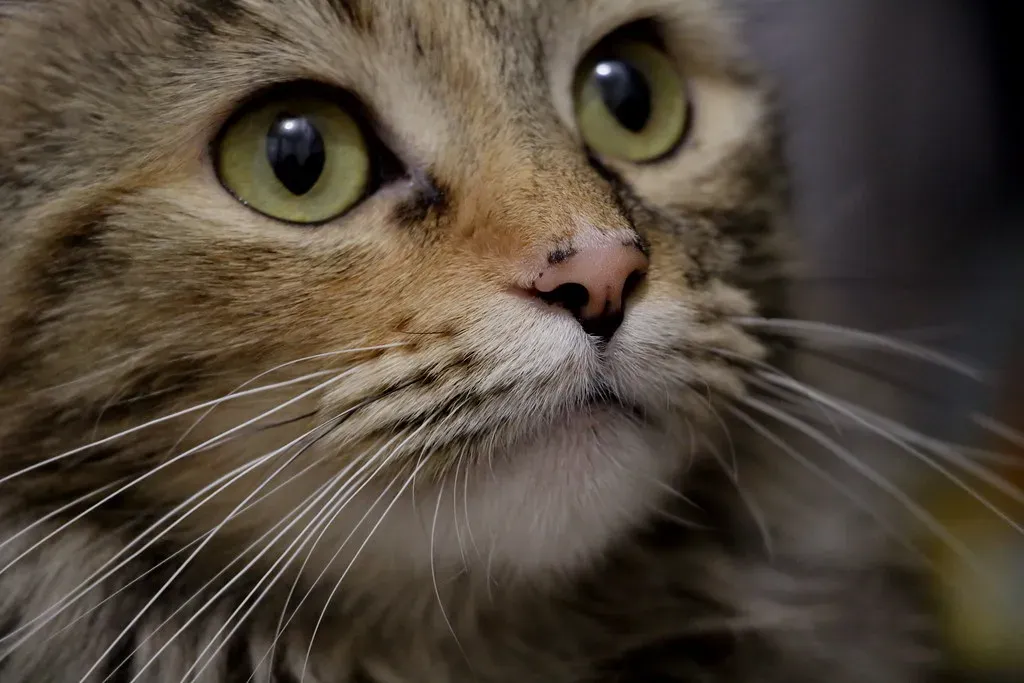
You probably think of your cat’s whiskers as cute facial features. Let’s be real – they are so much more than that. whiskers are incredibly sensitive to vibrations and air movements, capable of detecting disturbances so subtle that they are imperceptible to humans, and this sensitivity allows cats to sense the movement of small prey animals even when they are hidden in grass or behind obstacles. It is basically like having sonar woven into the sides of your face, reading the environment in real time.
the structure of the brain region that receives information from the whiskers is similar to that found in the visual cortex, which permits the cat to create a three-dimensional map of its surroundings. cats can sense if a tunnel or path is too narrow before walking into it, and their vibrissae are so sensitive that they can pick up the tiniest air disturbances caused by a moving mouse, bird, or other animal. Watch your cat’s whiskers when they are exploring somewhere new. If those whiskers are pushed forward and spread wide, your cat is actively scanning and mapping. It is extraordinary to watch once you know what you are seeing.
Their Territorial Instinct Runs Deeper Than You Realize
You might have thought that when your cat rubs their face on your leg, it is pure affection. It is affection, sure, but it is also something far older and more strategic. cats are naturally territorial animals, a trait deeply rooted in their wild ancestry. In the wild, establishing and defending territory is essential for survival as it helps secure access to food, mates, and shelter. Domestic cats retain this instinct even though their environment is much safer.
with scent glands located on their cheeks, paws, and the base of their tail, cats leave behind subtle chemical signatures that help them feel secure and in control. even indoor cats express this instinct – when your cat sniffs your shoes, rubs against shopping bags, or inspects new furniture, they are not just curious but gathering information and reinforcing their sense of ownership. You can spot this instinct at work whenever a new object enters your home. That first thorough sniff-and-rub session is your cat actively rewriting the chemical map of their domain. I think it is one of the most quietly powerful behaviors they have.
Their Hunting Instinct Never Goes Off Duty
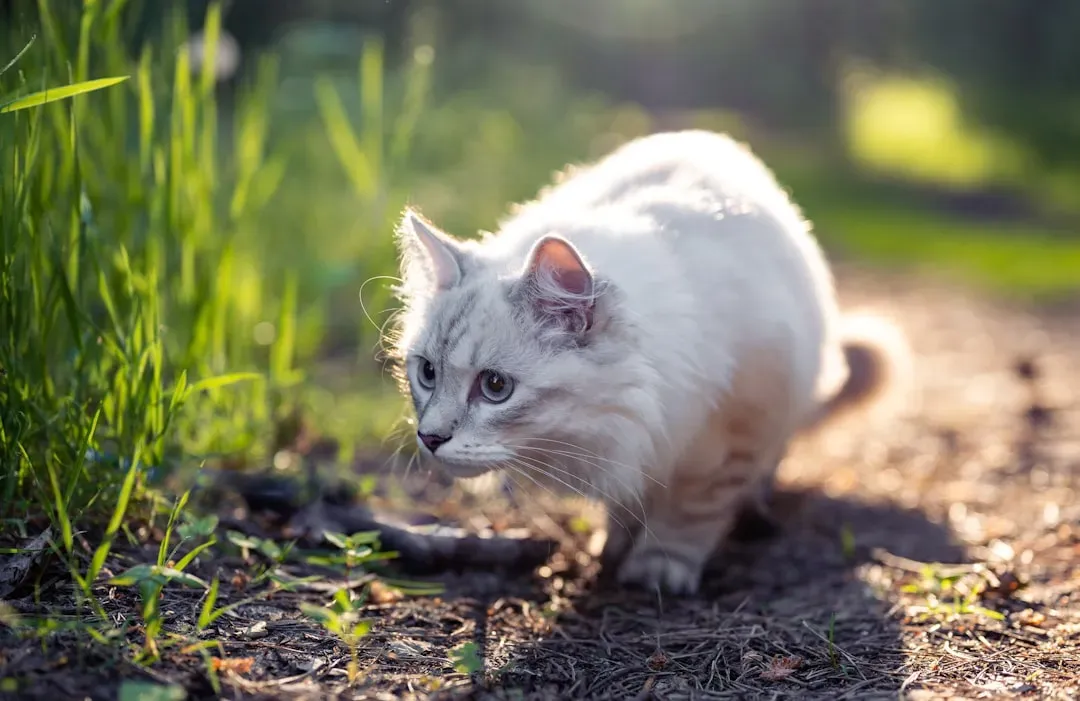
cats have developed some impressive hunting skills to ensure they get enough to eat, and even the most domestic of cats will still have strong hunting instincts. Here is the thing – being well-fed does not switch this off. Not even a little. their behavior is not driven by hunger but by deeply ingrained predatory instincts. Exploring hidden corners and watching small movements helps them stay mentally sharp and ready, just as their ancestors needed to be in order to catch prey. Even well-fed cats may practice hunting by pouncing on insects, batting at loose strings, or ambushing feet under a blanket.
if you watch a domestic cat playing, you can observe all their natural hunting instincts at work. These actions, like stalking, hiding, and pouncing, are actually very impressive and certainly could be described as highly skilled and intelligent behavior. You can spot this instinct most clearly during play. When your cat crouches low, wiggles their hindquarters, and launches themselves at a toy, that is not play for play’s sake. That is a precision predator running a full rehearsal for a hunt their ancestors performed thousands of times under open skies.
Their Internal Clock Is Alarmingly Precise
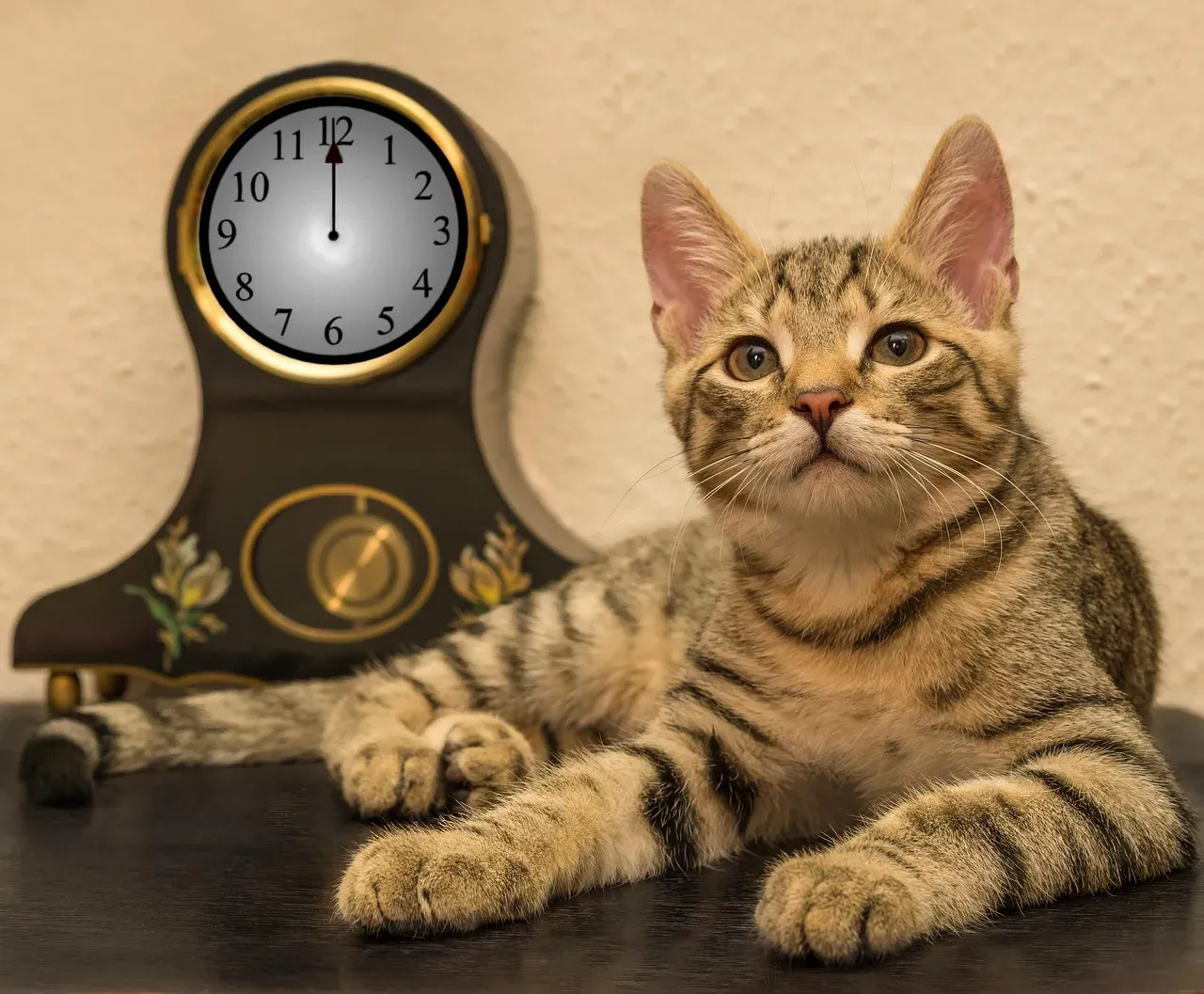
If you have a cat and you feed them at the same time every day, you already know what is coming. About five minutes before mealtime, your cat appears. Like clockwork. No alarm. No phone. No clock on the wall. It almost feels a little eerie the first time you notice it. cats have an internal clock, or circadian rhythm, and like a human, a cat’s circadian rhythm is always ticking inside their body, prompting them to get up around dusk and go to sleep often around dawn. Their time-keeping is biological, not coincidental.
this biological clock known as the circadian rhythm helps cats coordinate their activities such as hunting, sleeping, and grooming, and by following this internal clock, cats are able to anticipate events and adjust their behavior accordingly. cats seem to know when you will arrive home, and it is common for a cat to be waiting for an owner at the door, suggesting that the cat knows exactly what time to expect you – having memorized certain cues that precede your arrival. Pay attention to your cat’s behavior in the hour before your usual arrival home. If they are waiting at the door, not by chance but by biological precision, you are witnessing a survival instinct that doubles as one of the most quietly touching things a cat can do.
Conclusion: Your Cat Is a Quiet Marvel
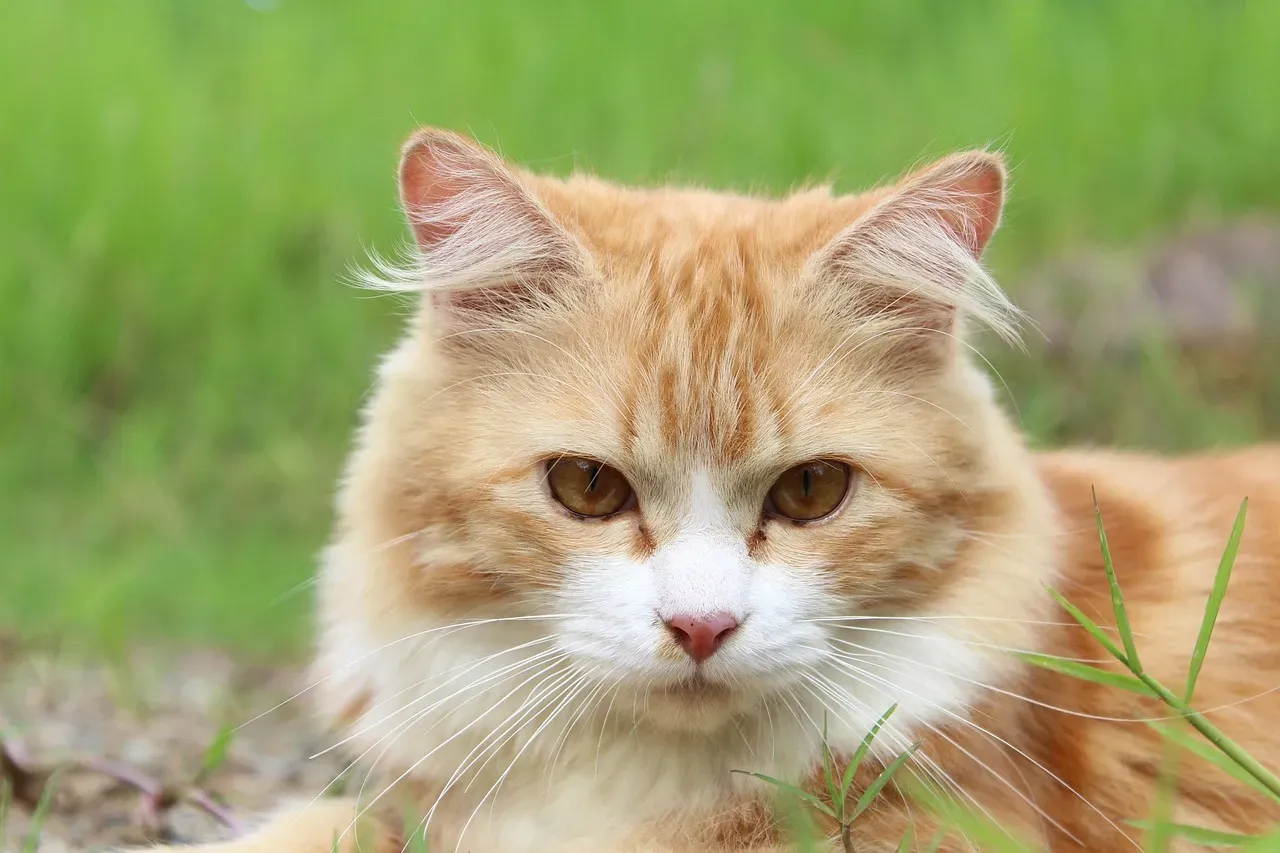
It is easy to look at a cat curled up asleep for the twelfth hour in a row and think there is not much going on. But when you start understanding what is happening beneath the surface – the constant environmental scanning, the pheromone-reading, the whisker-mapping, the biological timekeeping – the picture changes entirely. domestic cats still have many of the same instincts and traits as their wild ancestors, and they exhibit some complex and fascinating behaviors.
their behavior is deeply tied to how they perceive their world, and their super senses make them remarkable hunters, communicators, and companions. Understanding these instincts does not just make you a better cat owner – it makes the relationship richer. You stop seeing random, quirky behavior and start seeing a highly tuned living system doing exactly what millions of years of evolution designed it to do. The real question is: now that you know what to look for, how many of these instincts can you spot in your own cat today? Drop your observations in the comments – I have a feeling some of you are going to be genuinely surprised by what you notice.