You’ve probably looked at your cat at least once and thought, “What on earth is going on in that little head?” One moment they’re curled up on your lap, purring like a tiny motor, and the next they’re staring at you with that unreadable, sphinx-like expression as if you owe them rent. Cats are genuinely one of the most misread creatures in the animal kingdom, and it’s not entirely your fault.
The truth is, most people approach cats with the same emotional lens they’d use for a dog or even another human. That’s where the confusion kicks in. Cats are famously misunderstood, and many people ascribe human or even dog behavior to them – which is incorrect. Felines are unique creatures with their own idiosyncrasies and communication methods. Once you start seeing your cat for what they actually are, rather than what you project onto them, everything changes. Get ready to see your feline companion in a whole new light. Let’s dive in.
1. The Slow Blink: Your Cat Is Saying “I Love You”
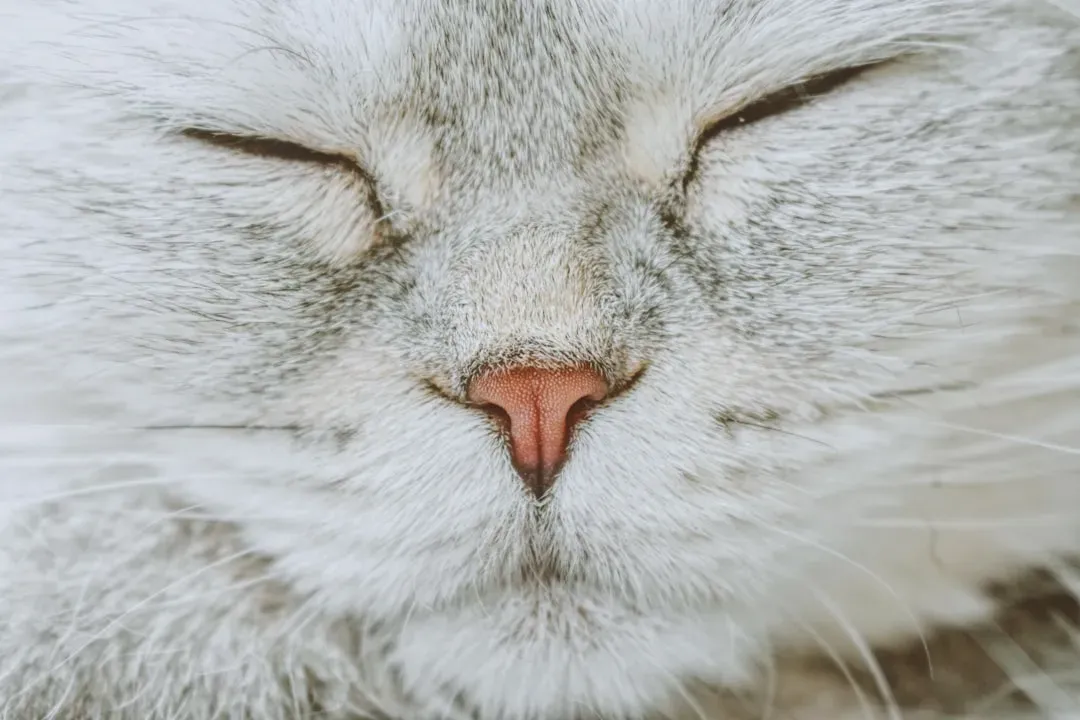
You’re sitting across the room and your cat locks eyes with you, then slowly, almost lazily, closes and reopens their eyes. Most people interpret this as indifference or drowsiness. Honestly, it’s the opposite. If your cat is telling you through their body language that they feel comfortable and relaxed around you, you can tell them the same – slowly blink at them and move your head slightly to the side, and if you’re lucky, your cat will do the same back.
Think of the slow blink as the feline equivalent of a warm smile. Cats are subtle and complicated in the way they communicate, but taking time to learn their body language can help to strengthen the relationship with your cat, and learning the signs that they are happy, or when they just want to be left alone, can be a big help to you both. So next time your cat half-closes their eyes at you from across the room, blink back slowly. You’re having a conversation. A very quiet, very beautiful one.
2. Kneading You Like Bread Dough: It’s Deep Comfort, Not a Weird Habit
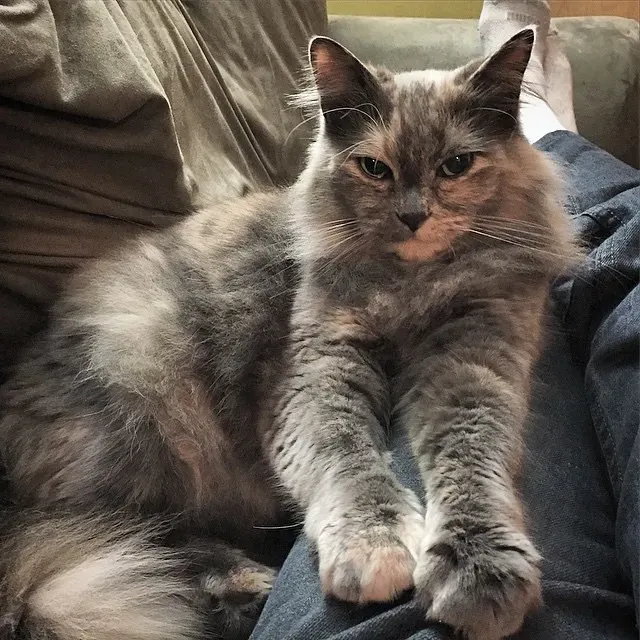
Your cat climbs onto your lap, starts rhythmically pushing their paws in and out against your legs, and maybe even drools a little. It looks bizarre. It might even hurt if their claws are out. Kneading or “making bread” is an adorably weird behavior that’s leftover from the cat’s days of nursing on mom – using their paws to manipulate the mammary glands stimulates the production of milk, and it may also be a calming or enjoyable repetitive behavior that makes your cat feel relaxed or sleepy.
Cat owners may notice their cat kneading soft surfaces from time to time, be it blankets or their human, and this behavior is most likely carried over from their days as kittens – when they nurse, kittens tend to knead on their mother to help the milk release and as a comforting behavior. When your cat kneads you specifically, you are their safe place. You are the equivalent of their mother’s warmth. Many cats show at least some kneading behavior throughout their lives, but some take it to a real art form – pawing, purring, and drooling combined. Lean into it. It’s one of the highest compliments a cat can pay you.
3. Bringing You Dead Animals: A Gift, Not a Horror Show
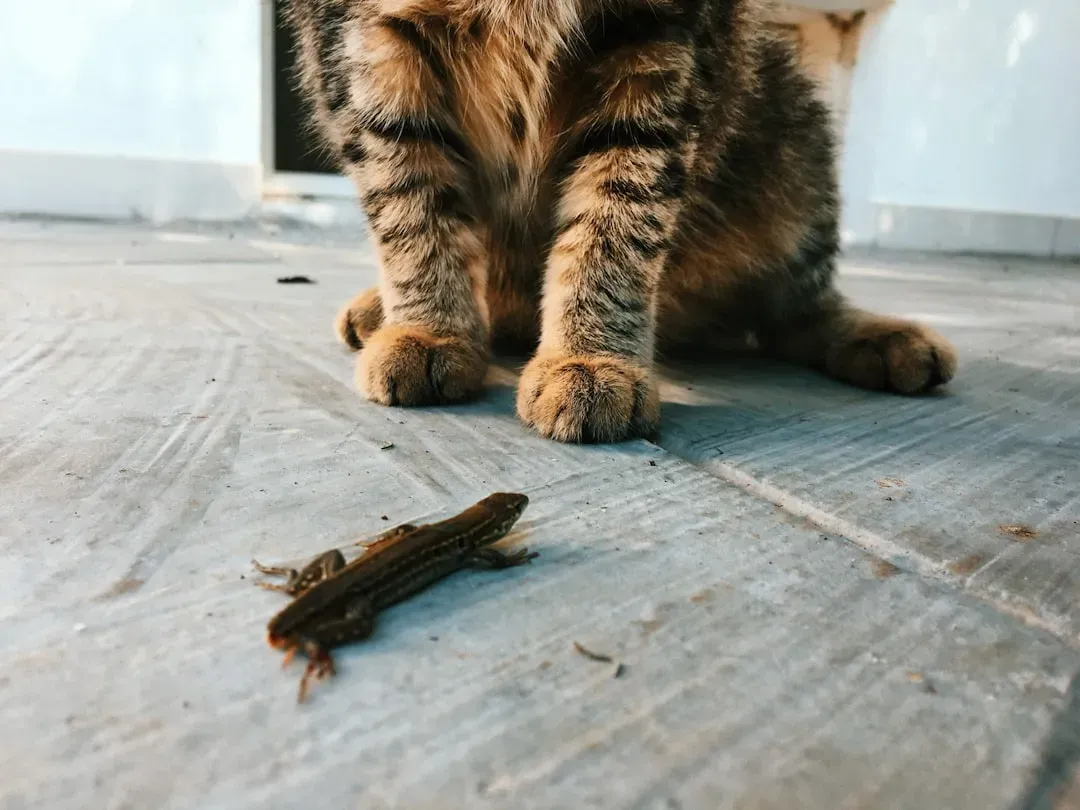
You wake up, pad to the kitchen for coffee, and find a small, lifeless mouse on your floor. Your first instinct? Disgust. Maybe even betrayal. But let’s be real here – your cat isn’t staging a warning. They’re genuinely proud of themselves. Although domestic cats no longer need to hunt for survival like their ancestors, their genetic makeup still influences their behavior. That hunting instinct doesn’t just switch off because there’s a bowl of kibble waiting in the kitchen.
When your cat brings you a “gift,” they are including you in their world. You are their trusted companion, and in their mind, they’re sharing something valuable with you. Whatever behaviors you observe in your own cat, do your best to remember they are not out to frustrate or punish you – they are communicating needs, soothing themselves, or simply playing. Getting angry or shuddering dramatically doesn’t help. Accept the gesture for what it is – pure, instinct-driven affection – and quietly dispose of the offering.
4. Scratching Your Furniture: It’s Biology, Not Spite
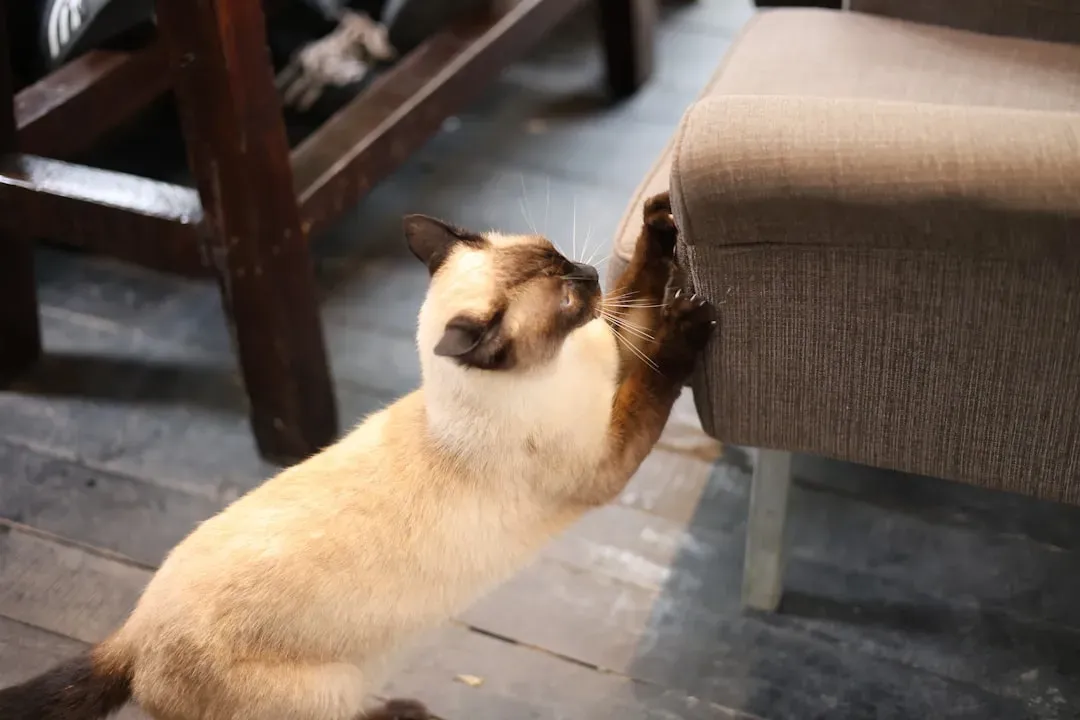
You invested in a gorgeous sofa. Your cat found the corner of it irresistible within approximately two hours of delivery. It feels personal. Cats engage in scratching behavior for several reasons – it helps them maintain the health of their claws by removing the outer sheath and keeping them sharp, allows them to stretch their muscles and maintain their flexibility, and also serves as a way for them to mark their territory, as they leave both visual and scent marks through the glands in their paws.
Your scratching post might be too flimsy – furniture is sturdier and more satisfying to dig into. This is not a cat with a grudge. If the scratching post doesn’t meet your cat’s needs because it might be too wobbly, too short, or covered in the wrong kind of texture, then their intelligent brain will direct them to an object that will work more effectively – scratching is important to them, and if you provide a scratching post that meets their needs better than your sofa, they’ll naturally prefer that. Give them something worthy of their claws and your furniture stands a much better chance.
5. Rubbing Against Your Legs: You’ve Been Claimed
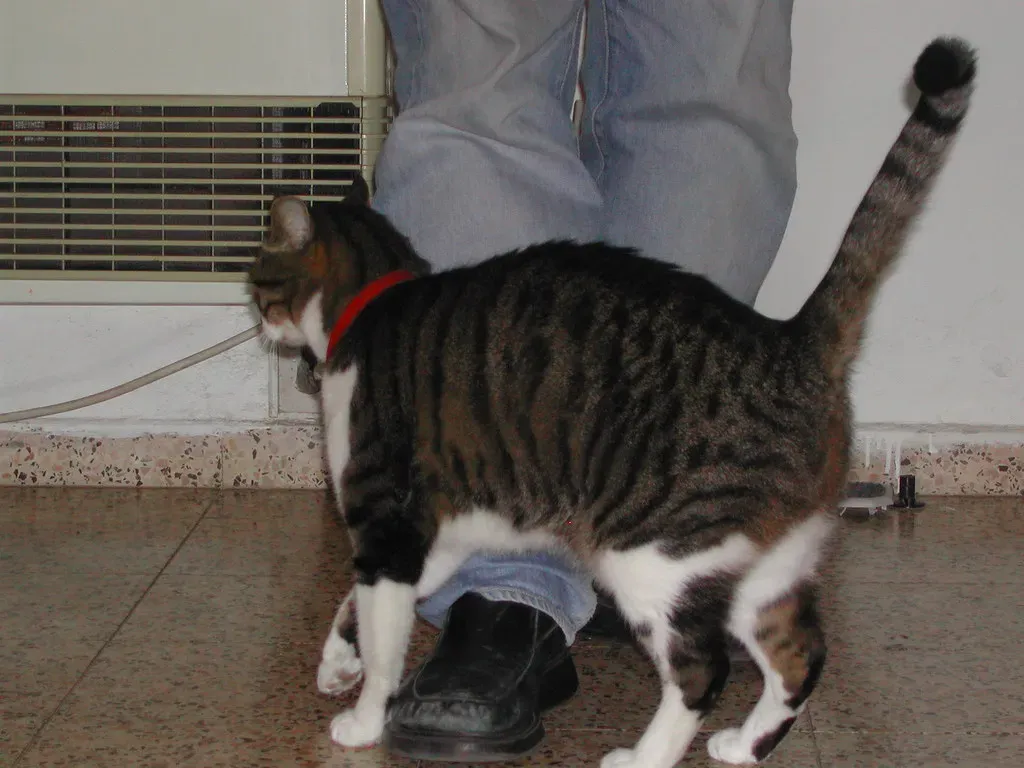
Your cat weaves between your ankles the moment you walk through the door. You’ve probably assumed they just want food. Sometimes that’s true, sure. You might think that your cat is rubbing against your legs to butter you up when they want something, but that’s not the case – it’s more likely a sign of affection and ownership, and when they rub against you, they transfer their pheromones onto you, thus marking you as theirs.
Cats have scent glands in their faces, and when they rub against you it is an act of greeting and co-mingling scents with you – if you think about it, it is a bit like the European greeting of kissing three times, alternating cheeks each time. So that affectionate figure-eight around your legs? It’s a greeting ritual. If you’ve ever come close to tripping on your cat as they weave between your legs or gotten distracted by their heads rubbing against your shin or even your computer screen, chances are they are trying to show they love you. You’ve been thoroughly claimed, and honestly, that’s a privilege.
6. Purring During Stress or Pain: Not Always a Happy Sound
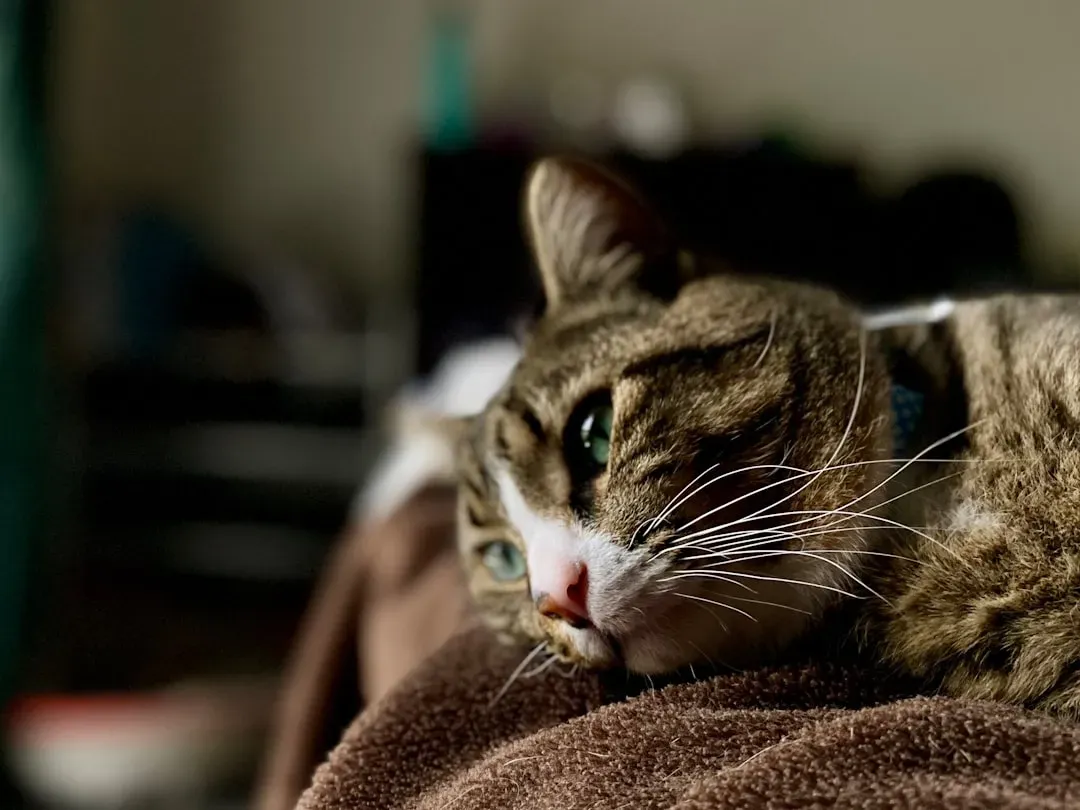
Purring might be the single most misunderstood signal in a cat’s entire communication toolkit. Everyone knows cats purr when they’re happy. That’s true. One of the most common misconceptions about cats is that they purr only when they’re happy – while purring is usually a sign of contentment, cats have also been observed to purr when they are injured or dying. That’s a genuinely surprising fact, and I think it changes how you should interpret the sound entirely.
Most of us think of cats purring when they are happy or content, but cats also purr at times of fear, stress, and pain – it’s possible the act of purring when less than happy is a bit like humans whistling in the dark, as they may be attempting to self-soothe with an act that is usually associated with a happier time. The key takeaway? We often think that our cats are happy when they purr, but this is only true if their body language is relaxed – they can also purr to get your attention and fuss, and sometimes cats can purr in stressful situations, such as going to the vet. Always look at the whole picture, not just the soundtrack.
7. Sitting Near You But Not With You: Proximity Is Still Love
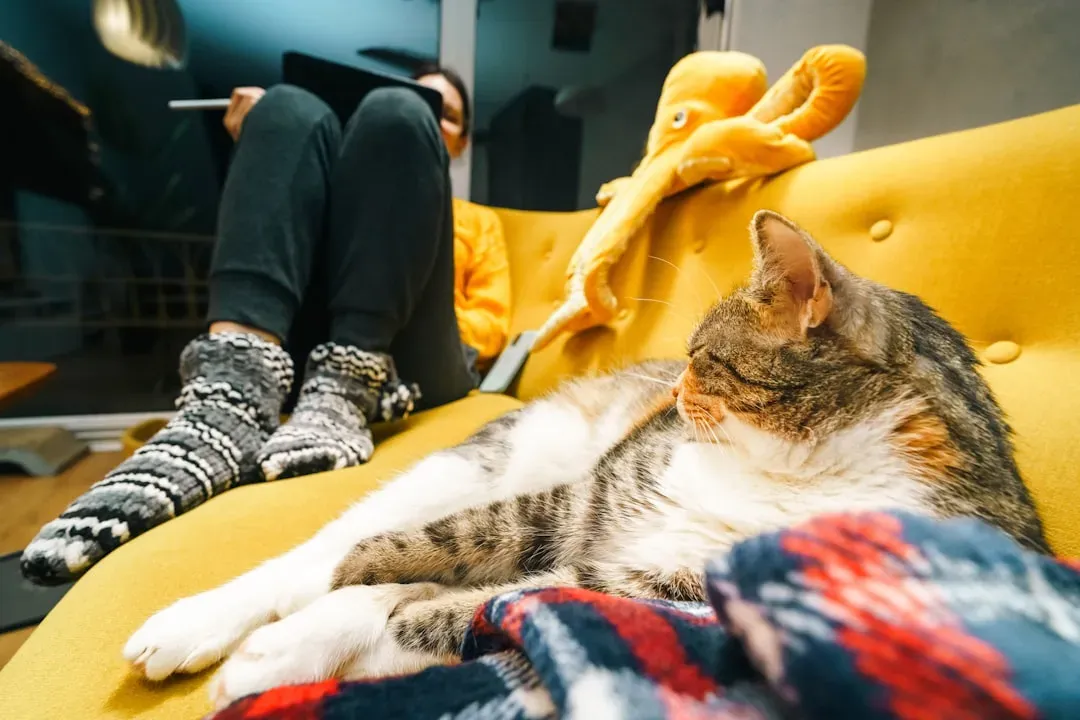
Your cat enters the room, surveys it like a tiny CEO, and then settles at the far end of the couch rather than in your lap. You take it as rejection. You probably shouldn’t. If your cat is in the same room as you but not directly interacting, you shouldn’t assume that they don’t like you or that they are ignoring you – cats don’t always crave physical closeness the way dogs do, and if your feline friend is sitting on the other end of the couch with you, they’re choosing to hang out because they like you.
Domestic cats are facultatively social, meaning that their social behavior is flexible and heavily influenced by their early development and lifetime experiences. Think of it this way – you don’t have to be physically touching a friend to enjoy their company. Sometimes just being in the same room is enough. Studies suggest cats recognize their names and form emotional attachments to their humans, debunking the myth that they’re aloof and detached. Your cat choosing to be in your space, on their own terms, is a quiet but very real declaration of trust.
8. The Exposed Belly: Admire It, Don’t Always Touch It
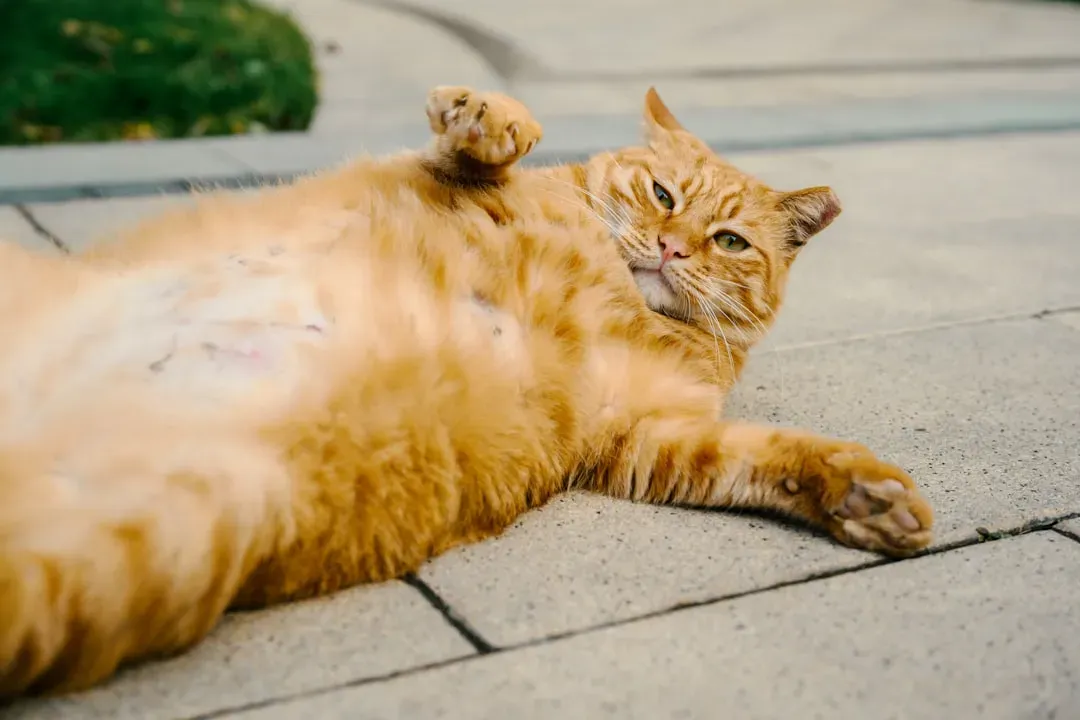
Your cat flops over dramatically, rolls onto their back, and presents their plush, inviting belly to the world. Every instinct in your body says: pet it. Many people, after they learn that a cat exposing itself feels comfortable, may see a cat with its belly up and think that it’s safe to rub or pet the cat’s stomach – but the exposed belly is a sign of comfort and trust, not necessarily an invitation for a belly rub, and many people have touched a cat’s stomach only to have the cat instantly seize up, latching onto their hand with claws and teeth.
When cats lie on their back with their bellies exposed, they are in a position of vulnerability – therefore, this position may communicate a feeling of trust or comfort. The belly display means your cat feels completely safe around you. That’s huge. Rolling onto their back is a sign of trust, but not always an invitation for belly rubs – recognizing posture alongside other signals ensures more accurate interpretation. Read the room, watch those ears and tail, and respect their boundary even in the midst of maximum cuteness. Your relationship will be stronger for it.
What All of This Really Means for Your Bond
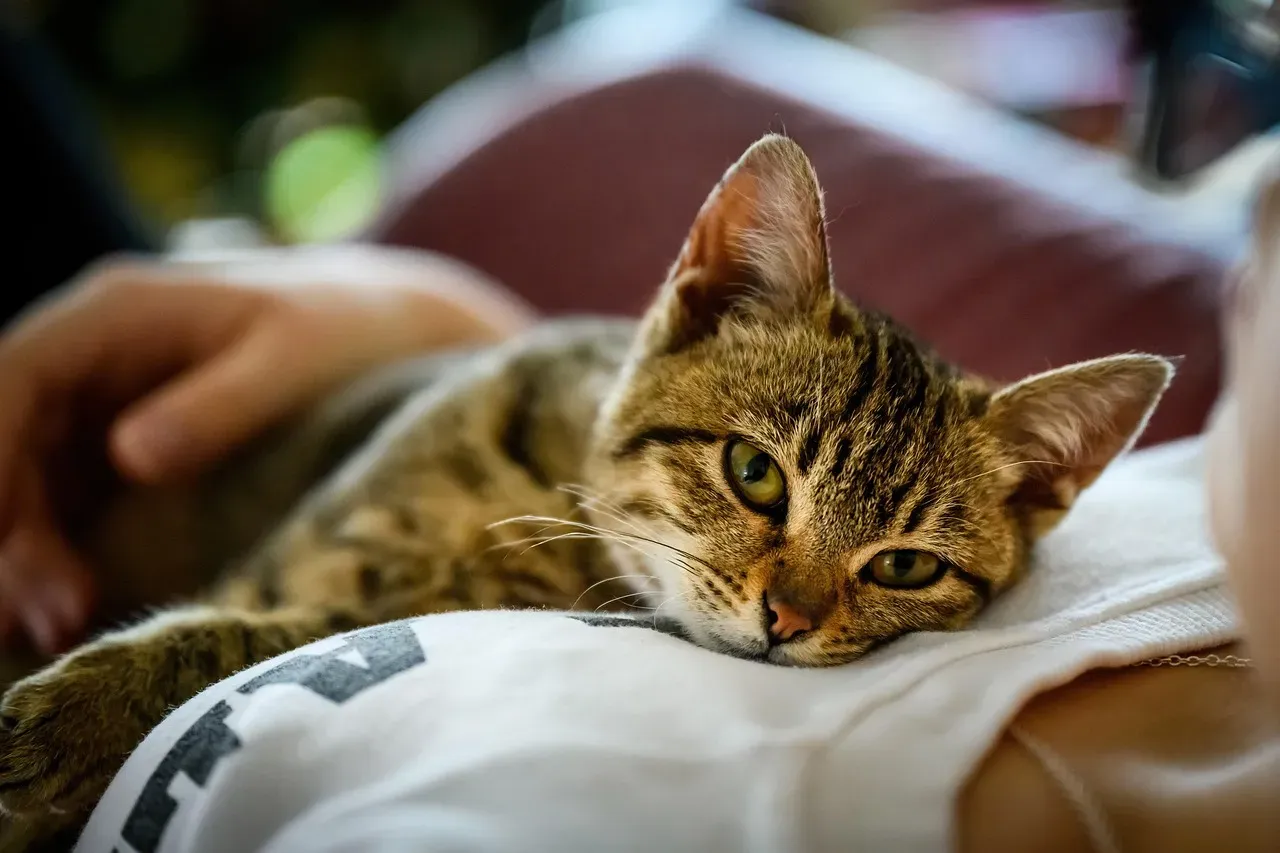
Here’s the big picture: your cat is communicating with you constantly. Every slow blink, every headbutt, every kneading session and furniture-scratching episode is a message. When you let go of the idea that your cat is a tiny, furry human with complicated motives and cynical inner lives, you start to see them more clearly for who they are – and that shift not only prevents misunderstandings, it also deepens the trust and affection that make sharing your life with them so rewarding.
View cats as the beautiful, intelligent, playful, social creatures that they are and you might just be surprised what you’ll learn – you have an opportunity for an amazing relationship with the cat in your life if you take the time to look at their world the way they do and understand what they need to thrive physically, mentally, and emotionally. The eight behaviors above are just the beginning. Once you start fluently reading your cat’s signals, the relationship transforms from a one-sided guessing game into something that genuinely feels like a two-way conversation.
The irony is that cats have been trying to talk to us all along. We just weren’t listening in the right language. What behavior of your cat has confused you the most? Share your thoughts in the comments below!