You love your cat. You want to bond with them, keep them active, and maybe even tire them out a little so they stop knocking your water glass off the counter at 2 AM. So you pull out a toy, dangle it in the air, and wait for magic to happen. Nothing. Or worse, a scratch. Sound familiar?
Here’s the thing – playing with your cat is absolutely not as simple as it looks. Most owners are making at least one or two of these errors without even realizing it. The good news is that fixing them is easier than you think. Let’s dive in.
Mistake 1: Using Your Hands and Fingers as Toys
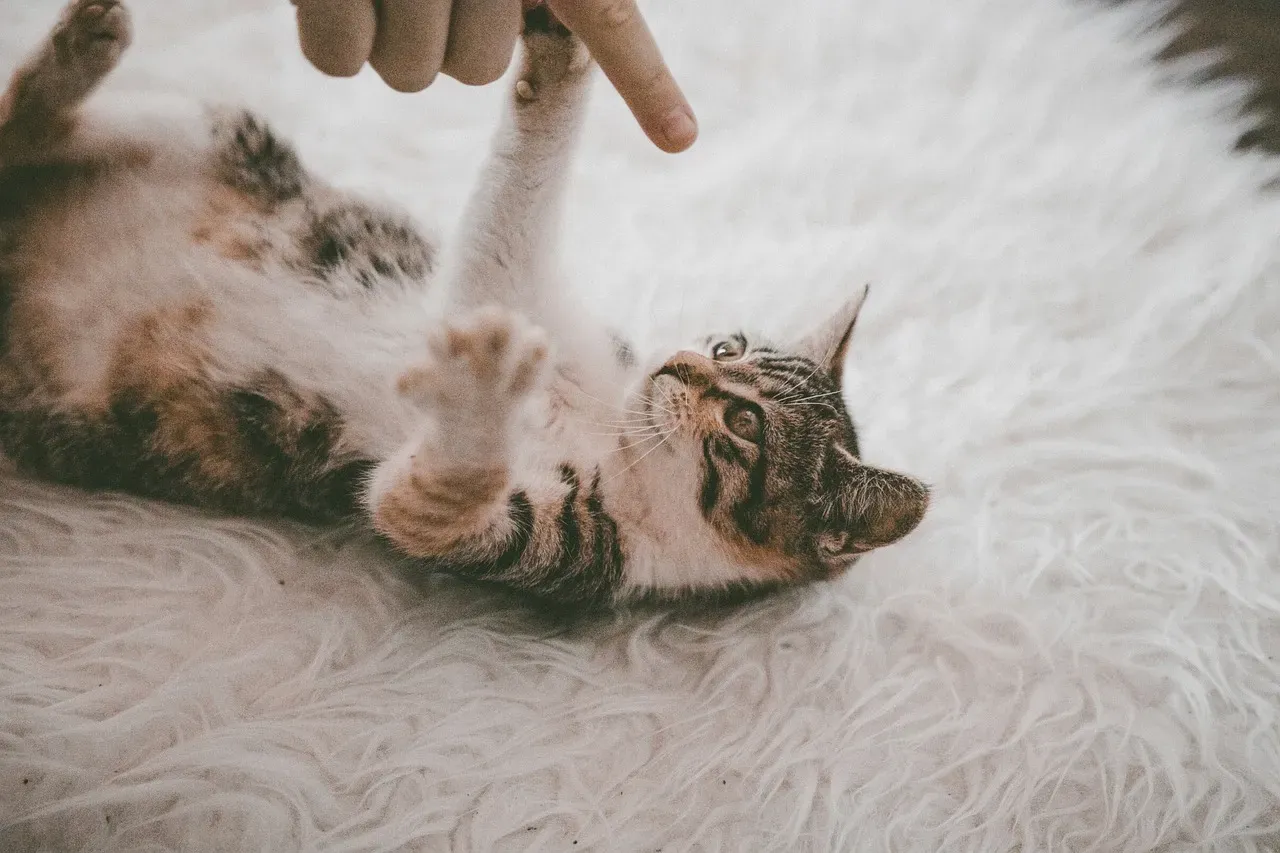
Honestly, this might be the single biggest mistake cat owners make, and it almost always starts with a kitten. It’s a bad habit that is often introduced when the cat is a kitten. It may seem adorable when they’re young and small, but they get into the habit, and as they grow older, it hurts. What starts as a cute little nibble becomes a full-on bite from a fully grown cat who genuinely has no idea why you’re upset.
The association your cat has with your hands should only be that they are used for gentle petting and holding. If they are also viewed as toys, it can lead to a painful injury should the cat decide to playfully bite another family member – and that family member could be a child or an elderly relative. Think of it like teaching someone to shake your hand while also expecting them not to grab your wrist. You set the rules of the game early, and cats follow them faithfully.
Mistake 2: Ignoring Your Cat’s Body Language

It is important to recognize when your cat needs a break. Overstimulation can lead to stress, anxiety, or aggressive behavior. Pay attention to your cat’s body language – if your cat shows signs of overstimulation, such as flattened ears, dilated pupils, or swatting, give them some time alone to calm down. Too many owners push past these signals, treating them like minor distractions rather than loud, clear warnings.
Cats do an excellent job of conveying their feelings. You know when they are happy and active by the upright position in which they hold their tails, their relaxed faces, and their pointed ears. Not reading these signs is a big no-no when it comes to playing with your cat the right way. Think of these signals like a traffic light. Once it turns red, you stop – no matter how much fun you were having.
Mistake 3: Playing With a Stationary Toy
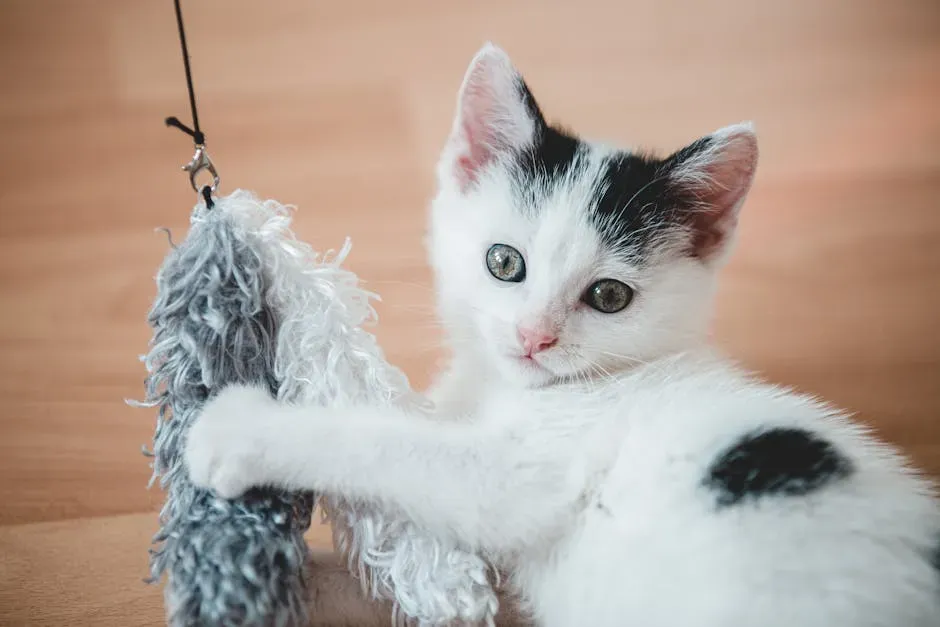
Many people assume that leaving a toy around will be enough to get a cat playing. Unless it has catnip or an appealing texture, a stationary toy is usually boring to a cat. Cats need movement to pique their interest. Dropping a toy mouse on the floor and walking away is the feline equivalent of handing someone a book and then turning off all the lights.
A cat’s play behaviors are rooted in natural instincts, particularly hunting behaviors. Cats love to stalk, chase, pounce, and attack. Cats are particularly attracted to movement, so leaving toys sitting on the floor may not be very enticing to them. Your job is to breathe life into the toy – drag it, hide it, flick it behind furniture. Make it feel like actual prey, and your cat will light up instantly.
Mistake 4: Ending the Session Too Abruptly
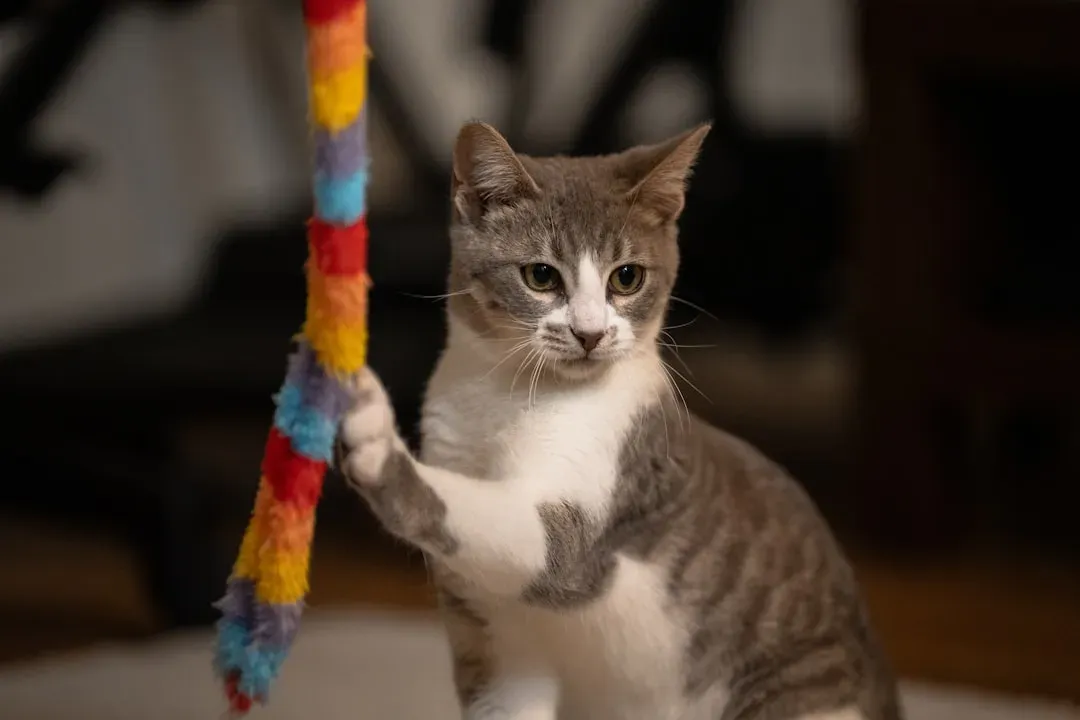
The conclusion of a play session is as important as its content. Abruptly halting play, particularly during moments of high arousal, can result in residual frustration and hyperactivity. Instead, replicate the “capture” phase of hunting by allowing your cat to “catch” the toy. Just imagine sprinting a race and having someone pull the finish line tape away at the last second. Your cat feels exactly that kind of frustration.
When the game ends too abruptly, you leave your cat more keyed up than when you started. Take a few minutes to wind down the play session. When caught, prey struggles a bit, then stops struggling – think about a wounded animal: it will start to move more slowly and erratically. Slow the toy down gradually, let your cat catch it, and end on a satisfying note. That sense of completion matters more than most owners realize.
Mistake 5: Keeping the Toy Out of Your Cat’s Reach
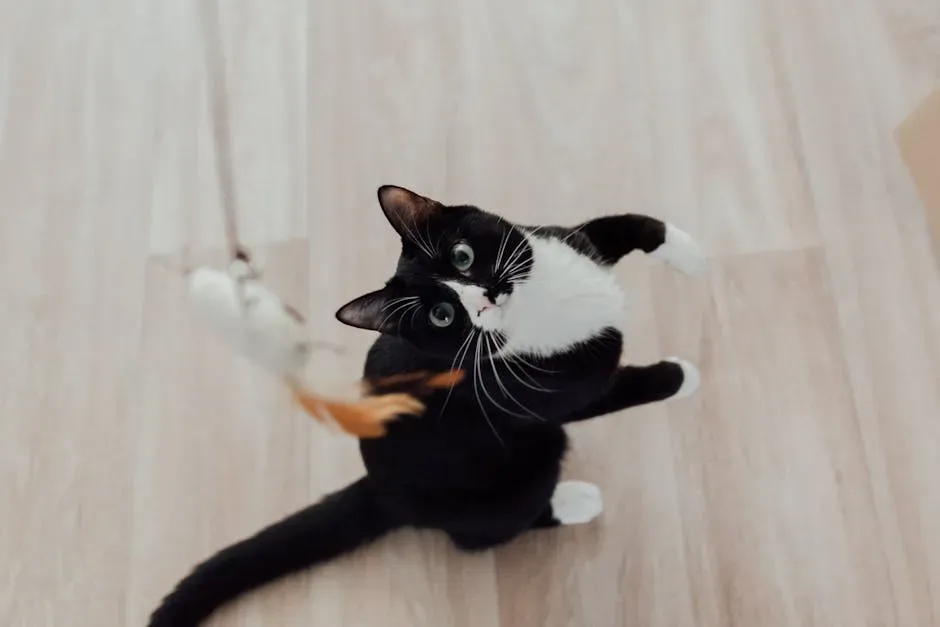
Nobody enjoys playing a game if they never get a chance to win. If you wave the toy all over and keep it out of the cat’s reach, it just leads to frustration. Playtime needs to be physically and mentally rewarding. If your cat chases, pounces, stalks, leaps, and attacks the toy but never gets to capture it, it just becomes a physically exhausting exercise in frustration.
Make sure your cat catches the prey many times during a play session. In a ten-minute play session, the cat should catch the prey at least ten times. This might sound like a lot, but think about it from a hunter’s perspective. Your cat needs to feel capable, successful, and satisfied. Let them win often, and they’ll keep coming back for more.
Mistake 6: Not Rotating or Changing Toys
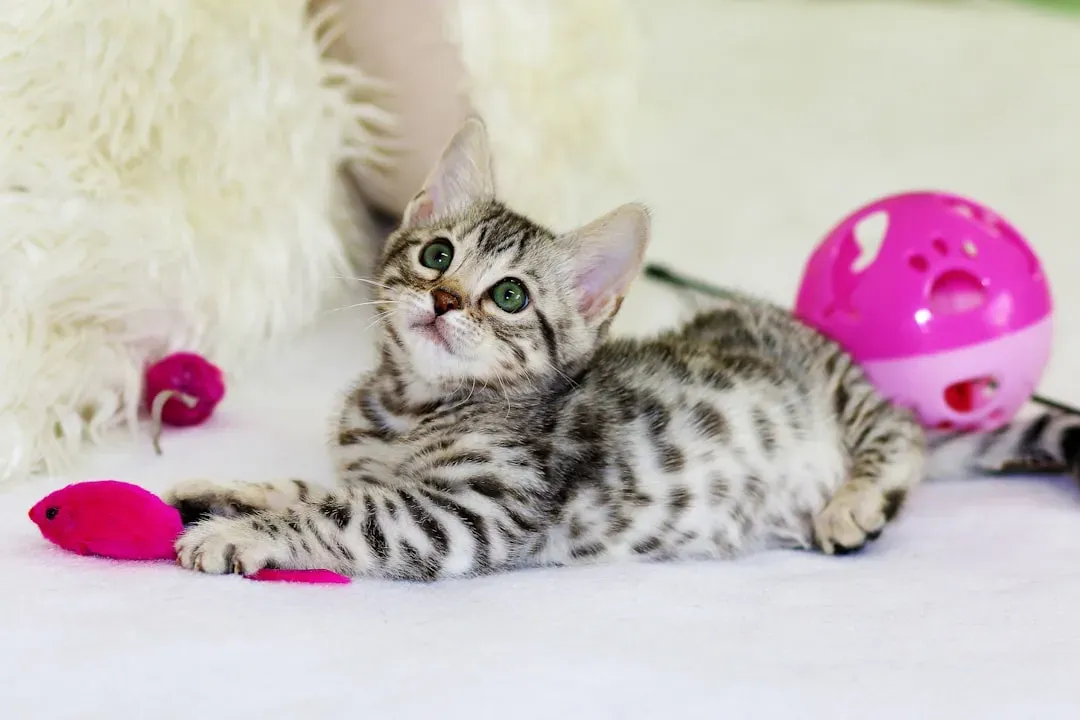
Some cats have simply “killed” the same toy too many times. When you’ve killed the same little mousie a hundred times, it’s truly dead. For some cats, when you’ve killed the same toy twice, it’s dead. Cats need new toys from time to time – how often depends on how quickly your cat stops playing with the toys it has. It’s remarkably similar to eating the same meal every day. Even if it was your favorite, eventually you’ll just stop showing up to the table.
You don’t need to buy a basketful of toys – simply rotate the toys you have. Put a few in a drawer for a month or two while others come out after a long absence and are suddenly new again. You should rotate and change your cat’s toys on a routine basis to keep them interested. Some cats become bored with a toy after a few days, some after a few weeks, and some prefer only one toy. Know your cat’s pattern and plan accordingly.
Mistake 7: Playing With Your Cat Right After They Wake Up

Cats are not unlike people in that they aren’t necessarily ready for a rousing game of fetch or up to a chase when they just wake up from a nap. Felines can sleep a long time, sometimes up to 18 hours. They’re more likely to be cranky after a long rest. Do both of you a favor and wait until your cat is fully awake before breaking out the teaser toy. We’ve all been there – someone tries to get enthusiastic and chatty with us before our morning coffee and it just feels wrong.
Cats are crepuscular by nature, meaning they are most active during dawn and dusk. Structured play sessions at these times align with their circadian rhythms and help fulfill their biological needs. Cats thrive on routine, and inconsistent playtime can lead to boredom or frustration. Setting aside a regular play schedule – especially around meal times – helps keep your cat mentally and physically stimulated. Consistency helps create a positive association with playtime, and cats do better when they can predict what’s next.
Mistake 8: Moving the Toy in an Unrealistic Way
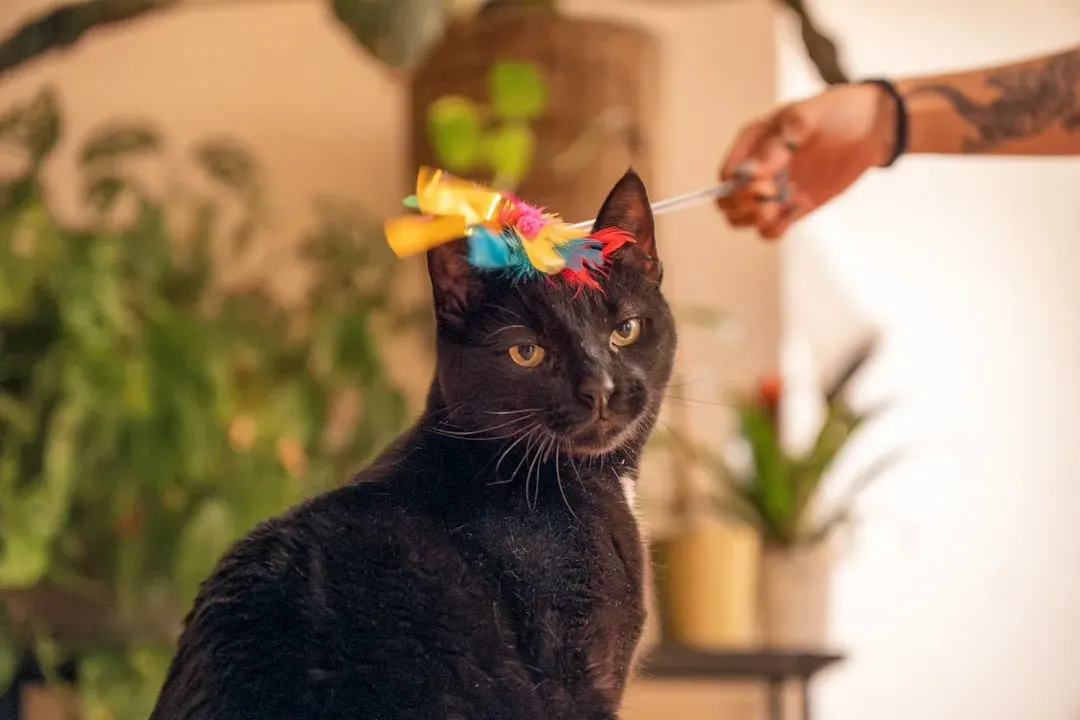
You can consider a food puzzle after play to give your cat a supplemental hunt. One of the biggest mistakes people make when trying to play with cats is dangling a toy right in front of their face. Real prey does not hover inches from a predator’s nose waiting to be eaten. It runs. It hides. It darts in unexpected directions. When you move the toy in a straight line back and forth, you’re essentially asking your cat to engage with something that makes zero biological sense to them.
Prey moves away, not toward the cat. Prey may try to hide under or behind something, keeping making small movements and small sounds. Understanding this gives you clues about how to make a toy enticing to your cat. Make the toy move away, cleverly changing direction, dashing for cover, and popping out again. Mice use rapid starts and stops – they sometimes freeze in fear or dart away in a different direction. So do the same with your toy – scurry across the floor and dart under the couch. Master that technique, and your cat will be transfixed every single time.
Conclusion: Small Changes, Big Difference
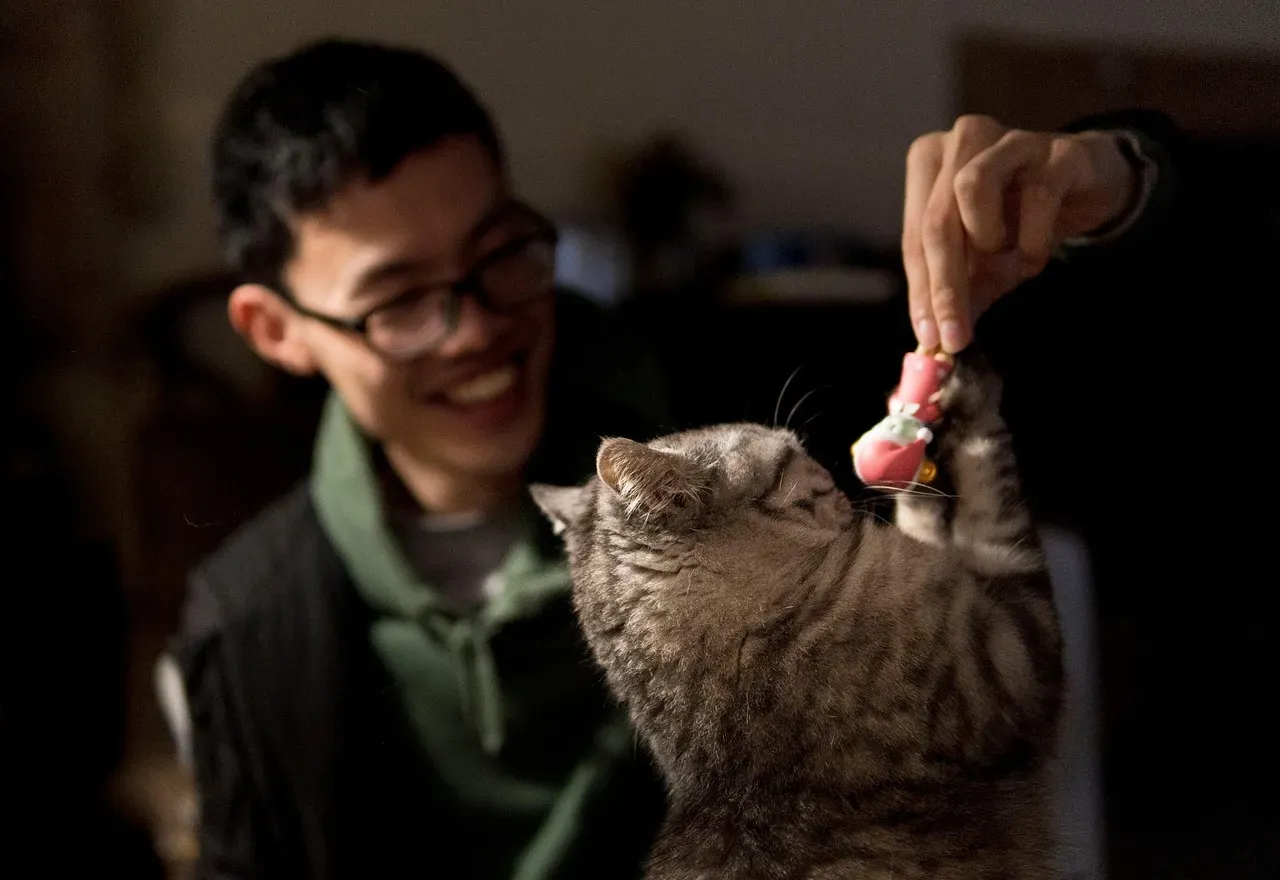
Playing with your cat doesn’t require expensive gear or hours of your day. Play is a critical part of feline behavior, serving to enhance cognitive function, physical fitness, and emotional well-being by providing an outlet for predatory instincts. When you get it right, the payoff is enormous – a calmer, happier, more bonded cat who actually wants to engage with you.
Most of these mistakes are surprisingly easy to fix once you know what to look for. Stop using your hands, read the body language, move that toy like it’s actually running for its life, and always let your cat win. Learning how to play with your cat properly is one of the easiest ways to improve their health, behavior, and happiness – particularly for indoor cats.
Your cat isn’t being difficult or disinterested. They’re just waiting for you to speak their language. So the next time you grab that feather wand, think like the prey – and watch what happens. Which of these mistakes surprised you the most? Let us know in the comments!