Your cat doesn’t just live in your home. To them, it’s a whole territory to patrol, own, and interpret through scent, height, and routine. Yet most homes are designed entirely around human needs, with your cat quietly adapting to an environment that was never really built with them in mind.
As a territorial species, your cat’s home plays an important role in their happiness. A truly cat-friendly home should be both safe and stimulating, because most homes aren’t naturally set up to meet a cat’s needs. The good news is that you don’t need a complete renovation to change things meaningfully. A few smart, well-placed decisions can transform your space into somewhere your feline genuinely thrives.
Give Your Cat the Gift of Vertical Space
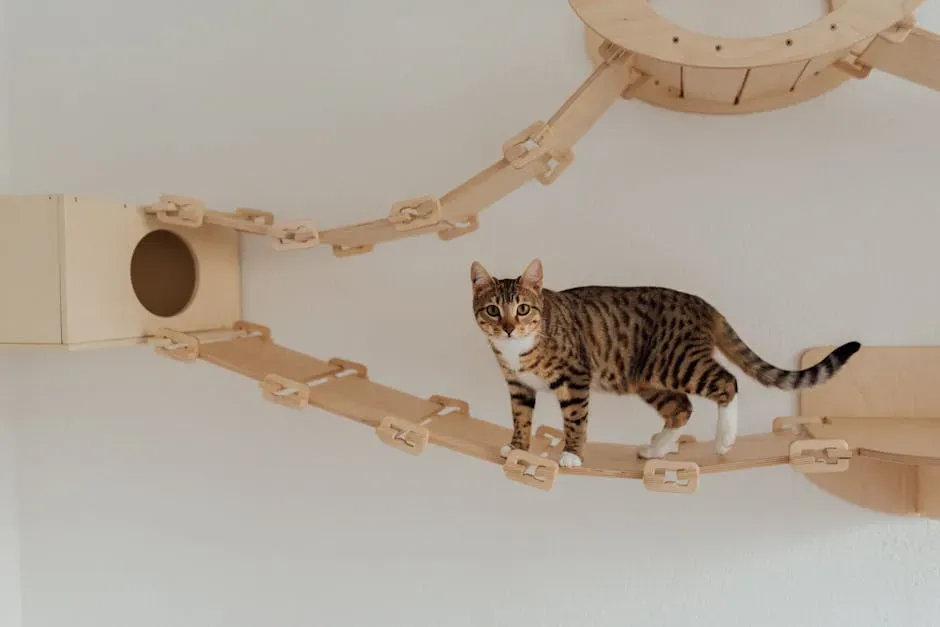
Cats are wired to go up. They love to climb and perch, so adding vertical spaces in your home can provide much-needed exercise and a sense of security. Cat trees, wall-mounted shelves, or even secure furniture like bookcases can create climbing routes that give your cat a new perspective on their surroundings. High perches allow them to observe their environment, stimulating their curiosity and giving them a sense of control over their space.
Vertical space opens up your cat’s territory and makes it easier for cats in a multi-cat household to get along, since they can successfully share space because there are enough spots to go around. It lets your cat survey their world from up high, and it also encourages exercise, which is sorely lacking for many indoor cats, by giving them somewhere to jump to. Think beyond the basic cat tree – connecting wall-mounted shelves into a flowing route creates what many cat enthusiasts now call a “cat superhighway,” and your cat will use every inch of it.
Satisfy the Scratching Instinct Without Sacrificing Your Sofa
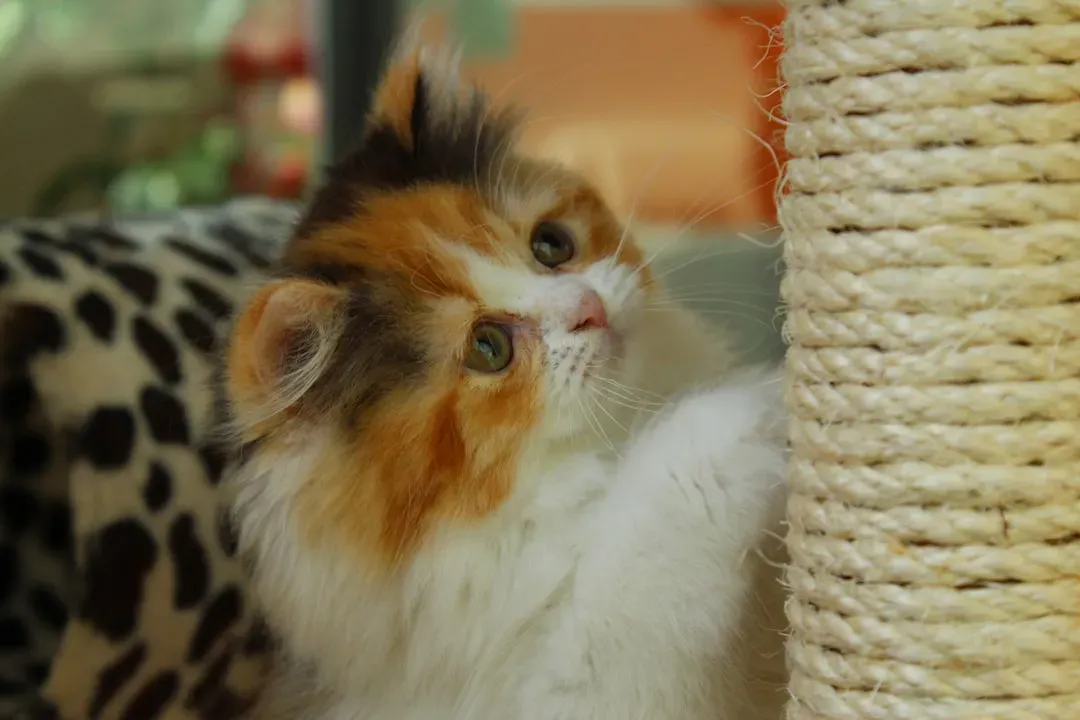
Cats maintain their natural behaviors, such as scratching, chewing, and elimination, while living indoors, and they may develop health and behavior problems when deprived of appropriate environmental outlets for these behaviors. Scratching isn’t destruction for the sake of it – it’s communication, claw maintenance, and stress relief all at once.
Cats have an innate need to stretch, flex, and scratch. Cat scratchers allow them to act on those instincts without destroying your furniture. It’s best to have a variety of surfaces – scratching posts, horizontal scratchers, scratchers made from sisal, and scratchers made from cardboard. Placing scratchers near the spots your cat already gravitates toward, like the edge of the sofa or a doorframe, tends to work far better than tucking them in a corner nobody uses.
Create Cozy Hideaways for Rest and Security
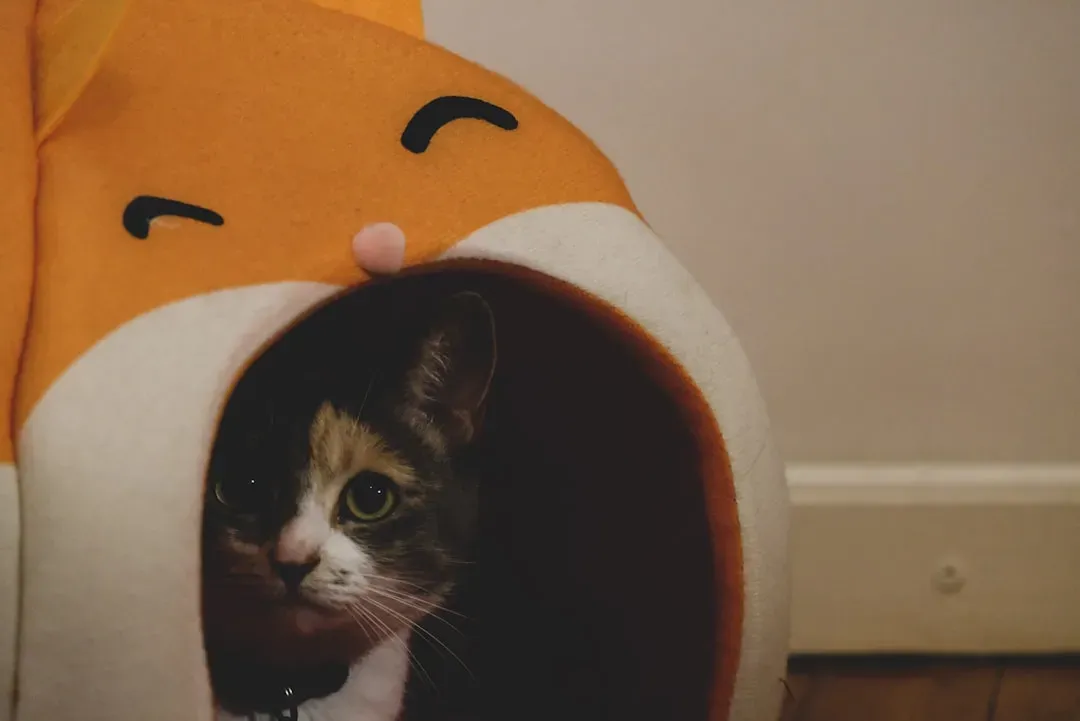
Every cat-friendly home needs good places for your cat to hide away and snuggle up. You should provide a spot for your cat to disappear in plain sight so they can still be a part of family life but feel safe and secure. This isn’t about your cat being antisocial – it’s a deeply instinctual need rooted in being both a predator and prey species.
Calming activities are just as much a part of cat enrichment as stimulating activities. Every animal needs a “comfort zone” where they can go to feel safe and relax. Closets, open crates, high shelves, cat trees, the space under beds, and rooms sectioned off with baby gates are great places to put a comfy cat bed or blanket to create a safe place. You don’t need to spend much – even a cardboard box with a soft blanket inside can become a beloved retreat if it’s placed in a quiet, low-traffic corner of your home.
Set Up a Litter Box Situation That Actually Works
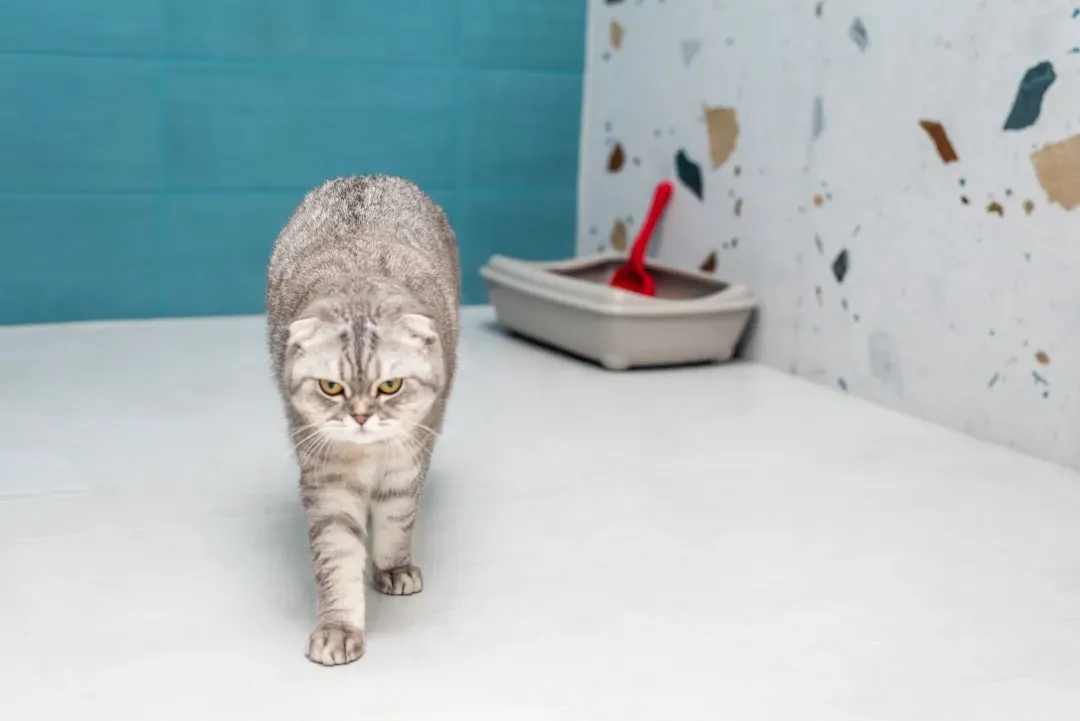
The rule of thumb is one litter box for each cat plus one additional box, or one litter box for each social group plus one additional box, if the number of social groups is known. It sounds like a lot, but this setup genuinely prevents stress, territorial disputes, and the dreaded “going outside the box” problem that frustrates so many cat owners.
Place litter boxes in a variety of different areas to prevent location-avoidance problems. Litter boxes should be placed in quiet, private places that are easily accessible to your cat. They should not be located in high-traffic areas where your cat may be disturbed by children or ambushed by other pets. If your home has multiple levels, at least one litter box should be placed on each level of the house. Noisy areas near washing machines or furnaces are not appropriate because it may frighten your cat away from the box. Never place litter boxes near food and water dishes. Keeping things clean is non-negotiable: the single most common reason for a cat’s refusal to use a litter box is because the box is dirty.
Turn Windows Into Entertainment Zones
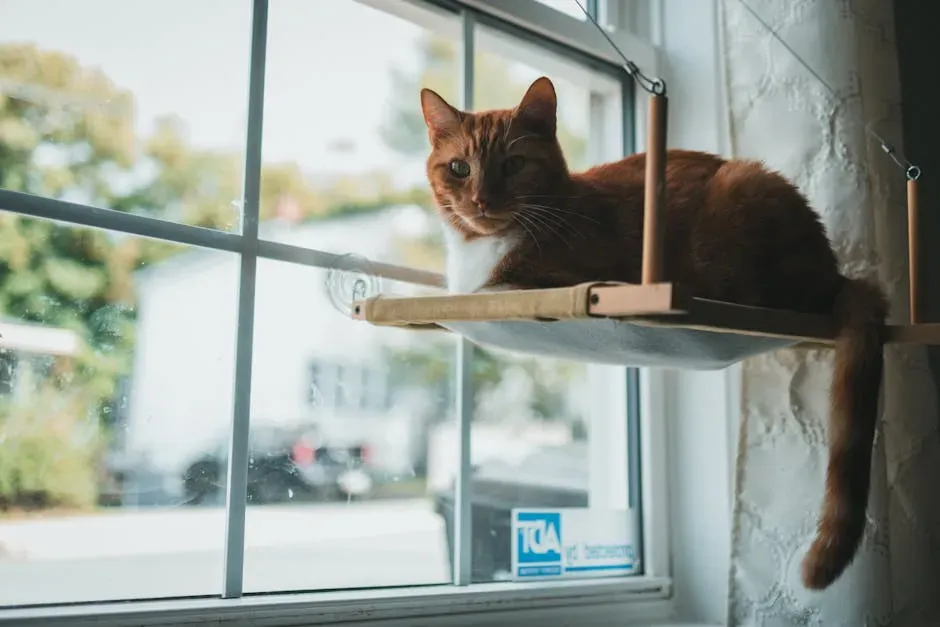
One of the best ways to keep your cat entertained indoors is to provide them with a view of the outside. Set up a cozy window perch where they can watch birds, squirrels, or passing cars. Adding a bird feeder outside your window can attract wildlife for your cat to observe from a safe distance. The movement and variety keep their minds engaged and help alleviate boredom.
A window seat that includes a cushioned perch allows your cat to bask in the sun and watch birds, which provides mental stimulation and comfort. This is one of the simplest and most cost-effective enrichments you can provide. A stable perch, a window with a decent view, and a bird feeder outside can deliver hours of engagement for your cat every single day – no batteries or subscriptions required.
Use Puzzle Feeders to Engage Their Hunting Instincts
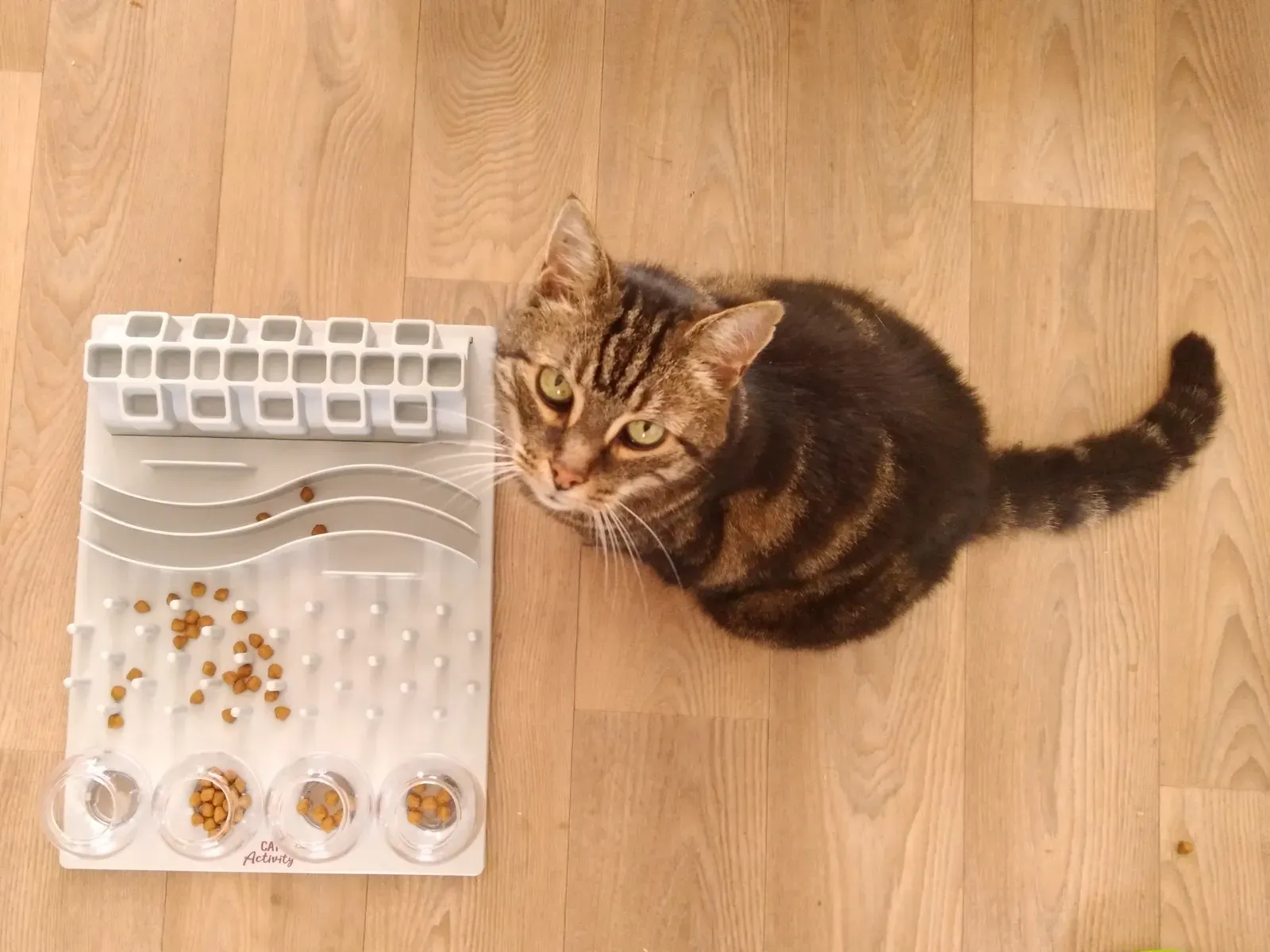
Cats in the wild spend up to half of their day looking for, catching, and eating prey – using a lot of physical and mental energy. With small mammals forming most of their diet, they eat little and often. The predictable availability of food twice daily in a bowl doesn’t challenge your cat, and leaves most cats with a void of several hours that they’ll need to fill with other activities.
Puzzle feeders and interactive toys simulate hunting behavior and make mealtime a stimulating experience. Instead of a bowl, use a puzzle feeder to encourage your cat to “hunt” for their food, which keeps their mind engaged and helps prevent overeating. You can buy dedicated puzzle feeders from most pet shops, or make your own from cardboard tubes and boxes. For indoor cats, stress has various health effects including the occurrence of obesity, type 2 diabetes, and chronic urinary tract infections. In addition to helping combat these health issues, providing your cat with activity will give them an outlet to vent their excess energy, and it can also help with problem behaviors like aggression, litter box issues, and bullying.
Keep Your Plants Safe for Curious Paws
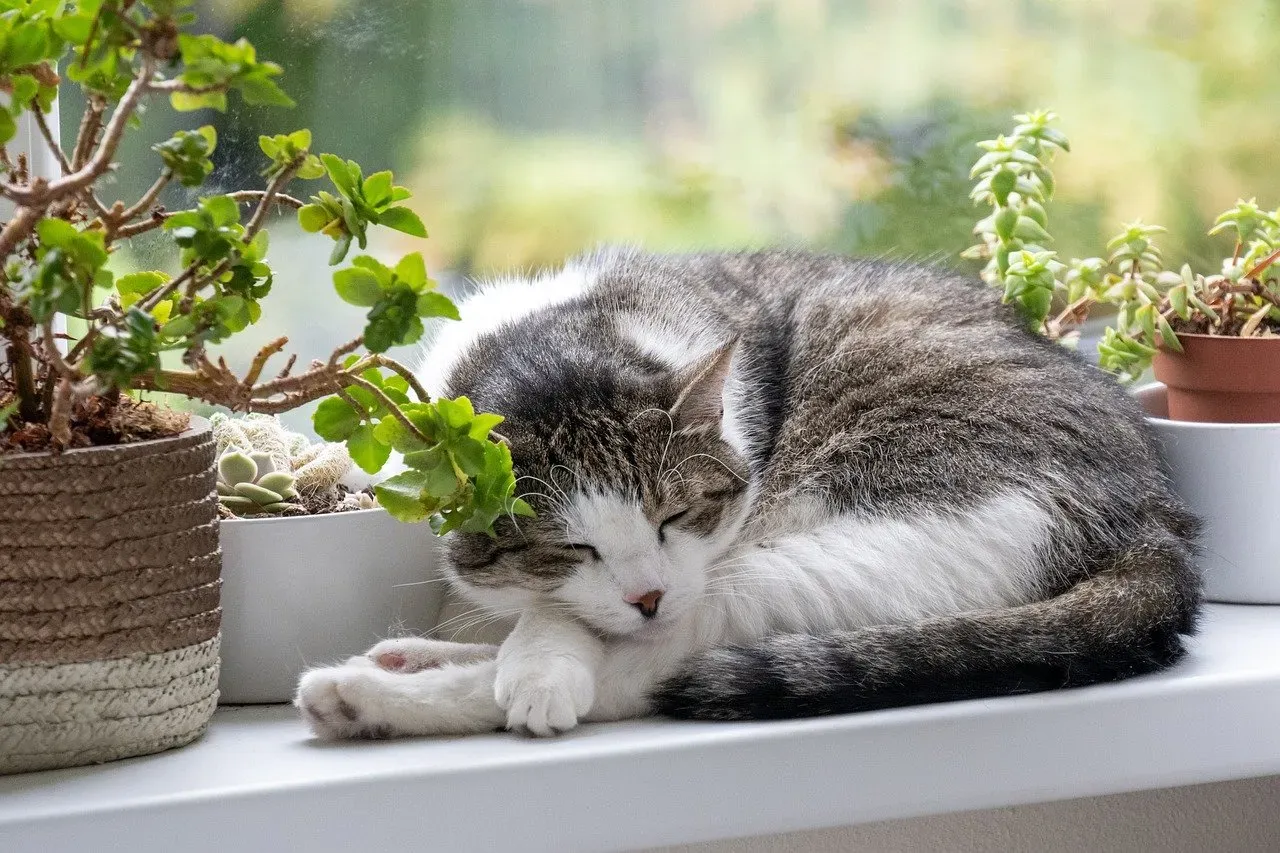
Houseplants and cats can absolutely coexist, but only if you choose carefully. Many common houseplants, such as Sago Palm, Lilies, Dieffenbachia, and Monstera Deliciosa, pose risks to cats, causing symptoms from mild irritation to severe health complications. Lilies in particular are worth a serious mention – true lilies and day lilies, often found in cut flower arrangements from the florist, can be fatal and cause irreversible kidney damage for cats within just days if not treated as an emergency.
You can create an indoor cat garden using cat-friendly plants, including cat grass, catnip, silvervine, spider plants, and impatiens. If you’re not sure about a particular plant, you can check the ASPCA Toxic and Non-Toxic Plants List to find more cat-friendly plant options. Growing a small pot of cat grass or catnip near a sunny windowsill is actually a wonderful enrichment strategy on its own – your cat gets to graze, chew, and explore greenery in a completely safe way.
Make Playtime a Daily Priority
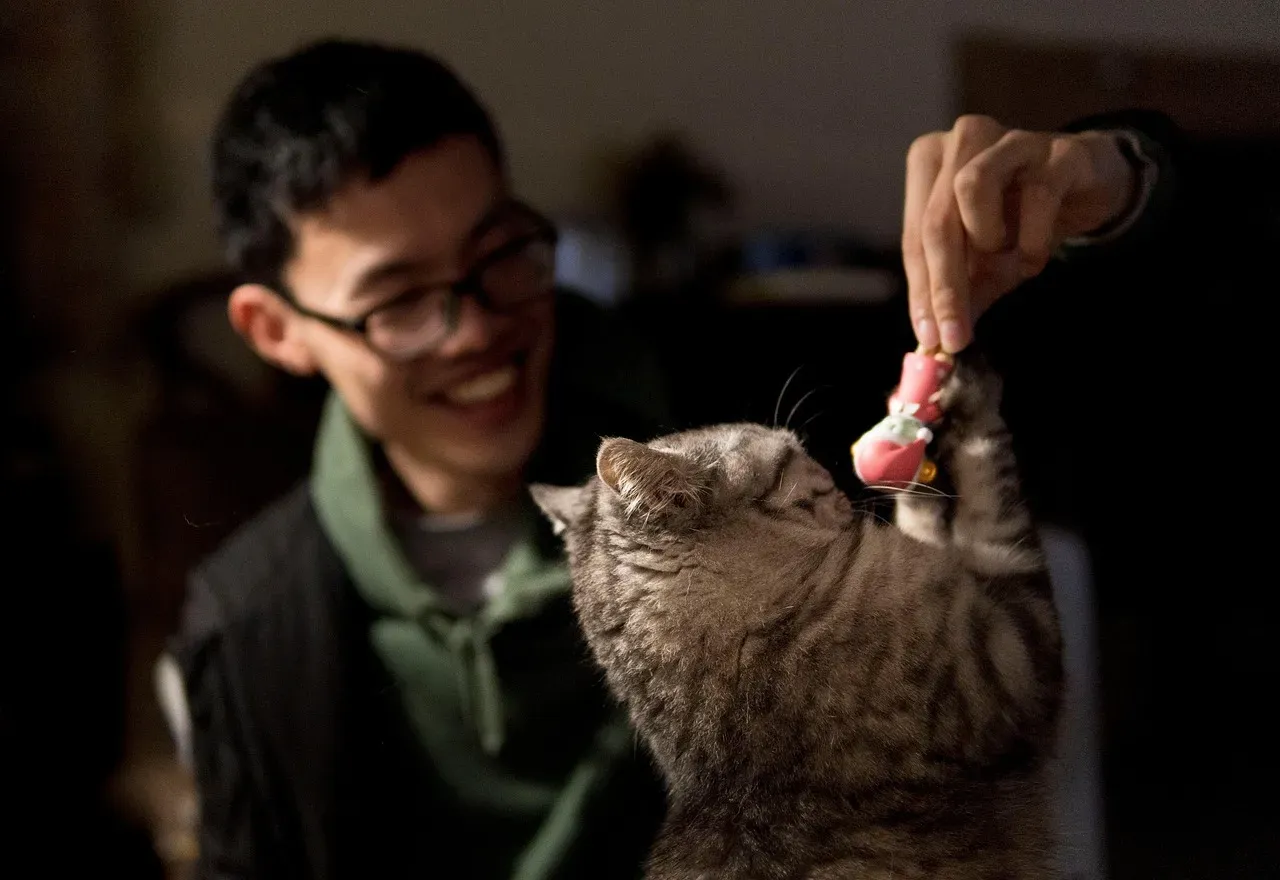
Social activities with humans can be the single most effective way to enrich your indoor cat’s environment. Set a timer for five minutes twice daily and play with your cat. Rotate the toys and activities you choose during these periods. This doesn’t need to be elaborate – consistency matters far more than variety or expense.
Every cat is an individual, but most prefer toys and games that are as close to the natural hunting experience as possible. Toys that move randomly are great; those that are motionless and left lying around soon become predictable and boring. For this reason, toys should be put away in a drawer or box and access rotated to ensure they remain interesting to your cat. Interactive toys help strengthen the bond between you and your cat. They let you share fun and positive experiences, provide exercise for your cat, and allow your cat to feel like the predator they were born to be. That daily play session is as much about connection as it is enrichment.
Conclusion
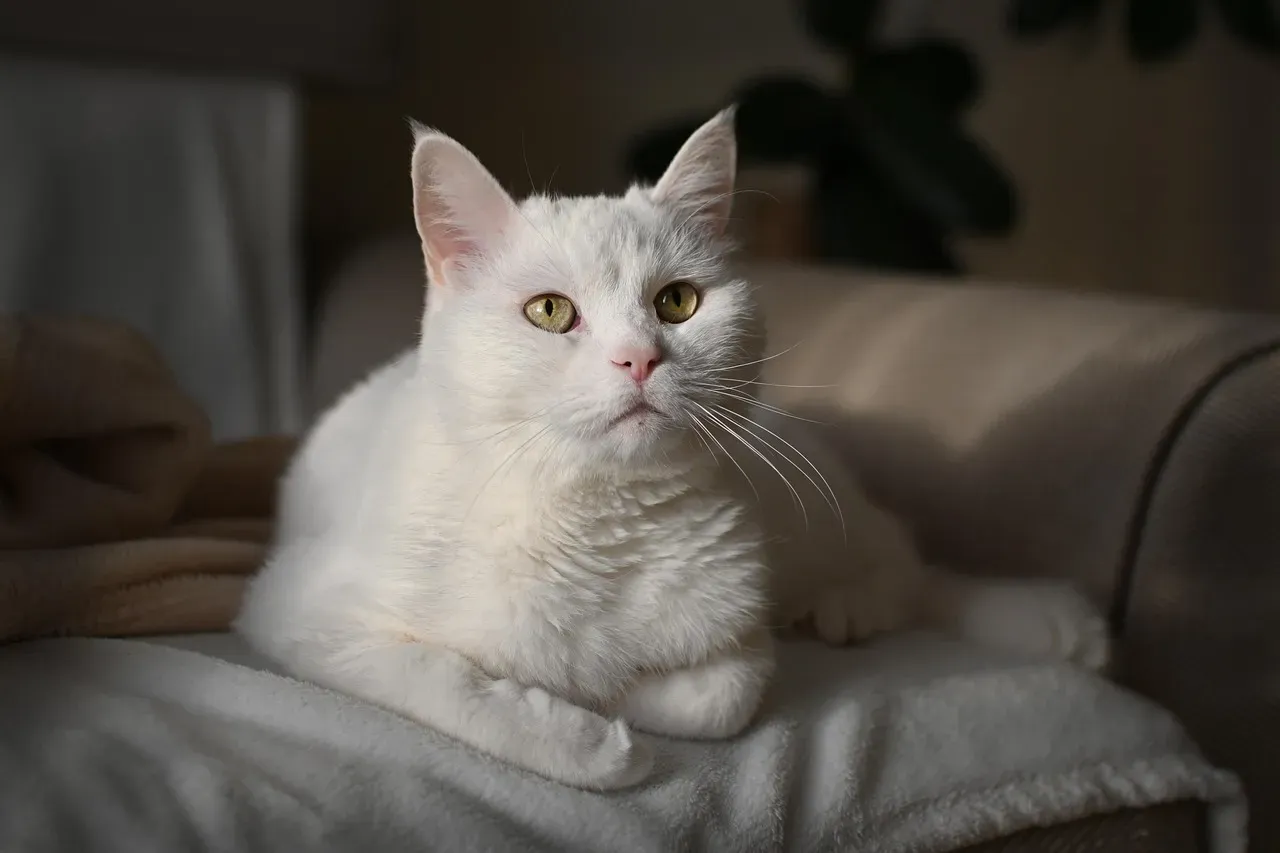
Building a cat-friendly home doesn’t require gutting your living room or buying an entirely new set of furniture. Most of what your cat needs comes down to a few consistent principles: vertical space to climb, safe places to retreat, stimulation that matches their natural instincts, and a clean, predictable routine they can rely on.
A physical environment that ensures a reasonable level of certainty, consistency, and predictability provides the foundation of enrichment. Creating a living space that keeps your cat free from fear and distress while providing a predictable daily routine over which the cat perceives it has some control is the starting point for enhancing feline welfare.
The changes outlined here don’t have to happen all at once. Start with one or two, watch how your cat responds, and build from there. A cat that feels genuinely at home – not just tolerated, but considered – tends to be a calmer, healthier, more affectionate companion. That’s a pretty good return on a few shelves, a feeder puzzle, and a window perch.