Most people think of their cat as a fuzzy, nap-obsessed companion with zero interest in protecting anyone. You probably assume your cat’s biggest daily achievement is knocking your water glass off the counter. But here is the thing – your cat might actually be running a secret security operation you have never even noticed.
Cats have spent thousands of years evolving alongside humans, and that relationship has shaped them in ways that go far beyond snuggles and purring. Beneath that sleepy, independent exterior is a creature wired for vigilance, territorial defense, and deeply tuned environmental awareness. So if you have ever wondered whether your cat is doing more than just existing in your home, be prepared to be surprised. Let’s dive in.
1. Your Cat’s Hearing Is Your Home’s First Line of Defense
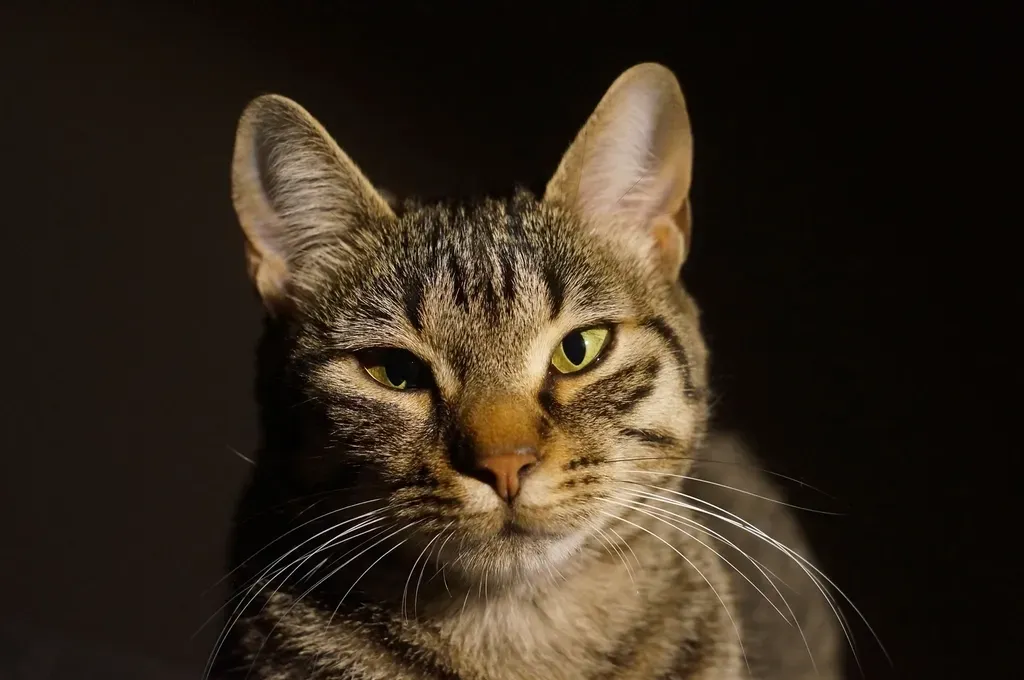
You are probably asleep. The house is dead quiet. Yet your cat’s ears are rotating like tiny satellite dishes, picking up sounds from down the street, through walls, and around corners you cannot even see. Cats have extraordinarily sharp senses, with hearing being their absolute forte. They can detect faint noises far earlier than any human can. Think of it like having a living alarm system that never needs batteries or a monthly subscription fee.
Cats have a highly specialized sense of smell, excellent vision, and very sensitive hearing, which helps them quickly detect changes in their surroundings. When your cat suddenly snaps to attention, stares at the wall, or sprints to the window for no obvious reason, they are not losing their mind. They have heard something you simply cannot. That instinctive alertness is your home’s earliest warning system, running quietly and constantly in the background.
2. They Keep Watch Over You While You Sleep
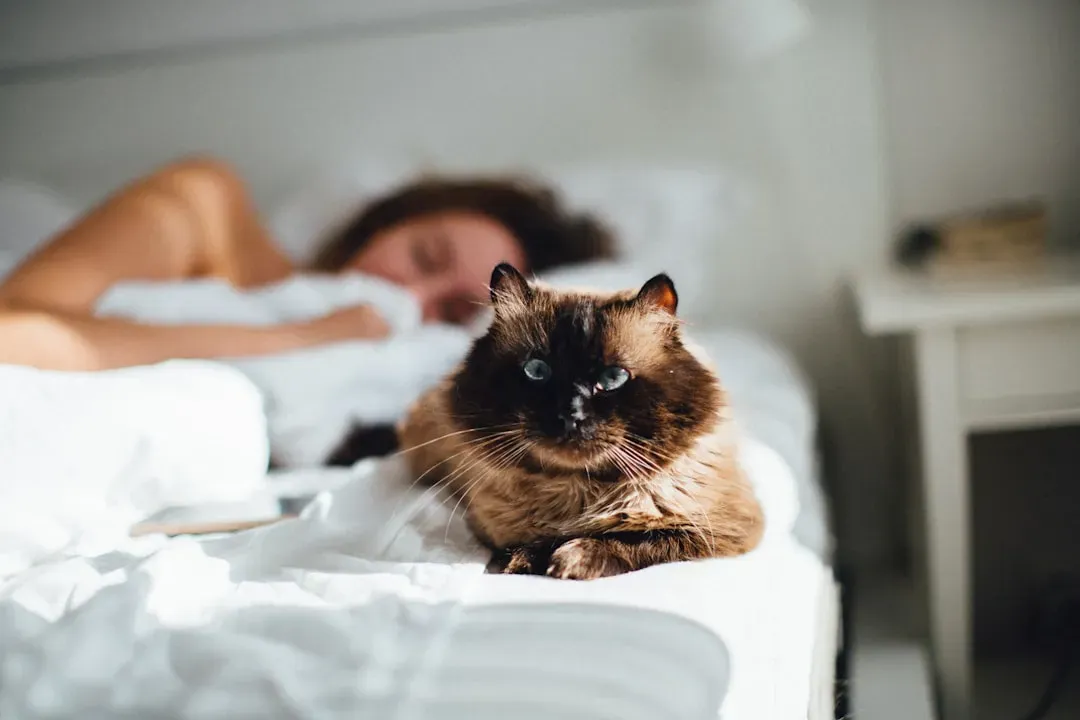
Here is something worth thinking about the next time you wake up to find your cat staring at you from the foot of the bed. While cats may not actively patrol like guard dogs, they demonstrate protective behaviors in more subtle ways. Many cats choose sleeping positions that allow them to monitor their surroundings while staying close to their owners. That spot at the foot of your bed? Strategically chosen.
Some cats will stay by the bedroom door until you fall asleep before they retreat to their quarters for the night, and some will even spend the night watching over you. Real documented cases back this up. In 2007 in Reedsburg, Wisconsin, a cat named Gracie alarmed her owners by banging on the bedroom door in the middle of the night. The husband found his wife barely conscious in her chair, and he later felt ill himself. It was discovered that a malfunctioning water heater was releasing deadly carbon monoxide into the home. The couple credited Gracie with saving their lives. Your cat being “clingy” at night might be something much more meaningful than you realize.
3. Territorial Marking Actually Discourages Intruders
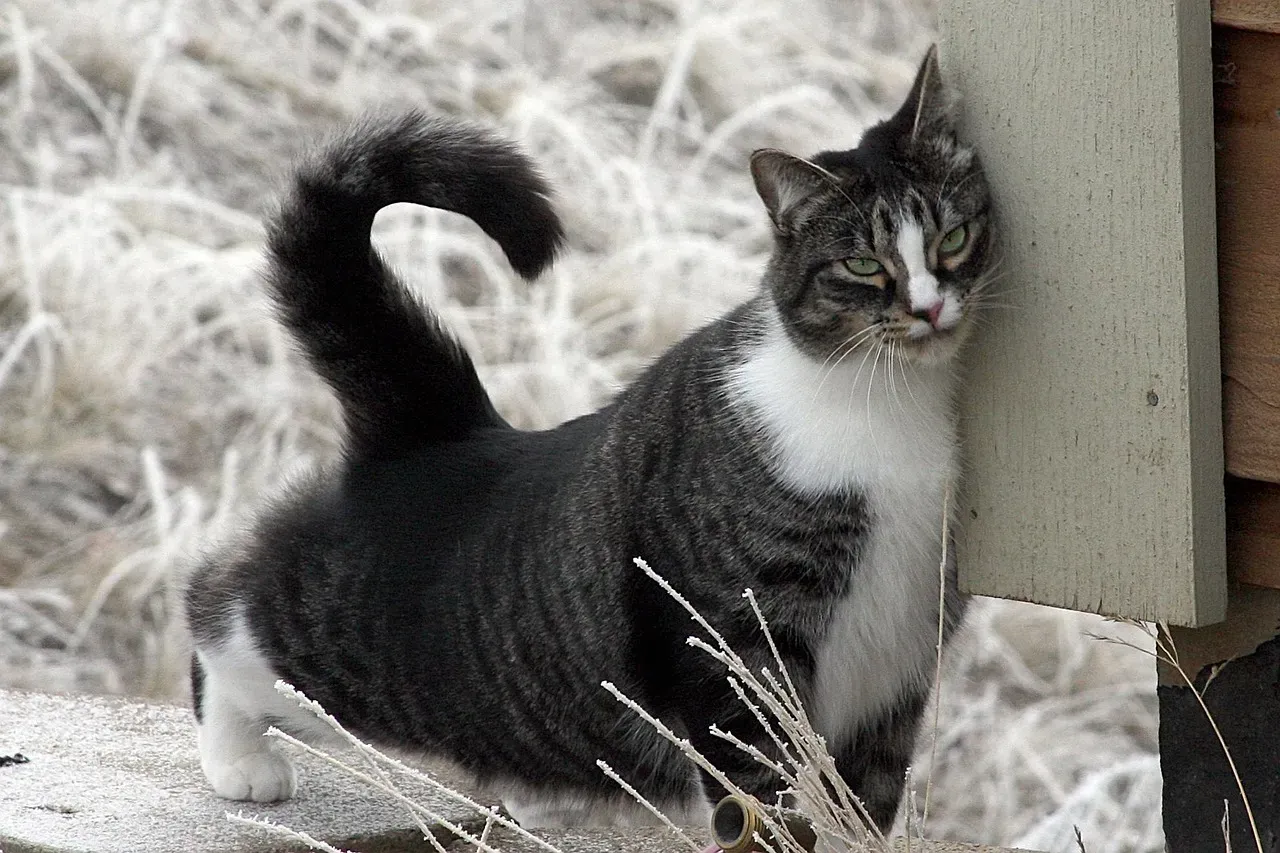
You have probably noticed your cat rubbing their face against every corner of furniture, every doorframe, and basically anything that stands still long enough. It seems like an odd quirk. Honestly, it is anything but. The most common territorial behaviors cats display are marking, which is accomplished by your cat rubbing against everything, and – in unneutered males – spraying. This constant boundary-drawing is your cat essentially posting “No Trespassing” signs all over your home.
Cats’ territorial nature and evolutionary development as both predator and prey species give them natural guarding instincts. Every scratch mark on that door frame, every head rub on the couch leg – these are territorial statements. To another animal or even a person unfamiliar with your home, a space that heavily carries your cat’s scent signals that this territory is claimed and actively defended. It is surprisingly effective, even if it looks like your cat is just being weird.
4. They Alert You to Intruders Before You Even Know One Is There
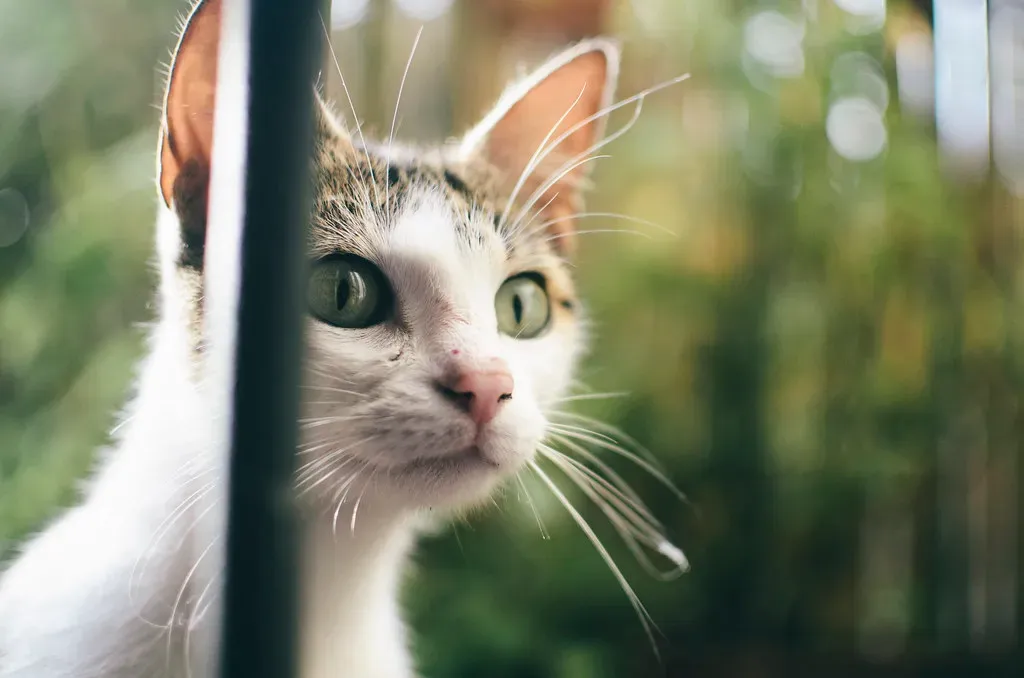
Even before you are aware of any danger, your cat’s more acute senses may warn them of an intruder. Your cat registers an unfamiliar scent, an out-of-place sound, or a subtle shift in the atmosphere, and they react. Typically, this means they will sound an audible alarm for their humans, but it can lead to cats being aggressive towards people visiting the house and potentially even intruders.
There are real stories that illustrate just how powerful this ability is. One cat named Boy Kitty began pawing at the sliding glass door one night. His owner assumed it was a local stray or possum, checked outside, and found an unknown person on her porch. Thanks to Boy Kitty’s instinct, she was able to call the police and handle the situation safely. Your cat’s sudden restlessness or insistent behavior near a door or window deserves your attention, always.
5. They Physically Position Themselves Between You and Perceived Threats
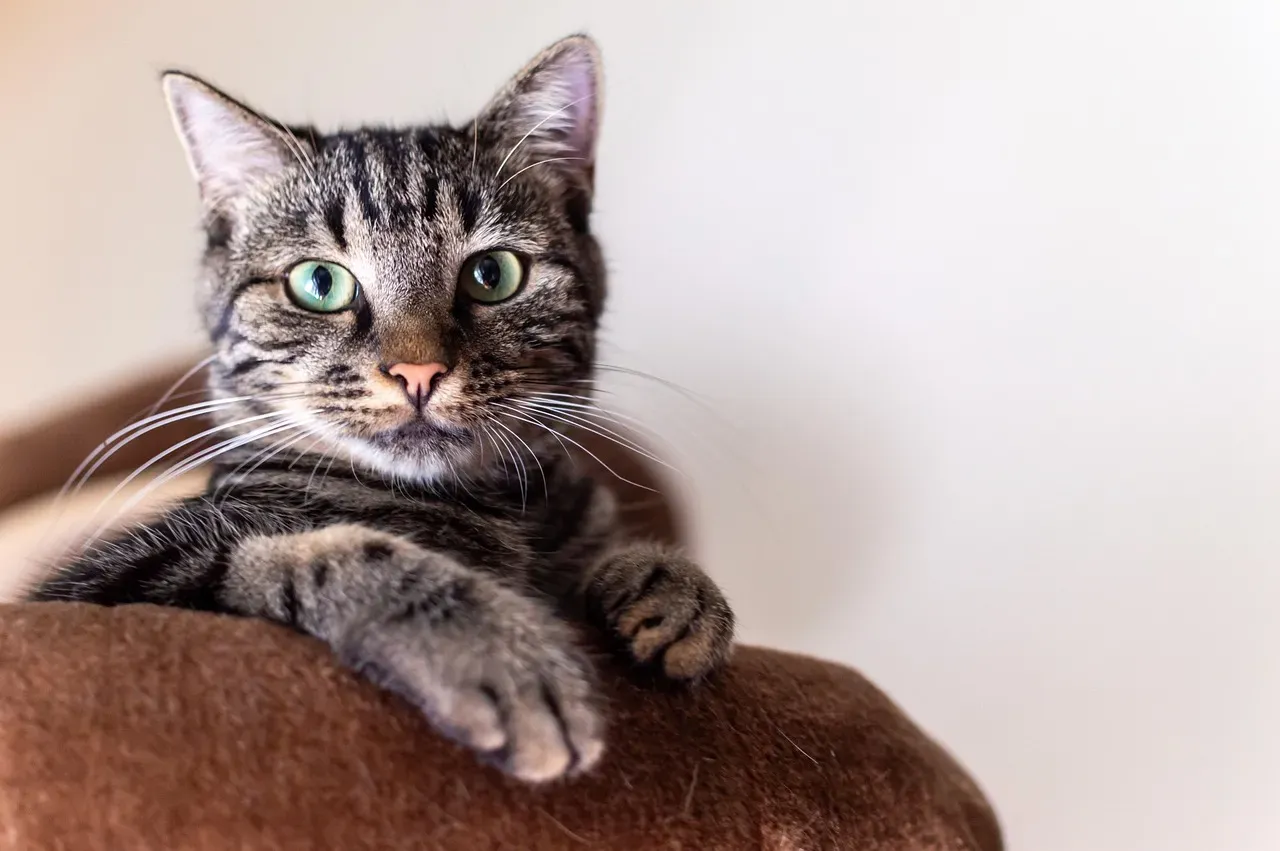
You might have noticed your cat planting themselves directly between you and a stranger at the door, or between you and another pet acting aggressively. That is not coincidence. Cats have been known to step between their owners and perceived dangers, whether it’s another animal or a person they don’t trust. It is a remarkably deliberate act, one that mirrors protective instincts seen in far larger animals.
Curiosity and protection can look similar, but the difference lies in intensity and context. A curious cat explores calmly, sniffing or observing without tension. A protective cat, however, stays alert, positions itself between you and the perceived threat, and may display defensive body language such as a puffed tail or focused stare. If your cat’s attention seems directed at guarding rather than exploring, it is likely acting protectively. The next time your cat wedges themselves in front of you, do not move them aside. They are on duty.
6. Their Superior Night Vision Makes Them Effective Nighttime Sentinels
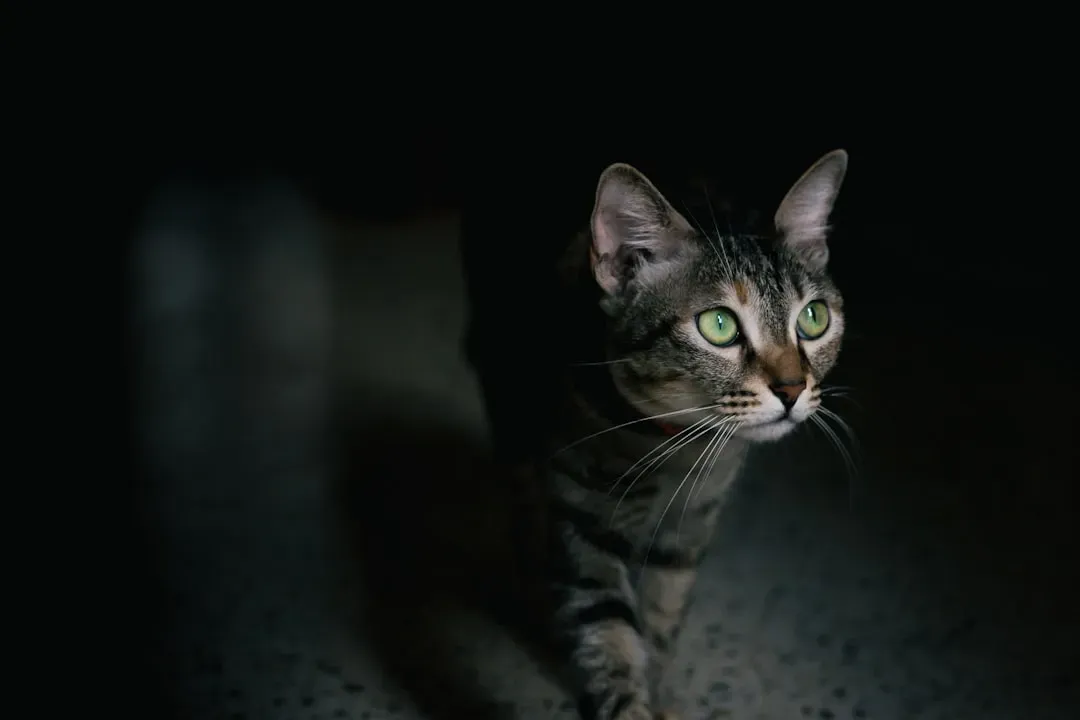
The hours between midnight and dawn are when most break-ins occur. Your cat is not only awake during those hours, they are at peak sensory performance. Cats have much better vision than humans and can detect even the smallest movements. They are particularly adept at seeing in low light levels, with their vision in dim light being six times better than a human’s. While you are sound asleep, your cat is essentially patrolling in conditions that leave you completely blind.
Their superior night vision and acute hearing enable them to detect disturbances long before humans notice them. Think about what that actually means in practice. Any movement in a dark hallway, any shadow near a window, any rustle outside your door – your cat clocks it all. In Melbourne, Australia, a cat named Sully woke her owner Craig Jeeves by sitting on his chest and meowing in his face. Craig had been asleep on the couch and was unaware of a raging fire upstairs. Sully’s alertness helped him escape unharmed. Cats operating in the dark is genuinely something to appreciate.
7. They Can Sense Medical Emergencies and Environmental Dangers
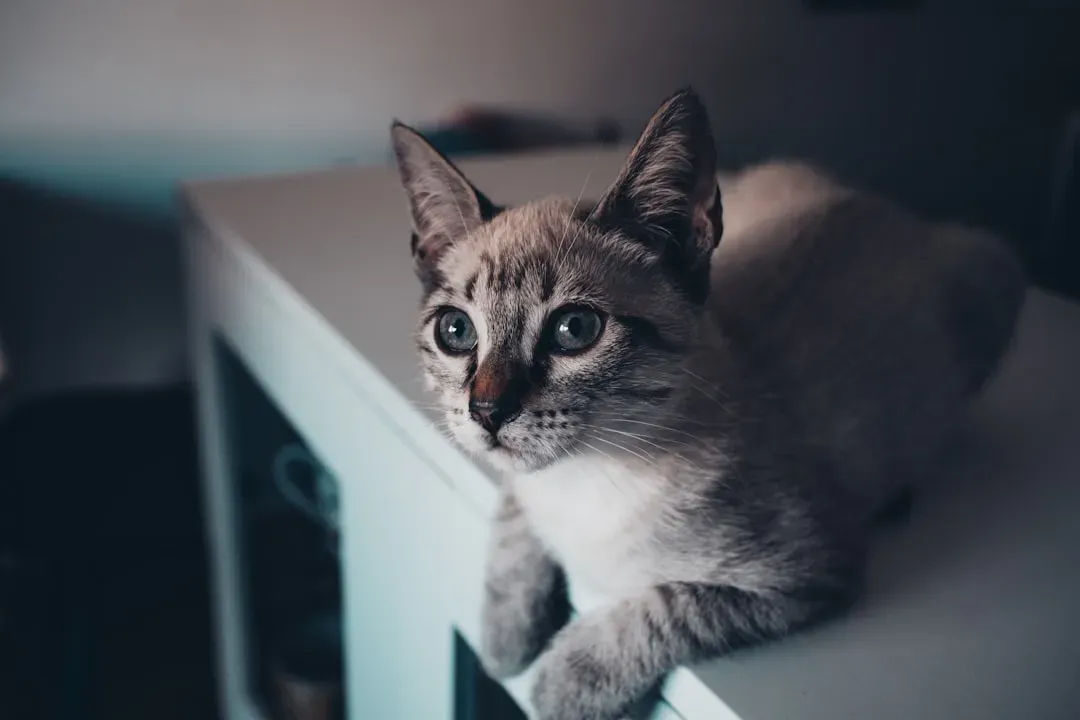
I know it sounds almost unbelievable, but there is a growing body of real documented cases showing that cats respond to medical crises in their owners. After being adopted, a cat named Pudding saved his new owner Amy Jung by waking her during a diabetic coma, then alerting her son to call for help. That is not a coincidence or a lucky accident. Studies have revealed that cats’ protective behaviors are rooted in both instinct and emotional connection, and their acute senses allow them to detect environmental changes that humans might miss, making them excellent early warning systems for potential dangers.
You might not realize how closely your cat pays attention to where you are and what you are doing. Cats have been documented protecting children from dog attacks, as well as alerting their humans to medical emergencies, including cancer detection and carbon monoxide poisoning. It is hard to say for sure exactly what they detect in each case, whether it is subtle chemical changes in your body odor, shifts in your breathing, or changes in the air itself. But the pattern is too consistent to ignore. Your cat may quite literally be monitoring your health.
8. Their Presence Alone Acts as a Visible Deterrent

Let’s be real – a potential intruder casing your home does not know how big your cat is, how territorial they are, or what they will do when confronted. Your furry friend might seem friendly on the surface, but when confronted with a stranger or alarmed by an intruder, their protective instincts kick in, teeth and claws and all. Sometimes, their noise alone could be the deciding factor in a potential thief aborting their mission.
When it comes to cats, they might not be as aggressively noisy as dogs, but they certainly possess an audible hiss that is enough to send shivers up any intruder’s spine. Even visible signs of a cat in the home, fur on furniture, scratch marks on door frames, or a cat flap at the entrance, can signal to someone with bad intentions that this house comes with unpredictable occupants. Toys left in the garden are sometimes enough of a warning to a potential thief that an animal lives in the house, so much so that they will rarely risk getting closer to check its size. Sometimes the best security is a mystery, and your cat is a walking, hissing mystery to anyone who does not know them.
Conclusion
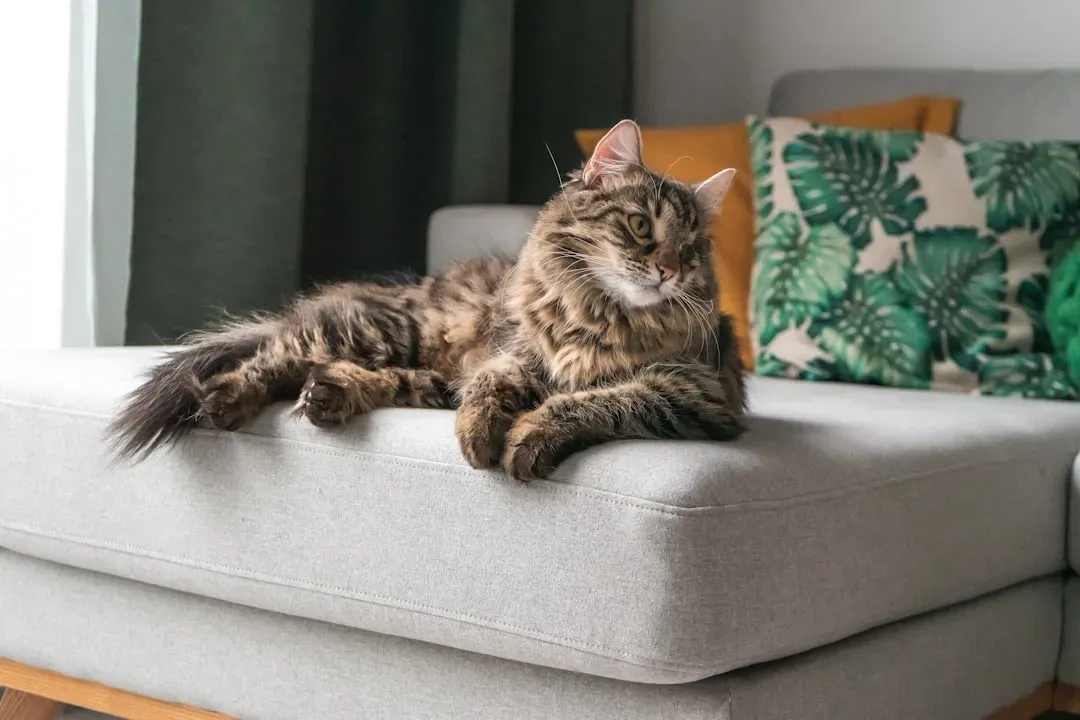
Your cat is not just a decorative throw pillow that occasionally meows. They are a vigilant, sensory-powered, emotionally bonded guardian who operates on instincts tens of thousands of years in the making. From detecting carbon monoxide before you can smell it, to physically placing themselves between you and a threat, to keeping watch while you sleep, cats are quietly doing a job most people never credit them for.
Cats exhibit protective behaviors through a combination of territorial instincts and emotional attachment. Unlike dogs, who display overt protective behaviors, cats tend to be more subtle in their approach to guarding their human family members. That subtlety is precisely why so many owners miss it entirely.
So the next time your cat sits at the window staring into the darkness, or insistently follows you from room to room, or positions themselves between you and the front door, maybe give them a little more credit. You might not have a guard dog – but you just might have something even more underrated watching over your home. What do you think? Has your cat ever surprised you with a moment of unexpected protection? Share your story in the comments.