You didn’t sign any contract when you brought that cat home. No terms and conditions, no welcome packet, no orientation day. Yet somehow, from the very first week, you probably sensed it – there are rules in this house, and you didn’t make them. Your cat did.
If you’ve ever lived with a cat, you already know the truth: your home is no longer yours. It’s a kingdom, and the monarch is fluffy, moody, and adorable. Cats may not speak English, but they live by a very clear set of unspoken laws – rules they expect you to follow without question. The wild part? Most cat owners don’t even realize they’ve been living by these rules for years. Let’s dive in.
Rule 1: You Do Not Stare – Unless You Want a Problem
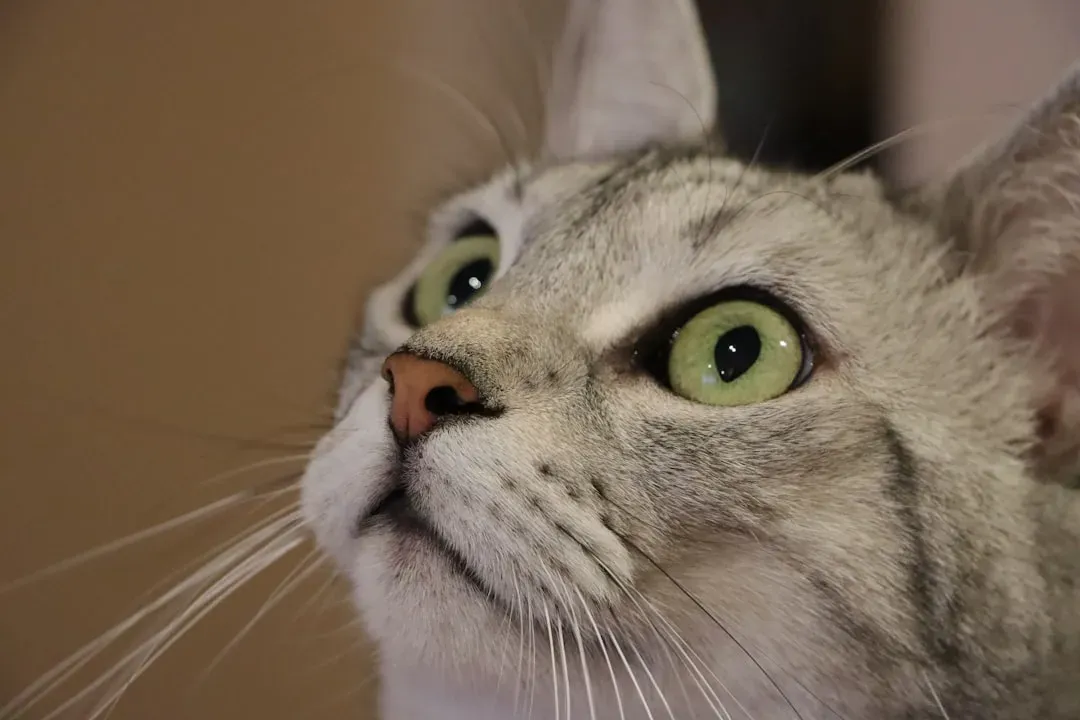
Here’s the thing about eye contact with your cat – what feels like a tender moment of bonding to you is something entirely different to them. While gazing into the eyes of your cat might feel like you’re bonding with them, you’re not when the stare goes on too long. In the feline world, a prolonged, unblinking stare is a challenge, not a cuddle.
Think of it like this: imagine a stranger on the subway locking eyes with you for thirty straight seconds without blinking. Uncomfortable, right? Your cat feels the same way. In a study of 18 cats, the behavior of several half-blinks followed by a prolonged eye narrowing or eye closure was found to be a positive emotional response. When a familiar human slow-blinks towards a cat, the cat tends to approach the human more frequently than if the human has a neutral expression that avoids eye contact. So if you want to say “I love you” in cat language, try a slow, lazy blink instead of a hard stare. Your cat will almost certainly blink back.
Rule 2: Affection Happens on Their Terms, Not Yours
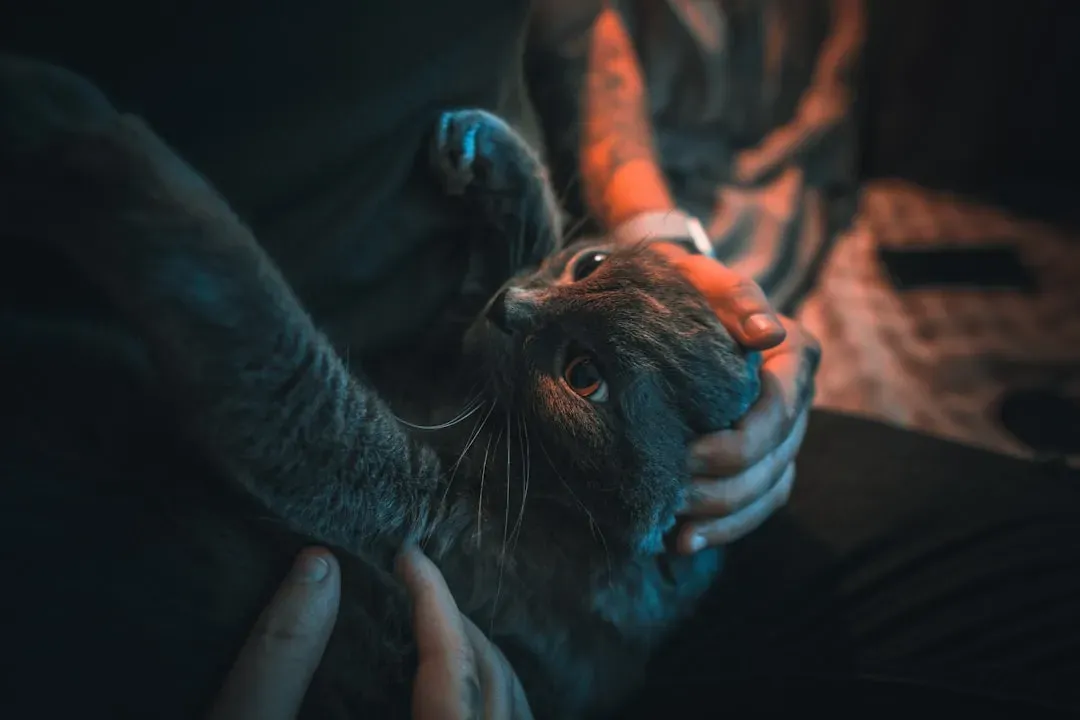
Honestly, this is the rule that trips up most new cat owners. You want a cuddle. Your cat wants absolutely nothing to do with you right now. Five minutes later, the moment you’re deep in a work call, they’re climbing all over you. If you’re in the middle of reading a book, or trying to work, or cooking with open flames, now they’re in the mood. Welcome to cat ownership.
Most cats like affection, but petting a cat is different than petting a dog. Cats don’t usually enjoy heavy strokes or pets that run their whole body. Their favorite petting spots are usually their heads, cheeks, and under the chin. Push past those limits, and you’ll learn quickly. In most cases, that boundary-setting behavior means the cat is overstimulated from too much physical touch, almost like a hug that has overstayed its welcome. Additionally, cat overstimulation can be due to stress, built-up frustration, and physical pain. Other signs of overstimulation include restlessness, tail twitching, flattened ears, and skin rippling upon touch. Pay attention. Your cat is practically leaving you a written warning.
Rule 3: The Litter Box Will Be Immaculate or There Will Be Consequences

A clean litter box is non-negotiable in a cat’s world. Skipping scooping duties for even a day can result in silent protests or smelly reminders. Cats are meticulous by nature and expect their bathroom to reflect that. You might laugh at this one, but I promise, the moment you slack on litter box duty, your cat will find a far more creative location to make their feelings known.
Maintaining it daily not only keeps your home odor-free but also shows your cat that you care about their needs. If a cat begins avoiding the box, cleanliness is often the first culprit to investigate. Placement also matters – it should be in a quiet, accessible location. Ultimately, your commitment to litter box hygiene directly influences your cat’s comfort and behavior. Think of it as the one task your cat will absolutely grade you on. Daily. With no mercy.
Rule 4: You Will Respond When They Speak to You

Your cat is not meowing into the void. They are talking directly to you, and they fully expect a response. Scientists have identified more than a dozen different meows that cats make, each with its own meaning. In general, kittens use meows to communicate with their moms, but grown cats employ them solely to communicate with humans. That’s right – your cat essentially invented a whole language just to talk to you. The least you can do is answer.
When they meow, they’re communicating with us in some way, even if we don’t understand what they’re “saying.” Acknowledging their meows tells your cat that you heard them, even if you didn’t understand them. It sounds almost silly when you say it out loud – talking back to a cat. But cats learn specifically how their owners react when they make particular noises. So if the cat thinks, “I want to get my owner from the other room,” it works to vocalize. They use straightforward learning. They trained you. You just didn’t notice.
Rule 5: Their Territory Is Sacred and You Will Respect It

Cats have a unique way of claiming what they believe is rightfully theirs. Whether it’s your favorite armchair or a random spot on the carpet, once a cat has decided, it’s theirs. Marking territory is part of their heritage, a blend of scent and presence. You might think the couch is yours. Your cat has been chemically signing it for months and respectfully disagrees.
Ownership is a fuzzy concept when it comes to cats and furniture. What was once your chair, bed, or shelf is now shared territory, often weighted heavily in the cat’s favor. You might come home to find your cat sprawled across your desk or perched on your favorite pillow. Instead of relocating them, many cat owners find themselves adjusting their positions or waiting patiently. Let’s be real – you’ve done exactly this. You’ve sat awkwardly on the edge of your own sofa just to avoid disturbing a sleeping cat. Completely reasonable. Totally normal. The cat approves.
Rule 6: Always Give Them an Escape Route

Your cat needs to know they can leave at any time. It’s not personal. It’s deeply wired. In the wild, being trapped means danger, and cats are sensitive to that feeling. They like to know they can get away, so always make sure they have an exit strategy. That might mean leaving a door cracked open or avoiding crowding them. The irony here is almost poetic.
Ironically, if a cat knows they can leave, they’re more likely to stay, so always give them a way to escape. It’s a little like that classic human psychology trick where you’re far more willing to stay at a party once you know you can leave whenever you want. Your cat is basically the same. Privacy is a right that cats take very seriously. The moment a cat retreats under the bed or disappears behind the couch, it’s issuing a clear signal to be left alone. Follow that signal. Every single time.
Rule 7: The 3 AM Zoomies Are Not Up for Debate

Uploaded by SunOfErat, CC BY-SA 2.0)
You will be woken up. You will hear thunder down the hallway at a very unreasonable hour. You will wonder if there is an intruder, only to find it is a five-pound animal launching itself off your bookshelf at full speed. If you’ve ever lived with a cat, the 3 AM zoomies are a familiar spectacle. It’s like a burst of energy overtakes them, transforming the quiet night into a feline racetrack. This behavior might puzzle those unfamiliar with cats, but it’s a natural expression of their instinct to hunt and play. The night, with its stillness, provides the perfect backdrop for these instinctual chases.
Late-night energy bursts are part of the package deal with cats. Often when the house is quiet and the lights are off, your feline becomes a wild, thundering blur. These zoomies come from their crepuscular nature – they’re wired to be active during dawn and dusk. You cannot negotiate with a zoomie. You cannot stop it. Although it may not feel like it when they’re walking across your pillow at 2am, cats are crepuscular, meaning they’re most often awake at dawn and dusk. Your job is simply to admire the chaos, pray for your vases, and go back to sleep.
Rule 8: Silence Is Also a Form of Love – Learn to Read It
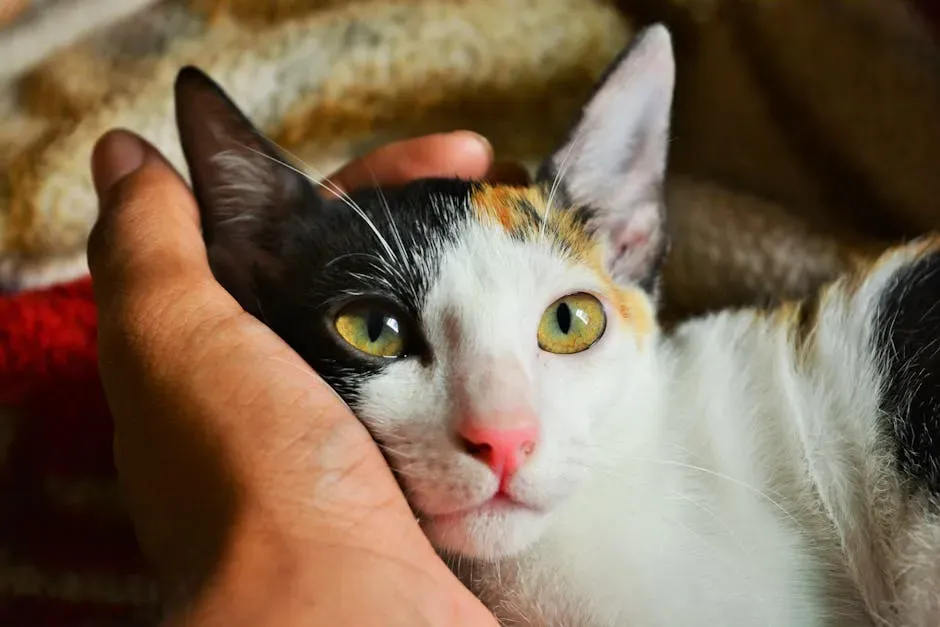
Kitties love sitting silently in the same place with their people. Cats are masters of presence. Cats love quiet companionship, so if they’re sitting silently in the room with you, that’s a form of bonding. Just be with them in the silence and try not to disturb the peace too much. This one, I think, is the most underappreciated rule of all. Humans tend to equate love with action. Cats beg to differ.
Despite their reputation for being aloof and independent, cats often seek out human company in ways that are subtle but unmistakable. They won’t throw themselves at you, but they will sit quietly next to you, softly purring, or offer you a slow blink that says more than a thousand words. Learning to read these silent signals is genuinely one of the most rewarding parts of sharing your life with a cat. A cat’s body language and behaviors should be looked at as a part of one big picture. By using the context of the entire situation and looking for subtle cues in body language, you’ll have an excellent chance at understanding your feline friends. Slow down. Pay attention. The conversation is already happening.
Conclusion: Their House, Their Rules

Living with a cat is one of the most quietly extraordinary things a person can do. They don’t ask for much in words, because they don’t need to. Cats like what they like and don’t like what they don’t like, and they expect you to not only know this but to cater to their likes and dislikes without ever having to voice them aloud. That’s not arrogance – it’s elegance.
Once you start tuning into these eight unspoken rules, something shifts. The relationship deepens. The trust builds quietly, like sunlight slowly filling a room. When you ditch punishment and start teaching with empathy, you’ll be amazed at how much your cat is capable of learning – and how much stronger your bond will become. Your cat has been speaking to you this whole time. The only real question is: have you been listening?
What surprised you most about these rules? Drop your thoughts in the comments – especially if your cat has added a few rules of their own to the household constitution.