You probably think you know your cat pretty well. You know what they like to eat, where they love to nap, and exactly what that look they give you means. But honestly, your feline companion is hiding a collection of abilities so extraordinary that even seasoned cat owners are completely blindsided when they discover them.
We tend to think of cats as aloof, graceful, slightly mysterious creatures. What we rarely stop to appreciate is just how astonishing the science behind them really is. From built-in healing frequencies to inner compasses that could rival GPS technology, your cat is far more remarkable than your average afternoon nap partner suggests. Let’s dive in.
Your Cat Is Essentially a Living, Breathing Healing Device

Here’s the thing most people completely overlook: when your cat curls up on your lap and purrs, you are literally being treated to a kind of therapy. Scientists have demonstrated that cats produce the purr through intermittent signaling of the laryngeal and diaphragmatic muscles, purring during both inhalation and exhalation with a consistent pattern and frequency between 25 and 150 Hertz. That is not just a cozy sound. It is a vibration operating at medically significant levels.
The frequency of a cat’s purr is the exact frequency needed for bone growth. A frequency of 25 to 50 Hertz can improve bone density, build bone strength, support wound and fracture healing, and stimulate bone fracture repair. It can also provide pain relief and help manage breathlessness and inflammation. Think of it like a tiny, furry physical therapy machine that also likes to knock things off your shelf. Remarkable, isn’t it?
Your Cat Has a Nose That Borders on the Supernatural

With up to 200 million scent receptors in their noses, compared to humans’ mere 5 to 6 million, cats have an incredibly sophisticated olfactory system. To put that in perspective, your cat’s nose is not just a little better than yours. It is operating on an entirely different level of biological engineering. Imagine being able to smell what your neighbor cooked three houses down, two hours ago.
Cats use the Flehmen response, curling their lips, opening their mouth, and inhaling, to draw scents into the vomeronasal organ for detailed analysis. This is particularly useful for social and reproductive cues. Domestic cats’ strong sense of smell has even drawn attention to them as potential candidates for detecting cancer and other diseases in humans, though research in this field is still emerging. Your cat may know more about your health than your doctor does.
Your Cat Has a Built-In Compass and Mental GPS
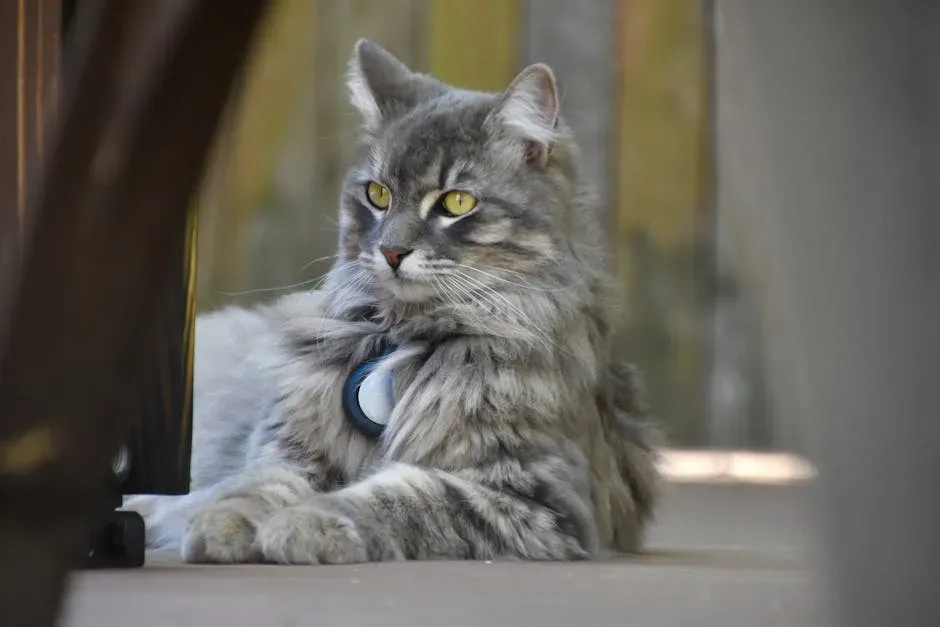
I know it sounds almost impossible, but research strongly supports this. Recent studies have shown that cats use multiple cues to find their way around, including landmarks, the position of the sun, the magnetic field, and even their memory. This is not instinct in the vague, hand-wavy sense. Your cat is actively processing environmental information like a tiny furry navigator.
In a German study, researchers found that 60 percent of the time, all cats chose an exit from a large maze that was facing in the direction of their home, despite the fact it was many miles away. Some research also suggests cats may be able to detect Earth’s magnetic fields. A 1954 study found that attaching magnets to cats appeared to impair their homing ability, though more research is needed to fully understand this capability. Your cat, it turns out, is never truly lost.
Your Cat Can Read Your Emotions Through Scent

Your cat is watching you, yes. But they are also smelling you, and the amount of information they are gathering through that channel is genuinely astonishing. Cats may use scent to gauge a person’s emotional state, as human odors can vary with stress, fear, or illness. Pheromone diffusers like Feliway mimic natural cat scents, calming cats in stressful situations such as vet visits or moving homes. Your emotional chemistry leaves a scent trail your cat is always decoding.
Interestingly, cats seem to spend more time with their owners when they claim they were depressed. That is not random cuddle behavior. Cats demonstrate a remarkable talent for picking up on human signals and gestures, demonstrating their ability to respond to human moods and emotions. So the next time your cat comes to sit with you during a rough day, they almost certainly know something is off.
Your Cat Possesses Extraordinary Hearing That Leaves Humans in the Dust

With an astounding 52 muscles that control their ears, cats can move them independently in order to focus on the most quiet of sounds. That familiar ear swivel your cat does? That is not casual. That is precision acoustic targeting at work. It is like having two satellite dishes mounted on your head that operate completely independently of each other.
Going beyond night vision and whisker wavelengths, their hearing is incredibly sharp, attuned specifically to the high-pitched frequencies of their prey’s calls. This acute sense of hearing complements their hunting skills, allowing them to detect and react to sounds that are imperceptible to humans. It has been shown that they can hear sounds three times higher and four to five times farther than humans. Your cat probably hears your car turning onto the street long before you even reach the driveway.
Your Cat’s Whiskers Are a Sophisticated Sensory System
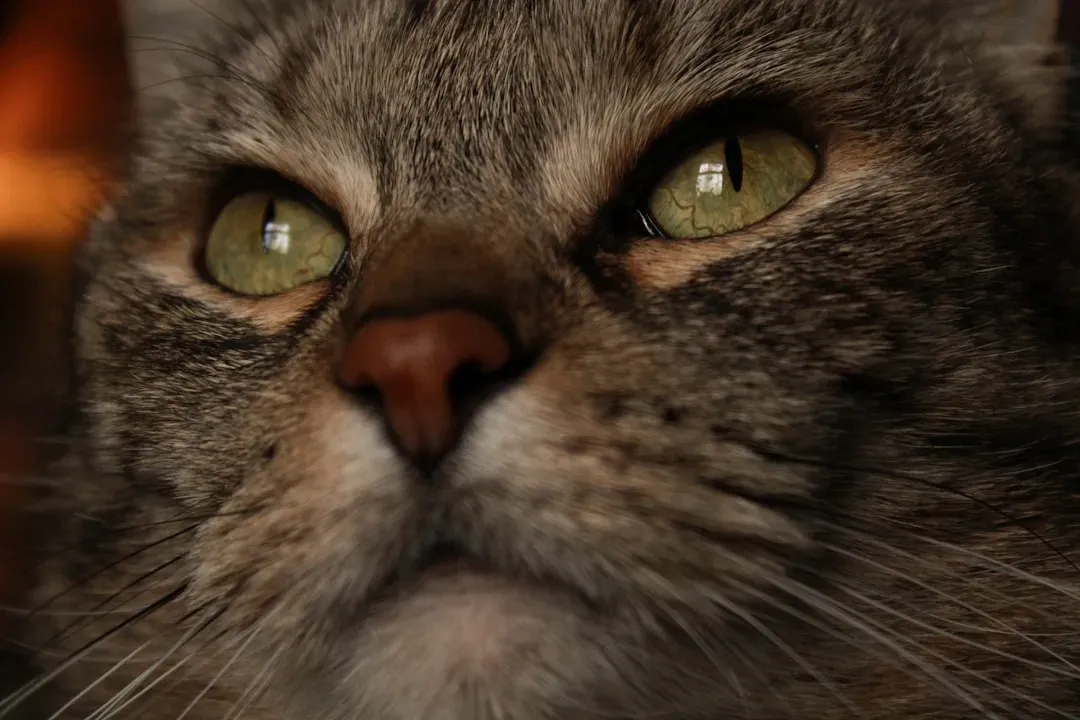
You’ve probably never thought of whiskers as much more than a cute facial feature. That would be a significant underestimation. Cat whiskers are comprised of follicles that lead to bundles of small but highly sensitive nerves. Because cats are far-sighted, whiskers keep the cat highly attuned to their up-close environment and what is happening in it. Whiskers are essentially a live-feed sensor array, constantly delivering data about the world directly to your cat’s brain.
With the help of those adorable whiskers, cats sense changes in air currents, allowing them to determine the size, shape, and speed of objects nearby. This is why blind cats can move so confidently in their surroundings. Cats have whiskers on their face, eyebrows, and even on their front legs, called carpal whiskers. If their whiskers touch both sides of a doorway, the cat knows they might not fit. It is like nature gave them a built-in measuring tape.
Your Cat Can Learn to Mimic Human Behaviors Through Observation

According to several feline behaviorists and child psychologists, an adult cat’s intelligence is comparable to that of a two to three year old child, since both species learn through imitating, observing, and experimenting. Simply by watching their owners and mirroring their actions, cats are capable of learning human-like behaviors like opening doors and turning off lights. Let that sink in for a moment. Your cat is studying you.
Early research on cat intelligence can be traced back to the late 19th and early 20th centuries, when psychologists such as Edward Thorndike used puzzle boxes to study animal learning. Thorndike’s experiments demonstrated that cats could learn to manipulate levers and latches through trial and error, thereby revealing their capacity for associative learning. Over time, more refined experiments began to examine additional facets of cognition, including spatial awareness, memory, and problem-solving strategies. Your cat is, in a very real sense, always running a learning program in the background.
Your Cat Has a Righting Reflex That Defies Ordinary Physics

We’ve all heard the saying that cats always land on their feet. Most people assume this is an exaggeration. It isn’t. These qualities are rooted in your cat’s unique anatomical makeup. Their skeletal structure features a highly flexible spine and the absence of a functional collarbone, which affords them an incredible range of motion. This flexibility enables them to perform what is called the “righting reflex,” where they have the ability to twist their bodies in mid-air and land on their feet. It is essentially built-in aerial acrobatics.
Cats’ ears also play a key role in their extraordinary balance. Just like humans, a cat’s vestibular apparatus helps them stay balanced. Cats’ ears have millions of tiny hairs and some fluid that moves when they do, allowing their bodies to respond and stay upright. This is what is responsible for the phenomenon that a cat always lands right-side up, because they can adjust themselves mid-air using their vestibular apparatus. The inner ear acts as their own built-in gyroscope, recalibrating in real time on every fall.
The Bigger Picture: Your Cat Is More Extraordinary Than You Ever Imagined
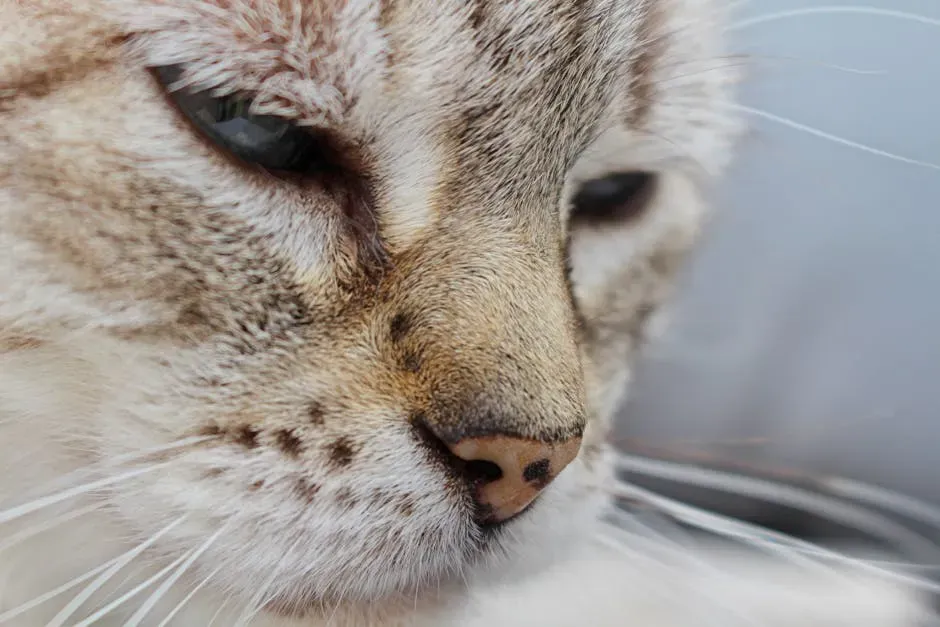
Honestly, after learning all of this, it’s hard to look at your cat the same way again. From their astonishing sensory capabilities to their intricate musculoskeletal design, cats are optimized for incredible agility, precision, and hunting prowess. These are not merely quirky traits. They are the product of millions of years of refined biological evolution, all compacted into that deceptively nonchalant creature currently judging you from across the room.
Your cat does not need to roar to be impressive. The purr alone might be quietly repairing your bones while you watch TV. Their nose is reading your emotional state. Their whiskers are mapping the room in real time. Their inner ears are calculating physics mid-leap. Cats truly embody a unique combination of physical prowess, intelligence, and emotional sensitivity. The creature you call your pet is, in every scientific sense, a marvel.
The next time your cat gives you that slow, knowing blink, remember: they probably know far more about what’s going on than you do. Does knowing all this change the way you see your feline companion? Tell us in the comments.