Building trust with a cat isn’t something that happens overnight. Unlike dogs who often greet strangers with enthusiasm, cats are naturally more cautious creatures who prefer to observe from a distance before deciding whether someone deserves their affection. Each cat comes with their own personality and past experiences that shape how they respond to humans.
Creating a strong bond with your feline friend requires patience, understanding, and a genuine respect for their unique ways of communicating. Whether you’ve just adopted a new cat or you’re looking to deepen your relationship with your long-time companion, the journey toward mutual trust is always rewarding.
Respect Your Cat’s Personal Space and Boundaries

Respect your cat’s space forms the foundation of any trusting relationship. Whether its a place to nap or perch, or an opportunity to play (or not), letting your cat decide what she wants to do will build her confidence and help her learn that you are not going to force her to do anything.
Cats feel stressed when they have no control over their environment, especially when someone constantly tries to dictate their actions. A forced cuddle or getting picked up when she doesn’t want it, will only make your cat learn to avoid you altogether.
Establish Consistent Daily Routines

Setting the tone with a consistent routine is crucial when gaining . For the first several weeks or even months, you should stick to the same routine so your cat can get settled in. If your cat knows what you’re going to do and when you’re going to do it, they’re less likely to be stressed by your actions.
Routines help cats feel secure. Think of it like providing a reliable structure in their world where they can predict what comes next, from feeding times to play sessions to bedtime.
Become the Hand That Feeds

Stop free feeding your cat… If you feed your cats meals instead of leaving a bowl of food always available for them or using an automatic feeder, they will learn to come to you for their food. Feeding your cats every time will make your cats associate you with their meals, someone good, worthy of trust and affection.
Above all things, your cat will learn to trust the hand that feeds it. By keeping your cats’ bowls full and making sure they see you giving them food, they will learn to trust you. This simple act transforms you from just another presence in their environment to someone essential for their wellbeing.
Use Positive Reinforcement Consistently

Use positive reinforcement to reward positive interactions. You can use treats, a soothing voice, play, or even petting (if she likes it) to reward any good behavior. Positive reinforcement, given consistently, can be a great way to build and communicate that she’s done something good.
The key lies in timing and consistency. Every positive interaction should be immediately followed by something pleasant for your cat, creating strong associations between your presence and good experiences.
Practice Calm and Predictable Movement

Try to move and speak in ways that won’t surprise or startle your cat. Don’t lunge suddenly or stomp on the floor, and try to keep a steady, calm voice. This applies to all times, not just when you’re directly interacting with your cat.
For instance, if the cat is lounging on a table and looking out the window, slow your movement as you pass by so the cat can observe and assess that there is no threat… The goal is to help the cat understand there is no need to run and hide every time you walk by or move. Your movements should feel safe and non-threatening.
Engage Through Interactive Play
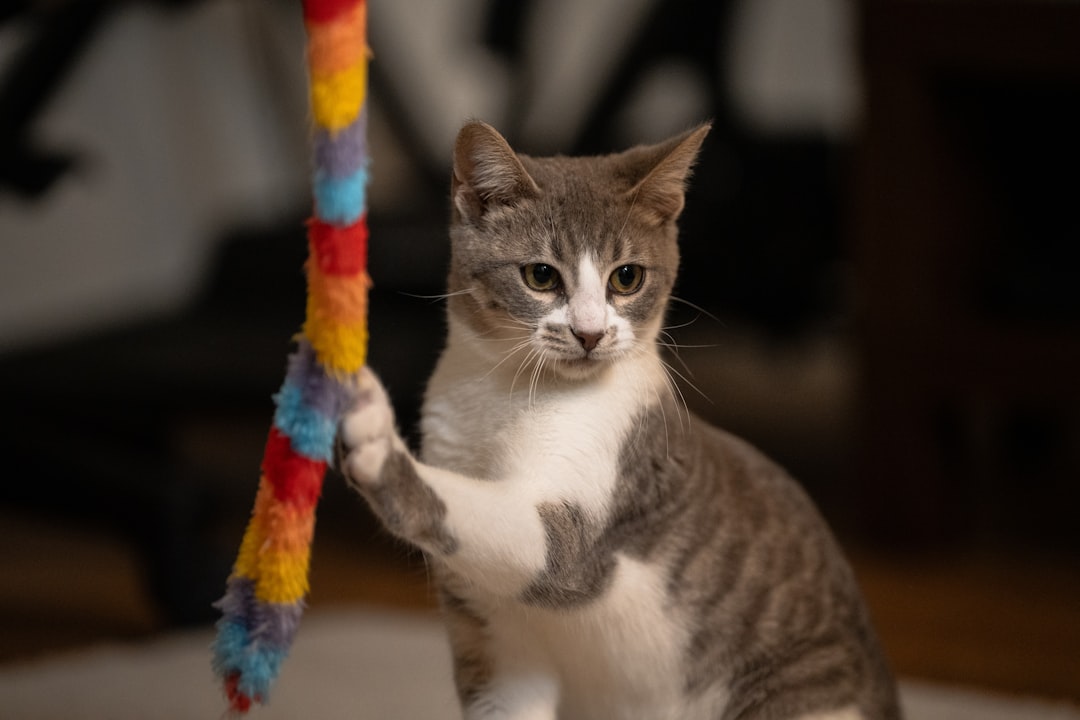
Earn some purrs by playing with Fluffy. Start with interactive toys like a wand or laser pointer to engage your cat in stimulating playtime. When a cat is playing, it’s in hunting mode, and when in hunting mode, cats are fearless.
Shy cats may prefer toys focused on a distant object, such as a feather wand or laser pointer. Others may respond well to catnip-filled mice or other catnip toys. Once you find the ones they like, find a few moments each day for activities and play. Play creates positive associations while allowing your cat to express natural behaviors.
Learn to Read Body Language Signals

Carefully observing your pet’s body language is crucial. A cat’s relaxed disposition, such as lounging for a nap, indicates a feeling of safety and security. Fluffy’s slow blinking signifies trust and contentment.
If a human pays attention, cats can speak so clearly about wants and needs and likes and dislikes. You can see cats are very intelligent (like most animals) if you just pay attention. Understanding these subtle communications helps you respond appropriately to your cat’s emotional state.
Create Safe Spaces and Retreat Areas

Cats occasionally require their own space for retreat. Make sure your pet has a secluded area. If given the choice, fearful cats will hide from humans. When bringing a fearful cat into your home, confine the cat to a small room with limited opportunity for hiding.
However, it’s important to balance this by providing appropriate hiding spots that make your cat feel secure without completely isolating them. Think cozy cat beds in quiet corners or elevated perches where they can observe their surroundings safely while having an escape route if needed.
Allow Time and Practice Patience

Building a bond with your cat can take time and patience… If your cat is new to your home, they may not show any of these signs, yet, but be patient. Trust takes time to build. With fearful cats, earning trust is a process but anyone who has ever befriended a fearful cat knows there is no greater reward.
Some cats may warm up within days or weeks, while others might need months to fully trust their human companions. The timeline doesn’t matter as much as the consistency of your approach and your willingness to let them set the pace for the relationship.
Building trust with your cat creates benefits that extend far beyond having a well-behaved pet. The bond you develop becomes a source of mutual comfort, stress relief, and genuine companionship that enriches both your lives. Remember that every small gesture of respect and kindness contributes to the foundation of trust you’re building together.
Each cat is unique in how they express and receive affection, so stay observant and flexible in your approach. The patience you invest in earning their trust will be rewarded with years of loyal companionship and the special satisfaction that comes from knowing you’ve earned the respect of one of nature’s most discerning creatures.
What experiences have you had building trust with a cat? Tell us about your journey in the comments.