You love your cat. You love Christmas. Here’s the thing: your cat sees that sparkling evergreen in your living room as an all-you-can-climb buffet with shiny toys dangling at every level. That magnificent tree you just spent two hours decorating? To your feline companion, it’s their new favorite adventure playground, and honestly, can you blame them?
Christmas trees attract cats because of their twinkling lights, shiny baubles, outdoor fragrance, and thick pine branches that make perfect hiding spots. Every ornament looks like a toy begging to be swatted. Every branch resembles a climbing challenge. Let’s be real, your furry friend isn’t being naughty on purpose. They’re simply following millions of years of evolution that tell them to climb, explore, and investigate anything new that appears in their territory. So let’s dive in and discover how you can protect both your tree and your curious companion this holiday season.
Understanding Your Cat’s Fascinating Christmas Tree Obsession
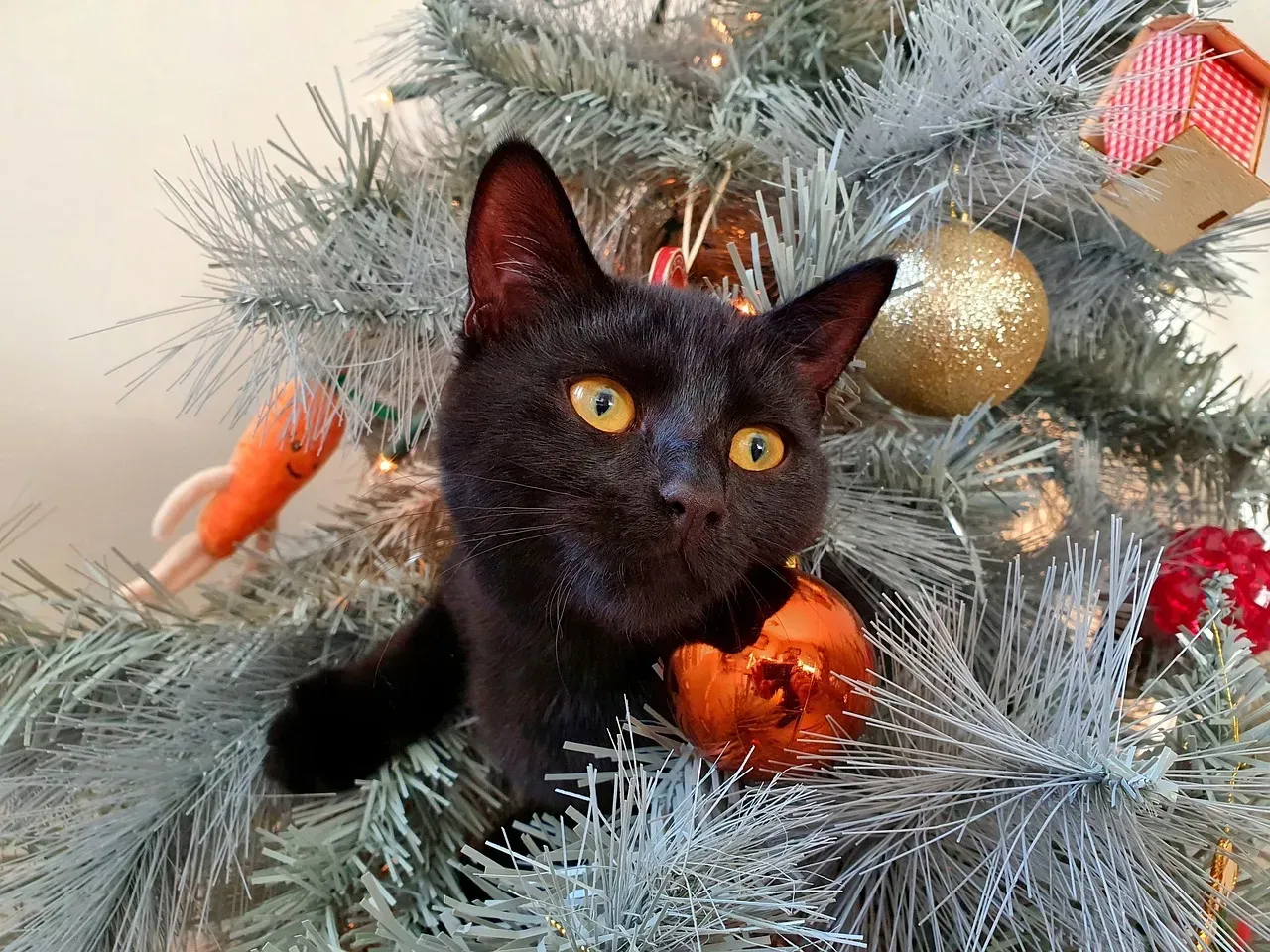
In the wild, climbing helps cats hunt, escape predators, and survey their territory, which explains why your indoor kitty views that freshly decorated fir as the ultimate conquest. Cats are naturally inclined to being at a height where they can survey their surroundings and keep out of danger from predators, making an indoor tree an irresistible temptation.
Think about it from your cat’s perspective. You’ve just brought in this enormous, fragrant structure that smells like the great outdoors. Cats have an incredibly keen sense of smell, which they use to navigate their environment and communicate, so this new and unfamiliar scent becomes immediately intriguing. The combination of novelty, vertical space, and dangling decorations creates what some experts describe as the perfect home entertainment system for felines. Your cat isn’t trying to ruin your holidays. They’re engaging in deeply instinctive, purposeful behavior that makes complete sense in their world.
Secure the Tree Like Your Holiday Depends on It

The tree in your living room can crash down much more easily than those firmly planted in the ground, which creates genuine danger for everyone. You can anchor the tree to the wall or ceiling using a fishing line or clear string to help keep the tree upright even if your cat decides to test its stability.
Start with a heavy, sturdy tree stand appropriate for your tree’s size. Along with anchoring the tree to the walls and ceiling with eye hooks and twine, use a heavy and sturdy tree base to make it harder for your cat to knock over. I think it’s worth mentioning that this isn’t just about protecting ornaments. A falling tree can seriously injure your cat or anyone nearby. Take fifteen minutes to secure it properly, and you’ll sleep better knowing your tree won’t become a hazard at three in the morning when your cat gets those midnight zoomies.
Location Strategy: Choose Your Tree’s Spot Wisely
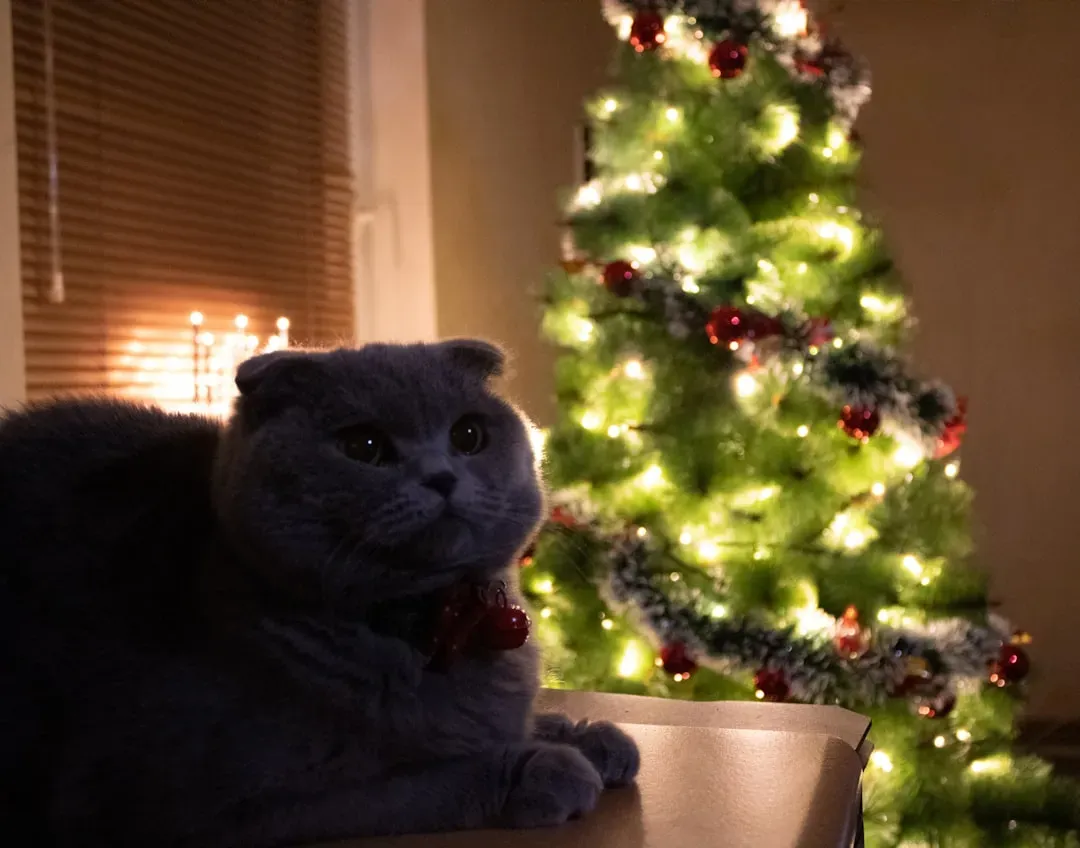
Where you place your tree matters more than you might realize. Place your Christmas tree away from anything your cat already likes to climb or perch on, as these can become launching zones that allow easy access to branches.
Keep the tree far from furniture, cat towers, shelves, and windowsills that could serve as launch pads. Cats are athletic creatures who can jump impressive distances vertically and horizontally. Even if you’ve blocked the base of the tree, a nearby couch becomes the perfect springboard for a mid-level entry. If possible, position your tree in a corner where you can anchor it to two walls for extra stability. Some people even choose to place their tree in a room that can be closed off when they’re not home to supervise, which honestly sounds like a smart move for the truly determined climber.
The Waiting Game: Let Novelty Wear Off
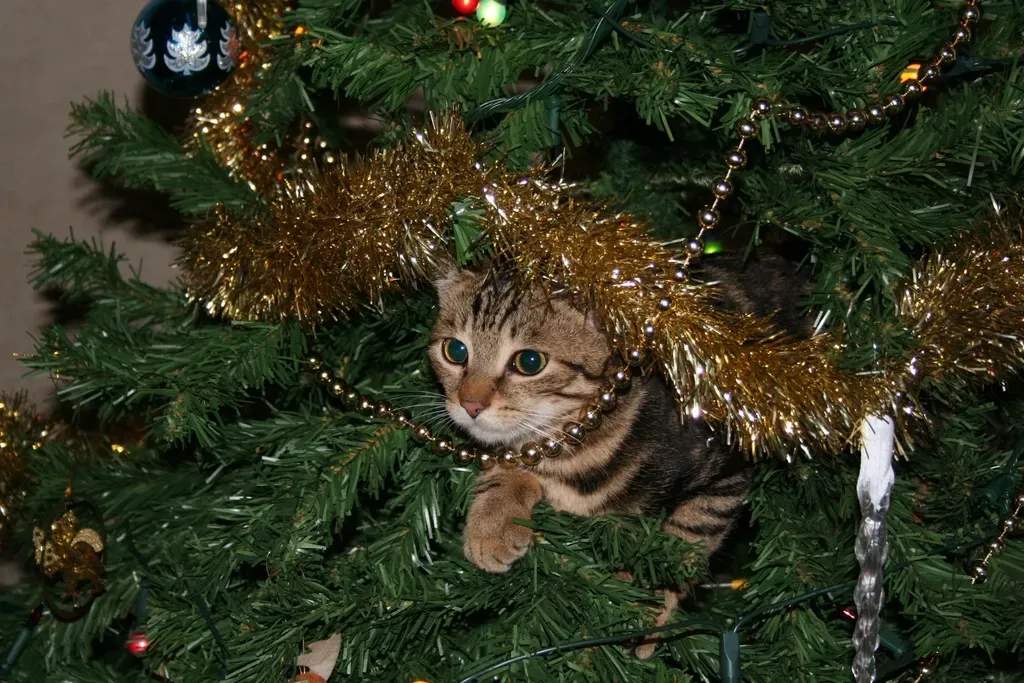
Anything new and shiny in your home is likely to attract your cat’s eye, but if you wait a few days before adding decorations, you give your cat time to get used to it, potentially making them less likely to investigate once it’s fully decorated.
Set up your bare tree and let it stand for several days. Your cat will sniff it, maybe climb it once or twice, and eventually the newness will fade. A Christmas tree’s greatest appeal is often when it first arrives in the home, smells nice, and has cool air sinking out of it, assuming you bought it in cold weather. Let your curious companion explore this new object without the added temptation of shiny ornaments and twinkling lights. It sounds counterintuitive to delay your decorating, but honestly, patience here pays off beautifully.
Create Physical Barriers Around the Base
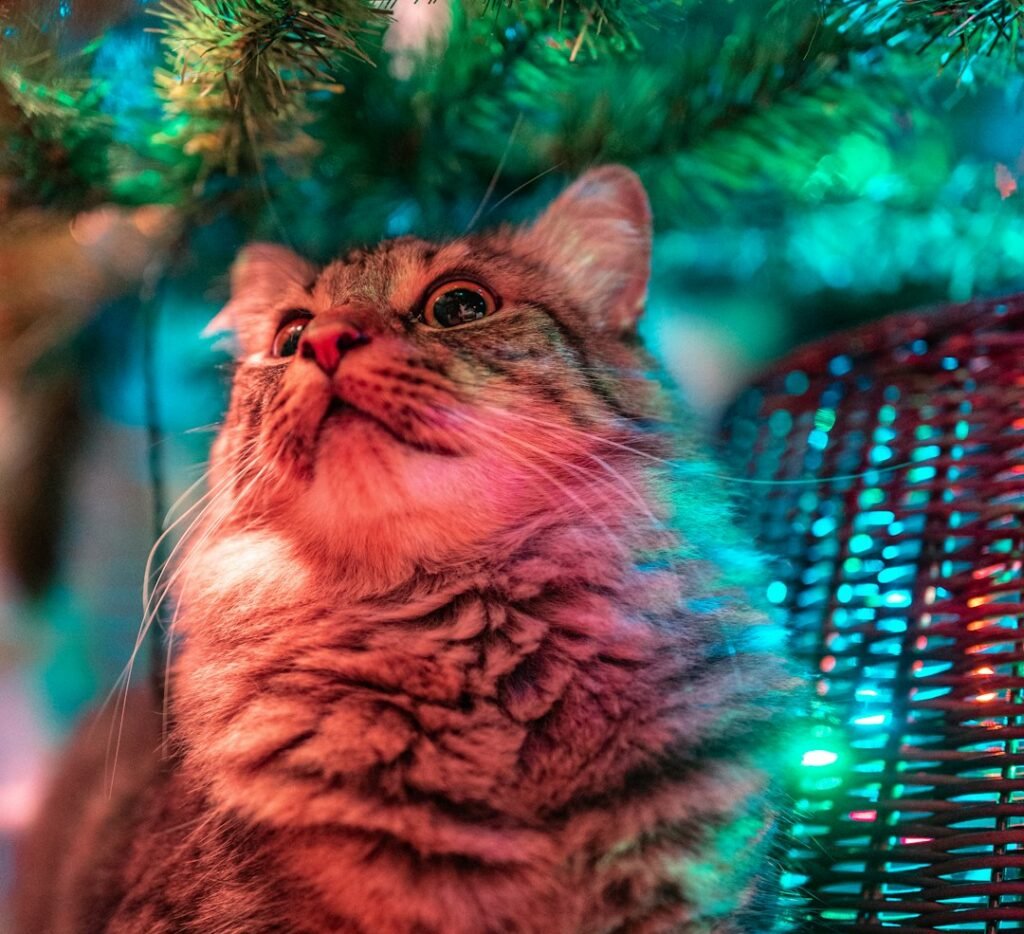
Many cats access the tree by going underneath it and climbing up, so protecting or deterring your cat from approaching the base of the tree may be the best thing you can do to prevent climbing altogether.
Physical barriers work remarkably well. You can use pet gates, playpens, or even decorative fencing around your tree. Make sure any barrier uses vertical bars rather than horizontal ones, which cats can easily climb like a ladder. Many cats absolutely hate the look, sound, and feel of aluminum foil, so you can create a sort of Christmas tree skirt with sheets of aluminum foil taped together around the base. Some creative cat owners place cardboard boxes or even circular cat tunnels around the trunk, which blocks access while giving their cat a cozy spot to curl up near the tree.
Natural Deterrents That Actually Work
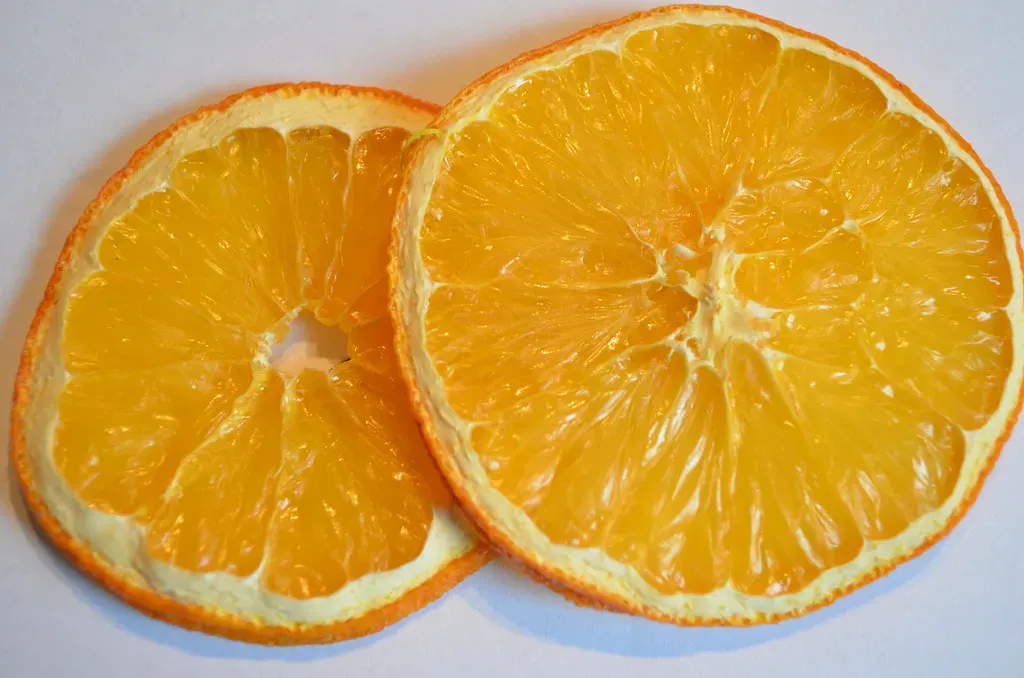
Certain scents can help keep your curious cat at a respectful distance without causing harm. Cats can’t stand the smell of citrus fruits, so consider dousing your tree’s needles with a citrus-scented pet repellent or hanging dried slices of orange or lemon around the base.
You can make your own deterrent spray at home using rosemary or citrus. You can make the tree less attractive by adding a non-toxic citrus smell which many cats do not like, and they make bitter sprays to deter cats specifically for this purpose. Just make sure whatever you use is genuinely pet-safe. Some essential oils and spices that people recommend for deterring cats can actually make them sick. The goal is discouragement, not danger. Place citrus peels strategically around the lower branches or spray lightly on the trunk to create an invisible barrier your cat wants no part of.
Smart Ornament Choices and Placement
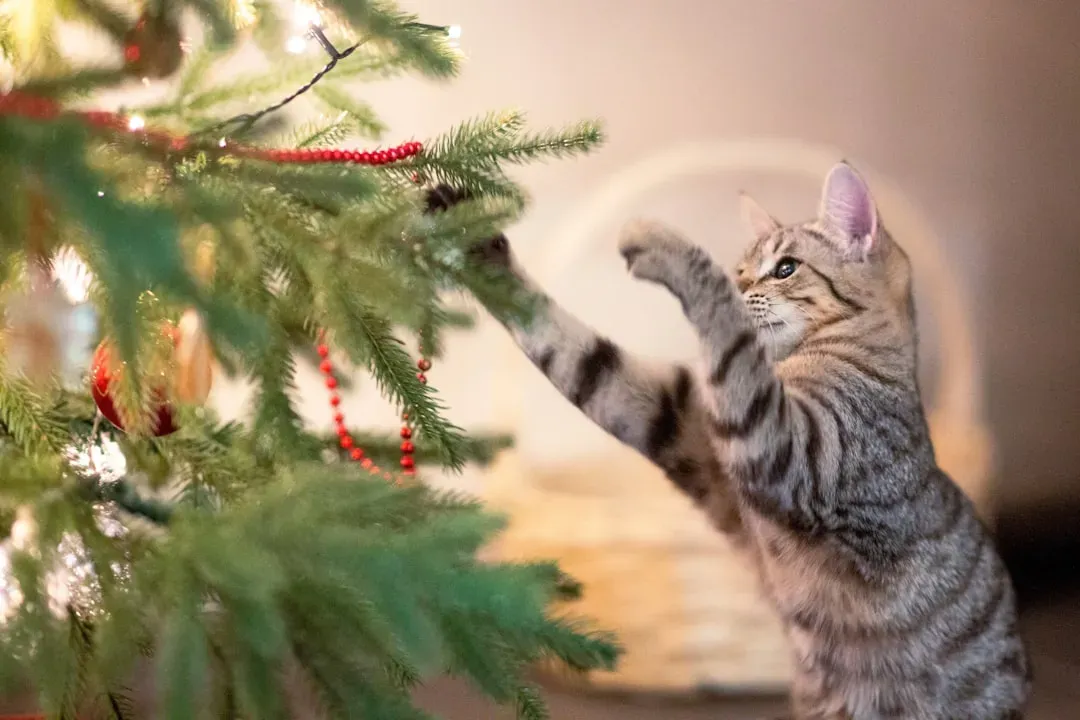
Dangling, breakable ornaments can become potential playthings in the eyes of cats, and holiday decorations are prime candidates for swatting, chewing, and general mishaps, especially with younger cats.
Skip the glass ornaments entirely if you can, or at least place them high up where paws can’t reach. Use shatterproof ornaments on the lower half of your tree, or better yet, leave the bottom third completely bare. Keep an eye out for glass ornaments and ornament hooks, and if swallowed, ribbons, tinsel, and other string-like materials can cause serious issues, including intestinal blockages. Tinsel might look gorgeous, but it’s incredibly dangerous if ingested. Choose fabric, wood, or plastic decorations that won’t shatter into dangerous shards. Think of it this way: you’re not sacrificing style, you’re adapting your decorating strategy to accommodate a small, curious predator who lives in your home.
Offer Acceptable Alternatives
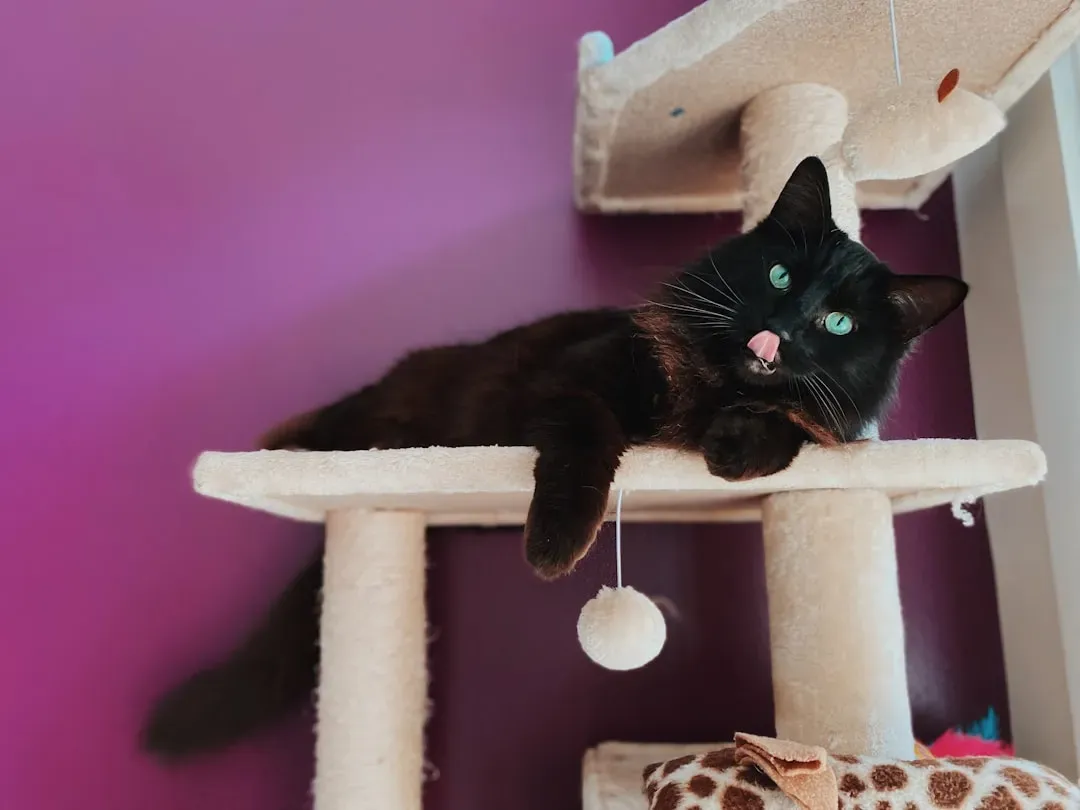
You cannot ask an animal to stop performing natural instinctive behaviors without offering them another way to satisfy that instinct, and you can offer them another tree, one that you don’t mind them destroying.
Set up a cat tree near your Christmas tree, complete with toys, scratching posts, and maybe some catnip. Having perches or a multilevel play structure away from the tree but in the same room complete with toys, scratching posts and even a cat-safe plant can provide an alternative to the Christmas tree. Some people even get a second, cheaper tree specifically for their cat and decorate it with cat toys. This isn’t spoiling your pet. It’s redirecting their energy toward something safe and appropriate. When you catch your cat heading toward their designated tree instead of yours, reward them with treats and praise. Positive reinforcement works far better than punishment ever will.
The Real vs Artificial Tree Debate
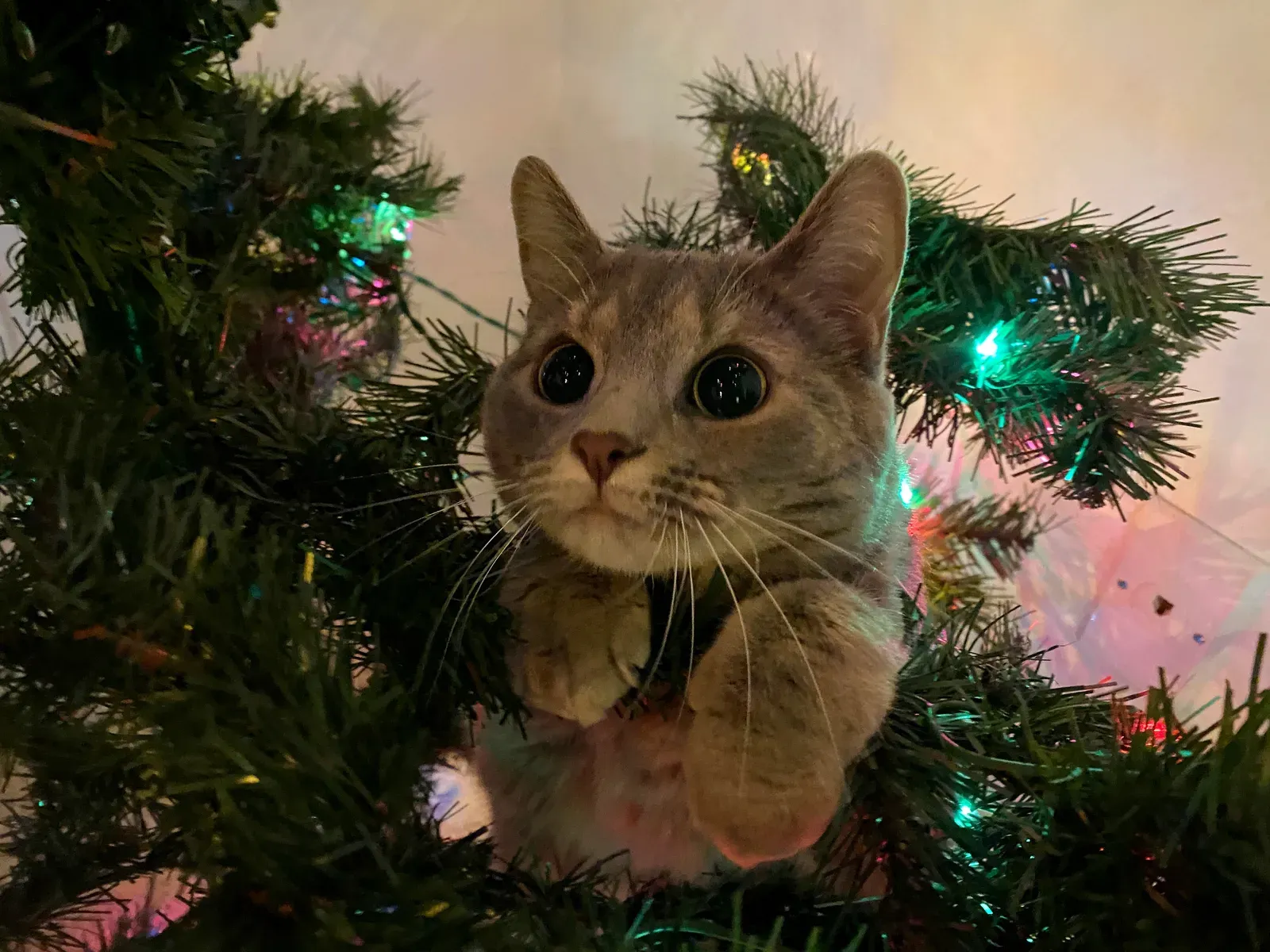
Real Christmas trees including popular firs and pines are considered mildly toxic to cats when chewed or ingested, and tree farms sometimes use pesticides that are toxic to cats, though fake trees can still pose risks.
Artificial trees eliminate several hazards at once. They don’t shed needles that can puncture delicate paws or digestive tracts. They don’t require water that might contain harmful chemicals or bacteria. Fresh-cut pine trees smell nice, but some cats especially those who like to climb just can’t resist the fact that there’s a real tree standing in the living room, so an artificial tree might reduce temptation. If you absolutely must have a real tree, cover the water reservoir completely with a tree skirt weighted down with presents, and vacuum up fallen needles daily. The scent and texture of a real tree will always be more appealing to a cat than plastic branches, so be prepared to take extra precautions.
Managing the Tree Water and Presents
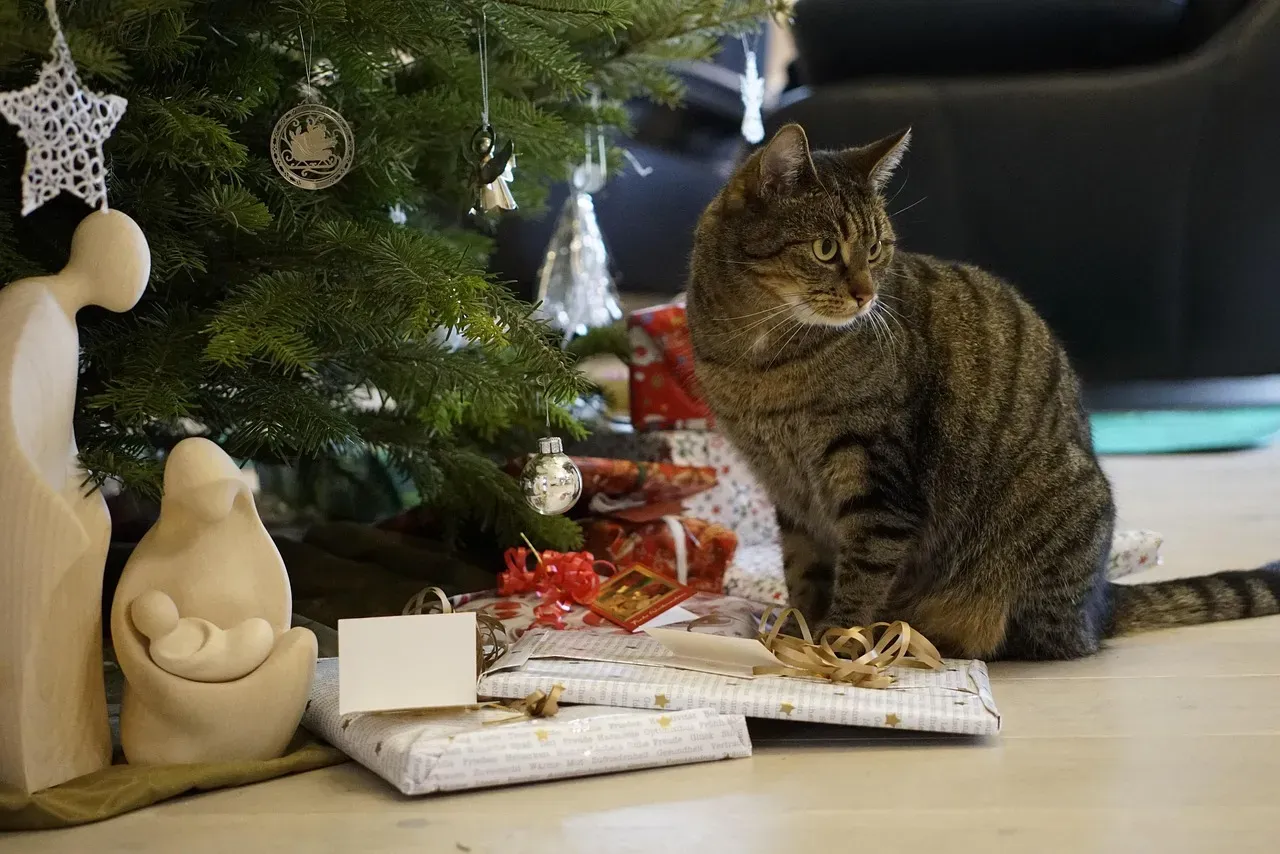
If you have a live Christmas tree, make sure your cat can’t get to the water bowl underneath, as some of the chemicals and fertilizers added to help the tree stay green can be toxic to pets.
Place a cover over the base, or use tin foil or a tree skirt to prevent a cat from getting into the water, and you can also use a pet playpen to surround the bottom of your tree. If blocking access is impossible, use only fresh, clean water with no additives and change it daily. As for presents, consider keeping them elsewhere until Christmas morning. Wrapped packages with ribbons and bows are simply too tempting for curious paws. The rustling tissue paper, dangling ribbons, and mysterious boxes create an irresistible invitation to investigate, which inevitably leads your cat right to the base of the tree you’re trying to protect.
Stay Calm and Redirect Positively
Punishment doesn’t work with cats and can actually damage your relationship with them. Your cat isn’t naughty or bad when they want to interact with your Christmas tree, as they’re truly just doing what their instincts tell them to do.
When you catch your cat approaching the tree, don’t yell or spray them with water. Instead, redirect their attention to an acceptable activity like playing with a toy or exploring their cat tree. Redirecting cats is effective and punishment is not, so lure them back to their tree and reward them for playing with that one using positive reinforcement. Honestly, understanding that your cat isn’t being deliberately destructive changes everything. They’re not plotting to ruin your holiday. They’re being cats, which means they’re hardwired to climb, hunt, and explore. Your job is to create an environment where they can express those natural behaviors safely without destroying your decorations or endangering themselves.
Embracing Reality with Grace and Humor
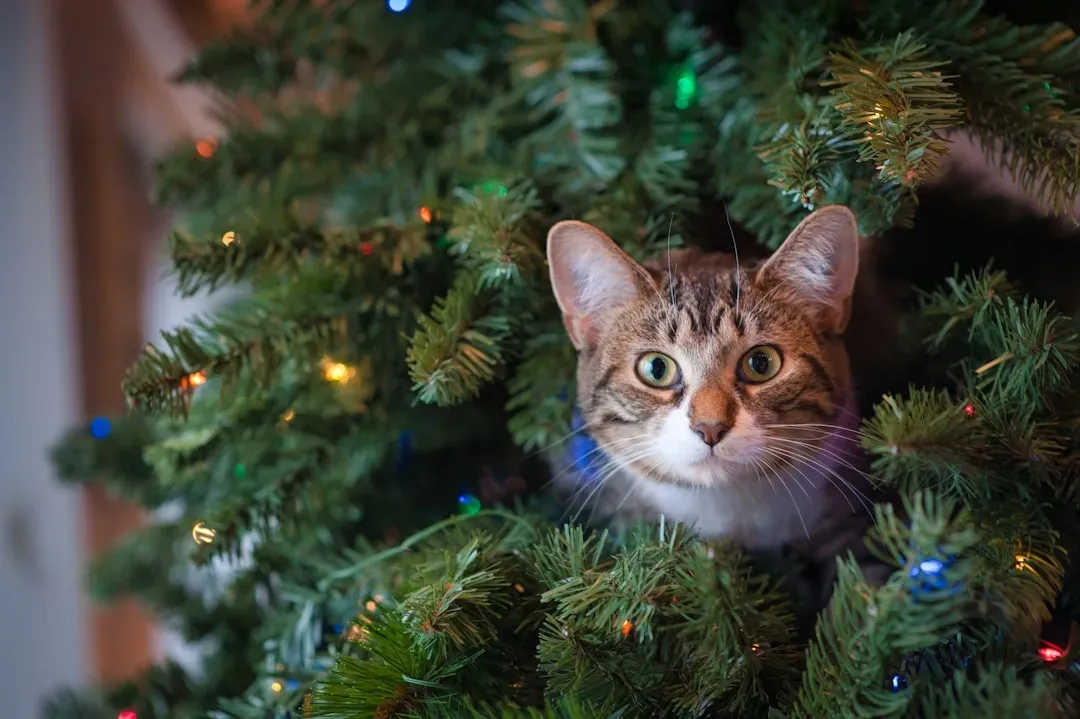
Some cats might climb on trees no matter what you do, so do the best you can to set up a beautiful and safe tree, but don’t fret too much if your cat decides to redecorate.
Let’s be honest. You might follow every single tip in this article and still find your cat dangling from a branch at two in the morning. Life with cats is unpredictable, and that’s genuinely part of their charm. Maybe you need to rethink the traditional tree altogether and opt for a wall decal tree, a small tabletop version placed out of reach, or even a creative cardboard cutout. Some years require more compromise than others. The holidays are about joy, togetherness, and creating memories, even if some of those memories involve your cat wearing tinsel like a festive scarf or photobombing your tree pictures from inside the branches.
What matters most is keeping your beloved companion safe while still enjoying the season. Did you manage to keep your cat away from the tree this year, or did they win the battle? Share your stories and creative solutions, because we’re all in this together, trying to celebrate the holidays with our wonderfully curious feline friends.