Every winter in South Florida, residents and visitors alike notice a curious and colorful change across backyard walls, canal banks and tree branches: green iguanas that are normally, well, green often appear painted in shades of orange, pumpkin and rust. What looks like a seasonal spectacle is actually a remarkable biological process tied to the reptiles’ life cycles and survival strategies — and it reveals much about how these invasive lizards have adapted to life far from their native homelands.
An Invasive Lizard’s Rise in South Florida
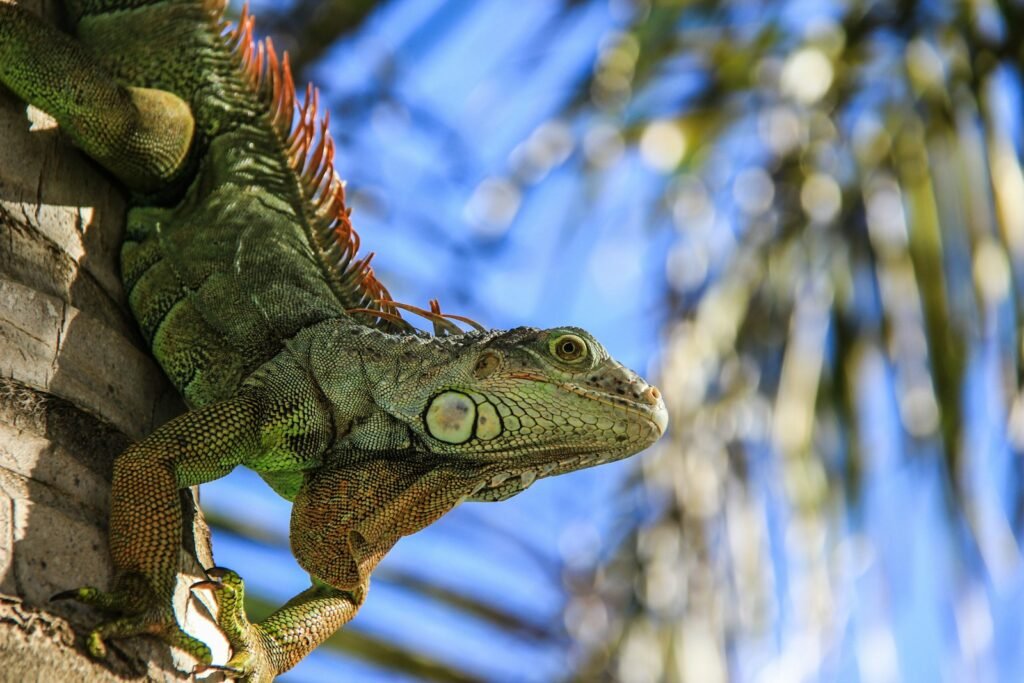
South Florida’s warm, watery landscapes have become prime real-estate for green iguanas, a species originally from Central and South America and parts of the Caribbean. These reptiles were introduced decades ago through the exotic pet trade, and over time many escaped or were released, establishing thriving feral populations throughout the region.
Once firmly established, iguanas spread rapidly thanks to Florida’s subtropical climate and abundant habitat. Today, they’re one of the most visible invasive species in the Sunshine State, navigating urban yards and wild wetlands alike. Their presence comes with ecological costs — from eating native vegetation to burrowing into canal banks — and their resilience has helped them flourish far from home.
The Seasonal Color Shift Explained
For much of the year, green iguanas live up to their name: they sport hues ranging from bright green to olive, brown or gray, blending into foliage and shaded bark. But beginning in late fall and lasting into early spring, something striking happens among many males: their skin adopts vibrant orange or reddish tones.
This transformation isn’t a matter of fashion, but biology. As cooler weather sets in and the breeding season nears, hormonal changes surge through the males’ bodies. These changes trigger increases in pigmentation that make them stand out against the landscape — a visual signal of reproductive readiness that can emerge quite quickly.
A Strategy for Reproduction
The orange coloration plays an important role in iguana courtship and competition. Scientists believe that brighter hues help males attract attentive females while also signaling strength to rival males. In the reptile world, being hard to miss can be a reproductive advantage.
University of Florida wildlife ecologists note that bold coloring functions similarly to conspicuous displays in other animal species: it advertises fitness and dominance. Females may be drawn to the most vividly colored males, while other males may be deterred by their apparent vigor.
Not All Iguanas Turn Orange
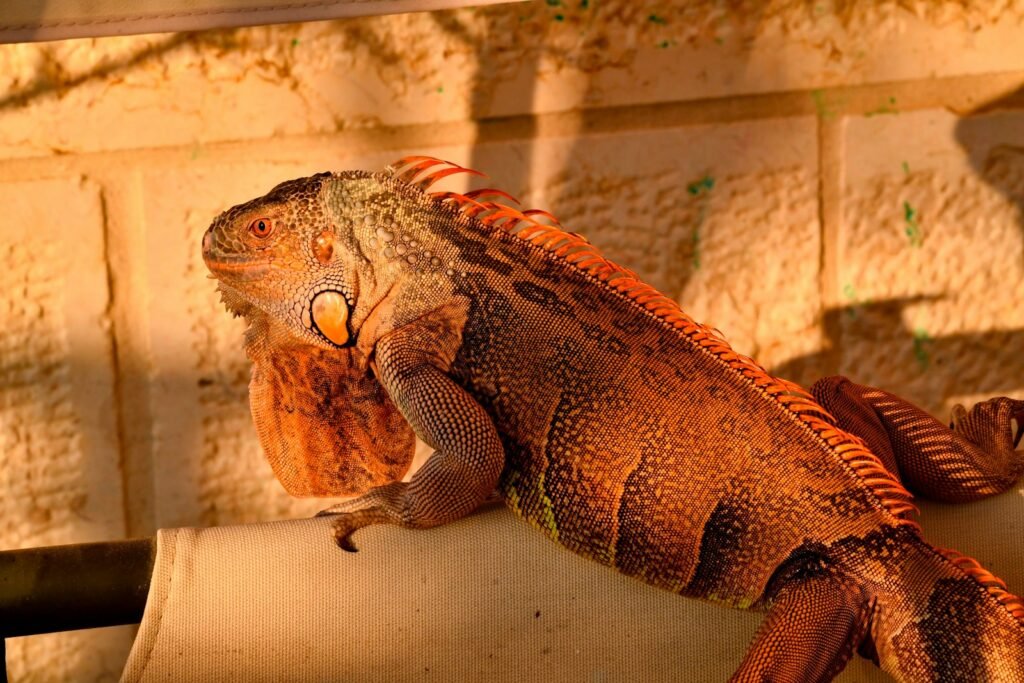
It’s important to understand that the orange transformation isn’t universal. The change is most common among sexually mature males during breeding season; females and younger iguanas typically remain green throughout the year. Even among mature males, the intensity of coloration can vary based on factors such as age, health and hormone levels.
This means that while many iguanas you see in December and January may seem autumnal in tone, others remain in their more familiar shades. Observers in Florida’s parks, backyards and waterways may easily spot a spectrum of color in a single group.
More Than a Holiday Curiosity
While the orange hue might seem like a whimsical seasonal spectacle, it’s a powerful illustration of how adaptable these reptiles have become outside their native range. Their ability to adjust reproductive behaviors and thrive in a new climate highlights both their biological flexibility and the broader challenges invasive species can pose to local ecosystems.
At the same time, this annual shift gives South Floridians and scientists alike a vivid reminder of the natural rhythms that drive wildlife behavior — even in urban and suburban environments where humans and reptiles coexist closely.
What This Means for South Florida Residents
For residents, seeing orange iguanas over the holiday season has become a familiar, if unusual, local phenomenon. Backyard watchers, gardeners and wildlife enthusiasts can now recognize this change as part of the reptiles’ breeding cycle rather than a random quirk of nature.
At the same time, it underscores the broader impact of invasive animals on Florida’s biodiversity and landscapes. Green iguanas may be visually striking in their holiday hues, but their presence continues to prompt discussions about wildlife management and ecosystem balance across the region.
Kristina is a young writer from India. An arts graduate and an avid content creator, Kristina is passionate about animals and wildlife. She enjoys exploring topics related to pet care, animal behavior, conservation, and nature, combining thorough research with engaging storytelling.