You’ve probably watched a cat tumble off a bookshelf, twist impossibly through the air, and land with that infuriating grace that makes you wonder if they’re actually mocking gravity. It’s become one of those things we just accept as fact, right up there with cats hating water and sleeping twenty hours a day. Yet the science behind this feline superpower is far stranger and more complex than most people realize.
This isn’t magic, even though it looks like it. What’s happening involves some serious physics, a body built like a biological slinky, and an inner ear system that would make a fighter pilot jealous. Let’s be real, though, understanding how cats manage this feat took scientists centuries to figure out. So let’s dive in.
The Righting Reflex Is An Innate Survival Mechanism
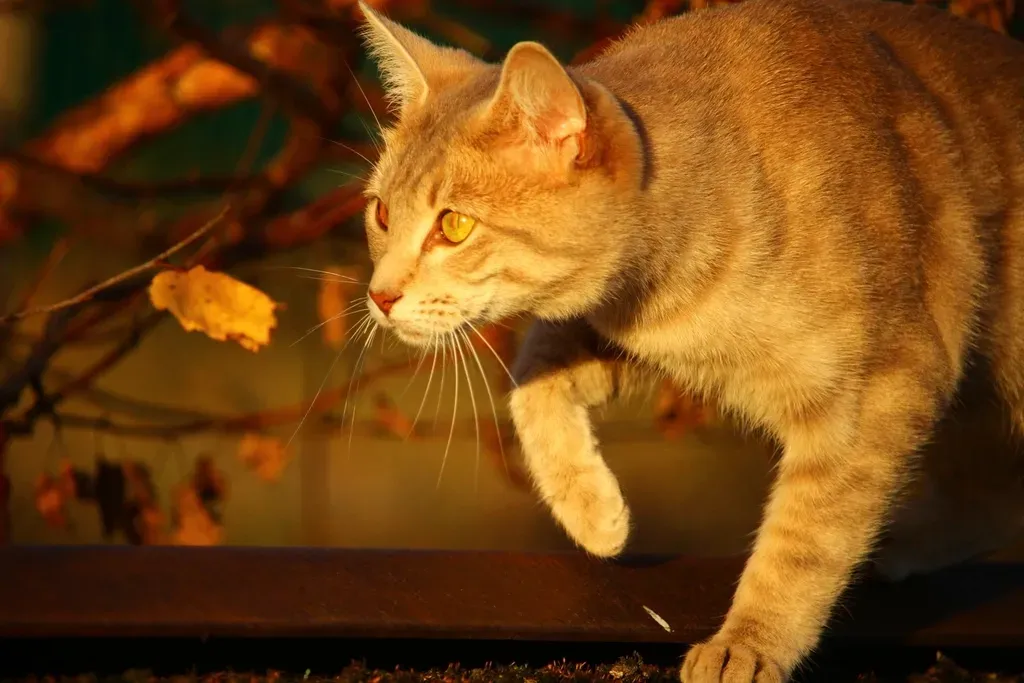
The cat righting reflex is a cat’s innate ability to orient itself as it falls in order to land on its feet. Think of it as an autopilot system that kicks in the moment your furry friend loses contact with solid ground. It’s not something cats consciously decide to do. Their bodies just know.
The righting reflex begins to appear at 3–4 weeks of age, and is perfected at 6–9 weeks. This means even tiny kittens start developing this skill while they’re still wobbly and learning to walk properly. The righting reflex likely evolved as a survival mechanism, with falling from a height being a common risk, and the ability to land on their feet increasing their chances of survival.
A Flexible Spine Makes The Impossible Possible
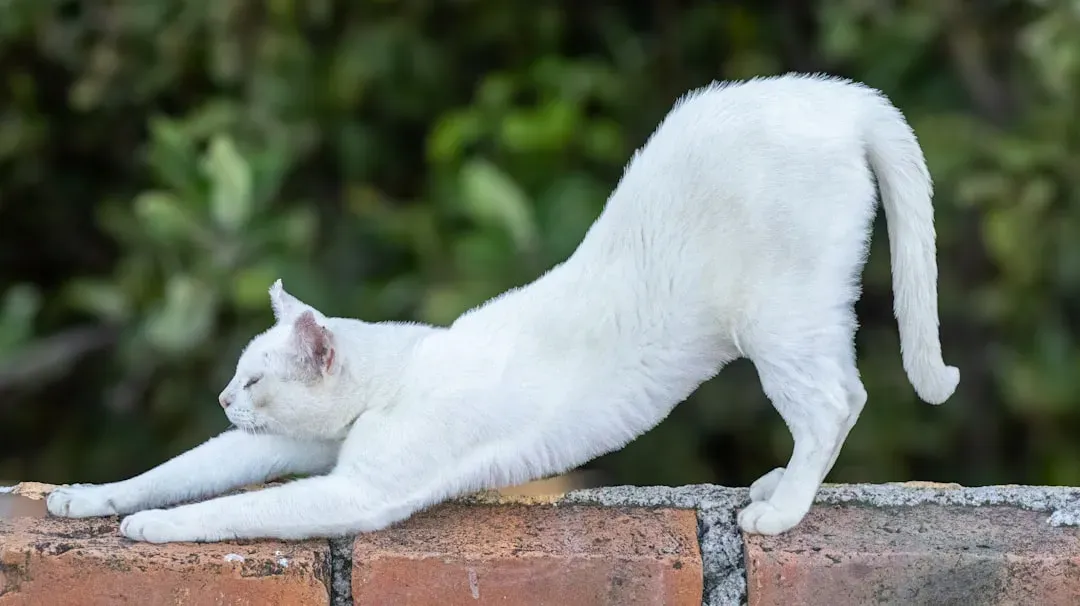
Your cat’s backbone is nothing like yours. Cats are able to do this because they have an unusually flexible backbone and no functional clavicle. While humans waddle around with a rigid spine designed for walking upright, cats strut about with what’s essentially a biological spring system.
Cats have no collarbone and a very flexible backbone with 30 vertebrae. Those extra vertebrae, combined with elastic intervertebral discs, let them twist and bend in ways that would land us in the emergency room. Honestly, watching a cat contort itself through a tiny space or rotate midair feels like witnessing a physics violation.
The Vestibular System Acts Like A Built In Gyroscope
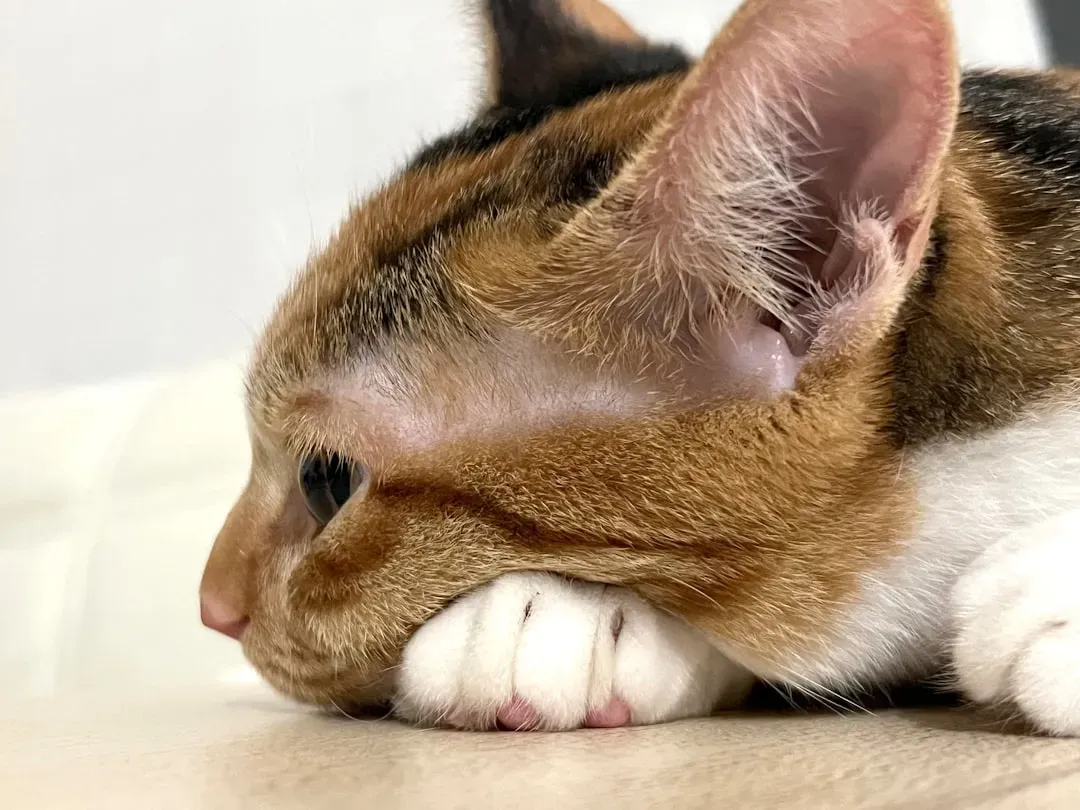
Here’s where things get really fascinating. The vestibular apparatus inside a cat’s ear is used for balance and orientation and this enables cats to quickly figure out which way is up, and rotate their head so the body can follow. Think of it as your cat carrying around a sophisticated motion sensor that constantly reports their position relative to the ground.
Otoliths in a cat’s inner ear detect changes in its acceleration and position relative to the ground, prompting its muscles to move in a way that helps it land on its paws. These tiny crystals float in fluid filled chambers, shifting with every movement and sending lightning fast signals to the brain. The whole system works so seamlessly that even blind cats can execute the righting reflex perfectly.
The Physics Behind The Twist Defies Simple Explanation
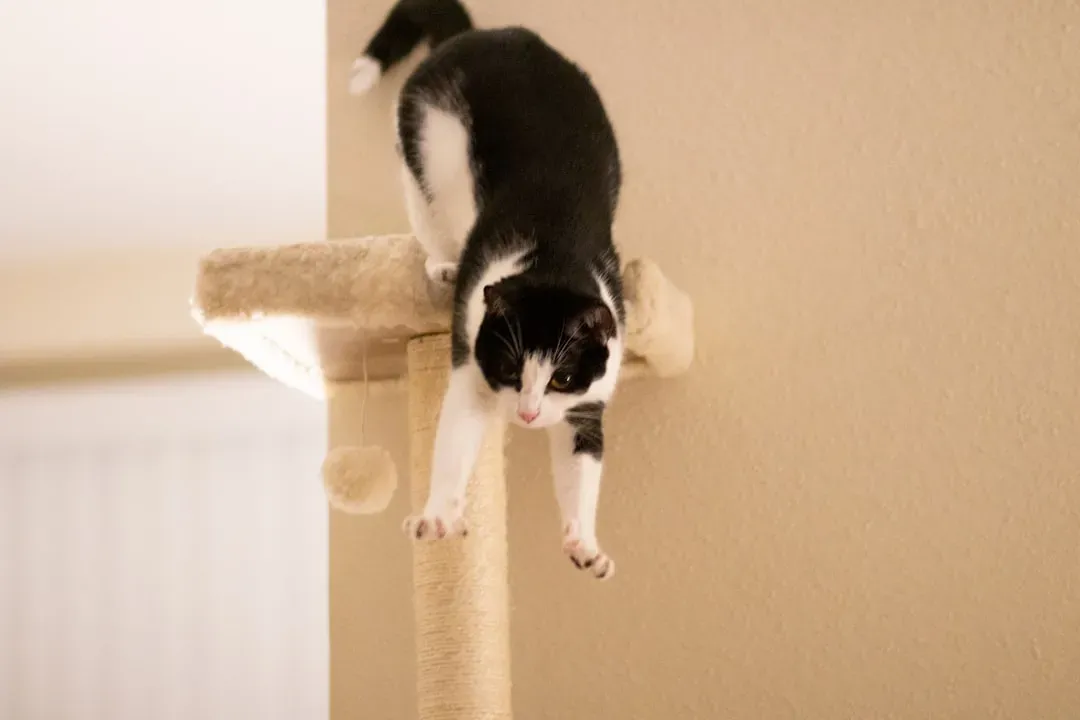
For decades, physicists were genuinely puzzled by this. Conservation of angular momentum meant that if something twists clockwise, something else has to twist counterclockwise. So how could a cat, starting from a stationary upside down position, suddenly flip itself over without pushing off anything?
By bending at the waist, the cat can twist the front half of its body in one direction and the back half in the opposite direction. It’s a clever manipulation of their own body parts that follows the principles of rotation and forces in motion. The cat essentially uses different parts of its body as counterweights, allowing a full rotation without violating any laws of physics.
The Sequence Happens In A Split Second
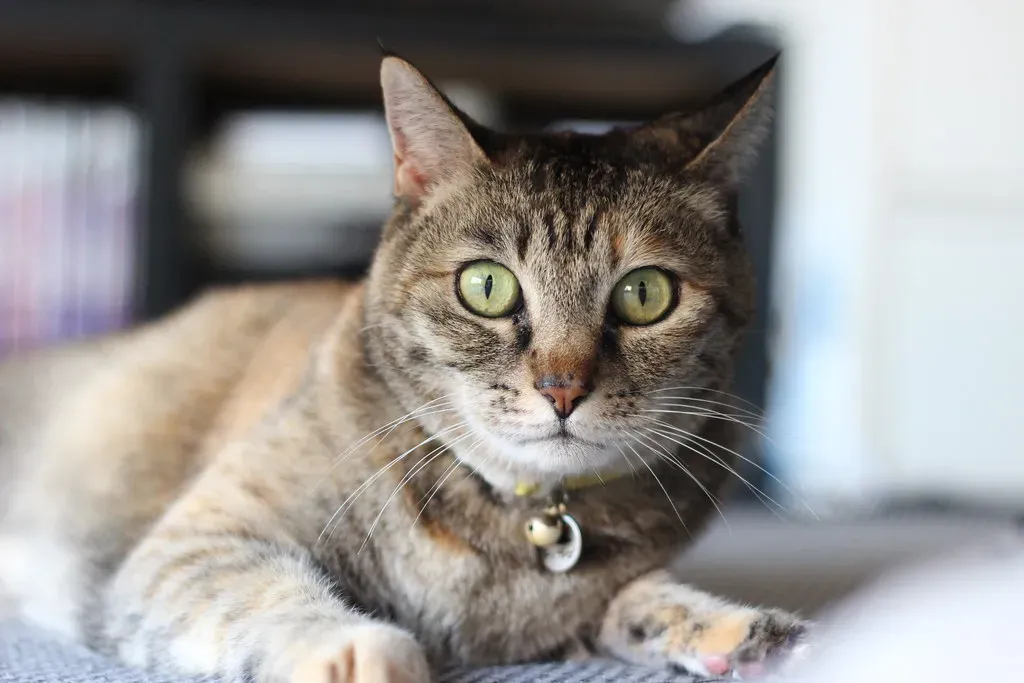
When a cat falls, the sequence unfolds faster than you can blink. First, their head rotates to align with the ground using information from the vestibular system. Their back arches, the feet go underneath the body and bring their forepaws close to the face to protect it.
The righting reflex can take less than a second and a cat needs at least two and a half feet to stick the landing. That’s an incredibly short distance and time frame to execute such a complex maneuver. The tail doesn’t even play the starring role you might think. The tail seems to help but cats without a tail also have this ability, since a cat mostly turns by moving its legs and twisting its spine in a certain sequence.
Terminal Velocity Creates A Counterintuitive Survival Zone
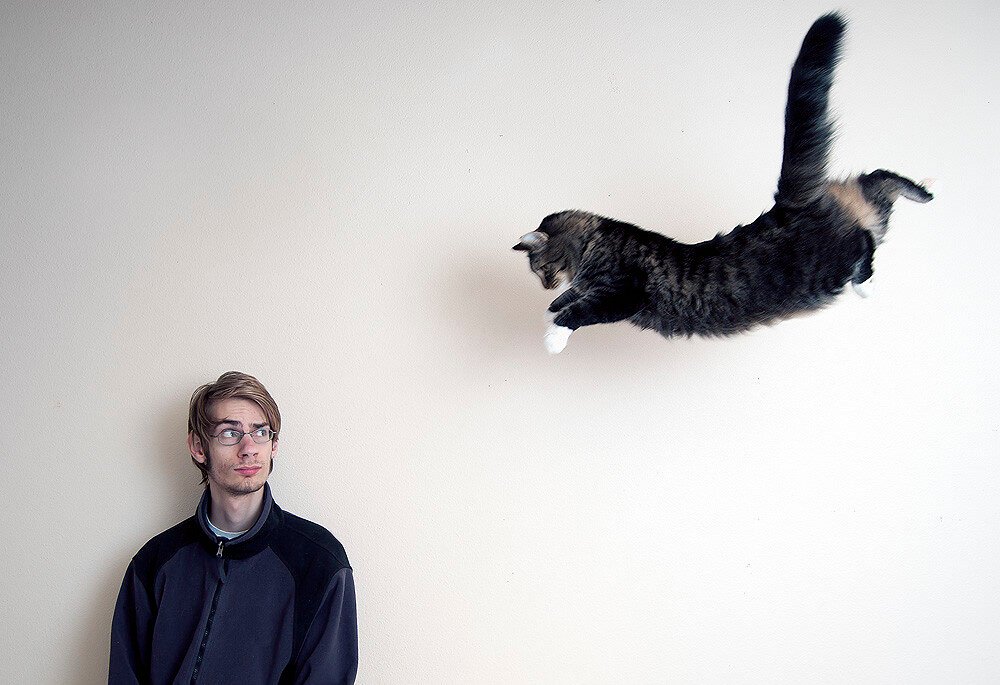
Here’s something that’ll mess with your head. In a 1987 study of 132 cats that fell from buildings, injuries per cat increased positively with altitude until a height of seven stories, at which point injuries decreased. Wait, what? Cats falling from higher up get hurt less?
After falling five stories, the cats reached terminal velocity, at which point they relaxed and spread their bodies out to increase drag. Terminal velocity for a cat is about 60 mph. Once they stop accelerating and their speed stabilizes, cats seem to calm down and shift their body position to maximize air resistance. It’s evolutionary genius disguised as feline chill.
They’re Not Actually Invincible Though
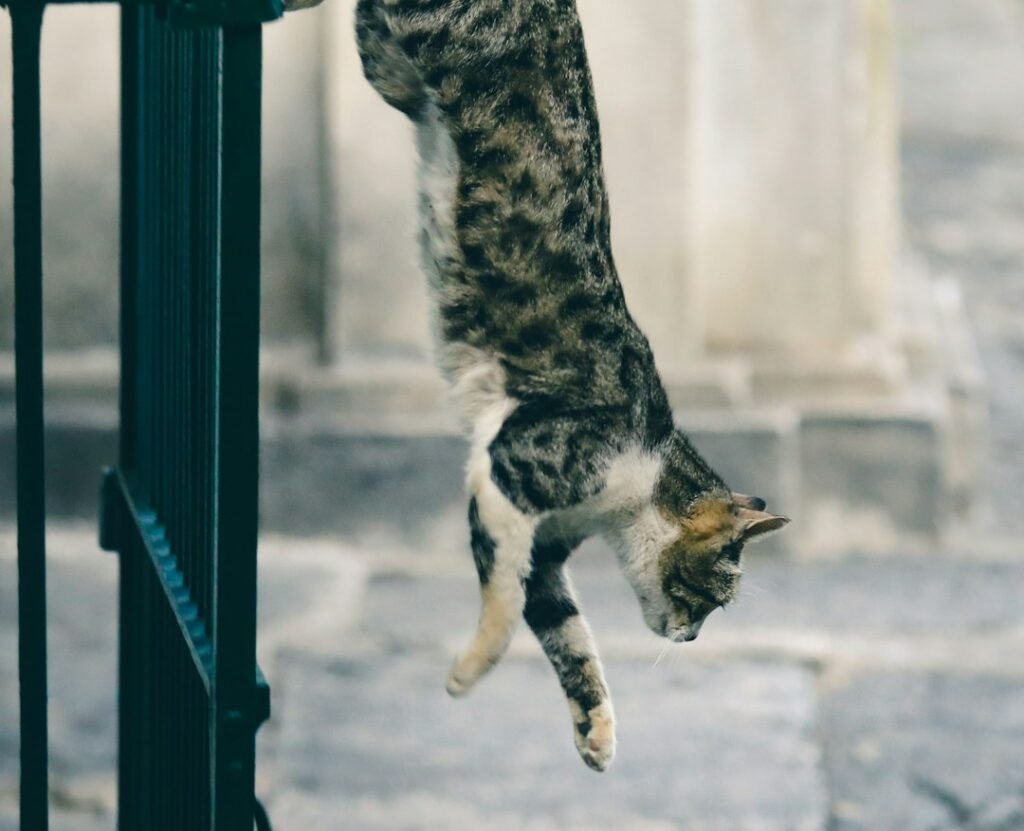
Let’s clear something up right now. Cats can still break bones or die from extreme falls. The righting reflex is impressive but it’s not a force field. Cats do sustain injuries from falls; it happens so often the cluster of injuries has a name: high rise syndrome.
Cats who fell from between 7 and 32 stories suffered less injuries, while those who fell between 2 and 6 stories sustained more injuries. The most dangerous zone is actually the middle range, where they’re falling fast enough to cause serious harm but haven’t reached terminal velocity yet. Even a well executed landing can result in injury.
Age And Health Play Crucial Roles
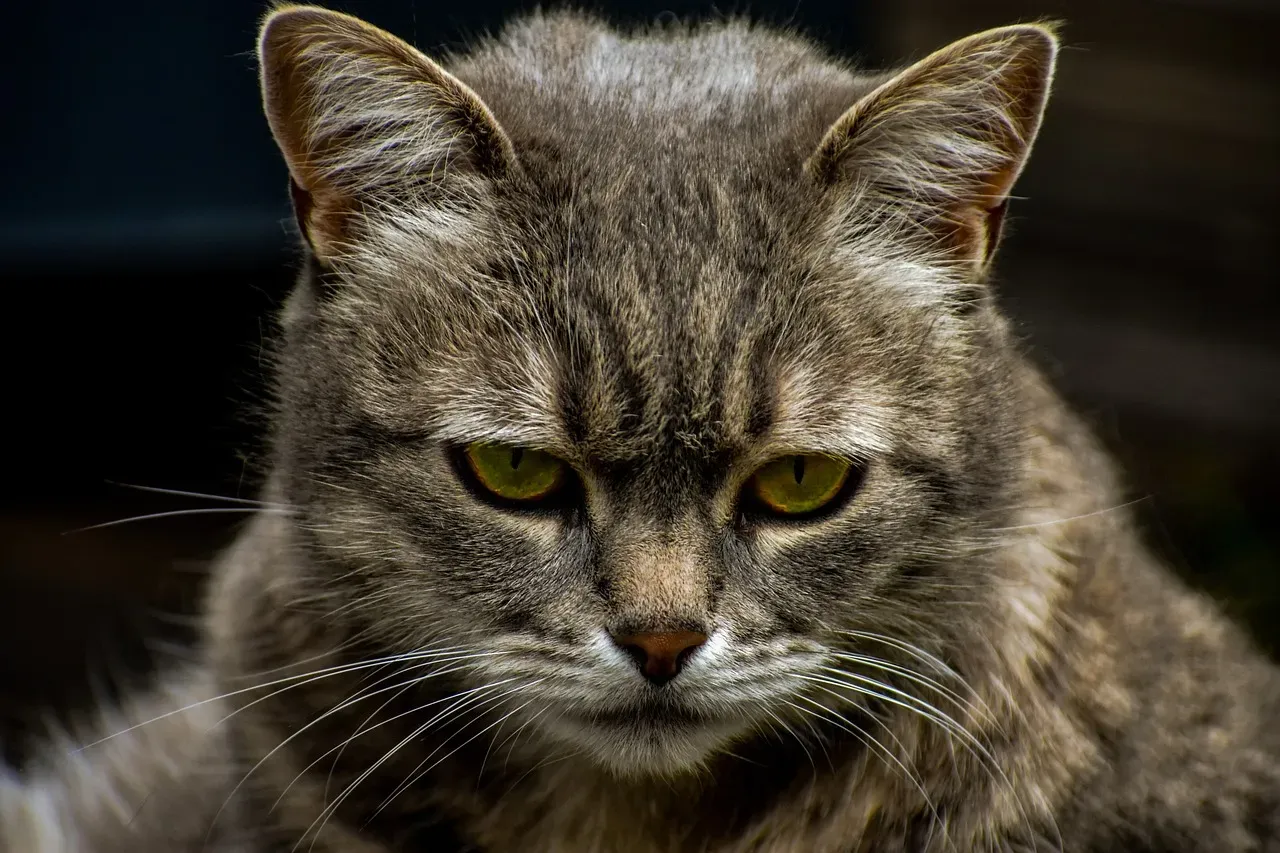
Not every cat is equally equipped for aerial acrobatics. Many cats start to experience joint stiffness or arthritis that can make midair twists more difficult, and aging cats also tend to lose muscle mass and may struggle with balance. Think about it like this: a young, athletic cat is basically an Olympic gymnast, while an older, heavier cat is more like the rest of us trying to do a backflip.
Physical fitness matters more than breed, honestly. Young, healthy cats typically fare better than elderly, overweight, or sick cats. Their ability to right themselves and absorb impact effectively depends on muscle strength, joint flexibility, and overall health. It’s hard to say for sure, but conditions like inner ear infections can also seriously impair the reflex.
The Historical Mystery That Stumped Great Minds
The first research paper to tackle the subject was published in the year 1700 by a French scientist named Antoine Parent, when Isaac Newton was still alive. Scientists have been scratching their heads over falling cats for more than three centuries. Even the brilliant minds of the past couldn’t quite crack it.
In 1894, physiologist Etienne-Jules Marey presented a sequence of high speed photographs of a falling cat, showing clearly that the cat begins falling upside down without any rotation but nevertheless manages to turn over to land. This demolished the prevailing theory that cats pushed off their starting position. The cat was genuinely flipping itself over in midair without external help.
It’s Not Just Cats Who Can Do This
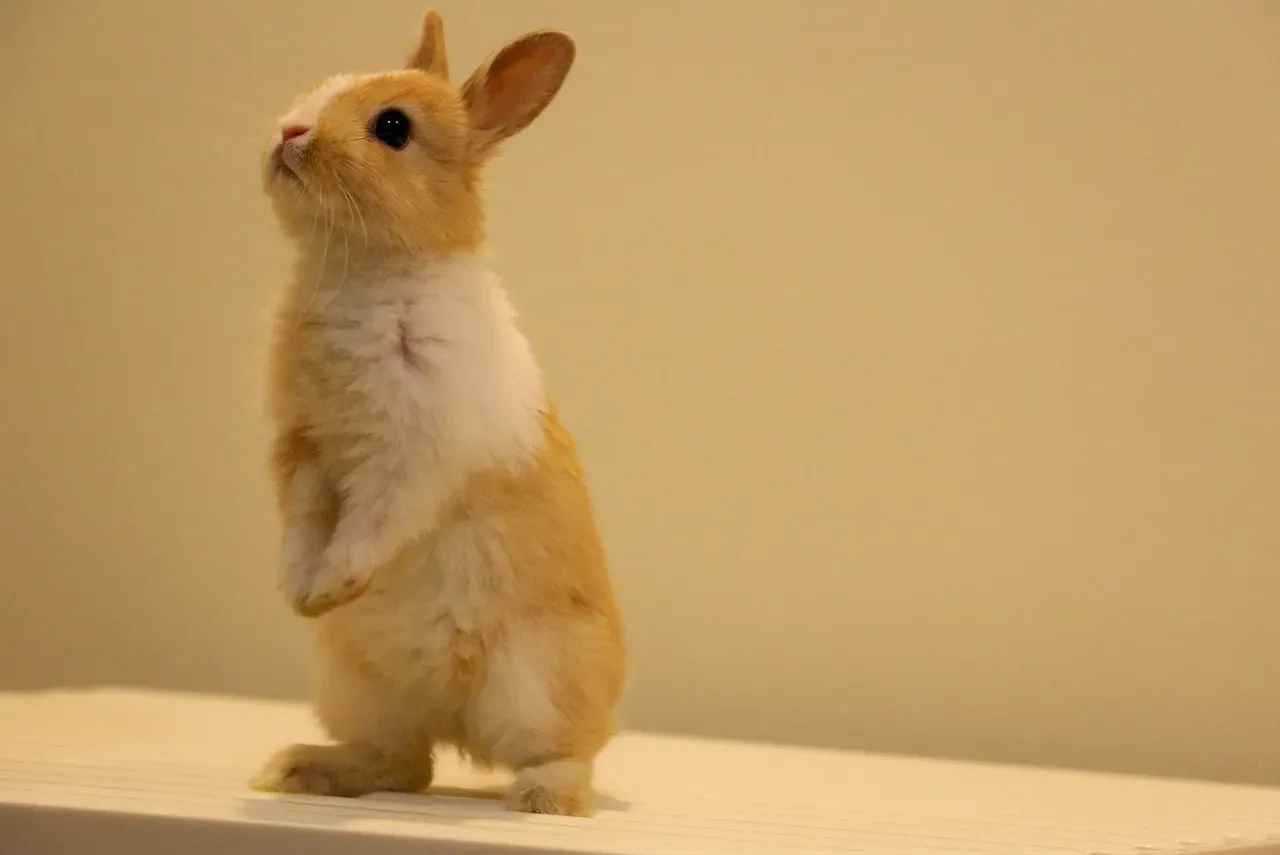
Before you start thinking your cat is completely unique, here’s a reality check. While cats provide the most famous example of this reflex, they are not the only animal known to have a mid air righting capability, with similar phenomena observed in other small vertebrates such as rabbits, rats, lizards, and certain invertebrate tailed arthropods like stick insects.
For cats, the most plausible evolutionary explanation is their tendency to climb trees and other spots high off the ground, while for rabbits, predation is a likely evolutionary force, as a hawk swoops toward a rabbit horizontally causing the rabbit to jump up vertically, and the rabbit evolved a way to land upright and unharmed. Nature has crafted multiple solutions to the same problem.
What This Means For Your Cat’s Safety
Understanding the righting reflex doesn’t mean you should test it. Please don’t intentionally drop your cat to see if he will land on his feet. Seriously, resist the temptation. Your cat may have a biological superpower, but they’re not stunt performers.
The best approach is prevention. Secure your windows with sturdy screens, especially if you live in a high rise building. Make sure balconies are properly enclosed. Most cats landed on concrete, yet 90 percent of all the cats studied survived the fall, and only 37 percent of those required emergency care, but cats who fell from between 7 and 32 stories suffered less injuries while those who fell between 2 and 6 stories sustained more injuries. Even with decent survival rates, why risk it?
Conclusion: Nature’s Perfect Landing System
The truth about why cats land on their feet is a masterpiece of evolution, physics, and biology working in perfect harmony. From their flexible spines and floating collarbones to their sophisticated inner ear balance system, cats are living proof that nature designs elegant solutions to complex problems. The righting reflex took millions of years to perfect and centuries for scientists to understand.
Yet for all their aerial prowess, cats remain vulnerable. They can still get hurt, still miscalculate, still suffer injuries that could have been prevented. The real lesson here isn’t that cats are invincible. It’s that they’re remarkably adapted survivors who deserve our protection and respect. What do you think about it? Did you expect this ability to be so complex?
Kristina is a young writer from India. An arts graduate and an avid content creator, Kristina is passionate about animals and wildlife. She enjoys exploring topics related to pet care, animal behavior, conservation, and nature, combining thorough research with engaging storytelling.