Belchertown, Massachusetts – A drenched and trembling baby raccoon discovered on a resident’s doorstep during a summer storm captured hearts worldwide after animal control officers stepped in to offer aid.
A Stormy Discovery Sparks Quick Action
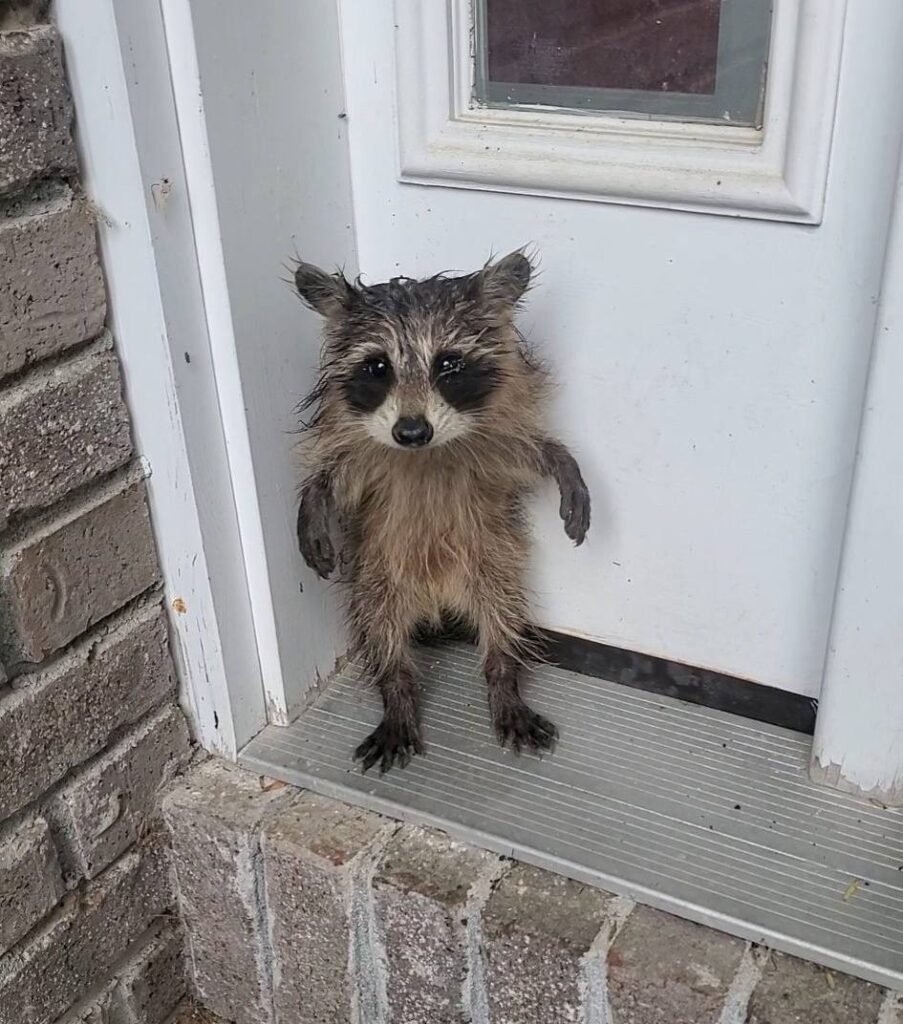
On a rainy morning in early June 2025, a Belchertown resident noticed the tiny creature huddled alone, shaking from the downpour. The raccoon, estimated at just a few weeks old, appeared orphaned and vulnerable without its mother in sight. Local animal control officer Sarah Byrnes responded promptly to the call, scooping up the shivering animal for transport.
Byrnes described the scene as poignant, with the raccoon too young to fend for itself amid the weather’s fury. She contacted the Leyden Center for Wildlife Rehabilitation, where founder Amelie Dricot-Ziter agreed to take the newcomer despite her facility already housing a full roster of young wildlife. This intervention marked the beginning of what would become an inspiring tale of survival and community support.
Rehabilitation Efforts Bring New Strength
At the Leyden Center, the baby raccoon received immediate care, including warming, hydration, and a specialized diet to combat malnutrition. Dricot-Ziter named him Bub, noting his stoic demeanor upon arrival. Over the next few months, Bub joined a group of seven other orphaned raccoons, learning essential skills under supervised conditions.
The center’s approach emphasized natural behaviors, from foraging to social interaction, preparing the animals for eventual release. Vaccinations and health checks ensured Bub’s readiness for the wild. By late August, he had transformed from a frail infant into a robust juvenile, ready to rejoin his natural habitat.
Community and Viral Fame Amplify the Story
Photos of Bub’s rescue, shared by Belchertown Animal Control, quickly spread across social media, drawing international attention. Viewers from around the globe followed his progress, with posts garnering thousands of shares and comments expressing admiration for the rescuers’ dedication. This outpouring highlighted the broader role of local agencies in wildlife conservation.
The story also shed light on the challenges faced by rehabilitation centers, which often operate on limited resources. Donations surged following the viral posts, aiding not just Bub but other animals in care. Dricot-Ziter reflected on the unexpected spotlight, stating that while she had planned to limit intakes to 22 raccoons that year, compassionate calls like Byrnes’ made it impossible to turn away those in need.
Release into the Wild Marks a Milestone
On August 30, 2025, Bub took his first steps back into freedom at a suitable woodland site. Staff at the Leyden Center monitored his adjustment, confirming he integrated well with local wildlife. This successful release brought closure to a journey that began in desperation.
The event underscored the importance of timely interventions in wildlife rescues. In 2025 alone, the center released 21 raccoons, with Bub among the later successes. Such outcomes reinforce the value of community vigilance and professional rehabilitation in protecting urban-adjacent species.
Lessons from Bub’s Journey
Bub’s experience illustrates how human compassion intersects with nature’s resilience. Residents play a crucial role by reporting sightings rather than intervening directly, allowing experts to handle delicate cases. Key aspects of effective wildlife care include:
- Rapid response to distress calls to prevent further harm.
- Specialized facilities equipped for species-specific needs.
- Public education on leaving wild animals undisturbed unless truly orphaned.
- Funding support through awareness campaigns.
- Post-release monitoring to ensure long-term survival.
Key Takeaways
- Early intervention can turn the tide for vulnerable young wildlife like orphaned raccoons.
- Local control officers and rehab centers form a vital partnership in conservation efforts.
- Viral stories boost donations and awareness, benefiting broader animal welfare initiatives.
As stories like Bub’s remind us, small acts of kindness ripple through ecosystems and communities alike. The raccoon’s path from doorstep despair to woodland freedom celebrates the power of collective care. What experiences have you had with local wildlife rescues? Share your thoughts in the comments below.
Kristina is a young writer from India. An arts graduate and an avid content creator, Kristina is passionate about animals and wildlife. She enjoys exploring topics related to pet care, animal behavior, conservation, and nature, combining thorough research with engaging storytelling.