For years, Karen the cat made her feelings clear: other animals were not welcome. Even the sight of another cat was enough to trigger hissing and panic. Her owner, a devoted animal lover, quietly accepted that her dream of a peaceful cat-and-dog household might never come true. That changed the day Karen met Fudgy, a gentle chocolate Labrador who would completely rewrite her story.
What followed wasn’t just surprising — it offered a real-world lesson in how patience, temperament, and respectful introductions can change even the most deeply ingrained animal behaviors.
A Cat With Firm Boundaries
Karen’s dislike of other animals wasn’t subtle. She reacted defensively and became visibly stressed around unfamiliar pets, which made any future introductions feel risky. Her owners understood that forcing interactions or confinement would only make matters worse.
Instead of trying to “train” Karen out of her instincts, they focused on protecting her sense of control. Allowing a cat to retreat, observe, and make choices is often key to reducing fear-based reactions during introductions.
Choosing the Right First Dog
Fudgy wasn’t chosen by chance. Known for his calm, sweet nature, the Labrador was an ideal candidate for a first meeting. His relaxed body language and lack of pushy behavior helped lower the emotional temperature in the room.
Before the introduction, Karen’s nails were clipped as a precaution, but she wasn’t locked away. Letting her roam freely meant she could approach — or escape — on her own terms, keeping stress levels low.
An Unexpected First Impression
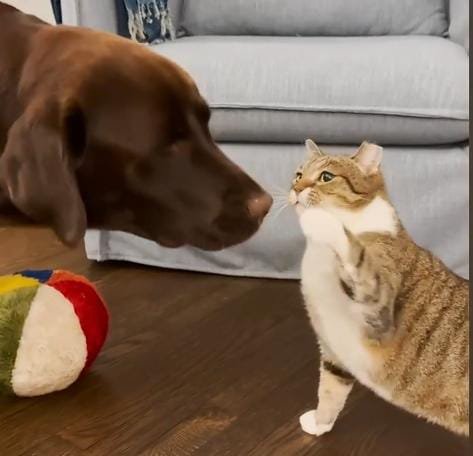
Almost immediately, Karen surprised everyone by following Fudgy around the house. While they didn’t interact closely at first, her willingness to stay nearby was a major breakthrough.
The real turning point came the next morning when Fudgy climbed onto the bed — Karen’s safest space. Instead of reacting, she calmly observed him, signaling acceptance rather than fear.
From Curiosity to Affection
Soon after, Karen began showing classic signs of trust: exposing her belly, offering gentle “love taps,” and inching closer as if hoping to cuddle. These behaviors indicate comfort and social bonding, especially remarkable for a cat once known for aggression.
When another dog later visited and received the same calm response, it confirmed this wasn’t a fluke — Karen had truly changed her perspective.
A New Family Plan
What started as an experiment became a life decision. Encouraged by Karen’s transformation, her owners decided to adopt a dog specifically to be her companion.
Karen’s journey shows that with the right match, respectful introductions, and patience, even the most unlikely animal friendships can flourish.
Kristina is a young writer from India. An arts graduate and an avid content creator, Kristina is passionate about animals and wildlife. She enjoys exploring topics related to pet care, animal behavior, conservation, and nature, combining thorough research with engaging storytelling.