Ever wonder what your cats are really saying to each other when you leave the room? While you might imagine elaborate meowing conversations, the truth is far more sophisticated and honestly, a bit mysterious. Cats have developed an intricate communication system that operates mostly in silence, relying on signals you probably miss even when you’re standing right there watching them.
Think about it. Your cats seem to understand each other perfectly without making much noise at all. That’s because feline communication happens through channels we humans barely notice: subtle body movements, invisible scent messages, and carefully timed visual cues. Let’s dive into the secret language cats use when they think no one’s paying attention.
The Silent Language: Why Cats Rarely Meow at Each Other
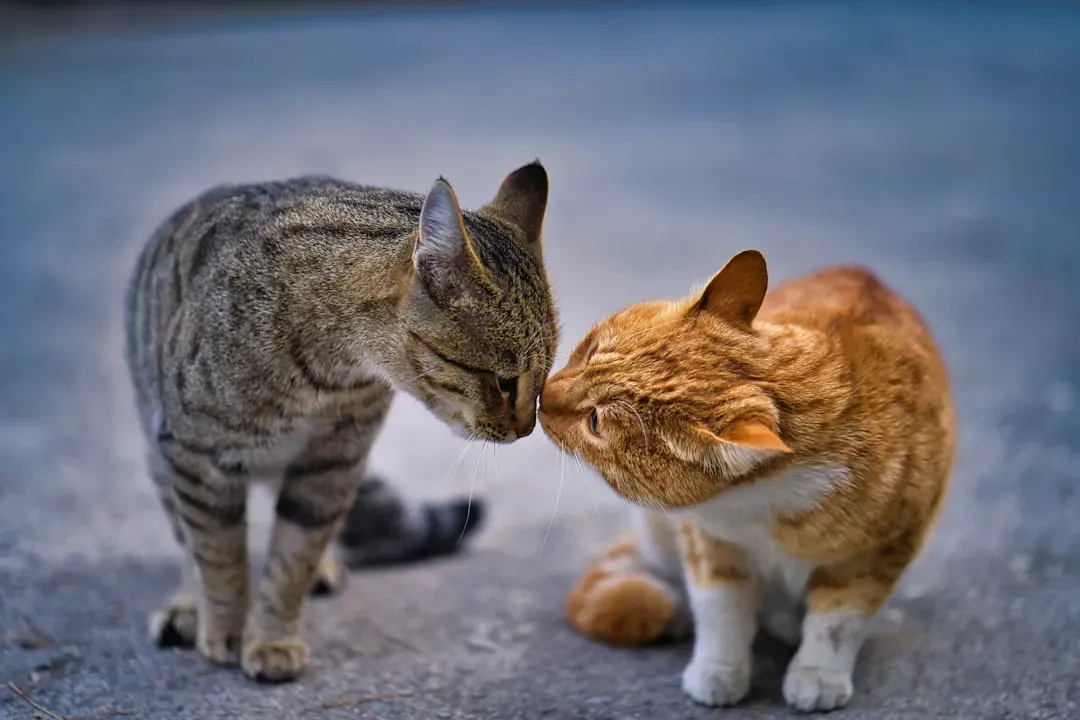
Here’s something that might surprise you. Adult cats rarely meow to each other, and primarily meow to communicate with humans. That’s right, the meowing you hear is essentially your cat’s learned behavior for manipulating you. Kittens meow to let their mother know they’re cold or hungry, but once they get a bit older, adult cats rarely meow to other cats, though they continue to meow to people throughout their lives.
Wild and feral cats are remarkably quiet creatures. In the wild, cats prefer communicating through body language and scent marking instead of meowing, though domesticated cats have adapted their vocal behavior to communicate with humans. When cats do vocalize with each other, they reserve it for specific situations like mating rituals, territorial disputes, or when they feel genuinely threatened. The growls, hisses, and yowls you occasionally hear? Those are the exceptions, not the rule.
Body Language: The Primary Conversation Tool
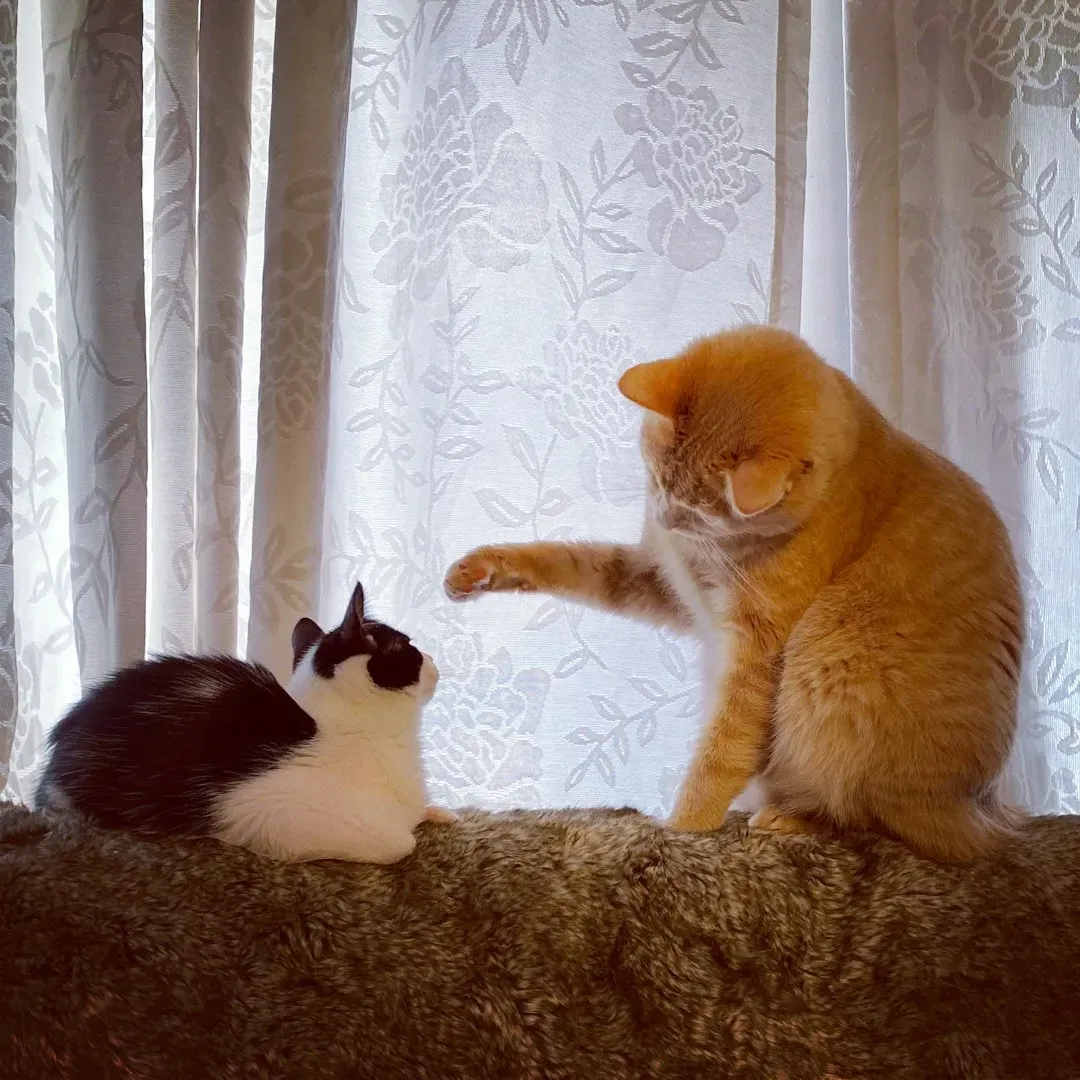
Your cat’s body is constantly broadcasting information to other felines. Cats use body language to express emotions and intentions, with non-verbal cues essential for social interactions between cats, whether for bonding, avoiding conflict, or setting boundaries. Every posture tells a story. A relaxed cat lying on its side with a loosely extended tail is basically announcing it feels safe and comfortable.
A fearful cat may crouch, tuck their tail under, and freeze, signaling that they are not a threat. The whole body participates in this conversation. Honestly, it’s hard to say for sure, but cats seem to read each other’s body language with an accuracy that puts our human communication skills to shame. Body language has to be read by looking at the whole body – the face, the posture and the tail position, as looking at one of these in isolation is misleading since they all combine into an overall message.
Tail Talk: What That Swishing Really Means
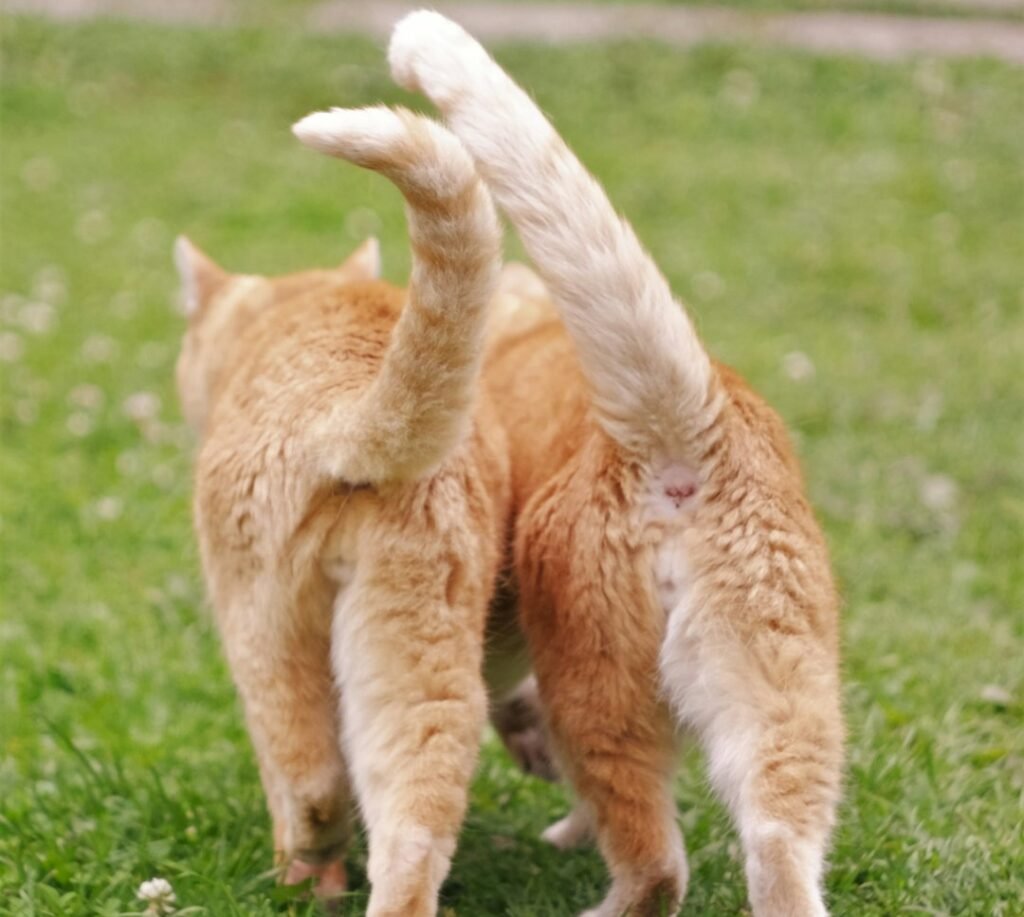
Cats express themselves most clearly through their tails, with a cat walking with an upright tail being relaxed and friendly, and interlocking of tails between two cats being a sign of affection. When your cats approach each other with tails held high, they’re essentially waving a friendly flag. The tail position acts like a mood barometer that other cats can read from across the room.
That bushy, puffed-up tail tells a completely different story. When a cat’s tail is held up and puffed out by raising the hairs to make the cat’s silhouette appear larger, often continued as a strip along the cat’s back, and used with an arched back and sideways stance, this is a hostile, distance-increasing ‘stay away’ signal to other cats. A tail swishing back and forth quickly can mean a cat is angry or curious, depending on the context and what the rest of the body is doing.
The Invisible Messages: Scent Communication
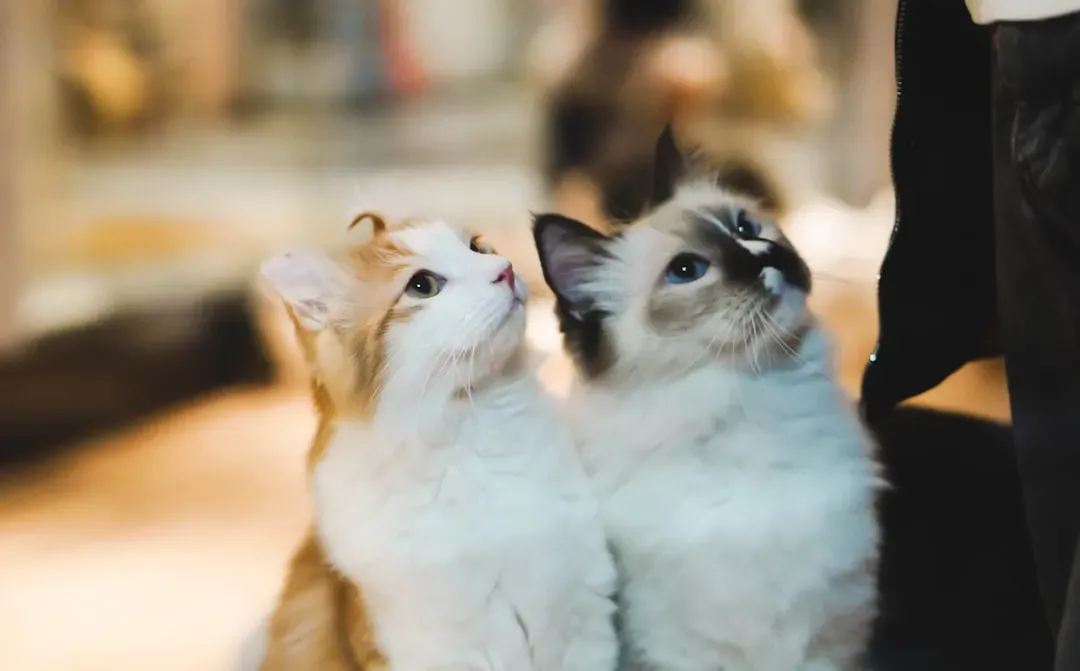
This is where things get really interesting. Scent is a hugely important method of communicating between cats, as feline species generally have an excellent sense of smell, and they also have a vomeronasal organ which can process pheromone communication – a form of chemical messaging. While you’re oblivious to these messages, your cats are essentially leaving detailed notes for each other all over your house.
Cats have 200 million scent receptors compared to our 5 million, and they also have a special scent analyzer called the Jacobson’s organ or vomeronasal organ located in the roof of the mouth. When you see your cat making that weird grimace face with their mouth slightly open, they’re not being rude. They’re reading another cat’s chemical messages in incredible detail. Chemical communication is essential for solitary cats which establish large home ranges and do not commonly encounter conspecifics face-to-face, as these signals provide a scent history of the spatial movements, behavior, health and sexual status of conspecifics.
Rubbing and Bunting: Friendship Markers
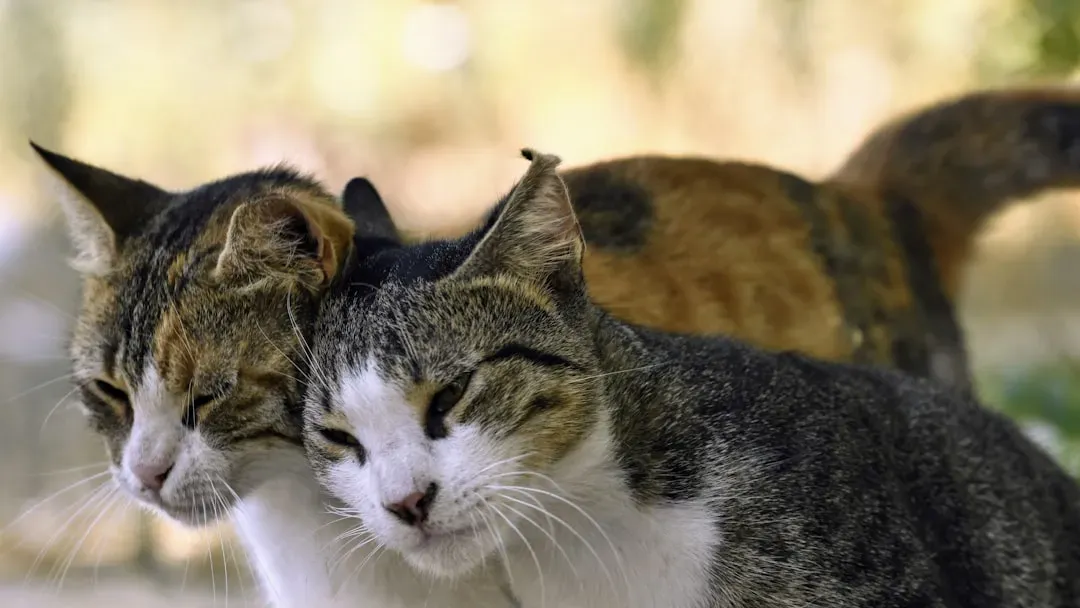
When two cats are familiar or unthreatened by one another, they greet each other with nose touches, which is the cat form of a polite handshake, and for those kitties with a closer bond, they may continue the greeting by rubbing heads, foreheads, cheeks, and chins. This isn’t just affection, though that’s part of it. They’re actually exchanging scent profiles and creating a shared group smell.
When felines encounter inanimate objects, they tend to rub their tails and sides on them, but on people as well as familiar dogs and cats, a cat might rub its face to deposit scent, which identifies those marked as belonging to a specific group. When this behaviour occurs between two cats in a colony, it is likely an attempt to exchange scents and chemical stimuli such as pheromones. Let’s be real, when your cats rub against each other, they’re basically updating each other’s security clearance to access the group.
Scratching: More Than Just Destruction
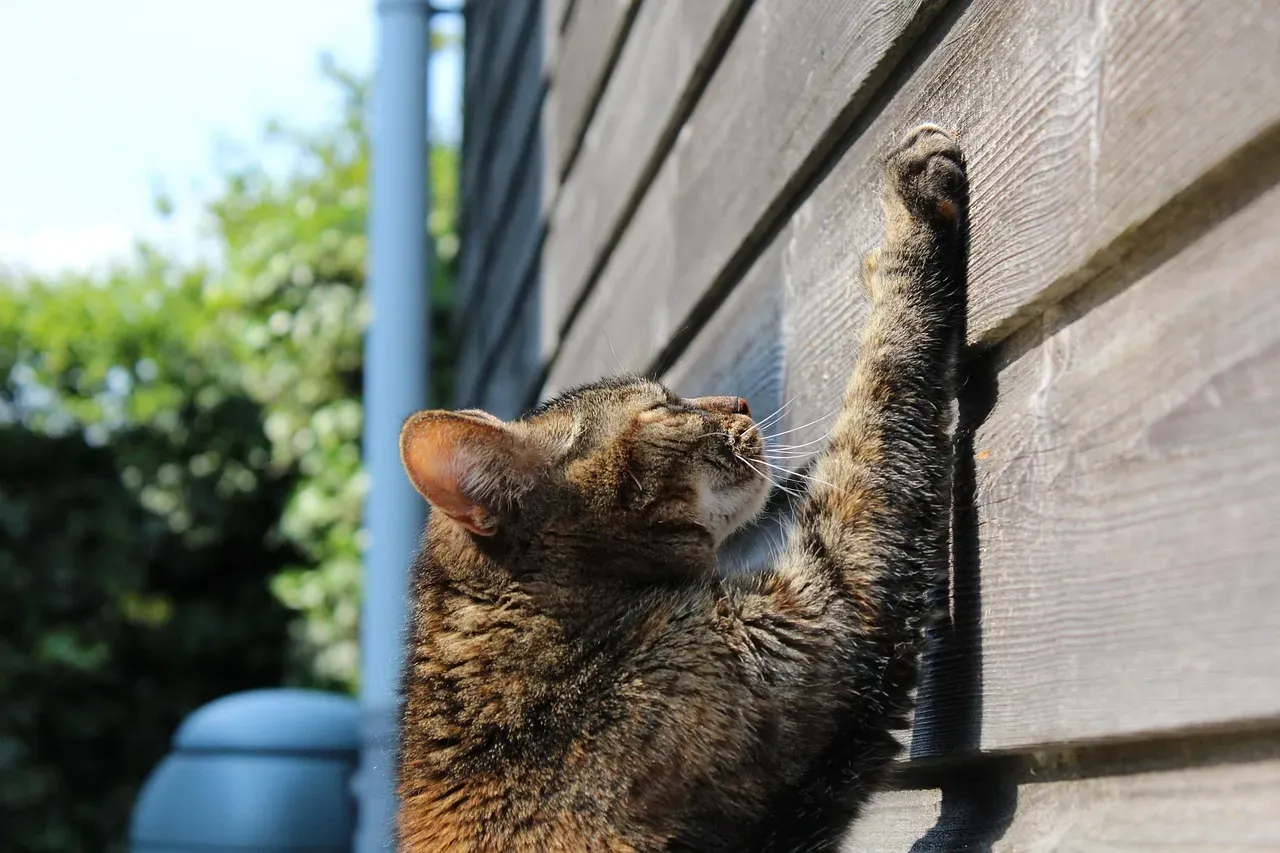
Before you get mad about your shredded furniture, understand that scratching serves multiple communication purposes. The scent glands in the cat’s paw pads get used when scratching on objects for marking, and in addition to leaving a visual mark from the claws, a cat leaves an olfactory mark through the scent glands. Your cats are leaving both visible and invisible calling cards.
Having both a visual and olfactory mark is important for safety, as the visual mark allows other cats to see the scratch marks from a distance so they know they’re entering another cat’s area, and if they choose to come closer, they can then identify the olfactory marks. It’s a two-tiered warning system that works even when the cat who left the mark isn’t around. Pretty clever, if you ask me.
Vocalizations They Actually Use With Each Other
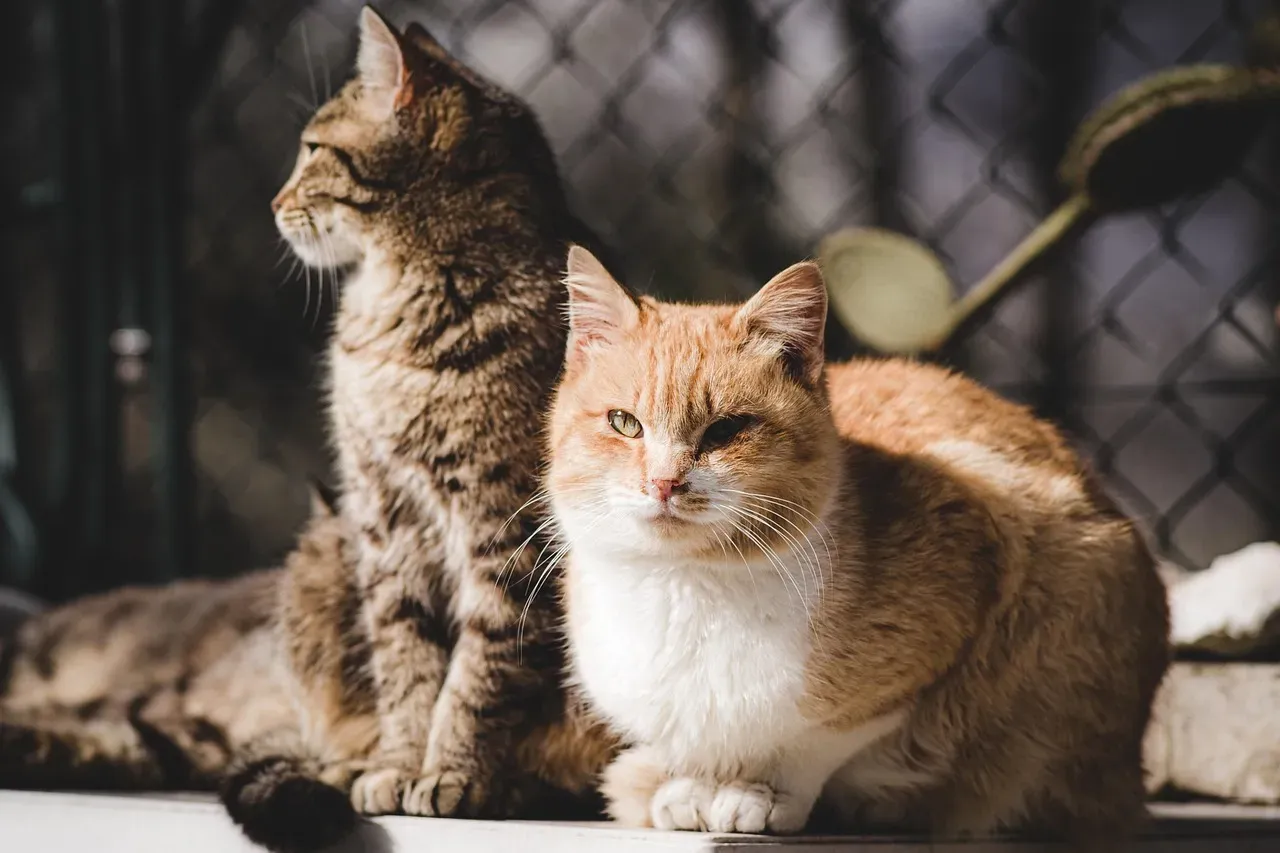
While meowing is rare between cats, they do have other sounds reserved for feline-to-feline interactions. Purring can communicate peaceful intentions to avoid conflict, especially when a cat is approaching another cat, while trilling is a friendly vocalization used to communicate affection or excitement, often when greeting each other, and it fosters social bonds and conveys a sense of invitation. These murmuring sounds carry much friendlier messages than you might expect.
The harsher sounds? Those mean business. Yowling is a long, loud vocalization used by cats during mating behaviors or territorial disputes, helping to establish boundaries and communicate over long distances. Growling and hissing are defensive vocalizations used when a cat feels threatened, acting as warnings and signaling the need for space. These aren’t conversations as much as declarations.
Eye Contact and the Slow Blink
Eye contact is important during antagonistic meetings where staring at other cats with wide eyes and little blinking occurs, or when fixated on a threat and attempting to gather more information. Direct, unblinking stares between cats signal tension or potential conflict. It’s basically the feline equivalent of “you wanna go?”
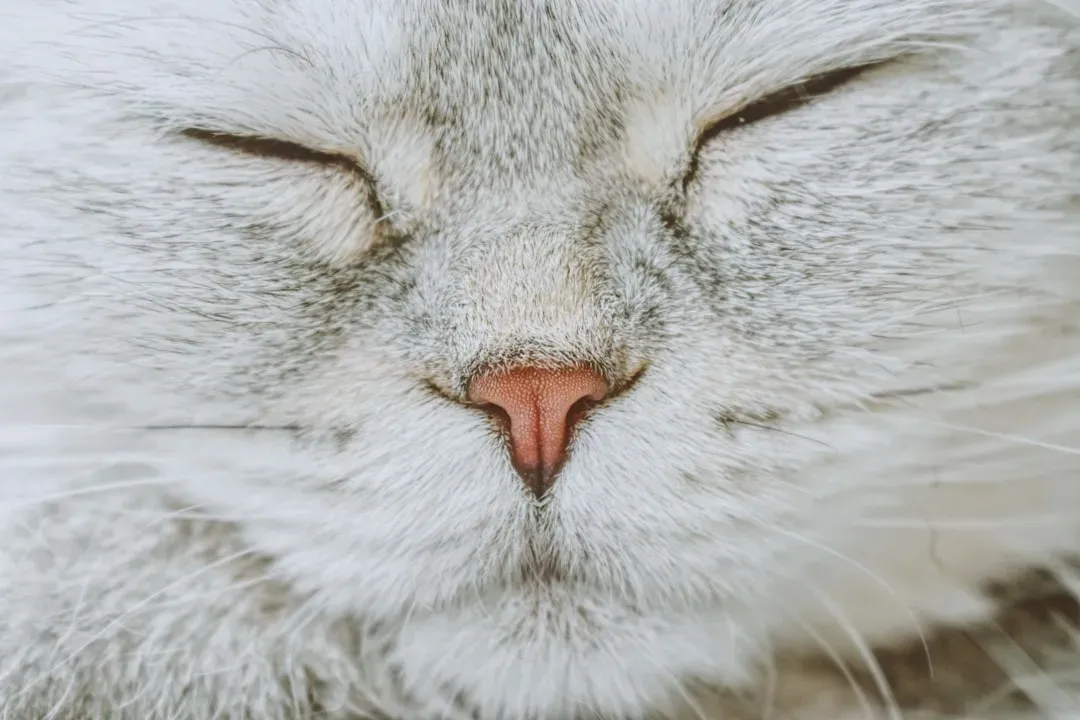
The opposite holds true for relaxed interactions. If cats have relaxed eyes, with blinking and winking, sometimes with their eyes half-closed, these are non-threatening signals that show the cat is content. Cats can do a slow, languid, long blink to communicate affection if they trust the person or animal they are in contact with, and one way to communicate love and trust to a cat is to say its name, get its attention, look it in the eyes and then slowly blink at it to emulate trust and love, and they may return the gesture.
Territory and Space: The Unspoken Rules
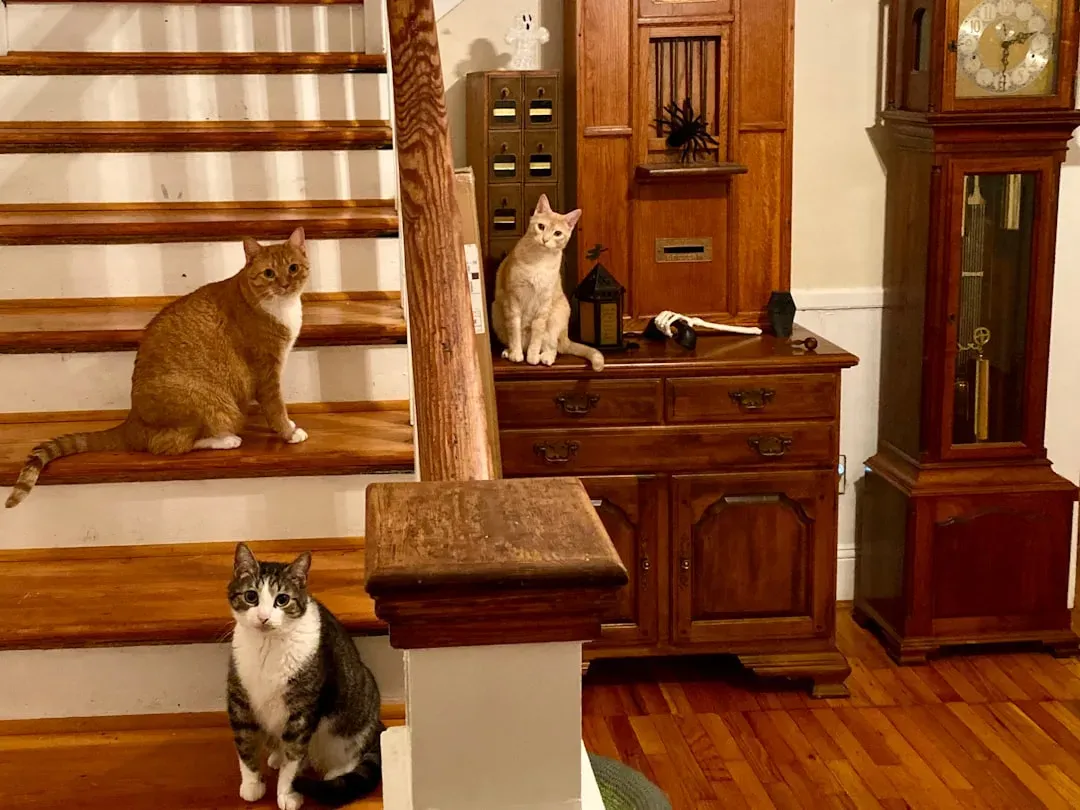
Cats can socialize with each other and are known to form ‘social ladders’, where a dominant cat leads a few lesser cats, which is common in multi-cat households. This hierarchy isn’t always obvious to human observers, but your cats know exactly where they stand with each other. Dominance displays can be surprisingly subtle.
Body blocking occurs when cats position themselves to prevent other cats from moving or accessing a resource or space, such as food or a resting spot, which can be very subtle and can even look like the cat is simply resting, but body blocking can be accompanied by a stare-down, which indicates tension and conflict between the cats. Sometimes what looks like peaceful coexistence is actually strategic positioning. Many disputes are resolved by staring each other down and yelling, and sometimes it is so subtle that humans cannot tell there was potential conflict – the dominant cat, having won the confrontation, simply walks away from the loser, sits down and looks in another direction.
Grooming: Social Bonding in Action
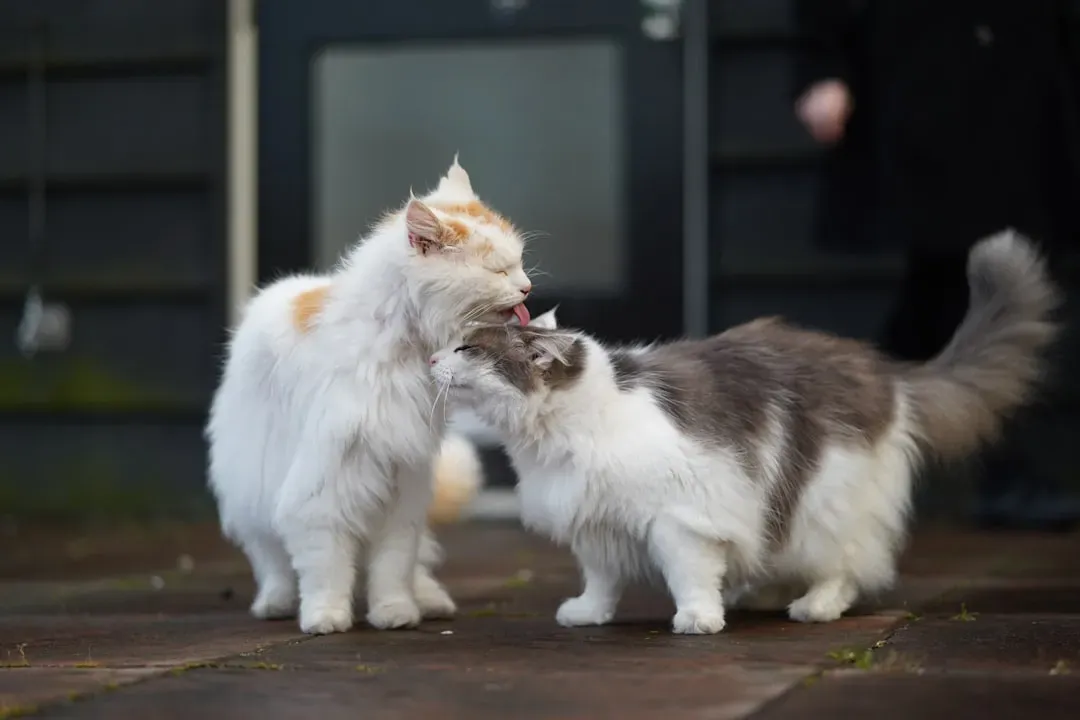
Allogrooming, where two cats groom each other, is a common behavior, as is allorubbing, where two cats rub their faces and bodies together, with these behaviors likely involved in scent transfer and olfactory communication to strengthen social bonds. When one of your cats licks the other’s head, it’s not just about cleanliness. It’s about reinforcing their relationship and maintaining group cohesion.
Cats that live together often develop a communal scent, which helps them recognise and bond with each other, which is why cats that are close companions will frequently rub against one another or engage in mutual grooming. This shared scent becomes their group identity. Any cat that doesn’t smell like part of the colony might be treated with suspicion or hostility, which explains why cats sometimes react badly to housemates returning from the vet smelling like a veterinary clinic.
What This All Means for You
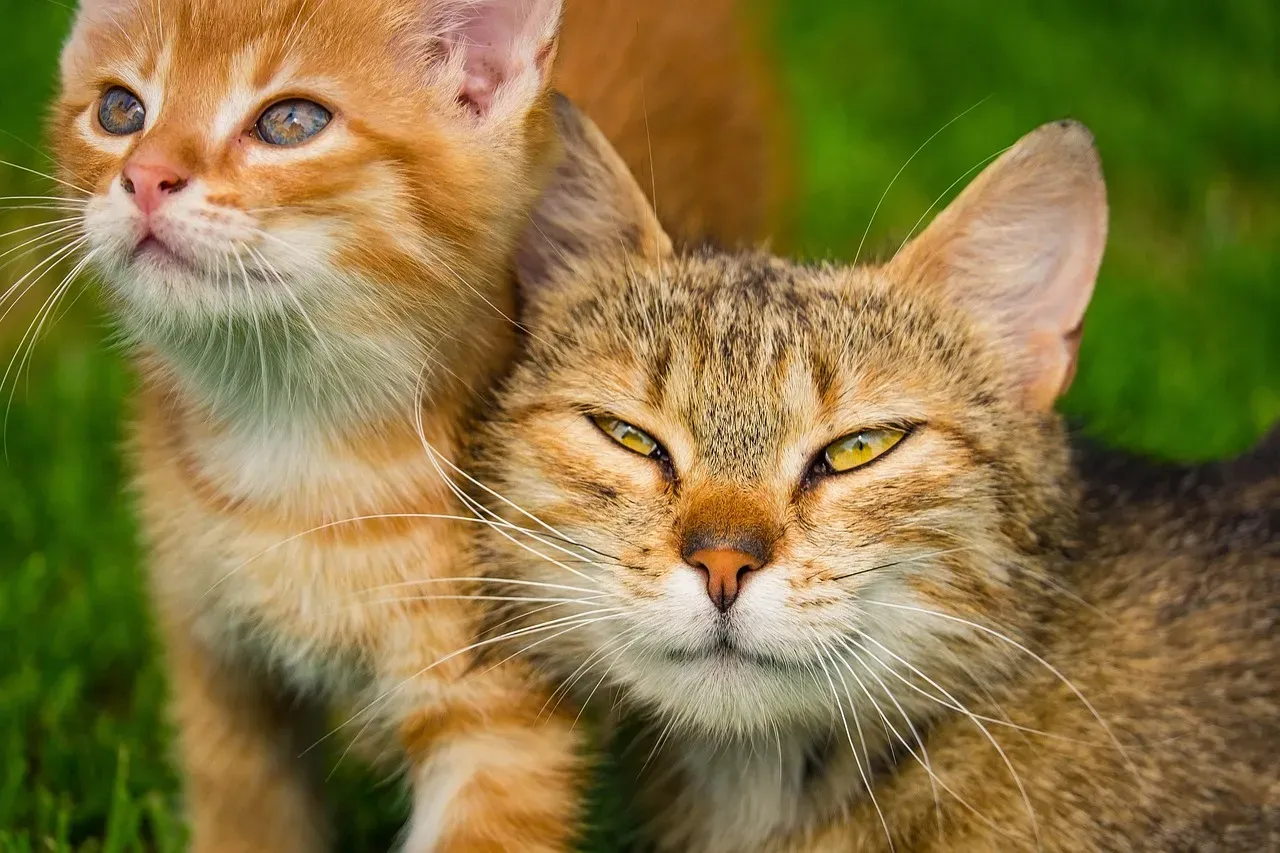
Understanding how your cats communicate when you’re not around helps you create a better environment for them. Cats use a combination of body language, vocalizations, physical touch, and chemical signals to communicate with each other. They’re having complex social interactions that happen mostly below your radar, in a language that relies more on what isn’t said than what is.
The next time you see your cats sitting together in silence, remember they’re probably having an entire conversation through tiny ear movements, tail positions, and scent cues you can’t even perceive. Releasing chemical signals is one of the most significant components of cat communication. Your cats rarely need to meow at each other because they’ve got a whole sophisticated communication system working perfectly well without sound. Pretty remarkable when you think about it, isn’t it? What subtle signals have you noticed between your cats that you never understood before?
Kristina is a young writer from India. An arts graduate and an avid content creator, Kristina is passionate about animals and wildlife. She enjoys exploring topics related to pet care, animal behavior, conservation, and nature, combining thorough research with engaging storytelling.