Newcastle, UK – A devoted pet owner has taken extraordinary measures to hold onto the memory of his cherished cat, opting for cryogenic preservation in the face of overwhelming grief.
A Heart-Wrenching Choice Amid Declining Health
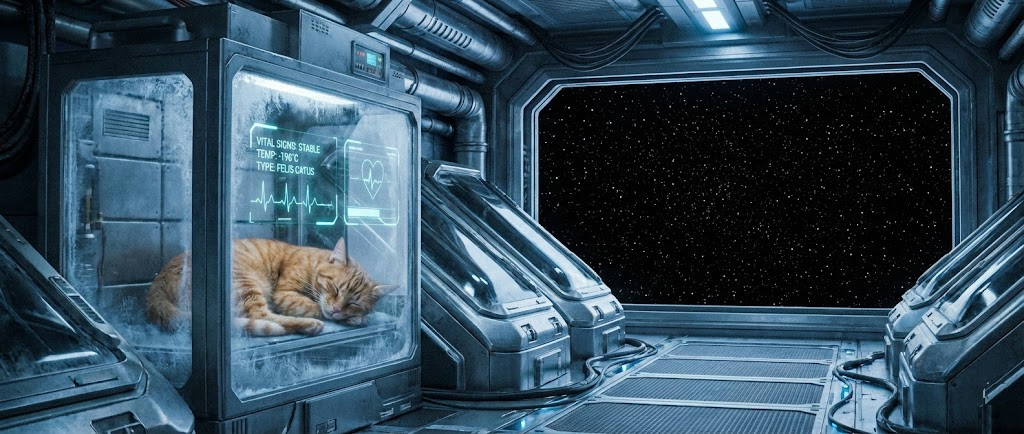
The story begins with profound sorrow. Mark McAuliffe, a finance worker from Newcastle, watched helplessly as his beloved cat Bonny’s health faded. Her condition deteriorated steadily, leaving him desperate for any way to defy the inevitable. In a decision driven by deep emotional attachment, McAuliffe chose cryogenic freezing as a final act of love. This process, often reserved for human remains, marked a rare application to a pet. He arranged for Bonny’s body to be preserved immediately after her passing, hoping future advancements might one day restore her. Such choices highlight the lengths to which people go when bonds with animals run deep.
McAuliffe’s resolve stemmed from years of companionship. Bonny had been a constant source of joy in his life, and her loss felt unbearable. Rather than accept finality, he sought out specialists in preservation technology. This move underscored a growing interest in extending life through science, even for non-human family members. The emotional weight of the decision weighed heavily, yet it offered a sliver of hope amid the pain.
Understanding Cryonics: Science on the Fringe
Cryonics involves cooling biological tissue to extremely low temperatures to halt decay, preserving it for potential future revival. For pets like Bonny, the process adapts techniques typically used for humans, focusing on vital organs and the brain. Facilities employ vitrification, a method that prevents ice crystal formation which could damage cells. McAuliffe’s investment reflected faith in emerging biotechnology. While human cryonics has gained niche attention, applying it to animals remains unconventional. Experts note that success hinges on breakthroughs in nanotechnology and cellular repair, areas still in early research stages.
The procedure demands precision and speed. Once Bonny passed, her body underwent rapid cooling and chemical stabilization. This ensured minimal degradation before transport. Cryonics proponents argue it buys time against mortality, though skeptics question its feasibility. For animal lovers, it represents an extension of veterinary care into speculative territory. McAuliffe’s case illustrates how personal loss can propel individuals toward these experimental frontiers.
The Swiss Clinic: A Sanctuary for Preservation
Switzerland emerged as the destination for Bonny’s preservation due to its advanced facilities and regulatory environment. The clinic McAuliffe selected specializes in cryogenic services, attracting clients from across Europe. Nestled in the Alps, it provides state-of-the-art storage at temperatures near absolute zero. The £16,000 cost covered the full process, from initial preparation to long-term maintenance. This sum, equivalent to a significant down payment on a home, underscored the commitment involved. The facility’s expertise ensured Bonny’s remains were handled with the utmost care.
Transport to Switzerland required careful logistics to maintain the cold chain. McAuliffe coordinated every detail, reflecting his determination. The clinic’s team, experienced in both human and animal cases, executed the preservation flawlessly. Such operations blend cutting-edge science with ethical considerations, particularly for pets. McAuliffe expressed relief upon completion, viewing it as a bridge to an uncertain future.
Implications for Pet Owners and Future Possibilities
This event sparks broader questions about cryonics’ role in pet care. As technology evolves, more owners might consider similar options for beloved animals. Veterinary science already explores cryopreservation for embryos and tissues, paving the way for whole-body applications. However, challenges persist, including high costs and unproven revival methods. McAuliffe’s story could inspire discussions on grief and innovation in animal welfare.
- Cryonics preserves bodies at -196°C using liquid nitrogen.
- Vitrification replaces traditional freezing to avoid cell damage.
- Pet applications are emerging, though regulated differently from human ones.
- Costs range from thousands to tens of thousands, depending on services.
- Future revival depends on advances in regenerative medicine.
- Ethical debates center on animal consent and resource allocation.
Key Takeaways
- McAuliffe’s £16,000 investment highlights the emotional drive behind cryonic choices for pets.
- Swiss clinics lead in cryogenic technology, offering reliable preservation options.
- While revival remains speculative, the process extends the possibility of reunion through science.
In the end, McAuliffe’s act stands as a testament to unbreakable human-animal connections, challenging conventional views on death and renewal. As science pushes boundaries, stories like this remind us of hope’s enduring power. What would you do to preserve a cherished pet? Share your thoughts in the comments.
Kristina is a young writer from India. An arts graduate and an avid content creator, Kristina is passionate about animals and wildlife. She enjoys exploring topics related to pet care, animal behavior, conservation, and nature, combining thorough research with engaging storytelling.