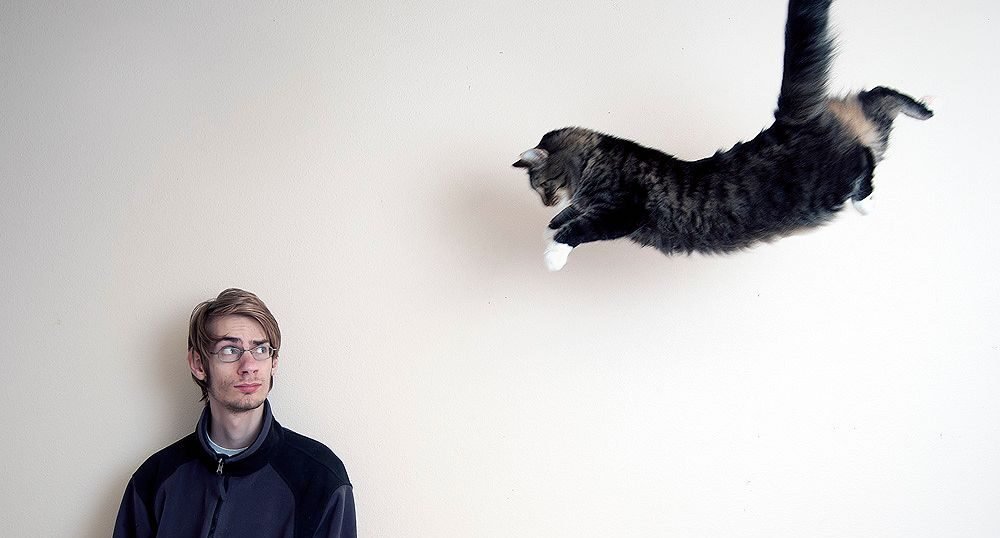
You’ve probably watched your cat tumble off the back of the couch, only to stick the landing like an Olympic gymnast. It’s almost unsettling how they manage this trick every single time. This seemingly magical ability has puzzled scientists for centuries, and honestly, the physics behind it sounds impossible at first. How can an animal rotate its body midair without pushing off anything?
Yet here’s the thing. What looks like defying gravity is actually a complex interplay between anatomy, neurology, and some seriously clever physics. Your cat isn’t breaking any laws of nature. Instead, felines have evolved into living physics demonstrations, equipped with biological tools most creatures can only dream of possessing.
The Righting Reflex Is More Than Just Instinct
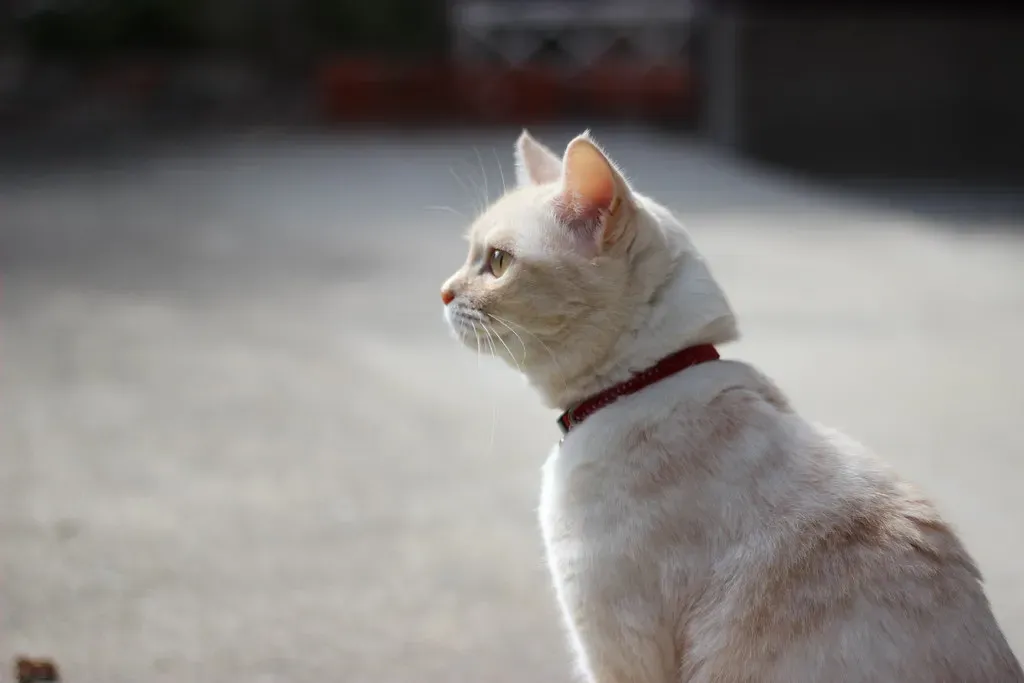
The cat righting reflex is a cat’s innate ability to orient itself as it falls in order to land on its feet. Think of it as nature’s autopilot system. The righting reflex begins to appear at 3–4 weeks of age, and is perfected at 6–9 weeks.
What’s fascinating is that kittens don’t come out of the womb with this skill fully operational. They need a few weeks to develop the neurological pathways and muscle coordination required. By the time they’re roughly two months old, though, they’ve mastered what took physicists centuries to even begin explaining.
Your Cat’s Inner Ear Is a Biological Gyroscope
Righting is a behavioral response to gravity that relies on the vestibular system, which otoliths in a cat’s inner ear detect changes in its acceleration and position relative to the ground, prompting its muscles to move in a way that helps it land on its paws. This system works faster than you can blink. After determining down from up visually or with their vestibular apparatus (in the inner ear), cats twist themselves to face downward.
Here’s the wild part. Even blind cats can execute this maneuver perfectly because their vestibular system operates independently of vision. The inner ear contains tiny crystals that shift with movement, sending instant signals to the brain about which way is up. It’s like having a built-in level that never needs calibration.
The Flexible Spine That Would Make Yoga Instructors Jealous
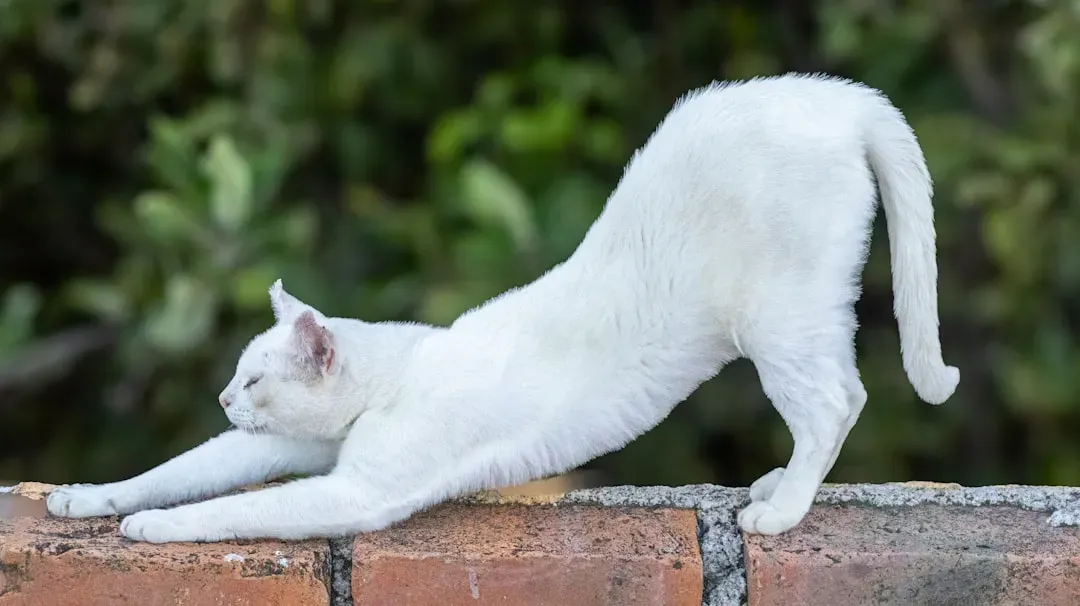
The 30 exceptionally flexible vertebrae in the spine enable felines to stretch out, compress, arch the back, and rotate, bend, and twist the front half of the body independently from the back half. Humans, by comparison, have a relatively rigid spine with only 33 vertebrae total. This elasticity in cats’ vertebrae allows them to rotate their head and trunk around almost 180 degrees, as they have much more flexibility than humans.
The difference is staggering when you really think about it. Your cat can essentially fold itself in half while you’re struggling to touch your toes. Those elastic cushioning discs between each vertebra act like shock absorbers, allowing for rotation that would injure most other animals.
The Missing Collarbone Advantage
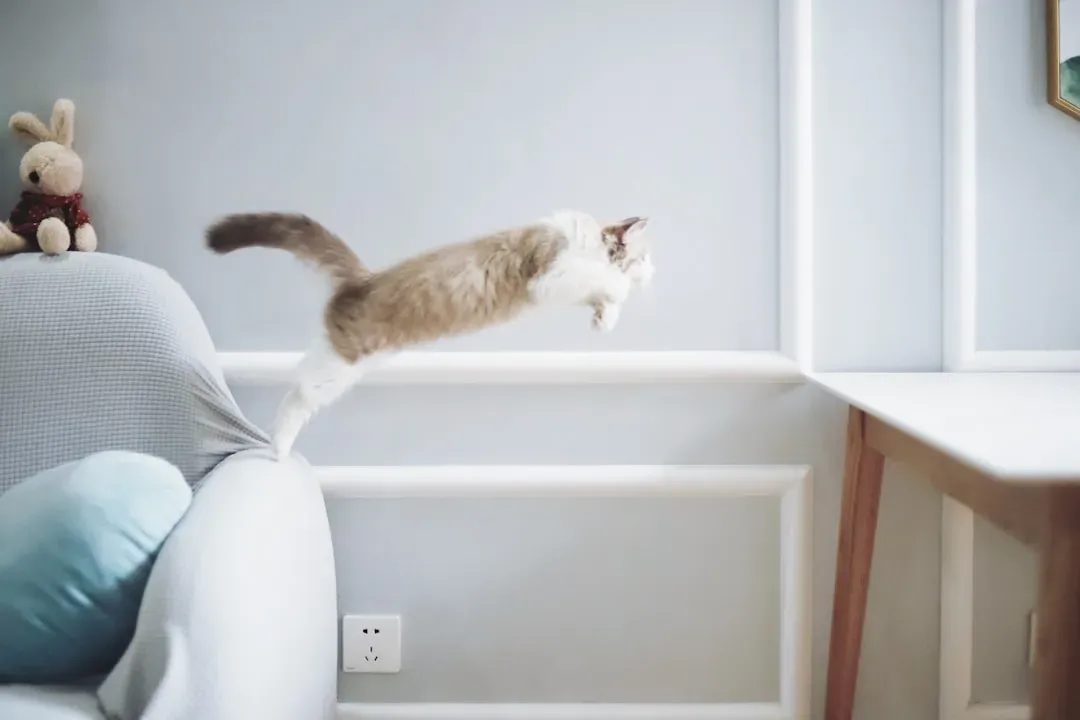
Cats are able to do this because they have an unusually flexible backbone and no functional clavicle (collarbone). This anatomical quirk might seem like a design flaw, yet it’s actually brilliant engineering. Without a rigid collarbone connecting the shoulder blades, cats have extraordinary freedom of movement in their front limbs.
This lack of a functional collarbone allows your cat to squeeze through impossibly narrow spaces and rotate its shoulders independently during a fall. It’s the same reason cats can flatten themselves like pancakes when they want to hide under furniture that looks far too small for them.
Conservation of Angular Momentum Sounds Complicated Because It Is
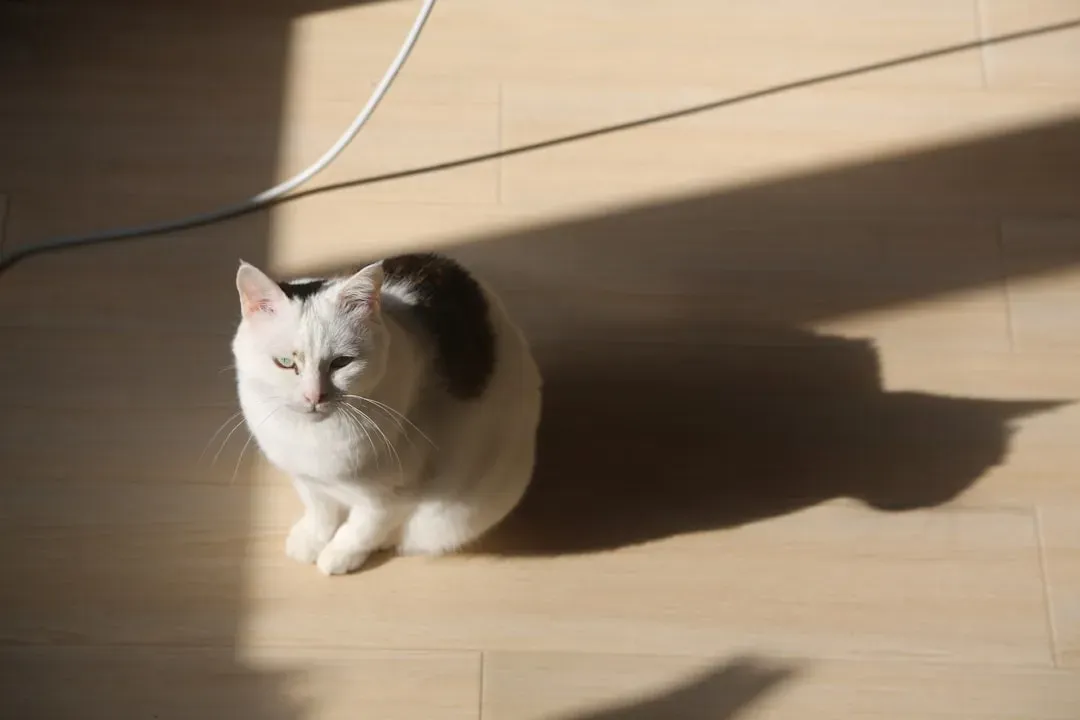
One of the reasons that physicists were surprised that cats could rotate to always land on their feet is the conservation of angular momentum. The law states that an object’s rotational momentum must remain constant unless acted upon by an external force. Researchers imagined the cat as fundamentally consisting of two cylinders, representing the front and rear halves of the feline, and if the cat bends at the waist, it can then twist the two halves of its body in opposite directions, causing their opposing angular momenta to largely cancel.
Think of it this way. When your cat bends in the middle, it creates two separate rotating systems. The front half twists one direction while the back half twists the opposite way. These opposing rotations cancel each other out mathematically, allowing the cat to reorient without violating physics. Clever, right?
The Bend and Twist Technique
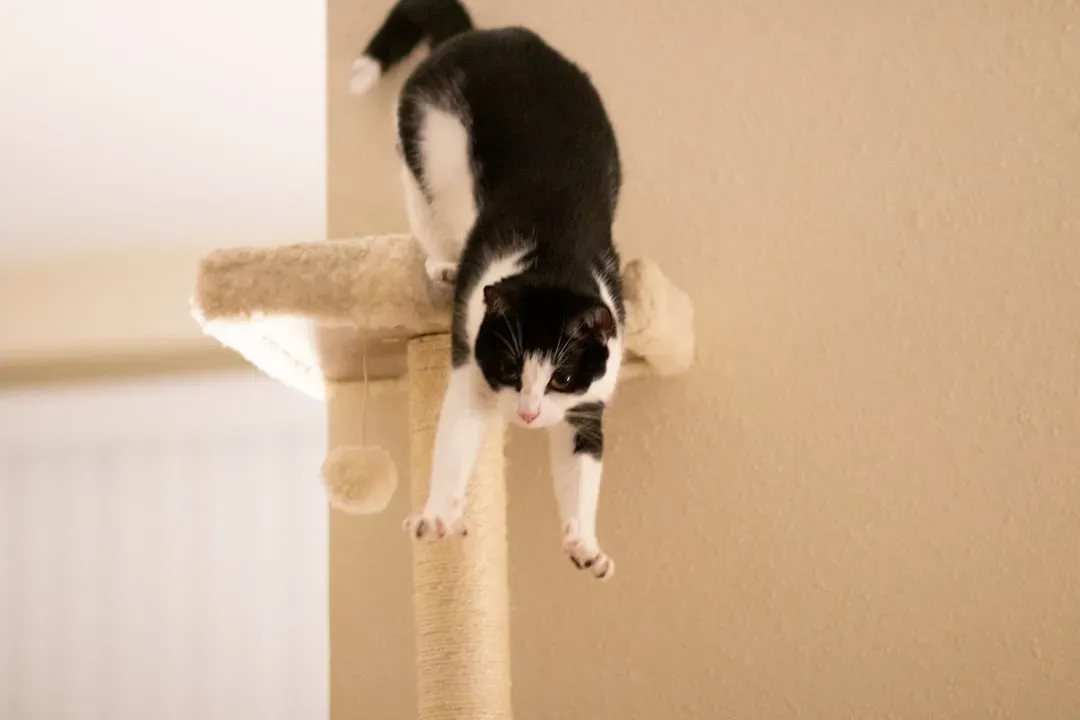
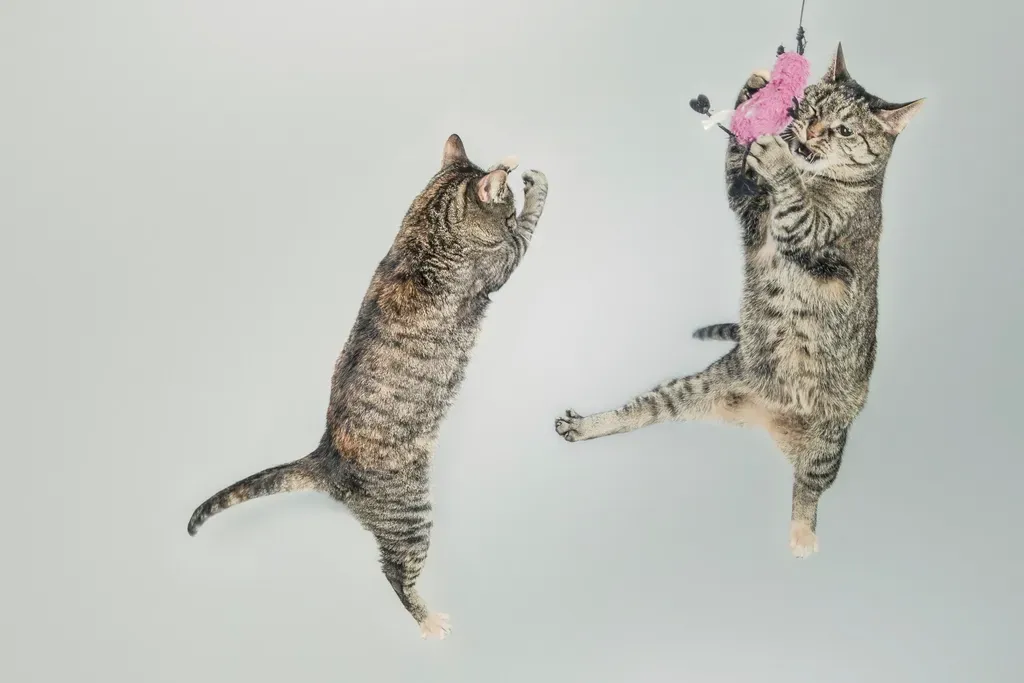
When falling, cats bend their spine and rotate the front and back halves of their body in opposite directions, using angular momentum to turn in mid-air, and this physical response allows them to reorient and safely land. This isn’t a single smooth motion. It’s a carefully sequenced series of movements executed in fractions of a second.
First, the head rotates toward the ground. Then the front legs and spine follow. Finally, the back legs and hindquarters complete the rotation. The whole process happens so quickly that slow-motion photography was needed before scientists could even see what was happening.
The Tuck and Turn Method Adds Another Layer
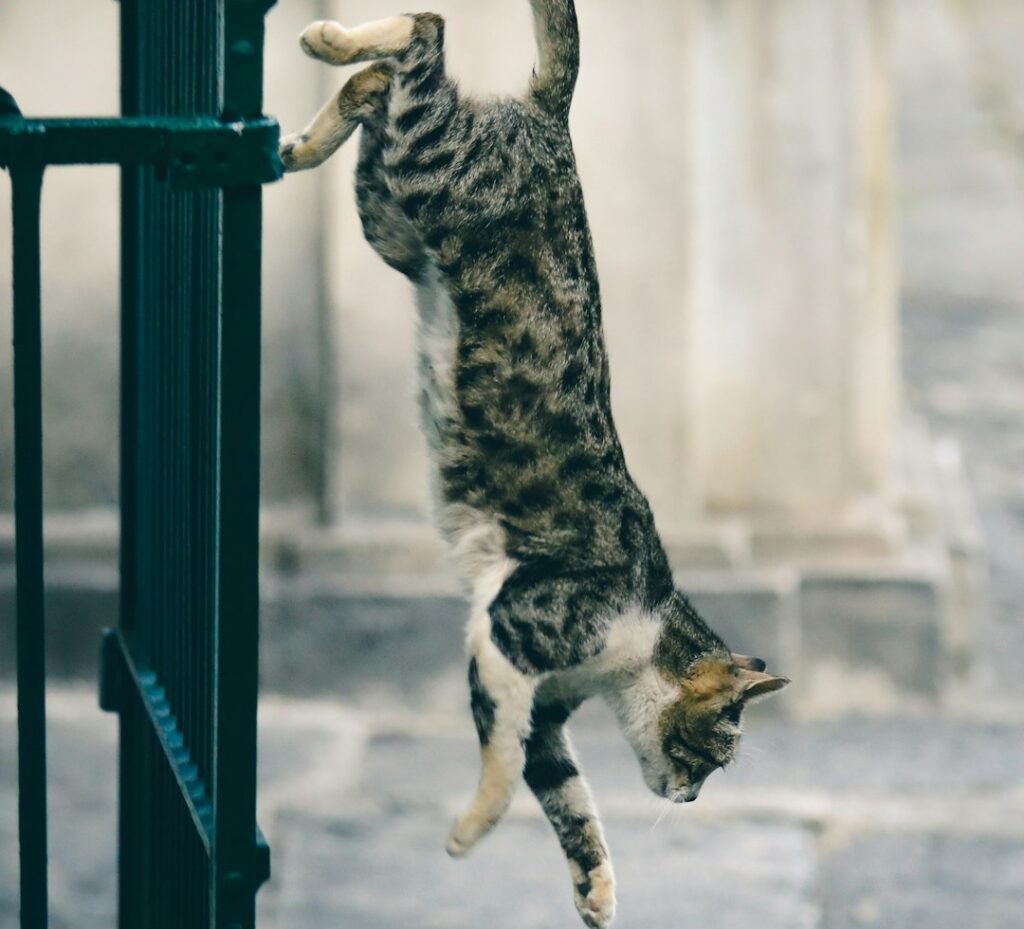
In the tuck and turn method, a cat extends its front legs and tucks in its back legs, giving the backside a lower moment of inertia, meaning a lower amount of resistance to changes in rotational motion, then it does the opposite, tucking in its front legs and extending the hind legs. It works on the same principle as a figure skater pulling their arms in to spin faster. Extending the arms out wide increases the moment of inertia, while drawing the arms close to the body decreases it, and this inversely correlates with speed as inertia goes up, speed goes down, and vice-versa.
Your cat is essentially manipulating its own rotation speed by changing body position. When parts of the body are tucked in, they rotate faster. When extended, they slow down. By alternating which end is tucked or extended, cats can control their orientation with remarkable precision.
The Tail Might Help But It’s Not Essential

The tail seems to help but cats without a tail also have this ability, since a cat mostly turns by moving its legs and twisting its spine in a certain sequence. Manx cats and other tailless breeds land on their feet just as reliably as their tailed cousins. Cats can also use what researchers call the propeller tail, which works similarly, as the tail spins in one direction, the body can rotate in the other.
So the tail is more like a bonus feature than a requirement. It provides extra control and can act as a counterbalance, yet the core mechanics rely on spinal flexibility and leg positioning. Think of the tail as power steering rather than the steering wheel itself.
Height Matters More Than You’d Expect

In a 1987 study, published in the Journal of the American Veterinary Medical Association, of 132 cats that were brought into the New York Animal Medical Center after having fallen from buildings, it was found that injuries per cat increased positively with altitude until a height of seven stories, at which point injuries decreased. This counterintuitive finding surprised researchers. The study’s authors speculated that, after falling five stories, the cats reached terminal velocity, at which point they relaxed and spread their bodies out to increase drag.
The physics here gets really interesting. Falls from very short heights don’t give cats enough time to complete the righting reflex. Medium height falls give them time to rotate but they’re still accelerating when they hit the ground. Very high falls allow them to reach terminal velocity and essentially parachute down in a spread-eagle position that distributes impact forces.
Landing on Your Feet Doesn’t Mean Landing Safely
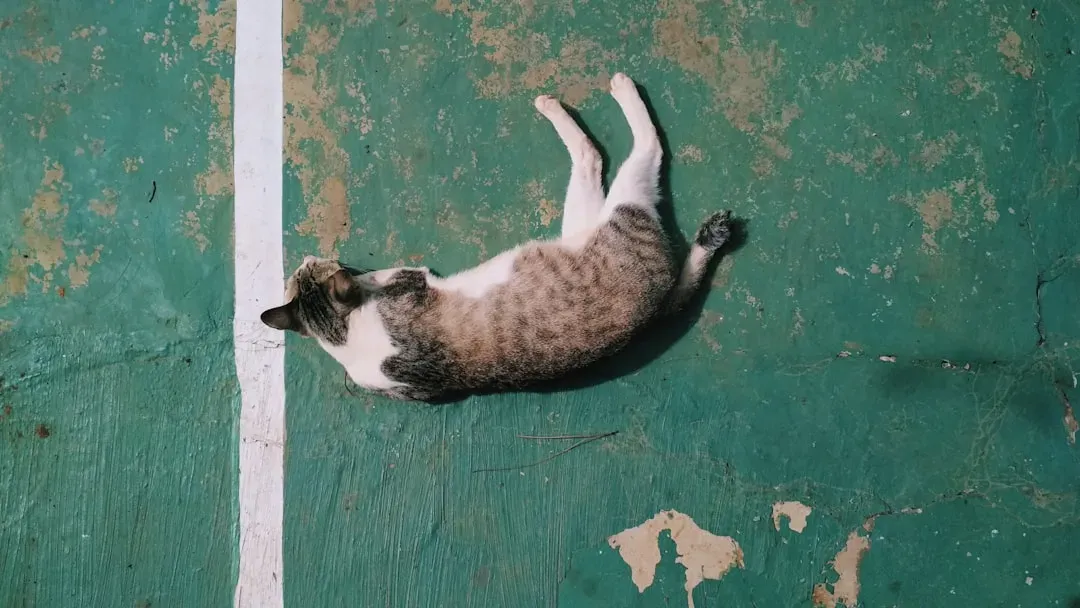
With their righting reflex, cats often land uninjured, however, this is not always the case, since cats can still break bones or die from extreme falls. Let’s be real here. The ability to reorient doesn’t make cats invincible. Researchers discovered that cats who fall from seven stories or higher more often land on their feet than from falls of shorter heights but experience more severe injuries, and the most common injuries include chest trauma, broken bones, and facial and dental injuries.
The myth of cats always surviving falls needs to be put to rest. They’re remarkably good at positioning themselves for the best possible landing, yet physics still wins when the impact force is too great. Keeping windows screened and balconies secure isn’t paranoia. It’s responsible pet ownership.
What This Means for Your Curious Cat
Understanding the righting reflex doesn’t just satisfy scientific curiosity. It helps you appreciate the extraordinary creature sharing your home. Your cat’s ability to land on its feet is the result of millions of years of evolution fine-tuning a survival mechanism for animals that climb trees and hunt from elevated positions.
That said, don’t test this ability by dropping your cat or encouraging risky behavior. The reflex works best when your cat initiates the fall and has time to react. Sudden drops or being startled can interfere with the process. Cats are amazing, yet they’re not stunt doubles.
The physics behind your cat’s aerial acrobatics blends biology, neurology, and classical mechanics into something that looks like magic. Next time you see your feline friend execute a perfect landing after an unexpected tumble, you’ll know exactly what complex calculations their body performed in those split seconds. Pretty remarkable for an animal that spends most of its day napping, don’t you think? What’s the most impressive landing you’ve witnessed your cat pull off?